The Cases For Reparations: How 2020 Presidential Candidates Address The Issue | On Point

Democratic presidential hopefuls are talking about reparations for slavery. They’re talking seriously, but with few specifics. What would a reparations policy actually look like?

Source: The Cases For Reparations: How 2020 Presidential Candidates Address The Issue | On Point

Reparations, systemic racism, and white Democrats’ new racial liberalism – Vox


“In the past five years, white liberals have moved so far to the left on questions of race and racism that they are now, on these issues, to the left of even the typical black voter.”

Source: Reparations, systemic racism, and white Democrats’ new racial liberalism – Vox

Creating Safe and Inclusive Schools: The Federal Role in Addressing Discriminatory School Discipline

Data from the U.S. Department of Education’s Office of Civil Rights Data Collection demonstrate that students of color, students with disabilities, and other historically underserved students, are disproportionately suspended and expelled compared with their White and nondisabled peers. These disparities are not a result of more incidences of misbehavior; instead, students of color are punished more harshly for the same behaviors, especially non-violent offenses like tardiness or “talking out of turn.” Research shows that these discriminatory and exclusionary discipline practices have a significant negative impact on these same students as even one suspension can double the likelihood of a student dropping out. Research also shows that zero-tolerance policies make schools less effective and less safe—not safer—for students.


Source: Creating Safe and Inclusive Schools: The Federal Role in Addressing Discriminatory School Discipline

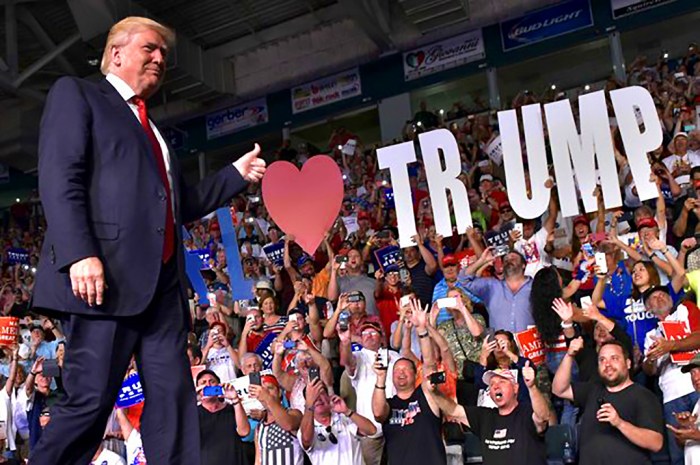
The Cult of Trump

JOHN PAVLOVITZStuff That Needs To Be Said


Source: The Cult of Trump

HUD’s House of Cards — ProPublica

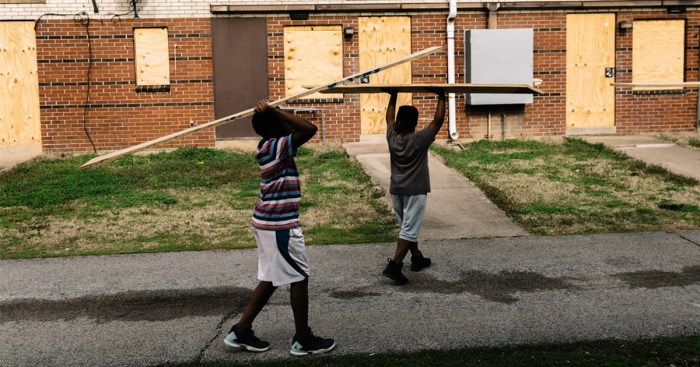
HUD’s flawed oversight of living conditions in federally subsidized housing can leave people living among rats, roaches, mold and other dangerous conditions for years. The lack of solutions for small- and mid-sized cities is the affordable housing crisis nobody’s talking about.

Source: HUD’s House of Cards — ProPublica

America’s 1.5 million missing [B]black men is nothing short of genocide ::: theGrio

America’s 1.5 million missing [B]black men is nothing short of genocide

By   David A. Love

missing-black-men

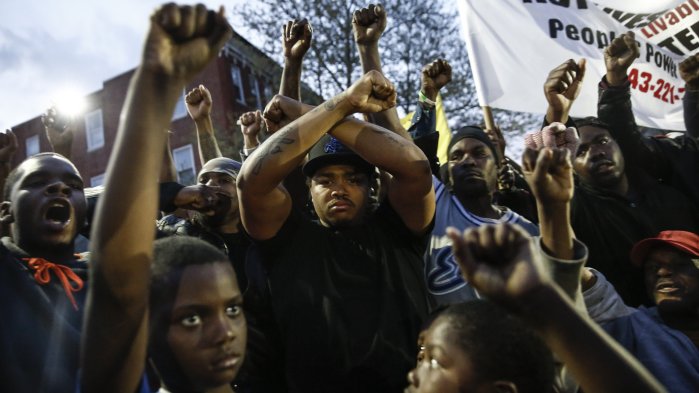
Protestors participate in a vigil for Freddie Gray down the street from the Baltimore Police Department’s Western District police station, April 21, 2015, in Baltimore, Maryland. Gray, 25, died from spinal injuries on April 19, one week after being taken into police custody. (Photo by Drew Angerer/Getty Images)

Where have all the brothers gone?

The numbers are staggering.

According to a report in The New York Times, black women between the ages of 25 and 54 outnumber black men by 1.5 million, based on an analysis of data from the 2010 U.S. Census. There were 7.046 black men of that age group not incarcerated, to 8.503 black women.

To put it another way, for every 100 black women, there are 83 black men. This is not the case in white America, where for every 100 women, there are 99 men, almost complete parity.

What that means, effectively, is that black men have disappeared. This reality lends credence to the idea that black men are an endangered species — not just symbolically or rhetorically, but based on the hard numbers.

Let’s explore this a little more. The Times estimated that more than a third of that 1.5 million gap — or 580,000 — is missing due to prison. With about 625,000 black men of prime age incarcerated and 45,000 black women also in prison, you get a discrepancy of 580,000. This is due, of course, to the staggeringly high incarceration rate of black men, which is higher than any other group, in the nation a quarter of the world’s prisoners, and the most prisoners in the world.

Putting this in perspective, in the 25-54 age range, 1 in 12 black men is in prison. However, only 1 in 60 nonblack men is in prison. Meanwhile, 1 in 200 black women and 1 in 500 nonblack women is behind bars.

Of the remaining 900,000, it was estimated that somewhere between 300,000 and 700,000 are due to mortality, early death. After all, homicide is the leading cause of death for young black men, who also die from heart disease, respiratory disease and accidents more than the rest of the nation.

The place in America with the lowest rate of black men is, believe it or not, Ferguson, Missouri, with 37.5 percent. New York is the city with the most missing black men (118,000), followed by Chicago (45,000), Philly (36,000) Detroit (21,000) and Memphis (19,000).

So what does this all mean? What struck me is that this is not a fluke, nor accidental, nor by chance. But rather, we can point to specific policies that have made black men disappear. First, I decided to look up the definition of the word genocide. The United Nations Genocide Convention defines genocide as the following:

ARTICLE II: IN THE PRESENT CONVENTION, GENOCIDE MEANS ANY OF THE FOLLOWING ACTS COMMITTED WITH INTENT TO DESTROY, IN WHOLE OR IN PART, A NATIONAL, ETHNICAL, RACIAL OR RELIGIOUS GROUP, AS SUCH:

(A) KILLING MEMBERS OF THE GROUP;
(B) CAUSING SERIOUS BODILY OR MENTAL HARM TO MEMBERS OF THE GROUP;
(C) DELIBERATELY INFLICTING ON THE GROUP CONDITIONS OF LIFE CALCULATED TO BRING ABOUT ITS PHYSICAL DESTRUCTION IN WHOLE OR IN PART;
(D) IMPOSING MEASURES INTENDED TO PREVENT BIRTHS WITHIN THE GROUP;
(E) FORCIBLY TRANSFERRING CHILDREN OF THE GROUP TO ANOTHER GROUP.

When society reinforces the notion that black men are a threat, then sets in motion laws and policies to address and ultimately eliminate that threat, is it any wonder that the brothers are missing? If the disappearing of black men is not genocide, then what should we call it?

Assessing the conditions in which black men are placed, and our historical role in society as the official national scapegoat, perennial boogeyman and monster, should we really be surprised we have disappeared? Society always believed that black men were to be fearedand loathed, devalued and disregarded. This mindset has been reinforced in the culture, in the media, and in the laws. During slavery, black men were perceived as a threat to the master’s house, criminalized based on the fear they would stage an uprising, burn down the plantation and, of course, rape the white women.

The war on drugs has been a war on black America, in which the justice system targets black men, locks them up and throws away the key. Although whites and blacks use drugs at similar rates, young men of color are racially profiled, harassed and brutalized through stop-and-frisk policies and arrested at much higher rates for drug possession. And the black incarceration rate is ten times that of whites, according to Human Rights Watch. Families and communities have been decimated by this war, and a generation lost.

From an early age, black children, and particularly black and brown boys, are dehumanized and criminalized and perceived as much older than their actual age. Funneled through a school-to-prison pipeline, many are provided an inferior education and unequal job opportunities — on purpose. And yet, in the land of 300 million guns, while the most vulnerable young black men and boys may not have access to a nourishing meal, education or job — or the ballot, for that matter — there never is a shortage of bullets for black bodies, it seems, and the black community is not a weapons manufacturer.

Further, we must not ignore the toll that racism plays on the black psyche, and on black health. As Billi Gordon, PhD wrote in Psychology Today, racism is causing a silent black genocide: “Stress acts first, and foremost, on the cardiovascular system. Hence, it is reasonable to suspect the pathophysiology of race-based stress as an antecedent to elevated heart disease in Black America.” Gordon also touched on the inherent sources of stress in the black community, including the numbers of black men in prison versus college, disintegrating support structures for black families, and the fact that the life expectancy of black men is seven years lower than anyone else.

In a land that advocates throwing away black men — in the streets, behind bars, and in the execution chamber — we now know the policy is a success, as the numbers show. The question is: how will society address this? This is not the past; this is happening now. Perhaps the idea of reparations does not sound so far-fetched.

Follow David A. Love on Twitter at @davidalove  

Visit theGrio 

OCG note:  Black when speaking of a group of people who share cultural and historical background and lineage is a Proper noun and should be spelled with a capital “B”. black is a noun which describes a color. Things journalist should know. Example:

  • A regular noun or generic noun might be that of a category of animal such as dog, cat, or horse. …
  • Individual species within the categories such as German Shepherd, Abyssinian, or Lipizzaner would be capitalized because they are proper nouns.

A Note from OCG

We will now have an alt-right #SCOTUS There is little that we of goodwill can do about it now. It is too late for those who would, who could have to claim their government. We all know something is wrong – it has been for a very long time. When the horse is out of the barn, it is too late to put up a reminder sign to close the door.
#Trump and his GOP puppets are the biggest and most pressing problem, but not the only ones. We are cornered on all sides. A ruthless sheriff is in town and his deputies are everywhere. Poor people have been targeted among the unwanted. Public spaces and tax-rolled law enforcement are now weaponized to dispose of and make invisible, instill fear and isolation to “otherize” those deemed unworthy. Blatant acts of violations of fundamental human rights have become normalized forms of public policy enforcement and oversight.
Protest marches and protestations of any kind will not turn the time. While we idled in our fear of the Muslims, Al-Qaeda and Iranian powers. Wall Street and Washington’s swamp creatures were sucking the very oxygen from the air. Even your vote has been stolen and put up for sale. The GOP stands behind a corrupt and vile President because they know that their fate is controlled entirely by him – manipulation is expensive. The lifetime of emissaries can be fleeting at best.
As we enter the last era of my broadcast career, our message is profoundly fundamental:
1. Exposing wrongs is not the same as righting them.
2. What we knew as America has been forever changed. What we understood about it, remains the same.
3. Governments are not moved by shame. In this era, neither are politicians.
4.  If the House is not turned in November, there will be a seismic permanent shift in the       infrastructure of the republic. One where there is no undoing.
5.  Comrades and allies must be willing to make all kinds of serious sacrifice. If not, our children and grandchildren will be the sacrifice.
fiverr OCG_profile2
We look forward to being back with you in the Fall of 2018. Do we have what it takes to igniting the rights and dismantling the wrongs, to rescue those who don’t know they need rescuing ? I don’t know. We will see.


“Transforming Truth to Power, One Broadcast At a Time”

Scott Pruitt Wasn’t Corrupt Enough for Trumpistan

If you’re going to act like a local warlord, you’ve got to go big. Petty corruption is harder to excuse than bold piratical plundering.

Source: Scott Pruitt Wasn’t Corrupt Enough for Trumpistan

The Second Amendment’s Second-Class Citizens

REmembering Philando Castile

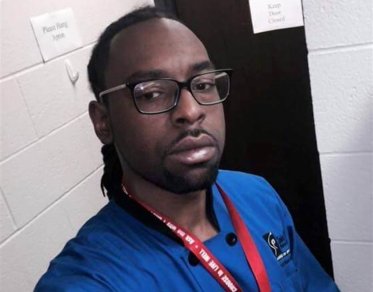
July 6, 2016, Philando Castile was murdered by a Falcon Heights cop in the passenger seat of a car, while his girlfriend and her 4 yr old daughter watched. worked in a school cafeteria for over 12 yrs where he served little kids and was beloved among his colleagues.

castille

The Second Amendment’s Second-Class Citizens


https://www.youtube.com/watch?time_continue=4&v=cQo-yYhExw0

On social-media, many are already asking why the Second Amendment did not protect Sterling and Castile, and why gun-rights advocates like the National Rifle Association are not speaking out on their behalf. In each case, there are complicated legal questions, and many of the details remain unclear, but it is true that gun-rights groups like the NRA and its allies have typically pushed for laws that would allow citizens broader freedom to bear arms than currently permitted. It is also the case that the interpretation of the Second Amendment has for decades been deeply intertwined with the ways the law protects—and more often fails to protect—African Americans in comparison with whites, a history that begins in earnest in the 1860s, flares up in the 1960s, and is again relevant today.

The Sterling case is the more complicated one. Sterling was a convicted felon, and thus probably was not legally permitted to have a gun. While Louisiana allows open carry of handguns for anyone legally allowed to possess one, concealed carry requires a permit, for which Sterling would have been ineligible. Sterling had allegedly been displaying the gun, which is the reason why police were called.

The crucial point is that the police couldn’t have known when they arrived on the scene whether Sterling’s gun was completely legal or not. An additional irony is that, according to Muflahi, Sterling had begun carrying the gun because he was concerned about his own safety—that is to say, for the very reasons that gun-rights advocates say citizens should be able to, and many argue should, carry guns.

The Castile case looks more straightforward, based on what’s known now. Assuming Castile’s permit was valid, he was placed in an impossible position by the officer. Unlike Sterling, who seems to have been resisting arrest (a fact that in no way justifies an extrajudicial execution by officers), Castile was attempting to comply with contradictory imperatives: first, the precautionary step of declaring the weapon to the officer; second, the officer’s request for his license and registration; and third, the officer’s command to freeze.*

Some activists contend that white men in the same situations would never have been shot. It’s an impossible counterfactual to prove, although there’s relevant circumstantial evidence, such as the fact that black men are much more likely to be shot by police than any other group. Raw Story rounds up stories of white people who pointed guns at police and were not shot. Castile’s shooting is reminiscent of a 2014 incident in which South Carolina State Trooper Sean Groubert pulled a black driver over in Columbia. Groubert asked the man, Levar Edward Jones, for his license and registration, but when the driver turned to get them, Groubert promptly shot him without warning. Groubert seems to have feared—however irrationally—for his safety when Jones reached into the car, but what was Jones supposed to do? He was complying with the officer’s instructions. (Groubert later pled guilty to assault and battery.)

The two shootings give a strong sense that the Second Amendment does not apply to black Americans in the same way it does to white Americans. Although liberals are loath to think of the right to bear arms as a civil right, it’s spelled out in the Bill of Rights. Like other civil rights, the nation and courts have interpreted it differently over time—as an individual right, and as a collective right. But however it’s been applied, African Americans have historically not enjoyed nearly the same protection as their white fellow citizens.

As Adam Winkler wrote in The Atlantic in 2011, one crucial testing ground for a personal right to bear arms came in the aftermath of the Civil War. Blacks in the South encountered a new landscape, one which they were ostensibly free but vulnerable and beset by white antagonists:

After losing the Civil War, Southern states quickly adopted the Black Codes, laws designed to reestablish white supremacy by dictating what the freedmen could and couldn’t do. One common provision barred blacks from possessing firearms. To enforce the gun ban, white men riding in posses began terrorizing black communities. In January 1866, Harper’s Weekly reported that in Mississippi, such groups had “seized every gun and pistol found in the hands of the (so called) freedmen” in parts of the state. The most infamous of these disarmament posses, of course, was the Ku Klux Klan.

In response, General Dan Sickles, who was in charge of Reconstruction in South Carolina, decreed that blacks could own guns. State officials ignored him, so Congress passed a law stating that ex-slaves possessed “full and equal benefit of all laws and proceedings concerning personal liberty … including the constitutional right to bear arms.” In the words of the Yale constitutional-law scholar Akhil Reed Amar, “Between 1775 and 1866 the poster boy of arms morphed from the Concord minuteman to the Carolina freedman.”

Black Americans again prominently asserted their right to bear arms during the 1960s. In 1964, Malcolm X was famously photographed holding a rifle as he looked out a window. The image was often misinterpreted as a statement of aggression, as though he was preparing a guerrilla assault. In fact, Malcolm was exercising his own right to own a gun for self-defense, concerned that members of the Nation of Islam—which he had recently deserted for Sunni orthodoxy—would try to kill him. (His fear was, of course, vindicated the following year, when Nation members did murder him.)

In 1967, Black Panthers began taking advantage of California laws that permitted open carry, walking the streets of Oakland armed to the teeth, citing threats of violence from white people and particularly white cops. When people were pulled over, Panthers would arrive on the scene—to ensure that justice was done, they argued, or to intimidate the cops, the cops contended. In response, Republican state Assemblyman Don Mulford introduced a bill to ban open carry. The Panthers then decided to go to the state capitol, heavily armed, to exercise their right.

As theater, it was an incredible gesture. As politics, it was a catastrophe. The sight of heavily armed black men brandishing rifles galvanized support for Mulford’s bill, which promptly passed and was signed into law by Governor Ronald Reagan. It set off a spree of gun-control laws that only began to be rolled back years later—leading to the current regime of permissive laws.

“The gun-control laws of the late 1960s, designed to restrict the use of guns by urban black leftist radicals, fueled the rise of the present-day gun-rights movement—one that, in an ironic reversal, is predominantly white, rural, and politically conservative,” Winkler wrote.

Signs of that shift are visible around the nation now. In Texas, gun owners (largely white) staged an open-carry rally on the capitol grounds in Austin in January, an echo of the Panthers’ rally in Sacramento. (Even some gun advocates looked askance at that move.) Meanwhile, the Panthers’ tactic of carrying guns and watching the police has an echo in the rapidly spreading practice of filming encounters with the police, just as happened in the Sterling and Castile shootings. Black Americans may not enjoy the full protection of the Second Amendment, but technology has offered a sort of alternative—one that may be less effective in preventing brutality in the moment, but has produced an outpouring of outrage.

One common thread through all of these cases is the constant threat of state violence against black Americans: from un-Reconstructed Southern officials; from California police; and today, from police around the country.

Gun advocates frequently argue that more guns, and more people carrying guns, produce a safer society. This, and the contrary claim that they undermine public safety, depend on statistics. But anecdotally, both Castile and Sterling represent cases in which carrying a gun not only failed to make the men safer, but in fact contributed to their deaths. The NRA has not made a public statement on either case, and a spokesman did not immediately reply to a request for comment.

In any case, the American approach to guns is, for the moment, stable. The courts, and particularly the Supreme Court, have inched toward much broader gun rights, including a suggestion of a personal right to bear arms. The death of Justice Antonin Scalia may, in the long term, produce a more liberal court, but that will require reversing years of precedents. In the meantime, spates of mass shootings and a slightly increase in violent crime have produced highly vocal calls for gun control, but there’s little reason to expect those efforts to succeed. To date, they have almost universally failed. In fact, the last few years have brought ever looser gun laws. Quick changes in gun laws, regardless of whether they’re desirable, are a remote possibility. As a result, the most relevant question right now is not whether gun laws should change, but whether existing gun laws apply equally to all Americans—and if not, why they don’t.

This article is part of our Next America: Criminal Justice project, which is supported by a grant from the John D. and Catherine T. MacArthur Foundation.

DAVID A. GRAHAM is a staff writer at The Atlantic, where he covers U.S. politics and global news.  

*This article originally stated that Castile had a legal obligation to declare his weapon to the officer. In fact, in Minnesota, holders of concealed carry permits need only declare their weapons when asked to do so by an officer. We regret the error.


Amazon continues to profit from the sale of white-supremacist propaganda

July 6 at 6:00 AM  

The Washington Post

“Hate movements really rely on symbolism to carry their ideologies and signal their belief systems to other members of their tribe,” said Carrie Sloan, research director for the Action Center on Race & the Economy. “It’s so easy to go to Amazon and get a backpack to signal that your kid is somehow connected to neo-Nazi and white-nationalist ideology.”

Shoppers can purchase Amazon.com merchandise displaying symbols of white supremacy, such as a swastika necklace, a baby onesie with a burning cross, and a child’s backpack featuring a neo-Nazi meme, all in contradiction of the retail giant’s policy against selling products that promote hatred, according to a new report from two watchdog groups.

Amazon’s policy says that “prohibited listings” on its website include “products that promote or glorify hatred, violence, racial, sexual or religious intolerance or promote organizations with such views.” But the report, to be released Friday by the Action Center on Race & the Economy and the Partnership for Working Families, argues that Amazon is failing to adhere to its own policy by allowing the sale of dozens of products in its online store as well as its publishing and music platforms that facilitate the spread of racist ideology.

“It’s clear that Amazon is bringing in money by propping up these hate organizations and allowing them to spread these messages in a moment of rising white nationalism and violence,” said Mariah Montgomery, campaign director for the Partnership for Working Families. The Action Center on Race & the Economy and the Partnership for Working Families are national nonprofit organizations that say they are focused on advancing racial and economic justice.

Continue reading