The Decline of Historical Thinking | The New Yorker

“The reason that students at Yale and places like it can “afford” to major in history is that they have the luxury of seeing college as a chance to learn about the world beyond the confines of their home towns, and to try to understand where they might fit in. That’s what history does best. It locates us and helps us understand how we got here and why things are the way they are. “History instills a sense of citizenship, and reminds you of questions to ask, especially about evidence,” Willis told me. In a follow-up e-mail after our conversation, Mikhail wrote, “A study of the past shows us that the only way to understand the present is to embrace the messiness of politics, culture, and economics. There are never easy answers to pressing questions about the world and public life.” Bruce Springsteen famously developed a profound political consciousness after happening upon Allan Nevins and Henry Steele Commager’s “A Pocket History of the United States,” first published in 1942. In his recent Broadway show, Springsteen explained, “I wanted to know the whole American story. . . . I felt like I needed to understand as much of it as I could in order to understand myself.”

Source: The Decline of Historical Thinking | The New Yorker

The Human Cost of Higher Education’s Adjunct Shift – The Atlantic

Thea Hunter was a promising, brilliant scholar. And then she got trapped in academia’s permanent underclass.

To be a perennial adjunct professor is to hear the constant tone of higher education’s death knell. The story is well known—the long hours, the heavy workload, the insufficient pay—as academia relies on adjunct professors, non-tenured faculty members, who are often paid pennies on the dollar to do the same work required of their tenured colleagues.

The position is often inaccurately described as akin to a form of slavery. Thea, a scholar of rights, slavery, and freedom, would have been the first to say that is not the case. It is more like the lowest rung in a caste system, the one that underrepresented minorities tend to call home.


Source: The Human Cost of Higher Education’s Adjunct Shift – The Atlantic

Baby Bonds: A Plan for Black/White Wealth Equality Conservatives Could Love?

Baby Bonds: A Plan for Black/White Wealth Equality Conservatives Could Love?

Darrick Hamilton calls for spreading the benefits of asset-ownership to all Americans.


JOIN THE INSTITUTE IN DETROIT FOR A CONFERENCE ON RACE & ECONOMICS, NOV. 11-12.

Continue reading

“On the marital status of U. S. slaves: Evidence from Touro Infirmary, New Orleans, Louisiana” ∴ Dr. Trevon D. Logan

slavery

On the marital status of U. S. slaves: Evidence from Touro Infirmary, New Orleans Louisiana

Abstract

We estimate marriage rates for enslaved African Americans using unique hospital records that report marital status for both free and enslaved patients. We find that marriage rates increased with age, that females had higher marriage rates than males, and that relatively more enslaved African Americans than whites were married, a result we partly attribute to the demographic composition of the hospital population. In addition, the admission records allow us to identify those slaves owned by slave traders. We find relatively high marriage rates among enslaved African Americans but significantly lower marriage rates for those slaves owned by traders, a result we attribute to the demographic composition of traded slaves and marital disruption caused by the slave trade. Comparisons with other postbellum sources provide suggestive support for the antebellum marriage patterns found in these hospital data.

Purchase: 

Dr. Trevon D Logan    @TrevonDLogan
“On the marital status of U. S. slaves: Evidence from Touro Infirmary, New Orleans, Louisiana” was just published. We provide new evidence on slave marriage and the extent to which the slave trade disrupted black marriage patterns.
 
Dr. Logan is the Hazel C. Youngberg Distinguished Professor of Economics @OhioState. Author of Economics, Sexuality, and Male Sex Work.    

Students in Detroit Are Suing the State Because They Weren’t Taught to Read

Students in Detroit Are Suing the State Because They Weren’t Taught to Read

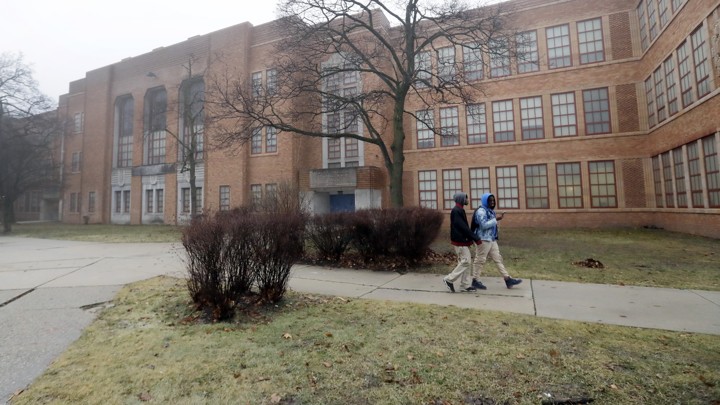
Students walk outside Detroit’s Pershing High, which isn’t one of the institutions named in the suit but was identified as one of the city’s lowest-performing schools CARLOS OSORIO / AP

What to do when a school is infested with vermin, when textbooks are outdated, when students can’t even read? Perhaps the answer is sue the government.

That’s what seven students in Detroit have done. Their class-action suit filed against the state of Michigan asserts that education is a basic right, and that they have been denied it.

 Usually, such education-equity cases wend their way through state courts, as all 50 state constitutions mandate public-education systems, while the country’s guiding document doesn’t even include the word education. But this case, Gary B. v. Snyder, was filed in federal court, and thus seeks to invoke the Constitution. And as of this week, it’s headed to the federal appeals court in Cincinnati.

The lawyers filing the suit—from the pro bono Los Angeles firm Public Counsel—contend that the students (who attend five of Detroit’s lowest-performing schools) are receiving an education so inferior and underfunded that it’s as if they’re not attending school at all. The 100-page-plus complaint alleges that the state of Michigan (which has overseen Detroit’s public schools for nearly two decades) is depriving these children—97 percent of whom are students of color—of their constitutional rights to liberty and nondiscrimination by denying them access to basic literacy. Almost all the students at these schools perform well below grade level in reading and writing, and, the suit argues, those skills are necessary to function properly in society. It’s the first case to argue that the U.S. Constitution guarantees the right to become literate (and thus to be educated) because other rights in the Constitution necessarily require the ability to read.


Continue reading

What Did Cedric Robinson Mean by Racial Capitalism? [Boston Review]

What Did Cedric Robinson Mean by Racial Capitalism?

RACE

What Did Cedric Robinson Mean by Racial Capitalism?

ROBIN D. G. KELLEY

This essay is the introduction to Boston Review’s print issue, Race Capitalism Justice. Inspired by Cedric Robinson’s work on racial capitalism, this themed issue is a critical handbook for racial justice in the age of Trump.


“Robinson’s critique of political order and the authority of leadership anticipated the political currents in contemporary movements such as Occupy Wall Street and Black Lives Matter—movements organized horizontally rather than vertically. His monumental Black Marxism: The Making of the Black Radical Tradition (1983) takes Karl Marx to task for failing to comprehend radical movements outside of Europe. He rewrites the history of the West from ancient times to the mid-twentieth century, scrutinizing the idea that Marx’s categories of class can be universally applied outside of Europe. Instead he characterized black rebellions as expressions of what he called the “Black Radical Tradition,” movements whose objectives and aspirations confounded Western social analysis. Marxism also failed to account for the racial character of capitalism. Having written much of the book during a sabbatical year in England, Robinson encountered intellectuals who used the phrase “racial capitalism” to refer to South Africa’s economy under apartheid. He developed it from a description of a specific system to a way of understanding the general history of modern capitalism . . .

Robinson was a challenging thinker who understood that the deepest, most profound truths tend to bewilder, breaking with inherited paradigms and “common sense.” When asked to define his political commitments, he replied, “There are some realms in which names, nomination, is premature. My only loyalties are to the morally just world; and my happiest and most stunning opportunity for raising hell with corruption and deceit are with other Black people.”

Robin D. G. Kelley

Robin D. G. Kelley, Gary B. Nash Professor of American History at UCLA, is author of Africa Speaks, America Answers: Modern Jazz in Revolutionary Times and Freedom Dreams: The Black Radical Imagination.

Read More 

OUR COMMON GROUND :: Watch Night 2016

stationary-logo
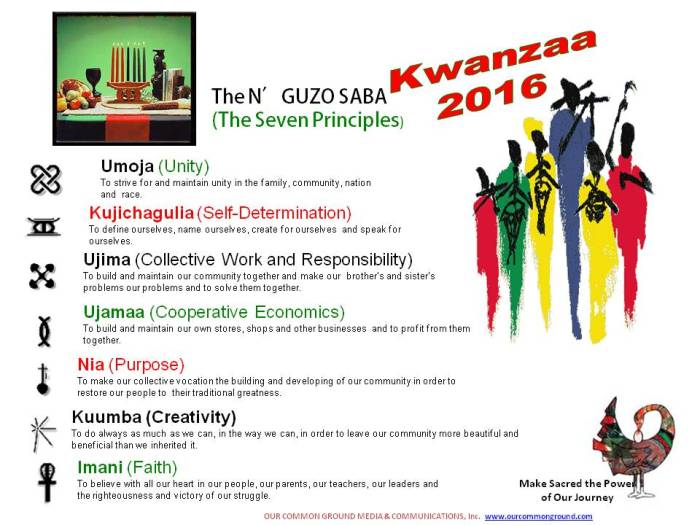
We have explored and examined the many issues, events and collective experiences of our time all through this year, 2016. As a people we have been challenged with disappointment; thunders of terror at the extra-judicial murders of our Brothers and Sisters; the continuing captured of them in enslavement camps by the millions;the covert oppression of children in schools that fail them or prepare them for imprisonment camps; and the failure of our government to makes us whole. As on this night in 1862, we search for the ‘North Star’ still. I impress my life and the spirit of this radio broadcast each week in the lessons of the N’Guzo Saba, striving to respect and honor Black Truth, our TRUTH.
Each week, we make a place, a sanctuary to say and claim that truth. In this coming year, we are faced with the gravest form of oppression and racism seen by none of us in our lives.  Make no mistake, on the bed of a fledgling fascism they will make every effort to eviscerate our belief in our historical accomplishments, ourselves as a people, what is ours and what is owed. We must stand tall in the dancing glow of our Ancestors and stand strong and tall. We must be strategically vigilant and believe in our Truth and the possibilities of our people still.
OUR COMMON GROUND will continue to provide the sanctuary that offers clarity, armament, comfort and a secure place for our voice, with respect and passion.  We are committed to serious analysis, seeking appropriate outcomes and input and answers.  I recently passed my 35th anniversary as host of OUR COMMON GROUND, there will be changes but our mission will never waver.  We are ALTERNATIVE ACTIVIST RADICAL RADIO and will continue in that tradition. WE least afford to let up in the face of what is coming.  We must careful about how we adjust our lenses in lunging into the “new struggle” era. Credible, useful, accurate and clear examination and action is more necessary than ever.  We are in a period of “post reconstruction” with the most visceral and evil forces controlling our public agency. We are a people who know how to survive.  For our children we continue thus.  As for our government, we may be unable to stop what will happen, however, we must stand on our Truth.
Throughout our history, the only thing that we have ever asked the OCG Family is do what you can (UJIMA, NIA) to help us grow and to bring more comrades to the Sanctuary.
Thank you for your support throughout the year. We return LIVE on January 7th.
Wishing for us the Victories of our Past and Abundance and Prosperity in our Future.
Janice Graham
Executive Producer, Host
OUR COMMON GROUND
kwanzaa16
watchnight
Date: December 31
Wed, 1862-12-31

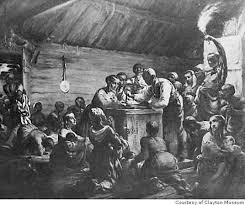
*On This date in 1862 the first Watch Night Services were celebrated in Back communities in America.

The Watch Night service can be traced back to gatherings also known as “Freedom’s Eve.” On that night, Black slaves and free blacks came together in churches and private homes all across the nation awaiting news that the Emancipation Proclamation actually had become law.  At the stroke of midnight, it was January 1, 1863; all slaves in the Confederate States were declared legally free. When the news was received, there were prayers, shouts and songs of joy as many people fell to their knees and thanked God.

Blacks have gathered in churches annually on New Year’s Eve ever since, praising God for bringing us safely through another year. It’s been over a century since the first Freedom’s Eve and tradition still brings us together at this time every year to celebrate “how we got over.” This celebration takes many African American decendants of slaves into a new year with praise and worship. The service usually begins anywhere from 7 p.m. To 10 p.m. And ends at midnight with the entrance of the New Year. Some people come to church first, before going out to celebrate, for others, church is the only New Year’s Eve event.

There have been instances where clergy in mainline denominations questioned the propriety of linking religious services with a secular holiday like New Year’s Eve. However, there is a reason for the importance of New Year’s Eve services in the Black experience in America.

Reference:
The African American Desk Reference
Schomburg Center for research in Black Culture
Copyright 1999 The Stonesong Press Inc. and
The New York Public Library, John Wiley & Sons, Inc. Pub.
ISBN 0-471-23924-

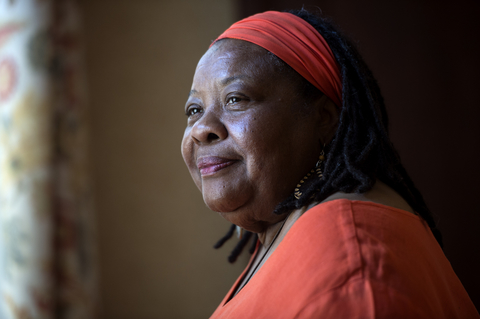
Ruby Sales — Where Does It Hurt? | On Being

RUBY SALES —Where Does It Hurt?

Where does it hurt? That’s a question the civil rights icon Ruby Sales learned to ask during the days of that movement. It’s a question we scarcely know how to ask in public life now, but it gets at human dynamics that we are living and reckoning with. At a convening of 20 theologians seeking to re-imagine the public good of theology for this century, Ruby Sales unsettles some of what we think we know about the force of religion in civil rights history, and names a “spiritual crisis of white America” as a calling of this time.

[OCG NOTE: Dr. Ruby Sales is a frequent contributor and commentator of OUR COMMON GROUND.  In addition to being an OUR COMMON GROUND Voice, she is an OCG Witness from the Bridge. Our visits with Dr. Sales can be found in our archives.   Please do check out a couple of  most important discussions that we had with her in our 2016 Season, “Hands Off Our Children: 300 Strong” Report from Field with Dr. Ruby Sales on 04/16; and, STOP THE WAR ON OUR CHILDREN™ • MARCH 18, 2016. We are proud of our association with Dr. Sales, our friendship and support from her and the Spirit House Project. Ruby Sales is a national treasure. ]

 GUESTS
RUBY SALES is the founder and director of the Spirit House Project. She is one of 50 African Americans to be spotlighted in the new Smithsonian National Museum of African American History and Culture in Washington, D.C.

“WHERE DOES IT HURT?”: A NATIONAL INQUIRYAnger, name-calling, and division seem to be deepening in American and global life. They are public faces of human pain and fear. But they are not the whole story of our time. As part of The Civil Conversations Project, we’re launching a national inquiry, “Where Does It Hurt?” Please join with us and take part in a new conversation in our radio and digital spaces.

Source: Ruby Sales — Where Does It Hurt? | On Being

The Psalm of Howard Thurman

ABOUT ABOUT THE FILM

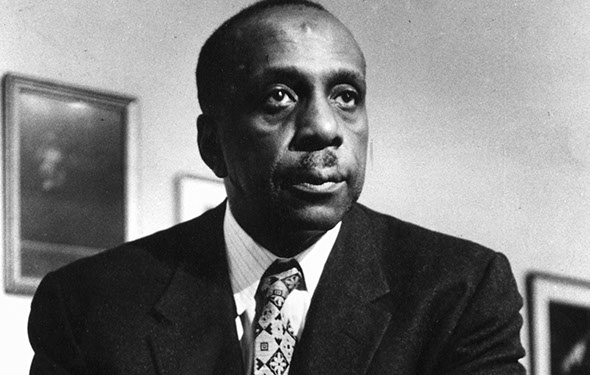
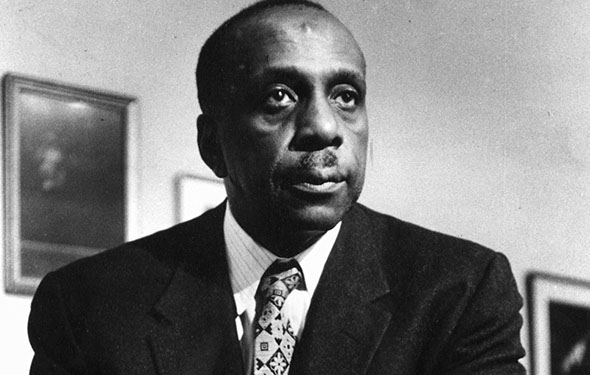
The Psalm of Howard Thurman is the first feature-length documentary film on the life and wisdom of one of the world’s greatest spiritual treasures, Howard Thurman (1899-1981).

The film introduces audiences to Thurman’s uplifting story, his transcendent  yet grounded presence, and his important voice for our times. The film aspires to be a psalm,a lyrical work of beauty and truth, and a creative utterance that moves, touches and inspires.

ABOUT HOWARD THURMAN

A JOURNEY OF HEART, MIND AND SOUL

Thurman attended high school in Jacksonville, Florida. He later completed studies at Morehouse College, Atlanta in 1923 and the Rochester Theological Seminary, New York in 1926. In 1929, after serving his first pastorship in Oberlin, Ohio, Thurman returned to Atlanta to serve as Professor of Religion and Philosophy and Director of Religious Life at Morehouse and Spelman Colleges. Thurman felt that it was his immediate responsibility to inspire and encourage students in their individual quests for the truth.”

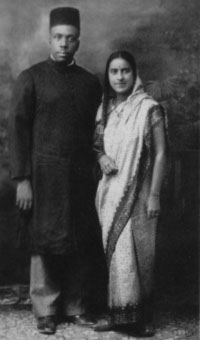
In 1935,  while a professor at Howard University in Washington, D.C., Thurman and his wife, Sue Bailey Thurman, led a pilgrimage of African Americans to Ceylon, Burma and India and met with Mahatma Gandhi. As a result of this trip, he formulated, a generation before Martin Luther King Jr., a non-violent approach to social change in America. This “love-ethic” informed one of Thurman’s best known works, Jesus and the Disinherited, a book which later influenced King and other leaders of the Civil Rights Movement.

 At the close of the 1935 pilgrimage, looking down into Afghanistan at the Khyber Pass, Thurman experienced a vision of a church that would be open to “seekers of all colors and creeds.” He was compelled to see if “experiences of spiritual unity among peoples could be more compelling than the experiences which divide them.”

Hoard and Sue Bailey Thurman

India, 1935

Howard Thurman Birth Home, Daytona, Florida, USA

HOWARD THURMAN was born in Daytona, Florida in 1899. Early on, he developed a kinship with nature and a “hunger of the heart”–a curiosity into the meaning of life. He found refuge during times of loneliness and trepidation in an old oak tree in his back yard. It was while young Howard stood with his back placed firmly against the tree that he first felt the unity of all living things and engaged in what he would later call, “the religious experience.”

 As a young boy Thurman was raised by a strong and affirming grandmother. She was a former slave who had a profound influence on what would become an essential part of Thurman’s thought–that if theology is to have any validity, it must justly deal with one’s life situation and must affirm one’s worth as a child of God.

FILMMAKERS

MEET THE ARTISTS BEHIND THE FILM

“Arleigh Prelow is the right person to create a documentary about Dr. Thurman. She has the spiritual sensibility to understand his life and convey who he was in a truthful and meaningful way.”


– Sue Bailey Thurman (before her death in 1996)

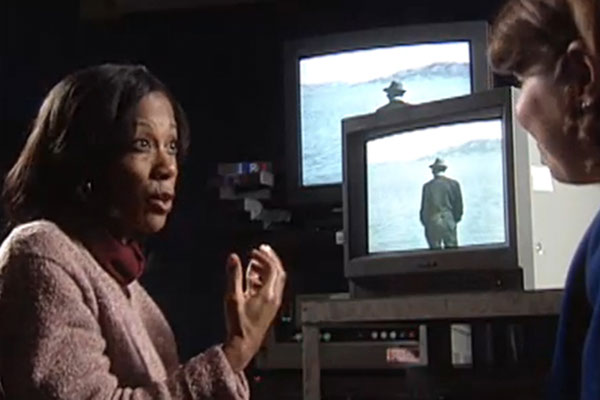
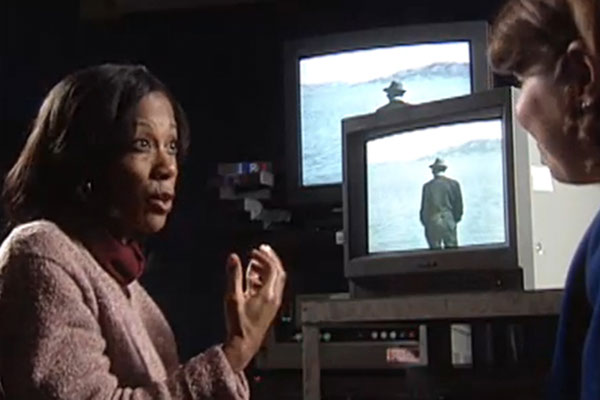
ARLEIGH PRELOW, PRODUCER/ DIRECTOR

 Emmy winning composer Joel Goodman has scored over 100 films and television programs that have received 4 Oscar nominations, 15 Emmy awards and over 25 Emmy nominations.

JOEL GOODMAN

COMPOSER

BIO

BIO

GALLERY

INTERVIEWS WITH ARLEIGH PRELOW, PRODUCER/DIRECTOR

 THE SPIRIT AND WORK OF HOWARD THURMAN LIVES ON

PEDRO CESCA FALCI

ASSISTANT DIRECTOR, HOWARD THURMAN CENTER BOSTON UNIVERSITY

THE HOWARD THURMAN CENTER FOR COMMON GROUND

BOSTON UNIVERSITY

KATHERINE KENNEDY

DIRECTOR, HOWARD THURMAN CENTER

BOSTON UNIVERSITY


Source: The Psalm of Howard Thurman

Policing and the Violence of White Being: An Interview with Dylan Rodríguez – The Black Scholar

Policing and the Violence of White Being: An Interview with Dylan RodríguezSeptember 12, 2016The following interview was conducted by Casey Goonan, an editor with True Leap Press. It originally appeared on the True Leap Press blog. Casey Goonan: The US white-supremacist state operates today through a different set of discourses and cultural structures than in previous epochs. Your work interrogates such shifts at a level of depth and nuance that is of particular importance for emergent struggles against racist state violence. “Multiculturalist white supremacy,” “post-racial liberal optimism,” “white academic raciality”—such terms are utilized throughout your work to interrogate a myriad of theoretical and historical conundrums that define the post-Civil Rights era, particularly in regards to racial violence and subjectivity. Can you, in very broad strokes, lay out what you are trying to accomplish with these interventions in the discourses, practices, and forms of embodiment that so violently delimit the possibilities for radical social change in the United States?

Dylan Rodríguez: The aftermath of American apartheid’s formal abolition has been overwhelmed by a grand national-cultural vindication of “Civil Rights” as the vessel of fully actualized gendered-racial citizenship. This fraud has, in various ways, facilitated rather than interrupted the full, horrific exercise of a domestic war-waging regime. For the sake of momentary simplicity, we can think about it along these lines: the half-century narrative of Civil Rights victory rests on an always-fragile but persistent common sense—the idea that national political culture (“America”) and the spirit of law and statecraft (let’s call this “The Dream”) endorse formal racial equality. Bound by this narrative-political context, the racist state’s mechanics shift and multiply to rearticulate a condition of normalized racist violence that is condoned or even applauded by the institutionalized regimes of Civil Rights. (It is not difficult to see how the NAACP, JACL, LULAC, Lambda, NOW, Urban League and other like-minded organizations condone or applaud domestic racial war, so long as it is directed at the correct targets: gang members, drug dealers, “violent criminals,” terrorists, etc.). In other words, the contemporary crisis of racist state violence is not reducible to “police brutality” and homicidal policing, or even the structuring asymmetries of incarceration: it is also a primary derivative of the Civil Rights regime.

Source: Policing and the Violence of White Being: An Interview with Dylan Rodríguez – The Black Scholar