“The role of black public officials within the contexts of cities like Washington, D.C., Detroit, New Orleans, and elsewhere was anything but subordinate. Subordinate to whom? Moody misses the very powerful role that these black elites played, and continue to play in formal party politics and local economic growth regimes, in legitimating neoliberalization and, at times, insulating such forces from criticism even when they embark on policy decisions that will have negative social consequences for black constituencies. More troubling, Moody diminishes the role that various black constituencies, neighborhood groups, landlords, business owners, clergy, educators, and activists, not simply political elites, played in shaping the carceral expansion. The sense of different subject positions among blacks, which cannot be reduced simply to the “petty bourgeoisie” and the “long struggle for black freedom” as Moody does, is totally lost. Moody refers to the demands of working-class blacks for more police protection and tougher crime policy, but in a manner that returns quickly to the victim narrative, disconnecting their conscious actions as citizens from their unintended consequence, mass incarceration. ”
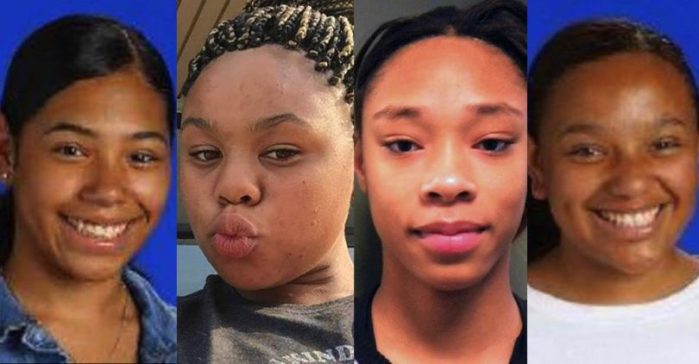
It’s a recurring theme: An African American female goes missing and there’s no radar too low that she won’t fly beneath.The National Center for Missing & Exploited Children– or NCMEC – said the number of reports of missing children made to law enforcement in the United States now totals more than 424,000.
By Aaron Hunt, MS (Graduate Intern, APA Health Disparities Office) and David J. Robles, BA (Graduate Intern, SAMHSA Office of Behavioral Health Equity)
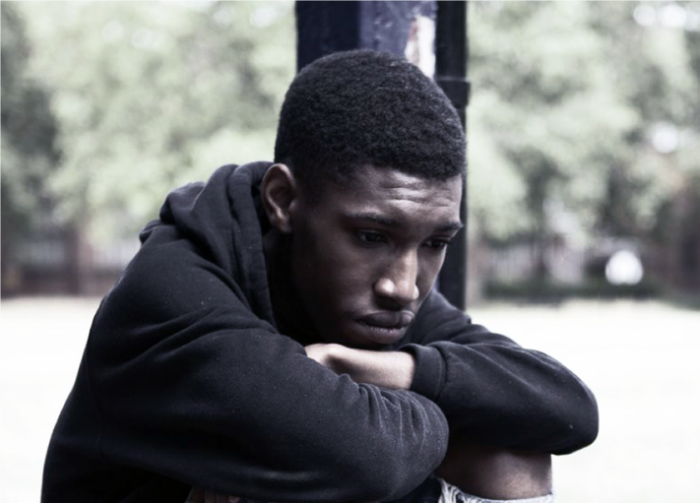
From 2001 to 2015, the suicide risk for Black boys between the ages of 5 and 11 was two to three times higher than that of White boys, according to a new research letter in JAMA Pediatrics (Bridge, 2018). This concerning trend continues through adolescence as reported by the Nationwide Youth Risk Behavior Survey (Kann et al., 2017). The rates of attempted suicide, including attempts that resulted in an injury, poisoning, or overdose, are 1.2x higher among Black males compared to White males.
These persistent trends are enrooted in life expectancy disparities that Black boys face. The APA Working Group on Health Disparities in Boys and Men recently released a new report on Health Disparities in Racial/Ethnic and Sexual Minority Boys and Men, which includes a review of research which may help to explain this increase in suicide in Black boys.
A cast iron bust of Cudjo Lewis, one of the last survivors of the slave ship Clotilde, can be found in front of the historic Union Missionary Baptist Church in Africatown. (Graveyardwalker (Amy Walker) Wikimedia Commons )
“The excitement and joy is overwhelming,” says Woods, in a voice trembling with emotion. She is 70 years old now. But she’s been hearing stories about her family history and the ship that tore them from their homeland since she was a child in Africatown, a small community just north of Mobile founded by the Clotilda’s survivors after the Civil War.The authentication and confirmation of the Clotilda was led by the Alabama Historical Commission and SEARCH Inc., a group of maritime archaeologists and divers who specialize in historic shipwrecks. Last year, the Smithsonian’s National Museum of African American History and Culture’s Slave Wrecks Project (SWP) joined the effort to help involve the community of Africatown in the preservation of the history, explains Smithsonian curator and SWP co-director Paul Gardullo.”
“After the Emancipation Proclamation, the newly freed Africans tried, but failed to return to their beloved homeland Africa. The story describes the group reuniting from various plantations, alongside American-born, formerly enslaved men, women and children. The Africans bought land and founded their own settlement, which came to be known as Africatown.”
The Full Story:
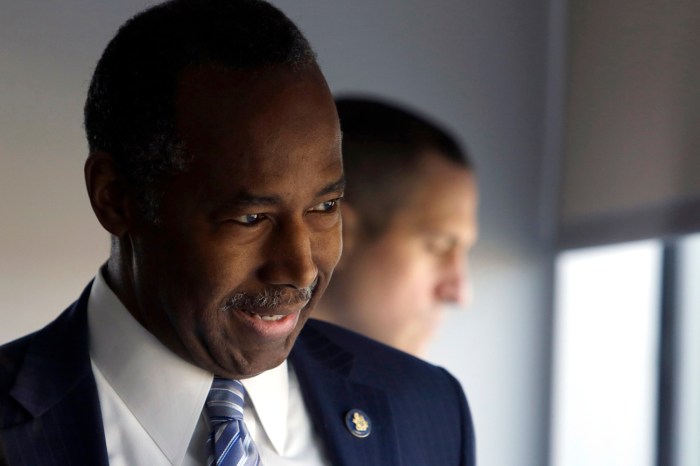
“The Housing secretary has a new rule that may force tens of thousands of children into homelessness, all because President Trump tells us we should hate their undocumented relatives.
. . . On April 18th, the very same day that Attorney General William Barr released a redacted version of Robert Mueller’s findings, Carson announced a proposal that would reinforce a 1980 law stating that undocumented immigrants are ineligible for any financial assistance related to public housing and make it even more strict. (That this new rule targets Hispanic, Latinx and Muslim communities goes without saying; if American public housing was traditionally packed with Scandinavian families, I sincerely doubt that Carson would be displaying the kind of haste manifested in the quote below.)”
“That being said, we need to stop saying “people of color” in instances we mostly (and sometimes only) mean “Black people.”What I’m saying is a bit meta, but the public use of the term POC seems to have become less about solidarity, and more concerned with lessening the negative connotations and implicit anti-Black reactions (fear, scorn, disdain, apathy) to Blackness. In popular discourse, POC is often a shorthand for “this issue affects Black people most directly and disproportionately, but other non-white people are affected too, so we need to include them for people to listen and so people to understand we aren’t talking about race as only Black vs. white.”Saying POC when we mean “Black people” is this concession that there’s a need to describe a marginalized group as “less” Black for in order for people (specifically, but not only, white people) to have empathy for whatever issue being discussed.”
Data from the U.S. Department of Education’s Office of Civil Rights Data Collection demonstrate that students of color, students with disabilities, and other historically underserved students, are disproportionately suspended and expelled compared with their White and nondisabled peers. These disparities are not a result of more incidences of misbehavior; instead, students of color are punished more harshly for the same behaviors, especially non-violent offenses like tardiness or “talking out of turn.” Research shows that these discriminatory and exclusionary discipline practices have a significant negative impact on these same students as even one suspension can double the likelihood of a student dropping out. Research also shows that zero-tolerance policies make schools less effective and less safe—not safer—for students.
Research Shows Entire Black Communities Suffer Trauma After Police Shootings
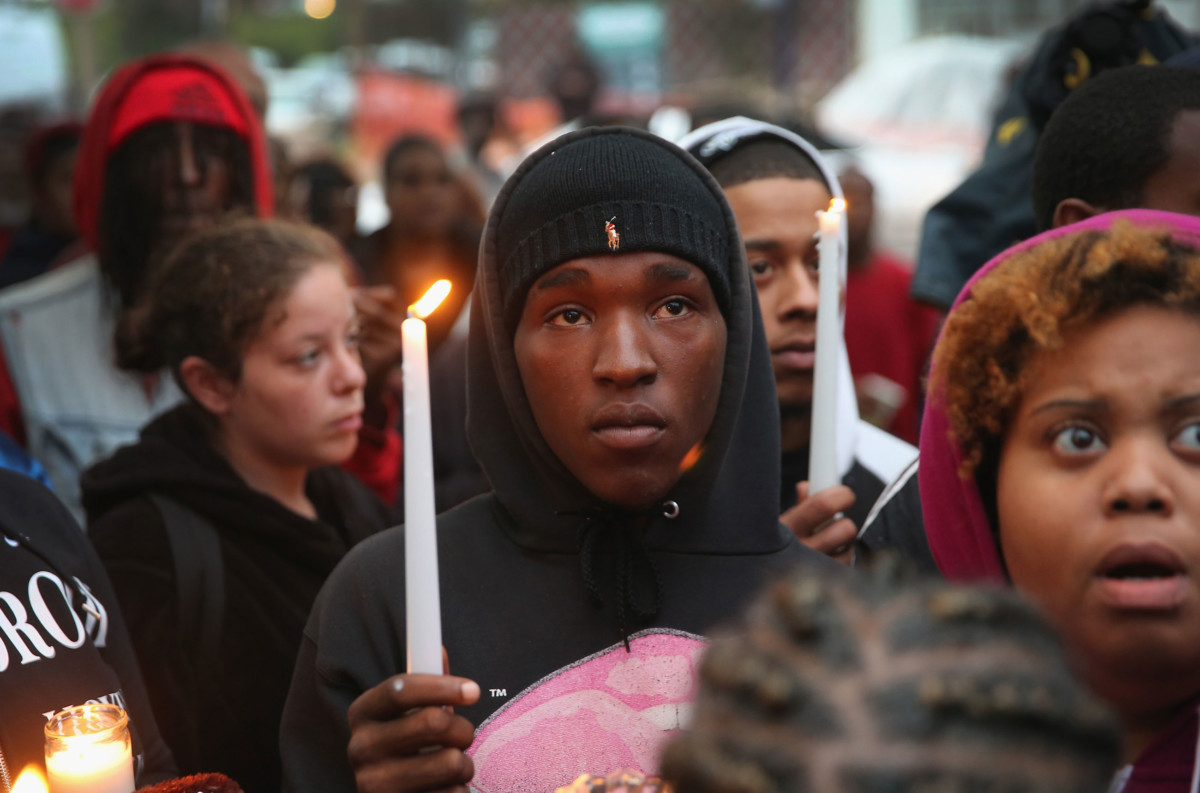
Mourners attend a candlelight vigil in memory of 18-year-old Vonderrit Myers Jr. on October 9, 2014, in St. Louis, Missouri. Meyers was shot and killed by an off-duty St. Louis police officer.SCOTT OLSON / GETTY IMAGES
Following several nationally publicized police killings of unarmed Black Americans in the United States, Eva L., a fitness instructor who identifies as Black, started to experience what she describes as “immense paranoia.” She would often call in sick, because she feared risking an encounter with police upon leaving her house. She also started to second-guess her and her husband’s decision to have children.
“Seeing Black bodies murdered and physical/emotional violence online and on the news” was a trauma she could no longer bear, Eva says. “I was terrified of bringing a child into the world we live in and experience as Black people. I thought not having kids was a truer sign of love than risk them being harmed by this world.”
A recent study sponsored by the University of Pennsylvania — released just before the anniversaries of the deaths of Eric Garner (2014), Michael Brown (2014), John Crawford (2014), and Philando Castile (2016) — found that there could be millions like Eva, for whom these killings have been a mental health trigger.
Research included data from the Mapping Police Violence Projectdatabase for police killings between 2013 and 2016 and information from the Behavioral Risk Factor Surveillance System of over 103,000 Black Americans. The results indicate that police killings of unarmed Black Americans are having a population-level impact on the mental health of Black Americans.
According to researchers, the incidents may contribute to 1.7 additional poor mental health days per person every year, or 55 million more poor mental health days every year among Black Americans across the United States. That means the mental health burden for African Americans caused by police killings of unarmed Black victims is nearly as great as the mental health burden associated with diabetes. African Americans have some of the highest rates of the disease, which contributes annually to 75 million days of poor mental health among them.
African Americans make up 13 percent of the US population but they accounted for 26 percent of people fatally shot by police in 2015 and 2016. While the death of a loved one can be tragic for the family and community of any police-shooting victim regardless of race, the study reveals that there is a deeper trauma for African Americans, related to the victim or not.
Eva started seeing a therapist who diagnosed her as having generalized anxiety and post-traumatic stress disorder. It’s been two years now, and she admits that her progress toward healing has been slow, yet steady.
Jacob Bor, co-author of the study and assistant professor at the Boston University School of Public Health, says the responses in his social circle to police killings of unarmed Black victims is what interested him in conducting this study. Bor noticed that White people were able to comprehend “the injustice on an intellectual level but did not experience the same level of trauma.”
The study findings confirmed Bor’s personal observations. The research team did not observe spillover mental health effects in White respondents from police killings. It should also be noted that among respondents of either race, there were no spillover effects for police killings of unarmed White people or killings of armed Black people.
The research is essential in considering our own personal experiences, says Bor, adding that the findings speak to the overall “value of different people’s lives.” This society “has a long history of state-sanctioned violence” toward racially marginalized groups, he says.
The mental health sector is only now researching the impact of police brutality, a concern that has affected African Americans for decades. “Clinicians can go through medical school without [gaining] any experience in treating the effects of racism,” Bor says. Studies like his, he adds, can help to create long overdue critical mainstream discussions about the effects of racism on mental health, such as, “How do we in public health, society, and among the clinical and mental health services support people when these incidents occur?” and “Can a profession dominated by White providers effectively treat the emotional struggles of ‘living while Black’ in this country?”
According to Bor, these discussions are needed to implement change. “Among many White Americans, there is an empathy gap … and a failure to believe when people of color say ‘this hurts me,’” he says.
Adding to the deficiency of culturally competent therapists, poverty and other formidable socio-economic challenges — also stemming from structural racism — remain steadfast barriers to African Americans accessing mental health care, according to the American Psychological Association.
New York City’s first lady, Chirlane McCray, has also become a passionate advocate for what she describes as a movement for “culturally competent mental health care.”
“When you talk about people of color, who are obviously facing discrimination and legacy of racism and poverty in huge numbers, you are talking about something that is really tough to overcome,” McCray says.
Inadequate care undermines benefits from policies and resources designed to mitigate the burdens of systemic oppression. “Mental illness along with substance abuse disorders are hardship multipliers,” she says. Struggling unsupported with “mental illness can make everything that much harder.”
For example, holding on to affordable housing, staying enrolled in college, and even surviving encounters with law enforcement can be extremely more difficult for those suffering from mental illness or trauma, McCray says. In fact, the most recent annual numbers from the Washington Post’s database of fatal police-shooting victims indicate that “nearly 1 in 4 of those shot was described as experiencing some form of mental distress at the time of the encounter with police.”
“Mental health is the ultimate intersectional concern,” McCray says. “It is reflected in all of our policies … education, housing, school, relationships.”
In 2015, she and her spouse, Mayor Bill de Blasio, launched Thrive NYC, a $850 million mental health program that incorporates 54 initiatives. Among the program’s several core objectives is the aim to address the stigma around mental illness and increase access to treatment across the city. McCray believes that ThriveNYC’s community focused approach is one of several necessary steps toward reaching historically under served groups.
“Culturally competent care to me is all about trust,” McCray says. “It improves early identification, accessibility, and outcomes.” Also, she says, “People have to be seen.” From her advocacy experience she has observed that “people have to feel that they can turn to someone that they trust.”
Connecting people with the appropriate resources, however, means surmounting many challenges. “There is great deal of work to be done to eliminate the stigma,” McCray says. There is also the matter of affordability and infrastructure. “We’ve never had a well-coordinated mental health system in our country — ever. People who have the money find ways to manage.” She says she wants to fight for everyone to get the resources they need to cope.
Eva recognizes that her path to healing has taken a significant amount of work and support beyond the means of many African Americans. “Access to therapy is a privilege,” she says. “I know that most people can’t afford weekly sessions at $150-plus.” Yet, she adds, “[going through therapy] is the only reason why I’m OK planning for kids at 32.”
This story is a collaboration between ProPublica Illinois and WBEZ.
During negotiations for Chicago’s 2012 budget, newly elected Mayor Rahm Emanuel and then-City Clerk Susana Mendoza agreed to hike the price of what was already one of the priciest tickets vehicle owners can get in the city. Citations for not having a required vehicle sticker rose from $120 to $200.
The increase, approved unanimously by the City Council, was pitched by Mendoza as an alternative to raising the price of stickers as well as generating much-needed revenue from “scofflaws.”
A ticket hike, Mendoza told aldermen, could generate $16 million a year for the city.
That did not happen. The increase has brought in just a few million dollars more a year, while it’s unclear if it led to greater compliance. Sticker sales have been largely stagnant.
But increasing the price of sticker tickets came at a devastating cost for thousands of Chicago’s poorest residents, particularly those from African-American neighborhoods, according to an investigation by ProPublica Illinois and WBEZ.
Debt from this one type of ticket swelled, compounded by late penalties and collection fees. Collectively, drivers now owe the city some $275 million for sticker tickets issued since 2012.
The penalty increase — coupled with a pattern of racial disparities in sticker ticketing — has exacerbated a uniquely Chicago phenomenon: Thousands of mostly black drivers filing for bankruptcy to cope with ticket debt.
ProPublica Illinois and WBEZ analyzed millions of records from tickets dating back to 2007 and found:
Sticker citations are the least likely of the city’s routine parking tickets to get paid, with only one in three tickets issued in 2016 paid within a year. Other frequently issued tickets, including $60 street cleaning citations and $50 expired meter citations, are cheaper and more likely to end in payment.
Black neighborhoods are hit with sticker tickets at a higher rate, per household, than other parts of the city, according to an analysis of tickets from 2011 to 2015. Tickets issued by police drive the disparity.
Tickets issued in more affluent, majority white neighborhoods are more likely to get dismissed, according to an analysis of 2017 tickets. That’s in large part because motorists from those neighborhoods appeal at higher rates than drivers cited in other parts of the city.
The mayor’s office did not respond to questions about how the fine increase affects black residents. Instead, in a statement, a spokesman for Emanuel said the finance department “is always reviewing enforcement and collection. That’s in part what drove this administration to create new payment plans to make it easier for residents to pay off tickets.”
Mendoza, meanwhile, expressed regret over her role in increasing the cost of sticker tickets at the expense of low-income black Chicagoans. Now state comptroller, she said the city should “revisit” the ticket prices and consider forgiving drivers’ ticket debt once they come into compliance with the sticker requirement.
“Obviously, it doesn’t make sense to just give tickets and tickets and tickets to people who can’t afford to pay,” said Mendoza. “It’s important that we see what the consequences of policies are … Sometimes they’re terrible.”
Making “Scofflaws” Pay The Price
The decision to raise the fine was framed publicly as a way to pass the burden of paying for pothole repairs — which, along with other street maintenance, are financed with revenue from sticker sales — from “soccer moms” who drive large vehicles to “scofflaws” who don’t buy stickers or purchase them late.
It was the fall of 2011 and Emanuel’s first budget. Years of borrowing and overspending from the administration of his predecessor, Mayor Richard M. Daley, had left Chicago in a perilous financial condition. The housing downturn, meanwhile, had led to a drop in some tax revenue. The city needed to find new revenue sources.
Chicago Mayor Rahm Emanuel (Scott Olson/Getty Images)Illinois State Comptroller Susana Mendoza (Rich Hein/Sun Times via AP File)
Among the newly elected mayor’s proposals to narrow the deficit, he suggested cuts to libraries and mental health centers while increasing the prices for water service, garbage removal and some parking.
He also proposed raising the cost of Chicago’s wheel tax — what’s known colloquially as the “city sticker” — for some large passenger vehicles from $75 to $135 per year. Heavier vehicles already paid more.
Chicago’s wheel tax is unique among the country’s largest 15 cities. Some cities have fees that are tacked onto state vehicle registrations, but none are so expensive.
Mendoza pushed back on increasing the cost of stickers, saying it was too steep and would hurt families that owned larger vehicles. One of the city clerk’s main jobs is to run the sticker program.
She suggested instead that the city raise penalties for sticker “scofflaws.” Aldermen applauded her strategy and the Emanuel administration went along. The increase was included in the broader vote on the city budget, which the City Council unanimously approved.
The cost of a sticker went up for all motorists, though not as much as initially proposed. Penalties for motorists who purchased city stickers late increased to $60, up from $40.
The citation for not having a sticker went up 67 percent, to $200 — an amount that, with late penalties and collections fees, quickly can rise to $488 and become a financial burden for families.
A lawsuit filed against the city last week alleges that these penalties exceed a state cap of $250. City officials have not responded to the suit, but have indicated that they will use Chicago’s “home rule” authority — a privilege that allows large cities to set their own taxes and fines — as a defense.
Despite repeated questioning over several weeks, finance department officials would not say if they ran revenue projections or considered how a price hike would affect the city’s poorest residents before the ticket hike was approved.
Elliott Ramos/WBEZ, David Eads/ProPublica Illinois and Katlyn Alo/ProPublica Illinois
Kristen Cabanban, a finance department spokeswoman, said in a statement that hiking ticket prices was meant to “serve as a deterrent for scofflaws” and an incentive for motorists to purchase stickers.
Sales have been relatively steady since 2008, at 1.2 million to 1.4 million stickers a year, according to records from the city clerk’s office.
In an interview, Mendoza said the final sticker ticket price “was based on the fact that the increase in the sticker itself would be marginal and that the money would be made up more so on the noncompliance side. They needed to come up with the revenues for the city at that time to fill that budget hole.”
She projected a windfall in testimony at an October 2011 City Council budget hearing.
“If we were to increase that fee [to], say, $200, that would give you $16 million there, without having to ask a single person who is in compliance today to give us more,” Mendoza said. “Let’s go after the other folks.”
Her projections appear to have been based on assumptions that everybody who gets a ticket pays it, and that the number of total citations is similar year to year. Both assumptions are false.
Few motorists pay city sticker tickets, a trend that has held steady both before and after the price increase. From 2007 to 2016, the payment rate over 12 months remained about one in three. Meanwhile, the number of sticker citations issued annually ranges between 200,000 and 250,000.
Police, finance department parking enforcement aides, investigators from the clerk’s office and private contractors all write tickets.
In years when the number of sticker citations were similar, revenue increased by a few million dollars. About 200,000 tickets were issued in both 2011 and 2014, for example, and revenue increased from about $21 million to $25 million. There were also similar numbers of tickets issued in 2007 and 2015 — about 250,000 tickets. Revenue jumped from about $25 million to $32 million.
Over time, those amounts can be expected to grow as more drivers pay their tickets.
Meanwhile, debt has skyrocketed. Drivers owe the city about $16.8 million for unpaid sticker tickets, late fines and collections fees from citations issued in 2011. They owe nearly twice that amount for unpaid tickets issued in 2012. And that debt keeps climbing.
Unpaid sticker tickets have contributed to an explosion in Chapter 13 bankruptcies in Chicago, a trend ProPublica Illinois reported on earlier this year. These citations, according to the city’s ticket data, represent one in four tickets connected to bankruptcies.
Cabanban said the increase in bankruptcy filings is “largely due to a small number of bankruptcy law firms selling Chapter 13 as the cheap and easy way to get out of having to pay the city debt, while those firms almost never deliver on that promise.”
Indeed, most bankruptcies tied to unpaid tickets fail as debtors are unable to keep up with required monthly payments. Bankruptcy firms routinely alter the terms of Chapter 13 payment plans in order to ensure their legal fees are paid first, a practice that has recently come under scrutiny in Chicago.
City officials say they want indebted drivers to get on municipal payment plans instead of filing for bankruptcy.
“Early enrollment in the City’s payment plan, where fines, penalties and accrued interest can be avoided, is open to all motorists – even those who have only received one ticket,” Cabanban said.
However, motorists with substantial ticket debt who have lost their driver’s licenses or vehicles because of unpaid tickets are required to pay $1,000 or more to sign up for a monthly payment plan. That down payment can be a barrier for thousands of drivers who file for bankruptcy protection to restore their driving privileges.
More Tickets in Black Neighborhoods
Last month, ProPublica Illinois and WBEZ reported on how the city has, on some 20,000 occasions over the past decade, issued multiple city sticker tickets to the same vehicle on the same day. Those duplicate tickets were disproportionately issued in black neighborhoods.
Those disparities are evident in a broader analysis of where sticker tickets are handed out. ProPublica Illinois and WBEZ mapped the 1.1 million sticker citations issued between 2011 and 2015 and found more citations were issued, per household, in low-income black neighborhoods than anywhere else.
David Eads/ProPublica Illinois and Katlyn Alo/ProPublica Illinois
Of Chicago’s 77 community areas, North Lawndale, West Englewood and West Garfield Park had the highest rates of sticker tickets — at least 10 times higher than in majority white, more affluent neighborhoods such as Forest Glen, Edison Park and Norwood Park, where the rates are lowest.
City officials have offered varying explanations for the disparities. A spokesman for the police department said officers check for city stickers during traffic stops. Finance department officials, meanwhile, said their staff may issue more sticker tickets in South and West side neighborhoods because those areas have fewer parking meters or residential parking zones — meaning there are fewer other kinds of tickets to issue there.
Another explanation for the disparities: More motorists in low-income black neighborhoods simply don’t have city stickers. An analysis of sticker sale data from 2017 does show slightly more late sticker purchases in black neighborhoods, when compared to other parts of the city. The data doesn’t offer a complete account, however, as motorists who never bought stickers are simply left out.
Mendoza said she knew at the time of the debate that many low-income Chicagoans struggled to buy vehicle stickers. While the city offers a discounted rate for senior citizens, no such discount is available for low-income residents. What’s more, she said, many middle-class and more affluent residents who don’t buy stickers can avoid getting caught more easily than low-income residents because garages are more prevalent in more affluent neighborhoods.
He said he’s been looking into policy solutions but has not found an answer.
Villegas was first elected in 2015, after the decision to raise the penalty for the city sticker citation. But he said he’s probably voted on other occasions to increase fines and fees without considering how they may affect the city’s poorest residents.
“Do I have the ability to comb through that budget and look through every fee? No,” he said. “Obviously we’re trying to balance the budget. But at the same time, we have to make sure we’re balancing it in a manner that’s not breaking people’s backs.”
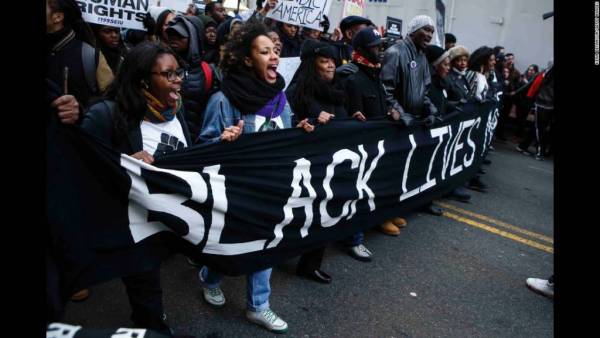
Protestors participate in a vigil for Freddie Gray down the street from the Baltimore Police Department’s Western District police station, April 21, 2015, in Baltimore, Maryland. Gray, 25, died from spinal injuries on April 19, one week after being taken into police custody. (Photo by Drew Angerer/Getty Images)
Where have all the brothers gone?
The numbers are staggering.
According to a report in The New York Times, black women between the ages of 25 and 54 outnumber black men by 1.5 million, based on an analysis of data from the 2010 U.S. Census. There were 7.046 black men of that age group not incarcerated, to 8.503 black women.
To put it another way, for every 100 black women, there are 83 black men. This is not the case in white America, where for every 100 women, there are 99 men, almost complete parity.
What that means, effectively, is that black men have disappeared. This reality lends credence to the idea that black men are an endangered species — not just symbolically or rhetorically, but based on the hard numbers.
Let’s explore this a little more. The Times estimated that more than a third of that 1.5 million gap — or 580,000 — is missing due to prison. With about 625,000 black men of prime age incarcerated and 45,000 black women also in prison, you get a discrepancy of 580,000. This is due, of course, to the staggeringly high incarceration rate of black men, which is higher than any other group, in the nation a quarter of the world’s prisoners, and the most prisoners in the world.
Putting this in perspective, in the 25-54 age range, 1 in 12 black men is in prison. However, only 1 in 60 nonblack men is in prison. Meanwhile, 1 in 200 black women and 1 in 500 nonblack women is behind bars.
Of the remaining 900,000, it was estimated that somewhere between 300,000 and 700,000 are due to mortality, early death. After all, homicide is the leading cause of death for young black men, who also die from heart disease, respiratory disease and accidents more than the rest of the nation.
The place in America with the lowest rate of black men is, believe it or not, Ferguson, Missouri, with 37.5 percent. New York is the city with the most missing black men (118,000), followed by Chicago (45,000), Philly (36,000) Detroit (21,000) and Memphis (19,000).
So what does this all mean? What struck me is that this is not a fluke, nor accidental, nor by chance. But rather, we can point to specific policies that have made black men disappear. First, I decided to look up the definition of the word genocide. The United Nations Genocide Convention defines genocide as the following:
ARTICLE II: IN THE PRESENT CONVENTION, GENOCIDE MEANS ANY OF THE FOLLOWING ACTS COMMITTED WITH INTENT TO DESTROY, IN WHOLE OR IN PART, A NATIONAL, ETHNICAL, RACIAL OR RELIGIOUS GROUP, AS SUCH:
(A) KILLING MEMBERS OF THE GROUP;
(B) CAUSING SERIOUS BODILY OR MENTAL HARM TO MEMBERS OF THE GROUP;
(C) DELIBERATELY INFLICTING ON THE GROUP CONDITIONS OF LIFE CALCULATED TO BRING ABOUT ITS PHYSICAL DESTRUCTION IN WHOLE OR IN PART;
(D) IMPOSING MEASURES INTENDED TO PREVENT BIRTHS WITHIN THE GROUP;
(E) FORCIBLY TRANSFERRING CHILDREN OF THE GROUP TO ANOTHER GROUP.
When society reinforces the notion that black men are a threat, then sets in motion laws and policies to address and ultimately eliminate that threat, is it any wonder that the brothers are missing? If the disappearing of black men is not genocide, then what should we call it?
Assessing the conditions in which black men are placed, and our historical role in society as the official national scapegoat, perennial boogeyman and monster, should we really be surprised we have disappeared? Society always believed that black men were to be fearedand loathed, devalued and disregarded. This mindset has been reinforced in the culture, in the media, and in the laws. During slavery, black men were perceived as a threat to the master’s house, criminalized based on the fear they would stage an uprising, burn down the plantation and, of course, rape the white women.
The war on drugs has been a war on black America, in which the justice system targets black men, locks them up and throws away the key. Although whites and blacks use drugs at similar rates, young men of color are racially profiled, harassed and brutalized through stop-and-frisk policies and arrested at much higher rates for drug possession. And the black incarceration rate is ten times that of whites, according to Human Rights Watch. Families and communities have been decimated by this war, and a generation lost.
From an early age, black children, and particularly black and brown boys, are dehumanized and criminalized and perceived as much older than their actual age. Funneled through a school-to-prison pipeline, many are provided an inferior education and unequal job opportunities — on purpose. And yet, in the land of 300 million guns, while the most vulnerable young black men and boys may not have access to a nourishing meal, education or job — or the ballot, for that matter — there never is a shortage of bullets for black bodies, it seems, and the black community is not a weapons manufacturer.
Further, we must not ignore the toll that racism plays on the black psyche, and on black health. As Billi Gordon, PhD wrote in Psychology Today, racism is causing a silent black genocide: “Stress acts first, and foremost, on the cardiovascular system. Hence, it is reasonable to suspect the pathophysiology of race-based stress as an antecedent to elevated heart disease in Black America.” Gordon also touched on the inherent sources of stress in the black community, including the numbers of black men in prison versus college, disintegrating support structures for black families, and the fact that the life expectancy of black men is seven years lower than anyone else.
In a land that advocates throwing away black men — in the streets, behind bars, and in the execution chamber — we now know the policy is a success, as the numbers show. The question is: how will society address this? This is not the past; this is happening now. Perhaps the idea of reparations does not sound so far-fetched.
OCG note: Black when speaking of a group of people who share cultural and historical background and lineage is a Proper noun and should be spelled with a capital “B”. black is a noun which describes a color. Things journalist should know. Example:
A regular noun or generic noun might be that of a category of animal such as dog, cat, or horse. …
Individual species within the categories such as German Shepherd, Abyssinian, or Lipizzaner would be capitalized because they are proper nouns.












 Mourners attend a candlelight vigil in memory of 18-year-old Vonderrit Myers Jr. on October 9, 2014, in St. Louis, Missouri. Meyers was shot and killed by an off-duty St. Louis police officer.SCOTT OLSON / GETTY IMAGES



 OCG
OCG 