“Black radicals had been experimenting with electoral strategies since the 1960s. In 2008 the Malcolm X Grassroots Movement (MXGM) studied the lessons learned from this work in the South and identified ways to advance movement goals. This work culminated in the 2012 publication of the Jackson-Kush Plan, which called for people’s assemblies (a grassroots co-governance model), an independent black political party, and a broad-based solidarity economy. Along the way, MXGM members identified Chokwe Lumumba to run for Jackson city council in 2009. He won, and by the time he ran for mayor four years later, he was well known, with an established infrastructure to support him.”
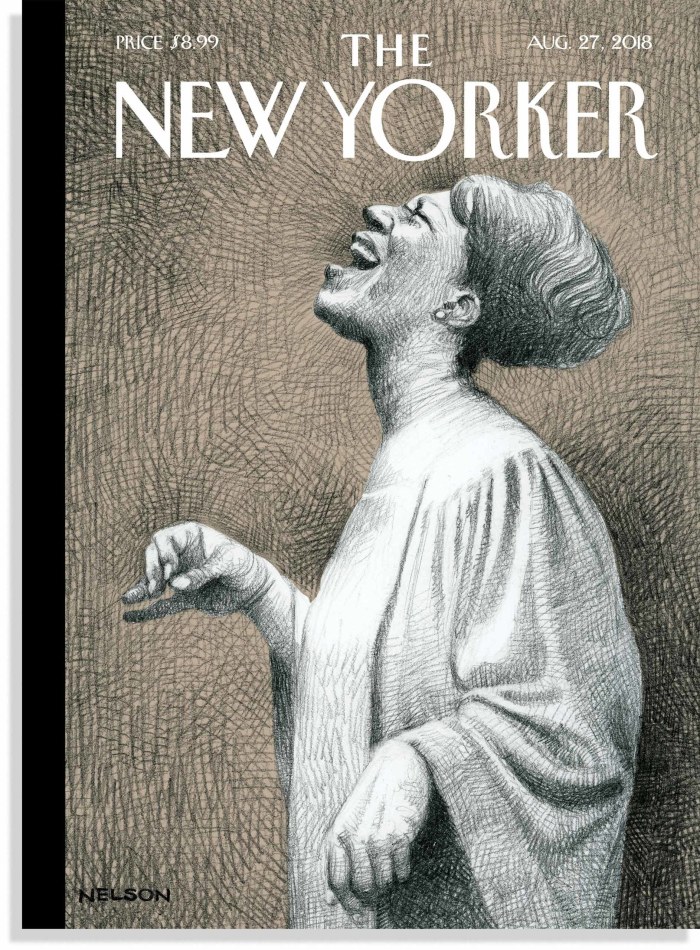
Aretha Franklin, a pillar of postwar American music, passed away Thursday morning, at seventy-six. A few hours later, the artist Kadir Nelson sent a sketch to The New Yorker, which drew inspiration from “Folksinger,” a 1957 ink drawing by Charles White. “I wanted to draw her in a choir,” he said. “She was a preacher’s daughter, and so much of what she gave us came from the church, even after she moved beyond gospel.” Nelson, of course, wasn’t the only one who paid tribute, and you can read some of The New Yorker’s writing on Franklin, old and new, below.
“Prayer, love, desire, joy, despair, rapture, feminism, Black Power—it is hard to think of a performer who provided a deeper, more profound reflection of her times. What’s more, her gift was incomparable. Smokey Robinson, her friend and neighbor in Detroit, once said, ‘Aretha came out of this world, but she also came out of another, far-off magical world none of us really understood. . . . She came from a distant musical planet where children are born with their gifts fully formed.’ ”
“When Aretha sings ‘Amazing Grace’ in that church, it’s suddenly not a song anymore, or not really—the melody, the lyrics, they’re rendered mostly meaningless. A few bits of organ, some piano. Who cares? Congregants yelling ‘Sing it!’ None of it matters. I’m not being melodramatic—we are listening to the wildest embodiment of a divine signal. She receives it and she broadcasts it. ‘Singing’ can’t possibly be the right word for this sort of channelling.”
“This was the promise of soul: that pain granted depth, and that one was never alone but accompanied by a vibrant community that had crossed too many bridges in order to survive. Franklin was the queen not only of soul music but of soul as a concept, because her great subject was the exceeding of limits. Her willingness to extend her own vocal technique, to venture beyond herself, to strain to implausible heights, and revive songs that seemed to be over—all these strategies could look and sound like grace. She knew that we would need it.”
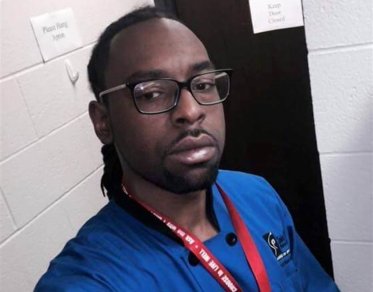
July 6, 2016, Philando Castile was murdered by a Falcon Heights cop in the passenger seat of a car, while his girlfriend and her 4 yr old daughter watched. #PhilandoCastile worked in a school cafeteria for over 12 yrs where he served little kids and was beloved among his colleagues.
The Second Amendment’s Second-Class Citizens
Black citizens of the United States have seldom enjoyed the same right to bear arms that whites do.
On social-media, many are already asking why the Second Amendment did not protect Sterling and Castile, and why gun-rights advocates like the National Rifle Association are not speaking out on their behalf. In each case, there are complicated legal questions, and many of the details remain unclear, but it is true that gun-rights groups like the NRA and its allies have typically pushed for laws that would allow citizens broader freedom to bear arms than currently permitted. It is also the case that the interpretation of the Second Amendment has for decades been deeply intertwined with the ways the law protects—and more often fails to protect—African Americans in comparison with whites, a history that begins in earnest in the 1860s, flares up in the 1960s, and is again relevant today.
The Sterling case is the more complicated one. Sterling was a convicted felon, and thus probably was not legally permitted to have a gun. While Louisiana allows open carry of handguns for anyone legally allowed to possess one, concealed carry requires a permit, for which Sterling would have been ineligible. Sterling had allegedly been displaying the gun, which is the reason why police were called.
The crucial point is that the police couldn’t have known when they arrived on the scene whether Sterling’s gun was completely legal or not. An additional irony is that, according to Muflahi, Sterling had begun carrying the gun because he was concerned about his own safety—that is to say, for the very reasons that gun-rights advocates say citizens should be able to, and many argue should, carry guns.
The Castile case looks more straightforward, based on what’s known now. Assuming Castile’s permit was valid, he was placed in an impossible position by the officer. Unlike Sterling, who seems to have been resisting arrest (a fact that in no way justifies an extrajudicial execution by officers), Castile was attempting to comply with contradictory imperatives: first, the precautionary step of declaring the weapon to the officer; second, the officer’s request for his license and registration; and third, the officer’s command to freeze.*
Some activists contend that white men in the same situations would never have been shot. It’s an impossible counterfactual to prove, although there’s relevant circumstantial evidence, such as the fact that black men are much more likely to be shot by police than any other group. Raw Story rounds up stories of white people who pointed guns at police and were not shot. Castile’s shooting is reminiscent of a 2014 incident in which South Carolina State Trooper Sean Groubert pulled a black driver over in Columbia. Groubert asked the man, Levar Edward Jones, for his license and registration, but when the driver turned to get them, Groubert promptly shot him without warning. Groubert seems to have feared—however irrationally—for his safety when Jones reached into the car, but what was Jones supposed to do? He was complying with the officer’s instructions. (Groubert later pled guilty to assault and battery.)
The two shootings give a strong sense that the Second Amendment does not apply to black Americans in the same way it does to white Americans. Although liberals are loath to think of the right to bear arms as a civil right, it’s spelled out in the Bill of Rights. Like other civil rights, the nation and courts have interpreted it differently over time—as an individual right, and as a collective right. But however it’s been applied, African Americans have historically not enjoyed nearly the same protection as their white fellow citizens.
As Adam Winkler wrote in The Atlantic in 2011, one crucial testing ground for a personal right to bear arms came in the aftermath of the Civil War. Blacks in the South encountered a new landscape, one which they were ostensibly free but vulnerable and beset by white antagonists:
After losing the Civil War, Southern states quickly adopted the Black Codes, laws designed to reestablish white supremacy by dictating what the freedmen could and couldn’t do. One common provision barred blacks from possessing firearms. To enforce the gun ban, white men riding in posses began terrorizing black communities. In January 1866, Harper’s Weekly reported that in Mississippi, such groups had “seized every gun and pistol found in the hands of the (so called) freedmen” in parts of the state. The most infamous of these disarmament posses, of course, was the Ku Klux Klan.
In response, General Dan Sickles, who was in charge of Reconstruction in South Carolina, decreed that blacks could own guns. State officials ignored him, so Congress passed a law stating that ex-slaves possessed “full and equal benefit of all laws and proceedings concerning personal liberty … including the constitutional right to bear arms.” In the words of the Yale constitutional-law scholar Akhil Reed Amar, “Between 1775 and 1866 the poster boy of arms morphed from the Concord minuteman to the Carolina freedman.”
Black Americans again prominently asserted their right to bear arms during the 1960s. In 1964, Malcolm X was famously photographed holding a rifle as he looked out a window. The image was often misinterpreted as a statement of aggression, as though he was preparing a guerrilla assault. In fact, Malcolm was exercising his own right to own a gun for self-defense, concerned that members of the Nation of Islam—which he had recently deserted for Sunni orthodoxy—would try to kill him. (His fear was, of course, vindicated the following year, when Nation members did murder him.)
In 1967, Black Panthers began taking advantage of California laws that permitted open carry, walking the streets of Oakland armed to the teeth, citing threats of violence from white people and particularly white cops. When people were pulled over, Panthers would arrive on the scene—to ensure that justice was done, they argued, or to intimidate the cops, the cops contended. In response, Republican state Assemblyman Don Mulford introduced a bill to ban open carry. The Panthers then decided to go to the state capitol, heavily armed, to exercise their right.
As theater, it was an incredible gesture. As politics, it was a catastrophe. The sight of heavily armed black men brandishing rifles galvanized support for Mulford’s bill, which promptly passed and was signed into law by Governor Ronald Reagan. It set off a spree of gun-control laws that only began to be rolled back years later—leading to the current regime of permissive laws.
“The gun-control laws of the late 1960s, designed to restrict the use of guns by urban black leftist radicals, fueled the rise of the present-day gun-rights movement—one that, in an ironic reversal, is predominantly white, rural, and politically conservative,” Winkler wrote.
Signs of that shift are visible around the nation now. In Texas, gun owners (largely white) staged an open-carry rally on the capitol grounds in Austin in January, an echo of the Panthers’ rally in Sacramento. (Even some gun advocates looked askance at that move.) Meanwhile, the Panthers’ tactic of carrying guns and watching the police has an echo in the rapidly spreading practice of filming encounters with the police, just as happened in the Sterling and Castile shootings. Black Americans may not enjoy the full protection of the Second Amendment, but technology has offered a sort of alternative—one that may be less effective in preventing brutality in the moment, but has produced an outpouring of outrage.
One common thread through all of these cases is the constant threat of state violence against black Americans: from un-Reconstructed Southern officials; from California police; and today, from police around the country.
Gun advocates frequently argue that more guns, and more people carrying guns, produce a safer society. This, and the contrary claim that they undermine public safety, depend on statistics. But anecdotally, both Castile and Sterling represent cases in which carrying a gun not only failed to make the men safer, but in fact contributed to their deaths. The NRA has not made a public statement on either case, and a spokesman did not immediately reply to a request for comment.
In any case, the American approach to guns is, for the moment, stable. The courts, and particularly the Supreme Court, have inched toward much broader gun rights, including a suggestion of a personal right to bear arms. The death of Justice Antonin Scalia may, in the long term, produce a more liberal court, but that will require reversing years of precedents. In the meantime, spates of mass shootings and a slightly increase in violent crime have produced highly vocal calls for gun control, but there’s little reason to expect those efforts to succeed. To date, they have almost universally failed. In fact, the last few years have brought ever looser gun laws. Quick changes in gun laws, regardless of whether they’re desirable, are a remote possibility. As a result, the most relevant question right now is not whether gun laws should change, but whether existing gun laws apply equally to all Americans—and if not, why they don’t.
This article is part of our Next America: Criminal Justice project, which is supported by a grant from the John D. and Catherine T. MacArthur Foundation.
*This article originally stated that Castile had a legal obligation to declare his weapon to the officer. In fact, in Minnesota, holders of concealed carry permits need only declare their weapons when asked to do so by an officer. We regret the error.
“Take for instance the current problem of the education of our children. By the law of the land today they should be admitted to the public schools. If and when they are admitted to these schools certain things will inevitably follow. Negro teachers will become rarer and in many cases will disappear. Negro children will be instructed in the public schools and taught under unpleasant if not discouraging circumstances. Even more largely than today they will fall out of school, cease to enter high school, and fewer and fewer will go to college. Theoretically, Negro universities will disappear. Negro history will be taught less or not at all, and as in so many cases in the past Negroes will remember their white or Indian ancestors and quite forget their Negro forebearers.”
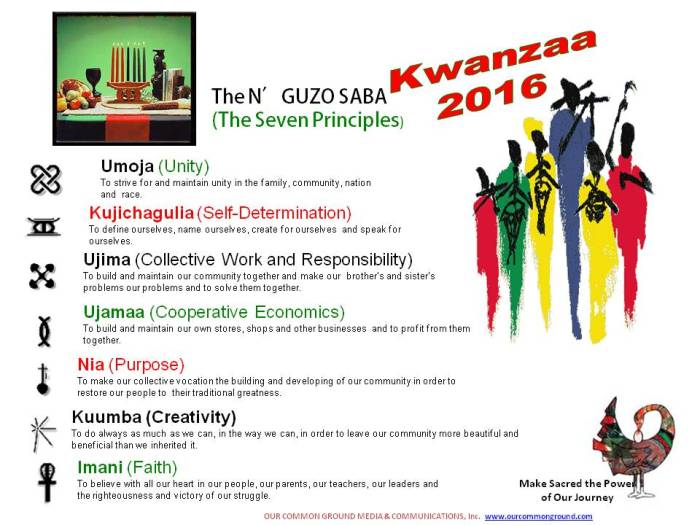
We have explored and examined the many issues, events and collective experiences of our time all through this year, 2016. As a people we have been challenged with disappointment; thunders of terror at the extra-judicial murders of our Brothers and Sisters; the continuing captured of them in enslavement camps by the millions;the covert oppression of children in schools that fail them or prepare them for imprisonment camps; and the failure of our government to makes us whole. As on this night in 1862, we search for the ‘North Star’ still. I impress my life and the spirit of this radio broadcast each week in the lessons of the N’Guzo Saba, striving to respect and honor Black Truth, our TRUTH.
Each week, we make a place, a sanctuary to say and claim that truth. In this coming year, we are faced with the gravest form of oppression and racism seen by none of us in our lives. Make no mistake, on the bed of a fledgling fascism they will make every effort to eviscerate our belief in our historical accomplishments, ourselves as a people, what is ours and what is owed. We must stand tall in the dancing glow of our Ancestors and stand strong and tall. We must be strategically vigilant and believe in our Truth and the possibilities of our people still.
OUR COMMON GROUND will continue to provide the sanctuary that offers clarity, armament, comfort and a secure place for our voice, with respect and passion. We are committed to serious analysis, seeking appropriate outcomes and input and answers. I recently passed my 35th anniversary as host of OUR COMMON GROUND, there will be changes but our mission will never waver. We are ALTERNATIVE ACTIVIST RADICAL RADIO and will continue in that tradition. WE least afford to let up in the face of what is coming. We must careful about how we adjust our lenses in lunging into the “new struggle” era. Credible, useful, accurate and clear examination and action is more necessary than ever. We are in a period of “post reconstruction” with the most visceral and evil forces controlling our public agency. We are a people who know how to survive. For our children we continue thus. As for our government, we may be unable to stop what will happen, however, we must stand on our Truth.
Throughout our history, the only thing that we have ever asked the OCG Family is do what you can (UJIMA, NIA) to help us grow and to bring more comrades to the Sanctuary.
Thank you for your support throughout the year. We return LIVE on January 7th.
Wishing for us the Victories of our Past and Abundance and Prosperity in our Future.
Janice Graham
Executive Producer, Host
OUR COMMON GROUND
Date: December 31
Wed, 1862-12-31
*On This date in 1862 the first Watch Night Services were celebrated in Back communities in America.
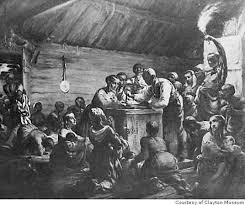
The Watch Night service can be traced back to gatherings also known as “Freedom’s Eve.” On that night, Black slaves and free blacks came together in churches and private homes all across the nation awaiting news that the Emancipation Proclamation actually had become law. At the stroke of midnight, it was January 1, 1863; all slaves in the Confederate States were declared legally free. When the news was received, there were prayers, shouts and songs of joy as many people fell to their knees and thanked God.
Blacks have gathered in churches annually on New Year’s Eve ever since, praising God for bringing us safely through another year. It’s been over a century since the first Freedom’s Eve and tradition still brings us together at this time every year to celebrate “how we got over.” This celebration takes many African American decendants of slaves into a new year with praise and worship. The service usually begins anywhere from 7 p.m. To 10 p.m. And ends at midnight with the entrance of the New Year. Some people come to church first, before going out to celebrate, for others, church is the only New Year’s Eve event.
There have been instances where clergy in mainline denominations questioned the propriety of linking religious services with a secular holiday like New Year’s Eve. However, there is a reason for the importance of New Year’s Eve services in the Black experience in America.
Reference:
The African American Desk Reference
Schomburg Center for research in Black Culture
Copyright 1999 The Stonesong Press Inc. and
The New York Public Library, John Wiley & Sons, Inc. Pub.
ISBN 0-471-23924-
We Who Must Fight in the Shade: Derrick Bell’s Philosophy of Racial Realism as the basis of a Black Politics of Disempowerment.
By: Dr. Tommy J. Curry
A rather curious change of emphasis has caught my attention recently. Negroes are being accused of racism, that is, of unduly emphasizing racial differences and of advocating racial separation. This would be laughable if it did not have so serious a side. A shattered and almost fatally divided world now making desperate effort to envision humanity bound together in peace and at least with some approach to brotherhood is being warned that its worst victims are contemplating resurgence of race hate! W.E.B. DuBois—1962 Introduction Despite the undeniable failure of integration and multiculturalism, race theory in philosophy continues to endorse a dilapidated hope in liberal democracy that ignores the historic and systemic racism of American society.1 Current theories about race focus on its socially constructed nature—its contingency rather than the actual effect(s) racism has had and continues to have on the lives of African-descended people in America. In philosophy, the tendency to privilege “race” over “racism” is particularly worrisome, as current writings on the question of race remain dedicated to fulfilling the unrealized promises of integration. Despite the work of scholars outside of philosophy like Michelle Alexander’s concrete articulation of the “New Jim Crow,” or the maintenance of America’s racial caste system through mass incarceration,2 or Barbara J. Field’s interrogation of the historical complexity that emerges from the ideological limitations of the race construct in analyzing American racism, our present day philosophical engagements with race propagate a conceptually simplistic view that sees race as a problem able to be solved through dialogue and inter-racial understanding. Ignoring the various social and legal manifestations of anti-Black racism that show the regression of race relations in America, rather than progress,3 this dogma calls for a peaceful coexistence between Blacks and whites in which the long denied humanity of Black people are recognized in exchange for Blacks interiorizing America’s liberal creed of (racial) equality, (Black) individuality, and (African-American) progress. Rather than reacting against the liberal conceptualization of American race relations as gradual and naturally progressing towards the resolution of anti-Black racism, the dominant mode of Black political thought seeks to revise Black thinkers doubtful of the possibility that racial equality is possible in American into optimists who saw equal rights under racial integrationism as inevitable. Recent political works in Black philosophy and race theory like Tommie Shelby’s We Who Are Dark: The Philosophical Foundations of Black Solidarity, Elizabeth Anderson’s The Imperative of Integration, and Eddie Glaude’s In a Shade of Blue: Pragmatism and the Politics of Black America follow this mode of uncritically privileging the idea that integration and racial coexistence are the only means of dealing with the racial inequalities that persist in the United States. By contrast, Peniel E. Joseph’s Dark Days, Bright Nights: From Black Power to Barack Obama and The Black Power Movement: Rethinking Civil Rights—Black Power Era points out the ironic, but expected popularity of such scholarship, since these theorizations, and the ideological perspectives current scholars hold vary to great degree from the reflections on American racism presented in the majority of works Black thinkers have penned from the 19th century to present. Despite the prevalence of Black Power style Nationalism, and radical (systemic) critiques of white supremacy and anti-Black racism’s permanence in these works, today, “Black philosophers primarily rely on the promises of American liberalism and the hopes of democracy in the post-Civil rights era to fundamentally change the racial context of the United States and remedy individual attachments to 2 racial loyalties,”4 rather than seriously dealing with the seeming permanence of American racism and theorizing from this actuality. Over two decades ago, Derrick Bell introduced a seemingly radical thesis to a white academic community convinced that the Civil Rights Movement had effectively eliminated racism. According to Bell, Black people will never gain full equality in this country. Even those Herculean efforts we hail as successful will produce no more than temporary “peaks of progress,” short-lived victories that slide into irrelevance as racial patterns adapt in ways that maintain white dominance. This is a hard-to-accept fact that all history verifies. We must acknowledge it and move on to adopt policies based on what I call: “Racial Realism.” This mind-set or philosophy requires us to acknowledge the permanence of our subordinate status.5 Despite the seemingly nihilistic tone of Bell’s announcement, this idea—that racism is permanent—can be found in the most of the writings of the Black intellectuals (like T.Thomas Fortune and Henry McNeal Turner) and Black nationalists of the mid-1800’s (like Martin R. Delany and John E. Bruce), even W.E.B. DuBois rejects Brown as a signal of racial transformation in the 1950’s.
Historically, the admittance of racism’s permanence has been the hallmark of Black thought in America. Despite the attention that integrationist ideas have received in contemporary works of Black political thought,6 there has been a constant and more richly developed strand of Black thought that maintains the impossibility of persuading whites of Black people’s humanity and accepts the permanence of American anti-Black racism and white supremacy. Today, however, most thinkers dealing with the race question are motivated by the Pyrrhic successes of Brown versus the Board of Education and the Civil Rights Era,7 choosing to read into historic Black works contemporary ideas of integrationism and racial ethics, as if the insights of Black authors who wrote during slavery and Reconstruction illuminate current racial issues in America only insofar as they enrich the racial success stories of liberalism and the possibility of racial amelioration under American democracy. If Black political theory is to move beyond the current apologetic revisionism of historic Black thinkers—a revisionism set on depicting even the most adamant nationalists as closet integrationists—Black political theory must begin to exert new energies toward theorizing about the political and social inequality that Blacks currently endure, which means both creating a discussion in Black social political philosophy open to the possibility of permanent racial inequality in the United States, and engaging in a more diligent and earnest reading of Black resistance outside of the political aims of American liberalism and integration’s racial moralizations. It is my hope that the introduction of Derrick Bell’s work into the Black political arena hastens this detaching of decades old ideology of civil rights era integrationism.
This paper intends to convey four theoretical contributions to our current understandings of racism in the post-civil rights era. First, I want to question the mainstay tradition of Black social/political philosophy and race theory that continues to celebrate liberalism as a vehicle for racial progress. Following the work of Derrick Bell, I maintain that this is in a very real sense an unjustifiable romanticization of the Civil Rights Era, specifically the effect of Brown v. Board on American race relations. Second, I want to clarify Derrick’s position on liberalism and a means through which Black political theorists can distance themselves from this dogma of integrationism which I term “conceptual disengagement.” Third, I argue that this disengagement would allow Black scholars to better understand the relationship that W.E.B. DuBois points out to Black Americans in accepting minuscule political privileges when the consequence of such luxuries is the furthering of American imperialism and the capitalist exploitation of the darker races the world over.
Lastly, I am interested in presenting a contrasting political theory rooted in the disempowerment of white supremacist institutions and structures of American society. 3 Chastising the Idealism of Brown v. Board of Education: Bell’s Indebtedness to Robert L. Carter’s Pessimism of Brown. “In its first words, on the subject of citizenship, Congress in 1790 limited naturalization to ‘white persons.’
“1) A social cognition theory proposed by Stanford University Psychologist Albert Bandura that views people as self-organizing, proactive, self-reflective and self-regulating as times change. An agentic perspective states that we are not merely reactive organisms shaped by environmental forces or driven by inner impulses.
2) The capacity for human beings to make choices in the world. HUMAN AGENCY
We see the world as agents of change. We believe that we have choice over our actions and we strive to enable others to make informed, responsible decisions.”
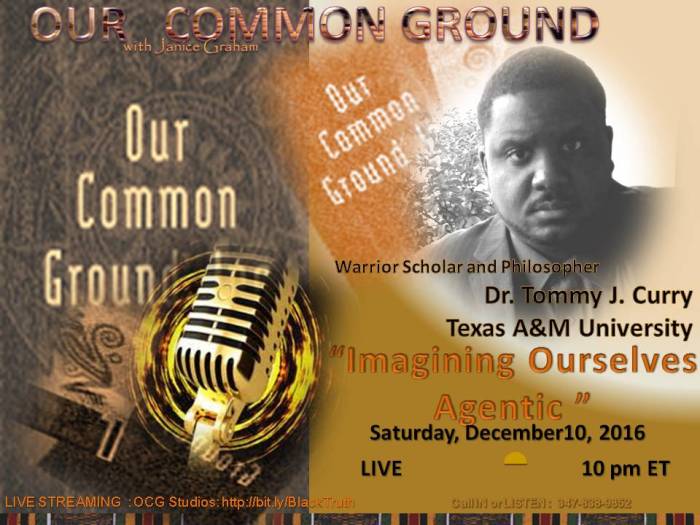
Recently, Dr. Curry wrote in his persistent advocacy of Black males in America, “The reoccuring structure of Black males coping with their rape is to accept its impossibility and imagine themselves as agentic. We need psychologists and social workers in these communities willing to treat these boys as victims , and theorists willing to engage female perpetrated rape beyond the idea of sexual initiation.” In the context of all of us as victims of racial attack, we ask whether any of us can imagine ourselves as agentic and if such a preposition may be impeded by inherent fallacies. Dr. Curry always brings opportunities FOR “transformative discourse”. He will be joining us once again on OUR COMMON GROUND with Janice Graham.
about Dr. Tommy J. Curry
Dr. Curry is an Associate Professor of Philosophy at Texas A&M University. He is a Ray A. Rothrock Fellow 13′-16′ in the Department of Philosophy.
He is an editor of PhilPapers, Choice Magazine and a regular contributor to RacismReview.com and OUR COMMON GROUND. He is Critical Race Theorist, Anti-Colonialist, Applied Ethicist and Black philosopher.
His work in social justice, applied ethics, and bioethics concerns the present interpretation of the Belmont report, and the racial/class barriers to minority access to medical innovation in health care. He has been interviewed by Forbes.com, the Wall Street Journal, Salon.com and other popular venues for his opinions on politics, ethics, and racial justice issues.
His upcoming book in Black Studies and Black Manhood Studies | “The Man-Not” can be Pre-Ordered now on Amazon.com.
Listen or Call-In to add your voice to the discussion (347) 838-9852 Press 1 to join the discussion
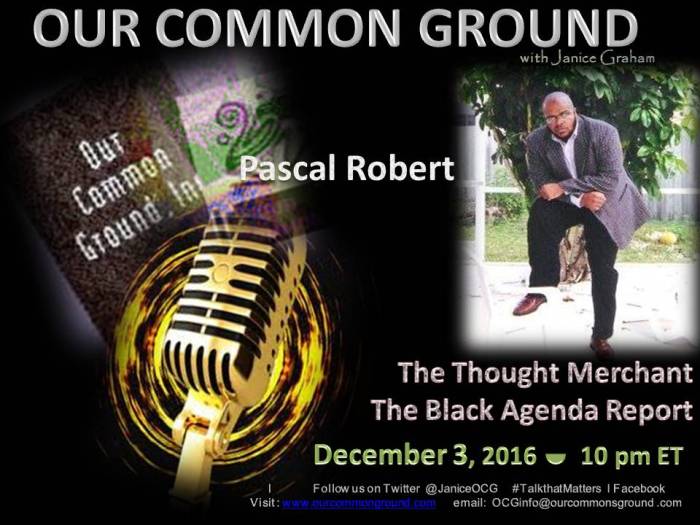
This week we discuss the political future of Black Americans in the era of a imperialist Executive and Legislative government. The critical question is not how we react to the fascism that has embedded itself but how we plan to organize our resistance and survival. There are some who say we have been here before. No,THIS is very different AND WILL be totally destructive to any viable Black empowerment strategies . They are bent on a strategy that will destroy the vulnerable infrastructure that keeps us from drowning. We talk with Pascal about preservation and building.
Pascal Robert (pronounced Ro-Bear like Stephan Colbert) is a Blogger who loves all things politics. SHEER political independent; unafraid to slay the most sacred cows of ideological orthodoxy from the Left, or the Right and one who enjoys global affairs and aspects of pop culture. In all ways he is a child of the Haitian Revolution.
Pascal Robert has been known for years to the online world as THOUGHT MERCHANT.
Since 2007 he has been recognized for his hard hitting, blunt unvarnished style of bringing attention to current events and global affairs, especially those affecting communities of color. Join him in these social media outlets:
OUR COMMON GROUND with Janice Graham “In Conversation with Bruce A. Dixon”
Co-Founder and Managing Editor, The Black Agenda ReportChair, GA Green Party
November 19, 2016 <> LIVE <> 10 pm ET Listen & Call In Line: 347-838-9852 Listen LIVE/Enjoy our LIVE Chat room: http://bit.ly/OCGDixon
BAR Managing Editor Bruce A. Dixon
“President Donald Trump? How did such a thing happen? A competent and purposeful Clinton campaign should have beaten Donald Trump. How did Hillary Clinton and one-percenter Democrats snatch defeat from the jaws of certain victory?”MORE
Bruce Dixon is the GA State Chairman of the Green Party, Co-Founder and Managing Editor of The Black Agenda Report and journalist. Bruce was a rank and file member of the Illinois Chapter of the BPP in 1969 and 1970. He has long been considered a voice of wisdom an encouragement in the Black left, progressive left movement in this country since the 1960s. Tonight we talk with him about the State and Future of Black America.
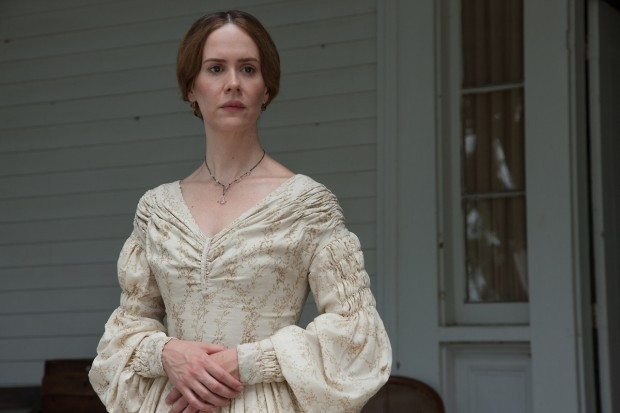
Sarah Anne Paulson as Mary Epps in the film 12 Years a SlaveFOX SEARCHLIGHT
It’s time to talk about the “Miss Ann effect.”
In the wake of the stunning news that more than half of white women who voted on Nov. 8 opted for Donald Trump, I have concerns—and questions.
I’m aware that not all white women are racist. But given the significant number of white women who supported Trump, it is legitimate to at least question their motives—especially the thinking of those who are college-educated and middle-class.
Total percentage of white women who voted for Trump: 42 percent;
White women ages 30-44 who voted for Trump: 42 percent;
White women ages 45-64 who voted for Trump: 53 percent;
Percentage of white women with college degrees who voted for Trump: 45 percent.
Were they responding to Trump’s sickening call to “take back our country”? If so, take it back from whom, exactly? And bring it where?
For college-educated white women, especially those who are in their 30s or 40s and who have jobs; for white women who have benefited from affirmative action, you have to wonder why they felt it a good idea to support a man who is not smart and who demeans people of color, the disabled and even white women.
If you are driven by fear, we would like to know: Exactly what you are so afraid of?
I’m on the record—unironically, and without snark—as saying that many of my best friends are white women. I don’t feel obliged to spend a lot of time here outlining my bona fides on this front. But it is obvious that millions of white women whom I probably would not ever have identified as racist or even “racism-blind” betrayed me and mine by voting for Trump.
And adding to the disillusion I am now experiencing is that fact that many of the white women who helped the untested, boorish, stunningly ignorant 70-year-old white man in his mad quest to replace our nation’s first black president were stealthy if not downright deceptive about their reasons.
I’m here now to call it out.
What Drives Miss Ann? I’m Glad You Asked
In black America, the shorthand for women who harbor virulent fear and resentment of black people—however covertly it is expressed here in the 21st century—are known as “Miss Anns.” It is our not-so-secret vernacular description of white women who were the wives, sisters, daughters and mothers of slave owners in the Deep South.
This figure, and her sometimes sly, always pernicious way of expressing her fear and resentment of blacks, is a recurring theme in black American literature, because Miss Ann was with us hundreds of years before Barack Obama was born to a white woman from Kansas. Her sense of entitlement blends with incipient curiosity about blacks in general and about black men in particular, and suggests, in all probability, an attraction that she cannot readily articulate. The resulting defining character trait of Miss Ann is the unacknowledged passion that seemingly drives the anger she will inevitably express.
If you’ve ever read Zora Neale Hurston or Maya Angelou, you have seen this reference. If you viewed the Academy Award-winning film 12 Years a Slave, you have seen the “Miss Ann” type embodied in the terrific performance of Sarah Anne Paulson as Mary Epps, the wife of the owner of a plantation where the protagonist, Solomon Northup, was held.
I’ll take this moment to remind you that while creative license was taken by filmmakers, and undoubtedly by the original publishers, Northup’s story is real. The Mary Epps portrayed by Paulson, with a cataclysmic range of hate expressions from seething silence to explosive violence, is based on women that Northup dealt with during his horrific journey from freedom to slavery and back again. The invoking of their privileged status; their belief, however inchoate, that their “virtue” must be protected at all costs, and certainly at the expense of black, brown or other marginalized folks, is a key Miss Ann trait.
In the wake of the stunning news that more than half of white women who voted on Nov. 8 opted for Donald Trump, I have concerns—and questions. I’m aware that not all white women are racist. But given the significant number of white women who supported…
What likely drove many of the white female Trump voters is the same instinct that drove white women to accuse black men of all manner of imagined affronts since at least the antebellum era: a deep, innate fear and resentment of black people, particularly of black men.
The patriarchal motif looms large in attempts to answer the question of what white female supporters hope to gain by voting for Trump. It isn’t strictly a zero-sum game of reaping “gains” per se, as much as it is holding ground that some white women perceive as being theirs alone: The white women who approved of Trump as leader of the free world are betting on his ability to preserve their protected status.
Whether they acknowledge it or not, white women do enjoy a higher rung on the social and economic order in the U.S. than do black and Latino women. The perceived “halo effect” of being in close proximity to powerful white men appears to be at the least a subtext of what drove some white women to vote for Trump.
Wall-to-Wall Media Coverage of Election 2016 Didn’t See Miss Ann
I’m not qualified to make a deep dive into the history of psychosocial causal factors for why some white women apparently still harbor such virulent fear and resentment of black men. And it also must be said that by now, versions of this resentment are directed at black women. This dynamic likely did inform the decisions of millions of white women who voted for the GOP candidate Nov. 8.
That their peculiar sentiments were not explored in detail and revealed by the legions of pollsters, campaign correspondents and pundits is cold comfort. I actually take responsibility, short of feeling guilty, for having missed this possibility that as America’s first black president, and his wife and children, occupied the White House—quite literally serving as the embodiment of the United States in the eyes of the world—there were millions of Miss Anns out there quietly seething.
The “Security Moms” who helped elect George W. Bush president in 2000 and 2004 were likely reacting to at least deeply buried Miss Ann instincts. And the periodic episodes of millennial-age white women such as Lena Dunham—who pride themselves on being “woke” and yet can slip right quick into Miss Ann behavior—is an example of the powerful effect. The 2013 episode in which a white woman named Ellen Sturtz rudely interrupted remarks by first lady Michelle Obama during a Washington, D.C., fundraiser is another stark example of Miss Ann entitlement.
Now, staring into the yawning abyss of a Trump presidency, I feel acutely that I’ve been betrayed. I’ve written before about my on-again, off-again concerns about the role of deference in black-white relationships in America, how individuals and institutions and systems are still shaped by long-standing expectations that blacks must always defer to white needs and preferences. Social media warriors such as DeRay Mckesson have pushed phrases like “white privilege” and “intersectionality” onto the public debating stages, which is good and bad: There are powerful platforms now and access to megaphones to define our positions … which inevitably makes many white people uncomfortable.
I make no excuses for them; I am only pointing out that chief among those most recently made uncomfortable by social and political developments over the past few decades are white women.
I have had my own run-ins with variations of the Miss Ann effect over the years. I just never considered that any women in my sphere—in my age, occupational or education cohort—might do such a damaging thing as vote for Trump.
Now I’m compelled to look more closely at some of the women I encounter on the regular; to regard them, not with fear or even stark trepidation, necessarily, but certainly with a far more cold-eyed assessment of what might lie beneath the smiles and words of bonhomie.
The Miss Anns of 21st-century America are no longer yelling at their menfolk to lash us harder. But by voting for Trump, and approving his leadership of the most powerful government in the world, they weaponized a terrible instrument of oppression to keep us in our place.






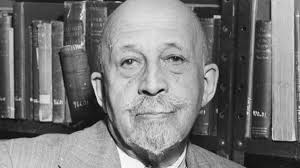




 A rather curious change of emphasis has caught my attention recently. Negroes are being accused of racism, that is, of unduly emphasizing racial differences and of advocating racial separation. This would be laughable if it did not have so serious a side. A shattered and almost fatally divided world now making desperate effort to envision humanity bound together in peace and at least with some approach to brotherhood is being warned that its worst victims are contemplating resurgence of race hate! W.E.B. DuBois—1962 Introduction Despite the undeniable failure of integration and multiculturalism, race theory in philosophy continues to endorse a dilapidated hope in liberal democracy that ignores the historic and systemic racism of American society.1 Current theories about race focus on its socially constructed nature—its contingency rather than the actual effect(s) racism has had and continues to have on the lives of African-descended people in America. In philosophy, the tendency to privilege “race” over “racism” is particularly worrisome, as current writings on the question of race remain dedicated to fulfilling the unrealized promises of integration. Despite the work of scholars outside of philosophy like Michelle Alexander’s concrete articulation of the “New Jim Crow,” or the maintenance of America’s racial caste system through mass incarceration,2 or Barbara J. Field’s interrogation of the historical complexity that emerges from the ideological limitations of the race construct in analyzing American racism, our present day philosophical engagements with race propagate a conceptually simplistic view that sees race as a problem able to be solved through dialogue and inter-racial understanding. Ignoring the various social and legal manifestations of anti-Black racism that show the regression of race relations in America, rather than progress,3 this dogma calls for a peaceful coexistence between Blacks and whites in which the long denied humanity of Black people are recognized in exchange for Blacks interiorizing America’s liberal creed of (racial) equality, (Black) individuality, and (African-American) progress. Rather than reacting against the liberal conceptualization of American race relations as gradual and naturally progressing towards the resolution of anti-Black racism, the dominant mode of Black political thought seeks to revise Black thinkers doubtful of the possibility that racial equality is possible in American into optimists who saw equal rights under racial integrationism as inevitable. Recent political works in Black philosophy and race theory like Tommie Shelby’s We Who Are Dark: The Philosophical Foundations of Black Solidarity, Elizabeth Anderson’s The Imperative of Integration, and Eddie Glaude’s In a Shade of Blue: Pragmatism and the Politics of Black America follow this mode of uncritically privileging the idea that integration and racial coexistence are the only means of dealing with the racial inequalities that persist in the United States. By contrast, Peniel E. Joseph’s Dark Days, Bright Nights: From Black Power to Barack Obama and The Black Power Movement: Rethinking Civil Rights—Black Power Era points out the ironic, but expected popularity of such scholarship, since these theorizations, and the ideological perspectives current scholars hold vary to great degree from the reflections on American racism presented in the majority of works Black thinkers have penned from the 19th century to present. Despite the prevalence of Black Power style Nationalism, and radical (systemic) critiques of white supremacy and anti-Black racism’s permanence in these works, today, “Black philosophers primarily rely on the promises of American liberalism and the hopes of democracy in the post-Civil rights era to fundamentally change the racial context of the United States and remedy individual attachments to 2 racial loyalties,”4 rather than seriously dealing with the seeming permanence of American racism and theorizing from this actuality. Over two decades ago, Derrick Bell introduced a seemingly radical thesis to a white academic community convinced that the Civil Rights Movement had effectively eliminated racism. According to Bell, Black people will never gain full equality in this country. Even those Herculean efforts we hail as successful will produce no more than temporary “peaks of progress,” short-lived victories that slide into irrelevance as racial patterns adapt in ways that maintain white dominance. This is a hard-to-accept fact that all history verifies. We must acknowledge it and move on to adopt policies based on what I call: “Racial Realism.” This mind-set or philosophy requires us to acknowledge the permanence of our subordinate status.5 Despite the seemingly nihilistic tone of Bell’s announcement, this idea—that racism is permanent—can be found in the most of the writings of the Black intellectuals (like T.Thomas Fortune and Henry McNeal Turner) and Black nationalists of the mid-1800’s (like Martin R. Delany and John E. Bruce), even W.E.B. DuBois rejects Brown as a signal of racial transformation in the 1950’s.

 about Dr. Tommy J. Curry


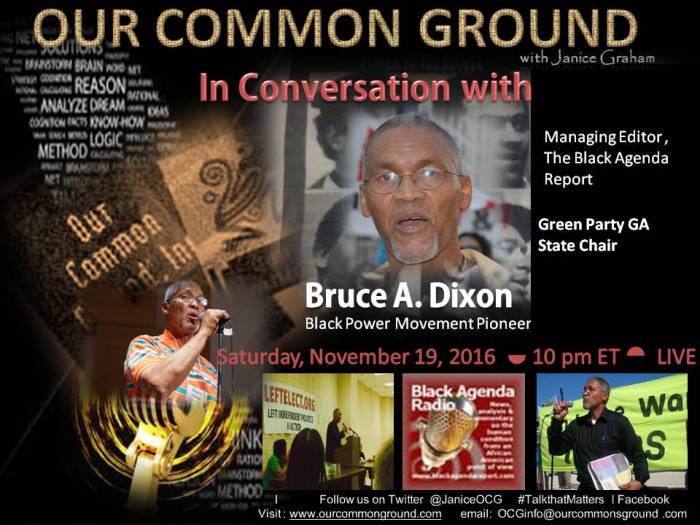
 Bruce Dixon is the GA State Chairman of the Green Party, Co-Founder and Managing Editor of The Black Agenda Report and journalist. Bruce was a rank and file member of the Illinois Chapter of the BPP in 1969 and 1970. He has long been considered a voice of wisdom an encouragement in the Black left, progressive left movement in this country since the 1960s. Tonight we talk with him about the State and Future of Black America.


 OCG
OCG 