Confronting racism is not about the needs and feelings of white people | Ijeoma Oluo | Opinion | The Guardian

“In the hallway an Asian American woman locked eyes with me and mouthed: “Thank you.” A black man squeezed my shoulder and muttered: “Girl, if you only knew.” A black woman stopped me, looked around cautiously to make sure no one was within earshot, and then said: “You spoke the truth. I wish I could have shared my story so you’d know how true. But this was not the place.”

This was not the place. Despite the care I take in these sessions to center people of color, to keep them safe, this still was not the place. Once again, what might have been a discussion about the real, quantifiable harm being done to people of color had been subsumed by a discussion about the feelings of white people, the expectations of white people, the needs of white people.

As I stood there, gazing off into the memory of hundreds of stifled conversations about race, I was brought to attention by a white woman. She was not nervously looking around to see who might be listening. She didn’t ask if I had time to talk, though I was standing at the door.“Your session was really nice,” she started. “You said a lot of good things that will be useful to a lot of people.”She paused briefly: “But the thing is, nothing you talked about today is going to help me make more black friends.”

Source: Confronting racism is not about the needs and feelings of white people | Ijeoma Oluo | Opinion | The Guardian

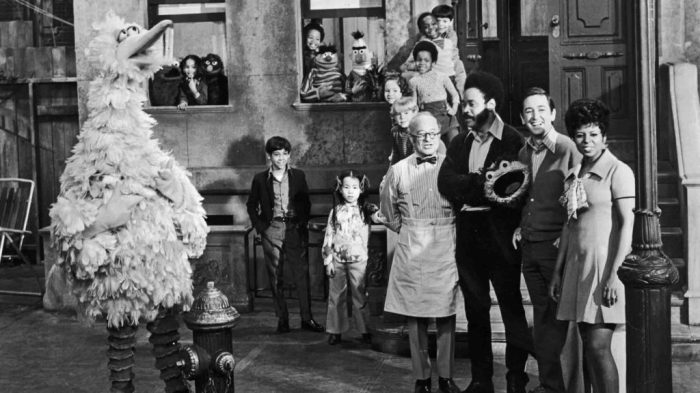
Psychiatry, Racism, and the Birth of ‘Sesame Street’

IN THE WAKE of the assassination of Martin Luther King Jr. on April 4, 1968, a newly formed group called the Black Psychiatrists of America began to challenge their white colleagues to think about racism in a new way. Its members had been discussing for some time the possibility of creating an organization that would address their lack of representation within the key bodies of American psychiatry. But now, as one of these men, Dr. Chester Pierce, later put it ”we anguished in our grief for a great moderate leader,” and it seemed that the time for moderation on their side was also over. In Pierce’s words: “As we listened to radio reports and called to various sections of the country for the on-the spot reports in inner cities, our moderation weakened and our alarm hardened.”

Source: Psychiatry, Racism, and the Birth of ‘Sesame Street’

Beyond Romantic Advertisements: Ancestry.com, Genealogy, and White Supremacy – AAIHS

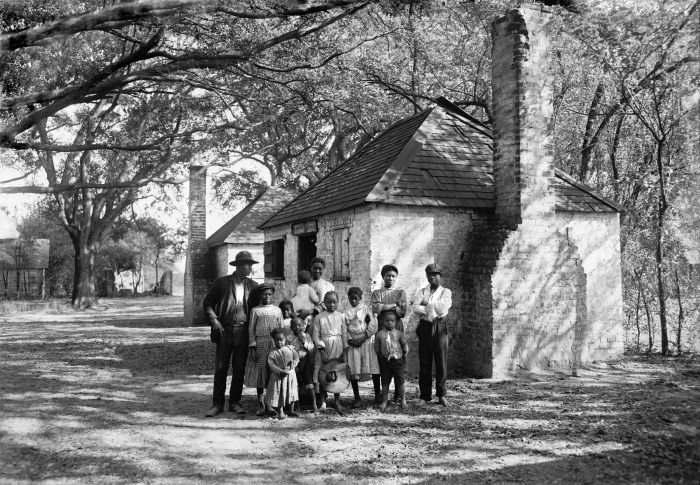
“In the past year, Ancestry changed its search engine to detach the history of slavery from basic genealogical inquiries. When searching for an individual’s name, Ancestry.com stopped including results from the 1850 or 1860 United States Census Slave Schedules. This means that someone searching for ancestors might discover a wealthy progenitor with no record of the foundations of that wealth, making it all too easy to claim, as many privileged white American families do, that their individual family earned its fortunes outside of slavery despite the central role slavery had in shaping the nation’s politics, economics, culture, and society. Before this change occurred, Ancestry.com subscribers would often have to face the uncomfortable fact that their family kept others enslaved. Indeed, my own family first discovered slaveholders in our lineage because of a rudimentary Ancestry search. Attempting that research today would hide this distressing (though important) aspect of my family’s history.”

Source: Beyond Romantic Advertisements: Ancestry.com, Genealogy, and White Supremacy – AAIHS

In Missandei’s Final Act, She Reminds Us That It Is Okay For Black Women To Be Angry


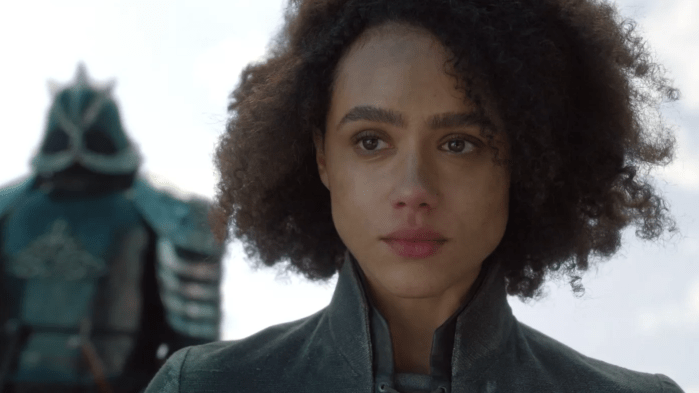
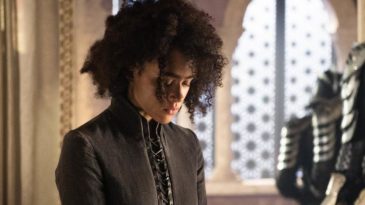
Before the final battle begins, a shackled Missandei is on display for Daenerys, Missandei’s lover Grey Worm, and the rest of her army. Refusing to bend the knee and give up the throne, Cersei commands The Mountain, her knights guard, to kill Missandei. When Cersei offers Missandei the opportunity to have any last words, she only has one: “Dracarys.” In the fictional language, High Valyrian, it literally translates to dragonfire. In her final act, the quiet and reserved Missandei tells both her queen and her lover to burn King’s Landing to the ground.

For Black women who love the show, last Sunday’s episode was especially difficult. As the only Black female character on the show, it seemed that Missandei was the only sister in all of the seven kingdoms. Seeing her back in chains was especially rough and, in light of the series’ trajectory, her death felt unnecessary.

Source: In Missandei’s Final Act, She Reminds Us That It Is Okay For Black Women To Be Angry

The Most Radical City on the Planet | Boston Review

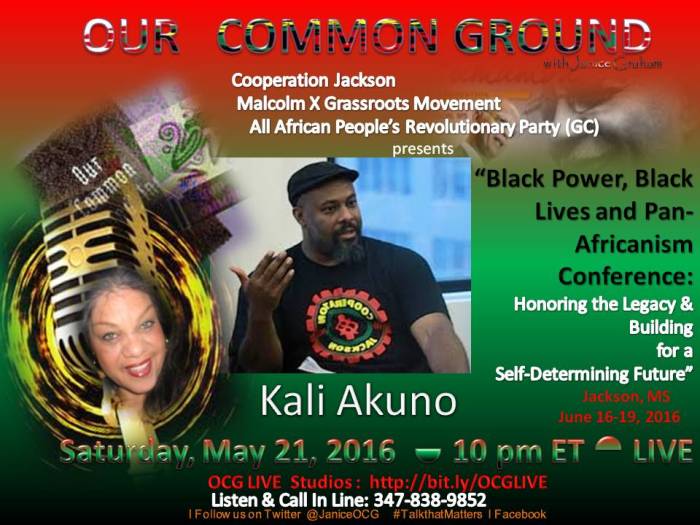
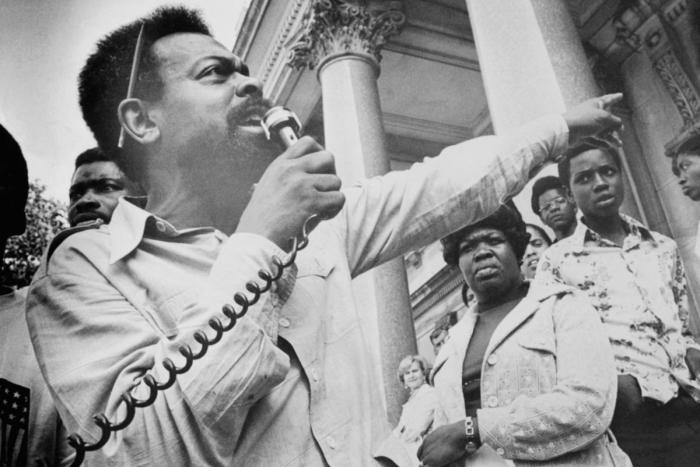
“Black radicals had been experimenting with electoral strategies since the 1960s. In 2008 the Malcolm X Grassroots Movement (MXGM) studied the lessons learned from this work in the South and identified ways to advance movement goals. This work culminated in the 2012 publication of the Jackson-Kush Plan, which called for people’s assemblies (a grassroots co-governance model), an independent black political party, and a broad-based solidarity economy. Along the way, MXGM members identified Chokwe Lumumba to run for Jackson city council in 2009. He won, and by the time he ran for mayor four years later, he was well known, with an established infrastructure to support him.”

Source: The Most Radical City on the Planet | Boston Review


An Introduction to the Black Arts Movement | Poetry Foundation

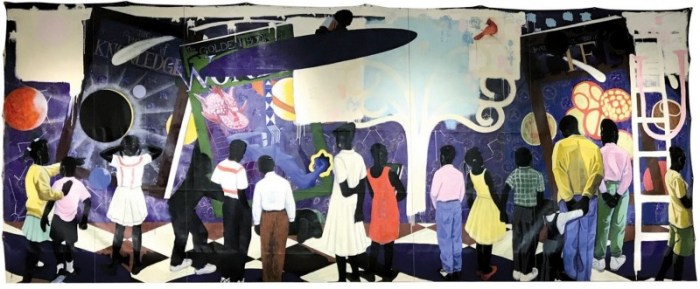
“Black Arts Movement poet and publisher Haki Madhubuti wrote, “And the mission is how do we become a whole people, and how do we begin to essentially tell our narrative, while at the same time move toward a level of success in this country and in the world? And we can do that. I know we can do that.”

Source: An Introduction to the Black Arts Movement | Poetry Foundation

We Should Stop Saying “People of Color” When We Mean “Black People”

“That being said, we need to stop saying “people of color” in instances we mostly (and sometimes only) mean “Black people.”What I’m saying is a bit meta, but the public use of the term POC seems to have become less about solidarity, and more concerned with lessening the negative connotations and implicit anti-Black reactions (fear, scorn, disdain, apathy) to Blackness. In popular discourse, POC is often a shorthand for “this issue affects Black people most directly and disproportionately, but other non-white people are affected too, so we need to include them for people to listen and so people to understand we aren’t talking about race as only Black vs. white.”Saying POC when we mean “Black people” is this concession that there’s a need to describe a marginalized group as “less” Black for in order for people (specifically, but not only, white people) to have empathy for whatever issue being discussed.”

Source: We Should Stop Saying “People of Color” When We Mean “Black People”  

Go to the profile of Joshua Adams

White Privilege and White Disadvantage – Race, Racism and the Law

Simply stated, “poor people and people of color,” as well as its variants, imply that being poor is like being non-white. Now, if being poor is, in fact, like being non-white, then poor white people are like people of color. Significantly, if poor white people are like people of color, then the concept of white privilege becomes a bit misleading, if not altogether inaccurate. As Part II explains, white privilege refers to advantages that white people are supposed to receive by virtue of the fact that they are white. The concept presupposes that all white people–even the poor ones–have privileges on account of their race. However, if being poor is like being non-white, and if poor white people are like people of color, then it may not make sense to conceptualize poor white people as being privileged relative to people of color. If poor white people’s class disadvantage puts them in a social position that is similar to that occupied by people of color, then white privilege may not be something that they enjoy. Further, if white privilege is not enjoyed by poor white people, then it may make little sense to call it white privilege– inasmuch as white privilege implies that the privilege flows from being a member of the white race. It may make more sense to admit the error involved in the concept of white privilege and come up with a different concept altogether–something like affluent white people’s privilege or white class privilege.

Source: White Privilege and White Disadvantage – Race, Racism and the Law

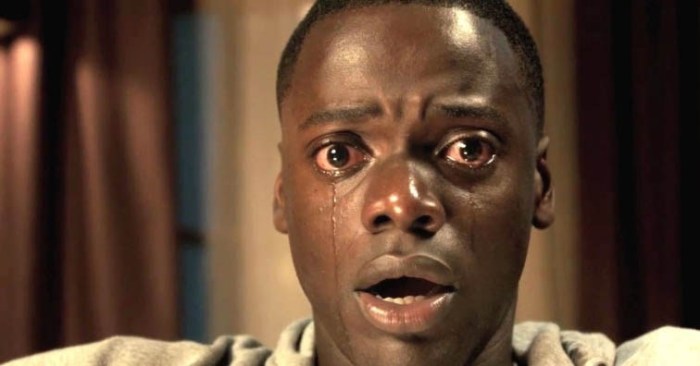
Du Boisian Double Consciousness and the Appropriation of Black Male Bodies in Jordan Peele’s ‘Get Out’ | The Society of Philosophers in America (SOPHIA)

Du Boisian Double Consciousness and the Appropriation of Black Male Bodies in Jordan Peele’s Get OutCivil American, Volume 4, Article 1 (April 16, 2019).

By Darrius Hills and Seth Vannatta |

The Negro is a sort of seventh son, born with a veil, and gifted with second-sight in this American world,—a world which yields him not true self-consciousness, but only lets him see himself through the revelation of the other world. It is a peculiar sensation, this double consciousness, this sense of always looking at one’s self through the eyes of others, of measuring one’s soul by the tape of a world that looks on in amused contempt and pity. One ever feels his twoness,—an American, a Negro; two souls, two thoughts, two unreconciled strivings; two warring ideals in one dark body, whose dogged strength alone keeps it from being torn asunder. ~ W. E. B. Du Bois [1]

Source: Du Boisian Double Consciousness and the Appropriation of Black Male Bodies in Jordan Peele’s ‘Get Out’ | The Society of Philosophers in America (SOPHIA)

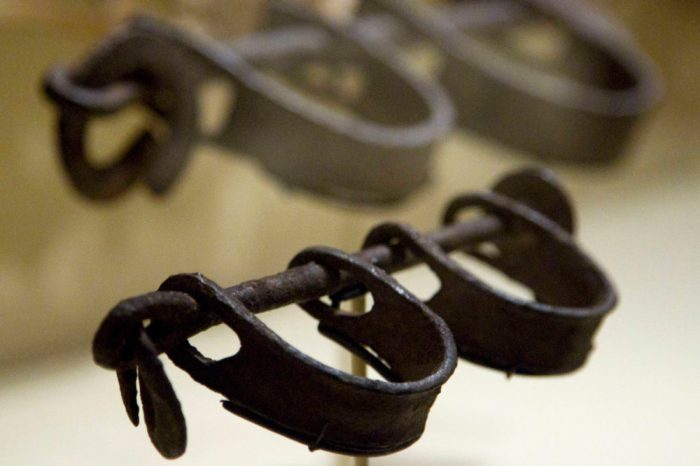
The Cases For Reparations: How 2020 Presidential Candidates Address The Issue | On Point

Democratic presidential hopefuls are talking about reparations for slavery. They’re talking seriously, but with few specifics. What would a reparations policy actually look like?

Source: The Cases For Reparations: How 2020 Presidential Candidates Address The Issue | On Point