“On the marital status of U. S. slaves: Evidence from Touro Infirmary, New Orleans, Louisiana” ∴ Dr. Trevon D. Logan

slavery

On the marital status of U. S. slaves: Evidence from Touro Infirmary, New Orleans Louisiana

Abstract

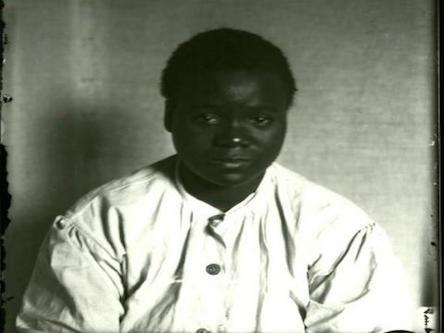
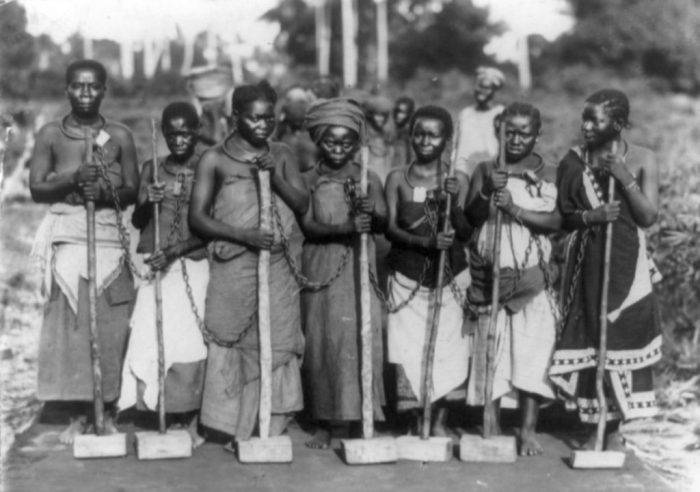
We estimate marriage rates for enslaved African Americans using unique hospital records that report marital status for both free and enslaved patients. We find that marriage rates increased with age, that females had higher marriage rates than males, and that relatively more enslaved African Americans than whites were married, a result we partly attribute to the demographic composition of the hospital population. In addition, the admission records allow us to identify those slaves owned by slave traders. We find relatively high marriage rates among enslaved African Americans but significantly lower marriage rates for those slaves owned by traders, a result we attribute to the demographic composition of traded slaves and marital disruption caused by the slave trade. Comparisons with other postbellum sources provide suggestive support for the antebellum marriage patterns found in these hospital data.

Purchase: 

Dr. Trevon D Logan    @TrevonDLogan
“On the marital status of U. S. slaves: Evidence from Touro Infirmary, New Orleans, Louisiana” was just published. We provide new evidence on slave marriage and the extent to which the slave trade disrupted black marriage patterns.
 
Dr. Logan is the Hazel C. Youngberg Distinguished Professor of Economics @OhioState. Author of Economics, Sexuality, and Male Sex Work.    

OUR COMMON GROUND :: Watch Night 2016

stationary-logo
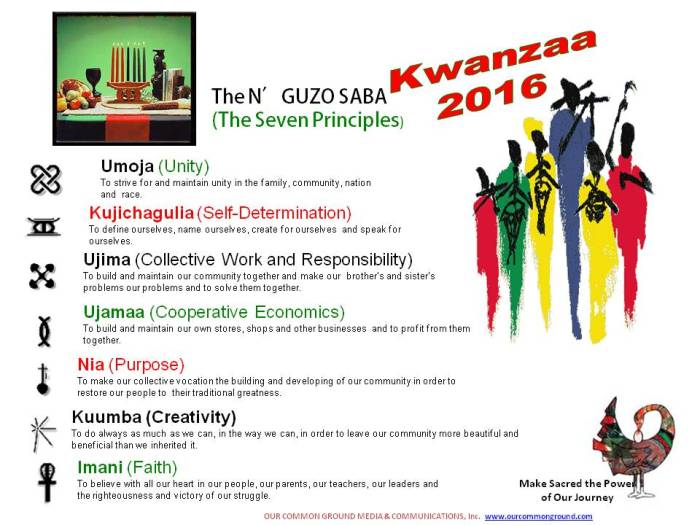
We have explored and examined the many issues, events and collective experiences of our time all through this year, 2016. As a people we have been challenged with disappointment; thunders of terror at the extra-judicial murders of our Brothers and Sisters; the continuing captured of them in enslavement camps by the millions;the covert oppression of children in schools that fail them or prepare them for imprisonment camps; and the failure of our government to makes us whole. As on this night in 1862, we search for the ‘North Star’ still. I impress my life and the spirit of this radio broadcast each week in the lessons of the N’Guzo Saba, striving to respect and honor Black Truth, our TRUTH.
Each week, we make a place, a sanctuary to say and claim that truth. In this coming year, we are faced with the gravest form of oppression and racism seen by none of us in our lives.  Make no mistake, on the bed of a fledgling fascism they will make every effort to eviscerate our belief in our historical accomplishments, ourselves as a people, what is ours and what is owed. We must stand tall in the dancing glow of our Ancestors and stand strong and tall. We must be strategically vigilant and believe in our Truth and the possibilities of our people still.
OUR COMMON GROUND will continue to provide the sanctuary that offers clarity, armament, comfort and a secure place for our voice, with respect and passion.  We are committed to serious analysis, seeking appropriate outcomes and input and answers.  I recently passed my 35th anniversary as host of OUR COMMON GROUND, there will be changes but our mission will never waver.  We are ALTERNATIVE ACTIVIST RADICAL RADIO and will continue in that tradition. WE least afford to let up in the face of what is coming.  We must careful about how we adjust our lenses in lunging into the “new struggle” era. Credible, useful, accurate and clear examination and action is more necessary than ever.  We are in a period of “post reconstruction” with the most visceral and evil forces controlling our public agency. We are a people who know how to survive.  For our children we continue thus.  As for our government, we may be unable to stop what will happen, however, we must stand on our Truth.
Throughout our history, the only thing that we have ever asked the OCG Family is do what you can (UJIMA, NIA) to help us grow and to bring more comrades to the Sanctuary.
Thank you for your support throughout the year. We return LIVE on January 7th.
Wishing for us the Victories of our Past and Abundance and Prosperity in our Future.
Janice Graham
Executive Producer, Host
OUR COMMON GROUND
kwanzaa16
watchnight
Date: December 31
Wed, 1862-12-31

*On This date in 1862 the first Watch Night Services were celebrated in Back communities in America.

The Watch Night service can be traced back to gatherings also known as “Freedom’s Eve.” On that night, Black slaves and free blacks came together in churches and private homes all across the nation awaiting news that the Emancipation Proclamation actually had become law.  At the stroke of midnight, it was January 1, 1863; all slaves in the Confederate States were declared legally free. When the news was received, there were prayers, shouts and songs of joy as many people fell to their knees and thanked God.

Blacks have gathered in churches annually on New Year’s Eve ever since, praising God for bringing us safely through another year. It’s been over a century since the first Freedom’s Eve and tradition still brings us together at this time every year to celebrate “how we got over.” This celebration takes many African American decendants of slaves into a new year with praise and worship. The service usually begins anywhere from 7 p.m. To 10 p.m. And ends at midnight with the entrance of the New Year. Some people come to church first, before going out to celebrate, for others, church is the only New Year’s Eve event.

There have been instances where clergy in mainline denominations questioned the propriety of linking religious services with a secular holiday like New Year’s Eve. However, there is a reason for the importance of New Year’s Eve services in the Black experience in America.

Reference:
The African American Desk Reference
Schomburg Center for research in Black Culture
Copyright 1999 The Stonesong Press Inc. and
The New York Public Library, John Wiley & Sons, Inc. Pub.
ISBN 0-471-23924-

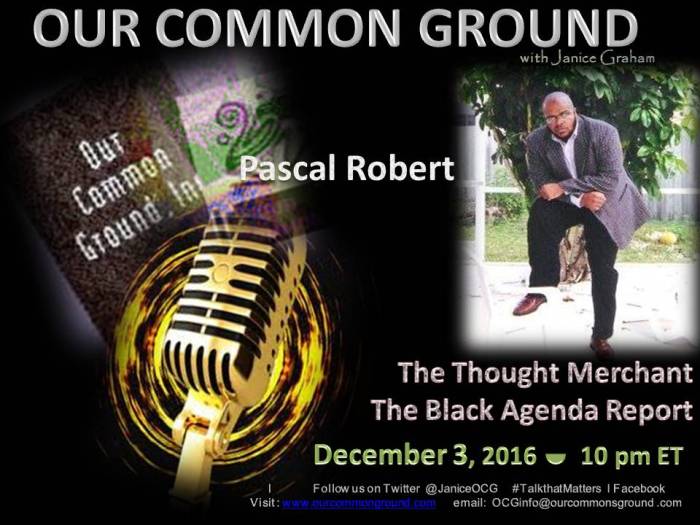
“A Black Political Future” with Pascal Robert, The Thought Merchant

OUR COMMON GROUND with Janice Graham

 “A Black Political Future”

 December 3, 2016 :: LIVE ::10 pm EST

Guest: Pascal Robert The Thought Merchant Blog, Contributor, The Black Agenda Report

12-03-16-robert
LISTEN LIVE and Join Our Chat: http://bit.ly/BLKFuture
Listen or Call-In to add your voice to the discussion (347) 838-9852 Press 1 to join the discussion
 This week we discuss the political future of Black Americans in the era of a imperialist Executive and Legislative government. The critical question is not how we react to the fascism that has embedded itself but how we plan to organize our resistance and survival. There are some who say we have been here before. No,THIS is very different AND WILL be totally destructive to any viable Black empowerment strategies . They are bent on a strategy that will destroy the vulnerable infrastructure that keeps us from drowning. We talk with Pascal about preservation and building.
 Pascal  Robert (pronounced Ro-Bear like Stephan Colbert) is a Blogger who loves all things politics. SHEER political independent; unafraid to slay the most sacred cows of ideological orthodoxy from the Left, or the Right and one who enjoys global affairs and aspects of pop culture. In all ways he is a child of the Haitian Revolution.
Pascal Robert has been known for years to the online world as THOUGHT MERCHANT.
Since 2007 he has been recognized for his hard hitting, blunt unvarnished style of bringing attention to current events and global affairs, especially those affecting communities of color. Join him in these social media outlets:

Black Girls, Domestic Violence, and the Limits of Self-Defense | Black Agenda Report


Black Girls, Domestic Violence, and the Limits of Self-Defense

by Lindsey E. Jones

Recent scholarship in the history of black women and the carceral state illustrates the extent to which systems of criminal justice and law enforcement have both historically failed to protect black female victims of domestic violence and criminalized black women who rise up in their own defense.

Black Girls, Domestic Violence, and the Limits of Self-Defense

by Lindsey E. Jones

This article previously appeared in the blog of the African American Intellectual History Society.

Legal systems in this country explicitly and implicitly render black women defenseless against intra- and interracial violence.”

The case of Bresha Meadows, an African American teenage girl in Ohio, is a sad commentary on the failure of the state to protect victims of domestic violence. After a lifetime of watching him physically and psychologically abuse her mother—and of being subjected to threats and verbal abuse, along with her siblings—Bresha allegedly shot her father to death while he slept on July 28, 2016. While her mother’s family and her attorney consider her actions to have been in self-defense, the county prosecutor has charged Bresha with aggravated murder. It remains to be seen whether she will be tried as a juvenile or as an adult. At stake is the possibility that Bresha, who marked her fifteenth birthday in juvenile hall just weeks after her arrest, could spend the rest of her life in prison if convicted as an adult.

While the case is making its way through the courts and the families of Brandi Meadows (Bresha’s mother) and Jonathan Meadows (Bresha’s deceased father) share conflicting stories with news media about the latter’s personality and propensity toward violence, as well as their conflicting opinions about premeditation versus self-defense, it is important to note that this case is neither isolated nor entirely new. Recent scholarship in the history of black women and the carceral state illustrates the extent to which systems of criminal justice and law enforcement have both historically failed to protect black female victims of domestic violence and criminalized black women who rise up in their own defense.

“Survivors of intimate partner violence dramatically overrepresented among incarcerated black women.”

Historian Kali Gross, in providing historical context to the case of Marissa Alexander, argues that the state’s willingness to condemn this woman for defending herself against an abusive husband points back through centuries of American history to “the legacies of an exclusionary politics of protection whereby black women were not entitled to the law’s protection, though they could not escape its punishment.” Gross traces the ways in which “racialized, gendered notions of protection” have, from the seventeenth century on, shaped legal systems in this country that explicitly and implicitly render black women defenseless against intra- and interracial violence. She argues that this exclusionary politics of protection fuels the current mass incarceration crisis, with survivors of intimate partner violence dramatically overrepresented among incarcerated black women.1

Bresha Meadows’s case exemplifies Gross’s concept of the exclusionary politics of protection. This past May, Bresha ran away from home to the home of an aunt, Martina Latessa. Latessa, a police officer working in a domestic violence unit in Cleveland, was forced to return Bresha to her father, who had reported the girl as having been kidnapped by her aunt. Latessa reported her brother-in-law to Family Services, which resulted in an agent interviewing Brandi Meadows about the allegations of abuse—as Jonathan Meadows sat beside her. Neither law enforcement nor the state bureaucracy could protect Brandi Meadows and her children from this abuse, which she and her family assert intensified after this incident. As a result of the state’s failure to end the cycle of trauma in her family, Bresha Meadows took matters into her own hands—and was charged with aggravated murder, for which she could potentially spend the rest of her life in prison.

Gross’s essay compellingly reveals the intersections of race, gender, and class in black women’s hyper-vulnerability to domestic violence; state failure to prevent or put a stop to said violence; and the too-common outcome of black women being incarcerated for offenses resulting from attempting to defend themselves against domestic violence. However, as the case of Bresha Meadows illustrates, there is another vector of identity that often doesn’t appear in our historical analyses of black females and the carceral state: that is, age.2

“For black women in the Jim Crow South—as in antebellum times—domestic violence was constitutive of domestic labor.”

Where race, gender, and class have worked together to create the conditions discussed above, the erasure of age difference has historically created disadvantages for black girl victims of domestic violence. One prominent example recently provided by historian LaShawn Harris is that of Virginia Christian. Often referred to as the first woman to be executed by the Commonwealth of Virginia, Christian was in reality a seventeen-year-old girl when she was killed by electric chair in 1912—a fact that her advocates hoped would persuade the state to show her mercy.3

Virginia Christian belonged to a working-class black family in Hampton, Virginia, and needed to work in order to contribute to her household, including her disabled mother. From the age of thirteen, she served as a laundress for a middle-class white family named Belote in Hampton. During a dispute about missing jewelry that turned physical, Virginia killed the matriarch of the family—a crime she confessed to committing in self-defense. Harris argues that “Christian’s act of self-defense delineated working-class African American women’s impetuous ways of protecting their bodies and their often last attempts to seek and secure long-awaited personal justice—especially when legal protection seemed beyond their reach.” While there is no archival evidence that Ida Belote had laid hands upon Virginia Christian prior to this altercation, there is plenty of evidence to demonstrate that for black women in the Jim Crow South—as in antebellum times—domestic violence was constitutive of domestic labor, the racially prescribed set of occupations for black women and girls.4

Christian’s response was most immediately triggered by Belote’s accusations of theft and subsequent physical assault on March 18, 1912, but it is conceivable that she was also responding to other physical and psychological traumas accumulated over three years of working in the Belote household.

The analogy from Virginia Christian in 1912 to Bresha Meadows in 2016 is imperfect, but these cases both illustrate the extent to which the state has failed to consider age in evaluating black girls’ actions in self-defense from domestic violence. Sadly, over a century later, Bresha’s advocates find themselves making very similar demands of a system that hasn’t changed enough since Virginia’s trial, and employing very similar tactics in their pursuit of mercy for this abused adolescent girl.

“In the minds of whites, the accused, regardless of her age, was a deviant and vulgar black murderess that had to be punished for her crime.”

In the case of Virginia Christian, the Commonwealth of Virginia ignored evidence that Christian committed the crime at sixteen years of age in order to prevent her minority status from impeding its plan to execute her. Harris argues that, “in the minds of whites, the accused, regardless of her age, was a deviant and vulgar black murderess that had to be punished for her crime; essentially, Christians’ race trumped her gender and age. By denying Christian of her adolescent status, the State of Virginia sought to punish her to the full extent of the law.”5

Black and white Americans wrote letters and circulated petitions pleading with the Commonwealth to consider Christian’s youth as a factor in her crime and her punishment and to commute her sentence from execution to life in prison. In the end, neither Christian’s appeal to self-defense, nor her advocates’ appeal to adolescence, could spare her from the lethal retribution of the state.

In a throwback to the campaign to spare Virginia Christian’s life in 1912, advocates of Bresha Meadows are writing letters and circulating petitions in the hope that local prosecutors take into account her age and her status as a survivor of domestic violence as they proceed with charges against her. Because of the Supreme Court’s 2005 decision in Roper v. Simmons that it is unconstitutional to execute a person for a crime committed under eighteen years of age, the death penalty is not on the table for Bresha. However, because prosecutors could decide to try her in adult court, it is a real possibility that she could be sentenced to life in prison.

A century after Virginia Christian’s advocates passionately and strategically petitioned the Commonwealth of Virginia for life imprisonment, Bresha’s advocates argue that no adolescent should spend life in prison—especially not a girl pushed toward drastic action by a lifetime of trauma and abuse. There is thankfully still time for the prosecutors of Trumbull County to give real weight to Bresha Meadows’ traumatic life history, and to the fact that it spans fifteen short years, as they decide what action to pursue.

Lindsey E. Jones is a PhD Candidate in History of Education at the University of Virginia’s Curry School of Education and a 2016-2018 Pre-doctoral Fellow at the Carter G. Woodson Institute for African-American and African Studies at the University of Virginia. Her dissertation project, “‘Not a Place of Punishment’: the Virginia Industrial School for Colored Girls, 1915-1940,” historicizes the education and incarceration of black girls by examining Virginia’s only reformatory for delinquent African American girls. Follow her on Twitter @noumenal_woman.

NOTES:

1. Kali N. Gross, “African American Women, Mass Incarceration, and the Politics of Protection,” Journal of American History 102, no.1 (2015), 25–33.

2. For a contemporary examination of black girls, interpersonal violence, and the carceral state, see Jody Miller, Getting Played: African American Girls, Urban Inequality, and Gendered Violence (New York: NYU Press, 2008).

3. Lashawn Harris, “The ‘Commonwealth of Virginia vs. Virginia Christian’: Southern Black Women, Crime & Punishment in Progressive Era Virginia,” Journal of Social History 47, no.4 (2014), 922–42.

4. See, for instance: Tera W. Hunter, To ’Joy My Freedom: Southern Black Women’s Lives and Labors after the Civil War (Cambridge, Mass.: Harvard University Press, 1997); Thavolia Glymph, Out of the House of Bondage: The Transformation of the Plantation Household (Cambridge: Cambridge University Press, 2003); Sarah Haley, “‘Like I Was a Man’: Chain Gangs, Gender, and the Domestic Carceral Sphere in Jim Crow Georgia,” Signs 39 (Autumn 2013).

5. Harris cites “a 1910 Virginia statue prohibiting death to ‘any child under seventeen years of age who is charged with any felony, and never having been heretofore convicted in any court of a misdemeanor’” (931).

Source: Black Girls, Domestic Violence, and the Limits of Self-Defense | Black Agenda Report

How Prison Labor is the New American Slavery and Most of Us Unknowingly Support it

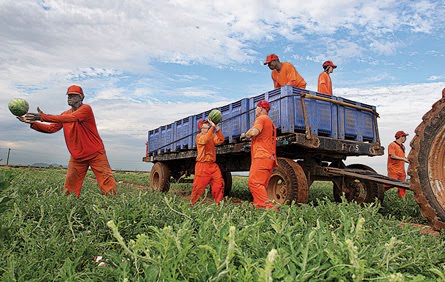
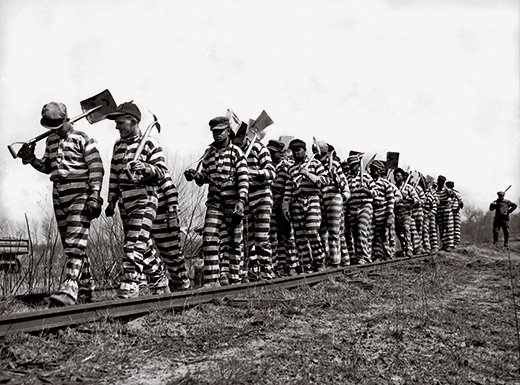
American slavery was technically abolished in 1865, but a loophole in the 13th Amendment has allowed it to continue “as a punishment for crimes” well into the 21st century. Not surprisingly, corporations have lobbied for a broader and broader definition of “crime” in the last 150 years. As a result, there are more (mostly dark-skinned) people performing mandatory, essentially unpaid, hard labor in America today than there were in 1830.

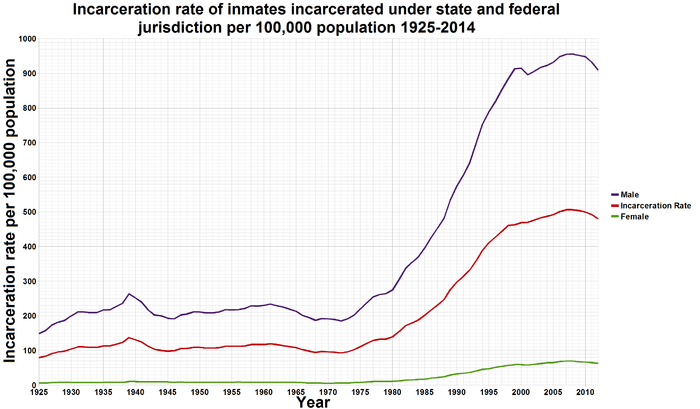
With 5 percent of the world’s population and 25 percent of the world’s prison population, the United States hasthe largest incarcerated population in the world. No other society in history has imprisoned more of its own citizens. There are half a million more prisoners in the U.S. than in China, which has five times our population. Approximately 1 in 100 adults in America were incarcerated in 2014.  Out of an adult population of 245 millionthat year, there were 2.4 million people in prison, jail or some form of detention center.

The vast majority – 86 percent – of prisoners have been locked up for non-violent, victimless crimes, many of them drug-related.

Big Business is making big bucks off of prison labor:

While prison labor helps produce goods and services for almost every big business in America, here are a few examples from anarticle that highlights the epidemic:

Whole Foods – You ever wonder how Whole Foods can afford to keep their prices so low (sarcasm)? Whole Foods’ coffee, chocolate and bananas might be “fair trade,” but the corporation has been offsetting the “high wages” paid to third-world producers with not-so-fair-wages here in America.

The corporation, famous for it’s animal welfare rating system, apparently was not as concerned about the welfare of the human “animals” working for them in Colorado prisons until April of this year.

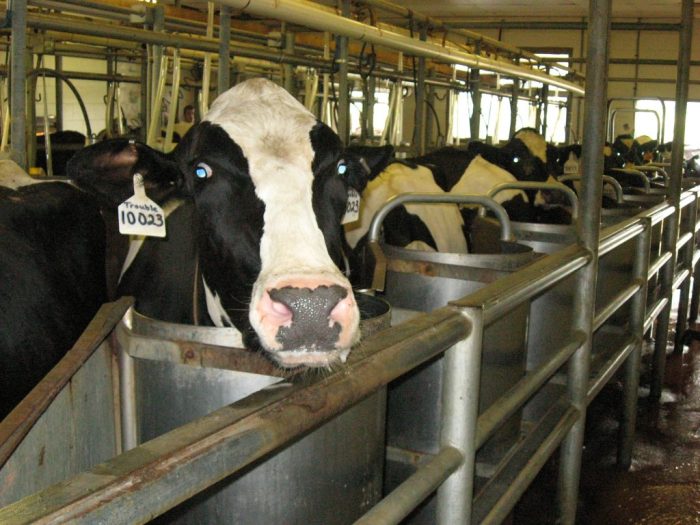
You know that $12-a-pound tilapia you thought you were buying from “sustainable, American family farms?” It was raised by prisoners in Colorado, who were paid as little as 74 cents a day. And that fancy goat cheese? The goats were raised and milked by prisoners too.

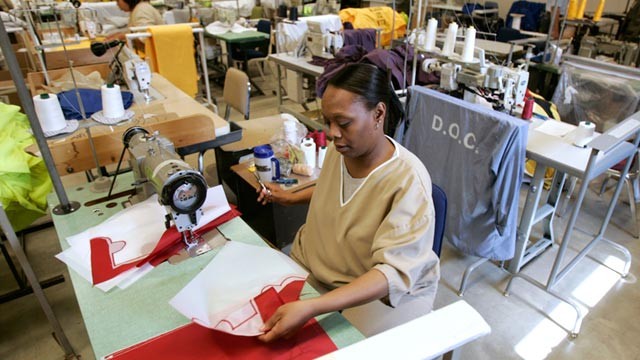
McDonald’s – The world’s most successful fast food franchise purchases a plethora of goods manufactured in prisons, including plastic cutlery, containers, and uniforms. The inmates who sew McDonald’s uniformsmake even less money by the hour than the people who wear them.

Wal-Mart – Although their company policy clearly states that “forced or prison labor will not be tolerated by Wal-Mart,” basically every item in their store has been supplied by third-party prison labor factories. Wal-Martpurchases its produce from prison farms, where laborers are often subjected to long hours in the blazing heat without adequate food or water.

Victoria’s Secret – Female inmates in South Carolina sew undergarments and casual-wear for the pricey lingerie company. In the late 1990’s, two prisoners were placed in solitary confinement for telling journalists that they were hired to replace “Made in Honduras” garment tags with “Made in USA” tags.

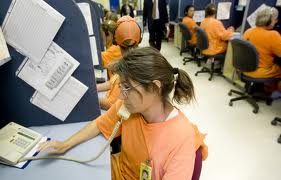
AT&T – In 1993, the massive phone company laid off thousands of telephone operators—all union members—in order to increase their profits. Even though AT&T’s company policy regarding prison labor reads eerily like Wal-Mart’s, they have consistently used inmates to work in their call centers since ’93, barely paying them $2 a day.

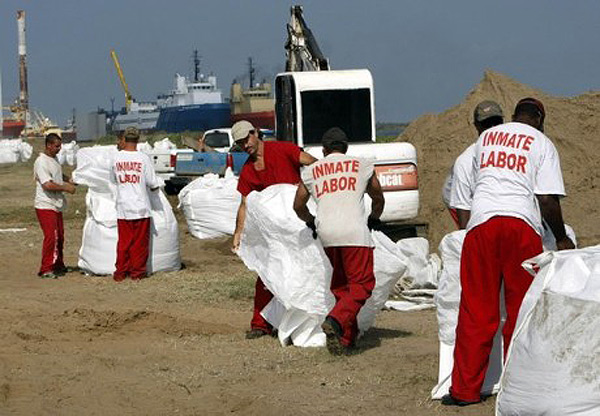
BP (British Petroleum) – When BP spilled 4.2 million barrels of oil into the Gulf coast, the company sent a workforce of almost exclusively African-American inmates to clean up the toxic spill while community members, many of whom were out-of-work fisherman, struggled to make ends meet. BP’s decision to use prisoners instead of hiring displaced workers outraged the Gulf community, but the oil company did nothing to reconcile the situation.

The full list of companies implicated in exploiting prison labor includes:

Bank of America
Bayer
Cargill
Caterpillar
Chevron
Chrysler
Costco
John Deere
Eli Lilly and Company
Exxon Mobil
GlaxoSmithKline
Johnson and Johnson
K-Mart
Koch Industries
McDonald’s
Merck
Microsoft
Motorola
Nintendo
Pfizer
Procter & Gamble
Pepsi
ConAgra Foods
Shell
Starbucks
UPS
Verizon
WalMart
Wendy’s

While not all prisoners are “forced” to work, most “opt” to because life would be even more miserable if they didn’t, as they have to purchase pretty much everything above the barest necessities (and sometimes those too) with their hard-earned pennies. Some of them have legal fines to pay off and families to support on the outside. Often they come out more indebted than when they went in.

Prison farms” aka “modern plantations”
In places like Texas, however, prison work is mandatory and unpaid – the literal definition of slave labor.

According the Texas Department of Criminal Justice, prisoners start their day with a 3:30 a.m. wake-up call and are served breakfast at 4:30 a.m. All prisoners who are physically able are required to report to their work assignments by 6 a.m.

“Offenders are not paid for their work, but they can earn privileges as a result of good work habits,” the website says.


Most prisoners work in prison support jobs, like cooking, cleaning, laundry, and maintenance, but about 2,500 of them work in the Texas prison system’s own “agribusiness department,” where they factory-farm 10,000 beef cattle, 20,000 pigs and a quarter million egg-laying hens. The prisoners also produce 74 million pounds of livestock feed per year, 300,000 cases of canned vegetables, and enough cotton to clothe themselves (and presumably others). They also work at meat packaging plants, where they process 14 million pounds of beef and 10 million pounds of pork per year.

While one of the department’s stated goals is to reduce operational costs by having prisoners produce their own food, the prison system admittedly earns revenue from “sales of surplus agricultural production.”

Prisoners who refuse to work – again, unpaid – are placed in solitary confinement. When asked if Texas prisons still employ “chain gangs” in the FAQ section, the department responds:

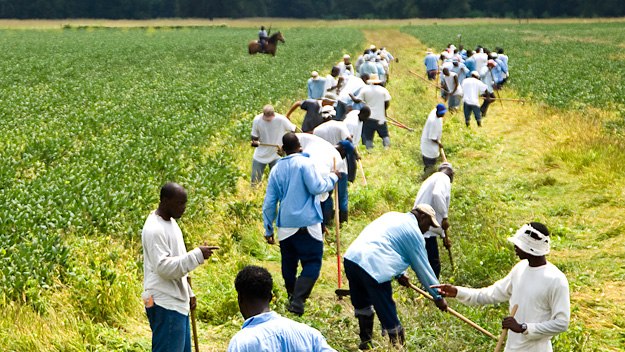
“No, Texas does not use chain gangs. However, offenders working outside the perimeter fence are supervised by armed correctional officers on horseback.”

Similar “prison farms” exist in Arizona, Alabama, Alaska, Arkansas, California, Colorado, Florida, Georgia, Hawaii, Louisiana, Mississippi, Ohio and other states, where prisoners are forced to work in agriculture, logging, quarrying and mining. Wikipedia says while the agricultural goods produced on prison farms is generally used to feed prisoners and other wards of the state (orphanages and asylums) they are also sold for profit.

In addition to being forced to labor directly for the profit of the government, inmates may be “farmed out” to private enterprises, through the practice of convict leasing, to work on private agricultural lands or related industries (fishing, lumbering, etc.). The party purchasing their labor from the government generally does so at a steep discount from the cost of free labor.

Source: How Prison Labor is the New American Slavery and Most of Us Unknowingly Support it

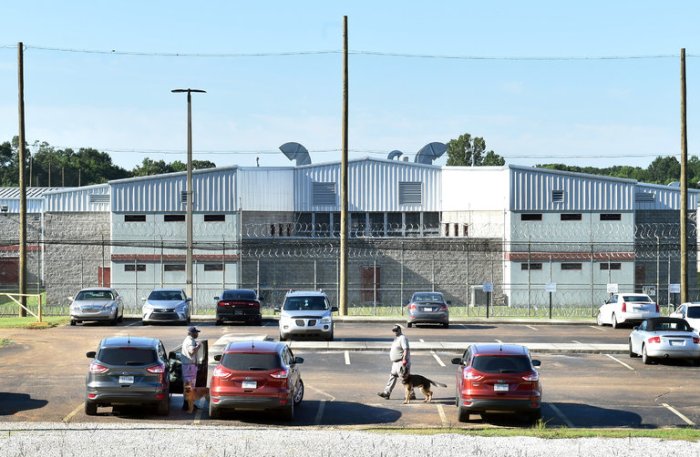
Privately Run Mississippi Prison, Called a Scene of Horror, Is Shut Down – The New York Times

The Walnut Grove facility that had been operating since 2012 under a federal consent decree for violating prisoners’ constitutional rights was the scene of two major riots in 2014.


This jail is likely 90 percent black men. Privately Run Mississippi Prison, Called a Scene of Horror, ““The sexual misconduct we found was among the worst that we have seen in any facility anywhere in the nation,” the report said.

Some of the guards, the report said, were themselves members of the gangs, including at least one prison supervisor who let prisoners out of their cells to assault unsuspecting rivals.

Organized gladiator-style fights between prisoners and encouraged by guards were also a frequent occurrence, with guards betting on the outcomes, according to the report.” FB comment from Antonio Moore

Relevant READ:

The Black Male Incarceration Problem Is Real and It’s Catastrophic


How Racial Disparity Does Not Help Make Sense of Patterns of Police Violence

Read the piece from NYT.

Source: Privately Run Mississippi Prison, Called a Scene of Horror, Is Shut Down – The New York Times

Policing and the Violence of White Being: An Interview with Dylan Rodríguez – The Black Scholar

Policing and the Violence of White Being: An Interview with Dylan RodríguezSeptember 12, 2016The following interview was conducted by Casey Goonan, an editor with True Leap Press. It originally appeared on the True Leap Press blog. Casey Goonan: The US white-supremacist state operates today through a different set of discourses and cultural structures than in previous epochs. Your work interrogates such shifts at a level of depth and nuance that is of particular importance for emergent struggles against racist state violence. “Multiculturalist white supremacy,” “post-racial liberal optimism,” “white academic raciality”—such terms are utilized throughout your work to interrogate a myriad of theoretical and historical conundrums that define the post-Civil Rights era, particularly in regards to racial violence and subjectivity. Can you, in very broad strokes, lay out what you are trying to accomplish with these interventions in the discourses, practices, and forms of embodiment that so violently delimit the possibilities for radical social change in the United States?

Dylan Rodríguez: The aftermath of American apartheid’s formal abolition has been overwhelmed by a grand national-cultural vindication of “Civil Rights” as the vessel of fully actualized gendered-racial citizenship. This fraud has, in various ways, facilitated rather than interrupted the full, horrific exercise of a domestic war-waging regime. For the sake of momentary simplicity, we can think about it along these lines: the half-century narrative of Civil Rights victory rests on an always-fragile but persistent common sense—the idea that national political culture (“America”) and the spirit of law and statecraft (let’s call this “The Dream”) endorse formal racial equality. Bound by this narrative-political context, the racist state’s mechanics shift and multiply to rearticulate a condition of normalized racist violence that is condoned or even applauded by the institutionalized regimes of Civil Rights. (It is not difficult to see how the NAACP, JACL, LULAC, Lambda, NOW, Urban League and other like-minded organizations condone or applaud domestic racial war, so long as it is directed at the correct targets: gang members, drug dealers, “violent criminals,” terrorists, etc.). In other words, the contemporary crisis of racist state violence is not reducible to “police brutality” and homicidal policing, or even the structuring asymmetries of incarceration: it is also a primary derivative of the Civil Rights regime.

Source: Policing and the Violence of White Being: An Interview with Dylan Rodríguez – The Black Scholar

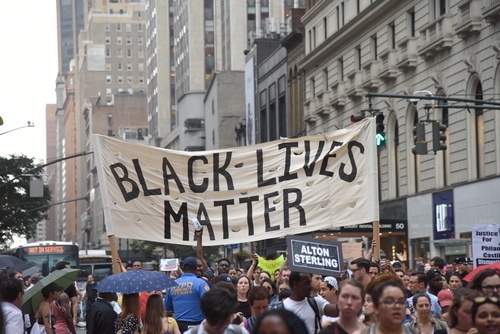
What Does Black Lives Matter Want?

What Does Black Lives Matter Want?

On August 1 the Movement for Black Lives (M4BL), a coalition of over sixty organizations, rolled out  “A Vision for Black Lives: Policy Demands for Black Power, Freedom & Justice,” an ambitious document described by the press as the first signs of what young black activists “really want.” It lays out six demands aimed at ending all forms of violence and injustice endured by black people; redirecting resources from prisons and the military to education, health, and safety; creating a just, democratically controlled economy; and securing black political power within a genuinely inclusive democracy. Backing the demands are forty separate proposals and thirty-four policy briefs, replete with data, context, and legislative recommendations.

But the document quickly came under attack for its statement on Palestine, which calls Israel an apartheid state and characterizes the ongoing war in Gaza and the West Bank as genocide. Dozens of publications and media outlets devoted extensive coverage to the controversy around this single aspect of the platform, including The Guardian, the Washington Post, The Times of Israel, Haaretz, and the St. Louis Post-Dispatch. Of course, M4BL is not the first to argue that Israeli policies meet the UN definitions of apartheid. (The 1965 International Convention for the Elimination of All Forms of Racial Discrimination and the 1975 International Convention on the Suppression and Punishment of the Crime of Apartheid define it as “inhuman acts committed for the purpose of establishing and maintaining domination by one racial group of persons over any other racial group of persons and systematically oppressing them.”) Nor is M4BL the first group to use the term “genocide” to describe the plight of Palestinians under occupation and settlement. The renowned Israeli historian Ilan Pappe, for example, wrote of the war on Gaza in 2014 as “incremental genocide.” That Israel’s actions in Gaza correspond with the UN definition of genocide to “destroy, in whole or in part, a national, ethnical, racial or religious group” by causing “serious bodily or mental harm” to group members is a legitimate argument to make.

The few mainstream reporters and pundits who considered the full M4BL document either reduced it to a laundry list of demands or positioned it as an alternative to the platform of the Democratic Party—or else focused on their own benighted astonishment that the movement has an agenda beyond curbing police violence. But anyone following Black Lives Matter from its inception in the killingtrayvonsaftermath of the George Zimmerman verdict should not be surprised by the document’s broad scope. Black Lives Matter founders Alicia Garza, Patrisse Cullors, and Opal Tometi are veteran organizers with a distinguished record of fighting for economic justice, immigrant rights, gender equity, and ending mass incarceration. “A Vision for Black Lives” was not a response to the U.S. presidential election, nor to unfounded criticisms of the movement as “rudderless” or merely a hashtag. It was the product of a year of collective discussion, research, collaboration, and intense debate, beginning with the Movement for Black Lives Convening in Cleveland last July, which initially brought together thirty different organizations. It was the product of some of the country’s greatest minds representing organizations such as the Black Youth Project 100, Million Hoodies, Black Alliance for Just Immigration, Dream Defenders, the Organization for Black Struggle, and Southerners on New Ground (SONG). As Marbre Stahly-Butts, a leader of the M4BL policy table explained, “We formed working groups, facilitated multiple convenings, drew on a range of expertise, and sought guidance from grassroots organizations, organizers and elders. As of today, well over sixty organizations and hundreds of people have contributed to the platform.”
The result is actually more than a platform. It is a remarkable blueprint for social transformation that ought to be read and discussed by everyone. The demands are not intended as Band-Aids to patch up the existing system but achievable goals that will produce deep structural changes and improve the lives of all Americans and much of the world. Thenjiwe McHarris, an eminent human rights activist and a principle coordinator of the M4BL policy table, put it best: “We hope that what has been created carries forward the legacy of our elders and our ancestors while imagining a world and a country profoundly different than what currently exists. For us and for those that will come after us.” The document was not drafted with the expectation that it will become the basis of a mass movement, or that it will replace the Democratic Party’s platform. Rather it is a vision statement for long-term, transformative organizing. Indeed, “A Vision for Black Lives” is less a political platform than a plan for ending structural racism, saving the planet, and transforming the entire nation—not just black lives.

If heeded, the call to “end the war on Black people” would not only reduce our vulnerability to poverty, prison, and premature death but also generate what I would call a peace dividend of billions of dollars. Demilitarizing the police, abolishing bail, decriminalizing drugs and sex work, and ending the criminalization of youth, transfolk, and gender-nonconforming people would dramatically diminish jail and prison populations, reduce police budgets, and make us safer. “A Vision for Black Lives” explicitly calls for divesting from prisons, policing, a failed war on drugs, fossil fuels, fiscal and trade policies that benefit the rich and deepen inequality, and a military budget in which two-thirds of the Pentagon’s spending goes to private contractors. The savings are to be invested in education, universal healthcare, housing, living wage jobs, “community-based drug and mental health treatment,” restorative justice, food justice, and green energy.

But the point is not simply to reinvest the peace dividend into existing social and economic structures. It is to change those structures—which is why “A Vision for Black Lives” emphasizes community control, self-determination, and “collective ownership” of certain economic institutions. It calls for community control over police and schools, participatory budgeting, the right to organize, financial and institutional support for cooperatives, and “fair development” policies based on human needs and community participation rather than market principles. Democratizing the institutions that have governed black communities for decades without accountability will go a long way toward securing a more permanent peace since it will finally end a relationship based on subjugation, subordination, and surveillance. And by insisting that such institutions be more attentive to the needs of the most marginalized and vulnerable—working people and the poor, the homeless, the formerly incarcerated, the disabled, women, and the LGBTQ community—“A Vision for Black Lives” enriches our practice of democracy.

For example, “A Vision for Black Lives” advocates not only closing tax loopholes for the rich but revising a regressive tax policy in which the poorest 20 percent of the population pays on average twice as much in taxes as the richest 1 percent. M4BL supports a massive jobs program for black workers, but the organization’s proposal includes a living wage, protection and support for unions and worker centers, and anti-discrimination clauses that protect queer and trans employees, the disabled, and the formerly incarcerated. Unlike the Democratic Party, M4BL does not subscribe to the breadwinner model of jobs as the sole source of income. It instead supports a universal basic income (UBI) that “would meet basic human needs,” eliminate poverty, and ensure “economic security for all.” This is not a new idea; some kind of guaranteed annual income has been fundamental to other industrializing nations with strong social safety nets and vibrant economies, and the National Welfare Rights Organization proposed similar legislation nearly a half century ago. The American revolutionary Thomas Paine argued in the eighteenth century for the right of citizens to draw a basic income from the levying of property tax, as Elizabeth Anderson recently reminded. Ironically, the idea of a basic income or “negative income tax” also won support from neoliberal economists Milton Friedman and Friedrich Hayek—although for very different reasons. Because eligibility does not require means testing, a UBI would effectively reduce the size of government by eliminating the bureaucratic machine of social workers and investigators who police the dispensation of entitlements such as food stamps and welfare. And by divesting from an unwieldy and unjust prison-industrial complex, there would be more than enough revenue to create good-paying jobs and provide a basic income for all.

Reducing the military is not just about resources; it is about ending war, at home and abroad. “A Vision for Black Lives” includes a devastating critique of U.S. foreign policy, including the escalation of the war on terror in Africa, machinations in Haiti, the recent coup in Honduras, ongoing support for Israel’s occupation of Palestine, and the role of war and free-trade policies in fueling the global refugee crisis. M4BL’s critique of U.S. militarism is driven by Love—not the uncritical love of flag and nation we saw exhibited at both major party conventions, but a love of global humanity. “The movement for Black lives,” one policy brief explains, “must be tied to liberation movements around the world. The Black community is a global diaspora and our political demands must reflect this global reality. As it stands funds and resources needed to realize domestic demands are currently used for wars and violence destroying communities abroad.”

Finally, a peace dividend can fund M4BL’s most controversial demand: reparations. For M4BL, reparations would take the form of massive investment in black communities harmed by past and present policies of exploitation, theft, and disinvestment; free and open access to lifetime education and student debt forgiveness; and mandated changes in the school curriculum that acknowledge the impact of slavery, colonialism, and Jim Crow in producing wealth and racial inequality. The latter is essential, since perhaps the greatest obstacle to reparations is the common narrative that American wealth is the product of individual hard work and initiative, while poverty results from misfortune, culture, bad behavior, or inadequate education. We have for too long had ample evidence that this is a lie. From generations of unfree, unpaid labor, from taxing black communities to subsidize separate but unequal institutions, from land dispossession and federal housing policies and corporate practices that conspire to keep housing values in black and brown communities significantly lower, resulting in massive loss of potential wealth—the evidence is overwhelming and incontrovertible. Structural racism is to blame for generations of inequality. Restoring some of that wealth in the form of education, housing, infrastructure, and jobs with living wages would not only begin to repair the relationship between black residents and the rest of the country, but also strengthen the economy as a whole.

To see how “A Vision for Black Lives” is also a vision for the country as a whole requires imagination. But it also requires seeing black people as fully human, as producers of wealth, sources of intellect, and as victims of crimes—whether the theft of our bodies, our labor, our children, our income, our security, or our psychological well-being. If we had the capacity to see structural racism and its consequences not as a black problem but as an American problem we have faced since colonial times, we may finally begin to hear what the Black Lives Matter movement has been saying all along: when all black lives are valued and the structures and practices that do harm to black communities are eliminated, we will change our country and possibly the world.

This article previously appeared in the Boston Review.

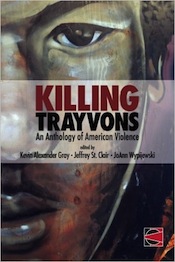
Robin D. G. Kelley, who teaches at UCLA, is the author of the remarkable biography Thelonious Monk: The Life and Times of an American Original (2009) and most recently Africa Speaks, America Answers: Modern Jazz in Revolutionary Times (2012). He is a contributor to Killing Trayvons: an Anthology of American Violence.

More articles by:

Source: What Does Black Lives Matter Want?

Private federal prisons more dangerous, damning DoJ investigation reveals | US news | The Guardian


Private federal prisons more dangerous, damning DoJ investigation reveals
‘Low risk’ inmates at contract prisons were nine times more likely to be placed on lockdown and put in solitary confinement than others in the federal system
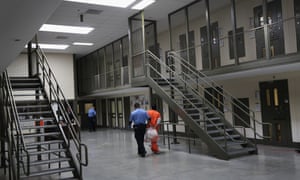
A guard escorts an immigrant detainee from his ‘segregation cell’ back into the general population at the Adelanto detention facility in California.

Photograph: John Moore/Getty
Oliver Laughland in New York  @oliverlaughland
Friday 12 August 2016 08.46 EDT Last modified on Friday 12 August 2016 09.17 EDT

Privately operated government prisons, which mostly detain migrants convicted of immigration offenses, are drastically more unsafe and punitive than other prisons in the federal system, a stinging investigation by the US Department of Justice’s inspector general has found.

Inmates at these 14 contract prisons, the only centers in the federal prison system that are privately operated, were nine times more likely to be placed on lockdown than inmates at other federal prisons and were frequently subjected to arbitrary solitary confinement. In two of the three contract prisons investigators routinely visited, new inmates were automatically placed in solitary confinement as a way of combating overcrowding, rather than for disciplinary issues.

The review also found that contract prison inmates were more likely to complain about medical care, treatment by prison staff and about the quality of food.

Contract prisons almost exclusively incarcerate low-risk inmates convicted of immigration offenses. These facilities house around 22,000 individuals, mostly deemed “low risk”, at an annual cost of $600m. They are operated by three private companies: Geo Group, Corrections Corporation of America (CCA), and Management and Training Corporation (MTC).

Investigators determined that these facilities were also more dangerous than others in the federal system. For example, the report found that inmate on inmate assaults were 28% higher in contract prisons, and confiscation of contraband mobile phones occurred eight times more.
Prosecutions of illegal entry a driving force in mass incarceration in US – report
Read more
At the Eden detention center in Texas, operated by CCA and one of the three institutions routinely visited by investigators, the inspector general found that staff failed to discipline inmates in over 50% of disciplinary incidents.

“This is the latest in a whole series of reports and investigations that have found very serious issues with Bureau of Prisons shadow systems of private prisons,” said Carl Takei, a staff attorney with the ACLU’s national private prison project and one of the authors of the 2014 report Warehoused and Forgotten: Immigrants Trapped In Our Shadow Private Prison System, which investigated contract prisons in Texas.

“Federal officials should be reconsidering their alliance on private prisons and developing plans to begin cancelling these contracts, rather than continuing this experiment.”

Among the most stark of the ACLU’s 2014 findings was the severe medical understaffing and “extreme cost cutting” that limited inmates access to healthcare.

Elements of these findings are replicated in the inspector general’s report, which identified serious flaws in the oversight of medical care in a number of contract prisons.

“In one instance,” the report documents, “when an inmate had trouble breathing, the contract prison medical staff told him to place a sick call, which would put him on a list of inmates waiting to be seen by medical personnel instead of being treated immediately.

“However, after he died, the mortality reviews showing this deficiency gave the onsite monitors no guidance on what steps to take to require corrective action. As a result, contractor deficiencies went uncorrected and corrective actions were delayed.”

The inspector general recommends that the US justice department should convene a “working group” to probe the causes of the disparity in safety standards between contract prisons and publicly operated facilities, and states that federal government should strengthen oversight provisions across the board.

Source: Private federal prisons more dangerous, damning DoJ investigation reveals | US news | The Guardian

Violence and Corruption in a Prison Union – The New York Times

A day after five corrections officers were convicted in the beating of an inmate, the leader of their union was arrested on fraud charges.

Source: Violence and Corruption in a Prison Union – The New York Times