Across the nation, Black males are routinely exposed to exclusionary practices that remove them from learning environments (Howard, 2008, 2013; Wood, 2017; Wood, Essien, & Blevins, 2017). These practices include over-placement in special education, in-school suspension, out-of-school suspension, and even expulsion (Losen & Skiba, 2010). Among these forms of exclusionary discipline, suspensions have been a topic of continued interest in the past several years, with numerous reports and studies demonstrating that California is home to some of the most egregious suspension patterns in the country.
As detailed in a recent report, GET OUT! Black Male Suspensions in California Public Schools, Sacramento County is ground zero for some of the highest total suspensions in the State. In fact, Sacramento county has the second highest total suspensions in California, falling only behind Los Angeles County. This rate exceeds those in other urban counties, such as San Bernardino, Riverside, Contra Costa, Alameda, and San Joaquin (Wood, Harris III, & Howard, 2018).
Prior research has demonstrated that students who are regularly suspended are being tracked into the prison industrial complex, a pattern often referred to as the school-to-prison pipeline. Thus, while some students are being socialized by schools for college-going and entering into the workforce, others are being socialized for prison. Moreover, research has also shown that those subjected to suspensions are more likely to enter into the permanent underclass and to have a reliance upon social services (Darensbourg, Perez, & Blake, 2010; Fenning & Rose, 2007; Skiba, Arredondo, & Williams, 2014). Bearing this in mind, this brief sought to highlight key facts about suspensions in Sacramento County. These facts are meant to generate conversations around issues of racial injustice and educational inequities that permeate the region’s educational institutions that fortify the economic and social health of the region.
This brief details the exposure of Black males to exclusionary discipline in Sacramento County. In particular, this report highlights the high suspensions of Black boys and young men in Sacramento County public schools. Some of the key findings include:
Black males are 5.4 times more likely to be suspended in Sacramento County than the statewide average.
Nearly 18 Black males were suspended, per day, in the county.
Sacramento County has four school districts in the top 20 suspension districts for Black males in the State of California.
Sacramento City Unified is the most egregious suspension district for Black males in the State of California.
Black males in early childhood education (kindergarten through third grade) are 9.9 times more likely to be suspended than their peers (statewide).
One third of all Black male foster youth are suspended in Sacramento County.
I never fully realized the monumental role that massive numbers of children played in civil rights protests. Law enforcement arrested and jailed children by the thousands for days, and sometimes months, and their involvement helped to enable one of the greatest legal and social assaults on racism in the 20th century—the Civil Rights Act of 1964. The Leesburg Stockade Girls are an incredible example of these courageous, young freedom fighters.You may ask, “Who were the Leesburg Stockade Girls?” In July of 1963 in Americus, Georgia, fifteen girls were jailed for challenging segregation laws. Ages 12 to 15, these girls had marched from Friendship Baptist Church to the Martin Theater on Forsyth Street. Instead of forming a line to enter from the back alley as was customary, the marchers attempted to purchase tickets at the front entrance. Law enforcement soon arrived and viciously attacked and arrested the girls. Never formally charged, they were jailed in squalid conditions for forty-five days in the Leesburg Stockade, a Civil War era structure situated in the back woods of Leesburg, Georgia. Only twenty miles away, parents had no knowledge of where authorities were holding their children. Nor were parents aware of their inhumane treatment.
A month into their confinement, Danny Lyon, a twenty-one year old photographer for the Student Non-violent Coordinating Committee (SNCC), learned of the girls’ whereabouts and sneaked onto the stockade grounds to take pictures of the girls through barred windows. After SNCC published the photos in its newspaper The Student Voice, African American newspapers across the country printed the story, and the girls’ ordeal soon gained national attention.
On August 28, 1963, as Martin Luther King Jr. gave his historic “I Have a Dream” speech in Washington, DC, these children sat in their cell bolstering their courage with freedom songs in solidarity with the thousands of marchers listening to Dr. King’s indelible speech on the National Mall. Soon after the March on Washington, during the same week of the bombing of the five little girls at Sixteenth Street Baptist Church on September 15, 1963, law enforcement released the Leesburg Stockade Girls and returned them to their families.
Their story was part of the broader Civil Rights effort that engaged children in a variety of nonviolent, direct actions. In Alabama, for example, thousands of youth participated in the 1963 Children’s Crusade, a controversial liberation tactic initiated by James Bevel of the Southern Christian Leadership Conference (SCLC) and led by Dr. Martin Luther King, Jr. After careful deliberation about the merit of involving children in street protests and allowing them to be jailed, Dr. King decided that their participation would revive the waning desegregation campaign and would appeal to the moral conscience of the nation.
On May 2, 1963, in response to an invitation from Dr. King, roughly a thousand students—elementary through high school—gathered enthusiastically at Sixteenth Street Baptist Church and joined a civil rights march throughout the streets of Birmingham. By day’s end, law enforcement had jailed over 600 children.
The next day the number of children doubled. However, the training classes provided by SCLC leaders could not have prepared the children for the violence they would encounter. The Commissioner of Public Safety Eugene “Bull” Connor directed the use of fire hoses and attack dogs on the children, and people in America and around the world witnessed this brutality. Authorities arrested nearly 2,000 children—one as young as four years old. These protests continued throughout the first week of May, with over 5,000 children being jailed.
Within days, SCLC and local officials reached an agreement, in which the city agreed to repeal the segregation ordinance and release all jailed protestors. Ultimately, the activism of thousands of African American children in 1963, including the Leesburg Stockade Girls, provided the momentum for the March on Washington and contributed to the passage of the Civil Rights Act the following year.
The history of children’s Civil Rights activism continues to be important to tell. The Leesburg Stockade Girls realize this importance, and they are documenting their story. In 2015, as the keynote speaker at a commemorative event for the Leesburg Stockade Girls at Georgia Southwestern State University, I engaged with ten of the surviving women, who shared recollections about the day of their arrest. Remarkably, these women still possess a collective spirit of resistance to social injustice, and they are beginning to embrace their place in history.
As we reflect on their story and the broader history of youth activism, let us consider: How might children today play an equally significant role in promoting racial equality in the United States? Written by Tulani Salahu-Din, Museum Specialist, National Museum of African American History and Culture.
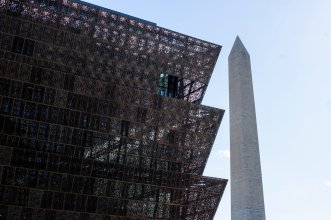
Source: The National Museum of African American History and Culture is the only national museum devoted exclusively to the documentation of African American life, history, and culture. It was established by Act of Congress in 2003, following decades of efforts to promote and highlight the contributions of African Americans. To date, the Museum has collected more than 36,000 artifacts and nearly 100,000 individuals have become members. The Museum opened to the public on September 24, 2016, as the 19th and newest museum of the Smithsonian Institution.
Join ∴∴ Support NMAAHC
OCG is a proud a Founding Member with recurring support.
We estimate marriage rates for enslaved African Americans using unique hospital records that report marital status for both free and enslaved patients. We find that marriage rates increased with age, that females had higher marriage rates than males, and that relatively more enslaved African Americans than whites were married, a result we partly attribute to the demographic composition of the hospital population. In addition, the admission records allow us to identify those slaves owned by slave traders. We find relatively high marriage rates among enslaved African Americans but significantly lower marriage rates for those slaves owned by traders, a result we attribute to the demographic composition of traded slaves and marital disruption caused by the slave trade. Comparisons with other postbellum sources provide suggestive support for the antebellum marriage patterns found in these hospital data.
“On the marital status of U. S. slaves: Evidence from Touro Infirmary, New Orleans, Louisiana” was just published. We provide new evidence on slave marriage and the extent to which the slave trade disrupted black marriage patterns.
Dr. Logan is the Hazel C. Youngberg Distinguished Professor of Economics @OhioState. Author of Economics, Sexuality, and Male Sex Work.
Thomas Burrell, president of the Black Farmers and Agriculturists Association and soybean farmer David Hall, composite image.
DON’T MISS STORIES. FOLLOW RAW STORY!
Black farmers in the Mid-South region surrounding Memphis used science to uncover a multi-million scheme to put them out of business and steal their farmland, WMC News reported Tuesday.
At the Mid-South Farm and Gin Show show in March of 2017, African-American farmers believe that Stine Seed Company purposefully sold them fake seeds.
Thomas Burrell, president of the Black Farmers and Agriculturalists Association, explained how black farmers were receiving one-tenth of the yield as their white neighbors.
“Mother nature doesn’t discriminate,” Burrell said. “It doesn’t rain on white farms but not black farms. Insects don’t [only] attack black farmers’ land…why is it then that white farmers are buying Stine seed and their yield is 60, 70, 80, and 100 bushels of soybeans and black farmers who are using the exact same equipment with the exact same land, all of a sudden, your seeds are coming up 5, 6, and 7 bushels?”
The results were so stark, resulting in millions of dollars in losses, the farmers took their seeds for scientific testing by experts at Mississippi State University.
The tests revealed the black farmers had not been given the quality “certified” Stine seeds for which they had paid.
Burrell suggested a land grab was the ultimate motivation of the perpetrators.
“All we have to do is look at here: 80 years ago you had a million black farmers, today you have less than 5,000. These individuals didn’t buy 16 million acres of land, just to let is lay idle. The sons and daughters, the heirs of black farmers want to farm, just like the sons and daughters of white farmers.”
“So we have to acknowledge that racism is the motivation here,” Burrell concluded.
The farmers have filed a class-action lawsuit in United States District Court for the Western Division in Memphis.
A state legislator is also seeking an investigation into the scheme.
Tennessee Rep. G.A. Hardaway (D-Memphis) vowed state government would investigate “issues which have negatively impacted our black farmers.”
“We will explore the avenues — whether its civil, whether it’s criminal — dealing with fraud,” Rep. Hardaway vowed.
One farmer victimized, David Hall, explained why he had paid extra for high quality seeds.
“We bought nearly $90,000 worth of seed” Hall explained. “It’s been known to produce high yield, so you expect it, when you pay the money for it, to produce the high yields.”
The farmers “were effectively duped,” Burrell told WREG-TV. “It’s a double whammy for these farmers, it accelerates their demise and effectively it puts them out of business.”
“No matter much rain Mother Nature gives you, if the germination is zero the seed is impotent,” Burrell reminded.
We will now have an alt-right #SCOTUS There is little that we of goodwill can do about it now. It is too late for those who would, who could have to claim their government. We all know something is wrong – it has been for a very long time. When the horse is out of the barn, it is too late to put up a reminder sign to close the door.
#Trump and his GOP puppets are the biggest and most pressing problem, but not the only ones. We are cornered on all sides. A ruthless sheriff is in town and his deputies are everywhere. Poor people have been targeted among the unwanted. Public spaces and tax-rolled law enforcement are now weaponized to dispose of and make invisible, instill fear and isolation to “otherize” those deemed unworthy. Blatant acts of violations of fundamental human rights have become normalized forms of public policy enforcement and oversight.
Protest marches and protestations of any kind will not turn the time. While we idled in our fear of the Muslims, Al-Qaeda and Iranian powers. Wall Street and Washington’s swamp creatures were sucking the very oxygen from the air. Even your vote has been stolen and put up for sale. The GOP stands behind a corrupt and vile President because they know that their fate is controlled entirely by him – manipulation is expensive. The lifetime of emissaries can be fleeting at best.
As we enter the last era of my broadcast career, our message is profoundly fundamental:
1. Exposing wrongs is not the same as righting them.
2. What we knew as America has been forever changed. What we understood about it, remains the same.
3. Governments are not moved by shame. In this era, neither are politicians.
4. If the House is not turned in November, there will be a seismic permanent shift in the infrastructure of the republic. One where there is no undoing.
5. Comrades and allies must be willing to make all kinds of serious sacrifice. If not, our children and grandchildren will be the sacrifice.
We look forward to being back with you in the Fall of 2018. Do we have what it takes to igniting the rights and dismantling the wrongs, to rescue those who don’t know they need rescuing ? I don’t know. We will see.
“Transforming Truth to Power, One Broadcast At a Time”
*The author thanks Eric Lopez for outstanding research assistance. The article benefited from comments by Tad Krauze, Marc Silver, and the anonymous reviewers at SSQ. This research uses data from Add Health, a program project directed by Kathleen Mullan Harris and designed by J. Richard Udry, Peter S. Bearman, and Kathleen Mullan Harris at the University of North Carolina at Chapel Hill, and funded by grant P01‐HD31921 from the Eunice Kennedy Shriver National Institute of Child Health and Human Development, with cooperative funding from 23 other federal agencies and foundations. Special acknowledgment is due to Ronald R. Rindfuss and Barbara Entwisle for assistance in the original design. Information on how to obtain the Add Health data files is available on the Add Health website (<http://www.cpc.unc.edu/addhealth>). No direct support was received from grant P01‐HD31921 for this analysis.
To show that in the contemporary United States, traditionally privileged categories of people—men, whites, and the super‐rich—complete four‐year college degrees at rates lower than their nonprivileged counterparts—women, nonwhites, and the “99 percent.”
Methods
Logistic regression and an educational transitions method are used on the National Longitudinal Study of Adolescent Health (Waves 1 and 4) to predict, given college entrance, who completes a bachelor’s degree.
Results
Women, the lower 99 percent of the income distribution, and when economic resources are present, nonwhites all complete college at higher rates than men, the richest 1 percent, and whites, respectively. In a final model, rich white men as a single category are shown to complete college less than everyone else.
Conclusion
As previously excluded categories of people have gained access to higher education, the privileged are shifting their reproduction strategies away from schooling.
“We conclude based on the preceding analysis that the black-white intergenerational gap in individual income is substantial for men, but quite small for women. It is important to note, however, that this finding does not imply that the black-white gap in women’s individual incomes will vanish with time. This is because black women continue to have substantially lower levels of household income than white women, both because they are less likely to be married and because black men earn less than white men.” (p. 23)
In an attempt to estimate the impact of different marriage rates, Chetty et al. calculate the intergenerational mobility rates of black and white men raised in both single parent and married families, and find little difference. As they conclude, “parental marital status has little impact on intergenerational gaps” (p. 25).
In a new paper published today, we examine the same question in a different way. (See our longer Technical Paper here, and full Results here). We confirm the stark differences in upward earnings mobility for black men compared to both black women and whites. We also confirm that black women, despite their solid earnings mobility, have very low family income mobility. We then estimate the impact of racial differences in marriage rates by simulating higher marriage rates among black women: like Chetty, we find no significant effects.
Specifically, Chetty et al. show that black men born to low-income parents are much more likely to end up with a low individual income than black women, white women, and—especially—white men. As they write:
Black and white Americans, on different starting blocks
Black and white children are born into very different economic circumstances. Almost half of black boys and girls are in households in the bottom fifth of the income distribution, compared to just over one in ten white children:
Almost half of black youths grew up in the bottom quintile
Share of youths ages 14 to 16 with parents in each income quintile
Black menWhite menBlack womenWhite women0%50%100%0%100%Bottom quintileSecond quintileMiddle quintileFourth quintileTop quintile
There are, then, huge race gaps in the chances of being born to or raised in a poor family—gaps that were scarcely lower among children born in the early 1980s than they were among those born in the years around 1960. But what about the chances of escaping poverty as an adult?
Using data on 4,200 black and white Americans from the NLSY97, we find that over half (54 percent) of black men born into households in the poorest fifth of the family income distribution end up, as individuals, in the poorest fifth of the earnings distribution for their respective gender, between the ages of 28 and 35, compared to the minority of white men (22 percent), white women (29 percent), and black women (34 percent).
Black men have low earnings mobility
Share of youths from the bottom quintile who remain in the bottom quintile as adults
Black menWhite menBlack womenWhite women0%20%40%60%80%0%80%
In terms of their individual earnings, black women have similar odds of escaping poverty as white women, though both these groups lag behind the upward mobility of white men. These analyses don’t consider the income of other family members, however. What happens when we look instead at adult family income, as opposed to individual earnings? A very different picture emerges for black Americans:
Black men and women have low family income mobility
Percentage of youths from the bottom quintile who remain in the bottom quintile of family income as adults
Black menWhite menBlack womenWhite women0%20%40%60%80%0%80%
Black women face a very high risk of being stuck in poverty (62 percent), surpassing even the 50 percent risk faced by black men. For whites, the odds of remaining stuck in poverty remain relatively low, for both men (28 percent) and women (33 percent), when we use a family income measure.
The headline finding here is that, among those who grew up poor, black women are the only group showing a marked difference between the risk of being in the bottom quintile of the individual earnings distribution (for each gender), and the risk of being in the bottom quintile of the family incomedistribution (for the whole age cohort). Whites do well on both counts; black men do poorly on both counts. Black women do reasonably well on the first and very poorly on the second. This result is probably driven by the fact that black women tend to create families with black men who do poorly on both counts and thus bring down the family income results for black women.
Lower marriage rates aren’t hurting black mobility
Why? Various explanations could be given. The most obvious is that, assuming marriages or cohabitation mostly occur within racial groups, black women’s family position is damaged directly or indirectly by the poor outcomes for black men. If white women end up with white men, who in terms of their earnings are more than twice as likely to escape poverty as black men, their family income will be higher. Equally, if black women are more likely than white women to end up as single, they will also record a lower family income.
We set out to model the impact of household formation by artificially equalizing the marriage rates of black women and white women. The results will of course depend not just on whether they marry, but also on whom they marry. In our simulation, we assume that the additional women who are married have a husband with the same economic characteristics as their brother (see the Technical Paper for our detailed methods). The intuition here is that most people are likely to marry someone with a broadly similar background as themselves, and siblings, by definition, have an almost identical one. The results of this equal-marriage-rate simulation are as follows:
Simulating marriage does little to improve mobility for black women
This is certainly one of the most important implications of both their study and our own. Breaking the cycle of intergenerational poverty for black Americans requires a transformation in the economic outcomes for black men, particularly in terms of earnings. One important point here: the relationship between earnings and marriage runs in both directions. Married men tend, other things equal, to earn more: one study of identical twins suggests that being married raises earnings by one-fourth. Married men may feel more responsibility to provide economically for their families, and especially their children. Low marriage rates may therefore have some impact on earnings.
It is also clear that the vast inequalities by race cannot be alleviated by upward mobility alone. Black girls are, relatively speaking, more likely to move out of poverty in terms of their own earnings. However, we should keep in mind the sheer number of black children being raised in low-income households in the first place. Closing the race gaps in upward mobility will require wholesale shifts in economic outcomes, perhaps above all for men’s earnings.
Scott Winship is a former Brookings Institution fellow, now at the Joint Economic Committee. His contributions to this report ended before he took his current position. The authors did not receive financial support from any firm or person for this article or from any firm or person with a financial or political interest in this article. Winship is an honorary advisor for the Foundation for Research on Equal Opportunity and the Archbridge Institute. Other than the aforementioned, the authors are currently not an officer, director, or board member of any organization with an interest in this article.
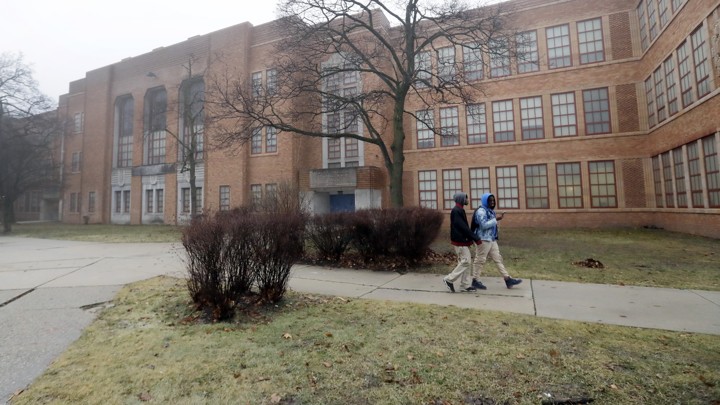
Students walk outside Detroit’s Pershing High, which isn’t one of the institutions named in the suit but was identified as one of the city’s lowest-performing schools CARLOS OSORIO / AP
What to do when a school is infested with vermin, when textbooks are outdated, when students can’t even read? Perhaps the answer is sue the government.
That’s what seven students in Detroit have done. Their class-action suit filed against the state of Michigan asserts that education is a basic right, and that they have been denied it.
Usually, such education-equity cases wend their way through state courts, as all 50 state constitutions mandate public-education systems, while the country’s guiding document doesn’t even include the word education. But this case, Gary B. v. Snyder, was filed in federal court, and thus seeks to invoke the Constitution. And as of this week, it’s headed to the federal appeals court in Cincinnati.
Become a member.
The lawyers filing the suit—from the pro bono Los Angeles firm Public Counsel—contend that the students (who attend five of Detroit’s lowest-performing schools) are receiving an education so inferior and underfunded that it’s as if they’re not attending school at all. The 100-page-plus complaint alleges that the state of Michigan (which has overseen Detroit’s public schools for nearly two decades) is depriving these children—97 percent of whom are students of color—of their constitutional rights to liberty and nondiscrimination by denying them access to basic literacy. Almost all the students at these schools perform well below grade level in reading and writing, and, the suit argues, those skills are necessary to function properly in society. It’s the first case to argue that the U.S. Constitution guarantees the right to become literate (and thus to be educated) because other rights in the Constitution necessarily require the ability to read.
Although the Southern Poverty Law Center says it has alerted Amazon to sellers who sell hate group material, the company has not always been receptive to completely eliminating these sellers.
The report, “Delivering Hate: How Amazon’s Platforms Are Used to Spread White Supremacy, Anti-Semitism, and Islamophobia,” details a variety of ways that hate groups take advance of Amazon’s massive platforms and inconsistently enforced policies. Two advocacy groups ― Partnership for Working Families and Action Center on Race and the Economy ― compiled the study.
When asked about the report, Amazon referred HuffPost to its official guidelines, which prohibit the selling of “products that promote or glorify hatred, violence, racial, sexual or religious intolerance or promote organizations with such views.”
But critics say that this policy often doesn’t reflect reality.
Amazon’s approximately 300 million active customers can encounter products that feature hate symbols and hateful language on Amazon Marketplace, which has allowed racist, Islamophobic, anti-LGBTQ and anti-Semitic groups to sell merchandise.
The report found items for sale that included a costume of a lynching victim, a hangman’s noose decal, Nazi memorabilia and children’s toys featuring alt-right symbol Pepe the Frog.


 Source:




 PDF
PDF






 OCG
OCG 