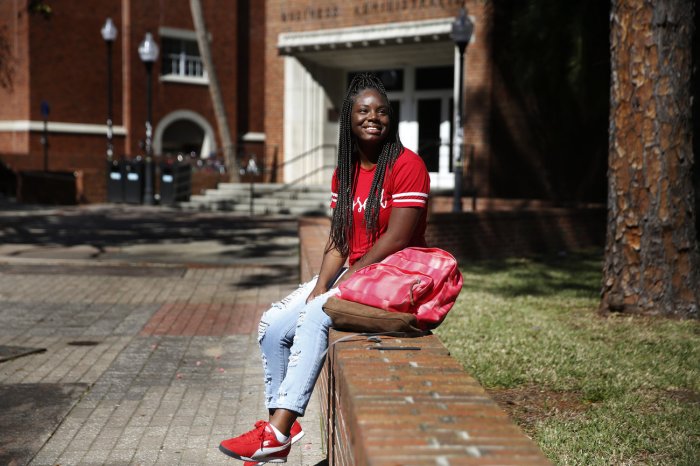
This Mom Learned She Was Pregnant In College. Now, She’s Graduating : NPR

” . . . Of course, what Parks didn’t know, is that nearly 4 million college students are doing this right now — that’s about a fifth of all undergraduates. Student parents are mostly women (about 70 percent) they are more likely to be from low-income families and students of color. In fact, 2 in 5 black women in college are mothers, and the majority of them are single.”These are the people we need to be investing in,” says Lindsey Reichlin Cruse, who studies student parents at the Institute for Women’s Policy Research. “They’re really facing the odds, working hard to provide for their families and that’s what this country is built on.”And the data shows that investing in these students is a good bet. Student parents have better GPAs and grades than their classmates without kids. But, they are less likely to graduate. “It’s these other factors, these life factors that get in the way,” says Reichlin Cruse.”

Source: This Mom Learned She Was Pregnant In College. Now, She’s Graduating : NPR

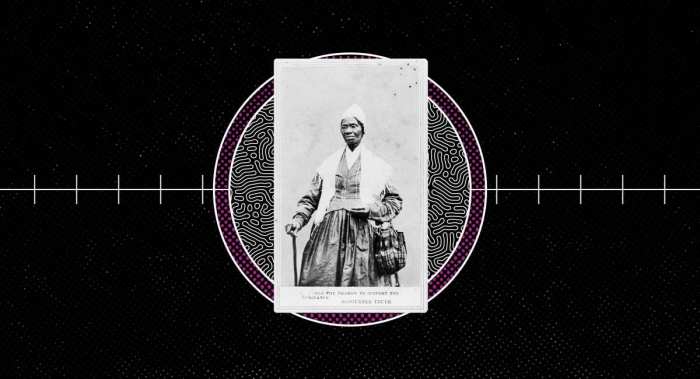
Suffragettes were some of our first women’s historians. But they erased the vital work of black women. – The Lily

“Consistent with the deep-seated prejudices held by most white suffragists, Catt included no plaques to commemorate the thousands of African American women who actively participated in the struggle. Regional chauvinism was an issue as well: All the domestic suffragists were from the East Coast, with New York State vastly overrepresented. There was no one from California or the West, nor anyone from the South, unless you counted the Grimké sisters who left their native South Carolina to settle in Philadelphia and later New Jersey.

For too long, the history of how women won the right to vote has closely paralleled Catt’s suffrage forest: top-heavy and dominated by a few iconic leaders, all white and native-born. Moving away from that outdated approach reveals a broader, more diverse suffrage history waiting to be told, one that shifts the frame of reference away from the national leadership to highlight the women — and occasionally men — who made women’s suffrage happen through actions large and small, courageous and quirky, in states and communities across the nation. Suffrage activists campaigned in church parlors and the halls of Congress, but also in graveyards on the outskirts of college campuses, on the steps of the Treasury building and even on top of Mount Rainier.”

Source: Suffragettes were some of our first women’s historians. But they erased the vital work of black women. – The Lily

Sexualizing Young Black Girls, Growing Up Too Fast


“For Black girls like me the transition out of childhood into a complex and ill-defined “womanhood” happens swiftly and without warning. According to a Georgetown Law study released earlier this year, Black girls are stripped of their innocence as early as the age of 5. The study, called “Girlhood Interrupted,” found that survey participants perceived that Black girls need less nurturing, protection, support, and comfort, and that Black girls are more independent and know more about adult topics, including sex. This phenomenon was dubbed “adultification” by the study authors, and they wrote that it refers to “the extent to which race and gender, taken together, influence our perception of Black girls as less innocent and more adult-like than their white peers.”And sadly, America’s fraught history with race plays a role in this: The “adultification” of Black children has its roots in slavery, when Black girls and boys were treated like chattel and subjected to cruel treatment, just like their adult counterparts. And in the case of Black girls, it’s further exacerbated by the often early onset of puberty. As the study reported, “on average, African American girls mature physically at a faster rate than [w]hite girls and as a result can be perceived as older.”

Source: Sexualizing Young Black Girls, Growing Up Too Fast

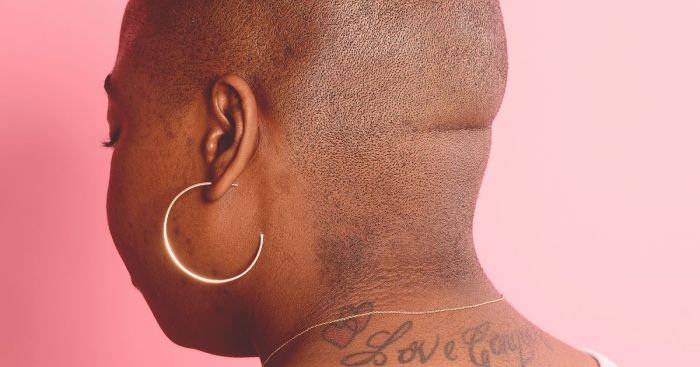
Why dark-skinned black girls like me aren’t getting married | Life and style | The Guardian

Black women in America marry less than others – and the numbers are even lower for darker skinned black women. Is colorism – favoring lighter skin – to blame? Dream McClinton puts herself on the line to report

Source: Why dark-skinned black girls like me aren’t getting married | Life and style | The Guardian

White Supremacy Has Always Been Mainstream ::: The Boston Reivew

White Supremacy Has Always Been Mainstream

STEPHEN KANTROWITZ

Image: Library of Congress

The Second Coming of the KKK: The Ku Klux Klan of the 1920s and the American Political Tradition
Linda Gordon
Mothers of Massive Resistance: White Women and the Politics of White Supremacy
Elizabeth Gillespie McRae
Bring the War Home: The White Power Movement and Paramilitary America
Kathleen Belew


White supremacy is a language of unease. It does not describe racial domination so much as worry about it.

White supremacy connotes many grim and terrifying things, including inequality, exclusion, injustice, and state and vigilante violence. Like whiteness itself, white supremacy arose from the world of Atlantic slavery but survived its demise. Yet while the structures are old, the term “white supremacy” is not. Although it first appeared in British abolitionist critiques and U.S. proslavery defenses in the first half of the nineteenth century, it only became commonplace—and notably not as a pejorative—in U.S. whites’ post-emancipation calls for a racial order that would reinstitute slavery’s political and economic guarantees.

White supremacy has always been hard work. Because of this, it is possible to imagine that someday there will be no one willing to perform the labor.

White supremacy’s opponents evoke it to condemn. Its proponents use it to summon up a vision of a racially ordered society, to rally political forces behind that vision, to establish laws and institutions that affirm it, and finally to render it natural and normal. But the very fact that the phrase requires speaking means that something has gone awry. If the hierarchy of races were real, it would easily have survived slave emancipation. Instead, that hierarchy must be constantly asserted and enforced, lest the white race be overwhelmed, overcome, and extinguished. White supremacy is organized around a dread of its own demise, and with it the white race.

This inherent instability has produced a welter of fears, fantasies, and imperatives, from racial purity to race war. It has also made “white supremacy” a call to action. Indeed, the effort to transform the phrase from a slogan into a fact has been a massive social and political project, involving the witting and unwitting labor of many millions of people. White supremacy has always been hard work.

But because it is work, it is possible to imagine that someday there will be no one willing to perform the labor. And sometime between the march from Selma to Montgomery and the election of Barack Obama, many Americans allowed themselves to believe something of the kind: that white supremacy’s advocates, having lost their long war, were giving up.

The violent manifestations of white supremacy over the past several years—from Dylann Roof’s murders in Charleston, through Donald Trump’s campaign and presidency—unwound that hope. No better illustration exists for white supremacy’s return to the cultural center than Charlottesville’s 2017 “Unite the Right” rally, in which emblems of the Klan, the Third Reich, and the Confederacy jostled with more esoteric banners and names, together representing a century’s worth of white supremacist politicking. By the time the sirens died out, it should have been clear that Dylann Roof was no “lone wolf,” but the legitimate offspring of a reemergent social movement.

Yet even as white supremacy appeared suddenly to be everywhere in U.S. life, many—and not just on the right—denied its existence. Trump’s refusal to criticize even neo-Nazis was treated as a uniquely craven act of “norm-breaking,” not as a predictable extension of decades of coded and not-so-coded racist appeals. In the rush to catch Trump out, what has been omitted from media reporting is the long history of indulging white supremacist ideology and expression. Consider how long Pat “Blood and Soil” Buchanan served as a respectable voice of the political and journalistic right, winning four states in the 1996 Republican primaries and later playing Rachel Maddow’s curmudgeonly uncle on MSNBC—all in spite of his longstanding support for white ethnonationalism. Or remember the PBS NewsHour profile of Trump supporter Grace Tilly that failed to note her neo-Nazi tattoos. The network’s post-backlash editor’s note treated Tilly’s claim that her tattoos were religious, not racist, as worthy of debate, as though an enormous “88”—code for “Heil Hitler”—paired with a bullseye cross, another white supremacy symbol, left room for uncertainty. The myth that white supremacy is a marginal political phenomenon has proved so durable that many people find it easier to deny its overt expression than confront a more troubling reality: “very fine people”—and not just fathers, husbands, and sons, but mothers, wives, and daughters as well—have always been central to the work of advancing white supremacist causes.

“Very fine people”—and not just fathers, husbands, and sons, but mothers, wives, and daughters as well—have always been central to the work of white supremacy.

Three recent books explore the twentieth-century history of this political project. In Linda Gordon’s thoughtful reconsideration of the 1920s Klan, we watch shameless grifters deploy racial hierarchy and exclusion to forge the largest social movement of the early twentieth century. In Elizabeth Gillespie McRae’s revelatory exploration of mid-century white women’s segregationist work, we see how the inheritors of that vision learned to speak in new languages, muted enough to pass in a society increasingly hostile to white supremacy but unmistakable to partisans as a continuation of the long struggle against racial equality. In Kathleen Belew’s groundbreaking account of the White Power movement from the mid-1970s to the 1995 Oklahoma City bombing, it becomes clear how a post–civil rights generation of white supremacist organizers positioned themselves as victims of an overbearing state, even as they nurtured Timothy McVeigh, Dylann Roof, and the dream of race war.

These works do not claim to provide a comprehensive account of twentieth-century white supremacy; such a project would also have to probe (as other scholars have) the forces of labor and capital, and—as only Belew does here—the relationship of domestic ideologies and practices to their imperial histories. But read together and through one another, these works provide a sobering crash course in the power, diversity, and persistence of white supremacist ideas and politics.

Across the long twentieth century, white supremacist activists nurtured an exclusionary racial nationalism. They envisioned a nation safely in the hands of its “rightful” owners, redeemed from misrule by “unfit” peoples, and made great again. Although their work relied extensively on white women’s organizational and ideological labors, they posited a world of white patriarchal families in which men spoke and fought while women sustained and reproduced. Responding to successive challenges, these activists developed new languages and new coalitions, but they remained consistently suspicious (at a minimum) of political authority that they could not directly control. Partly for this reason, they usually saw electoral politics as a critical arena of struggle, and they rarely abandoned it. Across the century, this ideological and organizational landscape has been home to hustlers, activists, and insurgents playing distinct but often complementary roles. White supremacy has always been at once a political movement, an armed struggle, and a long con.

Gordon’s Second Coming of the KKK shows how a white supremacist and nativist movement reset the boundaries of political discourse, clarified that the nation existed in the image and service of a particular kind of American, and took control of governments from school boards to Congress to give those imperatives life. Klansmen nurtured a politics of resentment against both “elites” who looked down on them and the immigrants, blacks, and radicals who seemed to challenge their world.

To many of its white contemporaries, the KKK of the 1920s was a respectable organization that promised to restore white Protestants to their proper place of authority.

The first Ku Klux Klan was founded in the 1860s by former Confederate soldiers and for a few years became the spear and symbol of the war against Reconstruction. This first Klan was actively suppressed by legal and military action in the early 1870s, and the campaigns of racial terror and political intimidation that finally overthrew Reconstruction were largely conducted under other names. The second Klan was founded in 1915 by William Joseph Simmons in response to that year’s blockbuster film, D. W. Griffith’s The Birth of a Nation, which reworked memories of the Reconstruction-era KKK into a mythos of white male chivalry combatting black sexual barbarism. Beginning in 1919, the Klan exploded in size and power as organizers channeled the era’s powerful currents of nativism and violent white supremacy through the heroic image and visual style of the film’s Klansmen. They coupled the anti-black rhetoric of the Reconstruction-era Klan with a pervasive hostility toward non-Protestant immigrants and what Simmons derided as their anti-American propensities for “Bolshevism, Socialism, Syndicalism, I.W.W.ism.” Gordon encourages us to understand that, to many of its white American contemporaries, the Ku Klux Klan of the 1920s was an “ordinary and respectable” organization that promised to restore white Protestants, mainly of the lower middle and skilled working classes, to their proper place of authority in U.S. cultural and political life. She reminds us that many of the Klan’s hobbyhorses—anti-black racism, antisemitism, anti-Catholicism, and nativism; censoriousness about sex and alcohol; support for eugenics; and narrow-minded nationalism—reflected broad and sometimes hegemonic aspects of 1920s U.S. culture.

Gordon also asks us to understand the movement as producing, not just reflecting, social concerns. The Klan channeled preexisting hatred of racial inferiors and haughty elites, but it also ginned up those expressions and provided new outlets for them. Conspiracy thinking was central to Klan rhetoric and ideology. Everywhere lurked sinister forces that sought to take over the U.S. government and subvert the country’s way of life. Indeed, those forces might already have taken power. Jews, Catholics, Bolsheviks, and African Americans were always about to swamp “true Americans” with rising birthrates; take control of U.S. police forces and public schools; undermine cherished values with sex, alcohol, or pornography; and oppress real Americans from the safety of powerful, distant institutions.

Such conspiracy talk effectively transformed grievances and insecurities into well-defined targets that local Klans could then organize against. In Madison, Wisconsin, for example, the Klan took up the cause of fighting illegal liquor trafficking in a neighborhood populated by Italians, blacks, and Jews. There and elsewhere, the Klan infiltrated or worked alongside police departments. Beatings, whippings, cross-burning, death threats, and fatal shootings marked the outer edge of the Klan’s activities, but in some locales—Dayton, Ohio; Williamson County, Illinois; large swaths of Oklahoma—assaults were common and condoned.

Continue reading

Black-owned Makeup Brand Pat McGrath Projected to Surpass Kylie Cosmetics with $1B Valuation ::: Atlanta Black Star

pjimage-1-5-300x200

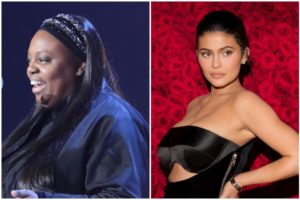
(Photo by John Phillips/BFC/Getty Images for BFC/ Kevin Tachman/Getty Images for Vogue)


Black-owned cosmetics company Pat McGrath Labs lands a $60 million investment deal with Eurazeo Brands has put the two-year-old business’ valuation in excess of $1 billion. That accomplishment, according toWomen’s Wear Daily, launches her ahead of Kylie Cosmetics, a brand that Forbes controversially said put reality star Kylie Jenner on track to become the youngest self-made billionaire.

A press release issued on behalf of Pat McGrath Labs, which was founded in 2016 by the world’s number one makeup artist Pat McGrath, said the investment will build on the British brand’s success. It will also expand the company’s U.S. distribution to 90 Sephora stores in the fall as well as increase worldwide demand. Eurazeo Brands will become a minority shareholder in the company. Additional terms of the deal were not disclosed.

“It has always been my dream to create an iconic beauty brand that goes beyond the usual limitations, that lives outside the parameters of what is expected,” McGrath said in a statement of her company that swiftly transformed modern beauty with its must-have, straight-from-the-runway makeup experience. “I am thrilled to be working with the unique and expert team at Eurazeo Brands.”

Her brand has become a major staple at Sephora stores, where it’s available online and in 54 stores and became the top-selling SKU brand. It also has attracted more than 30 billion social media impressions since launching.

“The next phase is to continue our incredible trajectory,” McGrath told Fashionista of expansion plans. “We have been so blessed to have such an engaged and passionate customer base and the aim is to continue to provide them with more groundbreaking, straight-from-the-runway products and a makeup experience that they cannot get anywhere else. I get so much joy and satisfaction when I see how much our loyal customers love the products, it fuels us to come up with even more innovative creative ideas.”


From ATLANTA BLACK STARabs_logo_black-600x64

Continue reading

Here’s the Corrupt Financial Web That Links the Trump and Kennedy Families

Behind every great fortune there exists a crime.

Balzac knew that behind every great fortune there is a crime. But if he were contemplating the retirement of Supreme Court Justice Anthony Kennedy, the great French novelist might have put it another way: Behind every great crime is another crime.

As a way of looking at a presidency that is enamored of every possible felony — self-dealing, conflicts of interest, emoluments, collusion with foreign governments and domestic corporations — crime-breeds-crime is a reasonable way to look at any Trump-related event.

But the resignation of a Supreme Court justice?

Because Trump cares so much about money, that’s been suggested. And there’s smoke: the links between Trump, Kennedy and Kennedy’s son Justin. In years past we’d call that the League of White Men, taking care of their own, behind the scenes, The Way It Is. Today we tend to call it something else: collusion.

Here’s why. On the surface, Kennedy’s resignation looked textbook: He’ll leave effective July 31, at the end of the Supreme Court term, as is traditional. But he announced it on June 27. Hand-delivering his letter to the Oval Office was no surprise to the White House, which had a list of candidates ready to roll out. Trump says he’ll announce his nominee on July 9.

Why the rush?

More

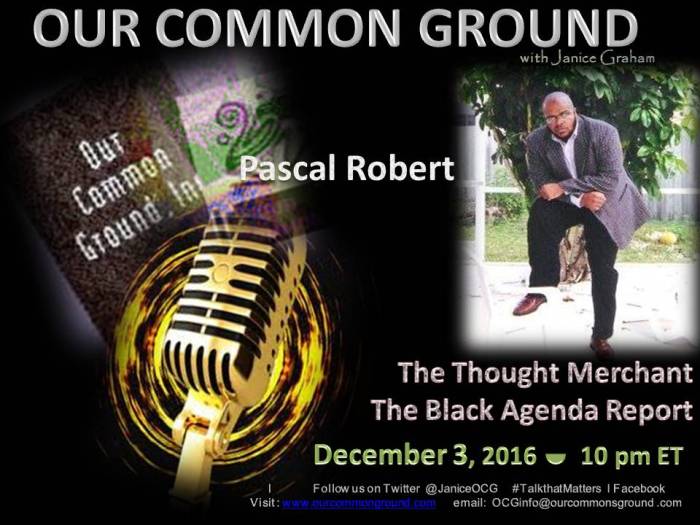
“A Black Political Future” with Pascal Robert, The Thought Merchant

OUR COMMON GROUND with Janice Graham

 “A Black Political Future”

 December 3, 2016 :: LIVE ::10 pm EST

Guest: Pascal Robert The Thought Merchant Blog, Contributor, The Black Agenda Report

12-03-16-robert
LISTEN LIVE and Join Our Chat: http://bit.ly/BLKFuture
Listen or Call-In to add your voice to the discussion (347) 838-9852 Press 1 to join the discussion
 This week we discuss the political future of Black Americans in the era of a imperialist Executive and Legislative government. The critical question is not how we react to the fascism that has embedded itself but how we plan to organize our resistance and survival. There are some who say we have been here before. No,THIS is very different AND WILL be totally destructive to any viable Black empowerment strategies . They are bent on a strategy that will destroy the vulnerable infrastructure that keeps us from drowning. We talk with Pascal about preservation and building.
 Pascal  Robert (pronounced Ro-Bear like Stephan Colbert) is a Blogger who loves all things politics. SHEER political independent; unafraid to slay the most sacred cows of ideological orthodoxy from the Left, or the Right and one who enjoys global affairs and aspects of pop culture. In all ways he is a child of the Haitian Revolution.
Pascal Robert has been known for years to the online world as THOUGHT MERCHANT.
Since 2007 he has been recognized for his hard hitting, blunt unvarnished style of bringing attention to current events and global affairs, especially those affecting communities of color. Join him in these social media outlets:

Black Girls, Domestic Violence, and the Limits of Self-Defense | Black Agenda Report


Black Girls, Domestic Violence, and the Limits of Self-Defense

by Lindsey E. Jones

Recent scholarship in the history of black women and the carceral state illustrates the extent to which systems of criminal justice and law enforcement have both historically failed to protect black female victims of domestic violence and criminalized black women who rise up in their own defense.

Black Girls, Domestic Violence, and the Limits of Self-Defense

by Lindsey E. Jones

This article previously appeared in the blog of the African American Intellectual History Society.

Legal systems in this country explicitly and implicitly render black women defenseless against intra- and interracial violence.”

The case of Bresha Meadows, an African American teenage girl in Ohio, is a sad commentary on the failure of the state to protect victims of domestic violence. After a lifetime of watching him physically and psychologically abuse her mother—and of being subjected to threats and verbal abuse, along with her siblings—Bresha allegedly shot her father to death while he slept on July 28, 2016. While her mother’s family and her attorney consider her actions to have been in self-defense, the county prosecutor has charged Bresha with aggravated murder. It remains to be seen whether she will be tried as a juvenile or as an adult. At stake is the possibility that Bresha, who marked her fifteenth birthday in juvenile hall just weeks after her arrest, could spend the rest of her life in prison if convicted as an adult.

While the case is making its way through the courts and the families of Brandi Meadows (Bresha’s mother) and Jonathan Meadows (Bresha’s deceased father) share conflicting stories with news media about the latter’s personality and propensity toward violence, as well as their conflicting opinions about premeditation versus self-defense, it is important to note that this case is neither isolated nor entirely new. Recent scholarship in the history of black women and the carceral state illustrates the extent to which systems of criminal justice and law enforcement have both historically failed to protect black female victims of domestic violence and criminalized black women who rise up in their own defense.

“Survivors of intimate partner violence dramatically overrepresented among incarcerated black women.”

Historian Kali Gross, in providing historical context to the case of Marissa Alexander, argues that the state’s willingness to condemn this woman for defending herself against an abusive husband points back through centuries of American history to “the legacies of an exclusionary politics of protection whereby black women were not entitled to the law’s protection, though they could not escape its punishment.” Gross traces the ways in which “racialized, gendered notions of protection” have, from the seventeenth century on, shaped legal systems in this country that explicitly and implicitly render black women defenseless against intra- and interracial violence. She argues that this exclusionary politics of protection fuels the current mass incarceration crisis, with survivors of intimate partner violence dramatically overrepresented among incarcerated black women.1

Bresha Meadows’s case exemplifies Gross’s concept of the exclusionary politics of protection. This past May, Bresha ran away from home to the home of an aunt, Martina Latessa. Latessa, a police officer working in a domestic violence unit in Cleveland, was forced to return Bresha to her father, who had reported the girl as having been kidnapped by her aunt. Latessa reported her brother-in-law to Family Services, which resulted in an agent interviewing Brandi Meadows about the allegations of abuse—as Jonathan Meadows sat beside her. Neither law enforcement nor the state bureaucracy could protect Brandi Meadows and her children from this abuse, which she and her family assert intensified after this incident. As a result of the state’s failure to end the cycle of trauma in her family, Bresha Meadows took matters into her own hands—and was charged with aggravated murder, for which she could potentially spend the rest of her life in prison.

Gross’s essay compellingly reveals the intersections of race, gender, and class in black women’s hyper-vulnerability to domestic violence; state failure to prevent or put a stop to said violence; and the too-common outcome of black women being incarcerated for offenses resulting from attempting to defend themselves against domestic violence. However, as the case of Bresha Meadows illustrates, there is another vector of identity that often doesn’t appear in our historical analyses of black females and the carceral state: that is, age.2

“For black women in the Jim Crow South—as in antebellum times—domestic violence was constitutive of domestic labor.”

Where race, gender, and class have worked together to create the conditions discussed above, the erasure of age difference has historically created disadvantages for black girl victims of domestic violence. One prominent example recently provided by historian LaShawn Harris is that of Virginia Christian. Often referred to as the first woman to be executed by the Commonwealth of Virginia, Christian was in reality a seventeen-year-old girl when she was killed by electric chair in 1912—a fact that her advocates hoped would persuade the state to show her mercy.3

Virginia Christian belonged to a working-class black family in Hampton, Virginia, and needed to work in order to contribute to her household, including her disabled mother. From the age of thirteen, she served as a laundress for a middle-class white family named Belote in Hampton. During a dispute about missing jewelry that turned physical, Virginia killed the matriarch of the family—a crime she confessed to committing in self-defense. Harris argues that “Christian’s act of self-defense delineated working-class African American women’s impetuous ways of protecting their bodies and their often last attempts to seek and secure long-awaited personal justice—especially when legal protection seemed beyond their reach.” While there is no archival evidence that Ida Belote had laid hands upon Virginia Christian prior to this altercation, there is plenty of evidence to demonstrate that for black women in the Jim Crow South—as in antebellum times—domestic violence was constitutive of domestic labor, the racially prescribed set of occupations for black women and girls.4

Christian’s response was most immediately triggered by Belote’s accusations of theft and subsequent physical assault on March 18, 1912, but it is conceivable that she was also responding to other physical and psychological traumas accumulated over three years of working in the Belote household.

The analogy from Virginia Christian in 1912 to Bresha Meadows in 2016 is imperfect, but these cases both illustrate the extent to which the state has failed to consider age in evaluating black girls’ actions in self-defense from domestic violence. Sadly, over a century later, Bresha’s advocates find themselves making very similar demands of a system that hasn’t changed enough since Virginia’s trial, and employing very similar tactics in their pursuit of mercy for this abused adolescent girl.

“In the minds of whites, the accused, regardless of her age, was a deviant and vulgar black murderess that had to be punished for her crime.”

In the case of Virginia Christian, the Commonwealth of Virginia ignored evidence that Christian committed the crime at sixteen years of age in order to prevent her minority status from impeding its plan to execute her. Harris argues that, “in the minds of whites, the accused, regardless of her age, was a deviant and vulgar black murderess that had to be punished for her crime; essentially, Christians’ race trumped her gender and age. By denying Christian of her adolescent status, the State of Virginia sought to punish her to the full extent of the law.”5

Black and white Americans wrote letters and circulated petitions pleading with the Commonwealth to consider Christian’s youth as a factor in her crime and her punishment and to commute her sentence from execution to life in prison. In the end, neither Christian’s appeal to self-defense, nor her advocates’ appeal to adolescence, could spare her from the lethal retribution of the state.

In a throwback to the campaign to spare Virginia Christian’s life in 1912, advocates of Bresha Meadows are writing letters and circulating petitions in the hope that local prosecutors take into account her age and her status as a survivor of domestic violence as they proceed with charges against her. Because of the Supreme Court’s 2005 decision in Roper v. Simmons that it is unconstitutional to execute a person for a crime committed under eighteen years of age, the death penalty is not on the table for Bresha. However, because prosecutors could decide to try her in adult court, it is a real possibility that she could be sentenced to life in prison.

A century after Virginia Christian’s advocates passionately and strategically petitioned the Commonwealth of Virginia for life imprisonment, Bresha’s advocates argue that no adolescent should spend life in prison—especially not a girl pushed toward drastic action by a lifetime of trauma and abuse. There is thankfully still time for the prosecutors of Trumbull County to give real weight to Bresha Meadows’ traumatic life history, and to the fact that it spans fifteen short years, as they decide what action to pursue.

Lindsey E. Jones is a PhD Candidate in History of Education at the University of Virginia’s Curry School of Education and a 2016-2018 Pre-doctoral Fellow at the Carter G. Woodson Institute for African-American and African Studies at the University of Virginia. Her dissertation project, “‘Not a Place of Punishment’: the Virginia Industrial School for Colored Girls, 1915-1940,” historicizes the education and incarceration of black girls by examining Virginia’s only reformatory for delinquent African American girls. Follow her on Twitter @noumenal_woman.

NOTES:

1. Kali N. Gross, “African American Women, Mass Incarceration, and the Politics of Protection,” Journal of American History 102, no.1 (2015), 25–33.

2. For a contemporary examination of black girls, interpersonal violence, and the carceral state, see Jody Miller, Getting Played: African American Girls, Urban Inequality, and Gendered Violence (New York: NYU Press, 2008).

3. Lashawn Harris, “The ‘Commonwealth of Virginia vs. Virginia Christian’: Southern Black Women, Crime & Punishment in Progressive Era Virginia,” Journal of Social History 47, no.4 (2014), 922–42.

4. See, for instance: Tera W. Hunter, To ’Joy My Freedom: Southern Black Women’s Lives and Labors after the Civil War (Cambridge, Mass.: Harvard University Press, 1997); Thavolia Glymph, Out of the House of Bondage: The Transformation of the Plantation Household (Cambridge: Cambridge University Press, 2003); Sarah Haley, “‘Like I Was a Man’: Chain Gangs, Gender, and the Domestic Carceral Sphere in Jim Crow Georgia,” Signs 39 (Autumn 2013).

5. Harris cites “a 1910 Virginia statue prohibiting death to ‘any child under seventeen years of age who is charged with any felony, and never having been heretofore convicted in any court of a misdemeanor’” (931).

Source: Black Girls, Domestic Violence, and the Limits of Self-Defense | Black Agenda Report

Million Woman March Mission Statement October, 1997

1997-mwm

The Million Woman March was a protest march organized on October 25, 1997, on the Benjamin Franklin Park Way in Philadelphia, Pennsylvania. The march was founded and formulated by Phile Chionesu, a grassroots activist, human rights advocate, Black Nationalist/Freedom Fighter, and owner of an African crafts shop.

The below statement was issued as the basis for the national call to all Black women to come together in Philadelphia, PA

For more information about the MWM of 1997

NYT Coverage of the MWM 1997

Million Woman March Mission Statement  1997

The Million Woman March is being implemented by Black Women who interact on grassroots and global levels. Black Women who understand the necessity of rebuilding our foundation and destiny as a people, and that we must in many respects begin at the origin (the root) upward.

Women of African Descent who reside, struggle and interact in grassroots communities have analysed and assessed unlimited issues and problems. Many of which have resulted in the deterioration of African-American and African people overall. The Million Woman March is capable and ready to create and implement strategic methods of resolving such matters.

The Million Woman March provides us the opportunity to prioritize the human and environmental issues. It will collectively enable us to develop an assertive and aggressive movement to insure the participation and impact of people of African Descent.

It is our belief that it will require collective and comprehensive efforts to develop for determination the process and systems that will be utilized to regain the proper direction of our family structure. By acknowledging and applying the strength and resources that exist within the United States and throughout the world, we will rebuild to strengthen our foundation. It will take the procurement of mechanisms that will bring about the appropriate solutions.
However, there has been various forms of disconnection.

As a result, we no longer bond as a family unit, we no longer teach and prepare our children in the way we wish for them to go. How do girls learn to become women? Who is responsible for teaching morals and values of womanhood? Have we not been the moral sustainers of life? As teachers of life have we failed or are we just existing?

The Million Woman March will revive life as we once exemplified it:

< Great Grandmother taught Grandmother
< Grandmother taught Mother
< Mother taught Me
< I will teach YOU

We will no longer tolerate disrespect, lack of communication, negative interaction, anti-social and dysfunctional behavior and the denial that problems such s these affect our ability to progressively and productively move forwarD. Our focus is centered around the reasons why and what it will require to eliminate this DESTRUCTION.