For Colored Girls Like Korryn Gaines And the Black Men Who Hate Us


For Colored Girls Like Korryn Gaines And The Black Men Who Hate Us

What is it to be a black woman in America. For the burden of both racism and misogyny to lay at our feet.

Korryn Gaines was no fool. In her short 23 years she was all too familiar with the carnage of black bodies. This familiarity with state sanctioned executions empowered her to raise unafraid black children. With her thick Baltimore accent she instructed her five-year-old son to record the Baltimore County police who’d pulled her over for not having registered tags on her car. That day, she was ready to die. Her life was spared, but she wouldn’t be so fortunate again.

Her Instagram shows a warrior woman who believed in her right to legally bear arms. She was uninterested in cow-towing to the very system that kills even its most “perfect” victims. Instead of “hands up, don’t shoot!” shethought “#StopKillingUs is some begging ass shit” was more appropriate. Baby girl had no desire to be pleasant or respectable.

So when Baltimore County police showed up to her apartment to serve a warrant for her arrest over misdemeanor traffic violation charges, she knew it could very well be the day she took her last breath. In her last moments she took to Instagram to record her cute, chubby cheeked five-year-old son, her asking the questions, him predicting the outcome.

“Who’s outside?”
“The police.”
“What are they trying to do?”
“They trying to kill us.”

What happened next doesn’t matter much because the result is the same. It’s always the same. Korryn is dead. The police will lie. The media will corroborate the police’s lies. The public will blame her for her death. There will be no justice. Officials will call for peace. Family members are left to raise her children. And shortly we will have all moved on to grieve the next victim of police violence. The narrative is so familiar it shows up in our dreams. The tears feel the same as the ones we wiped the last time we mourned a black person who we did not know. Only this time those tears will only be cried by black women. All black lives are not mourned equally.

Because Korryn dared to be a vocal black woman — one who may or may not have been legally armed — there is no outcry for her except from other black women. There will be no outraged celebrities. Protesters won’t flood the streets in cities across the nation. Public officials will not demand accountability for the officers who killed her. Presidential candidates will not condemn the police department for their failure to de-escalate considering a child was present. President Obama will not tell the nation Korryn could’ve been his daughter. News and cable networks won’t profit off her death by hosting Town Hall meetings. Black men will not grieve her as they have the long list of black men killed similarly. In fact, black men will adopt the language of our oppressors to blame her for her own murder.

Black men couldn’t wait to vocalize their hatred for black women. “It’s looking mighty justifiable right now” and “Korryn Gaines deserved to die” and “Basically asked for it” and “She decided to be reckless with her son and her own life” and “Korryn Gaines was an ignorant, loud mouth little girl.” Those are just a few. Tucking in their hatred is hard to do, even when two black children are left without a mother.
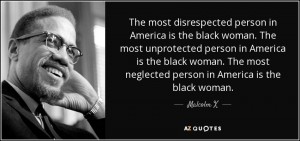
Black men's hero, Malcolm X, telling the painful truth about black women.

Black men’s hero, Malcolm X, telling the painful truth about black women.

These are the same black men who automatically don’t trust police accounts in killings where the victim is a black man, but are quick to believe Korryn was pointing a gun at the police when they entered her home. Despite her documented recordings of run-ins with the Baltimore County police, black men aren’t thinking maybe this woman was targeted. Black men are not playing detective to figure out the truth in this strange story the police tell of using the landlord’s key to enter her home. Black men are not rallying for an end to a system that sends a SWAT team to someone’s home over non-violent traffic violations. Black men are not calling foul, because even if she was armed, white suspects with guns are apprehended alive all the time. Black men are not questioning how she could hold her phone to record, hold her son and allegedly hold a shotgun in her hand all at the same time. Black men aren’t sympathetic to her developmental disability due to lead poisoning, which could’ve affected her reasoning the day she was murdered. Nope. Black men are saying she deserved to die because she was a crazy fool and a shitty mother for daring to be free.

Ain’t that peculiar?

Black men must remove the word revolutionary from their vocabulary. One minute it’s “fuck the police” and the next it’s Korryn was reckless. Black men love the iconic photo of their hero Malcolm X looking out the window of his home, shotgun in hand to protect his family, but Korryn possibly having a gun means she deserved death. They cheer on Nat Turner but who does Korryn think she is to protect her family. Black men either don’t know what revolutionary really means or think the word is reserved for them solely.

Remove it from your tongues.

It’s not just about Korryn. It’s about black womenfolk being de mules of the worldat the hands of black men. Folks called Sandra Bland sassy. Said had she not talked back she would’ve lived. No one showed up for the Rekia Boyd rally in NYC. When we talk to black men about the dangers of street harassment we are met with death and rape threats. Statistics show violence against black women is mostly at the hands of black men, but we’re shouted over for bringing that up. Then when we tell black men that we, too, are killed by police, we are told now is not the time to be divisive. You will get to us after we take care of our “kings.”

But you see, that doesn’t work for me. My liberation is not going to come after. I’m not suffering through black men’s harmful misogynoir while black women’s freedom becomes a ‘maybe we’ll get to it in the next lifetime’ non-priority. I’m not adding a “not all black men” caveat to my truths in order to coddle hurt feelings. My life is literally on the line. And my freedom can’t wait.

Either cis black men are going to center black women so we can all get free together, or my freedom fighting will be reserved for black women and black queer folks. Do what you want with that. But my freedom can’t wait. I won’t wait for you to see my humanity while I fight for yours.

While you’re denying our humanity, remember this: Putting off black women’s liberation for tomorrow is a dangerous game. Because ain’t a single liberation movement survived without us.

To Korryn and Sandra and all the black women who refuse to bow, refuse to shutup, we got you. Rest easy knowing black women said your name and refused to let them forget.

Source: For Colored Girls Like Korryn Gaines And the Black Men Who Hate Us

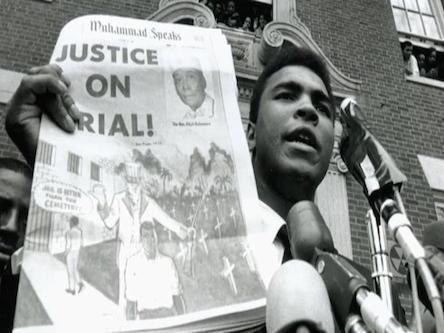
Keep Muhammed Ali’s Legacy Away from Beyonce and Kanye West | Black Agenda Report

Keep Muhammed Ali’s Legacy Away from Beyonce and Kanye West

by Danny Haiphong

Airheaded commentators compare Beyonce’s media products and Kanye West’s off-hand quips to Muhammad Ali’s heroic political struggle and genuine sacrifice in the Sixties. That’s nonsense. “Beyonce can dress up in Black Panther dress and subsequently fail to use her platform to educate others about the Black Panther Party precisely because she is selling a product, not building a movement. The same goes for Kanye West and all corporate artists.”

Keep Muhammed Ali’s Legacy Away from Beyonce and Kanye West

by Danny Haiphong

“The article reduces the state repression of Ali received as a mere byproduct of his ‘political stance’ and proceeds to compare the treatment Ali received to the criticisms of Beyonce and Kanye West.”

A recent article in Medium took to task those who mourned the death of Muhammad Ali.
“Conservative America,” according to the author, tells figures like Beyonce and Kanye West to be quiet while it celebrates the life of the late world boxing champion and activist. Self-proclaimed “hipsters” and “culture critics,” however, often take the luxury of ignoring concrete analysis for the allure of identity political liberalism. What the author makes no mention of are the concrete differences between Muhammad Ali and celebrities of the Kanye West variety.  To analyze these differences would force the author to examine the motion of history and political struggle beyond the liberal lens.

Identity political liberalism can be defined in the piece as such. Since Muhammad Ali is celebrated for his opposition to war and racism, one would be hypocritical to criticize Kanye West and Beyonce for their particular forms of opposition. The author clarifies this position, stating:

“Kanye West had the courage to call out The President of United States for ignoring the people of New Orleans. Beyonce had the courage to embrace a movement that has been criticized by the police and mainstream America. If you can’t stomach their political statements there is no way you can say you are a fan of Ali because no ‘entertainer’ of color has been more in your face about condemning America’s racist political crimes than Muhammad Ali.”

This argument commits a logical fallacy of significant consequence. The author equates Beyonce and West’s achievements on the political stage to Ali’s actions in the 1960s. This conclusion derives from a purely subjective position. While it is true that Kanye West and Beyonce have made political statements in the past, no analysis of the particular character of these statements is given. Such an examination reveals exactly what propels cultural figures into political action and what contradictions ultimately limit the usefulness of their political action.

“The author equates Beyonce and West’s achievements on the political stage to Ali’s actions in the 1960s.”

In the 1960s, a revolutionary upsurge emerged from the heroic Black freedom movement and the connections it made to the anti-imperialist struggle around the world. The brutality and exploitation inherent in white supremacy and segregation influenced organizational formations, like the Nation of Islam (NOI), to call for more radical alternatives to the non-violent resistance that characterized the Civil Rights Movement. Ali was influenced by the teachings of Malcolm X, who at that time was being trained to lead the NOI. The US war in Vietnam was nearly a decade old by the time Cassius Clay changed his name to Muhammad Ali. Malcolm X and the NOI took a firm stance against the war in Vietnam. Eventually Malcolm X would take opposition to war a step further by arguing that Black Americans had more in common with the people of Vietnam than the US government.

It was the development of international solidarity in the Black liberation movement that compelled Muhammad Ali to make his famous declaration against the Vietnam War and travel to Cuba and Palestine. Revolutionaries such as Paul Robeson, Shirley Graham Du Bois, and WEB Du Bois in the first half of the 20th century paved a path for insurgent Black revolutionaries in the second to position the struggle for emancipation in the US alongside the global fight for self-determination and socialism. It was argued by organizations such as the Black Panther Party that Black liberation could not be achieved without a socialist arrangement of society on a worldwide scale. Muhammad Ali’s political life must be placed in this context. The article reduces the state repression of Ali received as a mere byproduct of his “political stance” and proceeds to compare the treatment Ali received to the criticisms of Beyonce and Kanye West. Yet what isn’t said in the article is how state repression of an entire movement helped produce the corporate artists that the author compares to Ali.

“Corporate subsidiaries such as Warner Music Group control the music and careers of signed artists and enforce the ideological regime of imperialism through the sale of their processed music.”

The US counterinsurgency war against the Black liberation movement was geared toward the complete and utter destruction of revolutionary possibilities in the US. This war included the creation of an entire intelligence program to undermine, at times with deadly results, theefforts of Black revolutionaries. It also included reforms in the fabric of US society. Starting in the late 1970s, the ruling class opened seats in local, state, and federal political office to a select few Black Americans. Increased access to political office for the Black elite, and helped isolate radical and revolutionary forces calling for social transformation. It is here that the Black misleadership class emerged. The creeping crisis of imperialism made the influence of this class all the more necessary as mass incarceration, surveillance, and unemployment would come to characterize Black life in the US from the 1980s onward.

Over the last three and a half decades, the world capitalist system has undergone a process of decay that has necessitated the monopolization of all sectors of US society. An increasingly disposable and criminalized Black labor force coincided with the consolidation of the corporate media. The consolidation of the corporate media included the monopolization of the music industry that created Kanye West and Beyonce. Today, six corporations own 90 percent of the media and the same is true about the record industry as a sub-sector. Corporate subsidiaries such as Warner Music Group control the music and careers of signed artists and enforce the ideological regime of imperialism through the sale of their processed music.

“Using Ali to defend Beyonce or Kanye West gives undue attention to those who don’t deserve it.”

This is why, despite all the praise she has received, Beyonce’s music is void of political content, and why she invests millions in sweatshop production. Corporate control over the music industry also explains why Kanye West has become such a twisted and maligned figure in public eye. Ultimately, Black labor is only useful when it degrades, dehumanizes, or sanitizes Black struggle and Black people. Beyonce can dress up in Black Panther dress and subsequently fail to use her platform to educate others about the Black Panther Party precisely because she is selling a product, not building a movement. The same goes for Kanye West and all corporate artists.

Mohammed Ali’s legacy must be kept away from the corporate gaze of the media. The ruling class has desperately sought to suppress the ideas of anti-imperialism and Black liberation ever since the movement that brought Ali’s politics to life was brutally repressed isolated. If these politics are going to be revived and applied in the 21st century, it certainly won’t be any of the corporate music industry’s “artists” that lead the way forward. Using Ali to defend Beyonce or Kanye West is not only fruitless, but also potentially dangerous. It gives undue attention to those who don’t deserve it. Instead of hiding behind “conservative America” in liberal fashion as identity political liberalism often does, the focus for a true movement for social transformation must be on uniting revolutionary ideology and practice among the exploited and oppressed. Only the grave diggers of the world capitalist system can force the celebrities of today to either help build a new world or be swept away with the old.

Danny Haiphong is an Asian activist and political analyst in the Boston area. He can be reached at wakeupriseup1990@gmail.com

Source: Keep Muhammed Ali’s Legacy Away from Beyonce and Kanye West | Black Agenda Report

Marissa Alexander Facing 60 Years in Prison for Firing a Warning Shot in Self Defense | The Nation

Marissa Alexander Now Faces 60 Years in Prison for Firing a Warning Shot in Self Defense | The Nation.

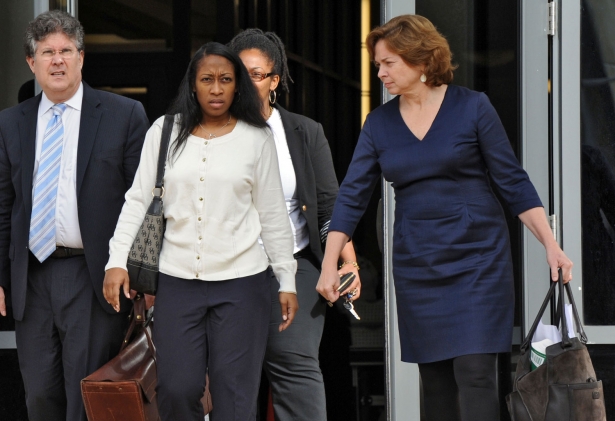
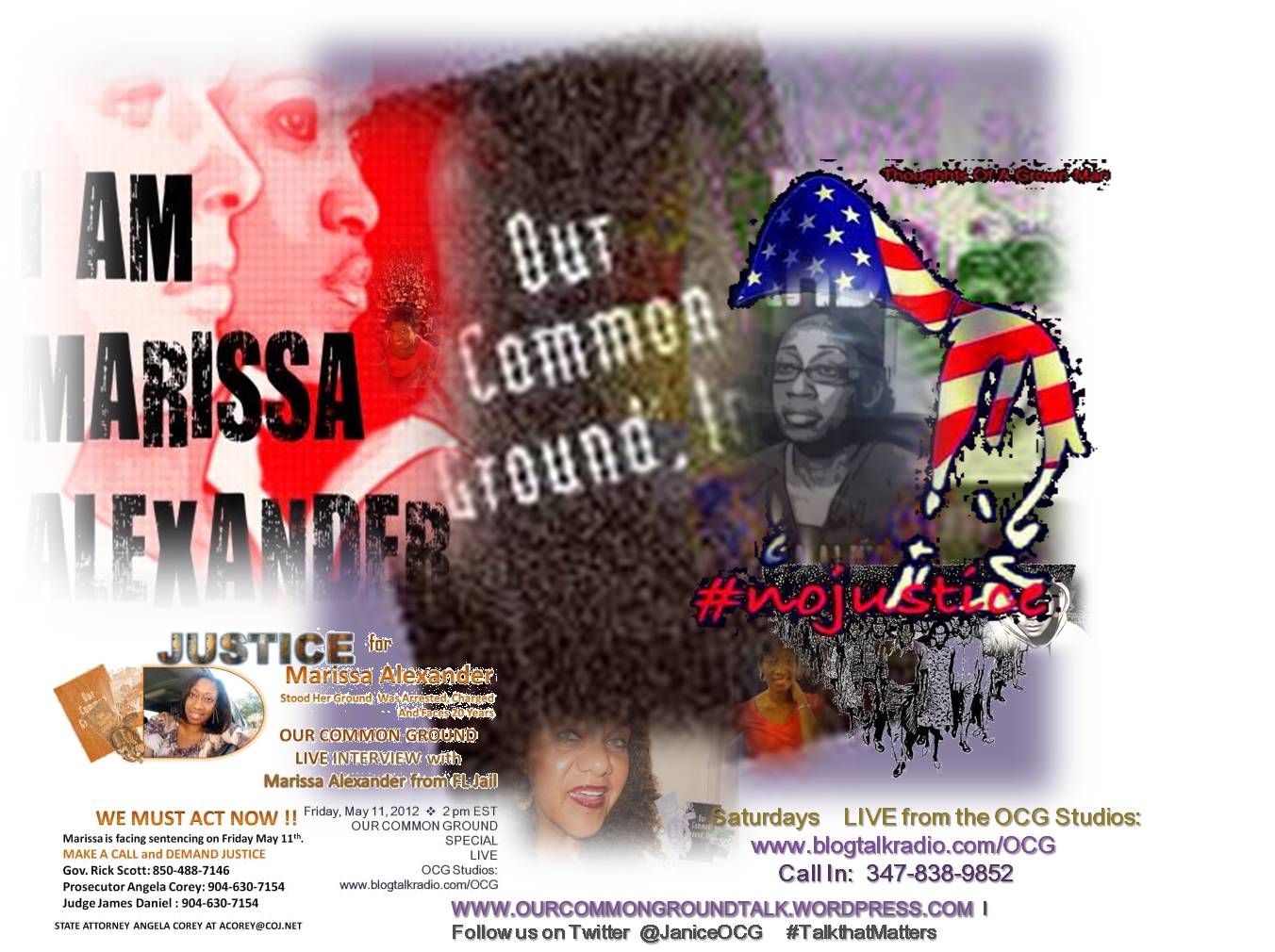
Florida State Attorney Angela Corey will seek to triple Marissa Alexander’s original prison sentence from twenty to sixty years, effectively a life sentence for the 33-year-old woman, when her case is retried this July, The Florida Times-Union reports.

Alexander was convicted on three charges of aggravated assault in 2012 for firing warning shots in the direction of Rico Gray, her estranged husband, and his two children. No one was hurt. Alexander’s attorneys argued that she had the right to self-defense after Gray physically assaulted and threatned to kill her the day of the shooting. In a deposition, Gray confessed to a history of abusing women, including Alexander.

In September of 2013 a District Appeals court threw out the conviction on grounds that Circuit Judge James Daniel erroneously placed the burden on Alexander to prove she acted in self-defense, when she only had to meet a “reasonable doubt concerning self-defense.”

Judge Daniel originally slapped Alexander with three twenty-year prison sentences, but ordered that they be served concurrently. If Alexander is convicted a second time in July, State Attorney Angela Corey will seek consecutive sentences, adding up to sixty years in prison.

Florida’s 10-20-Life law imposes a mandatory minimum of twenty years in prison for anyone who fires a gun while committing a felony. Angela Corey’s prosecution team says it is following a court ruling that multiple convictions for related charges under 10-20-Life should carry consecutive sentences.

The advocacy group Free Marissa Now released a statement calling Corey’s move a “stunning abuse of power.” Members of the group say Corey is pressing for a longer sentence to thwart attention from accusations of prosecutorial misconduct, as well as recent failures in high-profile trials. Corey failed to secure murder convictions for George Zimmerman and Michael Dunn, two men who fatally shot black teenagers.

“Remember that when Marissa Alexander fired her warning shot to save her own life, she caused no injuries. Now she’s facing the very real possibility of spending the rest of her life in prison for that act of self-defense,” said advocate Sumayya Fire in the statement. “That should send a chill down the back of every person in this country who believes that women who are attacked have the right to defend themselves.”

From Prostitute to Professor: The 7 Lessons of Maya Angelou’s Messy Life φ Yolanda Young

From Prostitute to Professor: The 7 Lessons of Maya Angelou’s Messy Life

Yolanda Young

Yolanda Young Become a fan

Yolanda Young is the author of On Our Way To Beautiful founder of http://www.onbeingablacklawyer.com.

Posted: 06/12/2014
MAYA ANGELOU

The death of Dr. Maya Angelou provided us the opportunity to once again delight in her memoirs, which chronicle the eclectic, bohemian first half of her life. Yet, we know from her writings that such praise was often withheld as she pursued her dreams of being a dancer and poet while raising a young child as a single mother. How many times must she have been urged to settle down and give up her artistic and cultural pursuits, which time and time again left her broke and broken? While we now refer to Angelou as a renaissance woman, until she published I Know Why The Caged Bird Sings in her 40s, her life resembled what is referred to in ghetto parlance as a hot mess.

This messiness is what we all fear. It is why rather than pursue our dreams, we settle into the lives expected of us. Cubicles and cul-de-sacs become the things of our imagination. Only happiness and satisfaction studies suggest they are not enough. A GALLUP Poll last year found that only 30 percent of U.S. workers are passionate about their work. The majority (52 percent) are unhappy with their jobs and put little energy into their work while another 18 percent actually hate their jobs and actively work to undermine coworkers. We sacrifice our dreams only to find ourselves restless, bored and frustrated in midlife having realized what Angelou told us all along; “making a living is not the same thing as making a life.” Worse still, we recognize the irony in discovering after layoffs, financial setbacks and divorce that the “mess” is unavoidable.

These unmet expectations and realization that youthful aspirations have been abandoned are suspected as the cause of feelings of discouragement and depression among those in midlife. The British think tank NatCen Social Research found that studies show that people between 35 and 55 suffer a dip in well-being. A separate study that analyzed data from “nationally representative” surveys in Australia, Britain and Germany found that the bell curve in well-being dips to its lowest point around the ages of 40 to 42.

Even those who choose to pursue unconventional dreams don’t escape these feelings, especially if such pursuits have come at the expense of nearly everything else. I abandoned life as a lawyer in favor of one as a writer, activist and entrepreneur. Now having entered midlife without any of our culture’s success markers — husband, children, two-car garage — I have had to answer, both to myself and to others, the question of whether the path I’ve chosen was a wise one. Reflecting on Angelou’s has helped me find the answers.

1. Be uniquely you.

Angelou described herself in I Know Why the Caged Bird Sings as “a too-big Negro girl, with nappy black hair, broad feet and a space between her teeth that would hold a number-two pencil.” She knew such a girl would’ve perished trying to conform to mainstream conventions. “If you’re always trying to be normal, you will never know how amazing you can be.” Instead of fretting over not being a swan, Angelou reinvented herself as a rare bird. As many biographers have noted, she won’t be remembered for her poems or plays, but for her memoirs and for being Maya Angelou. The key to discerning one’s authenticity is quite simple: “Listen to yourself and in that quietude you might hear the voice of God.”

2. When it comes to failure, be courageous.

Angelou was a marvelous failure. Her most noteworthy stage performance, playing the seamstress in the two-woman play Mary Todd Lincoln, earned her a Tony nomination but closed on opening night. The rolling stone never stuck to one thing for long. She moved from coast to coast, continent to continent, sometimes making poor childcare decisions, one of which resulted in her son’s brief abduction. She didn’t have a stable home or steady job until she was in her 50s, an age at which many are preparing for retirement. She divorced several times but would would never confirm the exact number, “for fear of sounding frivolous.” Aware of all her failings, Angelou was brave enough to look at herself. “We have to confront ourselves. Do we like what we see in the mirror? And, according to our light, according to our understanding, according to our courage, we will have to say yea or nay — and rise!”

3. Know who your friends are.

One would be hard-pressed to identify a significant black figure Angelou didn’t know. She danced with Amiri Baraka. Billie Holiday visited her home and explained the meaning of Strange Fruit to her young son. While a calypso dancer she worked with Alvin Ailey. James Baldwin gave her the introductions that would lead to the publication of her first memoir. These were people she deeply cared for, but in anEssence interview, she had this to say of friendship.

There’s a marked difference between acquaintances and friends. Most people really don’t become friends. They become deep and serious acquaintances. But in a friendship you get to know the spirit of another person, and your values coincide. Friends may disagree, but not about serious matters. A friend will stand for you when you are no longer able… Years ago one of the slick White women’s magazines asked if they could photograph me with my closest friends for an issue they were doing on friends. The editor wanted me to bring Oprah. I have 30 years on Oprah. She calls me her friend, her mother, all that. I am very close to her in a motherly way. So I told [the magazine], ‘I have three dear friends — Dolly McPherson, Jessica ‘Decca’ Mitford and M.J. Hewitt — they are sisters to me.’

4. Believe you can do anything.

For Angelou, inexperience was never a reason not to take on an interesting job. Angelou’s only criterion was seemingly that a new occupation share little to no similarities with her previous one. At sixteen, she became San Francisco’s first African-American streetcar conductor and later passed herself off as an experienced Creole chef. She held jobs dancing in a nightclub, stripping paint from old cars, and singing Calypso. She knew nothing about being a journalist when she accepted a position as an editor for The Arab Observer,” an English-language magazine. She said of the experience,

I stayed at the Arab Observer for over a year and gradually my ignorance receded. I learned from Abdul Hassan how to write an opinionated article with such subtlety that the reader would think the opinion his own…I received a raise from Dr. Nagati, the respect of my fellow workers and a few compliments from strangers…

She made her television debut as Kunte Kinte’s grandmother in the acclaimed television adaptation of Alex Haley’s Roots. And in the one-time high school dropout who never attended college became the Reynolds professor of American studies at Wake Forest University in North Carolina.

5. Forgive others and yourself.

In addition to enduring the injustices that came along with being poor, black and female in the South, Angelou was also raped as a child and beaten as a young woman. In a May 9th interview at her home she told Armstrong Williams, “I’ve learned that forgiving is one of the greatest gifts that I can give myself…And as soon as I do I feel lighter, brighter and better.”

In Gather Together in My Name, Angelou shares one of her lowest periods when she served as a pimp for two lesbian prostitutes and sometimes worked as a prostitute herself. In one interview, she said of the experience.

If you happen to fall into that sort of experience, what you have to do is forgive yourself. If you’re in the very gutter, see where you are and admit it. As soon as you admit it, you can be like the prodigal son, the prodigal daughter. Get up and go home — wherever home is. Get up and go to a safe place, someplace where your spirit is not kicked and brutalized and your body not misused and abused. Get up. But you can’t get up unless you see where you are and admit it.

6. Persevere.

In A Song Flung Up to Heaven, Angelou tells of her midlife crisis which was accompanied by great sorrow. Returning to the States after the end of a romance in Africa, Angelou became a Civil Rights activist only to be witness to the Movement’s greatest tragedies. She was working with Malcolm X to establish his foundation when he was assassinated New York City. Three years later she was working as the northern coordinator for Dr. Martin Luther King Jr. when he was gunned down in Memphis on Angelou’s 40th birthday. For a time, Angelou withdrew from society unable to deal with the tragedy, but eventually she harnessed her grief and regrets to write her seminal work, I Know Why The Caged Bird Sings. From then on, she would rise at dawn and set out for the motel room where she would write. Her only companions were a Bible, a dictionary, a thesaurus, a stack of legal pads, and a bottle of sherry. Having written her way out of the worst time in her life, she credited it with her survival. “All my work is meant to say, ‘You may encounter many defeats, but you must not be defeated…Nothing will work unless you do.”

7. Change.

Angelou was a master of reinvention. She didn’t settle on a name until after her first marriage, claiming her childhood nickname and a twist on her first husband’s last name. For Angelou, change was essential. Perhaps more so when one decides nothing can be done at all. “If you don’t like something, change it. If you can’t change it, change your attitude.”


Yolanda Young Headshot

Follow @yolandayoungesq

Follow Yolanda Young on Twitter: www.twitter.com/yolandayoungesq


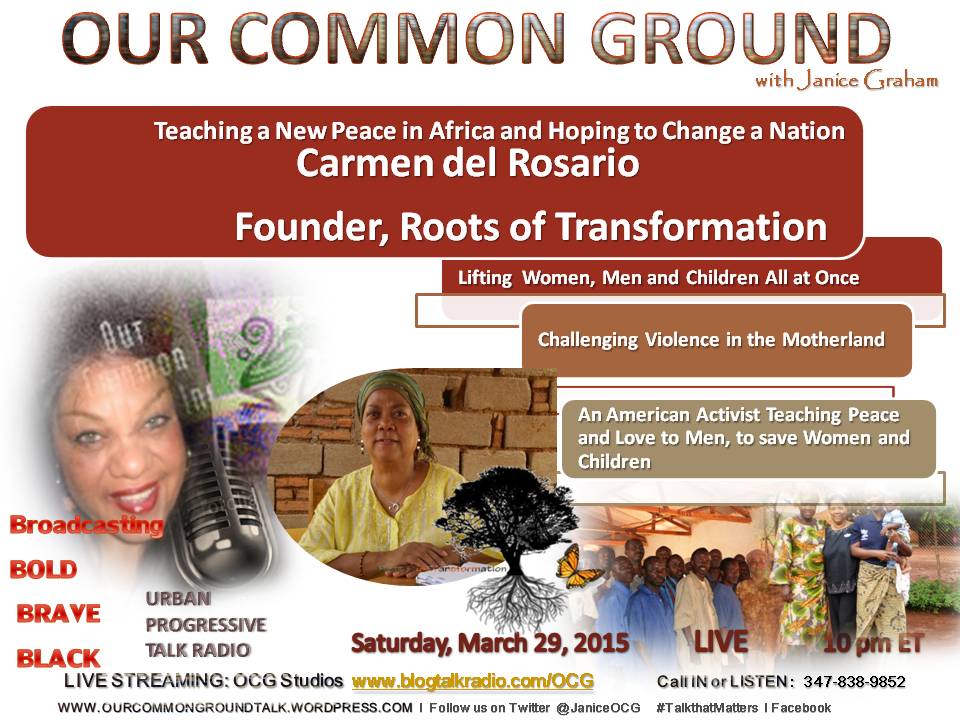
Teaching Peace in Violence-Torn Regions of Africa φ Carmen del Rosario, Anti-violence Educator and Activist φ LIVE 10 pm ET 3-29-14

OUR COMMON GROUND with Janice Graham

Teaching a New Peace in Africa and Hoping to Change a Nation

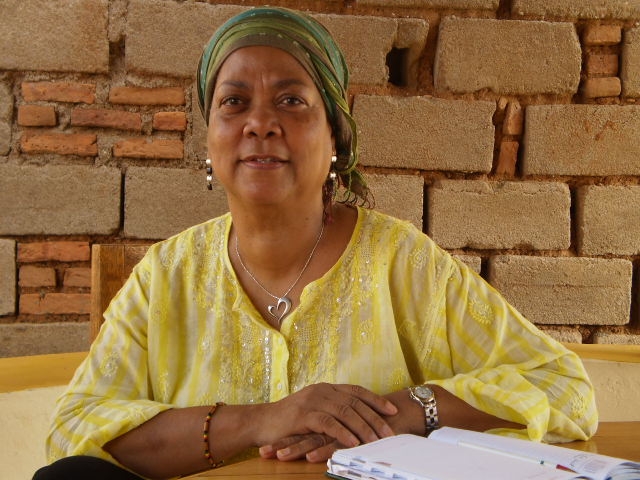
Guest:   Anti-Violence EducatorActivist Carmen del Rosario
Founder, Roots of Transformation


03-29 Carmen

Saturday, March 29, 2014 10 pm ET

LISTEN LIVE and Join the OPEN Chat

Web location:  http://www.blogtalkradio.com/OCG
Call In – Listen Line: 347-838-9852

“When I dare to be powerful– to use my strength in service of my vision, then it becomes less and less important whether I am afraid” – Audre Lorde

OLYMPUS DIGITAL CAMERAAbout Carmen del Rosario

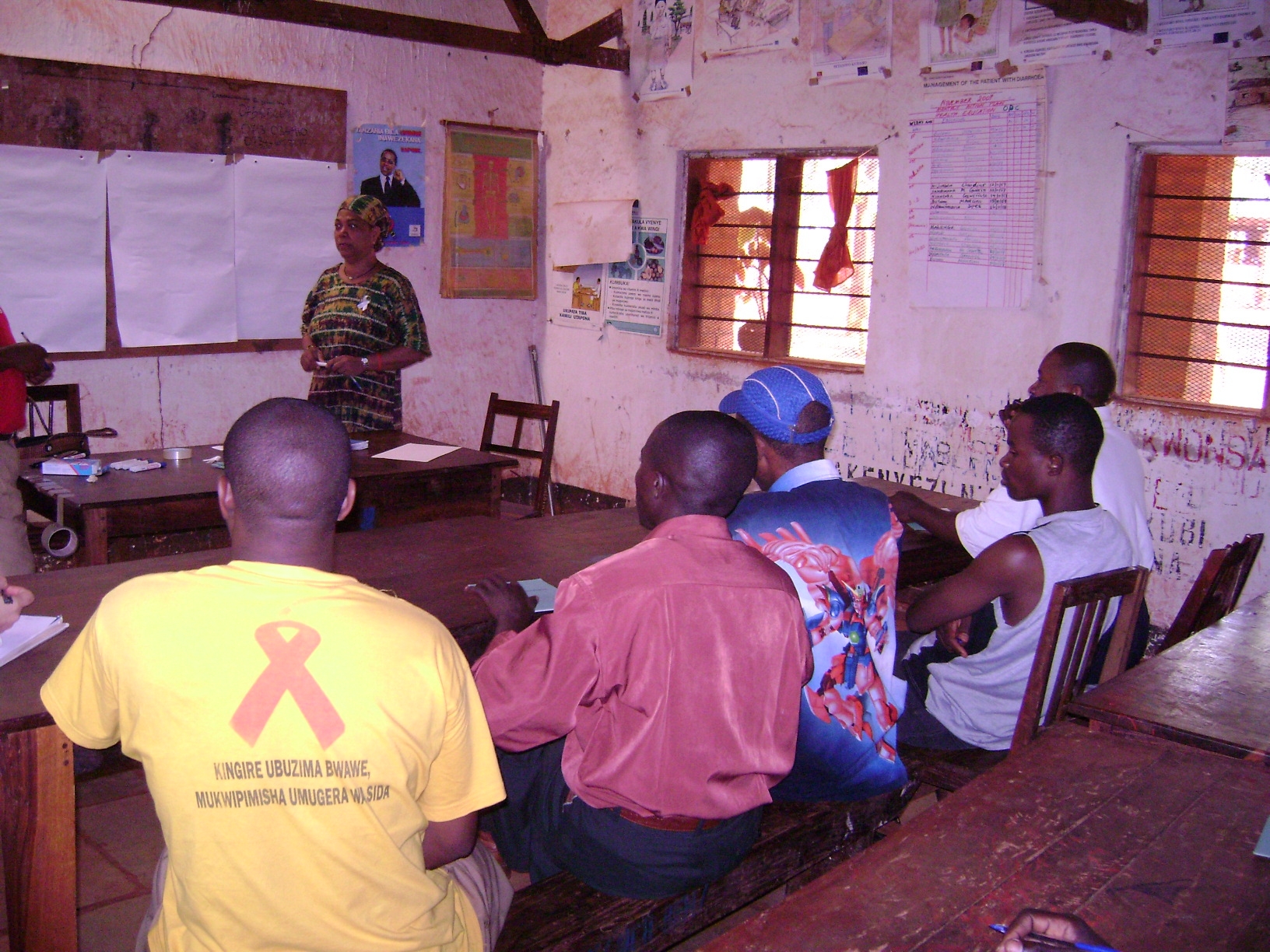
Carmen is a highly driven and motivated, partnership, and programme management professional with over 20 years of professional experience working in the field of violence against women and children with government and development organizations, community networks and institutions in the US, El Salvador, Rwanda, Burundi, Dominican Republic, Tanzania, Congo (RDC) and Liberia

Ms. Carmen Del Rosario served as the Director of the Boston Public Health Commission’s Domestic Violence Program for 10 years. Del Rosario was a pioneer in developing strategies to engage boys and men in positive ways to prevent violence and to promote healthy relationships. In the year 2000, under her leadership, de Domestic Violence Program received funding from the CDC to develop , implement and evaluate a five years demonstration project working with men as fathers.

Over the past eight years Carmen has been working in East Africa, (Tanzania) Central Africa (Eastern Congo) and West Africa (Liberia), developing, coordinating and implementing programs to respond to survivors of Gender Based Violence (GBV), Women’s Empowerment Program as well as prevention initiatives with men from different background; these include, refugees’ men, religious leaders, traditional leaders, the police, and the UN peacekeepers. Carmen has developed intervention and prevention programs providing technical support to capacity development of the implementing partners in partnership with government, UNHCR, WFP, UNICEF and INGO.

ABOUT ROOTS of TRANSFORMATION

Roots of Transformation, is a non-government grassroots organization working toward the prevention of VAWC by catalyzing changes in communities and by supporting organizational sustainability. The organization works to prevent violence by addressing its roots causes, such as traditional gender roles, and the imbalance of power between women and men.

 Mission

DSC00577Roots of Transformation is committed to equipping people with the knowledge, wisdom and tools needed to make decisions that will positively impact their futures, the future of their family and their nation.

BROADCASTING BOLD BRAVE BLACK

OUR COMMON GROUND with Janice Graham

“Speaking Truth to Power and Ourselves”

email: OCGinfo@ourcommonground.com

Call In – Listen Line: 347-838-9852

“Speaking Truth to Power and Ourselves” 

email: OCGinfo@ourcommonground.com

LISTEN LIVE and Join the OPEN Chat

Call In – Listen Line: 347-838-9852

Community Forum

Twitter: @JaniceOCG #TalkthatMatters

Web   –  OCG Blog  –  OCG Pinterest   – Visit our OUR COMMON GROUND Tumblr Page

Facebook

“Speaking Truth to Power and Our selves” 

email: OCGinfo@ourcommonground.com

LISTEN LIVE and Join the OPEN Chathttp://www.blogtalkradio.com/OCG
Call In – Listen Line: 347-838-9852

Marissa Alexander seeks “Stand Your Ground” immunity,… | www.wokv.com

Marissa Alexander seeks “Stand Your Ground” immunity, sentencing changes


Marissa Alexander
Action News
Marissa Alexander

By Stephanie Brown

Jacksonville, FL —

We first told you earlier this week that Marissa Alexander’s attorney intended seek another “Stand Your Ground” immunity hearing ahead of her trial- and we’ve now obtained the documents backing that up.

More than 1200 pages were filed today in support of five separate motions. One would seek a pre-trial immunity hearing under “Stand Your Ground”. Two deal with the sentence Alexander could face if convicted. Two more deal with interactions between Alexander and Rico Gray.

Alexander was initially convicted of shooting a gun in the presence of Gray and two children and was sentenced to 20 years in prison. That conviction was overturned because of how the jury instructions were phrased. Alexander claims she fired a warning shot, fearing that Gray meant to harm her.

Stand Your Ground

Alexander sought SYG immunity ahead of her initial trial, but was denied. The motion now filed argues that neither the initial denial or the appeals court decision not to “reweigh” the case prevent Alexander from seeking this immunity again.

“This Court is able on remand to consider anew legal issues decided as part of the original proceeding, and the use of that discretion is especially vital where failure to do so would result in manifest injustice,” the motion reads.

The attorney, Bruce Zimet, says there has been “critical” new evidence since the initial SYG hearing and that the initial hearing itself included evidentiary problems. Zimet says the ruling in the SYG hearing was made largely on the testimony of Gray’s two sons, and he says one has since recanted and the other admitted to lying about a “prior altercation” between Gray and another woman, which Zimet believes woduld have established a pattern of Gray as abusive toward women.  He additionally argues that expert testimony on Alexander’s state of mind when she pulled the trigger was not previously introduced.

Zimet further says the initial SYG hearing was argued under the wrong statute.  He says the section used includes more stringent rules that require someone to have been attacked before returning with force of their own.

“By contrast, § 776.012—which applies to an individual in her home, as is the case here—eliminates any duty to retreat and allows deadly force if a person reasonably believes that such force is necessary to prevent imminent death, great bodily harm, or a forcible felony,” the motion says.

10-20-Life

A second motion claims sentencing Alexander to a mandatory minimum 20 years in prison is cruel and unusual punishment because it is “grossly disproportionate” to any offense Alexander is accused of committing.

Zimet argues the Florida legislature, who established 10-20-Life, never intended to have it applied to “battered women attempting to defend themselves”. In fact, Zimet cites current efforts at the state level to specifically exempt “warning shots” from such consequences, as proof that the statute was improperly applied.

While Zimet argues that Alexander should not face conviction at all, he says if she is found guilty, the sentence is out of proportion. He says most other states have a mandatory minimum nowhere near what Florida law outlines.

Consecutive vs. concurrent sentencing

The State Attorney’s Office tells WOKV that Florida statute requires Alexander to serve concurrent sentences if convicted, meaning she would face a minimum 60 years in prison for the total three counts of aggravated assault with a deadly weapon.

This motion is condition on the ruling over 10-20-Life. Zimet says if the court does not rule mandatory minimum sentencing should not apply here, than it should rule sentences should at least not run consecutive- a total sentence Zimet argues would be unconstitutional in two ways.

First, Zimet argues the State is not allowed to pursue a steeper sentence on appeal unless there is new evidence introduced to warrant it. Zimet says the State did not object to concurrent sentences on the initial trial, so consecutive sentencing now would be an unconstitutional increase.

Second, the motion states the 60 year sentence in itself would be unconstitutional.

“A sentence of such enormous length is grossly disproportionate to any offense Alexander may have committed by firing a single, upward warning shot to protect herself against an enraged husband with a history of abuse who only minutes before had violently assaulted her,” the motion says.

Rico Gray, Sr. prior actions

The fourth motion filed is notice of Zimet’s intent to introduce past actions by Gray as part of Alexander’s affirmative defense that she feared for her life.

“At Alexander’s first trial, the jury heard a he-said/she-said about the events of August 1, 2010,” the motion says.

There was as discrepancy between those sides on whether the argument was verbal or physical, who the aggressor was, if there was an imminent threat, whether Alexander could leave the scene and more.

“What the jury did not hear—and what Alexander is now entitled to introduce—is specific evidence of Gray’s prior similar attacks on women, his repeated lies to law enforcement to avoid prosecution, and his implicit and explicit threats of violence against and coercion of witnesses, including his own children, to falsely accuse his female victims of attacking him,” the motion says.

Zimet says there is evidence Gray attacked Alexander as well as other women, which makes it hard to believe he is a victim. While Alexander introduced evidence of prior violent acts against her by Gray in the initial trial, Zimet says they plan to offer further evidence of violent acts by Gray against other women as well, and repeated attempts to obstruct justice- including a threat to kill Alexander and cover it up.

Subsequent “incident” with Rico Gray

While out on bail for the initial charges, which happened in August 2010, Alexander communicated on several occasions with Gray. In December 2010, Alexander was charged with Domestic Battery stemming from a fight with Gray. Gray claims that he refused to let Alexander spend the night after she dropped off their daughter, and she became angry and punched him, leaving marks on his face. Alexander claims Gray was the one who was angry and violent because she refused to spend the night, but police did not notice any physical marks on her.

In the first trial, the defense sought to preclude any evidence of this incident, but was denied. Zimet has filed a new motion asking the court to reconsider that motion to preclude.

Zimet says the fact that Alexander had contact with Gray cannot rebut her claim to self-defense. He says the charge deals with Alexander’s state of mind and fear of harm the moment she fired the gun, so only evidence dealing with that moment should be presented to a jury.

“The December 30 incident is not probative of Alexander’s state of mind nearly five months earlier, before she and Gray went to marital counseling, before Gray’s profuse apologies and proclamations of love, and before Alexander learned that her daughter Rihanna’s insurance was set to expire at the end of 2010 unless Alexander obtained Gray’s signature on Rihanna’s birth certificate,” the motion says.

Zimet further says the incident is “excessively prejudicial”, which hampers the interest of justice.

The State’s response

The State Attorney’s Office has issued a statement reading, in part, that they are reviewing these most recent motions.

“The State Attorney’s Office is committed to seeking justice for our two child victims and their father,” the statement says.

It further reads that they will make a response to these motions at the appropriate time.

Alexander’s retrial has been scheduled for July.


Marissa Alexander seeks “Stand Your Ground” immunity,… | www.wokv.com.

2014 Honorees >> Women of Character, Courage and Commitment >> NWHP

National Women’s History Project

2014 Honorees

(In Chronological Order)


Women of Character, Courage
and Commitment

Chipeta (1843 – 1924)
Indian Rights Advocate and Diplomat
Chipeta was a wise and contrary advisor to her husband, a Ute Indian leader. Born into the Kiowa Apache tribe in the 1840s, Chipeta was raised by the Uncompahgre Ute tribe in what is now western Colorado. In her teens she wedded Ouray, who became a powerful Ute chief during the often violent and brutal times of western settlement.  Chipeta was a peacemaker who did not consider all settlers to be the enemy, often giving food to starving white families. Chipeta lived 45 years on a reservation in Utah, lauded as a wise elder and advisor to other Indian chiefs and an honored guest in the homes of settler families.


Anna Julia Haywood Cooper (1858 – 1964)
African American Educator and Author 
Anna J. Cooper was an author, educator, speaker, and among the leading intellectuals of her time. Born into enslavement, she wrote “A Voice from the South,” widely considered one of the first articulations of Black feminism. Throughout her long life, Anna worked for the betterment of African American women’s lives, which she saw as the foundation for a more just society for everyone. Cooper worked at Washington D.C.’s M Street — now Dunham High School for nearly 40 years, focusing the all black high school on preparing students for higher education, successfully sending many students to prestigious universities.


Agatha Tiegel Hanson (1873 – 1959)
Educator, Author, and Advocate for Deaf Community
Agatha Tiegel Hanson was a teacher, poet, and advocate for the deaf community. Unable to hear and blind in one eye from a childhood illness, she never allowed her disabilities to hold her back. She came of age at a time when most deaf people were denied access to education, and deaf women especially had few educational options.  She was admitted to Gallaudet University, which is still the only college in America dedicated to the education of deaf and hard of hearing students.  Graduating first in her class, her valedictorian speech argued for the recognition of the intellect of women, a cause she advocated throughout her life.


Katharine Ryan Gibbs (1863 – 1934)
Women’s Employment Pioneer
Katharine Ryan Gibbs founded Katharine Gibbs School in 1911 to provide women with high-level secretarial training and the opportunity to earn their own incomes.  Gibbs was a mother and housewife for much of her life, until she was widowed at 48 and left with no means to support herself or her two sons.  Teaming up with her sister, Mary Ryan, they purchased a failing Providence, Rhode Island secretarial school in 1911.  Her school quickly expanded, opening branches near many ivy-league universities. At a time when educated women were generally expected to become teachers or nurses, Katharine Gibbs School offered women an exceptional secretarial education and new opportunities, which made skilled office work a realistic career for women.


Frances Oldham Kelsey (1914 – Present)
Pharmacologist and 
Public Health Activist  
Frances Oldham Kelsey as the Food and Drug Administration’s (FDA) pharmacologist refused to approve thalidomide, a drug that was later proved to cause severe birth defects.  Kelsey required scientific rigor for all her clinical trials as well as ongoing oversight of drug testing at the FDA.   In addition, her research led Congress to pass the 1938 Food, Drug, and Cosmetic Act greatly strengthening drug regulations by the FDA.  Dr. Kelsey continued her work at the FDA until her retirement in 2005 at age 91. In 2010 the FDA established the Frances Kelsey Award, an annual award given to a staff member for their commitment to scientific rigor


Roxcy O’Neal Bolton (1926 – Present)  
20th Century Women’s Rights Pioneer
Roxcy O’Neal Bolton is a lifelong advocate for women’s rights. She is the founder of Florida’s first battered women’s shelter and the nation’s first hospital-based Rape Treatment Center.  Her  extensive work also includes convincing National Airlines to offer maternity leave to (instead of firing) pregnant flight attendants; lobbying for passage of the Equal Rights Amendment (ERA); and persuading the National Oceanic and Atmospheric Administration to name hurricanes after both women and men.  Bolton led the effort to create the Women’s Park in Miami, which opened in 1992 as the first outdoor space in the nation– honoring past and present women leaders.


Arden Eversmeyer (1931 – Present)
The Old Lesbian Oral Herstory Project Founder
Arden Eversmeyer founded the Old Lesbian Oral Herstory Project (1999), to ensure that the stories of lesbians born in the first part of the 20th century, who were labeled “mentally ill”, fired from their jobs, rejected by their families, and even raped and murdered with impunity, are recorded in history.  Project volunteers have documented over 320 diverse life stories recording the sacrifices and obstacles faced by lesbians of that era. The collection is now archived, and continues to grow, as part of the prestigious Sophia Smith Collection at Smith College.  Today Eversmeyer is proud to live in a time when she can be her true self with acquaintances, friends, family, medical professionals, and everyone


Carmen Delgado Votaw (1935 – Present)
International Women’s Rights Activist 
Carmen Delgado Votaw is a leading advocate for women’s rights both nationally and internationally. She served on the International Women’s Year Commission, collaborated with all United Nations Conferences on Women, and significantly influenced the advancement of women in Latin America.  Born and raised in Puerto Rico and inspired to fight for social justice by Martin Luther King Jr. and the 1963 March on Washington, she has worked for over 50 years for the betterment of women, children, Latinos, and other minorities throughout the world.  In 1996, she wrote “Puerto Rican Women,” a bilingual women’s history book. She received the Veteran Feminists of America Medal of Honor in 1999.


Ann Lewis (1937- Present)
Women’s Rights Organizer and Women’s History Advocate
Ann Lewis is a leader of progressive political reform focusing on the importance of personal engagement, social justice and women’s rights. She served as a White House Communications Director, is a national commentator on public policy, and champions the recognition of women’s history. Ann Frank Lewis grew up in a Jewish family who witnessed the Holocaust and its aftermath. Growing up with the name Ann Frank, she says “my parents, who talked often about current events, taught me how fortunate we were to live in a democracy, where we could choose our leaders. I would never take our political rights for granted.”


Jaida Im (1961- Present)
Advocate for Survivors of Human Trafficking
Jaida Im founded Freedom House, the first residential shelter for adult female survivors of human trafficking, in Northern California in 2010.  Im left her 20-year career as a health care professional to found the non-profit organization.  Under her direction, the program offers holistic case management, counseling, educational resources, and job training for victims of abduction and enslavement. In fall 2013, Freedom House opened The Nest to serve girls ages 12-17.  This new shelter provides a space to help girls to recapture their interrupted youth in a loving family setting.


Tammy Duckworth (1968 – Present)
Member of Congress and Iraq War Veteran
Tammy Duckworth, U.S. Representative from Illinois, is an Iraq War veteran and former Assistant Secretary of Veterans Affairs.  In 2014, she became the first disabled woman elected to serve in the House of Representatives.  Duckworth has a strong record advocating and implementing improvements to veteran’s services. In 2004, she was deployed to Iraq as a Blackhawk helicopter pilot.  She was one of the first Army women to fly combat missions during Operation Iraqi Freedom until her helicopter was hit by an RPG on November 12 2004. She lost her legs and partial use of her right arm in the explosion and was subsequently awarded a Purple Heart for her combat injuries.


Lisa Taylor (1974 – Present)
Civil Rights Attorney
Lisa Taylor is a leading civil rights trial attorney who has worked for over twelve years to ensure that civil rights laws are enforced around the country. While working with the Department of Justice, Taylor focuses primarily on educational and disability law and shows an unwavering commitment to ending discrimination and promoting equality and justice. Lisa was in Naval ROTC as a student and served as an officer aboard the USS Tarawa, where she developed the ship’s first program to address sexual harassment.  Taylor became a lawyer out of a strong desire to serve those who could not serve themselves.


2014 National Women’s History Month Nominees

The women who were nominated to be 2014 National Women’s History Month Honorees represent the wide-range of women’s accomplishments and achievements.  Each is a woman of courage commitment and character.  Included in this year’s nominees are educators, institution builders, business, labor, political and community leaders, relief workers and CEOs.  Many were pioneers in a variety of fields and all earned placement in numerous categories and endeavors.

Making Women’s Lives Visible 

  • Anne Montague  (1939 – Present)
    Director of non-profit Thanks! Plain and Simple, which creates projects focused on finding and honoring Rosie the Riveters
  • Edna Buckman Kearns  (1882 – 1934)  
    Imaginative suffragist who drove a horse-drawn wagon called the “Spirit of 1776” through Manhattan’s city traffic in 1913 to promote Votes for Women
  • Lynn Marie Madison Jackson  ( 1952 – Present) 
    Dred Scott Heritage Foundation Founder  developed St. Louis school penny drives for a statue honoring the historic anti-slavery litigants Dred and Harriet Scott.

Builders of Communities and Institutions

  • Kikako Nakauchi  (1931 – Present) 
    Role model for young students emphasizing the importance of giving back to their own communities
  • Victoria Wilder Crews (1946 – Present)
    Life-long anti-drug and alcohol advocate who founded City of Refuge Point of Impact (CORPOI)
  • Maria “Cuca” Robledo Montecel, Ph.D.  (1953 – Present)
    A strong and determined advocate for quality educational opportunities for all children and their families.
  • Frankie Sue Del Papa (1949 – Present)
    Champion for women’s rights who also advocates for domestic violence prevention and consumer fraud protection  and supports the arts, education, and the environment

Educators/Visionaries 

  • Ann Marie Delgado, M.Ed., J.D.  (1972 – Present)
    Influential educator and role model at Buhach Colony High School in Atwater, CA, who developed a women’s studies curriculum for high school students
  • Grace E. Harris  (1933 – Present)
    Visionary leader of the Grace E. Harris Leadership Institute at Virginia Commonwealth University promoting  the development of current and emerging leaders. .
  • Nathalie C. Lilavois, Ed.D.  (1965 – Present)
    Educator who helped lay the foundation for rebranding the Malik Melodies Sisterhood, Inc, dedicated to fostering cultural enrichment and civic and social responsibility.
  • Ri’Cha ri Sancho  (1975 – Present)
    Educator, performer, and mentor who advocates for African, Native American, and Latina cultural awareness
  • Linda Pollack Shevitz  (1943 – Present)
    Maryland education leader who co-founded the National Association of Multicultural Educators and the Maryland Women’s Heritage Center
  • Virginia Estelle Randolph  (1874 – 1958)
    Educator and industrial teacher who championed upgrading vocational training in African American schools throughout the country

Mothers and Mentors 

  • Triana LaDane Kuniken  (1982 – Present)
    Dedicated community and church member, mother, and mentor who works to guide the values of children
  • Minnie Evelyn Greensmith O’Donnell  (1922 – Present)
    Drove an ambulance during the blitzkrieg in London, married a USAF  American, then travelled the world with her family for 27 years
  • Emma Gomez  (1934 – Present)
    Respected teacher and mother who works to improve the quality of life of families and working people
  • Katarina Ferencovic Horvat Mrezar  (1894 – 1988)
    Mother, landlord, saloon proprietor, and first woman licensed as a barber in Indiana

Volunteers/ Aid Workers/Diplomats 

  • Anna Arredondo Chapman  (1946 – Present)
    Highest rated Hispanic civilian woman before retiring in 2004 after working for over 32 years from Laughlin Air Force Base in Texas
  • Eleanor I. Robbins  (1942 – Present)
    Leads efforts to mentor Native American children to become scientists and to save our environment
  • Myrtle Gansu  (1872 – 1958)
    Became the longest serving elected official in Long Beach, California (from 1919 to 1951)
  • Katy Todd  (1987 – Present)
    Peace Corps volunteer who taught women in the Togo how to run a community savings program

Women Pioneers / Trail Blazers 

  • Anna R. Samick (1937-2003) 
    First woman to serve as a business and education representative in the Aerospace Workers Union (IAMAW)
  • Dorothy Arzner  (1897 – 1979)
    Directed the first “talkie” for Paramount, developed the first boom microphone, was the first woman in the DGA (Director’s Guild of America)
  • Elizabeth Anderson Hishon  (1944 – 1999)
    Trail-blazing attorney whose Supreme Court case forced legal firms to include women as partners
  • Hedwig Eva Maria Kiesler [Hedy Lamarr]  (1913 – 2000)
    Movie star and inventor who developed a key technique necessary for wireless communication
  • Mary Whitfield Ramerman  (1955 – Present)
    Developed better health care in Haiti, converted to Catholicism and became a self-ordained priest and established her own parish Spiritus Christi Church in Rochester, NY
  • Maud Powell   (1867 – 1920)
    Pioneered the violin recital in North America, gave the American premiere of major concertos by Tchaikovsky
  • Small Business Owners/ CEO/Founders 
    Andrea McDowell John Baptiste  (1972 – Present)
    CEO of Axum Management Capabilities, whose character and leadership is demonstrated in her successful company and in her innovative fundraising efforts for her community.
  • Nicole Levine  (1967 – Present)
    A single mother who used the most basic grass-roots efforts to become the undisputed gold standard for cleaning and extermination business in the NY Metro Area.
  • Deborah Brenner   (1966 – Present)
    Organized Women of the Vine to bring sustainable grape growers and winemakers into a marketing collaboration under one brand

Government Workers

  • Donna Zickefoose  (1965 – Present) 
    Ascended through the ranks of law enforcement, during times when females remained a minority in the field, to become Warden of the largest federal prison in the United States
  • Janet E. Petro  (1959 – Present)
    Deputy Director at NASA’s John F. Kennedy Space Center (KSC) Florida helped the Center begin to transition to the nation’s premier multiuser spaceport.
  • Frankie Sue Del Papa  (1949 – Present) 
    Political role model who is the longest serving public servant in Nevada
  • Houra Rais  (1962 – Present)
    Senior engineer at the Naval Surface Warfare Center, Dahlgren Division works to solve  some of the most difficult technical challenges facing today’s war fighters
  • Kimberly Stomach  (1968 – Present) 
    At the Naval Undersea Warfare Center Division in Keyport manages an annual maintenance budget of over 4 million dollars.

Women Religious   

  • Verna Fowler
    Founding President of the College of the Menominee Nation in Wisconsin
  • Mother Frances Warde  (1810-1884)
    Founded the Sisters of Mercy in America to improve the lives of the poor, uneducated, and others marginalized by society
  • Angela Duke Hicks
    Served as a missionary in India and Belize, then worked with women and children in Africa suffering from AIDS
  • Marilyn Lacey (1948- Present)
    Founded Mercy Beyond Borders in 2008 to work with displaced women and children overseas in ways that help them move up from extreme poverty

 NWHP

RATCHET ME THIS: HOW DO WE RIDE FOR PLEASURE IN A PIMP CULTURE?

REAL COLORED GIRLS

DEC 22 2013

RATCHET ME THIS: HOW DO WE RIDE FOR PLEASURE IN A PIMP CULTURE?

Audre Lorde, bell hooks, Angela Davis, Toni Cade Bambara, Alice Walker, Beverly Guy-Sheftall, Ida B. Wells-Barnett, Barbara Christian, June Jordan, Michele Wallace, Harriet Tubman, Patricia Hill Collins, Sojourner Truth, M. Jacqui Alexander, Zora Neale Hurston, Sonia Sanchez, Toni Morrison, et. al.


irst things first: we are not talking to Jamilah-come-lately. If you ain’t been boycottin’ R. Kelly since Aaliyah was 14, if you even needed to see the piss tapes to persuade you further, if Kevin Powell’s BK Nation petition was your entry into this conversation, you ain’t got the answers.

Second: if you’re trying to engage in an analysis of Black women’s sexuality, without acknowledging the role of pimp culture in your framing, you ain’t been doin’ the education.

‘Pimp culture’ is the umbrella under which we map the interlocking systems of oppression that create the material conditions under which Black women experience bodily and psychic harm. Vestiges of the gator-wearing, fur cape-lined pimp show up in our private and public spaces and we feel the brunt of his solid gold cane in our experiences of mass culture apparatuses. Pimp culture employs white supremacy, misogyny, racism, homophobia and the dogma of rugged individualism to physically and psychically undermine our sense of self, diminishing our capacity for self-determination.

Pimp culture is in line with other terms used in anti-violence discourse – sexual violence, culture of violence, rape culture. Yet, in the Black feminist tradition, we use the term to center the unique experiences of Black women and signal the specific forms of knowledge that we bring in understanding the depths of physical violence and psychic trauma on individual and societal levels.

By Jess Pinkham _DSC9539.NEFCollectively, these forces show up as, for example, the vicious maligning of nine-year old Oscar nominee Quvenzhané Wallis who was “jokingly” called a cunt by a major news media outlet. The sexualized verbal battery of a Black girl child, on the public stage, in her moment of glory, was an act of psychic aggression meant to humiliate Black girls and women, while underscoring that in pimp culture we are primed to be sexually exploited even in our most innocent moments. The language used was an attempt by pimp culture to turn a Black girl child out as a sexual spectacle, reminding those of us who are grown that we don’t own the mechanisms of our representation, nor do we have the allegiance of anyone in power who will ride for us.

Many of the comments on our first blog, “The Problem with BeyHive Bottom Bitch Feminism,” along with dialogues in the Twitterverse, support the idea that we should celebrate the presentation of sexual pleasure by Black women, especially when it’s done inside of marriage. In an effort to subvert the politics of respectability, some Black feminist hash-taggers have relied on strategic amnesia that discounts the reality of the material conditions of our sexual lives. To wit:

Whenever we consider Black women on stage, we also consider the auction block. When we think of public displays of Black female sexuality, Saartje Baartman isn’t far from our minds. When Black women voluntarily show “the actual inside[s] of [our] vagina” to an audience of strangers and peeping Toms, the torture of Anarcha Wescott takes center stage. Sexual violence is not a joke. We breathe these histories alongside our freedoms, which interrupt any fantasies of an ahistoric sexuality and make us suspicious and critical like a mutha.

Real Colored Girls are serving notice: game recognize game, and we are not here for corporate entities to consume our bodies, shit them out, repackage and sell them back to us as avatars for the music industrial complex. RCG are committed to defining healthy, loving, kinky, freaky, juicy, queer, bi and hetero sexualities for Black women. We are most concerned with publicly taking care of Black women’s sexuality by addressing historical and present trauma and arguing for the creation of a cultural environment in which it is safe for us to express ourselves sensually and sexually.

A cadre of Black feminists and Black women sympathizers (those who don’t proclaim to be feminist but ride for Black women) are calling for a “pleasure principle” that creates space in pop culture for Black women to express empowered sexualities. Any set of propositions that seeks to determine the fundamental basis for our sexual expression must consider the structural conditions under which said propositions are engineered. Pop cultural texts are produced inside of this context, and failing to acknowledge that in your analysis limits the work of dismantling the structures of pimp culture. Twerk it out.

Real Colored Girls encourages the communities of folk engaged in recent discussions about this work to move beyond Bey and consider what this moment has triggered around the presentation of Black female sexualities. Beyonce seems to have mastered the impossible, given the realities for most Black women in the U.S. – taking charge of her cultural production. Close reads of her recent and past work from writers Emily J. Lordi and Daphne Brooks invite us to consider the complex challenges for Black women artists. Even though Beyoncé is suspiciously sexy and joyfully raunchy, it would take a contortionist to situate her performances as a safe & empowered representation of Black women’s sexualities. Beyonce is a product of the hip hop generation – she woke up like that. In contracting with pop culture to distribute feminism, have we diluted the struggle of our Black feminist foremothers? For RCG, this is about the political economy of culture – how global corporate structures are not the context for transformative revolutionary action, and we shouldn’t look to them for our politics.

Our dream is for a revolution for Black women and our sexualities. As Mother bell exhorts, living out this dream requires us to do,

…the critical project of openly interrogating and exploring representations of black female sexuality as they appear everywhere, especially in popular culture.

Real Colored Girls are willing to ride for our radical politic, while acknowledging our privileges as artists and academics. We promote an oppositional consciousness that imagines radical spaces for sexual expression – physical, virtual and spiritual – which is risky and not without sacrifice. We call upon the lives and recorded texts of womanists and Black feminists as scripture and theory in the flesh.

roll-callAudre Lorde, bell hooks, Angela Davis, Toni Cade Bambara, Alice Walker, Beverly Guy-Sheftall, Ida B. Wells-Barnett, Barbara Christian, June Jordan, Michele Wallace, Harriet Tubman, Patricia Hill Collins, Sojourner Truth, M. Jacqui Alexander, Zora Neale Hurston, Sonia Sanchez, Toni Morrison, et. al.

bell hooks cautions that Black women,

…haven’t as a group really carved out different ways to live our lives.

This is an amazing opportunity to do this work. In the spirit of loving Black women, we invite interventions that construct a post-capitalist imagination in which to dream ourselves whole.

#RealColoredGirls

#PimpCulture

Photo Credits: Bridge to Freedom FoundationTrey Anthony

REAL COLORED GIRLS


Update: Marissa Alexander Is Given No Bail Today – New Evidence Comes To Court

WED NOV 13, 2013

Updated: Marissa Alexander Is Given No Bail Today – New Evidence Comes To Court

by Leslie SalzilloFollow

in SOLIDARITY mARISSAMarissa Alexander, the Florida woman who was sentenced to 20 years for firing a warning shot to ward off her abusive husband, was granted no bail Wednesday afternoon in a Jacksonville courtroom. The mother of three will most likely not get to spend Thanksgiving or Christmas with her children, as the ‘deciding judge’ opted to make no decision and set another hearing for January 15, 2012 – pending of course, that he does, or does not, change his mind.In 2010, just days after giving birth, Marissa Alexander fired a warning shot in self-defense to keep her abusive husband, Rico Gray, from attacking her. In his deposition, Gray who has a history of abusing Alexander, admitted it, stated he intended to hurt her had she not fired the warning shot, and said she did the right thing. He also said Alexander did not aim he gun at him. Gray then changed his story once the case went to trial. He walked out a free man – Marissa Alexander, the battered wife, received 20 years. The Florida Stand Your Ground Law did not work for Alexander because she fired a warning shot. Had she shot and killed Rico Gray that day, she would have most likely served no time at all.

My source who was in the courtroom today, reported new evidence has been brought forth – a text message of Rico Gray asking Marissa to come over for sex while there was an order of protection. Rico Gray claims Marissa should not be let out on bond because he is afraid of Marissa; he fears/feared for his life. Does asking her for sex sound like someone who feared for his life?

“I was in a rage. I called her a whore and bitch and . . . I told her, you know, I used to always tell her that, if I can’t have you, nobody going to have you. It was not the first time of ever saying it to her.”~ Rico Gray in his deposition on November 22, 2010.

Again, does this sound like a man fearing for his life?Marissa Alexander’s case has been highly publicized from the start, and the Free Marissa Now campaign has grown throughout social media. The case was catapulted into even more national spotlight, following the George Zimmerman case. In July 2013, Zimmerman was set free after killing teenager, Trayvon Martin, even though Zimmerman was the aggressor. Ironically, the same state attorney that failed to successfully prosecute George Zimmerman, is the same attorney that sent Marissa Alexander to prison. State Attorney Angela Corey ‘twisted the knife’ by refusing to drop Alexander’s case,even after it was overturned in September.

Unless something changes, it doesn’t look as though Marissa Alexander and her three children will be having happy holidays, as she awaits a new bail hearing, and then a whole new trial in March 2014. Supposedly the next trial will be different. This time, Florida courts say the burden of proof will be placed upon them rather than Marissa Alexander. Isn’t that how it’s supposed to work, Florida?

If you’re in an abusive relationship, or know someone who may be, there is help: Call: 800-799-SAFE/National Domestic Violence Hotline or Call: 800-656-HOPE/RAINN (Rape,Abuse, & Incest National Network) 

Domestic Violence: When Love Becomes Hurtful

domestiv v

Domestic Violence: When Love Becomes Hurtful

By: Rev. Arlington Pryor, M.Div. 

The Statistics on Domestic Violence Are Shocking

Domestic violence occurs in an estimated 4 million intimate relationships each year in the United States. We are now recognizing and dealing with the urgency and severity of domestic violence in cities from coast to coast. The statistics reveal that domestic violence is one of the most important public health problems in our country and it is time that we all address this issue. Consider the following findings:

  • The Surgeon General of the United States reports that domestic violence causes more injury to adult women than cancers, heart attacks, or strokes.
  • FBI statistics point out that a woman is battered every 15-18 seconds in the United States.
  • More than three million children witness domestic violence, and more than four million women are battered to death by their husbands or boyfriends each year.
  • Approximately one third of female murder victims in the United States are killed by their husband or boyfriend.

What Is Domestic Violence?

Domestic violence, partner abuse, and battering refer to the physical, emotional, sexual, and psychological abuse, performed by one person against another. The abuser and the victim are involved in or have had an intimate or romantic relationship.

Who Are The Victims?

Domestic violence, including battering, happens in all socioeconomic levels, to urban or rural women, young or old, with child and childless, single, married, divorced – and within all religious, racial, ethnic groups, and geographic locations. Councils On Family Violence has designated domestic violence battering as an “Unreported Epidemic.” It is important to note, that women initiate and carry out physical assaults on their partners as often as men do, according to a 1993 study by Straus and Gelles. However, when it comes to serious physical abuse, women are still overwhelmingly on the receiving end.

The Impact Of Domestic Violence On Women:

More women are injured through domestic violence than by rape, muggings, and car accidents combined. Many pregnant women have been and may be victims of domestic violence abuse. Forced sex or marital rape is the leading type of sexual assault. Yet marital rape or forced sex maybe the most underreported and least legally punished crime of partner abuse because many victims are reluctant to report and file charges against the abuser, for various reasons. The Justice Department’s 1994 National Crime Victimization Survey (NCVS) found that only about half of the women who suffered domestic violence between 1987 and 1991 reported the abuse to law enforcement authorities.

Domestic Violence and African Americans

African Americans, including African American Women suffer deadly violence from family members at rates decidedly higher than for other racial groups in the United States. However, it is observed that research concerning family violence among African Americans is inadequate.

Factors such as the breakdown of families, unemployment and underemployment, poor schools, inadequate vocational skills and training, bad housing, the influence and use of drugs, and the density of liquor stores in the inner city contribute to the problem of domestic violence. All of these ingredients may compound and coalesce into a strong undercurrent of frustration that can lead to domestic violence.

A Painful Dilemma

Many Black women may find it harder to leave a battering relationship than White women. The reasons for this are unclear, but some possible explanations include the following: (1) African American women have fewer options in their search for a marital partner than do White women; (2) African American women on average, have a lower income level than that of most White women; (3) Black women are reluctant to call the police because they see the racial injustice in the criminal justice system; (4) community support systems including women’s shelters and other service programs may be less available to them and they may view the shelter system movement as something mainly to benefit White women. Unfortunately, many Black women resort to “homicide” as an answer to the violence and battering they encounter.

What You Can Do If You (Or A Friend) Suffers Domestic Violence

  • Domestic violence is a Federal crime. Call 911 immediately. This will activate the criminal justice system in regards to your domestic violence abuse and injurious claims. Experts say that women are beaten about five times before they ever dial 911.


  • Try to give police all available information and make certain that the police listen and write down your statements and their observations, and direct quotes of what your abuser said while attacking you.


  • Never refuse medical evaluations and medical services! Never clean up the house or location after a domestic violence attack, so that critical evidence of harm or injury is not removed. Keep a Polaroid or some type of camera and film on hand to photograph your injuries and any damage to property, etc. Remember, “a picture is worth a thousand words,” and is a good sign of evidence.


  • Call domestic violence resource agencies in your community or call the National Domestic Violence hot line at (800) 799-SAFE (7233). This hotline was initiated in 1996 with cooperation from the Justice Department. Through this hotline, a woman anywhere in the United States can be connected to resources to help her get away from her violent abuser.

Consider Obtaining A Protective Order Against Your Abuser

A protective order can be issued by civil and criminal courts against anyone who is a threat to your safety. The 1994 Federal Violence Act against women specifies that protective orders are recognized and enforced from state to state and includes Indian Tribal Reservations. Call the various domestic violence organizations and agencies for information and advice about a protective order.

How Can We As A Community More Effectively Address This Problem?

We must all work together to fight against domestic violence. Churches, corporations, hospitals, and individuals in general must be vigilant about increasing the awareness that domestic violence is a major problem facing our communities. Churches should present sermons, workshops and provide information about domestic violence and sexual violence including rape, child incest and child molestation, and conjugal battery.

Churches should also keep a file of references of therapists who work with victims of domestic and sexual violence and of medical, law enforcement, social services, and other resources that offer help and support. The Church needs to be open and forthright about the reality of domestic and sexual violence and not be silent on these subjects.

Additionally, hospitals and health care providers must be more vigilant in screening for domestic violence. The American Medical Association (AMA) advises doctors and nurses to routinely observe and screen patients in the emergency rooms for signs of domestic violence, and report their findings to proper authorities.

Empowerment Points

  • Domestic and sexual violence is a vicious malady that the African American community must confront, reduce, and eliminate from our lives.


  • The ancient Chinese proverb says that a journey of a thousand miles begins with the first step.


  • You are taking the first step by being informed and aware that domestic violence is a hard reality and no laughing matter for Black women.

References:

Hot Line

African American Domestic Violence Fact Sheet

Web Sites:


Books


  • Maria Hong, “Family Abuse, A National Epidemic”, Springfield, NJ: Enslow Publishers, Inc., 1997


  • Cynthia L. Mather, “How Long Does It Hurt?”  San Francisco, CA: Jossey-Bass Publishers, 1994


  • Susan Murphy-Milano, “Defending Our Lives”, New York: An Anchor Book, published by Doubleday, 1996


  • A.E. Sadler, book editor, “Family Violence”, San Diego, CA: Greenhaven Press, Inc., 1996


  • Jan Berliner-Statman, “The Battered Woman’s Survival Guide”, Dallas, TX: Taylor Publishing Company, 1995


  • Karin L. Swisher, book editor, “Domestic Violence”, San Diego, CA: Greenhaven Press, Inc., 1996


  • Karin L. Swisher and Carol Wekesser, book editors, “Violence Against Women”, San Diego, CA: Greenhaven Press, Inc., 1994

– See more at: http://www.blackwomenshealth.com/blog/domestic-violence-when-love-becomes-hurtful/#sthash.cOIlEzLB.dpuf