Here’s How the NFL Could Make #TakeAKnee Mean Something | Dame Magazine

It is important that we applaud Kaepernick and the NFL for addressing racial injustice. But NFL players taking a knee is only the beginning. Eventually, they must also fearlessly stand for something—and they should look to the leadership of today’s important and successful movements, like Black Lives Matter, to decide just what that something should be.

Source: Here’s How the NFL Could Make #TakeAKnee Mean Something | Dame Magazine

White Supremacy Has Always Been Mainstream ::: The Boston Reivew

White Supremacy Has Always Been Mainstream

STEPHEN KANTROWITZ

Image: Library of Congress

The Second Coming of the KKK: The Ku Klux Klan of the 1920s and the American Political Tradition
Linda Gordon
Mothers of Massive Resistance: White Women and the Politics of White Supremacy
Elizabeth Gillespie McRae
Bring the War Home: The White Power Movement and Paramilitary America
Kathleen Belew


White supremacy is a language of unease. It does not describe racial domination so much as worry about it.

White supremacy connotes many grim and terrifying things, including inequality, exclusion, injustice, and state and vigilante violence. Like whiteness itself, white supremacy arose from the world of Atlantic slavery but survived its demise. Yet while the structures are old, the term “white supremacy” is not. Although it first appeared in British abolitionist critiques and U.S. proslavery defenses in the first half of the nineteenth century, it only became commonplace—and notably not as a pejorative—in U.S. whites’ post-emancipation calls for a racial order that would reinstitute slavery’s political and economic guarantees.

White supremacy has always been hard work. Because of this, it is possible to imagine that someday there will be no one willing to perform the labor.

White supremacy’s opponents evoke it to condemn. Its proponents use it to summon up a vision of a racially ordered society, to rally political forces behind that vision, to establish laws and institutions that affirm it, and finally to render it natural and normal. But the very fact that the phrase requires speaking means that something has gone awry. If the hierarchy of races were real, it would easily have survived slave emancipation. Instead, that hierarchy must be constantly asserted and enforced, lest the white race be overwhelmed, overcome, and extinguished. White supremacy is organized around a dread of its own demise, and with it the white race.

This inherent instability has produced a welter of fears, fantasies, and imperatives, from racial purity to race war. It has also made “white supremacy” a call to action. Indeed, the effort to transform the phrase from a slogan into a fact has been a massive social and political project, involving the witting and unwitting labor of many millions of people. White supremacy has always been hard work.

But because it is work, it is possible to imagine that someday there will be no one willing to perform the labor. And sometime between the march from Selma to Montgomery and the election of Barack Obama, many Americans allowed themselves to believe something of the kind: that white supremacy’s advocates, having lost their long war, were giving up.

The violent manifestations of white supremacy over the past several years—from Dylann Roof’s murders in Charleston, through Donald Trump’s campaign and presidency—unwound that hope. No better illustration exists for white supremacy’s return to the cultural center than Charlottesville’s 2017 “Unite the Right” rally, in which emblems of the Klan, the Third Reich, and the Confederacy jostled with more esoteric banners and names, together representing a century’s worth of white supremacist politicking. By the time the sirens died out, it should have been clear that Dylann Roof was no “lone wolf,” but the legitimate offspring of a reemergent social movement.

Yet even as white supremacy appeared suddenly to be everywhere in U.S. life, many—and not just on the right—denied its existence. Trump’s refusal to criticize even neo-Nazis was treated as a uniquely craven act of “norm-breaking,” not as a predictable extension of decades of coded and not-so-coded racist appeals. In the rush to catch Trump out, what has been omitted from media reporting is the long history of indulging white supremacist ideology and expression. Consider how long Pat “Blood and Soil” Buchanan served as a respectable voice of the political and journalistic right, winning four states in the 1996 Republican primaries and later playing Rachel Maddow’s curmudgeonly uncle on MSNBC—all in spite of his longstanding support for white ethnonationalism. Or remember the PBS NewsHour profile of Trump supporter Grace Tilly that failed to note her neo-Nazi tattoos. The network’s post-backlash editor’s note treated Tilly’s claim that her tattoos were religious, not racist, as worthy of debate, as though an enormous “88”—code for “Heil Hitler”—paired with a bullseye cross, another white supremacy symbol, left room for uncertainty. The myth that white supremacy is a marginal political phenomenon has proved so durable that many people find it easier to deny its overt expression than confront a more troubling reality: “very fine people”—and not just fathers, husbands, and sons, but mothers, wives, and daughters as well—have always been central to the work of advancing white supremacist causes.

“Very fine people”—and not just fathers, husbands, and sons, but mothers, wives, and daughters as well—have always been central to the work of white supremacy.

Three recent books explore the twentieth-century history of this political project. In Linda Gordon’s thoughtful reconsideration of the 1920s Klan, we watch shameless grifters deploy racial hierarchy and exclusion to forge the largest social movement of the early twentieth century. In Elizabeth Gillespie McRae’s revelatory exploration of mid-century white women’s segregationist work, we see how the inheritors of that vision learned to speak in new languages, muted enough to pass in a society increasingly hostile to white supremacy but unmistakable to partisans as a continuation of the long struggle against racial equality. In Kathleen Belew’s groundbreaking account of the White Power movement from the mid-1970s to the 1995 Oklahoma City bombing, it becomes clear how a post–civil rights generation of white supremacist organizers positioned themselves as victims of an overbearing state, even as they nurtured Timothy McVeigh, Dylann Roof, and the dream of race war.

These works do not claim to provide a comprehensive account of twentieth-century white supremacy; such a project would also have to probe (as other scholars have) the forces of labor and capital, and—as only Belew does here—the relationship of domestic ideologies and practices to their imperial histories. But read together and through one another, these works provide a sobering crash course in the power, diversity, and persistence of white supremacist ideas and politics.

Across the long twentieth century, white supremacist activists nurtured an exclusionary racial nationalism. They envisioned a nation safely in the hands of its “rightful” owners, redeemed from misrule by “unfit” peoples, and made great again. Although their work relied extensively on white women’s organizational and ideological labors, they posited a world of white patriarchal families in which men spoke and fought while women sustained and reproduced. Responding to successive challenges, these activists developed new languages and new coalitions, but they remained consistently suspicious (at a minimum) of political authority that they could not directly control. Partly for this reason, they usually saw electoral politics as a critical arena of struggle, and they rarely abandoned it. Across the century, this ideological and organizational landscape has been home to hustlers, activists, and insurgents playing distinct but often complementary roles. White supremacy has always been at once a political movement, an armed struggle, and a long con.

Gordon’s Second Coming of the KKK shows how a white supremacist and nativist movement reset the boundaries of political discourse, clarified that the nation existed in the image and service of a particular kind of American, and took control of governments from school boards to Congress to give those imperatives life. Klansmen nurtured a politics of resentment against both “elites” who looked down on them and the immigrants, blacks, and radicals who seemed to challenge their world.

To many of its white contemporaries, the KKK of the 1920s was a respectable organization that promised to restore white Protestants to their proper place of authority.

The first Ku Klux Klan was founded in the 1860s by former Confederate soldiers and for a few years became the spear and symbol of the war against Reconstruction. This first Klan was actively suppressed by legal and military action in the early 1870s, and the campaigns of racial terror and political intimidation that finally overthrew Reconstruction were largely conducted under other names. The second Klan was founded in 1915 by William Joseph Simmons in response to that year’s blockbuster film, D. W. Griffith’s The Birth of a Nation, which reworked memories of the Reconstruction-era KKK into a mythos of white male chivalry combatting black sexual barbarism. Beginning in 1919, the Klan exploded in size and power as organizers channeled the era’s powerful currents of nativism and violent white supremacy through the heroic image and visual style of the film’s Klansmen. They coupled the anti-black rhetoric of the Reconstruction-era Klan with a pervasive hostility toward non-Protestant immigrants and what Simmons derided as their anti-American propensities for “Bolshevism, Socialism, Syndicalism, I.W.W.ism.” Gordon encourages us to understand that, to many of its white American contemporaries, the Ku Klux Klan of the 1920s was an “ordinary and respectable” organization that promised to restore white Protestants, mainly of the lower middle and skilled working classes, to their proper place of authority in U.S. cultural and political life. She reminds us that many of the Klan’s hobbyhorses—anti-black racism, antisemitism, anti-Catholicism, and nativism; censoriousness about sex and alcohol; support for eugenics; and narrow-minded nationalism—reflected broad and sometimes hegemonic aspects of 1920s U.S. culture.

Gordon also asks us to understand the movement as producing, not just reflecting, social concerns. The Klan channeled preexisting hatred of racial inferiors and haughty elites, but it also ginned up those expressions and provided new outlets for them. Conspiracy thinking was central to Klan rhetoric and ideology. Everywhere lurked sinister forces that sought to take over the U.S. government and subvert the country’s way of life. Indeed, those forces might already have taken power. Jews, Catholics, Bolsheviks, and African Americans were always about to swamp “true Americans” with rising birthrates; take control of U.S. police forces and public schools; undermine cherished values with sex, alcohol, or pornography; and oppress real Americans from the safety of powerful, distant institutions.

Such conspiracy talk effectively transformed grievances and insecurities into well-defined targets that local Klans could then organize against. In Madison, Wisconsin, for example, the Klan took up the cause of fighting illegal liquor trafficking in a neighborhood populated by Italians, blacks, and Jews. There and elsewhere, the Klan infiltrated or worked alongside police departments. Beatings, whippings, cross-burning, death threats, and fatal shootings marked the outer edge of the Klan’s activities, but in some locales—Dayton, Ohio; Williamson County, Illinois; large swaths of Oklahoma—assaults were common and condoned.

Continue reading

A Note from OCG

We will now have an alt-right #SCOTUS There is little that we of goodwill can do about it now. It is too late for those who would, who could have to claim their government. We all know something is wrong – it has been for a very long time. When the horse is out of the barn, it is too late to put up a reminder sign to close the door.
#Trump and his GOP puppets are the biggest and most pressing problem, but not the only ones. We are cornered on all sides. A ruthless sheriff is in town and his deputies are everywhere. Poor people have been targeted among the unwanted. Public spaces and tax-rolled law enforcement are now weaponized to dispose of and make invisible, instill fear and isolation to “otherize” those deemed unworthy. Blatant acts of violations of fundamental human rights have become normalized forms of public policy enforcement and oversight.
Protest marches and protestations of any kind will not turn the time. While we idled in our fear of the Muslims, Al-Qaeda and Iranian powers. Wall Street and Washington’s swamp creatures were sucking the very oxygen from the air. Even your vote has been stolen and put up for sale. The GOP stands behind a corrupt and vile President because they know that their fate is controlled entirely by him – manipulation is expensive. The lifetime of emissaries can be fleeting at best.
As we enter the last era of my broadcast career, our message is profoundly fundamental:
1. Exposing wrongs is not the same as righting them.
2. What we knew as America has been forever changed. What we understood about it, remains the same.
3. Governments are not moved by shame. In this era, neither are politicians.
4.  If the House is not turned in November, there will be a seismic permanent shift in the       infrastructure of the republic. One where there is no undoing.
5.  Comrades and allies must be willing to make all kinds of serious sacrifice. If not, our children and grandchildren will be the sacrifice.
fiverr OCG_profile2
We look forward to being back with you in the Fall of 2018. Do we have what it takes to igniting the rights and dismantling the wrongs, to rescue those who don’t know they need rescuing ? I don’t know. We will see.


“Transforming Truth to Power, One Broadcast At a Time”

How Amazon Has Made Money Off Racism And Hate

Even seemingly innocent products on the platform, like children’s books or toys, have promoted hateful ideologies.
Although the Southern Poverty Law Center says it has alerted Amazon to sellers who sell hate group material, the company has not always been receptive to completely eliminating these sellers.

Amazon is enabling and profiting from hate groups and ideologies, according to a damning report released on Friday.

The report, “Delivering Hate: How Amazon’s Platforms Are Used to Spread White Supremacy, Anti-Semitism, and Islamophobia,” details a variety of ways that hate groups take advance of Amazon’s massive platforms and inconsistently enforced policies. Two advocacy groups ― Partnership for Working Families and Action Center on Race and the Economy ― compiled the study.


When asked about the report, Amazon referred HuffPost to its official guidelines, which prohibit the selling of “products that promote or glorify hatred, violence, racial, sexual or religious intolerance or promote organizations with such views.”

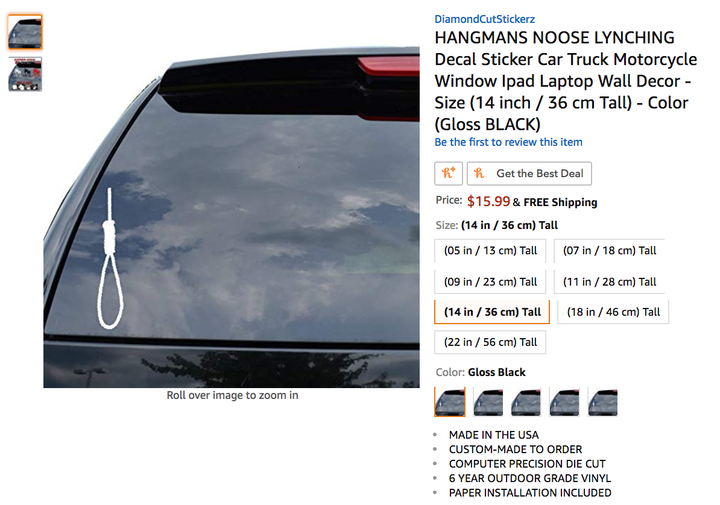
The hangman's noose is "one of the most powerful visual symbols directed against African-Americans," according to the Anti-De

But critics say that this policy often doesn’t reflect reality.

Amazon’s approximately 300 million active customers can encounter products that feature hate symbols and hateful language on Amazon Marketplace, which has allowed racist, Islamophobic, anti-LGBTQ and anti-Semitic groups to sell merchandise.

The report found items for sale that included a costume of a lynching victim, a hangman’s noose decal, Nazi memorabilia and children’s toys featuring alt-right symbol Pepe the Frog.


Continue reading

The Second Amendment’s Second-Class Citizens

REmembering Philando Castile

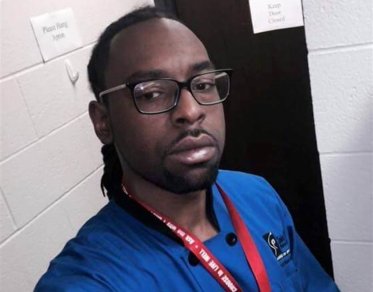
July 6, 2016, Philando Castile was murdered by a Falcon Heights cop in the passenger seat of a car, while his girlfriend and her 4 yr old daughter watched. worked in a school cafeteria for over 12 yrs where he served little kids and was beloved among his colleagues.

castille

The Second Amendment’s Second-Class Citizens


https://www.youtube.com/watch?time_continue=4&v=cQo-yYhExw0

On social-media, many are already asking why the Second Amendment did not protect Sterling and Castile, and why gun-rights advocates like the National Rifle Association are not speaking out on their behalf. In each case, there are complicated legal questions, and many of the details remain unclear, but it is true that gun-rights groups like the NRA and its allies have typically pushed for laws that would allow citizens broader freedom to bear arms than currently permitted. It is also the case that the interpretation of the Second Amendment has for decades been deeply intertwined with the ways the law protects—and more often fails to protect—African Americans in comparison with whites, a history that begins in earnest in the 1860s, flares up in the 1960s, and is again relevant today.

The Sterling case is the more complicated one. Sterling was a convicted felon, and thus probably was not legally permitted to have a gun. While Louisiana allows open carry of handguns for anyone legally allowed to possess one, concealed carry requires a permit, for which Sterling would have been ineligible. Sterling had allegedly been displaying the gun, which is the reason why police were called.

The crucial point is that the police couldn’t have known when they arrived on the scene whether Sterling’s gun was completely legal or not. An additional irony is that, according to Muflahi, Sterling had begun carrying the gun because he was concerned about his own safety—that is to say, for the very reasons that gun-rights advocates say citizens should be able to, and many argue should, carry guns.

The Castile case looks more straightforward, based on what’s known now. Assuming Castile’s permit was valid, he was placed in an impossible position by the officer. Unlike Sterling, who seems to have been resisting arrest (a fact that in no way justifies an extrajudicial execution by officers), Castile was attempting to comply with contradictory imperatives: first, the precautionary step of declaring the weapon to the officer; second, the officer’s request for his license and registration; and third, the officer’s command to freeze.*

Some activists contend that white men in the same situations would never have been shot. It’s an impossible counterfactual to prove, although there’s relevant circumstantial evidence, such as the fact that black men are much more likely to be shot by police than any other group. Raw Story rounds up stories of white people who pointed guns at police and were not shot. Castile’s shooting is reminiscent of a 2014 incident in which South Carolina State Trooper Sean Groubert pulled a black driver over in Columbia. Groubert asked the man, Levar Edward Jones, for his license and registration, but when the driver turned to get them, Groubert promptly shot him without warning. Groubert seems to have feared—however irrationally—for his safety when Jones reached into the car, but what was Jones supposed to do? He was complying with the officer’s instructions. (Groubert later pled guilty to assault and battery.)

The two shootings give a strong sense that the Second Amendment does not apply to black Americans in the same way it does to white Americans. Although liberals are loath to think of the right to bear arms as a civil right, it’s spelled out in the Bill of Rights. Like other civil rights, the nation and courts have interpreted it differently over time—as an individual right, and as a collective right. But however it’s been applied, African Americans have historically not enjoyed nearly the same protection as their white fellow citizens.

As Adam Winkler wrote in The Atlantic in 2011, one crucial testing ground for a personal right to bear arms came in the aftermath of the Civil War. Blacks in the South encountered a new landscape, one which they were ostensibly free but vulnerable and beset by white antagonists:

After losing the Civil War, Southern states quickly adopted the Black Codes, laws designed to reestablish white supremacy by dictating what the freedmen could and couldn’t do. One common provision barred blacks from possessing firearms. To enforce the gun ban, white men riding in posses began terrorizing black communities. In January 1866, Harper’s Weekly reported that in Mississippi, such groups had “seized every gun and pistol found in the hands of the (so called) freedmen” in parts of the state. The most infamous of these disarmament posses, of course, was the Ku Klux Klan.

In response, General Dan Sickles, who was in charge of Reconstruction in South Carolina, decreed that blacks could own guns. State officials ignored him, so Congress passed a law stating that ex-slaves possessed “full and equal benefit of all laws and proceedings concerning personal liberty … including the constitutional right to bear arms.” In the words of the Yale constitutional-law scholar Akhil Reed Amar, “Between 1775 and 1866 the poster boy of arms morphed from the Concord minuteman to the Carolina freedman.”

Black Americans again prominently asserted their right to bear arms during the 1960s. In 1964, Malcolm X was famously photographed holding a rifle as he looked out a window. The image was often misinterpreted as a statement of aggression, as though he was preparing a guerrilla assault. In fact, Malcolm was exercising his own right to own a gun for self-defense, concerned that members of the Nation of Islam—which he had recently deserted for Sunni orthodoxy—would try to kill him. (His fear was, of course, vindicated the following year, when Nation members did murder him.)

In 1967, Black Panthers began taking advantage of California laws that permitted open carry, walking the streets of Oakland armed to the teeth, citing threats of violence from white people and particularly white cops. When people were pulled over, Panthers would arrive on the scene—to ensure that justice was done, they argued, or to intimidate the cops, the cops contended. In response, Republican state Assemblyman Don Mulford introduced a bill to ban open carry. The Panthers then decided to go to the state capitol, heavily armed, to exercise their right.

As theater, it was an incredible gesture. As politics, it was a catastrophe. The sight of heavily armed black men brandishing rifles galvanized support for Mulford’s bill, which promptly passed and was signed into law by Governor Ronald Reagan. It set off a spree of gun-control laws that only began to be rolled back years later—leading to the current regime of permissive laws.

“The gun-control laws of the late 1960s, designed to restrict the use of guns by urban black leftist radicals, fueled the rise of the present-day gun-rights movement—one that, in an ironic reversal, is predominantly white, rural, and politically conservative,” Winkler wrote.

Signs of that shift are visible around the nation now. In Texas, gun owners (largely white) staged an open-carry rally on the capitol grounds in Austin in January, an echo of the Panthers’ rally in Sacramento. (Even some gun advocates looked askance at that move.) Meanwhile, the Panthers’ tactic of carrying guns and watching the police has an echo in the rapidly spreading practice of filming encounters with the police, just as happened in the Sterling and Castile shootings. Black Americans may not enjoy the full protection of the Second Amendment, but technology has offered a sort of alternative—one that may be less effective in preventing brutality in the moment, but has produced an outpouring of outrage.

One common thread through all of these cases is the constant threat of state violence against black Americans: from un-Reconstructed Southern officials; from California police; and today, from police around the country.

Gun advocates frequently argue that more guns, and more people carrying guns, produce a safer society. This, and the contrary claim that they undermine public safety, depend on statistics. But anecdotally, both Castile and Sterling represent cases in which carrying a gun not only failed to make the men safer, but in fact contributed to their deaths. The NRA has not made a public statement on either case, and a spokesman did not immediately reply to a request for comment.

In any case, the American approach to guns is, for the moment, stable. The courts, and particularly the Supreme Court, have inched toward much broader gun rights, including a suggestion of a personal right to bear arms. The death of Justice Antonin Scalia may, in the long term, produce a more liberal court, but that will require reversing years of precedents. In the meantime, spates of mass shootings and a slightly increase in violent crime have produced highly vocal calls for gun control, but there’s little reason to expect those efforts to succeed. To date, they have almost universally failed. In fact, the last few years have brought ever looser gun laws. Quick changes in gun laws, regardless of whether they’re desirable, are a remote possibility. As a result, the most relevant question right now is not whether gun laws should change, but whether existing gun laws apply equally to all Americans—and if not, why they don’t.

This article is part of our Next America: Criminal Justice project, which is supported by a grant from the John D. and Catherine T. MacArthur Foundation.

DAVID A. GRAHAM is a staff writer at The Atlantic, where he covers U.S. politics and global news.  

*This article originally stated that Castile had a legal obligation to declare his weapon to the officer. In fact, in Minnesota, holders of concealed carry permits need only declare their weapons when asked to do so by an officer. We regret the error.


Black Nationalism and Liberation | Boston Review


Nation of Islam counter-demonstration at NAACP rally in Harlem, 1961 / Photograph: NAACP collection, Library of Congress

In a world where Donald Trump’s presidential nomination speech has been endorsed by a former leader of the Ku Klux Klan—yet Black Lives Matter activists are accused of reverse racism for asking to not be murdered by police—what constitutes hate speech has become increasingly convoluted. In the aftermath of police killings in Dallas and Baton Rouge, gunmen Micah Johnson and Gavin Long were immediately linked by media outlets to black nationalist groups such as the Nation of Islam (NOI), New Black Panther Party, Black Riders Liberation Party, and Washitaw Nation, despite their professions to have been acting alone. Not only did these depictions draw misleading lines to organizations that do not prescribe such acts of violence, they also overshadowed both mens’ backgrounds in cultures of military violence (Johnson joined the Army Reserves immediately after high school and Long was a former Marine sergeant).

In a desperate attempt to drive home a link to black nationalism and direct attention away from these other troubling vectors, some news outlets began referring to Johnson as “Micah X” (NOI members use “X” to replace their “slave names”). In fact his middle name was simply Xavier. Even progressive groups, such as the Southern Poverty Law Center, play a legitimating role by identifying black nationalist groups as “black separatist hate groups,” leaving little room for meaningful distinctions between white supremacy and black nationalism. While groups such as the Nation of Islam have historically advocated for the separation of black communities, to assert that this position is simply the obverse of white supremacy—that is, black supremacy—overlooks the nuance of black nationalism. More importantly, it fails to account for the dramatically different relationships to power that black nationalist and white supremacist groups possess. White nationalism reinscribes and exalts the privileges of whiteness. Black nationalists council separation as an anti-racist practice and a method of empowerment in the absence of alternative avenues of power. To many black nationalists, this is the difference between life and death: the black community must either do for itself or perish.

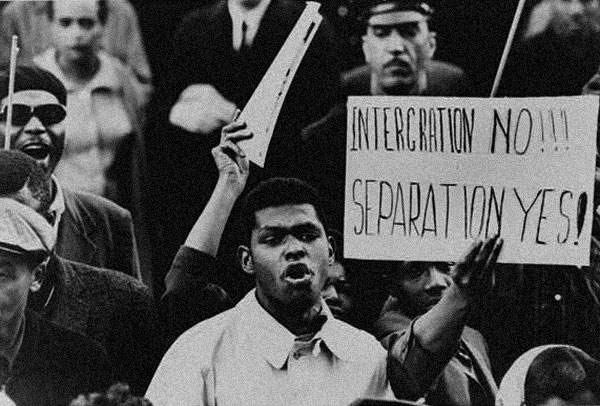
The conflation of black and white nationalism is not new. In 1963 the New York Herald Tribune satirized what it perceived as the ironic similarities between white supremacists and black nationalists in a story entitled “Integrated Segregation.” Things “seem a trifle confused on the racial front these days. The segregationists are getting integrated and the integrationists are getting segregated,” the Tribune remarked. The article imagined a scene in which staunch segregationist George Wallace was explaining why racial segregation benefitted black Americans when “a Black Muslim popped up from behind, tapped him on the back and agreed with him.” Soon, the article predicted, the Congress for Racial Equality would “start picketing the N.A.A.C.P., while the Black Muslims set up an all-Negro chapter of the Ku Klux Klan.”

To many black nationalists, separation from whites is the difference between life and death: the black community must either do for itself or perish.

Understanding black nationalism as simply the mirror image of white supremacy, rather than an anti-racist practice, has deep roots in American political discourse. And in our current moment of colorblind “post-racialism,” when race-specific remedies such as affirmative action or reparations are derided as reverse racism—and even modest demands from Black Lives Matter for criminal justice reform are decried as anti-white—black nationalism has been once again mischaracterized using a host of long-stale tropes. We would be better served, not by simply dismissing black nationalism as the underbelly of white supremacy, but by understanding it as a tradition that is both liberative and anti-racist; one that does not mirror white supremacy, but repudiates it.

section separator

W. D. Fard, the founder of the Nation of Islam, arrived in Detroit in 1930 and told black Detroiters that they “were not Americans but Asiatics.” This was part of a holistic alternative creation story that rejected the racist underpinnings of white American nationalism. Many of Fard’s followers were former followers of Marcus Garvey, left without an organization after the decline of his Universal Negro Improvement Association (UNIA) in the late 1920s due to financial mismanagement and government infiltration. Garvey and the UNIA epitomized the goals of black nationalism, launching the most ambitious and successful Pan-Africanist vision in history. At its height, the UNIA had over 700 branches in 38 states, and its newspaper, Negro World, circulated throughout the African diaspora. Millions of black people were moved by Garvey’s message of racial pride embodied through the UNIA motto “One God! One Aim! One Destiny!” The NOI borrowed many of its black nationalist tenets from the UNIA, combining them with religious symbols, practices, and theologies drawn from the plethora of new northern, black, urban religious and racial-pride movements spawned by the Great Migration. This blending spoke to the diverse backgrounds of many early NOI members: in 1951 nineteen out of twenty-eight Muslims interviewed reported having previously been members in other movements such as black Masonry, the Israelite Movement, God’s Government on the Earth (dedicated to Liberian emigration), the Peace Movement of Ethiopia, Repatriation Movement to Liberia, and the Black Jews.

As historian Robin D. G. Kelley notes, many of these movements were influenced by a Black Zionist tradition that drew upon the narrative of the book of Exodus to imagine liberation and deliverance for black people around the world. These freedom dreams not only provided what he calls a “narrative of slavery, emancipation, and renewal,” but also a “language to critique America’s racist state since the biblical Israel represented a new beginning.” Beyond providing a framework for denouncing American racism, black nationalists addressed the racist power structures that governed their communities by creating jobs, businesses, schools, and places of worship. Racial separation was not simply about black communities’ physical relationship to white people; it was about changing the structures of power that governed those relationships through self-determination, community control, and new relationships to self and one another.

By 1959 the Nation of Islam was a burgeoning movement well known within urban black communities in the North but still largely unknown to white America. That summer, as Malcolm X traveled to Africa as a guest of Egypt’s president, Gamal Abdel Nasser, Mike Wallace (later of 60 Minutes fame) and black journalist Louis Lomax presented the NOI to white audiences for the first time. In their sensationalist documentary, The Hate That Hate Produced, NOI was compared to the American Nazi Party and the Ku Klux Klan. Members of the Nation were referred to as “black racists” and “black supremacists.” Its cautionary message to a largely white audience was that white racism would inevitably produce its black variant. As Malcolm X later recalled in his Autobiography, the show was meant to shock viewers, like when “Orson Welles frightened America with a radio program describing . . . an invasion by ‘men from Mars.’”

The Hate That Hate Produced was critical in launching the Nation of Islam into the public eye. But it also offered white viewers a language for understanding black nationalism that both intensified and allayed their fears. While racism was a plague that undermined American democracy, it was not a distinctly white characteristic. As Charlie Keil, a young white civil rights organizer at Yale during the early 1960s explained to me recently: “The Hate that Hate Produced allowed [whites] to sort of categorize the Muslims—the Nation of Islam—and treat them a certain way. . . . [It was] some way of saying that this was not an autonomous self-starting movement, but a reaction, an overreaction to a history of oppression.”

Throughout the 1960s black nationalists were castigated as “supremacists” who promoted the very racism and racial segregation that liberals were fighting against. This was stoked by white nationalists who saw calls for black racial separation as consistent with their belief in the benefits of racial segregation. As George Lincoln Rockwell, head of the American Nazi Party, told Alex Haley in a 1966 interview: “Malcolm X said the same thing I’m saying.”

Rockwell was not the only one confused about the difference between racial segregationand racial separation. In a highly-publicized Los Angeles trial in 1962 after police killed an unarmed member of the Los Angeles NOI mosque, the Los Angeles Times reported the “unusual problem in seating of spectators . . . when women members of the sect refused to accept seats alongside white persons.” The court eventually overturned this seating arrangement, and the press described this as “desegregation.” Los Angeles NAACP president Christopher Taylor joined the chorus of the aggrieved by arguing that he would be against any type of segregation, regardless of who initiated it. This decontextualized, colorblind insistence that any race demanding separation was calling for racial segregation was central to mischaracterizations of black nationalism during this period.

Malcolm X set about clarifying the Nation of Islam’s advocacy for racial separatism through dozens of debates with prominent civil rights figures on college campuses across the country in the early 1960s. He debated James Farmer at Cornell, Bayard Rustin at Howard, Louis Lomax at Yale, and the NAACP’s Walter Carrington at Harvard. Almost every debate was themed around the question: “Integration or Separation?” As Malcolm explained at Wesleyan University: “We are just as much against segregation as the most staunch integrationist.” But he added that black people did not “want to be free any more; they want integration. . . . They have confused their method with their objective.” In other words, black nationalists were not opposed to racial integration as an outcome of freedom struggles, or even as an organizing strategy, but they saw it as deeply flawed as the movement’s principal objective. More importantly, they pointed out the racist presumption of integration, which took for granted that white society and its values were more desirable. As Malcolm once sardonically asked, Who is the white man to be equal to?

More than simply critiquing integration, the Nation of Islam emphasized the importance of community control, an idea that flourished in upcoming years with the emergence of the Black Power movement. As Malcolm explained: “segregation means to regulate or control. . . . A segregated community is that forced upon inferiors by superiors. A separate community is done voluntarily by two equals.” Recognizing the pervasiveness of racial segregation, nationalists sought control over the businesses, healthcare, education, housing, and policing in their communities. Indeed, the Kerner Commission’s grim 1968 assessment that the nation was “moving toward two societies, one black, one white—separate and unequal” was something understood within black communities for decades. Amidst this backdrop, nationalists called for greater autonomy. The distinction between segregation and separation was not a semantic pivot. It was a deeper analysis of power, and an assertion of self-determination.

Over sixty years since the Supreme Court struck down the constitutionality of “separate but equal” in Brown v. Board, it would seem that calls for racial separatism are a relic of the past. But that might be too hopeful. A 2014 UCLA study revealed higher levels of school segregation in many regions than in 1968, the year the Supreme Court decreed a more proactive approach to desegregation. Schools with less than 1 percent white students are now being referred to as “apartheid schools.” And while the South is no longer governed by Jim Crow laws, cities outside the South such as Chicago and Baltimore continue to be described by demographers as “hypersegregated.”

The denial of race is a fixture of racism. Black nationalists have often exposed the “colorblind,” coded racism of liberals.

Black critiques of school integration during the 1950s and 1960s were often decried. In the words of scholar Andrew Delbanco, novelist and anthropologist Zora Neale Hurston “consigned herself to oblivion” when she responded to the Brown v. Board decision by saying that she could “see no tragedy in being too dark to be invited to a white school affair.” After James Meredith enrolled as the first black student in the University of Mississippi’s history, Malcolm X told a courtroom that anytime a man “needs [an] escort of 15,000 troops to go to a college where he will be among people whose viciousness toward him is so deadly that he needs the Army there to protect him . . . that Negro is foolish if he thinks that he is going to get an education.” Education, not integration, should be the goal, both Hurston and Malcolm agreed. As Malcolm explained, “token integration” was pointless as long as there were “a couple million Negroes in Mississippi who haven’t been allowed to go to the Kindergarten in a decent school.”

Meanwhile, integration today is often illustrated through the exceptional accomplishments of a handful of black elites, most notably President Barack Obama, rather than evidenced by a substantial redistribution of wealth or educational and housing opportunities. As Keeanga-Yamahtta Taylor demonstrates, the role of “black faces in high places” is often to obscure the common conditions facing many African Americans. Instead, black elected officials serve as interlocutors speaking to—and on behalf of—black communities. Taylor writes poignantly of the 2015 Baltimore uprising after the death of Freddie Gray: “When a Black mayor, governing a largely Black city, aids in the mobilization of a military unit led by a Black woman to suppress a Black rebellion, we are in a new period of the Black freedom struggle.” But this new period has unfortunately produced all-too-familiar outcomes for poor and working-class black people.

section separator

The long history of black nationalist leaders having official meetings with white supremacist leaders is another narrative often mobilized as proof of the essential symmetry of the two movements. In 1922 Marcus Garvey met with the Imperial Wizard of the Klan, Edward Clarke, earning him swift denunciation by the NAACP. In 1961 Malcolm X and other NOI officials secretly met with the KKK in Atlanta to negotiate a non-aggression pact surrounding the NOI’s purchase of southern farmland. The following year American Nazi leader George Lincoln Rockwell even appeared as an invited guest at the NOI’s Saviour’s Day convention in Chicago. When police in Monroe, Louisiana, illegally targeted and raided the city’s mosque with tear gas, rifles, and riot sticks, the Nation of Islam secured an interracial defense team: local black attorney James Sharpe, Jr., and Imperial Wizard of the National Knights of the Klan, James Venable. As Venable explained when taking the case, “I hate to say it but a colored man doesn’t have a chance in a courtroom in the South.”

The decision by black nationalists to meet or coordinate with white supremacists was often driven by a combination of pragmatism and a deep cynicism about the authenticity of liberals. In the case of the UNIA, Garvey negotiated an agreement with Clarke to sell stock in black businesses such as newspapers, factories, and his Black Star shipping line, which ambitiously hoped to link a global black economy in Africa, the Caribbean, and the Americas before failing due to poor business management. And although Malcolm X would later denounce the Nation of Islam’s détente with the Klan, the organization’s motivation for doing so was plainly and only to secure the right to farm in the South without danger of violent reprisal. And in the case against eight members of the NOI in Monroe, Venable successfully won an appeal for several of those convicted.

Black nationalists were also not uncritical of the white supremacists with whom they interacted, a fact often downplayed or forgotten. After his meeting with the Klan, Garvey told a crowd: “Mr. Clark [sic] did not tell me anything new; he told me what I discovered seven years ago. He told me the thing that caused me to have organized the Universal Negro Improvement Association four and a half years ago.” When Rockwell, wearing full Nazi regalia, donated twenty dollars to a collection plate at Saviour’s Day, there was a smattering of reluctant applause. Malcolm X belittled him by adding: “You got the biggest hand you ever got.” Equally, black nationalists used white supremacists to draw attention to the hypocrisy of liberals. Following his 1922 meeting, Garvey claimed that Klan members were “better friends to my race, for telling us who they are, and what they mean.” Malcolm used a similar device in his folk metaphor of the liberal “fox” and the conservative “wolf.” When comparing John F. Kennedy to George Wallace, Malcolm said: “Neither one loves you. The only difference is that the fox will eat you with a smile instead of a scowl.” He even penned a 1964 editorial entitled “Why I Am for Goldwater” in which he drew upon the same fox/wolf metaphor and cynically suggested that with Goldwater, “black people at least know what they are dealing with.”

Critics on the left who see these as misguided political strategies have marginalized black nationalists by painting them as racial conservatives, and thereby emptied black nationalists’ critiques of their incisiveness. For example, Paul Gilroy accuses Garvey of “black fascism” and C. L. R. James even compared him to Hitler. Others have taken Malcolm’s cynical support for Goldwater at face value, rather than understanding his rhetorical move to draw parallels between openly racist politicians and ostensibly liberal ones whose policies nonetheless gut the black community.

Black nationalist groups such as the UNIA and the NOI have rightly been critiqued for their deep patriarchy, homophobia, and tendency to reproduce the other trappings of empire. As historian Michelle Ann Stephens notes of Garvey, his “vision of the sovereign state figured in the black male sovereign; the desire for home at a more affective level figured in the woman of color.” Likewise, anti-Semitic comments by Nation of Islam leaders such as Louis Farrakhan have certainly buttressed comparisons between white and black nationalists. Most recently, Farrakhan stoked this fire by praising Donald Trump’s refusal to take money from Jewish donors.

But although charismatic leaders are often the voices we hear most prominently, for many rank-and-file members of the Nation of Islam and other black nationalist groups, the lived experience of racial pride, religious rebirth, and doing for oneself is a redemptive, affirming, and even lifesaving practice. Many members joined the NOI after feeling alienated in integrated, more middle-class organizations such as the NAACP. As Lindsey X told an interviewer, what the NAACP “wanted never seemed real to me. I think Negroes should create jobs for themselves rather than going begging for them.” Malcolm X’s autobiography is only the best-known narrative of religious and political redemption. In a long-running feature in the NOI’s newspaper, Muhammad Speaks, entitled “What Islam Has Done For Me,” members offered their conversion narratives and testified to the transformative practice of Islam. Robert 24X of Paterson, New Jersey, contributed: “I was a young drug addict who had spent too much time in the hells of Harlem’s East Side . . . [before] everything came into focus for me. . . . I stopped smoking, using profanity, and eating improper foods. And I’ve passed my biggest acid test—no more needles in the arm.”

Instead of positioning black nationalism as a reactionary, conservative ideology that simply apes the violence and hate of white supremacy, we might learn from its lessons today. If asked about the xenophobia and dangerous comments of conservative firebrand Donald Trump in our current election, Malcolm X might well have pivoted us back to Hillary Clinton’s questionable record on race, one which Black Lives Matter activists have pointed out includes racist dog whistles such as her comments about “super-predators” lacking empathy, her steadfast support for the devastating 1994 Crime Bill, and campaign money taken from private prison corporations. And beyond the hollow political discourse of election cycles, we must avoid the pitfalls of incessant claims of post-racialism that insist that to see race is to participate in racism. As we have witnessed with the familiar “All Lives Matter” rejoinder to “Black Lives Matter,” we are living in a time when people’s humanity is so denigrated that the mere valuation of life is taken by some whites to be a zero-sum game. The denial of race is a central fixture in the perpetuation of racism, and black nationalists have routinely called attention to the importance of racial pride while exposing the coded racism of liberals. Rather than draw facile lines between black nationalism and white supremacy, we are better served by understanding black nationalism as an anti-racist political tradition seeking to envision black American freedom and citizenship in a nation that has rarely devoted much effort toward either end.

Source: Black Nationalism and Liberation | Boston Review

How Prison Labor is the New American Slavery and Most of Us Unknowingly Support it

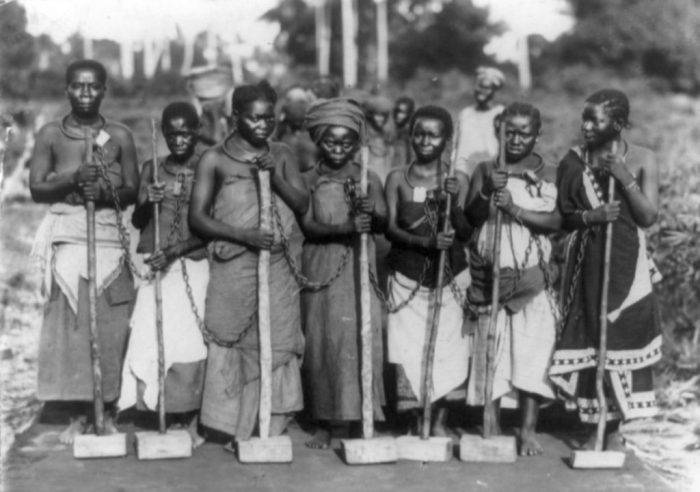
American slavery was technically abolished in 1865, but a loophole in the 13th Amendment has allowed it to continue “as a punishment for crimes” well into the 21st century. Not surprisingly, corporations have lobbied for a broader and broader definition of “crime” in the last 150 years. As a result, there are more (mostly dark-skinned) people performing mandatory, essentially unpaid, hard labor in America today than there were in 1830.

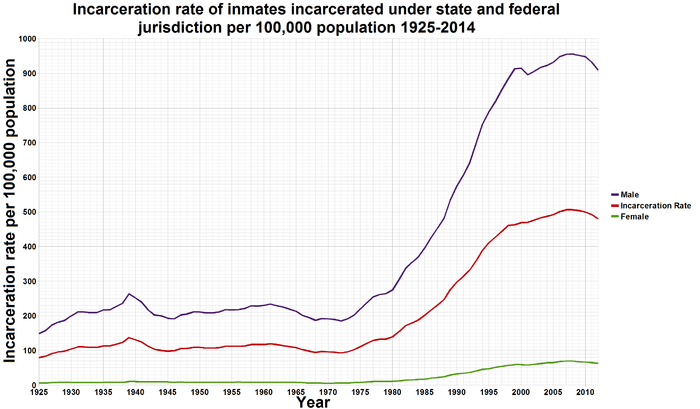
With 5 percent of the world’s population and 25 percent of the world’s prison population, the United States hasthe largest incarcerated population in the world. No other society in history has imprisoned more of its own citizens. There are half a million more prisoners in the U.S. than in China, which has five times our population. Approximately 1 in 100 adults in America were incarcerated in 2014.  Out of an adult population of 245 millionthat year, there were 2.4 million people in prison, jail or some form of detention center.

The vast majority – 86 percent – of prisoners have been locked up for non-violent, victimless crimes, many of them drug-related.

Big Business is making big bucks off of prison labor:

While prison labor helps produce goods and services for almost every big business in America, here are a few examples from anarticle that highlights the epidemic:

Whole Foods – You ever wonder how Whole Foods can afford to keep their prices so low (sarcasm)? Whole Foods’ coffee, chocolate and bananas might be “fair trade,” but the corporation has been offsetting the “high wages” paid to third-world producers with not-so-fair-wages here in America.

The corporation, famous for it’s animal welfare rating system, apparently was not as concerned about the welfare of the human “animals” working for them in Colorado prisons until April of this year.

You know that $12-a-pound tilapia you thought you were buying from “sustainable, American family farms?” It was raised by prisoners in Colorado, who were paid as little as 74 cents a day. And that fancy goat cheese? The goats were raised and milked by prisoners too.

McDonald’s – The world’s most successful fast food franchise purchases a plethora of goods manufactured in prisons, including plastic cutlery, containers, and uniforms. The inmates who sew McDonald’s uniformsmake even less money by the hour than the people who wear them.

Wal-Mart – Although their company policy clearly states that “forced or prison labor will not be tolerated by Wal-Mart,” basically every item in their store has been supplied by third-party prison labor factories. Wal-Martpurchases its produce from prison farms, where laborers are often subjected to long hours in the blazing heat without adequate food or water.

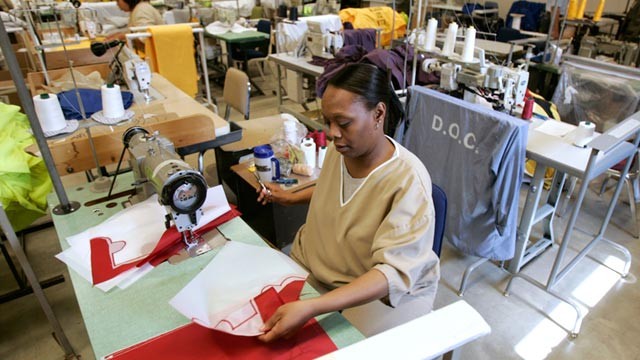
Victoria’s Secret – Female inmates in South Carolina sew undergarments and casual-wear for the pricey lingerie company. In the late 1990’s, two prisoners were placed in solitary confinement for telling journalists that they were hired to replace “Made in Honduras” garment tags with “Made in USA” tags.

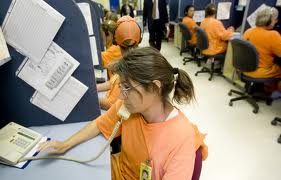
AT&T – In 1993, the massive phone company laid off thousands of telephone operators—all union members—in order to increase their profits. Even though AT&T’s company policy regarding prison labor reads eerily like Wal-Mart’s, they have consistently used inmates to work in their call centers since ’93, barely paying them $2 a day.

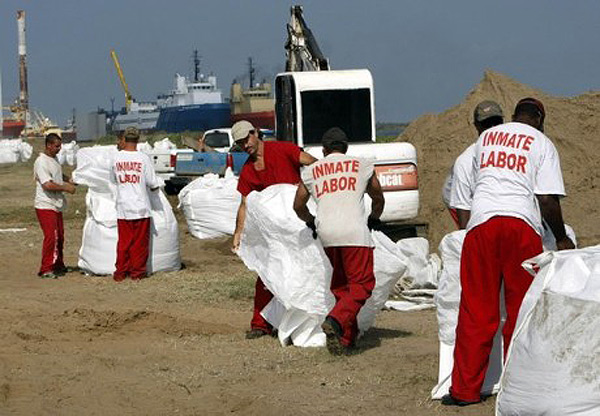
BP (British Petroleum) – When BP spilled 4.2 million barrels of oil into the Gulf coast, the company sent a workforce of almost exclusively African-American inmates to clean up the toxic spill while community members, many of whom were out-of-work fisherman, struggled to make ends meet. BP’s decision to use prisoners instead of hiring displaced workers outraged the Gulf community, but the oil company did nothing to reconcile the situation.

The full list of companies implicated in exploiting prison labor includes:

Bank of America
Bayer
Cargill
Caterpillar
Chevron
Chrysler
Costco
John Deere
Eli Lilly and Company
Exxon Mobil
GlaxoSmithKline
Johnson and Johnson
K-Mart
Koch Industries
McDonald’s
Merck
Microsoft
Motorola
Nintendo
Pfizer
Procter & Gamble
Pepsi
ConAgra Foods
Shell
Starbucks
UPS
Verizon
WalMart
Wendy’s

While not all prisoners are “forced” to work, most “opt” to because life would be even more miserable if they didn’t, as they have to purchase pretty much everything above the barest necessities (and sometimes those too) with their hard-earned pennies. Some of them have legal fines to pay off and families to support on the outside. Often they come out more indebted than when they went in.

Prison farms” aka “modern plantations”
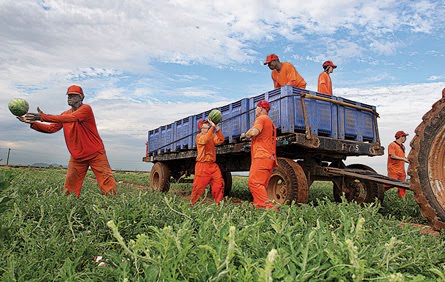
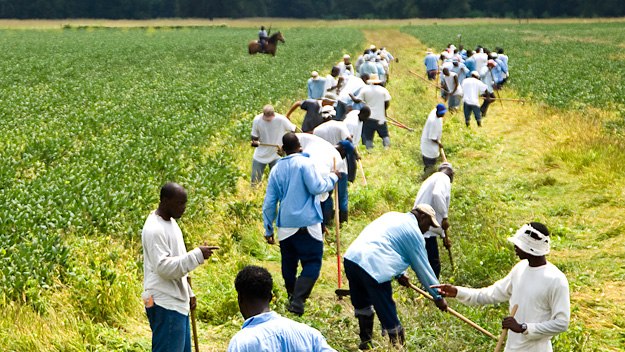
In places like Texas, however, prison work is mandatory and unpaid – the literal definition of slave labor.

According the Texas Department of Criminal Justice, prisoners start their day with a 3:30 a.m. wake-up call and are served breakfast at 4:30 a.m. All prisoners who are physically able are required to report to their work assignments by 6 a.m.

“Offenders are not paid for their work, but they can earn privileges as a result of good work habits,” the website says.


Most prisoners work in prison support jobs, like cooking, cleaning, laundry, and maintenance, but about 2,500 of them work in the Texas prison system’s own “agribusiness department,” where they factory-farm 10,000 beef cattle, 20,000 pigs and a quarter million egg-laying hens. The prisoners also produce 74 million pounds of livestock feed per year, 300,000 cases of canned vegetables, and enough cotton to clothe themselves (and presumably others). They also work at meat packaging plants, where they process 14 million pounds of beef and 10 million pounds of pork per year.

While one of the department’s stated goals is to reduce operational costs by having prisoners produce their own food, the prison system admittedly earns revenue from “sales of surplus agricultural production.”

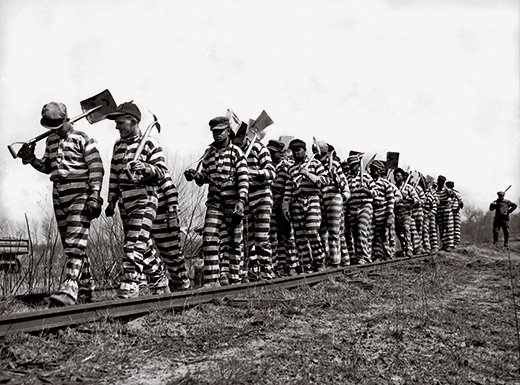
Prisoners who refuse to work – again, unpaid – are placed in solitary confinement. When asked if Texas prisons still employ “chain gangs” in the FAQ section, the department responds:

“No, Texas does not use chain gangs. However, offenders working outside the perimeter fence are supervised by armed correctional officers on horseback.”

Similar “prison farms” exist in Arizona, Alabama, Alaska, Arkansas, California, Colorado, Florida, Georgia, Hawaii, Louisiana, Mississippi, Ohio and other states, where prisoners are forced to work in agriculture, logging, quarrying and mining. Wikipedia says while the agricultural goods produced on prison farms is generally used to feed prisoners and other wards of the state (orphanages and asylums) they are also sold for profit.

In addition to being forced to labor directly for the profit of the government, inmates may be “farmed out” to private enterprises, through the practice of convict leasing, to work on private agricultural lands or related industries (fishing, lumbering, etc.). The party purchasing their labor from the government generally does so at a steep discount from the cost of free labor.

Source: How Prison Labor is the New American Slavery and Most of Us Unknowingly Support it

White Supremacist America: Trump and the “Return” of Right-Wing Hate Culture

White Supremacist America: Trump and the “Return” of Right-Wing Hate Culture

Many of my friends from college and fellow academics in the last year are focusing their anxieties on the Donald Trump campaign. A common frustration voiced among intellectuals is the disbelief that a candidate as bigoted, pig-headed, and willfully ignorant as “the Donald” could be running neck and neck with a seasoned political veteran like Hillary Clinton. This piece is not about Hillary Clinton, however. Rather, it’s about promoting a much needed discussion of what Trump’s rise really tells us. I don’t believe we have a “Donald Trump” problem in this country. The problem is much worse than that. More ominously, we have an American public problem that cuts to the very core of the quality of our democracy. Demagogues rise to power on the backs of workers, citizens, and your average “Joe” or “Jane.” They do not owe their success to their actions alone.

If Donald Trump is enjoying electoral success, it’s because the public – passively or actively – allowed it to happen. While Pew Research Center surveys do find considerable ignorance among Trump supporters – the most commonly cited reasons for supporting him have nothing to do with policy, but everything to do with personality characteristics – this trend was observed across all the front-runners, including Hillary Clinton, Bernie Sanders, and Ted Cruz supporters. What makes Trump’s case more disturbing than the norm of across-the-board voter ignorance is that such a large contingent of Americans know full-well about his bigotry, and embrace it. The ascendance of Donald Trump tells us much about the quality of American character – particularly about our enduring and toxic legacy of hate, ignorance, bigotry, and white-supremacy.

Hillary Clinton caught a lot of flak for referring to half of Trump Supporters as “the deplorables.” She was being far too generous. Public opinion surveys over the last year or so suggest that the white supremacist contingent of Trump voters is even larger. When I say white supremacist, I’m not referring to the old-style, KKK, white robe donning and lynchings of America’s past. Rather, the contemporary form of white supremacy is more of a “hate-lite” – if such a thing exists – in terms of its supporters embracing horrible, racist stereotypes, while claiming to reject racism. Call this “color-blind” racism, dog whistle racism, coded racism – or whatever you like, but it’s clear that white supremacy never disappeared from America’s political culture.

Consider recent surveys, if you want to ascertain the size of the problem. Polls of Trump supporters and Republicans more generally from 2015 and 2016 find clear and indisputable evidence of racism and prejudice against non-white, non-Christian Americans. I review these findings below.

Xenophobia

Irrational hatred of foreigners is pronounced on the American right. Public Policy Polling (PPP) found that in August 2015, 54 percent of Republicans, and 61 percent of Trump supporters still believed Obama was born in another country – drawing on fringe the birther conspiracy. Sixty-six percent of Trump supporters thought Obama was a Muslim, compared to 54 percent of all Republicans. The findings hadn’t changed much in 2016, when a May PPP poll found 65 percent of Trump supporters said Obama was a Muslim and 59 percent said he was born outside the U.S. The birther-Trump right is obviously impervious to evidence-based logic on anything related to Obama, considering this conspiracy theory was debunked long ago by countless sources.

Christian Supremacy

Much of the right-wing Christian contingent seems set on demonizing non-believers. Most Trumpeters see “Muslim” as synonymous with “bad.” A Reuters-Ipsos June 2016 survey, for example, found that 58 percent of Trump supporters said they held a “somewhat unfavorable” or “very unfavorable” view of Islam. This type of blanket hatred is troublesome when Pew Research Center polling finds that the vast majority of American Muslims reject terrorism, and hold moderate, rather than extreme political values. A Texas Policy Project poll from June 2016 also found that 76 percent of Republicans “somewhat supported” or “strongly supported” a blanket ban of Muslims from entering the U.S. – no doubt based on the erroneous, blanket notion that Muslims represent an imminent threat to national security.

More Xenophobia

Most Republicans and Trump supporters also embrace negative views of unauthorized immigrants. Seventy percent of Republicans agreed in an August 2016 Pew survey that “undocumented immigrants are more likely to commit serious crimes.” This view persists, despite statistics from the Public Policy Institute of California concluding that immigrants actually commit fewer crimes than U.S. citizens. The myth remains popular, despite national data over the last decade and a half showing that, as the number of unauthorized immigrants in the U.S. grew, violent crimes rates were on the decline. On the macro- level, then, there is little merit to the idea that unauthorized immigration is destabilizing society and making us less safe. Still, 70 percent of Republicans agreed in a Fox News July 2015 survey with Donald Trump’s statement that Mexico is “sending people that have lots of problems…they’re bringing drugs. They’re bringing crime. They’re rapists.” The hatred was not reserved for unauthorized immigrants. Two-thirds of Trump supporters agreed in a March 2016 Pew survey that “immigrants [in general] today are a burden on our country because they take our jobs, housing, and health care.”

Anti-Black Stereotyping

Old-fashioned, anti-black racism is alive and well on the American right, despite naive academic claims that the U.S. was “getting beyond race” as early as the 1990s. Reuters polling from June 2016 finds that nearly half of Trump supporters agree that African Americans are more “violent” and “criminal” than whites. Similarly, 40 percent say African Americans are more “lazy” than whites. These findings are prominent on the reactionary right, despite social scientists’ longstanding findings that race is not a significant predictor of Americans’ level of commitment to work, or hours worked, and despite the reality that the vast majority of whites, African Americans, and Hispanics are employed. Anti-black stereotypes are not surprising. They have long been woven into U.S. political and media commentary, as seen in academic studies identifying how African Americans are far more likely to be depicted in the media as criminals and as poor, in far greater numbers than the actual number of African Americans who commit crimes or are in poverty.

After framing Trump supporters as “deplorables,” Hillary Clinton publicly apologized, rejecting “grossly generalistic” characterizations, which are “never a good idea.” Her apology was unfortunate. Generalizations are perfectly acceptable, even valuable, if they are an accurate depiction of reality. And the above data suggests that it is indeed fair to generalize about Trump voters, considering most of them are racist and xenophobic. The polls I’ve reviewed should be sobering and disturbing for Americans who call themselves supporters of equal rights and democracy, and for those who abhor irrational hatred and bigotry. America’s white supremacy culture is wide-spread indeed. Consider the following: if approximately 55 percent of the voting age population turned out in 2012, and 2016 sees similar turnout, and about half of likely voters say they are planning on voting for Trump, his support base includes approximately 28 percent of American adults – give or take a few percent because of the small number of Americans who may vote third-party. Of this 28 percent, the polls above found that approximately two-thirds can be categorized as racist in their attitudes, meaning that nearly 20 percent of American adults – or one in five – fall within the category of Trump supporting white supremacists.

In the title of this piece I spoke of the “return” of the hate culture in America. Realistically, that culture never disappeared, even if many intellectuals thought we had transcended the old racist, sexist, and homophobic battles of the past. The right-wing reactionary movement has always been there, but was waiting for a populistic, demagogic character of the Trump variety to take the reins. On a symbolic level, public discourse on issues like race and immigration speaks to an overarching and enduring culture war in America. We are in the midst of a battle for this country’s very soul, and there is much uncertainty about the path forward. Reactionary forces – organized under Trump – represent an old order, which would like to reinvigorate the racist, bigoted, white supremacist culture of the past. Progressive societal forces, as seen in the rise of social movements like Black Lives Matter, Occupy Wall Street, and others, are pushing for a progressive future in which government plays a crucial role in promoting political equality between social groups, and reduces economic inequality.

I wouldn’t presume to tell anyone who they should vote for in the coming election, although I can say without hesitation that I’m entirely opposed to the continuation of the Trump-inspired, old reactionary order. I don’t know whether or not a Trump defeat would be a fatal blow to racist forces in this country. I can say this much: at some point soon, Americans will have to decide whether they want to live in a country that respects democracy and equal rights for all, or embraces the racist, fascistic politics of a white supremacist culture. The answer to which side prevails will soon be upon us.

Anthony DiMaggio is an Assistant Professor of Political Science at Lehigh University. He holds a PhD in political communication, and is the author of the newly released: Selling War, Selling Hope: Presidential Rhetoric, the News Media, and U.S. Foreign Policy After 9/11 (Paperback: 2015). He can be reached at:anthonydimaggio612@gmail.com

Anthony DiMaggio is an Assistant Professor of Political Science at Lehigh University. He holds a PhD in political communication, and is the author of the newly released: Selling War, Selling Hope: Presidential Rhetoric, the News Media, and U.S. Foreign Policy After 9/11 (Paperback: 2015). He can be reached at: anthonydimaggio612@gmail.com

Source: White Supremacist America: Trump and the “Return” of Right-Wing Hate Culture

Privately Run Mississippi Prison, Called a Scene of Horror, Is Shut Down – The New York Times

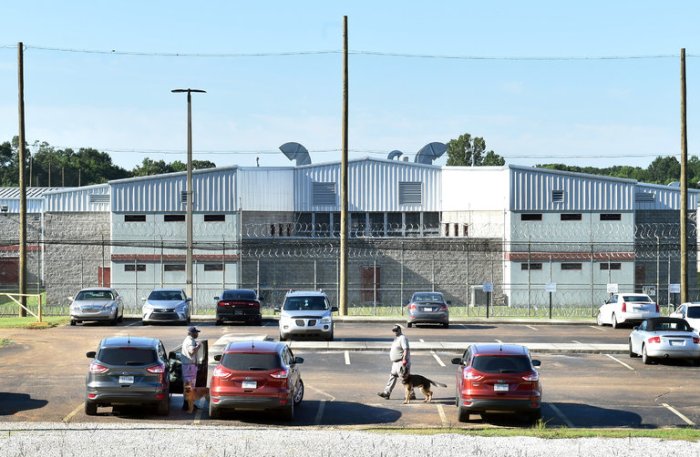
The Walnut Grove facility that had been operating since 2012 under a federal consent decree for violating prisoners’ constitutional rights was the scene of two major riots in 2014.


This jail is likely 90 percent black men. Privately Run Mississippi Prison, Called a Scene of Horror, ““The sexual misconduct we found was among the worst that we have seen in any facility anywhere in the nation,” the report said.

Some of the guards, the report said, were themselves members of the gangs, including at least one prison supervisor who let prisoners out of their cells to assault unsuspecting rivals.

Organized gladiator-style fights between prisoners and encouraged by guards were also a frequent occurrence, with guards betting on the outcomes, according to the report.” FB comment from Antonio Moore

Relevant READ:

The Black Male Incarceration Problem Is Real and It’s Catastrophic


How Racial Disparity Does Not Help Make Sense of Patterns of Police Violence

Read the piece from NYT.

Source: Privately Run Mississippi Prison, Called a Scene of Horror, Is Shut Down – The New York Times

Ruby Sales — Where Does It Hurt? | On Being

RUBY SALES —Where Does It Hurt?

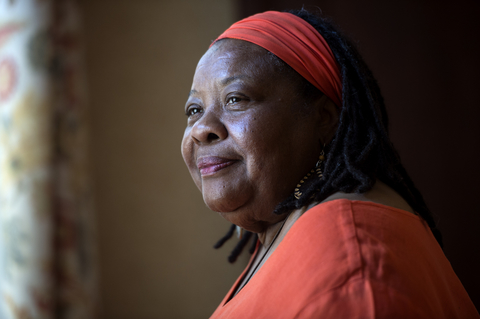
Where does it hurt? That’s a question the civil rights icon Ruby Sales learned to ask during the days of that movement. It’s a question we scarcely know how to ask in public life now, but it gets at human dynamics that we are living and reckoning with. At a convening of 20 theologians seeking to re-imagine the public good of theology for this century, Ruby Sales unsettles some of what we think we know about the force of religion in civil rights history, and names a “spiritual crisis of white America” as a calling of this time.

[OCG NOTE: Dr. Ruby Sales is a frequent contributor and commentator of OUR COMMON GROUND.  In addition to being an OUR COMMON GROUND Voice, she is an OCG Witness from the Bridge. Our visits with Dr. Sales can be found in our archives.   Please do check out a couple of  most important discussions that we had with her in our 2016 Season, “Hands Off Our Children: 300 Strong” Report from Field with Dr. Ruby Sales on 04/16; and, STOP THE WAR ON OUR CHILDREN™ • MARCH 18, 2016. We are proud of our association with Dr. Sales, our friendship and support from her and the Spirit House Project. Ruby Sales is a national treasure. ]

 GUESTS
RUBY SALES is the founder and director of the Spirit House Project. She is one of 50 African Americans to be spotlighted in the new Smithsonian National Museum of African American History and Culture in Washington, D.C.

“WHERE DOES IT HURT?”: A NATIONAL INQUIRYAnger, name-calling, and division seem to be deepening in American and global life. They are public faces of human pain and fear. But they are not the whole story of our time. As part of The Civil Conversations Project, we’re launching a national inquiry, “Where Does It Hurt?” Please join with us and take part in a new conversation in our radio and digital spaces.

Source: Ruby Sales — Where Does It Hurt? | On Being