This essay is adapted from the introduction of In Defense of Housing: The Politics of Crisis, out now from Verso.
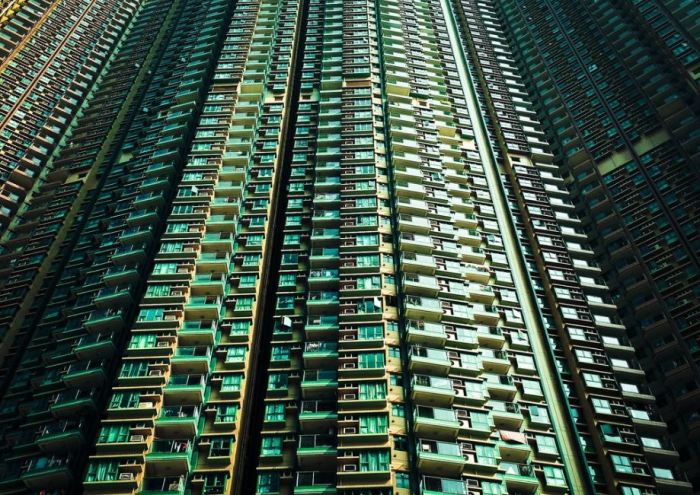
The symptoms of housing crisis are everywhere in evidence today. Households are being squeezed by the cost of living. Homelessness is on the rise. Evictions and foreclosures are commonplace. Segregation and poverty, along with displacement and unaffordability, have become the hallmarks of today’s cities. Urban and suburban neighborhoods are being transformed by speculative development, shaped by decisions made in boardrooms half a world away. Small towns and older industrial cities are struggling to survive.
In America, the housing crisis is especially acute in New York City. The city has more homeless residents now than at any time since the Great Depression. More than half of all households cannot afford the rent. Displacement, gentrification, and eviction are rampant. Two pillars of New York’s distinctive housing system — public housing and rent regulation — are both under threat.
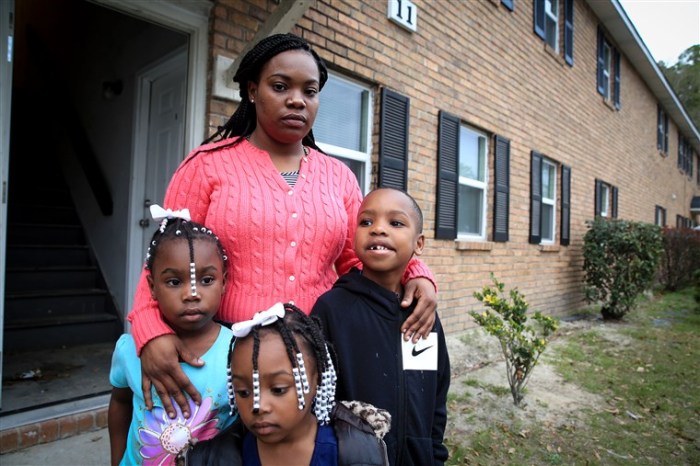
But housing problems are not unique to New York. Shelter poverty is a problem throughout the United States. According to the standard measures of affordability, there is no US state where a full-time minimum-wage worker can afford to rent or own a one-bedroom dwelling.
Nationwide, nearly half of all renting households spend anunsustainable amount of their income on rent, a figure that is only expected to rise. This is not only a big-city issue. Around 30 percent of rural households cannot afford their housing, including nearly half of all rural renters.
In fact, the housing crisis is global in scope. London, Shanghai, São Paulo, Mumbai, Lagos, indeed nearly every major city faces its own residential struggles. Land grabs, forced evictions, expulsions, and displacement are rampant. According to the United Nations, the homeless population across the planet may be anywhere between one hundred million and one billion people, depending on how homelessness is defined.
It has been estimated that globally there are currently 330 million households — more than a billion people — that are unable to find a decent or affordable home. Some research suggests that in recent decades, residential displacement due to development, extraction, and construction has occurred on a scale that rivals displacement caused by disasters and armed conflicts. In China and India alone in the past fifty years, an estimated one hundred million people have been displaced by development projects.
And yet if there is broad recognition of the existence of a housing crisis, there is no deep understanding of why it occurs, much less what to do about it. The dominant view today is that if the housing system is broken, it is a temporary crisis that can be resolved through targeted, isolated measures. In mainstream debates, housing tends to be understood in narrow terms.
The provision of adequate housing is seen as a technical problem and technocratic means are sought to solve it: better construction technology, smarter physical planning, new techniques for management, more homeownership, different zoning laws, and fewer land use regulations. Housing is seen as the domain of experts like developers, architects, or economists. Certainly, technical improvements in the housing system are possible, and some are much needed. But the crisis is deeper than that.
We see housing in a wider perspective: as a political-economic problem. The residential is political — which is to say that the shape of the housing system is always the outcome of struggles between different groups and classes. Housing necessarily raises questions about state action and the broader economic system. But the ways in which social antagonisms shape housing are too often obscured.
Housing is under attack today. It is caught within a number of simultaneous social conflicts. Most immediately, there is a conflict between housing as lived, social space and housing as an instrument for profit-making — a conflict between housing as home and as real estate. More broadly, housing is the subject of contestation between different ideologies, economic interests, and political projects. More broadly still, the housing crisis stems from the inequalities and antagonisms of class society.
Reposing the Housing Question
The classic statement on the political-economic aspects of housing was written by Friedrich Engels in 1872. At the time, few disputed the fact that housing conditions for the industrial proletariat were unbearable. What Engels called “the housing question” was the question of why working-class housing appeared in the condition as it did, and what should be done about it.
Engels was generally pessimistic about the prospects for housing struggles per se. Criticizing bourgeois attempts at housing reform, he argued that housing problems should be understood as some of “the numerous, smaller, secondary evils which result from the present-day capitalist mode of production.”
He concluded, “As long as the capitalist mode of production continues to exist, it is folly to hope for an isolated solution to the housing question or of any other social question affecting the fate of the workers.” For Engels, housing struggles were derivative of class struggle. Housing problems, then, could only be addressed through social revolution.
We take from Engels the idea that the housing question is embedded within the structures of class society. Posing the housing question today means uncovering the connections between societal power and the residential experience. It means asking who and what housing is for, who controls it, who it empowers, who it oppresses. It means questioning the function of housing within globalized neoliberal capitalism.
However, residential struggles today are not simply derivative of other conflicts. Housing movements are significant political actors in their own right. The housing question may not be resolvable under capitalism. But the shape of the housing system can be acted upon, modified, and changed.
The social theorist Henri Lefebvre helps us understand the political role of housing and the potential for changing it. In his 1968 book The Right to the City, Lefebvre argued that industrial insurrection was not the only force for social transformation. An “urban strategy” for revolutionizing society was possible.
Given changes to the nature of work and of urban development, the industrial proletariat was no longer the only agent of revolutionary change, or even the predominant one. Lefebvre claimed that there was a new political subject: the city dweller. More generally, Lefebvre invokes the politics of “the inhabitant,” a category that includes any worker, in the broadest sense, seen from the perspective of everyday social and residential life.
Lefebvre is vague about what exactly the inhabitant as a political subject will accomplish with the urban revolution. But he does point to a different way of inhabiting. He imagines a future where social needs would not be subordinated to economic necessity, where disalienated dwelling space would be universally available, where both equality and difference would be the basic principles of social and political life.
Whether or not anything like Lefebvre’s urban revolution is on the horizon, we can use his ideas to understand a basic point: the politics of housing involve a bigger set of actors and interests than is recognized either by mainstream debates or by conventional political-economic analyses such as that offered by Engels.
In the orthodox account, the only conflicts that matter are those surrounding exploitation and value. But the ruling class also needs to solidify its rule, and preserving the ability to exploit is only one aspect of this. There are also political, social, and ideological imperatives that significantly affect residential conditions.
In the financialized global economy — which was only beginning to emerge when Lefebvre was writing — real estate has come to have new prominence in relation to industrial capital. Housing and urban development today are not secondary phenomena. Rather, they are becoming some of the main processes driving contemporary global capitalism.
If Lefebvre is right, housing is becoming an ever more important site for the reproduction of the system — a change that might open new strategic possibilities for housing movements to achieve social change.
Whose Crisis?
Critics, reformers, and activists have invoked the term “housing crisis” for more than a hundred years. The phrase once again became pervasive after the global economic meltdown of 2008. But we need to be careful with this usage of the concept of crisis.
The idea of crisis implies that inadequate or unaffordable housing is abnormal, a temporary departure from a well- functioning standard. But for working-class and poor communities, housing crisis is the norm. Insufficient housing has been the mark of dominated groups throughout history. Engels made exactly this point:
The so-called housing shortage, which plays such a great role in the press nowadays, does not consist in the fact that the working class generally lives in bad, overcrowded or unhealthy dwellings. This shortage is not something peculiar to the present; it is not even one of the sufferings peculiar to the modern proletariat in contradistinction to all earlier oppressed classes. On the contrary, all oppressed classes in all periods suffered more or less uniformly from it.
For the oppressed, housing is always in crisis. The reappearance of the term “housing crisis” in headlines represents the experiences of middle-class homeowners and investors, who faced unexpected residential instability following the 2008 financial implosion.
The idea of a housing crisis is politically loaded. Though the concept of crisis has a long history in critical theory and radical practice, it can be deployed for other purposes. In the United States, the discourse of housing crisis is often used to condemn state “interference” in housing markets. In the United Kingdom, the crisis frame is invoked in support of granting new legal powers to developers in order to override local planning guidelines.
Discrete moments when housing crises become acute tend to be interpreted away as exceptions to a fundamentally sound system. But this is an ideological distortion. The experience of crisis in the residential sphere reflects and amplifies the broader tendencies towards insecurity in capitalist societies. Housing crisis is a predictable, consistent outcome of a basic characteristic of capitalist spatial development: housing is not produced and distributed for the purposes of dwelling for all; it is produced and distributed as a commodity to enrich the few. Housing crisis is not a result of the system breaking down but of the system working as it is intended.
We should reject ideological versions of the concept of housing crisis. But the term is still useful. For those compelled to dwell in oppressive and alienating conditions, housing crisis is not empty rhetoric; it is daily reality. To millions of households, “crisis” describes precisely the chaos, fear, and disempowerment that they experience. The state of their housing is critical indeed.
Our objective, then, is not to argue for the resolution of some temporary crisis and return to the status quo. We use the concept of crisis to highlight the ways that the contemporary housing system is unsustainable by its very nature. We point to the crisis tendencies in housing under contemporary capitalism, in order to draw attention to the urgent but systemic character of these problems.
In Defense of Housing
We do not seek to defend the housing system as it currently stands, which is in many ways indefensible. What needs defending is the use of housing as home, not as real estate. We are interested in the defense of housing as a resource that should be available to all.
Housing means many things to different groups. It is home for its residents and the site of social reproduction. It is the largest economic burden for many, and for others a source of wealth, status, profit, or control. It means work for those who construct, manage, and maintain it; speculative profit for those buying and selling it; and income for those financing it. It is a source of tax revenue and a subject of tax expenditures for the state, and a key component of the structure and functioning of cities.
Our concern is squarely with those who reside in and use housing — the people for whom home provides use values rather than exchange value. From the perspective of those who inhabit it, housing unlocks a whole range of social, cultural, and political goods. It is a universal necessity of life, in some ways an extension of the human body. Without it, participation in most of social, political, and economic life is impossible.
Housing is more than shelter; it can provide personal safety and ontological security. While the domestic environment can be the site of oppression and injustice, it also has the potential to serve as a confirmation of one’s agency, cultural identity, individuality, and creative powers.
The built form of housing has always been seen as a tangible, visual reflection of the organization of society. It reveals the existing class structure and power relationships. But it has also long been a vehicle for imagining alternative social orders. Every emancipatory movement must deal with the housing question in one form or another. This capacity to spur the political imagination is part of housing’s social value as well.
Housing is the precondition both for work and for leisure. Controlling one’s housing is a way to control one’s labor as well as one’s free time, which is why struggles over housing are always, in part, struggles over autonomy. More than any other item of consumption, housing structures the way that individuals interact with others, with communities, and with wider collectives. Where and how one lives decisively shapes the treatment one receives by the state and can facilitate relations with other citizens and with social movements.
No other modern commodity is as important for organizing citizenship, work, identities, solidarities, and politics.
It is this side of housing — its lived, universally necessary, social dimension, and its identity as home — that needs defending. Our challenge as analysts, as residents, and as participants in housing struggles is to understand the causes and consequences of the multidimensional attack on housing. Our goal is to provide a critical understanding of the political-economic nature of housing, such that we may develop a greater sense of the actions needed to address housing’s crises today and in the future.
Preview the new issue of Jacobin and get a discounted subscription today.
Source: The Permanent Crisis of Housing | Jacobin
















 OCG
OCG 