We Have the Means to Fund Reparations. Where Is the Political Will?

. . . Between 1983 and 2016, the median net worth for Black Americans actually went down by 50 percent. Paired with a growing Latinx population that also lags far behind whites in household wealth, the U.S.’s overall median wealth trended downward over those decades, even as median white wealth increased.These trends go hand-in-hand with the rigging of the overall economy. Over the last 30 years, the wealthiest 20 percent of households have captured almost 97.4 percent of all increases in wealth, leaving only scraps for the rest.To repair these breaches — between Black and white, as well as between the rich and the rest — we must restore the wealth of communities that were literally used as a foundation of the nation’s wealth, while being prohibited from building their own.

As Ta-Nehisi Coates wrote in his groundbreaking case for reparations in The Atlantic, reparations are “the price we must pay to see ourselves squarely.”It won’t be an easy task. But it’s by no means insurmountable.”

Source: We Have the Means to Fund Reparations. Where Is the Political Will?

Establish a Public Credit Registry | Demos


“Credit reports and scores directly impact Americans’ economic security and opportunity. Credit history can affect the way Americans are treated by lenders, landlords, utility companies, hospitals and employers. Having a poor credit history or a “thin file” with insufficient credit information to generate a credit score can mean a consumer will end up paying more for loans and insurance (or have trouble even getting them in the first place). Misuses of credit history are prevalent and harmful: Job seekers can be denied work based on their credit history, and the Trump administration has even proposed using credit history to determine whether immigrants should be eligible for permanent residency. Most harmfully, our credit system is built on—and continues to reinforce and expand—deep racial inequities.  Generations of discrimination in employment, lending, education and housing have produced significant racial disparities in credit history. Past discrimination is baked into current determinations of creditworthiness: Credit scores and other lending algorithms disproportionately represent black and Latino loan applicants as “riskier” customers. As a result, decisions drawing on credit data reproduce and spread existing racial inequality, making it harder to achieve true economic equity.”

Source: Establish a Public Credit Registry | Demos

There were nearly a million black farmers in 1920. Why have they disappeared? | Environment | The Guardian

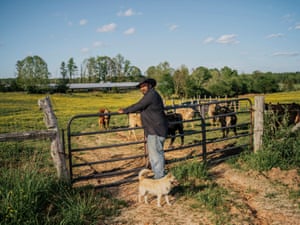
Today there are just 45,000 African American farmers. One man is fighting to save them.

Source: There were nearly a million black farmers in 1920. Why have they disappeared? | Environment | The Guardian

The Most Radical City on the Planet | Boston Review

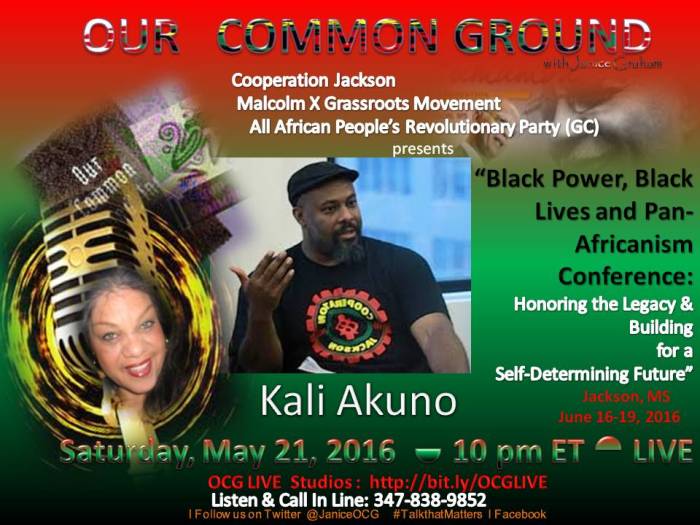
“Black radicals had been experimenting with electoral strategies since the 1960s. In 2008 the Malcolm X Grassroots Movement (MXGM) studied the lessons learned from this work in the South and identified ways to advance movement goals. This work culminated in the 2012 publication of the Jackson-Kush Plan, which called for people’s assemblies (a grassroots co-governance model), an independent black political party, and a broad-based solidarity economy. Along the way, MXGM members identified Chokwe Lumumba to run for Jackson city council in 2009. He won, and by the time he ran for mayor four years later, he was well known, with an established infrastructure to support him.”

Source: The Most Radical City on the Planet | Boston Review


The Racist Dawn of Capitalism | Boston Review

“At the heart of Edward Baptist’s The Half Has Never Been Told is the claim that the profits and accumulations of slavery contributed to the formation of contemporary capitalism. Like Beckert, he turns to the history of the cotton industry, though he focuses on the United States from the colonial era to the end of the Civil War. Yet if Beckert’s story is the world the slave owners made, Baptist’s is the world made by the slave. “Enslaved African Americans built the modern United States,” he declares, “and indeed the entire modern world, in ways both obvious and hidden.” We know the claim that enslaved African Americans built the modern United States is not new. This “half” has, in fact, been told—multiple times and more often than not by black writers, some of whom are fleetingly mentioned in Baptist’s footnotes. But the claim that African Americans built the world is simply wrong. Baptist’s book is marked by such rhetorical excesses, which lend themselves to a blinkered and narcissistic American exceptionalism. The result is an oversimplified view of capitalism and slavery that ignores the historical contributions to modernity of Africans in the Caribbean and in Africa itself.”

Source: The Racist Dawn of Capitalism | Boston Review

White Privilege and White Disadvantage – Race, Racism and the Law

Simply stated, “poor people and people of color,” as well as its variants, imply that being poor is like being non-white. Now, if being poor is, in fact, like being non-white, then poor white people are like people of color. Significantly, if poor white people are like people of color, then the concept of white privilege becomes a bit misleading, if not altogether inaccurate. As Part II explains, white privilege refers to advantages that white people are supposed to receive by virtue of the fact that they are white. The concept presupposes that all white people–even the poor ones–have privileges on account of their race. However, if being poor is like being non-white, and if poor white people are like people of color, then it may not make sense to conceptualize poor white people as being privileged relative to people of color. If poor white people’s class disadvantage puts them in a social position that is similar to that occupied by people of color, then white privilege may not be something that they enjoy. Further, if white privilege is not enjoyed by poor white people, then it may make little sense to call it white privilege– inasmuch as white privilege implies that the privilege flows from being a member of the white race. It may make more sense to admit the error involved in the concept of white privilege and come up with a different concept altogether–something like affluent white people’s privilege or white class privilege.

Source: White Privilege and White Disadvantage – Race, Racism and the Law

Ten Solutions to Bridge the Racial Wealth Divide – Inequality.org

The deep and persistent racial wealth divide will not close without bold, structural reform.  It has been created and held in place by public policies that have evolved with time including slavery, Jim Crow, red lining, mass incarceration, among many others. The racial wealth divide is greater today than it was nearly four decades ago and trends point to its continued widening.

Source: Ten Solutions to Bridge the Racial Wealth Divide – Inequality.org

Many People are Too Broke for Bankruptcy. A New Report Suggests Some Fixes. — ProPublica


All sorts of bad things happen when bankruptcy is out of reach for people, as we showed in a series of stories. People turn to unscrupulous operators who file phony bankruptcy cases, as happens often in Los Angeles. Particularly in the South, they turn to a form of bankruptcy that features a payment plan and that often ends in failure, leaving debtors worse off than when they filed. (African Americans are especially prone to that problem.) And finally, many people don’t file at all — and just hope that a debt collector doesn’t seize their wages.

Source: Many People are Too Broke for Bankruptcy. A New Report Suggests Some Fixes. — ProPublica

The Cases For Reparations: How 2020 Presidential Candidates Address The Issue | On Point

Democratic presidential hopefuls are talking about reparations for slavery. They’re talking seriously, but with few specifics. What would a reparations policy actually look like?

Source: The Cases For Reparations: How 2020 Presidential Candidates Address The Issue | On Point

HUD’s House of Cards — ProPublica

HUD’s flawed oversight of living conditions in federally subsidized housing can leave people living among rats, roaches, mold and other dangerous conditions for years. The lack of solutions for small- and mid-sized cities is the affordable housing crisis nobody’s talking about.

Source: HUD’s House of Cards — ProPublica