Sarah Anne Paulson as Mary Epps in the film 12 Years a SlaveFOX SEARCHLIGHT
It’s time to talk about the “Miss Ann effect.”
In the wake of the stunning news that more than half of white women who voted on Nov. 8 opted for Donald Trump, I have concerns—and questions.
I’m aware that not all white women are racist. But given the significant number of white women who supported Trump, it is legitimate to at least question their motives—especially the thinking of those who are college-educated and middle-class.
Total percentage of white women who voted for Trump: 42 percent;
White women ages 30-44 who voted for Trump: 42 percent;
White women ages 45-64 who voted for Trump: 53 percent;
Percentage of white women with college degrees who voted for Trump: 45 percent.
Were they responding to Trump’s sickening call to “take back our country”? If so, take it back from whom, exactly? And bring it where?
For college-educated white women, especially those who are in their 30s or 40s and who have jobs; for white women who have benefited from affirmative action, you have to wonder why they felt it a good idea to support a man who is not smart and who demeans people of color, the disabled and even white women.
If you are driven by fear, we would like to know: Exactly what you are so afraid of?
I’m on the record—unironically, and without snark—as saying that many of my best friends are white women. I don’t feel obliged to spend a lot of time here outlining my bona fides on this front. But it is obvious that millions of white women whom I probably would not ever have identified as racist or even “racism-blind” betrayed me and mine by voting for Trump.
And adding to the disillusion I am now experiencing is that fact that many of the white women who helped the untested, boorish, stunningly ignorant 70-year-old white man in his mad quest to replace our nation’s first black president were stealthy if not downright deceptive about their reasons.
I’m here now to call it out.
What Drives Miss Ann? I’m Glad You Asked
In black America, the shorthand for women who harbor virulent fear and resentment of black people—however covertly it is expressed here in the 21st century—are known as “Miss Anns.” It is our not-so-secret vernacular description of white women who were the wives, sisters, daughters and mothers of slave owners in the Deep South.
This figure, and her sometimes sly, always pernicious way of expressing her fear and resentment of blacks, is a recurring theme in black American literature, because Miss Ann was with us hundreds of years before Barack Obama was born to a white woman from Kansas. Her sense of entitlement blends with incipient curiosity about blacks in general and about black men in particular, and suggests, in all probability, an attraction that she cannot readily articulate. The resulting defining character trait of Miss Ann is the unacknowledged passion that seemingly drives the anger she will inevitably express.
If you’ve ever read Zora Neale Hurston or Maya Angelou, you have seen this reference. If you viewed the Academy Award-winning film 12 Years a Slave, you have seen the “Miss Ann” type embodied in the terrific performance of Sarah Anne Paulson as Mary Epps, the wife of the owner of a plantation where the protagonist, Solomon Northup, was held.
I’ll take this moment to remind you that while creative license was taken by filmmakers, and undoubtedly by the original publishers, Northup’s story is real. The Mary Epps portrayed by Paulson, with a cataclysmic range of hate expressions from seething silence to explosive violence, is based on women that Northup dealt with during his horrific journey from freedom to slavery and back again. The invoking of their privileged status; their belief, however inchoate, that their “virtue” must be protected at all costs, and certainly at the expense of black, brown or other marginalized folks, is a key Miss Ann trait.
In the wake of the stunning news that more than half of white women who voted on Nov. 8 opted for Donald Trump, I have concerns—and questions. I’m aware that not all white women are racist. But given the significant number of white women who supported…
What likely drove many of the white female Trump voters is the same instinct that drove white women to accuse black men of all manner of imagined affronts since at least the antebellum era: a deep, innate fear and resentment of black people, particularly of black men.
The patriarchal motif looms large in attempts to answer the question of what white female supporters hope to gain by voting for Trump. It isn’t strictly a zero-sum game of reaping “gains” per se, as much as it is holding ground that some white women perceive as being theirs alone: The white women who approved of Trump as leader of the free world are betting on his ability to preserve their protected status.
Whether they acknowledge it or not, white women do enjoy a higher rung on the social and economic order in the U.S. than do black and Latino women. The perceived “halo effect” of being in close proximity to powerful white men appears to be at the least a subtext of what drove some white women to vote for Trump.
Wall-to-Wall Media Coverage of Election 2016 Didn’t See Miss Ann
I’m not qualified to make a deep dive into the history of psychosocial causal factors for why some white women apparently still harbor such virulent fear and resentment of black men. And it also must be said that by now, versions of this resentment are directed at black women. This dynamic likely did inform the decisions of millions of white women who voted for the GOP candidate Nov. 8.
That their peculiar sentiments were not explored in detail and revealed by the legions of pollsters, campaign correspondents and pundits is cold comfort. I actually take responsibility, short of feeling guilty, for having missed this possibility that as America’s first black president, and his wife and children, occupied the White House—quite literally serving as the embodiment of the United States in the eyes of the world—there were millions of Miss Anns out there quietly seething.
The “Security Moms” who helped elect George W. Bush president in 2000 and 2004 were likely reacting to at least deeply buried Miss Ann instincts. And the periodic episodes of millennial-age white women such as Lena Dunham—who pride themselves on being “woke” and yet can slip right quick into Miss Ann behavior—is an example of the powerful effect. The 2013 episode in which a white woman named Ellen Sturtz rudely interrupted remarks by first lady Michelle Obama during a Washington, D.C., fundraiser is another stark example of Miss Ann entitlement.
Now, staring into the yawning abyss of a Trump presidency, I feel acutely that I’ve been betrayed. I’ve written before about my on-again, off-again concerns about the role of deference in black-white relationships in America, how individuals and institutions and systems are still shaped by long-standing expectations that blacks must always defer to white needs and preferences. Social media warriors such as DeRay Mckesson have pushed phrases like “white privilege” and “intersectionality” onto the public debating stages, which is good and bad: There are powerful platforms now and access to megaphones to define our positions … which inevitably makes many white people uncomfortable.
I make no excuses for them; I am only pointing out that chief among those most recently made uncomfortable by social and political developments over the past few decades are white women.
I have had my own run-ins with variations of the Miss Ann effect over the years. I just never considered that any women in my sphere—in my age, occupational or education cohort—might do such a damaging thing as vote for Trump.
Now I’m compelled to look more closely at some of the women I encounter on the regular; to regard them, not with fear or even stark trepidation, necessarily, but certainly with a far more cold-eyed assessment of what might lie beneath the smiles and words of bonhomie.
The Miss Anns of 21st-century America are no longer yelling at their menfolk to lash us harder. But by voting for Trump, and approving his leadership of the most powerful government in the world, they weaponized a terrible instrument of oppression to keep us in our place.
Black Girls, Domestic Violence, and the Limits of Self-Defense
Submitted by Lindsey E. Jones on Tue, 09/20/2016 – 17:42
by Lindsey E. Jones
Recent scholarship in the history of black women and the carceral state illustrates the extent to which systems of criminal justice and law enforcement have both historically failed to protect black female victims of domestic violence and criminalized black women who rise up in their own defense.
Black Girls, Domestic Violence, and the Limits of Self-Defense
“Legal systems in this country explicitly and implicitly render black women defenseless against intra- and interracial violence.”
The case of Bresha Meadows, an African American teenage girl in Ohio, is a sad commentary on the failure of the state to protect victims of domestic violence. After a lifetime of watching him physically and psychologically abuse her mother—and of being subjected to threats and verbal abuse, along with her siblings—Bresha allegedly shot her father to death while he slept on July 28, 2016. While her mother’s family and her attorney consider her actions to have been in self-defense, the county prosecutor has charged Bresha with aggravated murder. It remains to be seen whether she will be tried as a juvenile or as an adult. At stake is the possibility that Bresha, who marked her fifteenth birthday in juvenile hall just weeks after her arrest, could spend the rest of her life in prison if convicted as an adult.
While the case is making its way through the courts and the families of Brandi Meadows (Bresha’s mother) and Jonathan Meadows (Bresha’s deceased father) share conflicting stories with news media about the latter’s personality and propensity toward violence, as well as their conflicting opinions about premeditation versus self-defense, it is important to note that this case is neither isolated nor entirely new. Recent scholarship in the history of black women and the carceral state illustrates the extent to which systems of criminal justice and law enforcement have both historically failed to protect black female victims of domestic violence and criminalized black women who rise up in their own defense.
“Survivors of intimate partner violence dramatically overrepresented among incarcerated black women.”
Historian Kali Gross, in providing historical context to the case of Marissa Alexander, argues that the state’s willingness to condemn this woman for defending herself against an abusive husband points back through centuries of American history to “the legacies of an exclusionary politics of protection whereby black women were not entitled to the law’s protection, though they could not escape its punishment.” Gross traces the ways in which “racialized, gendered notions of protection” have, from the seventeenth century on, shaped legal systems in this country that explicitly and implicitly render black women defenseless against intra- and interracial violence. She argues that this exclusionary politics of protection fuels the current mass incarceration crisis, with survivors of intimate partner violence dramatically overrepresented among incarcerated black women.1
Bresha Meadows’s case exemplifies Gross’s concept of the exclusionary politics of protection. This past May, Bresha ran away from home to the home of an aunt, Martina Latessa. Latessa, a police officer working in a domestic violence unit in Cleveland, was forced to return Bresha to her father, who had reported the girl as having been kidnapped by her aunt. Latessa reported her brother-in-law to Family Services, which resulted in an agent interviewing Brandi Meadows about the allegations of abuse—as Jonathan Meadows sat beside her. Neither law enforcement nor the state bureaucracy could protect Brandi Meadows and her children from this abuse, which she and her family assert intensified after this incident. As a result of the state’s failure to end the cycle of trauma in her family, Bresha Meadows took matters into her own hands—and was charged with aggravated murder, for which she could potentially spend the rest of her life in prison.
Gross’s essay compellingly reveals the intersections of race, gender, and class in black women’s hyper-vulnerability to domestic violence; state failure to prevent or put a stop to said violence; and the too-common outcome of black women being incarcerated for offenses resulting from attempting to defend themselves against domestic violence. However, as the case of Bresha Meadows illustrates, there is another vector of identity that often doesn’t appear in our historical analyses of black females and the carceral state: that is, age.2
“For black women in the Jim Crow South—as in antebellum times—domestic violence was constitutive of domestic labor.”
Where race, gender, and class have worked together to create the conditions discussed above, the erasure of age difference has historically created disadvantages for black girl victims of domestic violence. One prominent example recently provided by historian LaShawn Harris is that of Virginia Christian. Often referred to as the first woman to be executed by the Commonwealth of Virginia, Christian was in reality a seventeen-year-old girl when she was killed by electric chair in 1912—a fact that her advocates hoped would persuade the state to show her mercy.3
Virginia Christian belonged to a working-class black family in Hampton, Virginia, and needed to work in order to contribute to her household, including her disabled mother. From the age of thirteen, she served as a laundress for a middle-class white family named Belote in Hampton. During a dispute about missing jewelry that turned physical, Virginia killed the matriarch of the family—a crime she confessed to committing in self-defense. Harris argues that “Christian’s act of self-defense delineated working-class African American women’s impetuous ways of protecting their bodies and their often last attempts to seek and secure long-awaited personal justice—especially when legal protection seemed beyond their reach.” While there is no archival evidence that Ida Belote had laid hands upon Virginia Christian prior to this altercation, there is plenty of evidence to demonstrate that for black women in the Jim Crow South—as in antebellum times—domestic violence was constitutive of domestic labor, the racially prescribed set of occupations for black women and girls.4
Christian’s response was most immediately triggered by Belote’s accusations of theft and subsequent physical assault on March 18, 1912, but it is conceivable that she was also responding to other physical and psychological traumas accumulated over three years of working in the Belote household.
The analogy from Virginia Christian in 1912 to Bresha Meadows in 2016 is imperfect, but these cases both illustrate the extent to which the state has failed to consider age in evaluating black girls’ actions in self-defense from domestic violence. Sadly, over a century later, Bresha’s advocates find themselves making very similar demands of a system that hasn’t changed enough since Virginia’s trial, and employing very similar tactics in their pursuit of mercy for this abused adolescent girl.
“In the minds of whites, the accused, regardless of her age, was a deviant and vulgar black murderess that had to be punished for her crime.”
In the case of Virginia Christian, the Commonwealth of Virginia ignored evidence that Christian committed the crime at sixteen years of age in order to prevent her minority status from impeding its plan to execute her. Harris argues that, “in the minds of whites, the accused, regardless of her age, was a deviant and vulgar black murderess that had to be punished for her crime; essentially, Christians’ race trumped her gender and age. By denying Christian of her adolescent status, the State of Virginia sought to punish her to the full extent of the law.”5
Black and white Americans wrote letters and circulated petitions pleading with the Commonwealth to consider Christian’s youth as a factor in her crime and her punishment and to commute her sentence from execution to life in prison. In the end, neither Christian’s appeal to self-defense, nor her advocates’ appeal to adolescence, could spare her from the lethal retribution of the state.
In a throwback to the campaign to spare Virginia Christian’s life in 1912, advocates of Bresha Meadows are writing letters and circulating petitions in the hope that local prosecutors take into account her age and her status as a survivor of domestic violence as they proceed with charges against her. Because of the Supreme Court’s 2005 decision in Roper v. Simmons that it is unconstitutional to execute a person for a crime committed under eighteen years of age, the death penalty is not on the table for Bresha. However, because prosecutors could decide to try her in adult court, it is a real possibility that she could be sentenced to life in prison.
A century after Virginia Christian’s advocates passionately and strategically petitioned the Commonwealth of Virginia for life imprisonment, Bresha’s advocates argue that no adolescent should spend life in prison—especially not a girl pushed toward drastic action by a lifetime of trauma and abuse. There is thankfully still time for the prosecutors of Trumbull County to give real weight to Bresha Meadows’ traumatic life history, and to the fact that it spans fifteen short years, as they decide what action to pursue.
Lindsey E. Jones is a PhD Candidate in History of Education at the University of Virginia’s Curry School of Education and a 2016-2018 Pre-doctoral Fellow at the Carter G. Woodson Institute for African-American and African Studies at the University of Virginia. Her dissertation project, “‘Not a Place of Punishment’: the Virginia Industrial School for Colored Girls, 1915-1940,” historicizes the education and incarceration of black girls by examining Virginia’s only reformatory for delinquent African American girls. Follow her on Twitter @noumenal_woman.
NOTES:
1. Kali N. Gross, “African American Women, Mass Incarceration, and the Politics of Protection,” Journal of American History 102, no.1 (2015), 25–33.
2. For a contemporary examination of black girls, interpersonal violence, and the carceral state, see Jody Miller, Getting Played: African American Girls, Urban Inequality, and Gendered Violence (New York: NYU Press, 2008).
3. Lashawn Harris, “The ‘Commonwealth of Virginia vs. Virginia Christian’: Southern Black Women, Crime & Punishment in Progressive Era Virginia,” Journal of Social History 47, no.4 (2014), 922–42.
4. See, for instance: Tera W. Hunter, To ’Joy My Freedom: Southern Black Women’s Lives and Labors after the Civil War (Cambridge, Mass.: Harvard University Press, 1997); Thavolia Glymph, Out of the House of Bondage: The Transformation of the Plantation Household (Cambridge: Cambridge University Press, 2003); Sarah Haley, “‘Like I Was a Man’: Chain Gangs, Gender, and the Domestic Carceral Sphere in Jim Crow Georgia,” Signs 39 (Autumn 2013).
5. Harris cites “a 1910 Virginia statue prohibiting death to ‘any child under seventeen years of age who is charged with any felony, and never having been heretofore convicted in any court of a misdemeanor’” (931).
Where does it hurt? That’s a question the civil rights icon Ruby Sales learned to ask during the days of that movement. It’s a question we scarcely know how to ask in public life now, but it gets at human dynamics that we are living and reckoning with. At a convening of 20 theologians seeking to re-imagine the public good of theology for this century, Ruby Sales unsettles some of what we think we know about the force of religion in civil rights history, and names a “spiritual crisis of white America” as a calling of this time.
RUBY SALES is the founder and director of the Spirit House Project. She is one of 50 African Americans to be spotlighted in the new Smithsonian National Museum of African American History and Culture in Washington, D.C.
“WHERE DOES IT HURT?”: A NATIONAL INQUIRYAnger, name-calling, and division seem to be deepening in American and global life. They are public faces of human pain and fear. But they are not the whole story of our time. As part of The Civil Conversations Project, we’re launching a national inquiry, “Where Does It Hurt?” Please join with us and take part in a new conversation in our radio and digital spaces.
The Million Woman March was a protest march organized on October 25, 1997, on the Benjamin Franklin Park Way in Philadelphia, Pennsylvania. The march was founded and formulated by Phile Chionesu, a grassroots activist, human rights advocate, Black Nationalist/Freedom Fighter, and owner of an African crafts shop.
The below statement was issued as the basis for the national call to all Black women to come together in Philadelphia, PA
The Million Woman March is being implemented by Black Women who interact on grassroots and global levels. Black Women who understand the necessity of rebuilding our foundation and destiny as a people, and that we must in many respects begin at the origin (the root) upward.
Women of African Descent who reside, struggle and interact in grassroots communities have analysed and assessed unlimited issues and problems. Many of which have resulted in the deterioration of African-American and African people overall. The Million Woman March is capable and ready to create and implement strategic methods of resolving such matters.
The Million Woman March provides us the opportunity to prioritize the human and environmental issues. It will collectively enable us to develop an assertive and aggressive movement to insure the participation and impact of people of African Descent.
It is our belief that it will require collective and comprehensive efforts to develop for determination the process and systems that will be utilized to regain the proper direction of our family structure. By acknowledging and applying the strength and resources that exist within the United States and throughout the world, we will rebuild to strengthen our foundation. It will take the procurement of mechanisms that will bring about the appropriate solutions.
However, there has been various forms of disconnection.
As a result, we no longer bond as a family unit, we no longer teach and prepare our children in the way we wish for them to go. How do girls learn to become women? Who is responsible for teaching morals and values of womanhood? Have we not been the moral sustainers of life? As teachers of life have we failed or are we just existing?
The Million Woman March will revive life as we once exemplified it:
< Great Grandmother taught Grandmother
< Grandmother taught Mother
< Mother taught Me
< I will teach YOU
We will no longer tolerate disrespect, lack of communication, negative interaction, anti-social and dysfunctional behavior and the denial that problems such s these affect our ability to progressively and productively move forwarD. Our focus is centered around the reasons why and what it will require to eliminate this DESTRUCTION.
What is it to be a black woman in America. For the burden of both racism and misogyny to lay at our feet.
Korryn Gaines was no fool. In her short 23 years she was all too familiar with the carnage of black bodies. This familiarity with state sanctioned executions empowered her to raise unafraid black children. With her thick Baltimore accent she instructed her five-year-old son to record the Baltimore County police who’d pulled her over for not having registered tags on her car. That day, she was ready to die. Her life was spared, but she wouldn’t be so fortunate again.
Her Instagram shows a warrior woman who believed in her right to legally bear arms. She was uninterested in cow-towing to the very system that kills even its most “perfect” victims. Instead of “hands up, don’t shoot!” shethought “#StopKillingUs is some begging ass shit” was more appropriate. Baby girl had no desire to be pleasant or respectable.
So when Baltimore County police showed up to her apartment to serve a warrant for her arrest over misdemeanor traffic violation charges, she knew it could very well be the day she took her last breath. In her last moments she took to Instagram to record her cute, chubby cheeked five-year-old son, her asking the questions, him predicting the outcome.
“Who’s outside?”
“The police.”
“What are they trying to do?”
“They trying to kill us.”
What happened next doesn’t matter much because the result is the same. It’s always the same. Korryn is dead. The police will lie. The media will corroborate the police’s lies. The public will blame her for her death. There will be no justice. Officials will call for peace. Family members are left to raise her children. And shortly we will have all moved on to grieve the next victim of police violence. The narrative is so familiar it shows up in our dreams. The tears feel the same as the ones we wiped the last time we mourned a black person who we did not know. Only this time those tears will only be cried by black women. All black lives are not mourned equally.
Because Korryn dared to be a vocal black woman — one who may or may not have been legally armed — there is no outcry for her except from other black women. There will be no outraged celebrities. Protesters won’t flood the streets in cities across the nation. Public officials will not demand accountability for the officers who killed her. Presidential candidates will not condemn the police department for their failure to de-escalate considering a child was present. President Obama will not tell the nation Korryn could’ve been his daughter. News and cable networks won’t profit off her death by hosting Town Hall meetings. Black men will not grieve her as they have the long list of black men killed similarly. In fact, black men will adopt the language of our oppressors to blame her for her own murder.
Black men couldn’t wait to vocalize their hatred for black women. “It’s looking mighty justifiable right now” and “Korryn Gaines deserved to die” and “Basically asked for it” and “She decided to be reckless with her son and her own life” and “Korryn Gaines was an ignorant, loud mouth little girl.” Those are just a few. Tucking in their hatred is hard to do, even when two black children are left without a mother.
Black men’s hero, Malcolm X, telling the painful truth about black women.
These are the same black men who automatically don’t trust police accounts in killings where the victim is a black man, but are quick to believe Korryn was pointing a gun at the police when they entered her home. Despite her documented recordings of run-ins with the Baltimore County police, black men aren’t thinking maybe this woman was targeted. Black men are not playing detective to figure out the truth in this strange story the police tell of using the landlord’s key to enter her home. Black men are not rallying for an end to a system that sends a SWAT team to someone’s home over non-violent traffic violations. Black men are not calling foul, because even if she was armed, white suspects with guns are apprehended alive all the time. Black men are not questioning how she could hold her phone to record, hold her son and allegedly hold a shotgun in her hand all at the same time. Black men aren’t sympathetic to her developmental disability due to lead poisoning, which could’ve affected her reasoning the day she was murdered. Nope. Black men are saying she deserved to die because she was a crazy fool and a shitty mother for daring to be free.
Ain’t that peculiar?
Black men must remove the word revolutionary from their vocabulary. One minute it’s “fuck the police” and the next it’s Korryn was reckless. Black men love the iconic photo of their hero Malcolm X looking out the window of his home, shotgun in hand to protect his family, but Korryn possibly having a gun means she deserved death. They cheer on Nat Turner but who does Korryn think she is to protect her family. Black men either don’t know what revolutionary really means or think the word is reserved for them solely.
Remove it from your tongues.
It’s not just about Korryn. It’s about black womenfolk being de mules of the worldat the hands of black men. Folks called Sandra Bland sassy. Said had she not talked back she would’ve lived. No one showed up for the Rekia Boyd rally in NYC. When we talk to black men about the dangers of street harassment we are met with death and rape threats. Statistics show violence against black women is mostly at the hands of black men, but we’re shouted over for bringing that up. Then when we tell black men that we, too, are killed by police, we are told now is not the time to be divisive. You will get to us after we take care of our “kings.”
But you see, that doesn’t work for me. My liberation is not going to come after. I’m not suffering through black men’s harmful misogynoir while black women’s freedom becomes a ‘maybe we’ll get to it in the next lifetime’ non-priority. I’m not adding a “not all black men” caveat to my truths in order to coddle hurt feelings. My life is literally on the line. And my freedom can’t wait.
Either cis black men are going to center black women so we can all get free together, or my freedom fighting will be reserved for black women and black queer folks. Do what you want with that. But my freedom can’t wait. I won’t wait for you to see my humanity while I fight for yours.
While you’re denying our humanity, remember this: Putting off black women’s liberation for tomorrow is a dangerous game. Because ain’t a single liberation movement survived without us.
To Korryn and Sandra and all the black women who refuse to bow, refuse to shutup, we got you. Rest easy knowing black women said your name and refused to let them forget.
Feminism’s struggle with intersectionality brought me to this place: a place where I’m supposed to rally around a cause and a figurehead that ignores my daily struggles. A cause that views me as an afterthought and a political chess piece, and I’m only used every four years and then stored away. A place where white women are able to beam with pride at seeing themselves represented in Hillary and then have the audacity to chastise me for not being on board. The same people who claim to understand white privilege and decry male privilege suddenly forget all that when they want me to get lock step behind them in “uniting the party”.
Question: When is “the party” going to unite behind me?
Also, I’ve got a newsflash for you, a bit of a surprise, as it were. The surprise is that a lot of disenchanted, disillusioned, still disenfranchised black voters found out over the past 7 years. Having someone who looks like you in the Oval Office does NOTHING for changing the state of your circumstances. Not one thing.
No, I never had any fairy-tale beliefs that having President Obama in office would magically fix all that was wrong with race relations in America; no one person could have done that. But many of you did harbor such fantasies and you became and remain disappointed. You were disappointed because the status quo requires that you play by their rules; their field, their ball, and their referees. So while you cheer, jumping up and down braless, tears streaming down your face, breathing a sigh of relief, while thinking that your grandmother’s and mother’s feminist dreams have been realized, you have already forgotten about me.
You have ignored the fact that Hillary is playing by their rules, on their field, using their balls, and their referees. She had to become them to join them and that isn’t going to change a damned thing for us in the long run.
My feminism says that there are too many intelligent, capable, accomplished women out there for me to be wowed at Clinton’s “breaking the glass ceiling”. That ceiling has been chipped at for centuries, just because you hear some glass breaking doesn’t mean that the hole made will be big enough for all of us to climb through.
You can not tell me that you truly understand that just because we have Barack Obama, Colin Powell, Oprah Winfrey and Serena Williams that racism isn’t over and then turn around and cheer “We did it, ladies!! We’ve dismantled the glass ceiling!!” just because of whatever Hillary has accomplished. Seriously?
The only things of note any Clinton supporter was ever able to bring to me when I asked “Why should I vote for Hillary?” are DESTROYED in this video. She is no friend of Black America and no champion of children (as she is so fond of bringing up her work with theChildren’s Defense Fund, check out Edelman’s statement in the video.)
Do NOT deign to instruct me on how I have to unify the party with my vote when the strongest point your candidate has is, “We can not allow Donald Trump anywhere near the White House!” This lesser of two evils political strategy that we have been operating under for far too long has us circling the drain in a constant downward spiral, as we fall further and further behind other first world countries.
No appeal to my womanhood, no appeal to my blackness will make me not know what I now know.
“Life is not what one lived, but what one remembers and how one remembers it in order to recount it.”
~Gabriel Garcia Marquez~
“Next to God we are indebted to women, first for life itself, and then for making it worth living.”
~Mary Macleod Bethune~
I remember that third Monday in October of 1995 in a way that still dances in my consciousness with a vibrancy and verve that remain palpable twenty-one years later. Everything about that day was imbued with purposeful vitality. The crisp early morning chill with its pretense of winter, the smell of morning-dewed pavement, the prattle and clank of cars playing a losing game of pothole slalom, the sight of trees and earth flamboyantly wearing their autumnal ensembles of browns, reds, yellows, oranges.
Inside my spacious one-bedroom Columbia Heights basement apartment, which as far as I was concerned only coincidentally served as the foundation for the luxuriously renovated row house above it, there was a ritualized vibration to the morning as the six other men — who had come from East St Louis, Chicago, Oakland, Pacoima, East Palo Alto and the Bronx — and I readied ourselves for our meeting with history. There are things you don’t understand about significant historical moments until after you meet them.
Like, for example, historical moments have a distinctive texture, sound, and smell, all of which pull you back to that moment whenever you are placed in contact with them. I recall the scent and sensibility of the Kush incense burning that morning, its aromatic smoke languorously raising itself up from the glowing amber orb like an ancestor coming to bear witness, as if to say — And, still I rise — the undulating ribbons of fragrant tinted air dancing to Marley’s irrepressible Redemption Song playing in the background just a notch under too loudly.
In 1995, Columbia Heights, a neighborhood in Northwest DC I called home was comprised largely of African (Black) and Latinx (Brown) folks. Which is to say, involuntary and voluntary immigrants trying in various ways to solve America’s racial and ethnic algebra, while dealing with poverty’s geometry of limited space and poor angles to create better opportunities, and who had little choice but to let poorly paying jobs work them for a living. There was just a smattering of white folks whose alabaster aspirations hung on the ledge of whispers that a Green Line Metro stop was soon to come and with it “new development.”
(Three things you can count on: Death, Taxes, and that when mediocre white folks — and their Black and Brown lackeys — in powerful political positions start talking development, whether in Africa, Latin America or in America’s urban centers, Black, Brown and poor folks generally are ‘bout to get did with no vaseline. Let’s call this the Ice Cube Rule aka the Heller Non-Lubrication Despoilment Development Clause or the HNDDC.)
In other words, my ‘hood was much like the neighborhoods the other brothers had come from; the kind of place that was paradoxically safe and unsafe, and where clarity about life critical caveats determined which experience was mostly true for you. It was the kind of place where irony, paradox, pathos, absurdity and resilience were the bridges for how most of us got over and got by. A brother in a suit coming home from work at might get robbed, while a tie-wearing white Mormon biking through the hood, kicking Joseph Smith style pretzel logic about a heaven that didn’t originally welcome Black folks, was as safe as Donald Trump at a Klan Rally.
For affluent and well connected whites doing their version of a drive-by, Columbia Heights served largely as an underground pharmacy as they passed through to quickly refill their prescriptions with the local street corner pharmacists, en route to their work on K Street and Capital Hill to further cement crippling inequities in wealth and opportunity into policy, the very policies ensuring there would always be street corner suppliers for their synthetic anesthetization, the very same suppliers that they lobbied to have incarcerated.
Columbia Heights was also where you could get some of the best Chinese food, pupusas, arepas and Peruvian chicken this side of a health code violation. A place where the discerning consumer could secure incense, oils, hats, faux Gucci wallets and purses, each with a different variation of the spelling of Gucci, books, a “previously owned” metro card with $3.45 on it for the bargain price of “whatever you feel is fair, patna” or an unlocked phone that may or may not have belonged to the dude a block down now furiously checking his jacket — all from the same person. Not surprisingly, it was the kind of neighborhood where after dark, pizza shops asked for your zip code before taking your delivery order. Capital may be global but in 1995 a lot of it didn’t cross east of Rock Creek Park after dark.
It was here in this Northwest DC nook where opportunity remained in a perpetual hunger strike sandwiched between the indifferent material affluence of the “Gold Coast” at one end of 16th Street and the disinterested political flatulence of the White House at the other that I learned a condiment, Mumbo Sauce, could also be a philosophy. No lesser authority than Wikipedia has gone on record as saying of Mumbo Sauce: “Its origin and ingredients are subject to great dispute.” Translation: the active ingredient in Mumbo Sauce is Nunya — None ya damn business.
If you weren’t native to the Chocolate City there were two concepts you had to grasp, without which you were forever to remain an interloper:Go Go and Mumbo Sauce. If your understanding is that Go Go is just music or that Mumbo sauce is just a condiment found in Chinese food joints of questionable cleanliness which also happen to sell French fries and chicken wings “fried hard” and offered with fortune cookies with messages written in Ebonics — Confusedcious say “Check yourself before you wreck yourself” — then you’re not ready — for an explanation, for the condiment, for the music, or to get your life.
Although advance scout teams of urban colonizers had already been dispatched to survey the area, in 1995, Columbia Heights had not yet become a haven for usual tribal whiteness perpetually in search for a heart of darkness experience and as an investment opportunity. These urban colonizers were, however, like the eventual Green Line Metro Stop, on their way. From the first clashes with the indigenous peoples with the “settlers,” gentrification was, is and has always been a type state sanctioned organized violence — a conquest with zoning codes. Gentrification is the developers’ version of a hydrogen bomb: destroy the inhabitants; leave the buildings standing. Early euphemisms like eminent domain and urban renewal were employed to sanitize the crime scene and conceal the evidence of the blunt force trauma inflicted upon poor communities, which happened most often were Black and Brown folks. Robert Moses, the patron saint of organized urban chaos, would be so proud.
The six other Black men in my apartment that morning having come from places like Columbia Heights — some of us from places much worse, and trust, there were much worse places in DC too — were intimately familiar with jagged contours of the structured economic and spatial violence that comes with living in neighborhoods with opportunities so necrotic they virtually solidified poverty as a genetic inheritance.
On this particularly beautiful Monday morning in my Columbia Heights abode with its generous pavement level view, in response in part to the incarcerating life possibilities for so many of our people face, we were animated by something profound in its giving beauty: a personalized redemptive dedication, which by now had been forged into a unified sense of purpose that seemed to be present in our every movement. Being the only one who lived in DC — having recently relocated there from Oakland that August — my apartment became base camp by default. (Initially, I hadn’t planned on attending the event; even then I had wearied of the notion of symbolic protest in a nation indifferent to substantive suffering.)
It is amazing what one remembers and how one remembers it. The various ways the constellation of memories shift and reposition themselves in the firmament of our consciousness over time. It seems as though small details about big moments retain such vividness, while really important things get hazier with time. I still hear the clinking and rattling of cereal bowls and spoons that morning but can’t recall the name of one of the three elders in our group. Can still see the collective side-eyeing of one brother, who shall remain nameless, for eating cereal like he was channeling dude from the Eddie Murphy movie, Life: “You gon eat dat cornbread?” Yet I don’t recall what I wore on that day.
I still chuckle when I reflect on the minor dust up that morning around who “drank the last of the damn juice and left the empty carton in the fridge?” Can still smell the fragranced collusion between steam, starch and freshly ironed shirts, which eventually overtook the incense and had my tilt smelling like a dry cleaners in the middle of a summer street festival. Still shake my head at the way brothers clamored for who had next on the ironing board, each of us trying to ensure that our style game was crisp. Still feel the echoes of the raucous laughter as an “old head” tried to convince us new jacks of the non wrinkle genius of polyester and the ingenuity of rolling ones clothes as a opposed to folding them (The latter point proved useful; the genius of polyester? Well…everything needn’t to go to the future, for example, misogynists, dinosaurs and double knit slacks).
Having watched the morning news, the eldest of the elders (he was seventy) suggested that we walk to the event rather than take the U Street Metro in order to avoid having to deal with the crowds. As we arose from my apartment the sun softened morning greeted us like the iridescent smile of a new love. Walking along 16th Street we synergized with some brothers from Howard University — HU! — who were similarly focused and forward leaning.
What began as seven Black men strolling with fierce determination had gradually swelled to an unofficial delegation of synchronized uneven legged strolls, shoulder dips and head bops — an embassy of blackness be-bopping and hip-hopping along 16th Street. One nation under the groove, strolling towards an appointment with history. Well, half a nation: there were only men.
We arrived.
And there we were: A gathering of men over a million strong: bold, bodacious and beautifully Black — a rainbow of resolute and defiant blackness against the backdrop of a cerulean sky, engaged in an ancient ritual of call and response with our better selves, compelled by an experiential double helix of individual impetus and shared destiny in a city that could still be called, without the slightest hint of irony, Chocolate.
This Monday was going to be a special. You could feel it. There was an emotional electromagnetic charge in the air. As you stepped onto the Mall the radiating waves of energy hit you, it felt as if you were walking into an air-conditioned department store after having trudged through heavy humidity. The vibrant sense of personhood, collective regard and shared purpose were unmistakable. So too was the extended self-love. The awareness of oneself as an extended being was invigorating.
The specialness of the day was confirmed for me early on, in a most ironic way. I was jaw jackin’ with the fellas and not paying attention, when I bumped into another brother, accidentally knocking his freshly, once bitten, hot link to the ground. He and I both slowly looked down at the hot link as if it were a fallen comrade mortally wounded in battle and then our eyes slowly rose to meet. There was an audible gasp that seemed to come from everywhere, at once. And then, there was silence. Absolute. Silence. Everyone standing around understood, clearly, that this was the kind of mistake that could get someone body bagged with the quickness — such is the capricious calculus of mattering when it comes to the sanctity of Black lives.
I thought: “Shit! I’m ‘bout to go down in infamy as the brother who ruined the Million Man March by causing a riot — over a hotlink! Imma be the Crispus Attucks of Hotlinks War of 1995.”
I apologized. Immediately. Profusely: Yo, did I mention I knocked a hotlink out of a Black man’s hand after he had taken only one bite? You know that first bite, where you stare at your food like you’re having a conversation with it: “I can’t believe you taste this mothaf%&kin good.” Civil Wars have been started over less. I remember the stillness. The rhythmic anxiety, the tension had a static cling feel to it. I awaited his reaction. I thought for a brief second if it came to it, I might have to throw hands. I looked at him and just kept it real, with myself, and God: Me throwing hands with this dude would be like spitting into a category five hurricane. No one will remember the spit but everyone will be a witness to the carnage afterwards.
He smiled. Then he chuckled, and said: “It’s all good homie. Shit happens.” I offered to buy him another link. He politely declined my offer, telling me: “Man, I aint ‘sposed to be eatin dis shit no way; my blood pressure be higher than a muhfucka.” (It’s important to note here by way of digression: if a brother says “motherfucker” you know he’s from those places where folks use cloth napkins and “do lunch” but if he says “muhfucka” you probably wanna check and see if someone in your crew, hell anyone in your crew, is strapped).
He added that since his wife wasn’t around he thought he and his son would sneak in a link — or two — and that, in a way, by knocking the hotlink out of his hand, the Million Man March was already saving his life. Everyone laughed — I laughed hardest because, well, ol boy was about six foot-three, 300, easy, and let’s just say I’m not — in a battle between an elephant and an ant the term battle is a misnomer. We hugged, and then he said to me: “I love you, Black man.” I returned the sentiment. Relieved. We all gave each other the universal Black man grip: the handshake, followed by the pull-in hug and the pound on the back. It was like that everywhere we ventured on the Mall that day, moving amongst what had to be on that day one of largest standing armies in the world. Just love.
As far as the speeches go, I don’t remember much about them. No oratorical gems or timeless aphorisms offering renewed understanding stand out. The cavalcade of speakers seemed earnest, but pressed. Trying to move the crowd while wearing a moment too big for you can be tough. History is so much harder to make when you’re trying so hard to make history. To be fair, you get a million Black men to DC to assemble around growth and development, there isn’t much more one can say that is going to have more of an impact than the visual essay inscribed by the sight of a million brothers.
Minister Farrakhan, one of most gifted orators of my generation and the only person in the country who had the platform, the courage, the vision and the credibility to call for this type of event, gave a speech that was too long and too galactic; seemingly more invested in the rhetorical stratosphere than the appreciating the gravitational pull of the moment. Keepin’ it real, at times the speech had the feel of Ozwald Bates struggling with the math portion of the SAT.
I recall thinking then that his speech required the Minister’s usual eloquence of vision, which is typically much more down to earth, which is where most of us brothers stood firmly. Patriarchy tends to require a lot of helium, and without women to create the kind of balance that tethers us to the real, we sometimes just float upwards until we run out of hot air and come crashing back to earth. Nature abhors vacuums but patriarchy apparently loves them.
The energy of love and togetherness on that day had the quality and sensation of the “warmth of other suns” Richard Wright had hoped for. Everywhere we moved among the million or so Black men, each of us perhaps hoping to win our most important battle–the one between who we were and the better selves we hoped would emerge victorious. Looking back now some twenty-one years later, some of us won on that day: did the work once we got home; others of us found our strides, eventually; others of us are still waging the battle, and still others of us succumbed to the comfort of our lower selves. (Take a fish out of polluted tank for a day or two and then put it back in the same polluted tank, the only thing likely to change is the fish’s level of disappointment and ennui.)
For our coterie of seven (the youngest among us a precocious nineteen year old from Oakland — a mentee of mine who used the word hella as a verb, noun, adjective and a diss with stunning precision — and the eldest of the elders, an ebullient but serious septuagenarian from Chicago, Ullysses “Duke” Jenkins — a mentor of mine — who has since become an ancestor), the most important part of that day occurred after we bounced from the gathering of a Million Black Men in search of some grub.
We were making our way back home from Adams Morgan after dinner at Caribbean restaurant whose name is as forgettable as was the cuisine I had that evening, when we noticed a bouquet of four beautiful sisters about fifty yards away walking down 16th Street towards us.
We saw them.
The sisters saw us.
Then they hesitated.
The four sisters seemed uncertain. As if they were trying to decide whether to stay on the same side of the street as us or cross the street to the other side. Perhaps their hesitancy derived from a shared algorithm created from all too familiar, all too real and all too unpleasant experiences with brothers playing out their own feeble versions of stop and frisk, taking liberties with Black women’s bodies and space. I can only guess. I do know there was a heavy silence among us, freighted with a kind of anxiety usually reserved for encounters with Five-Oh, it was accompanied by an unspoken acknowledgment that we needed these sisters to believe in us enough not to cross the street — on this of all days. (In some African societies during the male rites of passage, while it is the men who guide young boys through the rituals of manhood, it is the women who provide the final seal of approval of manhood before the boys are officially recognized as men.)
As the sisters approached, we parted like the Red Sea to let them pass. As they moved through us you could feel our heaviness, our anxiety, bourn of the damp weight of unfulfilled hope. We greeted them as they moved through us:
“How you Sistas doin’?”
“We fine. How you brothas doin’?” They sang.
“We cool,” we replied.
With that they passed through us giving us inspiration disguised as fresh air. You could literally hear us collectively breathe easy. And then, something generous happened: the sisters turned around and in unison said: “We love ya’ll. And we real proud!” And just like that our personal earths shifted on their axes. It got really quiet. I think I saw tears undulating down the side of one of the one elders’ face. I’m not sure because I looked away and then down. I don’t remember shedding a tear but I do remember having a saline problem with my eyes. What I remember clearly though is the feeling of deep gratitude and pride, of feeling substantial, meaningful.
We had spent a day amongst a Million brothers, yet it was these four sisters, who we didn’t know and hadn’t bothered to ask their names, who had in their own way given us what we needed most — their seal of approval. The general mantra was atonement these Black women had put me — and I believe the other brothers as well — in contact with a deeper understanding of our purpose.
The walk the rest of the way was comprised of footsteps on pavement echoing a quiet knowing: We — Black women and us — belonged to each other, not as an act of possession, but as an act of the willful acceptance of extended self-love anchored in shared tumultuous and triumphant social history, one rooted in earth and ancestry, watered in blood and love, the scarred bark of existence telling of the hurt, betrayals and emotional scar tissue, the tree rings still speaking of an ancient love still trying to find a way to continue grow in intemperate racial climates.
On occasion when I have had the opportunity to talk with other brothers who were there on that day what seems to have been lost in the remembrances of the Million Man March is just how much of that day was made possible because of Black women. Every aspect that made the gathering of a million Black men possible involved Black women at its radiating core. I saw sisters at the airport handing out care packages, others whom cheered us on as we made our way onto planes, trains, and buses, still others whom attended the March themselves. I heard numerous stories from other Black men about how a mother, or sister or an aunt, a girlfriend or a wife provided support of various kinds, paving the way for them to attend.
It is a truism not reflected often enough in our actions: that Black (African) life, love and the possibility of liberation all rotate on the axis of Black womynhood, its essence and its varied expressions. And yet time after time, with a kind of depraved indifference that can only be called suicidal, too many of us brothers have asked Black Women in variety of ways to subordinate their best selves, their images and their interests (which, paradoxically, are our best selves, best image and best interests too) to an illusory Black unity that pushes them to the margins — a sort of trickle down theory of social justice — that is neither rooted in our collective best interests or in the fullest appreciation of our collective humanity.
Separating Blame from Responsibility
To be clear: We are in an awful mess, situated in the world as result of cataclysmic set of circumstances, created and sustained by tribal whiteness and its cancerous system of white misanthropy (white supremacy is such a poor way to describe a system so heavily invested in simultaneously trumping up a variant of ethnic mediocrity as supreme and the destruction of life in all its myriad forms, all in the name of a dubious god called Profit). This is not a debate; this is American history.
A large part of our lives are squeezed into the contours of its spastic violence. From structural racism to institutional racism to micro-aggressions to systematized and structural racial animus, white misanthropy informs and disfigures the contours and context of both the behavioral and structural dimensions of our existence — it poisons the waters of our social ecology, literally and figuratively. Somebody say Flint, Michigan?
To acknowledge this is to identify the system’s ongoing culpability for our oppression. The question of our liberation, however, is more complex. It involves a kind of fission, splitting of the atom of oppression: separating blame from responsibility. Which produces some volatile and inconvenient truths around questions of our complicity with these systems of oppression and our responsibility for armoring and fortifying ourselves against these systems. Handling the fissile material of blame and responsibility is difficult and requires great care. On one hand, if mishandled in form of regressive respectability politics it can blow up in your face. One the other hand, if you get the fission right you can create enough atomic energy to power a people to liberation. Freedom is what you are given; liberation is what you take.
As we witness the re-intensification of the racial animus of Tribal Whiteness, it’s critical that we get the clarity around the questions surrounding the assignment of blame and responsibility. In other words, what has/is being done to us, currently and historically (culpability and blame) and what can we do about it (responsibility). In that regard, very few of the contemporary conversations have focused on what African (Black) people owe one another and I fear that we will miss, yet again, another opportunity to acknowledge the essentiality of placing African (American) women’s struggles at the core of our reinvigorated struggles for liberation.
Until we grasp that street harassment and police profiling, that dying while black at the hands of law enforcement and dying while Black and woman at the hands of Black men are both different expressions of a singular essence — a corrosive toxic oppressive dynamic — we will continue to run on a treadmill of misery wondering why we aren’t making any progress.
It takes a particular kind of patriarchal pretzel logic to assign value to Black women based on how they are dressed and then as Black men decry being profiled by white society because of how we are dressed. The latter employs a racist pretzel logic; the former a sexist pretzel logic. Discrimination and oppression are metastasizing cancers — they spread. Thinking that discrimination and oppression on the basis of gender will not impact our lives in other ways is like thinking cancer of the liver wont effect kidneys because they are different organs, forgetting that are housed in the same body.
Despite the depictions of us in the media and poorly sourced anecdotes about black men as enemies of Black women and predators, there are a lot of Black men who show up as fathers, sons, brothers, uncles, friends, and mates in ways that are meaningful and felt. There is both celebration and contradiction in the ways we understand Black manhood. Not enough of us Black (African) men recognize that the greatest threat to the cancerous system of white misanthropy is Black Love; that good character is the product of soul conversations between our spirits, our people, our soil and our destinies; that sane, secure and centered partnering is revolutionary; that committed and consistent fatherhood is a kind of divinity; and that respect for Black women and creating safe spaces for our children will fertilize revolutions for thousands of years after we have passed on.
It is these concern that brought me back to that historic day in October 1995. More specifically to thoughts about what we, Black men, owe Black women — and what we owe ourselves.
The Debt: What we our Black Women and Ourselves
In that spirit, at a bare minimum, we, Black (African) men, are indebted to African women for continuing to keep the worn and frayed fabric of the African (American) community sewn together with the threads of love and ancestral memory; for the many loving sacrifices they have made and continue to make for us; for the myriad times our grandmothers, mothers, aunts, sisters, cousins, nieces, daughters, mothers, homegirls, wives and women-friends weaved their magic in our heads producing both braids and brains; clothed us and covered our backs; visited us in jails, hospitals, basketball courts and, sadly, morgues; for singing a healing and harmonizing song called forgiveness; for summoning the courage and the audacity to try and raise us up as men; for deftly demonstrating the courage to love us without knowing if that love would be valued, acknowledged, or reciprocated.
Black women should be able to move through our communities with impunity; should be free to swim in the ocean of feminine agency and power; to enjoy relationships that are centered, whole and healthy; to be heard on their terms; to be emancipated from the plantations of physical, emotional and sexual abuse; to be released from the prison-house of men’s definitions of who they are, who they should be, how they should dress, how they should act; to be seen as the personification of divine possibility rather than as objects of Black men who have not only lost their imaginations but their divine minds and ancestral memory. The truth of the matter is we need African women like plants need photosynthesis: for life.
Well over a million of us issued promissory notes to ourselves, to Black women, to our children, to our communities — to our collective future. We can do better. Let us remake a new world and let us start by remaking ourselves. Hor em Aket (The Great Sphinx) speaks to us across the ages reminding us that when we do the soul work to subvert our lower natures, our divine nature rises. We win this war because eventually Black Love will prevail and when it does white misanthropy will be about as strong as tissue submerged in an ocean.
Brothers, we signed a promissory note on October 16, 1995. Interest is accruing. Payment is due.
about Dr. Tommy J. Curry
Dr. Curry is an Associate Professor of Philosophy at Texas A&M University. He is a Ray A. Rothrock Fellow 13′-16′ in the Department of Philosophy. He is an editor of PhilPapers, Choice Magazine and a regular contributor to RacismReview.com and OUR COMMON GROUND.
Over the last several years, Dr. Curry has published over three dozen articles in prestigious venues like: The Journal of Black Studies, The Radical Philosophy Review, The Pluralist and The Transactions of the Charles S. Pierce Society. He is the editor of a forthcoming re-publication of William H. Ferris’s The African Abroad, and is currently working on several manuscripts: the first full-length publication on Derrick Bell’s political philosophy that birthed the Critical Race Theory movement entitled Illuminated in Black; a philosophical exploration of Black male death and dying entitled “The Man-Not;” and a book on Josiah Royce’s racism.
His work in social justice, applied ethics, and bioethics concerns the present interpretation of the Belmont report, and the racial/class barriers to minority access to medical innovation in health care.
He has been interviewed by Forbes.com, the Wall Street Journal,Salon.com and other popular venues for his opinions on politics, ethics, and racial justice issues.
Episode Notes
“So we have hypothesized since 1978, that Black manhood is different than the concept of masculinity, in 1992, several studies decided to test this notion. Guess what they found:
Historically, the images of Black manhood have been unidimensional, and research has tended to focus on the inadequacies of Afro-American males’ role performance. In this preliminary analysis, we explored the cultural constructions of manhood as defined by Afro-American men at various social locations (age, occupation, income, and marital and family status). Manhood was defined in terms of the self (self-determinism and accountability, pride), family (family), the human community, and existential ideology (spirituality and humanism). It is our view that issues of self-determinism and accountability (i.e., directedness, maturity, economic viability, free will, and perseverance) are at the core of the self and of manhood and form the foundation on which family role enactment, pride, and living through one’s existential philosophy (e.g., spiritual, Afrocentric, and humanistic) are based. Interestingly, discussions of masculinity were absent from men’s definitions of manhood. Perhaps this reflects an awareness of the differences between the physical sexual man and the social man that Hare and Hare (1985) suggest is critical in Black boys’ transition into manhood. When respondents were asked to rate attributes related to masculinity (e.g., physically strong, competitive,masculine, and aggressive), they saw it as somewhat important. In short, although masculinity may be a part of being a man, it is not the foundation on which manhood rests.” Andrea Hunter and James E. Davis-1992
On this broadcast, we begin with the recently released report by the Schotts Foundation for Public Education, “Black Lives Matter”
We recommend that you either review or read it prior to the broadcast.http://blackboysreport.org/
“It seems that America has tolerated and grown accustomed to the under-education of African American males largely because it has written this off as a “black problem.” Rather than being embraced as an American problem and challenge, our leaders in politics, business and education, have implored the Black community to do something, while washing their hands of responsibility for the failure of the public institutions that should serve them. . . .
The consequences have also been evident in the high rates of unemployment in economically depressed, socially marginalized neighborhoods, cities and towns where desperation festers and crime and violence are rampant.
The consequences have also been felt by families and communities where fatherless children fall prey to a vicious cycle of failure in part because they lack access to fathers because they are incarcerated, or don’t have the skills to obtain a job to support their family.” – Pedro A. Noguera, Professor of Education
Executive Director, Metropolitan Center
New York University – See more at: http://blackboysreport.org/national-summary/afterword-by-pedro-a-noguera/#sthash.GKiVJMsm.dpuf
You are invited to bring your thoughts about the pressing issues facing our community. SHARE please
Listen & Call In Line: 347-838-9852
Saturday, September 10, 2015 10 pm ET
Belissa Escobedo, Rhiannon McGavin, and Zariya Allen recited a jaw-dropping poem called “Somewhere in America” on the since-canceled The Queen Latifah Show. The young women, part of the LA-based nonprofit Get Lit, called to attention the information passed along unintentionally in this country’s classrooms. Spoiler alert: it gets pretty real.
The trio of teenage girls start the poem ominously: “The greatest lessons you will ever teach us, you won’t even remember.” From there, they jump into fairly controversial, dark topics like rape, race, gun control, socioeconomics, and censorship. Emotions rage so hard in the three-and-a-half-minute piece, occasionally you can spot a small vocal crack in the performance, but that just lends more validation to the truth they kept spouting. ”Somewhere in America,” ushers in the hard-to-hear stuff, ”Women are killed for rejecting dates, but God forbid I bring my girlfriend to prom.” Another: “The preppy kids go thrifting because they think it sounds fun. But we go ‘cause that’s all we’ve got money for.”
The episode, also guest featuring feminist pioneer Gloria Steinem, was meant to highlight female empowerment. However, the young voices seemed to lend strength and raise serious questions across the board, regardless of gender identity. Get Lit says they hope to “change the world, one word at a time.” We believe, given this performance, that’s entirely possible.
Escobedo, McGavin, and Allen have performed their poem in front of thousands of people, including a coveted opening slot for a sold-out John Legend concert at the Hollywood Bowl last fall. They cite real-life, personal experiences and Jay Z’s social commentary as inspiration for the piece. “I think poetry is the best way to express emotions…” McGavin says, “It’s an amazing way to help people, especially teens.” Hear hear.
People generally have two reactions when they hear about American eugenics programs for the first time: the first is shock, and the second is distancing. How could those people have done that to them?
Most have heard of the program in Nazi Germany, in which more than 400,000 people considered unworthy of life — those with hereditary illnesses, but also the dissident, the idle, the homosexual, and the weak — were targeted for forced sterilization beginning in the 1930s. Few realize that the some of the inspiration for Germany’s eugenics program, and even the language for the Nuremberg racial hygiene laws, which among other restrictions banned sexual intercourse between Jewish and non-Jewish Germans, came from eugenicists who had been practicing for years in the United States. Some 60,000 American citizens were sterilized, often under coercion or without consent.
Returning from my first visit with Willis Lynch, I met my in-laws, in town from Northern Virginia, for dinner in Durham, N.C. Lynch was sterilized at age 14 on the recommendation of North Carolina’s Eugenics Board, which determined that he was unfit to father children. When I told them about all he had been through, they were outraged. They had never heard of forced sterilizations taking place in the United States, but blamed their ignorance on where they grew up. “I’m from the North,” said my mother-in-law, who had assumed that Lynch, now 80, is black (he is white). “We didn’t have things like that there.”
I went home and looked it up. Pennsylvania, her home state, never passed a eugenics law, but managed to sterilize 270 people anyway, and also to perform the first known eugenics-motivated castration, in 1889. The first state to enact a eugenics-based sterilization law was Indiana, in 1907; it was followed two years later by Washington and California. Eventually 32 states would pass such legislation. Internationally, the list of countries with a history of forced sterilization includes Canada, Czechoslovakia and the Czech Republic, Denmark, Japan, Iceland, India, Finland, Estonia, China, Peru, Russia, Sweden, Switzerland, and Uzbekistan.
Though North Carolina did not sterilize the greatest number of people (that distinction belongs to California, where 20,000 were sterilized), the state’s Eugenics Board was notorious for its aggressiveness. While many states confined their sterilization programs to institutions, North Carolina allowed social workers to make recommendations based on observations of “unwholesome” home environments or poor school performance. The state’s program was also one of the longest lasting, increasing its number of sterilizations while others were winding down. Between 1929 and 1974, more than 7,600 North Carolinians were sterilized. Like Willis Lynch, many of the victims were children, and consent was provided by relatives or guardians who feared the loss of welfare benefits or other consequences if they refused.
Over more than a decade, sterilization victims waited for North Carolina to make things right. Lynch, for his part, testified at state hearings, gave interviews to newspapers and magazines, and talked regularly by phone with other victims. For years, not much materialized: an apology from Democratic Gov. Mike Easley, expressions of regret and sympathy from his successor, Beverly Perdue, also a Democrat.
Then in 2012, something remarkable happened: A Perdue-appointed task force that had been listening to testimonies from Lynch and others like him for almost two years recommended a package of compensation for the victims of eugenics, and the state’s Republican-led and oft-divided House of Representatives supported the measure in a bipartisan effort. The plan included equal monetary payments to victims, access to mental health resources, and a program of public recognition and education that would ensure that no one would ever forget what happened to them. It began to look like North Carolina would be the first in the nation to address the legacy of eugenics, and victims imagined what they might do with the restitution: pay bills, fix up their homes, visit distant relatives.
The members of the task force were united in their recommendation, but the journey to a proposal that satisfied the victims had not been easy. They’d listened to many hours of painful testimony from sterilized men and women and their families, and had reviewed thousands of pages of supporting documents: medical records, reports from the Eugenics Board, propaganda in favor of eugenics-based sterilization. They’d looked at the faulty science behind eugenics, as well as North Carolina’s unequal targeting of poor, vulnerable, and minority citizens. They’d considered actuarial data to estimate the number of living victims, and calculated the potential total cost of compensation. Though they acknowledged that no amount of money can pay for the harm done by compulsory sterilization, they did, in fact, put a number on the line: $50,000 for each living victim, $50 million total.
But some wondered: Can you put a price on reproductive ability? And is it appropriate, in a time of austerity, to make such large monetary payments, especially when it won’t right the wrongs? Should today’s taxpayers be responsible for something that happened decades ago? Though the effort to include the task force’s recommendations in the House budget had been bipartisan, the measure faced more dissent from the G.O.P.-controlled Senate: The state can’t afford to pay for something that won’t fix any problems, and it was a long time ago, anyway. It wasn’t us.
It is human nature to distance oneself from what now seems cruel, violent, reprehensible. We tell ourselves that we would not have done that, that our country is better than that now. But that same distance — I am not like that, I am better — is what motivated the first eugenicists and their followers.
Like Willis Lynch, Francis Galton was born into a family of seven children, though more than 90 years earlier and thousands of miles away. The circumstances of his early childhood in England were quite different: His father was a wealthy banker, his mother the daughter of physician Erasmus Darwin, making Francis Galton a cousin to the father of the theory of evolution. The Galton family also included a number of prominent gunsmiths, iron mongers, athletes, and Quakers.
Under the tutelage of a doting older sister, Galton showed exceptional intellectual promise even before he was school-aged. He knew his capital letters by 12 months, could read at 2-and-a-half, and could sign his own name by 3. The day before he turned 5, Galton boasted in a letter to his sister: “I am four years old and can read any English book. I can say all the Latin Substantives and Adjectives and active verbs besides 52 lines of Latin poetry. I can cast up any sum in addition and multiply by 2, 3, 4, 5, 6, 7, 8, 10. I can also say the pence table. I read French a little and I know the Clock.” When he finally entered school, he was surprised and disappointed that his classmates did not share his enthusiasm or facility for reciting the “Iliad” or Walter Scott’s “Marmion.” He was sent to a French boarding school at age 8, and at 16, left secondary school to study medicine (a pursuit he later abandoned).
As an adult, Galton had a varied and peripatetic career. He traveled to Africa for anthropological work, discovered the anticyclone, created the first weather map, pioneered the first system of fingerprinting, and developed a “Beauty-map” of the British Isles that compared the relative attractiveness of women. (London had the most beautiful women, according to his research, Aberdeen the ugliest.) He is best known, however, as the father of modern eugenics, an area of study partially inspired by cousin Charles Darwin’s work. Less than a month after the publication of “On the Origin of Species,” Galton wrote, in an admiring letter to his cousin: “I have laid it down in the full enjoyment of a feeling that one rarely experiences after boyish days, of having been initiated into an entirely new province of knowledge, which, nevertheless, connects itself with other things in a thousand ways.” Galton was interested in the potential implications of Darwin’s work on heredity and evolution: Could these principles be used, through selective breeding, to enhance the human gene pool? Likely influenced by the achievements of his own illustrious family, Galton believed that talent and ability are transferred genetically rather than by environment. To Galton’s mind, his particular aptitude for geography, language, and the sciences came not so much from his education and privilege as from his eminent forebears.
Improving human societies through selective breeding was not a new idea, even in the 1800s. In ancient Greece, deformed babies were killed at birth, unwanted ones abandoned to the elements. Spartan elders inspected every newborn for potential contribution to the state — weak babies were dropped into a chasm — and the strongest men and women were encouraged to procreate (including outside of marriage). In the “Republic,” Plato argued that “the best of either sex should be united with the best as often as possible, and the inferior with the inferior as seldom as possible.” The goal was the collective good. If only the strongest and smartest reproduced, then their offspring would, over time, benefit everyone through their industry, bravery, creativity, and strength.
But the term eugenics was not coined until 1883, when Galton published his fifth book, “Inquiries into Human Faculty and Development.” In it, he combined the Greek word eu, meaning good, with the suffix -genes, meaning born, and defined eugenics as “the study of all agencies under human control which can improve or impair the racial quality of future generations.” He identified both positive eugenics (encouraging the breeding of the best) as well as negative eugenics (discouraging and even preventing the unfit from procreation), though he found the former more practical and socially palatable. Arguing that religion and custom had always strongly influenced breeding and marriage, Galton proposed that eugenics, with its ultimate goal of improving human societies, could be introduced to the general public as a new and compelling religion.
With his amateur background in anthropology, Galton classified humans along a line of “Mediocrity,” or average talents. Those above average, especially the most talented, should be encouraged to procreate within their classes, early and often. Those below average, especially the lowest-ranking, should be encouraged to abstain or, at the very least, refrain from tainting the bloodlines of their superiors. He had only a few vague suggestions about how this could be accomplished: intelligent and well-born women should be encouraged to marry at 21 or 22, promising couples provided with inexpensive housing, social inferiors encouraged to regard celibacy as noble self-sacrifice, and habitual criminals segregated, monitored, and denied the opportunity to produce offspring. “What nature does blindly, slowly, and ruthlessly, man may do providently, quickly, and kindly,” he asserted. His vision was Utopian; the English race, after a few generations, would be “less foolish, less excitable, and politically more provident.” Men of special ability, like himself and his cousin, would be less rare, and would be able to contribute more than their fair share to the general population.
Galton soon realized a problem with positive eugenics: Eminence generally appeared later in life, often after the opportunity to marry and produce children. To address this problem, he established London’s Anthropometric Laboratory, the world’s first mental testing center, which sought not only to provide individuals with information about their own abilities, but also to serve as a collection of data for Galton and other scientists. These early tests, offered for three pence each to subjects ranging in age from 5 to 80, were unlike the written test Willis Lynch would take, years later, though their goal was the same: determination of ability or potential. Galton’s tests involved a variety of largely physical measurements: grip strength, head size, tactile sensitivity, breathing capacity, and visual and auditory acuity. His Anthropometric Laboratory collected data on more than 9,000 people, and although there is little evidence that they found much use in the information cards they received, his studies of the data eventually produced the statistical concepts of standard deviation and percentile ranking.
Negative eugenics — preventing those deemed unfit from reproducing — was considerably more challenging, at least as envisioned by Galton. It was not reasonable to expect most people to live a celibate life simply for the betterment of the gene pool, and monitoring ex-cons and other undesirables was equally daunting. Though the British Eugenics Education Society, founded in 1907, campaigned for sterilization and marriage restrictions for mentally ill citizens, negative eugenics remained mostly the subject of political debate in Britain, and legislation enforcing sterilization of the unfit was never passed. Galton died in 1911 without seeing his “new religion” realized. Despite the genetic promise of his intellectual gifts, he also died childless.
**
The American eugenics movement is often characterized as a progressive folly for its faith in science and its big-government intrusiveness, but the truth is somewhat more complicated. The American Eugenics Society counted among its members some of the country’s most influential Progressive Era businesspeople, philanthropists, and activists, including J.P. Morgan Jr., Mary Duke Biddle, and Margaret Sanger, but the group of scientists and eugenicists who founded it also included well-known racists and anti-Semites. Early outreach efforts often included a mix of public health education and racist, anti-immigration messages.
The Fitter Families for Future Firesides competitions, sponsored by the Eugenics Society starting in 1924, provided one way of reaching out to rural white Americans. Held in state fairs across the country, the contests originated as Better Babies competitions and exhibitions that were meant to educate the public about infant health and mortality. Fitter Families contests, with the goals of collecting data on hereditary traits and spreading the message of eugenics to a wider population, invited entire families to submit to screenings for health, character, and intelligence. Those scoring highest received awards and medals bearing the inscription, “Yea, I have a goodly heritage” and had their photographs taken for the local papers. Following an examination, a family might listen to a Galtonesque lecture on the importance of mating the best with the best; browse an exhibit about comparative literacy rates of foreign, African-American, and native-born white Americans; or read about the social costs of incarcerating the mentally deficient.
At the 1926 Sesqui-Centennial International Exposition in Philadelphia, a poster equipped with flashing lights informed fairgoers that “every 48 seconds someone is born in America who will never grow up beyond the mental age of 8” and that “crime costs America $100,000 every second.” The poster also claimed that “few normal persons go to jail.” The message received by the “Fittest Families?” You are carrying the burden of the least fit, who should not be having so many children. In one way or another, you will pay for the children of undesirable parents: to feed and clothe them when their parents cannot, to care for them in institutions, and later, to imprison them.
Outside of state fairs and exhibitions, this fear of social dependency had already primed the culture for an embrace of negative eugenics. Large-scale asylums for the homeless and mentally ill, built in the late 19th and early 20th centuries, raised fears that increasing numbers of handicapped citizens were a drain on public resources. The country’s first major immigration law, the Immigration Act of 1882, specifically prohibited entry by any “lunatic, idiot, or any person unable to take care of himself or herself without becoming a public charge.” American eugenicists believed, as Galton did, that people could be bred, like livestock, for desirable traits. Those with undesirable traits, which included everything from alcoholism to criminal recidivism to poverty, could be sterilized.
Indiana passed the first law allowing eugenics-based sterilization in 1907. Thirty-one other states would follow. After constitutional challenges, many employed language and structure from the Model Eugenical Sterilization Law written by Harry Laughlin, one of the founders of the American Eugenics Society. (Laughlin’s law later became the model for Nazi Germany’s Law for the Prevention of Hereditarily Diseased Offspring, and he would receive an honorary degree from the University of Heidelberg for his support of “the science of racial cleansing.”)
Laughlin proposed a position of state eugenicist, whose function was “to protect the state against the procreation of persons socially inadequate from degenerate or defective physical, physiological or psychological inheritance.” He defined a socially inadequate person as one who, in comparison with “normal” persons, fails to maintain himself as a useful member of the state, and he set out the socially inadequate classes: the feeble-minded, the insane, the criminalistic, the epileptic, the inebriate, the diseased, the blind, the deaf, the deformed, the crippled, and the dependent (including “orphans, ne’er-do-wells, the homeless, tramps and paupers”). Twenty years later, Virginia’s Sterilization Act, patterned after Laughlin’s, was found constitutional by the U.S. Supreme Court in the Buck v. Bell case, in which Chief Justice Oliver Wendell Holmes famously wrote, about the family of 19-year-old Carrie Buck, “three generations of imbeciles are enough.”
North Carolina’s first sterilization law was recorded in 1919, but sterilizations did not begin until 1929, after the passage of Buck v. Bell, when one vasectomy, one castration, and one ovariectomy were performed (the state’s law was unusual in allowing castrations for “therapeutic treatment”). In 1933, the law was declared unconstitutional by the state’s Supreme Court on the basis of a deficient appeals process, and a second law was passed that year, ostensibly providing for due process for the individuals recommended for surgery. Sterilizations could be petitioned by the superintendent of public welfare, the heads of prisons or other institutions housing potential patients, or their next of kin or legal guardians. Despite the ability of individuals to appeal such recommendations, the statute was broad, allowing the Eugenics Board to overrule objections and authorize sterilizations in the best interest of the individual, for the public good, or if the individual was suspected to produce children with “a tendency to serious physical, mental or nervous disease or deficiency.”
By July 1935, the state had sterilized 223 men and women, most of them residents of state-run institutions. Though it would take another decade for public opinion to begin turning away from eugenics, “Eugenical Sterilization in North Carolina,” a report published by the state that year, envisioned a public that still needed convincing. The report argued, among other things, that sterilization was protection that benefitted both society and the sterilized individual:
There is no discovery vitally affecting the life, happiness and well being of the human race in the last quarter of a century about which intelligent people know so little, as modern sterilization. The operation is simple, it removes no organ or tissue of the body. It has no effect on the patient except to prevent parenthood. Under conservative laws, sanely and diplomatically administered, as they have been in California, these discoveries developed by the medical profession now offer to these classes the greatest relief possible and the greatest protection to the defenseless child of the future. It offers one, humane, practical protection against threatened race degeneracy.

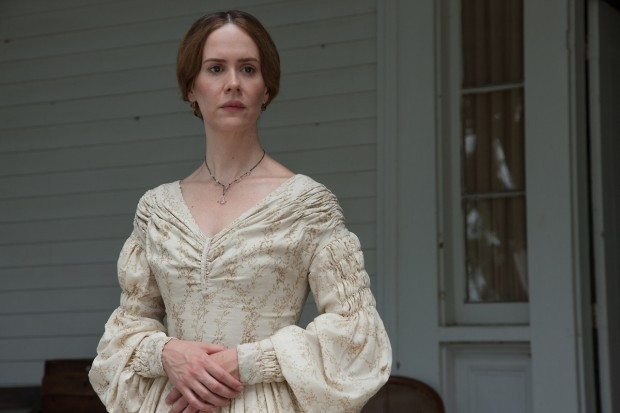

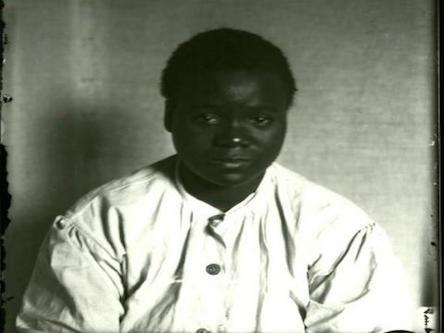

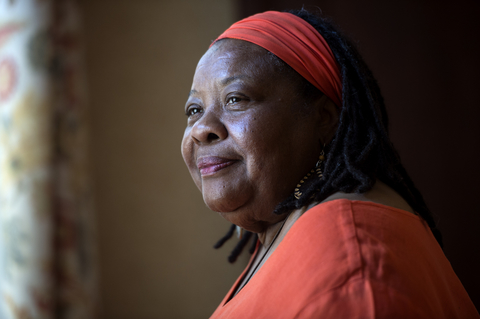




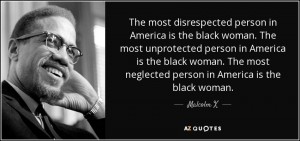

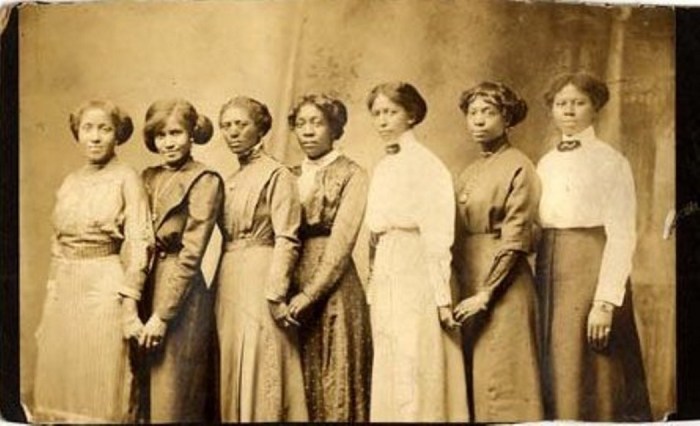


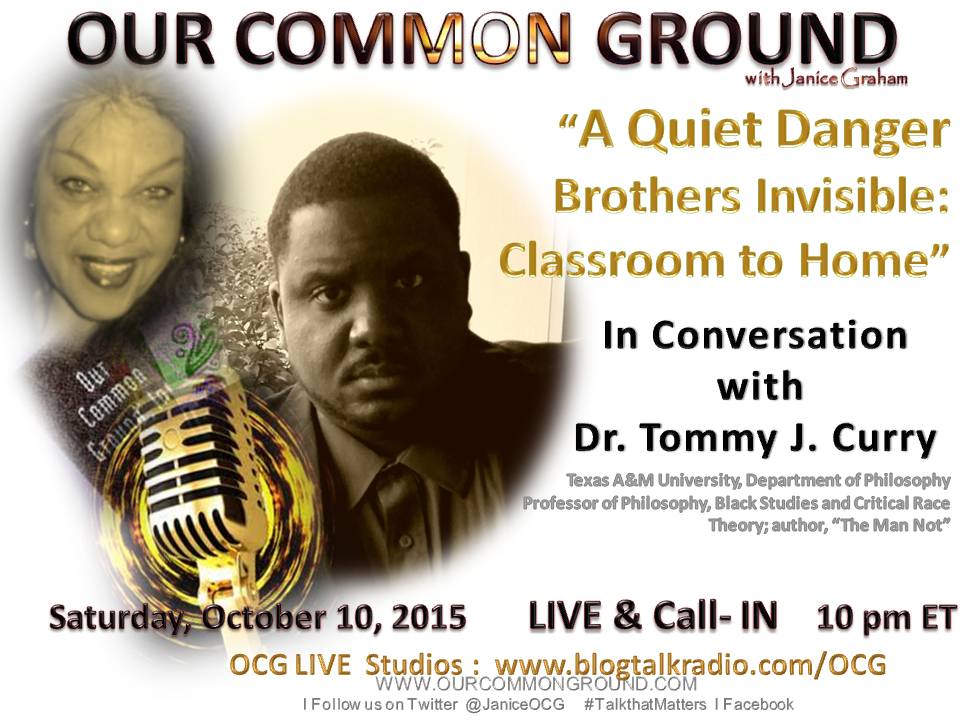


 OCG
OCG 