INCREASING PUBLIC POWER TO INCREASE COMPETITION: A FOUNDATION FOR AN INCLUSIVE ECONOMY

INCREASING PUBLIC POWER TO INCREASE COMPETITION:  A FOUNDATION FOR AN INCLUSIVE ECONOMY

ISSUE BRIEF BY WILLIAM DARITY JR., DARRICK HAMILTON, AND RAKEEN MABUD
MAY 2019

Executive Summary

The United States needs an economy grounded in justice and morality, where everyone, free of undue resource constraints, can prosper. To achieve this, citizens ought to have universal access to undeniable economic rights, such as the right to employment, medical and health care, high quality education, sound banking and financial services, or a meaningful endowment at birth (Paul, Darity, Hamilton 2018). Currently, our system provides these rights primarily through the “free market” by private providers, but these private companies often fail to meet the following criteria:

•   Quantity: Are goods adequately supplied?
•   Quality: Are the goods high quality?
•   Access: Do people have adequate access to these goods?

Because of the failure of America’s markets-first approach to policy, the federal government should intervene by introducing public options that provide these essential goods and services in direct competition with private firms. Doing so will set “floors” on wages and quality and “ceilings” on price for private actors who are intent on providing important economic rights at a cost. In employment, this might mean providing a federal jobs guarantee (FJG); in financial services, this could mean access to bank accounts and safe, nonpredatory loans. Throughout this issue brief, we explore what public options might look like in employment, health, housing, education, and financial services. We argue that in these sectors, public options are necessary to combat high-cost, low-quality provision by private actors and ensure universal and better quality access to all Americans.

Full Report here.   https://rooseveltinstitute.org/wp-content/uploads/2019/04/RI_Increasing-Public-Power-to-Increase-Competition-brief-201905.pdf

CREATIVE COMMONS COPYRIGHT 2019 | ROOSEVELTINSTITUTE.ORG

The report features the work of OUR COMMON GROUND Voices, Drs. William “Sandy” Darity and Darrick Hamilton
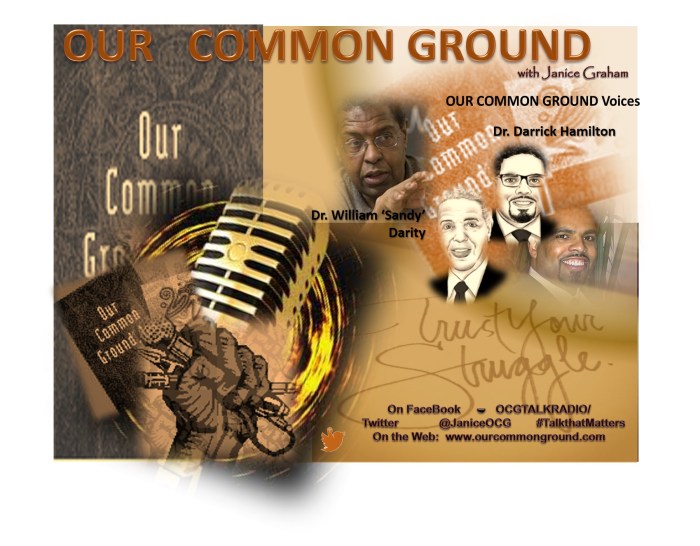
Darity Hamilton

Establish a Public Credit Registry | Demos


“Credit reports and scores directly impact Americans’ economic security and opportunity. Credit history can affect the way Americans are treated by lenders, landlords, utility companies, hospitals and employers. Having a poor credit history or a “thin file” with insufficient credit information to generate a credit score can mean a consumer will end up paying more for loans and insurance (or have trouble even getting them in the first place). Misuses of credit history are prevalent and harmful: Job seekers can be denied work based on their credit history, and the Trump administration has even proposed using credit history to determine whether immigrants should be eligible for permanent residency. Most harmfully, our credit system is built on—and continues to reinforce and expand—deep racial inequities.  Generations of discrimination in employment, lending, education and housing have produced significant racial disparities in credit history. Past discrimination is baked into current determinations of creditworthiness: Credit scores and other lending algorithms disproportionately represent black and Latino loan applicants as “riskier” customers. As a result, decisions drawing on credit data reproduce and spread existing racial inequality, making it harder to achieve true economic equity.”

Source: Establish a Public Credit Registry | Demos

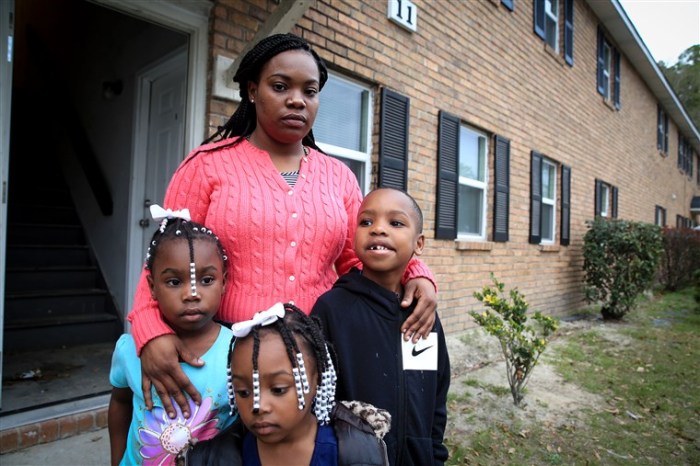
Carbon monoxide is killing public housing residents, but HUD doesn’t require detectors

Residents of a South Carolina public housing complex are demanding answers after two of their neighbors died from the gas.

Source: Carbon monoxide is killing public housing residents, but HUD doesn’t require detectors

The conditioning that fuels the mental health epidemic for Black men, and how to stop it – The Black Youth Project

“Gender, through the lens of white supremacy, prescribes how we should be, instead of accepting us how we are. It tells boys they’re not supposed to cry (or even feel emotion), and it tells girls they’re supposed to be good at cooking and play with Barbies. Those are small examples of a much larger issue, and these gendered lessons exist at every turn, are all-consuming and ripple across our lives.There are people in bodies deemed masculine who have been told they are a boy time and time again, even though that’s not how they feel inside. They are told their feelings are unnatural and irrelevant. Boys are told over and over again that they must follow certain rules, their lives must be a certain way, their dreams must be a certain thing.Gender also tells us that we are not whole and are only one part of a whole; the whole being a man and a woman. This is incredibly anti-queer and an unhealthy way to view yourself and a relationship.

Viewing yourself as less than a whole being who possesses the capacity to be masculine and feminine, and perform a variety of roles or possess skills that are deemed feminine, is illogical.It is terrifying to think that so many of us internalize these messages on a deep, subconscious level, a message that exposes men to constant emotional isolation and violence if they exist outside of these preset parameters. It is alarming that many men move through life seeing themselves as incomplete because they will never be with a woman or because they have yet to marry their “soulmate.” It’s alarming that people will not teach their boys how to cook, robbing them of that  that necessary survival skill. It is alarming how many people feel uncomfortable seeing men cry.”

Source: The conditioning that fuels the mental health epidemic for Black men, and how to stop it – The Black Youth Project

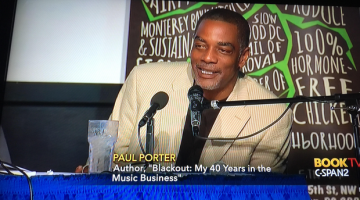
Is Hip Hop Destroying Black America?

TIME AND TIME AGAIN, THE REAL DECISION MAKERS GET AWAY WITH MURDER WHILE RAP ARTISTS ARE PROJECTED AS THE EMBODIMENT OF EVERYTHING THAT IS WRONG WITH HIP HOP AND YOUNG BLACK MALES.

“If this doesn’t sound like the kind of Hip Hop you’re familiar with, blame the music industry and mainstream media for bombarding you with a steady diet of rappers talking about drugs, sex and violence for over two decades. Blame MTV, BET, and other networks for trying to redefine what Hip Hop is in order to sell it and shove it down the throats of unsuspecting consumers. It’s easy to blame simple minded rappers for promoting negative messages and images while multi billion dollar companies and shrewd businessmen who market these artists are free from criticism. It’s easy to blame someone like Chief Keef who becomes the obvious poster boy for mindless rap while Jimmy Iovine, the head of Interscope Records, keeps a low profile and avoids having to address his part in promoting “death through entertainment”.

It’s easy to protest flavor of the month Trinidad James who raps about Molly, the industry’s latest fashionable drug, while Def Jam’ president Joie Manda proclaims his new discovery as “the cutting edge of what’s happening in the culture today.” It’s easy to blame talentless top 40 rappers for dominating the airwaves of so called hip hop radio stations like L.A.’s Power 106 or New York’s Hot 97 while Rick Cummings, president of programming for Emmis Communications, which owns both stations, isn’t held accountable for his part in broadcasting filth to millions of listeners.Time and time again, the real decision makers get away with murder while rap artists are projected as the embodiment of everything that is wrong with Hip Hop and young Black males.”

Source: Is Hip Hop Destroying Black America?


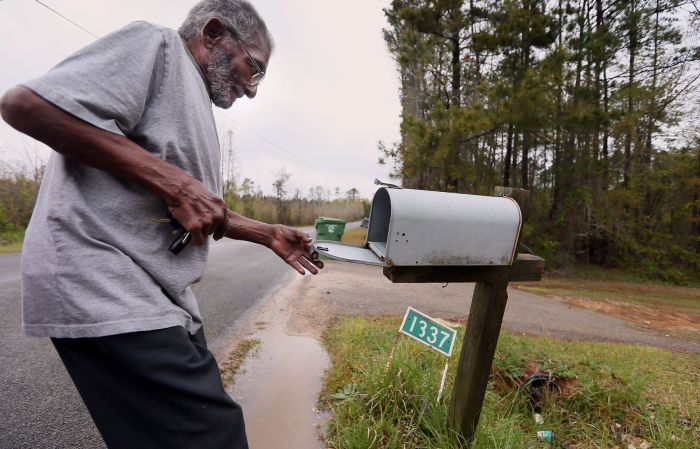
There were nearly a million black farmers in 1920. Why have they disappeared? | Environment | The Guardian

Today there are just 45,000 African American farmers. One man is fighting to save them.

Source: There were nearly a million black farmers in 1920. Why have they disappeared? | Environment | The Guardian

The Most Radical City on the Planet | Boston Review

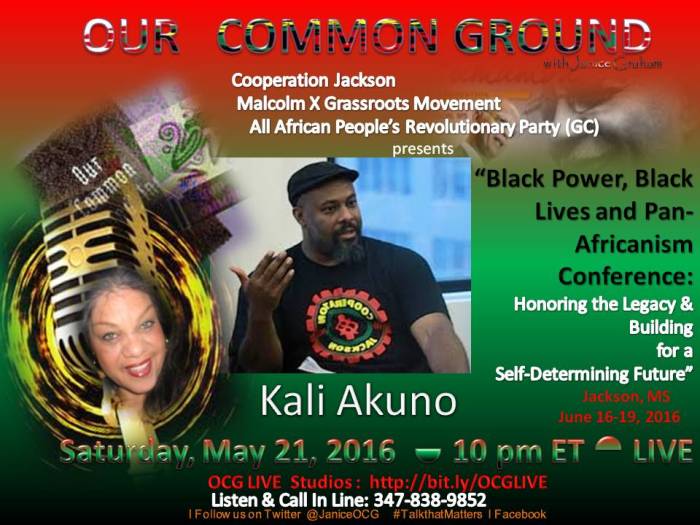
“Black radicals had been experimenting with electoral strategies since the 1960s. In 2008 the Malcolm X Grassroots Movement (MXGM) studied the lessons learned from this work in the South and identified ways to advance movement goals. This work culminated in the 2012 publication of the Jackson-Kush Plan, which called for people’s assemblies (a grassroots co-governance model), an independent black political party, and a broad-based solidarity economy. Along the way, MXGM members identified Chokwe Lumumba to run for Jackson city council in 2009. He won, and by the time he ran for mayor four years later, he was well known, with an established infrastructure to support him.”

Source: The Most Radical City on the Planet | Boston Review


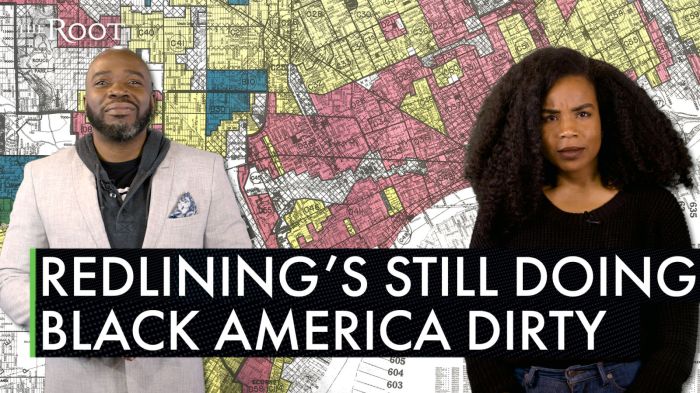
How Redlining Continues to Hold Back Black Americans

To understand racism in America, one must first disabuse themselves of the idea that race is a social construct—an idea that has been created and accepted by the people in a society.

Source: How Redlining Continues to Hold Back Black Americans

A loophole lets SC hospitals take millions from residents’ tax refunds for unpaid bills | Business | postandcourier.com

South Carolina hospitals are using a loophole in state law to scoop millions of dollars a year from the pockets of the poorest of patients. It mostly takes place outside the courts and the public eye.

A law originally written to help state and local governments collect debts is being used to seize tax refunds from people with past-due medical bills. The S.C. Department of Revenue does the legwork, and the cash flows straight into the coffers of some of the region’s largest health care companies.

The payoff is huge.

Source: A loophole lets SC hospitals take millions from residents’ tax refunds for unpaid bills | Business | postandcourier.com

The Racist Dawn of Capitalism | Boston Review

“At the heart of Edward Baptist’s The Half Has Never Been Told is the claim that the profits and accumulations of slavery contributed to the formation of contemporary capitalism. Like Beckert, he turns to the history of the cotton industry, though he focuses on the United States from the colonial era to the end of the Civil War. Yet if Beckert’s story is the world the slave owners made, Baptist’s is the world made by the slave. “Enslaved African Americans built the modern United States,” he declares, “and indeed the entire modern world, in ways both obvious and hidden.” We know the claim that enslaved African Americans built the modern United States is not new. This “half” has, in fact, been told—multiple times and more often than not by black writers, some of whom are fleetingly mentioned in Baptist’s footnotes. But the claim that African Americans built the world is simply wrong. Baptist’s book is marked by such rhetorical excesses, which lend themselves to a blinkered and narcissistic American exceptionalism. The result is an oversimplified view of capitalism and slavery that ignores the historical contributions to modernity of Africans in the Caribbean and in Africa itself.”

Source: The Racist Dawn of Capitalism | Boston Review