Listen or Call-In to add your voice to the discussion (347) 838-9852 Press 1 to join the discussion
This week we discuss the political future of Black Americans in the era of a imperialist Executive and Legislative government. The critical question is not how we react to the fascism that has embedded itself but how we plan to organize our resistance and survival. There are some who say we have been here before. No,THIS is very different AND WILL be totally destructive to any viable Black empowerment strategies . They are bent on a strategy that will destroy the vulnerable infrastructure that keeps us from drowning. We talk with Pascal about preservation and building.
Pascal Robert (pronounced Ro-Bear like Stephan Colbert) is a Blogger who loves all things politics. SHEER political independent; unafraid to slay the most sacred cows of ideological orthodoxy from the Left, or the Right and one who enjoys global affairs and aspects of pop culture. In all ways he is a child of the Haitian Revolution.
Pascal Robert has been known for years to the online world as THOUGHT MERCHANT.
Since 2007 he has been recognized for his hard hitting, blunt unvarnished style of bringing attention to current events and global affairs, especially those affecting communities of color. Join him in these social media outlets:
Where does it hurt? That’s a question the civil rights icon Ruby Sales learned to ask during the days of that movement. It’s a question we scarcely know how to ask in public life now, but it gets at human dynamics that we are living and reckoning with. At a convening of 20 theologians seeking to re-imagine the public good of theology for this century, Ruby Sales unsettles some of what we think we know about the force of religion in civil rights history, and names a “spiritual crisis of white America” as a calling of this time.
RUBY SALES is the founder and director of the Spirit House Project. She is one of 50 African Americans to be spotlighted in the new Smithsonian National Museum of African American History and Culture in Washington, D.C.
“WHERE DOES IT HURT?”: A NATIONAL INQUIRYAnger, name-calling, and division seem to be deepening in American and global life. They are public faces of human pain and fear. But they are not the whole story of our time. As part of The Civil Conversations Project, we’re launching a national inquiry, “Where Does It Hurt?” Please join with us and take part in a new conversation in our radio and digital spaces.
One spring morning this year, Darlene Lomax was driving to her father’s house in northwest Philadelphia. She took a right onto Germantown Avenue, one of the city’s oldest streets, and pulled up to Germantown High School, a stately brick-and-stone building. Empty whiskey bottles and candy cartons were piled around the benches in the school’s front yard. Posters of the mascot, a green and white bear, had browned and curled. In what was once the teachers’ parking lot, spindly weeds shot up through the concrete. Across the street, above the front door of the also-shuttered Robert Fulton Elementary School, a banner read, “Welcome, President Barack Obama, October 10, 2010.”
It had been almost three years since the Philadelphia school district closed Germantown High, and 35 years since Lomax was a student there. But the sight of the dead building, stretching over an entire city block, still pained her. She looked at her old classroom windows, tinted in greasy brown dust, and thought about Dr. Grabert, the philosophy teacher who pushed her to think critically and consider becoming the first in her family to go to college. She thought of Ms. Stoeckle, the English teacher, whose red-pen corrections and encouraging comments convinced her to enroll in a program for gifted students. Lomax remembers the predominantly black school—she had only one white and one Asian American classmate—as a rigorous place, with college preparatory honors courses and arts and sports programs. Ten years after taking Ms. Stoeckle’s class, Lomax had dropped by Germantown High to tell her that she was planning to become a teacher herself.
A historic Georgian Revival building, Germantown High opened its doors in 1915 as a vocational training ground for the industrial era, with the children of blue-collar European immigrants populating its classrooms. In the late 1950s, the district added a wing to provide capacity for the growing population of a rapidly integrating neighborhood.
By 1972, Lomax’s father, a factory worker, had saved up enough to move his family of eight from a two-bedroom apartment in one of the poorest parts of Philadelphia into a four-bedroom brick house in Germantown. Each month, Darlene and her younger sister would walk 15 blocks to the mortgage company’s gray stucco building, climb up to the second floor, and press a big envelope with money orders into the receptionist’s hand. The new house had a dining room and a living room, sparkling glass doorknobs, French doors that opened into a large sunroom, an herb garden, and a backyard with soft grass and big trees. Darlene and her father planted tomatoes and made salads with the sweet, juicy fruit every Friday, all summer long.
To the Lomax children, the fenceless backyard was ripe for exploration, and it funneled them right to the yards of their neighbors. One yard belonged to two sisters who worked as special-education teachers—the first black people Darlene had met who had college degrees. As Lomax got to know these sisters, she began to think that perhaps her philosophy teacher was right: She, too, could go to college and someday buy a house of her own with glass doorknobs and a garden. She graduated from Rosemont College in 1985, and after a stint as a social worker, she enrolled at Temple University and got her teaching credential.
In Philadelphia, the number of black teachers fell 18.5 percent between 2001 and 2012. In Chicago, it dropped 40 percent.
On February 19, 2013, Lomax was in the weekly faculty leadership meeting at Fairhill Elementary, a 126-year-old school in a historic Puerto Rican neighborhood of Philadelphia where she served as principal. A counselor was giving his report, but Lomax couldn’t hear what he said. She just stared at her computer screen, frozen, as she read a letter from the school superintendent. She read it again and again to make sure she understood what it said.
Then, slowly, she turned to Robert Harris, Fairhill’s special-education teacher for 20 years, and his wife, the counselor and gym teacher. “They are closing our school,” she said quietly. They all broke down weeping. Then they walked to the front of the building in silence and unlocked the doors to open the school for the day.
Five miles away, as Germantown High School prepared for its 100th anniversary, its principal was digesting the same letter. In all, 24 Philadelphia schools would be closed that year. These days, when Lomax visits her father in the house with the glass doorknobs, she drives by four shuttered school buildings, each with a “Property Available for Sale” sign.
Back when Lomax was a student in Philadelphia in the 1970s, local, state, and federal governments poured extra resources into these racially isolated schools—grand, elegant buildings that might look like palaces or city halls—to compensate for a long history of segregation. And they invested in the staff inside those schools, pushing to expand the teaching workforce and bring in more black and Latino teachers with roots in the community. Teaching was an essential path into the middle class, especially for African American women; it was also a nexus of organizing. During the civil rights movement, black educators were leaders in fighting for increased opportunity, including more equitable school funding and a greater voice for communities in running schools and districts.
But today, as buildings like Germantown High stand shuttered, these changes are slowly being rolled back. In Philadelphia and across the country, scores of schools have been closed, radically restructured, or replaced by charter schools. And in the process, the face of the teaching workforce has changed. In one of the most far-reaching consequences of the past decade’s wave of education reform, the nation has lost tens of thousands of experienced black teachers and principals.
According to the Albert Shanker Institute, which is funded in part by the American Federation of Teachers, the number of black educators has declined sharply in some of the largest urban school districts in the nation. In Philadelphia, the number of black teachers declined by 18.5 percent between 2001 and 2012. In Chicago, the black teacher population dropped by nearly 40 percent. And in New Orleans, there was a 62 percent drop in the number of black teachers.
Percentage Change in Teacher Population by Race and Ethnicity, 2002-2012
Many of these departures came as part of mass layoffs and closings in schools with low test scores, a policy promoted with federal and state dollars since 2002. In Chicago, 49 out of about 500 schools were closed in 2013, and in Washington, DC, 38 out of 111 schools have been shuttered since 2008. And since 2002, 140 out of roughly 1,800 New York City schools have closed. In each of the nine cities the Albert Shanker Institute studied, a higher percentage of black teachers were laid off or quit than Latino or white educators. Nationwide, according to the federal Department of Education, African Americans made up 6.8 percent of the teaching workforce in the 2011-12 school year, down from 8.3 percent in 1990. (Nearly 83 percent of the teaching workforce in 2011 was white, down slightly from 1990.)
In all, that means 26,000 African American teachers have disappeared from the nation’s public schools—even as the overall teaching workforce has increased by 134,000. Countless black principals, coaches, cafeteria workers, nurses, and counselors have also been displaced—all in the name of raising achievement among black students. While white Americans are slowly waking up to the issue of police harassment and violence in black communities, many are unaware of the quiet but broad damage the loss of African American educators inflicts on the same communities.
“You have to expel him,” said the teacher who marched into Darlene Lomax’s office, a small, windowless room in the back of Fairhill Elementary, one morning in 2011. She set a red Swiss Army knife on the dark brown linoleum desk, next to the pictures of Lomax’s children. The teacher had taken the knife from a fifth grader who was showing it to a classmate. “I never want to see him in my class again,” the teacher, who is white, told Lomax.
Soon afterward, Lomax sat down with the 12-year-old. He told her that on his way to school, an older and more popular boy had shown him the knife and chosen him to carry it for a few days. Lomax had known the student, who was African American, for two years. She knew he struggled academically and socially, that he yearned for ways to raise his status among peers.
After talking to the parents, Lomax decided that the boy, who hadn’t had any previous discipline problems, wasn’t a threat. She suspended him and filed a report with the district. The teacher, as Lomax recalls it, argued that the district’s code of conduct required expulsion for any student who brought a weapon to school, but Lomax told her, “We have to judge each case on its merits. My judgment and common sense tells me these rules don’t apply in this case.” She added, “This child made a mistake, but he deserves a second chance.”
Within the next two years, the student turned out to be one of the higher-achieving kids in the school.
It’s well documented that black students are disciplined and punished in school at a disproportionate rate. In a 2015 study, Adam Wright, a researcher at the University of California-Santa Barbara, identified a key factor in that disparity: White teachers are much more likely than black teachers to find behavior problems with black students. (This difference did not show up when teachers evaluated white or Latino students.) Wright estimated that if schools doubled the number of black teachers, the black-white suspension disparity would be cut in half.
Other research points in the same direction. A 2008 study by the London School of Economics found that white teachers graded black and Latino students more harshly for the same performance, accounting for as much as 22 percent of the achievement gap between white students and students of color. Earlier this year, Johns Hopkins researchers found that black teachers are much more likely than white teachers to think a black student will graduate from high school or get a college degree—especially if the kid is a black boy. A 2016 Vanderbilt study showed that black students are about half as likely as white students to be put on “gifted” tracks, even when they have comparable test scores—but the disparity was erased when black students were evaluated by black teachers.
Yet, though 16 percent of America’s students are black, only 7 percent of teachers are. And even at the schools where black and Latino students are concentrated—71 percent of these students attend high-poverty, mostly urban schools—only 15 percent of teachers are black and 16 percent are Latino.
Like Darlene Lomax, Gloria Ladson-Billings grew up in Philadelphia. In the ’60s, she was a teacher there, and later a district coach working with new or struggling teachers. During that time, she remembers coming across many veteran educators who were successfully teaching kids of all backgrounds. By the early ’90s, Ladson-Billings had become an education researcher at Santa Clara University, at a time of growing concern in the field about how schools were failing children of color, especially African Americans. Ladson-Billings decided to document the teaching practices she’d seen—many of which were not in the standard education canon. She asked black parents in Philadelphia to identify teachers they considered most effective with their children and then spent two years observing those teachers in the classroom. She wrote about it in a book, The Dreamkeepers: Successful Teachers of African American Children.
Ladson-Billings noticed that instead of mentally sorting kids into “teachable” or “problem student” categories, as researchers have found many teachers do, these educators set a high bar for all students and then helped individual kids to meet it. And instead of a one-size-fits-all approach, they used different techniques with kids of varying skills and interests.
The successful teachers Ladson-Billings studied also created bonds that resemble family. That was what Lomax did when she first became an assistant principal: She invited parents, teachers, and students to come to school on a Friday evening with sleeping bags and blow-up mattresses. Teachers and parents set up a movie room in the library. Parents brought a potluck dinner, and kids, mothers, grandmothers, aunts, cousins, and teachers chatted into the wee hours. Lomax’s mother and two daughters spent the night too. “People just got to know each other better, and the overall climate of the school changed,” Lomax recalls.
Researchers like Ladson-Billings argue that teachers are more effective when they get to know their students’ backgrounds, including cultural rules for engagement and different ways of expressing knowledge. For example, instead of pushing children to stop using African American vernacular, they might encourage students to translate their favorite hip-hop lyrics into formal English—treating them as bilingual rather than as poor speakers.
Another habit of successful teachers, Ladson-Billings observed, was giving students agency and authority. When Lomax became a principal, she created “administration jobs” for students: They worked as counselors, nurses, teaching assistants, and security guards, and they used credits they earned to bid on computers, bicycles, and skateboards that Lomax would purchase with her own funds and donations. Students worked alongside the staff and advised Lomax and her colleagues on how to improve everything from lunch hour to after-school activities. The program helped build better relationships between students and staff, and it even reduced suspensions.
A focus on inclusion must go beyond classroom changes, Ladson-Billings argues, to school staffing (so students don’t see a workforce where, for example, teachers and administrators are mostly white and custodians and cafeteria workers are mostly black) and student opportunities—so that advanced classrooms aren’t dominated by white and Asian American students while remedial classes are filled with black and Latino kids. Ultimately, researchers have found, for schools to raise achievement, they have to push back against damaging racial prejudices in every aspect of what they do. Personal humiliation and discrimination are daily realities for most black students, they point out, but teachers can counteract this with inclusion, knowledge, and skills that help kids persevere.
Many of the historically segregated schools that successfully educated black students long before the civil rights era were focused on countering racial stereotypes and instilling pride, according to Theresa Perry, a professor of Africana studies and education at Simmons College. This crucial function was rolled back during desegregation, Perry writes, when researchers estimate thatnearly 40,000 black teachers and principals (close to half the African American teaching force) lost their jobs. This happened even though they often had more credentials and teaching experience than white educators, according to new research from Jim Crow’s Pink Slip, a forthcoming book by Leslie Fenwick, dean emerita of Howard University’s School of Education. In the South, in particular, the consolidation of black and white schools typically meant that white school boards and superintendents had more control than black principals over individual schools’ staffing.
Lomax knows from experience how just one teacher can encourage a student to use her voice and overcome challenges. After Lomax graduated from Germantown High in 1981, she enrolled at Rosemont College, a small liberal-arts school outside Philadelphia. Of roughly 600 students, fewer than 10 were black. All the professors were white.
During her first week at Rosemont, Lomax recalls, she was standing in line in the cafeteria when she overheard a white girl say to her friend, “I didn’t know they allowed niggers in here.”
“Who are they talking about like that?” Lomax thought to herself as she looked around. “I never heard racial epithets living in Germantown, and it took me a minute to realize: They are talking about me.”
Weeks later, one of her English professors asked her, “Where did you learn to write so well?” The professor added that black students didn’t usually know how to write research papers.
The person who helped Lomax persevere was another English professor she turned to, crying, one day after an insulting comment in the classroom. “What would you like to see changed?” the teacher said. Lomax replied that she wanted to recruit more black students and professors, and perhaps launch a black student union. The teacher, who was white, helped Lomax write a proposal that Lomax delivered to the dean herself. The number of black students at Rosemont increased over time, and Lomax told me the experience left her committed to becoming a teacher and helping make schools more inclusive.
It was a little before 10 a.m. on November 17, 1967, when about 200 students walked out of Germantown High, wearing the school’s green and white colors along with gold Black Power buttons, and started marching down Germantown Avenue. A few miles up the street they met up with other marchers, and by noon the crowd had swelled to more than 3,500 students and teachers from a dozen high schools, all marching toward the Board of Education building.
By then, the student body of Germantown High—once home to mostly white immigrant students—had become more than two-thirds black. Migration from the South had increased Philadelphia’s black population from 5 percent in 1910 to 34 percent in 1970. Many black families, like Lomax’s, had moved to Germantown and neighboring Mount Airy, the city’s only two integrated neighborhoods. Yet most teachers at Germantown were white, as were all the district administrators, and dropout rates were three times higher for black students than for whites.
Schools like Germantown High, historian Matthew J. Countryman writes in his book on the civil rights struggle in Philadelphia, Up South, offered a unique space for organizing because they blurred the class lines in the black community. “Corner kids,” nerds, cheerleaders, civil rights advocates, and black teachers came together to push for political power and economic opportunity.
When the student protesters reached the towering art deco Board of Education building, Superintendent Mark Shedd—a strong advocate of integration who had enrolled his own white children in majority-black schools in Germantown—invited a delegation of them into a room overlooking the crowd below. They presented their demands: black-studies classes, more black teachers and principals, a bigger voice for black parents in school governance, recognition of black student unions, and no more police officers in schools. After hours of negotiations, a student opened the window to yell to the marchers that the district had agreed to 24 of their 25 demands.
Following the march, the number of black teachers in Philadelphia’s public schools slowly increased. Gloria Ladson-Billings came home to Philadelphia the next year, after the district sent a recruiter to her college in an effort to attract more black teachers with community roots. She was first placed in a predominantly white school where, she recalls, some white parents told the principal they would not tolerate black teachers for their kids. The principal refused to transfer the kids—taking a stand that, Ladson-Billings recalls, was still controversial at the time.
Shedd created the first black-studies department in the district, called for black-history classes in all high schools (an order that wasn’t implemented until 2005), and hired black district administrators. It was a heady time, Ladson-Billings recalls, when teachers were treated as intellectuals rather than testing proctors following a script. “That environment doesn’t exist anymore,” she reflected.
Germantown High School closed in 2013. Lexey Swall/Grain Images
Like many black educators, Ladson-Billings viewed teaching as a way to help her community. But the profession also served as a critical avenue into the middle class. In the ’50s, about half of all college-educated African Americans went into teaching—one of the few fields open to black professionals, especially women. And through the second half of the 20th century, public-sector jobs in education, social work, transportation, and the Postal Service formed the backbone of the black middle class. As Mary Pattillo, a professor of African American studies at Northwestern University, explains, affirmative action was applied most vigorously in the public sector, and to this day public jobs remain the single most important source of employment for black workers. (Not coincidentally, black workers have the highest percentage of union membership of any group.) The public sector employs a higher proportion of black workers in higher-paying jobs. And when public-sector jobs are shifted to the private sector, they typically result in longer, irregular hours and more unstable pay, reducing the assets of the black community, Pattillo explained.
Access to these middle-class jobs has a big ripple effect in black communities, Pattillo documents in her book Black Picket Fences, because African American professionals are more likely than other groups to also support family members and friends in poverty. One study in the ’90s found that black middle-class women reported a greater sense of responsibility for people outside their nuclear families than white middle-class women did. Black middle-class families are much more likely than white families to live near poor black families, and they are often key to supporting community institutions. And, research shows, black teachers contribute to communities in myriad crucial but less visible ways—as role models of college-educated professionals, resources for parents on how to navigate the school system and demand improvements from local politicians, and mentors for neighborhood kids long after the school day ends.
As Ladson-Billings left Philadelphia once more to pursue her Ph.D. at Stanford University in the early 1980s, the political winds were changing. Ronald Reagan had been elected president, and one of his first education policy initiatives was to commission a report on K-12 schools. Titled “A Nation at Risk: The Imperative for Educational Reform,” it documented a growing unease with public schools among the business community and blamed lagging student performance for America’s troubles in the global market. The report called for more data-driven teacher evaluations and an emphasis on standardized testing—postulating (though with scant evidence) that test scores in reading and math would predict workplace performance.
The ideas set forth in “A Nation at Risk” would prove deeply influential, inspiring reform efforts all the way to the 2001 No Child Left Behind Act, President Barack Obama’s Race to the Top initiative, and the Common Core guidelines now being rolled out. The policies influenced by the report—including mass layoffs in schools that fail to raise their scores fast enough—have had a disproportionate impact on large urban districts like Philadelphia where most black teachers work. These reforms also laid the groundwork for the explosion in charter schools, which have attracted a less diverse teaching corps in some large urban districts (though nationwide, charters employ more African American teachers than traditional schools).
And while this wave of reformers has emphasized reducing the “achievement gap” between white students and those of color, it did not push as hard for integration and equitable funding. As a result, urban school administrators found themselves increasingly chasing scarce state and federal dollars tied to standardized test scores. In 2014, the Center for American Progress found that students in urban elementary schools spent 75 percent more time on average taking district-mandated tests than their suburban counterparts did—in large part because the stakes for their schools were so high. Multiple-choice questions became a major part of the daily curriculum.
Children play near the shuttered Gen. John F. Reynolds School in Philadelphia. Lexey Swall/Grain Images
With public sentiment increasingly critical of schools and teachers, many states rolled back education funding. In 1992, Pennsylvania began to decrease its share of district funding in Philadelphia, ultimately prompting David Hornbeck, then the city’s superintendent of schools, to file a lawsuit arguing that the state had discriminated against students of color. The state’s Republican-controlled Legislature responded in 2001 by authorizing a state takeover of the Philadelphia schools and barring the city’s teachers from striking. Hornbeck resigned—because, he told NPR in 2013, lawmakers falsely assumed that the budget crisis was a result of waste and inefficiency, not chronic underfunding and segregation.
The state created a five-member School Reform Commission—three members were appointed by the governor and two by the mayor—to fix the schools. In 2010, Republican Tom Corbett became governor, bringing with him a political network full of private-sector reform advocates. He cut the state education budget by another $860 million, and the following year Philadelphia lost $105 million more in state funding, plus $200 million in federal dollars.
By the 2013-14 school year, the Philadelphia district had 3,885 fewer staff members—teachers, nurses, aides—than it had two years before.
To solve the budget crisis, the School Reform Commission hired the Boston Consulting Group, a private consultancy that advised the district to close 64 schools, continue expanding charters, and gut the central office. The group’s $2.6 million consulting fee was paid with private donations, including more than half from charter and voucher advocates.
By the 2013-14 school year, the Philadelphia district had 3,885 fewer staffmembers—teachers, nurses, counselors, secretaries, and aides—than it had at the end of 2011, a decrease of 16 percent. About 1,486 of these departed employees were teachers, and close to a quarter of them were black. Germantown High and Fairhill had to cut art, music, and physical education classes, and full-time nurses. Fairhill lost a nurse who had worked in the community for 20 years. “She was so important to our middle school students, going through a lot of physical and emotional changes, or some dealing with sexual abuse or parents’ drug addiction, all kinds of pain,” Lomax told me. “And she was just extraordinary in knowing when to intervene beyond her job duty.”
A few months before Germantown High’s closure, two seniors decided to make a video documenting the reactions of students and staff. They pointed their camera at Ismael Jimenez, who taught black history and lived in Germantown with his wife and children. In middle school, Jimenez had briefly attended a mostly white school in the suburbs, but after several racially charged incidents his parents moved him back to Philadelphia schools. He’d become a teacher, he said, to help black kids feel more at home in school. Jimenez was in the process of buying a house in Germantown and told me he had hoped to teach and live in the neighborhood for the rest of his life.
“How do you feel about the closing of Germantown?” a student asked.
“I think the closing of Germantown is a reflection of the overall destruction of public education that is occurring all over our nation in almost every inner city—from Detroit to Atlanta to Chicago to New Orleans,” Jimenez said before pausing to hold back tears.
The students turned off the camera and then turned it on again.
“The closing will affect the feeling of the community with such a large, empty building in the middle of the neighborhood,” Jimenez continued. “Parents might send their child to a charter school that may not produce better results, but on image, it looks better. And the parent says, ‘It doesn’t matter that kids around my way don’t have a local public school to go to as long as my child is okay.’ That individualism is destroying this community—and all communities—that once was the very foundation of what we needed to get by.”
History teacher Ismael Jimenez was in the process of buying a house near Germantown High when it closed. He says he hoped to spend his life and career in the neighborhood. Lexey Swall/Grain Images
“There are so many layers to this pattern of destruction,” Robin Roberts, the parent of three children in Philadelphia’s public schools and a physical therapist for the district, told me. “Germantown is such a tight-knit, established community. There is old blood. Collected history. Gorgeous brownstones. And you rip that school out, leaving a huge open lot. No security. It’s dead energy, and it invites people and events that you have no control over. Property values of folks living there go down. When a community has a vibrant, living, interactive school, property values increase. Houses look better. All of these closures—it’s erasure of history of these established communities.”
For reform proponents like Philadelphia Superintendent William Hite, restructuring was the only possible way to close a $304 million budget hole decades in the making. And he wasn’t alone: Superintendents across the country have faced similar budget holes, exacerbated by the recession of 2008 and 2009. Between 2010 and 2015, federal aid to high-poverty schools shrank by11 percent. And in 2014, 31 states were still giving out less education funding per student than they had the year before the recession.
The Philadelphia School District spends less per student—$12,570 in all—than most of its big-city peers in the country, including Detroit, Baltimore, and Milwaukee. And until this year, Pennsylvania was one of three states that didn’t have a “weighted” formula to send extra funding for students who live in poverty, struggle in school, or are learning English. Meanwhile, child poverty rates in Philadelphia are some of the highest in the nation.
Hite is part of a cadre of superintendents in large urban districts—including Antwan Wilson in Oakland, California, and former Los Angeles schools chief John Deasy—who have been trained in an academy financed by the philanthropist Eli Broad, whose foundation in 2009 issued a handbook on how to “rightsize” school districts. Like other Broad-trained superintendents, Hite has closed traditional schools and expanded charters. “We are making these changes because we believe they will result in a system that better serves all students, families and stakeholders,” Hite wrote in his email to Lomax and other principals announcing the school closures.
“Closing schools is always hard, but we are making those decisions because there are no children in those schools,” Hite told me. “You can’t operate buildings that are designed for students when there are no students there. Given our fiscal challenges, we had to do everything within our control to ensure that we were impacting classrooms the least. You can’t operate an infrastructure designed for 200,000 students when you only have 137,000 students.” (In Philadelphia, the number of kids in traditional schools has shrunk by 50,000 since 2003, while enrollment in charters has gone up by 40,000.)
A former teacher and principal, Hite, who is black, grew up in Richmond, Virginia, and went to a school much like Germantown High. Such schools did enough to prepare students to make a living back in the ’70s, when manufacturing jobs were plentiful, Hite told Philadelphia magazine earlier this year. “Reading, writing and arithmetic—you may not have needed more than that to sweep floors in a tobacco warehouse. And it would pay you $18 an hour…Now those jobs aren’t available.”
In Hite’s view, the new economy requires schools that are much more rigorous, but the government doesn’t want to fund them. The answer, he and other reformers have argued, is a “portfolio model”: a menu of publicly and privately run schools, including charters that can attract private funding and are unconstrained by district and teachers’ union rules.
This is not an uncommon view: Even [ OUR COMMON GROUND Voice] Derrick Bell, the legendary former NAACP lawyer who handled hundreds of desegregation cases in the ’60s, described charters as a promising alternative in his 2004 book, Silent Covenants: Brown v. Board of Education and the Unfulfilled Hopes for Racial Reform. Bell came across many nominally integrated districts where black and Latino students attended the same schools as whites but were placed into separate and less challenging classes. He viewed charter schools as one remedy for that, in addition to a continued push for integration and more equitable funding. Many black educators such as Geoffrey Canada, the founder of the Harlem Children’s Zone, opened charter schools as a way to break free from the constraints of the traditional school system.
But the way this push played out in Philadelphia and many other large urban districts wasn’t quite as these advocates had envisioned. First, when the state of Pennsylvania took over Philadelphia’s schools in 2002, it embarked on what was then the nation’s biggest experiment in private management of public schools: It contracted out 46 schools with low test scores to seven private for-profit and nonprofit organizations. Four years later, when this venture had failed to produce better results, the state ended the experiment and doubled down on the expansion of charter schools instead. Last year, 35 percent of kids in the city went to charter schools.
The growth of charters, though, put even more stress on the strained district budget. In Philadelphia, 30 percent of all charter students now come from outside the district, and while per-student public money follows them, the city has extra costs (such as transportation) that aren’t offset. Meanwhile, costs in traditional schools—building expenses, salaries for teachers and principals—don’t go away when a student leaves for a charter school. In all, the Boston Consulting Group estimated that each new student in a charter school creates as much as $7,000 in additional costs for the district.
But the challenges are more than financial. A growing number of educators argue that charters can’t replace what traditional schools provided, including a teaching corps with the experience and community connections to help students from every background. For one thing, charters tend to attract the students most equipped to succeed: One study found that students with severe needs—those who have been in foster care or involved with the juvenile justice system, or whose families are on welfare—are concentrated in traditional public schools in Philadelphia. Traditional schools also educate 10 percent more students living in poverty, 4 percent more English learners, and 2 percent more students with special needs. Some charter schools have even been found to practice “skimming”—illegally screening out potentially challenging students, including those with special needs, according to a 2013 Reuters investigation.
Hite argues that the concentration of students with special needs and those living in deep poverty requires schools to reorient what they do, adding that the savings from closing buildings helps the district do that. “Next year, for the first time all of our schools will have at least one counselor, no matter the size,” he told me. “They will have a school nurse. And we will be making a $440 million investment into neighborhood community schools with an attempt to address [poverty] factors.”
But many black parents and teachers in Philadelphia and elsewhere remain concerned that these changes don’t reverse the broader trend of underfunding at a time of growing need. And the increasing role of state government, and of the companies and foundations that have promoted private management and charter schools, represents to them an erosion of the civil rights movement’s gains in political power for black communities.
Fairhill Elementary, near Germantown Avenue, was one of the 24 schools that Philadelphia closed in 2013. Lexey Swall/Grain Images
“The current language of educational reform emphasizes racial ‘achievement gaps’ and ‘underperforming schools’ but also tends to approach education as if history had never happened,” author Jelani Cobb wrote in The New Yorker when the historic Jamaica High School in Queens, where he had been a student, was closed in 2014. Looking back at an era when busing students across neighborhood boundaries was the primary tool for integration, he noted, “Both busing and school closure recognize the educational obstacles that concentrated poverty creates. But busing recognized a combination of unjust history and policy as complicit in educational failure. In the ideology of school closure, though, the lines of responsibility—of blame, really—run inward. It’s not society that has failed, in this perspective. It’s the schools.”
Or, as Ladson-Billings writes in her book about successful teachers, “The way a problem is defined frames the universe of possible public actions.” When the problem of racial disparities in education is defined primarily in quantitative data like test scores, other factors—cultural pride, confidence, the presence of intellectual authority figures like teachers and principals in the community, the ecosystem of economically integrated neighborhoods, and access to political power—are often overlooked.
“Church used to be the center of the black community,” Roberts, the physical therapist in Philadelphia, told me, “but now as less people go to churches, school is the only remaining hub where the people in poor communities self-organize.
“We don’t want a Walmart to be the only place where we can come together. We want a public space that is run by the community.”
In May 2015, nearly 800 students, parents, and teachers came to a reunion in front of the shuttered Fairhill school building. Lomax was there—by then she had a job as a principal in another Philadelphia school, which had no administrators except for her and a secretary, and no full-time counselors or nurses or art, music, or physical education programs. Lomax spent an hour each morning filling in as a nurse, dispensing medications to dozens of students. She also doubled as a counselor and took care of administrative tasks that had been handled by assistant principals in her previous jobs. Meanwhile, more of her students were living in deep poverty. And even though she often worked late into the night, Lomax felt increasingly hopeless about her chances of succeeding in the new school.
During her 25 years in the district, Lomax felt that she’d earned the trust of her colleagues and developed relationships to get things done. But in recent years it had felt to her as if, even as her experience and skill grew, her power to control what happened in her work diminished. If test scores didn’t go up fast enough, her school closed or she was transferred to another one. After Fairhill, Lomax said, she was placed in a different school each year, with fewer and fewer resources to do the job. Eventually, she decided to leave—seven years before her official retirement date, even though that meant that her income and pension were cut by more than 50 percent. At 53, Lomax is now living off her savings and not certain if she will ever return to teaching.
“When I read that letter about Fairhill closing, I felt like someone shot me,” Lomax told me. “It’s very hard to explain just how much emotional energy it takes to improve a school. After six years of hard work together, I really felt like we were finally on the cusp of something great: Students were engaged, parents were volunteering more, teachers’ hearts were into it, and then it was shut down. I never want to go through something like this again.”
After Germantown High closed, Ismael Jimenez was unemployed for three months and then took a job in a local Afrocentric charter school. “The curriculum was very scripted, and I had to be more of a disciplinarian,” Jimenez told me. “I like to structure my classrooms around a dialogue.” The pay was lower and the hours were longer. He quit after six weeks, when he got an offer from another school.
Jimenez now drives across town to predominantly Latino Kensington High, a commute that leads him past shuttered Germantown High. Student projects and posters from the old school cover the walls in his new classroom. At Kensington, many more students live in deep poverty and have special needs, he told me. When the kids with the strongest financial or family resources leave for private or charter schools, he said, it becomes harder to teach.
Between 2001 and 2012, the share of black teachers in the district steadily declined—from 34 percent to 26 percent—and fewer new black teachers were hired, according to the Shanker Institute report. The institute also found that teachers who left the district were more senior than those who stayed. And while experience doesn’t guarantee success, research indicates that veteran teachers are more effective than rookies and key for coaching the next generation of educators.
Superintendent Hite told me his office has been focused on recruiting teachers of color since his arrival in 2012. Last year, 25 percent of teachers in Philadelphia public schools were black—well above the national average, Hite points out.
Data compiled by Richard Ingersoll, a professor of education and sociology at the University of Pennsylvania, indicates that across the country, the turnover rate for white teachers has been relatively stable at 15 percent since the 2008-09 academic year. But the departure rate for black teachers has been increasing, from 19 percent in 2008 to 22 percent in 2013—a higher turnover rate than in any other demographic.
The biggest factors teachers of color cite for leaving, Ingersoll says, are micromanagement and lack of autonomy in the classroom. Policymakers often emphasize recruitment as a way to solve teacher shortages, he told me, but retention is a much bigger issue. From 1987 to 2011, the share of teachers of color grew from 12 percent nationwide to 17 percent (though the share of black teachers has decreased in recent years). But during the same period, turnover increased among all teachers of color. This revolving door makes it hard for students to form bonds, and for administrators to solve teacher shortages. At the beginning of the 2003-04 school year, about 47,600 educators of color entered teaching; the following year, 20 percent more—about 56,000—had left teaching. “We are pouring water into a bucket with holes in the bottom,” Ingersoll says.
“There is this myth out there that black teachers leave because of our kids,” Peggy Savage, an award-winning science and math teacher with 35 years of experience in Philadelphia schools, told me. “No, it’s the adults and the lack of voice and respect that push black teachers out. Before the School Reform Commission took over, I remember having conversations with our superintendent. We felt heard. Now, all we do is testify, but no one listens.”
“At every turn they are being told that they can’t do what they know in their spirit and heart and soul is the right thing to do.”
José Luis Vilson is a veteran math teacher in New York and the author of a book about his experience called This Is Not a Test: A New Narrative on Race, Class, and Education. “I would venture to say that the stereotype of the ‘failing’ teacher often conjures up black teachers who stick by the union rules,” Vilson says. “Whenever reformers go into communities of color, they often seek images of failure, and if a black teacher has been in this underserved ‘failing’ school for a few decades, they are viewed as a part of the problem.”
Chris Emdin, [ OUR COMMON GROUND Voice] an associate professor of education at Columbia University and the author of For White Folks Who Teach in the Hood…and the Rest of Y’all Too, told me that many black educators leave because they are forced to become the kind of teachers they resented when they went to urban schools. “They want to teach in urban spaces because they want to undo that damage that they’ve experienced,” Emdin, a former teacher, told me. “They say, ‘I hated school. I want to teach math, English, science in an engaging way.’ And the minute you try to be more creative, the principal says, ‘Nope. You gotta do more test prep. You gotta follow the curriculum.’ At every turn they are being told that they can’t do what they know in their spirit and heart and soul is the right thing to do. It’s causing teachers to leave, students to fail, and it’s making these schools factories of dysfunction.”
After leaving the school system, Lomax had to give up her apartment, about 30 miles from her father’s house, with its own glass doorknobs and small garden, and move into a cheaper place in New Jersey. Her daughter had to switch from a state university to a community college because Lomax could no longer afford to pay her tuition. “Our savings and assets are dwindling,” she told me earlier this year. “It will seriously impact our opportunities to provide for the next generation.”
Her daughter, she said, had been interested in becoming a special-education teacher. “She is a natural,” Lomax said. “But she won’t do it anymore after she saw what happened to me. She works at a nursing home now.”
KRISTINA RIZGA
Kristina Rizga is a senior reporter at Mother Jones. You can reach her at krizga@motherjones.com. Rizga covers education, focusing primarily on how school reforms affect students and teachers in the classrooms, and how policies create or reduce racial disparities in schools. She is the author ofMission High (Nation Books, 2015).
Mother Jones is a nonprofit, and stories like this are made possible by readers like you. Donate or subscribe to help fund independent journalism.
WASHINGTON — Black boys as young as 10 may not be viewed in the same light of childhood innocence as their white peers, but are instead more likely to be mistaken as older, be perceived as guilty and face police violence if accused of a crime, according to new research published by the American Psychological Association.
“Children in most societies are considered to be in a distinct group with characteristics such as innocence and the need for protection. Our research found that black boys can be seen as responsible for their actions at an age when white boys still benefit from the assumption that children are essentially innocent,” said author Phillip Atiba Goff, PhD, of the University of California, Los Angeles. The study was published online in APA’s Journal of Personality and Social Psychology®.
Researchers tested 176 police officers, mostly white males, average age 37, in large urban areas, to determine their levels of two distinct types of bias — prejudice and unconscious dehumanization of black people by comparing them to apes. To test for prejudice, researchers had officers complete a widely used psychological questionnaire with statements such as “It is likely that blacks will bring violence to neighborhoods when they move in.” To determine officers’ dehumanization of blacks, the researchers gave them a psychological task in which they paired blacks and whites with large cats, such as lions, or with apes. Researchers reviewed police officers’ personnel records to determine use of force while on duty and found that those who dehumanized blacks were more likely to have used force against a black child in custody than officers who did not dehumanize blacks. The study described use of force as takedown or wrist lock; kicking or punching; striking with a blunt object; using a police dog, restraints or hobbling; or using tear gas, electric shock or killing. Only dehumanization and not police officers’ prejudice against blacks — conscious or not — was linked to violent encounters with black children in custody, according to the study.
The authors noted that police officers’ unconscious dehumanization of blacks could have been the result of negative interactions with black children, rather than the cause of using force with black children. “We found evidence that overestimating age and culpability based on racial differences was linked to dehumanizing stereotypes, but future research should try to clarify the relationship between dehumanization and racial disparities in police use of force,” Goff said.
The study also involved 264 mostly white, female undergraduate students from large public U.S. universities. In one experiment, students rated the innocence of people ranging from infants to 25-year-olds who were black, white or an unidentified race. The students judged children up to 9 years old as equally innocent regardless of race, but considered black children significantly less innocent than other children in every age group beginning at age 10, the researchers found.
The students were also shown photographs alongside descriptions of various crimes and asked to assess the age and innocence of white, black or Latino boys ages 10 to 17. The students overestimated the age of blacks by an average of 4.5 years and found them more culpable than whites or Latinos, particularly when the boys were matched with serious crimes, the study found. Researchers used questionnaires to assess the participants’ prejudice and dehumanization of blacks. They found that participants who implicitly associated blacks with apes thought the black children were older and less innocent.
In another experiment, students first viewed either a photo of an ape or a large cat and then rated black and white youngsters in terms of perceived innocence and need for protection as children. Those who looked at the ape photo gave black children lower ratings and estimated that black children were significantly older than their actual ages, particularly if the child had been accused of a felony rather than a misdemeanor.
“The evidence shows that perceptions of the essential nature of children can be affected by race, and for black children, this can mean they lose the protection afforded by assumed childhood innocence well before they become adults,” said co-author Matthew Jackson, PhD, also of UCLA. “With the average age overestimation for black boys exceeding four-and-a-half years, in some cases, black children may be viewed as adults when they are just 13 years old.”
Article: “The Essence of Innocence: Consequences of Dehumanizing Black Children,” Journal of Personality and Social Psychology, published online Feb. 24, 2014; Phillip Atiba Goff, PhD, and Matthew Christian Jackson, PhD; University of California, Los Angeles; Brooke Allison, PhD, and Lewis Di Leone, PhD, National Center for Post-Traumatic Stress Disorder, Boston; Carmen Marie Culotta, PhD, Pennsylvania State University; and Natalie Ann DiTomasso, JD, University of Pennsylvania.
Phillip Atiba Goff, PhD, can be contacted by phone at (310) 206-8614 (preferred) or by email. If Goff is unavailable, contactMatthew Christian Jackson, PhD, by phone at (814) 574-9781 or by email.
A gorilla attacks a black boy. An alligator attacks a white one. Who’s investigated?
On May 28th, a 3-year-old told his mother he was going to crawl into the gorilla exhibit at the CInncinnati Zoo. She was “momentarily distracted by other children,” claimed a witness, according to CNN, and her son did just that.
He exploited a weakness in the enclosure’s fencing and crawled inside. Then the nightmare began.
For 10 whole minutes, the boy was dragged and pummeled by endangered gorilla, Harambe. Finally, zoo officials made the difficult decision to kill the animal because tranquilizer darts would have taken too long to take effect, and they feared for the boy’s life.
Their quick action saved his life.
The boy’s mother was investigated for, presumably, child endangerment. However, local prosecutor Joseph Deters said that, “By all accounts, this mother did not act in any way where she presented this child to some harm … She had three other kids with her and turned her back … And if anyone doesn’t believe a 3-year-old can scamper off very quickly, they’ve never had kids.”
These remarks are in response to a public that has called for her arrest, questioned herparenting skills, decried the number of children she had with her (four), and mostly screamed about the death of an endangered gorilla. The mother is black.
On Tuesday night, 2-year old Lane Graves was wading in less than a foot of water at Disney’s Seven Seas Lagoon, with “No Swimming” signs prominently posted. The parents were not in the water with the child when he was snatched by a 4- to 7-foot alligator.
His father, Matt, suffered minor scrapes as he tried to pry the animal’s mouth open; his mother also tried to save the boy, who was dragged off. His body was found Wednesday 10 to 15 yards from where he was taken, in six feet of murky water.
The public has not called for the parents’ arrest. While some have decried their parenting, the hysteria heaped upon the black mother hasn’t burdened them. Most people have called for prayers. This despite the “No Swimming” signs, the perfect storm for an alligator attack (a dark night in May or June in shallow water).
Matt and Melissa Graves are white people from Elkton, Nebraska. The public reaction to these animal attacks again show the racial fissures in American society.
There has been no talk of charging the white parents, who were watching a movie at the time and keeping their daughter in a playpen 20 yards from the shore.
Why do we question the black mother’s parenting? Her momentary glance away must be justified over and over. Why do we cry for the white parents? Most people gloss over Graves allowing their toddler to wade in a “No Swimming” area while they stood outside the water, at an unspecified distance.
This shows, in stark detail, the way America views black and white parenting. Black mothers have too many children; they’re seen by the bulk of society as neglectful and incompetent. A child is attacked by an animal; we castigate the black mother for her neglect and we mourn for the heroic white parents.
The black mother has suffered a savaging on the internet and television.
The Graves family should thank God they had the privilege to be born white. Through no virtue of their own, they’ll be spared the investigations and castigations suffered by their black counterpart. They won’t suffer as much in the court of public opinion; the bulk of the public is mourning Lane, not blaming them for his death.
As it should be: Lane’s death, like the unspecified boy’s injury, was a tragic accident no one saw coming. And as it should be for the black mother, who’s now cleared of all unspecified charges.
I’ll say it, because few others have: Bless her and her baby.
Hopefully he’s free from lasting damage.
A white mother can break injunctions and still get sympathy. God forbid a black mother turn her back.
FELLOW AMERICANS, DON’T LET OUR IGNORANCE DESTROY US
DEDICATED TO THE PROPOSITION THAT MAN’S INNATE THIRST FOR KNOWLEDGE WILL SOMEDAY OVERWHELM HIS PASSIONATE LUST FOR STUPIDITY
TUESDAY, JULY 01, 2014
Beneath the Spin * Eric L. Wattree
FELLOW AMERICANS, DON’T LET OUR IGNORANCE DESTROY US
.
The racist animosities that are running rampant among ALL segments of the American people are playing right into the hands of the those who are our most insidious enemy – the global corporatists. These people are intent upon enslaving us all. The only difference between literal slavery and what they have in mind for us is, we’ll have to provide our own housing.
.
These people are no longer Americans; they are now globalists, and America is just a virtual cotton field to them. And as long as they keep the poor and middle class fighting and hating one another, we’ll be powerless against their social and political manipulation. So “illegal aliens” and others are far from the biggest threat to the American way of life – the corporatists are.
.
If Al Qaeda represents a rattlesnake in America’s garden, the corporate/GOP alliance represents a python under our bed. Al Qaeda can only destroy buildings, but the corporate/GOP wants to destroy our entire way of life and replace American democracy with a system of corporate feudalism, where corporations, literally, control the nation. So it is essential that every man, woman, and child who is a part of the poor and middle class recognize that fact, put our petty hatreds aside, and come together to fight our most insidious enemy – the global corporatist.
.
History is clear. Conservative Republicans don’t mind spending money, they just don’t want to spend it on those who need it – us. Remember, they’re the party of Alexander Hamilton, one of this country’s founding fathers who believed that only those who owned property should even be allowed to vote. He also said:
.
“All communities divide themselves into the few and the many. The first are the rich and wellborn, the other the mass of the people…. The people are turbulent and changing; they seldom judge or determine right. Give therefore to the first class a distinct, permanent share in government. They will check the unsteadiness of the second, and as they cannot receive any advantage by a change, they therefore will ever maintain good government.” Debates of the Federalist Convention (May 14-September 17, 1787).
.
Hamilton’s views were rejected by the founding fathers, mainly because many of them left Europe to escape the class system. But those who hold Hamilton’s view are still among us. They simply have to remain discreet, and they must contrive various pretexts to camouflage their agenda in order to remain politically viable. But the agenda is clearly visible for anyone who takes the time to look. It’s simply being disguised and hidden within the fabric of purposely instigated racism, sexism, xenophobia, and other forms of hatred and bigotry. The GOP specializes in using emotion to circumvent clear thinking. .
While they have the poor and middle class distracted by hating and fighting one another, they’re steeped in the process of undermining us all. Clear evidence of that is, any and all legislation that benefits poor and middle class Americans is labeled “socialist,” and the GOP fights it tooth-and-nail as “un-American.” But they had absolutely no problem in bailing out Wall Street, even though the source of Wall Street’s repeated problems resulted from their attempt to swindle the American people. But Americans have been conditioned to believe that protecting ourselves is “un-American;” the American way of doing things is handing our wealth over to the rich. The scam is clear for anyone to see, but again, the American people have been conditioned to blame one another.
.
The Republican Record of Economic Irresponsibility
.
During the George W. Bush administration wasn’t the first time that the American people had to bailout Wall Street as a result of Reckless Republican policies. As I pointed in my article, “The GOP: A One Hundred Year Record of Swindling The American People,” due to the continued freewheeling fiscal policies of conservative Republicans, between 1986 and 1989, spanning the presidencies of Reagan and Bush Sr., the FSLIC had to pay off all the depositors of 296 institutions with assets of over $125 billion.
.
The GOP’s passion to further enrich the wealthy at the expense of the middle and lower classes seems to know no bounds, and transcend all logic. From the moment the New Deal safety net to protect the American people went into place, conservatives have been determined to dismantle it. There are two reasons for that. The first is, it sets money aside for the American people that they’d like to get their hands on. The second is, it insulates the American people from being so vulnerable to corporate manipulation. We’ll discuss how that works below.
.
The closest the GOP has come to dismantling the New Deal started during the Reagan administration with Supply-Side Economics, or, “Reaganomics” – and the battle is currently raging in Washington D.C. as we speak.
Supply- Side Economics was a scheme hatch by U.S.C. economist Arthur Laffer and the Reagan crowd which was supposed to cut the deficit and balance the budget. The theory behind Reaganomics was ostensibly, if you cut taxes for business and people in the upper tax brackets, and then deregulated business of such nuisances as safety regulations and environmental safeguards, the beneficiaries would invest their savings into creating new jobs. In that way the money would eventually “trickle down” to the rest of us. The resulting broadened tax base would then not only help to bring down the deficit, but also subsidize the tremendously high defense budget. It’s exactly the same plan the Republicans in congress are pushing today. But when the plan was first floated, even George Bush Sr., Reagan’s vice president to be, called it “voodoo economics.”
.
Reaganomics, for the most part, sought to undo many of the safeguards put into place during the Roosevelt era and create a business environment similar to that which was in place during the Coolidge Administration. What actually took place, however, was even more like the Coolidge era than planned.
.
Instead of taking the money and investing it into creating new jobs, the money was used in wild schemes and stock market speculation. One of these schemes, the leveraged buy-out, involved buying up large companies with borrowed funds secured by the company’s assets, then paying off the loan by selling off the assets of the purchased company. This practice cost the citizens of this country its industrial base. In addition, the bottom fell out of the stock market. On Monday, October 19, 1987 the Dow-Jones Average fell 508.32 points. It was the greatest one-day decline since 1914 – 15 years before the Great Depression.
. And what about Ronald Reagan’s promise to balance the budget and lower the deficit? By the time he left office he was not only the most prolific spender of any president, but he also added more to the deficit than all of the other presidents from George Washington to his own administration combined. And what does the Republican Party propose to do about that? One of the Republican proposals was their “contract with America,” a capitol gains tax cut – for the rich.
.
Then in 1988 Silverado Savings and Loan collapsed, costing the taxpayers $1.3 billion. It was headed by Neil Bush, brother of George W. Bush. The investigation alleged that he was guilty of “breaches of his fiduciary duties involving multiple conflicts of interest.” The issue was eventually settled out of court with Bush paying a mere $50,000 settlement.
.
Then there was the Lincoln Savings and loan scandal in 1987, involving John McCain. The scandal was very similar to the one that played out on Wall Street in 2008. McCain was one of a group of senators dubbed “The Keating Five” involved in a scandal by the same name.
.
In 1976 Charles Keating moved to Arizona to run the American Continental Corporation. In 1984, shortly after the Reagan era push to deregulate the savings and loan community, Keating bought Lincoln Savings and Loan and began to engage in highly risky investments with the depositors’ savings. In 1989 the parent company, which Keating headed, went bankrupt, and it resulted in over 21,000 investors losing their life savings. Most of the investors were elderly, and the loss amounted to about 285 million dollars.
.
After having received over a million dollars from Keating in illegal campaign contributions, gifts, free trips, and other gratuities, the Keating Five – Senators John Glenn, Don Riegle, Dennis DeConini, Alan Cranston, and Sen. John McCain – attempted to intervene in the investigation into Keating’s activities by the regulators. Later, they were admonished to varying degrees by the senate for attempting to influence regulators on Keating’s behalf. Charles Keating ended up being convicted for fraud, racketeering and conspiracy, for which he received 10 years by the state court, and a 12 year sentence in federal court. After spending four and a half years in prison, his convictions were overturned. But prior to being retried, he pled guilty to a number of felonies in return for a sentence of time served.
.
Then came the George W. Bush administration that caused close to a million people to die uselessly in an illegal war in Iraq, robbed the American people blind, whose fumbling ignited the longest war in American history in Afghanistan, and whose greed came very close to sending the nation into yet another depression.
.
CONSIDER WHAT THIS MEANS FOR SUFFERING AMERICANS
Now, after all of their repeated efforts to deplete the national treasury, they’re unanimously voting against every piece of legislation that the Democrats propose to repair the damage they created and bring relief to the American people. Then they have the audacity to claim that they’re doing it because they’re concerned about deficit spending.
.
They’re against affordable health care for American families; they’re against any kind of spending to put Americans back to work, and they’re against extending unemployment insurance to relieve the burden of America’s unemployed. What’s particularly telling, however, is they’re also against any kind of strong legislation to prevent the financial community (them) from being able to rob the American people in the future.
.
Also interesting, considering their deep “concern” over the national debt, is the estimated $4 trillion Bush tax cut for the rich. According to the Center on Budget and Policy Priorities, “Considering both the direct costs of the tax cuts and the associated increase in interest payments, the tax cuts would increase deficits by nearly $4 trillion between 2005 and 2014.” http://www.cbpp.org/cms/index.cfm?fa=view&id=1811
.
So the fact is, what they really wanted prior to the 2012 election was to maintain the status quo, and make sure that the American people remained miserable, hungry, and divided until the elections so they’d have a better chance to regain power and raid the treasury again. Republican Senate minority leader, Mitch McConnell, was frustrated and reckless enough to say it out loud – “Our No. 1 priority is to make this president a one-term president” – not to save America, or to bring relief to the American people, but to make Barack Obama a one-term president. Flag pens in lapels and patriotic rhetoric notwithstanding, that says it all about the GOP’s lack of concern for America, or the American people.
.
Now that they’ve lost the 2012 election, their agenda has shifted to making sure that President Obama is not successful, because if he is, and you combine that with the rapidly changing demographic and Hillary Clinton’s popularity, that could spell doom for the future of the GOP – and it should, because they’re grossly out of touch with reality, and, America’s best interest. They’re out to create a corporate feudalist society. The government shutdown alone, clearly demonstrates that they have absolutely no respect for democracy.
.
The Middle Class Slide Since the Reagan Administration
.
“In 1982, Forbes magazine began its now much-read annual list of America’s richest men and women. At the time of the first list, there were 12 billionaires in the country and fewer than 200,000 millionaires. By the year 2000, there were nearly 300 billionaires and about 5 million millionaires. Smith’s account of the rise of the rich and super-rich tells the story of five types of individuals: entrepreneurs, dealmakers, investors, tycoons (corporate executives, who are distinguished from
entrepreneurs), and entertainers.” http://www.beardbooks.com/beardbooks/the_rise_of_todays_rich_and_super_rich.html
.
“No matter how you slice it, when it comes to income and wealth in America the rich get most of the pie and the rest get the leftovers. The numbers are shocking. Today the top 1 percent of Americans control 43 percent of the financial wealth (see the pie chart below) while the bottom 80 percent control only 7 percent of the wealth. Incredibly, the wealthiest 400 Americans have the same combined wealth as the poorest half of Americans — over 150 million people.”. A recent Princeton study Shows that America is no longer a democracy. We are now an Oligarchy, controlled by the rich. So it is essential that we wake up. Racism is no longer the war; racism is now merely a TOOL of war. We are now knee-deep in a CLASS WAR, and the American people are losing badly – ALL of the American people.
.
Here’s the game that we’re allowing the corporatists to run on us. They’ve convinced America that if we give the rich enough money, they’ll use that money to create jobs for the poor and middle class. Now, I don’t claim to be an intellectual giant, but it doesn’t take a great mind to understand that demand fuels supply, not the reverse.
.
If I made my living selling Gucci Bags, for example, I don’t care how much money you give me, I’m not going to hire anyone to produce any more Gucci Bags than I have in stock if I’m being forced to sell those bags in a homeless shelter. It wouldn’t make sense, because in a homeless shelter no one would have the money to purchase my product. The only way that you’re going to get me to hire people to produce Gucci Bags is if you gave that money to the people in the shelter so they’d have the money to buy my merchandise.
.
That’s exactly what’s happening in America today. Corporate profits are at record highs, and the information and charts above clearly show that corporations and corporate executives are currently making more money than they’ve ever dreamed of in the past. So there’s no reason for high unemployment. The rich are not putting that money into creating jobs; that money is going into offshore accounts, and we never see it again. That’s why the rich are getting so much richer, and the middle class so much poorer.
.
On the other hand, if the Republican congress would allow President Obama to create jobs to repair American’s infrastructure – repair bridges, dams, and interstate highways and the like – that money would create jobs, just like it did when it brought us out of the Great Depression. Then, Americans would have money to spend on goods and services. They would go on vacations, so hotels and restaurants would have to hire people to accommodate them, and the food industry would have to hire people to process and serve their food. They would also buy bicycles and toys for their children, and that would create jobs, and they would buy more clothing, gas, and make needed repairs to their homes, and that would create jobs. And as a result of all those jobs being created, more revenue would come into the government in taxes, which would allow us to pay down the national debt.
.
Again, think about it – the business community is making more profits than they’ve ever made in their history, so there’s no logical reason for unemployment in America to be so high. The reason that unemployment is so high is because it’s being kept high on purpose.
.
Consider this. In the sixties, Howard Hughes was famous for being one of the richest men in the world. He was considered so incredibly rich that they made movies about him. But compared to today’s billionaires, he’d qualify for food stamps. Howard Hughes only had $4 billion, but today, Bill Gates has $79.1 billion, David Koch, of the infamous Koch brothers has $41.3 Billion, and even the young man, Mark Zuckerberg of Facebook, has $29.9 billion. So there is absolutely no reason for the American people to be suffering so severely, and for unemployment to be so high – yet, they have us hating and pointing the finger at one another as the cause of our misery, when as pointed out above, the wealthiest 400 Americans have as much combined wealth as the 150 million poorest half of Americans.
.
So it doesn’t take a brain surgeon to see where the wealth of middle-class America has gone. It hasn’t gone to “illegal aliens,” or people requiring food stamps. Corporate welfare is nearly double the cost of all social programs. About $59 billion is spent on traditional social welfare programs. $92 billion is spent on corporate subsidies. So, the government spent nearly 50% more on corporate welfare than it did on food stamps and housing assistance in 2006. http://thinkbynumbers.org/government-spending/corporate-welfare/corporate-welfare-statistics-vs-social-welfare-statistics/
.
The GOP’s supposed concern for the national debt is only a pretext to block spending and keep unemployment high. They are purposely trying to turn America into a homeless shelter, because the GOP and its corporate cronies have a vested interest in keeping us angry, miserable, and divided.
.
The GOP’s motive is political – by keeping unemployment high and the American people miserable, it makes Obama and the Democrats look bad, and they’re hoping that the resulting anger and division in the country will help them to get elected in a demographic that’s shrinking to the GOP’s disadvantage. And the corporatist are trying to squeeze the middle class. They’re trying to lower the American middle class standard of living to a level that conforms to the other countries in the global economy, where in many countries people make less per week than some middle-class Americans spend on lunch per day. So they’re trying to squeeze the middle class to the point that it lowers our expectations, and we’ll feel grateful for less.
.
Their ultimate agenda is to turn America into a corporate feudalist state, where the American people are totally dependent on corporations for their survival. That will greatly enhance corporate profits, and essentially, allow them to control this nation. That’s why the GOP is attacking unions, our educational system, and all social programs that prevent us from being totally reliant on the business community. They want to have complete control over our lives. Here’s the philosophy behind it and how it works:
.
I pointed out the following in a previous article:
In 1929 during Republican, Herbert Hoover’s administration, the stock market crashed – much like under the Bush Administration – starting the Great Depression, but back then there was no Barack Obama to come to the rescue or mitigate the damage early on. So in spite of the fact that by 1933 the unemployment rate was at 33.3% with 16 million people out of work, the Republican, Herbert Hoover, just sat, thinking that the economy would eventually rejuvenate itself. Much like Republicans of today, Hoover and his Republican Party had absolutely no compassion for either the plight of the American people, or America’s veterans who had put their lives on the line for this country.
.
During Hoover’s administration, 15,000 WWI veterans marched on Washington demanding that they be paid what they were owed by the government. Hoover responded by calling in federal troops to throw these ex-servicemen off government property.
.
The conditions were horrific. During the Great Depression there was no such thing as Social Security, so when a person became too old or weak to work they had no income, so they had to depend on their children for support. That meant instead of a husband and wife only having to support themselves and their children, which was tough enough during those times, they also had to support their parents. So three generations of a family could be living in one household – and in many cases, the parents of both the husband, and the wife lived with the family.
.
In addition, there was no such thing as Medicare or Medicaid, so when one of grandparents became ill the medical costs would devastate the entire family. These conditions kept lower and middle-class families in such dire need of funds that they had to accept whatever crumbs the business community chose to throw at them – and remember, at that time there was no Fair Labor Standards Act or unions to protect a worker’s rights, or a minimum wage, so businesses could treat the worker anyway they wanted, and pay them whatever they wanted.
. They could work you 16 hours a day, 7 days a week, with no overtime, and no paid vacation. In addition, since there was no child labor laws, if your boss didn’t think you were being productive enough, he could insist that you bring your children in (as young as 9 years old) to assist you if you wanted to keep your job. Then if you protested, he could fire you on the spot, in which case, your entire family – sick grandparents and all – would be thrown out on the street, because there was no such thing as unemployment insurance.
.
As a result, in many cases the entire family, including the children, had to work long, hard hours under sweatshop-like conditions in coal minds and the like, which in many cases led to the death and/or maiming of young children. So in a very real sense, Great Depression era workers lived under a form of slavery – the one difference was, they had to go out and find their own housing.
.
Think back to the “Little Rascals” we use to watch as kids, and how ragged they were, or the cartoons we use to watch, where a landlord would come to the door (always portrayed in a black suit) and would tell a begging and crying mother that she had one more day to come up with the rent or she and her family would be thrown out in the snow. That was an accurate portrayal of the way people lived in those days, and those are the conditions that the conservative Republican agenda would restore in America today. Those are the conditions that they’re fighting to restore today.
. Think about it – while the GOP comes up with various pretexts to explain their actions, they are oppose to the minimum wage, they would cut unemployment insurance, “modify” Social Security, they’re against Affordable healthcare, they’re leaving no stone unturned to abolish unions, they’re blocking every jobs bill that comes before them, and in spite of record corporate profits, their corporate cronies are sending jobs out of the country and keeping unemployment high until the American middle class caves in and accept a lower standard of living.
.
IT’S NOT ENOUGH TO MERELY SALUTE OUR HEROES
Keeping unemployment high also serves another purpose – it provides an endless supply of young American men and women to use as canon fodder for neocon military adventurism. But what else do you expect them to do? We certainly can’t expect them to send their children over there to die for the country. Dying for your country is no longer for the “rich and wellborn,” that’s for the “little people.” Then, IF your children come back home maimed and broken from their service to the country, the GOP has absolutely no compassion for them. Just like with Herbert Hoover, they call them deadbeats and a burden on the nation for having to beg for food stamps, and then throw them off the premises. And that’s in spite of the fact that most of the GOP ran – like Dick ‘five-deferment’ Cheney – when they were called upon to serve the nation. The GOP only love our troops as long as they can carry a weapon.
.
I WOULD START THE SEARCH IN DICK CHENEY’S OFFSHORE ACCOUNTS
The GOP/corporatist agenda also explains why they were so determined to send innocent American children to die in a senseless Iraqi war. The poor and middle class safety net put in place by the New Deal enjoys so much support among the American people that the GOP couldn’t attack it head on. So they took us into Iraq to enrich their cronies and passed a tax cut for the rich that squandered trillions of dollars and ravaged our national treasury. That gave them a pretext to now claim, “We can no longer afford to fund the nation’s safety net.” But they could afford to build an embassy in Iraq that was so extravagant that it rivals the Vatican (U.S. Embassy Building will Rival the Vatican). And they could also afford to send so much unaccounted for CASH to Iraq that they could “MISPLACE” 6.6 BILLION dollars without a whimper from those who now want to count every penny that we spend on the poor and middle class.
.
So we’re being played America, and if we don’t put our petty hatreds and prejudices aside and come together to fight this “Domestic Enemy” of the United States, the Tea party, the Klan, the Black Guerrilla Army, and the Mexican Mafia are going to find themselves shoulder-to-shoulder picking virtual cotton on the very same plantation, singing, “We Shall Overcome.”
A Letter to Bush and Cheney From a Dying Vet
.
OLD MARINES NEVER GIVE UP THE FIGHT FOR THIS COUNTRY
.
So how do we fight against their control of our political system?
.
Vote against ANY politician whose money isn’t coming directly from the people. And ALWAYS vote against the issues and politicians whose campaigns are flooded with money.
.
LEARN THE ISSUES, ALWAYS VOTE FOR JUSTICE, AND NEVER, VOTE YOUR HATRED, OR IN RESPONSE TO MONEY.
FOR THE JUSTICE THAT YOU VOTE AGAINST, WILL INVARIABLY, BECOME YOUR OWN.
Eric L. Wattree http://wattree.blogspot.com/ Ewattree@Gmail.com
Citizens Against Reckless Middle-Class Abuse (CARMA)
.
Religious bigotry: It’s not that I hate everyone who doesn’t look, think, and act like me – it’s just that God does.
Now that he has danced and joined the pantheon of honored ancestors
We shall never see his like again
For when the Gods fashioned Elombe Brath
They smashed the mold
I first met Elombe Brath at the Speaker’s Corner, which was at the intersection of 125th Street and Seventh Avenue in his beloved Harlem, 52 years ago. There was no state office building there at the time, and Congressman Adam Clayton Powell Jr. – for whom the building is named and whose statue now stands on that spot, – was alive and well and giving the southern redneck crackers hell…… in the halls of Congress. Where the State Office building now stands was Michaux’s book store – which displayed a sign over the entrance that announced: “The House of Proper Propaganda!”
There one could purchase every book on black history and radical political thought in print. It was a worthy annex to the Schomburg Collection, the largest collection of materials on the black world to be found anywhere. It was here that leaders of the newly liberated African nations and revolutionary movements fighting to rid Africa of all vestiges of European colonialism on the continent spoke to the people of Harlem.
Kwame Nkrumah, who led the first Ghana, sub-Saharan African nation to independence spoke there; Robert Mugabe spoke there just before he negotiated the independence of Zimbabwe at Whitehall in Britain, and the great Madiba, Nelson Mandela spoke there right after he was released from the prisons of the Apartheid South African government. Elombe was the Master of Ceremonies on that great day and he invited Duruba bin Wahad, an Afro-American revolutionary who had spent 27 years in the prisons of racist America, just as Mandela had done in South Africa, to speak.
This corner was also where home grown Pan-Africanist revolutionaries like Carlos Cook – who first tutored Elombe in Black Nationalism – “Pork Chop Davis,” Malcolm X, and Drs. Ben and John Hendrik Clarke held forth in grand orations that recounted the African past, envisioned the redemption of the motherland and called for a renaissance that would create a modern African culture capable of producing a mighty civilization that could defend African peoples against European domination everywhere. It was an incubator of revolutionary freedom dreams, a place where revolutionaries came for spiritual fortification and freedom highs.
It was here that a curious Vietnamese sailor – who visited New York on a French freighter and was chased uptown by white racist who told him his place was in Harlem – accidentally stumbled upon a rally where the great orator and Black Nationalist leader Marcus Garvey was holding forth. He was so inspired by what he witnessed on this corner that he went home and began organizing a nationalist movement in his country. When white folks heard of him again he had crushed the French army at Dien bien Phu, and was known to the world as Ho Chi Mien!
This is the corner where Elombe and I first met. I was up on a ladder, as was the custom at the time, running down an impassioned Marxist rap. Standing below me checking me out with a blasé stare was this sharp dude, a Harlem hep cat who looked to smooth to move. He held a stack of what seemed to be magazines under his arm, and he was accompanied by another dude fumbling with a camera who kind of favored him and I surmised that they must be related.
I thought I was really droppin science, the “Science of Society,” as I had been told by my political tutors – a very impressive group of older black radical leftist intellectual/activists that Queen Mother Moore had recently introduced me too. But when I came down from the ladder, the guy with the magazines said “Where you from Jack….that stuff you talkin went outta style in the forties here in Harlem. Revolutionary Pan-African Nationalism is what’s happenin now brother….you got to check out George Padmore Brother…Pan-Africanism or Communism!”
He introduced himself as Ronnie Brathwaite, and the other guy as his brother Cecil – they would later become Elombe and Kwame. Before I could recover from his cavalier dismissal of my speech, he dropped a copy of the magazine on me; which turned out to be a softback book of cartoons titled “Color Us Cullud.”
I took the book and when I got back to Philadelphia, where I was living at the time, I gave it a close reading and was thoroughly fascinated by its contents. To say that I had never seen cartoons of such power and irreverence is an understatement. I had seen scandalous cartoons before, such as the notorious “Tijuana Bibles,” which featured all of the most popular cartoons from the nation’s newspapers and animated shorts in the movie theaters that preceded the feature films, performing pornographic acts.
But these cartoons were irreverent in a different way: they were incendiary political statements. I can still remember some of those cartoons as if Elombe gave them to me yesterday, such was their power. In fact, one of his biggest fans was Malcolm X – even tho he took a little swipe at them too.
Although most people know Elombe as a tireless activist, compelling orator and walking archive of the African revolution who seemed to have the entire history of the modern African struggle against European colonialism neatly filed in his head, and could call it up in detail at will…the Griot of the African revolution. He was all that and more.
Yet Elombe was by training and sensibility an artist. He was the first person I ever met who viewed art as a potent weapon for liberation and knew how to wield it with the devastating effect of a Zulu warrior with an assegai. Since Elombe was a Black Nationalist he was naturally skeptical of, and even hostile to, the integrationist ideology that was the dominant trend in the mid-twentieth century.
He belonged to a tradition that had been the reigning ideology of black Americans in the mid-19th century, a time when secular black intellectuals like Dr. Martin Delaney and Robert Campbell as well as scholarly clergymen like Bishop Alexander Crummell and Edward Wilmont Blyden were all ardent nationalists and emigrationist that actually travelled to Africa on a mission of redemption. They were Pan-Africanists before the term was invented.
The great scholar on this subject, Professor Wilson Jeremiah Moses, tells us in his seminal book, “On the Wings of Ethiopia,” that Black Nationalist ideology was so pervasive during this period, when millions of Africans in America were regarded as livestock under southern laws crafted by slave masters, that it is virtually impossible to distinguish black Christianity from Black Nationalism.
This is the tradition that Marcus Garvey inherited and plugged into when he arrived in Harlem from Jamaica during the second decade of the 20th century, and explains why he was able to build a mass movement based on Black Nationalist ideology among the black minority in America and not in the West Indies where there was a black majority.
Elombe Brath belonged to this tradition and forged and ideology that was much like that of Kwame Nkrumah, who defined his philosophy of liberation as being part Garveyism and part Marxist. I think Dr. Clark pegged him just right when he said “Elombe is a good Garveyite and a middling Marxist.”
Hence Elombe’s political cartoons reflected his nationalist ideology and contempt for integrationist doctrine, just as Bishop Crummell expressed his contempt for integrationist in the 19th century by constantly referring to the great Abolitionist Frederick Douglass as “that mulatto showman!” For instance, among Elombe’s drawings was a cartoon of SNCC activist marching with a big banner that read “Masochism is our Stick Baby!”
His thinly veiled reference to Dr. King as “Reverend Eat A. Chicken Wing,” or his series of caricatured images of Sammy Davis Jr. under the headline “Sammy Davis Jr. is a Race Man…racing after white women, racing after white society, etc were poignant statements that raised the art of the political cartoon to a high level.. It is a testament to the power of these images and their biting witty scandalous captions that I remember them so graphically after half a century!
It was Elombe’s remarkable understanding of the power of art to inspire and fuel a movement for liberation that led him, in conjunction with his brother Kwame, to found the African Jazz Art Society in 1956 and recruit the great Jazz artists Max Roach and Abby Lincoln – the First Couple of what would soon become the Blacks Arts Movement in the 1960’s – to join them in their effort to create and promote a revolutionary black art. There are some highly influential art movements whose origins can be traced to a particular time and place.
For instance DaDa, – a European art of random choice born of a loss of faith in organized modern technological civilization in the aftermath of the barbarism of World War I – can be traced to the Café Voltaire in Geneva Switzerland. And the Bebop revolution, in which Charlie Parker, Dizzy Gillespie, Thelonious Monk, and Kenny “Klook” Clarke transformed modern western music, can be located in Minton’s Playhouse here in Harlem.
Thus the Black Arts Movement of the 1960’s, which changed the cultural consciousness of African Americans, began with the founding of the African Jazz Art Society in New York City. While others have emerged in popular lore as “The Father of the Black Arts Movement,” the real fathers of the movement are Elombe, Kwame and Max Roach. For the record, when these Brothers founded the African Jazz art Society, Leroi Jones, who would become Amiri Baraka over a decade later, was happily married to Hettie Cohen, living in Greenwich Village, and was a leading poet in the Beat literary movement.
By virtue of the fact that Elombe was an artist he saw the black struggle in visual terms, and he was well aware that black people everywhere were inundated with racist images designed to degrade us, to portray us as less attractive than the lighter races. If virtue itself was white, and God was a blue eyed white man with long flowing blond hair, then where does that leave those of us who are “of the deepest dye” – as the 18th century black scientist and designer of Washington DC Benjamin Banneker described himself in a letter to Thomas Jefferson, accompanied by a mathematical treatise, defending the intellect, indeed the humanity, of the African.
Elombe, like the great Afro-Brazilian scholar/activist Abdias do Naciemento, saw attacking the white standard of beauty as fundamental to the psychological liberation of black people who had suffered centuries of slavery and racial discrimination. Do Nascimento addressed the problem by organizing beauty contests for black women and mulatto women in Brazil, and The African Jazz Art Society, which combined jazz performances with exhibitions of visual art, added fashion shows by the Grandassa Models, stunning black women with Afro hair styles and Afrocentric clothing.
They would host shows with titles like “Naturally 63.” I remember when they came to Philadelphia to do a show and I thought I had stumbled into an African wonderland, where Black was unquestionably beautiful. It was a revelation to many people. Hence the slogan “black is beautiful,” natural hair styles and Afro-centric dress all started at the African Jazz Art Society, and spread across black America…and then the black world, like wildfire.
I know whereof I speak because I witnessed it! What is all the more remarkable is that Kwame and Elombe were teenagers when they first came up with some of these ideas. They began by promoting Jazz concerts in the Bronx and their first artist was the great Betty Carter – which is a demonstration of their exquisite artistic taste. And furthermore they did this without following the dictates of some well formulated theory, figuring it out as they went about. When they encountered obstacles they just improvised like the performances of the Jazz musicians they so admired.
Like Duke Ellington, who came to New York as an art student at Pratt Institute in Brooklyn but found his greater calling in music, Elombe would find a greater calling in revolutionary struggle. And just as Duke’s training as a visual artist greatly influenced the character of his music, Elombe’s essential artist’s soul affected his approach to politics. Both Duke and Elombe were brilliant autodidacts, self-taught men who made highly original contributions in their chosen field of endeavor.
In this sense Elombe belongs to a larger tradition of the broadly learned activist autodidact. The tradition of Frederick Douglas, CLR James, J. A. Rogers, Hubert Harrison, John Hendrik Clarke, Queen Mother Moore, James Boggs, Harold Cruse, James Baldwin, Malcolm X, et al. Although Elombe never got a college degree, I don’t know any academic that had a greater command of the facts regarding the African liberation movement, and its relationship to the world revolutionary movements of the 20th century.
I say this having taught African history and politics in the WEB Dubois Department of Black Studies at the University of Massachusetts, alongside Chreif Guelal, who was a central committee member of the Algerian National Liberation Front, that fought and won one of the greatest revolutions in the twentieth century, and had served as an aid de camp to Dr. Franz Fanon, one of the most profound black revolutionary thinkers of the 20th century.
The liberation of African peoples is an amazingly complex subject that requires knowledge of European, Asian, and Latin American history and political affairs. The program Elombe hosted for many years on WBAI, “Afrikalidescope,” was a vital forum for serious informed discussion of African issues that has no counterpart in American media.
As an activist we can only marvel at the scope of his interests and the source of his energy. He was a soldier in the struggle 24/7. It is as if he felt that the weight of the entire black world was on his shoulders. I remember being at a party once and Elombe disappeared. When I asked where he was, somebody said “He’s probably in the bathroom holding a meeting!”
It is nothing short of amazing that, working without any kind of foundation or philanthropic support, Elombe managed to carry on the work of providing support for leaders of African liberation movements exiled in the US. For half a century! Beginning in 1975 this work was conducted under the auspices of the Lumumba Coalition, an organization Elombe founded and named in honor of Patrice Lumumba, the assassinated leader of the independence movement in the Belgium Congo who became its first Prime Minister. Some of the African revolutionaries Elombe supported became important government officials after winning independence.
Thus he could have left the US and spent his later years as an honored guest in Africa, but he never abandoned our struggle. He visited Africa, basked in the abundant accolades, yet he always returned to the protracted struggle on the home front, much of it as a member of the December 12th Coalition, and remained a fighter until the end – a noble warrior carried out on his shield. Remarkably, commitment to the struggle for the advancement of the black working class seems to be encoded in the genes of this family.
In Barbados, the ancestral home of the Braithwaite family, Elombe’s cousin, Clenell Wickham, waged a long fight in behalf of black workers from his position as an Editor of the Herald, a local newspaper, during the era of British colonialism. Yet throughout his many years in the fight, Elombe maintained a job as a graphic artist at WABC television, where he was a strong union man and shop steward, going in to work on the graveyard shift after a day of movement activity.
He was there when Gil Nobel came to ABC to host Like It Is; he reached out to Gil and his contributions to the character of that show is beyond measure….and was responsible for much of its popularity among serious movement people. Elombe was responsible for virtually all of the coverage of African issues, after all before coming to ABC Gil was a newsman on black radio. He, like most of the black newsmen in major white media at the time, was hired as a result of the black urban rebellions when white reporters were afraid to go into black communities to cover the story.
Gil Noble had not spent his life dealing with African issues and radical Afro-American American movements like Elombe; hence Gil was mightily instructed by their association. The fact that both of them were Jazz lovers – Gil was a pretty good pianist – no doubt helped to cement their relationship.
Any remembrance of the life of Elombe must point out that, unlike all the so-called “revolutionaries” who claim they were too busy making the revolution to marry their baby’s mama and raise their kids, Elombe was a steadfast husband and father who along with his wife of many years, Helene Normsa Brath, a former Grandassa Model, raised seven sons in Harlem. His wife homeschooled some of them and they went on to college, none of them went to jail!
If this were his lone achievement in these trouble times, it would be worthy of sustained applause. My standards for heroes are rigorous; hence I have few of them. Elombe was at the top of my list, a hero worthy of our youths; the highest expression of manhood. A mighty tree has fallen in Harlem….and we are all poorer because of it. So I say to my departed comrade: Hail and farewell!
Persons of Black African ancestry live as citizens, foreign nationals, and indigenous populations on every continent as a result of immigration, colonialism and slave trading. Today, most Black people in the Americas are the progeny of victims of the transatlantic slave trade. From 1619 to 1863, millions of Africans were involuntarily relocated from various regions of West Africa to newly established European colonies in the Americas. Many different African ethnic groups, including the Congo, Yoruba, Wolof, and Ibo, were casualties of the transatlantic slave trade. The Black American population is the aggregate of these groups, consolidated into one race, bound by a common struggle against racial oppression and distinguished by cultural dualism.
Importantly, the historic legacy of Black people in the Western Hemisphere is not limited to slavery. The Olmec heads found along the Mexican Gulf Coast is evidence of African colonies in the Americas centuries before Columbus arrived in the Caribbean. Black people were also responsible for establishing the world’s first free Black republic, and only the second independent nation in the Western Hemisphere, with the Haitian Revolution. In the United States, almost 500,000 African Americans were free prior to the Civil War and were immensely instrumental in shaping U.S. policy throughout abolition and beyond. Post-Civil War, African Americans influenced U.S. arts, agriculture, foods, textile, language, and invented technological necessities such as the traffic light and elevators, and parts necessary to build the automobile and personal computer. All of these contributions were necessary for the U.S. to become a world power by the 20th Century.
Racism and oppression are forces that have shaped the experiences and development of Black people worldwide. Although European colonialists initially enslaved Black people because of their agricultural expertise and genetic resistance to diseases, they used racist propaganda to justify their inhumane practices. During periods of slavery and the “Scramble for Africa,” European institutions used pseudoscience and religion (e.g. the Hamitic myth) to dehumanize Black people. The vestiges of racism and oppression survived centuries after propaganda campaigns ended and influence all human interactions today.
Today, racism is perpetuated most profoundly through the educational system. Black students are taught to revere historians, such as Columbus, who nearly committed genocide against the native population of the Dominican Republic; and Woodrow Wilson who openly praised the Ku Klux Klan. Although many of these facts are not well known and purposefully disguised in history texts, children often leave traditional elementary and secondary education with the sense that aside from a few isolated figures (e.g. Martin Luther King and Harriet Tubman) Black people had a relatively small role in the development of modern nations.
Survey data often indicate that African Americans have the highest incidence and mortality of any given mental or physical disorder, are more deeply impacted by social ills, and generally have the lowest economic standing. While some of the data are accurately presented, rationales are usually baseless and findings typically lack a sociohistorical context. In addition, studies on African Americans unfairly draw social comparisons to the social groups that historically benefited from their oppression.
Historical distortions accompanying dismal statistics have resulted in many educators and counselors perpetually using a deficit model when working with Black students. The deficit model focuses on problems, without exploring sociohistorical factors or institutional procedures. Persons of Black African ancestry have a distinguished history, are immeasurably resilient, and have developed sophisticated coping mechanisms throughout centuries of oppression. Appreciating and celebrating a Black people’s legacy, contextualizing problems, and building on strengths instead of focusing on deficits are universally appreciated counseling strategies, which merit greater prudence when working with Black children.
IVORY TOLDSON is the Deputy Director of White House Initiative on Historically Black Colleges; Universities; Associate Professor at Howard University and Editor in Chief of The Journal of Negro Education
At heart, the dissenters in Schuette v. BAMN argue, a Michigan amendment outlawing affirmative action deprives minorities access to the political process.
AP Photo/Steven Senne
Supreme Court Justice Sonia Sotomayor
Yesterday, the Supreme Court upheld a provision of Michigan’s constitution that bans the state or any of its subdivisions from “grant[ing] preferential treatment to any individual or group on the basis of race, sex, color, ethnicity, or national origin in the operation of public employment, public education, or public contracting.” The Court was fractured; the six justices who voted to uphold the amendment did so for three independent reasons. Written by Justice Anthony Kennedy, the plurality decision—to which Chief Justice John Roberts and Associate Justice Samuel Alito signed on—was narrow: It upheld the amendment without disturbing any precedent. Far more interesting was Justice Sonia Sotomayor’s dissent, which makes a strong case for a robust interpretation of the equal-protection clause of the 14th Amendment and represents perhaps her most compelling work in her tenure on the Court so far.
The case for upholding Michigan’s amendment, which was adopted through the ballot-initiative process, seems compelling at first glance. Even if one agrees that affirmative-action programs are generally constitutional, it surely cannot be the case that the Constitution requires states or the federal government to adopt affirmative-action policies. Had Michigan never adopted affirmative-action policies or had the legislature repealed them, this would presumably not raise a serious constitutional question. So why wouldn’t the citizens of Michigan be able to make the same policy choice? “There is no authority in the Constitution of the United States or in this Court’s precedents,” Kennedy asserts in the plurality opinion, “for the Judiciary to set aside Michigan laws that commit this policy determination to the voters.”
In the most relevant precedent, the Court ruled in 1976 that a Washington constitutional amendment that banned the use of bussing to integrate schools violated the 14th Amendment because it “impose[d] substantial and unique burdens on racial minorities.” Joined by Justice Ruth Bader Ginsburg, Justice Sotomayor makes a powerful argument that this and related precedents require the Court to strike down the Michigan initiative.
The core of the Court’s “political-process” precedents, Sotomayor observes, is that minorities have access to the state’s democratic procedures. The Constitution “does not guarantee minority groups victory in the political process,” but it does “guarantee them meaningful and equal access to that process. It guarantees that the majority may not win by stacking the political process against minority groups permanently, forcing the minority alone to surmount unique obstacles in pursuit of its goals—here, educational diversity that cannot reasonably be accomplished through race-neutral measures.” Reallocating power in the way Michigan does here therefore raises serious equal-protection concerns.
Sotomayor’s dissent cites a landmark Kennedy opinion: Romer v. Evans, in which the Court struck down a Colorado initiative forbidding the recognition of sexual orientation as a protected category under existing civil-rights laws. Sotomayor observes that Romer “resonates with the principles undergirding the political-process doctrine.” The Court forbade Colorado from preventing a disadvantaged minority access to the state and local political processes, even though states are not constitutionally required to pass civil-rights laws.
When burdens are placed on minorities that affect access to the political process, the possibility of discrimination is particularly acute, allowing exclusionary politics to become self-perpetuating.
Sotomayor’s dissent also offers a useful defense of the political-process doctrine and its strong roots in the 14th Amendment. Starting with the famous fourth footnoteof Carolene Products in 1938, the Court has held that state actions that burden minorities should be subject to heightened judicial scrutiny. When burdens are placed on minorities that affect access to the political process, the possibility of discrimination is particularly acute, allowing exclusionary politics to become self-perpetuating.
It is instructive that in their concurrence Justices Antonin Scalia and Clarence Thomas mock the influence of Carolene Products: “We should not design our jurisprudence to conform to dictum in a footnote in a four-Justice opinion.” This is grimly ironic, given that Justice Scalia and Justice Thomas recently joined an opinion gutting the Voting Rights Act based on highly implausible bare assertions made by dicta in an opinion written by Chief Justice Roberts less than five years ago. With respect to Carolene Products, conversely, what matters is not merely the footnote in one opinion but the fact that it conforms to the 14th Amendment, and was elaborated on in many subsequent cases. Several of these precedents were the political-process rulings that were supposed to control the outcome in yesterday’s case. As both Scalia from the right and Sotomayor from the left argue, it’s hard to deny that these precedents have been silently overruled, even if the plurality says otherwise.
The consequences of Michigan’s constitutional amendment illustrate the ongoing relevance of the Court’s equal-protection precedents. As the dissenters point out, the percentage of African-American students getting degrees from the University of Michigan was the lowest since 1991 after the amendment passed. In addition, the percentage of racial minorities in freshman classes at Michigan’s flagship university has steadily declined—even as racial minorities comprise an increasing percentage of the state’s population. This does not in itself prove that the Court was wrong to uphold it, but it does show that the elimination of affirmative action is unwise, and at a minimum the Supreme Court should show deference to elected decision-makers who determine that it is necessary.
In 1994, University of Michigan rejected Jennifer Gratz, setting in motion the overturning of state’s affirmative-action policy. Now, she’s challenging a black student who’s protesting her own rejection.
Brooke Kimbrough always dreamed of becoming a University of Michigan Wolverine. Her score on the ACT—a college-readiness test—dwarfs the scores of most of her classmates. Earlier this month, she was part of a winning team at the National Urban League Debate Championship in Washington, D.C. Last week, she became a powerful symbol for exactly how Michigan’s race-blind college admissions policies have failed.
In December, the University of Michigan informed Kimbrough that her application for admission had been wait-listed. Two months later, she received the letter that she had not been accepted. But instead of conceding defeat, Kimbrough decided to fight. Today she hopes that her story will highlight how Michigan’s current approach to race in admissions fails exceptional students of color. Black students comprise just 4.6 percent of the 2012 freshman class; in 2008, the number was 6.8 percent.
Over the course of this year, I had the honor of working with University Preparatory Academy debate coach Sharon Hopkins, who guided Kimbrough and her partner, Rayvon Dean, to victory. Shortly after her team won the debate championship, I spoke with Kimbrough about her protest of the University of Michigan’s admission policy.
“This isn’t about me,” Kimbrough said. “That’s not why I’m doing this. The real problem is when students are denied and don’t speak up, don’t question the system that failed them.” To that end, Kimbrough has joined with the Coalition to Defend Affirmative Action, Integration, and Immigrant Rights and Fight for Equality By Any Means Necessary (BAMN) to advocate for the rights of black students in admissions and on campus.
Nearly 15 years ago, Jennifer Gratz, a white high-school senior, was denied admission to the University of Michigan. Rather than keeping quiet, she also fought. Gratz began by mounting a coordinated legal and media battle to challenge her rejection. In 2003, the Supreme Court ruled in her favor, and its decision in Gratz v. Bollinger ended the university’s system of preferential admission based on race. Encouraged by this victory, Gratz and other opponents of affirmative action went on to champion a statewide ballot initiative that completely banned any use of race as a criteria for admissions at Michigan’s public universities.
At the University of Michigan, the years following the high court’s decision have seen a precipitous drop in the number of African-American students. For Kimbrough, who uses discussions of racial privilege and cultural politics in her debate competitions, her rejection from Michigan became an opportunity to highlight a concrete instance of colorblind discrimination.
While both Gratz and Kimbrough fought their decisions, Jennifer Gratz bristles at comparisons. “I fought for all applicants to be treated equally—as individuals, without regard to race,” Gratz said in a comment on the Detroit News website. “This woman is standing up for group rights and asking for preferential treatment based on race while others are discriminated against, she wants unequal treatment. Ms. Kimbrough is fighting because she wasn’t accepted; I fought because of discrimination in the admissions process, a major difference.”
What critics of affirmative action like Gratz don’t talk about, and what they aredeeply invested in keeping hidden, is the racial violence and culture of white aggression that intensifies and pervades campus life for students of color when affirmative action policies are taken away. This dirty secret was blown apart earlier this year when University of Michigan’s Black Student Union decided that they’d had enough, launching the viral Twitter campaign known as #BBUM (Being Black at U-M). Stories ranged from hurtful micro-aggressions to racial slurs to threats of physical violence. Overall #BBUM highlighted the dysphoria of a campus population of color whose number is in steep decline.
But so incensed is Gratz, 37, that she has challenged Kimbrough, 17, to a public debate on the issue of affirmative action, according to the Detroit Free Press. In an apparent attempt to appear gracious, Gratz, citing her potential opponent’s youth and inexperience, offered to allow Kimbrough to include a BAMN representative on her side of the debate.
The attitude expressed by Gratz betrays a seemingly willful obliviousness to the fact that no group experiences more affirmative action than white people. Michigan’s formal pro-white affirmative action policy, colloquially known as “legacy preference,” puts the children of alumni ahead of other applicants. It unquestionably favors the white and the wealthy, at the expense of the poor and the black. Outside of the U.S., legacy admissions mostly went the way of feudalism. But at many U.S. universities, and especially at Michigan, legacy admissions amount to an eternal parade of white pride.
Why does legacy preference work this way? Because it reinforces the demographic power of previous generations of whites that benefited from dozens of explicitly segregationist federal and state institutions. Those institutions, from the New Deal to the G.I. Bill, helped whites out of Depression-era poverty while explicitly disadvantaging blacks, locking whole communities into cycles of violence and misery. “When I think about the fact that my grandmother’s grandmother was a slave baby—like, literally owned as property—and then I hear people talk about how whites don’t experience affirmative action from legacy, it’s so frustrating,” Kimbrough said. “People want to put that behind them. They’d prefer not to think about it. The thing is that black people can’t put that history behind us because we live it every day.”
And legacy doesn’t even scratch the surface of the biggest instrument of racial discrimination in so-called “race-blind” university admissions: standardized testing.Most scholars of education policy agree that the ACT testing process, like the SAT, favors wealthy white students from suburban environments at the expense of students who are poor black and urban. This favoritism is often deemed a “necessary evil” of education policy, done in the service of meritocratic apples-to-apples comparisons of students’ analytical skills. There are many reasons for performance disparities, from cultural assumptions of the test writers to unequal access to prep materials and tutors.
“We don’t have time to prep for the ACT the way some students do,” Kimbrough explains. “I come from a single-parent household. We worry about keeping the lights on and food on the table. Even though I want to go to college, people have to understand that the ACT isn’t a priority. Michigan talks about ‘holistic’ admissions. I wonder what’s so holistic about it.” Standardized testing is literally the example given in sociological texts to define the term “institutional racism”.
It must be nice to live in the world of Jennifer Gratz. It is a world in which America somehow happened without colonialism or slavery, where we are born into bodies in which race is invisible (which is how the concept of race generally functions for members of the white majority). In Gratz’s worldview, disparities in wealth and access to public goods have no bearing on the measure of that mystical quotient of “ability”.
“Public universities are supposed to represent us,” says Kimbrough. “Blacks and Latinos are 14 percent of the population, and yet our public universities can’t represent us. We pay taxes for that university to stand as tall as it does. It’s sad.”



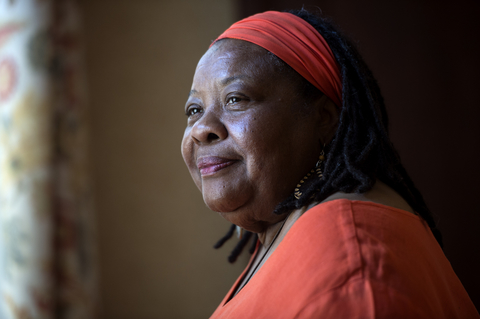


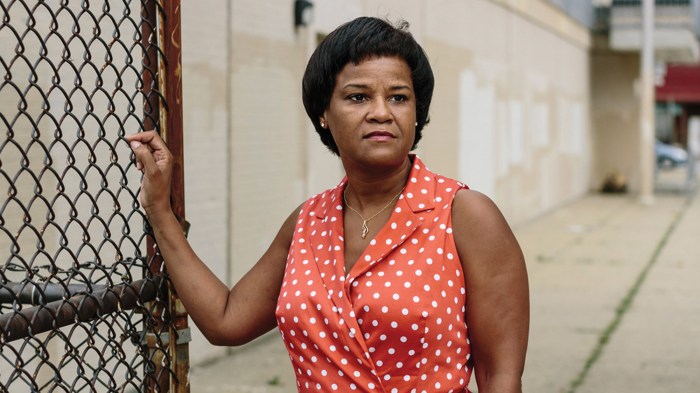
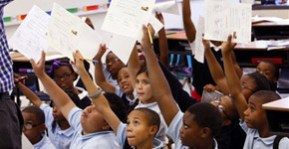

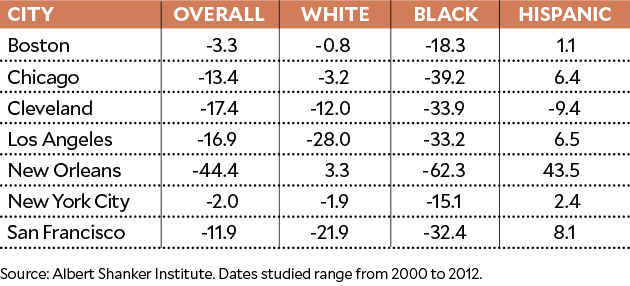
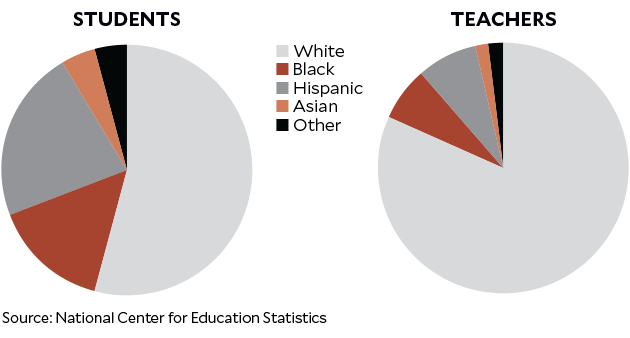
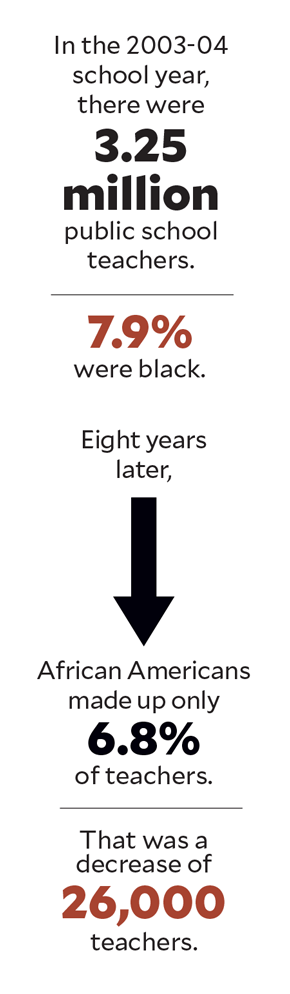
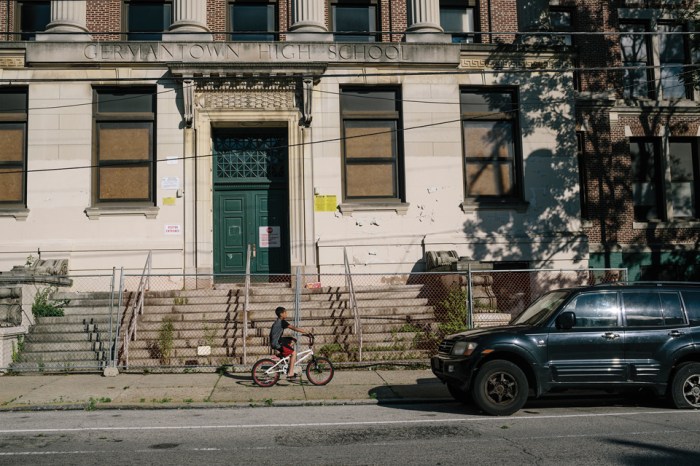
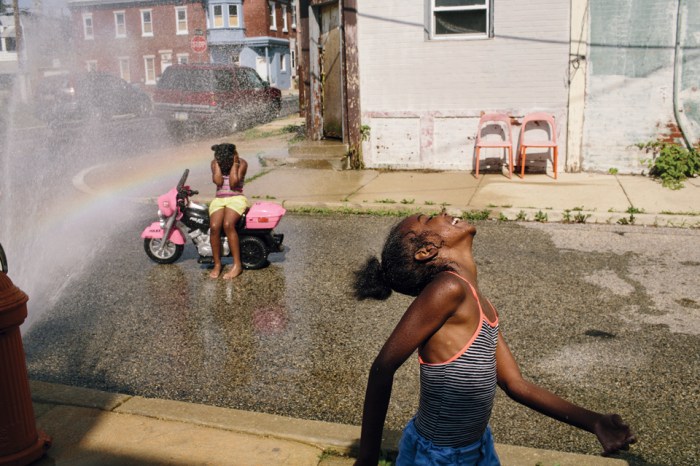
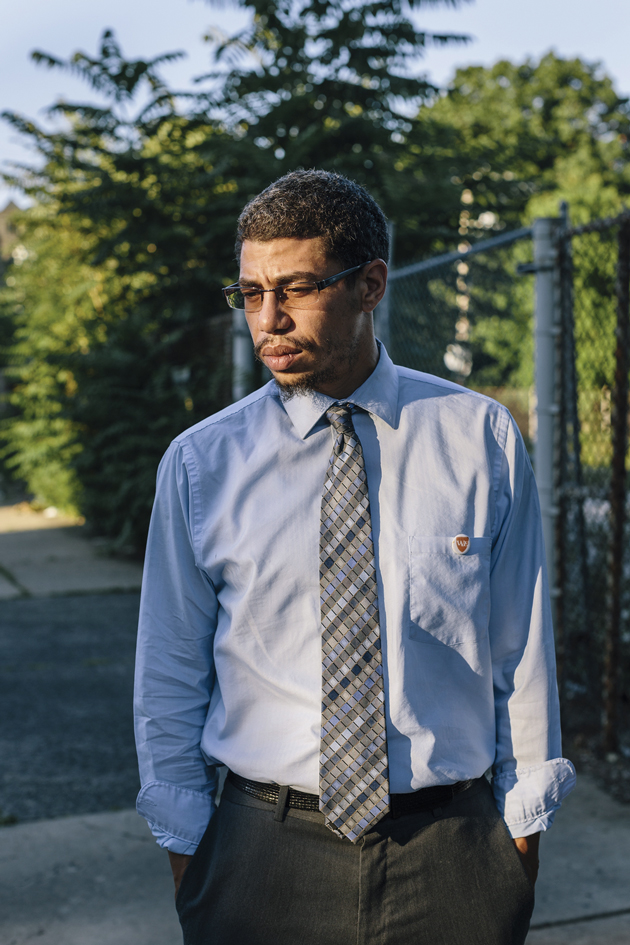
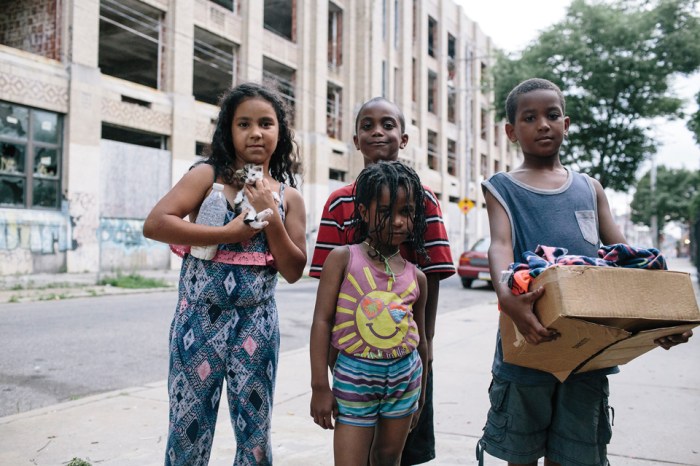




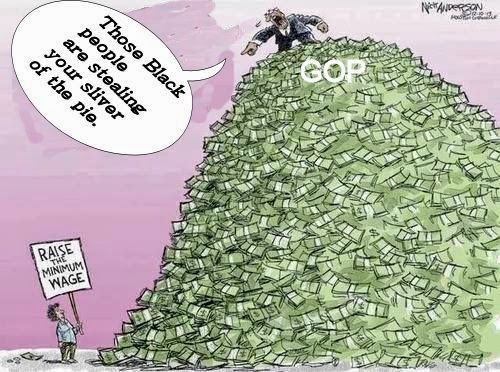
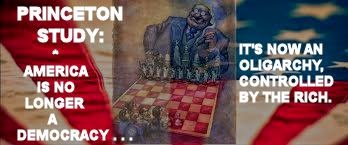
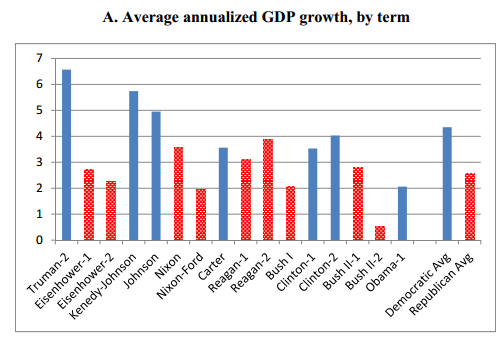

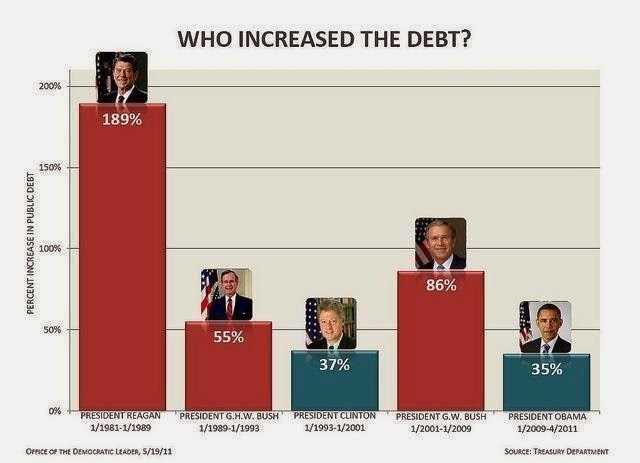


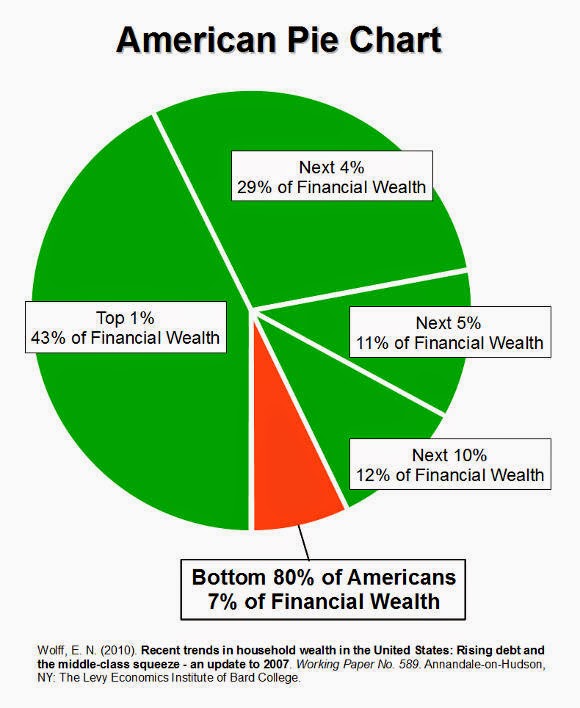
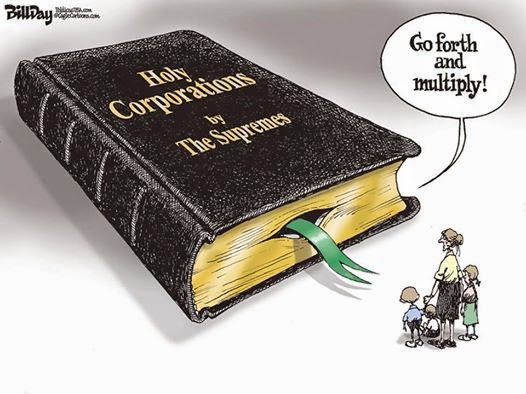

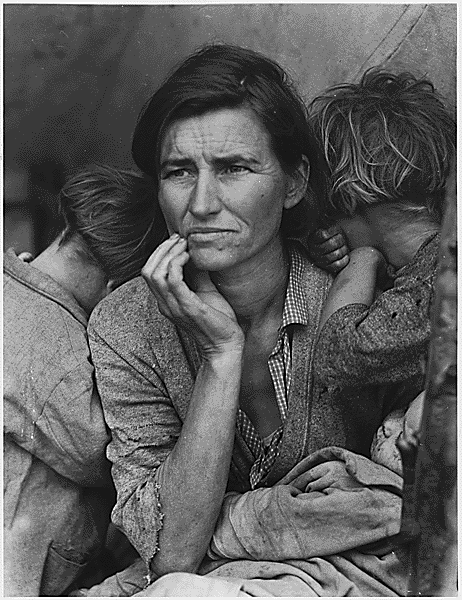
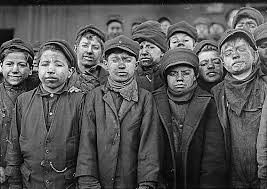








 OCG
OCG 