Black Nationalism and Liberation | Boston Review


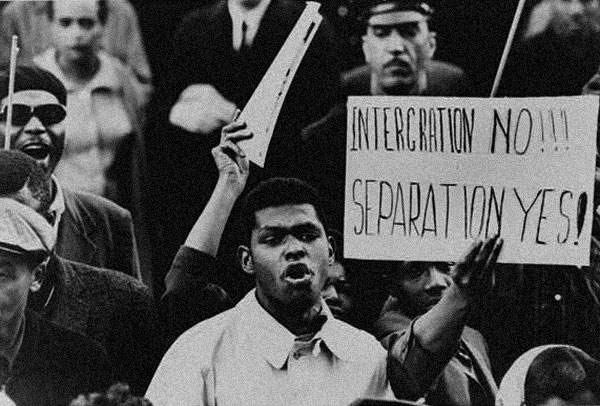
Nation of Islam counter-demonstration at NAACP rally in Harlem, 1961 / Photograph: NAACP collection, Library of Congress

In a world where Donald Trump’s presidential nomination speech has been endorsed by a former leader of the Ku Klux Klan—yet Black Lives Matter activists are accused of reverse racism for asking to not be murdered by police—what constitutes hate speech has become increasingly convoluted. In the aftermath of police killings in Dallas and Baton Rouge, gunmen Micah Johnson and Gavin Long were immediately linked by media outlets to black nationalist groups such as the Nation of Islam (NOI), New Black Panther Party, Black Riders Liberation Party, and Washitaw Nation, despite their professions to have been acting alone. Not only did these depictions draw misleading lines to organizations that do not prescribe such acts of violence, they also overshadowed both mens’ backgrounds in cultures of military violence (Johnson joined the Army Reserves immediately after high school and Long was a former Marine sergeant).

In a desperate attempt to drive home a link to black nationalism and direct attention away from these other troubling vectors, some news outlets began referring to Johnson as “Micah X” (NOI members use “X” to replace their “slave names”). In fact his middle name was simply Xavier. Even progressive groups, such as the Southern Poverty Law Center, play a legitimating role by identifying black nationalist groups as “black separatist hate groups,” leaving little room for meaningful distinctions between white supremacy and black nationalism. While groups such as the Nation of Islam have historically advocated for the separation of black communities, to assert that this position is simply the obverse of white supremacy—that is, black supremacy—overlooks the nuance of black nationalism. More importantly, it fails to account for the dramatically different relationships to power that black nationalist and white supremacist groups possess. White nationalism reinscribes and exalts the privileges of whiteness. Black nationalists council separation as an anti-racist practice and a method of empowerment in the absence of alternative avenues of power. To many black nationalists, this is the difference between life and death: the black community must either do for itself or perish.

The conflation of black and white nationalism is not new. In 1963 the New York Herald Tribune satirized what it perceived as the ironic similarities between white supremacists and black nationalists in a story entitled “Integrated Segregation.” Things “seem a trifle confused on the racial front these days. The segregationists are getting integrated and the integrationists are getting segregated,” the Tribune remarked. The article imagined a scene in which staunch segregationist George Wallace was explaining why racial segregation benefitted black Americans when “a Black Muslim popped up from behind, tapped him on the back and agreed with him.” Soon, the article predicted, the Congress for Racial Equality would “start picketing the N.A.A.C.P., while the Black Muslims set up an all-Negro chapter of the Ku Klux Klan.”

To many black nationalists, separation from whites is the difference between life and death: the black community must either do for itself or perish.

Understanding black nationalism as simply the mirror image of white supremacy, rather than an anti-racist practice, has deep roots in American political discourse. And in our current moment of colorblind “post-racialism,” when race-specific remedies such as affirmative action or reparations are derided as reverse racism—and even modest demands from Black Lives Matter for criminal justice reform are decried as anti-white—black nationalism has been once again mischaracterized using a host of long-stale tropes. We would be better served, not by simply dismissing black nationalism as the underbelly of white supremacy, but by understanding it as a tradition that is both liberative and anti-racist; one that does not mirror white supremacy, but repudiates it.

section separator

W. D. Fard, the founder of the Nation of Islam, arrived in Detroit in 1930 and told black Detroiters that they “were not Americans but Asiatics.” This was part of a holistic alternative creation story that rejected the racist underpinnings of white American nationalism. Many of Fard’s followers were former followers of Marcus Garvey, left without an organization after the decline of his Universal Negro Improvement Association (UNIA) in the late 1920s due to financial mismanagement and government infiltration. Garvey and the UNIA epitomized the goals of black nationalism, launching the most ambitious and successful Pan-Africanist vision in history. At its height, the UNIA had over 700 branches in 38 states, and its newspaper, Negro World, circulated throughout the African diaspora. Millions of black people were moved by Garvey’s message of racial pride embodied through the UNIA motto “One God! One Aim! One Destiny!” The NOI borrowed many of its black nationalist tenets from the UNIA, combining them with religious symbols, practices, and theologies drawn from the plethora of new northern, black, urban religious and racial-pride movements spawned by the Great Migration. This blending spoke to the diverse backgrounds of many early NOI members: in 1951 nineteen out of twenty-eight Muslims interviewed reported having previously been members in other movements such as black Masonry, the Israelite Movement, God’s Government on the Earth (dedicated to Liberian emigration), the Peace Movement of Ethiopia, Repatriation Movement to Liberia, and the Black Jews.

As historian Robin D. G. Kelley notes, many of these movements were influenced by a Black Zionist tradition that drew upon the narrative of the book of Exodus to imagine liberation and deliverance for black people around the world. These freedom dreams not only provided what he calls a “narrative of slavery, emancipation, and renewal,” but also a “language to critique America’s racist state since the biblical Israel represented a new beginning.” Beyond providing a framework for denouncing American racism, black nationalists addressed the racist power structures that governed their communities by creating jobs, businesses, schools, and places of worship. Racial separation was not simply about black communities’ physical relationship to white people; it was about changing the structures of power that governed those relationships through self-determination, community control, and new relationships to self and one another.

By 1959 the Nation of Islam was a burgeoning movement well known within urban black communities in the North but still largely unknown to white America. That summer, as Malcolm X traveled to Africa as a guest of Egypt’s president, Gamal Abdel Nasser, Mike Wallace (later of 60 Minutes fame) and black journalist Louis Lomax presented the NOI to white audiences for the first time. In their sensationalist documentary, The Hate That Hate Produced, NOI was compared to the American Nazi Party and the Ku Klux Klan. Members of the Nation were referred to as “black racists” and “black supremacists.” Its cautionary message to a largely white audience was that white racism would inevitably produce its black variant. As Malcolm X later recalled in his Autobiography, the show was meant to shock viewers, like when “Orson Welles frightened America with a radio program describing . . . an invasion by ‘men from Mars.’”

The Hate That Hate Produced was critical in launching the Nation of Islam into the public eye. But it also offered white viewers a language for understanding black nationalism that both intensified and allayed their fears. While racism was a plague that undermined American democracy, it was not a distinctly white characteristic. As Charlie Keil, a young white civil rights organizer at Yale during the early 1960s explained to me recently: “The Hate that Hate Produced allowed [whites] to sort of categorize the Muslims—the Nation of Islam—and treat them a certain way. . . . [It was] some way of saying that this was not an autonomous self-starting movement, but a reaction, an overreaction to a history of oppression.”

Throughout the 1960s black nationalists were castigated as “supremacists” who promoted the very racism and racial segregation that liberals were fighting against. This was stoked by white nationalists who saw calls for black racial separation as consistent with their belief in the benefits of racial segregation. As George Lincoln Rockwell, head of the American Nazi Party, told Alex Haley in a 1966 interview: “Malcolm X said the same thing I’m saying.”

Rockwell was not the only one confused about the difference between racial segregationand racial separation. In a highly-publicized Los Angeles trial in 1962 after police killed an unarmed member of the Los Angeles NOI mosque, the Los Angeles Times reported the “unusual problem in seating of spectators . . . when women members of the sect refused to accept seats alongside white persons.” The court eventually overturned this seating arrangement, and the press described this as “desegregation.” Los Angeles NAACP president Christopher Taylor joined the chorus of the aggrieved by arguing that he would be against any type of segregation, regardless of who initiated it. This decontextualized, colorblind insistence that any race demanding separation was calling for racial segregation was central to mischaracterizations of black nationalism during this period.

Malcolm X set about clarifying the Nation of Islam’s advocacy for racial separatism through dozens of debates with prominent civil rights figures on college campuses across the country in the early 1960s. He debated James Farmer at Cornell, Bayard Rustin at Howard, Louis Lomax at Yale, and the NAACP’s Walter Carrington at Harvard. Almost every debate was themed around the question: “Integration or Separation?” As Malcolm explained at Wesleyan University: “We are just as much against segregation as the most staunch integrationist.” But he added that black people did not “want to be free any more; they want integration. . . . They have confused their method with their objective.” In other words, black nationalists were not opposed to racial integration as an outcome of freedom struggles, or even as an organizing strategy, but they saw it as deeply flawed as the movement’s principal objective. More importantly, they pointed out the racist presumption of integration, which took for granted that white society and its values were more desirable. As Malcolm once sardonically asked, Who is the white man to be equal to?

More than simply critiquing integration, the Nation of Islam emphasized the importance of community control, an idea that flourished in upcoming years with the emergence of the Black Power movement. As Malcolm explained: “segregation means to regulate or control. . . . A segregated community is that forced upon inferiors by superiors. A separate community is done voluntarily by two equals.” Recognizing the pervasiveness of racial segregation, nationalists sought control over the businesses, healthcare, education, housing, and policing in their communities. Indeed, the Kerner Commission’s grim 1968 assessment that the nation was “moving toward two societies, one black, one white—separate and unequal” was something understood within black communities for decades. Amidst this backdrop, nationalists called for greater autonomy. The distinction between segregation and separation was not a semantic pivot. It was a deeper analysis of power, and an assertion of self-determination.

Over sixty years since the Supreme Court struck down the constitutionality of “separate but equal” in Brown v. Board, it would seem that calls for racial separatism are a relic of the past. But that might be too hopeful. A 2014 UCLA study revealed higher levels of school segregation in many regions than in 1968, the year the Supreme Court decreed a more proactive approach to desegregation. Schools with less than 1 percent white students are now being referred to as “apartheid schools.” And while the South is no longer governed by Jim Crow laws, cities outside the South such as Chicago and Baltimore continue to be described by demographers as “hypersegregated.”

The denial of race is a fixture of racism. Black nationalists have often exposed the “colorblind,” coded racism of liberals.

Black critiques of school integration during the 1950s and 1960s were often decried. In the words of scholar Andrew Delbanco, novelist and anthropologist Zora Neale Hurston “consigned herself to oblivion” when she responded to the Brown v. Board decision by saying that she could “see no tragedy in being too dark to be invited to a white school affair.” After James Meredith enrolled as the first black student in the University of Mississippi’s history, Malcolm X told a courtroom that anytime a man “needs [an] escort of 15,000 troops to go to a college where he will be among people whose viciousness toward him is so deadly that he needs the Army there to protect him . . . that Negro is foolish if he thinks that he is going to get an education.” Education, not integration, should be the goal, both Hurston and Malcolm agreed. As Malcolm explained, “token integration” was pointless as long as there were “a couple million Negroes in Mississippi who haven’t been allowed to go to the Kindergarten in a decent school.”

Meanwhile, integration today is often illustrated through the exceptional accomplishments of a handful of black elites, most notably President Barack Obama, rather than evidenced by a substantial redistribution of wealth or educational and housing opportunities. As Keeanga-Yamahtta Taylor demonstrates, the role of “black faces in high places” is often to obscure the common conditions facing many African Americans. Instead, black elected officials serve as interlocutors speaking to—and on behalf of—black communities. Taylor writes poignantly of the 2015 Baltimore uprising after the death of Freddie Gray: “When a Black mayor, governing a largely Black city, aids in the mobilization of a military unit led by a Black woman to suppress a Black rebellion, we are in a new period of the Black freedom struggle.” But this new period has unfortunately produced all-too-familiar outcomes for poor and working-class black people.

section separator

The long history of black nationalist leaders having official meetings with white supremacist leaders is another narrative often mobilized as proof of the essential symmetry of the two movements. In 1922 Marcus Garvey met with the Imperial Wizard of the Klan, Edward Clarke, earning him swift denunciation by the NAACP. In 1961 Malcolm X and other NOI officials secretly met with the KKK in Atlanta to negotiate a non-aggression pact surrounding the NOI’s purchase of southern farmland. The following year American Nazi leader George Lincoln Rockwell even appeared as an invited guest at the NOI’s Saviour’s Day convention in Chicago. When police in Monroe, Louisiana, illegally targeted and raided the city’s mosque with tear gas, rifles, and riot sticks, the Nation of Islam secured an interracial defense team: local black attorney James Sharpe, Jr., and Imperial Wizard of the National Knights of the Klan, James Venable. As Venable explained when taking the case, “I hate to say it but a colored man doesn’t have a chance in a courtroom in the South.”

The decision by black nationalists to meet or coordinate with white supremacists was often driven by a combination of pragmatism and a deep cynicism about the authenticity of liberals. In the case of the UNIA, Garvey negotiated an agreement with Clarke to sell stock in black businesses such as newspapers, factories, and his Black Star shipping line, which ambitiously hoped to link a global black economy in Africa, the Caribbean, and the Americas before failing due to poor business management. And although Malcolm X would later denounce the Nation of Islam’s détente with the Klan, the organization’s motivation for doing so was plainly and only to secure the right to farm in the South without danger of violent reprisal. And in the case against eight members of the NOI in Monroe, Venable successfully won an appeal for several of those convicted.

Black nationalists were also not uncritical of the white supremacists with whom they interacted, a fact often downplayed or forgotten. After his meeting with the Klan, Garvey told a crowd: “Mr. Clark [sic] did not tell me anything new; he told me what I discovered seven years ago. He told me the thing that caused me to have organized the Universal Negro Improvement Association four and a half years ago.” When Rockwell, wearing full Nazi regalia, donated twenty dollars to a collection plate at Saviour’s Day, there was a smattering of reluctant applause. Malcolm X belittled him by adding: “You got the biggest hand you ever got.” Equally, black nationalists used white supremacists to draw attention to the hypocrisy of liberals. Following his 1922 meeting, Garvey claimed that Klan members were “better friends to my race, for telling us who they are, and what they mean.” Malcolm used a similar device in his folk metaphor of the liberal “fox” and the conservative “wolf.” When comparing John F. Kennedy to George Wallace, Malcolm said: “Neither one loves you. The only difference is that the fox will eat you with a smile instead of a scowl.” He even penned a 1964 editorial entitled “Why I Am for Goldwater” in which he drew upon the same fox/wolf metaphor and cynically suggested that with Goldwater, “black people at least know what they are dealing with.”

Critics on the left who see these as misguided political strategies have marginalized black nationalists by painting them as racial conservatives, and thereby emptied black nationalists’ critiques of their incisiveness. For example, Paul Gilroy accuses Garvey of “black fascism” and C. L. R. James even compared him to Hitler. Others have taken Malcolm’s cynical support for Goldwater at face value, rather than understanding his rhetorical move to draw parallels between openly racist politicians and ostensibly liberal ones whose policies nonetheless gut the black community.

Black nationalist groups such as the UNIA and the NOI have rightly been critiqued for their deep patriarchy, homophobia, and tendency to reproduce the other trappings of empire. As historian Michelle Ann Stephens notes of Garvey, his “vision of the sovereign state figured in the black male sovereign; the desire for home at a more affective level figured in the woman of color.” Likewise, anti-Semitic comments by Nation of Islam leaders such as Louis Farrakhan have certainly buttressed comparisons between white and black nationalists. Most recently, Farrakhan stoked this fire by praising Donald Trump’s refusal to take money from Jewish donors.

But although charismatic leaders are often the voices we hear most prominently, for many rank-and-file members of the Nation of Islam and other black nationalist groups, the lived experience of racial pride, religious rebirth, and doing for oneself is a redemptive, affirming, and even lifesaving practice. Many members joined the NOI after feeling alienated in integrated, more middle-class organizations such as the NAACP. As Lindsey X told an interviewer, what the NAACP “wanted never seemed real to me. I think Negroes should create jobs for themselves rather than going begging for them.” Malcolm X’s autobiography is only the best-known narrative of religious and political redemption. In a long-running feature in the NOI’s newspaper, Muhammad Speaks, entitled “What Islam Has Done For Me,” members offered their conversion narratives and testified to the transformative practice of Islam. Robert 24X of Paterson, New Jersey, contributed: “I was a young drug addict who had spent too much time in the hells of Harlem’s East Side . . . [before] everything came into focus for me. . . . I stopped smoking, using profanity, and eating improper foods. And I’ve passed my biggest acid test—no more needles in the arm.”

Instead of positioning black nationalism as a reactionary, conservative ideology that simply apes the violence and hate of white supremacy, we might learn from its lessons today. If asked about the xenophobia and dangerous comments of conservative firebrand Donald Trump in our current election, Malcolm X might well have pivoted us back to Hillary Clinton’s questionable record on race, one which Black Lives Matter activists have pointed out includes racist dog whistles such as her comments about “super-predators” lacking empathy, her steadfast support for the devastating 1994 Crime Bill, and campaign money taken from private prison corporations. And beyond the hollow political discourse of election cycles, we must avoid the pitfalls of incessant claims of post-racialism that insist that to see race is to participate in racism. As we have witnessed with the familiar “All Lives Matter” rejoinder to “Black Lives Matter,” we are living in a time when people’s humanity is so denigrated that the mere valuation of life is taken by some whites to be a zero-sum game. The denial of race is a central fixture in the perpetuation of racism, and black nationalists have routinely called attention to the importance of racial pride while exposing the coded racism of liberals. Rather than draw facile lines between black nationalism and white supremacy, we are better served by understanding black nationalism as an anti-racist political tradition seeking to envision black American freedom and citizenship in a nation that has rarely devoted much effort toward either end.

Source: Black Nationalism and Liberation | Boston Review

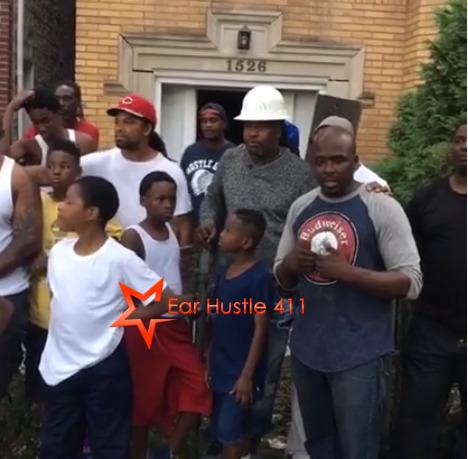
Black Men In Chicago Are Taking Over Abandoned Property & Rebuilding The Neighborhood With The Youth By Creating Their Own Jobs – Ear Hustle 411

Black Men In Chicago Are Taking Over Abandoned Property & Rebuilding The Neighborhood With The Youth By Creating Their Own Jobs


Chicago, Illinois – Black men are demanding the city help them with the resources to help rebuild the community. These men are literally in the process of taking over abandoned property and training at risk youth to help fix up the properties that the city is trying to demolish.

Many of the properties are generally in pretty decent condition as far as the frame being solid brick and these men are saying they are not going to allow the city to tear down perfectly good homes.

A lot of the homes are boarded up and abandoned due to subprime lending where the Lenders/Bankers sucked the resources out of certain communities, left them in total disarray, foreclosed on the properties and resold many of them for pennies on the dollar to Hedge Fund Investors.

This happened by way if issuing Interest only mortgages where the borrower paid only the interest and no principal and when the term was up, they were forced to pay interest plus principle which the majority was unable to do therefore losing their properties while hedge fund investors bet against the people and walked away with tons of properties.

These investors slowly take over certain areas which are considered prime real estate and move the minorities out and gentrify the neighborhoods.

The men called on Alderman Michael Scott 24th Ward, Alderman  Jason Ervin 28th Ward,  and Alderman Walter Burnett 27th Ward and all the Aldermen across the city to help them make this happen.

The group said they are going all over the city and taking over the 20,000 properties that are sitting idle waiting to be torn down.

They then said that the people in the community want the buildings demolished however they don’t realize that for every building that is demolished, property taxes goes up.

The spokesperson Mark Carter said NHS, CIC and Globe Trotters organizations were supposed to help their parents and grandparents but instead they allowed the city to demolish their homes.

The men said the Mayor and Alderman sit back and watch these children get murdered in the communities and they refuse to sit back and do nothing about it.

He said they are demanding  the resources be given to them and they can rebuild themselves.

Check out the video:


VideoPlayer

 Photo Credit:  Mark Carter- Facebook

Source: Black Men In Chicago Are Taking Over Abandoned Property & Rebuilding The Neighborhood With The Youth By Creating Their Own Jobs – Ear Hustle 411

The Psalm of Howard Thurman

ABOUT ABOUT THE FILM

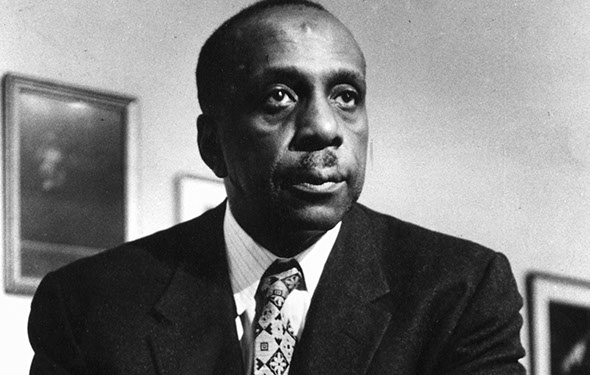
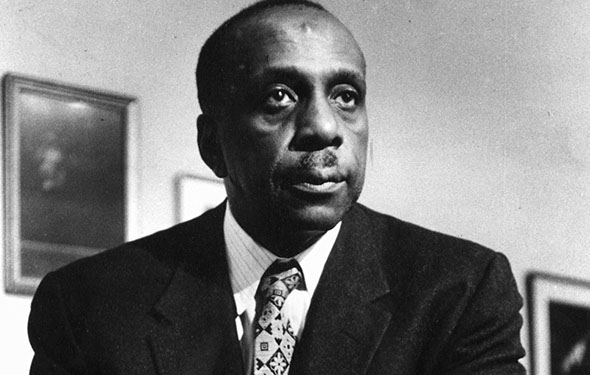
The Psalm of Howard Thurman is the first feature-length documentary film on the life and wisdom of one of the world’s greatest spiritual treasures, Howard Thurman (1899-1981).

The film introduces audiences to Thurman’s uplifting story, his transcendent  yet grounded presence, and his important voice for our times. The film aspires to be a psalm,a lyrical work of beauty and truth, and a creative utterance that moves, touches and inspires.

ABOUT HOWARD THURMAN

A JOURNEY OF HEART, MIND AND SOUL

Thurman attended high school in Jacksonville, Florida. He later completed studies at Morehouse College, Atlanta in 1923 and the Rochester Theological Seminary, New York in 1926. In 1929, after serving his first pastorship in Oberlin, Ohio, Thurman returned to Atlanta to serve as Professor of Religion and Philosophy and Director of Religious Life at Morehouse and Spelman Colleges. Thurman felt that it was his immediate responsibility to inspire and encourage students in their individual quests for the truth.”

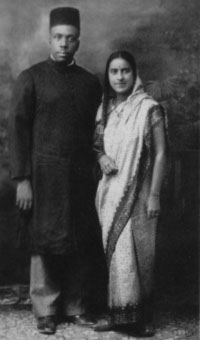
In 1935,  while a professor at Howard University in Washington, D.C., Thurman and his wife, Sue Bailey Thurman, led a pilgrimage of African Americans to Ceylon, Burma and India and met with Mahatma Gandhi. As a result of this trip, he formulated, a generation before Martin Luther King Jr., a non-violent approach to social change in America. This “love-ethic” informed one of Thurman’s best known works, Jesus and the Disinherited, a book which later influenced King and other leaders of the Civil Rights Movement.

 At the close of the 1935 pilgrimage, looking down into Afghanistan at the Khyber Pass, Thurman experienced a vision of a church that would be open to “seekers of all colors and creeds.” He was compelled to see if “experiences of spiritual unity among peoples could be more compelling than the experiences which divide them.”

Hoard and Sue Bailey Thurman

India, 1935

Howard Thurman Birth Home, Daytona, Florida, USA

HOWARD THURMAN was born in Daytona, Florida in 1899. Early on, he developed a kinship with nature and a “hunger of the heart”–a curiosity into the meaning of life. He found refuge during times of loneliness and trepidation in an old oak tree in his back yard. It was while young Howard stood with his back placed firmly against the tree that he first felt the unity of all living things and engaged in what he would later call, “the religious experience.”

 As a young boy Thurman was raised by a strong and affirming grandmother. She was a former slave who had a profound influence on what would become an essential part of Thurman’s thought–that if theology is to have any validity, it must justly deal with one’s life situation and must affirm one’s worth as a child of God.

FILMMAKERS

MEET THE ARTISTS BEHIND THE FILM

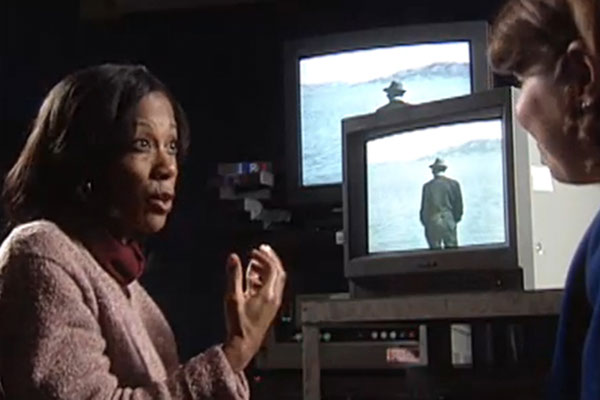
“Arleigh Prelow is the right person to create a documentary about Dr. Thurman. She has the spiritual sensibility to understand his life and convey who he was in a truthful and meaningful way.”


– Sue Bailey Thurman (before her death in 1996)

ARLEIGH PRELOW, PRODUCER/ DIRECTOR

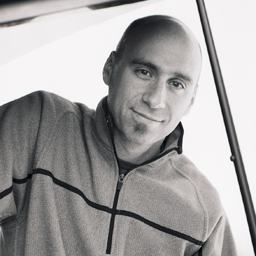
 Emmy winning composer Joel Goodman has scored over 100 films and television programs that have received 4 Oscar nominations, 15 Emmy awards and over 25 Emmy nominations.

JOEL GOODMAN

COMPOSER

BIO

BIO

GALLERY

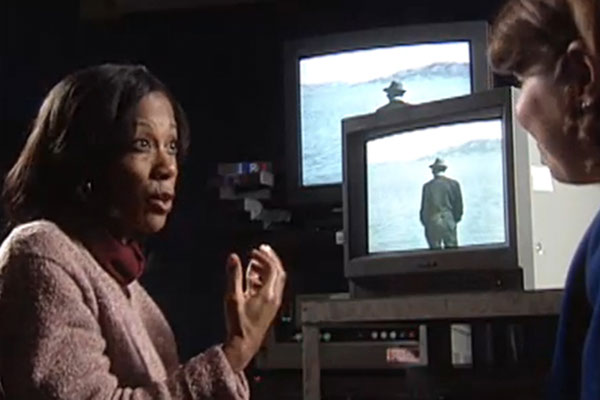
INTERVIEWS WITH ARLEIGH PRELOW, PRODUCER/DIRECTOR

 THE SPIRIT AND WORK OF HOWARD THURMAN LIVES ON

PEDRO CESCA FALCI

ASSISTANT DIRECTOR, HOWARD THURMAN CENTER BOSTON UNIVERSITY

THE HOWARD THURMAN CENTER FOR COMMON GROUND

BOSTON UNIVERSITY

KATHERINE KENNEDY

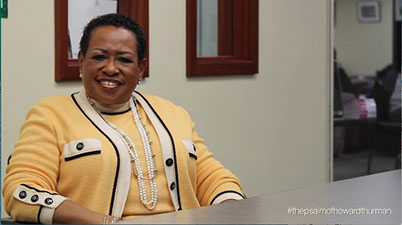
DIRECTOR, HOWARD THURMAN CENTER

BOSTON UNIVERSITY


Source: The Psalm of Howard Thurman

The Debt: What we, Black Men, owe Black Women and children — and what we owe ourselves. — Medium

“Life is not what one lived, but what one remembers and how one remembers it in order to recount it.”

~Gabriel Garcia Marquez~

“Next to God we are indebted to women, first for life itself, and then for making it worth living.”

~Mary Macleod Bethune~

I remember that third Monday in October of 1995 in a way that still dances in my consciousness with a vibrancy and verve that remain palpable twenty-one years later. Everything about that day was imbued with purposeful vitality. The crisp early morning chill with its pretense of winter, the smell of morning-dewed pavement, the prattle and clank of cars playing a losing game of pothole slalom, the sight of trees and earth flamboyantly wearing their autumnal ensembles of browns, reds, yellows, oranges.

Inside my spacious one-bedroom Columbia Heights basement apartment, which as far as I was concerned only coincidentally served as the foundation for the luxuriously renovated row house above it, there was a ritualized vibration to the morning as the six other men — who had come from East St Louis, Chicago, Oakland, Pacoima, East Palo Alto and the Bronx — and I readied ourselves for our meeting with history. There are things you don’t understand about significant historical moments until after you meet them.

Like, for example, historical moments have a distinctive texture, sound, and smell, all of which pull you back to that moment whenever you are placed in contact with them. I recall the scent and sensibility of the Kush incense burning that morning, its aromatic smoke languorously raising itself up from the glowing amber orb like an ancestor coming to bear witness, as if to say — And, still I rise — the undulating ribbons of fragrant tinted air dancing to Marley’s irrepressible Redemption Song playing in the background just a notch under too loudly.

In 1995, Columbia Heights, a neighborhood in Northwest DC I called home was comprised largely of African (Black) and Latinx (Brown) folks. Which is to say, involuntary and voluntary immigrants trying in various ways to solve America’s racial and ethnic algebra, while dealing with poverty’s geometry of limited space and poor angles to create better opportunities, and who had little choice but to let poorly paying jobs work them for a living. There was just a smattering of white folks whose alabaster aspirations hung on the ledge of whispers that a Green Line Metro stop was soon to come and with it “new development.”

(Three things you can count on: Death, Taxes, and that when mediocre white folks — and their Black and Brown lackeys — in powerful political positions start talking development, whether in Africa, Latin America or in America’s urban centers, Black, Brown and poor folks generally are ‘bout to get did with no vaseline. Let’s call this the Ice Cube Rule aka the Heller Non-Lubrication Despoilment Development Clause or the HNDDC.)

In other words, my ‘hood was much like the neighborhoods the other brothers had come from; the kind of place that was paradoxically safe and unsafe, and where clarity about life critical caveats determined which experience was mostly true for you. It was the kind of place where irony, paradox, pathos, absurdity and resilience were the bridges for how most of us got over and got by. A brother in a suit coming home from work at might get robbed, while a tie-wearing white Mormon biking through the hood, kicking Joseph Smith style pretzel logic about a heaven that didn’t originally welcome Black folks, was as safe as Donald Trump at a Klan Rally.

For affluent and well connected whites doing their version of a drive-by, Columbia Heights served largely as an underground pharmacy as they passed through to quickly refill their prescriptions with the local street corner pharmacists, en route to their work on K Street and Capital Hill to further cement crippling inequities in wealth and opportunity into policy, the very policies ensuring there would always be street corner suppliers for their synthetic anesthetization, the very same suppliers that they lobbied to have incarcerated.

Columbia Heights was also where you could get some of the best Chinese food, pupusas, arepas and Peruvian chicken this side of a health code violation. A place where the discerning consumer could secure incense, oils, hats, faux Gucci wallets and purses, each with a different variation of the spelling of Gucci, books, a “previously owned” metro card with $3.45 on it for the bargain price of “whatever you feel is fair, patna” or an unlocked phone that may or may not have belonged to the dude a block down now furiously checking his jacket — all from the same person. Not surprisingly, it was the kind of neighborhood where after dark, pizza shops asked for your zip code before taking your delivery order. Capital may be global but in 1995 a lot of it didn’t cross east of Rock Creek Park after dark.

It was here in this Northwest DC nook where opportunity remained in a perpetual hunger strike sandwiched between the indifferent material affluence of the “Gold Coast” at one end of 16th Street and the disinterested political flatulence of the White House at the other that I learned a condiment, Mumbo Sauce, could also be a philosophy. No lesser authority than Wikipedia has gone on record as saying of Mumbo Sauce: “Its origin and ingredients are subject to great dispute.” Translation: the active ingredient in Mumbo Sauce is Nunya — None ya damn business.

If you weren’t native to the Chocolate City there were two concepts you had to grasp, without which you were forever to remain an interloper:Go Go and Mumbo Sauce. If your understanding is that Go Go is just music or that Mumbo sauce is just a condiment found in Chinese food joints of questionable cleanliness which also happen to sell French fries and chicken wings “fried hard” and offered with fortune cookies with messages written in Ebonics — Confusedcious say “Check yourself before you wreck yourself” — then you’re not ready — for an explanation, for the condiment, for the music, or to get your life.

Although advance scout teams of urban colonizers had already been dispatched to survey the area, in 1995, Columbia Heights had not yet become a haven for usual tribal whiteness perpetually in search for a heart of darkness experience and as an investment opportunity. These urban colonizers were, however, like the eventual Green Line Metro Stop, on their way. From the first clashes with the indigenous peoples with the “settlers,” gentrification was, is and has always been a type state sanctioned organized violence — a conquest with zoning codes. Gentrification is the developers’ version of a hydrogen bomb: destroy the inhabitants; leave the buildings standing. Early euphemisms like eminent domain and urban renewal were employed to sanitize the crime scene and conceal the evidence of the blunt force trauma inflicted upon poor communities, which happened most often were Black and Brown folks. Robert Moses, the patron saint of organized urban chaos, would be so proud.

The six other Black men in my apartment that morning having come from places like Columbia Heights — some of us from places much worse, and trust, there were much worse places in DC too — were intimately familiar with jagged contours of the structured economic and spatial violence that comes with living in neighborhoods with opportunities so necrotic they virtually solidified poverty as a genetic inheritance.

On this particularly beautiful Monday morning in my Columbia Heights abode with its generous pavement level view, in response in part to the incarcerating life possibilities for so many of our people face, we were animated by something profound in its giving beauty: a personalized redemptive dedication, which by now had been forged into a unified sense of purpose that seemed to be present in our every movement. Being the only one who lived in DC — having recently relocated there from Oakland that August — my apartment became base camp by default. (Initially, I hadn’t planned on attending the event; even then I had wearied of the notion of symbolic protest in a nation indifferent to substantive suffering.)

It is amazing what one remembers and how one remembers it. The various ways the constellation of memories shift and reposition themselves in the firmament of our consciousness over time. It seems as though small details about big moments retain such vividness, while really important things get hazier with time. I still hear the clinking and rattling of cereal bowls and spoons that morning but can’t recall the name of one of the three elders in our group. Can still see the collective side-eyeing of one brother, who shall remain nameless, for eating cereal like he was channeling dude from the Eddie Murphy movie, Life: “You gon eat dat cornbread?” Yet I don’t recall what I wore on that day.

I still chuckle when I reflect on the minor dust up that morning around who “drank the last of the damn juice and left the empty carton in the fridge?” Can still smell the fragranced collusion between steam, starch and freshly ironed shirts, which eventually overtook the incense and had my tilt smelling like a dry cleaners in the middle of a summer street festival. Still shake my head at the way brothers clamored for who had next on the ironing board, each of us trying to ensure that our style game was crisp. Still feel the echoes of the raucous laughter as an “old head” tried to convince us new jacks of the non wrinkle genius of polyester and the ingenuity of rolling ones clothes as a opposed to folding them (The latter point proved useful; the genius of polyester? Well…everything needn’t to go to the future, for example, misogynists, dinosaurs and double knit slacks).

Having watched the morning news, the eldest of the elders (he was seventy) suggested that we walk to the event rather than take the U Street Metro in order to avoid having to deal with the crowds. As we arose from my apartment the sun softened morning greeted us like the iridescent smile of a new love. Walking along 16th Street we synergized with some brothers from Howard University — HU! — who were similarly focused and forward leaning.

What began as seven Black men strolling with fierce determination had gradually swelled to an unofficial delegation of synchronized uneven legged strolls, shoulder dips and head bops — an embassy of blackness be-bopping and hip-hopping along 16th Street. One nation under the groove, strolling towards an appointment with history. Well, half a nation: there were only men.

We arrived.

And there we were: A gathering of men over a million strong: bold, bodacious and beautifully Black — a rainbow of resolute and defiant blackness against the backdrop of a cerulean sky, engaged in an ancient ritual of call and response with our better selves, compelled by an experiential double helix of individual impetus and shared destiny in a city that could still be called, without the slightest hint of irony, Chocolate.

This Monday was going to be a special. You could feel it. There was an emotional electromagnetic charge in the air. As you stepped onto the Mall the radiating waves of energy hit you, it felt as if you were walking into an air-conditioned department store after having trudged through heavy humidity. The vibrant sense of personhood, collective regard and shared purpose were unmistakable. So too was the extended self-love. The awareness of oneself as an extended being was invigorating.

The specialness of the day was confirmed for me early on, in a most ironic way. I was jaw jackin’ with the fellas and not paying attention, when I bumped into another brother, accidentally knocking his freshly, once bitten, hot link to the ground. He and I both slowly looked down at the hot link as if it were a fallen comrade mortally wounded in battle and then our eyes slowly rose to meet. There was an audible gasp that seemed to come from everywhere, at once. And then, there was silence. Absolute. Silence. Everyone standing around understood, clearly, that this was the kind of mistake that could get someone body bagged with the quickness — such is the capricious calculus of mattering when it comes to the sanctity of Black lives.

I thought: “Shit! I’m ‘bout to go down in infamy as the brother who ruined the Million Man March by causing a riot — over a hotlink! Imma be the Crispus Attucks of Hotlinks War of 1995.”

I apologized. Immediately. Profusely: Yo, did I mention I knocked a hotlink out of a Black man’s hand after he had taken only one bite? You know that first bite, where you stare at your food like you’re having a conversation with it: “I can’t believe you taste this mothaf%&kin good.” Civil Wars have been started over less. I remember the stillness. The rhythmic anxiety, the tension had a static cling feel to it. I awaited his reaction. I thought for a brief second if it came to it, I might have to throw hands. I looked at him and just kept it real, with myself, and God: Me throwing hands with this dude would be like spitting into a category five hurricane. No one will remember the spit but everyone will be a witness to the carnage afterwards.

He smiled. Then he chuckled, and said: “It’s all good homie. Shit happens.” I offered to buy him another link. He politely declined my offer, telling me: “Man, I aint ‘sposed to be eatin dis shit no way; my blood pressure be higher than a muhfucka.” (It’s important to note here by way of digression: if a brother says “motherfucker” you know he’s from those places where folks use cloth napkins and “do lunch” but if he says “muhfucka” you probably wanna check and see if someone in your crew, hell anyone in your crew, is strapped).

He added that since his wife wasn’t around he thought he and his son would sneak in a link — or two — and that, in a way, by knocking the hotlink out of his hand, the Million Man March was already saving his life. Everyone laughed — I laughed hardest because, well, ol boy was about six foot-three, 300, easy, and let’s just say I’m not — in a battle between an elephant and an ant the term battle is a misnomer. We hugged, and then he said to me: “I love you, Black man.” I returned the sentiment. Relieved. We all gave each other the universal Black man grip: the handshake, followed by the pull-in hug and the pound on the back. It was like that everywhere we ventured on the Mall that day, moving amongst what had to be on that day one of largest standing armies in the world. Just love.

As far as the speeches go, I don’t remember much about them. No oratorical gems or timeless aphorisms offering renewed understanding stand out. The cavalcade of speakers seemed earnest, but pressed. Trying to move the crowd while wearing a moment too big for you can be tough. History is so much harder to make when you’re trying so hard to make history. To be fair, you get a million Black men to DC to assemble around growth and development, there isn’t much more one can say that is going to have more of an impact than the visual essay inscribed by the sight of a million brothers.

Minister Farrakhan, one of most gifted orators of my generation and the only person in the country who had the platform, the courage, the vision and the credibility to call for this type of event, gave a speech that was too long and too galactic; seemingly more invested in the rhetorical stratosphere than the appreciating the gravitational pull of the moment. Keepin’ it real, at times the speech had the feel of Ozwald Bates struggling with the math portion of the SAT.

I recall thinking then that his speech required the Minister’s usual eloquence of vision, which is typically much more down to earth, which is where most of us brothers stood firmly. Patriarchy tends to require a lot of helium, and without women to create the kind of balance that tethers us to the real, we sometimes just float upwards until we run out of hot air and come crashing back to earth. Nature abhors vacuums but patriarchy apparently loves them.

The energy of love and togetherness on that day had the quality and sensation of the “warmth of other suns” Richard Wright had hoped for. Everywhere we moved among the million or so Black men, each of us perhaps hoping to win our most important battle–the one between who we were and the better selves we hoped would emerge victorious. Looking back now some twenty-one years later, some of us won on that day: did the work once we got home; others of us found our strides, eventually; others of us are still waging the battle, and still others of us succumbed to the comfort of our lower selves. (Take a fish out of polluted tank for a day or two and then put it back in the same polluted tank, the only thing likely to change is the fish’s level of disappointment and ennui.)

For our coterie of seven (the youngest among us a precocious nineteen year old from Oakland — a mentee of mine who used the word hella as a verb, noun, adjective and a diss with stunning precision — and the eldest of the elders, an ebullient but serious septuagenarian from Chicago, Ullysses “Duke” Jenkins — a mentor of mine — who has since become an ancestor), the most important part of that day occurred after we bounced from the gathering of a Million Black Men in search of some grub.

We were making our way back home from Adams Morgan after dinner at Caribbean restaurant whose name is as forgettable as was the cuisine I had that evening, when we noticed a bouquet of four beautiful sisters about fifty yards away walking down 16th Street towards us.

We saw them.

The sisters saw us.

Then they hesitated.

The four sisters seemed uncertain. As if they were trying to decide whether to stay on the same side of the street as us or cross the street to the other side. Perhaps their hesitancy derived from a shared algorithm created from all too familiar, all too real and all too unpleasant experiences with brothers playing out their own feeble versions of stop and frisk, taking liberties with Black women’s bodies and space. I can only guess. I do know there was a heavy silence among us, freighted with a kind of anxiety usually reserved for encounters with Five-Oh, it was accompanied by an unspoken acknowledgment that we needed these sisters to believe in us enough not to cross the street — on this of all days. (In some African societies during the male rites of passage, while it is the men who guide young boys through the rituals of manhood, it is the women who provide the final seal of approval of manhood before the boys are officially recognized as men.)

As the sisters approached, we parted like the Red Sea to let them pass. As they moved through us you could feel our heaviness, our anxiety, bourn of the damp weight of unfulfilled hope. We greeted them as they moved through us:

“How you Sistas doin’?”

“We fine. How you brothas doin’?” They sang.

“We cool,” we replied.

With that they passed through us giving us inspiration disguised as fresh air. You could literally hear us collectively breathe easy. And then, something generous happened: the sisters turned around and in unison said: “We love ya’ll. And we real proud!” And just like that our personal earths shifted on their axes. It got really quiet. I think I saw tears undulating down the side of one of the one elders’ face. I’m not sure because I looked away and then down. I don’t remember shedding a tear but I do remember having a saline problem with my eyes. What I remember clearly though is the feeling of deep gratitude and pride, of feeling substantial, meaningful.

We had spent a day amongst a Million brothers, yet it was these four sisters, who we didn’t know and hadn’t bothered to ask their names, who had in their own way given us what we needed most — their seal of approval. The general mantra was atonement these Black women had put me — and I believe the other brothers as well — in contact with a deeper understanding of our purpose.

The walk the rest of the way was comprised of footsteps on pavement echoing a quiet knowing: We — Black women and us — belonged to each other, not as an act of possession, but as an act of the willful acceptance of extended self-love anchored in shared tumultuous and triumphant social history, one rooted in earth and ancestry, watered in blood and love, the scarred bark of existence telling of the hurt, betrayals and emotional scar tissue, the tree rings still speaking of an ancient love still trying to find a way to continue grow in intemperate racial climates.

On occasion when I have had the opportunity to talk with other brothers who were there on that day what seems to have been lost in the remembrances of the Million Man March is just how much of that day was made possible because of Black women. Every aspect that made the gathering of a million Black men possible involved Black women at its radiating core. I saw sisters at the airport handing out care packages, others whom cheered us on as we made our way onto planes, trains, and buses, still others whom attended the March themselves. I heard numerous stories from other Black men about how a mother, or sister or an aunt, a girlfriend or a wife provided support of various kinds, paving the way for them to attend.

It is a truism not reflected often enough in our actions: that Black (African) life, love and the possibility of liberation all rotate on the axis of Black womynhood, its essence and its varied expressions. And yet time after time, with a kind of depraved indifference that can only be called suicidal, too many of us brothers have asked Black Women in variety of ways to subordinate their best selves, their images and their interests (which, paradoxically, are our best selves, best image and best interests too) to an illusory Black unity that pushes them to the margins — a sort of trickle down theory of social justice — that is neither rooted in our collective best interests or in the fullest appreciation of our collective humanity.

Separating Blame from Responsibility

 To be clear: We are in an awful mess, situated in the world as result of cataclysmic set of circumstances, created and sustained by tribal whiteness and its cancerous system of white misanthropy (white supremacy is such a poor way to describe a system so heavily invested in simultaneously trumping up a variant of ethnic mediocrity as supreme and the destruction of life in all its myriad forms, all in the name of a dubious god called Profit). This is not a debate; this is American history.

A large part of our lives are squeezed into the contours of its spastic violence. From structural racism to institutional racism to micro-aggressions to systematized and structural racial animus, white misanthropy informs and disfigures the contours and context of both the behavioral and structural dimensions of our existence — it poisons the waters of our social ecology, literally and figuratively. Somebody say Flint, Michigan?

To acknowledge this is to identify the system’s ongoing culpability for our oppression. The question of our liberation, however, is more complex. It involves a kind of fission, splitting of the atom of oppression: separating blame from responsibility. Which produces some volatile and inconvenient truths around questions of our complicity with these systems of oppression and our responsibility for armoring and fortifying ourselves against these systems. Handling the fissile material of blame and responsibility is difficult and requires great care. On one hand, if mishandled in form of regressive respectability politics it can blow up in your face. One the other hand, if you get the fission right you can create enough atomic energy to power a people to liberation. Freedom is what you are given; liberation is what you take.

As we witness the re-intensification of the racial animus of Tribal Whiteness, it’s critical that we get the clarity around the questions surrounding the assignment of blame and responsibility. In other words, what has/is being done to us, currently and historically (culpability and blame) and what can we do about it (responsibility). In that regard, very few of the contemporary conversations have focused on what African (Black) people owe one another and I fear that we will miss, yet again, another opportunity to acknowledge the essentiality of placing African (American) women’s struggles at the core of our reinvigorated struggles for liberation.

Until we grasp that street harassment and police profiling, that dying while black at the hands of law enforcement and dying while Black and woman at the hands of Black men are both different expressions of a singular essence — a corrosive toxic oppressive dynamic — we will continue to run on a treadmill of misery wondering why we aren’t making any progress.

It takes a particular kind of patriarchal pretzel logic to assign value to Black women based on how they are dressed and then as Black men decry being profiled by white society because of how we are dressed. The latter employs a racist pretzel logic; the former a sexist pretzel logic. Discrimination and oppression are metastasizing cancers — they spread. Thinking that discrimination and oppression on the basis of gender will not impact our lives in other ways is like thinking cancer of the liver wont effect kidneys because they are different organs, forgetting that are housed in the same body.

Despite the depictions of us in the media and poorly sourced anecdotes about black men as enemies of Black women and predators, there are a lot of Black men who show up as fathers, sons, brothers, uncles, friends, and mates in ways that are meaningful and felt. There is both celebration and contradiction in the ways we understand Black manhood. Not enough of us Black (African) men recognize that the greatest threat to the cancerous system of white misanthropy is Black Love; that good character is the product of soul conversations between our spirits, our people, our soil and our destinies; that sane, secure and centered partnering is revolutionary; that committed and consistent fatherhood is a kind of divinity; and that respect for Black women and creating safe spaces for our children will fertilize revolutions for thousands of years after we have passed on.

It is these concern that brought me back to that historic day in October 1995. More specifically to thoughts about what we, Black men, owe Black women — and what we owe ourselves.

The Debt: What we our Black Women and Ourselves

In that spirit, at a bare minimum, we, Black (African) men, are indebted to African women for continuing to keep the worn and frayed fabric of the African (American) community sewn together with the threads of love and ancestral memory; for the many loving sacrifices they have made and continue to make for us; for the myriad times our grandmothers, mothers, aunts, sisters, cousins, nieces, daughters, mothers, homegirls, wives and women-friends weaved their magic in our heads producing both braids and brains; clothed us and covered our backs; visited us in jails, hospitals, basketball courts and, sadly, morgues; for singing a healing and harmonizing song called forgiveness; for summoning the courage and the audacity to try and raise us up as men; for deftly demonstrating the courage to love us without knowing if that love would be valued, acknowledged, or reciprocated.

Black women should be able to move through our communities with impunity; should be free to swim in the ocean of feminine agency and power; to enjoy relationships that are centered, whole and healthy; to be heard on their terms; to be emancipated from the plantations of physical, emotional and sexual abuse; to be released from the prison-house of men’s definitions of who they are, who they should be, how they should dress, how they should act; to be seen as the personification of divine possibility rather than as objects of Black men who have not only lost their imaginations but their divine minds and ancestral memory. The truth of the matter is we need African women like plants need photosynthesis: for life.

Well over a million of us issued promissory notes to ourselves, to Black women, to our children, to our communities — to our collective future. We can do better. Let us remake a new world and let us start by remaking ourselves. Hor em Aket (The Great Sphinx) speaks to us across the ages reminding us that when we do the soul work to subvert our lower natures, our divine nature rises. We win this war because eventually Black Love will prevail and when it does white misanthropy will be about as strong as tissue submerged in an ocean.

Brothers, we signed a promissory note on October 16, 1995. Interest is accruing. Payment is due.

In life, love and liberation,

Ádìsá


Source: The Debt: What we, Black Men, owe Black Women and children — and what we owe ourselves. — Medium

Sign of the Times — Medium


“When I dare to be powerful, to use my strength in service of my vision, then it becomes less and less important whether I am afraid” — Audre Lorde

My consciousness is not arranged in such a way that I view any good person’s life as inherently more valuable than any other good person’s life. We all have value. We are all inherently valuable. The unjust arrangement of this world is premised on the notion that some humans are more human than others and therefore inherently more valuable. As I observe the posts, statuses, remembrances, reflections, tributes and energy devoted to ensuring Prince’s safe passage to the next realm. I am reminded that while no one life has more inherent value than another, a single life can be profoundly meaningful in its impact and influence. That is to say, one life can be so robust with meaning that it elevates the inherent value not of themselves but of humanity.

We are society very accustomed to biting on the style of an icon and leaving all the substance on the bone. Prince the man, the artist, the visionary, the philanthropist, the quiet activist are inextricably powerful in their meaningfulness because they all emanated from genius anchored in primordial excellence, a sense purpose and passion, ancient wisdom and an understanding that surpassed the colonization of knowing, all fused with a fierce sense of self determination, which like Harriet Tubman, was informed with a get free or die trying spiritness. You can’t get free, if you are too afraid to even acknowledge you are in bondage. Prince was/is clear.

Behind the iconic purple rain was an Oya like tornadic force powered by a prodigious work ethic, mastery of craft, a sense of excellence and a will to be good rather than to simply look good — that he was able to do both is part of his virtuosity too. In an age in which we aspire to be seen without having done anything worth looking at, in which one aspires to be stylistically robust but substantively bereft, in an era where we seem to have forgotten that subtly, allusion and refinement are demonstrations of genius in control of itself, its will and intent, fully aware of its prodigious fertility, conscious of what it is trying to birth. Prince stands as a reminder, a road map, a flashlight on a darkened path that being true to oneself, pursuing your purpose, your destiny may not make you famous, may not make you rich but it damn sure make you profoundly powerful.

What Prince possessed was not the manic individualism that is so characteristic of the ethos of American society but rather an ancient African ethos which speaks to a kind of expressive individualism rooted in a sociology of personhood, that asks us to improvise — speak our own special truth — within a shared cultural mosaic in such a way as to transcend and transform — improve — it without changing its fundamental essence. In many ways, Prince’s life was jazz personified, which is to say Black life set to a funky syncopated rhythm.

Few artist in my lifetime — ok, none — simultaneously embodied the times and presaged them the way Prince did. From the gender flexibility to the provocative dress to the saturation of sex to the empowering of sexuality as an element of spirituality to the narcissism to defining oneself on ones terms to understanding the sign of the times to the necessity of owning ones labor and ones worth. Prince stood firmly within a Black (African) tradition of artist as activist and philanthropist, in this regard Prince was/is closer to Harry Belafonte than Jimi Hendrix.

Nature abhors a vacuum and so too does print and television media, there is air and space to fill, so there will lots of hot air filling space from a media, fascinated by Black life but inured to the point of indifference about Black suffering, mostly about Prince’s art and it/his impact and likely be very little about the man — the Black man — the activist and the philanthropist. This is unfortunate because here there is much to be gleaned from Prince’s life, his work as well as his approach to life, to love, to liberation, and much to teach us about how to convert a life that was inherently valuable just because into a life that was so meaningful that it imbued humanity with additional value.

The image for which Prince became best known for is a stylized Ankh. The ankh is symbol that derives from KMT (the ancient African Nile Valley civilization best known as Egypt). The symbol represents that creative synthesis of complementary parts in fertile harmony; it represented the life giving power of masculine and feminine energy invested in creating eternal possibility, in generating life eternally. The eminent African psychologist Wade Nobles has noted that much of what is useful in African (American) culture is either overlooked or misunderstood due to our inability to understand the role and function of symbolism in African (American) culture. Even when he wasn’t using his name Prince was always speaking truth to power.

The prescient African novelist Ayi Kwei Armah rightly notes in his memoir, The Eloquence of the Scribes that: “ …Connections is a constant motif in all autonomous African culture, it comes from an ethos that says death cannot be the end; that beyond death remain connection, between those here and now, those who were once here but are now elsewhere, and those who, though not yet here, are destined to come some day….Bodies may connect visibly in the here and now; souls are connectors across the present with past and future time.”

Put another way, energy is neither created nor destroyed it merely changes forms. A profoundly meaningful Black man, a comrade in the struggle for a just, egalitarian and verdant world has departed: Next Woman, Next Man up. As Ella Baker, the Civil Rights activist said: “The struggle is eternal. The tribe increases. Somebody else carries on.” They always do — Will it be you?

Maa Kheru Prince, you did your work on the earthly realm; we look forward what your genius in collaboration with the other ancestors will provide us in the ancestral realm and in ours.

Dearly beloved
We are gathered here today
2 get through this thing called life…

Live. Love. Create Fully,

Àdísà

  • Follow
    Go to the profile of Àdisà Àjàmú

    Àdisà Àjàmú

    Pan-Africanist. Doma. Healer. Scribe. Humanist. Force Multiplier. Path Clearer. Crossroads Guardian. A lit candle in a dark room.

  • Source: Sign of the Times — Medium

    Respectability politics are making black Americans sick — Quartz

    Pull up your pants. Straighten your hair. Stop using the n-word.

    blackamericans1
    Black Americans have long been told that there is a “right” way to act in order to secure racial equality and individual promotion in the United States. Often, these recommendations are made by other black Americans attempting to mute certain cultural aesthetics in order to make white Americans feel comfortable in their presence. I recently attended a lecture where a middle-aged black American man explained that he yearned for the days when black men “had grace.” He posted a picture of black men circa 1940 in Tuskegee, Alabama, standing in a cotton field wearing pressed white shirts and suspenders.
    As journalist Aurin Squire explains, black respectability presumes that “systematic oppression can be overcome if we’re clean, mild, moderate, and economically successful.” Yet in a time when black men are nine times more likely to be shot and killed by the police and people still protest those who point out police brutality, policing the appearance of black Americans is, at best, beside the point.
    But the issue isn’t just that respectability is irrelevant. New evidence suggests that the beliefs that inform respectability politics are bad for black Americans’ health.

    According to the Journal of Behavioral Medicine, attributing success to personal characteristics instead of biased structural systems may negatively impact black Americans’ health. Nao Hagiwara and her colleagues at Virginia Commonwealth University explored whether the “just world” belief—the belief that the world is a just place where people get what they deserve—would influence the relationship between perceived discrimination and health consequences for 130 black adults.
    The psychologists found that participants who both strongly believed that the world was a just place and reported experiencing high levels of discrimination were more likely than other blacks to suffer from chronic illnesses and increased blood pressure. Why? Because respectability politics tells black Americans that what is happening to them in this country is our fault. In other words, we’re to blame for the 9.5% unemployment rate among black Americans, the police who fatally shoot unarmed black men, and the teachers who expect less academic success from black students. If we just pulled our pants up a little higher and turned our music down, the systematic discrimination that informs nearly every sector of American life would disappear. If the world is just, then the injustice we experience in it is on us.
    This thought is literally making people sick.
    Health care and mental health practitioners should work to educate themselves on the current status of racial issues in the United States. And they should encourage their black patients to reframe how they look at their experiences. An understanding of individual accountability must be supplemented with a more contextual assessment of negative events. This reframing could alleviate the stress that’s associated with the belief that our behavior determines all of our experiences–even in a deeply racist and unjust society.
    By seriously considering the social systems and racist encounters experienced by black Americans, health practitioners may help their patients better assess their experiences and select tailored methods for health improvement. Those charged with caring for black lives should be among the first acknowledge that they matter.
    You can follow Veronica Womack on Twitter at @vwomackphd. This piece was originally published in New America’s digital magazine, The New America Weekly. We welcome your comments at ideas@qz.com.

    Source: Respectability politics are making black Americans sick — Quartz

    OCG This Week :: “A Quiet Danger Brothers Invisible: Classroom to Home” :: In Conversation with Dr. Tommy J. Curry

    OUR COMMON GROUND
    Saturday, October 10, 2015
    In Conversation with Dr. Tommy J. Curry
    “A Quiet Danger Brothers Invisible: Classroom to Home”

    10-10 Curry“In short, although masculinity may be a part of being a man, it is not the foundation on which manhood rests.”

    LISTEN LIVE and Join the OPEN Chat: http://bit.ly/1QeL6hT

    http://www.blogtalkradio/OCG
    Call In – Listen Line: 347-838-9852


    about Dr. Tommy J. Curry
    Dr. Curry is an Associate Professor of Philosophy at Texas A&M University. He is a Ray A. Rothrock Fellow 13′-16′ in the Department of Philosophy.  He is an editor of PhilPapers, Choice Magazine and a regular contributor to RacismReview.com and OUR COMMON GROUND.

    Over the last several years, Dr. Curry has published over three dozen articles in prestigious venues like: The Journal of Black Studies, The Radical Philosophy Review, The Pluralist and The Transactions of the Charles S. Pierce Society. He is the editor of a forthcoming re-publication of William H. Ferris’s The African Abroad, and is currently working on several manuscripts: the first full-length publication on Derrick Bell’s political philosophy that birthed the Critical Race Theory movement entitled Illuminated in Black; a philosophical exploration of Black male death and dying entitled “The Man-Not;” and a book on Josiah Royce’s racism.

    His work in social justice, applied ethics, and bioethics concerns the present interpretation of the Belmont report, and the racial/class barriers to minority access to medical innovation in health care.

    He has been interviewed by Forbes.com, the Wall Street Journal,Salon.com and other popular venues for his opinions on politics, ethics, and racial justice issues.

     Episode Notes
    “So we have hypothesized since 1978, that Black manhood is different than the concept of masculinity, in 1992, several studies decided to test this notion. Guess what they found:

    Historically, the images of Black manhood have been unidimensional, and research has tended to focus on the inadequacies of Afro-American males’ role performance. In this preliminary analysis, we explored the cultural constructions of manhood as defined by Afro-American men at various social locations (age, occupation, income, and marital and family status). Manhood was defined in terms of the self (self-determinism and accountability, pride), family (family), the human community, and existential ideology (spirituality and humanism). It is our view that issues of self-determinism and accountability (i.e., directedness, maturity, economic viability, free will, and perseverance) are at the core of the self and of manhood and form the foundation on which family role enactment, pride, and living through one’s existential philosophy (e.g., spiritual, Afrocentric, and humanistic) are based. Interestingly, discussions of masculinity were absent from men’s definitions of manhood. Perhaps this reflects an awareness of the differences between the physical sexual man and the social man that Hare and Hare (1985) suggest is critical in Black boys’ transition into manhood. When respondents were asked to rate attributes related to masculinity (e.g., physically strong, competitive,masculine, and aggressive), they saw it as somewhat important. In short, although masculinity may be a part of being a man, it is not the foundation on which manhood rests.”      Andrea Hunter and James E. Davis-1992

    On this broadcast, we begin with the recently released report by the Schotts Foundation for Public Education, “Black Lives Matter”
    We recommend that you either review or read it prior to the broadcast.http://blackboysreport.org/
    “It seems that America has tolerated and grown accustomed to the under-education of African American males largely because it has written this off as a “black problem.” Rather than being embraced as an American problem and challenge, our leaders in politics, business and education, have implored the Black community to do something, while washing their hands of responsibility for the failure of the public institutions that should serve them. . . .
    The consequences have also been evident in the high rates of unemployment in economically depressed, socially marginalized neighborhoods, cities and towns where desperation festers and crime and violence are rampant.

    The consequences have also been felt by families and communities where fatherless children fall prey to a vicious cycle of failure in part because they lack access to fathers because they are incarcerated, or don’t have the skills to obtain a job to support their family.” – Pedro A. Noguera, Professor of Education
    Executive Director, Metropolitan Center
    New York University – See more at: http://blackboysreport.org/national-summary/afterword-by-pedro-a-noguera/#sthash.GKiVJMsm.dpuf

    You are invited to bring your thoughts about the pressing issues facing our community. SHARE please


    Listen & Call In Line: 347-838-9852
    Saturday, September 10, 2015 10 pm ET


    BROADCASTING BOLD BRAVE & BLACK


    Web: https://ourcommongroundtalk.wordpress.com/
    Community Forum:
    http://www.ourcommonground-talk.ning.com/
    Twitter: @JaniceOCG #TalkthatMatters
    Pinterest : http://www.pinterest.com/ocgmedia/boards/
    Visit our Tumblr Page: http://ourcommonground.tumblr.com/
    Facebook: https://www.facebook.com/OCGTALKRADIO

    “Speaking Truth to Power and OURselves”

    email: OCGinfo@ourcommonground.com

    OCG war

    Remembering Octavia Butler on her Birthday φ The Ubuntu Biography Project

    Today is a special day. Wishing the giant spirit of OCTAVIA BUTLER a very happy birthday

    Today, a woman of untold brilliance, insight, and vision was born, a woman whose literature changed not only my perspective, but my life.

    Octavia Butler was born on this day in 1947 (to February 24, 2006), She was an celebrated American Science Fiction author, who excelled in a genre with few African-American women. She won both the Hugo and Nebula awards. In 1995, she became the first science fiction writer to receive the MacArthur Foundation Genius Grant.Octavia Estelle Butler was born and raised in Pasadena, California. Her father Laurice, died when she was a baby, and Butler was raised by her grandmother and her mother (Octavia M. Butler), who worked as a maid in order to support the family. She grew up in a struggling, racially mixed neighborhood. According to the Norton Anthology of African American Literature, Butler was "an introspective, only child in a strict Baptist household" and "was drawn early to science fiction magazines such as “Amazing”, “Fantasy”, “Science Fiction”, and “Galaxy” and soon began reading all the science fiction classics. Nicknamed “Junie,” Octavia Butler was paralytically shy and a daydreamer, and was later diagnosed as being dyslexic. She began writing at the age of ten "to escape loneliness and boredom"; and when she was twelve, she began her lifelong interest in science fiction.  After earning her associate's degree from Pasadena City College in 1968, she enrolled at California State University in Los Angeles. She eventually left CalState and took writing classes through a UCLA extension. She would later credit two writing workshops for giving her "the most valuable help I received with my writing”.  She participated in The Open Door Workshop of the Screenwriters' Guild of America, West, a program designed to mentor Latino and African American writers. Through Open Door, she met the noted science fiction writer Harlan Ellison in 1969.  She also had high praise for her time in The Clarion Science Fiction Writers Workshop, where she first met Samuel R. Delany.  She remained, throughout her career, a self-identified science fiction fan, an insider who rose from within the ranks of the field. For some writers, science fiction serves as means to delve into fantasy. But for Butler, it largely served as a vehicle to address issues facing humanity. It was this passionate interest in the human experience that imbued her work with a certain depth and complexity. In the mid-1980s, Butler began to receive critical recognition for her work. Butler won the Nebula Award for Best Novel, “Parable of the Talents” in 1999, the Hugo and Locus Awards for Best Novelette, “Bloodchild” in 1985 and the Hugo Award for Best Short Story for “Speech Sounds” in 1984.  In 1995, Butler received a "genius" grant from the MacArthur Foundation, which allowed her to buy a house for her mother and herself.  She has been inducted into the Science Fiction Hall of Fame.  In 1976, Butler published her first novel, “Patternmaster.” This book was the first in a series of works about a group of people with telepathic powers called Patternists. Other Patternist titles include “Mind of My Mind” in 1977 and “Clay's Ark” in 1984. In the late 1980s, Butler published her Xenogenesis trilogy—“Dawn” in 1987, “Adulthood Rites” in 1988 and “Imago” in 1989. This series of books explores issues of genetics and race.  To insure their mutual survival, humans reproduce with aliens known as the Oankali. Butler received much praise for this trilogy. She went on to write the Parable series, which includes the novels “Parable of the Sower” in 1993, and “Parable of the Talents” in 1999. In 1999, Butler abandoned her native California to move north to Seattle, Washington. She was a perfectionist with her work and spent several years grappling with writer's block. Her efforts were hampered by her ill health and the medications she took. After starting and discarding numerous projects, Butler wrote her last novel “Fledgling” in 2005. In an interview by Randall Kenan, Octavia E. Butler discusses how her life experiences as a child shaped most of her thinking. As a writer, Butler was able to use her writing as a vehicle to critique history under the lenses of feminism. In the interview, she discusses the research that had to be done in order to write her bestselling novel, “Kindred.” Most of it is based on visiting libraries as well as historic landmarks with respect to what she is investigating. Butler admits that she writes science fiction because she does not want her work to be label or used as a marketing tool. She wants the readers to be genuinely interested in her work and the story she provides, but at the same time she fears that people will not read her work because of the “science fiction” label that they have. The nearly reclusive Octavia Butler died unexpectedly in February of 2006 at her home in Seattle after falling and sustaining a head injury. With her death, the literary world lost one of its great storytellers. She is remembered, as Gregory Hampton wrote in Callaloo, as writer of "stories that blurred the lines of distinction between reality and fantasy." And through her work, "she revealed universal truths."   Much has been written recently about Octavia E. Butler’s sexual orientation Many obituaries recognized her as “both a Black and Lesbian science-fiction writer” All references seem to link to an unsourced Wikipedia post.  She has been described by some close friends as bisexual, as asexual, and as heterosexual. She apparently never discussed any lesbianism publicly.  There is even a discussion with Octavia Butler and fellow Black sci-fi author Samuel Delaney on the MIT website where he briefly talks about being a gay man. It would seem natural that Octavia Butler might have used the opportunity to acknowledge that she was a lesbian, but she did not mention it in that discussion.  Dr. Ron Buckmire, a math professor at Occidental College, very near where Miss Butler lived until her move to Seattle, writes in his blog his reflections on her passing. He says that he knew her casually and does remark that she was a lesbian. Whatever her orientation, she was a gifted and inspiring writer whose work impacted and inspired the lives of many. The Octavia E. Butler Memorial Scholarship was established in Butler's memory in 2006 by the Carl Brandon Society. Its goal is to provide an annual scholarship to enable writers of color to attend one of the Clarion writing workshops where Butler got her start. The first scholarships were awarded in 2007. In April 2014, it was announced that two new stories by Octavia E Butler had been discovered among her papers at the Huntington Library in San Marino, California, and that the stories are set for release this summer. We remember Octavia E. Butler on this day in celebration of the 67th anniversary of her birth, and in appreciation for her brilliant writing, her unique and pioneering spirit, and for her many contributions to our community. Copyright © MMXIV Stephen A. Maglott.  I’m not fond of lawyers, but I have one anyway.  She insist that I inform you that permission to share this biography or any portion thereof, on an online service or blog other than Facebook, must be granted in writing by yours truly (Stephen Maglott).  Please feel free however, to share this post with others on Facebook. * If you enjoy these biographical tributes to same-gender loving/Trans men and women of African descent, please “like” the Ubuntu Biography Project page!  And then go back and select “Get Notifications”.  (https://www.facebook.com/UbuntuBiographyProject) Thank you.

    Octavia Butler φ In the spirit of remembrance, talk about your favorite work by Butler. φ


    Octavia Butler was born on this day in 1947 (to February 24, 2006), She was an celebrated American Science Fiction author, who excelled in a genre with few African-American women. She won both the Hugo and Nebula awards. In 1995, she became the first science fiction writer to receive the MacArthur Foundation Genius Grant.

    Octavia Estelle Butler was born and raised in Pasadena, California. Her father Laurice, died when she was a baby, and Butler was raised by her grandmother and her mother (Octavia M. Butler), who worked as a maid in order to support the family. She grew up in a struggling, racially mixed neighborhood. According to the Norton Anthology of African American Literature, Butler was “an introspective, only child in a strict Baptist household” and “was drawn early to science fiction magazines such as “Amazing”, “Fantasy”, “Science Fiction”, and “Galaxy” and soon began reading all the science fiction classics.

    Nicknamed “Junie,” Octavia Butler was paralytically shy and a daydreamer, and was later diagnosed as being dyslexic. She began writing at the age of ten “to escape loneliness and boredom”; and when she was twelve, she began her lifelong interest in science fiction.

    After earning her associate’s degree from Pasadena City College in 1968, she enrolled at California State University in Los Angeles. She eventually left CalState and took writing classes through a UCLA extension. She would later credit two writing workshops for giving her “the most valuable help I received with my writing”. She participated in The Open Door Workshop of the Screenwriters’ Guild of America, West, a program designed to mentor Latino and African American writers. Through Open Door, she met the noted science fiction writer Harlan Ellison in 1969. She also had high praise for her time in The Clarion Science Fiction Writers Workshop, where she first met Samuel R. Delany. She remained, throughout her career, a self-identified science fiction fan, an insider who rose from within the ranks of the field.

    For some writers, science fiction serves as means to delve into fantasy. But for Butler, it largely served as a vehicle to address issues facing humanity. It was this passionate interest in the human experience that imbued her work with a certain depth and complexity. In the mid-1980s, Butler began to receive critical recognition for her work.

    Butler won the Nebula Award for Best Novel, “Parable of the Talents” in 1999, the Hugo and Locus Awards for Best Novelette, “Bloodchild” in 1985 and the Hugo Award for Best Short Story for “Speech Sounds” in 1984. In 1995, Butler received a “genius” grant from the MacArthur Foundation, which allowed her to buy a house for her mother and herself. She has been inducted into the Science Fiction Hall of Fame.

    In 1976, Butler published her first novel, “Patternmaster.” This book was the first in a series of works about a group of people with telepathic powers called Patternists. Other Patternist titles include “Mind of My Mind” in 1977 and “Clay’s Ark” in 1984.

    In the late 1980s, Butler published her Xenogenesis trilogy—“Dawn” in 1987, “Adulthood Rites” in 1988 and “Imago” in 1989. This series of books explores issues of genetics and race. To insure their mutual survival, humans reproduce with aliens known as the Oankali. Butler received much praise for this trilogy. She went on to write the Parable series, which includes the novels “Parable of the Sower” in 1993, and “Parable of the Talents” in 1999.

    In 1999, Butler abandoned her native California to move north to Seattle, Washington. She was a perfectionist with her work and spent several years grappling with writer’s block. Her efforts were hampered by her ill health and the medications she took. After starting and discarding numerous projects, Butler wrote her last novel “Fledgling” in 2005.

    In an interview by Randall Kenan, Octavia E. Butler discusses how her life experiences as a child shaped most of her thinking. As a writer, Butler was able to use her writing as a vehicle to critique history under the lenses of feminism. In the interview, she discusses the research that had to be done in order to write her bestselling novel, “Kindred.” Most of it is based on visiting libraries as well as historic landmarks with respect to what she is investigating. Butler admits that she writes science fiction because she does not want her work to be label or used as a marketing tool. She wants the readers to be genuinely interested in her work and the story she provides, but at the same time she fears that people will not read her work because of the “science fiction” label that they have.
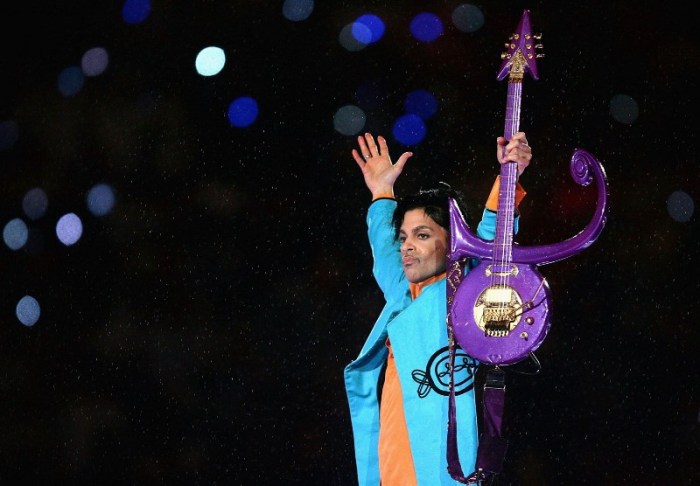
    The nearly reclusive Octavia Butler died unexpectedly in February of 2006 at her home in Seattle after falling and sustaining a head injury. With her death, the literary world lost one of its great storytellers. She is remembered, as Gregory Hampton wrote in Callaloo, as writer of “stories that blurred the lines of distinction between reality and fantasy.” And through her work, “she revealed universal truths.”

    Much has been written recently about Octavia E. Butler’s sexual orientation Many obituaries recognized her as “both a Black and Lesbian science-fiction writer” All references seem to link to an unsourced Wikipedia post. She has been described by some close friends as bisexual, as asexual, and as heterosexual. She apparently never discussed any lesbianism publicly. There is even a discussion with Octavia Butler and fellow Black sci-fi author Samuel Delaney on the MIT website where he briefly talks about being a gay man. It would seem natural that Octavia Butler might have used the opportunity to acknowledge that she was a lesbian, but she did not mention it in that discussion. Dr. Ron Buckmire, a math professor at Occidental College, very near where Miss Butler lived until her move to Seattle, writes in his blog his reflections on her passing. He says that he knew her casually and does remark that she was a lesbian. Whatever her orientation, she was a gifted and inspiring writer whose work impacted and inspired the lives of many.
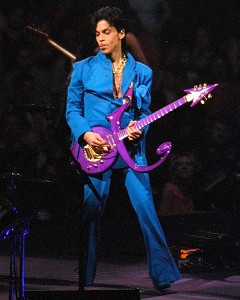
    The Octavia E. Butler Memorial Scholarship was established in Butler’s memory in 2006 by the Carl Brandon Society. Its goal is to provide an annual scholarship to enable writers of color to attend one of the Clarion writing workshops where Butler got her start. The first scholarships were awarded in 2007.

    In April 2014, it was announced that two new stories by Octavia E Butler had been discovered among her papers at the Huntington Library in San Marino, California, and that the stories are set for release this summer.

    We remember Octavia E. Butler on this day in celebration of the 67th anniversary of her birth, and in appreciation for her brilliant writing, her unique and pioneering spirit, and for her many contributions to our community.

    Copyright © MMXIV Stephen A. Maglott. I’m not fond of lawyers, but I have one anyway. She insist that I inform you that permission to share this biography or any portion thereof, on an online service or blog other than Facebook, must be granted in writing by yours truly (Stephen Maglott). Please feel free however, to share this post with others on Facebook.

    * If you enjoy these biographical tributes to same-gender loving/Trans men and women of African descent, please “like” the Ubuntu Biography Project page! And then go back and select “Get Notifications”. (https://www.facebook.com/UbuntuBiographyProject) Thank you

    From Prostitute to Professor: The 7 Lessons of Maya Angelou’s Messy Life φ Yolanda Young

    From Prostitute to Professor: The 7 Lessons of Maya Angelou’s Messy Life

    Yolanda Young

    Yolanda Young Become a fan

    Yolanda Young is the author of On Our Way To Beautiful founder of http://www.onbeingablacklawyer.com.

    Posted: 06/12/2014
    MAYA ANGELOU

    The death of Dr. Maya Angelou provided us the opportunity to once again delight in her memoirs, which chronicle the eclectic, bohemian first half of her life. Yet, we know from her writings that such praise was often withheld as she pursued her dreams of being a dancer and poet while raising a young child as a single mother. How many times must she have been urged to settle down and give up her artistic and cultural pursuits, which time and time again left her broke and broken? While we now refer to Angelou as a renaissance woman, until she published I Know Why The Caged Bird Sings in her 40s, her life resembled what is referred to in ghetto parlance as a hot mess.

    This messiness is what we all fear. It is why rather than pursue our dreams, we settle into the lives expected of us. Cubicles and cul-de-sacs become the things of our imagination. Only happiness and satisfaction studies suggest they are not enough. A GALLUP Poll last year found that only 30 percent of U.S. workers are passionate about their work. The majority (52 percent) are unhappy with their jobs and put little energy into their work while another 18 percent actually hate their jobs and actively work to undermine coworkers. We sacrifice our dreams only to find ourselves restless, bored and frustrated in midlife having realized what Angelou told us all along; “making a living is not the same thing as making a life.” Worse still, we recognize the irony in discovering after layoffs, financial setbacks and divorce that the “mess” is unavoidable.

    These unmet expectations and realization that youthful aspirations have been abandoned are suspected as the cause of feelings of discouragement and depression among those in midlife. The British think tank NatCen Social Research found that studies show that people between 35 and 55 suffer a dip in well-being. A separate study that analyzed data from “nationally representative” surveys in Australia, Britain and Germany found that the bell curve in well-being dips to its lowest point around the ages of 40 to 42.

    Even those who choose to pursue unconventional dreams don’t escape these feelings, especially if such pursuits have come at the expense of nearly everything else. I abandoned life as a lawyer in favor of one as a writer, activist and entrepreneur. Now having entered midlife without any of our culture’s success markers — husband, children, two-car garage — I have had to answer, both to myself and to others, the question of whether the path I’ve chosen was a wise one. Reflecting on Angelou’s has helped me find the answers.

    1. Be uniquely you.

    Angelou described herself in I Know Why the Caged Bird Sings as “a too-big Negro girl, with nappy black hair, broad feet and a space between her teeth that would hold a number-two pencil.” She knew such a girl would’ve perished trying to conform to mainstream conventions. “If you’re always trying to be normal, you will never know how amazing you can be.” Instead of fretting over not being a swan, Angelou reinvented herself as a rare bird. As many biographers have noted, she won’t be remembered for her poems or plays, but for her memoirs and for being Maya Angelou. The key to discerning one’s authenticity is quite simple: “Listen to yourself and in that quietude you might hear the voice of God.”

    2. When it comes to failure, be courageous.

    Angelou was a marvelous failure. Her most noteworthy stage performance, playing the seamstress in the two-woman play Mary Todd Lincoln, earned her a Tony nomination but closed on opening night. The rolling stone never stuck to one thing for long. She moved from coast to coast, continent to continent, sometimes making poor childcare decisions, one of which resulted in her son’s brief abduction. She didn’t have a stable home or steady job until she was in her 50s, an age at which many are preparing for retirement. She divorced several times but would would never confirm the exact number, “for fear of sounding frivolous.” Aware of all her failings, Angelou was brave enough to look at herself. “We have to confront ourselves. Do we like what we see in the mirror? And, according to our light, according to our understanding, according to our courage, we will have to say yea or nay — and rise!”

    3. Know who your friends are.

    One would be hard-pressed to identify a significant black figure Angelou didn’t know. She danced with Amiri Baraka. Billie Holiday visited her home and explained the meaning of Strange Fruit to her young son. While a calypso dancer she worked with Alvin Ailey. James Baldwin gave her the introductions that would lead to the publication of her first memoir. These were people she deeply cared for, but in anEssence interview, she had this to say of friendship.

    There’s a marked difference between acquaintances and friends. Most people really don’t become friends. They become deep and serious acquaintances. But in a friendship you get to know the spirit of another person, and your values coincide. Friends may disagree, but not about serious matters. A friend will stand for you when you are no longer able… Years ago one of the slick White women’s magazines asked if they could photograph me with my closest friends for an issue they were doing on friends. The editor wanted me to bring Oprah. I have 30 years on Oprah. She calls me her friend, her mother, all that. I am very close to her in a motherly way. So I told [the magazine], ‘I have three dear friends — Dolly McPherson, Jessica ‘Decca’ Mitford and M.J. Hewitt — they are sisters to me.’

    4. Believe you can do anything.

    For Angelou, inexperience was never a reason not to take on an interesting job. Angelou’s only criterion was seemingly that a new occupation share little to no similarities with her previous one. At sixteen, she became San Francisco’s first African-American streetcar conductor and later passed herself off as an experienced Creole chef. She held jobs dancing in a nightclub, stripping paint from old cars, and singing Calypso. She knew nothing about being a journalist when she accepted a position as an editor for The Arab Observer,” an English-language magazine. She said of the experience,

    I stayed at the Arab Observer for over a year and gradually my ignorance receded. I learned from Abdul Hassan how to write an opinionated article with such subtlety that the reader would think the opinion his own…I received a raise from Dr. Nagati, the respect of my fellow workers and a few compliments from strangers…

    She made her television debut as Kunte Kinte’s grandmother in the acclaimed television adaptation of Alex Haley’s Roots. And in the one-time high school dropout who never attended college became the Reynolds professor of American studies at Wake Forest University in North Carolina.

    5. Forgive others and yourself.

    In addition to enduring the injustices that came along with being poor, black and female in the South, Angelou was also raped as a child and beaten as a young woman. In a May 9th interview at her home she told Armstrong Williams, “I’ve learned that forgiving is one of the greatest gifts that I can give myself…And as soon as I do I feel lighter, brighter and better.”

    In Gather Together in My Name, Angelou shares one of her lowest periods when she served as a pimp for two lesbian prostitutes and sometimes worked as a prostitute herself. In one interview, she said of the experience.

    If you happen to fall into that sort of experience, what you have to do is forgive yourself. If you’re in the very gutter, see where you are and admit it. As soon as you admit it, you can be like the prodigal son, the prodigal daughter. Get up and go home — wherever home is. Get up and go to a safe place, someplace where your spirit is not kicked and brutalized and your body not misused and abused. Get up. But you can’t get up unless you see where you are and admit it.

    6. Persevere.

    In A Song Flung Up to Heaven, Angelou tells of her midlife crisis which was accompanied by great sorrow. Returning to the States after the end of a romance in Africa, Angelou became a Civil Rights activist only to be witness to the Movement’s greatest tragedies. She was working with Malcolm X to establish his foundation when he was assassinated New York City. Three years later she was working as the northern coordinator for Dr. Martin Luther King Jr. when he was gunned down in Memphis on Angelou’s 40th birthday. For a time, Angelou withdrew from society unable to deal with the tragedy, but eventually she harnessed her grief and regrets to write her seminal work, I Know Why The Caged Bird Sings. From then on, she would rise at dawn and set out for the motel room where she would write. Her only companions were a Bible, a dictionary, a thesaurus, a stack of legal pads, and a bottle of sherry. Having written her way out of the worst time in her life, she credited it with her survival. “All my work is meant to say, ‘You may encounter many defeats, but you must not be defeated…Nothing will work unless you do.”

    7. Change.

    Angelou was a master of reinvention. She didn’t settle on a name until after her first marriage, claiming her childhood nickname and a twist on her first husband’s last name. For Angelou, change was essential. Perhaps more so when one decides nothing can be done at all. “If you don’t like something, change it. If you can’t change it, change your attitude.”


    Yolanda Young Headshot

    Follow @yolandayoungesq

    Follow Yolanda Young on Twitter: www.twitter.com/yolandayoungesq


    “Into a daybreak that’s wondrously clear . . . I RISE” φ Victory Service Honoring the Life of Dr. Maya Angelou

    20030306F_christman9332

    “Out of the huts of history’s shameφ
    I rise
    Up from a past that’s rooted in pain
    I rise
    I’m a black ocean, leaping and wide,
    Welling and swelling I bear in the tide.
    Leaving behind nights of terror and fear
    I rise
    Into a daybreak that’s wondrously clear
    I rise
    Bringing the gifts that my ancestors gave,
    I am the dream and the hope of the slave.
    I rise
    I rise
    I rise”


    Watch the full Service Here