HUD’s House of Cards — ProPublica

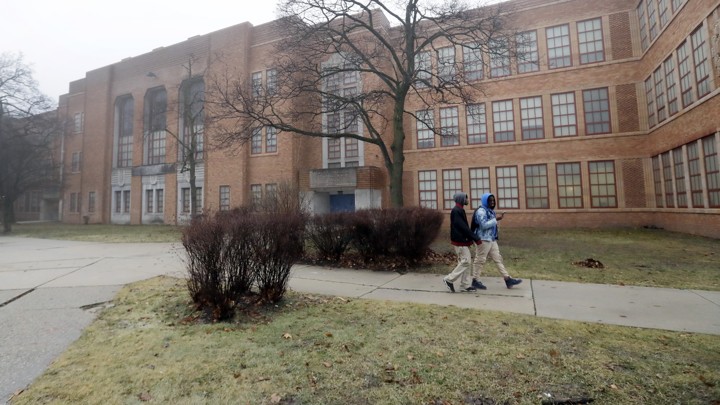
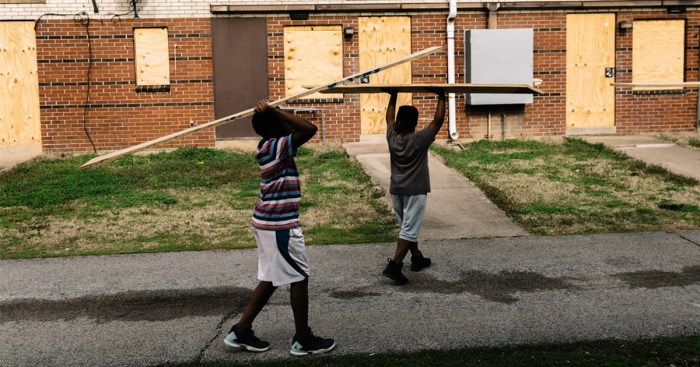
HUD’s flawed oversight of living conditions in federally subsidized housing can leave people living among rats, roaches, mold and other dangerous conditions for years. The lack of solutions for small- and mid-sized cities is the affordable housing crisis nobody’s talking about.

Source: HUD’s House of Cards — ProPublica

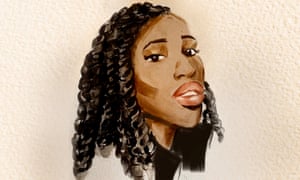
Why dark-skinned black girls like me aren’t getting married | Life and style | The Guardian

Black women in America marry less than others – and the numbers are even lower for darker skinned black women. Is colorism – favoring lighter skin – to blame? Dream McClinton puts herself on the line to report

Source: Why dark-skinned black girls like me aren’t getting married | Life and style | The Guardian

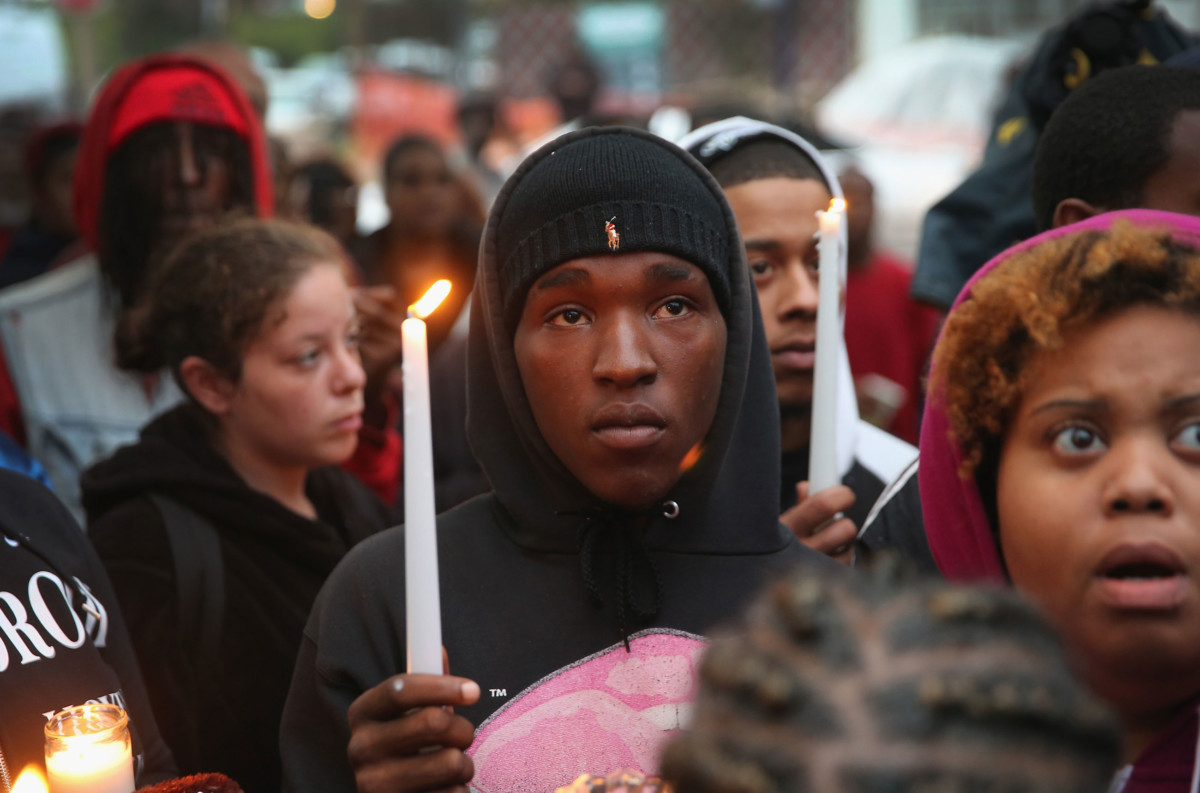
Research Shows Entire Black Communities Suffer Trauma After Police Shootings ::: TruthOut

Research Shows Entire Black Communities Suffer Trauma After Police Shootings

Following several nationally publicized police killings of unarmed Black Americans in the United States, Eva L., a fitness instructor who identifies as Black, started to experience what she describes as “immense paranoia.” She would often call in sick, because she feared risking an encounter with police upon leaving her house. She also started to second-guess her and her husband’s decision to have children.

“Seeing Black bodies murdered and physical/emotional violence online and on the news” was a trauma she could no longer bear, Eva says. “I was terrified of bringing a child into the world we live in and experience as Black people. I thought not having kids was a truer sign of love than risk them being harmed by this world.”

A recent study sponsored by the University of Pennsylvania — released just before the anniversaries of the deaths of Eric Garner (2014), Michael Brown (2014), John Crawford (2014), and Philando Castile (2016) — found that there could be millions like Eva, for whom these killings have been a mental health trigger.

Research included data from the Mapping Police Violence Projectdatabase for police killings between 2013 and 2016 and information from the Behavioral Risk Factor Surveillance System of over 103,000 Black Americans. The results indicate that police killings of unarmed Black Americans are having a population-level impact on the mental health of Black Americans.

According to researchers, the incidents may contribute to 1.7 additional poor mental health days per person every year, or 55 million more poor mental health days every year among Black Americans across the United States. That means the mental health burden for African Americans caused by police killings of unarmed Black victims is nearly as great as the mental health burden associated with diabetes. African Americans have some of the highest rates of the disease, which contributes annually to 75 million days of poor mental health among them.

Eva started seeing a therapist who diagnosed her as having generalized anxiety and post-traumatic stress disorder. It’s been two years now, and she admits that her progress toward healing has been slow, yet steady.

Jacob Bor, co-author of the study and assistant professor at the Boston University School of Public Health, says the responses in his social circle to police killings of unarmed Black victims is what interested him in conducting this study. Bor noticed that White people were able to comprehend “the injustice on an intellectual level but did not experience the same level of trauma.”

The study findings confirmed Bor’s personal observations. The research team did not observe spillover mental health effects in White respondents from police killings. It should also be noted that among respondents of either race, there were no spillover effects for police killings of unarmed White people or killings of armed Black people.

The research is essential in considering our own personal experiences, says Bor, adding that the findings speak to the overall “value of different people’s lives.” This society “has a long history of state-sanctioned violence” toward racially marginalized groups, he says.

The mental health sector is only now researching the impact of police brutality, a concern that has affected African Americans for decades. “Clinicians can go through medical school without [gaining] any experience in treating the effects of racism,” Bor says. Studies like his, he adds, can help to create long overdue critical mainstream discussions about the effects of racism on mental health, such as, “How do we in public health, society, and among the clinical and mental health services support people when these incidents occur?” and “Can a profession dominated by White providers effectively treat the emotional struggles of ‘living while Black’ in this country?”

According to Bor, these discussions are needed to implement change. “Among many White Americans, there is an empathy gap … and a failure to believe when people of color say ‘this hurts me,’” he says.

Adding to the deficiency of culturally competent therapists, poverty and other formidable socio-economic challenges — also stemming from structural racism — remain steadfast barriers to African Americans accessing mental health care, according to the American Psychological Association.

New York City’s first lady, Chirlane McCray, has also become a passionate advocate for what she describes as a movement for “culturally competent mental health care.”

“When you talk about people of color, who are obviously facing discrimination and legacy of racism and poverty in huge numbers, you are talking about something that is really tough to overcome,” McCray says.

Inadequate care undermines benefits from policies and resources designed to mitigate the burdens of systemic oppression. “Mental illness along with substance abuse disorders are hardship multipliers,” she says. Struggling unsupported with “mental illness can make everything that much harder.”

For example, holding on to affordable housing, staying enrolled in college, and even surviving encounters with law enforcement can be extremely more difficult for those suffering from mental illness or trauma, McCray says. In fact, the most recent annual numbers from the Washington Post’s database of fatal police-shooting victims indicate that “nearly 1 in 4 of those shot was described as experiencing some form of mental distress at the time of the encounter with police.”

“Mental health is the ultimate intersectional concern,” McCray says. “It is reflected in all of our policies … education, housing, school, relationships.”

In 2015, she and her spouse, Mayor Bill de Blasio, launched Thrive NYC, a $850 million mental health program that incorporates 54 initiatives. Among the program’s several core objectives is the aim to address the stigma around mental illness and increase access to treatment across the city. McCray believes that ThriveNYC’s community focused approach is one of several necessary steps toward reaching historically under served groups.

“Culturally competent care to me is all about trust,” McCray says. “It improves early identification, accessibility, and outcomes.” Also, she says, “People have to be seen.” From her advocacy experience she has observed that “people have to feel that they can turn to someone that they trust.”

Connecting people with the appropriate resources, however, means surmounting many challenges. “There is great deal of work to be done to eliminate the stigma,” McCray says. There is also the matter of affordability and infrastructure. “We’ve never had a well-coordinated mental health system in our country — ever. People who have the money find ways to manage.” She says she wants to fight for everyone to get the resources they need to cope.

Eva recognizes that her path to healing has taken a significant amount of work and support beyond the means of many African Americans. “Access to therapy is a privilege,” she says. “I know that most people can’t afford weekly sessions at $150-plus.” Yet, she adds, “[going through therapy] is the only reason why I’m OK planning for kids at 32.”


Tasha Williams writes about economics and technology. Follow her on Twitter: @riseupwoman.

White Supremacy Has Always Been Mainstream ::: The Boston Reivew

White Supremacy Has Always Been Mainstream

STEPHEN KANTROWITZ

Image: Library of Congress

The Second Coming of the KKK: The Ku Klux Klan of the 1920s and the American Political Tradition
Linda Gordon
Mothers of Massive Resistance: White Women and the Politics of White Supremacy
Elizabeth Gillespie McRae
Bring the War Home: The White Power Movement and Paramilitary America
Kathleen Belew


White supremacy is a language of unease. It does not describe racial domination so much as worry about it.

White supremacy connotes many grim and terrifying things, including inequality, exclusion, injustice, and state and vigilante violence. Like whiteness itself, white supremacy arose from the world of Atlantic slavery but survived its demise. Yet while the structures are old, the term “white supremacy” is not. Although it first appeared in British abolitionist critiques and U.S. proslavery defenses in the first half of the nineteenth century, it only became commonplace—and notably not as a pejorative—in U.S. whites’ post-emancipation calls for a racial order that would reinstitute slavery’s political and economic guarantees.

White supremacy has always been hard work. Because of this, it is possible to imagine that someday there will be no one willing to perform the labor.

White supremacy’s opponents evoke it to condemn. Its proponents use it to summon up a vision of a racially ordered society, to rally political forces behind that vision, to establish laws and institutions that affirm it, and finally to render it natural and normal. But the very fact that the phrase requires speaking means that something has gone awry. If the hierarchy of races were real, it would easily have survived slave emancipation. Instead, that hierarchy must be constantly asserted and enforced, lest the white race be overwhelmed, overcome, and extinguished. White supremacy is organized around a dread of its own demise, and with it the white race.

This inherent instability has produced a welter of fears, fantasies, and imperatives, from racial purity to race war. It has also made “white supremacy” a call to action. Indeed, the effort to transform the phrase from a slogan into a fact has been a massive social and political project, involving the witting and unwitting labor of many millions of people. White supremacy has always been hard work.

But because it is work, it is possible to imagine that someday there will be no one willing to perform the labor. And sometime between the march from Selma to Montgomery and the election of Barack Obama, many Americans allowed themselves to believe something of the kind: that white supremacy’s advocates, having lost their long war, were giving up.

The violent manifestations of white supremacy over the past several years—from Dylann Roof’s murders in Charleston, through Donald Trump’s campaign and presidency—unwound that hope. No better illustration exists for white supremacy’s return to the cultural center than Charlottesville’s 2017 “Unite the Right” rally, in which emblems of the Klan, the Third Reich, and the Confederacy jostled with more esoteric banners and names, together representing a century’s worth of white supremacist politicking. By the time the sirens died out, it should have been clear that Dylann Roof was no “lone wolf,” but the legitimate offspring of a reemergent social movement.

Yet even as white supremacy appeared suddenly to be everywhere in U.S. life, many—and not just on the right—denied its existence. Trump’s refusal to criticize even neo-Nazis was treated as a uniquely craven act of “norm-breaking,” not as a predictable extension of decades of coded and not-so-coded racist appeals. In the rush to catch Trump out, what has been omitted from media reporting is the long history of indulging white supremacist ideology and expression. Consider how long Pat “Blood and Soil” Buchanan served as a respectable voice of the political and journalistic right, winning four states in the 1996 Republican primaries and later playing Rachel Maddow’s curmudgeonly uncle on MSNBC—all in spite of his longstanding support for white ethnonationalism. Or remember the PBS NewsHour profile of Trump supporter Grace Tilly that failed to note her neo-Nazi tattoos. The network’s post-backlash editor’s note treated Tilly’s claim that her tattoos were religious, not racist, as worthy of debate, as though an enormous “88”—code for “Heil Hitler”—paired with a bullseye cross, another white supremacy symbol, left room for uncertainty. The myth that white supremacy is a marginal political phenomenon has proved so durable that many people find it easier to deny its overt expression than confront a more troubling reality: “very fine people”—and not just fathers, husbands, and sons, but mothers, wives, and daughters as well—have always been central to the work of advancing white supremacist causes.

“Very fine people”—and not just fathers, husbands, and sons, but mothers, wives, and daughters as well—have always been central to the work of white supremacy.

Three recent books explore the twentieth-century history of this political project. In Linda Gordon’s thoughtful reconsideration of the 1920s Klan, we watch shameless grifters deploy racial hierarchy and exclusion to forge the largest social movement of the early twentieth century. In Elizabeth Gillespie McRae’s revelatory exploration of mid-century white women’s segregationist work, we see how the inheritors of that vision learned to speak in new languages, muted enough to pass in a society increasingly hostile to white supremacy but unmistakable to partisans as a continuation of the long struggle against racial equality. In Kathleen Belew’s groundbreaking account of the White Power movement from the mid-1970s to the 1995 Oklahoma City bombing, it becomes clear how a post–civil rights generation of white supremacist organizers positioned themselves as victims of an overbearing state, even as they nurtured Timothy McVeigh, Dylann Roof, and the dream of race war.

These works do not claim to provide a comprehensive account of twentieth-century white supremacy; such a project would also have to probe (as other scholars have) the forces of labor and capital, and—as only Belew does here—the relationship of domestic ideologies and practices to their imperial histories. But read together and through one another, these works provide a sobering crash course in the power, diversity, and persistence of white supremacist ideas and politics.

Across the long twentieth century, white supremacist activists nurtured an exclusionary racial nationalism. They envisioned a nation safely in the hands of its “rightful” owners, redeemed from misrule by “unfit” peoples, and made great again. Although their work relied extensively on white women’s organizational and ideological labors, they posited a world of white patriarchal families in which men spoke and fought while women sustained and reproduced. Responding to successive challenges, these activists developed new languages and new coalitions, but they remained consistently suspicious (at a minimum) of political authority that they could not directly control. Partly for this reason, they usually saw electoral politics as a critical arena of struggle, and they rarely abandoned it. Across the century, this ideological and organizational landscape has been home to hustlers, activists, and insurgents playing distinct but often complementary roles. White supremacy has always been at once a political movement, an armed struggle, and a long con.

Gordon’s Second Coming of the KKK shows how a white supremacist and nativist movement reset the boundaries of political discourse, clarified that the nation existed in the image and service of a particular kind of American, and took control of governments from school boards to Congress to give those imperatives life. Klansmen nurtured a politics of resentment against both “elites” who looked down on them and the immigrants, blacks, and radicals who seemed to challenge their world.

To many of its white contemporaries, the KKK of the 1920s was a respectable organization that promised to restore white Protestants to their proper place of authority.

The first Ku Klux Klan was founded in the 1860s by former Confederate soldiers and for a few years became the spear and symbol of the war against Reconstruction. This first Klan was actively suppressed by legal and military action in the early 1870s, and the campaigns of racial terror and political intimidation that finally overthrew Reconstruction were largely conducted under other names. The second Klan was founded in 1915 by William Joseph Simmons in response to that year’s blockbuster film, D. W. Griffith’s The Birth of a Nation, which reworked memories of the Reconstruction-era KKK into a mythos of white male chivalry combatting black sexual barbarism. Beginning in 1919, the Klan exploded in size and power as organizers channeled the era’s powerful currents of nativism and violent white supremacy through the heroic image and visual style of the film’s Klansmen. They coupled the anti-black rhetoric of the Reconstruction-era Klan with a pervasive hostility toward non-Protestant immigrants and what Simmons derided as their anti-American propensities for “Bolshevism, Socialism, Syndicalism, I.W.W.ism.” Gordon encourages us to understand that, to many of its white American contemporaries, the Ku Klux Klan of the 1920s was an “ordinary and respectable” organization that promised to restore white Protestants, mainly of the lower middle and skilled working classes, to their proper place of authority in U.S. cultural and political life. She reminds us that many of the Klan’s hobbyhorses—anti-black racism, antisemitism, anti-Catholicism, and nativism; censoriousness about sex and alcohol; support for eugenics; and narrow-minded nationalism—reflected broad and sometimes hegemonic aspects of 1920s U.S. culture.

Gordon also asks us to understand the movement as producing, not just reflecting, social concerns. The Klan channeled preexisting hatred of racial inferiors and haughty elites, but it also ginned up those expressions and provided new outlets for them. Conspiracy thinking was central to Klan rhetoric and ideology. Everywhere lurked sinister forces that sought to take over the U.S. government and subvert the country’s way of life. Indeed, those forces might already have taken power. Jews, Catholics, Bolsheviks, and African Americans were always about to swamp “true Americans” with rising birthrates; take control of U.S. police forces and public schools; undermine cherished values with sex, alcohol, or pornography; and oppress real Americans from the safety of powerful, distant institutions.

Such conspiracy talk effectively transformed grievances and insecurities into well-defined targets that local Klans could then organize against. In Madison, Wisconsin, for example, the Klan took up the cause of fighting illegal liquor trafficking in a neighborhood populated by Italians, blacks, and Jews. There and elsewhere, the Klan infiltrated or worked alongside police departments. Beatings, whippings, cross-burning, death threats, and fatal shootings marked the outer edge of the Klan’s activities, but in some locales—Dayton, Ohio; Williamson County, Illinois; large swaths of Oklahoma—assaults were common and condoned.

Continue reading

An Open Letter to Those Who Still Give a Damn ::: John Pavlovitz

An Open Letter to Those Who Still Give a Damn

JULY 21, 2018 / JOHN PAVLOVITZ

From   JohnPavlovitz  Stuff That Needs to Be Said

It’s exhausting to give a damn isn’t it?

To be a person of compassion in a time when compassion is in such great demand?

To wake up every day in days like these, and push back against predatory politicians and toxic systems and human rights atrocities and acts of treason and spiritual leadership failures and Presidential Tweet tantrums—the volume and the relentlessness of the threats can be wearying.

You may have noticed.

I think you have.

And you’re not simply carrying around these big picture, larger systemic sicknesses and political realities—but the people behind them; the names and the faces and the lives of specific human beings who are under unprecedented duress right now; people whose stories you listen to and know and are living within, people you dearly love.

And day after day, all these massive realities and these individual stories begin to accumulate upon your shoulders and in your clenched jaw and in your elevated heart rate, and in the knot in your stomach that returns every morning when you check Twitter or turn on the news or step out into your community or walk into the kitchen—and you see so many reasons for grief, places so many places compassion is so needed and yet so scarce.

And worst of all, is how many people both at distance and very close to you, just don’t seem to give a damn; how the pain of other people simply doesn’t register in them anymore.

It seems like fewer and fewer people are capable of even an entry-level empathy for the suffering around them, and you’re seriously considering joining their ranks, because of how tired you are of carrying both your own and their share of compassion for a hurting humanity.

Not long after the election I purchased a blood pressure monitor. And not one of those manual base models, either. I went high-end, top of the line; full upper arm cuff, automated pressure, digital readout—the works. I soon stopped using it though, as it was a daily reminder of how stressed I was. I don’t look at it any longer. I don’t measure my blood pressure anymore. Now I just assume it’s dangerously high.

Those of us who give a damn all have new dangers assailing our hearts these days, and it is in this time of relentless urgency and sustained trauma and prolonged fatigue and profound fracture that you and I find ourselves.

I’m not sure why you’re reading this, but it’s probably because still you’re a damn-giver; because you are a fierce lover of humanity and of the planet, and of people who don’t look or worship or sound like you. As a result you probably find yourself pissed off, disconnected, isolated, worn out, and exhausted because how few people are as moved by the need around them as you are.

Whether you’re an activist or a minister or a parent or a caregiver, or just a citizen of the planet who is moved by other people’s suffering—you likely feel the immeasurable heaviness of these days. Sure, speed and activity can mask it for a while, but if you stop long enough, the reality of the fatigue catches up to you—you can measure the toll it’s all taken on you. I want you to measure it. I want you reckon with how tired you are. I want you to hear yourself exhale with the heavy sigh of someone who feels the weight of it all.

There is a cost to compassion, a personal price tag to cultivating empathy in days when cruelty is trending. There is in your body and head and in your midst, a collateral damage to you giving a damn when others do not, and it manifests itself in many ways: in irritability, impatience, physical illness, eating emotionally, addictive behavior, the inability to be present to the people who love you, an obsession with social media, a fixation on how jacked up everything is.

Notice these things in you today, and give them your attention.
Extend some of that compassion you’re so willing to extend to the world—to yourself.
Take some time to step away from the fray and the fight. It will still be there when you return, and you’ll be better able to face it.

Friend, I know you’re exhausted. If you’re not exhausted right now your empathy is busted. But I also know that you aren’t alone.
Millions of people are as tired as you are right now.
We too, live in disbelief at how callous so many people we know and love have become.
We too, are incredulous witnessing our elected leaders and parents and neighbors and pastors and parents and favorite aunts abandon any semblance of kindness.
We too, feel the fatigue of believing we’re doing this damn-giving alone.

You are in good company, so keep going.
Fight like hell to keep your heart soft, even while so many people have become hardened.
Yes the world is upside-down right now, but we can make it right—one beautiful act of decency at a time.
Get some rest and keep going.
The world needs people like you.

Blessed are the damn-givers, for they will right-side the world.

About John Pavlovitz  

John Pavlovitz is a writer, pastor, and activist from Wake Forest, North Carolina. In the past four years his blog Stuff That Needs To Be Said has reached a diverse worldwide audience. A 20-year veteran in the trenches of local church ministry, John is committed to equality, diversity, and justice—both inside and outside faith communities. In 2017 he released his first book, A Bigger Table. His new book, Hope and Other Superpowers, arrives on November 6th.

Contact John

New Report: The Capitol of Suspensions: : Examining the Racial Exclusion of Black Males

New Report- The Capitol of Suspensions: : Examining the Racial Exclusion of Black Males in Sacramento County

Across the nation, Black males are routinely exposed to exclusionary practices that remove them from learning environments (Howard, 2008, 2013; Wood, 2017; Wood, Essien, & Blevins, 2017). These practices include over-placement in special education, in-school suspension, out-of-school suspension, and even expulsion (Losen & Skiba, 2010). Among these forms of exclusionary discipline, suspensions have been a topic of continued interest in the past several years, with numerous reports and studies demonstrating that California is home to some of the most egregious suspension patterns in the country.

As detailed in a recent report, GET OUT! Black Male Suspensions in California Public Schools, Sacramento County is ground zero for some of the highest total suspensions in the State. In fact, Sacramento county has the second highest total suspensions in California, falling only behind Los Angeles County. This rate exceeds those in other urban counties, such as San Bernardino, Riverside, Contra Costa, Alameda, and San Joaquin (Wood, Harris III, & Howard, 2018).

Prior research has demonstrated that students who are regularly suspended are being tracked into the prison industrial complex, a pattern often referred to as the school-to-prison pipeline. Thus, while some students are being socialized by schools for college-going and entering into the workforce, others are being socialized for prison. Moreover, research has also shown that those subjected to suspensions are more likely to enter into the permanent underclass and to have a reliance upon social services (Darensbourg, Perez, & Blake, 2010; Fenning & Rose, 2007; Skiba, Arredondo, & Williams, 2014). Bearing this in mind, this brief sought to highlight key facts about suspensions in Sacramento County. These facts are meant to generate conversations around issues of racial injustice and educational inequities that permeate the region’s educational institutions that fortify the economic and social health of the region.

This brief details the exposure of Black males to exclusionary discipline in Sacramento County. In particular, this report highlights the high suspensions of Black boys and young men in Sacramento County public schools. Some of the key findings include:

  • Black males are 5.4 times more likely to be suspended in Sacramento County than the statewide average.
  • Nearly 18 Black males were suspended, per day, in the county.
  • Sacramento County has four school districts in the top 20 suspension districts for Black males in the State of California.
  • Sacramento City Unified is the most egregious suspension district for Black males in the State of California.
  • Black males in early childhood education (kindergarten through third grade) are 9.9 times more likely to be suspended than their peers (statewide).
  • One third of all Black male foster youth are suspended in Sacramento County.

Full Report

Continue reading

“On the marital status of U. S. slaves: Evidence from Touro Infirmary, New Orleans, Louisiana” ∴ Dr. Trevon D. Logan

slavery

On the marital status of U. S. slaves: Evidence from Touro Infirmary, New Orleans Louisiana

Abstract

We estimate marriage rates for enslaved African Americans using unique hospital records that report marital status for both free and enslaved patients. We find that marriage rates increased with age, that females had higher marriage rates than males, and that relatively more enslaved African Americans than whites were married, a result we partly attribute to the demographic composition of the hospital population. In addition, the admission records allow us to identify those slaves owned by slave traders. We find relatively high marriage rates among enslaved African Americans but significantly lower marriage rates for those slaves owned by traders, a result we attribute to the demographic composition of traded slaves and marital disruption caused by the slave trade. Comparisons with other postbellum sources provide suggestive support for the antebellum marriage patterns found in these hospital data.

Purchase: 

Dr. Trevon D Logan    @TrevonDLogan
“On the marital status of U. S. slaves: Evidence from Touro Infirmary, New Orleans, Louisiana” was just published. We provide new evidence on slave marriage and the extent to which the slave trade disrupted black marriage patterns.
 
Dr. Logan is the Hazel C. Youngberg Distinguished Professor of Economics @OhioState. Author of Economics, Sexuality, and Male Sex Work.    

Students in Detroit Are Suing the State Because They Weren’t Taught to Read

Students in Detroit Are Suing the State Because They Weren’t Taught to Read

Students walk outside Detroit’s Pershing High, which isn’t one of the institutions named in the suit but was identified as one of the city’s lowest-performing schools CARLOS OSORIO / AP

What to do when a school is infested with vermin, when textbooks are outdated, when students can’t even read? Perhaps the answer is sue the government.

That’s what seven students in Detroit have done. Their class-action suit filed against the state of Michigan asserts that education is a basic right, and that they have been denied it.

 Usually, such education-equity cases wend their way through state courts, as all 50 state constitutions mandate public-education systems, while the country’s guiding document doesn’t even include the word education. But this case, Gary B. v. Snyder, was filed in federal court, and thus seeks to invoke the Constitution. And as of this week, it’s headed to the federal appeals court in Cincinnati.

The lawyers filing the suit—from the pro bono Los Angeles firm Public Counsel—contend that the students (who attend five of Detroit’s lowest-performing schools) are receiving an education so inferior and underfunded that it’s as if they’re not attending school at all. The 100-page-plus complaint alleges that the state of Michigan (which has overseen Detroit’s public schools for nearly two decades) is depriving these children—97 percent of whom are students of color—of their constitutional rights to liberty and nondiscrimination by denying them access to basic literacy. Almost all the students at these schools perform well below grade level in reading and writing, and, the suit argues, those skills are necessary to function properly in society. It’s the first case to argue that the U.S. Constitution guarantees the right to become literate (and thus to be educated) because other rights in the Constitution necessarily require the ability to read.


Continue reading

Black homeownership is stuck near 30-year lows

‘We haven’t made any progress’: Black homeownership is stuck near 30-year lows

July 6 at 10:48 AM 


Jani Tillery, 42, is an attorney at the Children’s Law Center in Washington who has been looking for homes since October. She’s made three offers since the end of November but lost to other bidders and she’s having a hard time finding homes in her price range of less than $200,000. (Andre Chung/for The Washington Post)

Jani Tillery thought she would be a homeowner by now.

Her parents bought a house in the Detroit suburbs in the late 1970s while living on a modest income. Her mother was a teacher. Her father worked in the automotive industry. They raised their children in the house and paid off the mortgage. They will probably live there in retirement and possibly pass the house — not only a home with rich sentimental value but also a sizable financial asset — on to their children.

Tillery, 42, hoped this would finally be the year she, too, could buy. She’s a lawyer at a nonprofit in Washington, and she recently got a promotion and raise.

Yet, she says, this part of the American Dream seems out of reach for her, as it is for many other African American workers despite notable strides in other aspects of their finances.

In many ways, African Americans have regained the ground lost during the financial crisis. Many are finding jobs and getting raises.

But the holy grail of homeownership remains elusive. Forty-three percent of blacks owned homes in 2017, according to an annual report from the Joint Center for Housing Studies of Harvard University. In contrast, 72 percent of whites did, a gap that has mostly widened during the past three decades.

“The overall frustration is, I am a working citizen. I pay my taxes. I’m doing a job to help kids,” said Tillery, whose nonprofit helps children with disabilities. “It’s better for me to own a home. I’m 42. I don’t want to continue renting.”

There aren’t many homes in the area that fall into her price range of $200,000 or less. When she sees a listing she can afford, she either loses out to a buyer who will pay more or waive contingencies or learns that the property isn’t approved for Federal Housing Administration mortgages, which she is relying on because they require lower down payments than conventional loans.

READ MORE 

Jonnelle Marte is a reporter covering personal finance. She was previously a writer for MarketWatch and the Wall Street Journal. 

The Increasing Danger of Addiction to Video Games in Children

The Increasing Danger of Addiction to Video Games in Children


It is estimated that between 5 and 8 percent of children and teens are addicted to this form of entertainment. In recent days, the World Health Organization (WHO) has categorized video game addiction as a mental health disorder, an opinion that is not shared by all experts on these games.

One of the conditions that make their use attractive for children is that they can be practiced with very few elements, unlike more traditional games. At the same time, they allow children to have an escape from the difficulties and demands of the real world.

Full Article

More articles by:

Dr. Cesar Chelala is a co-winner of the 1979 Overseas Press Club of America award for the article “Missing or Disappeared in Argentina: The Desperate Search for Thousands of Abducted Victims.”