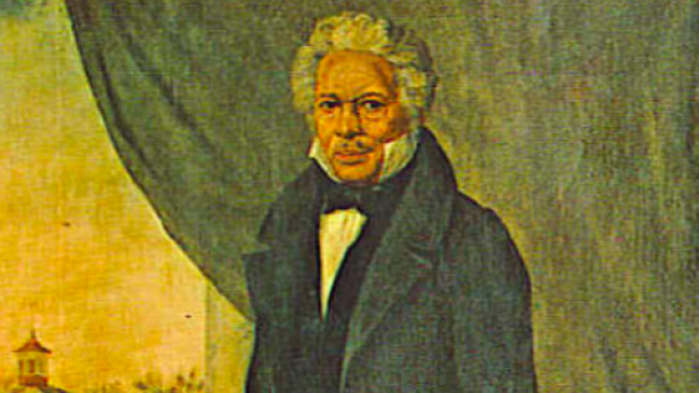
So what do the actual numbers of black slave owners and their slaves tell us? In 1830, the year most carefully studied by Carter G. Woodson, about 13.7 percent (319,599) of the black population was free. Of these, 3,776 free Negroes owned 12,907 slaves, out of a total of 2,009,043 slaves owned in the entire United States, so the numbers of slaves owned by black people over all was quite small by comparison with the number owned by white people. In his essay, ” ‘The Known World’ of Free Black Slaveholders,” Thomas J. Pressly, using Woodson’s statistics, calculated that 54 (or about 1 percent) of these black slave owners in 1830 owned between 20 and 84 slaves; 172 (about 4 percent) owned between 10 to 19 slaves; and 3,550 (about 94 percent) each owned between 1 and 9 slaves. Crucially, 42 percent owned just one slave.
Pressly also shows that the percentage of free black slave owners as the total number of free black heads of families was quite high in several states, namely 43 percent in South Carolina, 40 percent in Louisiana, 26 percent in Mississippi, 25 percent in Alabama and 20 percent in Georgia. So why did these free black people own these slaves?”
INCREASING PUBLIC POWER TO INCREASE COMPETITION: A FOUNDATION FOR AN INCLUSIVE ECONOMY
ISSUE BRIEF BY WILLIAM DARITY JR., DARRICK HAMILTON, AND RAKEEN MABUD
MAY 2019
Executive Summary
The United States needs an economy grounded in justice and morality, where everyone, free of undue resource constraints, can prosper. To achieve this, citizens ought to have universal access to undeniable economic rights, such as the right to employment, medical and health care, high quality education, sound banking and financial services, or a meaningful endowment at birth (Paul, Darity, Hamilton 2018). Currently, our system provides these rights primarily through the “free market” by private providers, but these private companies often fail to meet the following criteria:
• Quantity: Are goods adequately supplied?
• Quality: Are the goods high quality?
• Access: Do people have adequate access to these goods?
Because of the failure of America’s markets-first approach to policy, the federal government should intervene by introducing public options that provide these essential goods and services in direct competition with private firms. Doing so will set “floors” on wages and quality and “ceilings” on price for private actors who are intent on providing important economic rights at a cost. In employment, this might mean providing a federal jobs guarantee (FJG); in financial services, this could mean access to bank accounts and safe, nonpredatory loans. Throughout this issue brief, we explore what public options might look like in employment, health, housing, education, and financial services. We argue that in these sectors, public options are necessary to combat high-cost, low-quality provision by private actors and ensure universal and better quality access to all Americans.
Full Report here. https://rooseveltinstitute.org/wp-content/uploads/2019/04/RI_Increasing-Public-Power-to-Increase-Competition-brief-201905.pdf
“Black radicals had been experimenting with electoral strategies since the 1960s. In 2008 the Malcolm X Grassroots Movement (MXGM) studied the lessons learned from this work in the South and identified ways to advance movement goals. This work culminated in the 2012 publication of the Jackson-Kush Plan, which called for people’s assemblies (a grassroots co-governance model), an independent black political party, and a broad-based solidarity economy. Along the way, MXGM members identified Chokwe Lumumba to run for Jackson city council in 2009. He won, and by the time he ran for mayor four years later, he was well known, with an established infrastructure to support him.”
To understand racism in America, one must first disabuse themselves of the idea that race is a social construct—an idea that has been created and accepted by the people in a society.
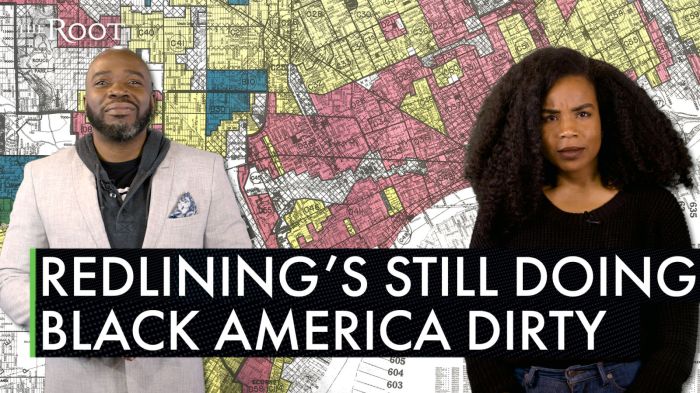
The deep and persistent racial wealth divide will not close without bold, structural reform. It has been created and held in place by public policies that have evolved with time including slavery, Jim Crow, red lining, mass incarceration, among many others. The racial wealth divide is greater today than it was nearly four decades ago and trends point to its continued widening.
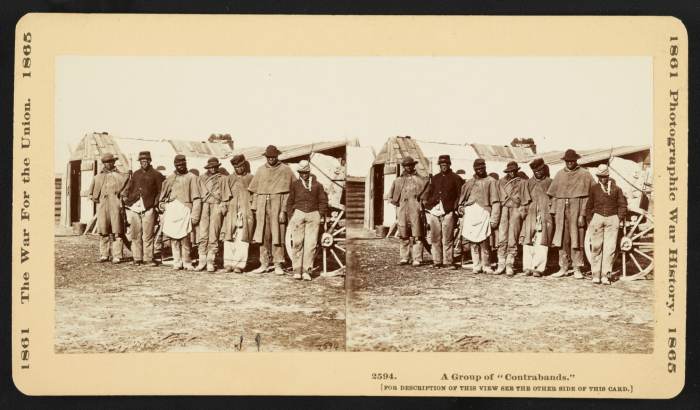
A group of “contrabands,” between 1861-1865. A stereograph showing a group of seven African American men, former slaves, dressed in old Union uniforms standing in front of a wagon and shack. (Library of Congress Prints and Photographs Division)By Gillian Brockell September 11, 2014On a rainy night in early 1865, Secretary of War Edwin Stanton arrived in Savannah, Ga. — which the Union had captured weeks earlier — with a question: What should become of newly free black people? It was a question that many in power had been asking for some time. What was different this time was to whom the question was posed: the newly free black people themselves.It was a visit born of a massacre about a month before, and it launched a debate that continues to this day.The issue of where these people should go had dogged Maj. Gen. William T. Sherman, too, as he marched through Georgia in the fall of 1864. Sherman had expected to pick up able-bodied black men to assist his troops (but not to join them; Sherman would not allow that). An unintended consequence of his scorched-earth policy was that all manner of freed slaves — including women, children and the elderly — abandoned the plantations and fell in behind him.More than 10,000 black refugees followed Sherman’s March to the Sea. That many mouths to feed would have proved challenging for a well-stocked force, but for an army that survived by foraging, it was nearly impossible. James Connolly, a 21-year-old major in the Illinois Volunteer Infantry (and future congressman), wrote that the refugee camps were so numerous that they often ringed the camps of the corps. The “contrabands,” as they were called, regularly wandered into Union camps to beg for food. And as Sherman’s force approached the sandy and less fertile Georgia coast, it became even more difficult to accommodate them.There was one corps, however, the refugees seemed to avoid: the 14th Corps, led by a brigadier general with a most unlikely name: Jefferson Davis. Davis — derisively called “General Reb” not only for having the same name as the Confederate president but also for his hatred of black people — had become notorious two years earlier when he shot dead a superior officer, Maj. Gen. William “Bull” Nelson, during an argument at a hotel. He escaped punishment only because the military couldn’t afford to lose an experienced field commander.Davis blamed the 600 or so black refugees following his unit for slowing down his 14,000 men in the closing weeks of the march. But from other accounts, it seems that the problem was the relentless winter rain. “At one time an officer counted 24 wagons sunk to their beds in mud,” writes Jim Miles in “To the Sea: A History and Tour Guide of Sherman’s March.” “He witnessed several mules sink out of sight.”Speed was vital. Davis knew that Lt. Gen. Joseph Wheeler’s Confederate cavalry was hot on their heels.For several days in early December, Davis drove the 14th Corps nearly nonstop, resting for two or three hours a night. One soldier reported falling asleep in the middle of “a fearfully hard march” and found himself in lock step upon jerking awake. Little more than coffee sustained them.On the night of Dec. 8, the corps arrived at the western bank of Ebenezer Creek. The bridge had been destroyed, in anticipation of their arrival, and the frigid waters had swollen to 10 feet deep and 165 feet wide. Scouts from Wheeler’s cavalry harassed Union troops in the rear.A pontoon bridge was in place by midnight, and Davis ordered the corps to cross the creek in silence and under the cover of darkness. According to Miles, a single Confederate cannon could have destroyed the bridge and stopped the entire corps, then only 18 miles from Savannah.But in this tenuous artery, Davis saw an opportunity.“On the pretence that there was likely to be fighting in front, the negroes were told not to go upon the pontoon-bridge until all the troops and wagons were over: a guard was detailed to enforce the order,” recalled Col. Charles Kerr of the 16th Illinois Cavalry in a speech 20 years after the incident. “As soon as we were over the creek, orders were given to the engineers to take up the pontoons and not let a negro cross. . . . I sat upon my horse then and witnessed a scene the like of which I pray my eyes may never see again.”Just before sunrise, the refugees cried out as their escape route was pulled away from them. Moments later, Wheeler’s scouts rode up from behind and opened fire. Hundreds of refugees rushed forward into the icy current. Several Union soldiers on the eastern bank tried to help, pushing logs out to the few refugees still swimming.Some of the refugees were crushed under the weight of the stampede. Most slipped under the water and drowned. Those who remained onshore were either shot or captured and re-enslaved.And when Wheeler’s men began shooting across the creek, the Union soldiers helping the black people were ordered to rej
Thomas Burrell, president of the Black Farmers and Agriculturists Association and soybean farmer David Hall, composite image.
DON’T MISS STORIES. FOLLOW RAW STORY!
Black farmers in the Mid-South region surrounding Memphis used science to uncover a multi-million scheme to put them out of business and steal their farmland, WMC News reported Tuesday.
At the Mid-South Farm and Gin Show show in March of 2017, African-American farmers believe that Stine Seed Company purposefully sold them fake seeds.
Thomas Burrell, president of the Black Farmers and Agriculturalists Association, explained how black farmers were receiving one-tenth of the yield as their white neighbors.
“Mother nature doesn’t discriminate,” Burrell said. “It doesn’t rain on white farms but not black farms. Insects don’t [only] attack black farmers’ land…why is it then that white farmers are buying Stine seed and their yield is 60, 70, 80, and 100 bushels of soybeans and black farmers who are using the exact same equipment with the exact same land, all of a sudden, your seeds are coming up 5, 6, and 7 bushels?”
The results were so stark, resulting in millions of dollars in losses, the farmers took their seeds for scientific testing by experts at Mississippi State University.
The tests revealed the black farmers had not been given the quality “certified” Stine seeds for which they had paid.
Burrell suggested a land grab was the ultimate motivation of the perpetrators.
“All we have to do is look at here: 80 years ago you had a million black farmers, today you have less than 5,000. These individuals didn’t buy 16 million acres of land, just to let is lay idle. The sons and daughters, the heirs of black farmers want to farm, just like the sons and daughters of white farmers.”
“So we have to acknowledge that racism is the motivation here,” Burrell concluded.
The farmers have filed a class-action lawsuit in United States District Court for the Western Division in Memphis.
A state legislator is also seeking an investigation into the scheme.
Tennessee Rep. G.A. Hardaway (D-Memphis) vowed state government would investigate “issues which have negatively impacted our black farmers.”
“We will explore the avenues — whether its civil, whether it’s criminal — dealing with fraud,” Rep. Hardaway vowed.
One farmer victimized, David Hall, explained why he had paid extra for high quality seeds.
“We bought nearly $90,000 worth of seed” Hall explained. “It’s been known to produce high yield, so you expect it, when you pay the money for it, to produce the high yields.”
The farmers “were effectively duped,” Burrell told WREG-TV. “It’s a double whammy for these farmers, it accelerates their demise and effectively it puts them out of business.”
“No matter much rain Mother Nature gives you, if the germination is zero the seed is impotent,” Burrell reminded.
“We conclude based on the preceding analysis that the black-white intergenerational gap in individual income is substantial for men, but quite small for women. It is important to note, however, that this finding does not imply that the black-white gap in women’s individual incomes will vanish with time. This is because black women continue to have substantially lower levels of household income than white women, both because they are less likely to be married and because black men earn less than white men.” (p. 23)
In an attempt to estimate the impact of different marriage rates, Chetty et al. calculate the intergenerational mobility rates of black and white men raised in both single parent and married families, and find little difference. As they conclude, “parental marital status has little impact on intergenerational gaps” (p. 25).
In a new paper published today, we examine the same question in a different way. (See our longer Technical Paper here, and full Results here). We confirm the stark differences in upward earnings mobility for black men compared to both black women and whites. We also confirm that black women, despite their solid earnings mobility, have very low family income mobility. We then estimate the impact of racial differences in marriage rates by simulating higher marriage rates among black women: like Chetty, we find no significant effects.
Specifically, Chetty et al. show that black men born to low-income parents are much more likely to end up with a low individual income than black women, white women, and—especially—white men. As they write:
Black and white Americans, on different starting blocks
Black and white children are born into very different economic circumstances. Almost half of black boys and girls are in households in the bottom fifth of the income distribution, compared to just over one in ten white children:
Almost half of black youths grew up in the bottom quintile
Share of youths ages 14 to 16 with parents in each income quintile
Black menWhite menBlack womenWhite women0%50%100%0%100%Bottom quintileSecond quintileMiddle quintileFourth quintileTop quintile
There are, then, huge race gaps in the chances of being born to or raised in a poor family—gaps that were scarcely lower among children born in the early 1980s than they were among those born in the years around 1960. But what about the chances of escaping poverty as an adult?
Using data on 4,200 black and white Americans from the NLSY97, we find that over half (54 percent) of black men born into households in the poorest fifth of the family income distribution end up, as individuals, in the poorest fifth of the earnings distribution for their respective gender, between the ages of 28 and 35, compared to the minority of white men (22 percent), white women (29 percent), and black women (34 percent).
Black men have low earnings mobility
Share of youths from the bottom quintile who remain in the bottom quintile as adults
Black menWhite menBlack womenWhite women0%20%40%60%80%0%80%
In terms of their individual earnings, black women have similar odds of escaping poverty as white women, though both these groups lag behind the upward mobility of white men. These analyses don’t consider the income of other family members, however. What happens when we look instead at adult family income, as opposed to individual earnings? A very different picture emerges for black Americans:
Black men and women have low family income mobility
Percentage of youths from the bottom quintile who remain in the bottom quintile of family income as adults
Black menWhite menBlack womenWhite women0%20%40%60%80%0%80%
Black women face a very high risk of being stuck in poverty (62 percent), surpassing even the 50 percent risk faced by black men. For whites, the odds of remaining stuck in poverty remain relatively low, for both men (28 percent) and women (33 percent), when we use a family income measure.
The headline finding here is that, among those who grew up poor, black women are the only group showing a marked difference between the risk of being in the bottom quintile of the individual earnings distribution (for each gender), and the risk of being in the bottom quintile of the family incomedistribution (for the whole age cohort). Whites do well on both counts; black men do poorly on both counts. Black women do reasonably well on the first and very poorly on the second. This result is probably driven by the fact that black women tend to create families with black men who do poorly on both counts and thus bring down the family income results for black women.
Lower marriage rates aren’t hurting black mobility
Why? Various explanations could be given. The most obvious is that, assuming marriages or cohabitation mostly occur within racial groups, black women’s family position is damaged directly or indirectly by the poor outcomes for black men. If white women end up with white men, who in terms of their earnings are more than twice as likely to escape poverty as black men, their family income will be higher. Equally, if black women are more likely than white women to end up as single, they will also record a lower family income.
We set out to model the impact of household formation by artificially equalizing the marriage rates of black women and white women. The results will of course depend not just on whether they marry, but also on whom they marry. In our simulation, we assume that the additional women who are married have a husband with the same economic characteristics as their brother (see the Technical Paper for our detailed methods). The intuition here is that most people are likely to marry someone with a broadly similar background as themselves, and siblings, by definition, have an almost identical one. The results of this equal-marriage-rate simulation are as follows:
Simulating marriage does little to improve mobility for black women
This is certainly one of the most important implications of both their study and our own. Breaking the cycle of intergenerational poverty for black Americans requires a transformation in the economic outcomes for black men, particularly in terms of earnings. One important point here: the relationship between earnings and marriage runs in both directions. Married men tend, other things equal, to earn more: one study of identical twins suggests that being married raises earnings by one-fourth. Married men may feel more responsibility to provide economically for their families, and especially their children. Low marriage rates may therefore have some impact on earnings.
It is also clear that the vast inequalities by race cannot be alleviated by upward mobility alone. Black girls are, relatively speaking, more likely to move out of poverty in terms of their own earnings. However, we should keep in mind the sheer number of black children being raised in low-income households in the first place. Closing the race gaps in upward mobility will require wholesale shifts in economic outcomes, perhaps above all for men’s earnings.
Scott Winship is a former Brookings Institution fellow, now at the Joint Economic Committee. His contributions to this report ended before he took his current position. The authors did not receive financial support from any firm or person for this article or from any firm or person with a financial or political interest in this article. Winship is an honorary advisor for the Foundation for Research on Equal Opportunity and the Archbridge Institute. Other than the aforementioned, the authors are currently not an officer, director, or board member of any organization with an interest in this article.
Jani Tillery, 42, is an attorney at the Children’s Law Center in Washington who has been looking for homes since October. She’s made three offers since the end of November but lost to other bidders and she’s having a hard time finding homes in her price range of less than $200,000. (Andre Chung/for The Washington Post)
Jani Tillery thought she would be a homeowner by now.
Her parents bought a house in the Detroit suburbs in the late 1970s while living on a modest income. Her mother was a teacher. Her father worked in the automotive industry. They raised their children in the house and paid off the mortgage. They will probably live there in retirement and possibly pass the house — not only a home with rich sentimental value but also a sizable financial asset — on to their children.
Tillery, 42, hoped this would finally be the year she, too, could buy. She’s a lawyer at a nonprofit in Washington, and she recently got a promotion and raise.
Yet, she says, this part of the American Dream seems out of reach for her, as it is for many other African American workers despite notable strides in other aspects of their finances.
In many ways, African Americans have regained the ground lost during the financial crisis. Many are finding jobs and getting raises.
But the holy grail of homeownership remains elusive. Forty-three percent of blacks owned homes in 2017, according to an annual report from the Joint Center for Housing Studies of Harvard University. In contrast, 72 percent of whites did, a gap that has mostly widened during the past three decades.
“The overall frustration is, I am a working citizen. I pay my taxes. I’m doing a job to help kids,” said Tillery, whose nonprofit helps children with disabilities. “It’s better for me to own a home. I’m 42. I don’t want to continue renting.”
There aren’t many homes in the area that fall into her price range of $200,000 or less. When she sees a listing she can afford, she either loses out to a buyer who will pay more or waive contingencies or learns that the property isn’t approved for Federal Housing Administration mortgages, which she is relying on because they require lower down payments than conventional loans.

 “How Many Slaves Did Blacks Own?








 OCG
OCG 