Michelle Alexander: I can no longer just stay in my lane

Michelle Alexander: I can no longer just stay in my lane

September 3, 2013

by Michelle Alexander

For the past several years, I have spent virtually all my working hours writing about or speaking about the immorality, cruelty, racism and insanity of our nation’s latest caste system: mass incarceration. On this Facebook page I have written and posted about little else. But as I pause today to reflect on the meaning and significance of the 50th anniversary of the March on Washington, I realize that my focus has been too narrow.

Michelle Alexander graphic, webFive years after the March, Dr. King was speaking out against the Vietnam War, condemning America’s militarism and imperialism – famously stating that our nation was the “greatest purveyor of violence in the world.” He saw the connections between the wars we wage abroad and the utter indifference we have for poor people and people of color at home. He saw the necessity of openly critiquing an economic system that will fund war and will reward greed, hand over fist, but will not pay workers a living wage. Five years after the March on Washington, Dr. King was ignoring all those who told him to just stay in his lane, just stick to talking about civil rights.

Yet here I am decades later, staying in my lane. I have not been speaking publicly about the relationship between drones abroad and the War on Drugs at home. I have not been talking about the connections between the corrupt capitalism that bails out Wall Street bankers, moves jobs overseas and forecloses on homes with zeal, all while private prisons yield high returns and expand operations into a new market: caging immigrants. I have not been connecting the dots between the NSA spying on millions of Americans, the labeling of mosques as “terrorist organizations” and the spy programs of the 1960s and ‘70s – specifically the FBI and COINTELPRO programs that placed civil rights advocates under constant surveillance, infiltrated civil rights organizations and assassinated racial justice leaders.

I have been staying in my lane. But no more. In my view, the most important lesson we can learn from Dr. King is not what he said at the March on Washington, but what he said and did after. In the years that followed, he did not play politics to see what crumbs a fundamentally corrupt system might toss to the beggars of justice. Instead he connected the dots and committed himself to building a movement that would shake the foundations of our economic and social order, so that the dream he preached in 1963 might one day be a reality for all. He said that nothing less than “a radical restructuring of society” could possibly ensure justice and dignity for all. He was right.

I am still committed to building a movement to end mass incarceration, but I will not do it with blinders on. If all we do is end mass incarceration, this movement will not have gone nearly far enough. A new system of racial and social control will be born again, all because we did not do what King demanded we do: connect the dots between poverty, racism, militarism and materialism. I’m getting out of my lane. I hope you’re already out of yours.

This statement was posted by Michelle Alexander to her Facebook page on Aug. 28, 2013.

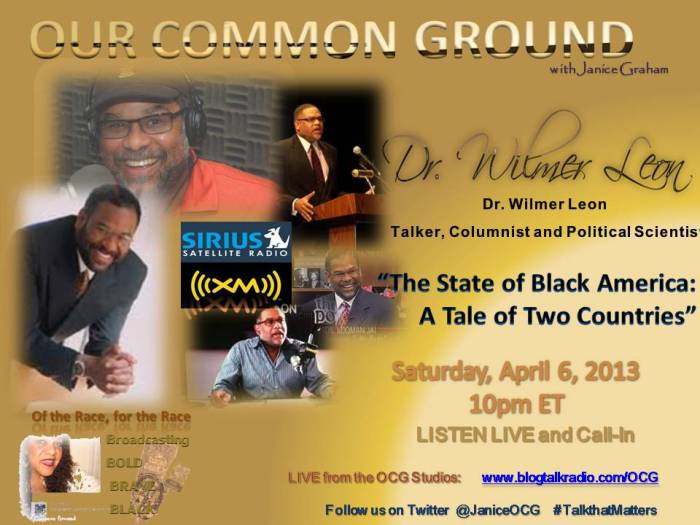
OUR COMMON GROUND with Janice Graham l “The State of Black America: A Tale of Two Countries” l Guest: Dr. Wilmer Leon l April 6, 2013

OUR COMMON GROUND with Janice Graham

April 6, 2013       10 pm ET  LIVE

“The State of Black America: A Tale of Two Countries”

Tonight’s Guest: Dr. Wilmer Leon


04-06 Wiler2 Leon


“The State of Black America: A Tale of Two Countries”

Tonight’s Guest: Dr. Wilmer Leon

Dr. Leon comes to OCG once again to weigh in on the issues which face Black America, the politics of our problems and the light of solutions available.

Wilmer J. Leon III, Ph.D. is a Political Scientist whose primary areas of expertise are Black Politics, American Government, and Public Policy. He is a Teaching Associate in the Political Science Department at Howard University in Washington, D.C., a nationally syndicated broadcast radio talk show host, columnist, commentator, political consultant, TV host, lecturer, and much sought after motivational speaker.

Dr. Leon earned a BS degree in Political Science from Hampton Institute, a Masters in Public Administration (MPA) from Howard University, and a Ph.D. in Political Science from Howard University.

A serious void exists in the public discourse relating to the issues that directly and/or disproportionately impact the global village in which we live. Dr. Leon’s lectures and writings focus on issues such as the media’s coverage of national and international issues, the criminal industrial complex, environmental racism, school vouchers, health care, crime policy, economic globalization, American domestic and foreign policy from as much of a non- biased and academically accurate perspective as possible. Dr. Leon’s perspective and lectures are grounded in the history of the African American community and the tradition of African American scholarship.

Dr. Leon is host/producer of the nationally broadcast call in talk radio program Inside The Issues With Dr. Wilmer Leon on XM/Sirius satellite radio channel 169 “Urban View” and the host of Epilogue, a political book discussion program on Press TV. He hosts discussion on Facebook as Dr. Leon Prescriptions.

Dr. Leon was a regular guest on CNN’s Lou Dobbs Tonight and is a contributing columnist to The Grio.com, The Black Agenda Report, The Maynard Institute.com, TruthOut.org, PoliticsInColor.com and Black Star News.

OUR COMMON GROUND with Janice Graham

“Speaking Truth to Power and Ourselves”

BROADCASTING     BRAVE     BOLD BLACK

LISTEN LIVE 

Join the discussion in our Open Chat during the broadcast.

 On the Web

Follow us on Twitter    @JaniceOCG      #TalkthatMatters

Like US on Facebook

LIVE: OCG Meetinghouse: http://www.blogtalkradio.com/OCG
For More Information: http://www.ourcommongroundtalk.wordpress.com/


Witness On the Bridge l In Conversation with Ruby N. Sales l March 23, 2013 l OUR COMMON GROUND

OUR COMMON GROUND with Janice Graham

WITNESSES FROM THE BRIDGE Series
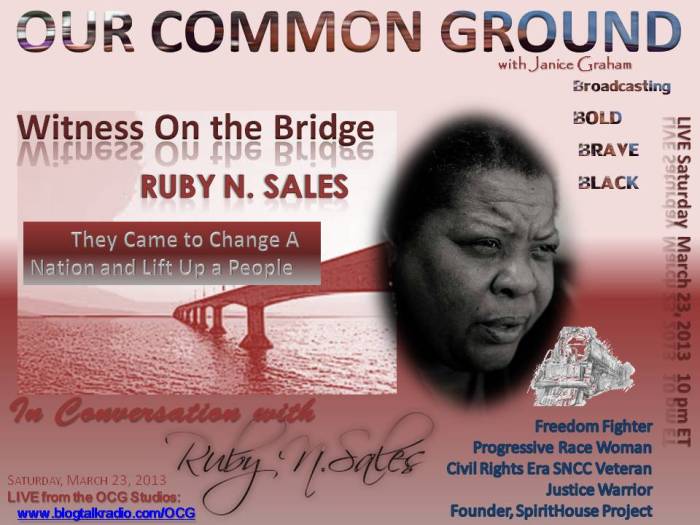
 

03-09 RubySales2

In Conversation with Ruby N. Sales


Civil Rights and Liberation Activist – Community Activist and OrganizerCommunity Education and Development Leader

 Human Rights Activist

March 23, 2013       10pm ET

LIVE and CALL-In

“WITNESSES FROM THE BRIDGE”
“They came to Change a Nation and Lift Up A People”
The Women of the Black Power Movement

about RUBY N. SALES

FREEDOM and JUSTICE WARRIOR
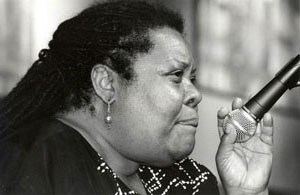
sales
Ruby Nell Sales is a highly-trained, experienced, and deeply-committed social activist, scholar, administrator, manager, public theologian, and educator in the areas of Civil, Gender, and other Human Rights. She is an excellent public speaker, with a proven track record in conflict resolution and consensus building. Ms. Sales has preached around the country on race, class, gender, and reconciliation, and she has done ground-breaking work on community and nonviolence formation. Ms. Sales also serves as a national convener of the Every Church A Peace Church Movement.

Along with other SNCC workers, Sales joined young people from Fort Deposit, Alabama who organized a demonstration to protest the actions of the local White grocery-store owners who cheated their parents. The group was arrested and held in jail and then suddenly released. Jonathan Daniels, a White seminarian and freedom worker from Episcopal Divinity School in Cambridge, Massachusetts was assassinated as he pulled Sales out of the line of fire when they attempted to enter Cash Grocery Store to buy sodas for other freedom workers who were released from jail. Tom Coleman also shot and deeply wounded Father Richard Morrisroe, a priest from Chicago. Despite threats of violence, Sales was determined to attend the trial of Daniels’ murderer, Tom Coleman, and to testify on behalf of her slain colleague.

As a social activist, Sales has served on many committees to further the work of reconciliation, education, and awareness. She has served on the Steering Committee for International Women’s Day, Washington, D.C.; the James Porter Colloquium Committee, Howard University, Washington, D.C.; the Coordinating Committee, People’s Coalition, Washington, D.C.; the President’s Committee On Race, University of Maryland; and the Coalition on Violence Against Women, Amnesty International, Washington, D.C. She was a founding member of Sage Magazine: A Scholarly Journal on Black Women. Sales received a Certificate of Gratitude for her work on Eyes on the Prize. Additionally, she was featured in Broken Ground: A Film on Race Relations in the South, by Broken Ground Productions. From 1991-1994, Sales founded and directed the national nonprofit organization Women of All Colors, dedicated to improving the overall quality of life for women, their families, and the communities in which they live. Women of All Colors organized a week-long SisterSpeak that brought more than 80 Black women together to set a national agenda.

In 2000, Dan Rather spotlighted Sales on his “American Dream” Segment. In 1999, Selma, Alabama gave Sales the key to the city to honor her contributions there. In 2007, Sales moved to Columbus, Georgia, where she organized: a southern summit on racism; a national write-in campaign to save Albany State from being merged into a White college; a grassroots and media campaign to shed light on the death of seventeen year old, Billye Jo Johnson, who allegedly killed himself on a dark road in Lucedale, Mississippi when a deputy stopped him for speeding; Long Train Running Towards Justice, which celebrated the work of Black teachers during segregation and explored the ways that the Black school culture has been destroyed by White officials under the guise of desegregation; and a meeting with students at Savannah State to assist them in organizing and mobilizing a move by officials to merge Savannah State with a White college.
03-09 RubySalesIn 2009, the History Makers named her a History Maker for her contributions to civic affairs. The Veterans of Hope Project selected her to be a part of its video series. Her video “Standing Against the Wind” has been shown at colleges around the nation.

Sales serves as the founder and director of the SpiritHouse Project. SpiritHouse Project is a national organization that uses the arts, research, education, action, and spirituality to bring diverse peoples together to work for racial, economic, and social justice, as well as for spiritual maturity.

about SPIRITHOUSE Project

SpiritHouse Project houses The Jonathan Daniels and Samuel Young Institute for Racial Justice, which (1) supports and prepares a new generation of peace and justice workers who want to discern a call to social justice and nonviolence; (2) strengthens their courage, hope, resolve, and reason to do this work; (3) prepares them to play leading roles in public policy debates about issues such as poverty, prison industrial complex, militarism, the shrinking budget for human needs, voting rights, privacy and judicial issues, and neo-conservatism; and (4) helps grassroots communities meet their urgent need for trained and committed volunteers or staff. Throughout her career, Sales has mentored young people and provided support and venues for an intergenerational community of developing and seasoned social justice performing and creative artists. Sales has a deep commitment to providing the education, practical experiences, and frame of references to contest racism and add their voices to a public conversation on the many streams of oppression that emerge from it.

SpiritHouse also houses SisterAll Programs that bring Black women together in assemblies, classrooms, and performance spaces to renew our historical roles as a community of activists, spiritual guides, and leaders who stand and work on the front lines for racial, economic, and human rights using the tools of nonviolence and participatory democracy. SisterAll One was a community-building project that called together black female scholars, activists, artists, students, workers, practitioners, and lay and ordained spiritual leaders between the ages of 18 and 35, alongside older Black women who have been long distance runners for justice.

Ruby Sales’ Spirit House Project interns will share what they have learned in their work tracking the different points of connection within the Prison Industrial Complex and Criminal Justice Reform.

Spirit House is located at 1884 Ponce De Leon Avenue NE #1, Atlanta, GA 30307

Join us in the conversation with one of our most powerful, prolific and important figures in contemporary Black History.

LIVE: OCG Meetinghouse: http://www.blogtalkradio.com/OCG

For More Information: http://www.ourcommongroundtalk.wordpress.com/

OUR COMMON GROUND with Janice Graham

“Speaking Truth to Power and Ourselves

“BROADCASTING BRAVE BOLD BLACK

Community Forum: http://www.ourcommonground-talk.ning.com/

Twitter: @JaniceOCG #TalkthatMatters                   Web: http://www.wordpress.ourcommongroundtalk.com/

The Day the Deltas Marched into History

WP Opinions

Opinions

The Day the Deltas Marched into History


By Mary Walton


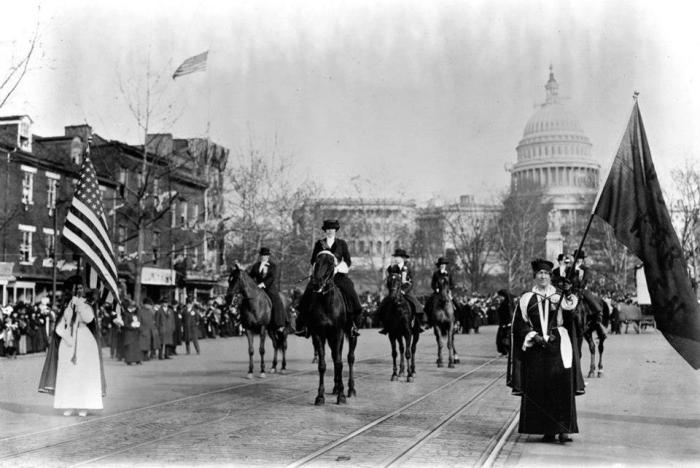
Lured by the promise of a parade unlike any Washington had seen, the first spectators began to arrive at 9 a.m. March 3, 1913, six hours early. By the time the trumpets sounded, some 250,000 people lined Pennsylvania Avenue.Leading the way from the Capitol to the Treasury Department was a horse-drawn float bearing a banner that read, “We demand an amendment to the constitution of the United States enfranchising the women of the country.” It would be followed by more floats, nine bands, four mounted brigades, three heralds with trumpets and somewhere between 5,000 and 8,000 women.

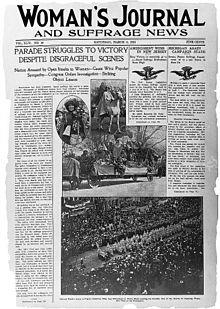
Organized in two months by Alice Paul, a driven, young Quaker, the capital’s first suffrage parade was timed to put pressure on Woodrow Wilson on the day before his inauguration.
Everyone was welcome to participate, including men, with one exception. In a city that was Southern in both location and outlook, where the Christmas Eve rape of a government clerk by a black man had fanned racist sentiments, Paul, a white woman, was convinced that other white women would not march with black women. In response to several inquiries, she had quietly discouraged blacks from participating. She confided her fears to a sympathetic editor: “As far as I can see, we must have a white procession, or a Negro procession, or no procession at all.”Aware they were not wanted, fearful they might be attacked, 22 founding members of Delta Sigma Theta, a new Howard University sorority, joined the procession anyway. Among black activists, the prevailing view was that if white women needed the vote to secure their rights, black women needed it even more. One adviser was Mary Church Terrell, a founder of the NAACP and an activist for women’s rights. When the sorority was founded Jan. 13, she wrote its secret oath.Memories of parades fade like old photographs. But for those who were least welcome, the 1913 suffrage parade has become a touchstone. Says Ella McNair, the Deltas’ director of public relations, “Everybody who has been a member of this organization knows about the march. They could have had a social, they could have had a tea. But they did not choose that. They were committed to advocacy and social action.”

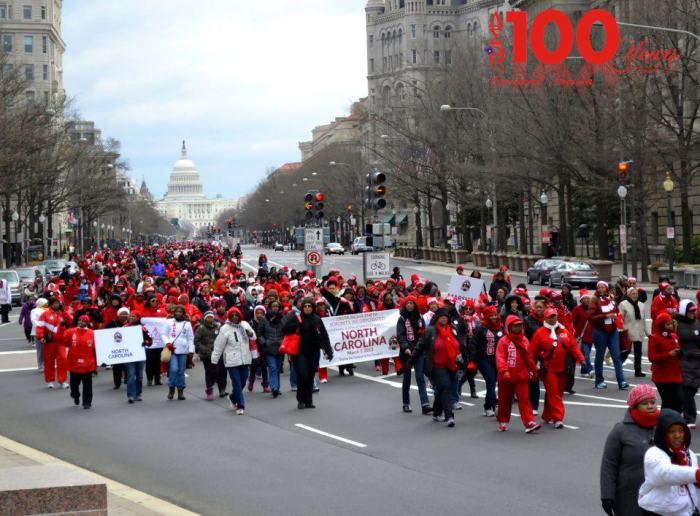
Marking their historic role a century ago, and also celebrating the centennial of their founding, thousands of Deltas plan to fill Pennsylvania Avenue today along with members of other women’s organizations.

If Paul had her druthers, there would have been no black marchers. But just days before the parade, she became more receptive to the possibility. What brought matters to a head was a letter from Nellie M. Quander, a schoolteacher and Howard graduate, who said that Howard women wanted to take part. Usually prompt to reply, Paul took a week to respond. She suggested Quander “call” at the headquarters of Paul’s parent organization, the National American Woman Suffrage Association. Records do not reflect a meeting.

Complaints of discrimination reached the association, which wired orders to permit black marchers. Paul had no choice. Representing the sorority in negotiations, Terrell agreed that the Deltas would march next to the New York delegation.

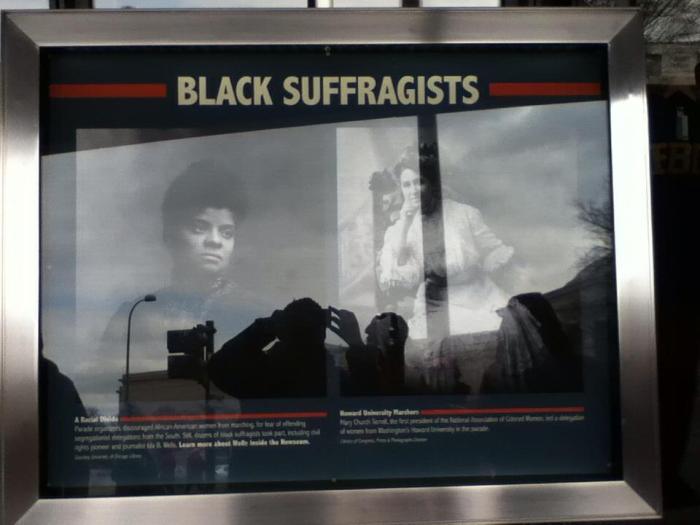
Meanwhile, panicky reports came from white suffragists in Chicago that Ida B. Wells-Barnett, the celebrated author of an anti-lynching campaign and an African American, planned to join the procession. When the Illinois unit mustered, leaders instructed Wells-Barnett to walk with an all-black group. Tears forming, Wells-Barnett refused to take part unless “I can march under the Illinois banner.” By all accounts she solved the issue herself, defiantly joining the unit in mid-parade.

At that point, few would have noticed. The parade was a shambles.

From the outset, authorities had been worried about the threat to security from male onlookers, particularly hard-drinking southern Democrats celebrating the election of a Virginia-born president. They suggested holding the event the day after the inauguration, perhaps on 16th Street, a safe distance from the Bowery. But Paul rallied supporters and went to the press. Open Pennsylvania Avenue to the women, urged the Washington Times, because that was where the men marched. Paul got her way.

The violence erupted minutes after the parade began. The crowd broke through steel cables and spilled into the street. Men, many of them drunk, spit at the marchers and grabbed their clothing, hurled insults and lighted cigarettes, snatched banners and tried to climb floats. Police did little to keep order. Observed one of Paul’s supporters, “I did not know men could be such fiends.” Galloping to the rescue, Army cavalry from Fort Myer cleared a path, and the parade continued on, albeit well behind schedule.

Paul was far from displeased. The parade, including the violence, was front-page news across America, drawing attention to suffragists and their cause. For its part, a fledgling sorority hatched just six weeks earlier could already claim a proud history.

Mary Walton is the author of “A Woman’s Crusade: Alice Paul and the Battle for the Ballot.”

delta3

suffrage2 suffrage3
deltas suffrage dst

What Happens If The Voting Rights Act Loses In The Supreme Court

What Happens If The Voting Rights Act Loses In The Supreme Court

By Ian Millhiser

Feb 26, 2013

We do not have to guess what the states currently subject to a key provision of the Voting Rights Act will do if the Supreme Court grants their wish to have that provision declared unconstitutional — top Republicans in those states have already told us. In a brief filed last August, Republican attorneys general from six of the states covered, at least in part, by Section 5 of the Voting Right Act complained that this landmark legislation is all that stands between them and implementing a common method of disenfranchising minority voters. Two of those states, South Carolina and Texas, admit that the Voting Rights Act stopped them from implementing a voter suppression law their governors already signed.

Of course, the voter suppression law at issue here are so-called “voter ID” provisions that require voters to present photo ID at the polls. Their supporters clam publicly that these laws are needed to prevent voter fraud at the polls, but this claim is absurd. Voters are more likely to be struck by lightning than to commit in-person voter fraud. A study of Wisconsin voters found that just 0.00023 percent of votes are the product of such fraud.

What these laws do accomplish is disenfranchisement; even conservative estimates suggest that they prevent 2 to 3 percent of registered voters from casting a ballot. This voter disenfranchisement is particularly pronounced among low-income voters, students and — a fact that is particularly salient for any discussion of the Voting Rights Act — racial minorities.

The Voting Rights Act, of course, protects against laws that expose minority voters to greater burdens than other voters. Section 5, the provision that the Supreme Court will consider tomorrow, requires parts of the country that have historically engaged in voter suppression to “pre-clear” any new voting laws with the Justice Department or a federal court in DC to make sure they do not impose racial burdens. Thus, voter suppression laws such as voter ID can be blocked before an election is held, preventing officials from being elected to office by an electorate that has been unlawfully culled of minority voters.

Lest there be any doubt, voter ID laws are just one of many tactics Republican lawmakers have turned to in order to reshape the electorate into something more likely to elect their favored candidates. Cuts to early voting days did not simply lead to long lines in states like Florida, they were also a direct attack on minority voters. As one Republican consultant admitted after last November’s election, “I know that the cutting out of the Sunday before Election Day was one of [the Florida GOP’s] targets only because that’s a big day when the black churches organize themselves.” Voter purges targeted Latino voters. Republican laws restricting voter registration also cut into the minority vote, as “Hispanic and African-American voters are approximatelytwice as likely to register to vote through a voter registration drive as white voters.”

As President Lyndon Johnson warned when he originally proposed the Voting Rights Act to Congress, vote suppressors will bring “every device of which human ingenuity is capable” to deny the right to vote. This is why it is so important that Section 5 exist. Advocates of disenfranchisement are smart, nimble and capable of subtlety. The law must have a mechanism to block their efforts from taking effect before an election is held using illegal, vote suppressing procedures.

Indeed, it is deeply distressing that the Supreme Court would consider weakening the Voting Rights Act at the exact moment that Republican lawmakers are engaged in what President Bill Clinton called the most “determined effort to limit the franchise” since Jim Crow. What America needs today is not weaker voting rights. At the very least, we need to keep the protections we already have and expand Section 5′s coverage to include many Republican-controlled states that are not currently subject to its rule — an expansion the Voting Rights Act explicitly contemplates under what is known as the “bail-in” provision of the law. The lawmakers who reauthorized the Voting Rights Act in 2006 could not have anticipated that Republican lawmakers in many states would begin a voter suppression campaign a few years later, but the drafters of the act were wise to include a provision that enables it to adapt to these circumstances.

Above all, it is hard not to escape the fact that, at the exact same time that the Republican Party is leading the charge to enact state-level voter suppression laws, the five justices most likely to strike down much of America’s most important voting rights law are the Court’s only Republicans. It will be difficult for the Roberts Court to maintain the perception that it places politics before the law if hands such a gift to Republican lawmakers bent on disenfranchisement.


THINK PROGRESS

V-Day l ONE BILLION RISING l World Wide February 14, 2013

vDAYABOUT V-Day

English | Deutsch | Español | Français

To read V-Day founder Eve Ensler’s bio, click here

V-Day is a global activist movement to end violence against women and girls. V-Day is a catalyst that promotes creative events to increase awareness, raise money, and revitalize the spirit of existing anti-violence organizations. V-Day generates broader attention for the fight to stop violence against women and girls, including rape, battery, incest, female genital mutilation (FGM), and sex slavery.

Through V-Day campaigns, local volunteers and college students produce annual benefit performances of The Vagina Monologues, A Memory, A Monologue, A Rant and A Prayer, Any One Of Us: Words From Prison, screenings of V-Day’s documentary Until The Violence Stops, and the PBS documentary What I Want My Words To Do To You, Spotlight Teach-Ins and V-Men workshops, to raise awareness and funds for anti-violence groups within their own communities. In 2012, over 5,800 V-Day benefit events took place produced by volunteer activists in the U.S. and around the world, educating millions of people about the reality of violence against women and girls.

Performance is just the beginning. V-Day stages large-scale benefits and produces innovative gatherings, films and campaigns to educate and change social attitudes towards violence against women including the documentary Until The Violence Stops; community briefings on the missing and murdered women of Juarez, Mexico; the December 2003 V-Day delegation trip to Israel, Palestine, Egypt and Jordan; the Afghan Women’s Summit; the March 2004 delegation to India; the Stop Rape Contest; the Indian Country Project; Love Your Tree; the June 2006 two-week festival of theater, spoken word, performance and community events UNTIL THE VIOLENCE STOPS: NYC ; the 2008, V-Day 10-year anniversary events V TO THE TENTH at the New Orleans Arena and Louisiana Superdome; the Stop Raping Our Greatest Resource: Power To The Women and Girls of the Democratic Republic of Congo Campaign; theV-Girls Campaign, and the V-Men Campaign.

In Africa, the Middle East, and Asia, V-Day commits ongoing support to build movements and anti-violence networks. Working with local organizations, V-Day provided hard-won funding that helped open the first shelters for women in Egypt and Iraq; sponsored annual workshops and three national campaigns in Afghanistan; convened the “Confronting Violence” conference of South Asian women leaders; and donated satellite-phones to Afghan women to keep lines of communication open and action plans moving forward. V-Day was instrumental in the founding of Karama, a program working in Egypt, Sudan, Morocco, Tunisia, Algeria, Jordan, Syria and Lebanon that works to build upon and strengthen efforts to end violence against women by bringing together local women’s organizations and other civil society groups in collaboration, analysis and advocacy at national, regional and international levels.

In conjunction with the 15th anniversary, V-Day launched its most ambitious campaign to date – ONE BILLION RISING. The concept of the campaign is simple. If you take into account the statistic that 1 out of 3 women will experience violence in her lifetime, you are left with the staggering statistic that over 1 billion women on this planet will be impacted by violence. On V-Day’s 15th Anniversary, 2.14.13, we are inviting ONE BILLION women and those who love them to WALK OUT, DANCE, RISE UP, and DEMAND an end to this violence. V-Day wants the world to see our collective strength, our numbers, our solidarity across borders.

VDAY2The V-Day movement is growing at a rapid pace throughout the world, in 167 countries from Europe to Asia, Africa and the Caribbean and all of North America. V-Day, a non-profit corporation, distributes funds to grassroots, national and international organizations and programs that work to stop violence against women and girls. In 2001, V-Day was named one of Worth Magazine‘s “100 Best Charities,” in 2006 one of Marie Claire Magazine‘s Top Ten Charities, and in 2010 was named as one of the Top-Rated organizations on GreatNonprofits. In fourteen years, the V-Day movement has raised over $90 million.

The ‘V’ in V-Day stands for Victory, Valentine and Vagina.

To learn more about how to organize a V-Day event, click here.

theGrio’s 100: OUR COMMON GROUND Voice, Nina Turner

theGrio’s 100: Nina Turner, taking on voter suppression in Ohio

Senator Nina Turner (OhioSenate.gov)Senator Nina Turner (OhioSenate.gov)

Who is Nina Turner? 

The Ohio state senator emerged as one of the loudest voices in the country against controversial voting laws advanced by Republicans in her state, which was one of the most important battlegrounds in the 2012 campaign. Turner, 45, represents the Cleveland area, where she  grew up and and later served as a city councilman.

Why is she on theGrio’s 100? 

Ohio was one of the biggest flash points in the various controversies over voting laws and restrictions during the campaign. And Turner was a constant voice, insisting on making sure that it was as easy as possible for people both in Cleveland and throughout the state to vote. She made numerous appearances on MSNBC and other cable news outlets, as well as making her concerns known locally.

“Public officials at all levels have a moral obligation to make it easier to vote, but some of Ohio’s leaders have ignored this responsibility,” she said last year in the midst of the voting controversies.

Ohio state senator Nina Turner wears T-shirt: ‘GOP: Get out of my panties’

Her actions had impact. In the end, public attention and legal decisions forced Ohio Secretary of State Jon Husted, a Republican, to abandon many controversial ideas that could have depressed the Obama vote in the Buckeye State, which the president won.

What’s next for Turner? 

Turner could eventually consider a run for the U.S. House or Senate or as Cleveland mayor. But more immediately, she is likely to continue playing a role in elections in 2014 and 2016 in battling Republicans on voting laws.

In 2014, Democrats want to win back the statehouse in Ohio, and Turner could help rally the party’s base to ensure reelection. And in 2016, Ohio is very likely to remain in the spotlight as a battleground state.

Related Posts

theGrio’s 100: OUR COMMON GROUND Voice, Barbara Arnwine

theGrio’s 100: Barbara Arnwine, keeping civil rights front and center

Laywers' Committee for Civil Rights Under Law Executive Director Barbara Arnwine (2nd R) speaks during a news conference to voice opposition to state photo identification voter laws with the Rev. Jesse Jackson (C) and members of Congress at the U.S. Capitol July 13, 2011 in Washington, DC. In what the the committee calls 'vote supression legislation,' eight states require photo identification for people to vote and 22 others are considering similar legislation. (Photo by Chip Somodevilla/Getty Images)Laywers’ Committee for Civil Rights Under Law Executive Director Barbara Arnwine (2nd R) speaks during a news conference to voice opposition to state photo identification voter laws with the Rev. Jesse Jackson (C) and members of Congress at the U.S. Capitol July 13, 2011 in Washington, DC. In what the the committee calls ‘vote supression legislation,’ eight states require photo identification for people to vote and 22 others are considering similar legislation. (Photo by Chip Somodevilla/Getty Images)
Arnwine is president and executive director of theLawyers Committee on Civil Rights Under Law,which works on issues like racial profiling and voter protection.

Why is she on theGrio’s 100? 

Arnwine and her group were instrumental in battling controversial voting laws, such as ones requiring photo identification to vote, that were passed by Republican legislatures in 2011 and 2012. The committee joined lawsuits against many of the laws, helping lead to many of them being struck down by courts. The group also created a “Map of Shame” depicting which states had the most controversial voting laws and a hotline for people to report voting or registration problems in the months before Election Day.

“Voter suppression legislation that has been debated and passed across the nation since the 2010 mid-terms threatens to heighten voter confusion this November,” Arnwine said in the midst of the campaign.

The effort by Arnwine and others was successful, as Obama campaign aides said the voter laws had little impact on the 2012 election results.

What ‘s next for Arnwine? 

The battle over voter laws is likely to continue. While courts put aside many of the laws in 2012, Republican-led legislatures and governors are likely to propose them again in the future. And the 2014 and 2016 campaigns are not far away.

Arwine

LISTEN TO OUR COMMON GROUND with Barbara Arnwine HERE

Related Posts

7 Electoral Scenarios Most Likely to Trigger Armed Rebellion

 7 Electoral Scenarios Most Likely to Trigger Armed Rebellion

Or, you know, a total cable news freakout.

By 

| Tue Oct. 30, 2012 2:03 AM PDT
Obama vs Romney

On November 6, the fate of the free world will be decided by a handful of voters in Iowa, Virginia, Ohio, and Colorado, many of whom will have made up their minds at the last minute after a frantic bout of Googling (“Mitt Romney” + “Gangnam style”). If all goes as planned, the losing candidate will call to graciously congratulate the winning candidate sometime before the East Coast has gone to bed, the losing party will begrudgingly accept the result, and the transfer of power will continue in peace, as it has without exception every four years since 1860.

Probably. But there’s another possible outcome: Instead of a smooth transition, the nation could be thrown into a constitutional crisis, or at the very least, a few more weeks of waiting. Here’s a look at what could happen, in no particular order of probability:

Unpopularly elected: President Obama wins the Electoral College by the narrowest of margins—but loses the popular vote to Mitt Romney. That could trigger a coordinated challenge to the legitimacy of the election. As CBS News’ Scott Conroy notes, “In the days before the 2000 election, George W. Bush’s campaign reportedly prepared talking points to dispute the democratic fairness of what was then seen as a more likely outcome—that Al Gore would win the Electoral College while losing the popular vote.” (When the opposite scenario unfolded, Gore pushed wary Democrats to accept the outcome.) The New York Times‘ Nate Silver projects that there is a 5.2 percent chance of Obama winning the Electoral College while losing the popular vote—and a 2 percent chance of the reverse.

Romney-Biden: Barack Obama wins the popular vote on November 6, winning every state John Kerry did in 2004, plus Iowa and Virginia, getting him every state he needs to clinch the election. But there’s a catch: Romney pulls off an upset in Maine’s second congressional district, the state’s most conservative (Todd Palin campaigned there in 2008). Maine is one of two states to split its electoral votes, and the victory would put Romney and Obama in a 269-269 Electoral College tie.

Or: Obama loses every swing state but Ohio.

Or: Obama wins Virginia, Colorado, Nevada, and New Hampshire. But he loses two blue states—Wisconsin and Iowa—along with Florida and Ohio.

Or: Obama peels off one congressional district in Nebraska (Omaha), wins Ohio and Virginia, but loses Wisconsin, Iowa, New Hampshire, Nevada, Florida, and Colorado.

The presidential tie then goes to the Republican House of Representatives. (Silver’s model gives this an 0.3 percent chance of happening.) Each state delegation gets one vote. Romney wins easily.

But it’s not that simple. In the event of an Electoral College tie, the Constitution stipulates that the vice president be chosen by the Senate—which is in Democratic hands until at least January. Even if a few Democrats peel off (we’re looking at you, Joe Manchin), a 50-50 tie would be settled by the vice president. Voting for yourself to be second-in-command to your ideological opposite? Sounds like the ultimate Biden move.

President Boehner: Thanks to a combination of lame-duck congressmen and turncoats, the House ends up in a 25–25 tie, making Speaker of the House John Boehner (R-Ohio) president. He immediately breaks into tears.

Nader 2.0: Democrats fall flat on November 6. Romney wins the big three—Florida, Virginia, and Ohio—plus Iowa, and Obama falls below the 50 percent mark in Colorado and Nevada. But aided by disaffected Ron Paul supporters who feel they’ve been pushed around by the GOP one too many times (and a marijuana referendum in Colorado), Libertarian Gary Johnson has one of the best performances in his party’s short history, taking in 4 percent of the vote in both states. It’s enough—barely—to put Obama over the top.

Recount! With visions of hanging chads still fresh in everyone’s heads, the presidency once more comes down to one or two pivotal states. On November 7, it’s still too close to call. Likely candidates include Iowa, whose GOP caucus last January was marred by vote-counting troubles, or—perish the thought—Florida. In Colorado and Ohio, a recount is automatically triggered if the difference between the two candidates is half of 1 percent or smaller. In Virginia, a recount can be requested if the margin between the two candidates is less than 1 percent of the non-write-in vote. Minnesota Sen. Al Franken wasn’t seated until July of 2009, after an eight-month legal battle and recount process.

Going rogue: In September, the Associated Press reported that at least three Republican electors were considering not voting for Mitt Romney in the Electoral College should he win their state in November. (A fourth resigned his position in protest.) In a close race, those three votes—which would likely go to Ron Paul—could make all the difference. They could also lead to messy legal action, since Nevada, home to one of the potentially wayward electors, requires electors to abide by the popular vote result.

November surprise: Biblical prophesy guru and Michele Bachmann confidante Jan Markell has warned that this election would have “apocalyptic” consequences. And she was right. As the nation awaits the returns on election night, President Obama reveals that he is really one of the therion, a seven-headed, 10-horned sea beast prophesied in the Book of Revelation. The world immediately plunges into war, ending, after many years of violent upheaval, with the therion being thrown into the Lake of Fire. Interestingly, the Constitution makes no provisions for this kind of scenario, although presumably it will end with Virgil Goode seizing power.

The GOP’s Plan to Rig the Electoral College, Explained

How the GOP could win by losing.

By 

| Thu Jan. 31, 2013

Ever since the 47 percent dashed Mitt Romney’s White House dreams, GOPers have been trying to figure out what went wrong, and how to stop it from happening again. Texas Republican Sen. Ted Cruz suggests that Republicans stop reading the New York Times. Sen. Marco Rubio (R-Fl.) is seizing the opportunity to reform his party’s stance on immigration. But other GOPers are pitching a solution that will sound familiar to anyone who witnessed the 2010 GOP gerrymandering effort or the ensuing voter fraud wars: If you can’t win, change the rules—in this case, the rules of the Electoral College. Here’s what you need to know.

They’re changing the rules of the Electoral College? What’s the Electoral College? You don’t personally elect the president of the United States, the Electoral College does. Each state has a number of electoral votes equal to the state’s number of US senators and representatives—Montana has 3, New York has 29, Texas has 38, and giant California has 55. Washington, DC, is the only nonstate with electoral votes; it gets three. There are 538 electoral votes total, and you need 270 to win. When a presidential candidate wins the popular vote in a state, he or she gets all of that state’s electoral votes—except in Maine and Nebraska. (More on that later.) This last bit, called the winner-take-all rule, is what Republicans have been trying to change.

Okay, but how does the plan work? The GOP doesn’t have one “master plan” to rig the electoral college. Instead, lawmakers are considering a couple of different versions of a plan that would tie electoral votes to congressional districts. Ready to geek out? Okay. The plan would award one electoral vote to the winner of the popular vote in each congressional district. That would leave two leftover electoral votes, representing the state’s two senators, up for grabs. In Virginia’s plan, the two bonus votes would have been given to the candidate who won the most districts (that proposal was killed on Tuesday); in other versions of the proposal, two bonus votes would go to the winner of the statewide popular vote.

The only problem? Congressional districts aren’t created equal. In 2010, the GOP went on a massive gerrymandering spree that allowed Republicans to keep their House majority in 2012 even though more Americans voted for Democrats. Tying electoral votes to these gerrymandered districts would give the GOP a huge advantage in states that are expected to go blue on the presidential level. This could discount the votes of those Americans who live in urban areas, particularly minority groups. (Blogger Paul Bibeau found that the Virginia plan would make a Democrat vote worth 3/5 of a Republican one.)

This would give Republican presidential candidates a bunch more electoral votes without forcing them to win over any new voters. Six states—Florida, Michigan, Ohio, Virginia, Pennsylvania and Wisconsin—have considered the idea, but it’s so controversial that the proposals have lost steam in all but the last two states. “The people supporting this were hoping to do it without anyone noticing, and they thought it was too complicated for people to understand,” Ian Millhiser, a senior constitutional policy analyst at the Center for American Progress, notes.

Do any states already do this? Maine and Nebraska already have a system where electoral votes are allocated by congressional district. The winner of each state gets two electoral votes, but the rest are split up by congressional district. In the 2008 election, Barack Obama whisked an electoral vote away from John McCain in Nebraska, irking Republicans (in 2012, Romney won all five of Nebraska’s electoral votes).

If Maine and Nebraska already do it, what’s the problem? Sometimes, a presidential candidate wins the nationwide popular vote but loses the Electoral College. This has happened three times, most recently in 2000. Awarding electoral votes by congressional districts would make this much more likely to happen. That’s because it would allow for a candidate to win the majority of the electoral votes in a state without winning the popular vote in that state. A candidate could lose Pennsylvania overall, for example, by 200,000 votes, but still take 12 of its 20 electoral votes by winning 12 of its congressional districts. As Akhil Reed Amar, a constitutional law professor at Yale University, has explained, it’s currently impossible for a candidate to win the popular vote and lose the electoral vote in Maine or Nebraska because those states have such a small number of electoral votes to begin with. But larger states could give the candidate with fewer actual votes the majority of their electoral votes—an obviously undemocratic outcome.

Republicans are also not trying to apply their reform ideas in all states; they just want to change the rules in states where a rule change might help them. “A lot of states that have been consistently blue that are fully controlled red ought to be [looked] at,” Reince Priebus, the chairman of the Republican National Committee, told the Milwaukee Journal Sentinel on January 13. But there’s no reason for Republicans to try this in Texas, for example, because the state is expected to go red, and the GOP wants to win all of its electoral votes.

So is this happening in my state? Florida, Michigan, Ohio, Pennsylvania, Virginia and Wisconsin are all states that have voted for Obama twice but have Republican governors and Republican-controlled state legislatures. But according to Millhiser, the GOP is less inclined to target swing states, like Ohio, Florida, and Virginia, that could go red in 2016. In those cases, a change could end up hurting Republicans instead of helping them. Here are states where the GOP plan has run into trouble:

  • Virginia: bill that would have implemented the Electoral College changes wasdefeated 11-4 on Tuesday, despite GOP state Sen. Charles W. Carrico Sr.’s last-ditch offer to award electoral votes in proportion to the popular vote, instead of by congressional district.
  • Michigan: GOP state Rep. Pete Lund planned to reintroduce a bill that would change how electoral votes are awarded, but Republican Gov. Rick Snyder has since toldBloomberg he is “very skeptical of the idea” and this isn’t the “appropriate time to look at it.”
  • Ohio: Ohio lawmakers haven’t proposed legislation, according to the Cleveland Plain Dealer, but Ohio Secretary of State Jon Husted brought up the idea of tying electoral votes to congressional districts in a public appearance last year. This week, Husted and a number of Republican leaders came out and said they would not be pursuing the plan.
  • Florida: Florida lawmakers haven’t proposed legislation, and Florida House Speaker Will Weatherford essentially knocked the idea out in the first round by likening it tocheating at football.


These are states where the plan hasn’t been shut down:

  • Pennsylvania:  Electoral vote by congressional district was recently reintroduced in the Pennsylvania House, and Pennsylvania representatives backed the idea in a December 2012 memorandum. Republican Gov. Tom Corbett and Republican State Senate Majority Leader Dominic Pileggi attempted to push a similar bill through in 2011, and now Pileggi is also reportedly supporting a different version that would allocate electoral votes based on the popular vote (instead of by congressional district).
  • Wisconsin: Last week Wisconson Gov. Scott Walker called proportional allocation “an interesting idea,” but added that he hasn’t “committed one way or the other.” On Monday, he said he had “real concern” about the plan, but has yet to actively take a position.

Molly Ball at The Atlantic also reports that a DC-based strategist and a former Ohio Republican secretary of state are raising money to spread the electoral-votes-by-district plan to every state, not just the ones that give Republicans an obvious advantage. The strategist, Jordan Gehrke, told Ball that “[t]he point of this is not to help or hurt Republicans. Competitive elections are a good thing.” Gehrke’s strategy hasn’t been popular with progressives:

What’s the justification for this plan? The GOP says some voters, especially in rural areas, aren’t having their voices heard. “I think if you want to continue to get people to be involved and turn out to vote for their candidate in the more rural areas, you’re going to have to even the playing field in order to have involvement,” Sen. Bill Carrico, who introduced the Virginia bill, told the Roanoke Times. And two Pennsylvania GOP representatives argued in a December 2012 memorandum that “the Congressional District Method will increase voter turnout and encourage candidates to campaign in all states rather than just those that are competitive.”

If the plan had been around in 2012, would it have changed the outcome of the election? Maybe. As Richard L. Hasen, a voting rights expert, notes in Slate, if that had been the case, “The Obama and Romney campaigns would have campaigned very differently in these states if they were under a district system, targeting not voters across the state, but voters in the key districts needed to win.” However, according ttheHuffington Post, if every state had used the new Electoral College plan and candidates had campaigned exactly like they did, Romney would have won by at least 11 electoral votes. And even if electoral votes were awarded by congressional district in the six key states that have been targeted, Romney would have won an additional 64 electoral votes, giving him enough to win the election.

Ian Millhiser, Center for American Progress Action Fund, and David Wasserman, Cook Political Report

Has this been tried before? “This is one of those terrible ideas that losers bring up every now and again when they’re distraught they’ve lost an election,” Millhiser says. “Democrats aren’t angels.” In fact, Democrats proposed a similar ballot initiative in Colorado in 2004. If it had passed, it would have given then-presidential candidate John Kerry an edge over George W. Bush. GOPers opposed the initiative, and Republican political strategist Katy Atkinson led a group effort against the initiative called “Coloradoans Against a Really Stupid Idea.

States splitting their electoral votes between multiple candidates was fairly commonduring America’s first few decades. By the end of the 19th century, however, tying electoral votes to districts had fallen out of favor as parties found that the winner-takes-all system was a more effective way to throw support behind a candidate. It’s not unconstitutional for states to use a district system—the Supreme Court allowed Michigan to do so in 1892—but as Lyle Denniston at the National Constitution Center notes, members of a political party could potentially sue if they feel a system “undermines their right to collectively make a political choice.” But as Amar explains, in the 21st century, a system where a candidate can lose the statewide popular vote and still win the majority of its electoral votes is something “completely new under the sun.”