

WP Opinions
Opinions
The Day the Deltas Marched into History
By Mary Walton
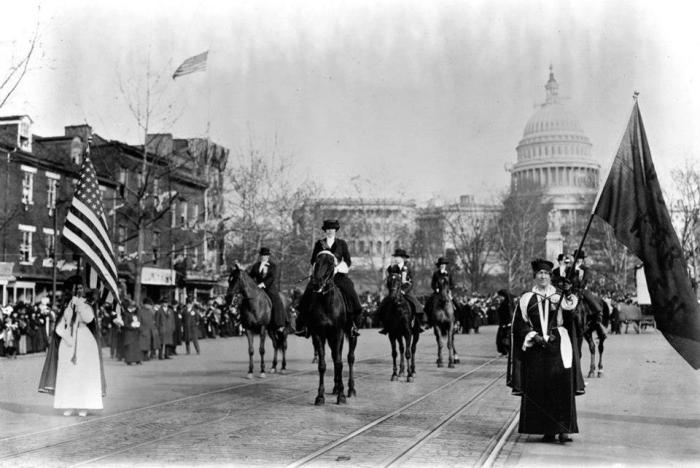
 Leading the way from the Capitol to the Treasury Department was a horse-drawn float bearing a banner that read, “We demand an amendment to the constitution of the United States enfranchising the women of the country.” It would be followed by more floats, nine bands, four mounted brigades, three heralds with trumpets and somewhere between 5,000 and 8,000 women.
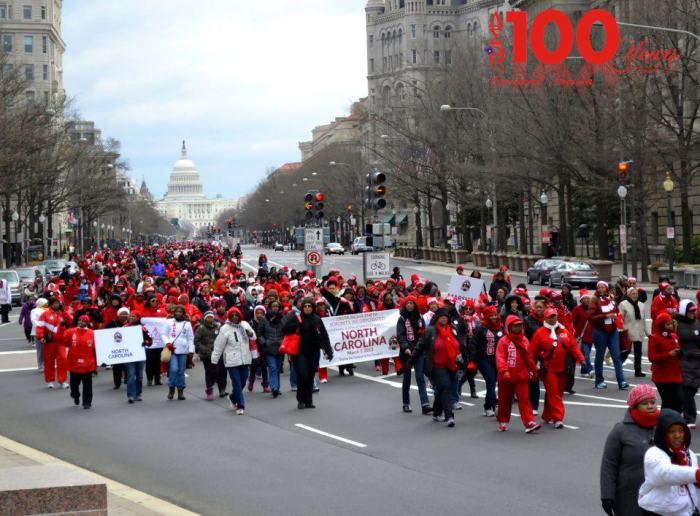
Marking their historic role a century ago, and also celebrating the centennial of their founding, thousands of Deltas plan to fill Pennsylvania Avenue today along with members of other women’s organizations.
If Paul had her druthers, there would have been no black marchers. But just days before the parade, she became more receptive to the possibility. What brought matters to a head was a letter from Nellie M. Quander, a schoolteacher and Howard graduate, who said that Howard women wanted to take part. Usually prompt to reply, Paul took a week to respond. She suggested Quander “call” at the headquarters of Paul’s parent organization, the National American Woman Suffrage Association. Records do not reflect a meeting.
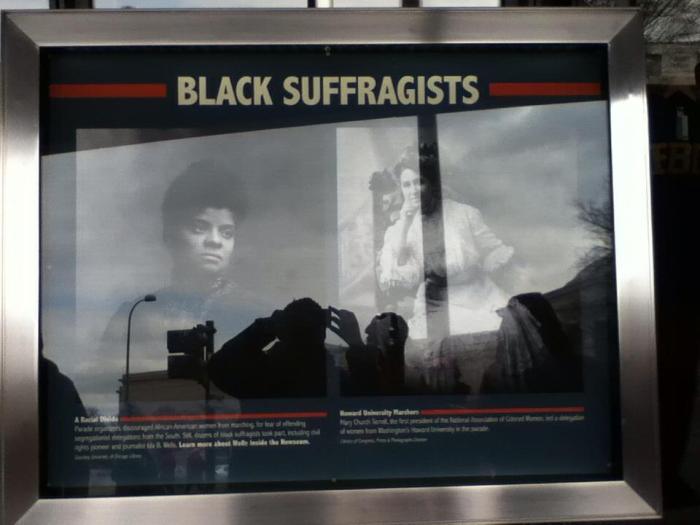
Complaints of discrimination reached the association, which wired orders to permit black marchers. Paul had no choice. Representing the sorority in negotiations, Terrell agreed that the Deltas would march next to the New York delegation.
Meanwhile, panicky reports came from white suffragists in Chicago that Ida B. Wells-Barnett, the celebrated author of an anti-lynching campaign and an African American, planned to join the procession. When the Illinois unit mustered, leaders instructed Wells-Barnett to walk with an all-black group. Tears forming, Wells-Barnett refused to take part unless “I can march under the Illinois banner.” By all accounts she solved the issue herself, defiantly joining the unit in mid-parade.
At that point, few would have noticed. The parade was a shambles.
From the outset, authorities had been worried about the threat to security from male onlookers, particularly hard-drinking southern Democrats celebrating the election of a Virginia-born president. They suggested holding the event the day after the inauguration, perhaps on 16th Street, a safe distance from the Bowery. But Paul rallied supporters and went to the press. Open Pennsylvania Avenue to the women, urged the Washington Times, because that was where the men marched. Paul got her way.
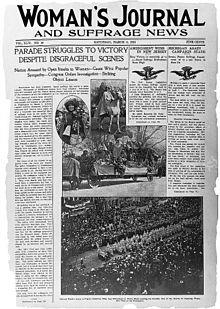
The violence erupted minutes after the parade began. The crowd broke through steel cables and spilled into the street. Men, many of them drunk, spit at the marchers and grabbed their clothing, hurled insults and lighted cigarettes, snatched banners and tried to climb floats. Police did little to keep order. Observed one of Paul’s supporters, “I did not know men could be such fiends.” Galloping to the rescue, Army cavalry from Fort Myer cleared a path, and the parade continued on, albeit well behind schedule.
Paul was far from displeased. The parade, including the violence, was front-page news across America, drawing attention to suffragists and their cause. For its part, a fledgling sorority hatched just six weeks earlier could already claim a proud history.
Mary Walton is the author of “A Woman’s Crusade: Alice Paul and the Battle for the Ballot.”


 OCG
OCG 