The Ghosts of 1964: Race, Reagan, and the Neo-conservative Backlash to the Civil Rights Movement – Race, Racism and the Law

Excerpted from: Anthony Cook, The Ghosts of 1964: Race, Reagan, and the Neo-conservative Backlash to the Civil Rights Movement, 6 Alabama Civil Rights & Civil Liberties Law Review 81 (2015) (Footnotes) (Full Document)


AnthonyCook“American slavery was “officially” buried by our nation’s ratification of the 13 14 and 15 amendments to the constitution. But the ghosts of slavery soon inhabited new forms — political, economic, and cultural — intent on returning Blacks to a position of abject servitude and subordination. Jim Crow segregation embodied slavery’s spirit of White supremacy, allowing it to live on in a different form. The civil rights movement of the mid-twentieth century was but another attempt to exorcise from American life the demonic spirit of slavery that had so horrifically deformed American institutions and culture. But by 1980 it was clear, yet again, that notwithstanding the “official” death and burial of old Jim Crow — a death certified by the passage of the 1964 Civil Rights, 1965 Voting Rights, and 1968 Fair Housing Acts — the past lived on. The ghosts of American slavery and its mutant offspring, Jim Crow, roamed the land of the free and haunted the home of the brave in search of new cultural, political, and economic practices to possess and infest. American slavery was “officially” buried by our nation’s ratification of the 13 14 and 15 amendments to the constitution. But the ghosts of slavery soon inhabited new forms — political, economic, and cultural — intent on returning Blacks to a position of abject servitude and subordination. Jim Crow segregation embodied slavery’s spirit of White supremacy, allowing it to live on in a different form. The civil rights movement of the mid-twentieth century was but another attempt to exorcise from American life the demonic spirit of slavery that had so horrifically deformed American institutions and culture. But by 1980 it was clear, yet again, that notwithstanding the “official” death and burial of old Jim Crow — a death certified by the passage of the 1964 Civil Rights, 1965 Voting Rights, and 1968 Fair Housing Acts — the past lived on. The ghosts of American slavery and its mutant offspring, Jim Crow, roamed the land of the free and haunted the home of the brave in search of new cultural, political, and economic practices to possess and infest. ”


Source: The Ghosts of 1964: Race, Reagan, and the Neo-conservative Backlash to the Civil Rights Movement – Race, Racism and the Law

“A Black Political Future” with Pascal Robert, The Thought Merchant

OUR COMMON GROUND with Janice Graham

 “A Black Political Future”

 December 3, 2016 :: LIVE ::10 pm EST

Guest: Pascal Robert The Thought Merchant Blog, Contributor, The Black Agenda Report

12-03-16-robert
LISTEN LIVE and Join Our Chat: http://bit.ly/BLKFuture
Listen or Call-In to add your voice to the discussion (347) 838-9852 Press 1 to join the discussion
 This week we discuss the political future of Black Americans in the era of a imperialist Executive and Legislative government. The critical question is not how we react to the fascism that has embedded itself but how we plan to organize our resistance and survival. There are some who say we have been here before. No,THIS is very different AND WILL be totally destructive to any viable Black empowerment strategies . They are bent on a strategy that will destroy the vulnerable infrastructure that keeps us from drowning. We talk with Pascal about preservation and building.
 Pascal  Robert (pronounced Ro-Bear like Stephan Colbert) is a Blogger who loves all things politics. SHEER political independent; unafraid to slay the most sacred cows of ideological orthodoxy from the Left, or the Right and one who enjoys global affairs and aspects of pop culture. In all ways he is a child of the Haitian Revolution.
Pascal Robert has been known for years to the online world as THOUGHT MERCHANT.
Since 2007 he has been recognized for his hard hitting, blunt unvarnished style of bringing attention to current events and global affairs, especially those affecting communities of color. Join him in these social media outlets:

Black Nationalism and Liberation | Boston Review


Nation of Islam counter-demonstration at NAACP rally in Harlem, 1961 / Photograph: NAACP collection, Library of Congress

In a world where Donald Trump’s presidential nomination speech has been endorsed by a former leader of the Ku Klux Klan—yet Black Lives Matter activists are accused of reverse racism for asking to not be murdered by police—what constitutes hate speech has become increasingly convoluted. In the aftermath of police killings in Dallas and Baton Rouge, gunmen Micah Johnson and Gavin Long were immediately linked by media outlets to black nationalist groups such as the Nation of Islam (NOI), New Black Panther Party, Black Riders Liberation Party, and Washitaw Nation, despite their professions to have been acting alone. Not only did these depictions draw misleading lines to organizations that do not prescribe such acts of violence, they also overshadowed both mens’ backgrounds in cultures of military violence (Johnson joined the Army Reserves immediately after high school and Long was a former Marine sergeant).

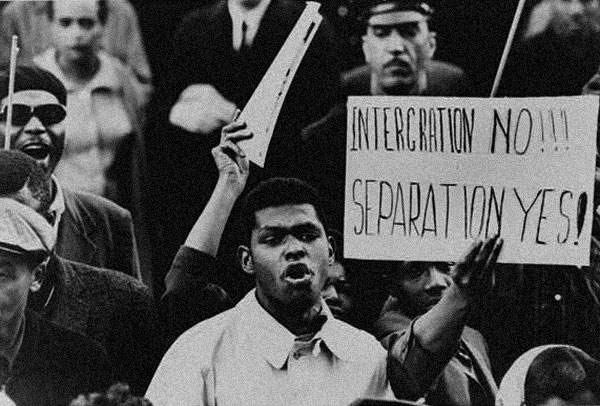
In a desperate attempt to drive home a link to black nationalism and direct attention away from these other troubling vectors, some news outlets began referring to Johnson as “Micah X” (NOI members use “X” to replace their “slave names”). In fact his middle name was simply Xavier. Even progressive groups, such as the Southern Poverty Law Center, play a legitimating role by identifying black nationalist groups as “black separatist hate groups,” leaving little room for meaningful distinctions between white supremacy and black nationalism. While groups such as the Nation of Islam have historically advocated for the separation of black communities, to assert that this position is simply the obverse of white supremacy—that is, black supremacy—overlooks the nuance of black nationalism. More importantly, it fails to account for the dramatically different relationships to power that black nationalist and white supremacist groups possess. White nationalism reinscribes and exalts the privileges of whiteness. Black nationalists council separation as an anti-racist practice and a method of empowerment in the absence of alternative avenues of power. To many black nationalists, this is the difference between life and death: the black community must either do for itself or perish.

The conflation of black and white nationalism is not new. In 1963 the New York Herald Tribune satirized what it perceived as the ironic similarities between white supremacists and black nationalists in a story entitled “Integrated Segregation.” Things “seem a trifle confused on the racial front these days. The segregationists are getting integrated and the integrationists are getting segregated,” the Tribune remarked. The article imagined a scene in which staunch segregationist George Wallace was explaining why racial segregation benefitted black Americans when “a Black Muslim popped up from behind, tapped him on the back and agreed with him.” Soon, the article predicted, the Congress for Racial Equality would “start picketing the N.A.A.C.P., while the Black Muslims set up an all-Negro chapter of the Ku Klux Klan.”

To many black nationalists, separation from whites is the difference between life and death: the black community must either do for itself or perish.

Understanding black nationalism as simply the mirror image of white supremacy, rather than an anti-racist practice, has deep roots in American political discourse. And in our current moment of colorblind “post-racialism,” when race-specific remedies such as affirmative action or reparations are derided as reverse racism—and even modest demands from Black Lives Matter for criminal justice reform are decried as anti-white—black nationalism has been once again mischaracterized using a host of long-stale tropes. We would be better served, not by simply dismissing black nationalism as the underbelly of white supremacy, but by understanding it as a tradition that is both liberative and anti-racist; one that does not mirror white supremacy, but repudiates it.

section separator

W. D. Fard, the founder of the Nation of Islam, arrived in Detroit in 1930 and told black Detroiters that they “were not Americans but Asiatics.” This was part of a holistic alternative creation story that rejected the racist underpinnings of white American nationalism. Many of Fard’s followers were former followers of Marcus Garvey, left without an organization after the decline of his Universal Negro Improvement Association (UNIA) in the late 1920s due to financial mismanagement and government infiltration. Garvey and the UNIA epitomized the goals of black nationalism, launching the most ambitious and successful Pan-Africanist vision in history. At its height, the UNIA had over 700 branches in 38 states, and its newspaper, Negro World, circulated throughout the African diaspora. Millions of black people were moved by Garvey’s message of racial pride embodied through the UNIA motto “One God! One Aim! One Destiny!” The NOI borrowed many of its black nationalist tenets from the UNIA, combining them with religious symbols, practices, and theologies drawn from the plethora of new northern, black, urban religious and racial-pride movements spawned by the Great Migration. This blending spoke to the diverse backgrounds of many early NOI members: in 1951 nineteen out of twenty-eight Muslims interviewed reported having previously been members in other movements such as black Masonry, the Israelite Movement, God’s Government on the Earth (dedicated to Liberian emigration), the Peace Movement of Ethiopia, Repatriation Movement to Liberia, and the Black Jews.

As historian Robin D. G. Kelley notes, many of these movements were influenced by a Black Zionist tradition that drew upon the narrative of the book of Exodus to imagine liberation and deliverance for black people around the world. These freedom dreams not only provided what he calls a “narrative of slavery, emancipation, and renewal,” but also a “language to critique America’s racist state since the biblical Israel represented a new beginning.” Beyond providing a framework for denouncing American racism, black nationalists addressed the racist power structures that governed their communities by creating jobs, businesses, schools, and places of worship. Racial separation was not simply about black communities’ physical relationship to white people; it was about changing the structures of power that governed those relationships through self-determination, community control, and new relationships to self and one another.

By 1959 the Nation of Islam was a burgeoning movement well known within urban black communities in the North but still largely unknown to white America. That summer, as Malcolm X traveled to Africa as a guest of Egypt’s president, Gamal Abdel Nasser, Mike Wallace (later of 60 Minutes fame) and black journalist Louis Lomax presented the NOI to white audiences for the first time. In their sensationalist documentary, The Hate That Hate Produced, NOI was compared to the American Nazi Party and the Ku Klux Klan. Members of the Nation were referred to as “black racists” and “black supremacists.” Its cautionary message to a largely white audience was that white racism would inevitably produce its black variant. As Malcolm X later recalled in his Autobiography, the show was meant to shock viewers, like when “Orson Welles frightened America with a radio program describing . . . an invasion by ‘men from Mars.’”

The Hate That Hate Produced was critical in launching the Nation of Islam into the public eye. But it also offered white viewers a language for understanding black nationalism that both intensified and allayed their fears. While racism was a plague that undermined American democracy, it was not a distinctly white characteristic. As Charlie Keil, a young white civil rights organizer at Yale during the early 1960s explained to me recently: “The Hate that Hate Produced allowed [whites] to sort of categorize the Muslims—the Nation of Islam—and treat them a certain way. . . . [It was] some way of saying that this was not an autonomous self-starting movement, but a reaction, an overreaction to a history of oppression.”

Throughout the 1960s black nationalists were castigated as “supremacists” who promoted the very racism and racial segregation that liberals were fighting against. This was stoked by white nationalists who saw calls for black racial separation as consistent with their belief in the benefits of racial segregation. As George Lincoln Rockwell, head of the American Nazi Party, told Alex Haley in a 1966 interview: “Malcolm X said the same thing I’m saying.”

Rockwell was not the only one confused about the difference between racial segregationand racial separation. In a highly-publicized Los Angeles trial in 1962 after police killed an unarmed member of the Los Angeles NOI mosque, the Los Angeles Times reported the “unusual problem in seating of spectators . . . when women members of the sect refused to accept seats alongside white persons.” The court eventually overturned this seating arrangement, and the press described this as “desegregation.” Los Angeles NAACP president Christopher Taylor joined the chorus of the aggrieved by arguing that he would be against any type of segregation, regardless of who initiated it. This decontextualized, colorblind insistence that any race demanding separation was calling for racial segregation was central to mischaracterizations of black nationalism during this period.

Malcolm X set about clarifying the Nation of Islam’s advocacy for racial separatism through dozens of debates with prominent civil rights figures on college campuses across the country in the early 1960s. He debated James Farmer at Cornell, Bayard Rustin at Howard, Louis Lomax at Yale, and the NAACP’s Walter Carrington at Harvard. Almost every debate was themed around the question: “Integration or Separation?” As Malcolm explained at Wesleyan University: “We are just as much against segregation as the most staunch integrationist.” But he added that black people did not “want to be free any more; they want integration. . . . They have confused their method with their objective.” In other words, black nationalists were not opposed to racial integration as an outcome of freedom struggles, or even as an organizing strategy, but they saw it as deeply flawed as the movement’s principal objective. More importantly, they pointed out the racist presumption of integration, which took for granted that white society and its values were more desirable. As Malcolm once sardonically asked, Who is the white man to be equal to?

More than simply critiquing integration, the Nation of Islam emphasized the importance of community control, an idea that flourished in upcoming years with the emergence of the Black Power movement. As Malcolm explained: “segregation means to regulate or control. . . . A segregated community is that forced upon inferiors by superiors. A separate community is done voluntarily by two equals.” Recognizing the pervasiveness of racial segregation, nationalists sought control over the businesses, healthcare, education, housing, and policing in their communities. Indeed, the Kerner Commission’s grim 1968 assessment that the nation was “moving toward two societies, one black, one white—separate and unequal” was something understood within black communities for decades. Amidst this backdrop, nationalists called for greater autonomy. The distinction between segregation and separation was not a semantic pivot. It was a deeper analysis of power, and an assertion of self-determination.

Over sixty years since the Supreme Court struck down the constitutionality of “separate but equal” in Brown v. Board, it would seem that calls for racial separatism are a relic of the past. But that might be too hopeful. A 2014 UCLA study revealed higher levels of school segregation in many regions than in 1968, the year the Supreme Court decreed a more proactive approach to desegregation. Schools with less than 1 percent white students are now being referred to as “apartheid schools.” And while the South is no longer governed by Jim Crow laws, cities outside the South such as Chicago and Baltimore continue to be described by demographers as “hypersegregated.”

The denial of race is a fixture of racism. Black nationalists have often exposed the “colorblind,” coded racism of liberals.

Black critiques of school integration during the 1950s and 1960s were often decried. In the words of scholar Andrew Delbanco, novelist and anthropologist Zora Neale Hurston “consigned herself to oblivion” when she responded to the Brown v. Board decision by saying that she could “see no tragedy in being too dark to be invited to a white school affair.” After James Meredith enrolled as the first black student in the University of Mississippi’s history, Malcolm X told a courtroom that anytime a man “needs [an] escort of 15,000 troops to go to a college where he will be among people whose viciousness toward him is so deadly that he needs the Army there to protect him . . . that Negro is foolish if he thinks that he is going to get an education.” Education, not integration, should be the goal, both Hurston and Malcolm agreed. As Malcolm explained, “token integration” was pointless as long as there were “a couple million Negroes in Mississippi who haven’t been allowed to go to the Kindergarten in a decent school.”

Meanwhile, integration today is often illustrated through the exceptional accomplishments of a handful of black elites, most notably President Barack Obama, rather than evidenced by a substantial redistribution of wealth or educational and housing opportunities. As Keeanga-Yamahtta Taylor demonstrates, the role of “black faces in high places” is often to obscure the common conditions facing many African Americans. Instead, black elected officials serve as interlocutors speaking to—and on behalf of—black communities. Taylor writes poignantly of the 2015 Baltimore uprising after the death of Freddie Gray: “When a Black mayor, governing a largely Black city, aids in the mobilization of a military unit led by a Black woman to suppress a Black rebellion, we are in a new period of the Black freedom struggle.” But this new period has unfortunately produced all-too-familiar outcomes for poor and working-class black people.

section separator

The long history of black nationalist leaders having official meetings with white supremacist leaders is another narrative often mobilized as proof of the essential symmetry of the two movements. In 1922 Marcus Garvey met with the Imperial Wizard of the Klan, Edward Clarke, earning him swift denunciation by the NAACP. In 1961 Malcolm X and other NOI officials secretly met with the KKK in Atlanta to negotiate a non-aggression pact surrounding the NOI’s purchase of southern farmland. The following year American Nazi leader George Lincoln Rockwell even appeared as an invited guest at the NOI’s Saviour’s Day convention in Chicago. When police in Monroe, Louisiana, illegally targeted and raided the city’s mosque with tear gas, rifles, and riot sticks, the Nation of Islam secured an interracial defense team: local black attorney James Sharpe, Jr., and Imperial Wizard of the National Knights of the Klan, James Venable. As Venable explained when taking the case, “I hate to say it but a colored man doesn’t have a chance in a courtroom in the South.”

The decision by black nationalists to meet or coordinate with white supremacists was often driven by a combination of pragmatism and a deep cynicism about the authenticity of liberals. In the case of the UNIA, Garvey negotiated an agreement with Clarke to sell stock in black businesses such as newspapers, factories, and his Black Star shipping line, which ambitiously hoped to link a global black economy in Africa, the Caribbean, and the Americas before failing due to poor business management. And although Malcolm X would later denounce the Nation of Islam’s détente with the Klan, the organization’s motivation for doing so was plainly and only to secure the right to farm in the South without danger of violent reprisal. And in the case against eight members of the NOI in Monroe, Venable successfully won an appeal for several of those convicted.

Black nationalists were also not uncritical of the white supremacists with whom they interacted, a fact often downplayed or forgotten. After his meeting with the Klan, Garvey told a crowd: “Mr. Clark [sic] did not tell me anything new; he told me what I discovered seven years ago. He told me the thing that caused me to have organized the Universal Negro Improvement Association four and a half years ago.” When Rockwell, wearing full Nazi regalia, donated twenty dollars to a collection plate at Saviour’s Day, there was a smattering of reluctant applause. Malcolm X belittled him by adding: “You got the biggest hand you ever got.” Equally, black nationalists used white supremacists to draw attention to the hypocrisy of liberals. Following his 1922 meeting, Garvey claimed that Klan members were “better friends to my race, for telling us who they are, and what they mean.” Malcolm used a similar device in his folk metaphor of the liberal “fox” and the conservative “wolf.” When comparing John F. Kennedy to George Wallace, Malcolm said: “Neither one loves you. The only difference is that the fox will eat you with a smile instead of a scowl.” He even penned a 1964 editorial entitled “Why I Am for Goldwater” in which he drew upon the same fox/wolf metaphor and cynically suggested that with Goldwater, “black people at least know what they are dealing with.”

Critics on the left who see these as misguided political strategies have marginalized black nationalists by painting them as racial conservatives, and thereby emptied black nationalists’ critiques of their incisiveness. For example, Paul Gilroy accuses Garvey of “black fascism” and C. L. R. James even compared him to Hitler. Others have taken Malcolm’s cynical support for Goldwater at face value, rather than understanding his rhetorical move to draw parallels between openly racist politicians and ostensibly liberal ones whose policies nonetheless gut the black community.

Black nationalist groups such as the UNIA and the NOI have rightly been critiqued for their deep patriarchy, homophobia, and tendency to reproduce the other trappings of empire. As historian Michelle Ann Stephens notes of Garvey, his “vision of the sovereign state figured in the black male sovereign; the desire for home at a more affective level figured in the woman of color.” Likewise, anti-Semitic comments by Nation of Islam leaders such as Louis Farrakhan have certainly buttressed comparisons between white and black nationalists. Most recently, Farrakhan stoked this fire by praising Donald Trump’s refusal to take money from Jewish donors.

But although charismatic leaders are often the voices we hear most prominently, for many rank-and-file members of the Nation of Islam and other black nationalist groups, the lived experience of racial pride, religious rebirth, and doing for oneself is a redemptive, affirming, and even lifesaving practice. Many members joined the NOI after feeling alienated in integrated, more middle-class organizations such as the NAACP. As Lindsey X told an interviewer, what the NAACP “wanted never seemed real to me. I think Negroes should create jobs for themselves rather than going begging for them.” Malcolm X’s autobiography is only the best-known narrative of religious and political redemption. In a long-running feature in the NOI’s newspaper, Muhammad Speaks, entitled “What Islam Has Done For Me,” members offered their conversion narratives and testified to the transformative practice of Islam. Robert 24X of Paterson, New Jersey, contributed: “I was a young drug addict who had spent too much time in the hells of Harlem’s East Side . . . [before] everything came into focus for me. . . . I stopped smoking, using profanity, and eating improper foods. And I’ve passed my biggest acid test—no more needles in the arm.”

Instead of positioning black nationalism as a reactionary, conservative ideology that simply apes the violence and hate of white supremacy, we might learn from its lessons today. If asked about the xenophobia and dangerous comments of conservative firebrand Donald Trump in our current election, Malcolm X might well have pivoted us back to Hillary Clinton’s questionable record on race, one which Black Lives Matter activists have pointed out includes racist dog whistles such as her comments about “super-predators” lacking empathy, her steadfast support for the devastating 1994 Crime Bill, and campaign money taken from private prison corporations. And beyond the hollow political discourse of election cycles, we must avoid the pitfalls of incessant claims of post-racialism that insist that to see race is to participate in racism. As we have witnessed with the familiar “All Lives Matter” rejoinder to “Black Lives Matter,” we are living in a time when people’s humanity is so denigrated that the mere valuation of life is taken by some whites to be a zero-sum game. The denial of race is a central fixture in the perpetuation of racism, and black nationalists have routinely called attention to the importance of racial pride while exposing the coded racism of liberals. Rather than draw facile lines between black nationalism and white supremacy, we are better served by understanding black nationalism as an anti-racist political tradition seeking to envision black American freedom and citizenship in a nation that has rarely devoted much effort toward either end.


Source: Black Nationalism and Liberation | Boston Review

The Radical Democracy of the Movement for Black Lives :: Peniel Joseph

The Radical Democracy Of The Movement For Black Lives

“Black Lives Matter has cast a strobe-light on contemporary myths of racial progress, arguing correctly that the criminal justice system represents a gateway to a panoramic system of racial and class and gender and sexuality oppression.”

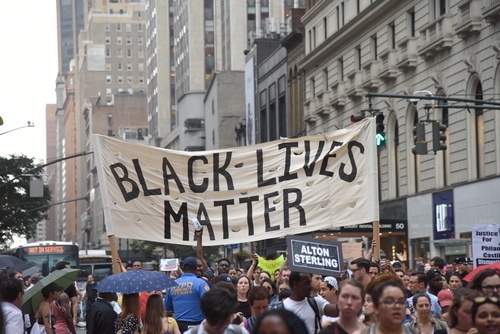
The Black Lives Matter policy agenda represents one of the most important agenda setting documents collectively produced by black activists in a generation. The proposals, authored by over fifty different civil rights organizations, offers a panoramic narrative, diagnosis, and political alternatives to the intricacies of structural racism, state-sanctioned violence, and the institutional exploitation of black bodies across the nation.

A Vision For Black Lives” builds on, expands, and goes beyond policy agendas promoted by a range of civil rights and Black Power era groups, including the Black Panthers, Nation of Islam, NAACP, SNCC (the Student Non-Violent Coordinating Committee), CORE, Malcolm X’s Organization of Afro-American Unity, and Martin Luther King Jr’s SCLC. In its poignant urging of the United States to “end the war on black people,” the document is reminiscent of the “Gary Agenda,” the historic 1972 document that emanated from the National Black Political Convention in Gary, Indiana.

Gary Mayor Richard Hatcher speaks at the National Black Political Conference in Gary, Ind. (AP/Charles Kelly)

That meeting of over 8,000 black delegates from across black America’s political and ideological spectrum proved to be a watershed event, albeit one that was hamstrung by an inability to translate grassroots insurgency into tangible political power, accountability, and resources.  Gary, like the Black Power Conferences from the late 1960s and the African Liberation Day and Sixth Pan-African Congress of the 1970s, sought to modernize the black convention movements that could be traced back to the Reconstruction era, where black activists organized for political power in slavery’s aftermath.

By the early 20th century efforts like the “Niagara Movement” faltered due to a lack of resources and political infighting. For a time, Marcus Garvey’s Universal Negro Improvement Association cast a shadow large enough to encompass the complexity of black life, uniting economic strivers with revolutionary activists in developing a black agenda broad enough to attract millions of black people across several continents.

Garvey’s decline fractured aspects of black political life, but not dreams for a cohesive vision, plan, and strategy for black liberation, a cause taken up during the Depression and Second World War by a variety of groups including the Southern Negro Youth Congress, National Negro Labor Congress, The Nation of Islam, the Civil Rights Congress, and the Council of African Affairs. The NAACP’s membership reached almost a half-million by 1946, the closest it would ever come to mass membership in scale. Black political leaders pushed an agenda to the left of the New Deal creating space for the global popularity of Paul Robeson, the political resurrection of W.E.B. Du Bois, and the insider status of Mary McLeod Bethune and Ralph Bunche.


Organizers like Ella Baker in New York City and Septima Clarke in South Carolina, worked the lower frequencies of black life, working at the margins of the black quotidian: the ordinary black folk from New York to South Carolina whose dreams remained disarmingly pragmatic ones focused preserving hope and dignity.

The Black Lives Matter Movement is rooted in this wider Black Freedom Struggle, one whose two dominant branches are reflected in the Civil Rights and Black Power era. BLM activists’ successful adoption of non-violence is rooted in the civil rights era even as their unapologetic focus on structural racism, community control, and political self-determination reflects the Black Power era’s radical politics. Surprisingly, so does the movement’s focus on intersectionality. Popularly remembered as deeply masculinist, unapologetically sexist, and homophobic, the Black Power era proved to be more complicated than such simple generalizations indicate. Despite the movement’s many political and ideological blinders, black women, queer activists, and others on the margins of African American life consciously shaped an expansive Black Power politics.


The Third World Women’s Alliance articulated a vision of radical black feminism, socialism, and Black Power militancy that made it a visionary example of cutting edge social justice movements. The Combahee River Collective gave voice to radical black lesbian feminists whose politics went to the far left of the more mainstream National Black Feminist Organization. In many ways both of these organizations reflected the black radical feminist politics revealed in Toni Cade Bambara’s groundbreaking 1970 anthology, The Black Woman, an intellectual and political intervention that ushered in Black Women’s Studies and helped give attention to the works of Audre Lorde, Barbara Smith, Gloria Hull, and many others.

BLM activists have taken some of the best aspects of these two generations of the Black Radical Tradition and linked it with more recent efforts to promote reparations (especially by grassroots a organization like N’COBRA, although reparations go back to the formerly enslaved activist Callie House as the historian Mary Frances Berry teaches us); divestment from domestic and global racial exploitation which Jesse Jackson, especially in 1984, promoted as a hallmark of his presidential campaign; the pursuit of independent black political power that had been advocated in the post Gary era by a series of organizations including the National Black United Front, the National Black Independent Political Party, and the Black Radical Congress; the movement for economic justice that has been promoted by a spectrum of grassroots labor, community, church, and secular activists, including black nationalists in communities such as St. Petersburg, Florida, who famously booed candidate Obama in 2008 by chanting and holding signs, “What About the Black Community Obama?”

Black Lives Matter has cast a strobe-light on contemporary myths of racial progress, arguing correctly that the criminal justice system represents a gateway to a panoramic system of racial and class and gender and sexuality oppression. This intervention, while important, is incomplete without an acknowledgment of the way in which the rise of mass incarceration is connected to systems of racial segregation, voting rights denial, state-sanctioned violence and exploitation of black bodies, all while criminalizing and decimating the very communities that remain largely under assault even in the Age of Obama.

The Age of Ferguson, Baltimore, Milwaukee, Black Lives Matter has shattered conventional civil rights narratives, ones that begin with Rosa Parks, continue with King’s Dream, and sought to end with Barack Obama’s election. This version of history as a bedtime story, complete with heroic individual blacks, stalwart white allies, and the thanks of a grateful nation has only one glaring problem.

It’s a lie.

The Civil Rights era heroic period experienced pervasive anti-black violence that only increased during the Black Power era and its aftermath. What is now universally acknowledged as a moral and political good—complete with a multiracial cast of characters—was demonized in word and deed by the larger society, a denigration that became inscribed in a series of intricate anti-black legal, legislative, and policy challenges that have utterly decimated some of the gains of the era, especially for the black poor.

“A Movement For Black Lives” is essential precisely because it helps to expose what is at the root of our national amnesia regarding slavery and anti-black racism-white supremacy and its relationship to conceptions of citizenship, the rule of law, democracy, and justice. In its passionate repudiation of the political status quo and elevating the lives of the black community’s most vulnerable residents—the poor, young, elderly, trans, LGBT, mentally ill, incarcerated, ex-offenders—the BLM has produced a watershed document that once again illustrates why the black freedom struggle has always been on the cutting edge of movements for radical democracy: we have no choice.


Peniel Joseph is the Barbara Jordan Chair in Ethics and Political Values and director of the Center for the Study of Race and Democracy at the LBJ School of Public Affairs and Professor of History at The University of Texas. He is the award-winning author of several books, including Waiting ‘Til the Midnight Hour: A Narrative History of Black Power in America, Dark Days, Bright Nights: From Black Power to Barack Obama, and Stokely: A Life. Follow him on Twitter @PenielJoseph.

Source: The Radical Democracy of the Movement for Black Lives

What Does Black Lives Matter Want?

What Does Black Lives Matter Want?

On August 1 the Movement for Black Lives (M4BL), a coalition of over sixty organizations, rolled out  “A Vision for Black Lives: Policy Demands for Black Power, Freedom & Justice,” an ambitious document described by the press as the first signs of what young black activists “really want.” It lays out six demands aimed at ending all forms of violence and injustice endured by black people; redirecting resources from prisons and the military to education, health, and safety; creating a just, democratically controlled economy; and securing black political power within a genuinely inclusive democracy. Backing the demands are forty separate proposals and thirty-four policy briefs, replete with data, context, and legislative recommendations.

But the document quickly came under attack for its statement on Palestine, which calls Israel an apartheid state and characterizes the ongoing war in Gaza and the West Bank as genocide. Dozens of publications and media outlets devoted extensive coverage to the controversy around this single aspect of the platform, including The Guardian, the Washington Post, The Times of Israel, Haaretz, and the St. Louis Post-Dispatch. Of course, M4BL is not the first to argue that Israeli policies meet the UN definitions of apartheid. (The 1965 International Convention for the Elimination of All Forms of Racial Discrimination and the 1975 International Convention on the Suppression and Punishment of the Crime of Apartheid define it as “inhuman acts committed for the purpose of establishing and maintaining domination by one racial group of persons over any other racial group of persons and systematically oppressing them.”) Nor is M4BL the first group to use the term “genocide” to describe the plight of Palestinians under occupation and settlement. The renowned Israeli historian Ilan Pappe, for example, wrote of the war on Gaza in 2014 as “incremental genocide.” That Israel’s actions in Gaza correspond with the UN definition of genocide to “destroy, in whole or in part, a national, ethnical, racial or religious group” by causing “serious bodily or mental harm” to group members is a legitimate argument to make.

The few mainstream reporters and pundits who considered the full M4BL document either reduced it to a laundry list of demands or positioned it as an alternative to the platform of the Democratic Party—or else focused on their own benighted astonishment that the movement has an agenda beyond curbing police violence. But anyone following Black Lives Matter from its inception in the killingtrayvonsaftermath of the George Zimmerman verdict should not be surprised by the document’s broad scope. Black Lives Matter founders Alicia Garza, Patrisse Cullors, and Opal Tometi are veteran organizers with a distinguished record of fighting for economic justice, immigrant rights, gender equity, and ending mass incarceration. “A Vision for Black Lives” was not a response to the U.S. presidential election, nor to unfounded criticisms of the movement as “rudderless” or merely a hashtag. It was the product of a year of collective discussion, research, collaboration, and intense debate, beginning with the Movement for Black Lives Convening in Cleveland last July, which initially brought together thirty different organizations. It was the product of some of the country’s greatest minds representing organizations such as the Black Youth Project 100, Million Hoodies, Black Alliance for Just Immigration, Dream Defenders, the Organization for Black Struggle, and Southerners on New Ground (SONG). As Marbre Stahly-Butts, a leader of the M4BL policy table explained, “We formed working groups, facilitated multiple convenings, drew on a range of expertise, and sought guidance from grassroots organizations, organizers and elders. As of today, well over sixty organizations and hundreds of people have contributed to the platform.”
The result is actually more than a platform. It is a remarkable blueprint for social transformation that ought to be read and discussed by everyone. The demands are not intended as Band-Aids to patch up the existing system but achievable goals that will produce deep structural changes and improve the lives of all Americans and much of the world. Thenjiwe McHarris, an eminent human rights activist and a principle coordinator of the M4BL policy table, put it best: “We hope that what has been created carries forward the legacy of our elders and our ancestors while imagining a world and a country profoundly different than what currently exists. For us and for those that will come after us.” The document was not drafted with the expectation that it will become the basis of a mass movement, or that it will replace the Democratic Party’s platform. Rather it is a vision statement for long-term, transformative organizing. Indeed, “A Vision for Black Lives” is less a political platform than a plan for ending structural racism, saving the planet, and transforming the entire nation—not just black lives.

If heeded, the call to “end the war on Black people” would not only reduce our vulnerability to poverty, prison, and premature death but also generate what I would call a peace dividend of billions of dollars. Demilitarizing the police, abolishing bail, decriminalizing drugs and sex work, and ending the criminalization of youth, transfolk, and gender-nonconforming people would dramatically diminish jail and prison populations, reduce police budgets, and make us safer. “A Vision for Black Lives” explicitly calls for divesting from prisons, policing, a failed war on drugs, fossil fuels, fiscal and trade policies that benefit the rich and deepen inequality, and a military budget in which two-thirds of the Pentagon’s spending goes to private contractors. The savings are to be invested in education, universal healthcare, housing, living wage jobs, “community-based drug and mental health treatment,” restorative justice, food justice, and green energy.

But the point is not simply to reinvest the peace dividend into existing social and economic structures. It is to change those structures—which is why “A Vision for Black Lives” emphasizes community control, self-determination, and “collective ownership” of certain economic institutions. It calls for community control over police and schools, participatory budgeting, the right to organize, financial and institutional support for cooperatives, and “fair development” policies based on human needs and community participation rather than market principles. Democratizing the institutions that have governed black communities for decades without accountability will go a long way toward securing a more permanent peace since it will finally end a relationship based on subjugation, subordination, and surveillance. And by insisting that such institutions be more attentive to the needs of the most marginalized and vulnerable—working people and the poor, the homeless, the formerly incarcerated, the disabled, women, and the LGBTQ community—“A Vision for Black Lives” enriches our practice of democracy.

For example, “A Vision for Black Lives” advocates not only closing tax loopholes for the rich but revising a regressive tax policy in which the poorest 20 percent of the population pays on average twice as much in taxes as the richest 1 percent. M4BL supports a massive jobs program for black workers, but the organization’s proposal includes a living wage, protection and support for unions and worker centers, and anti-discrimination clauses that protect queer and trans employees, the disabled, and the formerly incarcerated. Unlike the Democratic Party, M4BL does not subscribe to the breadwinner model of jobs as the sole source of income. It instead supports a universal basic income (UBI) that “would meet basic human needs,” eliminate poverty, and ensure “economic security for all.” This is not a new idea; some kind of guaranteed annual income has been fundamental to other industrializing nations with strong social safety nets and vibrant economies, and the National Welfare Rights Organization proposed similar legislation nearly a half century ago. The American revolutionary Thomas Paine argued in the eighteenth century for the right of citizens to draw a basic income from the levying of property tax, as Elizabeth Anderson recently reminded. Ironically, the idea of a basic income or “negative income tax” also won support from neoliberal economists Milton Friedman and Friedrich Hayek—although for very different reasons. Because eligibility does not require means testing, a UBI would effectively reduce the size of government by eliminating the bureaucratic machine of social workers and investigators who police the dispensation of entitlements such as food stamps and welfare. And by divesting from an unwieldy and unjust prison-industrial complex, there would be more than enough revenue to create good-paying jobs and provide a basic income for all.

Reducing the military is not just about resources; it is about ending war, at home and abroad. “A Vision for Black Lives” includes a devastating critique of U.S. foreign policy, including the escalation of the war on terror in Africa, machinations in Haiti, the recent coup in Honduras, ongoing support for Israel’s occupation of Palestine, and the role of war and free-trade policies in fueling the global refugee crisis. M4BL’s critique of U.S. militarism is driven by Love—not the uncritical love of flag and nation we saw exhibited at both major party conventions, but a love of global humanity. “The movement for Black lives,” one policy brief explains, “must be tied to liberation movements around the world. The Black community is a global diaspora and our political demands must reflect this global reality. As it stands funds and resources needed to realize domestic demands are currently used for wars and violence destroying communities abroad.”

Finally, a peace dividend can fund M4BL’s most controversial demand: reparations. For M4BL, reparations would take the form of massive investment in black communities harmed by past and present policies of exploitation, theft, and disinvestment; free and open access to lifetime education and student debt forgiveness; and mandated changes in the school curriculum that acknowledge the impact of slavery, colonialism, and Jim Crow in producing wealth and racial inequality. The latter is essential, since perhaps the greatest obstacle to reparations is the common narrative that American wealth is the product of individual hard work and initiative, while poverty results from misfortune, culture, bad behavior, or inadequate education. We have for too long had ample evidence that this is a lie. From generations of unfree, unpaid labor, from taxing black communities to subsidize separate but unequal institutions, from land dispossession and federal housing policies and corporate practices that conspire to keep housing values in black and brown communities significantly lower, resulting in massive loss of potential wealth—the evidence is overwhelming and incontrovertible. Structural racism is to blame for generations of inequality. Restoring some of that wealth in the form of education, housing, infrastructure, and jobs with living wages would not only begin to repair the relationship between black residents and the rest of the country, but also strengthen the economy as a whole.

To see how “A Vision for Black Lives” is also a vision for the country as a whole requires imagination. But it also requires seeing black people as fully human, as producers of wealth, sources of intellect, and as victims of crimes—whether the theft of our bodies, our labor, our children, our income, our security, or our psychological well-being. If we had the capacity to see structural racism and its consequences not as a black problem but as an American problem we have faced since colonial times, we may finally begin to hear what the Black Lives Matter movement has been saying all along: when all black lives are valued and the structures and practices that do harm to black communities are eliminated, we will change our country and possibly the world.

This article previously appeared in the Boston Review.

Robin D. G. Kelley, who teaches at UCLA, is the author of the remarkable biography Thelonious Monk: The Life and Times of an American Original (2009) and most recently Africa Speaks, America Answers: Modern Jazz in Revolutionary Times (2012). He is a contributor to Killing Trayvons: an Anthology of American Violence.

More articles by:

Source: What Does Black Lives Matter Want?

The GOP’s Stealth War Against Voters – Rolling Stone

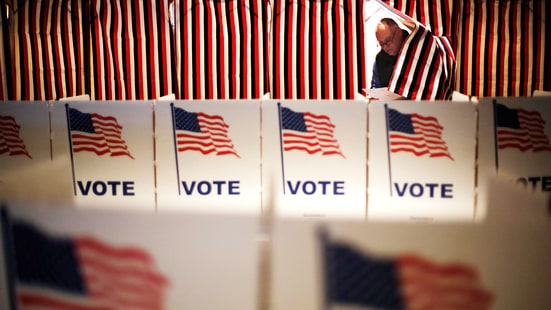
The GOP’s Stealth War Against VotersWill an anti-voter-fraud program designed by one of Trump’s advisers deny tens of thousands their right to vote in November?The Crosscheck program is a response to the imaginary menace of mass voter fraud. Mark Makela/ReutersBy Greg PalastAugust 24, 2016More NewsWhat It’s Like Voting in a State That Takes Voting SeriouslyAri Berman on the Fight for American Voting RightsThe GOP War on VotingAll Stories »When Donald Trump claimed, “the election’s going to be rigged,” he wasn’t entirely wrong. But the threat was not, as Trump warned, from Americans committing the crime of “voting many, many times.” What’s far more likely to undermine democracy in November is the culmination of a decade-long Republican effort to disenfranchise voters under the guise of battling voter fraud. The latest tool: Election officials in more than two dozen states have compiled lists of citizens whom they allege could be registered in more than one state – thus potentially able to cast multiple ballots – and eligible to be purged from the voter rolls.

The data is processed through a system called the Interstate Voter Registration Crosscheck Program, which is being promoted by a powerful Republican operative, and its lists of potential duplicate voters are kept confidential. But Rolling Stone obtained a portion of the list and the names of 1 million targeted voters. According to our analysis, the Crosscheck list disproportionately threatens solid Democratic constituencies: young, black, Hispanic and Asian-American voters – with some of the biggest possible purges underway in Ohio and North Carolina, two crucial swing states with tight Senate races.ADVERTISINGinRead invented by TeadsRELATED 2016: First Presidential Election Since Voting Rights GuttedAmerica will vote for president in a country where it’s easier to buy a gun than vote in many statesLike all weapons of vote suppression, Crosscheck is a response to the imaginary menace of mass voter fraud. In the mid-2000s, after the Florida-recount debacle, the Bush administration launched a five-year investigation into the allegedly rampant crime but found scant evidence of wrongdoing. Still, the GOP has perpetuated the myth in every national election since. Recently, North Carolina Board of Elections chief Kim Strach testified to her legislature that 35,750 voters are “registered in North Carolina and another state and voted in both in the 2012 general election.” Yet despite hiring an ex-FBI agent to lead the hunt, the state has charged exactly zero double voters from the Crosscheck list. Nevertheless, tens of thousands face the loss of their ability to vote – all for the sake of preventing a crime that rarely happens.

So far, Crosscheck has tagged an astonishing 7.2 million suspects, yet we found no more than four perpetrators who have been charged with double voting or deliberate double registration.On its surface, Crosscheck seems quite reasonable. Twenty-eight participating states share their voter lists and, in the name of dispassionate, race-blind Big Data, seek to ensure the rolls are up to date. To make sure the system finds suspect voters, Crosscheck supposedly matches first, middle and last name, plus birth date, and provides the last four digits of a Social Security number for additional verification.In reality, however, there have been signs that the program doesn’t operate as advertised. Some states have dropped out of Crosscheck, citing problems with its methodology, as Oregon’s secretary of state recently explained: “We left [Crosscheck] because the data we received was unreliable.”In our effort to report on the program, we contacted every state for their Crosscheck list. But because voting twice is a felony, state after state told us their lists of suspects were part of a criminal investigation and, as such, confidential. Then we got a break. A clerk in Virginia sent us its Crosscheck list of suspects, which a letter from the state later said was done “in error.”The Virginia list was a revelation. In all, 342,556 names were listed as apparently registered to vote in both Virginia and another state as of January 2014. Thirteen percent of the people on the Crosscheck list, already flagged as inactive voters, were almost immediately removed, meaning a stunning 41,637 names were “canceled” from voter rolls, most of them just before Election Day.We were able to obtain more lists – Georgia and Washington state, the total number of voters adding up to more than 1 million matches – and Crosscheck’s results seemed at best deeply flawed.

We found that one-fourth of the names on the list actually lacked a middle-name match. The system can also mistakenly identify fathers and sons as the same voter, ignoring designations of Jr. and Sr. A whole lot of people named “James Brown” are suspected of voting or registering twice, 357 of them in Georgia alone. But according to Crosscheck, James Willie Brown is supposed to be the same voter as James Arthur Br

Source: The GOP’s Stealth War Against Voters – Rolling Stone

Political Prisoner Rev. Edward Pinkney Fears for His Life | Black Agenda Report

Political Prisoner Rev. Edward Pinkney Fears for His Life

A Black Agenda Radio commentary by executive editor Glen Ford

The Black political class is constantly congratulating itself on ancient voting rights victories in the South, yet Rev. Edward Pinkney is serving his second stretch in prison for fighting against Black disenfranchisement in Benton Harbor, Michigan. Pinkney was convicted twice by all-white juries on the flimsiest evidence, and now believes his life is in danger behind bars.

Political Prisoner Rev. Edward Pinkney Fears for His Life

A Black Agenda Radio commentary by executive editor Glen Ford

“He fears the government is out to do him harm.”

Rev. Edward Pinkney, the imprisoned community activist from the mostly Black town of Benton Harbor, Michigan, believes his life is in danger. Pinkney is serving a sentence of two and a half to ten years following his conviction by an all-white jury on the flimsiest of charges of tampering with an election recall petition. He told Kenneth Rhoades, a supporter on the outside, that he’s not afraid of the inmates, but fears the government is out to do him harm – and that they might get away with it because, in his words, “they cover everything up” at Marquette Branch Prison, located on the thinly populated and very, very white Upper Peninsula of Michigan, almost 500 miles from Benton Harbor.

Pinkney, who is 67 years old, has witnessed numerous assaults on inmates by prison guards, and has spent long stretches in isolation. For six months he was deprived of phone and visitation privileges because the authorities believed he was behind a mass inmate food protest – another bogus charge, since inmates at prisons on the Upper Peninsula have been protesting the food since before Pinkney arrived.

This is the second time that Pinkney has been railroaded to prison for trying to bring change to deeply impoverished Benton Harbor through the vote. Back in 2007, after two trials, an all-white jury from the surrounding county convicted him of tampering with a ballot petition. He was sentenced to house arrest, but was then thrown in prison for a year when he quoted Bible verses to the judge – something of a first in American legal history. Ultimately, the conviction was overturned on appeal.

Crushing Voting Rights Activism with SWAT and Prison

Rev. Pinkney’s lawyers believe his current conviction on similar bogus charges will ultimately also be reversed – but that could take years, and anything can happen to a political activist in the American prison gulag.

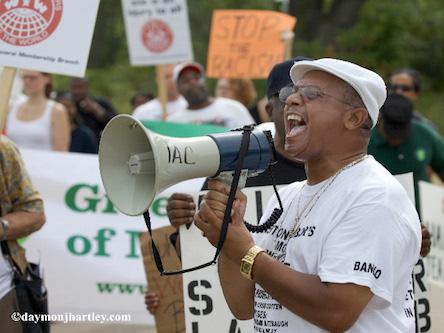
Mary Neal, who calls Rev. Pinkney her “online minister,” believes the people of Flint, Michigan, would have responded to the poisoning of their water sooner if Pinkney hadn’t been incarcerated at the time. The Reverend has had more experience than most other activists in dealing with state appointed emergency financial managers like the one that switched the water supply in Flint. Benton Harbor was put under state dictatorship in 2010. Governor Rick Snyder then quickly expanded the emergency financial manager regime to all of the state’s heavily Black cities, effectively disenfranchising more than half of Michigan’s Black citizens. But, Rev. Pinkney and his Black Autonomy Network Community Organization, or BANCO, pressed on, refusing to accept the loss of their local voting rights, either to the State of Michigan, or at the hands of the giant Whirlpool Corporation, which has ruled Benton Harbor like a plantationfor generations. Finally, they sent a SWAT team to arrest Rev. Pinkney at his home in April, 2014, and now he sits in cell in the American equivalent of Siberia, a 67 year old soldier in the African liberation struggle.

For Black Agenda Radio, I’m Glen Ford. On the web, go to BlackAgendaReport.com.

BAR executive editor Glen Ford can be contacted at Glen.Ford@BlackAgendaReport.com.

Source: Political Prisoner Rev. Edward Pinkney Fears for His Life | Black Agenda Report

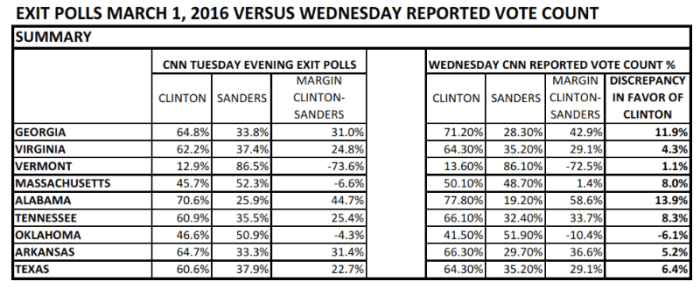
Racketeering Lawsuit Exposing Nationwide Vote Rigging in DNC Primaries Could Derail Clinton – The Free Thought Project

“They’re nailed,” says the Harvard attorney spearheading the suit.

Source: Racketeering Lawsuit Exposing Nationwide Vote Rigging in DNC Primaries Could Derail Clinton – The Free Thought Project

Voter Repression Is a Serious Problem: It Is Time for a New Freedom Summer | Portside

Voter Repression Is a Serious Problem: It Is Time for a New Freedom Summer

Republicans have created immense obstacles to registration – reduced the number of days for early voting, eliminated same-day registration – all with the clear and unadulterated aim of sinking, if not eliminating the Democratic electorate. What is striking is that, not very far behind their bogus arguments regarding alleged voter fraud, Republicans are close to admitting, or will outright admit, that their aim is to get potential Democratic voters to remain home.
Bill Fletcher
June 5, 2016

I found myself reading about the impact of voter suppression, i.e., the efforts to inhibit voter registration and voter participation that have been orchestrated by Republican-dominated state legislatures since 2009.  Voter suppression actually has a long and ignominious history in the USA, but the 1965 Voting Rights Act cramped such efforts.  The US Supreme Court’s neutering of the Voting Rights Act, Shelby County v Holder , opened up myriad possibilities for Republican shenanigans in the electoral arena.  Republicans have created immense obstacles to registration –  reduced the number of days for early voting,  eliminated same-day registration – all with the clear and unadulterated aim of sinking, if not eliminating the Democratic electorate.  What is striking is that, not very far behind their bogus arguments regarding alleged voter fraud, Republicans are close to admitting, or will outright admit, that their aim is to get potential Democratic voters to remain home.

    Voter registration, instead of being encouraged and made more accessible, has become exceedingly difficult.  In the Commonwealth of Virginia, for instance, registration forms have to be submitted within a certain number of days after they have been filled out, otherwise those who have conducted the registrations are penalized.  Registration forms can only be submitted to the clerk in the county of residence of the registrant rather than being submitted elsewhere and channeled appropriately.  And, in this age of identity theft, registrants are required to provide their full social security number.  In each state where voter suppression efforts are underway there are similar stories.

    Contemporary voter suppression parallels the practices carried out when Reconstruction was overthrown in 1877 and the ‘counterrevolution of property,’ to use W.E.B. Dubois’s term, succeeded.  In many states, possession of property was established as an eligibility requirement to cast a ballot. This counterrevolution resulted in the disenfranchisement of African American voters and, with them, many poor whites.  This was precisely the objective of “property” when faced with a populist rising against the gross inequalities of the Gilded Era and the post-Reconstruction period.

    Today’s voter suppression gained traction in the aftermath of the election of Barack Obama as President.  For the right-wing it was an “OMG” moment that they sought to undermine by any means necessary.  As we are now aware, Senator Mitch McConnell united the Republicans around a strategy of obstruction in Congress, aiming to derail any Obama initiative.  In the field, however, the objective was deeper and more demonic.  The aim was to shrink the electorate.  Some Republican ideologues went so far as to argue that the electorate should be reduced and that there were certain people who should not be able to vote because of ignorance or poverty.  But the mass of Republican legislators crafted a strategy that based itself on the argument that there was voter fraud that had to be blocked through new and challenging initiatives in voter registration and voting.  The arguments were as absurd as they were racist.  There was no evidence of anything approaching significant voter fraud, yet the Republicans played upon racist myths and fears among many whites to create an atmosphere where such measures were taken seriously.

    There have been repeated and significant efforts to block voter suppression efforts.  Litigation has been the main tactic and, in some cases, there have been victories.  But with every victory, the pox still spreads as the Republicans prove, once again, to be relentless in their pursuit of total power in the electoral arena.  The question that progressives face is one of what to do?

II

    Progressives and leftists have often not taken matters of voter registration particularly seriously, at least in the post-1965 Voting Rights Act era.  Voter registration and voting rights more generally were relegated to the liberals and non-partisan do-gooders.  While there were leftists, such as Richard Cloward and Frances Fox Piven, who saw the importance of voting rights and registration, they tended to be more the exception than the rule.  Added to this problem, the Democratic Party establishment regularly downplayed voter registration, ignoring the importance of expanding the electorate.  Only in certain campaigns, e.g., during the Black-led electoral upsurge of the 1980s and the Obama campaign in 2008, was voter registration recognized to be of strategic importance in shifting the balance of forces.

    In election years 2010, 2012 and 2014 various organizations, including but not limited to labor unions, mobilized against selective voter suppression efforts, particularly those conducted on Election Day.  Yet the waves of assaults by the Republicans have not ceased and, with the crippling of the Voting Rights Act, the blood lust of the Republicans has become enhanced.  For these reasons, the approach of progressives towards voter suppression needs to be reconsidered.

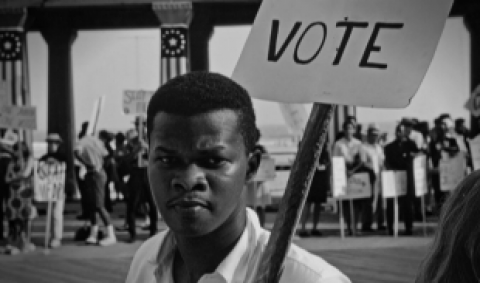
    The battle for voting rights in the 20th century was not one mainly handled in the courts; it was handled in the ‘court’ of public opinion, specifically the streets.  The dramatization of such efforts in the commercial media whether in the film Selma or in the recent HBO film All the Way reminds us of how repressive election laws once were in many parts of the USA (including but not limited to the South and the Southwest).  It was the work of activists, most especially those associated with the Southern Christian Leadership Conference and the Student Non-violent Coordinating Committee (SNCC) that made a tremendous difference.  Their work included the development of Citizenship Schools (done in conjunction with the Highlander Folk School), registration efforts and outright protests.  This was exceedingly dangerous work making the courage of the activists that much more exceptional.

    After 1965, there was an assumption in much of the liberal and progressive world that the Voting Rights Act was largely untouchable and that this would be a fortification to restrain the advances of the barbarians of the political Right.  Unfortunately, the barbarians circumvented the fortifications and are now in an all-out assault on democratic rights.  A reliance on court action will be insufficient.

    Which brings us to an approach in the 2016 election year.  Perhaps what is needed is a “Freedom Summer + Fall,” i.e., a major, multi-pronged mobilization that openly challenges voter suppression.  Such an effort would necessitate large numbers of volunteers and the collaboration of organizations.  Yet it is eminently do-able.  Consider:

  1. This effort would need to run from this very moment through Election Day (actually though the certification of the elections).

  2. Voter suppression statutes would need to become the subject of litigation on a very broad scale.  The undemocratic nature of them would need to be demonstrated and court action would be one particular platform.

  3. Voter registration efforts would need to be enhanced with shuttles to get communities to registration sites.  Student volunteers would need to be enlisted as part of a massive registration initiative.

  4. Where local officials obstruct or block registration, there would need to be protests.  Such protests might take the form of well-publicized sit-ins, or they might be massive stand-ins.

  5. Coordinated days of actions would be needed in states raising the issue of voter suppression, particularly documenting the lack of evidence to justify any such efforts.

  6. Absentee voting would need to be encouraged.  This is very important particularly in those states where early voting has been eliminated or cut altogether.

  7. There would need to be a focus on obtaining appropriate documentation.  This might be among the most difficult challenges since there are many people who do not have birth certificates; lost their birth certificates; or for whatever reason are lacking the requisite information.  Create media events that highlight the plight of those who do not have and are unable to obtain the appropriate documentation.

  8. In states that permit gun identification in order register to vote, organized efforts would be needed to secure such identification.

  9. Weekly demonstrations at the Republican National Committee would need to be mounted to raise awareness of this assault on democracy.

  10. Pressure would need to be brought on governors to issue executive orders restoring voting rights to the formerly incarcerated in those states that permanently eliminate them, e.g., the April 2016 executive order by Virginia Governor McAuliffe.

A tremendous danger facing us is that of passively accepting the results of voter suppression efforts.  Longer-term the counterattack on voter suppression will need to be at the level of state legislators.  Progressive candidacies will need to run on the platform of overturning such efforts.  Yet this will only happen when there is the sense of a mass movement.  To the extent to which voter suppression is treated more like a nuisance that is addressed exclusively by litigation, we will lose the battle for democracy and the forces of authoritarianism will have their day in the sun.

Bill Fletcher, Jr. is a talk show host, writer and activist.  He is the author of ‘They’re Bankrupting Us!’ And Twenty Other Myths about Unions. Follow him atwww.billfletcherjr.com.

Source: Voter Repression Is a Serious Problem: It Is Time for a New Freedom Summer | Portside

How the Republican Hold on the South Could Collapse ∇ Newsweek

How the Republican Hold on the South Could Collapse

By Pema Levy / July 8, 2014 11:41 AM EDT   

7_11_FE0203_DixieBlue_01

As minorities head to the South, the Republican grip on politics is under threat. Pictured, Obama supporters celebrate his election in 2008. Mario Tama/Getty
AA
Filed Under: U.S., The South, Democrats, Republicans

Henry L. Marsh III wanted to see President Barack Obama’s second inauguration in person because, at 79, he figured he might not live to see another black president elected. So the Virginia civil rights lawyer spent January 21, 2013, in Washington, D.C., witnessing a part of history he had dedicated his life to making possible.

His presence at Obama’s inauguration, however, set off one of the dirtiest political maneuvers in recent history.

Marsh is a Democrat in the Virginia Senate, a chamber that until last month was divided evenly along party lines, with 20 Democrats and 20 Republicans. But with Marsh 100 miles away in Washington, Republicans briefly enjoyed a 20-19 majority, if only for a few hours. In a power grab so brazen it caught even the GOP governor by surprise, Senate Republicans passed a bill redrawing the state Senate map to give them a permanent majority.

By the time Marsh returned, his colleagues had passed a redistricting bill that would have vastly undercut the political power of black Virginians. The new map crowded black voters into minority-heavy districts so that up to eight more districts would turn red, a strategy political scientists call “pack and crack,” leaving Republicans with a 27-13 majority in Virginia for years to come. As if to pour salt on the wound, this all happened on Martin Luther King Jr. Day. The plan never made it out of the Republican-controlled legislature. Two and a half weeks after the Senate passed the new map, the Republican speaker in Virginia’s lower chamber, after much reflection and prayer, angered his own party by killing the map with a procedural move.

Get top stories emailed to you each day.

“Count that as a new low for hyper-partisanship, dirty tricks and the unaccountable arrogance of power,” declared The Washington Post, echoing the widespread shock at the sly incident that made a mockery of democracy.

That attempt may seem extraordinary up close, but take a step back to look at the changing demographics of Virginia and the South more broadly and this power play starts to make sense. Two months before, Obama had won the state for a second time. For the first time since 1964, Virginia was on its way from red to blue.

Virginia’s Republicans were seeing decades of political control melting away before their eyes. “They tried to seize power that they didn’t deserve,” Marsh said. “They got caught with their hand in the cookie jar.”
SOUTHERN EXPOSURE

To understand why the Republican Party has come to dominate the South—and why that strength may now be waning—you have to go back to the Civil War. Abraham Lincoln and Northern abolitionists ran the Republican Party in the 1860s, while the Democrats drew much of their strength from the slave states. After Reconstruction, when the Southern states were left to their own devices, the Democratic Party ruled with an iron fist—and Jim Crow. Their reign lasted nearly a century.

The GOP in Dixie, political scientist V.O. Key Jr. observed in 1949, more closely resembled a cult or a conspiracy than a political party. In 1950, of the 127 members of Congress from the former Confederate states, just two were Republican.

But the Democrats’ stranglehold on the South was already loosening. Perhaps no one embodied, or facilitated, the South’s transformation from the Democrats’ Solid South to the regional anchor of today’s Republican Party as much as Strom Thurmond.

7_11_FE0203_DixieBlue_02After Democratic President Harry Truman embraced civil rights ahead of his re-election bid in 1948, Southern Democrats broke from the party in protest. They wanted to send a message to Democrats in Washington: Either civil rights go, or the South goes.

A group of Southern lawmakers formed the “Dixiecrats,” who were devoted to states’ rights, and nominated Thurmond, the former Democratic segregationist governor of South Carolina, for president. On a hot day in Birmingham, Alabama, Thurmond made his first speech to Southern deserters as their presumptive nominee.

“There’s not enough troops in the Army to force the Southern people to break down segregation and admit the nigra race into our theaters, into our swimming pools, into our homes and into our churches,” Thurmond told them. That November, he won over a million votes and carried four states in the Deep South.

Thurmond and his fellow Dixiecrats weren’t kidding around. Two months after President Lyndon Johnson signed the Civil Rights Act in July 1964, Thurmond, by then a U.S. senator, switched parties from Democrat to Republican. That November, five Southern states followed his lead and voted for Barry Goldwater, the Republicans’ ultra-conservative presidential nominee. In 1964, more Southern whites voted Republican than Democrat for the first time. They never went back.