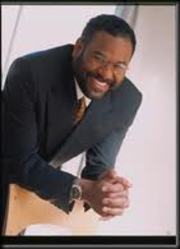
Radio Veteran Doug Banks Dead at age 57

OUR COMMON GROUND  is saddened to learn that syndicated radio host Doug Banks has passed.

Doug Banks 1

The 57-year-old talent was in Miami when he passed.

A radio veteran; the married, father of two daughters had continued to host his national afternoon drive show despite serious health setbacks over the last year. Banks had just hosted his syndicated radio on Friday and then traveled to Chicago this past weekend for the Black Women’s Expo before returning back to Miami.

Born in Philadelphia and raised in Detroit, Banks made a name for himself in radio in Los Angeles, before going on to have success in markets like Las Vegas, Oakland and Chicago. It was in the Windy City that Banks became a star, while hosting a morning show on WGCI 107.5FM.

In the mid-90’s, Banks entered the world of syndication through ABC Radio Networks, first with an afternoon show and then the “Doug Banks Morning Show” with co-hostsDeDe McGuire and comedian CoCo Budda.

Doug banks logo

In 2008, his morning show was canceled and Banks returned to afternoons. His new show, “The Ride with Doug and DeDe” featured comedian Rudy Rush. In 2010, Banks moved over to American Urban Radio Networks (AURN) and the show became “The Doug Banks Show.”  Rush left the show and was replaced by comedian George Willborn, who joined Banks after his previous show “The Michael Baisden Show” was canceled.

<>strongDoug Banks

In 2014, McGuire then departed the syndicated series after more than a decade of working alongside Banks.

Most recently, “The Doug Banks Show” was co-hosted byDee Dee Renee and continued to air in about 15 radio markets, including Chicago, the place where it all began.

On a personal note, my very first radio opportunity was on “The Doug Banks Morning Show” in the early 2000’s after Banks and McGuire were introduced to me by radio and marketing executive Sheila Eldridge.

For one year, I provided entertainment updates on-air once a week or whenever there was breaking news. Several times, Banks and his morning show team flew me in for high-profile promotional events in New York City, Philadelphia and in Jamaica.

Banks was a kind man. Very gracious and supportive on air. Back in 2013 after the “The Michael Baisden Show” ended, Banks was a contender for the afternoon drive slot on WHUR 96.3 FM in Washington, DC and expressed interest in having me return to his show because he knew having someone connected to DC would be important. The time slot ended up going to Frank Ski.

Our prayers go out to Banks’ family, friends, colleagues and the millions of listeners who have listened to him throughout the years.

“Uprising: Resistance and Rebellion” ll OUR COMMON GROUND with Ajamu Baraka and Efia Nwangaza

OUR COMMON GROUND   with Janice Graham

       “Uprising: Resistance and Rebellion”

05-02-15 Resistance and Rebellion

               Depraved INDIFFERENCE – Beyond Baltimore
  Learn More
Saturday, May 2, 2015 LIVE 10 pm ET
Guests: Ajamu Baraka and Efia Nwangaza
Call In – Listen Line: 347-838-9852
Join us LIVE http://bit.ly/1KCu4aR

Tonight we look back at this week’s uprising in Baltimore MD and explore where we go from here. How do we prepare a generation of people for a new, more militarized war on Black people? How do we get our people to see, “we are the Gaza?” Looking at the Freddie Gray murder charges and the overall fracture and failure of the Amerikkan judicial and government systems.

ABOUT OUR GUESTS

Ajamu Baraka,Human Rights Leader and Contributor, Black Agenda Report

Ajamu Baraka is a human rights defender whose experience spans three decades of domestic and international education and activism, Ajamu Baraka is a veteran grassroots organizer whose roots are in the Black Liberation Movement and anti-apartheid and Central American solidarity struggles.
Baraka is an internationally recognized leader of the emerging human rights movement in the U.S. and has been at the forefront of efforts to apply the international human rights framework to social justice advocacy in the U.S. for more than 25 years. As such, he has provided human rights trainings for grassroots activists across the country, briefings on human rights to the U.S. Congress, and appeared before and provided statements to various United Nations agencies, including the UN Human Rights Commission (precursor to the current UN Human Rights Council).

As a co-convener with Jaribu Hill of the Mississippi Worker Center for Human Rights, Baraka played an instrumental role in developing the series of bi-annual Southern Human Rights Organizers’ conferences (SHROC) that began in 1996. These gatherings represented some of the first post-Cold War human rights training opportunities for grassroots activists in the country.

He writes for the Black Agenda Report and is Editor of “A Voice from the Margins” http://www.ajamubaraka.com/

Efia Nwanga, Human Rights Attorney and Liberation Broadcaster, WMXP Greenville South Carolina

Sister Nwangaza, current director of the Malcolm X Center for Self Determination, is a former Student Non-Violent Coordinating Committee (SNCC) organizer. The Malcolm X Center for Self Determination (http://wmxp955.webs.com/aboutus.htm ), is a volunteer grassroots, community based, volunteer staffed, owned and operated human rights action center, since 1991. It serves as a non-profit, public space for developing, testing, training and implementation of approaches to popular education, strategic planning, problem solving, and communications skill enhancement, with wide ranging performing and organizing skill development, using human rights frameworks and mechanisms for self-determination, community and self-advocacy. WMXP-LP 95.5 FM – The Voice of the People, http://wmxp955.webs.com/, is a community based, volunteer programmed, listener and local business supported non-commercial educational radio station. It’s mission is to give voice to the voiceless with local music, local talk, local news, local people doing local programming.

She clerked in the SNCC national office, worked the Julian Bond Special Election Campaign, and was a member of the Atlanta Project which drafted the Black Power, Anti-Vietnam War, and Pro-Palestinian Human Rights position papers popularized by SNCC,http://www.crmvet.org/vet/nwangaza.htm . At the behest of Malcolm X, SNCC worked and moved the 1960s U.S. Civil Rights movement to founding today’s U.S. Human Rights Movement. SNCC’s modern day call for Black Power/Self Determination united, elevated and invigorated resistance movements here and around the world. For fifty years of work as a human rights activist, her early career as a staff attorney for the Greenville Legal Services Program, and her contributions to numerous civic and human rights organizations . Nwangaza is an affiliate member of the Pacifica Radio Board of Directors as a representative of WMXP.

         BROADCASTING BOLD BRAVE & BLACK

Facebook

Community Forum

Twitter: @JaniceOCG #TalkthatMatters

OCG Blog

Pinterest

Visit our Tumblr Page

email: OCGinfo@ourcommonground.com

LISTEN LIVE and Join the OPEN Chat: http://www.blogtalkradio.com/OCG
Call In – Listen Line: 347-838-9852

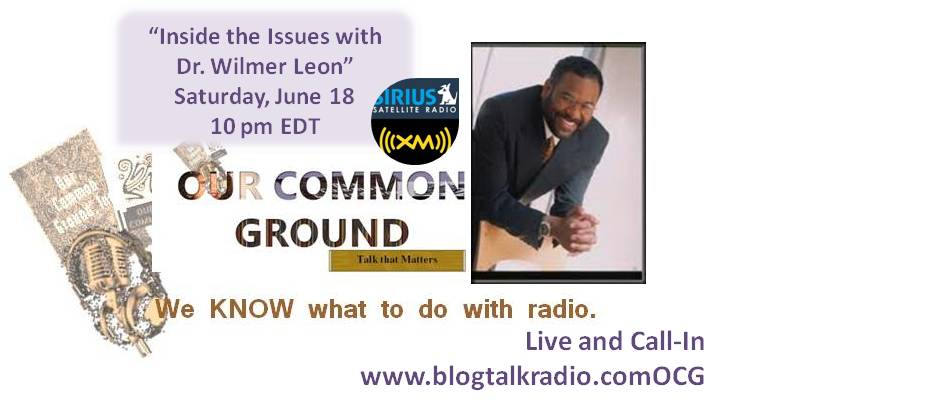
Remembering “Dr. Ben” ll In Conversation with Sirius/XM Host, Dr. Wilmer Leon,

OUR COMMON GROUND with Janice Graham

This Week

Tribute to Dr. Yosef Ben-Jochannan  In Conversation with Dr. Wilmer Leon
HOST, “Inside the Issues with Dr. Wilmer Leon
Sirius/XM Radio
March 21, 2015 10 pm ET LIVE

03-21-15 wilmer2

Join the broadcast Here: http://bit.ly/1bkVIxc

dr.ben2ABOUT Dr. Yosef Ben-Jochannan

He was one of the most courageous and inspiring scholars of our time would live for nearly a century, paying personal witness to dramatic transformations in the lives of Black people across the globe. Now a Beloved Ancestor.

ABOUT Dr. WilmerLeon Dr. Leon’s Prescription

Wilmer Leon is the Nationally Broadcast Talk Show Host of “Inside The Issues with Wilmer Leon” Saturday’s from 11:00 am to 2:00pm on Sirius XM (126).

Wilmer_Leon_2011-02-17_18-12-03_webWilmer J. Leon III, Ph.D. is a Political Scientist whose primary areas of expertise are Black Politics and Public Policy. Wilmer has a BS degree in Political Science from Hampton Institute, a Masters in Public Administration (MPA) from Howard University, and a Ph.D. in Political Science from Howard University.Dr. Leon is also the host of XM Satellite Radio’s, “Inside The Issues”, a three-hour, call-in, talk radio program airing live nationally on XM Satellite Radio channel 126.”

Dr. Leon was a featured commentator on CNN’s Lou Dobbs Tonight and is also a regular contributor to The Grio.com, The Root.com, TruthOut.org, The Maynard Institute.com and PoliticsInColor.com. He is an OUR COMMON GROUND Voice for more than 5 years.

We will discuss with Dr. Leon about today’s urgent and pressing issues and events before African-Americans.


Sankofa 2015

                                          BROADCASTING BOLD BRAVE and BLACK

Community Forum:
http://www.ourcommonground-talk.ning.com/

Twitter: @JaniceOCG #TalkthatMatters

OCG Blog: http://www.ourcommongroundtalk.wordpress.com/

Pinterest : http://www.pinterest.com/ocgmedia/boards/

Visit our Tumblr Page: http://ourcommonground.tumblr.com/

Facebook: https://www.facebook.com/OCGTALKRADIO

“Speaking Truth to Power and OURselves”

email: OCGinfo@ourcommonground.com

LISTEN LIVE and Join the OPEN Chat: http://www.blogtalkradio.com/OCG
Call In – Listen Line: 347-838-9852

Black Lives Matter Profiles: Remembering the Joyful Spirit of Malcolm Ferguson φ The Atlanta Star

atlanta star banner

Black Lives Matter Profiles: Remembering the Joyful Spirit of Malcolm Ferguson, Killed After Filing a Lawsuit Against the NYPD

 
This profile is part of an ongoing series of narratives focused on men and women who have been killed by the police. It is an attempt to counteract media bias, which often vilifies these men, women, boys and girls. These stories have been captured through the voices of the victims’ family members. I have been fortunate to meet the families through my activism in the Black Lives Matter movement and through work in various organizations.

Even before Michael Brown was gunned down in Ferguson, Missouri, the name Ferguson was analogous to police violence and murder. On March 1, 2000, the unarmed Malcolm Ferguson was gunned down blocks from his home in the Bronx.

“Malcolm was my biggest baby,” laughs Malcolm’s mother, Juanita Young, who is a parent to four other children.

Malcolm was born on Oct. 31, 1976, in the Bronx. “He was a loving, happy-go-lucky little boy,” Young explains. He trusted his loved ones, and Young giggles as she tells of a time Malcolm was convinced by his brother that he was Superman. He then attempted to fly out the window. Young recalls when Malcolm discovered Santa Claus was his mother, and instead of crying, he laughed and was happy all the same. He loved his mother.

“He was always worried about me because I’m legally blind. He was very close to his sisters and brothers because his father died when they were young,” Young says.

Malcolm was Young’s second to oldest son—her oldest, James, was 11 months older than Malcolm. Malcolm and his brother developed a strong relationship, but it was Malcolm who took on the leading role of big brother and acted like a father to his three younger siblings when their own father was not around. He went to great lengths to take care of his mother as well.

Like many boys, Malcolm loved to play basketball and liked to ride his bike, exploring different areas of the Bronx, all while protecting his family.

“We would tease him because he didn’t go with lots of girls. He would say that if anyone would do anything to his sister, he would be so defensive. So, he didn’t want to just go with any girl,” says Young.

Artist Kate Deciccio Painting of Malcolm's mother Juanita Young.

With a kind-hearted and devoted character, Malcolm grew up with lots of friends and felt pressure from his peers to have more name-brand things. Like many of his peers, he decided to sell drugs for some extra money. He ended up being arrested and serving eight months in prison for drug-related offenses when he was 17 years old. It was in prison where Malcolm finished his high school degree.

Malcolm was so negatively affected by his time incarcerated that he vowed never to return to prison. “He would lay at the corner of my bed and tell me the different horror stories and said, ‘I don’t [ever], ever want to go through that again,’” Young recalls.

Malcolm, then only a teenager, and Young spoke every day while he was incarcerated. Young had a miscarriage while Malcolm was locked up, and she remembers how guilty Malcolm felt. He felt, as the protector, that had he been home, perhaps the baby would have been born. Malcolm did everything in his power to ensure the safety, security and well-being of his beloved family—of his cherished mother.

“There is so much now that I do that I wouldn’t have to do if he were alive. If I would go to the laundry, he would go. He would ask me, ‘Ma, wait until I come back.’ Because of my blindness, he really protected me. There were so many times I had been beat up or whatever, and Malcolm felt the need to protect me,” Young explains.

One time, Young was standing outside of her building when someone asked her for directions, and as Young began to search through her purse, Malcolm was at the window, banging, urging the passerby to ask someone else, out of a fear that she could be robbed. He would leave no opportunity for anyone to take advantage of his mother.

It was not just Young and her other children Malcolm sought to protect. “Malcolm wanted to be a paralegal to help people after what he witnessed in prison. He felt he wanted to help people who were incarcerated,” Young says.

Upon leaving prison, Malcolm took an honest job at a car wash, so that he could make money as he pursued a career as a paralegal. His mother was content and knew that his brief stint in illegal pursuits was done.

“It was better than him asking me for quarters,” Young jokes, “I used to go to Atlantic City with my friends. He always would say, ‘Mom, do you have quarters around here?’ ”

Like many formerly convicted people, Malcolm was constantly harassed and profiled by the police after his time in prison. The young, 6-foot-1 Black man was continually harassed by the NYPD in the Bronx despite no involvement with crime or any illegal activity.

“Every time the cops arrested him, the judge would let him go because he wasn’t doing anything. The judge wouldn’t even buy it,” Young says.

One time, the police arrested Malcolm and instead of properly placing the handcuffs around his wrists, the police aggressively placed them over his thumb. His thumb was so injured that Malcolm had to be taken to emergency services. In response to the violent act, Malcolm decided to take legal action against the NYPD for his injuries in police care. He was still involved in the lawsuit when he was killed. After the lawsuit began, the police harassment increased.

“He still kept coming home and telling me the cops were bothering him. He couldn’t go nowhere without the cops stopping him,” Young explains.

When 23-year-old Amadou Diallo was shot and killed by the NYPD in the Bronx in February 1999 (also unarmed), Malcolm was angered and disturbed, like many in New York. He joined in the massive rallies in 2000 when Diallo’s killers were acquitted.

“He saw how the cops treated him and his friends. He knew what happened to Amadou was not right,” explains Young.

That day, Young was alerted by a friend to turn on the TV and was subsequently told that Malcolm would not be coming home.

“I saw [the police] dragging [Malcolm] on the ground arresting him [for peacefully protesting],” Young says.

Then the police started to come after Young. They began pressing seemingly ridiculous charges against her (one such charge was walking a dog without a leash). Young insists that the police would do anything to get her away from her apartment.

On March 1, 2000, about a year after Diallo’s death, just several days after the acquittal, Young was approached in her home by a police officer who told her that Malcolm, her loving son, her protector, was found dead in the hallway of her building. (Young would later find out that Malcolm had been killed, shot in the head, in the streets.) The shock sent Young into respiratory arrest, and she ended up having to go to the emergency room that same night.
Young claims that the police had been threatening Malcolm because of the legal action he was taking against the NYPD for their brutal arrests. Malcolm was unarmed and was not involved in any illegal activity. He did not attack a police officer, nor did he try and resist arrest, as he was doing nothing wrong to warrant arrest. Malcolm, presumably on his way home from work, was approached by Officer Louis Rivera, a plainclothes officer, and then shot in the street. Witnesses attest to this story, although the police claim Malcolm was shot in an apartment building while selling drugs, and then was shot in a struggle between himself and Officer Rivera. There were no drugs found on Malcolm.

Malcolm is remembered as a brother to James, Saran, Buddy and D’Nai. He was an adoring son to his mother, who has worked nonstop since 2000 on his behalf to fight for greater police accountability and to end violence rooted in racism at the hands of the police. Malcolm himself had hoped to work with the legal system to advocate for those most brutalized by the system. Instead, his life was cut tragically short.

The police officer who murdered Malcolm still is a police officer. Young continues to fight on Malcolm’s behalf.

“I think about what he would be like today. What joy he would have brought me,” Young says.

Tess Raser, originally from Chicago, is a teacher in Brooklyn and an active member of the growing Black Lives Matter movement. She works with various groups, including We the People and the Stop Mass Incarceration Network.

We Shall Overcome: Ava DuVernay on Making ‘Selma’ φ Rollingstone Magazine

We Shall Overcome: Ava DuVernay on Making ‘Selma’

The groundbreaking director talks about downplaying LBJ, honoring MLK’s legacy and why you should always have Oprah on your film sets

Ava DuVernay
Atsushi Nishijima/Paramount
Ava DuVernay on the set of ‘Selma.’

BY | January 5, 2015

As a filmmaker, you put the film out there, and you just want it to be okay,” says director Ava DuVernay. “You don’t want to let people down; you don’t want to embarrass yourself.” She’s done much better than that with Selma, a dramatization of the 1965 protests in Alabama led by Martin Luther King, Jr.; the movie, considered to be a leading Oscar contender, has already received four Golden Globe nominations. Peter Travers said in his rave review in Rolling Stone that DuVernay “blows the dust off history to find its beating heart.”

DuVernay, 42 years old, grew up in Compton, but spent summers in Alabama. A film publicist before she shifted careers to directing, she had actually signed up to do publicity for an earlier version of Selma. The screenplay had bounced around for over five years, attached to directors such as Lee Daniels. “It was looked at as an unmakeable movie,” says executive producer Paul Garnes. But British actor David Oyelowo — who had appeared in DuVernay’s Sundance award-winner Middle of Nowhere — very much wanted to play King, and unbeknownst to DuVernay, was lobbying for her with an international team of producers. Despite a resumé that was limited to two microbudget features, a half-dozen documentaries, and an episode of Scandal, she got the job, and a $20 million budget.

Ava

Ava on the set of ‘Selma.’ (Photo: Atsushi Nishijima/Paramount)

Our conversation with DuVernay in a vegan Mexican restaurant in Hollywood happened three days before Joseph A. Califano, Jr., a former Lyndon B. Johnson aide, wrote a Washington Post op-ed complaining not only that Selma gave Johnson (played by Tom Wilkinson) short shrift, but that the president had come up with the idea for the protests himself. As it happens, earlier versions of the script focused on the relationship between King and the commander-in-chief, and how their joint efforts led to passage of the 1965 Voting Rights Act. She discussed why she had chosen to place less emphasis on Johnson, her casting philosophy and why it helps to have Oprah on your film set.

Let’s talk about reducing LBJ’s role in the events you depict in the film.
Every filmmaker imbues a movie with their own point of view. The script was the LBJ/King thing, but originally, it was much more slanted to Johnson. I wasn’t interested in making a white-savior movie; I was interested in making a movie centered on the people of Selma. You have to bring in some context for what it was like to live in the racial terrorism that was going on in the deep south at that time. The four little girls have to be there, and then you have to bring in the women. So I started adding women.

This is a dramatization of the events. But what’s important for me as a student of this time in history is to not deify what the president did. Johnson has been hailed as a hero of that time, and he was, but we’re talking about a reluctant hero. He was cajoled and pushed, he was protective of a legacy — he was not doing things out of the goodness of his heart. Does it make it any worse or any better? I don’t think so. History is history and he did do it eventually. But there was some process to it that was important to show.

Many presidents couldn’t have done it.
Absolutely. Or wouldn’t have even if they could.

I thought Tim Roth’s performance as George Wallace was very nuanced, when it would have been easy to play him as Snidely Whiplash.
I wanted to try to make everyone as human as possible. That trap that I see so many non-black filmmakers do with black characters, where everything is surface and stereotypical…I didn’t want to be the black filmmaker that does that with the white characters. Tim has talked about every actor has to love the character that they’re playing in some way, and in the time that we’re talking about, there’s not a lot to love in Wallace if you believe in justice and dignity. But he found a videotape or an article of his son talking about him, and so he was able to tap into the father doing what he thought was right.

I WASN’T INTERESTED IN MAKING A WHITE-SAVIOR MOVIE; I WAS INTERESTED IN MAKING A MOVIE CENTERED ON THE PEOPLE OF SELMA.

Whether it was Roth or Tom Wilkinson — or Giovanni Ribisi, Stephen Root and Alessandro Nivola — all these characters represented a real diversity of thought about this issue from the white perspective, from the dominant culture. I wanted to create an array of folks who all thought about it in a different way because white thought wasn’t a monolith at that time, just as black thought wasn’t a monolith.

What was your philosophy when you were casting?
To work with people who fascinate me. Oprah being in the cast allowed me to have flexibility because she is such a big name. Her fame and her power created space for me to be able to hire Stephan James, a 19-year-old from Canada, for John Lewis instead of the hot young guy who was just in The Fast and the Furious,or whatever. I was able to pick and choose cool people.

What was it like having Oprah on the set?
Her first day of shooting was the day that Maya Angelou died. I had just driven up to the set in Marietta when I got a call on my cell phone from Andrew Young, the real Andrew Young: “Sister Maya has passed on.” And all I could think of was Oprah was on her way to the set. I immediately called her and said don’t come, we’ll do it another day. Tight schedule, a 32-day shoot, not a lot of room to move things around — but we’ll figure it out. She said, “No, I can do this, it’s okay.” She had the same trailer as everyone else. I spoke with her briefly, and I should’ve stayed, but I had to go out back to the set: I had 200 extras out there. So I called Tyler Perry, he sneaked onto the set, they had their moment, and she came out ready to go. I’m grateful to him; most people see us as very different filmmakers, but in that moment we were united around Oprah.

Ava DuVernay

Ava and Oprah on the set of ‘Selma.’ (Photo: Atsushi Nishijima/Paramount)

How did your old job as a publicist prepare you to do this?
To make a film?

As opposed to eating guacamole, yes.
[Laughs] Just being able to talk to people. I used to coordinate and develop and execute really big campaigns for studios with a lot of moving parts. But the main thing is just articulating what’s in your head, which we overestimate that people can do — how do you get that out in a way that’s clear and un-muddled with the intention of producing a result?

What was the hardest scene to shoot, emotionally?
When Jimmy Lee Jackson was murdered in the cafe. At that time there was no Mike Brown murder, there was no Eric Garner murder — but there were so many others that are just ambient. It’s part of the atmosphere as a black person growing up in this country: You know that’s it’s happening somewhere on that very day. And a month later Mike Brown was killed. [Cinematographer] Bradford Young, [editor] Spencer Averick, and I, we designed that scene in a really specific way. It was really important that we have all that stuff worked out in advance because I knew it was going to be a rough, emotional day. This wasn’t a day for improvisation.

King’s tactics imply that his supporters are going to have to get hurt: Nonviolence doesn’t work unless the other side overreacts.
Being passive doesn’t mean sitting there and getting hit for the sake of getting hit. And it wasn’t all faith-based, either. There were some very practical reasons why it was used. You talk to most people about King now and they only know “I Have a Dream,” and that he believed in peace and then he died. Really? That’swhat he’s been reduced to? And we’ve allowed it to happen. And if there is anything that Selma does, it reinvigorates the narrative around him to be more full-bodied and more truthful about what his tactics were.

Are you religious yourself?
No, not religious. But I love God.

Can you talk about the aesthetics of violence of Selma? When the church blows up and kills those four little girls, it’s harrowing, but it’s also filmed in a beautiful way. How do those two things work together?
I don’t know if my intention was to make it beautiful. How do you film four little girls being blown apart? There’s a way to do it with a certain reverence and respect for who they were. That’s why it was important for me that you hear their voices before it happens.

There’s a sinking feeling in that scene — I counted five little girls, so I was hoping maybe it wasn’t going to happen.
There were five girls and one lived. And I put in a boy, to misdirect you on purpose. The violence throughout the film follows the same pattern. I resisted the idea of just it being a physical blow. That spectacle has been done: All we do in this industry is blow people up. But how does the hit feel and what does the face do after? What happens to that broken body and what happens to the people that have to tend to that broken body? It’s important to have the morgue scene after Jimmie Lee Jackson’s death, to show the mother and slow down on her face, to slow down the girls, to slow down Annie Lee Cooper when the men put their hands on her and take her down. It was about having a reverence for that was the idea behind it instead of, say, making it beautiful. You’re saying: This is worth taking a closer look at. Everybody stop and pay your respects to this.

Can you pinpoint a moment of joy that happened while you were making this movie?
So many things come to mind, but there was a day that we were filming in Richie Jean Jackson’s house, doing that scene when they all walk into the kitchen. We’re at this house in Atlanta, we had shut down the street. That was the day that Tim Roth and Giovanni Ribisi were coming for their hair and makeup tests. They have to come to see me, ’cause I can’t get away. So they come to the set, and I thought, “Look at all my guys, they’re all together — the White House guys, Wallace, the black guys.” Those characters never cross, right? The chance to see them all together was so fun. Then a black SUV starts coming up the street, going around cones. Our assistant directors and our production assistants are running down, saying, don’t go, they’re shooting. The door opens and out comes Oprah. She’s not supposed to be there; we thought she wasn’t even in the state that day! She starts walking towards me and I just run up to her and give her a big old hug. It was like a house party in the street.

Ava

A surprise visit from Oprah on the set of ‘Selma.’ (Photo: Instagram/@directher)

How was it having people like the actual Andrew Young on the set?
So cool. And it easily could not have been if they were grouchy curmudgeons. But there’s still a spark about them. These are our greatest minds, our greatest radicals. Time has not done them in. If you look John Lewis in the eye and he’s talkin’ to you about something, you’re like “Uh huh, let’s go do it!” When I sat down with them, I was really clear that we weren’t asking for anybody’s permission.

RELATEDScarlett Johansson, Chadwick Boseman

Best Overlooked Performances of 2014

But this [film] is not called “King”; this is Selma. This was as much the story about the band of brothers and sisters that were around him as it was King’s story. There haven’t been great pains taken to show that he was a leader among leaders — all of them could’ve probably done it. Why him? He could talk the best. He was an orator who was able to synthesize all these ideas in a way that spoke to the masses and also that spoke to people in power. But they were there and they were the masterminds behind it. I tried to show the strategy, the tactics, the arguments. That’s how history is made, not by consensus, but by people freakin’ battling it out, right? That’s how change happens.


Read more: http://www.rollingstone.com/movies/features/ava-duvernay-on-making-selma-20150105#ixzz3OLB5tbyP
Follow us: @rollingstone on Twitter | RollingStone on Facebook

8 Successful and Aspiring Black Communities Destroyed by White Neighbors – Page 4 of 4 – Atlanta Blackstar

8 Successful and Aspiring Black Communities Destroyed by White Neighbors – More  – Atlanta Blackstar.

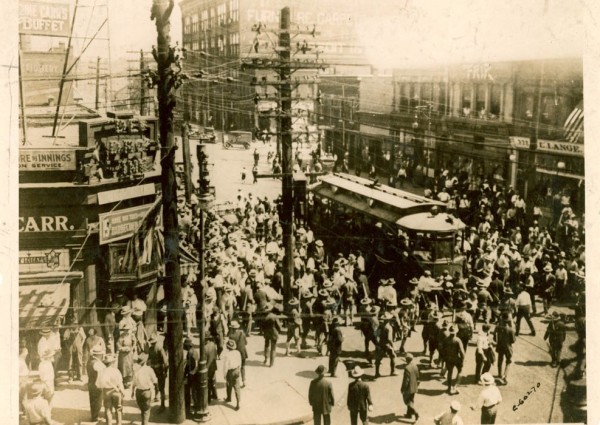
New York City Draft Riot (1863)

The Draft Riot of 1863 was a four-day eruption of violence in New York City during the Civil War stemming from deep worker discontent with the inequities of the first federally mandated conscription laws.

In addition, the white working class feared that emancipation of enslaved Blacks would cause an influx of African-American workers from the South. In many instances, employers used Black workers as strike-breakers during this period. Thus, the white rioters eventually turned their wrath on the homes and businesses of innocent African-Americans and anything else symbolic of their growing political, economic and social power.

On July 13, 1863, organized opposition broke out across the city. The protests soon morphed into a violent uprising against the city’s wealthy elite and its African-American residents.

The four-day draft riot was finally quelled by police cooperating with the 7th New York Regiment. Estimates vary greatly on the number of people killed, though most historians believe around 115 people lost their lives, including nearly a dozen Black men who were lynched after they were brutally beaten. Hundreds of buildings were destroyed causing millions of dollars in damage. Up to 50 of the damaged buildings had been burned to the ground by rioters, including the Colored Orphan Asylum, which housed more than 230 Black children.

FELLOW AMERICANS, DON’T LET OUR IGNORANCE DESTROY US  Φ The Wattree Chronicle

2014, The Meaning of July Fourth for the African American l Dr. Wilmer Leon

2014, The Meaning of July Fourth for the African American

 July 3, 2014

Dr. Wilmer J. Leon, III

LTCWashington-hi-fireworks_1“I say it with a sad sense of the disparity between us. I am not included within the pale of this glorious anniversary! Your high independence only reveals the immeasurable distance between us. The blessings in which you, this day, rejoice, are not enjoyed in common.-The rich inheritance of justice, liberty, prosperity and independence, bequeathed by your fathers, is shared by you, not by me. The sunlight that brought light and healing to you, has brought stripes and death to me. This Fourth July is yours, not mine. You may rejoice, I must mourn.” Frederick Douglas – The Meaning of July Fourth for the Negro – 1852

As America celebrates July Fourth, as the grills smoke, the salads are tossed, pools filled, and fireworks displayed take a moment to reflect.  Reflect upon how far we have come as a nation and yet how far we have to go.

I implore African Americans to read the entire text of Frederick Douglas’ famous speech, The Meaning of July Fourth for the Negro.  Are we as a people able to enjoy the blessings, the justice, and the liberty that are celebrated on this day?

We have become all too familiar with the data.  According to Bread for the World, one in four African-Americans lives below the federal poverty line and more than a third (35.7 percent) of all African-American children live in poverty.  The Bureau of Labor Statistics reports that for 2013, the underemployment rate for African-American workers was 13.4 percent compared 6.7 percent for white workers. That does not account for those who have lost faith in the process and dropped out of the system.  The Pew Research Center reports that the Median Net Worth of Households for Whites is $113,149 and for African Americans is $5,677.  The NAACP reports that African Americans now constitute nearly 1 million of the total 2.3 million of the incarcerated population. African Americans are incarcerated at nearly six times the rate of Whites.

These are just a few examples of the frightening realities with which we are faced.

Douglas asked, “What, to the American slave, is your 4th of July? I answer; a day that reveals to him, more than all other days in the year, the gross injustice and cruelty to which he is the constant victim.”  Yes, slavery ended in 1865 but that two hundred- fifty years of slavery was followed by ninety years of Jim Crow; sixty years of separate but equal and thirty-five years of racist housing policy.

Yes, legislative and judicial progress have been made.   The Civil Rights Act of 1866 provided for the equality of citizens of the United States in the enjoyment of “civil rights and immunities.”  That Act was undermined by the Tilden/Hayes compromise of 1877. We have recently celebrated the 60th anniversary of the Brown v. Board of Education decision and the 50th anniversary of the 1964 Civil Rights Act and will soon celebrate the passage of the 1965 Voting Rights Act.   One problem is that too many have confused the legislative successes with the ultimate victory, changing the racist core and premise upon which this country was founded as memorialized in the U.S. Constitution.

I take this moment to focus on the past because as Douglas said, “We have to do with the past only as we can make it useful to the present and to the future.”

Douglas continued, “At a time like this, scorching irony, not convincing argument, is needed. O! had I the ability, and could reach the nation’s ear, I would, to-day, pour out a fiery stream of biting ridicule, blasting reproach, withering sarcasm, and stern rebuke. For it is not light that is needed, but fire; it is not the gentle shower, but thunder. We need the storm, the whirlwind, and the earthquake. The feeling of the nation must be quickened; the conscience of the nation must be roused; the propriety of the nation must be startled; the hypocrisy of the nation must be exposed; and its crimes against God and man must be proclaimed and denounced.”

As we enjoy the Fourth, eating ribs and hot dogs, we must ask ourselves, are we as a people able to enjoy the blessings, the justice, and the liberty that are celebrated on this day?  If not, what must we do to bring about substantive and permanent change?

Our plight, our success, and our future have always been in our hands.  Dr. King once said, “…nobody else can do this for us; ?no document can do this for us?; no lincolnian emancipation proclamation can do this for us;?no kennesonian or johnsonian civil rights bill can do this for us; ?if the negro is to be free, he must move down into the inner resources of his own soul and sign with a pen and ink of self-asserted manhood his own emancipation proclamation.”

Here is one, just one very simple yet challenging thing to consider.

The former President and CEO of the NAACP, Ben Jealous has just released a report entitled, “True South: Unleashing Democracy in the Black Belt 50 Years After Freedom Summer.” According to the report, “The first and most important lesson is that massive voter registration can overcome massive voter suppression. Our analysis shows that registering just 30 percent of eligible unregistered black voters or other voters of color could shift the political calculus in a number of Black Belt states, helping blacks elect candidates who share their concerns or alternatively, forcing all candidates to pay attention to the community’s concerns. Registering 60 percent or 90 percent would change the political calculus in an even greater number of states.”

I opened with Douglas and I will close with Douglas, “…Allow me to say, in conclusion, notwithstanding the dark picture I have this day presented, of the state of the nation, I do not despair of this country. There are forces in operation which must inevitably work the downfall of slavery. “The arm of the Lord is not shortened,” and the doom of slavery is certain. I, therefore, leave off where I began, with hope.”

Dr. Wilmer Leon is the Producer/ Host of the Sirius/XM Satellite radio channel 110 program “Inside the Issues with Wilmer Leon He is an OUR COMMON GROUND Voice.

 Go to www.wilmerleon.com or email:wjl3us@yahoo.comwww.twitter.com/drwleon and Dr. Leon’s Prescription at Facebook.com  © 2014 InfoWave Communications, LLC

– See more at: http://blackpoliticsontheweb.com/2014/07/03/2014-the-meaning-of-july-fourth-for-the-african-american/#sthash.b9W4uagX.dpuf


wilmer promo

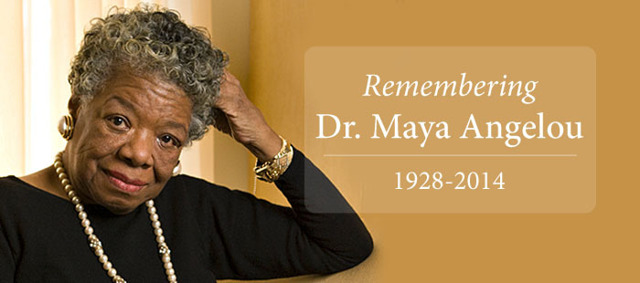
“Into a daybreak that’s wondrously clear . . . I RISE” φ Victory Service Honoring the Life of Dr. Maya Angelou

20030306F_christman9332

“Out of the huts of history’s shameφ
I rise
Up from a past that’s rooted in pain
I rise
I’m a black ocean, leaping and wide,
Welling and swelling I bear in the tide.
Leaving behind nights of terror and fear
I rise
Into a daybreak that’s wondrously clear
I rise
Bringing the gifts that my ancestors gave,
I am the dream and the hope of the slave.
I rise
I rise
I rise”


Watch the full Service Here

Why Do Millennials Not Understand Racism? φ Jamelle Bouie

Why Do Millennials Not Understand Racism?

They think if we ignore skin color, racism will somehow disappear.

140515_POL_BWMillenials
Millennials see racism as a matter of different treatment, justified by race, that you solve by removing race from the equation.
Photo illustration by Slate. Photos by Shutterstock.

When you hear MTV, you don’t think “research.” But, for the last few years, the music television channel has been building a public affairs campaign to address bias called “Look Different.” Aimed at millennials, it seeks to help them deal with prejudice and discrimination in their lives. And as part of the project, MTV has worked with pollsters to survey a nationally representative sample of people ages 14 to 24 to measure how young people are “experiencing, affected by, and responding to issues associated with bias.”  φ

Jamelle BouieJAMELLE BOUIE

Jamelle Bouie is a Slate staff writer covering politics, policy, and race.

Overall, MTV confirms the general view of millennials: Compared with previous generations, they’re more tolerant and diverse and profess a deeper commitment to equality and fairness. At the same time, however, they’re committed to an ideal of colorblindness that leaves them uncomfortable with race, opposed to measures to reduce racial inequality, and a bit confused about what racism is.

All of this is apparent in the findings. Ninety-one percent of respondents “believe in equality” and believe “everyone should be treated equally.” Likewise, 84 percent say their families taught them to treat everyone the same, no matter their race, and 89 percent believe everyone should be treated as equals. With that said, only 37 percent of respondents (30 percent of whites and 46 percent of minorities) say they were raised in families that talk about race.

For this reason, perhaps, a majority of millennials say that their generation is “post-racial.” Seventy-two percent believe their generation believes in equality more than older people, and 58 percent believe that as they get older, racism will become less of an issue. It’s almost certainly true that this view is influenced by the presence of President Obama. Sixty-two percent believe that having a black president shows that minorities have the same opportunities as whites, and 67 percent believe it proves that race is not a “barrier to accomplishments.”

It’s no surprise, then, that most millennials aspire to “colorblindness.” Sixty-eight percent say “focusing on race prevents society from becoming colorblind.” As such, millennials are hostile to race-based affirmative action: 88 percent believe racial preferences are unfair as a matter of course, and 70 percent believe they are unfair regardless of “historical inequalities.” Interestingly, the difference between whites and people of color is nonexistent on the first question and small (74 percent versus 65 percent) on the second. But this might look different if you disaggregated “people of color” by race. There’s a chance that black millennials are more friendly to affirmative action than their Latino or Asian peers.

For all of these aspirations, however, millennials have a hard time talking about race and discrimination. Although 73 percent believe that we should talk “more openly” about bias, only 20 percent say they’re comfortable doing so—despite the fact that a plurality of minorities say that their racial identities shape their views of the world.

What’s more, for all of their unity on tolerance and equality, white and minority millennials have divergent views on the status of whites and minorities in society. Forty-one percent of white millennials say that the government “pays too much attention to the problems of racial minority groups while 65 percent of minorities say that whites have more opportunities.” More jarring is the 48 percent of white millennials who say discrimination against whites is as big a problem as discrimination against racial minorities. With that in mind, it’s worth a quick look at a 2012 poll from the Public Religion Research Institute, where 58 percent of white millennials said that discrimination against whites was as big a problem as discrimination against minorities.

It’s hard to say which is the “true” number, but there’s no doubt that a substantial plurality of young white people believe their race is a disadvantage, which is ludicrous given the small number who say that they’ve felt excluded because of their race (10 percent) or say that they’ve been hurt by racial offenses (25 percent).

But while this reaction doesn’t seem to have a basis in reality, it makes perfect sense given what millennials writ large believe about racism. Let’s go back to the results on colorblindness and affirmative action. Seventy-three percent believe that “never considering race would improve society,” and 90 percent say that “everyone should be treated the same regardless of race.”

From these results, it’s clear that—like most Americans—millennials see racism as a matter of different treatment, justified by race, that you solve by removing race from the equation. If we ignore skin color in our decisions, then there can’t be racism.

The problem is that racism isn’t reducible to “different treatment.” Since if it is, measures to ameliorate racial inequality—like the Voting Rights Act—would be as “racist” as the policies that necessitated them. No, racism is better understood as white supremacy—anything that furthers a broad hierarchy of racist inequity, where whites possess the greatest share of power, respect, and resources, and blacks the least.

Millennials have grown up in a world where we talk about race without racism—or don’t talk about it at all—and where “skin color” is the explanation for racial inequality, as if ghettos are ghettos because they are black, and not because they were created. As such, their views on racism—where you fight bias by denying it matters to outcomes—are muddled and confused.

Which gets to the irony of this survey: A generation that hates racism but chooses colorblindness is a generation that, through its neglect, comes to perpetuate it.