America’s New Demons and the Second Coming of the Neocons :: CounterPunch

Photograph by Krassotkin (derivative), Gage Skidmore (Donald Trump), Gage Skidmore (Hillary Clinton), distributed under a CC-BY 2.0 license.

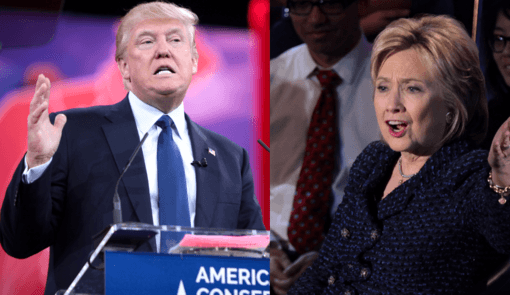
The horror of a Clinton v. Trump election is making everybody who pays attention a little crazy. Not paying attention isn’t easy – not with everybody hooked into social (actually anti-social) media and with“ news” and commentary coming from every direction.The hypocrisy is breathtaking.In the midst of it all, the American propaganda system, the one that supposedly doesn’t exist, has gone berserk — targeting RT America (formerly Russia Today).

Anyone who relies on The New York Times or The Washington Post or NPR or, worse, CNN or MSNBC, to find out what’s shaking – or rather what the guardians of the status quo want people to think is shaking (and “fit to print”) — and who also has access to RT America on satellite TV or a handful of cable stations, or who goes to the trouble of watching it over the internet, will know what I mean.RT America is a better source for news and commentary than America’s finest by many orders of magnitude.  It is less biased too.The Russian government funds it, but this doesn’t make its output propaganda – not unless anything funded by governments is propaganda by definition. RT America is more like the BBC or CBC than, say, Radio Free Europe.

Source: America’s New Demons and the Second Coming of the Neocons

Colin Kaepernick will not be silent: He’s a black man first | theGrio

en

en San Francisco 49ers quarterback Colin Kaepernick brought light to the issue of police brutality by kneeling in protest during the national anthem, he also exposed the National Football League and America’s deep-rooted racial and economic offenses that have been brewing for decades.

Despite the thinly covered veil some in the media have conveyed about the struggles of black America, the looming issue is one that points to just how much this country has failed African-Americans.

Take MLK’s Name Out Your Mouth: An Open Letter to Clemson FB Coach Dabo Swinney

The rise of the black male sports figure and his million-dollar contract produced a safe haven, where blacks found a sense of pride and hope. Somehow an alternate reality was created in which America found comfortability at the sight of jovial black men playing and loving the sport–all while cashing in the big checks. That imagery perpetuated the deceptive notion that far less black Americans were crippled under the historical weight of a country that had, over time, legally mandated so many financial obstacles in the way of their achievement.

Nate Parker Says Colin Kaepernick’s is a Form of Resistance in the Spirit of Nat Turner

As half of the 14 million black households in America see their median net worth hover around $1,700.00 when you deduct the family car and other consumer durables, the imagery we often see in sports and entertainment–black men living lavishly–has made black America’s struggles ever more difficult to see as the real economic story. Whether we look to mass incarceration, chronic unemployment, dismal college graduation rates, or any other social indicator, it’s clear that African-Americans, and in particular black men, are not getting their fair shot at the American Dream.

Since the early 1980s and the introduction of Reaganomics, the crack cocaine epidemic and a slew of racially-biased laws, African-American men have found themselves largely living life as the underclass. Yet it is behind the decadent veil of the NFL and other sports organizations that the false narrative that the struggle for socio-economic stability had somehow subsided has been projected.

Colin Kaepernick Pledges $1 Million Donation to Causes Fighting for Equal Rights 

Thankfully, there’s data that shows otherwise.

From the incarceration numbers that show black men are sent to prison at one of the highest rates the modern world has ever seen, to unemployment rates–which in some places like Milwaukee indicate working-age black men are unemployed at rates above 50 percent–the so-called American Dream has not been good to black men by any stretch of the imagination. But inside of the NFL we could always see the million-dollar black man (albeit while destroying their bodies), happy and loving the sport of football. With Kaepernick and other athletes finally speaking up for the disenfranchised Black men who are not in their unique positions, it’s clear that many athletes are finally feeling the racial implications and failures of free markets, and now they’re speaking up about it.

Kaepernick boycotting the national anthem and other football players putting their black fists in the air, are signs of not just of protest, but of disobedience. A confrontational bucking order of things and standing up to a set of rules that has allowed the NFL–and its white billionaire owners–to thrive.

The very ethos of the NFL is a selling of diversity, opportunity, and American unity. And it’s also one of control; a place where NFL commissioner Roger Goodell would heavily punish the Ray Rices or Adrian Petersons of the world if they stepped out of line. The recent events, however, are different and have left the NFL desperately grasping for any opportunity to save itself from a branding nightmare. According to Bleacher Report, NFL executives are going as far as labeling Kaepernick a traitor they want nowhere near their team–a feeling they say mirrors that of an estimated 90 percent of other executives.

In Kaepernick’s own words, these are not unifying times, and he does not intend to act as if these injustices don’t exist. He along with others brave enough to speak out can no longer stand by and act as if we all are united during the tune of the “Star-Spangled Banner.”

“I’ll continue to sit,” Kaepernick said of his protest. “I’m going to stand with the people that are being oppressed. To me this is something that has to change and when there’s significant change and I feel like that flag represents what it’s supposed to represent in this country–is representing the way that it’s supposed to–I’ll stand.”

Those are the words of a defiant black man, and not of a NFL quarterback who led his team to a Super Bowl appearance. Kaepernick has made it loud and clear that he is a black manfirst, and that no amount of money can silence him. Now his moment of awakening is starting to catch fire, and it’s sweeping across the NFL as other players join in.

Just recently former NFL player Shannon Sharpe speaking on Fox Sports’ “Undisputed” said, “People seem to think that they can tell, ‘Shannon it’s okay, look at you, look at some of the more prominent African Americans,’ … But no, we make up a small, small portion. We’re disproportionate. We’re not the norm in black society.”

For decades, so many framed their ideas of the state of Black America on the social status of a selected few black male athletes, broadcasted on television screens globally as the new American norm. Now those very black men are standing up and saying they don’t want to play the cover up game anymore. Maybe, just maybe it will lead us to a place where finally there are no games played at all.

Antonio Moore, an attorney based in Los Angeles, is one of the producers of the Emmy-nominated documentary Freeway: Crack in the System. He has contributed pieces to the Grio, Huffington Post, and Inequality.org on the topics of race, mass incarceration and economics. Follow him on YouTube Channel Tonetalks.

Source: Colin Kaepernick will not be silent: He’s a black man first | theGrio

Keep Muhammed Ali’s Legacy Away from Beyonce and Kanye West | Black Agenda Report

Keep Muhammed Ali’s Legacy Away from Beyonce and Kanye West

by Danny Haiphong

Airheaded commentators compare Beyonce’s media products and Kanye West’s off-hand quips to Muhammad Ali’s heroic political struggle and genuine sacrifice in the Sixties. That’s nonsense. “Beyonce can dress up in Black Panther dress and subsequently fail to use her platform to educate others about the Black Panther Party precisely because she is selling a product, not building a movement. The same goes for Kanye West and all corporate artists.”

Keep Muhammed Ali’s Legacy Away from Beyonce and Kanye West

by Danny Haiphong

“The article reduces the state repression of Ali received as a mere byproduct of his ‘political stance’ and proceeds to compare the treatment Ali received to the criticisms of Beyonce and Kanye West.”

A recent article in Medium took to task those who mourned the death of Muhammad Ali.
“Conservative America,” according to the author, tells figures like Beyonce and Kanye West to be quiet while it celebrates the life of the late world boxing champion and activist. Self-proclaimed “hipsters” and “culture critics,” however, often take the luxury of ignoring concrete analysis for the allure of identity political liberalism. What the author makes no mention of are the concrete differences between Muhammad Ali and celebrities of the Kanye West variety.  To analyze these differences would force the author to examine the motion of history and political struggle beyond the liberal lens.

Identity political liberalism can be defined in the piece as such. Since Muhammad Ali is celebrated for his opposition to war and racism, one would be hypocritical to criticize Kanye West and Beyonce for their particular forms of opposition. The author clarifies this position, stating:

“Kanye West had the courage to call out The President of United States for ignoring the people of New Orleans. Beyonce had the courage to embrace a movement that has been criticized by the police and mainstream America. If you can’t stomach their political statements there is no way you can say you are a fan of Ali because no ‘entertainer’ of color has been more in your face about condemning America’s racist political crimes than Muhammad Ali.”

This argument commits a logical fallacy of significant consequence. The author equates Beyonce and West’s achievements on the political stage to Ali’s actions in the 1960s. This conclusion derives from a purely subjective position. While it is true that Kanye West and Beyonce have made political statements in the past, no analysis of the particular character of these statements is given. Such an examination reveals exactly what propels cultural figures into political action and what contradictions ultimately limit the usefulness of their political action.

“The author equates Beyonce and West’s achievements on the political stage to Ali’s actions in the 1960s.”

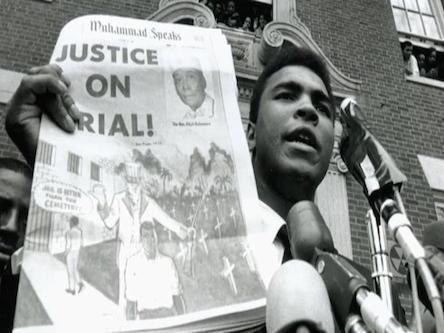
In the 1960s, a revolutionary upsurge emerged from the heroic Black freedom movement and the connections it made to the anti-imperialist struggle around the world. The brutality and exploitation inherent in white supremacy and segregation influenced organizational formations, like the Nation of Islam (NOI), to call for more radical alternatives to the non-violent resistance that characterized the Civil Rights Movement. Ali was influenced by the teachings of Malcolm X, who at that time was being trained to lead the NOI. The US war in Vietnam was nearly a decade old by the time Cassius Clay changed his name to Muhammad Ali. Malcolm X and the NOI took a firm stance against the war in Vietnam. Eventually Malcolm X would take opposition to war a step further by arguing that Black Americans had more in common with the people of Vietnam than the US government.

It was the development of international solidarity in the Black liberation movement that compelled Muhammad Ali to make his famous declaration against the Vietnam War and travel to Cuba and Palestine. Revolutionaries such as Paul Robeson, Shirley Graham Du Bois, and WEB Du Bois in the first half of the 20th century paved a path for insurgent Black revolutionaries in the second to position the struggle for emancipation in the US alongside the global fight for self-determination and socialism. It was argued by organizations such as the Black Panther Party that Black liberation could not be achieved without a socialist arrangement of society on a worldwide scale. Muhammad Ali’s political life must be placed in this context. The article reduces the state repression of Ali received as a mere byproduct of his “political stance” and proceeds to compare the treatment Ali received to the criticisms of Beyonce and Kanye West. Yet what isn’t said in the article is how state repression of an entire movement helped produce the corporate artists that the author compares to Ali.

“Corporate subsidiaries such as Warner Music Group control the music and careers of signed artists and enforce the ideological regime of imperialism through the sale of their processed music.”

The US counterinsurgency war against the Black liberation movement was geared toward the complete and utter destruction of revolutionary possibilities in the US. This war included the creation of an entire intelligence program to undermine, at times with deadly results, theefforts of Black revolutionaries. It also included reforms in the fabric of US society. Starting in the late 1970s, the ruling class opened seats in local, state, and federal political office to a select few Black Americans. Increased access to political office for the Black elite, and helped isolate radical and revolutionary forces calling for social transformation. It is here that the Black misleadership class emerged. The creeping crisis of imperialism made the influence of this class all the more necessary as mass incarceration, surveillance, and unemployment would come to characterize Black life in the US from the 1980s onward.

Over the last three and a half decades, the world capitalist system has undergone a process of decay that has necessitated the monopolization of all sectors of US society. An increasingly disposable and criminalized Black labor force coincided with the consolidation of the corporate media. The consolidation of the corporate media included the monopolization of the music industry that created Kanye West and Beyonce. Today, six corporations own 90 percent of the media and the same is true about the record industry as a sub-sector. Corporate subsidiaries such as Warner Music Group control the music and careers of signed artists and enforce the ideological regime of imperialism through the sale of their processed music.

“Using Ali to defend Beyonce or Kanye West gives undue attention to those who don’t deserve it.”

This is why, despite all the praise she has received, Beyonce’s music is void of political content, and why she invests millions in sweatshop production. Corporate control over the music industry also explains why Kanye West has become such a twisted and maligned figure in public eye. Ultimately, Black labor is only useful when it degrades, dehumanizes, or sanitizes Black struggle and Black people. Beyonce can dress up in Black Panther dress and subsequently fail to use her platform to educate others about the Black Panther Party precisely because she is selling a product, not building a movement. The same goes for Kanye West and all corporate artists.

Mohammed Ali’s legacy must be kept away from the corporate gaze of the media. The ruling class has desperately sought to suppress the ideas of anti-imperialism and Black liberation ever since the movement that brought Ali’s politics to life was brutally repressed isolated. If these politics are going to be revived and applied in the 21st century, it certainly won’t be any of the corporate music industry’s “artists” that lead the way forward. Using Ali to defend Beyonce or Kanye West is not only fruitless, but also potentially dangerous. It gives undue attention to those who don’t deserve it. Instead of hiding behind “conservative America” in liberal fashion as identity political liberalism often does, the focus for a true movement for social transformation must be on uniting revolutionary ideology and practice among the exploited and oppressed. Only the grave diggers of the world capitalist system can force the celebrities of today to either help build a new world or be swept away with the old.

Danny Haiphong is an Asian activist and political analyst in the Boston area. He can be reached at wakeupriseup1990@gmail.com

Source: Keep Muhammed Ali’s Legacy Away from Beyonce and Kanye West | Black Agenda Report

Gorilla v. Gator: Empathy For White Parents, Blame For Black | YourTango

grief loss

A gorilla attacks a black boy. An alligator attacks a white one. Who’s investigated?

On May 28th, a 3-year-old told his mother he was going to crawl into the gorilla exhibit at the CInncinnati Zoo. She was “momentarily distracted by other children,” claimed a witness, according to CNN, and her son did just that.

He exploited a weakness in the enclosure’s fencing and crawled inside. Then the nightmare began.

For 10 whole minutes, the boy was dragged and pummeled by endangered gorilla, Harambe. Finally, zoo officials made the difficult decision to kill the animal because tranquilizer darts would have taken too long to take effect, and they feared for the boy’s life.

Their quick action saved his life.

The boy’s mother was investigated for, presumably, child endangerment. However, local prosecutor Joseph Deters said that, “By all accounts, this mother did not act in any way where she presented this child to some harm … She had three other kids with her and turned her back … And if anyone doesn’t believe a 3-year-old can scamper off very quickly, they’ve never had kids.”

These remarks are in response to a public that has called for her arrest, questioned herparenting skills, decried the number of children she had with her (four), and mostly screamed about the death of an endangered gorilla. The mother is black.

On Tuesday night, 2-year old Lane Graves was wading in less than a foot of water at Disney’s Seven Seas Lagoon, with “No Swimming” signs prominently posted. The parents were not in the water with the child when he was snatched by a 4- to 7-foot alligator.

His father, Matt, suffered minor scrapes as he tried to pry the animal’s mouth open; his mother also tried to save the boy, who was dragged off. His body was found Wednesday 10 to 15 yards from where he was taken, in six feet of murky water.

The public has not called for the parents’ arrest. While some have decried their parenting, the hysteria heaped upon the black mother hasn’t burdened them. Most people have called for prayers. This despite the “No Swimming” signs, the perfect storm for an alligator attack (a dark night in May or June in shallow water).

They argue the parents had no way of knowing about the alligators (Disney, unlike some other resorts, did not have signs posted) and that their parenting wasn’t lacking or neglectful.

“Accidents happen,” says a popular status going around Facebook.

Matt and Melissa Graves are white people from Elkton, Nebraska. The public reaction to these animal attacks again show the racial fissures in American society.

The black mother, who watched a gorilla pummel her child for 10 full minutes, actually had her parenting investigated by the Hamilton County prosecutors.

There has been no talk of charging the white parents, who were watching a movie at the time and keeping their daughter in a playpen 20 yards from the shore.

Why do we question the black mother’s parenting? Her momentary glance away must be justified over and over. Why do we cry for the white parents? Most people gloss over Graves allowing their toddler to wade in a “No Swimming” area while they stood outside the water, at an unspecified distance.

This shows, in stark detail, the way America views black and white parenting. Black mothers have too many children; they’re seen by the bulk of society as neglectful and incompetent. A child is attacked by an animal; we castigate the black mother for her neglect and we mourn for the heroic white parents.

The black mother has suffered a savaging on the internet and television.

If people remember that the black boy lived, it’s only because the gorilla didn’t: an endangered gorilla people have said was worth more than the life of a black child. Society wants to carpet-bomb the Florida alligators for hurting a white boy.

The Graves family should thank God they had the privilege to be born white. Through no virtue of their own, they’ll be spared the investigations and castigations suffered by their black counterpart. They won’t suffer as much in the court of public opinion; the bulk of the public is mourning Lane, not blaming them for his death.

As it should be: Lane’s death, like the unspecified boy’s injury, was a tragic accident no one saw coming. And as it should be for the black mother, who’s now cleared of all unspecified charges.

I’ll say it, because few others have: Bless her and her baby.

Hopefully he’s free from lasting damage.

A white mother can break injunctions and still get sympathy. God forbid a black mother turn her back.

Source: Gorilla v. Gator: Empathy For White Parents, Blame For Black | YourTango

Why the whiteness of the American media is everyone’s problem | Howard W French | Opinion | The Guardian

Why the whiteness of the American media is everyone’s problem

When the world is depicted from a uniquely white perspective, non-white people suffer serious consequences

Illustration by Christophe Gowans
Illustration: Christophe Gowans

In spite of what may appear to many observers to be fitful progress, the American media is still beset by a profound crisis of race: marked by both a failure to integrate black journalists into the business, and a pattern of excluding them from the coverage of certain subjects.

None of this is new – but recent events have highlighted the issue and cast new light on the performance of the press. The first of these was a long string ofkillings of unarmed black men and children that began in 2014, and the second is the ongoing US presidential campaign, in which leading Republican candidates,such as Donald Trump, have effectively normalized starkly offensive racial language.

As I recently wrote in a lengthy piece for this newspaper, this is not a trivial matter, or a subject of concern only for journalists. The enduring whiteness of the American media has real consequences – and it persists even as a number of black journalists have become prominent, and even celebrated, figures in American journalism.

One of the celebrated figures to whom I had referred, Ta-Nehisi Coates of the Atlantic, has taken exception to my discussion of the many ways – some of them subtle and even counterintuitive – in which black people continue to be marginalized in the media.

Beyond his distaste for my having cited him as an example of how such marginalization can be seen to persist, even amid celebration of his work, Coates has disagreed with a major element of my argument, which deserves further debate.

African Americans still face exclusion from the mainstream media, which has historically come in many forms. One of them, which has received insufficient attention, is the way in which black journalists have been disproportionately channelled into specific realms of coverage – often to do with race – which means they are also disproportionately excluded from other areas. Those areas in which African-Americans have been underrepresented – national politics, business, national security, foreign policy, international reporting, culture (as opposed to entertainment) – easily constitute more than half of the work of serious news organisations. This means that a very large slice of the media industry remains a kind of desert for African Americans; if not completely off-grounds, seriously forbidding.

In making this point, I do not argue that African American journalists writing about race and racism – in society or their own lives – are somehow superfluous or overabundant. In his response, Coates has turned my point on its head to suggest that in my concern for what black writers have traditionally been denied the opportunity to write about, I am valorizing the role of white gatekeepers and denigrating the work of those writers, like himself, who have done brilliant work chronicling the lives and struggles of black Americans. The suggestion that I am the kind of black journalist who is preoccupied with “what white people think of black writing” is demeaning. It would also come as a surprise to anyone who has read my work over three decades, to my colleagues and editors, and more recently, to my students.

Source: Why the whiteness of the American media is everyone’s problem | Howard W French | Opinion | The Guardian

NOI.org Webcast | June 12, 2016: The Life and Times of Muhammad Ali by The Honorable Minister Louis Farrakhan

NOI.org Live Webcasts: [Watch Archives] June 12, 2016: The Life and Times of Muhammad Ali by The Honorable Minister Louis Farrakhan * Check Trouble status updates. * Donate to support NOI.org Services * Join The Nation of Islam

Source: NOI.org Webcast | NOI.org |

Reparations Isn’t a Political Demand | Jacobin

ve gotten a range of reactions to my “open letter” to Ta-Nehisi Coates. Some people find the piece extremely compelling, while others are horrified and accuse me of putting “class over race” or worse, “Marxplaining.”

Perhaps the unkindest criticisms are from people who charge me with not seeing race, or not really appreciating the power of racism in American society. If we must play that game, I can show you around the South Louisiana parish where I grew up, which was still in violation of a 1969 federal school desegregation order when I left the state to attend graduate school in the early nineties.

But let’s move beyond character assassinations. Such dismissive language does little to debunk my argument and basically just rehearses the same anti-Marxist posturing that I’ve become accustomed to in academia, where any insistence on examining the internal class dynamics of black social and political life is labeled “economic reductionist.” Ironically, in most cases, the most vocal opponents of class analysis of black life seem painfully aware of their own class position and yet are unwilling to address its political implications in any reflexive and critical manner.

I don’t expect people to agree with what I have to say, but we should focus on our interpretive and political differences if we have any interest in moving forward in the struggle for justice and equality.

This being said, I appreciated Brian Jones’s willingness to take up my arguments in a serious way, and I agree with aspects of his recent response. As fellow educators, public workers, unionists, and socialists, I am confident that Jones and I have enough common ground to engage in a constructive way. In the spirit of comradely criticism and solidarity, I want to take up two points where he addresses my argument directly.

An Elite Demand?

Jones’s interpretation of my point about reparations being an elite-driven discourse is a misreading, and assumes that my use of the term black elite refers only to the uber-rich like Kenneth Chenault and Oprah Winfrey. Jones writes:

There is a small but growing class of black elites who will never support reparations — or any politics of genuine wealth redistribution — because it is not in their material interest to do so.

That’s why Johnson is wrong to characterize the call for reparations as emanating from the black elite. This group is too well integrated into American capitalism for that to be the case. Walmart, for example, is also a corporate sponsor of the Congressional Black Caucus. The largest employer of black people, in other words, also pays off the black politicians — so don’t expect the CBC to jump into the fight for higher wages and wealth redistribution any time soon.

Jones and I agree on the basic fact that there are different material interests animating black political life, but this passage does not reflect the specific and contradictory ways such interests have been articulated by different black elites, and as a result, fails to provide a helpful class analysis of black political life.

Jones’s claim that elites do not support reparations is simply not reflected in the past few decades of sporadic debate and attempts to operationalize the reparations demand. For example, Michigan congressman John Conyers, a founding member of the CBC, has been one of the foremost sponsors of legislation on reparations, and for much of its history, the CBC has consistently voted in support of more progressive labor rights and redistributive public policy than most of their congressional colleagues.

Randall Robinson, the founder of the foreign policy lobby TransAfrica, and the late Ronald W. Walters, longtime professor at Howard University and campaign manager for Jesse Jackson during his 1984 and 1988 bids for the Democratic presidential nomination,both advanced the reparations demand in their speeches and writings during the nineties. And in the early aughts, Harvard law professor Charles Ogletree championed one of the most practical approaches to the reparations demand: a flurry of lawsuits against Aetna, Fleet Boston, New York Life, and other corporations whose origins rested in profiting from the slave trade.

Organizations like N’COBRA (National Coalition of Blacks for Reparations in America) have sought to build a national campaign around reparations. And the Black Youth Project 100 has embraced the reparations demand as part of its “Agenda to Build Black Futures.” Others have used the language of repair to demand rerouting of public funds from police departments toward reinvestment in urban youth, education, and neighborhood revitalization.

Activists have employed the language of reparative justice in the John Burge torture settlements, which awarded compensation to citizens whose civil rights were violated by the Chicago Police Department, and also in the legal cases that sought restitution for victims of theforced sterilization program in North Carolina.

These cases are not the same as the demand for slavery reparations, but rather, like the settlements paid out to the Japanese internment camp and Holocaust survivors after the Second World War, these cases sought renumeration for a defined legal category of victim. Reparations for slavery, in contrast, is based on a more complex scenario of repair for intergenerational offense, a matter that in all likelihood cannot be rectified through the same legal strategy.

The reparations demand has also flourished elsewhere — within the academy, in black nationalist circles, and now apparently among some socialists. But it is only tangentially connected to the expressed interests and felt needs of actual black publics. Neither Jones nor Coates demonstrate convincingly that there is a reservoir of black popular support for reparations, or alternatively, that building such support among blacks and the larger American public is on the horizon.

Some of my colleagues have tried to convince me otherwise, citing various public opinion polls to illustrate black support for reparations. But opinion polls are a shaky source of evidence due to issues of sampling and, equally important, the difference between public opinion and political interests.

In many national polls, blacks are drastically undersampled; for example, in a recent YouGov poll taken around the time of Coates’s 2014 Atlantic essay, only 119 blacks were sampled, making the results of that survey completely useless for drawing conclusions about the sentiments of the national black population.

But even a larger, random sample of black citizens — which might provide data for a more sound generalization — only captures momentary, abstract preferences, and those preferences do not map neatly onto actual political interests, which are formed and negotiated within complex, changing social relations.

In other words, some black citizens may support reparations as an ideal, but in the everyday fight to protect and advance their lived interests, other issues like policing, rising housing costs, livable wage employment, and quality education may rightly take precedence over reparations, and form the core of their political commitments.

Over the past few decades, I’ve lived in the Deep South, the Midwest, and the Eastern Seaboard, in rural areas, mid-sized cities and America’s largest conurbations. Reparations is rarely if ever a central concern of the scores of working and middle-class people, black or otherwise, I’ve encountered in community meetings, labor union halls, neighborhood events, campaign headquarters, schools, and churches.

Coming to terms with the distance between this abstract moral claim and the actual felt needs of black people is not “class reductionist,” nor a failure to appreciate the historical relationship between race and class. It is simply the only responsible left politics worth pursuing.

A Political Dead Letter

Second, and more importantly, Jones’s reparations argument collapses under the weight of its own logic. He notes that while all workers are exploited, “Black people have been robbed specifically and continuously in this country.”

We can all agree that at various historical junctures, the majority of blacks have been a hyper-exploited and submerged part of the working class. Yet, as Jones notes, not all blacks would support reparations nor should all blacks be recipients of redress if it were ever achieved. Also, he suggests that capitalists should pay out reparations, not all whites.

But after parsing out who deserves redress and who doesn’t, and who should pay up, we end up right back where we started — redressing the inequality that exists between classes, a multiracial investor class on one side, and a multiracial laboring class on the other.

We can’t go back in time and address slavery, dispossession, and debt peonage as they were unfolding. By default we are stuck with addressing oppression in our midst, which is descendant from this longer history but actively determined by contemporary processes — foremost being the production and realization of surplus value in our world.

“As Marx argued,” Jones writes, “all profit is theft — if workers were paid the full value of their labor, there would be no profit. Reparations therefore must be targeted at the class of people who benefit from this theft.”

But if class struggle is the fundamental conflict, why then is there a need for the rhetoric of reparative justice? In asking this question I am not “counterpos[ing] the call for reparations to the fight for social-democratic redistributive policies,” as Jones has claimed.

I am merely pointing out that the reparations demand exists largely in the realm of the political imaginary, and that in the concrete world of struggle, social democracy and socialism have a demonstrated history of improving the lives of black and other working-class people around the world, e.g. the democratic right to organize in the workplace, the Scandinavian social-democratic model, the public works programs of the American New Deal, infrastructural development in Nkrumah’s Ghana, Viennese social housing, Cuba’s health care, education and civil defense systems, Chilean nationalization under Salvador Allende, and so forth.

Conversely, the reparations demand has been restricted to narrowly defined legal cases, sloganeering, or the lecture circuit. Without an actionable set of proposals to organize around and a popular constituency to advance them, the reparations demand is not a real political demand, but a form of moralism that evokes past injury to address contemporary inequality.

Moreover, it isn’t clear from any of these recent pro-reparations arguments how that political project would address racism more effectively than other historically proven approaches, e.g. effective enforcement of anti-discrimination law, targeted recruitment of blacks and other minorities in the workforce and higher education admissions, and enhanced support for institutions like historically black colleges and universities that have long served as a means of black social mobility.

In the end, Jones (and Coates) settle on the claim that at a bare minimum, another round of the reparations debate will at least have some important, and positive, pedagogical and consciousness-raising effects. According to Jones:

The bottom line is, the very concept of reparations for people of African descent is dangerous to the American ruling class. . . . Grappling with the real legacy of white supremacy would explode the lies America tells about itself (from “meritocracy” myths to “culture of poverty” arguments). And, equally important, a serious debate over reparations would raise dangerous questions about where wealth comes from and about who is owed what in this country.

Jones is right to argue that the Left should continue its war of position against racism and underclass mythology and lay bare the historical and contemporary processes of dispossession and exploitation. But how is this debate over historical injustice more dangerous to the ruling class than the actual power of a broad, multiracial alliance with the capacity to contest the demands that capital makes on living labor and the planet in our own times?

I appreciate the moral power of the reparations claim, but time and again, the demand has proven to be a political dead letter, incapable of ever addressing institutional power in any effective way.

I suspect that, at least for some socialists, reparations offers a means of demonstrating antiracist commitment. But it’s important to recognize that the claim is not grounded in the expressed concerns and immediate needs of black people. Nor is the reparations claim the only means of confronting racism or the most effective way to build broad, popular support for a socialist political vision.

The fundamental basis of political alliance, after all, is not shared identity nor even a shared perspective on historic injustice, but rather, common interest.

Life is short, and time is precious. We need to decide which fights we want to prioritize and be honest about which ones we can win. We should strive for a critical view of history and its role in shaping our own conditions. But our political task is to change this world, and the first necessary step is to find common cause — not in past grievances, but in shared predicament.

Cedric Johnson is the author ofRevolutionaries to Race Leaders: Black Power and the Making of African American Politics and editor of The Neoliberal Deluge: Hurricane Katrina, Late Capitalism and the Remaking of New Orleans. He is also a representative for UIC United Faculty Local 6456.

Source: Reparations Isn’t a Political Demand | Jacobin

So Many Black People Locked Up it has Warped our Sense of Reality | Emerge News Online

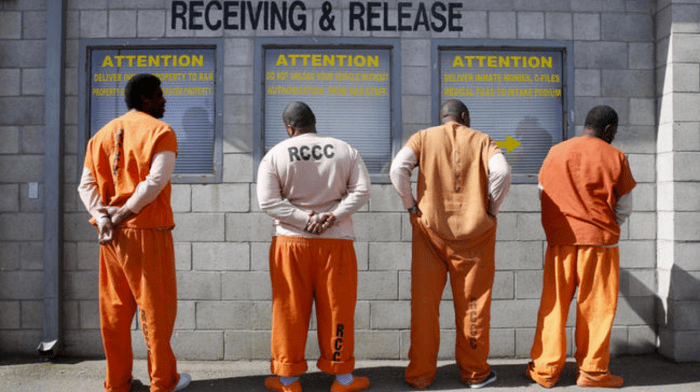
So Many Black People Locked Up it has Warped our Sense of RealityApril 23, 2016 0 45Share on Facebook Tweet on Twitter Prisoners from Sacramento County await processing after arriving at the California Department of Corrections and Rehabilitation Deuel Vocational Institution (DVI) in Tracy, Calif. (Rich Pedroncelli/Associated Press)For as long as the government has kept track, the economic statistics have shown a troubling racial gap. Black people are twice as likely as white people to be out of work and looking for a job. This fact was as true in 1954 as it is today.The most recent report puts the white unemployment rate at around 4.5 percent. The black unemployment rate? About 8.8 percent.But the economic picture for black Americans is far worse than those statistics indicate. The unemployment rate only measures people who are both living at home and actively looking for a job.The hitch: A lot of black men aren’t living at home and can’t look for jobs — because they’re behind bars. READ MORE

Source: So Many Black People Locked Up it has Warped our Sense of Reality | Emerge News Online

Sign of the Times — Medium


“When I dare to be powerful, to use my strength in service of my vision, then it becomes less and less important whether I am afraid” — Audre Lorde

My consciousness is not arranged in such a way that I view any good person’s life as inherently more valuable than any other good person’s life. We all have value. We are all inherently valuable. The unjust arrangement of this world is premised on the notion that some humans are more human than others and therefore inherently more valuable. As I observe the posts, statuses, remembrances, reflections, tributes and energy devoted to ensuring Prince’s safe passage to the next realm. I am reminded that while no one life has more inherent value than another, a single life can be profoundly meaningful in its impact and influence. That is to say, one life can be so robust with meaning that it elevates the inherent value not of themselves but of humanity.

We are society very accustomed to biting on the style of an icon and leaving all the substance on the bone. Prince the man, the artist, the visionary, the philanthropist, the quiet activist are inextricably powerful in their meaningfulness because they all emanated from genius anchored in primordial excellence, a sense purpose and passion, ancient wisdom and an understanding that surpassed the colonization of knowing, all fused with a fierce sense of self determination, which like Harriet Tubman, was informed with a get free or die trying spiritness. You can’t get free, if you are too afraid to even acknowledge you are in bondage. Prince was/is clear.

Behind the iconic purple rain was an Oya like tornadic force powered by a prodigious work ethic, mastery of craft, a sense of excellence and a will to be good rather than to simply look good — that he was able to do both is part of his virtuosity too. In an age in which we aspire to be seen without having done anything worth looking at, in which one aspires to be stylistically robust but substantively bereft, in an era where we seem to have forgotten that subtly, allusion and refinement are demonstrations of genius in control of itself, its will and intent, fully aware of its prodigious fertility, conscious of what it is trying to birth. Prince stands as a reminder, a road map, a flashlight on a darkened path that being true to oneself, pursuing your purpose, your destiny may not make you famous, may not make you rich but it damn sure make you profoundly powerful.

What Prince possessed was not the manic individualism that is so characteristic of the ethos of American society but rather an ancient African ethos which speaks to a kind of expressive individualism rooted in a sociology of personhood, that asks us to improvise — speak our own special truth — within a shared cultural mosaic in such a way as to transcend and transform — improve — it without changing its fundamental essence. In many ways, Prince’s life was jazz personified, which is to say Black life set to a funky syncopated rhythm.

Few artist in my lifetime — ok, none — simultaneously embodied the times and presaged them the way Prince did. From the gender flexibility to the provocative dress to the saturation of sex to the empowering of sexuality as an element of spirituality to the narcissism to defining oneself on ones terms to understanding the sign of the times to the necessity of owning ones labor and ones worth. Prince stood firmly within a Black (African) tradition of artist as activist and philanthropist, in this regard Prince was/is closer to Harry Belafonte than Jimi Hendrix.

Nature abhors a vacuum and so too does print and television media, there is air and space to fill, so there will lots of hot air filling space from a media, fascinated by Black life but inured to the point of indifference about Black suffering, mostly about Prince’s art and it/his impact and likely be very little about the man — the Black man — the activist and the philanthropist. This is unfortunate because here there is much to be gleaned from Prince’s life, his work as well as his approach to life, to love, to liberation, and much to teach us about how to convert a life that was inherently valuable just because into a life that was so meaningful that it imbued humanity with additional value.

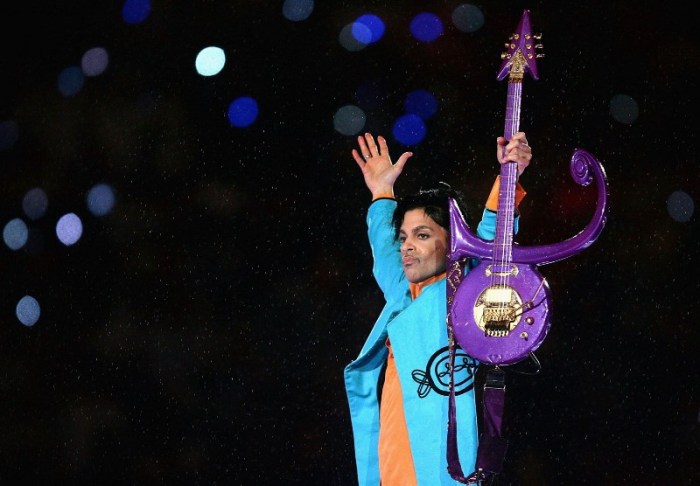
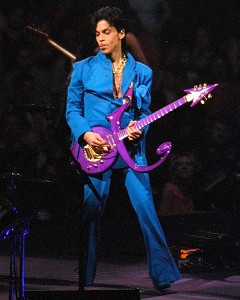
The image for which Prince became best known for is a stylized Ankh. The ankh is symbol that derives from KMT (the ancient African Nile Valley civilization best known as Egypt). The symbol represents that creative synthesis of complementary parts in fertile harmony; it represented the life giving power of masculine and feminine energy invested in creating eternal possibility, in generating life eternally. The eminent African psychologist Wade Nobles has noted that much of what is useful in African (American) culture is either overlooked or misunderstood due to our inability to understand the role and function of symbolism in African (American) culture. Even when he wasn’t using his name Prince was always speaking truth to power.

The prescient African novelist Ayi Kwei Armah rightly notes in his memoir, The Eloquence of the Scribes that: “ …Connections is a constant motif in all autonomous African culture, it comes from an ethos that says death cannot be the end; that beyond death remain connection, between those here and now, those who were once here but are now elsewhere, and those who, though not yet here, are destined to come some day….Bodies may connect visibly in the here and now; souls are connectors across the present with past and future time.”

Put another way, energy is neither created nor destroyed it merely changes forms. A profoundly meaningful Black man, a comrade in the struggle for a just, egalitarian and verdant world has departed: Next Woman, Next Man up. As Ella Baker, the Civil Rights activist said: “The struggle is eternal. The tribe increases. Somebody else carries on.” They always do — Will it be you?

Maa Kheru Prince, you did your work on the earthly realm; we look forward what your genius in collaboration with the other ancestors will provide us in the ancestral realm and in ours.

Dearly beloved
We are gathered here today
2 get through this thing called life…

Live. Love. Create Fully,

Àdísà

  • Follow
    Go to the profile of Àdisà Àjàmú

    Àdisà Àjàmú

    Pan-Africanist. Doma. Healer. Scribe. Humanist. Force Multiplier. Path Clearer. Crossroads Guardian. A lit candle in a dark room.

  • Source: Sign of the Times — Medium

    Daily News fires editor after Shaun King accused of plagiarism – Apr. 19, 2016

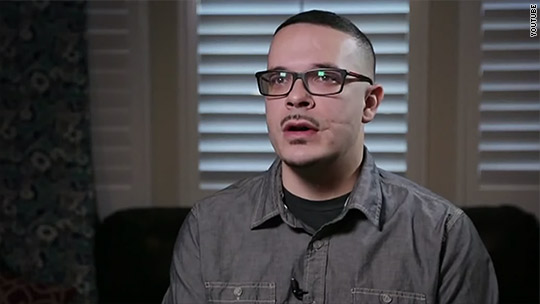
    New York Daily News columnist Shaun King was accused of plagiarism in several stories, but the newspaper defended him and fired an editor who handled his copy.

    Source: Daily News fires editor after Shaun King accused of plagiarism – Apr. 19, 2016