Black Nationalism and Liberation | Boston Review


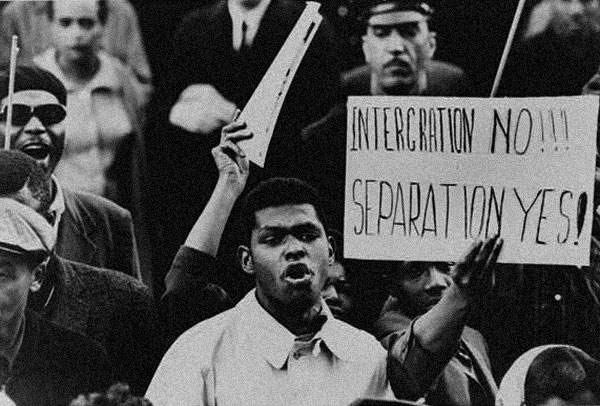
Nation of Islam counter-demonstration at NAACP rally in Harlem, 1961 / Photograph: NAACP collection, Library of Congress

In a world where Donald Trump’s presidential nomination speech has been endorsed by a former leader of the Ku Klux Klan—yet Black Lives Matter activists are accused of reverse racism for asking to not be murdered by police—what constitutes hate speech has become increasingly convoluted. In the aftermath of police killings in Dallas and Baton Rouge, gunmen Micah Johnson and Gavin Long were immediately linked by media outlets to black nationalist groups such as the Nation of Islam (NOI), New Black Panther Party, Black Riders Liberation Party, and Washitaw Nation, despite their professions to have been acting alone. Not only did these depictions draw misleading lines to organizations that do not prescribe such acts of violence, they also overshadowed both mens’ backgrounds in cultures of military violence (Johnson joined the Army Reserves immediately after high school and Long was a former Marine sergeant).

In a desperate attempt to drive home a link to black nationalism and direct attention away from these other troubling vectors, some news outlets began referring to Johnson as “Micah X” (NOI members use “X” to replace their “slave names”). In fact his middle name was simply Xavier. Even progressive groups, such as the Southern Poverty Law Center, play a legitimating role by identifying black nationalist groups as “black separatist hate groups,” leaving little room for meaningful distinctions between white supremacy and black nationalism. While groups such as the Nation of Islam have historically advocated for the separation of black communities, to assert that this position is simply the obverse of white supremacy—that is, black supremacy—overlooks the nuance of black nationalism. More importantly, it fails to account for the dramatically different relationships to power that black nationalist and white supremacist groups possess. White nationalism reinscribes and exalts the privileges of whiteness. Black nationalists council separation as an anti-racist practice and a method of empowerment in the absence of alternative avenues of power. To many black nationalists, this is the difference between life and death: the black community must either do for itself or perish.

The conflation of black and white nationalism is not new. In 1963 the New York Herald Tribune satirized what it perceived as the ironic similarities between white supremacists and black nationalists in a story entitled “Integrated Segregation.” Things “seem a trifle confused on the racial front these days. The segregationists are getting integrated and the integrationists are getting segregated,” the Tribune remarked. The article imagined a scene in which staunch segregationist George Wallace was explaining why racial segregation benefitted black Americans when “a Black Muslim popped up from behind, tapped him on the back and agreed with him.” Soon, the article predicted, the Congress for Racial Equality would “start picketing the N.A.A.C.P., while the Black Muslims set up an all-Negro chapter of the Ku Klux Klan.”

To many black nationalists, separation from whites is the difference between life and death: the black community must either do for itself or perish.

Understanding black nationalism as simply the mirror image of white supremacy, rather than an anti-racist practice, has deep roots in American political discourse. And in our current moment of colorblind “post-racialism,” when race-specific remedies such as affirmative action or reparations are derided as reverse racism—and even modest demands from Black Lives Matter for criminal justice reform are decried as anti-white—black nationalism has been once again mischaracterized using a host of long-stale tropes. We would be better served, not by simply dismissing black nationalism as the underbelly of white supremacy, but by understanding it as a tradition that is both liberative and anti-racist; one that does not mirror white supremacy, but repudiates it.

section separator

W. D. Fard, the founder of the Nation of Islam, arrived in Detroit in 1930 and told black Detroiters that they “were not Americans but Asiatics.” This was part of a holistic alternative creation story that rejected the racist underpinnings of white American nationalism. Many of Fard’s followers were former followers of Marcus Garvey, left without an organization after the decline of his Universal Negro Improvement Association (UNIA) in the late 1920s due to financial mismanagement and government infiltration. Garvey and the UNIA epitomized the goals of black nationalism, launching the most ambitious and successful Pan-Africanist vision in history. At its height, the UNIA had over 700 branches in 38 states, and its newspaper, Negro World, circulated throughout the African diaspora. Millions of black people were moved by Garvey’s message of racial pride embodied through the UNIA motto “One God! One Aim! One Destiny!” The NOI borrowed many of its black nationalist tenets from the UNIA, combining them with religious symbols, practices, and theologies drawn from the plethora of new northern, black, urban religious and racial-pride movements spawned by the Great Migration. This blending spoke to the diverse backgrounds of many early NOI members: in 1951 nineteen out of twenty-eight Muslims interviewed reported having previously been members in other movements such as black Masonry, the Israelite Movement, God’s Government on the Earth (dedicated to Liberian emigration), the Peace Movement of Ethiopia, Repatriation Movement to Liberia, and the Black Jews.

As historian Robin D. G. Kelley notes, many of these movements were influenced by a Black Zionist tradition that drew upon the narrative of the book of Exodus to imagine liberation and deliverance for black people around the world. These freedom dreams not only provided what he calls a “narrative of slavery, emancipation, and renewal,” but also a “language to critique America’s racist state since the biblical Israel represented a new beginning.” Beyond providing a framework for denouncing American racism, black nationalists addressed the racist power structures that governed their communities by creating jobs, businesses, schools, and places of worship. Racial separation was not simply about black communities’ physical relationship to white people; it was about changing the structures of power that governed those relationships through self-determination, community control, and new relationships to self and one another.

By 1959 the Nation of Islam was a burgeoning movement well known within urban black communities in the North but still largely unknown to white America. That summer, as Malcolm X traveled to Africa as a guest of Egypt’s president, Gamal Abdel Nasser, Mike Wallace (later of 60 Minutes fame) and black journalist Louis Lomax presented the NOI to white audiences for the first time. In their sensationalist documentary, The Hate That Hate Produced, NOI was compared to the American Nazi Party and the Ku Klux Klan. Members of the Nation were referred to as “black racists” and “black supremacists.” Its cautionary message to a largely white audience was that white racism would inevitably produce its black variant. As Malcolm X later recalled in his Autobiography, the show was meant to shock viewers, like when “Orson Welles frightened America with a radio program describing . . . an invasion by ‘men from Mars.’”

The Hate That Hate Produced was critical in launching the Nation of Islam into the public eye. But it also offered white viewers a language for understanding black nationalism that both intensified and allayed their fears. While racism was a plague that undermined American democracy, it was not a distinctly white characteristic. As Charlie Keil, a young white civil rights organizer at Yale during the early 1960s explained to me recently: “The Hate that Hate Produced allowed [whites] to sort of categorize the Muslims—the Nation of Islam—and treat them a certain way. . . . [It was] some way of saying that this was not an autonomous self-starting movement, but a reaction, an overreaction to a history of oppression.”

Throughout the 1960s black nationalists were castigated as “supremacists” who promoted the very racism and racial segregation that liberals were fighting against. This was stoked by white nationalists who saw calls for black racial separation as consistent with their belief in the benefits of racial segregation. As George Lincoln Rockwell, head of the American Nazi Party, told Alex Haley in a 1966 interview: “Malcolm X said the same thing I’m saying.”

Rockwell was not the only one confused about the difference between racial segregationand racial separation. In a highly-publicized Los Angeles trial in 1962 after police killed an unarmed member of the Los Angeles NOI mosque, the Los Angeles Times reported the “unusual problem in seating of spectators . . . when women members of the sect refused to accept seats alongside white persons.” The court eventually overturned this seating arrangement, and the press described this as “desegregation.” Los Angeles NAACP president Christopher Taylor joined the chorus of the aggrieved by arguing that he would be against any type of segregation, regardless of who initiated it. This decontextualized, colorblind insistence that any race demanding separation was calling for racial segregation was central to mischaracterizations of black nationalism during this period.

Malcolm X set about clarifying the Nation of Islam’s advocacy for racial separatism through dozens of debates with prominent civil rights figures on college campuses across the country in the early 1960s. He debated James Farmer at Cornell, Bayard Rustin at Howard, Louis Lomax at Yale, and the NAACP’s Walter Carrington at Harvard. Almost every debate was themed around the question: “Integration or Separation?” As Malcolm explained at Wesleyan University: “We are just as much against segregation as the most staunch integrationist.” But he added that black people did not “want to be free any more; they want integration. . . . They have confused their method with their objective.” In other words, black nationalists were not opposed to racial integration as an outcome of freedom struggles, or even as an organizing strategy, but they saw it as deeply flawed as the movement’s principal objective. More importantly, they pointed out the racist presumption of integration, which took for granted that white society and its values were more desirable. As Malcolm once sardonically asked, Who is the white man to be equal to?

More than simply critiquing integration, the Nation of Islam emphasized the importance of community control, an idea that flourished in upcoming years with the emergence of the Black Power movement. As Malcolm explained: “segregation means to regulate or control. . . . A segregated community is that forced upon inferiors by superiors. A separate community is done voluntarily by two equals.” Recognizing the pervasiveness of racial segregation, nationalists sought control over the businesses, healthcare, education, housing, and policing in their communities. Indeed, the Kerner Commission’s grim 1968 assessment that the nation was “moving toward two societies, one black, one white—separate and unequal” was something understood within black communities for decades. Amidst this backdrop, nationalists called for greater autonomy. The distinction between segregation and separation was not a semantic pivot. It was a deeper analysis of power, and an assertion of self-determination.

Over sixty years since the Supreme Court struck down the constitutionality of “separate but equal” in Brown v. Board, it would seem that calls for racial separatism are a relic of the past. But that might be too hopeful. A 2014 UCLA study revealed higher levels of school segregation in many regions than in 1968, the year the Supreme Court decreed a more proactive approach to desegregation. Schools with less than 1 percent white students are now being referred to as “apartheid schools.” And while the South is no longer governed by Jim Crow laws, cities outside the South such as Chicago and Baltimore continue to be described by demographers as “hypersegregated.”

The denial of race is a fixture of racism. Black nationalists have often exposed the “colorblind,” coded racism of liberals.

Black critiques of school integration during the 1950s and 1960s were often decried. In the words of scholar Andrew Delbanco, novelist and anthropologist Zora Neale Hurston “consigned herself to oblivion” when she responded to the Brown v. Board decision by saying that she could “see no tragedy in being too dark to be invited to a white school affair.” After James Meredith enrolled as the first black student in the University of Mississippi’s history, Malcolm X told a courtroom that anytime a man “needs [an] escort of 15,000 troops to go to a college where he will be among people whose viciousness toward him is so deadly that he needs the Army there to protect him . . . that Negro is foolish if he thinks that he is going to get an education.” Education, not integration, should be the goal, both Hurston and Malcolm agreed. As Malcolm explained, “token integration” was pointless as long as there were “a couple million Negroes in Mississippi who haven’t been allowed to go to the Kindergarten in a decent school.”

Meanwhile, integration today is often illustrated through the exceptional accomplishments of a handful of black elites, most notably President Barack Obama, rather than evidenced by a substantial redistribution of wealth or educational and housing opportunities. As Keeanga-Yamahtta Taylor demonstrates, the role of “black faces in high places” is often to obscure the common conditions facing many African Americans. Instead, black elected officials serve as interlocutors speaking to—and on behalf of—black communities. Taylor writes poignantly of the 2015 Baltimore uprising after the death of Freddie Gray: “When a Black mayor, governing a largely Black city, aids in the mobilization of a military unit led by a Black woman to suppress a Black rebellion, we are in a new period of the Black freedom struggle.” But this new period has unfortunately produced all-too-familiar outcomes for poor and working-class black people.

section separator

The long history of black nationalist leaders having official meetings with white supremacist leaders is another narrative often mobilized as proof of the essential symmetry of the two movements. In 1922 Marcus Garvey met with the Imperial Wizard of the Klan, Edward Clarke, earning him swift denunciation by the NAACP. In 1961 Malcolm X and other NOI officials secretly met with the KKK in Atlanta to negotiate a non-aggression pact surrounding the NOI’s purchase of southern farmland. The following year American Nazi leader George Lincoln Rockwell even appeared as an invited guest at the NOI’s Saviour’s Day convention in Chicago. When police in Monroe, Louisiana, illegally targeted and raided the city’s mosque with tear gas, rifles, and riot sticks, the Nation of Islam secured an interracial defense team: local black attorney James Sharpe, Jr., and Imperial Wizard of the National Knights of the Klan, James Venable. As Venable explained when taking the case, “I hate to say it but a colored man doesn’t have a chance in a courtroom in the South.”

The decision by black nationalists to meet or coordinate with white supremacists was often driven by a combination of pragmatism and a deep cynicism about the authenticity of liberals. In the case of the UNIA, Garvey negotiated an agreement with Clarke to sell stock in black businesses such as newspapers, factories, and his Black Star shipping line, which ambitiously hoped to link a global black economy in Africa, the Caribbean, and the Americas before failing due to poor business management. And although Malcolm X would later denounce the Nation of Islam’s détente with the Klan, the organization’s motivation for doing so was plainly and only to secure the right to farm in the South without danger of violent reprisal. And in the case against eight members of the NOI in Monroe, Venable successfully won an appeal for several of those convicted.

Black nationalists were also not uncritical of the white supremacists with whom they interacted, a fact often downplayed or forgotten. After his meeting with the Klan, Garvey told a crowd: “Mr. Clark [sic] did not tell me anything new; he told me what I discovered seven years ago. He told me the thing that caused me to have organized the Universal Negro Improvement Association four and a half years ago.” When Rockwell, wearing full Nazi regalia, donated twenty dollars to a collection plate at Saviour’s Day, there was a smattering of reluctant applause. Malcolm X belittled him by adding: “You got the biggest hand you ever got.” Equally, black nationalists used white supremacists to draw attention to the hypocrisy of liberals. Following his 1922 meeting, Garvey claimed that Klan members were “better friends to my race, for telling us who they are, and what they mean.” Malcolm used a similar device in his folk metaphor of the liberal “fox” and the conservative “wolf.” When comparing John F. Kennedy to George Wallace, Malcolm said: “Neither one loves you. The only difference is that the fox will eat you with a smile instead of a scowl.” He even penned a 1964 editorial entitled “Why I Am for Goldwater” in which he drew upon the same fox/wolf metaphor and cynically suggested that with Goldwater, “black people at least know what they are dealing with.”

Critics on the left who see these as misguided political strategies have marginalized black nationalists by painting them as racial conservatives, and thereby emptied black nationalists’ critiques of their incisiveness. For example, Paul Gilroy accuses Garvey of “black fascism” and C. L. R. James even compared him to Hitler. Others have taken Malcolm’s cynical support for Goldwater at face value, rather than understanding his rhetorical move to draw parallels between openly racist politicians and ostensibly liberal ones whose policies nonetheless gut the black community.

Black nationalist groups such as the UNIA and the NOI have rightly been critiqued for their deep patriarchy, homophobia, and tendency to reproduce the other trappings of empire. As historian Michelle Ann Stephens notes of Garvey, his “vision of the sovereign state figured in the black male sovereign; the desire for home at a more affective level figured in the woman of color.” Likewise, anti-Semitic comments by Nation of Islam leaders such as Louis Farrakhan have certainly buttressed comparisons between white and black nationalists. Most recently, Farrakhan stoked this fire by praising Donald Trump’s refusal to take money from Jewish donors.

But although charismatic leaders are often the voices we hear most prominently, for many rank-and-file members of the Nation of Islam and other black nationalist groups, the lived experience of racial pride, religious rebirth, and doing for oneself is a redemptive, affirming, and even lifesaving practice. Many members joined the NOI after feeling alienated in integrated, more middle-class organizations such as the NAACP. As Lindsey X told an interviewer, what the NAACP “wanted never seemed real to me. I think Negroes should create jobs for themselves rather than going begging for them.” Malcolm X’s autobiography is only the best-known narrative of religious and political redemption. In a long-running feature in the NOI’s newspaper, Muhammad Speaks, entitled “What Islam Has Done For Me,” members offered their conversion narratives and testified to the transformative practice of Islam. Robert 24X of Paterson, New Jersey, contributed: “I was a young drug addict who had spent too much time in the hells of Harlem’s East Side . . . [before] everything came into focus for me. . . . I stopped smoking, using profanity, and eating improper foods. And I’ve passed my biggest acid test—no more needles in the arm.”

Instead of positioning black nationalism as a reactionary, conservative ideology that simply apes the violence and hate of white supremacy, we might learn from its lessons today. If asked about the xenophobia and dangerous comments of conservative firebrand Donald Trump in our current election, Malcolm X might well have pivoted us back to Hillary Clinton’s questionable record on race, one which Black Lives Matter activists have pointed out includes racist dog whistles such as her comments about “super-predators” lacking empathy, her steadfast support for the devastating 1994 Crime Bill, and campaign money taken from private prison corporations. And beyond the hollow political discourse of election cycles, we must avoid the pitfalls of incessant claims of post-racialism that insist that to see race is to participate in racism. As we have witnessed with the familiar “All Lives Matter” rejoinder to “Black Lives Matter,” we are living in a time when people’s humanity is so denigrated that the mere valuation of life is taken by some whites to be a zero-sum game. The denial of race is a central fixture in the perpetuation of racism, and black nationalists have routinely called attention to the importance of racial pride while exposing the coded racism of liberals. Rather than draw facile lines between black nationalism and white supremacy, we are better served by understanding black nationalism as an anti-racist political tradition seeking to envision black American freedom and citizenship in a nation that has rarely devoted much effort toward either end.

Source: Black Nationalism and Liberation | Boston Review

Million Woman March Mission Statement October, 1997

1997-mwm

The Million Woman March was a protest march organized on October 25, 1997, on the Benjamin Franklin Park Way in Philadelphia, Pennsylvania. The march was founded and formulated by Phile Chionesu, a grassroots activist, human rights advocate, Black Nationalist/Freedom Fighter, and owner of an African crafts shop.

The below statement was issued as the basis for the national call to all Black women to come together in Philadelphia, PA

For more information about the MWM of 1997

NYT Coverage of the MWM 1997

Million Woman March Mission Statement  1997

The Million Woman March is being implemented by Black Women who interact on grassroots and global levels. Black Women who understand the necessity of rebuilding our foundation and destiny as a people, and that we must in many respects begin at the origin (the root) upward.

Women of African Descent who reside, struggle and interact in grassroots communities have analysed and assessed unlimited issues and problems. Many of which have resulted in the deterioration of African-American and African people overall. The Million Woman March is capable and ready to create and implement strategic methods of resolving such matters.

The Million Woman March provides us the opportunity to prioritize the human and environmental issues. It will collectively enable us to develop an assertive and aggressive movement to insure the participation and impact of people of African Descent.

It is our belief that it will require collective and comprehensive efforts to develop for determination the process and systems that will be utilized to regain the proper direction of our family structure. By acknowledging and applying the strength and resources that exist within the United States and throughout the world, we will rebuild to strengthen our foundation. It will take the procurement of mechanisms that will bring about the appropriate solutions.
However, there has been various forms of disconnection.

As a result, we no longer bond as a family unit, we no longer teach and prepare our children in the way we wish for them to go. How do girls learn to become women? Who is responsible for teaching morals and values of womanhood? Have we not been the moral sustainers of life? As teachers of life have we failed or are we just existing?

The Million Woman March will revive life as we once exemplified it:

< Great Grandmother taught Grandmother
< Grandmother taught Mother
< Mother taught Me
< I will teach YOU

We will no longer tolerate disrespect, lack of communication, negative interaction, anti-social and dysfunctional behavior and the denial that problems such s these affect our ability to progressively and productively move forwarD. Our focus is centered around the reasons why and what it will require to eliminate this DESTRUCTION.

The Psalm of Howard Thurman

ABOUT ABOUT THE FILM

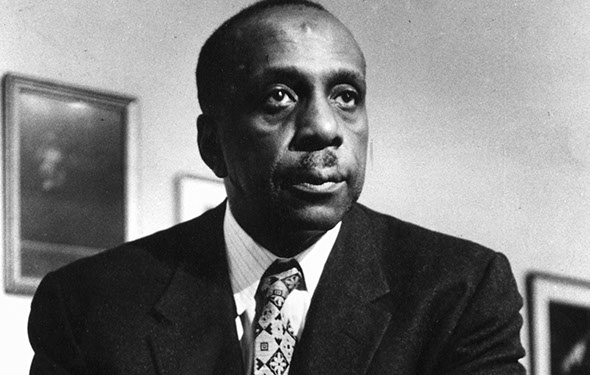
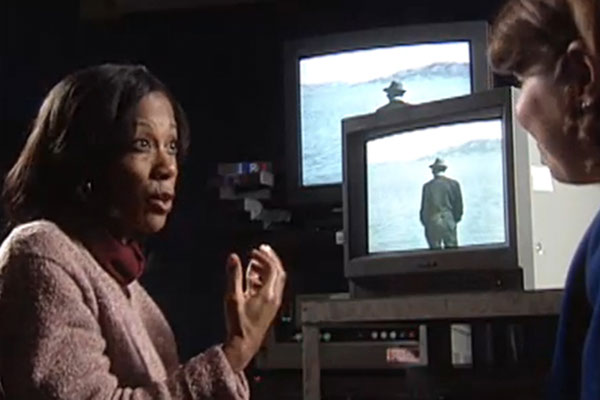
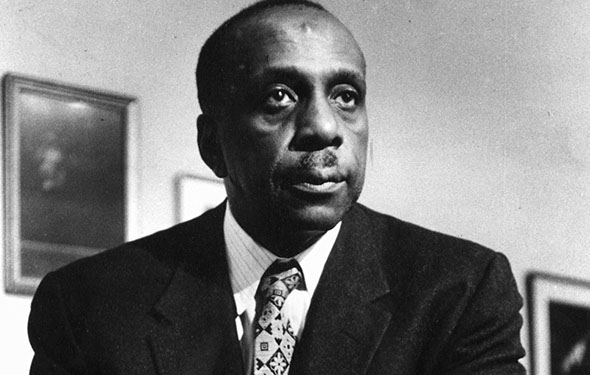
The Psalm of Howard Thurman is the first feature-length documentary film on the life and wisdom of one of the world’s greatest spiritual treasures, Howard Thurman (1899-1981).

The film introduces audiences to Thurman’s uplifting story, his transcendent  yet grounded presence, and his important voice for our times. The film aspires to be a psalm,a lyrical work of beauty and truth, and a creative utterance that moves, touches and inspires.

ABOUT HOWARD THURMAN

A JOURNEY OF HEART, MIND AND SOUL

Thurman attended high school in Jacksonville, Florida. He later completed studies at Morehouse College, Atlanta in 1923 and the Rochester Theological Seminary, New York in 1926. In 1929, after serving his first pastorship in Oberlin, Ohio, Thurman returned to Atlanta to serve as Professor of Religion and Philosophy and Director of Religious Life at Morehouse and Spelman Colleges. Thurman felt that it was his immediate responsibility to inspire and encourage students in their individual quests for the truth.”

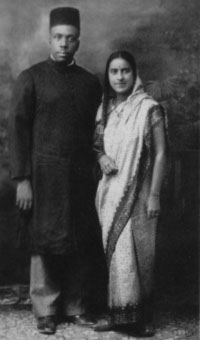
In 1935,  while a professor at Howard University in Washington, D.C., Thurman and his wife, Sue Bailey Thurman, led a pilgrimage of African Americans to Ceylon, Burma and India and met with Mahatma Gandhi. As a result of this trip, he formulated, a generation before Martin Luther King Jr., a non-violent approach to social change in America. This “love-ethic” informed one of Thurman’s best known works, Jesus and the Disinherited, a book which later influenced King and other leaders of the Civil Rights Movement.

 At the close of the 1935 pilgrimage, looking down into Afghanistan at the Khyber Pass, Thurman experienced a vision of a church that would be open to “seekers of all colors and creeds.” He was compelled to see if “experiences of spiritual unity among peoples could be more compelling than the experiences which divide them.”

Hoard and Sue Bailey Thurman

India, 1935

Howard Thurman Birth Home, Daytona, Florida, USA

HOWARD THURMAN was born in Daytona, Florida in 1899. Early on, he developed a kinship with nature and a “hunger of the heart”–a curiosity into the meaning of life. He found refuge during times of loneliness and trepidation in an old oak tree in his back yard. It was while young Howard stood with his back placed firmly against the tree that he first felt the unity of all living things and engaged in what he would later call, “the religious experience.”

 As a young boy Thurman was raised by a strong and affirming grandmother. She was a former slave who had a profound influence on what would become an essential part of Thurman’s thought–that if theology is to have any validity, it must justly deal with one’s life situation and must affirm one’s worth as a child of God.

FILMMAKERS

MEET THE ARTISTS BEHIND THE FILM

“Arleigh Prelow is the right person to create a documentary about Dr. Thurman. She has the spiritual sensibility to understand his life and convey who he was in a truthful and meaningful way.”


– Sue Bailey Thurman (before her death in 1996)

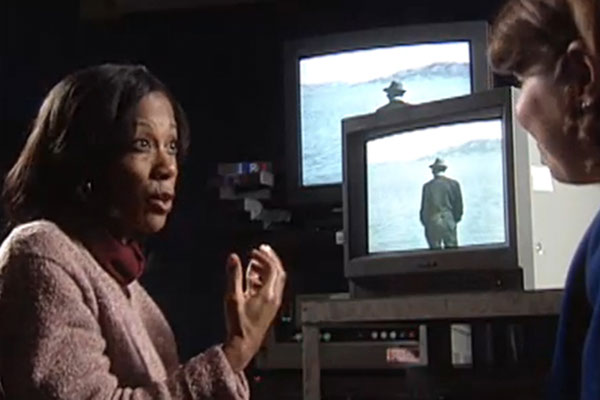
ARLEIGH PRELOW, PRODUCER/ DIRECTOR

 Emmy winning composer Joel Goodman has scored over 100 films and television programs that have received 4 Oscar nominations, 15 Emmy awards and over 25 Emmy nominations.

JOEL GOODMAN

COMPOSER

BIO

BIO

GALLERY

INTERVIEWS WITH ARLEIGH PRELOW, PRODUCER/DIRECTOR

 THE SPIRIT AND WORK OF HOWARD THURMAN LIVES ON

PEDRO CESCA FALCI

ASSISTANT DIRECTOR, HOWARD THURMAN CENTER BOSTON UNIVERSITY

THE HOWARD THURMAN CENTER FOR COMMON GROUND

BOSTON UNIVERSITY

KATHERINE KENNEDY

DIRECTOR, HOWARD THURMAN CENTER

BOSTON UNIVERSITY


Source: The Psalm of Howard Thurman

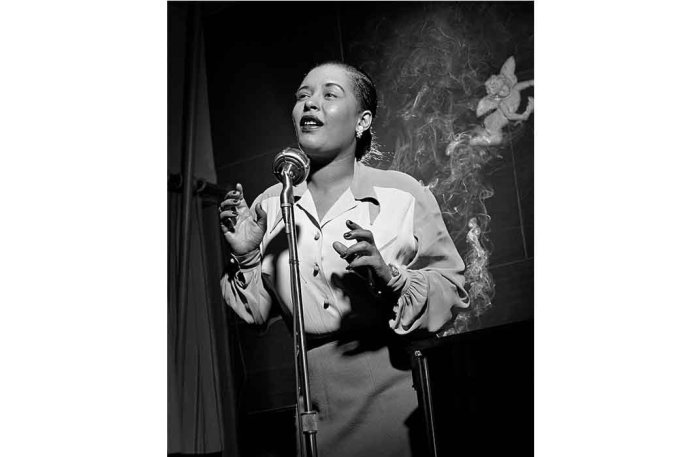
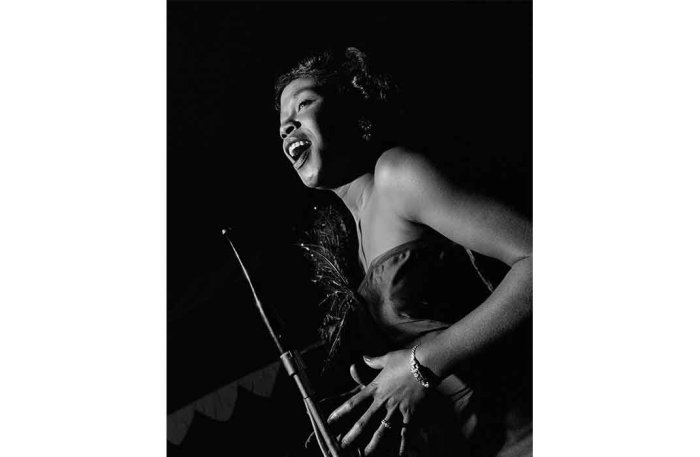
Jazz Has Never Looked Cooler Than It Does in This New Exhibition | At the Smithsonian | Smithsonian

Source: Jazz Has Never Looked Cooler Than It Does in This New Exhibition | At the Smithsonian | Smithsonian

For Nearly 150 Years, This One House Told a Novel Story About the African-American Experience | At the Smithsonian | Smithsonian

“It was part of a network of black communities coming out of slavery in the post-emancipation era that clustered around each other for freedom, security and economic empowerment,” Gardullo explains. “Their structures reflected the needs of the community to worship as they saw fit, to educate their children in a world that hadn’t educated them before, and sustain them through living off the land that they now own.”

Source: For Nearly 150 Years, This One House Told a Novel Story About the African-American Experience | At the Smithsonian | Smithsonian

The Long-Lasting Legacy of the Great Migration | History | Smithsonian

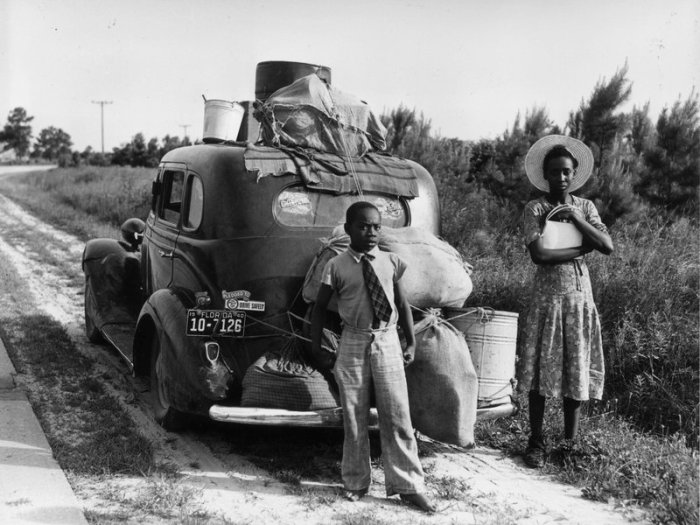
The Long-Lasting Legacy of the Great MigrationWhen millions of African-Americans fled the South in search of a better life, they remade the nation in ways that are still being feltAn African-American family leaves Florida for the North during the Great Depression. (MPI/Getty Images)By Isabel WilkersonSMITHSONIAN MAGAZINE | SUBSCRIBE SEPTEMBER 20168.9K 73 2 29 14 37 13.1K 8.9K 73 29 14 2 13.1KIn 1963, the American mathematician Edward Lorenz, taking a measure of the earth’s atmosphere in a laboratory that would seem far removed from the social upheavals of the time, set forth the theory that a single “flap of a sea gull’s wings” could redirect the path of a tornado on another continent, that it could, in fact, be “enough to alter the course of the weather forever,” and that, though the theory was then new and untested, “the most recent evidence would seem to favor the sea gulls.”FROM THIS STORY The Warmth of Other Suns: The Epic Story of America’s Great MigrationBUYAt that moment in American history, the country had reached a turning point in a fight for racial justice that had been building for decades. This was the year of the killing of Medgar Evers in Mississippi, of the bombing of the 16th Street Baptist Church in Birmingham, of Gov. George Wallace blocking black students at the schoolhouse door of the University of Alabama, the year of the March on Washington, of Martin Luther King Jr.’s “I Have a Dream” speech and his “Letter From a Birmingham Jail.” By then, millions of African-Americans had already testified with their bodies to the repression they had endured in the Jim Crow South by defecting to the North and West in what came to be known as the Great Migration. They were fleeing a world where they were restricted to the most menial of jobs, underpaid if paid at all, and frequently barred from voting. Between 1880 and 1950, an African-American was lynched more than once a week for some perceived breach of the racial hierarchy.“They left as though they were fleeing some curse,” wrote the scholar Emmett J. Scott, an observer of the early years of the migration. “They were willing to make almost any sacrifice to obtain a railroad ticket and they left with the intention of staying.”The migration began, like the flap of a sea gull’s wings, as a rivulet of black families escaping Selma, Alabama, in the winter of 1916. Their quiet departure was scarcely noticed except for a single paragraph in the Chicago Defender, to whom they confided that “the treatment doesn’t warrant staying.” The rivulet would become rapids, which grew into a flood of six million people journeying out of the South over the course of six decades. They were seeking political asylum within the borders of their own country, not unlike refugees in other parts of the world fleeing famine, war and pestilence.Until that moment and from the time of their arrival on these shores, the vast majority of African-Americans had been confined to the South, at the bottom of a feudal social order, at the mercy of slaveholders and their descendants and often-violent vigilantes. The Great Migration was the first big step that the nation’s servant class ever took without asking.“Oftentimes, just to go away is one of the most aggressive things that another person can do,” wrote John Dollard, an anthropologist studying the racial caste system of the South in the 1930s, “and if the means of expressing discontent are limited, as in this case, it is one of the few ways in which pressure can be put on.”The refugees could not know what was in store for them and for their descendants at their destinations or what effect their exodus would have on the country. But by their actions, they would reshape the social and political geography of every city they fled to. When the migration began, 90 percent of all African-Americans were living in the South. By the time it was over, in the 1970s, 47 percent of all African-Americans were living in the North and West. A rural people had become urban, and a Southern people had spread themselves all over the nation.Subscribe to Smithsonian magazine now for just $12This article is a selection from the September issue of Smithsonian magazineBUYMerely by leaving, African-Americans would get to participate in democracy and, by their presence, force the North to pay attention to the injustices in the South and the increasingly organized fight against those injustices. By leaving, they would change the course of their lives and those of their children. They would become Richard Wright the novelist instead of Richard Wright the sharecropper. They would become John Coltrane, jazz musician instead of tailor; Bill Russell, NBA pioneer instead of paper mill worker; Zora Neale Hurston, beloved folklorist instead of maidservant. The children of the Great Migration would reshape professions that, had their families not left, may never have been open to them, from sports and music to literature and art: Miles Davis, Ralph Ellison, Toni Morr

Source: The Long-Lasting Legacy of the Great Migration | History | Smithsonian


Isabel Wilkerson is a former Chicago bureau chief for The New York Times and a Pulitzer Prize winner. She is the author of the best-selling The Warmth of Other Suns: The Epic Story of America’s Great Migration.

Read more from this author |

Read more: http://www.smithsonianmag.com/history/long-lasting-legacy-great-migration-180960118/#cwB5cQmkm3LrcPfC.99
Give the gift of Smithsonian magazine for only $12! http://bit.ly/1cGUiGv
Follow us: @SmithsonianMag on Twitter

Sign of the Times — Medium


“When I dare to be powerful, to use my strength in service of my vision, then it becomes less and less important whether I am afraid” — Audre Lorde

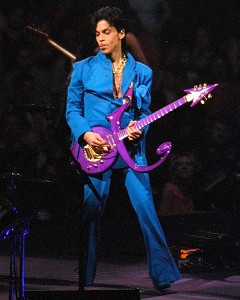
My consciousness is not arranged in such a way that I view any good person’s life as inherently more valuable than any other good person’s life. We all have value. We are all inherently valuable. The unjust arrangement of this world is premised on the notion that some humans are more human than others and therefore inherently more valuable. As I observe the posts, statuses, remembrances, reflections, tributes and energy devoted to ensuring Prince’s safe passage to the next realm. I am reminded that while no one life has more inherent value than another, a single life can be profoundly meaningful in its impact and influence. That is to say, one life can be so robust with meaning that it elevates the inherent value not of themselves but of humanity.

We are society very accustomed to biting on the style of an icon and leaving all the substance on the bone. Prince the man, the artist, the visionary, the philanthropist, the quiet activist are inextricably powerful in their meaningfulness because they all emanated from genius anchored in primordial excellence, a sense purpose and passion, ancient wisdom and an understanding that surpassed the colonization of knowing, all fused with a fierce sense of self determination, which like Harriet Tubman, was informed with a get free or die trying spiritness. You can’t get free, if you are too afraid to even acknowledge you are in bondage. Prince was/is clear.

Behind the iconic purple rain was an Oya like tornadic force powered by a prodigious work ethic, mastery of craft, a sense of excellence and a will to be good rather than to simply look good — that he was able to do both is part of his virtuosity too. In an age in which we aspire to be seen without having done anything worth looking at, in which one aspires to be stylistically robust but substantively bereft, in an era where we seem to have forgotten that subtly, allusion and refinement are demonstrations of genius in control of itself, its will and intent, fully aware of its prodigious fertility, conscious of what it is trying to birth. Prince stands as a reminder, a road map, a flashlight on a darkened path that being true to oneself, pursuing your purpose, your destiny may not make you famous, may not make you rich but it damn sure make you profoundly powerful.

What Prince possessed was not the manic individualism that is so characteristic of the ethos of American society but rather an ancient African ethos which speaks to a kind of expressive individualism rooted in a sociology of personhood, that asks us to improvise — speak our own special truth — within a shared cultural mosaic in such a way as to transcend and transform — improve — it without changing its fundamental essence. In many ways, Prince’s life was jazz personified, which is to say Black life set to a funky syncopated rhythm.

Few artist in my lifetime — ok, none — simultaneously embodied the times and presaged them the way Prince did. From the gender flexibility to the provocative dress to the saturation of sex to the empowering of sexuality as an element of spirituality to the narcissism to defining oneself on ones terms to understanding the sign of the times to the necessity of owning ones labor and ones worth. Prince stood firmly within a Black (African) tradition of artist as activist and philanthropist, in this regard Prince was/is closer to Harry Belafonte than Jimi Hendrix.

Nature abhors a vacuum and so too does print and television media, there is air and space to fill, so there will lots of hot air filling space from a media, fascinated by Black life but inured to the point of indifference about Black suffering, mostly about Prince’s art and it/his impact and likely be very little about the man — the Black man — the activist and the philanthropist. This is unfortunate because here there is much to be gleaned from Prince’s life, his work as well as his approach to life, to love, to liberation, and much to teach us about how to convert a life that was inherently valuable just because into a life that was so meaningful that it imbued humanity with additional value.

The image for which Prince became best known for is a stylized Ankh. The ankh is symbol that derives from KMT (the ancient African Nile Valley civilization best known as Egypt). The symbol represents that creative synthesis of complementary parts in fertile harmony; it represented the life giving power of masculine and feminine energy invested in creating eternal possibility, in generating life eternally. The eminent African psychologist Wade Nobles has noted that much of what is useful in African (American) culture is either overlooked or misunderstood due to our inability to understand the role and function of symbolism in African (American) culture. Even when he wasn’t using his name Prince was always speaking truth to power.

The prescient African novelist Ayi Kwei Armah rightly notes in his memoir, The Eloquence of the Scribes that: “ …Connections is a constant motif in all autonomous African culture, it comes from an ethos that says death cannot be the end; that beyond death remain connection, between those here and now, those who were once here but are now elsewhere, and those who, though not yet here, are destined to come some day….Bodies may connect visibly in the here and now; souls are connectors across the present with past and future time.”

Put another way, energy is neither created nor destroyed it merely changes forms. A profoundly meaningful Black man, a comrade in the struggle for a just, egalitarian and verdant world has departed: Next Woman, Next Man up. As Ella Baker, the Civil Rights activist said: “The struggle is eternal. The tribe increases. Somebody else carries on.” They always do — Will it be you?

Maa Kheru Prince, you did your work on the earthly realm; we look forward what your genius in collaboration with the other ancestors will provide us in the ancestral realm and in ours.

Dearly beloved
We are gathered here today
2 get through this thing called life…

Live. Love. Create Fully,

Àdísà

  • Follow
    Go to the profile of Àdisà Àjàmú

    Àdisà Àjàmú

    Pan-Africanist. Doma. Healer. Scribe. Humanist. Force Multiplier. Path Clearer. Crossroads Guardian. A lit candle in a dark room.

  • Source: Sign of the Times — Medium

    Slaves Be Gone: You Are Your Solution. : ThyBlackMan.com

    ThyBlackMan.com) Slave to the job. Told what you will earn, what to wear, when to eat, when to arrive, when to leave and what to do. Slave to the church, not to God. Told what to think, what to believe, how to worship, what God said and what you should do to advance man’s plans and agendas. Slave to the government, counting on them to take care of you, rescue you and do what is right to help you. Have we learned nothing from the water in Flint and the broken levies in New Orleans? Slaves wait on others to do for them the very things they should be doing for themselves.

    This article is written to liberate your mind, to build your independence and to reaffirm how capable you are – even though you may not know it. It is easier to let people think and make decisions for you – but not better. It is easier to receive free stuff from government entitlement programs until you wake up and 2016-Slave-Mentality-modern_slavery_humansrealize there is a catch and nothing in life is free. The catch is the surrender of your independence and that is a heavy price to pay because you may never get it back.

    We should be creating independent thinkers, not reproducing slaves. Back in the days of official slavery, when people talked like this, one of two things happened. Either they were shunned and exposed to the master by the very slaves they were trying to help. Or those with a mindset that rejected mental and physical slavery were looked to as leaders. But all the while they should have been looked to as examples that waking up, rising up and stepping up to be free was very possible.

    Today African American slaves think the same way they thought back then. Waiting o someone to define our worth, help us, save us and rescue us. You don’t think so? Look at the videos of people crying tears of joy when Obama became President. I heard so many people make statements like “he is one of us” or “now somebody will finally help us”. But guess what, though President Obama did accomplish many things, he was not the help that African Americans thought he would be. Do you know why? Because he was never supposed to be. The power to change your life has always been in your hands, not in the hands of any President, pastor, activist leader or corporation. You just have to wake up and realize that is true.

    If you have never seen the movie The Last Dragon, you should watch it. Bruce Leroy is seeking answers and looking for the master of his destiny. In a fight against another martial artist feared by many, Bruce Leroy is being beaten badly by Shonuff. Just before Bruce Leroy is drowned, Shonuff asks him “who is the master“. Bruce Leroy finally wakes up and says “I Am“. The leader he has sought was always within and realization of that as a fact elevates him to the level he needed to reach. So I ask you, when you look in the mirror, who and what do you see? You don’t have to change anyone’s life but yours and then watch everything else change around and for you. But if you wait on others to do it for you, your purpose and potential will never be fulfilled.

    In order to rise to the next level, you must do it mentally before you can ever make it manifest externally. The Monks of Tibet know this. The Apache Indians knew this. The top tribes of Nigeria like thee Igbo know this. The Pharaohs and Kings of Egypt knew this. Those who rule over you and others know this. Creflo Dollar knows this. Donald Trump knows this. Hillary Clinton knows this. I know this. But what do you know?

    It’s time to stop allowing yourself to be a slave. it’s time to stop thinking and acting like one. It’s time to put away mediocrity and reset both your goals and your expectations of yourself. It’s time to change your life instead of waiting on someone else to “change your world” Ironically President Obama said we all would have to participate, but most of you only heard “Obama will save us” because that is what you wanted or needed to hear. But now it’s time to wake up.

    Maybe it’s comfortable being a slave, but it’s not beneficial. I would even go out on a limb and say most African Americans are democrats because they expect and count on the Democrat party to take care of them. Others are Democrats because they inherited the political party of their slave masters, particularly in the south. Who doesn’t like free stuff? But again, there is a catch. So I can tell them where to stick their “free” stuff and the catches that come with it.

    It amazes me how the African American slaves of today will fight to stay slaves and under someone else’s control. Slaves don’t want to think because they would rather have someone else do it for them. Slaves then murmur and complain all the way back to the barn but never break free of the chains that bind them. Are you a slave or do you know someone who is one? Why stay a slave? Abraham Lincoln abolished slavery on paper only and then slavery went completely covert, hitech, judicial, political and corporate. The music industry promotes it with behavior and lyrics that degrade our people and saggin pants confirm it.

    I guess I could say a slave is not as bad as a zombie. But I would rather say DO NOT BE A SLAVE ANYMORE. If you let anyone else but you determine your destiny, you are under their power and control – and that is a form of slavery. The Catholic church has billions of slaves. The Nation of Islam has thousands of slaves who dress, speak, think and do as they say, when they say. Even the famed Christian religion (a counterfeit for the real thing) is ruled by man and T.D. Jakes, Creflo Dollar and Kenneth Copeland have millions of slaves. I find it humorous that millions of women who followed a biblical doctrine that says they are free would not know they are free until Bishop Jakes wrote a book or spoke in a conference. That is slavery. Are you offended? Well at least you are awake and that is a start.

    Thanks to our local, state and federal government, the only thing you actually own is your thoughts, the liberty of your mind and your destiny. Don’t trust anyone else with these things. They are too important. Have we made progress? Yes, of course. Have we made enough progress beginning with the liberation of our minds? Not nearly enough. People often talk about “back in the days of slavery“, but I submit to you that those days were just yesterday, today and unfortunately tomorrow. Wake up!

    Staff Writer; Marque-Anthony

    Lessons From McGraw Hill: The Eurocentric Influence on History Textbooks and Classrooms – The Atlantic

    Earlier this month, McGraw Hill found itself at the center of some rather embarrassing press after a photo showing a page from one of its high-school world-geography textbooks was disseminated on social media. The page features a seemingly innocuous polychromatic map of the United States, broken up into thousands of counties, as part of a lesson on the country’s immigration patterns: Different colors correspond with various ancestral groups, and the color assigned to each county indicates its largest ethnic representation. The page is scarce on words aside from an introductory summary and three text bubbles explaining specific trends—for example, that Mexico accounts for the largest share of U.S. immigrants today.

    The recent blunder has to do with one bubble in particular. Pointing to a patch of purple grids extending throughout the country’s Southeast corridor, the one-sentence caption reads:

    The Atlantic Slave Trade between the 1500s and 1800s brought millions of workers from Africa to the southern United States to work on agricultural plantations.
    The photo that spread through social media was taken by a black Texas student named Coby Burren, who subsequently texted it to his mom, Roni-Dean Burren. “Was real hard workers, wasn’t we,” he wrote. Roni-Dean quickly took to Facebook, lambasting the blunder: the reference to the Africans as workers rather than slaves. A video she later posted has been viewed nearly 2 million times, and her indignation has renewed conversations around the Black Lives Matter movement while attracting coverage by almost every major news outlet. “It talked about the U.S.A. being a country of immigration, but mentioning the slave trade in terms of immigration was just off,” she told The New York Times. “It’s that nuance of language. This is what erasure looks like.”
    McGraw Hill swiftly did its damage control. It announced that it was changing the caption in both the digital and print versions to characterize the migration accurately as a “forced” diaspora of slaves: “We conducted a close review of the content and agree that our language in that caption did not adequately convey that Africans were both forced into migration and to labor against their will as slaves,” the company said in a statement. “We believe we can do better.” Catherine Mathis, the company’s spokeswoman, also emphasized that the textbook accurately referred to the slave trade and its brutality in more than a dozen other instances. And McGraw Hill has offered to provide various additional resources to any school that requests them, including supplemental materials on cultural competency, replacement textbooks, or stickers with a corrected caption to place over the erroneous one. But Texas school districts were already in possession of more than 100,000 copies of the book, while another 40,000, according to Mathis, are in schools in other states across the country.
    “We’re not teaching the forest—we’re not even teaching the trees. We are teaching twig history.”
    If nothing else, the incident may serve as yet another example of why social studies—and history in particular—is such a tricky subject to teach, at least via textbooks and multiple-choice tests. Its topics are inherently subjective, impossible to distill into paragraphs jammed with facts and figures alone. As the historian and sociologist Jim Loewen recently told me, in history class students typically “have to memorize what we might call ‘twigs.’ We’re not teaching the forest—we’re not even teaching the trees,” said Loewen, best known for his 1995 book Lies My Teacher Told Me: Everything Your American History Textbook Got Wrong. “We are teaching twig history.”

    This is in part why a growing number of educators are calling for a fundamental shift in how the subject is taught. Some are even calling on their colleagues to abandon traditional models of teaching history altogether. Instead of promoting the rote memorization of information outlined in a single, mass-produced textbook, these critics argue that teachers should use a variety of primary-source materials and other writings, encouraging kids to analyze how these narratives are written and recognize the ways in which inherent biases shape conventional instructional materials. In an essay for The Atlantic earlier this year, Michael Conway argued that history classes should focus on teaching children “historiography”—the methodologies employed by historians and the exploration of history itself as an academic discipline:

    Currently, most students learn history as a set narrative—a process that reinforces the mistaken idea that the past can be synthesized into a single, standardized chronicle of several hundred pages. This teaching pretends that there is a uniform collective story, which is akin to saying everyone remembers events the same. Yet, history is anything but agreeable. It is not a collection of facts deemed to be “official” by scholars on high. It is a collection of historians exchanging different, often conflicting analyses. And rather than vainly seeking to transcend the inevitable clash of memories, American students would be better served by descending into the bog of conflict and learning the many “histories” that compose the American national story.
    But according to Loewen, the shortcomings of the country’s history teachers make the improvement of its instruction, let alone the introduction of historiography, a particularly difficult feat. Compared to their counterparts in other subjects, high-school history teachers are, at least in terms of academic credentials, among the least qualified. A report by the American Academy of Arts & Sciences on public high-school educators in 11 subjects found that in the 2011-12 school year, more than a third—34 percent—of those teaching history classes as a primary assignment had neither majored nor been certified in the subject; only about a fourth of them had both credentials. (At least half of the teachers in each of the other 10 categories had both majored and been certified in their assigned subjects.)

    MORE ON HISTORY EDUCATION

    http://cdn.theatlantic.com/assets/media/img/mt/2015/02/8006019316_e906e883b8_k/lead_large.jpg?1430146146
    The Problem With History Classes
    Who Should Decide How Students Learn About America’s Past?
    Why Civics Is About More Than Citizenship
    In fact, of the 11 subjects—which include the arts, several foreign languages, and natural science—history has seen the largest decline in the percentage of teachers with postsecondary degrees between 2004 and 2012. And it seems that much of the problem has little to do with money: The federal government has already dedicated more than $1 billion over the last decade to developing quality U.S.-history teachers, the largest influx of funding ever, with limited overall results. That’s in part because preparation and licensing policies for teachers vary so much from state to state.
    A recent report from the National History Education Clearinghouse revealed a patchwork of training and certification requirements across the country: Only 17 or so states make college course hours in history a criterion for certification, and no state requires history-teacher candidates to have a major or minor in history in order to teach it.

    “Many [history teachers] aren’t even interested in American history,” said Loewen, who’s conducted workshops with thousands of history educators across the country, often taking informal polls of their background and competence in the subject. “They just happen to be assigned to it.”

    “Many [history teachers] aren’t even interested in American history. They just happen to be assigned to it.”
    This disconnect can take a serious toll on the instruction kids receive, according to Loewen. Absent a genuine interest in history, many teachers simply defer to the information contained in textbooks. “They use the textbook not as a tool but as a crutch,” Lowen said. And chances are, that makes for a pretty lousy class. Loewen suspects that these and other textbook woes are largely why students frequently list history and other social-studies subjects as their least favorite classes. And perhaps it’s why so few American adults identify them as the most valuable subjects they learned in school. In a 2013 Gallup poll, just 8 percent of respondents valued history most, while just 3 percent voted for social studies. (First place, or 34 percent of votes, went to math, while 21 percent of respondents selected English and reading.)
    And as the McGraw Hill example demonstrates, the textbooks teachers rely on so heavily are prone to flaws. A National Clearinghouse on History Education research brief on four popular elementary and middle-school textbooks concluded that the materials “left out or misordered the cause and consequence of historical events and frequently failed to highlight main ideas.” And the flaws can be much more egregious than isolated errors, disorganization, or a lack of clarity—sometimes they’re fundamental distortions of the contexts leading up to many of today’s most dire social ills.
    Source: Lessons From McGraw Hill: The Eurocentric Influence on History Textbooks and Classrooms – The Atlantic

    “The Flames of Liberation: Rebellion and Resistance” ll September 5, 2015 with Ruby N. Sales

    Activist and Organizer, Ruby N. Sales

      “The Flames of Liberation: Rebellion and Resistance”

    Saturday, September 5, 2015    Φ     LIVE  10 pm EDT

     “Transforming Truth to Power, One Broadcast At a Time” 

               OUR COMMON GROUND  Session II 2015 SEASON 

         33rd BROADCAST SEASON 

                                   We open our 2nd Session of the 2015 Season continuing to examine the depth of structural and institutionalized racism, the impact of white supremacy and the concept of #BlackLivesMatter as a clarion call and the its promise as a movement.  As always we ask, “What is your End Game?”                      We invite you to join us and be part of the response to THE STATE OF EMERGENCY.


    Guest Moderator, Ruby N. Sales, Founder & Director, The Spirit House Project


    To help us kick off this session we have asked Rev. Ruby N. Sales to join us a co-moderator on the critical questions and issues that challenge, trembling like a swelling tsunami beneath the ocean. A seasoned veteran of the civil and human rights campaigns of our time and a fierce and clear visionary of Black Power, we believe that she is most appropriate to help us press out an authentic narrative on these issues.

    Institutionalized Racism is the concept and practice of white supremacy. It is the practice of discrimination and oppression based on skin color, physical characteristics, continent of origin and culture. It has its origins as a justification for slavery and the conquest of the Americas. From the beginning, slavery in the United States was tied to the development and growth of capitalism. Founded on the sale and ownership of human beings on the basis of their physical characteristics and color, its purpose was the exploitation of unpaid labor for super profits. As chattels, Africans were hunted like animals, transported to the “New World,” and then sold on the auction block like beasts of burden. In like manner Native American Indians were exterminated on a massive scale.

    Moral and intellectual rationales were invented and continue to justify this kidnapping, sale, enslavement and genocide against human beings. As an ideology, racism provided the moral and intellectual underpinnings of slavery, the westward expansion of colonialism and the seizure of half of Mexico. Thus the purpose of this doctrine was, and still is, to put forward ideas and theories founded on the myth that Black people and other people of color are inherently inferior.

    Almost 130 years after the Emancipation Proclamation, the legacy of slavery remains. It is embedded in and influences every aspect of social, economic and political life. Institutionalized racism is the combined economic, political, social, cultural, legal, ideological and other structures that exist to maintain the system of inequality. #RaceMatters

    Institutionalized racism has economic, social, political, ideological and cultural forms, and denies equality, justice and dignity to all people of color.  There are new problems because of the systemic nature of crisis. Our discussions should examine what adjustments must be made in these new efforts to eradicate our place in this society. We rebel and resist the effort to force us into the margins, to make us invisible and to remove us to prison for profit camps.

    Our discussions must explore and examine how to elevate our voices in the fight against police brutality, housing discrimination, immigrant rights, and the dismantlement of public education to mention a few issues. At OUR COMMON GROUND provide “a place for our unfiltered voices”.  With the brightest, most loyal and insightful Black activists, community organizers and servants, scholars, researchers, journalists and social scientists we raise, clarify and illuminate the racist dimension of these issues, show how their roots lie in the system of capitalism and its new stage of crisis, and come up with concrete ideas to launch new initiatives and support existing ones.

    As a set of institutions, racism is infused in the very foundations of our society and is inseparable from the economic foundations of U.S. capitalist society. The “new domestic military policing” is implemented to intimidate and destroy racially homogenous communities and put into place a ‘superexploitation’ of racial oppression that ensures our silence and to fill prisons serves to create and make real the essence of white supremacy.  We are living in an increasingly surreal special system of oppression and racism perpetrated by a narrative dictated outside of our community. None of this is new; the struggle to liberate ourselves has been before us since our time on these shores. One of our most effective weapons is to ensure that we work from an authentic narrative and that its formulation comes from our Truth. OUR COMMON GROUND for more than 33 years has focused its broadcast mission on ensuring that the Black Truth illuminates and informs our struggle.  #BlackTruthMatters #BlackVoiceMatters

       BROADCASTING   

       BOLD      BRAVE       BLACK 

               OUR COMMON GROUND with Janice Graham

                                     “Speaking Truth to Power and Ourselves” 

                                    email: OCGinfo@ourcommonground.com

               LISTEN LIVE and Join the OPEN Chat:  http://www.blogtalkradio.com/OCG

                                 Call In – Listen Line: 347-838-9852

    Community Forum ll   Twitter: @JaniceOCG  #TalkthatMatters   ll    Pinterest   ll  Visit our Tumblr Page   Facebook