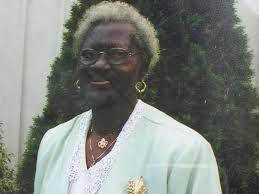
Tomorrow at Mother Emmanuel Church, Charleston SC the life of Mother Susie Jackson, one of the 9 murdered in that church will be celebrated. She particularly of all the victims have been in my thoughts.
Can you imagine what she has seen, how much she knew from 87 years of living Black in Amrerikka? We all know this woman. She arrived at this time, in Faith and believing that there is a Balm in Gilead. In the last moments of her life, I imagine her whispering, “Dear Jesus, oh my God”. A prayer she might have uttered many times in her life. I think about her, fearing for her nephew, Tywanza Sanders,26 sitting at that same table. He, in his youth and Faith, brave enough to plead for their lives to an unmoved monster.
I want to remember her as I imagine her preparing for Bible Study. Picking up around the house, having an early dinner and clearing and cleaning the dishes. Maybe even visiting that day with a friend. Ensuring that she studied “the word” of the week, marking a small tablet with her impressions and questions for the evening session. Making sure to put some mint candy in her purse and a handkerchief or tissue. I know she was not thinking too much about that “crazy girl trying to be Black”. I imagine she might have been singing or humming some old hymn, giving her lift to her step as she advanced to the time. Maybe “A closer walk” or ” faith of our fathers”. Getting a ride or even walking to the church, participating in a bit of chatter once seated. We all know who she was beyond the oldest of the victims. One of the Mothers of the church, having survived and found sanctuary in her Black life.
Tomorrow there will be no President with a eulogy for her. Her one spiritual leader and confidante is gone as well. So who will witness her life, her deepest victory over a moment’s fractured faltering Faith, her fear of Black night terror and the wonderment of her journey ? We will Mother Susie, we will. All respect for your life of prayer and purpose. We who understand and rejoice for you. You who sought in this time in your life, one thing – A Closer Walk with Thee. Your life’s journey and what you chose as your comfort lifted you in the church you loved and served. Rest well Mother Ancestor.
I imagine her smile, listening to something like this.
Tribute to Dr. Yosef Ben-Jochannan In Conversation with Dr. Wilmer Leon HOST, “Inside the Issues with Dr. Wilmer Leon Sirius/XM Radio March 21, 2015 10 pm ET LIVE
He was one of the most courageous and inspiring scholars of our time would live for nearly a century, paying personal witness to dramatic transformations in the lives of Black people across the globe. Now a Beloved Ancestor.
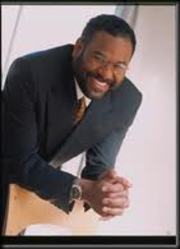
Wilmer Leon is the Nationally Broadcast Talk Show Host of “Inside The Issues with Wilmer Leon” Saturday’s from 11:00 am to 2:00pm on Sirius XM (126).
Wilmer J. Leon III, Ph.D. is a Political Scientist whose primary areas of expertise are Black Politics and Public Policy. Wilmer has a BS degree in Political Science from Hampton Institute, a Masters in Public Administration (MPA) from Howard University, and a Ph.D. in Political Science from Howard University.Dr. Leon is also the host of XM Satellite Radio’s, “Inside The Issues”, a three-hour, call-in, talk radio program airing live nationally on XM Satellite Radio channel 126.”
Dr. Leon was a featured commentator on CNN’s Lou Dobbs Tonight and is also a regular contributor to The Grio.com, The Root.com, TruthOut.org, The Maynard Institute.com and PoliticsInColor.com. He is an OUR COMMON GROUND Voice for more than 5 years.
We will discuss with Dr. Leon about today’s urgent and pressing issues and events before African-Americans.
As a filmmaker, you put the film out there, and you just want it to be okay,” says director Ava DuVernay. “You don’t want to let people down; you don’t want to embarrass yourself.” She’s done much better than that with Selma, a dramatization of the 1965 protests in Alabama led by Martin Luther King, Jr.; the movie, considered to be a leading Oscar contender, has already received four Golden Globe nominations. Peter Travers said in his rave review in Rolling Stone that DuVernay “blows the dust off history to find its beating heart.”
DuVernay, 42 years old, grew up in Compton, but spent summers in Alabama. A film publicist before she shifted careers to directing, she had actually signed up to do publicity for an earlier version of Selma. The screenplay had bounced around for over five years, attached to directors such as Lee Daniels. “It was looked at as an unmakeable movie,” says executive producer Paul Garnes. But British actor David Oyelowo — who had appeared in DuVernay’s Sundance award-winner Middle of Nowhere — very much wanted to play King, and unbeknownst to DuVernay, was lobbying for her with an international team of producers. Despite a resumé that was limited to two microbudget features, a half-dozen documentaries, and an episode of Scandal, she got the job, and a $20 million budget.
Ava on the set of ‘Selma.’ (Photo: Atsushi Nishijima/Paramount)
Our conversation with DuVernay in a vegan Mexican restaurant in Hollywood happened three days before Joseph A. Califano, Jr., a former Lyndon B. Johnson aide, wrote a Washington Post op-ed complaining not only that Selma gave Johnson (played by Tom Wilkinson) short shrift, but that the president had come up with the idea for the protests himself. As it happens, earlier versions of the script focused on the relationship between King and the commander-in-chief, and how their joint efforts led to passage of the 1965 Voting Rights Act. She discussed why she had chosen to place less emphasis on Johnson, her casting philosophy and why it helps to have Oprah on your film set.
Let’s talk about reducing LBJ’s role in the events you depict in the film.
Every filmmaker imbues a movie with their own point of view. The script was the LBJ/King thing, but originally, it was much more slanted to Johnson. I wasn’t interested in making a white-savior movie; I was interested in making a movie centered on the people of Selma. You have to bring in some context for what it was like to live in the racial terrorism that was going on in the deep south at that time. The four little girls have to be there, and then you have to bring in the women. So I started adding women.
This is a dramatization of the events. But what’s important for me as a student of this time in history is to not deify what the president did. Johnson has been hailed as a hero of that time, and he was, but we’re talking about a reluctant hero. He was cajoled and pushed, he was protective of a legacy — he was not doing things out of the goodness of his heart. Does it make it any worse or any better? I don’t think so. History is history and he did do it eventually. But there was some process to it that was important to show.
Many presidents couldn’t have done it.
Absolutely. Or wouldn’t have even if they could.
I thought Tim Roth’s performance as George Wallace was very nuanced, when it would have been easy to play him as Snidely Whiplash.
I wanted to try to make everyone as human as possible. That trap that I see so many non-black filmmakers do with black characters, where everything is surface and stereotypical…I didn’t want to be the black filmmaker that does that with the white characters. Tim has talked about every actor has to love the character that they’re playing in some way, and in the time that we’re talking about, there’s not a lot to love in Wallace if you believe in justice and dignity. But he found a videotape or an article of his son talking about him, and so he was able to tap into the father doing what he thought was right.
I WASN’T INTERESTED IN MAKING A WHITE-SAVIOR MOVIE; I WAS INTERESTED IN MAKING A MOVIE CENTERED ON THE PEOPLE OF SELMA.
Whether it was Roth or Tom Wilkinson — or Giovanni Ribisi, Stephen Root and Alessandro Nivola — all these characters represented a real diversity of thought about this issue from the white perspective, from the dominant culture. I wanted to create an array of folks who all thought about it in a different way because white thought wasn’t a monolith at that time, just as black thought wasn’t a monolith.
What was your philosophy when you were casting?
To work with people who fascinate me. Oprah being in the cast allowed me to have flexibility because she is such a big name. Her fame and her power created space for me to be able to hire Stephan James, a 19-year-old from Canada, for John Lewis instead of the hot young guy who was just in The Fast and the Furious,or whatever. I was able to pick and choose cool people.
What was it like having Oprah on the set?
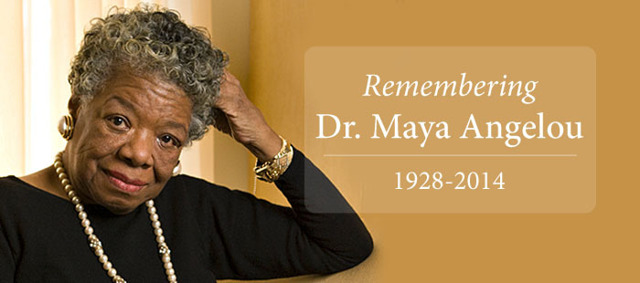
Her first day of shooting was the day that Maya Angelou died. I had just driven up to the set in Marietta when I got a call on my cell phone from Andrew Young, the real Andrew Young: “Sister Maya has passed on.” And all I could think of was Oprah was on her way to the set. I immediately called her and said don’t come, we’ll do it another day. Tight schedule, a 32-day shoot, not a lot of room to move things around — but we’ll figure it out. She said, “No, I can do this, it’s okay.” She had the same trailer as everyone else. I spoke with her briefly, and I should’ve stayed, but I had to go out back to the set: I had 200 extras out there. So I called Tyler Perry, he sneaked onto the set, they had their moment, and she came out ready to go. I’m grateful to him; most people see us as very different filmmakers, but in that moment we were united around Oprah.
Ava and Oprah on the set of ‘Selma.’ (Photo: Atsushi Nishijima/Paramount)
How did your old job as a publicist prepare you to do this?
To make a film?
As opposed to eating guacamole, yes.
[Laughs] Just being able to talk to people. I used to coordinate and develop and execute really big campaigns for studios with a lot of moving parts. But the main thing is just articulating what’s in your head, which we overestimate that people can do — how do you get that out in a way that’s clear and un-muddled with the intention of producing a result?
What was the hardest scene to shoot, emotionally?
When Jimmy Lee Jackson was murdered in the cafe. At that time there was no Mike Brown murder, there was no Eric Garner murder — but there were so many others that are just ambient. It’s part of the atmosphere as a black person growing up in this country: You know that’s it’s happening somewhere on that very day. And a month later Mike Brown was killed. [Cinematographer] Bradford Young, [editor] Spencer Averick, and I, we designed that scene in a really specific way. It was really important that we have all that stuff worked out in advance because I knew it was going to be a rough, emotional day. This wasn’t a day for improvisation.
King’s tactics imply that his supporters are going to have to get hurt: Nonviolence doesn’t work unless the other side overreacts.
Being passive doesn’t mean sitting there and getting hit for the sake of getting hit. And it wasn’t all faith-based, either. There were some very practical reasons why it was used. You talk to most people about King now and they only know “I Have a Dream,” and that he believed in peace and then he died. Really? That’swhat he’s been reduced to? And we’ve allowed it to happen. And if there is anything that Selma does, it reinvigorates the narrative around him to be more full-bodied and more truthful about what his tactics were.
Are you religious yourself?
No, not religious. But I love God.
Can you talk about the aesthetics of violence of Selma? When the church blows up and kills those four little girls, it’s harrowing, but it’s also filmed in a beautiful way. How do those two things work together? I don’t know if my intention was to make it beautiful. How do you film four little girls being blown apart? There’s a way to do it with a certain reverence and respect for who they were. That’s why it was important for me that you hear their voices before it happens.
There’s a sinking feeling in that scene — I counted five little girls, so I was hoping maybe it wasn’t going to happen.
There were five girls and one lived. And I put in a boy, to misdirect you on purpose. The violence throughout the film follows the same pattern. I resisted the idea of just it being a physical blow. That spectacle has been done: All we do in this industry is blow people up. But how does the hit feel and what does the face do after? What happens to that broken body and what happens to the people that have to tend to that broken body? It’s important to have the morgue scene after Jimmie Lee Jackson’s death, to show the mother and slow down on her face, to slow down the girls, to slow down Annie Lee Cooper when the men put their hands on her and take her down. It was about having a reverence for that was the idea behind it instead of, say, making it beautiful. You’re saying: This is worth taking a closer look at. Everybody stop and pay your respects to this.
Can you pinpoint a moment of joy that happened while you were making this movie?
So many things come to mind, but there was a day that we were filming in Richie Jean Jackson’s house, doing that scene when they all walk into the kitchen. We’re at this house in Atlanta, we had shut down the street. That was the day that Tim Roth and Giovanni Ribisi were coming for their hair and makeup tests. They have to come to see me, ’cause I can’t get away. So they come to the set, and I thought, “Look at all my guys, they’re all together — the White House guys, Wallace, the black guys.” Those characters never cross, right? The chance to see them all together was so fun. Then a black SUV starts coming up the street, going around cones. Our assistant directors and our production assistants are running down, saying, don’t go, they’re shooting. The door opens and out comes Oprah. She’s not supposed to be there; we thought she wasn’t even in the state that day! She starts walking towards me and I just run up to her and give her a big old hug. It was like a house party in the street.
A surprise visit from Oprah on the set of ‘Selma.’ (Photo: Instagram/@directher)
How was it having people like the actual Andrew Young on the set?
So cool. And it easily could not have been if they were grouchy curmudgeons. But there’s still a spark about them. These are our greatest minds, our greatest radicals. Time has not done them in. If you look John Lewis in the eye and he’s talkin’ to you about something, you’re like “Uh huh, let’s go do it!” When I sat down with them, I was really clear that we weren’t asking for anybody’s permission.
RELATED
Best Overlooked Performances of 2014
But this [film] is not called “King”; this is Selma. This was as much the story about the band of brothers and sisters that were around him as it was King’s story. There haven’t been great pains taken to show that he was a leader among leaders — all of them could’ve probably done it. Why him? He could talk the best. He was an orator who was able to synthesize all these ideas in a way that spoke to the masses and also that spoke to people in power. But they were there and they were the masterminds behind it. I tried to show the strategy, the tactics, the arguments. That’s how history is made, not by consensus, but by people freakin’ battling it out, right? That’s how change happens.
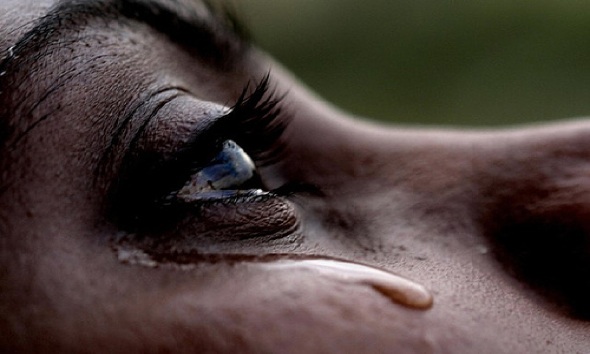
The tears started while I was sitting in a Barnes and Noble bookstore and they refused to stop. I gathered my laptop and purse, hurried back to the car, and sat quietly – expecting the flow to cease. But it would not. Tears were in my eyes on the way back home and tears stayed with me throughout the day. I wept while folding the laundry and while trying to decide what to cook for dinner. There is a moment when you grieve that you can no longer make tears – instead, your silent cries are felt in the pit of your stomach or in the wordless moans that escape your mouth.
It is difficult to put into words what triggered this particular moment of grief. All I can explain is that the weight of being black in a world that hates black existence came rushing forward and I could no longer contain my anger, rage, or grief in a series of polite conversations and academic panels. I could no longer form the right words to describe how it feels to wake up in a world where a police officer can brutally assault and rape black women, violate the terms of his bail, and yet again be released from jail a second time since the courts have determined that he poses “no significant threat” while he awaits trial. I no longer had the means for polite discourse when trying to describe how police leaving the dead body of a murdered teen uncovered on the street for over four hours paralleled the worse of the American tradition for lynching. I did not have the right language to express my horror at the multiple deaths of black women whose only “crime” had been to say no to sexual advances. I had no language in response to the horrors of racism and misogyny that greeted me each morning.
Our culture privileges words and texts. If you want to be taken seriously and considered intelligent and rational, you are asked to respond to horrific events with sustained textual or oral analysis. I had been doing my best…writing, when I was asked to write, and speaking and preaching, when asked to do so. I’ve lectured and written on the historical, theological, racial, and societal implications of several recent events. But while sitting in Barnes and Nobles, my words failed because my words were no longer adequate. Living with terror requires more than just words. Dealing with the realities of the terrorized black body in America requires my entire soul…and my soul wept. The horrors had simply surpassed the ability of my pen to write and so my tears took up where my pen left off.
On that particular morning, my tears were triggered by a rendition of “There is Room at the Cross,” playing on my headphones. I thought about all the various meanings of the cross for Christians: a place of atonement and redemption; a place of suffering and shame; a place of lynching and execution; even a place of promise and resurrection. But on that particular morning, the cross represented a place where I was encouraged to grieve. Whatever the cross means in a person’s own theology, we know that the family of Jesus and his disciples grieved the death of one whom they loved. We know that tears were shed at the death of a beloved child, a cherished teacher, a dear friend, and a valued leader whose entire existence confounded Roman authority. The cross is a place where there is always more room for the grieving.
The foot of the cross is a place where I can grieve for all the deaths and for all the people that are “ungrievable.” And so I grieve for the women whose claims of rape aren’t taken seriously because they are sex workers. I grieve for those whose only crime is walking while black or driving while black. I grieve for the mothers and fathers burying their children much too soon. I grieve for women who stay home rather than face street harassment. I grieve for those triggered by the sight of blue lights in their rearview windows. I grieve for parents who have to teach racial life lessons while their children are still toddlers. I grieve for black women whose murdered bodies barely rate a mention during the evening’s news. And I grieve for those who do not have a community to support them while they grieve.
At the foot of the cross, or at the site of any of these lynchings, state executions, murders, or injustices, there must be a place to allow the tears to flow and the moans to escape. There must be a place – beyond words or sermons or essays – which allows the body to grieve. Before we can heal the land, repair the breach, or right the wrongs, our souls are crying for a moment to mourn. The grief is both personal and collective as we grieve for our own losses and for the losses of others. But when and where I grieve, my heart, body, and soul insist that this space, this moment, and this loss must be acknowledged. I grieve because it matters. I grieve because even when my voice is silenced, my tears will tell their own story.
“Out of the huts of history’s shameφ
I rise
Up from a past that’s rooted in pain
I rise
I’m a black ocean, leaping and wide,
Welling and swelling I bear in the tide.
Leaving behind nights of terror and fear
I rise
Into a daybreak that’s wondrously clear
I rise
Bringing the gifts that my ancestors gave,
I am the dream and the hope of the slave.
I rise
I rise
I rise”
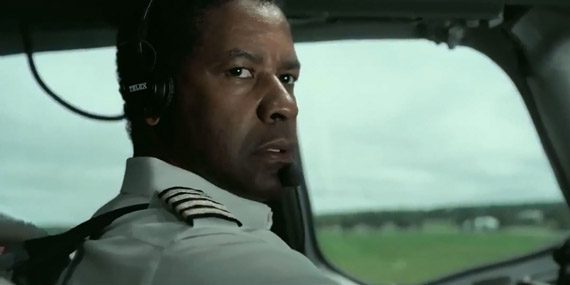
This year Denzel Washington received his sixth Oscar nomination for his role as airline pilot Whip Whitaker in the movie Flight. He did not win the Oscar, but the nomination made him the most nominated black actor in film history.
The title of the movie has a double meaning. The major event of the movie is the ill-fated flight of a jet with 102 passengers on board. The plane has a gross mechanical failure, but pilot Whitaker is able to do what no other pilot is able to do rescue the plane from a dive and land it in a field with only six fatalities. This happens early on in the movie. The balance of the movie is the drama of Whitaker’s flight from the reality that he is an alcoholic. At first he is viewed as a heroic figure with simply a character flaw, but the more he flees from the truth of his reality the more pathetic he becomes.
It was probably not intended but Flight is an accurate and haunting metaphor for Black America. Black America is in full flight from facing the truth of our reality. On Tuesday February 26 the Washington Post on the third page of the A section reported that Institute of Assets and Social Policy at Brandeis University was about to release a report on the black – white wealth gap. The stunning nature of the report can be seen in the first few paragraphs.
The report, which researchers called the most detailed look ever at the roots of the racial wealth gap, is drawn from the life experiences of nearly 1,700 working Americans between 1984 and 2009. That quarter-century was an era of significant racial progress in the country. The black middle class expanded, black college graduation rates tripled, and black elected officials moved into a broad range of public offices, including the presidency.
Despite that progress, the wealth gap between whites and blacks nearly tripled among study participants, going from $85,000 per family in 1985 to $236,500 in 2009. Overall, the median net worth of whites in the study was $265,000 in 2009, compared with $28,500 for blacks. A broader survey done by federal officials has found even larger disparities, with blacks having a nickel of wealth for every dollar of wealth owned by the median white family.
In other words, when it comes to the concrete assessment of racial progress in economic terms, the only terms that really count; Black America is in dire straits. Worse than that, we are in full flight from facing this reality. The major black web services, The Root, The Grio, Black America Web, and Black Voices did not and to this date have not highlighted this as a major news story. Most did not and have not mentioned these findings at all. The Voting Rights act debate in the Supreme Court, the mysterious death of the first openly gay candidate for mayor in Mississippi, the ongoing struggle around the late James Brown estate, the first potential black bachelorette, the outrage of the white model portraying an African, Queen, the 14year jail sentence for a gospel singer due to his Ponzi scheme were deemed news items to be featured on the sites. To this day none of our high profile African Americans leaders, our civil rights leaders, our political leaders, commentators or clergy have highlighted or discussed the significance of this report and the searing truth of the dire economic circumstance of black America.
We have a long history of running from our economic reality. In 1987 Theodore Cross published The Black Power Imperative. He stated then that each and every item on the black agenda needs to be judged whether or not it adds to the economic empowerment of black people.
In 1994 Dr. Claud Anderson published his seminal work Black Labor, White Wealth documenting the strategies and goals whites have used to solidify power and privilege. He pushed past the symptoms of our problems such as teen pregnancy, drugs, decline in family values, violence, etc and clearly identifying the root of our problem as race and the unjust distribution of this nation’s wealth, power and resources. Whites control almost 100% of the power, wealth and resources and blacks practically nothing. This latest report bears out this truth. Dr. Anderson laid out some general strategies in Black Labor; White Wealth which implemented could empower black communities economically. There was some public discussion but not nearly enough for a reorientation of our general thinking.
In 2001 Dr. Anderson followed with Powernomics, a specific plan with specific strategies to lead us out of economic ruin. By this time however black America was enthralled with the myth that our black middle class was expanding and our prosperity was just around the corner.
In Nov 2007 before the melt down of the economy and the election of President Obama in 2008, The Brookings Institution released a report of its longitudinal data study of white and black family economic mobility from the late 1960′s to the early 2000′s Their conclusion:
White children are more likely to move up the ladder, while black children are more likely to fall down. Startlingly, almost half (45 percent) of black children whose parents were solidly middle class end up falling to the bottom of the income distribution, compared to only 16 percent of white children.
Achieving middle-income status does not appear to protect black children from future economic adversity the same way it protects white children.
Again this study was barely noticed by black leadership and black press.
July 26, 2011 the Pew Research Center released a report on income gap and the consequences of the recession. They found:
The recession wreaked havoc on the wealth of all Americans but whites lost the least amount as a percentage of their holdings. The median net worth of a white family now stands at 20 times that of a black family and 18 times that of a Hispanic family – roughly twice the gap that existed before the recession and the biggest gap since data began being collected in 1984.
July 12, 2012 The Washington Post reported:
The implosion of the sub-prime lending market has left a scar on the finances of black Americans – one that not only has wiped out a generation of economic progress but could leave them at a financial disadvantage for decades.
In late January of this year, fresh from the second inauguration of President Obama and his State of the Union speech scholars gathered for an African American Economic Summit at Howard University. Their conclusion was sobering but illustrated a willingness to wrestle with our reality.
As bleak as the economic picture is for black Americans, the immediate prospects for improving it are worse, many participants said. They agreed that chances are remote for the kind of aggressive, targeted action needed to combat those problems and close the economic disparities that have long separated blacks and whites.
However judging from the lack of response to the latest report from the Institute of Assets and Social Policy, like pilot Whip Whitaker in the movie Flight there has been a relapse and again we are in flight from reality. This relapse is simply pathetic.
The Reverend Doctor Earl D. Trent Jr. currently serves as the Senior Pastor of the Florida Avenue Baptist Church. He is the author of A Challenge to the Black Church
“Mighty Times: The Children’s March” reveals a never-before-told chapter in the Civil Rights movement, focusing on more than 4,000 black schoolchildren who deserted classrooms in Birmingham, AL, on May 2, 1963, touching off a week of mass demonstrations and rioting that shocked the nation and rocked the world. On May 2, 1963, the children of Birmingham, AL, flooded the city’s streets — and the city’s jail — to challenge segregation. With dogs and fire hoses, police tried to stop them. Yet, in ways their parents could not, the children prevailed, defying the police intimidation that long had plagued Birmingham’s black community.
“The staggering toll of gun violence—which claims 31,000 U.S. lives each year—is an urgent public health issue that demands an effective evidence-based policy response.”– The Case for Gun Policy Reform in America
“There’s a world of difference between truth and facts. Facts can obscure the truth.”– Maya Angelou
There has been a lot of attention given to gun violence, since the day Adam Lanza armed himself with hundreds of bullets and took the lives of 20 children and six adults at Sandy Hook Elementary in Newtown, Connecticut. This tragic story has gotten the attention of corporate media, the nation, and even a President who hails from one of the deadliest cities in the country. “We won’t be able to stop every violent act, but if there is even one thing that we can do to prevent any of these events, we have a deep obligation, all of us, to try,” stated President Obama.
Mayor Bloomberg has been supportive of the controversial, “Stop and Frisk” program of the NYPD that has resulted in over 4 million stops and street interrogations of mostly Black and Latinos in New York City since 2002. According to New York Civil Liberties Union (NYCLU) guns are found in less than 0.2 percent of stops, prompting concerns over racial profiling.
Gun Policy Summit
The staggering toll of gun violence—which claims 31,000 U.S. lives each year—is an urgent public health issue that demands an effective evidence-based policy response.
Last month, I attended a two-dayGun Policy Summit hosted by Mayor Bloomberg and the John Hopkins University School for Public Health. I was interested in hearing what sort of gun policy recommendations would be proposed and their potential impact on the Black community.
According to the research there are over 31,000 incidents of gun violence each year in the United States, but while homicides often make the headlines, there is a less known fact when dealing with issues of gun violence.
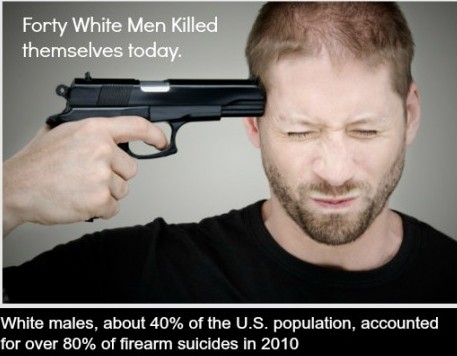
Out of the 31,000 lives lost due to gun violence, every year 19,000 or almost 2 out of every 3 are suicides. White males accounted for over 80% of gun related suicides in 2010. And according to theAmerican Foundation for Suicide Prevention, yearly medical costs associated with suicide, is nearly $100 million and 90% of people who die by suicide have a diagnosable and treatable psychiatric disorder at the time of their death.
Every night we watch Black men on the nightly news who have been involved in gun violence. Gun violence in urban America is a serious issue and Black youthare disproportionately victims of it. When addressing the high rates of homicide in the African-American community, Dr. Linda Frisman told the audience at John Hopkins “that being African-American and Hispanic are really proxies for social and economic disadvantage.” This is something that most Blacks understand. Addressing gun violence in urban America will not be solved with more police and school resource officers as President Obama has recommended or by adding additional security cameras to our schools that stream live to patrol cars and police precincts. If we are serious about reducing gun violence, we must address the social and economic disparities in communities of color. Strong economically secure communities that provide family sustaining wages, affordable housing, culturally relevant and enriching education that equips children with skills to succeed in the 21st century, and love will make schools and neighborhoods safe for our children. Successful faith and community-based programs should be rewarded with additional funds with less money being poured into Police departments that normally respond punitively when dealing with our children.
Another forty white men have killed themselves tonight
I begin to think, what if each night the local nightly news began by stating, “Another forty white men have killed themselves tonight?”
There are studies for every social pathology in the Black community, and policy responses crafted by “experts,” that are often punitive and never seem to be systemic. But for some reason, you can’t find much research on white males and why they are killing themselves at an alarming rate, or why there is a fascination with weapons. What if we began to take the same data and create policy around it? What would it look like? Would it stigmatize white males? Would we have to dispatch mental health professionals to workplaces every time they were laid off? Would we need to send the Bureau of Alcohol, Tobacco, Firearms and Explosives (ATF) to their homes to search and remove their guns? How safe would White women and children feel when their husbands and fathers were laid off? Would white men be considered a High-Risk group for firearm ownership? Or would there be a stop and frisk policy implemented for White men over the age of 50?
In October of 2012, leading experts from the Johns Hopkins Bloomberg School of Public Health produced a report entitled, “The Case for Gun Policy Reform in America.” Many of the policy recommendations from the expert reports concentrated on Firearms Prohibitions for High-Risk Persons. Though suicide is the leading cause of death by firearms, with White males accounting for over 80%, they were not mentioned in the high risk category.
Well, who are the High Risk groups that should be prohibited from owning firearms? Under the section entitled, Why Firearms Prohibitions for High-Risk Persons Should be Broadenedthe categories include Criminals, Substance Abusers (Illegal Substances) and Youth Under Age 21.
Criminal Prohibitions
“We believe the evidence above justifies an extension of firearm prohibitions for persons with a history of criminal behavior to include persons convicted of all misdemeanor crimes of violence, as well as individuals who have committed felony crimes as a juvenile.”
Substance Abusers
“The number of drug abusers prohibited from possessing firearms might be increased significantly by revamping these regulations to, for example, expand the period following a drug conviction for which a person is prohibited from possessing firearms.”
Youth Under Age 21
“Restrictions on youths’ ability to purchase and possess firearms should be broadened. Although federal law and most state law allows youth 18 to 20 years of age to legally possess a handgun, youth of these ages have some of the highest rates of homicide offending.”
These policy recommendations are about narrowing access to who can legally own a firearm, by identifying the most high-risk persons. The criminal prohibitions and substance abusers recommendations would narrow the number of Black people who have access to guns. Not because Blacks use illegal substances at higher rates than Whites. According to the NAACP, “5 times as many Whites are using drugs as Blacks, yet the Black population, especially men are sent to prison for drug offenses at 10 times the rate of Whites.” The NAACP Criminal Justice Fact Sheets states that “in 2002, despite that fact that more than 2/3 of crack cocaine users in the U.S. are white or Hispanic, blacks constituted more than 80% of people sentences under federal crack cocaine laws.”
It is also important to remember, as Dr. Matthew Miller pointed out, the vast majority guns that kill are handguns and legally owned.
United Nations Conference on the Arms Trade Treaty
Internationally the United Nations appears to be pursuing the same policies. In March of this year they will convene the United Nations Conference on the Arms Trade Treaty (ATT). The conference is designed to tighten import, export and transfer of conventional arms. The UN states that ATT “will not aim to ban any weapon.” And why would they? White men control the most deadly arsenals of weapons of mass destruction in the world. Instead, the conference wants to make sure weapons don’t fall “into the hands of terrorists, drug traffickers, and criminal cartels.”
Drug traffickers and Criminal cartels? I think you already know who the target groups are. This sounds very familiar to the language in the Hopkins report. Identify high-risk populations, mostly communities of color and limit their access to acquiring weapons while leaving out the highest risk group, White men. No group has manufactured, proliferated or used more weapons of mass destruction than White males, yet they conveniently label communities of color as “terrorists” or “high risk.”
They will beat their swords into plowshares and their spears into pruning hooks. Nation will not take up sword against nation, nor will they train for war anymore. –Isaiah 2:4
I pray for the day when we will beat our swords into plowshares and study war no more. But until then, we must make an honest effort to make sound gun policy. We must make sure that the War-on-Guns does not unfairly target people of color in the same way the War-on-Drugs have devastated our community.
There’s been much talk about TLC’s new show The Sisterhood, a reality show about the lives and struggles of Ivy Couch, Domonique Scott, Christina Murray, DeLana Rutherford, and Tara Lewis, five pastor’s wives in the Atlanta area. While some critics are threatening to boycott the show, and others are framing it as evidence of black [male] preachers loosing their way (which I guess is synonymous with the Black Church loosing its way, but that’s another issue), millions of others, myself included, a former “first lady” and black feminist scholar of religion, race and media, are flocking faithfully to the television screen on Tuesday nights with popcorn and bottled water in hand.
And let me be clear: like many, I’m “sick and tired of being sick and tired” of the operative mediation of the global racist and sexist imagination through black women’s corporeal realities. I’m tired of mass mediated notions of “black womanhood” being both the adjective and the noun that modifies and constricts space, time and meanings. I’m tired of black women consistently serving as—through both overdetermination and consent—televisual artifacts for establishing white, black and other “normalcy.” And yes, I’m sick and tired of black women functioning as cultural mediums for soothing primal fears, representational tropes for suckling the collective fascination with black female sexuality, and work horses for demonstrating a mastery of unscrupulousness and otherness. I’m tired.
And yet, I’m also admittedly drawn in to this show and others like it, week after week. Like so many others before them, Ivy, Domonique, Christina, DeLana, Tara and many other reality TV women, inspire all kinds of repulsions, attractions and anxieties. However, they also satiate [some of] our ratchet taste buds. Can we have a moment of honesty? The Sisterhood is a hit show. And this isn’t because no one’s watching it.
So what’s the draw? The Sisterhood creates a conflict between public politics, private realities and personal taste. However, this war between the emperors’ coat of high culture and the everydayness of his nakedness is nothing new. This ongoing juxtaposition highlights the ever increasing tensions between the “cultured” and the “ratchet;” the former drawing attention to so-called taste, tact, refinement, civilization and genius, and the latter calling attention to the so-called vulgar. While the former is purported to arise out of the Geist – the intellectual inclinations – of our times, the latter is purported to spring forth from the worst of black culture. However, what better communicates the spirit of the time than the ratchet? And no, I don’t mean the ways that ratchet gets deployed to project a collage of derogatory meanings onto black women’s bodies. I’m referring to the ways that ratchetness often undergirds the ricocheting of raw emotions and missiles of unfiltered truths.
To uncritically bash The Sisterhood is to toe the expected party line. To demonize the show is not only an attempt to maintain a position of moral superiority, but an assay to construct and limit meaning for the audience—an audience that may in fact connect with the human qualities of the ratchetness therein. And trust me, I get the critiques regarding black female representations in media. This needs to be called out everyday all day—but not while asphyxiating black women’s complex identities with mythological notions of black women’s heroic genius. In short, binary oppositions don’t work. They set up “us” versus “them” politics, which are both totalizing and reductive. I think a better suggestion might be to think about the heroic qualities of black women’s genius, that is if you buy this argument, as at times being a bit ratchet. Identities and tastes shift in shades of grey, not monochrome. That said, we don’t need another schemata. And we damn sure don’t need another exceptionalist social fiction to cancel out our complex subjectivities, which can neither be packaged nor wholesaled, by the way.
The Sisterhood isn’t “hurting the church image…[or] giving God a bad name.” Religious people have already done that. Neither is it “abominable and offensive to the Christian/African American communities.” I can think of a few other things, all ending with “isms” or “phobia,” to fit that bill. And finally, it’s not evidence of black [male] preachers or the historical Black Church loosing its way–I haven’t even mentioned how the eve/gender politics here are troubling at best. And to be sure, I’m not saying wether the Black Church or the black [male] preacher has lost their way or not. That’s an entirely different conversation. For starters, I think I’d first need to know what the “way” once was or imagined to be. And truly, The Sisterhood isn’t even a representation of the Black Church. As far as I can see, there are only two wives from historical black churches (hold this thought) on the series–whose church would likely define themselves in such a way, Ivy and Domonique.
The Sisterhood is evidence of our obsession with brown women’s lives and our pornotropic desire to lift their curtains and see everything. In addition, it’s evidence of the fluidity between religion and culture, and the myriad ways that each cross-pollinates the other, thus broadening, limiting and confusing all kinds of meanings. An example of this is the construction of the “first lady” concept for the show, a Black Church conception structured in both politics of respectability and patriarchal dominance, aimed at constructing alternative identities–distinct from the hypersexual/sexual savage trope–for black women, particularly during the early twentieth century. As with the FLOTUS, it’s a title of respect for wives in religious contexts that are often theo-socially hostile to women in general. With regard to black women, there’s a long history here apropos race, gender, sex, sexuality, respectability and wifehood. However, I’ll save the politics of race, ladyhood and wifedom for another day.
(Side note: background, I’d be interested to see how the “first lady” title operates for Christina, a Dominican woman married to a black new wave evangelical pastor, and DeLana, a white southern woman who, akin to her co-pastor husband, seems to fancy all things “plantation” (27:56 mark) and soft Christian rock. I’d be even more interested in seeing how this works for Tara, a black body builder married to a Jewish Christian former pastor, both of whom appear to be working with a different set of gender politics. But this, again, is another story.)
Ultimately, The Sisterhood is evidence of not only our obsession with brown women’s lives, the constant interpolation of religion in culture and vice versa and the static nature of meanings in our society, but our very own and ever expanding frailties, contradictions and complexities as human beings. These women represent the thorny nature of our inner selves, particularly when situated in hostile, novel, and/or uncomfortable environments. Sure. Ivy, Domonique, Christina, DeLana, and Tara aren’t really sisterly (or are they?) and they argue like the women in the Basketball Wives and Real Housewives franchise. But wouldn’t you if pimping your story on reality television somehow became a necessity, or if you found yourself in the midst of a group of others who were geographically, theologically, racially, economically, politically, contextually, and socially different than you? Would you not have differences of opinions and take up, forcefully at that, different positonalities? Seriously. Are we above drama and contradictions? Have we never been pushed to the edge to the point where we want to or choose to take it there? Are our lives without mistakes, conflict, struggles, pain, stresses and moments of dehumanization? Show me a person devoid of these realities and I’ll show you a straight up liar. Yes. That simple.
The bottom line for me is this: these women are human. They are women with problems from autonomous churches that differ, at minimum, theologically. And like it or not, for Christians and others, theology shapes how people understand themselves in the world. Yes, it shapes both Tara’s unyielding “prayerbush” (s/o to Birgitta Johnson) at the 37:18 mark of the 4th episode and Domonique’s ongoing quest to live out and within her own truth.
Consciously or not, theology re-appropriates politics and ways of seeing by constructing a veil that recolours reality with simultaneous taken for granted notions of truth, hope, transcendence, capitalism, injustice and intolerance. Moreover, the “first lady” position often serves as a protective shield against disagreement. That is, Ivy, Domonique, Christina, DeLana, and Tara are likely used to participating in discourses where their politics and ways of seeing go unchallenged, especially within their congregations.
But what happens when removed from that context? Basically, shit goes awry—just as it would with any other group of strangers with different theo-political-socio-cultural-historical backgrounds and value systems. My favorite on the show is Domonique. Not simply because she keeps it all the way real and clearly isn’t afraid to get it poppin with her co-stars, but because her struggle between the politics of respectability, the structures of dominance that frame her sexual past, and her quest for financial independence and selfhood are real.
Wherever we land in terms of this show being good or bad or something in between, it’s pretty significant to see a reality TV show centered on people of faith who are flawed with real issues. Perhaps we might interpret The Sisterhood not as an “abomination,” but as an imperfect, yet useful intervention–for the Black Church, black popular culture and black folk living in various communities. These ladies disrupt the monolithic image of the puritanical (and irrational) religious person on one hand, and the exemplary religious heroic genius on the other. These tropes are death-dealing. No one can live them…or live up to them. Let’s face it, we are messy inter-subjective beings with troubles, longings, complications, and inconsistencies–just like Ivy, Domonique, Christina, DeLana, and Tara.
And this is why we watch—and yes, with popcorn and bottled water in tow. Because, unlike the black [male] mega church prosperity gospel preacher constantly being shoved down our throats (pun intended) as the symbol of black churches U.S.A, these folks—these women, are trying to make it and make sense of their messy lives—just like us. And hey, like so many others in academe, the Black Church and without, they want to do it on TV. That said, perhaps we’ve all lost our way.

 hurch will be celebrated. She particularly of all the victims have been in my thoughts.


 Wilmer J. Leon III, Ph.D. is a Political Scientist whose primary areas of expertise are Black Politics and Public Policy. Wilmer has a BS degree in Political Science from Hampton Institute, a Masters in Public Administration (MPA) from Howard University, and a Ph.D. in Political Science from Howard University.Dr. Leon is also the host of XM Satellite Radio’s, “Inside The Issues”, a three-hour, call-in, talk radio program airing live nationally on XM Satellite Radio channel 126.”












 OCG
OCG 