“Talking about White Privilege Is Not Profound, Its Just for Profit” Dr. Tommy J. Curry

THE NATIONALIST

“Talking about White Privilege Is Not Profound, Its Just for Profit”

By: Dr. Tommy J. Curry

tcurry1

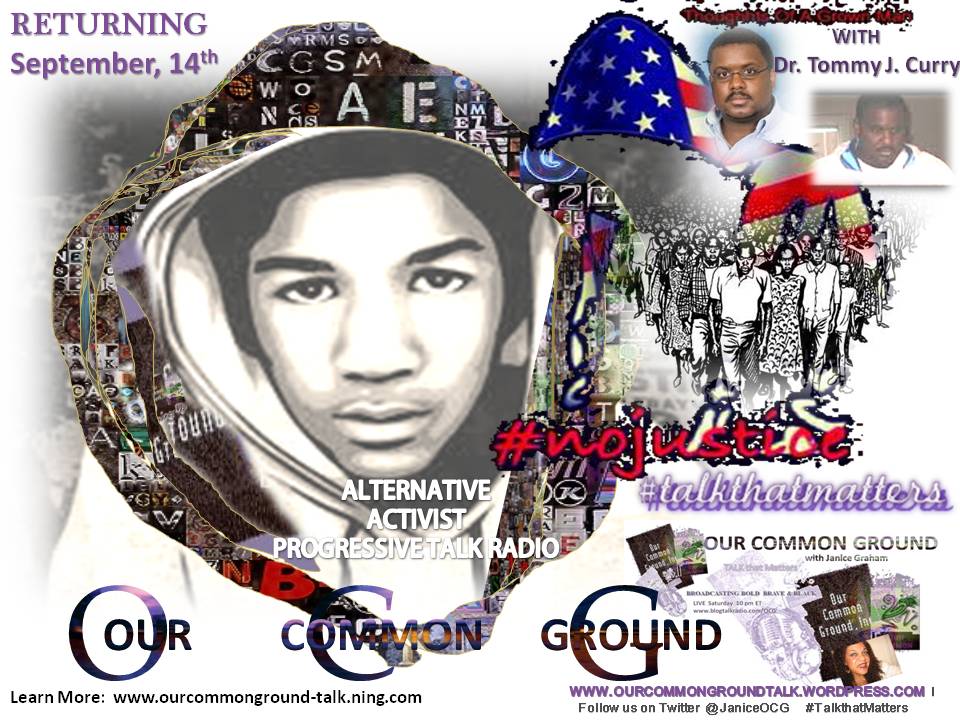
Dr. Tommy J. Curry Coming to OCG September 14, 2013

There is a growing economy for discussions about white privilege in this country that are employing Black and brown intellectuals and whites who profess anti-racism, to be the missionaries that save white souls. white privilege, or the idea that white individuals are born with unearned benefits and advantages, over others has been making its way through out the public media as well as the classroom. On the face of it, this seems like a radical conversation. Black, brown and some white people calling out white liberals and conservatives for their racism, and starting “real” conversations about race that air on MsNBC,CNN and even the Huffington Post. But conversations about white privilege are not really conversations about race, and certainly not about racism—its a business—WHERE BLACKS MARKET THEMSELVES AS RACIAL THERAPISTS.

See the first discussions of white privilege like W.E.B. DuBois’s Black Reconstruction (1935) or George Lipsitz’s The Possessive Investment in whiteness, or even Cheryl Harris’s “whiteness as property,” came from the radical Black intellectual tradition (race-crits, Black nationalists, Pan-Africanists) that did not believe that whites would simply donate their power and act against their global racial interests to be good people IN THE EYES OF BLACKS, people they owned and still imprison.  DuBois, and Lipsitz understood there is an antipathy and power in being against Blacks. Like George Jackson said, regarding the ILLUSION many Black academics have in romanticizing their ability to solve racism, “the white race, the economic elites of America, are not going to let themselves be educated out of existence. But today, you sound radical, progressive and insightful by MARKETING YOURSELF as therapist for whites, and know nothing about the actual conditions, structures, and ills that concretely effect the lives of Blacks. You can even talk about white privilege and not even know the names of the Black thinkers, the literature, the context, or the history the term comes from, and get acclaim for only citing white celebrities like Peggy McIntosh or Tim Wise.

It’s not genius to say in an oppressive society there are benefits being in the superior class instead of the inferior class. That’s true in any hierarchy, being on the top is better than being on the bottom, but the speaker of white privilege gets to pretend that America is not oppressive, they love America, they just want whites to surrender their privilege so we can be equal. See the revolutionary doesn’t have white friends: the government killed MLK, Assata is called a terrorist, Derrick Bell is erased from a field he started, because they spoke about the actual racial and economic tyranny of corporations, governments, the military and the white public,  but the for profit revolutionary wants to be commodified by whites…that Black friend that feels like they cured the racist white, while that same white person gets to point to these very relationships as proof they are healed and show to other whites they are the “white ally.”

Conversations about white privilege are simply moral appeals to the conscience of whites who have shown themselves to be committed to racism and social inequity IN THE IDLE HOPE THAT THEY change their mind. The implication of talking about privilege suffers from a childlike naiveity, it suggests that simply exposing racism and the privilege of whiteness to the white mind motivates whites to no longer act in their own self interest. See like the liberal utopia born out of integration, there is an unjustifiable assumption that telling whites about their social position means they are willing to surrender their power to appease a pop culture account of oppression. Think about the dishonesty of this approach. Black people, oppressed people, know there is a fundamental difference between being oppressed/Black and not oppressed, a citizen, white. We call for “national conversations on race,” where these public intellectuals get credit for starting conversations that amount to little more than allowing white America the opportunity to deny the actual realities Black America suffer from. And regardless of the outcome they come out LOOKING LIKE PROPHETS. This issue is white supremacy, and anti-Black death…trying discussing that…and see if your oppressor recognizes you then.

I remember at a recent APA I sat next to a feminist of color trying to get her white male student who couldn’t get a job in the white figures he studied and wrote a book on, and never studied race, racism, or Black philosophy, a job. This professor felt comfortable telling him if you start talking about white privilege, where she claimed the field was going, he could land a race job easily.  Think about this. So all the Black, Brown, and Indigenous scholars who study the raw histories of oppression and resistance lose out because they don’t want to give white liberals and conservatives a guilt trip. This is a powerful example of how as an academic discussion white privilege distracts the oppressed, and empowers the oppressor class to be employed in discussing systems they have no real interest in dismantling.

“The Nationalist”

Returning 9-14-13

#BlackPowerIsForBlackMen: Letters from Brothers Writing to Live \/ The Femin

#BlackPowerIsForBlackMen: Letters from Brothers Writing to Live

August 15, 2013

By 

By Brothers Writing to Live

fistsWe are a collective of black men dedicated to challenging the ideas of black masculinity and manhood through the written word. Through our work, we explore the ugliest parts of ourselves and our community, in the hope that we can illuminate the beauty that we know exists as well. We challenge each other daily to create and be more than what this racist, patriarchal society has raised us to be. But simply wanting it will not do. It requires tons of hard work, and much of that work includes listening to our sisters, black women, who tend to bear the brunt of our messiness. Unfortunately, in this regard, we have been woefully absent.

When the hashtag #Blackpowerisforblackmen, created by Ebony.comeditor Jamilah Lemeiux, took over Twitter, it was a clear sign that we haven’t been doing enough. Thousands of our sisters (and brothers) tweeted for hours about the imbalance in our community.  We, black men, tend to pride ourselves on our anti-white racial supremacy activism but often fail to reach out and consider the pain and trauma faced by the women in our lives. Our culture actively denigrates the very existence of black women. We take their love, support, nourishment, and spiritual presence for granted. As a whole, black men have not reciprocated our love and support in a way that affirms the humanity and dignity of black womanhood in the face of white supremacy, patriarchy, heterosexism, homophobia, transphobia, misogyny, sexual violence, and physical and verbal abuse.

#Blackpowerisforblackmen became the call, and as black men dedicated to fighting alongside our sisters, we have taken up the responsibility of answering. As individuals, we recognize where we have fallen short, and as a community we make a promise to participate in deep self-reflection and correction.

This ain’t just an apology; it’s a commitment.

___________________________________
Dear @BougieBlackGurl, You tweeted the following: “I am supposed to give a cookie to the BM who are involved in their children’s lives while Single BW carry the blame #blackpowerisforblackmen”
father
When my daughters were babies—they are now 10 and 14—I used to relish the attention that I received when I was with them in public.  The expectations held out for Black fathers have often been so low, that Black men who even show a small amount of attention to their children are lauded; I can’t say that I didn’t enjoy being thought of as special.Yet being at daycare, or volunteering at school, I was also able to witness the women—often single mothers—who don’t parent for the prestige of it, but because it’s what they are supposed to do.  Save Mother’s Day and the Hip-Hop Awards Show shout-out (often uttered after rhetorically bashing a “baby-mama”), there is very little attention to those women who put in the work, because if they don’t, nobody else will.  And of course if they don’t, these women are blamed for failing, not only their children or their family, but the “Race” itself.And this is one of the ways that male privilege functions—that which is ordinary and mundane is deemed as exceptional when done by men. When these everyday activities are done by women, they are demeaned and devalued—and all we have to do is look at what we pay folks who work in so called “women’s professions” or the fact that we so devalue parenting that we think that those women who are raising children on their own, and perhaps on Federal or State assistance, should be required to work outside of the home, because apparently parenting is not really work.
__________________________

Dear Monifa Bandele (@monifabandele), You tweeted the following: “#blackpowerisforblackmen when trying to discuss gender privilege is black male bashing.”

Tomi Ungerer: black Power / White Power Poster

Tomi Ungerer: black Power / White Power Poster

I had one of those moments like the old folks do in church where all I could do was sway and say to myself “well ain’t that the truth.” It’s most disheartening because a quick glance at our past or present shows us just how dedicated black women have been to addressing the black men in this country. But when sisters speak up and ask us to consider the ways in which we have contributed to their oppression, we consider it an affront to our fragile sense of community and an attack on our manhood.

Undoubtedly, there were the brothers reacting with the predictable “not me!” responses. But those individual “not me’s!” aren’t enough to drown out the massive indifference to black women’s suffering at the hands of black men. We defend to the hilt the culture we’ve created around a toxic vision of masculinity, but can’t muster up a tenth of that energy to get into the streets and demand our sisters stop being raped, and then we pretend we don’t know what privilege is.

I heard one brother flat out say sexism isn’t the problem in our community. If ever there was a moment we could use a drop squad, that was it. We can pretend away the sexism and misogyny we inflict upon black women. We mirror the worst of the defense of racism when we do and enact untold damage to the bodies and psyches of the women who have loved us most. We can stand back and pretend, as black men, we’re the only ones under attack, as we’ve done, or we can acknowledge our culpability in oppressing black women and dedicate ourselves to striving for better. The choice should be clear.

Mychal (@mychalsmith)
____________________________

Dear @YoloAkili, “#BlackPowerisForBlackMen Becuz I can’t think of ONE national march that black men organized becuz a black woman was raped or killed.”

I must have reread your tweet a hundred times today. I understood fully, maybe for the first time, that black men who profess a love for black women can’t have it both ways. The truth is too true and the stakes are too high. We can’t, as I did, call Kendrick’s verse one of the dopest lyrical performances of the year when the song is bubbling with spectacular disses of black women and black femininity, then wonder why we never organized around the killing or rape of a black woman.

Photograph by: Darnell Moore (NYC March for Trayvon Martin 2013)

Photograph by: Darnell Moore (NYC March for Trayvon Martin 2013)

We can’t watch and participate in the national obliteration and shaming of Rachel Jeantel and wonder why we never organized around the killing or rape of a black woman. We can’t lie, cheat on, or manipulate black women while convincing black women it’s so hard for us then wonder why we never organized around the killing or rape of a black woman. We can’t literally and figuratively kill and rape black woman for fun, for free, for checks, for claps from our niggas, and wonder why we never organize around the killing or rape of black woman.

No art, no person, no relationship, no sexual fantasy that kills and rapes black women is going to stop black women from being killed, hurt, and raped. If our consumption and creation doesn’t affirm, accept, and explore the complicated lives of black women, we can’t be bout that life. No exceptions. Never. Shameful that after all this life, and education, and art creation, your tweet made me know that we really ain’t been bout shit. We really been encouraging black women’s death while leaning on black women for survival. Sorry ain’t enough.

Kiese (@KieseLaymon)

_________________________

Dear @PrestonMitchum, ”@PrestonMitchum: #blackpowerisforblackmen because as sad as it already was, what if Trayvon were a woman?”

What if Trayvon were a woman? After reading your tweet, I contemplated that question for hours. I thought about everything I read about Trayvon Martin. I thought about all the conversations I had about Trayvon Martin. I tried to remember similar conversations about female-identified individuals. They really didn’t exist. And when they did, they were framed in the context of blaming the victim for something “she” should have done to prevent the horrendous actions perpetrated against her. If Trayvon were a woman, the story would have been told though the lens of a male because our society always allows men to speak for women, believing this act gives women a voice. We have yet to truly move past ideas of coverture and do the work to train our sons, husbands, brothers, and male friends to  view women not as property but as equal partners.silence

The silencing of women is so deafening that even in life and death we want to dictate the terms of how a women can give life or how we would tell her story in death. I don’t profess to understand the myriad ways my male-privilege continually operates to suppress and oppress women but I can celebrate all women and I can do the work to love women as Rainer Maria Rilke teaches. — “Love is the commitment to be the witness to someone else’s joy in life, not to be that joy.”

Wade (@Wade_Davis28)

________________________

Dear @Blade_Varzity, ”#blackpowerisforblackmen Can someone explain exactly how BM are stopping BW from addressing ANY of these issues they’re tweeting about?”

scaleBlade, I have come to realize that sometimes we as people,who exist on the scale of oppression (I am a Black man of immigrant parentage from a ghetto in Brooklyn who spent 1/3 of his life in prison), are so easily blinded by our own marginalized place on that scale that we are unable to see how we contribute to the oppression of others. I say this not as an indictment on you in any way, but as an expression of understanding and realization of the shrewd nature of the hierarchy of oppression and our subconscious infatuation with our own oppression.

As Black men in a patriarchal, white supremacist world it’s so easy not to realize our own male privilege because in comparison to white male (and female) privilege, we think our whatever-privilege is minuscule. But, however minuscule, it DOES exist, particularly in the eyes of Black women, and especially when we, black men, don’t acknowledge our role in their oppression as Black Women.

Like I said Blade, this is not an accusation just an observation. Peace, bruh. 

Marlon (@marlon_79)

_________________________

Dear Yolo Akili Robinson (@YoloAkili), You tweeted the following: “#BlackPowerisForBlackMen becuz even in the Black LGBT community MALE voices (cis/trans) r still privileged over all women&genderqueer folks.”

Damn, bro! Your words hit me hard—in the best way possible.

I am a gay black man who has been skilled at calling out white racism and heterosexism as weapons that have stifled my own senses of freedom. I even try to do the type of self-work necessary to understand my complicity in sexism and the part I play in maintaining the patriarchy, but I know that I can do and be better.

hrcI can do better at not only calling out sexism, misogyny, transphobia, rape culture, and so much else, but I can be a better brother to my cis and trans sisters (regardless of their sexual identities) by not taking up too much space (when I know that some spaces are often made available to me precisely because I am a black gay cis man). That is the work, my work, for sure.

We black gay men have models of the “better,” however. My brother Kai M. Green (@Kai_MG) reminded me that some of our black gay male elders (who, too, benefited from the unearned privilege of maleness) worked hard to think and practice feminism. Kai tweeted: “#blackpowerisforblackmen bcuz we 4get Joseph Beam and Marlon Riggs were Blk feminists 2. Feminism isn’t just for cis women–>we ALL need it!” Yes, feminism is for all of us. I am in community with women I can learn with/from, remain accountable to, and engage transformative personal and social justice work alongside. I want my sisters and critically conscious brothers, as my brother Kiese once wrote, “to knock my hustle” when need be. I will do the same for you and others. That is the only way I can grow. The only way that we can be better. The only way that I/we might truly show up as allies in the struggle to end patriarchy, the power-driven reign of “the man” (and not just the one imagined as white, but also the one who stares us black men back in the face when we look in the mirror).

Darnell (@moore_darnell)

________________________

Dear Raequel Solomon (@systris2h), ”cause tyler perry and steve harvey are deemed worthy of telling US how we should be living? #blackpowerisforblackmen”

Your tweet is complicated and my feelings towards both Tyler Perry and Steve Harvey are as complicated. I’m assuming the “US” that you are referring to is black women; but even if that isn’t the case, the black community at large is still deeply affected by these two men and the public platforms they occupy. I don’t know who is deeming Perry and Harvey as “worthy” and again, I’m assuming because of the hashtag that accompanied your tweet you may have meant black men are. But I’m completely convinced what is responsible for this “christening” of Harvey and Perry’s black sagaciousness is not a population, but an institution and a doctrine.tyler-perry-steve-harvey

Black living is messy and difficult and is more trial and error than anything else. Anything or body that says otherwise is standing on the side of black powerlessness as opposed to black power. What is also crucial in my conceptualizing this tweet is the context that black media has carved into this moment of post-racial hopscotch and difference’s reduction. The sheer number of black faces and spaces in American media is slim to none and the ability to choose with a convicted agency is placed in jeopardy as a result. But a choice is nonetheless being made.

It would be misguided and misinformed to approach this tweet without sensitivity to gender’s role in producing it. Yes, Steve Harvey and Tyler Perry are black men and, yes, black men have participated in the patriarchal tradition of speaking for and over black women, but issues of hegemony and capitalist seduction aside, the consumers of products made by these two men make a choice to support their products and never should we, as black people, attack the people choosing or producing the product, but instead the product itself. Bottom line is this – the interrogation of the function and usefulness of the tangible products that make up a black social reality is a fundamental method to form and maintain black power in this profit-driven, privately influenced market we know as America.

Peace,

Hashim Khalil Pipkin (@ablkCharlieBrwn)

___________________________

Dear Charlene Carruthers (@charlenecac),

You tweeted, “#blackpowerisforBlackmen because Frederick Douglass, Booker T. Washington and Denmark Vesey would never end up in a sex tape spoof.” You also tweeted, “Uncle Rush and Co. didn’t just pick a nameless black woman. They picked our ‘Black Moses.’ The gun wielding guide to freedom.”

You made me revisit Audre Lorde’s call for women to make use of the erotic as a source of power, a source of power that because of patriarchy, misogyny, and white supremacy has been deemed solely pornographic. There is power in the erotic—it is a site of reproduction, a site of intimacy (intimate relationships with lovers, intimate relationships with kin, intimate relationships with violence, loss and death), and a site of struggle. The erotic terrain is a site of embodied knowledge. That Black men like Uncle Rush and Co. feel it is funny to make a sex tape starring Harriet Tubman is violent and sick. They went back and sexually violated a historical figure and then disappeared the evidence (the video), but the deed was done and those ghosts will continue to haunt us like so many other “nameless Black women,”–-we must speak up. The struggle that Black women have had and continue to endure in order to gain access to their erotic power is real.tumblr_mcl7neINkP1rpkenpo1_400

Although Audre Lorde’s call was to women, it is clear that men, Black men especially, need to interrogate the erotic as well (Thank you Alexis Pauline Gumbs for this lesson). The erotic for Black men has been distorted by a violent type of pornography perpetuated by Black men as well as others—it is the notion that Black manhood is only fully realized when men through domination take control of their houses, their women, and their stuff. The erotic as a source of knowledge cannot be fully reached until we, Black men, let go of our ideas about reclamation of some ideal manhood that was taken from us. We must let go of manhood as ownership. We spend so much time trying to reclaim some sense of humanity through manhood that we don’t see how we become the oppressors in our quests to reclaim.

If we could only realize that everything we need, we have. But then that is scary, because what is it that Black men have that we don’t want to face? Lorde stated that the erotic “lies in a deeply female and spiritual plane.” Hortense Spillers says, “It is the heritage of the mother that the African-American male must regain as an aspect of his own personhood–the power of the ‘yes’ to the ‘female’ within.”

For Black men to really be able to interrogate the erotic, we must face the real truth of our vulnerability, too. Because though we will not see a sex tape spoof of Booker T. Washington, we know that historically and in the present day, Black men’s bodies also archive dis-(re)membering sexual traumas. We too were made to bend over and open up, taking in whatever the master decided to feed us that night. But if we cannot face that in ourselves and in our bodies because we only see it as emasculation, then we lose our erotic power. We lose the power to unite with Black women. We lose the power to ultimately unite with our full selves. We lose the power to analyze the ways in which we become oppressors because we are no longer able to see Black male privilege–we only see white racism and white men. We reach for that white power not realizing we have access to something much greater, much more generative, right here in our own bodies as Black men.

Black men need to do as Hortense Spillers says and interrogate that being that we are encouraged to despise, the being that we fear will destroy our manhood, that Black woman that lies deep in us—this strength is also this vulnerability.

We are not enemies, Black men and women. Black men need to recognize that critique is love. Love asks us to grow. We need to grow.

I want you to trust me.

I understand that the love of a Black woman is a privilege often times devalued, but I value you and your love. I value the love of Harriet Tubman. I value the love of my mother—Black love, tough love, deep love, mama love, granny and auntie love, lover love, sweet potato pie love, I’m tired from working all day love, get the holy ghost and pass out love, get school clothes for baby while you still wear that same ol’ raggedy dress and make it look good love, stay up all night and watch over me when I’m sick love, I’m tired of yo’ triflin’ ass I’m leavin’ love, I’m hurt love, I’m exhausted but I’m still gonna make you dinner love, You locked up so I’mma hold it down for you love, gansta love, Black professional don’t have time to cook but let’s share a glass of wine love, I will carry your stash love, I will go down on your behalf love, I will testify in court love, young love, hot love, you getting on my nerves love, love love, Black women’s love is God love.

I will do my part to reflect that love. I will hold you when I am strong and when I am weak. I stand with you. And I vow to you that no quest for freedom of mine will begin with the devaluation of your body, spirit or intellect. I vow to listen to you. I vow to stay open to being checked, but I will not wait on you to check me. I will work to check myself too, because I understand that feminism isn’t just about your liberation, it’s about OUR liberation. If my manhood becomes a placeholder for my humanity, we are doomed. But I want to live, love.

<3Kai (@Kai_MG)

______________________

Several members of the Brothers Writing to Live Collective

Several members of the Brothers Writing to Live Collective

Brothers Writing to Live is a group of black cis and trans-men who hail from spaces across the United States. We come from myriad neighborhoods, diverse familial backgrounds, and different life worlds. We are different, indeed. And, yet, in so many ways we are the same. We are black male identified writers whose notions of blackness, manhood, and writing are as assorted as our multifaceted lives. Whether we have come from the red clay roads of Mississippi or the cement paved streets of New York City, through our writings we have mapped out similarities regarding the ways that racism, gender restrictions, capitalism, heteropatriarchy, ableism, economic disenfranchisement, heteronormativity, criminal (in)justice systems, and so much else has shaped the men that we have become and yet to be. This campaign has united the following black male writers:

Kiese Laymon, Writer & Professor at Vassar College

Mychal Denzel Smith, Writer, Mental Health Advocate, & Cultural Critic

Kai M. Green, Writer, Filmmaker, & Ph.D Candidate at USC

Marlon Peterson., Writer & Youth & Community Advocate

Mark Anthony Neal, Writer, Cultural Critic, & Professor at Duke University

Hashim Pipkin, Writer, Cultural Critic, Ph.D. Candidate at Vanderbilt University

Wade Davis, II, Writer, LGBTQ Advocate, & Former NFL Player

Darnell L. Moore, Writer & Activist

Race: The story we are not telling l LEONARD PITTS

Posted on Monday, 07.29.13

Race: The story we are not telling 

BY LEONARD PITTS

LPITTS@MIAMIHERALD.COM

Eight years ago, a storm came barreling through the Gulf of Mexico and smashed the Gulf Coast of the United States. Hurricane Katrina leveled the city of Waveland. It buckled roads in the city of Biloxi, it ripped the city of Bogalusa. And it absolutely smashed the city of New Orleans.

Eight years later, the images from that time feel as if they happened in someone else’s nightmare. But they were real. The bodies floating in the canals were real. The dead woman in the wheelchair covered by a sheet was real. The people trapped in the heat and stench of the Super Dome were real. The people sweltering in their attics as the floodwaters rose were real. The people making camp on the highways and bridges were real. The people looting, the people wading through chest-high waters in search of bread and diapers, were real.

Real, too, was the sense of surprise, of abject shock, with which the nation and their news media realized an astonishing thing. There are poor people in America. Indeed, it turns out there are people in America so desperately poor that they lack the means even to run to higher ground in the face of a killer storm. They don’t have cars. They don’t have credit cards. They don’t have the things that the rest of us are able to take for granted.

As an Illinois senator named Barack Obama put it, “I hope we realize that the people of New Orleans weren’t just abandoned during the hurricane. They were abandoned long ago – to murder and mayhem in the streets, to substandard schools, to dilapidated housing, to inadequate health care, to a pervasive sense of hopelessness.”

For a brief moment, the astonishing news that there is poverty in America seemed to galvanize the news media. We wondered how in the heck we could have missed this. Newsweek responded with a cover story: The Other America. The public editor of the Atlanta Journal-Constitution chastised the paper for dedicating a reporter to coverage of the zoo and the aquarium, but none to cover welfare and public housing. A reader wrote the New York Times to express disappointment in that paper’s failure to bring attention to poverty. “As a close reader of The Times and of poverty trends,”’ he said, “I was surprised to learn of the poverty conditions that prevailed in New Orleans. Why didn’t the economic-social-racial conditions in New Orleans get some attention in the paper?”

’’The Times,” he added, “let us down.’’

The Times, or at least its public editor, agreed, writing: “Poverty so pervasive that it hampered evacuation would seem to have been worthy of The Times’ attention before it emerged as a pivotal challenge two weeks ago.” The paper’s coverage, he added, “falls far short of what its readers have a right to expect of a national newspaper.”

In the wake of Hurricane Katrina, there arose a consensus in American journalism that we had done a terrible job of covering poverty. I am here to tell you that we have done an equally abysmal job of covering race.

Many of us, I suspect, will resist that characterization. They will point to the attention given the furor over Paula Deen, the Henry Louis Gates affair and the subsequent “beer summit,” the headlines out of Jena, Louisiana, the gutting of the Voting Rights Act, the opening of the Martin Luther King monument on the Washington Mall, the sliming of Shirley Sherrod. And, yes, they will point to the wall-towall coverage given the shooting of Trayvon Martin – especially this week, as Martin’s assailant was acquitted and the nation grappled with the aftermath.

But that is not covering race. That is covering the tragedies, dramas and sideshows that periodically arise from race. We are always there when the circus comes to town. And even then, it turns out our attention is surprisingly fickle. Last year, the Pew Research Center’s Project for Excellence in Journalism posted an analysis which found that, with the notable exception of the Trayvon Martin case, news media tend to drop stories with racial implications with surprising quickness. According to Pew, for instance, during the week of March 17th 2008, the story of Jeremiah Wright’s inflammatory comments consumed 17 percent of the news hole nationally. The following week, it dropped to 3 percent. The week of July 19th 2010, Shirley Sherrod represented 14 percent of the news hole, the following week, she was two. Stories related to race, according to Pew, tend to have little staying power.

The reason we tend to drop race like a hot potato, I think, is that, contrary to what some of my readers contend, we in the news media draw our members from the ranks of the human race. And human beings, particularly in this country with its fraught history of slavery, violence, suppression, exclusion and murder, often find race a very difficult subject to talk about.

But again, it’s not even race that we tend to cover but, rather, the aftermath of race – the incidents that race creates the circus of race. So what do I mean, then, by race?

If you read the first of the two columns I wrote in the aftermath of the Trayvon Martin verdict, you may remember that I made reference to a social experiment I once saw on television. What Would You Do? is one of those hidden camera shows in which they set up a situation and watch to see how average people respond. In the segment I wrote about, a young white actor sets to work trying to steal a chained up bicycle in a park. He uses a hacksaw, a bolt cutter and even an electric saw. The cameras watch for an hour. A hundred people pass by. A few mildly question what he’s doing, but most don’t even bother. Out of that 100 people, only one couple calls authorities. ABC also tried the setup with an attractive blonde woman. Five white guys stopped – and helped her steal the bike.

It was when they did the experiment with a black kid that things got interesting. And you know where this is going. Within the first minutes, there’s a crowd of people around him. They challenge him.

They lecture him. They whip out cell phone cameras and take video of him for use in court. They call the police. And afterward, when they are asked if the color of the young man stealing the bike had any bearing on their actions, they all swear it did not.

As one man put it, “Not at all. He could’ve been any color, it wouldn’t have mattered to me.”

So when you ask yourself what I mean by “race,” I mean that. That is race.

And can we pause and just deal with that for a moment? Ask yourself what it means that, after an experiment that demonstrates with stark clarity the dimensions of racial bias, that man can assure us all race had nothing to do with his decision to harass the black kid and that he absolutely would have given the same treatment to the white one. We know from watching the video that he very likely would not.

The point is not that that man is lying. Far from it. The point is that he is telling the truth as he understands it. How can he be guilty of racial discrimination? He doesn’t burn crosses on people’s lawns. He doesn’t post Whites Only signs in his place of business. Black people are welcome at his house, as Archie Bunker once put it, through the front door as well as the back. So there is no way he looked at that black kid in the park and committed racial profiling. This is his truth. Race had nothing to do with it.

It is a statement of self-delusion that finds its echo all throughout the Trayvon Martin case. Race had nothing to do with my shooting him, said George Zimmerman. Race had nothing to do with our letting Zimmerman go, said the police department. Race had nothing to do with our acquittal said the jury.

And yes, I am well aware that Trayvon’s parents also said the same thing. Race had nothing to do with our son’s death.

Before I explain what the difference is, let me tell you a story. Three years ago, an 18-year-old black kid named Tyell Morton, sneaked into his high school in Rushville, Ind., wearing a hooded sweatshirt. He left a mysterious package in the girl’s restroom. The package turned out to be a blow-up doll. It was the last day of school and this was a senior prank.

For this prank, Tyell, an A and B student with no criminal record and dreams of college, was arrested and jailed on a $30,000 bond and initially charged with terroristic mischief. Prosecutors eventually came to their senses and dropped the felony charges but before they did, Tyell was facing eight years behind bars.

When this happened, a woman a letter to the editor of the Rushville Republican newspaper. “I want and need someone to PLEASE tell me,” she said, “this case is not going to become a huge deal because of RACE!” She capitalized “race” and followed it with an exclamation point, adding, “I feel very strongly that skin color had nothing to do with these charges …”

Tyell’s father told me in an interview that he didn’t want it to be about race either. He explained that Rushville is a small, predominantly white town, that most of his son’s friends are white and that most of those who contributed to raise the $3000 needed to bail Tyell out were also white. So he did not, he told me repeatedly, want race to “cloud” matters. “My son’s life,” he said, “is more important than some racial issue that people can’t seem to get over. That’s what I want to focus on, man.”

But I pushed him on it. I asked him point blank if he thought his son would be in jeopardy if he were not black – and poor. And this guy who didn’t want to “cloud” matters snorted bitterly and said, “”That question has been answered way before this happened to my son. Do I need to even answer that? Come on.”

My point is that Tyell’s father, like Trayvon’s parents, understood intuitively that if you start making racial accusations, no matter how obvious and well-founded they are, some white people will retreat behind self-justifying statements of blamelessness, others behind statements of angry denial, and the justice you seek will just get that much further away. So I am not surprised Trayvon’s parents said what they did. But I would wager a month’s salary that if you could somehow induce that man or woman to speak their heart of hearts and ask if them if they believe their son would be dead if their son had been white, they would say something like what Tyell’s father said. “Do I need to even answer that? Come on.”

This, friends and colleagues, is the story we are not telling. Because this influence that color still has over our perceptions half a century after the civil rights movement – and our denial of that influence – has implications far beyond the killing of Trayvon Martin, tragic as that was. No, it bears directly upon the decisions we make, the policies we embrace, in the fields of criminal justice, education, the environment, health care, the economy, politics, foreign policy, terrorism, you name it. It bears upon how we all perceive the world. So where are our enterprise stories documenting these effects? Why are we as an industry – with a few noteworthy exceptions – silent on these issues?

As I said a moment ago, race is not an easy topic. If you are white, race can be difficult because you have to grapple with the sense of feeling guilty or that someone is trying to make you feel guilty for an ugly past. I remember watching at a documentary on the murder of Emmett Till with a young white kid who told me afterward that it made him want to pull his skin off. This is a child born three and a half decades after Emmett Till died and yet, watching those white people on screen in the middle 1950s saying all those vile, hateful, stupid things, made him, personally, feel bad. Feel indicted. We have to recognize that and be sensitive to that. We have to evolve some way of talking about race that allows white people of good intention to feel as if they can be part of the solution and not just a new iteration of the problem.

It is easier for black folk to discuss race, but even with us, there can be some hesitation. It you are black, race can be a difficult subject because like sediment at the bottom of the pond, it stirs up so many feelings of anger, shame and boiling frustration. It can be easier just to not deal with it, easier just to leave it alone. We have to find some way of pushing to the other side of anger, of using it not as a fuel for bitterness, but as a fuel for determined, focused action.

Make no mistake, those are hard things to do. And instead of helping the nation find ways to do them, our industry has instead entered, I think, into a kind of conspiracy of silence where race is concerned. In this, we are not unlike many of the readers we serve.

I had a reader tell me once that I must stop writing about race because the subject is “impolite.”

I get told all the time that if I didn’t talk about race – me, personally – race would not be a problem in this country.I am frequently instructed that I create racism – and become a racist myself – by writing about race.

I think what these people mean to say is that they wish I would not violate the conspiracy of silence. By mutual, unspoken consent, we have decided that we will speak of these things only when doing so becomes unavoidable, only when we are pushed to by drama, tragedy or sideshow, only when the circus comes to town. The problem is, that is precisely when emotions are apt to be most high and voices most shrill. That is precisely when people are most likely to retreat into their bunkers of fixed opinion and yell across at each other and no one ever hears a thing that is said. No understanding is ever broached, no reconciliation even remotely possible.

By acceding to this conspiracy of silence, we as journalists – and I would also indict the school system in this – have helped create a generation of socio-historical idiots where race is concerned. You may think that description is a little harsh. I would ask you to spend some quality time talking to some of my many earnest readers who insist with a straight face that conservatives fought for civil rights in the 1960s and died to stop slavery in the 1860s. You may just change your mind.

This socio-historical idiocy flourishes in a nation where what happened yesterday is no longer recalled and what happens today, still, right now, is considered taboo. It should tell you something that according to a 2010 study by Public Religion Research Institute, 44 percent of all Americans believe bigotry against whites is a significant problem even though, by every objective standard – education, health, wealth, life expectancy – it is not. It should tell you something when the re-election of the nation’s first African-American president is greeted by calls for secession and revolution. It should tell you something when the number of hate groups in this country spikes by nearly 70 percent since 2000 amid claims that white America is threatened by genocide.

It should tell you that the silence we have embraced is poisonous.

So it is not enough to cover the Trayvon Martin trial. We should have already been writing about the forces that made that trial a sensation, meaning this abiding perception that black equals criminal. We should have been asking local police chiefs and district attorneys how it is that African Americans commit, say, 15 percent of drug crimes in a given jurisdiction, yet account for upwards of 70 percent of those doing time for drug crime.

It is not enough to cover the “beer summit” that ensued when a black professor was arrested on his own front porch. We should have been writing more about the disparities in educational achievement that make an African American man on a college campus such a rarity in the first place.

It is not enough to write about the sliming of Shirley Sherrod. We should have been writing about what seems to some of us an organized attempt by elements on the political right to stir racial resentment, to give those resentments moral and intellectual cover, and to use them as a lever of political power.

It is not enough to write about the opening of the Martin Luther King monument on the Washington Mall. We should have been writing about the erosion of progress toward the Dream he famously articulated there.

In other words, we need to draw the through line, so that when President Obama is called “uppity” or people pretend there is some controversy over where he was born, there is no question where that is coming from. We need to provide context so that when a district attorney seeks to try six black children for attempted murder after a schoolyard fight, people are already equipped to understand the rage that boils in some of us who have been down this road too many times before.

This matters. Virtually every domestic issue that you cover – crime, poverty, the economy, the environment, education – is impacted by race. So helping our audiences understand what race means, what it is and how it still works, could not be more vital.

This is true all over the country. It is especially true – and especially critical – here in Florida. For the last few minutes, I have talked about race in the way we have traditionally talked about it in this country, as a bipolar phenomenon: blacks on one side, whites on the other. But as anyone who can read a demographic chart knows, the bipolar is fast becoming the tripolar as Latinos and other Hispanic Americans make ever greater inroads in terms of numbers, cultural influence and political power.

I am aware, yes, that Hispanic is not a race, but an ethnicity. I am also aware that both those words, when you break them all the way down, are pretty scientifically meaningless, except to the degree they quantify our tendency to want to slap labels on those who are “not like us.” So let us just agree to agree that the nation is changing, that in the future, “race” will be even more complicated than it has previously been and that in Florida, the future is now.

Almost one in four of the 19 million people who call this state home identify as Hispanic or Latino. In Texas and my home state of California, the ratio is even higher: nearly 40 percent. South Central Los Angeles, where I grew up, was once regarded as the largest African-American community west of the Mississippi River. That’s changed. I attended John C. Fremont High, which had maybe two Mexican kids when I graduated almost 40 years ago. We were the Pathfinders, and our mascot was a scout with a big Afro and an Afro pick sticking out of his back pocket. The school is now predominantly Mexican American. The mascots now are a man and woman with pale skin and dark features wearing coonskin caps, their fists raised as they burst through the page.

The times, as Bob Dylan once sagely noted, they are a’changin’.

The question is, is our industry changing to meet them – not just technologically, but culturally. Are we representing diverse cultures in our pages and on our websites? Are we speaking honestly about the changes, challenges and opportunities those cultures represent in terms of politics, education, criminal justice, health and labor. Do we understand that the conversation we have refused to have does not get easier from here on out because some of the participants hablan Espanol. To the contrary, it becomes more complex – and more critical.

I will tell you the truth: there are days when I come uncomfortably close to despairing of my country’s ability to ever come to terms with itself, heal itself, on the subject of race. My assistant Judi, who handles my email and is thus on the front lines of the sociohistorical idiocy I mentioned, periodically blows her top at some of the ignorant things people say. She sent me an email once that said, “I don’t understand why you don’t just hate white people.”

Judi’s white. She’s about my age. And I suspect she feels what I feel: that sense of betrayal unique to those of us who came of age in the post civil rights era thinking that all this stuff was fixed, all this stuff was over, all this stuff was past, that it was finished for us by Martin Luther King and the generation of marchers who followed him toward the Promised Land. I went to college in the ‘70s, roomed with a white guy, discovered Simon and Garfunkel, watched All In The Family on television, thankful all that idiocy was now distant enough and safe enough to laugh at.

The ensuing 40 years – the bulk of my life – have been a bitter process of watching the backlash take form and discovering just how naïve and mistaken I was.

One of the things that gives me hope, that helps to keep despair at bay, is embodied in this room, in the profession that you and I are both lucky enough to pursue. As I said, much has changed over that 40 years. One thing has not. I still believe, cutbacks be damned, furloughs be damned, economic downturn be damned, that we do honorable and vital work and that if you seek the truth and then tell it without fear or favor, you commit an act of unalloyed good.

The civil rights movement would not have been won without Martin Luther King’s incandescent leadership. It would not have been won without that army of marchers and boycotters and nonviolent protesters. But it also would not have been won without the pens and typewriters and cameras of reporters who turned the nation’s eyes to the injustices flourishing in places like Little Rock, Selma, Montgomery, Nashville, Greensboro and St. Augustine. It is said that newspaper images of the unrest in Birmingham so embarrassed John F. Kennedy and undermined the nation’s ability to condemn Soviet Premier Nikita Khrushchev on human rights issues that Kennedy’s brother Robert sent an envoy to Alabama to mediate the dispute.

This is what our words and pictures can do. In the civil rights years, they shattered stereotypes, they shredded preconceptions and they destroyed self-deluding fantasies. Sometimes, I don’t think we really appreciate just how dramatic a change that was. We are talking about wrongs that had endured for generations, yet they were rendered inert in just 13 years, in part because our professional forebears saw a story that appalled them and told the world about it.

That is the power we wield.

So what appalls us now? Government spying, government lying, rapacious banks and terror threats are likely somewhere on your list, and with good cause. But I would ask that you also spare a little bit of moral indignation for the fact that, not 50 miles from here, a black child, walking through a gated community wearing a hooded sweatshirt and khaki skinny jeans carrying nothing more dangerous than iced tea and candy can somehow be inflated into a thug and a threat. Or for the fact that you could stalk and kill that child and be acquitted of any wrongdoing in the same state where Marissa Alexander is doing 20 years for shooting a wall. Or for the fact that some of us can look at this and assure themselves, assure us all, that race has nothing to do with it.

I ask that you see this as a story and a priority and a moral imperative. I ask that we use our great power to batter down selfdelusion and socio-historical idiocy. I ask that you reconsider the price we’ve paid for our conspiracy of silence – and that you do it before the next circus comes to town.

Empire State of Mind l Robin D. G. Kelley l CounterPunch

WEEKEND EDITION AUGUST 16-18, 2013

Milton Friedman Baby!

Empire State of Mind

by  ROBIN D.G. KELLEY

“half of y’all won’t make it”

–Jay-Z and Alicia Keys, “Empire State of Mind”

In the face of creeping disfranchisement, unbridled corporate power, growing poverty, an expanding police state, 2.3 million people in cages, vigilantes and cops taking our children’s lives, a presidential policy of assassination-by-drone, global environmental disaster, attacks on reproductive rights, a war on trade unions, a tidal wave of foreclosures, and entrenched racism camouflaged beneath a post-racial myth, why do we care if Harry Belafonte and Shawn “Jay-Z” Carter have “beef”?  Do social movements need Mr. Carter’s money or power or influence?  Is justice a matter of charity or wealth?  So what if Carter believes—as he retorted in response to Belafonte’s skewering of navel-gazing black celebrities—“my presence is charity”?

Let me say at the outset that I am not interested in spats between celebrities or on expending precious energy on conflict-resolution for the Negro one-percent.   Anyone familiar with the dictionary definition of “charity” will find the statement ridiculous, just as anyone familiar with Jay-Z’s philanthropic work will wonder why he would say such a thing.  He has been a high-profile giver: he and his mother started the John Carter Foundation ten years ago to help fund college-bound at-risk youth; he tossed a million dollars into the Red Cross’s coffers after Hurricane Katrina; he is a partner in the Global Citizen Tickets Initiative—the brainchild of the Global Poverty Project meant to hip pop music fans to world poverty and compel them to act (via sharing on social media, writing elected officials, donating money) while dropping big bucks on concert tickets.  And there was “The Diary of Jay-Z: Water For Life,” the 2006 MTV documentary that raised awareness of Africa’s water crisis.  Carter met with policy makers, advocates, and poor, water-starved families in Angola and South Africa, and committed to building 1,000 clean water pumps in Africa.  Two years later, the United Nations honored his work with a special humanitarian award.

Does this mean Belafonte was wrong?  Or Jay misspoke?  Or that we need to place ‘Hova’s’ philanthropy and activism on a ledger against Bruce Springsteen’s, the celebrity Belafonte deemed more socially responsible?  What does any of this do to advance a truly progressive agenda?

Focusing on the personal obscures what is really at stake: ideas, ideology, the nature of change, the realities of power, and the evisceration of our critical faculties under the veil of corporate celebrity culture.  I use corporate here not as an epithet but as an expression of the structural dimensions of how celebrity is made and its ideological function.  Celebrities endorse products; like any commodity, they have become “brands.”  They may say and do very nice, uplifting, philanthropic things, but rarely do celebrities stand against the policies and ideas of neoliberalism and U. S. Empire.   More often than not, they embody the ideology of neoliberalism (valuing wealth, free markets, privatization over human needs) and Empire (U.S. military and economic dominance over the world).

Words and deeds of high-profile individuals do matter, but too often we pay attention to the wrong words and the wrong deeds.  Returning to Mr. Carter’s reply, it is what he says immediately after his charity line that should concern us.  Applying his claim—that greatness alone is in-and-of itself a magnanimous gift—to the President, he adds: “Whether [Obama] does anything, the hope that he provides for a nation, and outside of America is enough.  Just being who he is.  You’re the first black president. If he speaks on any issue or anything he should be left alone.”

That Mr. Carter believes this is less important than the fact that his “brand” promotes it, and I’d venture to say that most African-Americans fundamentally accept its logic.  The mere fact that Obama is the first black president, so the argument goes, should grant him immunity from criticism.  The relentless attacks on Cornel West, Tavis Smiley, and others for their relentless critique of the Obama administration conform to this logic.  Rather than address their specific criticisms on their own terms, detractors dismiss West and Smiley by repeating the well-worn claim that they are motivated by personal slights or potential monetary gain, blame an intransigent right-wing Congress for Obama’s worst policies (foreign and domestic), respond to criticisms with a laundry list of accomplishments, or simply assert that critics of the president are “haters,” race traitors, who fail to appreciate the historic significance of a black man in the White House.

The idea that the President transcends all worldly criticism corresponds with a different sort of “Empire State of Mind.”   Empires dating back to Egypt, Rome, Ancient China and Japan have depended on an “imperial cult,” the notion that an emperor is to be worshipped as a messiah or a demigod.  Even modern empires, like the U.S., often fall back on hero worship, adoration of strength and might over the rule of law and justice.  This is why cops and soldiers are “heroes” and dissenters and the civil disobedient are troublemakers or enemies of the state. The cult of Obama has the added dimension of being the tale of a singular black man overcoming historic obstacles, breaking the color line and achieving the highest office in the land.  Such representation masks the fact that it wasn’t his achievements but our achievements, our tireless mobilization on his behalf, the work of nameless millions who elected him to office to serve the people.  We have an obligation in a democracy to hold government accountable to the rule of law (that includes international law) and to protect the interests of the whole of the people.

And what about deeds?  I find it remarkable that Jay-Z’s four little words could set off global outrage, but revelations that Rocawear, the Hip Hop apparel company he co-founded with producer Damon Dash, employed sweatshop labor barely registered a blip in the black blogosphere.  Ten years ago, anti-sweatshop activists revealed that Rocawear, along with Sean Combs’s “Sean John” label, contracted with Southeast Textiles International S. A. (SETISA) in Choloma, Honduras, to manufacture their very expensive clothing lines.  SETISA sewers earned between 75 and 98 cents an hour, worked 11 to 12 hour shifts with no overtime, and had excessive production goals (T-shirt makers, for example, had to complete a little over 18 shirts per hour, and they could not leave until they met their quota).  Talking was prohibited.  Permission from a supervisor was required for bathroom breaks.  Drinking water (found to be contaminated with fecal matter) was rationed.  All employees were subjected to body searches, and female employees were required to take pregnancy tests.  Those who attempted to unionize were fired.   After refuting reports, Combs was ultimately pressured into making some improvements in factory conditions, but Carter had little to say and never issued a public apology.  In 2007, Carter sold the rights to Rocawear to Iconix Brand Group for the princely sum of $204 million, while retaining his stake in the company and overseeing marketing, licensing, and product development.

If we praise celebrities for wealth accumulation, then Rocawear is an unmitigated success.  Jay-Z has done what most successful entrepreneurs do in the age of neoliberalism—seized upon the massively oppressive labor conditions produced by free trade policies, the creation of U.S.-backed free trade zones, deregulation, and the weakening of international labor standards.

And why not?   Capitalists want to “live life colossal.”  Milton Friedman Baby!  Then again, who wants to tweet that their favorite celebrity made millions off of sweated labor, thereby perpetuating global poverty?   Knowing fans tend to look the other way; the vast majority of acolytes are kept blissfully ignorant by the corporate image machine.

Enter MTV and the release of “The Diary of Jay-Z: Water For Life,” following on the heels of Rocawear’s sweatshop revelations.  I doubt it was a cynical ploy to defuse the controversy, mainly because for the Jay-Z consumer there was no controversy.  His brand escaped pretty much unscathed.  And yet, while Carter’s concern for the 1.2 billion people without access to clean water is genuine, the film’s explanation of the crisis is problematic.   “Water for Life” blames civil war and the disruptions of military violence, urbanization, and poverty, and suggests that philanthropy and visionary entrepreneurs can solve the problem by providing clean water pumps and digging wells.  How so many Africans became “poor” in the first place, the legacy of colonialism, not to mention water privatization, don’t really figure in the story.   When asked about privatization at a U.N. press conference upon the film’s release, Carter appeared oblivious: “that’s just bureaucracy, I don’t have any expertise in that.”  He didn’t know if water was being privatized, but he did notice that in the houses he visited, the families “paid fifty cents a bucket for [water].”  He then went on to praise his long-time sponsor Coca-Cola for providing money for play pumps in Southern Africa (small manual merry-go-rounds that pump water as children play).  At the time, Coke was targeted by protesters in India and Colombia for depleting scarce local water sources for its bottling plants, and releasing toxic waste water into the ground, damaging farm land and leaving residents with a variety of skin and stomach ailments.

To be clear, I am in no way criticizing Shawn Carter for lacking a sophisticated critique of the ravages of privatization.  To expect as much is unfair, unrealistic, and beside the point.  Most Americans share his view; neoliberal logic normalizing Empire and its exploitative practices is today’s common sense.  However, it is the use of his brand to sell this new common sense, to promote corporate interests and obscure the real sources of inequality, that matter.

Alicia Keys – Home Wrecker?

Ironically, it has been the Alicia Keys brand–the angelic half of the Empire State duo—that has shown a particularly egregious disregard for human rights.  On July 4th of this year, Keys performed in Tel Aviv, Israel, in spite of urgent pleas by Palestinian and Israeli activists, human rights advocates, and nearly 16,000 petitioners from around the world, to respect the global boycott of Israel for its illegal occupation of the West Bank and apartheid policies toward Palestinians.  Personal appeals from writer Alice Walker and Archbishop Desmond Tutu did nothing to dissuade Keys or her handlers from accepting the invitation.  In response, she issued the following statement: “I look forward to my first visit to Israel. Music is a universal language that is meant to unify audiences in peace and love, and that is the spirit of our show.”

The statement is as ridiculous and ingenuous as “My presence is charity.”  How can music unify an audience when policies of occupation and apartheid exclude the vast majority of Palestinians?  What good are homilies about love and peace in a land where Palestinians in the Occupied Territories are prohibited from even entering Israel, contained by a massive concrete wall, economically starved, and living under military occupation?  Where thousands of Palestinians are locked away in Israeli prisons—including hundreds of minors convicted of throwing rocks at tanks and well-armed soldiers and settlers?  Where Israel continues to build Jewish settlements in the West Bank, displacing Palestinians, demolishing their homes, uprooting their olive trees—all in violation of international law.  Where, on more than one occasion, Palestinian mothers were forced to give birth on the side of the road or watch their severely ill children die in their arms for want of emergency care because they were held up at an Israeli checkpoint.  Where the apartheid wall has turned a fifteen-minute walk to school into a two-hour ordeal for thousands of young children.   For young Palestinians living in Israel who are not incarcerated, few could afford the $62.00 ticket to hear Keys.  Nearly half of all Palestinians in Israel live in poverty.  Most are legally excluded from residing in non-Arab communities based on their “social unsuitability,” attend severely underfunded schools, and are denied government employment.

The point of the non-violent global boycott, of course, is to apply economic pressure on Israel to change these policies: to end the occupation, dismantle the “apartheid” wall which violates international law; recognize the fundamental rights of all Palestinian-Arab citizens of Israel and other non-Jews for full equality, and grant the right to return, as stipulated by United Nations resolution 194.  The boycott is an act of tough love to achieve justice through peaceful means.  Alicia Keys’ concert, on the other hand, served to legitimize and normalize Israeli policies of violence, occupation, incarceration, segregation, and settlement.  Keys and her handlers knew this, as they were inundated with materials from organizations supporting the Boycott, Divestment, and Sanctions movement (BDS)–including the U.S. Campaign to End the Israeli Occupation, Jewish Voice for Peace, and Boycott from Within.  Activists hoped that Keys’ role as lead supporter of “Keep a Child Alive,” an NGO dedicated to helping HIV-infected children in Africa and India, would make her more sensitive to the lives of Palestinian children.  The organization’s Chief Executive Officer, Peter Twyman, and co-founder Leigh Blake received pages upon pages of material documenting the daily abuses of children at the hands of the Israeli military and settlers.

Rifat Kassis of Defence for Children International Palestine, and Shatha Odeh of the Health Work Committees, submitted a powerful letter appealing to Keys to cancel, outlining in devastating detail how the occupation and Israeli policies have affected Palestinian children.   They reveal that since 2003, some 8,000 Palestinian children as young as 12 have been arrested, interrogated (often without access to parents and legal counsel), and detained by the Israeli army and prosecuted in military courts—some held in solitary confinement.  (With a 98% conviction rate, it is no surprise that confessions obtained by coercion are rarely thrown out by military judges.)  They discuss how military checkpoints and the apartheid wall have become barriers to basic and emergency medical care.  And they point out that the blockade of Gaza “is the single greatest contributor to the endemic and long-lasting poverty, deterioration of health care, infant mortality, disease, chronic malnutrition and preventable deaths of children.  Palestinian children in Gaza lack access to clean water, health care and are scarred by repeated Israeli military offensives and the constant fear of impending attacks.”

Keys’s decision to perform was made not out of ignorance or an abiding love for Israel or a personal mission to jump-start the peace process.  It was about getting paid.  The Alicia Keys brand stood to lose financially and likely feared retaliation from pro-Zionist forces. Indeed, her decision to violate the boycott earned her kudos from the American Israel Public Affairs Committee (AIPAC) and its allies, who in turn placed a flurry of publicity pieces praising her “courage” in the face of BDS “bullies.”  But as with Shawn Carter, I don’t blame Keys personally, nor do I question her humanitarian commitments.  Alicia Keys is a corporate entity driven by profits and propelled by shareholders (backers and fans).  Just as Jay-Z lovers ignored Rocawear’s callous use of sweated labor, Keys’s followers have quietly supported her Israel foray.  The sad truth is that 16,000 signatures is nothing against the Keys-AIPAC alliance, and most Americans see Palestine through the official lens of the Israeli government and U.S. policy.

Had Keys paid a visit to Atta Muhammad Atta Sabah, the 12-year-old Palestinian boy shot by an Israeli soldier in Jalazoun refugee camp in the West Bank just six weeks prior to her concert, perhaps she might have changed her mind.  She would have met a small, bright-eyed boy paralyzed from the waist down with holes in his liver, lungs, pancreas and spleen, and angry parents resigned to the reality that their son will never see justice.  He was shot while attempting to retrieve his school bag.  What if she had driven to Southern Israel to the Naqab desert and met a few of the 40,000 Bedouin whom the government plans to forcibly remove from their ancestral homeland to make way for Jewish settlements?  And what if she decided to spend a few days in the West Bank after her Tel Aviv performance, meeting and playing for kids in Ramallah, Hebron, Nablus, Bethlehem, East Jerusalem, touring the refugee camps, listening to their stories?  She might have been passing through Hebron on July 9th, the day Israeli soldiers detained five-year-old Wadi’ Maswadeh for allegedly throwing a stone at a settler’s car.  When Wadi’s father, Karam, complained about the arrest and treatment of his son, he was handcuffed and blindfolded and taken, along with his terrified, crying son, to the Palestinian Authority police.  They were both eventually released.

Keys never met Atta Muhammad Atta Sabah or Wadi’ Maswadeh or any of the Palestinian children growing up in a world of refugee camps, home demolitions, settler and military violence, displacement, economic deprivation, and educational policies designed to literally deny their existence.  The Keys brand could ill afford to expose their star to such “negativity,” lest she walk away from the machine.   But here is the real tragedy: the Keys machine was never compelled to apologize or even mildly acknowledge that something is rotten in the state of Israel.

The sad truth is that Keys’s romantic involvement with producer Swizz Beatz, apparently while he was still married, was considered infinitely more scandalous than playing Tel Aviv.  Twitter and Facebook and gossip columns were abuzz with accusations that Alicia Keys is a home wrecker.  By contrast, neither her fan base nor the Alicia Keys “haters” had much to say about the wrecking of Palestinian homes. (This year alone, Israel announced plans to build another 2,000+ settlement houses in the West Bank.)  Equally disheartening is the Black Entertainment Television (BET) poll that 59% of its on-line readerssupport Keys’s decision to violate the boycott.  Of course, it is likely that AIPAC operatives posing as BET on-line readers skewed the results, but not by much.  Most African-Americans simply don’t know a lot about Palestine, and many devout Christians among us tend to buy the argument that defending the State of Israel is tantamount to defending the Holy Land.  Few vocal critics of New York’s “stop and frisk” policy, for example, know that the Israeli military version of  “stop and frisk” in the West Bank means entering Palestinian homes in the middle of the night, forcing families out of bed, photographing all the boys and young men and taking their information.  These routine acts are not part of ongoing investigations or require probable cause, but an official policy of surveillance and intimidation.   Such outrageous policies should have generated some 1.6 million signatures rather than 16,000.

Let me repeat: I am not arguing that Jay-Z or Alicia Keys or any corporate mega-star is personally responsible for the kind of political and ethical blinders endemic to what has become a national corporate consciousness, an Empire State of Mind.  Corporate celebrities, or rather their brands, are merely the messengers.  The responsibility for shedding those blinders and developing an informed, global, ethical critique of materialism, militarism, exploitation and dispossession, rests with us.  The absence of a broad-based, progressive black movement has not only opened the floodgates for the spread of neoliberalism as the new common sense, but it has severely hampered the ability of too many African Americans to think critically and globally about oppression and inequality—though, to be sure, this problem is not unique to the black community.  Our romance with corporate celebrity culture merely fuels a persistent belief that the black one percent are our natural allies, our role models, our hope for the future.  Many of us embrace black millionaires and billionaires—the P-Diddy’s, Russell Simmons’s, Jay-Z’s, and Oprah’s of the world—as embodiments of “our” wealth, without ever questioning the source of their wealth, the limits of philanthropy, or the persistence of poverty among the remaining 99%.

In the end, the difference between, say, Harry Belafonte, Danny Glover, and Alice Walker and the Jay-Z’s and Alicia Keys’s of the world is not generational.  It is not a simple-minded division between Old School Civil Rights and the Hip Hop Generation.  Before Belafonte, Glover, and Walker became “celebrities,” they were activists first.  They joined social movements and risked their bodies and futures before they even had careers.  And in this respect, they have more in common with Hip Hop artists/activists such as Yasiin Bey, Talib Kweli, Boots Riley, Rebel Diaz, Chuck D, Rosa Clemente, Immortal Technique, Twice Thou, Lupe Fiasco, Keny Arkana, and others. Their movement work was never about achieving wealth or success, but a commitment to fighting for a world where power rests with the people, not an oligarchy; a world where oppression, exploitation, dispossession, and caging of all people—irrespective of color, gender, nationality, sexual identity—is a thing of the past; a world where such corporate-backed philanthropy is unnecessary, and one need not buy high-priced concert tickets to fight oppression.

Robin D. G. Kelley, who teaches at UCLA, is the author of  Thelonious Monk: The Life and Times of an American Original (2009) and most recently Africa Speaks, America Answers: Modern Jazz in Revolutionary Times (2012).

The Zimmerman Verdict and Race: A Brief Criminological Assessment I The Hampton Institute


“The problem with society is that it fails to include the perspective of those who are in opposition with the way in which the justice system operates. When one simplifies this conflict of perspectives it becomes clear that this split is predominantly based on race, although some may also implicate class. Sadly, this conflict reflects that the majority of the country uncritically accepts the theory that justice is fair and colorblind in spite of what social science research has historically shown. Meanwhile, those who fall prey to this machinery of injustice are blamed for their victimization as the system is constantly legitimated each time someone is convicted because most people refuse to believe the system can be unfair.”

via The Zimmerman Verdict and Race: A Brief Criminological Assessment I The Hampton Institute.

Plan for Economic Sanctions Against Florida Dr. Ron Daniels

Dr. Ron Daniels Gives a Plan for Economic Sanctions Against Florida

 July 26, 2013.

ewpoops

by Dr. Ron Daniels

In a recent article I called for economic sanctions against Florida to compel business and political leaders in that state to change the “Stand Your Ground Law” which provided the basis for the acquittal of George Zimmerman in the murder of Trayvon Martin. There are times when there is a convergence of ideas, a meeting of minds, such that a particular strategy has the potential to galvanize a movement to achieve a major victory. It appears that such a convergence of ideas has occurred around at least one strategy to translate the anger and frustration over the Zimmerman verdict into justice in the Trayvon Martin tragedy – Economic Sanctions/Boycott Florida. The idea is not a Ron Daniels idea or Institute of the Black World 21st Century (IBW) call but one that is on the minds of Black people all across the country.

Dr. Patricia Newton, President Emeritus, National Association of Black Psychiatrists was so outraged by the Zimmerman verdict that she cancelled a $1 million dollar contract she was about to sign for a conference in Florida. When I asked an elderly Black professional couple I met at Penn Station in Baltimore [who were returning from a conference in Jacksonville, Florida] whether they would be going back to Florida next year… Before I could get the words out of my mouth, the wife defiantly proclaimed that they discussed the murder of Trayvon Martin at the conference and had already resolved that they would not hold another convention in that state until there is justice in this case! Then music legend Stevie Wonder issued a statement at a concert in Canada proclaiming “until the Stand Your Ground Law is abolished, I will never perform there again.” Since his pronouncement Eddie LaVert, Stephanie Mills, Dionne Warwick and Mary Mary are among the artists who have publicly come out saying they will not perform in Florida until this abhorrent law has changed. While celebrities like Stevie Wonder provide credibility for the Boycott, it will be the actions of the multitude of conscious/committed convention goers, vacationers and consumers that will make the campaign effective. Economic sanctions against Florida is an idea whose time has come.

Just as Katrina ripped the scab off and exposed the raw naked structural/institutional racism in distressed Black neighborhoods in America like those in New Orleans, the murder of Trayvon Martin has ripped the scab off the persistent phenomenon of the criminalization of young Black men, racial profiling, stop-and-frisk and the structural/institutional racism in America’s criminal justice system. The problem is that despite episodic protests and periodic mobilizations, there has not been a persistent sense of urgency in Black America about these issues. The murder of Trayvon Martin may be a decisive turning point.

One week after the Zimmerman verdict, rallies and prayer vigils were held across the country to demand that the Justice Department bring criminal charges against George Zimmerman for violating Trayvon Martin’s civil rights. While we agree that this is a righteous strategy, there is a high probability that the Justice Department will not find sufficient racial animus in the proceedings to justify bringing charges. However, even if the Justice Department does find sufficient cause to bring charges, I contend that the economic sanctions/boycott Florida campaign is necessary.

At the end of the day, not only must we seek a conviction of Zimmerman, we must also indict and fight to change the law that is so flawed that it would permit an armed adult to pursue an unarmed teenager deemed “suspicious” and permit a grown man to kill a kid who fearfully sought to stand his ground against a menacing stranger. Fighting to change this flawed law is about justice for Trayvon Martin, but it is also about all of the Trayvons in the state of Florida and across the nation who are victims of criminalization and racial profiling. It is about Black people consciously and collectively standing our ground against the attacks on the gains of the civil rights/human rights/Black power movements, the abandonment and disinvestment in distressed Black communities and the daily indignities we have quietly suffered for far too long. In his last speech the night before he was assassinated in Memphis, Dr. Martin Luther King urged Black people to use boycotts to achieve justice. He said, “now we must kind of redistribute the pain.” As IBW said in its Press Release on this issue, “Blacks and all people of conscience and good will should inflict some non-violent pain on the state of Florida and keep inflicting it until business leaders and the politicians scream for help and plead for the economic sanctions to be lifted.” But, to achieve our goal we need a targeted (not scattered/shotgun) approach to succeed.

The major component of the campaign should be to shut off tourism to Florida. This means Black organizations should not schedule conferences/conventions in that state until the law is changed. Groups that have already scheduled conferences six months to a year out should seek to cancel the agreements and notify the venues that Black people no longer feel safe to travel to Florida, particularly with their sons. An option is to hold conferences/conventions at a Black College/University or Black owned retreat centers. In the event that your conference is already scheduled in the next few months, resolve to spend as little money/cash in the state as possible. This campaign requires that kind of discipline.

Do not schedule a vacation in Florida until victory is won. Do not travel to an amusement park in the “tragic kingdom” or golf tournament until victory is won. At the NAACP Convention, Martin Luther King III urged the delegates not to buy Florida orange juice. In conversations with Dr. Iva Carruthers, General Secretary, Samuel DeWitt Proctor Conference and George Fraser, President/CEO, FraserNet, they advised that refusing to buy Florida orange juice is an excellent way to “democratize” the economic sanctions/Boycott Florida campaign by creating an avenue for ordinary people everywhere to participate in the effort whether they had planned to travel to Florida or not. So, here’s a set of marching orders:

•             No Conferences/Conventions

•             No Vacations

•             No Amusement Parks or Golf Tournaments

•             No Florida Orange Juice

We also hope the major civil rights leaders will embrace this righteous campaign and mobilize their constituents to actively support it. The people are ready and the train is already leaving the station. IBW has posted a petition on its website http://www.ibw21.org where organizations, leaders and individuals can Sign a Pledge to Boycott Florida. Finally, while this campaign is spearheaded by Black people, we obviously appeal to and welcome the support of our friends and allies of all races and ethnicities who believe that “an injury to one is an injury to all,” that “an injustice anywhere to anyone is an injustice to everyone everywhere.” Economic sanctions against Florida is an idea whose time has come!

Dr. Ron Daniels is President of the Institute of the Black World 21st Century and Distinguished Lecturer at York College City University of New York. His articles and essays also appear on the IBW website http://www.ibw21.org and http://www.northstarnews.com. To send a message, arrange media interviews or speaking engagements, Dr. Daniels can be reached via email at info@ibw21.org


“Mr. President, It’s Not What You Say, but What You Do” Dr. Wilmer Leon

OUR COMMON GROUND Voice

Dr. Wilmer Leon: Mr. President, It’s Not What You Say, but What You Do

ioisoiw

by Dr. Wilmer J. Leon, III

“How shall integrity face oppression? What should honesty do in the face of deception? What does decency do in the face of insult? How shall virtue meet brute force….”  The Ordeal of Mansant – W.E.B. DuBois

Last week President Obama addressed the Zimmerman verdict and the ugly reality of racial profiling.  He spoke through the White House press corps to the American people.  He spoke forcefully and with surprising candor and empathy. He was measured in his tone and verbiage; clearly understanding that just one wrong word or improper inflection would ignite a firestorm of reaction.

For the sake of this piece I will not take issue with anything the president said.  I agree with most of what was presented. In his 2,156 words the president spoke volumes of truth.  He said what needed to be said and it needed to be said by him.  This was the perfect example of a president using the power of the bully pulpit to its fullest.  He placed into context, informed, and educated the country about a very sensitive reality that far too many don’t understand and/or have chosen to ignore.

The president was correct to state, “You know… Trayvon Martin could have been me 35 years ago…I think it’s important to recognize that the African American community is looking at this issue through a set of experiences and a history that doesn’t go away.”  He went on to say, “There are very few African American men in this country who haven’t had the experience of being followed when they were shopping in a department store. That includes me. There are very few African American men who haven’t had the experience of walking across the street and hearing the locks click on the doors of cars. That happens to me — at least before I was a Senator. There are very few African Americans who haven’t had the experience of getting on an elevator and a woman clutching her purse nervously and holding her breath until she had a chance to get off. That happens often.”

What made the president’s remarks so powerful was the fact that he told America that the history of racial profiling is his history; the experience is real because it’s his experience.  The community’s outrage, anger, and frustration are based in a context and reality that is shared byhim and cannot be ignored.

The president went on to say,”The African American community is also knowledgeable that there is a history of racial disparities in the application of our criminal laws — everything from the death penalty to enforcement of our drug laws.  And that ends up having an impact in terms of how people interpret the case.”

The president could not be more correct.  That history not only impacts how the African American community has viewed the Zimmerman verdict, it impacts our everyday lives.  It is not only a prism through which one interprets reality; it is reality!  There has been “a history of racial disparities in the application of our criminal laws”.  An example of this recent history can be found in New York City police commissioner Ray Kelly’s “stop-and-frisk” laws.

According to the New York Civil Liberties Union (NYCLU), New York Police Department (NYPD) officers have stopped more than 4 million New Yorkers since the Department began collecting data on the program in 2004.  The latest stop-and-frisk report shows that the NYPD stopped and interrogated New Yorkers 152,311 times between July 1 and Sept. 30, 2011. About 88 percent of those encounters did not result in arrests or tickets. Nearly 85 percent of those stopped were Black or Latino.

So, earlier last week while the country was grappling with the Zimmerman verdict and the president was preparing his remarks, he contradicted himself by endorsing Commissioner Kelly “as a worthy candidate” to succeed Janet Napolitano as head of the Department of Homeland Security.  The President stated on Univision – that “Kelly has obviously done an extraordinary job in New York,” and that the police commissioner is “one of the best there is” — an “outstanding leader in New York.”  The president went on to say, “Mr. Kelly might be very happy where he is. But if he’s not I’d want to know about it. ‘Cause, you know, obviously he’d be very well qualified for the job.”

We all understand; it’s not what you say it’s what you do.  Actions speak louder than words.

NY neighborhoods with the highest number of stop/frisk interrogations included Inwood/Washington Heights, Central Brooklyn, Far Rockaway, Eastern Queens and the North Shore of Staten Island – all low-income neighborhoods of color. Whites, who represent 33 percent of the city’s population, accounted for less than 9 percent of people stopped. During the third quarter of 2011: All five precincts with the fewest stop-and-frisk encounters were concentrated below 59th Street in Manhattan and are majority white.

I suggest that a police department that was on pace to stop and interrogate a record number of totally innocent New Yorkers is operating outside of the moral and constitutional ideals that it was created to protect. When you have a department that during the first three quarters of 2011 stopped totally innocent New Yorkers 451,000 times – the overwhelming majority of whom were Black or Latino you as a citizenry have a problem. If Ray Kelly were empowered to implement NY style stop-and-frisk policies nationwide coupled with the use of drones and NSA style wiretapping and the PRISM program, America would have a serious problem than it has today.

The president spoke very powerfully and eloquently about the history of and problems with racial profiling in America. I listened very carefully to what he said and then compared it to what he is supporting. “How shall integrity face oppression? What should honesty do in the face of deception…?”  The actions speak louder than the words.

Dr. Wilmer Leon is the Producer/ Host of the Sirisu/XM Satellite radio channel 110 call-in talk radio program “Inside the Issues with Leon” Go to www.wilmerleon.com or email:wjl3us@yahoo.com. www.twitter.com/drwleon and Dr. Leon’s Prescription at Facebook.com

© 2013 InfoWave Communications, LLC

The “Unsophisticated” Mirror of Rachel Jeantel thefeministwire

The Feminist Wire

The “Unsophisticated” Mirror of Rachel Jeantel

July 22, 2013

By 

By Lauren G. Parker

The prosecution needed to represent Rachel Jeantel as much as they represented Trayvon Martin because her assumed unintelligence and subsequent worthlessness were inadvertently assigned to him. Aware of this, prosecution attorney Bernie de la Rionda attempted, but failed, to insist upon her credibility in his closing statements. Before queering a Dr. King quote by saying that she “should not be judged by the color of her personality but by the content of her testimony,” he told the jury that she was “a little unsophisticated” and “uneducated.”Rachel_Jeantel_rtr_img

By insulting her to gain credibility, he complied with the idea that she was insignificant and by default, so was Martin’s life. Such inherently assumed superiority over Jeantel from the prosecution’s closing statement, the defense’s humiliating tactics and venomous commentary from cyber voyeurs was deeply remnant of a passage from Toni Morrison’s The Bluest Eye in which Morrison stated:

 All of us—all who knew her—felt so wholesome after we cleaned ourselves on her. We were so beautiful when we stood astride her ugliness. Her simplicity decorated us; her guilt sanctified us, her pain made us glow with health, her awkwardness made us think we had a sense of humor. Her inarticulateness made us believe we were eloquent. Her poverty kept us generous. Even her waking dreams we used—to silence our own nightmares. And she let us, and thereby deserved our contempt. We honed our egos on her, padded our characters with her frailty, and yawned in the fantasy of our strength.

Afraid to embrace those realities, many dwelled on their critiques of Jeantel’s dialect. Here, too, there was a deep politic that neither the talented-tenth, code-switching middle class Black folks who claimed to be ashamed by her nor those who maintained the racist ideology that she was merely another ignorant, fat black woman, could bear to acknowledge. James Baldwin’s 1979 essay, “If Black English Isn’t A Language, Then Tell Me, What is?” best presented this truth where he states,

…language is also a political instrument, means, and proof of power. It is the most vivid and crucial key to identify: It reveals the private identity, and connects one with, or divorces one from, the larger, public, or communal identity.

He further explains,

Language, also, far more dubiously, is meant to define the other–and, in this case, the other is refusing to be defined by a language that has never been able to recognize [them]. People evolve a language in order to describe and thus control their circumstances, or in order not to be submerged by a reality that they cannot articulate.

Just as many have never considered that Trayvon Martin, who we know for a fact was followed by George Zimmerman, was standing his own ground, many who shared Juror B-37’s condescending viewpoint and “felt bad” for Rachel who was “using phrases [they] never heard before” have not considered themselves ignorant for not understanding her. Those same individuals may never challenge the absurdity of having deemed themselves the standard of comparison; nor will they realize that they misnamed her “uneducated” in order to hide from the paralyzing fear of a heavy-set, dark skinned teenager unwilling to bow to their assumed superiority.

Rachel Jeantel cannot be reduced to just a witness in a popular trial because what she endured in court and from the media were private acts made public: the mocking and silencing of black women and girl’s stories as well as the devaluing of their traumas. In response to critics, Jeantel shared with Piers Morgan that  “[My critics] should be appreciating [me]. You should learn from this situation. If it happened to you or your family, would you step up or would you just say ‘oh, it ain’t my business’?” To my mind, she has remained brilliant and strong in spite of the overwhelming grief of losing a friend and then being publicly labeled as ignorant–as a national embarrassment–because she, like James Baldwin, knows that  “it is [never] the black child’s language that is in question, it is not [their] language that is despised: It is [their] experience.”

______________________________________

L_G_Parker-The_'Unsophisticated'_Mirror_of_Rachel_Jeantel-lgpLauren G. Parker is an undergraduate, intended Creative Writing major at George Mason University. Currently, she is co-coaching Richmond, Virginia’s internationally competing youth slam poetry team.


An Open Letter to Juror B-37 in the Zimmerman Trial

An Open Letter to Juror B-37 in the Zimmerman Trial
July 16, 2013

Court Cases, Criminal Justice, News Media, Reality TV, Social Media

Dear Juror B-37,

I saw your interview with Anderson Cooper on AC360 and I want to thank you for the time you took away from your family to serve in the public process as a juror.

JurorB37

That is the nicest thing I can say to you because I find you to be a disgusting human being.

It’s obvious that you never once considered Trayvon’s point of view and did not then, or now, see him as a full human being, worthy of the same rights to which all Americans are entitled and the Human Rights declared by the United Nations Declaration of Human Rights.

Did you even bother to listen to the case?

You took George Zimmerman’s story to be truthful and, yet, you say he “went too far” and that you were certain he had some “exaggerations” and “inconsistencies.” Gee, what do you think he could have exaggerated about? Was it the head bashing, perhaps? The fear for his life? The first punch? Everything happening at the T?

You claim that you didn’t understand the law (and, btw, “went too far” = Manslaughter, bare minimum) but you had plenty of time to ask for clarification; and the only question presented to the judge about the law was Manslaughter. According to you, you were confused about everything. Why not more questions?

You claim that Rachel Jeantel wasn’t so credible to you and, yet, you were certain that Trayvon said “creepy ass cracka.” So, which is it, Disgusting Juror? You can believe a phrase that has absolutely zero proof of existence but you can’t believe that Trayvon was NOT the initial aggressor and did NOT throw “the first punch,” considering Rachel told you she heard the verbal confrontation and the “bump” on Trayvon?!!

And, yet, you feel “sorry” for Rachel Jeantel because she was so “uneducated” and because of her speech? Well, let me tell you something: Rachel Jeantel does not need nor want your “sympathy.” What she wanted was justice for her friend and you have ensured that the justice George Zimmerman deserves has now been delayed. Rachel Jeantel is smarter than you, probably speaks more languages than you, is more street-smart than you; and as soon as she gets her surgery, she will be far more eloquent than you think you are, Disgusting Juror!

You think it would be okay for George Zimmerman to be your Neighborhood Watchman NOW and that he has “learned his lesson?” Well, good. I hope you have a Neighborhood Watchman EXACTLY like George Zimmerman. Then, you can see what your own hands have wrought.

HLNTV.com
HLNTV.com
I can’t wait for you to learn that the audio experts EXCLUDED George Zimmerman from being the one screaming. It wasn’t him, you twit. But just like the Sanford Police Department, you gave him the Presumption of Innocence he doesn’t deserve. I would love to see your face when you learn that “Georgie” threw a woman across the room, called his ex-fiance a “hoe,” had a restraining order put on him from his ex-fiance’ and the “meek” man who could not fight assaulted an undercover police officer even AFTER he identified himself, to which “Georgie” replied, “I don’t care WHO you are!” and assaulted him.

You believed the wrong person. You set free the wrong person. YOU are a wrong person.

I don’t care about the tears you had after you gave the verdict to the bailiff. You cried because you knew, deep down inside, you appealed to white supremacy / racism more than anything else. Certainly, there was some doubt in this case but all REASONABLE doubt is removed once you realize that George Zimmerman is a lying piece of murderous scum trash and YOU set him free before even deliberating with the other jurors and even after.

You are a disgusting human being. And I find your desire to write a book after you set a child murderer free to be disgusting and that’s why I repeat the insult. You are a racist and could never think about what Trayvon Martin might have been thinking or feeling. Perhaps you need to read my Closing Argument.

You talked about how sorry you felt for George Zimmerman’s life, through your tears. Anderson Cooper had to collect himself when he realized you were only crying for “Georgie” and asked, “Do you feel sorry for Trayvon?,” to which you replied, “I feel sorry for both.”

See how you couldn’t even condescend to feel for Trayvon, alone, not even for a moment?

That’s how we know you’re a disgusting human being.

I’m glad you said you will never serve on another jury. Please don’t. There is enough injustice in this world.

Sincerely,

Disgusted by You

Justice for Trayvon

Update: Due to the excellent diligence of @MoreAndAgain on Twitter, Disgusting Being Juror B-37 was dropped by her literary agent. After the public statement was issued, reportedly Juror B-37 decided she wasn’t going to write a book anymore and provided the following statement:

JurorB37 Book Deal

Shorter Juror B-37: I had NO IDEA how many people would hate me following my self-serving interview with Anderson, especially since I was just testing out the waters to see who’d buy my book. I had NO IDEA @MoreAndAgain would ensure my ass was handed to me and my Literary Agent would drop me like, well, like George Zimmerman dropped Trayvon to the ground without a care in the world for his life or humanity, with his depraved mind.

We already know you enjoy reveling in lies, Juror B-37, and we also now know that your attorney husband is friends with Mark O’Mara. I wondered why that other disgusting being, Frank Taaffe, was so confident about the verdict and knew certain votes and now I’m clear, you were the source.

We’re not surprised.

Dr. Kimberly Ellis ( Dr. Goddess)

Former Producer, OUR COMMON GROUNG

Scholar. Artist. Activist. Trial Watcher and Analyst. View all posts by SocialCourtTV →

Black Boy Swagger, Black Mom Fear My Brown Baby, Denene Miller

My Brown Baby

Black Boy Swagger, Black Mom Fear
by DENENE MILLNER on JANUARY 16, 2009

By DENENE MILLNER

He’s 6 ft., 250-plus lbs quite imposing next to my 5′ 2 frame and can bench just shy of 300, which means that if he felt like it, he could flick me like a flea. Lucky for me, I’m his stepmother, and at the very least, he withholds his laughter when I crane my neck, fold my arms, put on my mean mug, and tell him, I can still take you.

Out on the football field, though, my 16-year-old son takes no shorts; as a nose tackle, he’s charged with taking on two, sometimes three opposing players at a time. This requires an incredible amount of mental fortitude and swagger both of which my 16-year-old son has in abundance, especially when he’s making his way to the line of scrimmage. Take a good hard look at him on the 50-yard line, and it’s easy to get it twisted: He looks like an angry, aggressive, big, black jock a guy who crushes the opponent on the field, and off the field, probably doesn’t put much effort into much more than football, girls, and black boy shenanigans.

I don’t know if this is what one of his team’s assistant coaches had on his mind recently when he called the boy over to take a look at his class schedule. Mazi handed it to him and shifted nervously from foot to foot, his mind on who knows what. I can only guess what he expected to find, but when that coach looked at Mazi’s schedule and then back up at Mazi, I could see in his eyes that his perception of who my boy is was completely, forever changed.

See, what that coach wasn’t expecting to see is this.

That’s Honors Physics. Honors Algebra. Advanced Placement Psychology. Honors Language Arts. And Mechanical Drafting the first in a series of courses that’ll put Mazi on firm footing toward becoming an architect. Peep the grades: All A’s, and one B. He’s number 44 in a class of 546 and still climbing.

The boy is bad—smart as hell, incredibly sweet, helpful when he wants to be, and pretty easy to get along with. We argue the musical merits of Lupe Fiasco, Kanye West, and Rakim, reminisce over our favorite scenes in Biker Boyz, discuss on the regular whether he’s going to Yale, Harvard, or Princeton, and sometimes he even comes to me in confidence to discuss how to negotiate his tenuous relationships with the cute but fickle little girls he dates.

He is a normal boy.

A brilliant boy.

A college-bound boy.

A sweet boy.

A black boy.

And every time that child leaves this house, I fear that someone will look at him, his size, his skin color, his swagger, and see what they want to see, and not who Mazi is. Not a day goes by without us warning him to be respectful, to watch his tone, to be extra vigilant when approaching people in his path. And last week he got his license and bought himself a car with the cash he makes as a lifeguard, which of course means that now when he snatches his keys and heads for the door, I’m a nervous wreck thinking that he’s going to get stopped by the cops.

I have good reason to be nervous for him, you know. In just the past week, three—THREE!—black men have been shot, two killed, by the police. Adolph Grimes, III, 23, was shot 12 times in his back, 14 times total, on New Year’s Day as he made his way to a family party in New Orleans; Oscar Grant, 22, was shot by a transit officer while he lay face down and handcuffed on a train platform; Robbie Tolan, 23, is recovering from gunshot wounds to his liver and lung after being shot in his own driveway by a Houston police officer who accused him of stealing his own car. Of course, stories about the shootings abound, and in Oakland, more than 100 protesters were arrested as they took to the streets to demand justice for Grant. Organizations like The Color of Change are speaking up on behalf of the victims, and demanding we do the same, while radio personalities like Warren Ballentine are using their syndicated radio shows to keep the stories fresh on the minds of black folks.

Still, after the roar dies down, after the police officers get off (they almost always do), after we commit the victims’ names to the long list of young black men who’ve died or been abused at the opposite end of a police officer’s gun/night stick/bathroom plunger (Sean Bell. Amadou Diallo. Abner Louima. Patrick Dorismond. Michael Carpenter. I could go on and on and on), who will stop the same from happening to my stepson?

How do I protect my normal, brilliant, college-bound, sweet, black boy?

The urge to protect him will never leave me, this is the unfortunate rite of passage of every parent of a black boy. Once they are big enough and old enough to move out into the world without us holding their hands or watching over them, they are going to be vulnerable to the biases and misperceptions and stereotypes and downright hatred of an overwhelming number of cops, transit officers, sheriff’s deputies, and other law enforcement officials who will cross our children’s paths over the next 40/50 years of their lives. I suppose the best we can do is hope that one day Mazi will put in enough years so that he can have the same worry about his own child as we have for him.

And agitate.

And pray.

Note: To add your voice to the petition calling for a proper investigation into the Oscar Grant shooting, click here.