Nat Turner’s slave rebellion ruins are disappearing in Virginia – The Washington Post

‘The haunted houses’: Legacy of Nat Turner’s slave rebellion lingers, but reminders are disappearing
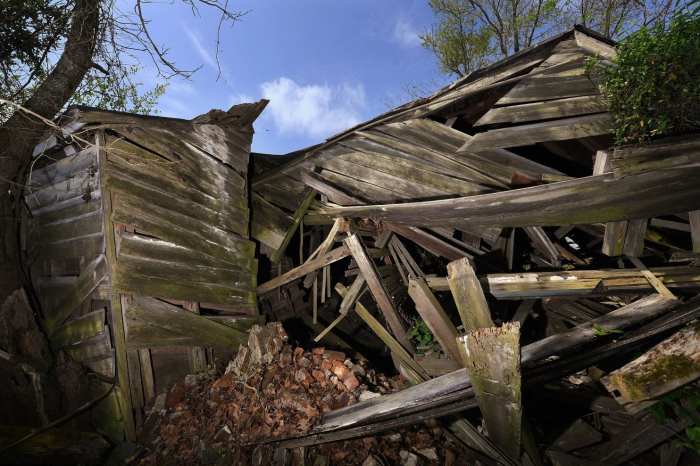

In 1831, during a slave rebellion led by Nat Turner, several people were killed at the site of the Whitehead house. Today, this is all that remains. (Matt McClain/The Washington Post)

April 30

 Kids grow up in rural Southampton County hearing that the mist creeping across the fields might be something unearthly. Old folks warn them not to sneak into abandoned houses, where rotting floors and walls are said to be stained with blood.

This is a haunted landscape.

Nearly 188 years ago, the self-styled preacher Nat Turner led fellow slaves from farm to farm in Southampton County, killing almost every white person they could find. Scores of blacks were murdered in reprisals throughout the South.

The legacy of the biggest slave revolt in U.S. history still hangs over the sandy soil and blackwater cypress swamps of this county along the North Carolina line, but the physical traces of the event are vanishing.

“A lot of the sites that tell the story have been destroyed,” said Cassandra Newby-Alexander, a historian at Norfolk State University. In Southampton and elsewhere, she said, neglect and denial have “tended to obliterate the presence of African Americans . . . as well as eliminating our history of slavery.”

History is Virginia’s biggest cash crop. It drives tourism, sets identity. Until recently, Virginia’s celebration of its grand past glossed over the stain of slavery that marks every statue, parchment and Flemish bond facade.

That’s changing: This year, the state commemorates the 400th anniversary of the first documented Africans being brought to the English colony. Thomas Jefferson’s Monticello presents detailed narratives of enslaved life. A museum that will include the perspective of the enslaved on the Civil War is opening in Richmond.

But around the state, tangible reminders of slave history remain unmarked. The landmarks are deteriorating, their significance preserved mainly in memories and stories. Petersburg’s 1854 Southside Depot, for instance, is one of the few pre-Civil War train stations in the South, where the enslaved were both workers and cargo. It sits empty.

Scholars are racing to identify slave cabins across Virginia before they disappear. In Richmond, leaders squabble over how to mark the site of the notorious Lumpkin’s Jail, a slaveholding facility, as well as the city’s slave market — one of the most active in the South — without disrupting the hip restaurant-and-condo scene growing up around it.
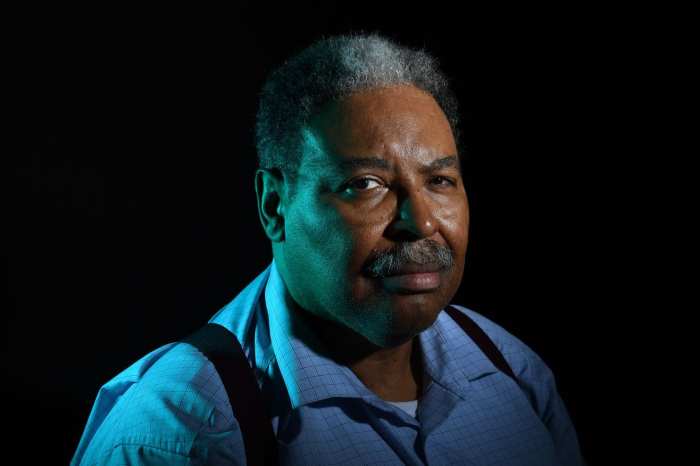

After years of research, Bruce Turner, 71, of Virginia Beach, believes Nat Turner was his great-great-great-grandfather. (Matt McClain/The Washington Post)

“What we choose to preserve is really a reflection of what we care about,” said Justin Reid, director of African American Programs for Virginia Humanities, who is helping coordinate a statewide effort to recognize slavery’s legacy. “When our cultural landscape is devoid of these sites, we’re sending the message that this history is less important, and the people connected to these sites are less important.”

Nowhere is the tension stronger than in Southampton County, where the history carries particular pain. Nat Turner is both a villain and a hero of American history. The split has long inflamed racial divides.

Born into slavery around 1800, Turner was literate, charismatic and deeply religious. He once baptized a white man, and some accounts describe how he spent 30 days wandering the county in search of his father before voluntarily resuming his life in bondage.

According to the confessions he allegedly made shortly before being executed, Turner saw visions from God urging him to seek vengeance on his white oppressors. A solar eclipse that passed over Southampton County in 1831 was the sign to act. On Aug. 21, he met with a half-dozen other enslaved people at a pond in the woods, where they plotted for several hours before striking out into the night, taking knives and farm implements to use as weapons.

Attacking farmhouses in the darkness and picking up supporters along the way, Turner and his rebels killed some 55 white men, women and children over the next two days. They were eventually scattered by militia infantry, and some were rounded up and killed or put on trial. Turner escaped and hid out for two months mostly in a crude “cave” — a hole dug under a pile of wood — before surrendering on Oct. 30, 1831.

He was tried and hanged Nov. 11, 1831, in the county seat of Jerusalem, known today as Courtland.

Until recently, the all-white county historical society was uncertain how to handle its macabre legacy. Within the past 10 years, though, as popular interest in Turner’s story has grown — including through the controversial 2016 film “Birth of a Nation” — attitudes have loosened.

Work is underway to establish slave-insurrection-history trails: a walking route in Courtland and a driving tour through the southwest corner of the county where the rebellion took place. Much of the information for both resides in the mind of one man.

“If you want to know anything about Nat Turner,” said Thaddeus Stephenson, 55, a black man who said he lives near one of Turner’s hideouts, “Rick Francis is the man.”

Seeing the past

Behind the wheel of a Chevy Suburban with 338,000 miles on the odometer, Francis pulls onto the shoulder at a featureless crossroads. Open farmland stretches in every direction.

This is Cross Keys. Francis begins to populate the scene. There was a wide, shallow building there, he says. A smaller structure across the street. In the summer of 1831, some 1,400 white people gathered here, pouring out of surrounding farms in fear of Turner and the armed rebels.

Militias converged from around the state and from North Carolina. When some members of Turner’s band were rounded up, they were held in a small cell in one of the buildings.

It’s all gone now, not even a mound or brick left to mark the spot. It exists only in Francis’s spirited retelling.

Francis, 63, who is white, is clerk of the county’s circuit court. Several of his ancestors were either victims of Turner’s insurrection or had narrow escapes. Over the course of an afternoon driving around the remote reaches of the county near the village of Boykins, Francis spins a tale of terror, violence and colorful characters — from Red Nelson, the enslaved man who helped save Francis’s pregnant great-great-grandmother, to Will Francis, perhaps the most fearsome killer in Turner’s band.
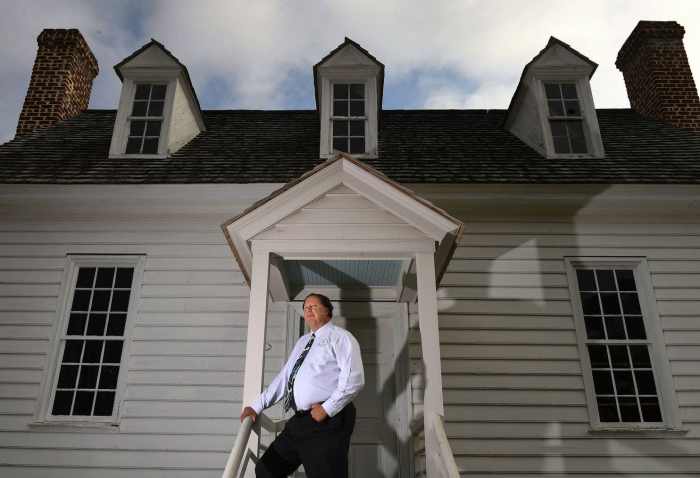

Rick Francis stands outside the Rebecca Vaughan House in Courtland, Va., where several people were killed in the slave rebellion. (Matt McClain/The Washington Post)

“He trimmed my family tree,” Rick Francis says of Will Francis, a man owned by one of his ancestors. “I mean, that guy was a killing machine.” But he gives him credit: Where Turner was a “religious fanatic,” he says, Will Francis “was motivated solely by freedom.”

As Francis drives along the old carriage paths, most of which are now paved, he sees things others do not.

Over there, where the dark grass meets the light, that’s where Joseph Travis and his wife were the first ones hacked to death in the insurrection. Where a rusted double-wide trailer stands was the site of Capt. John Barrow’s home. He warned his wife to flee, but she delayed to change her clothes, so he had to fight the rebels on the front porch. His wife escaped out the back; Barrow’s throat was cut.

Many of the homes were still standing as late as the 1970s, but time and weather have ravaged them. Local landowners cannot afford to rebuild so they just clear the rubble. The Richard Porter House is a dark hulk of warped wood, half of it collapsed, all of it shrouded in vines. Here, a young enslaved girl warned the family what was coming and they fled into the woods.

A few miles away, Francis swings off the road, switches on the four-wheel-drive and powers to a nondescript mound of brush. Only when he stops do a low row of bricks, a collapsed tin roof and jagged piles of gray boards become visible under the greenery: the remains of the house of Jacob Williams, who returned from measuring timber in the forest to find his slaves standing over the bodies of his wife and three children.

Nearby, the widow Rebecca Vaughan was allowed to pray before she was killed. Her house, the scene of the insurrection’s final killings, was relocated a few years ago to a spot in Courtland across from the county agriculture museum. It has been neatly restored by the county but remains empty.

The tree where Turner was hanged fell long ago. Francis puts the site in the yard of an old foursquare house on Bride Street in Courtland. A short distance away, around the corner on High Street, is the ditch where Turner’s torso was said to have been tossed after he was decapitated. Sure enough, Francis said, human remains have been found there. At some point, the county hopes to excavate. In the meantime, the spot is marked by tiny wire flags stuck in the weeds, the sort that might designate a property line or a cable route.

The county courthouse stopped flying the Confederate flag in 2015, but a Confederate monument stands on one side of the complex. Inside, in the county records room, Francis maintains a mini-museum to the slave insurrection, displaying old newspapers and artifacts.


The sword believed to have been carried by Turner during the 1831 slave rebellion is kept in the county courthouse. The Southampton County Historical Society is planning a free walking tour around Courtland, Va., that highlights many historical spots in town, many related to Turner and the rebellion. (Matt McClain/The Washington Post)

The biggest prize is Turner’s sword, which is locked away in a courthouse storeroom in a padded rifle case. Francis tucks a pistol in his waistband when he goes to retrieve it. He opens the case and unfolds a white cloth. The curved blade is pitted, and though Turner complained that it was too dull to kill the woman he struck with it, the edge feels plenty sharp.

The Southampton County Historical Society has resisted putting the sword on display. Francis said its members worry people won’t take the tour if they can see the most memorable artifact up front. But maybe there is also a squeamishness about showing off such a fraught piece of history.

Francis believes the insurrection needs to be more widely recognized as an important turning point. It brought the Virginia legislature within a few votes of abolishing slavery, but ultimately, lawmakers tacked the other way, passing harsh crackdowns that prohibited blacks from preaching or learning to read.

Turner is a complicated figure even for African Americans who grew up in Southampton County. Bruce Turner, 71, said his older relatives spoke in hushed terms of a family connection to “the Nat mess.” After years of research, he believes Nat Turner was his great-great-great-grandfather. And by learning more about him, Bruce Turner has become proud of the association.

“I wasn’t sure what he did was right or wrong,” said Turner, a retired computer engineer who lives in Virginia Beach. “Today I admire and honor Nat. I think what he did was correct.”

It’s important to view the insurrection through the historical lens of fighting for freedom, Turner said. The houses, the landscape of Southampton County, evoke that for him now that he knows the full story.

“The houses that were down there . . . we used to call those the haunted houses,” Turner said. “And we were told something terrible had happened there.”

In his childhood, the hanging tree still stood, and the Vaughn house was abandoned in the woods.

“I was always told, oh, you don’t want to go in there, there’s blood spattered up on the walls, and stuff like that. I went in there. I only saw some spots. But it could’ve been mold,” he said.

Stephenson, who lives near one of Nat Turner’s hideouts, heard the same tales about the old houses. “The bricks from the chimney — sometimes when it rains, blood is supposed to seep back out of them,” he said. “That’s some folklore.”

But when you preserve those vanishing sites, you keep the history from fading into myth, Turner said.

“Why preserve Mount Vernon? Or preserve Monticello? They’re part of the history,” he said. “Just because something bad may have happened at a place, or something that was distasteful, doesn’t mean that it shouldn’t be kept.”

Source: Nat Turner’s slave rebellion ruins are disappearing in Virginia – The Washington Post

The conditioning that fuels the mental health epidemic for Black men, and how to stop it – The Black Youth Project

“Gender, through the lens of white supremacy, prescribes how we should be, instead of accepting us how we are. It tells boys they’re not supposed to cry (or even feel emotion), and it tells girls they’re supposed to be good at cooking and play with Barbies. Those are small examples of a much larger issue, and these gendered lessons exist at every turn, are all-consuming and ripple across our lives.There are people in bodies deemed masculine who have been told they are a boy time and time again, even though that’s not how they feel inside. They are told their feelings are unnatural and irrelevant. Boys are told over and over again that they must follow certain rules, their lives must be a certain way, their dreams must be a certain thing.Gender also tells us that we are not whole and are only one part of a whole; the whole being a man and a woman. This is incredibly anti-queer and an unhealthy way to view yourself and a relationship.

Viewing yourself as less than a whole being who possesses the capacity to be masculine and feminine, and perform a variety of roles or possess skills that are deemed feminine, is illogical.It is terrifying to think that so many of us internalize these messages on a deep, subconscious level, a message that exposes men to constant emotional isolation and violence if they exist outside of these preset parameters. It is alarming that many men move through life seeing themselves as incomplete because they will never be with a woman or because they have yet to marry their “soulmate.” It’s alarming that people will not teach their boys how to cook, robbing them of that  that necessary survival skill. It is alarming how many people feel uncomfortable seeing men cry.”

Source: The conditioning that fuels the mental health epidemic for Black men, and how to stop it – The Black Youth Project

Black Men Still Incarcerated at Disproportionate Levels | BlackPressUSA | BlackPressUSA

” . . . the report’s authors said the local government should be doing more to support those who are justice-involved, including those who are formerly incarcerated and those with parole, probation, and community supervision.These individuals and their families struggle with access to housing, employment, educational opportunities, and meeting health and mental health needs and experience a patchwork of services that are under-resourced and not targeted to meet the complex challenges that come before, during, and after justice involvement, FPWA officials said.The result is a continuing cycle of poverty and incarceration that has a devastating impact on families for generations, they said.“If we are serious about ending mass incarceration, if we want to disrupt systems that criminalize the poor, we must better utilize and resource the organizations that are already providing critical services in these communities,” Jennifer Jones Austin, FPWA CEO and Executive Director, said in a news release.“Systemic racism drives both poverty and the mass incarceration of low-income people, especially people of color. This cycle of poverty and criminal justice involvement feeds on itself and creates herculean barriers to achieving economic and social advancement, for those who have been justice involved and for their loved ones,” Jones said.“There are proven ways to support communities experiencing high levels of poverty, income insecurity and incarceration. Human services organizations are a key part of those solutions,” she said.”

Source: Black Men Still Incarcerated at Disproportionate Levels | BlackPressUSA | BlackPressUSA

The Problem | Prison Gerrymandering Project

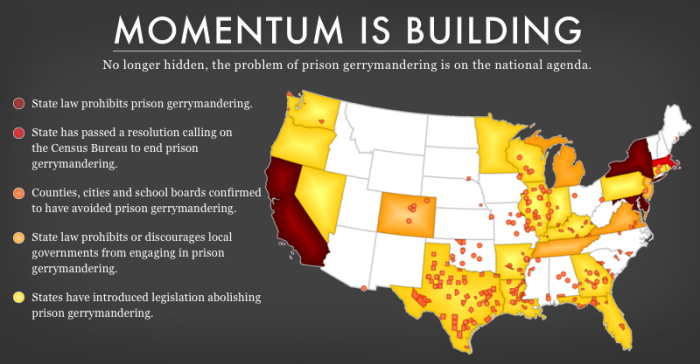
“The Bureau counts incarcerated people as residents of the towns where they are confined, though they are barred from voting in 48 states and return to their homes after being released. The practice also defies most state constitutions and statutes, which explicitly state that incarceration does not change a residence.”

Source: The Problem | Prison Gerrymandering Project

The Central Park Five, Criminal Justice, and Donald Trump | The New Yorker

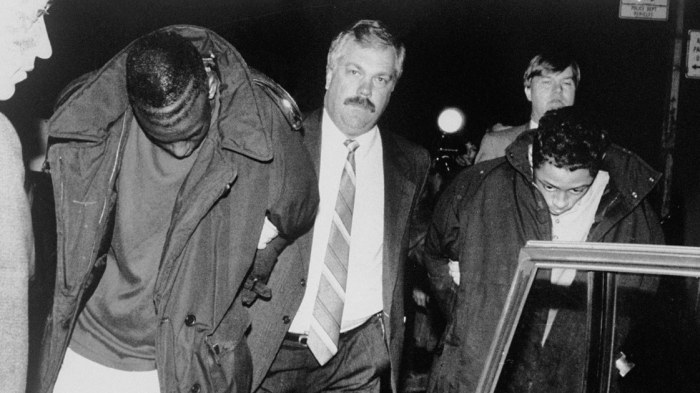
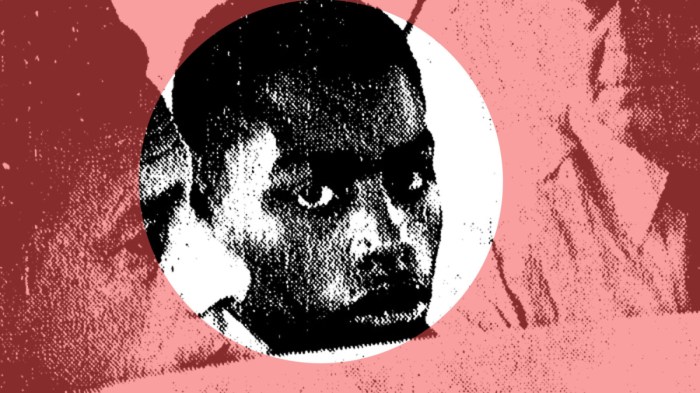
In two trials, in 1990, Santana, Wise, Richardson, McCray, and Salaam were convicted of the attack, even though there was no physical evidence tying them to it, only their supposed confessions, which contradicted one another. They were sentenced to terms of between five and fifteen years. The accused came to be known as the Central Park Five, but that, too, was a linguistic dodge. Better to identify them by their number and the scene of their alleged crime than by the brutality visited upon them by an arbitrary justice system and the public opinion that abetted it. In 2002, Matias Reyes, a convicted rapist, confessed to the crime, and, based on DNA evidence, the charges against the five were vacated. In 2014, the city paid them forty-one million dollars, to settle a federal civil-rights lawsuit.

Source: The Central Park Five, Criminal Justice, and Donald Trump | The New Yorker

How Race Made the Opioid Crisis | Boston Review


DONNA MURCH

Source: How Race Made the Opioid Crisis | Boston Review

Ten Solutions to Bridge the Racial Wealth Divide – Inequality.org

The deep and persistent racial wealth divide will not close without bold, structural reform.  It has been created and held in place by public policies that have evolved with time including slavery, Jim Crow, red lining, mass incarceration, among many others. The racial wealth divide is greater today than it was nearly four decades ago and trends point to its continued widening.

Source: Ten Solutions to Bridge the Racial Wealth Divide – Inequality.org

A 72-Year-Old Juvenile Lifer Won a Landmark Supreme Court Ruling, But Louisiana Won’t Let Him Out of Prison – Mother Jones

“It’s your responsibility to continue to work,” a parole board member reportedly told Henry Montgomery.

Source: A 72-Year-Old Juvenile Lifer Won a Landmark Supreme Court Ruling, But Louisiana Won’t Let Him Out of Prison – Mother Jones

Research Shows Entire Black Communities Suffer Trauma After Police Shootings ::: TruthOut

Research Shows Entire Black Communities Suffer Trauma After Police Shootings

Following several nationally publicized police killings of unarmed Black Americans in the United States, Eva L., a fitness instructor who identifies as Black, started to experience what she describes as “immense paranoia.” She would often call in sick, because she feared risking an encounter with police upon leaving her house. She also started to second-guess her and her husband’s decision to have children.

“Seeing Black bodies murdered and physical/emotional violence online and on the news” was a trauma she could no longer bear, Eva says. “I was terrified of bringing a child into the world we live in and experience as Black people. I thought not having kids was a truer sign of love than risk them being harmed by this world.”

A recent study sponsored by the University of Pennsylvania — released just before the anniversaries of the deaths of Eric Garner (2014), Michael Brown (2014), John Crawford (2014), and Philando Castile (2016) — found that there could be millions like Eva, for whom these killings have been a mental health trigger.

Research included data from the Mapping Police Violence Projectdatabase for police killings between 2013 and 2016 and information from the Behavioral Risk Factor Surveillance System of over 103,000 Black Americans. The results indicate that police killings of unarmed Black Americans are having a population-level impact on the mental health of Black Americans.

According to researchers, the incidents may contribute to 1.7 additional poor mental health days per person every year, or 55 million more poor mental health days every year among Black Americans across the United States. That means the mental health burden for African Americans caused by police killings of unarmed Black victims is nearly as great as the mental health burden associated with diabetes. African Americans have some of the highest rates of the disease, which contributes annually to 75 million days of poor mental health among them.

Eva started seeing a therapist who diagnosed her as having generalized anxiety and post-traumatic stress disorder. It’s been two years now, and she admits that her progress toward healing has been slow, yet steady.

Jacob Bor, co-author of the study and assistant professor at the Boston University School of Public Health, says the responses in his social circle to police killings of unarmed Black victims is what interested him in conducting this study. Bor noticed that White people were able to comprehend “the injustice on an intellectual level but did not experience the same level of trauma.”

The study findings confirmed Bor’s personal observations. The research team did not observe spillover mental health effects in White respondents from police killings. It should also be noted that among respondents of either race, there were no spillover effects for police killings of unarmed White people or killings of armed Black people.

The research is essential in considering our own personal experiences, says Bor, adding that the findings speak to the overall “value of different people’s lives.” This society “has a long history of state-sanctioned violence” toward racially marginalized groups, he says.

The mental health sector is only now researching the impact of police brutality, a concern that has affected African Americans for decades. “Clinicians can go through medical school without [gaining] any experience in treating the effects of racism,” Bor says. Studies like his, he adds, can help to create long overdue critical mainstream discussions about the effects of racism on mental health, such as, “How do we in public health, society, and among the clinical and mental health services support people when these incidents occur?” and “Can a profession dominated by White providers effectively treat the emotional struggles of ‘living while Black’ in this country?”

According to Bor, these discussions are needed to implement change. “Among many White Americans, there is an empathy gap … and a failure to believe when people of color say ‘this hurts me,’” he says.

Adding to the deficiency of culturally competent therapists, poverty and other formidable socio-economic challenges — also stemming from structural racism — remain steadfast barriers to African Americans accessing mental health care, according to the American Psychological Association.

New York City’s first lady, Chirlane McCray, has also become a passionate advocate for what she describes as a movement for “culturally competent mental health care.”

“When you talk about people of color, who are obviously facing discrimination and legacy of racism and poverty in huge numbers, you are talking about something that is really tough to overcome,” McCray says.

Inadequate care undermines benefits from policies and resources designed to mitigate the burdens of systemic oppression. “Mental illness along with substance abuse disorders are hardship multipliers,” she says. Struggling unsupported with “mental illness can make everything that much harder.”

For example, holding on to affordable housing, staying enrolled in college, and even surviving encounters with law enforcement can be extremely more difficult for those suffering from mental illness or trauma, McCray says. In fact, the most recent annual numbers from the Washington Post’s database of fatal police-shooting victims indicate that “nearly 1 in 4 of those shot was described as experiencing some form of mental distress at the time of the encounter with police.”

“Mental health is the ultimate intersectional concern,” McCray says. “It is reflected in all of our policies … education, housing, school, relationships.”

In 2015, she and her spouse, Mayor Bill de Blasio, launched Thrive NYC, a $850 million mental health program that incorporates 54 initiatives. Among the program’s several core objectives is the aim to address the stigma around mental illness and increase access to treatment across the city. McCray believes that ThriveNYC’s community focused approach is one of several necessary steps toward reaching historically under served groups.

“Culturally competent care to me is all about trust,” McCray says. “It improves early identification, accessibility, and outcomes.” Also, she says, “People have to be seen.” From her advocacy experience she has observed that “people have to feel that they can turn to someone that they trust.”

Connecting people with the appropriate resources, however, means surmounting many challenges. “There is great deal of work to be done to eliminate the stigma,” McCray says. There is also the matter of affordability and infrastructure. “We’ve never had a well-coordinated mental health system in our country — ever. People who have the money find ways to manage.” She says she wants to fight for everyone to get the resources they need to cope.

Eva recognizes that her path to healing has taken a significant amount of work and support beyond the means of many African Americans. “Access to therapy is a privilege,” she says. “I know that most people can’t afford weekly sessions at $150-plus.” Yet, she adds, “[going through therapy] is the only reason why I’m OK planning for kids at 32.”


Tasha Williams writes about economics and technology. Follow her on Twitter: @riseupwoman.

America’s 1.5 million missing [B]black men is nothing short of genocide ::: theGrio

America’s 1.5 million missing [B]black men is nothing short of genocide

By   David A. Love

missing-black-men

Protestors participate in a vigil for Freddie Gray down the street from the Baltimore Police Department’s Western District police station, April 21, 2015, in Baltimore, Maryland. Gray, 25, died from spinal injuries on April 19, one week after being taken into police custody. (Photo by Drew Angerer/Getty Images)

Where have all the brothers gone?

The numbers are staggering.

According to a report in The New York Times, black women between the ages of 25 and 54 outnumber black men by 1.5 million, based on an analysis of data from the 2010 U.S. Census. There were 7.046 black men of that age group not incarcerated, to 8.503 black women.

To put it another way, for every 100 black women, there are 83 black men. This is not the case in white America, where for every 100 women, there are 99 men, almost complete parity.

What that means, effectively, is that black men have disappeared. This reality lends credence to the idea that black men are an endangered species — not just symbolically or rhetorically, but based on the hard numbers.

Let’s explore this a little more. The Times estimated that more than a third of that 1.5 million gap — or 580,000 — is missing due to prison. With about 625,000 black men of prime age incarcerated and 45,000 black women also in prison, you get a discrepancy of 580,000. This is due, of course, to the staggeringly high incarceration rate of black men, which is higher than any other group, in the nation a quarter of the world’s prisoners, and the most prisoners in the world.

Putting this in perspective, in the 25-54 age range, 1 in 12 black men is in prison. However, only 1 in 60 nonblack men is in prison. Meanwhile, 1 in 200 black women and 1 in 500 nonblack women is behind bars.

Of the remaining 900,000, it was estimated that somewhere between 300,000 and 700,000 are due to mortality, early death. After all, homicide is the leading cause of death for young black men, who also die from heart disease, respiratory disease and accidents more than the rest of the nation.

The place in America with the lowest rate of black men is, believe it or not, Ferguson, Missouri, with 37.5 percent. New York is the city with the most missing black men (118,000), followed by Chicago (45,000), Philly (36,000) Detroit (21,000) and Memphis (19,000).

So what does this all mean? What struck me is that this is not a fluke, nor accidental, nor by chance. But rather, we can point to specific policies that have made black men disappear. First, I decided to look up the definition of the word genocide. The United Nations Genocide Convention defines genocide as the following:

ARTICLE II: IN THE PRESENT CONVENTION, GENOCIDE MEANS ANY OF THE FOLLOWING ACTS COMMITTED WITH INTENT TO DESTROY, IN WHOLE OR IN PART, A NATIONAL, ETHNICAL, RACIAL OR RELIGIOUS GROUP, AS SUCH:

(A) KILLING MEMBERS OF THE GROUP;
(B) CAUSING SERIOUS BODILY OR MENTAL HARM TO MEMBERS OF THE GROUP;
(C) DELIBERATELY INFLICTING ON THE GROUP CONDITIONS OF LIFE CALCULATED TO BRING ABOUT ITS PHYSICAL DESTRUCTION IN WHOLE OR IN PART;
(D) IMPOSING MEASURES INTENDED TO PREVENT BIRTHS WITHIN THE GROUP;
(E) FORCIBLY TRANSFERRING CHILDREN OF THE GROUP TO ANOTHER GROUP.

When society reinforces the notion that black men are a threat, then sets in motion laws and policies to address and ultimately eliminate that threat, is it any wonder that the brothers are missing? If the disappearing of black men is not genocide, then what should we call it?

Assessing the conditions in which black men are placed, and our historical role in society as the official national scapegoat, perennial boogeyman and monster, should we really be surprised we have disappeared? Society always believed that black men were to be fearedand loathed, devalued and disregarded. This mindset has been reinforced in the culture, in the media, and in the laws. During slavery, black men were perceived as a threat to the master’s house, criminalized based on the fear they would stage an uprising, burn down the plantation and, of course, rape the white women.

The war on drugs has been a war on black America, in which the justice system targets black men, locks them up and throws away the key. Although whites and blacks use drugs at similar rates, young men of color are racially profiled, harassed and brutalized through stop-and-frisk policies and arrested at much higher rates for drug possession. And the black incarceration rate is ten times that of whites, according to Human Rights Watch. Families and communities have been decimated by this war, and a generation lost.

From an early age, black children, and particularly black and brown boys, are dehumanized and criminalized and perceived as much older than their actual age. Funneled through a school-to-prison pipeline, many are provided an inferior education and unequal job opportunities — on purpose. And yet, in the land of 300 million guns, while the most vulnerable young black men and boys may not have access to a nourishing meal, education or job — or the ballot, for that matter — there never is a shortage of bullets for black bodies, it seems, and the black community is not a weapons manufacturer.

Further, we must not ignore the toll that racism plays on the black psyche, and on black health. As Billi Gordon, PhD wrote in Psychology Today, racism is causing a silent black genocide: “Stress acts first, and foremost, on the cardiovascular system. Hence, it is reasonable to suspect the pathophysiology of race-based stress as an antecedent to elevated heart disease in Black America.” Gordon also touched on the inherent sources of stress in the black community, including the numbers of black men in prison versus college, disintegrating support structures for black families, and the fact that the life expectancy of black men is seven years lower than anyone else.

In a land that advocates throwing away black men — in the streets, behind bars, and in the execution chamber — we now know the policy is a success, as the numbers show. The question is: how will society address this? This is not the past; this is happening now. Perhaps the idea of reparations does not sound so far-fetched.

Follow David A. Love on Twitter at @davidalove  

Visit theGrio 

OCG note:  Black when speaking of a group of people who share cultural and historical background and lineage is a Proper noun and should be spelled with a capital “B”. black is a noun which describes a color. Things journalist should know. Example:

  • A regular noun or generic noun might be that of a category of animal such as dog, cat, or horse. …
  • Individual species within the categories such as German Shepherd, Abyssinian, or Lipizzaner would be capitalized because they are proper nouns.