Excerpted from: Anthony Cook, The Ghosts of 1964: Race, Reagan, and the Neo-conservative Backlash to the Civil Rights Movement, 6 Alabama Civil Rights & Civil Liberties Law Review 81 (2015) (Footnotes) (Full Document)
“American slavery was “officially” buried by our nation’s ratification of the 13 14 and 15 amendments to the constitution. But the ghosts of slavery soon inhabited new forms — political, economic, and cultural — intent on returning Blacks to a position of abject servitude and subordination. Jim Crow segregation embodied slavery’s spirit of White supremacy, allowing it to live on in a different form. The civil rights movement of the mid-twentieth century was but another attempt to exorcise from American life the demonic spirit of slavery that had so horrifically deformed American institutions and culture. But by 1980 it was clear, yet again, that notwithstanding the “official” death and burial of old Jim Crow — a death certified by the passage of the 1964 Civil Rights, 1965 Voting Rights, and 1968 Fair Housing Acts — the past lived on. The ghosts of American slavery and its mutant offspring, Jim Crow, roamed the land of the free and haunted the home of the brave in search of new cultural, political, and economic practices to possess and infest. American slavery was “officially” buried by our nation’s ratification of the 13 14 and 15 amendments to the constitution. But the ghosts of slavery soon inhabited new forms — political, economic, and cultural — intent on returning Blacks to a position of abject servitude and subordination. Jim Crow segregation embodied slavery’s spirit of White supremacy, allowing it to live on in a different form. The civil rights movement of the mid-twentieth century was but another attempt to exorcise from American life the demonic spirit of slavery that had so horrifically deformed American institutions and culture. But by 1980 it was clear, yet again, that notwithstanding the “official” death and burial of old Jim Crow — a death certified by the passage of the 1964 Civil Rights, 1965 Voting Rights, and 1968 Fair Housing Acts — the past lived on. The ghosts of American slavery and its mutant offspring, Jim Crow, roamed the land of the free and haunted the home of the brave in search of new cultural, political, and economic practices to possess and infest. ”
The deep and persistent racial wealth divide will not close without bold, structural reform. It has been created and held in place by public policies that have evolved with time including slavery, Jim Crow, red lining, mass incarceration, among many others. The racial wealth divide is greater today than it was nearly four decades ago and trends point to its continued widening.
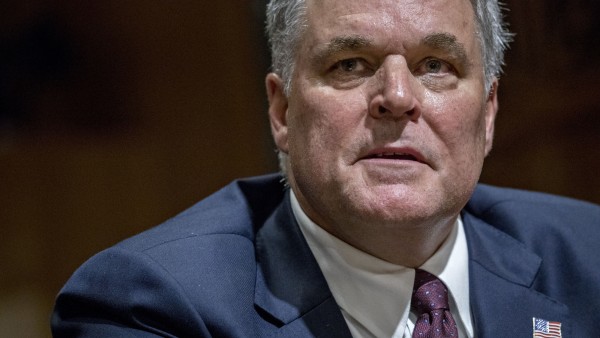
Charles Rettig is Running the Tax Agency for One Reason Only—To Keep His Boss’s Returns Locked Up
“Unless they are too brazen or clumsy, very rich tax cheats with very good lawyers get to deal with their tax offenses behind closed doors. As a criminal tax defense lawyer once told me, “I get paid to save people from indictments for their tax crimes by settling cases before their names go into the public record.”
It is important that we applaud Kaepernick and the NFL for addressing racial injustice. But NFL players taking a knee is only the beginning. Eventually, they must also fearlessly stand for something—and they should look to the leadership of today’s important and successful movements, like Black Lives Matter, to decide just what that something should be.
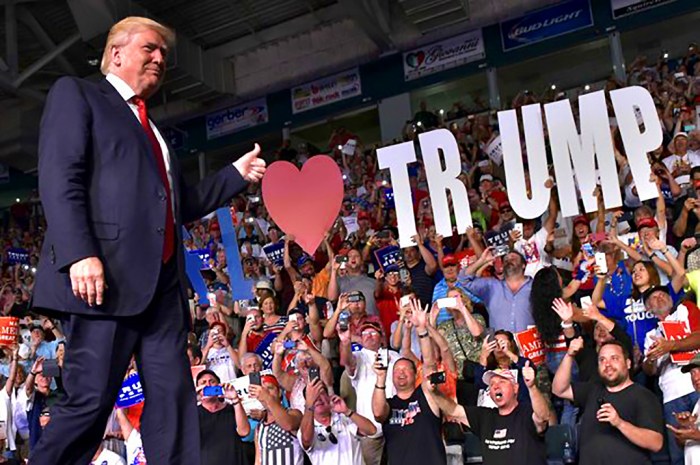
This is how cults work.They gradually alter people’s brains, attuning them to a singular voice, and weaponizing them against any dissenting opinions.To their manipulated minds, efforts to reach them with objective truth become acts of aggression against the one they see as divine—and trigger an ever-more passionate affection toward their leader.They will defend (even to relational death with people they once loved) that one person.
America is in a cultic crisis, and Trumpism is the cult.There is no other way to approach these days.
This story is a collaboration between ProPublica Illinois and WBEZ.
During negotiations for Chicago’s 2012 budget, newly elected Mayor Rahm Emanuel and then-City Clerk Susana Mendoza agreed to hike the price of what was already one of the priciest tickets vehicle owners can get in the city. Citations for not having a required vehicle sticker rose from $120 to $200.
The increase, approved unanimously by the City Council, was pitched by Mendoza as an alternative to raising the price of stickers as well as generating much-needed revenue from “scofflaws.”
A ticket hike, Mendoza told aldermen, could generate $16 million a year for the city.
That did not happen. The increase has brought in just a few million dollars more a year, while it’s unclear if it led to greater compliance. Sticker sales have been largely stagnant.
But increasing the price of sticker tickets came at a devastating cost for thousands of Chicago’s poorest residents, particularly those from African-American neighborhoods, according to an investigation by ProPublica Illinois and WBEZ.
Debt from this one type of ticket swelled, compounded by late penalties and collection fees. Collectively, drivers now owe the city some $275 million for sticker tickets issued since 2012.
The penalty increase — coupled with a pattern of racial disparities in sticker ticketing — has exacerbated a uniquely Chicago phenomenon: Thousands of mostly black drivers filing for bankruptcy to cope with ticket debt.
ProPublica Illinois and WBEZ analyzed millions of records from tickets dating back to 2007 and found:
Sticker citations are the least likely of the city’s routine parking tickets to get paid, with only one in three tickets issued in 2016 paid within a year. Other frequently issued tickets, including $60 street cleaning citations and $50 expired meter citations, are cheaper and more likely to end in payment.
Black neighborhoods are hit with sticker tickets at a higher rate, per household, than other parts of the city, according to an analysis of tickets from 2011 to 2015. Tickets issued by police drive the disparity.
Tickets issued in more affluent, majority white neighborhoods are more likely to get dismissed, according to an analysis of 2017 tickets. That’s in large part because motorists from those neighborhoods appeal at higher rates than drivers cited in other parts of the city.
The mayor’s office did not respond to questions about how the fine increase affects black residents. Instead, in a statement, a spokesman for Emanuel said the finance department “is always reviewing enforcement and collection. That’s in part what drove this administration to create new payment plans to make it easier for residents to pay off tickets.”
Mendoza, meanwhile, expressed regret over her role in increasing the cost of sticker tickets at the expense of low-income black Chicagoans. Now state comptroller, she said the city should “revisit” the ticket prices and consider forgiving drivers’ ticket debt once they come into compliance with the sticker requirement.
“Obviously, it doesn’t make sense to just give tickets and tickets and tickets to people who can’t afford to pay,” said Mendoza. “It’s important that we see what the consequences of policies are … Sometimes they’re terrible.”
Making “Scofflaws” Pay The Price
The decision to raise the fine was framed publicly as a way to pass the burden of paying for pothole repairs — which, along with other street maintenance, are financed with revenue from sticker sales — from “soccer moms” who drive large vehicles to “scofflaws” who don’t buy stickers or purchase them late.
It was the fall of 2011 and Emanuel’s first budget. Years of borrowing and overspending from the administration of his predecessor, Mayor Richard M. Daley, had left Chicago in a perilous financial condition. The housing downturn, meanwhile, had led to a drop in some tax revenue. The city needed to find new revenue sources.
Chicago Mayor Rahm Emanuel (Scott Olson/Getty Images)Illinois State Comptroller Susana Mendoza (Rich Hein/Sun Times via AP File)
Among the newly elected mayor’s proposals to narrow the deficit, he suggested cuts to libraries and mental health centers while increasing the prices for water service, garbage removal and some parking.
He also proposed raising the cost of Chicago’s wheel tax — what’s known colloquially as the “city sticker” — for some large passenger vehicles from $75 to $135 per year. Heavier vehicles already paid more.
Chicago’s wheel tax is unique among the country’s largest 15 cities. Some cities have fees that are tacked onto state vehicle registrations, but none are so expensive.
Mendoza pushed back on increasing the cost of stickers, saying it was too steep and would hurt families that owned larger vehicles. One of the city clerk’s main jobs is to run the sticker program.
She suggested instead that the city raise penalties for sticker “scofflaws.” Aldermen applauded her strategy and the Emanuel administration went along. The increase was included in the broader vote on the city budget, which the City Council unanimously approved.
The cost of a sticker went up for all motorists, though not as much as initially proposed. Penalties for motorists who purchased city stickers late increased to $60, up from $40.
The citation for not having a sticker went up 67 percent, to $200 — an amount that, with late penalties and collections fees, quickly can rise to $488 and become a financial burden for families.
A lawsuit filed against the city last week alleges that these penalties exceed a state cap of $250. City officials have not responded to the suit, but have indicated that they will use Chicago’s “home rule” authority — a privilege that allows large cities to set their own taxes and fines — as a defense.
Despite repeated questioning over several weeks, finance department officials would not say if they ran revenue projections or considered how a price hike would affect the city’s poorest residents before the ticket hike was approved.
Elliott Ramos/WBEZ, David Eads/ProPublica Illinois and Katlyn Alo/ProPublica Illinois
Kristen Cabanban, a finance department spokeswoman, said in a statement that hiking ticket prices was meant to “serve as a deterrent for scofflaws” and an incentive for motorists to purchase stickers.
Sales have been relatively steady since 2008, at 1.2 million to 1.4 million stickers a year, according to records from the city clerk’s office.
In an interview, Mendoza said the final sticker ticket price “was based on the fact that the increase in the sticker itself would be marginal and that the money would be made up more so on the noncompliance side. They needed to come up with the revenues for the city at that time to fill that budget hole.”
She projected a windfall in testimony at an October 2011 City Council budget hearing.
“If we were to increase that fee [to], say, $200, that would give you $16 million there, without having to ask a single person who is in compliance today to give us more,” Mendoza said. “Let’s go after the other folks.”
Her projections appear to have been based on assumptions that everybody who gets a ticket pays it, and that the number of total citations is similar year to year. Both assumptions are false.
Few motorists pay city sticker tickets, a trend that has held steady both before and after the price increase. From 2007 to 2016, the payment rate over 12 months remained about one in three. Meanwhile, the number of sticker citations issued annually ranges between 200,000 and 250,000.
Police, finance department parking enforcement aides, investigators from the clerk’s office and private contractors all write tickets.
In years when the number of sticker citations were similar, revenue increased by a few million dollars. About 200,000 tickets were issued in both 2011 and 2014, for example, and revenue increased from about $21 million to $25 million. There were also similar numbers of tickets issued in 2007 and 2015 — about 250,000 tickets. Revenue jumped from about $25 million to $32 million.
Over time, those amounts can be expected to grow as more drivers pay their tickets.
Meanwhile, debt has skyrocketed. Drivers owe the city about $16.8 million for unpaid sticker tickets, late fines and collections fees from citations issued in 2011. They owe nearly twice that amount for unpaid tickets issued in 2012. And that debt keeps climbing.
Unpaid sticker tickets have contributed to an explosion in Chapter 13 bankruptcies in Chicago, a trend ProPublica Illinois reported on earlier this year. These citations, according to the city’s ticket data, represent one in four tickets connected to bankruptcies.
Cabanban said the increase in bankruptcy filings is “largely due to a small number of bankruptcy law firms selling Chapter 13 as the cheap and easy way to get out of having to pay the city debt, while those firms almost never deliver on that promise.”
Indeed, most bankruptcies tied to unpaid tickets fail as debtors are unable to keep up with required monthly payments. Bankruptcy firms routinely alter the terms of Chapter 13 payment plans in order to ensure their legal fees are paid first, a practice that has recently come under scrutiny in Chicago.
City officials say they want indebted drivers to get on municipal payment plans instead of filing for bankruptcy.
“Early enrollment in the City’s payment plan, where fines, penalties and accrued interest can be avoided, is open to all motorists – even those who have only received one ticket,” Cabanban said.
However, motorists with substantial ticket debt who have lost their driver’s licenses or vehicles because of unpaid tickets are required to pay $1,000 or more to sign up for a monthly payment plan. That down payment can be a barrier for thousands of drivers who file for bankruptcy protection to restore their driving privileges.
More Tickets in Black Neighborhoods
Last month, ProPublica Illinois and WBEZ reported on how the city has, on some 20,000 occasions over the past decade, issued multiple city sticker tickets to the same vehicle on the same day. Those duplicate tickets were disproportionately issued in black neighborhoods.
Those disparities are evident in a broader analysis of where sticker tickets are handed out. ProPublica Illinois and WBEZ mapped the 1.1 million sticker citations issued between 2011 and 2015 and found more citations were issued, per household, in low-income black neighborhoods than anywhere else.
David Eads/ProPublica Illinois and Katlyn Alo/ProPublica Illinois
Of Chicago’s 77 community areas, North Lawndale, West Englewood and West Garfield Park had the highest rates of sticker tickets — at least 10 times higher than in majority white, more affluent neighborhoods such as Forest Glen, Edison Park and Norwood Park, where the rates are lowest.
City officials have offered varying explanations for the disparities. A spokesman for the police department said officers check for city stickers during traffic stops. Finance department officials, meanwhile, said their staff may issue more sticker tickets in South and West side neighborhoods because those areas have fewer parking meters or residential parking zones — meaning there are fewer other kinds of tickets to issue there.
Another explanation for the disparities: More motorists in low-income black neighborhoods simply don’t have city stickers. An analysis of sticker sale data from 2017 does show slightly more late sticker purchases in black neighborhoods, when compared to other parts of the city. The data doesn’t offer a complete account, however, as motorists who never bought stickers are simply left out.
Mendoza said she knew at the time of the debate that many low-income Chicagoans struggled to buy vehicle stickers. While the city offers a discounted rate for senior citizens, no such discount is available for low-income residents. What’s more, she said, many middle-class and more affluent residents who don’t buy stickers can avoid getting caught more easily than low-income residents because garages are more prevalent in more affluent neighborhoods.
He said he’s been looking into policy solutions but has not found an answer.
Villegas was first elected in 2015, after the decision to raise the penalty for the city sticker citation. But he said he’s probably voted on other occasions to increase fines and fees without considering how they may affect the city’s poorest residents.
“Do I have the ability to comb through that budget and look through every fee? No,” he said. “Obviously we’re trying to balance the budget. But at the same time, we have to make sure we’re balancing it in a manner that’s not breaking people’s backs.”
Residents cast their votes at a polling place on November 4, 2014, near Ferguson, Mo. Photo: Scott Olson (Getty Images)
As the end of Barack Obama’s presidency grew closer, election officials began preparing for the next election. Instead of strengthening the security of voting machines and making voting more accessible to citizens, states did the exact opposite. But they didn’t just make it harder to vote. For hundreds of thousands of registered, eligible voters across the nation, they made it impossible.
Voter Purges (pdf), a new report by the Brennan Center, highlights the systematic purging of voters from rolls by state and local officials around the country. These are not random, isolated cases. It is a methodical effort that disproportionately affects minority voters. Even worse, no one seems to care.
In 1993, Congress passed the National Voter Registration Act (NVRA) which was an attempt to make registering to vote easier by offering driver license applicants the opportunity to register to vote. The law also prevented states from purging voters unless they met certain requirements.
But the Brennan report highlights how states have skirted the law and purged voters without punishment. And after the Supreme Court dismantled the requirements for voter pre-clearance with the Shelby v. Holder ruling, states with histories of voter discrimination no longer required federal pre-clearance before purging rolls.
Between 2014 and 2016, 16 million registered voters were removed from state rolls, 33 percent more than were moved between 2006 and 2008. For the election of 2012 and 2016, the Brennan Center estimates that two million fewer voters would have been purged if those states had to apply by the provisions of the Voting Rights Act.
Some of the egregious highlights of the report include:
In June 2016, the Arkansas secretary of state gave a list of 7,700 names to county clerks to be removed from the rolls because of supposed felony convictions. That list included people who had never been convicted of a felony and formerly convicted persons whose voting rights had been restored.
In 2013, Virginia deleted 39,000 names from its voting roster. In some counties, the mistakes on the list were as high as 17 percent.
A federal court halted a purge after Hurricane Katrina after justices found that one-third of the purged names came from a majority black parish in of New Orleans.
After the Shelby v. Holder decision, Texas purged 363,000 more voters than it did the election cycle before the case. Georgia purged 1.5 million more voters.
Alabama, Indiana and Maine have illegally instituted the widely ridiculed Crosscheck system (on which Charles D. Ellison previously reported on for The Root) that purges voters without federally-mandated notification.
In 1986, one Louisiana official remarked that a voter purge effort “could really keep the black vote down considerably.”
Instead of checking out inequities, Jeff Sessions’ Department of Justice has been urging states to do more purging.
Almost every type of voter purge disproportionately affects black voters and voters of color. Some states purge rolls based solely on names but non-whites are more likely to have the same names. According to the U.S. Census Bureau, 16.3 percent of Hispanic people and 13 percent of black people have one of the 10 most common surnames, compared to 4.5 percent of white people.
Black and Hispanic voters are more likely to move, often in the same jurisdiction, but voter purges based on address eliminate them from voting. Officials also use “voter caging” which intentionally sends mail to verify addresses in a format that cannot be forwarded, leading to the disenfranchisement of hundreds of thousands of eligible voters.
African Americans are also more likely to have felony convictions, and elderly and minority voters are more likely to be incapacitated, all reasons for which someone can be purged from a voter roll.
Almost every study ever done on this issue shows that in-person voter fraud is almost nonexistent. Instead, these purges are intentional efforts to restrict voting rights.
Some of the easily-implementable recommendations to rectify this travesty include:
Public notifications of impending voter purges.
Making purge lists available to the public, including at polling places.
Accepting provisional ballots from purged voters.
Universal voter registration forms and rules.
Stop using failure to vote as a reason to purge voters.
All of these policies seem like they would be universally-accepted fixes for a flaw in our democracy.
But then again, not having a Russian agent for a President seems like a smart thing too. How’s that working out?
We will now have an alt-right #SCOTUS There is little that we of goodwill can do about it now. It is too late for those who would, who could have to claim their government. We all know something is wrong – it has been for a very long time. When the horse is out of the barn, it is too late to put up a reminder sign to close the door.
#Trump and his GOP puppets are the biggest and most pressing problem, but not the only ones. We are cornered on all sides. A ruthless sheriff is in town and his deputies are everywhere. Poor people have been targeted among the unwanted. Public spaces and tax-rolled law enforcement are now weaponized to dispose of and make invisible, instill fear and isolation to “otherize” those deemed unworthy. Blatant acts of violations of fundamental human rights have become normalized forms of public policy enforcement and oversight.
Protest marches and protestations of any kind will not turn the time. While we idled in our fear of the Muslims, Al-Qaeda and Iranian powers. Wall Street and Washington’s swamp creatures were sucking the very oxygen from the air. Even your vote has been stolen and put up for sale. The GOP stands behind a corrupt and vile President because they know that their fate is controlled entirely by him – manipulation is expensive. The lifetime of emissaries can be fleeting at best.
As we enter the last era of my broadcast career, our message is profoundly fundamental:
1. Exposing wrongs is not the same as righting them.
2. What we knew as America has been forever changed. What we understood about it, remains the same.
3. Governments are not moved by shame. In this era, neither are politicians.
4. If the House is not turned in November, there will be a seismic permanent shift in the infrastructure of the republic. One where there is no undoing.
5. Comrades and allies must be willing to make all kinds of serious sacrifice. If not, our children and grandchildren will be the sacrifice.
We look forward to being back with you in the Fall of 2018. Do we have what it takes to igniting the rights and dismantling the wrongs, to rescue those who don’t know they need rescuing ? I don’t know. We will see.
“Transforming Truth to Power, One Broadcast At a Time”
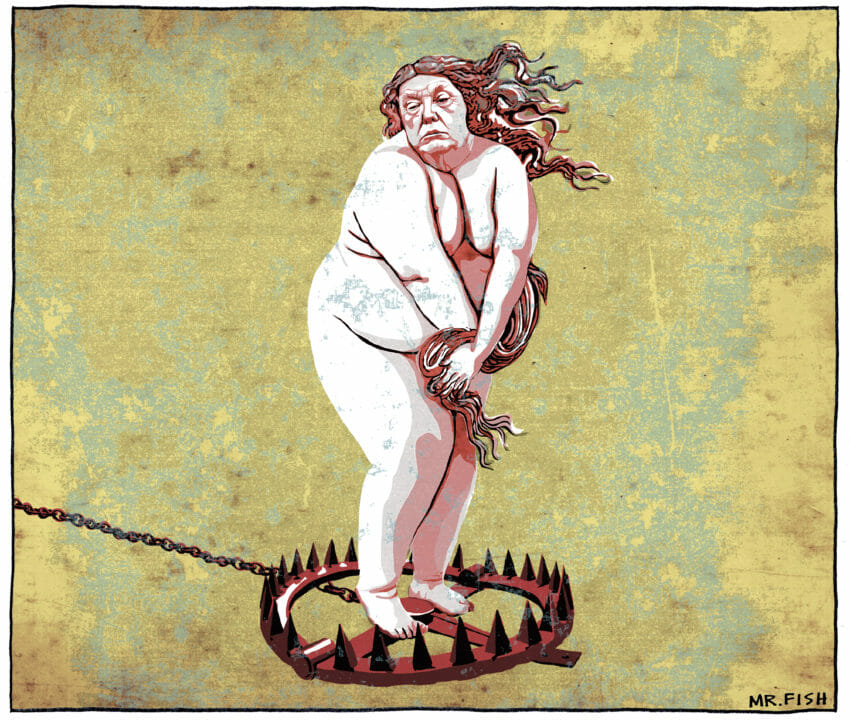
“The Trump administration did not rise, prima facie, like Venus on a half shell from the sea. Donald Trump is the result of a long process of political, cultural and social decay. He is a product of our failed democracy. The longer we perpetuate the fiction that we live in a functioning democracy, that Trump and the political mutations around him are somehow an aberrant deviation that can be vanquished in the next election, the more we will hurtle toward tyranny. The problem is not Trump. It is a political system, dominated by corporate power and the mandarins of the two major political parties, in which we don’t count. We will wrest back political control by dismantling the corporate state, and this means massive and sustained civil disobedience, like that demonstrated by teachers around the country this year. If we do not stand up we will enter a new dark age . . .
. . . “The leadership of the party, the Clintons, Nancy Pelosi, Chuck Schumer, Tom Perez, are creations of corporate America. In an open and democratic political process, one not dominated by party elites and corporate money, these people would not hold political power. They know this. They would rather implode the entire system than give up their positions of privilege. And that, I fear, is what will happen. The idea that the Democratic Party is in any way a bulwark against despotism defies the last three decades of its political activity. It is the guarantor of despotism.” . . .
Chris Hedges is a Pulitzer Prize-winning journalist, New York Times best selling author, former professor at Princeton University, activist and ordained Presbyterian minister. He has written 11 books,…
Mr. Fish, also known as Dwayne Booth, is a cartoonist who primarily creates for Truthdig.com and Harpers.com. Mr. Fish’s work has also appeared nationally in The Los Angeles Times, The Village Voice, Vanity…


 “American slavery was “officially” buried by our nation’s ratification of the 13 14 and 15 amendments to the constitution. But the ghosts of slavery soon inhabited new forms — political, economic, and cultural — intent on returning Blacks to a position of abject servitude and subordination. Jim Crow segregation embodied slavery’s spirit of White supremacy, allowing it to live on in a different form. The civil rights movement of the mid-twentieth century was but another attempt to exorcise from American life the demonic spirit of slavery that had so horrifically deformed American institutions and culture. But by 1980 it was clear, yet again, that notwithstanding the “official” death and burial of old Jim Crow — a death certified by the passage of the 1964 Civil Rights, 1965 Voting Rights, and 1968 Fair Housing Acts — the past lived on. The ghosts of American slavery and its mutant offspring, Jim Crow, roamed the land of the free and haunted the home of the brave in search of new cultural, political, and economic practices to possess and infest. American slavery was “officially” buried by our nation’s ratification of the 13 14 and 15 amendments to the constitution. But the ghosts of slavery soon inhabited new forms — political, economic, and cultural — intent on returning Blacks to a position of abject servitude and subordination. Jim Crow segregation embodied slavery’s spirit of White supremacy, allowing it to live on in a different form. The civil rights movement of the mid-twentieth century was but another attempt to exorcise from American life the demonic spirit of slavery that had so horrifically deformed American institutions and culture. But by 1980 it was clear, yet again, that notwithstanding the “official” death and burial of old Jim Crow — a death certified by the passage of the 1964 Civil Rights, 1965 Voting Rights, and 1968 Fair Housing Acts — the past lived on. The ghosts of American slavery and its mutant offspring, Jim Crow, roamed the land of the free and haunted the home of the brave in search of new cultural, political, and economic practices to possess and infest. ”





:format(webp)/cdn.vox-cdn.com/uploads/chorus_image/image/63372972/Omar_Ocasio_Tlaib.0.jpg)





 OCG
OCG 