WASHINGTON — Black boys as young as 10 may not be viewed in the same light of childhood innocence as their white peers, but are instead more likely to be mistaken as older, be perceived as guilty and face police violence if accused of a crime, according to new research published by the American Psychological Association.
“Children in most societies are considered to be in a distinct group with characteristics such as innocence and the need for protection. Our research found that black boys can be seen as responsible for their actions at an age when white boys still benefit from the assumption that children are essentially innocent,” said author Phillip Atiba Goff, PhD, of the University of California, Los Angeles. The study was published online in APA’s Journal of Personality and Social Psychology®.
Researchers tested 176 police officers, mostly white males, average age 37, in large urban areas, to determine their levels of two distinct types of bias — prejudice and unconscious dehumanization of black people by comparing them to apes. To test for prejudice, researchers had officers complete a widely used psychological questionnaire with statements such as “It is likely that blacks will bring violence to neighborhoods when they move in.” To determine officers’ dehumanization of blacks, the researchers gave them a psychological task in which they paired blacks and whites with large cats, such as lions, or with apes. Researchers reviewed police officers’ personnel records to determine use of force while on duty and found that those who dehumanized blacks were more likely to have used force against a black child in custody than officers who did not dehumanize blacks. The study described use of force as takedown or wrist lock; kicking or punching; striking with a blunt object; using a police dog, restraints or hobbling; or using tear gas, electric shock or killing. Only dehumanization and not police officers’ prejudice against blacks — conscious or not — was linked to violent encounters with black children in custody, according to the study.
The authors noted that police officers’ unconscious dehumanization of blacks could have been the result of negative interactions with black children, rather than the cause of using force with black children. “We found evidence that overestimating age and culpability based on racial differences was linked to dehumanizing stereotypes, but future research should try to clarify the relationship between dehumanization and racial disparities in police use of force,” Goff said.
The study also involved 264 mostly white, female undergraduate students from large public U.S. universities. In one experiment, students rated the innocence of people ranging from infants to 25-year-olds who were black, white or an unidentified race. The students judged children up to 9 years old as equally innocent regardless of race, but considered black children significantly less innocent than other children in every age group beginning at age 10, the researchers found.
The students were also shown photographs alongside descriptions of various crimes and asked to assess the age and innocence of white, black or Latino boys ages 10 to 17. The students overestimated the age of blacks by an average of 4.5 years and found them more culpable than whites or Latinos, particularly when the boys were matched with serious crimes, the study found. Researchers used questionnaires to assess the participants’ prejudice and dehumanization of blacks. They found that participants who implicitly associated blacks with apes thought the black children were older and less innocent.
In another experiment, students first viewed either a photo of an ape or a large cat and then rated black and white youngsters in terms of perceived innocence and need for protection as children. Those who looked at the ape photo gave black children lower ratings and estimated that black children were significantly older than their actual ages, particularly if the child had been accused of a felony rather than a misdemeanor.
“The evidence shows that perceptions of the essential nature of children can be affected by race, and for black children, this can mean they lose the protection afforded by assumed childhood innocence well before they become adults,” said co-author Matthew Jackson, PhD, also of UCLA. “With the average age overestimation for black boys exceeding four-and-a-half years, in some cases, black children may be viewed as adults when they are just 13 years old.”
Article: “The Essence of Innocence: Consequences of Dehumanizing Black Children,” Journal of Personality and Social Psychology, published online Feb. 24, 2014; Phillip Atiba Goff, PhD, and Matthew Christian Jackson, PhD; University of California, Los Angeles; Brooke Allison, PhD, and Lewis Di Leone, PhD, National Center for Post-Traumatic Stress Disorder, Boston; Carmen Marie Culotta, PhD, Pennsylvania State University; and Natalie Ann DiTomasso, JD, University of Pennsylvania.
Phillip Atiba Goff, PhD, can be contacted by phone at (310) 206-8614 (preferred) or by email. If Goff is unavailable, contactMatthew Christian Jackson, PhD, by phone at (814) 574-9781 or by email.
Twenty-five years ago, the term “gentrification” was largely unfamiliar to the average American. Today, you can’t talk about cities, race, rent or overpriced coffee without bringing it up. It’s a hard phenomenon to measure, yet most agree its harbingers include the rapid influx of young, well-to-do white people into once low-income neighborhoods, often in the inner city, usually populated by people of color.
The rest is history. Said people show up, the area is flooded with resources, property value rises and many former residents are forced to move out. We’ve seen such patterns before, where poor people are literally moved around, in and out of their homes, at the behest of the wealthy. It’s typically called “colonialism.” And that’s not an inaccurate comparison.
This dynamic came to a head last week when a group of Dropbox employees in San Francisco’s notoriously gentrifying Mission District tried to kick a group of local kids off a soccer field they had reserved:
The subtext was clear: We’re here now, we make the rules.
This outcome was uncharacteristically positive, in the short term. A petition and City Hall rally followed, after which the San Francisco Recreation and Park Department ruled that “adult permits” would no longer be issued for the Mission Playground soccer field, according to Latino Rebels.
Most gentrified neighborhoods aren’t so lucky. Change is ruthless and unapologetic. Once an area becomes unaffordable for its low-income residents, it tends to stay that way, and the “storied history,” “selective nostalgia” and “carefully sprinkled grit” that define this particular iteration of “urban life,” in the words of Al Jazeera columnist Sarah Kendzior, become the lens through which America’s cities are increasingly viewed.
Neighborhoods, then, are not just homes, but opportunities for profit and redevelopment. And the renewal fantasy that defines them hides an often racist history of deliberate and concentrated impoverishment, one that’s inevitably copied wherever poor residents are forced to move next — usually the isolated suburbs they were barred from occupying in the first place.
It’s a pattern as old as America itself — and it’s not going away any time soon. To illustrate, here are seven cities that have been radically altered by gentrification in the 21st century, as defined by the percentage of urban homes that went from the bottom half of home price distribution to the top half. Data was compiled by the Federal Reserve Bank of Cleveland, and calculates for the period between 2000 and 2007.
1. Boston: 61%
The unexpected gentrification capital of America is a city that’s more than 50% white.
As yuppies and tech professionals take over the former Irish-Catholic stronghold of South Boston, or “Southie,” the neighborhood’s once-notorious reputation as an organized crime hub has given way to a bitter nostalgia (ironically espoused by the gentrifiers themselves) for the edge and toughness personified by the Whitey Bulger era, according to the New Republic.
But make no mistake: Southie’s prototypical residents are as irritated by “SoBo” as the people who made SoBo claim to be irritated by SoBo.
“The yuppies have invaded. It’s totally overrun by yuppies,” resident William O’Brien told theHuffington Post.
Plumber Scott Clark said, simply, “It’s not my neighborhood anymore.”
2. Seattle: 55%
A small act of civic defiance occurred in Capitol Hill this February. A pair of masked individuals blocked a Microsoft employee bus on its way to the office, brandishing a sign that read “Gentrification stops here.” The move came in response to a pattern that’s defined the city for years, according to the Seattle Times: With a home price turnaround rate of 55%, the Pacific Northwestern metropolis was the second most drastically gentrified city in the U.S. between 2000 and 2007.
Neighborhoods from Ballard in the north to Delridge in the south have seen dramatic shifts of late. Law professor and longtime Seattle resident Henry W. McGee Jr. specifically articulates the fate of the Central District, once home to Seattle’s small black population, where in 2000 the number of white residents surpassed the number of black residents for the first time in 30 years.
“What is clear is that thousands of African-Americans have been displaced from the city’s oldest identifiably African-American community,” he writes.
The reasons are multipronged, but the fact that black applicants in Seattle are 2.56 times more likely to be denied a conventional mortgage loan than whites, in addition to being more likely to pay higher rates, isn’t helping.
3. New York City: 46%
Perhaps no city more thoroughly dominates modern conversations around gentrification than New York. Whether it’s Spike Lee bemoaning the sudden influx of resources into neighborhoods like Harlem, Bedford-Stuyvesant and Crown Heights since white people moved in, or new Fort Greene residents complaining about homeless people being mean to their dogs in the local park, gentrification stories ranging from bad to awful abound. Today, New York City is the most expensive metropolitan area in the U.S.
4. San Francisco: 42%
Even aside from the Mission Playground incident, San Francisco consistently makes headlines for tensions fanned by gentrification.
The recent tech industry explosion has drawn unprecedented numbers of IT workers to the Bay Area, with the fallout encapsulated by stories like the recent protests designed to stop Google Buses, private vehicles used to transport Google employees, from using municipal bus stops on their daily routes.
It’s hard to quantify how drastically this transportation practice could alter the local status quo, but critics claim it pollutes the environment and makes the road more dangerous for the city’s cycling community, according to SFGate. Regardless, San Francisco’s housing economy has shifted drastically. In the seven years between 2000 and 2007, houses in the bottom half of home prices switched to the upper bracket at a staggering 42% rate.
5. Washington, D.C.: 35%
Recent conversations around gentrification in D.C. have taken a familiar turn, with some arguing that it has, in fact, been a good thing for the region’s original residents. NPR claims that gentrification not only doesn’t increase the likelihood that lower-income occupants will move out of a neighborhood, but that those who do stay reap benefits, ranging from “new parks” and “safer streets” to higher credit scores.
Of course, it stands to reason that those who can afford to stick around as an area gentrifies are richly rewarded. But even if this were the case across the board, we should be concerned that the most dependable way to ensure economic and infrastructural investment in struggling, low-income and, most importantly, black neighborhoods (such as Anacostia, Deanwood and Columbia Heights) is to have white people with money move into them.
6. Atlanta: 31%
Gentrification in Atlanta has caused the respective rise and fall of the city’s white and black populations for the first time since the 1920s, according to the New York Times. Brookings Institution demographer William Frey said, “There could be a time in the not-too-distant future when the black population is below half of the city population, if this trend continues.” (Atlanta is currently 54% black.)
The irony, according to Bloomberg, is that white conservative Georgia voters outside the city have consistently opposed measures to revitalize this now-gentrifying civic core, most notably by blocking plans to expand the city’s public transportation system. But some wonder whether projects like the Beltline, a new rail network and green space currently under construction, are themselves actually just draws for, or even byproducts of, gentrification.
7. Chicago: 28%
The racial dynamics of gentrification are perhaps no better illustrated than in Chicago. In a tellingarticle, NPR’s Gene Demby reported that the size of a Windy City neighborhood’s black population — as exemplified in areas like Englewood, Austin and Roseland, all more than 85%black — directly correlates with the speed at which it gentrifies.
His source is a study by Harvard researchers Robert Sampson and Jackelyn Hwang. Sampson refers to this phenomenon as “‘white avoidance’ — [gentrifiers are] not moving into neighborhoods where there are lots of black people.”
“In Chicago,” he said, “the [neighborhoods] that are gentrifying are the ones where there was a white working class, or Latinos, but not many blacks.”
This is especially interesting when you look at how this pattern plays out in other cities. Williamsburg and Greenpoint, viewed as the hotspots for gentrification in Brooklyn, New York, supports Sampson’s point. Both had large Polish-American and Latino populations before the influx of gentrifiers, but very few blacks. Similar claims can be made about Boston and Seattle, the top two (and statistically whitest) cities on this list, while historically black neighborhoods like Harlem and Bedford-Stuyvesant are “outliers,” according to the report.
Of course, this doesn’t change the fact that, due to policies like redlining and government-sanctioned housing discrimination, the people most likely to be affected by rising home prices in urban cores are black or brown. It just means that gentrifiers may tend to gravitate toward poor white neighborhoods first. It’s hard to say whether people should be happy or extremely offended by this.
The takeaway: And so it goes, the constant geographical shuffling of low-income people at the behest of those with money.
Many cities have undergone such radical shifts in recent years as to be nearly unrecognizable. There are more to come: The New York Times recently calculated gentrification rates by determining which cities have seen the biggest influx of recent college graduates between 2000 and 2012. Places like Houston (50% uptick), Nashville (48%), Denver (47%), Austin, Texas (44%), and Portland, Oregon (37%), top the list, with D.C. (36%), Buffalo, New York (34%), and Baltimore (32%) not far behind.
It’s a phenomenon that hides within it all the racial and class tensions that define American history. If only all people could share in its spoils, and do so without relying on influxes of wealth and white people.
Some of these concepts are familiar. An early-1990s federal preservation program called the Low-Income Housing Preservation and Resident Homeownership Act (LIHPRHA) provided federal funding to nonprofit organizations and tenant groups to purchase their buildings, before Congress defunded it in 1998. In Washington DC, building owners are required to give their tenants the right of first refusal.
But while advocates, academics and attorneys were pleasantly surprised to see a pitch for anti-gentrification policy at the federal level, several worried that the cost of the GMZ program would be staggering—especially for a federal government so historically stingy when it comes to affordable housing.
“With LIHPRHA they had to layer all kinds of subsidies to make it actually affordable,” John Krinsky, a professor of political science at City College, told us. “It was more feasible in situations where there wasn’t yet rampant gentrification, because those properties aren’t as valuable yet.”
“It’s hard to see how the Republican Congress is going to pass any of these,” added Legal Aid Society housing attorney Judith Goldiner. “Truthfully, it’s just so hard to get them to do anything.” She suggested that if the federal government were willing to make a huge investment in affordable housing, the money might be better spent on fully funding Section 8, coupled with stronger rent laws at the state level and the right to an attorney in housing court.
She also questioned Espaillat’s relocation tax proposal. “Once people are displaced it’s really hard to find them,” she said. “And they’re probably going to be paying more somewhere else. That’s not the goal.”
Governmental loans, like the HUD-funded mortgages Espaillat is suggesting, tend to have expiration dates. What might happen to cooperative tenants if and when these federal subsidies run dry?
“When you have these HUD-backed loans, the object is how do you keep them from [expiring] after a certain amount of time,” Krinsky said, suggesting that Espaillat consider the Community Land Trust (CLT) model—which can protect a building from any future for-profit sale—as an additional protection. (Espaillat says he’s open to the concept.)
But even with the protections of a CLT, some advocates in Espaillat’s Harlem are skeptical of the sustainability of the proposed coops.
Maria Lizardo, director of the Northern Manhattan Improvement Corporation (NMIC), has supported numerous low-income coops in Harlem. “It only works when you are able to provide the tenants with a lot of assistance,” she said. “Everything from the workshops about what to expect… to doing the monthly overview of the budget and maintenance increases.”
“These ideas are great, but not without ongoing support,” added NMIC legal services head Rodrigo Sanchez. “It’s something that needs to be seen as an ongoing 10, 20, 30-year plan. Whether I think the government will commit to the dollars and cents is another question.”
A college student’s film project reveals the targeted effort to push menthols onto the black populace.
Lincoln Mondy’s asthma is probably the only reason why he’s never smoked a cigarette.
Doctors warned his parents about the dangerous effects their smoking habit could have on their son, but it was almost impossible to stop because in Farmersville, Texas, “tobacco is everything,” according to Mondy. At the age of 14, Mondy took matters into his own hands when he made a PowerPoint presentation for his mom, whom he lived with, which warned her about tobacco’s adverse effects. With the support of Mondy and other family members, his mother eventually quit smoking by the time he was 15. But getting his father to quit was a different beast to tackle.
“My black family all smoked menthol,” Mondy, who is biracial, told The Huffington Post about a pattern he noticed on his paternal family’s side. “Like why do they smoke menthol but my white side dips and smokes cigarettes that aren’t menthol?”
THE AFRICAN AMERICAN TOBACCO CENTRAL LEADERSHIP COUNCIL
Menthol is a flavoring additive that makes it easier to inhale smoke which makes it more addictive than non-menthol cigarettes, according to the Center for Disease Control. More than 70 percent of black smokers prefer menthol, as shown in the infographics (above and below) by the African American Tobacco Control Leadership Council. After learning that black people are more likely to die from smoking-related diseases than whites, Mondy realized his father’s affinity for menthol wasn’t a coincidence.
The now 22-year-old senior at George Washington University, started to research the campaigns big tobacco companies used to target black communities for his film project,“Black Lives/Black Lungs.” The film was published in March in conjunction with Truth Initiative, and he found some very disturbing facts.
Check out “Black Lives/Black Lungs” in the video below and keep scrolling to continue the story.
Mondy searched for keywords within the Truth Tobacco Industry Documents database like “ethnic,” “ghetto,” “lower income” and “negro.” He found countless documents that outlined tobacco companies’ strategies in its campaigns which were aimed specifically at black people. He said the latter three search terms yielded results that surprised him, but it was a document from Lorlliard Tobacco that said “negroes” smoke menthol to “mask a real/mythical odor,” which he said disturbed him the most.
“They started really seeing [that] saying menthols would make people think ‘fresh breath,’” Mondy said of his findings. “So in like the ‘60s they started targeting on that. They really started going really hard on ‘hey, smoke this, it’s healthier, fresh breath, minty,’ those kind of buzz words that would make people feel like its healthier than a regular cigarette.”
In addition to the language used in advertisements, these tobacco companies would buy a disproportionate amount of ad space in black publications like Ebony, Jet and Essence in comparison to mainstream magazines like Life, Vanity Fair and Elle. In 1962, Ebony carried twice as many cigarette ad pages as Life. These ads showed black men and women with cool and even empowering demeanors as they held a cigarette.
Many tobacco companies were ordered in 2014 by U.S. District Judge Gladys Kessler to run corrective statements in many publications about their overall misleading messages about the negative health effects of smoking in ads, but black media outlets were completely ignored.
THE AFRICAN AMERICAN TOBACCO CENTRAL LEADERSHIP COUNCIL
Mondy also found that businessmen from tobaccos companies would take “ethnic field trips” to neighborhoods highly populated with black people in the ‘60s where they would stay for hours and give away menthol cigarettes.
“You’re getting them hooked for free,” Mondy said of the these “disturbing” marketing tactics by the tobacco companies. “So they’d go and take really impressive research to kind of pinpoint the culture and see what people like, what people don’t like. And then, maybe like three months later, after that one ethnic field trip, there’d be an ad targeted specifically to that population.”
Phillip Gardiner, public health activist and co-chair of the African American Tobacco Control Leadership Council, wrote in his 2002 study “The African Americanization of menthol cigarette use in the United States” — which Mondy refers to often in his research — that tobacco companies saw the distinct traits of the black community, philanthropy included, and adjusted their marketing accordingly to build the community’s trust:
“Because the industry was based in the South, and the majority of black people lived and worked in the South, even as many migrated to urban centers, it was to the advantage of the tobacco industry to develop a strategic relationship with the African-American community. Moreover, the tobacco industry was one of the first major corporate employers to hire and promote African-Americans, not just in the processing of tobacco but also as executives (Gardiner, 2001; Robinson & Sutton, 1994).”
Mondy called the tobacco industry’s infiltration into the black community “strategic.” Tobacco companies like Altria have donated millions of dollars to black institutions — including the Congressional Black Caucus Foundation, historically black colleges and universities, and the NAACP — over the years. In 2014, Altria donated one million dollars to the Smithsonian National Museum of African-American History and Culture which opens this year. Mondy said these institutions would risk vital funding which could ultimately help them to have a positive impact on the black community if they spoke up against the tobacco companies.
“They have no choice,” he told HuffPost. “In the ‘70s when the NAACP needed funding for meetings, the tobacco industry was there, no one else was there. The tobacco industry was there to give money to them so they couldn’t say smoking is bad.”
Today, menthol is the only tobacco additive that is not banned, despite a 2009 law which banned other flavor additives like cherry and bubblegum. Yet, as shown in the graphic below, the Tobacco Control Legal Consortium found that if menthol was banned that 44.5 percent of black smokers would quit smoking tobacco.
THE AFRICAN AMERICAN TOBACCO CENTRAL LEADERSHIP COUNCIL
Mondy said he believes the reason it hasn’t been banned is due to political reasons — Lorillard, the company which produces Newports, has donated to more than half of the black democrats in Congress compared to just under 3 percent of non-black Democrats in 2014.
In 2015, Lorillard, whose sales depended on menthols for roughly 85 percent of sales the year prior, merged with Reynolds American Inc. — the company that owns R.J, Reynolds Tobacco Company. Jacob McConnico, a spokesperson for the R.J, Reynolds Tobacco Company, provided a statement to HuffPost in regards to claims about marketing practices that specifically targeted the black community in the past few decades and today:
“I am not able to provide any insight to claims related to alleged marketing activities of up to 50 years ago. I can tell you, as it relates to our marketing today, our marketing efforts are designed to reach a wide and diverse audience of adult tobacco consumers. Those efforts are designed to include elements of interest for all adult smokers, regardless of their ethnicity or gender. Adult African-Americans, Hispanics, and other minorities have the same ability and right as the rest of the population to evaluate and make informed decisions about whether or not they want to use tobacco or any other consumer product. It would not be appropriate to exclude minority audiences or media from our brand communications.”
Steve Callahan, a representative for Altria Client Services, the company which owns Philip Morris USA brands such as Marlboro, Virginia Slims, among others, also said that he couldn’t speak on marketing campaigns from the past in a statement to HuffPost. He said there has been tighter regulation on tobacco companies due to the 1998 Master Settlement Agreement which changed the way brands market tobacco and the 2009 Tobacco Control Act in which the Food and Drug Administration began regulating the manufacture, distribution and marketing of these products.
Also, Callahan said to HuffPost that Philip Morris USA is “committed to marketing our products responsibly by building relationships between our brands and adult smokers while taking steps designed to limit reach to unintended audiences.” He added, “Philip Morris USA markets its menthol cigarette brands using the same marketing approaches it uses for its non-menthol cigarette brands.”
Advocates like Gardiner, however, aren’t convinced that tobacco companies shouldn’t be held accountable.
“The bottom line is that African-Americans prefer menthol cigarettes because the tobacco industry pushed these products on and created the demand among this population,” Gardiner wrote in his study. “Did the industry do this on purpose? The answer to this question is an unequivocal yes.”
Despite tobacco’s deep impact on the black community, Mondy said he’s using his “Black Lives/Black Lungs” project as a vehicle of hope. With the help of Truth Initiative, he plans on interviewing key players in the fight to ban menthol and turn his findings into a documentary which he intends to premiere this summer. His efforts aren’t to shame smokers because quitting tobacco can be a hard feat, especially, if a person may have smoked his or her entire life. Instead, he said he wants to educate people on the issue.
AFRICAN AMERICAN TOBACCO CONTROL LEADERSHIP COUNCIL
Mondy’s approach to informing others has even made his father take quitting more seriously. He said his dad texted him in February to tell him that he had gone 30 days without smoking a cigarette, the longest in Mondy’s lifetime.
“This is like so engorged into our community,” he said. “I think it’s important to equip people with the education and information and so like, I’m not going around saying ‘smoking is bad, stop smoking.’”
Instead, Mondy said he hopes the research he provides will lead people to make an informed decision on whether they want to quit smoking or “keep buying from these companies that benefit from black death.”
Learn more about the tobacco industry’s targeted campaign on the black community with “Black Lives/Black Lungs” and watch the video above.
“The Flames of Liberation: Rebellion and Resistance”
Saturday, September 5, 2015 Φ LIVE 10 pm EDT
“Transforming Truth to Power, One Broadcast At a Time”
OUR COMMON GROUND Session II 2015 SEASON
33rd BROADCAST SEASON
We open our 2nd Session of the 2015 Season continuing to examine the depth of structural and institutionalized racism, the impact of white supremacy and the concept of #BlackLivesMatter as a clarion call and the its promise as a movement. As always we ask, “What is your End Game?” We invite you to join us and be part of the response to THE STATE OF EMERGENCY.
Guest Moderator, Ruby N. Sales, Founder & Director, The Spirit House Project
To help us kick off this session we have asked Rev. Ruby N. Sales to join us a co-moderator on the critical questions and issues that challenge, trembling like a swelling tsunami beneath the ocean. A seasoned veteran of the civil and human rights campaigns of our time and a fierce and clear visionary of Black Power, we believe that she is most appropriate to help us press out an authentic narrative on these issues.
Institutionalized Racism is the concept and practice of white supremacy. It is the practice of discrimination and oppression based on skin color, physical characteristics, continent of origin and culture. It has its origins as a justification for slavery and the conquest of the Americas. From the beginning, slavery in the United States was tied to the development and growth of capitalism. Founded on the sale and ownership of human beings on the basis of their physical characteristics and color, its purpose was the exploitation of unpaid labor for super profits. As chattels, Africans were hunted like animals, transported to the “New World,” and then sold on the auction block like beasts of burden. In like manner Native American Indians were exterminated on a massive scale.
Moral and intellectual rationales were invented and continue to justify this kidnapping, sale, enslavement and genocide against human beings. As an ideology, racism provided the moral and intellectual underpinnings of slavery, the westward expansion of colonialism and the seizure of half of Mexico. Thus the purpose of this doctrine was, and still is, to put forward ideas and theories founded on the myth that Black people and other people of color are inherently inferior.
Almost 130 years after the Emancipation Proclamation, the legacy of slavery remains. It is embedded in and influences every aspect of social, economic and political life. Institutionalized racism is the combined economic, political, social, cultural, legal, ideological and other structures that exist to maintain the system of inequality. #RaceMatters
Institutionalized racism has economic, social, political, ideological and cultural forms, and denies equality, justice and dignity to all people of color. There are new problems because of the systemic nature of crisis. Our discussions should examine what adjustments must be made in these new efforts to eradicate our place in this society. We rebel and resist the effort to force us into the margins, to make us invisible and to remove us to prison for profit camps.
Our discussions must explore and examine how to elevate our voices in the fight against police brutality, housing discrimination, immigrant rights, and the dismantlement of public education to mention a few issues. At OUR COMMON GROUND provide “a place for our unfiltered voices”. With the brightest, most loyal and insightful Black activists, community organizers and servants, scholars, researchers, journalists and social scientists we raise, clarify and illuminate the racist dimension of these issues, show how their roots lie in the system of capitalism and its new stage of crisis, and come up with concrete ideas to launch new initiatives and support existing ones.
As a set of institutions, racism is infused in the very foundations of our society and is inseparable from the economic foundations of U.S. capitalist society. The “new domestic military policing” is implemented to intimidate and destroy racially homogenous communities and put into place a ‘superexploitation’ of racial oppression that ensures our silence and to fill prisons serves to create and make real the essence of white supremacy. We are living in an increasingly surreal special system of oppression and racism perpetrated by a narrative dictated outside of our community. None of this is new; the struggle to liberate ourselves has been before us since our time on these shores. One of our most effective weapons is to ensure that we work from an authentic narrative and that its formulation comes from our Truth. OUR COMMON GROUND for more than 33 years has focused its broadcast mission on ensuring that the Black Truth illuminates and informs our struggle. #BlackTruthMatters #BlackVoiceMatters
Persons of Black African ancestry live as citizens, foreign nationals, and indigenous populations on every continent as a result of immigration, colonialism and slave trading. Today, most Black people in the Americas are the progeny of victims of the transatlantic slave trade. From 1619 to 1863, millions of Africans were involuntarily relocated from various regions of West Africa to newly established European colonies in the Americas. Many different African ethnic groups, including the Congo, Yoruba, Wolof, and Ibo, were casualties of the transatlantic slave trade. The Black American population is the aggregate of these groups, consolidated into one race, bound by a common struggle against racial oppression and distinguished by cultural dualism.
Importantly, the historic legacy of Black people in the Western Hemisphere is not limited to slavery. The Olmec heads found along the Mexican Gulf Coast is evidence of African colonies in the Americas centuries before Columbus arrived in the Caribbean. Black people were also responsible for establishing the world’s first free Black republic, and only the second independent nation in the Western Hemisphere, with the Haitian Revolution. In the United States, almost 500,000 African Americans were free prior to the Civil War and were immensely instrumental in shaping U.S. policy throughout abolition and beyond. Post-Civil War, African Americans influenced U.S. arts, agriculture, foods, textile, language, and invented technological necessities such as the traffic light and elevators, and parts necessary to build the automobile and personal computer. All of these contributions were necessary for the U.S. to become a world power by the 20th Century.
Racism and oppression are forces that have shaped the experiences and development of Black people worldwide. Although European colonialists initially enslaved Black people because of their agricultural expertise and genetic resistance to diseases, they used racist propaganda to justify their inhumane practices. During periods of slavery and the “Scramble for Africa,” European institutions used pseudoscience and religion (e.g. the Hamitic myth) to dehumanize Black people. The vestiges of racism and oppression survived centuries after propaganda campaigns ended and influence all human interactions today.
Today, racism is perpetuated most profoundly through the educational system. Black students are taught to revere historians, such as Columbus, who nearly committed genocide against the native population of the Dominican Republic; and Woodrow Wilson who openly praised the Ku Klux Klan. Although many of these facts are not well known and purposefully disguised in history texts, children often leave traditional elementary and secondary education with the sense that aside from a few isolated figures (e.g. Martin Luther King and Harriet Tubman) Black people had a relatively small role in the development of modern nations.
Survey data often indicate that African Americans have the highest incidence and mortality of any given mental or physical disorder, are more deeply impacted by social ills, and generally have the lowest economic standing. While some of the data are accurately presented, rationales are usually baseless and findings typically lack a sociohistorical context. In addition, studies on African Americans unfairly draw social comparisons to the social groups that historically benefited from their oppression.
Historical distortions accompanying dismal statistics have resulted in many educators and counselors perpetually using a deficit model when working with Black students. The deficit model focuses on problems, without exploring sociohistorical factors or institutional procedures. Persons of Black African ancestry have a distinguished history, are immeasurably resilient, and have developed sophisticated coping mechanisms throughout centuries of oppression. Appreciating and celebrating a Black people’s legacy, contextualizing problems, and building on strengths instead of focusing on deficits are universally appreciated counseling strategies, which merit greater prudence when working with Black children.
IVORY TOLDSON is the Deputy Director of White House Initiative on Historically Black Colleges; Universities; Associate Professor at Howard University and Editor in Chief of The Journal of Negro Education
Two hundred fifty years of slavery. Ninety years of Jim Crow. Sixty years of separate but equal. Thirty-five years of racist housing policy. Until we reckon with our compounding moral debts, America will never be whole.
And if thy brother, a Hebrew man, or a Hebrew woman, be sold unto thee, and serve thee six years; then in the seventh year thou shalt let him go free from thee. And when thou sendest him out free from thee, thou shalt not let him go away empty: thou shalt furnish him liberally out of thy flock, and out of thy floor, and out of thy winepress: of that wherewith the LORD thy God hath blessed thee thou shalt give unto him. And thou shalt remember that thou wast a bondman in the land of Egypt, and the LORD thy God redeemed thee: therefore I command thee this thing today.— Deuteronomy 15: 12–15
Besides the crime which consists in violating the law, and varying from the right rule of reason, whereby a man so far becomes degenerate, and declares himself to quit the principles of human nature, and to be a noxious creature, there iscommonly injury done to some person or other, and some other man receives damage by his transgression: in which case he who hath received any damage, has, besides the right of punishment common to him with other men, a particular right to seek reparation.
— John Locke, “Second Treatise”
By our unpaid labor and suffering, we have earned the right to the soil, many times over and over, and now we are determined to have it.
— Anonymous, 1861
I. “So That’s Just One Of My Losses”
Clyde Ross was born in 1923, the seventh of 13 children, near Clarksdale, Mississippi, the home of the blues. Ross’s parents owned and farmed a 40-acre tract of land, flush with cows, hogs, and mules. Ross’s mother would drive to Clarksdale to do her shopping in a horse and buggy, in which she invested all the pride one might place in a Cadillac. The family owned another horse, with a red coat, which they gave to Clyde. The Ross family wanted for little, save that which all black families in the Deep South then desperately desired—the protection of the law.
Clyde Ross, photographed in November 2013 in his home in the North Lawndale neighborhood of Chicago, where he has lived for more than 50 years. When he first tried to get a legitimate mortgage, he was denied; mortgages were effectively not available to black people. (Carlos Javier Ortiz)
In the 1920s, Jim Crow Mississippi was, in all facets of society, a kleptocracy. The majority of the people in the state were perpetually robbed of the vote—a hijacking engineered through the trickery of the poll tax and the muscle of the lynch mob. Between 1882 and 1968, more black people were lynched in Mississippi than in any other state. “You and I know what’s the best way to keep the nigger from voting,” blustered Theodore Bilbo, a Mississippi senator and a proud Klansman. “You do it the night before the election.”
The state’s regime partnered robbery of the franchise with robbery of the purse. Many of Mississippi’s black farmers lived in debt peonage, under the sway of cotton kings who were at once their landlords, their employers, and their primary merchants. Tools and necessities were advanced against the return on the crop, which was determined by the employer. When farmers were deemed to be in debt—and they often were—the negative balance was then carried over to the next season. A man or woman who protested this arrangement did so at the risk of grave injury or death. Refusing to work meant arrest under vagrancy laws and forced labor under the state’s penal system.
Well into the 20th century, black people spoke of their flight from Mississippi in much the same manner as their runagate ancestors had. In her 2010 book, The Warmth of Other Suns, Isabel Wilkerson tells the story of Eddie Earvin, a spinach picker who fled Mississippi in 1963, after being made to work at gunpoint. “You didn’t talk about it or tell nobody,” Earvin said. “You had to sneak away.”
When Clyde Ross was still a child, Mississippi authorities claimed his father owed $3,000 in back taxes. The elder Ross could not read. He did not have a lawyer. He did not know anyone at the local courthouse. He could not expect the police to be impartial. Effectively, the Ross family had no way to contest the claim and no protection under the law. The authorities seized the land. They seized the buggy. They took the cows, hogs, and mules. And so for the upkeep of separate but equal, the entire Ross family was reduced to sharecropping.
This was hardly unusual. In 2001, the Associated Press published a three-part investigation into the theft of black-owned land stretching back to the antebellum period. The series documented some 406 victims and 24,000 acres of land valued at tens of millions of dollars. The land was taken through means ranging from legal chicanery to terrorism. “Some of the land taken from black families has become a country club in Virginia,” the AP reported, as well as “oil fields in Mississippi” and “a baseball spring training facility in Florida.”
Clyde Ross was a smart child. His teacher thought he should attend a more challenging school. There was very little support for educating black people in Mississippi. But Julius Rosenwald, a part owner of Sears, Roebuck, had begun an ambitious effort to build schools for black children throughout the South. Ross’s teacher believed he should attend the local Rosenwald school. It was too far for Ross to walk and get back in time to work in the fields. Local white children had a school bus. Clyde Ross did not, and thus lost the chance to better his education.
Then, when Ross was 10 years old, a group of white men demanded his only childhood possession—the horse with the red coat. “You can’t have this horse. We want it,” one of the white men said. They gave Ross’s father $17.
“I did everything for that horse,” Ross told me. “Everything. And they took him. Put him on the racetrack. I never did know what happened to him after that, but I know they didn’t bring him back. So that’s just one of my losses.”
Sharecropper boys in 1936 (Carly Mydans/Library of Congress)
The losses mounted. As sharecroppers, the Ross family saw their wages treated as the landlord’s slush fund. Landowners were supposed to split the profits from the cotton fields with sharecroppers. But bales would often disappear during the count, or the split might be altered on a whim. If cotton was selling for 50 cents a pound, the Ross family might get 15 cents, or only five. One year Ross’s mother promised to buy him a $7 suit for a summer program at their church. She ordered the suit by mail. But that year Ross’s family was paid only five cents a pound for cotton. The mailman arrived with the suit. The Rosses could not pay. The suit was sent back. Clyde Ross did not go to the church program.
It was in these early years that Ross began to understand himself as an American—he did not live under the blind decree of justice, but under the heel of a regime that elevated armed robbery to a governing principle. He thought about fighting. “Just be quiet,” his father told him. “Because they’ll come and kill us all.”
Clyde Ross grew. He was drafted into the Army. The draft officials offered him an exemption if he stayed home and worked. He preferred to take his chances with war. He was stationed in California. He found that he could go into stores without being bothered. He could walk the streets without being harassed. He could go into a restaurant and receive service.
Ross was shipped off to Guam. He fought in World War II to save the world from tyranny. But when he returned to Clarksdale, he found that tyranny had followed him home. This was 1947, eight years before Mississippi lynched Emmett Till and tossed his broken body into the Tallahatchie River. The Great Migration, a mass exodus of 6 million African Americans that spanned most of the 20th century, was now in its second wave. The black pilgrims did not journey north simply seeking better wages and work, or bright lights and big adventures. They were fleeing the acquisitive warlords of the South. They were seeking the protection of the law.
Clyde Ross was among them. He came to Chicago in 1947 and took a job as a taster at Campbell’s Soup. He made a stable wage. He married. He had children. His paycheck was his own. No Klansmen stripped him of the vote. When he walked down the street, he did not have to move because a white man was walking past. He did not have to take off his hat or avert his gaze. His journey from peonage to full citizenship seemed near-complete. Only one item was missing—a home, that final badge of entry into the sacred order of the American middle class of the Eisenhower years.
In 1961, Ross and his wife bought a house in North Lawndale, a bustling community on Chicago’s West Side. North Lawndale had long been a predominantly Jewish neighborhood, but a handful of middle-class African Americans had lived there starting in the ’40s. The community was anchored by the sprawling Sears, Roebuck headquarters. North Lawndale’s Jewish People’s Institute actively encouraged blacks to move into the neighborhood, seeking to make it a “pilot community for interracial living.” In the battle for integration then being fought around the country, North Lawndale seemed to offer promising terrain. But out in the tall grass, highwaymen, nefarious as any Clarksdale kleptocrat, were lying in wait.
Three months after Clyde Ross moved into his house, the boiler blew out. This would normally be a homeowner’s responsibility, but in fact, Ross was not really a homeowner. His payments were made to the seller, not the bank. And Ross had not signed a normal mortgage. He’d bought “on contract”: a predatory agreement that combined all the responsibilities of homeownership with all the disadvantages of renting—while offering the benefits of neither. Ross had bought his house for $27,500. The seller, not the previous homeowner but a new kind of middleman, had bought it for only $12,000 six months before selling it to Ross. In a contract sale, the seller kept the deed until the contract was paid in full—and, unlike with a normal mortgage, Ross would acquire no equity in the meantime. If he missed a single payment, he would immediately forfeit his $1,000 down payment, all his monthly payments, and the property itself.
The men who peddled contracts in North Lawndale would sell homes at inflated prices and then evict families who could not pay—taking their down payment and their monthly installments as profit. Then they’d bring in another black family, rinse, and repeat. “He loads them up with payments they can’t meet,” an office secretary told The Chicago Daily Newsof her boss, the speculator Lou Fushanis, in 1963. “Then he takes the property away from them. He’s sold some of the buildings three or four times.”
Ross had tried to get a legitimate mortgage in another neighborhood, but was told by a loan officer that there was no financing available. The truth was that there was no financing for people like Clyde Ross. From the 1930s through the 1960s, black people across the country were largely cut out of the legitimate home-mortgage market through means both legal and extralegal. Chicago whites employed every measure, from “restrictive covenants” to bombings, to keep their neighborhoods segregated.
Their efforts were buttressed by the federal government. In 1934, Congress created the Federal Housing Administration. The FHA insured private mortgages, causing a drop in interest rates and a decline in the size of the down payment required to buy a house. But an insured mortgage was not a possibility for Clyde Ross. The FHA had adopted a system of maps that rated neighborhoods according to their perceived stability. On the maps, green areas, rated “A,” indicated “in demand” neighborhoods that, as one appraiser put it, lacked “a single foreigner or Negro.” These neighborhoods were considered excellent prospects for insurance. Neighborhoods where black people lived were rated “D” and were usually considered ineligible for FHA backing. They were colored in red. Neither the percentage of black people living there nor their social class mattered. Black people were viewed as a contagion. Redlining went beyond FHA-backed loans and spread to the entire mortgage industry, which was already rife with racism, excluding black people from most legitimate means of obtaining a mortgage.
Explore Redlining in Chicago
A 1939 Home Owners’ Loan Corporation “Residential Security Map” of Chicago shows discrimination against low-income and minority neighborhoods. The residents of the areas marked in red (representing “hazardous” real-estate markets) were denied FHA-backed mortgages. (Map development by Frankie Dintino)
“A government offering such bounty to builders and lenders could have required compliance with a nondiscrimination policy,” Charles Abrams, the urban-studies expert who helped create the New York City Housing Authority, wrote in 1955. “Instead, the FHA adopted a racial policy that could well have been culled from the Nuremberg laws.”
The devastating effects are cogently outlined by Melvin L. Oliver and Thomas M. Shapiro in their 1995 book, Black Wealth/White Wealth:
Locked out of the greatest mass-based opportunity for wealth accumulation in American history, African Americans who desired and were able to afford home ownership found themselves consigned to central-city communities where their investments were affected by the “self-fulfilling prophecies” of the FHA appraisers: cut off from sources of new investment[,] their homes and communities deteriorated and lost value in comparison to those homes and communities that FHA appraisers deemed desirable.
In Chicago and across the country, whites looking to achieve the American dream could rely on a legitimate credit system backed by the government. Blacks were herded into the sights of unscrupulous lenders who took them for money and for sport. “It was like people who like to go out and shoot lions in Africa. It was the same thrill,” a housing attorney told the historian Beryl Satter in her 2009 book, Family Properties. “The thrill of the chase and the kill.”
The kill was profitable. At the time of his death, Lou Fushanis owned more than 600 properties, many of them in North Lawndale, and his estate was estimated to be worth $3 million. He’d made much of this money by exploiting the frustrated hopes of black migrants like Clyde Ross. During this period, according to one estimate, 85 percent of all black home buyers who bought in Chicago bought on contract. “If anybody who is well established in this business in Chicago doesn’t earn $100,000 a year,” a contract seller told The Saturday Evening Post in 1962, “he is loafing.”
Contract sellers became rich. North Lawndale became a ghetto.
Clyde Ross still lives there. He still owns his home. He is 91, and the emblems of survival are all around him—awards for service in his community, pictures of his children in cap and gown. But when I asked him about his home in North Lawndale, I heard only anarchy.
“We were ashamed. We did not want anyone to know that we were that ignorant,” Ross told me. He was sitting at his dining-room table. His glasses were as thick as his Clarksdale drawl. “I’d come out of Mississippi where there was one mess, and come up here and got in another mess. So how dumb am I? I didn’t want anyone to know how dumb I was.
“When I found myself caught up in it, I said, ‘How? I just left this mess. I just left no laws. And no regard. And then I come here and get cheated wide open.’ I would probably want to do some harm to some people, you know, if I had been violent like some of us. I thought, ‘Man, I got caught up in this stuff. I can’t even take care of my kids.’ I didn’t have enough for my kids. You could fall through the cracks easy fighting these white people. And no law.”
But fight Clyde Ross did. In 1968 he joined the newly formed Contract Buyers League—a collection of black homeowners on Chicago’s South and West Sides, all of whom had been locked into the same system of predation. There was Howell Collins, whose contract called for him to pay $25,500 for a house that a speculator had bought for $14,500. There was Ruth Wells, who’d managed to pay out half her contract, expecting a mortgage, only to suddenly see an insurance bill materialize out of thin air—a requirement the seller had added without Wells’s knowledge. Contract sellers used every tool at their disposal to pilfer from their clients. They scared white residents into selling low. They lied about properties’ compliance with building codes, then left the buyer responsible when city inspectors arrived. They presented themselves as real-estate brokers, when in fact they were the owners. They guided their clients to lawyers who were in on the scheme.
The Contract Buyers League fought back. Members—who would eventually number more than 500—went out to the posh suburbs where the speculators lived and embarrassed them by knocking on their neighbors’ doors and informing them of the details of the contract-lending trade. They refused to pay their installments, instead holding monthly payments in an escrow account. Then they brought a suit against the contract sellers, accusing them of buying properties and reselling in such a manner “to reap from members of the Negro race large and unjust profits.”
WATCH VIDEOThe story of Clyde Ross and the Contract Buyers League
In return for the “deprivations of their rights and privileges under the Thirteenth and Fourteenth Amendments,” the league demanded “prayers for relief”—payback of all moneys paid on contracts and all moneys paid for structural improvement of properties, at 6 percent interest minus a “fair, non-discriminatory” rental price for time of occupation. Moreover, the league asked the court to adjudge that the defendants had “acted willfully and maliciously and that malice is the gist of this action.”
Ross and the Contract Buyers League were no longer appealing to the government simply for equality. They were no longer fleeing in hopes of a better deal elsewhere. They were charging society with a crime against their community. They wanted the crime publicly ruled as such. They wanted the crime’s executors declared to be offensive to society. And they wanted restitution for the great injury brought upon them by said offenders. In 1968, Clyde Ross and the Contract Buyers League were no longer simply seeking the protection of the law. They were seeking reparations.
II. “A Difference of Kind, Not Degree”
According to the most-recent statistics, North Lawndale is now on the wrong end of virtually every socioeconomic indicator. In 1930 its population was 112,000. Today it is 36,000. The halcyon talk of “interracial living” is dead. The neighborhood is 92 percent black. Its homicide rate is 45 per 100,000—triple the rate of the city as a whole. The infant-mortality rate is 14 per 1,000—more than twice the national average. Forty-three percent of the people in North Lawndale live below the poverty line—double Chicago’s overall rate. Forty-five percent of all households are on food stamps—nearly three times the rate of the city at large. Sears, Roebuck left the neighborhood in 1987, taking 1,800 jobs with it. Kids in North Lawndale need not be confused about their prospects: Cook County’s Juvenile Temporary Detention Center sits directly adjacent to the neighborhood.
North Lawndale is an extreme portrait of the trends that ail black Chicago. Such is the magnitude of these ailments that it can be said that blacks and whites do not inhabit the same city. The average per capita income of Chicago’s white neighborhoods is almost three times that of its black neighborhoods. When the Harvard sociologist Robert J. Sampson examined incarceration rates in Chicago in his 2012 book, Great American City, he found that a black neighborhood with one of the highest incarceration rates (West Garfield Park) had a rate more than 40 times as high as the white neighborhood with the highest rate (Clearing). “This is a staggering differential, even for community-level comparisons,” Sampson writes. “A difference of kind, not degree.”
Interactive Census Map
Explore race, unemployment, and vacancy rates over seven decades in Chicago. (Map design and development by Frankie Dintino)
In other words, Chicago’s impoverished black neighborhoods—characterized by high unemployment and households headed by single parents—are not simply poor; they are “ecologically distinct.” This “is not simply the same thing as low economic status,” writes Sampson. “In this pattern Chicago is not alone.”
The lives of black Americans are better than they were half a century ago. The humiliation of Whites Only signs are gone. Rates of black poverty have decreased. Black teen-pregnancy rates are at record lows—and the gap between black and white teen-pregnancy rates has shrunk significantly. But such progress rests on a shaky foundation, and fault lines are everywhere. The income gap between black and white households is roughly the same today as it was in 1970. Patrick Sharkey, a sociologist at New York University, studied children born from 1955 through 1970 and found that 4 percent of whites and 62 percent of blacks across America had been raised in poor neighborhoods. A generation later, the same study showed, virtually nothing had changed. And whereas whites born into affluent neighborhoods tended to remain in affluent neighborhoods, blacks tended to fall out of them.
This is not surprising. Black families, regardless of income, are significantly less wealthy than white families. The Pew Research Center estimates that white households are worth roughly 20 times as much as black households, and that whereas only 15 percent of whites have zero or negative wealth, more than a third of blacks do. Effectively, the black family in America is working without a safety net. When financial calamity strikes—a medical emergency, divorce, job loss—the fall is precipitous.
And just as black families of all incomes remain handicapped by a lack of wealth, so too do they remain handicapped by their restricted choice of neighborhood. Black people with upper-middle-class incomes do not generally live in upper-middle-class neighborhoods. Sharkey’s research shows that black families making $100,000 typically live in the kinds of neighborhoods inhabited by white families making $30,000. “Blacks and whites inhabit such different neighborhoods,” Sharkey writes, “that it is not possible to compare the economic outcomes of black and white children.”
The implications are chilling. As a rule, poor black people do not work their way out of the ghetto—and those who do often face the horror of watching their children and grandchildren tumble back.
Even seeming evidence of progress withers under harsh light. In 2012, the Manhattan Institute cheerily noted that segregation had declined since the 1960s. And yet African Americans still remained—by far—the most segregated ethnic group in the country.
With segregation, with the isolation of the injured and the robbed, comes the concentration of disadvantage. An unsegregated America might see poverty, and all its effects, spread across the country with no particular bias toward skin color. Instead, the concentration of poverty has been paired with a concentration of melanin. The resulting conflagration has been devastating.
One thread of thinking in the African American community holds that these depressing numbers partially stem from cultural pathologies that can be altered through individual grit and exceptionally good behavior. (In 2011, Philadelphia Mayor Michael Nutter, responding to violence among young black males, put the blame on the family: “Too many men making too many babies they don’t want to take care of, and then we end up dealing with your children.” Nutter turned to those presumably fatherless babies: “Pull your pants up and buy a belt, because no one wants to see your underwear or the crack of your butt.”) The thread is as old as black politics itself. It is also wrong. The kind of trenchant racism to which black people have persistently been subjected can never be defeated by making its victims more respectable. The essence of American racism is disrespect. And in the wake of the grim numbers, we see the grim inheritance.
The Contract Buyers League’s suit brought by Clyde Ross and his allies took direct aim at this inheritance. The suit was rooted in Chicago’s long history of segregation, which had created two housing markets—one legitimate and backed by the government, the other lawless and patrolled by predators. The suit dragged on until 1976, when the league lost a jury trial. Securing the equal protection of the law proved hard; securing reparations proved impossible. If there were any doubts about the mood of the jury, the foreman removed them by saying, when asked about the verdict, that he hoped it would help end “the mess Earl Warren made with Brown v. Board of Education and all that nonsense.”
The Supreme Court seems to share that sentiment. The past two decades have witnessed a rollback of the progressive legislation of the 1960s. Liberals have found themselves on the defensive. In 2008, when Barack Obama was a candidate for president, he was asked whether his daughters—Malia and Sasha—should benefit from affirmative action. He answered in the negative.
The exchange rested upon an erroneous comparison of the average American white family and the exceptional first family. In the contest of upward mobility, Barack and Michelle Obama have won. But they’ve won by being twice as good—and enduring twice as much. Malia and Sasha Obama enjoy privileges beyond the average white child’s dreams. But that comparison is incomplete. The more telling question is how they compare with Jenna and Barbara Bush—the products of many generations of privilege, not just one. Whatever the Obama children achieve, it will be evidence of their family’s singular perseverance, not of broad equality.
III. “We Inherit Our Ample Patrimony”
In 1783, the freedwoman Belinda Royall petitioned the commonwealth of Massachusetts for reparations. Belinda had been born in modern-day Ghana. She was kidnapped as a child and sold into slavery. She endured the Middle Passage and 50 years of enslavement at the hands of Isaac Royall and his son. But the junior Royall, a British loyalist, fled the country during the Revolution. Belinda, now free after half a century of labor, beseeched the nascent Massachusetts legislature:
The face of your Petitioner, is now marked with the furrows of time, and her frame bending under the oppression of years, while she, by the Laws of the Land, is denied the employment of one morsel of that immense wealth, apart whereof hath been accumilated by her own industry, and the whole augmented by her servitude.
WHEREFORE, casting herself at your feet if your honours, as to a body of men, formed for the extirpation of vassalage, for the reward of Virtue, and the just return of honest industry—she prays, that such allowance may be made her out of the Estate of Colonel Royall, as will prevent her, and her more infirm daughter, from misery in the greatest extreme, and scatter comfort over the short and downward path of their lives.
Belinda Royall was granted a pension of 15 pounds and 12 shillings, to be paid out of the estate of Isaac Royall—one of the earliest successful attempts to petition for reparations. At the time, black people in America had endured more than 150 years of enslavement, and the idea that they might be owed something in return was, if not the national consensus, at least not outrageous.
Click the image above to view the full document.
“A heavy account lies against us as a civil society for oppressions committed against people who did not injure us,” wrote the Quaker John Woolman in 1769, “and that if the particular case of many individuals were fairly stated, it would appear that there was considerable due to them.”
As the historian Roy E. Finkenbine has documented, at the dawn of this country, black reparations were actively considered and often effected. Quakers in New York, New England, and Baltimore went so far as to make “membership contingent upon compensating one’s former slaves.” In 1782, the Quaker Robert Pleasants emancipated his 78 slaves, granted them 350 acres, and later built a school on their property and provided for their education. “The doing of this justice to the injured Africans,” wrote Pleasants, “would be an acceptable offering to him who ‘Rules in the kingdom of men.’ ”
Click the image above to view the full document.
Edward Coles, a protégé of Thomas Jefferson who became a slaveholder through inheritance, took many of his slaves north and granted them a plot of land in Illinois. John Randolph, a cousin of Jefferson’s, willed that all his slaves be emancipated upon his death, and that all those older than 40 be given 10 acres of land. “I give and bequeath to all my slaves their freedom,” Randolph wrote, “heartily regretting that I have been the owner of one.”
In his book Forever Free, Eric Foner recounts the story of a disgruntled planter reprimanding a freedman loafing on the job:
Planter: “You lazy nigger, I am losing a whole day’s labor by you.”
Freedman: “Massa, how many days’ labor have I lost by you?”
In the 20th century, the cause of reparations was taken up by a diverse cast that included the Confederate veteran Walter R. Vaughan, who believed that reparations would be a stimulus for the South; the black activist Callie House; black-nationalist leaders like “Queen Mother” Audley Moore; and the civil-rights activist James Forman. The movement coalesced in 1987 under an umbrella organization called the National Coalition of Blacks for Reparations in America (N’COBRA). The NAACP endorsed reparations in 1993. Charles J. Ogletree Jr., a professor at Harvard Law School, has pursued reparations claims in court.
But while the people advocating reparations have changed over time, the response from the country has remained virtually the same. “They have been taught to labor,” the Chicago Tribune editorialized in 1891. “They have been taught Christian civilization, and to speak the noble English language instead of some African gibberish. The account is square with the ex‑slaves.”
Not exactly. Having been enslaved for 250 years, black people were not left to their own devices. They were terrorized. In the Deep South, a second slavery ruled. In the North, legislatures, mayors, civic associations, banks, and citizens all colluded to pin black people into ghettos, where they were overcrowded, overcharged, and undereducated. Businesses discriminated against them, awarding them the worst jobs and the worst wages. Police brutalized them in the streets. And the notion that black lives, black bodies, and black wealth were rightful targets remained deeply rooted in the broader society. Now we have half-stepped away from our long centuries of despoilment, promising, “Never again.” But still we are haunted. It is as though we have run up a credit-card bill and, having pledged to charge no more, remain befuddled that the balance does not disappear. The effects of that balance, interest accruing daily, are all around us.
Broach the topic of reparations today and a barrage of questions inevitably follows: Who will be paid? How much will they be paid? Who will pay? But if the practicalities, not the justice, of reparations are the true sticking point, there has for some time been the beginnings of a solution. For the past 25 years, Congressman John Conyers Jr., who represents the Detroit area, has marked every session of Congress by introducing a bill calling for a congressional study of slavery and its lingering effects as well as recommendations for “appropriate remedies.”
A country curious about how reparations might actually work has an easy solution in Conyers’s bill, now called HR 40, the Commission to Study Reparation Proposals for African Americans Act. We would support this bill, submit the question to study, and then assess the possible solutions. But we are not interested.
“It’s because it’s black folks making the claim,” Nkechi Taifa, who helped found N’COBRA, says. “People who talk about reparations are considered left lunatics. But all we are talking about is studying [reparations]. As John Conyers has said, we study everything. We study the water, the air. We can’t even study the issue? This bill does not authorize one red cent to anyone.”
That HR 40 has never—under either Democrats or Republicans—made it to the House floor suggests our concerns are rooted not in the impracticality of reparations but in something more existential. If we conclude that the conditions in North Lawndale and black America are not inexplicable but are instead precisely what you’d expect of a community that for centuries has lived in America’s crosshairs, then what are we to make of the world’s oldest democracy?
One cannot escape the question by hand-waving at the past, disavowing the acts of one’s ancestors, nor by citing a recent date of ancestral immigration. The last slaveholder has been dead for a very long time. The last soldier to endure Valley Forge has been dead much longer. To proudly claim the veteran and disown the slaveholder is patriotism à la carte. A nation outlives its generations. We were not there when Washington crossed the Delaware, but Emanuel Gottlieb Leutze’s rendering has meaning to us. We were not there when Woodrow Wilson took us into World War I, but we are still paying out the pensions. If Thomas Jefferson’s genius matters, then so does his taking of Sally Hemings’s body. If George Washington crossing the Delaware matters, so must his ruthless pursuit of the runagate Oney Judge.
In 1909, President William Howard Taft told the country that “intelligent” white southerners were ready to see blacks as “useful members of the community.” A week later Joseph Gordon, a black man, was lynched outside Greenwood, Mississippi. The high point of the lynching era has passed. But the memories of those robbed of their lives still live on in the lingering effects. Indeed, in America there is a strange and powerful belief that if you stab a black person 10 times, the bleeding stops and the healing begins the moment the assailant drops the knife. We believe white dominance to be a fact of the inert past, a delinquent debt that can be made to disappear if only we don’t look.
There has always been another way. “It is in vain to alledge, that our ancestors brought them hither, and not we,” Yale President Timothy Dwight said in 1810.
We inherit our ample patrimony with all its incumbrances; and are bound to pay the debts of our ancestors. This debt, particularly, we are bound to discharge: and, when the righteous Judge of the Universe comes to reckon with his servants, he will rigidly exact the payment at our hands. To give them liberty, and stop here, is to entail upon them a curse.
IV. “The Ills That Slavery Frees Us From”
America begins in black plunder and white democracy, two features that are not contradictory but complementary. “The men who came together to found the independent United States, dedicated to freedom and equality, either held slaves or were willing to join hands with those who did,” the historian Edmund S. Morgan wrote. “None of them felt entirely comfortable about the fact, but neither did they feel responsible for it. Most of them had inherited both their slaves and their attachment to freedom from an earlier generation, and they knew the two were not unconnected.”
Slaves in South Carolina prepare cotton for the gin in 1862. (Timothy H. O’Sullivan/Library of Congress)
When enslaved Africans, plundered of their bodies, plundered of their families, and plundered of their labor, were brought to the colony of Virginia in 1619, they did not initially endure the naked racism that would engulf their progeny. Some of them were freed. Some of them intermarried. Still others escaped with the white indentured servants who had suffered as they had. Some even rebelled together, allying under Nathaniel Bacon to torch Jamestown in 1676.
One hundred years later, the idea of slaves and poor whites joining forces would shock the senses, but in the early days of the English colonies, the two groups had much in common. English visitors to Virginia found that its masters “abuse their servantes with intollerable oppression and hard usage.” White servants were flogged, tricked into serving beyond their contracts, and traded in much the same manner as slaves.
This “hard usage” originated in a simple fact of the New World—land was boundless but cheap labor was limited. As life spans increased in the colony, the Virginia planters found in the enslaved Africans an even more efficient source of cheap labor. Whereas indentured servants were still legal subjects of the English crown and thus entitled to certain protections, African slaves entered the colonies as aliens. Exempted from the protections of the crown, they became early America’s indispensable working class—fit for maximum exploitation, capable of only minimal resistance.
For the next 250 years, American law worked to reduce black people to a class of untouchables and raise all white men to the level of citizens. In 1650, Virginia mandated that “all persons except Negroes” were to carry arms. In 1664, Maryland mandated that any Englishwoman who married a slave must live as a slave of her husband’s master. In 1705, the Virginia assembly passed a law allowing for the dismemberment of unruly slaves—but forbidding masters from whipping “a Christian white servant naked, without an order from a justice of the peace.” In that same law, the colony mandated that “all horses, cattle, and hogs, now belonging, or that hereafter shall belong to any slave” be seized and sold off by the local church, the profits used to support “the poor of the said parish.” At that time, there would have still been people alive who could remember blacks and whites joining to burn down Jamestown only 29 years before. But at the beginning of the 18th century, two primary classes were enshrined in America.
“The two great divisions of society are not the rich and poor, but white and black,” John C. Calhoun, South Carolina’s senior senator, declared on the Senate floor in 1848. “And all the former, the poor as well as the rich, belong to the upper class, and are respected and treated as equals.”
In 1860, the majority of people living in South Carolina and Mississippi, almost half of those living in Georgia, and about one-third of all Southerners were on the wrong side of Calhoun’s line. The state with the largest number of enslaved Americans was Virginia, where in certain counties some 70 percent of all people labored in chains. Nearly one-fourth of all white Southerners owned slaves, and upon their backs the economic basis of America—and much of the Atlantic world—was erected. In the seven cotton states, one-third of all white income was derived from slavery. By 1840, cotton produced by slave labor constituted 59 percent of the country’s exports. The web of this slave society extended north to the looms of New England, and across the Atlantic to Great Britain, where it powered a great economic transformation and altered the trajectory of world history. “Whoever says Industrial Revolution,” wrote the historian Eric J. Hobsbawm, “says cotton.”
In this artistic rendering by Henry Louis Stephens, a well-known illustrator of the era, a family is in the process of being separated at a slave auction. (Library of Congress)
The wealth accorded America by slavery was not just in what the slaves pulled from the land but in the slaves themselves. “In 1860, slaves as an asset were worth more than all of America’s manufacturing, all of the railroads, all of the productive capacity of the United States put together,” the Yale historian David W. Blight has noted. “Slaves were the single largest, by far, financial asset of property in the entire American economy.” The sale of these slaves—“in whose bodies that money congealed,” writes Walter Johnson, a Harvard historian—generated even more ancillary wealth. Loans were taken out for purchase, to be repaid with interest. Insurance policies were drafted against the untimely death of a slave and the loss of potential profits. Slave sales were taxed and notarized. The vending of the black body and the sundering of the black family became an economy unto themselves, estimated to have brought in tens of millions of dollars to antebellum America. In 1860 there were more millionaires per capita in the Mississippi Valley than anywhere else in the country.
Beneath the cold numbers lay lives divided. “I had a constant dread that Mrs. Moore, her mistress, would be in want of money and sell my dear wife,” a freedman wrote, reflecting on his time in slavery. “We constantly dreaded a final separation. Our affection for each was very strong, and this made us always apprehensive of a cruel parting.”
Forced partings were common in the antebellum South. A slave in some parts of the region stood a 30 percent chance of being sold in his or her lifetime. Twenty-five percent of interstate trades destroyed a first marriage and half of them destroyed a nuclear family.
When the wife and children of Henry Brown, a slave in Richmond, Virginia, were to be sold away, Brown searched for a white master who might buy his wife and children to keep the family together. He failed:
The next day, I stationed myself by the side of the road, along which the slaves, amounting to three hundred and fifty, were to pass. The purchaser of my wife was a Methodist minister, who was about starting for North Carolina. Pretty soon five waggon-loads of little children passed, and looking at the foremost one, what should I see but a little child, pointing its tiny hand towards me, exclaiming, “There’s my father; I knew he would come and bid me good-bye.” It was my eldest child! Soon the gang approached in which my wife was chained. I looked, and beheld her familiar face; but O, reader, that glance of agony! may God spare me ever again enduring the excruciating horror of that moment! She passed, and came near to where I stood. I seized hold of her hand, intending to bid her farewell; but words failed me; the gift of utterance had fled, and I remained speechless. I followed her for some distance, with her hand grasped in mine, as if to save her from her fate, but I could not speak, and I was obliged to turn away in silence.
In a time when telecommunications were primitive and blacks lacked freedom of movement, the parting of black families was a kind of murder. Here we find the roots of American wealth and democracy—in the for-profit destruction of the most important asset available to any people, the family. The destruction was not incidental to America’s rise; it facilitated that rise. By erecting a slave society, America created the economic foundation for its great experiment in democracy. The labor strife that seeded Bacon’s rebellion was suppressed. America’s indispensable working class existed as property beyond the realm of politics, leaving white Americans free to trumpet their love of freedom and democratic values. Assessing antebellum democracy in Virginia, a visitor from England observed that the state’s natives “can profess an unbounded love of liberty and of democracy in consequence of the mass of the people, who in other countries might become mobs, being there nearly altogether composed of their own Negro slaves.”
V. The Quiet Plunder
The consequences of 250 years of enslavement, of war upon black families and black people, were profound. Like homeownership today, slave ownership was aspirational, attracting not just those who owned slaves but those who wished to. Much as homeowners today might discuss the addition of a patio or the painting of a living room, slaveholders traded tips on the best methods for breeding workers, exacting labor, and doling out punishment. Just as a homeowner today might subscribe to a magazine like This Old House, slaveholders had journals such as De Bow’s Review, which recommended the best practices for wringing profits from slaves. By the dawn of the Civil War, the enslavement of black America was thought to be so foundational to the country that those who sought to end it were branded heretics worthy of death. Imagine what would happen if a president today came out in favor of taking all American homes from their owners: the reaction might well be violent.
Click the image above to view the full document.
“This country was formed for thewhite, not for the black man,” John Wilkes Booth wrote, before killing Abraham Lincoln. “And looking upon African slavery from the same standpoint held by those noble framers of our Constitution, I for one have ever considered it one of the greatest blessings (both for themselves and us) that God ever bestowed upon a favored nation.”
In the aftermath of the Civil War, Radical Republicans attempted to reconstruct the country upon something resembling universal equality—but they were beaten back by a campaign of “Redemption,” led by White Liners, Red Shirts, and Klansmen bent on upholding a society “formed for the white, not for the black man.” A wave of terrorism roiled the South. In his massive historyReconstruction, Eric Foner recounts incidents of black people being attacked for not removing their hats; for refusing to hand over a whiskey flask; for disobeying church procedures; for “using insolent language”; for disputing labor contracts; for refusing to be “tied like a slave.” Sometimes the attacks were intended simply to “thin out the niggers a little.”
Terrorism carried the day. Federal troops withdrew from the South in 1877. The dream of Reconstruction died. For the next century, political violence was visited upon blacks wantonly, with special treatment meted out toward black people of ambition. Black schools and churches were burned to the ground. Black voters and the political candidates who attempted to rally them were intimidated, and some were murdered. At the end of World War I, black veterans returning to their homes were assaulted for daring to wear the American uniform. The demobilization of soldiers after the war, which put white and black veterans into competition for scarce jobs, produced the Red Summer of 1919: a succession of racist pogroms against dozens of cities ranging from Longview, Texas, to Chicago to Washington, D.C. Organized white violence against blacks continued into the 1920s—in 1921 a white mob leveled Tulsa’s “Black Wall Street,” and in 1923 another one razed the black town of Rosewood, Florida—and virtually no one was punished.
A postcard dated August 3, 1920, depicts the aftermath of a lynching in Center, Texas, near the Louisiana border. According to the text on the other side, the victim was a 16-year-old boy.
The work of mobs was a rabid and violent rendition of prejudices that extended even into the upper reaches of American government. The New Deal is today remembered as a model for what progressive government should do—cast a broad social safety net that protects the poor and the afflicted while building the middle class. When progressives wish to express their disappointment with Barack Obama, they point to the accomplishments of Franklin Roosevelt. But these progressives rarely note that Roosevelt’s New Deal, much like the democracy that produced it, rested on the foundation of Jim Crow.
“The Jim Crow South,” writes Ira Katznelson, a history and political-science professor at Columbia, “was the one collaborator America’s democracy could not do without.” The marks of that collaboration are all over the New Deal. The omnibus programs passed under the Social Security Act in 1935 were crafted in such a way as to protect the southern way of life. Old-age insurance (Social Security proper) and unemployment insurance excluded farmworkers and domestics—jobs heavily occupied by blacks. When President Roosevelt signed Social Security into law in 1935, 65 percent of African Americans nationally and between 70 and 80 percent in the South were ineligible. The NAACP protested, calling the new American safety net “a sieve with holes just big enough for the majority of Negroes to fall through.”
The oft-celebrated G.I. Bill similarly failed black Americans, by mirroring the broader country’s insistence on a racist housing policy. Though ostensibly color-blind, Title III of the bill, which aimed to give veterans access to low-interest home loans, left black veterans to tangle with white officials at their local Veterans Administration as well as with the same banks that had, for years, refused to grant mortgages to blacks. The historian Kathleen J. Frydl observes in her 2009 book, The GI Bill, that so many blacks were disqualified from receiving Title III benefits “that it is more accurate simply to say that blacks could not use this particular title.”
In Cold War America, homeownership was seen as a means of instilling patriotism, and as a civilizing and anti-radical force. “No man who owns his own house and lot can be a Communist,” claimed William Levitt, who pioneered the modern suburb with the development of the various Levittowns, his famous planned communities. “He has too much to do.”
But the Levittowns were, with Levitt’s willing acquiescence, segregated throughout their early years. Daisy and Bill Myers, the first black family to move into Levittown, Pennsylvania, were greeted with protests and a burning cross. A neighbor who opposed the family said that Bill Myers was “probably a nice guy, but every time I look at him I see $2,000 drop off the value of my house.”
The neighbor had good reason to be afraid. Bill and Daisy Myers were from the other side of John C. Calhoun’s dual society. If they moved next door, housing policy almost guaranteed that their neighbors’ property values would decline.
In August 1957, state police pull teenagers out of a car during a demonstration against Bill and Daisy Myers, the first African Americans to move into Levittown, Pennsyvlania. (AP Photo/Bill Ingraham)
Whereas shortly before the New Deal, a typical mortgage required a large down payment and full repayment within about 10 years, the creation of the Home Owners’ Loan Corporation in 1933 and then the Federal Housing Administration the following year allowed banks to offer loans requiring no more than 10 percent down, amortized over 20 to 30 years. “Without federal intervention in the housing market, massive suburbanization would have been impossible,” writes Thomas J. Sugrue, a historian at the University of Pennsylvania. “In 1930, only 30 percent of Americans owned their own homes; by 1960, more than 60 percent were home owners. Home ownership became an emblem of American citizenship.”
That emblem was not to be awarded to blacks. The American real-estate industry believed segregation to be a moral principle. As late as 1950, the National Association of Real Estate Boards’ code of ethics warned that “a Realtor should never be instrumental in introducing into a neighborhood … any race or nationality, or any individuals whose presence will clearly be detrimental to property values.” A 1943 brochure specified that such potential undesirables might include madams, bootleggers, gangsters—and “a colored man of means who was giving his children a college education and thought they were entitled to live among whites.”
The federal government concurred. It was the Home Owners’ Loan Corporation, not a private trade association, that pioneered the practice of redlining, selectively granting loans and insisting that any property it insured be covered by a restrictive covenant—a clause in the deed forbidding the sale of the property to anyone other than whites. Millions of dollars flowed from tax coffers into segregated white neighborhoods.
“For perhaps the first time, the federal government embraced the discriminatory attitudes of the marketplace,” the historian Kenneth T. Jackson wrote in his 1985 book, Crabgrass Frontier, a history of suburbanization. “Previously, prejudices were personalized and individualized; FHA exhorted segregation and enshrined it as public policy. Whole areas of cities were declared ineligible for loan guarantees.” Redlining was not officially outlawed until 1968, by the Fair Housing Act. By then the damage was done—and reports of redlining by banks have continued.
Ta-Nehisi Coates is a national correspondent at The Atlantic, where he writes about culture, politics, and social issues. He is the author of the memoir The Beautiful Struggle.
Pessimistic Themes in West’s Necrophobic Aesthetic
: Moving Beyond Subjects ofPerfection to Understand the New Slave as a Paradigm of Anti-Black Violence.(Forthcoming The Pluralist)
by Dr. Tommy J. Curry
This intersectional allusion to the bourgeois Black woman, her indemnification against all critique, has long been the unquestionable norm operating within the political assertions of Black feminism and the allegedly conceptual pluralization had in claiming intersectionality as a method. Carole Boyce Davies describes this tendency as condification; “a project perhaps, a behavioral process which marks the rise of a certain neo-colonial elite in the U.S. imperial context, operating for the benefit of the dominant state and its rulers” (14). Davies argues that “Condification marks the limit …but can also be seen as the ultimate manifestation of a domestic black and/or feminist bourgeois discourse” (14), and presents a concrete crisis for Black feminist calls for social, economic, and political equality, since there is no accountability to the buttressing up of empire and inequality in their march towards capitalist freedom. Davies is not alone in this analysis of Black feminism; Elaine Brown has gone as far as to say: “feminism,” assuming this word, which I don’t assume (let’s just call it that for now, women’s liberation, the liberation of all human beings), is part of my agenda. If you take their analysis, as strict analysis, you can end up having a woman like Condoleezza Rice. So they are incorrect in their ideological commitment. Condoleezza Rice would be the ultimate Black feminist icon. So they’re wrong” (3). Power within the system is justified as gender progress, and rationalized as the necessary trajectory of political progress. There are no criteria for liberation, only the accumulation of representatives that are Black and female who command the recognition of systems previously blind to their existence. The now common practice of lifting the immaterial subject, the ideal abstraction of the (Black) feminist self, represented by the mere utterance of race, class, and gender, destroys our ability to truly understand the suffering of Black people. The Black man, the Black woman, and the Black child who survive in the bare conditions of wretchedness nurtured by anti-Blackness—the poverty, death, and violence of racial oppression—are never seen. They are spoken about as factors, but never considered to be the primary subjects motivating study. Intersectionality, its synonymy with the ideal bourgeois Black woman, is an errant axiom that denies Black study for the elevation of one (powerful, Black, female) identity taken to be the finality of all Black morality.”
Introduction
The release of Kanye West‘s Yeezus was indelibly marked by the provocation of his song entitled the ― New Slave ,‖ which introduced a pessimistic terminology deployed against the paradoxical condition that Black freedom from enslavement only recaptured Black people psychically in the neo-liberal entanglements of poverty, servitude, and corporatism. His analysis,not unlike currently en vogue theories of Afro-pessimism, or Critical Race Theory‘s (racial)realist lens maintains that despite all the rhetoric and symbols of progress to the contrary, Black people are simply not free in America. West‘s performance of ―New Slave,‖on Saturday NightLive was only amplified by the Not For Sale insignia projected behind him.
As a symbol ofindependence, disengagement; a resistance against commodification, West announced hisconfrontational posture towards the industry; a posture which ignited the Hip-Hop communityand academia alike over this artistic radicalism. However, such a provocation, despite itsrhetorical flare and allure, was immediately cast as disingenuous and inauthentic. Kanye West isa Black man torn at moments by his brilliance and at times by his banality. His work is not beinganalyzed in Hip-Hop Studies and philosophical aesthetics because it is not worthwhile;
— his analysis of anti-Black death, corporatism, and neo-liberal aspiration is enough to warrant morethan one serious study of his art. West is not studied because he lacks sufficient correctness orexhibits minimalist thoughts about the world around him, rather West is not studied because his body, his Black male body, lacks the symbolic currency to motivate reverence for his thinking.The New Slave implicates all arenas of knowledge and political production hailing from theacademy, and while his life and public proclamations are at tension with some of his work, itnonetheless necessities serious study, rather than sophistry and condemnation. This article is anattempt to draw out some of the themes concerning anti-
Black racism in West‘s ―New Slave and the double meaning this work has given that it was co-
authored with Che ―Rhymefest Smith.
It is my view that West‘s work establishes the continuity of enslavement beyond the artificial political and social changes that are attributed to racial progress and social equality.
Tommy J. Curry’s work spans across the various fields of philosophy, jurisprudence, Africana Studies, and Gender Studies. Though trained in American and Continental philosophical traditions, Curry’s primary research interests are in Critical Race Theory and Africana Philosophy. In Critical Race Theory, Curry looks at the work of Derrick Bell and his theory of racial realism as an antidote to the proliferating discourses of racial idealism that continue to uncritically embrace liberalism through the appropriation of European thinkers as the basis of racial reconciliation in the United States. In Africana philosophy, Curry’s work turns an eye towards the conceptual genealogy (intellectual history) of African American thought from 1800 to the present, with particular attention towards the scholars of the American Negro Academy and the Negro Society for Historical Research.
In Biomedical ethics, Curry is primarily interested government regulation, the ethical limits of government intervention in the practice of medicine, and democratic potentialities that arise from collaborative doctor-patient diagnoses and regenerative medicine like stem cells. Currently his research focuses on the linking the conceptualization of ethics found in the Belmont Report to Civil Rights and social justice paradigms.
Subscribe to The Nationalist and read more of Dr. Tommy J. Curry
ABOUT the GULLAH/GEECHEE NATION The Gullah/Geechee Nation exist from Jacksonville, NC to Jacksonville, FL. It encompasses all of the Sea Islands and thirty to thirty-five miles inland to the St. John’s River. On these islands, people from numerous African ethnic groups linked with indigenous Americans and created the unique Gullah language and traditions from which later came “Geechee.” The Gullah/Geechee people have been considered “a nation within a nation” from the time of chattel enslavement in the United States until they officially became an internationally recognized nation on July 2, 2000. At the time of their declaration as a nation, they confirmed the election of their first “head pun de boddee”-head of state and official spokesperson and queen mother. They elected Queen Quet, Chieftess and Head-of-State for the Gullah/Geechee Gullah Nation.
ABOUT QUEEN QUET MARQUETTA L. GOODWINE
Queen Quet Marquetta L. Goodwine is a published author, computer scientist, lecturer, mathematician, historian, columnist, preservationist, environmental justice advocate, environmentalist, film consultant, and “The Art-ivist.” She is the founder of the premiere advocacy organization for the continuation of Gullah/Geechee culture, the Gullah/Geechee Sea Island Coalition. Queen Quet has not only provided “histo-musical presentations” throughout the world, but was also the first Gullah/Geechee person to speak on behalf of her people before the United Nations in Genevé, Switzerland.
Queen Quet was one of the first of seven inductees to the Gullah/Geechee Nation Hall of Fame. She received the “Anointed Spirit Award” for her leadership and for being a visionary. In 2008, she was recorded at UNESCO Headquarters in Paris, France at a United Nations Conference in order to have the human rights story of the Gullah/Geechee people archived for the United Nations. In 2009, she was invited by the Office of the High Commissioner of the United Nations to come and present before the newly founded “Minority Forum” as a representative of the Gullah/Geechee Nation and the International Human Rights Association for American Minorities (IHRAAM) which is an NGO in consultative status with the United Nations. Queen Quet is a directorate member for IHRAAM and for the International Commission on Human Rights. She represented these bodies and the Gullah/Geechee Nation at the “United Nations Forum on Minority Rights.”
Due to Queen Quet advancing the idea of keeping the Gullah/Geechee culture alive, the Gullah/Geechee Sea Island Coalition under the leadership of Queen Quet, worked with Congressman James Clyburn to insure that the United States Congress would work to assist the Gullah/Geechees. Queen Quet then acted as the community leader to work with the United States National Park Service to conduct several meetings throughout the Gullah/Geechee Nation for the “Special Resource Study of Lowcountry Gullah Culture.” Due to the fact that Gullah/Geechees worked to become recognized as one people, Queen Quet wanted to insure that the future congressional act would reflect this in its name and form. As a result in 2006 the “Gullah/Geechee Cultural Heritage Act” was passed by the United States Congress and signed into law by the president.
Queen Quet is vetted with the United States White House as an Expert Commissioner in the Department of the Interior. She is also the Chair of the Gullah/Geechee Cultural Heritage Corridor General Management Plan which is being completed by a commission created by the act for there to be a “Gullah/Geechee National Heritage Corridor.” Queen Quet is also a member of the “National Park Relevancy Committee” and proudly continues to work to protect the environment and to insure that diverse groups of people engage in the outdoors and the policies governing them. Queen Quet has engaged in several White House conferences on this issue.
The Mission of the Gullah Geechee Nation
To preserve, protect, and promote our history, culture, language, and homeland and to institute and demand official recognition of the governance (minority) rights necessary to accomplish our mission to take care of our community through collective efforts which will provide a healthy environment, care for the well beings of each person, and economic empowerment.
ALLENTOWN, Pa. (AP) — Jacob Quick is a fat and happy 4-month-old with a big and expensive appetite. Like millions of other poor women, Jacob’s mother relies on the federal Women, Infants and Children program to pay for infant formula — aid that is now jeopardized by the government shutdown.
Pennsylvania and other states say they can operate WIC at least through the end of October, easing fears among officials that it would run out of money within days. But advocates and others worry what will happen if the shutdown drags on beyond that.
“What’s going to happen to my baby?” asked Jacob’s mother, Cierra Schoeneberger, as she fed him a bottle of formula bought with her WIC voucher. “Am I going to have to feed him regular milk, or am I going to have to scrounge up the little bit of change I do have for formula or even baby food?”
WIC serves nearly 9 million mothers and young children, providing what advocates say is vital nutrition that poor families might otherwise be unable to afford.
Schoenberger, for example, said her son goes through about $40 worth of formula a week. “It’s like a car payment,” said the unemployed mother of three.
The Special Supplemental Nutrition Program for Women, Infants and Children — better known as WIC — supplies low-income women with checks or debit cards that can be used for infant formula and cereal, fruits and vegetables, dairy items and other healthy food. WIC also provides breast-feeding support and nutrition classes. Poor women with children under 5 are eligible.
Just before the shutdown, the U.S. Department of Agriculture had warned that states would run out of WIC cash after a “week or so.” Now the agency says WIC should be able to provide benefits through late October, with states using $100 million in federal contingency money released Wednesday and $280 million in unspent funds from the last budget year.
If the aid dries up, desperate moms will probably dilute their babies’ formula with water to make it last longer, or simply give them water or milk, said the Rev. Douglas A. Greenaway, head of the National WIC Association, an advocacy group. Pediatricians say children under 1 shouldn’t drink cow’s milk because they can develop iron deficiency anemia.
“These mothers have trust and confidence in this program, and that trust and confidence has been shaken by Congress,” Greenaway said. “This is just unconscionable.”
Danyelle Brents, 22, a single mother of three, receives about $200 a month in vouchers for food and formula for her two children and baby. She is being hit doubly hard by the shutdown: She is a contract worker for the Federal Aviation Administration who catalogs records for aircraft certification, and is furloughed. Now, with her baby going through 10 cans of formula a month, she might lose key help with her grocery bill.
“That’s a lot of money, $15 a can,” she said. “Now that I’m out of work, WIC is how I support my family. … I’m scared at this point to go buy anything extra.”
Groups that fight hunger say they are also concerned about the confusion that needy mothers may be feeling. Though most WIC offices are open, many mothers mistakenly assumed that benefits were cut off.
Advocates are also worried that there will be a cumulative effect as other, smaller government feeding programs run out of money.
Adding to the uncertainty: While USDA has said that food stamps are guaranteed to continue through October, it is unclear what will happen after that.
In Pennsylvania, whose $208 million WIC program supports 250,000 women and children, all local WIC offices remain open and benefits are being dispensed as usual. The state Health Department said it has $25.5 million on hand to continue operating the program through October. Ohio said it has enough money to last through the second week of November.
“Ohio WIC is open for business!” proclaimed the headline on a state website.
Utah’s WIC program, though, immediately closed its doors Tuesday in the wake of the government shutdown, meaning that families who hadn’t already received their October vouchers were out of luck and new applications couldn’t be processed. The state got $2.5 million in USDA funding on Thursday, and WIC offices throughout the state planned to reopen by noon Friday.
Charitable groups were already filling the void. A Facebook group called “The People’s WIC — Utah” was launched hours after WIC offices closed, matching up families in need with those able to donate formula and other food.
In Layton, about 25 miles north of Salt Lake City, a donation drive was planned for Saturday, with organizers asking for fresh fruits and vegetables, unopened baby formula and other necessities.
Food banks, meanwhile, are bracing for a surge in requests for help if WIC runs out of money.
Linda Zimmerman, executive director of Neighbors In Need, which runs 11 food banks in Massachusetts, said her organization already provides a lot of baby formula to its clients, most of whom get WIC aid as well.
“I think they’re truly nervous,” Zimmerman said. “We’re going to have to be doing a lot of work to make sure we can keep up with need for infant formula.”
In some places, grocery stores refused to honor WIC vouchers, assuming they wouldn’t get paid. Terry Bryce, director of Oklahoma’s WIC program, said WIC officials called and emailed grocers to assure them the program is still funded.
In New Jersey, Patricia Jones said she is worried about losing her WIC assistance.
“You’re affecting families that haven’t done anything to you,” said Jones, a 34-year-old mother of five. Because of the shutdown, she was turned away from the Social Security Administration office in Newark when she tried to get printouts of her children’s Social Security numbers to renew her welfare and WIC benefits.
___
Associated Press Writers Mary Clare Jalonick in Washington, Samantha Henry in Newark, N.J., Tim Talley in Oklahoma City, Bridget Murphy in Boston and Dan Sewell in Cincinnati contributed to this report.


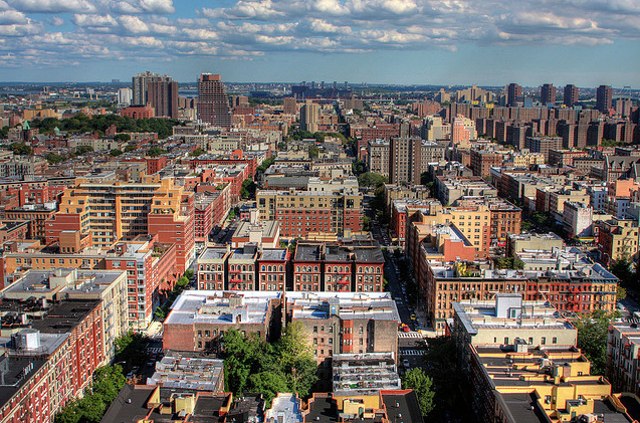

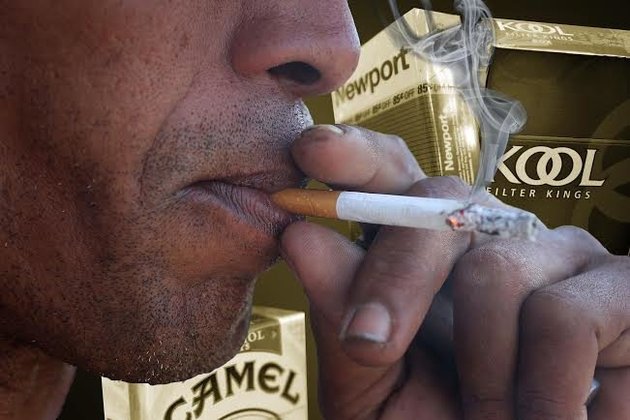
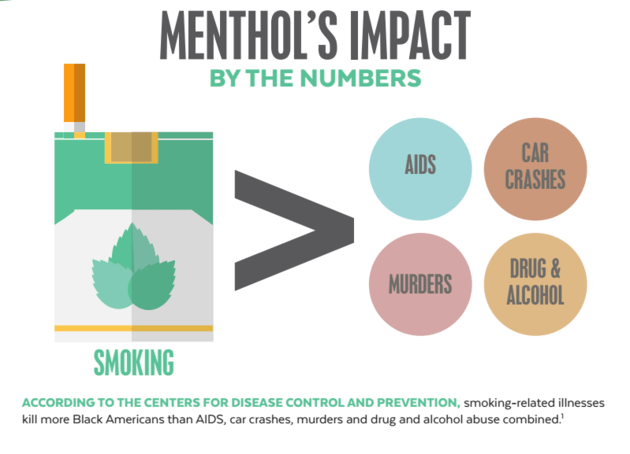
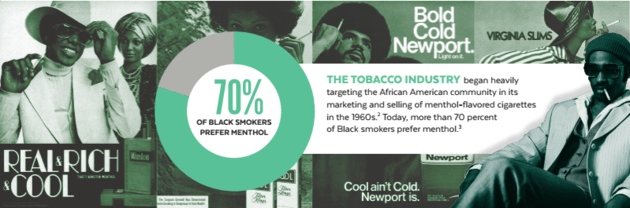
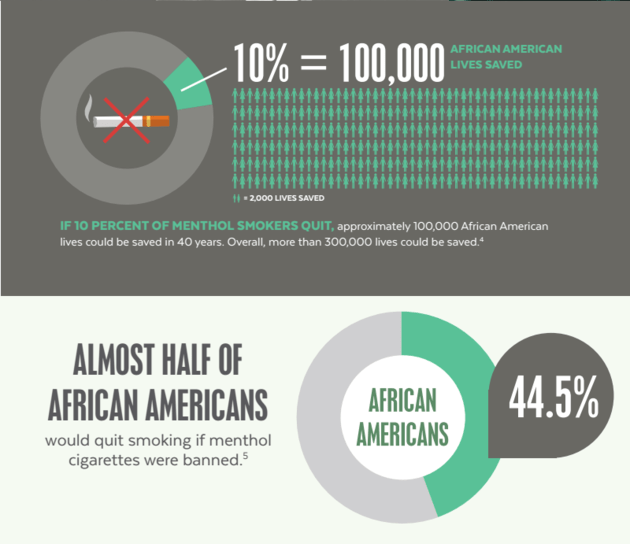
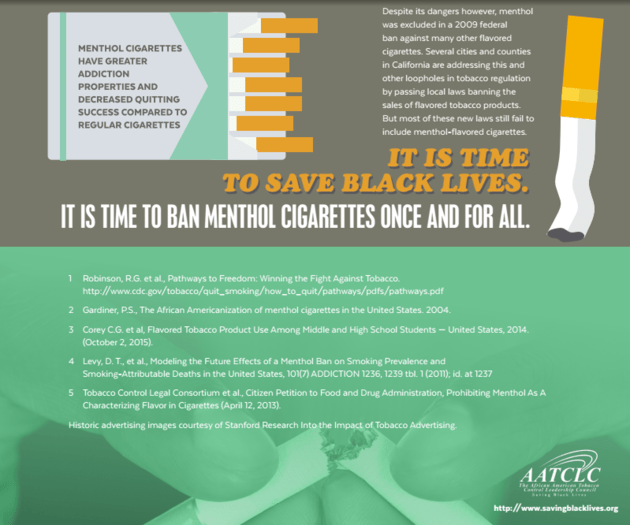


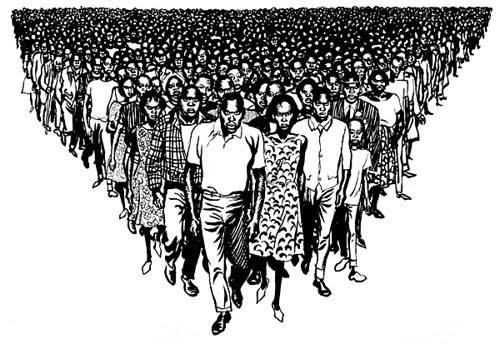

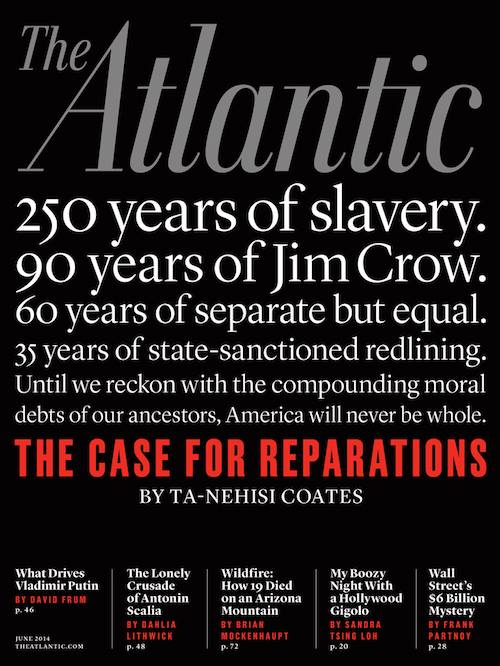



 The Gullah/Geechee Nation exist from Jacksonville, NC to Jacksonville, FL. It encompasses all of the Sea Islands and thirty to thirty-five miles inland to the St. John’s River. On these islands, people from numerous African ethnic groups linked with indigenous Americans and created the unique Gullah language and traditions from which later came “Geechee.” The Gullah/Geechee people have been considered “a nation within a nation” from the time of chattel enslavement in the United States until they officially became an internationally recognized nation on July 2, 2000. At the time of their declaration as a nation, they confirmed the election of their first “head pun de boddee”-head of state and official spokesperson and queen mother. They elected Queen Quet, Chieftess and Head-of-State for the Gullah/Geechee Gullah Nation.
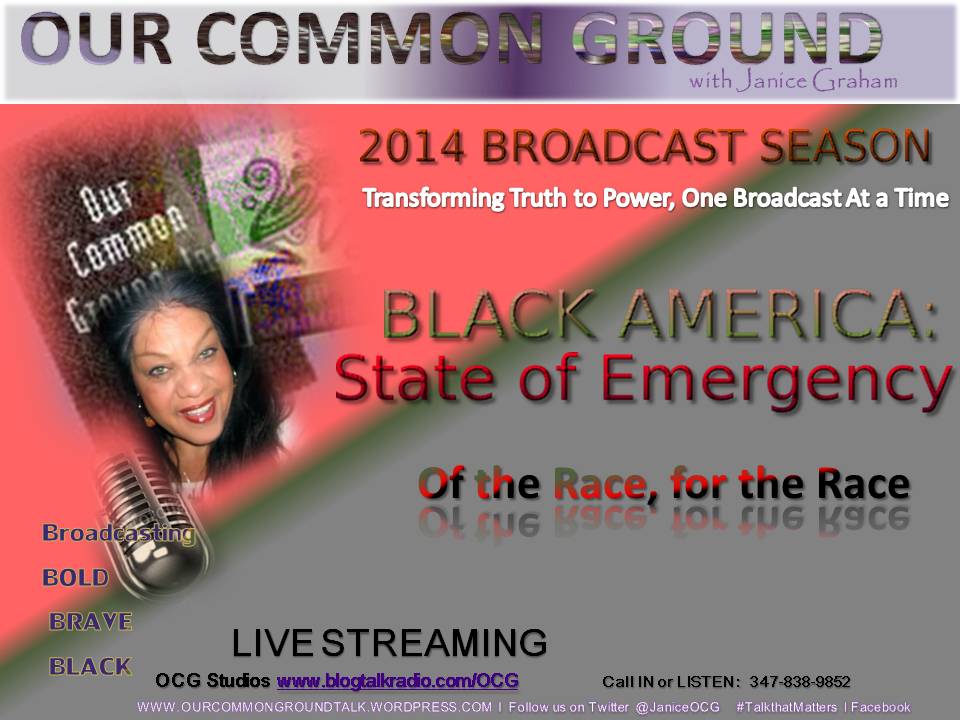

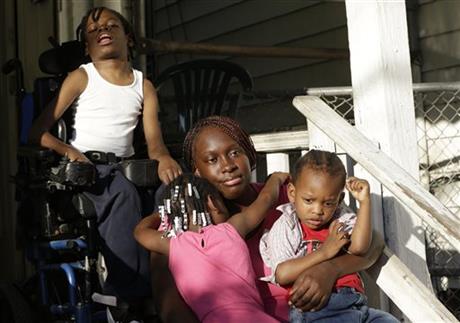

 OCG
OCG 
