Why the Alex Jones industrial complex must be dismantled

Why the Alex Jones industrial complex must be dismantled

BY SOLE

About a week ago I released a new video called “Fuck Alex Jones.”  Since the track has been released I’ve been bombarded with hundreds if not thousands of angry comments from the Infowars crowd, calling me a “faget,” a sheep, and a “New World Order shill.”  


I can’t lie it’s been really amusing, but it’s also a really sad statement on our culture.  Why do I even care? Why would I go after Alex Jones?  Because I meet too many good people who are looking for answers in this insane, confusing world and are being spoon-fed dog shit disguised as “truth” by people like him. 

I went after Jones specifically because almost all of his propaganda plays into the hands of the extreme right wing in the United States. He dismisses feminism and gay rights as part of a New Word Order plot to reduce the population. He dismisses climate change as a hoax, and backs it up by giving weather reports on Mars. He attacks non-existent, nameless, faceless organizations like the Illuminati but ignores the evils being done by right-wing billionaires like the Koch Brothers.

His supporters are certified experts on the Bilderberg Group, but they seem to know nothing about the American Legislative Exchange Council, a group that literally writes laws for corporations and passes them into law.  Who needs the Illuminati when you have people like that?  What if we just do away with the word “Illuminati” and start talking about capitalism and the state?

You will never hear conspiracy theorists talk about class war; they are far more concerned with preserving their own status in this economic system.  Like missionaries and populist demagogues of the past, they prey on the young and downtrodden, give them an all-encompassing worldview, call it “truth, and and label everyone who doesn’t believe it a “sheep” who needs to “wake up.”  

I attack Infowars because it is not a revolutionary movement. It is chasing a mirage. It imagines the good ol’ days of ‘merica, when white slave-owners wrote a constitution for other property owners, before they pushed west, killed multitudes of Native Americans (historical estimates range between 30-100 million) and stole their land. Those are the glory days of 1776 that the right-wing conspiracy crowd holds up as an ideal that we need to return to. 

Will someone please tell them that those days never left us?  It’s not the Illuminati that are sending drones to kill children in Yemen or having the NSA spy on us; it’s the logical endgame to the “spirit of 1776.” 

What just played out in Bundy Ranch is instructive in this light.  According to the cult of Jones, we shouldn’t worry about homeless people in cities being pushed out of the common spaces; we should worry about a white rancher in Nevada having his “liberty” trampled by the federal government. Both lay concerns of how public space should be used, but the latter believes that rights of cows to encroach on protected habitats is more important than the right of a homeless people to cover their bodies when they sleep outside in the winter.  

Many criticize Jones because he uses his Prison Planet ™ store to sell things like expensive water filters and male enhancement pills, but what he is really selling is fear. His show is a never-ending litany of new things to be afraid of: FEMA camps, cities stockpiling hundreds of thousands of body bags, a government that knows everything you’re gonna do before you do. Name your fear, and Alex is selling it!  

Its been said that if Alex Jones didn’t exist, the FBI would have to create him; I think it goes the other way. If the police state didn’t exist, Alex Jones would have to create it. We have yet to be corralled into giant communist style re-education camps, but the fear of your name being on a list or of impending marshall law keeps many “infowarriors” locked indoors “spreading information” instead of engaging in their communities, improving lives, and fighting the powers that seek to destroy us.

Do conspiracies exist?  Of course they do.  History is the greatest conspiracy of all; it is a never-ending tale of power grabs, deceit, and mass killings. Banks conspire to steal homes. The U.S. government conspired to spy on its citizens, politicians conspire to retain power and riches, and Facebook conspires to sell ads.  This is your beloved “free market” working its magic. This isn’t “crony capitalism;” it’s just plain capitalism in its late stages. 

So why do we need the Illuminati? The Illuminati theory simplifies things of course, but offers no means of resistance. The Illuminati has no home address, no tax records to sort through, no lobbyist to call out. There are too many real enemies out there—Suncor, Exxon, BP, Halliburton—to make up a catch-all scapegoat.  

Many of the responses to my video that are attacking me say I don’t provide any facts to back up my claims. How can I prove that 9/11 was probably carried out by terrorists? If I’m wrong does it change anything about the way I should engage with the power structures I wish to dismantle? And when you are dealing with zealots, for whom the answer is always “the New World Order,” do facts even matter?  

Correction: This story has been updated to clarify the discrepancy over the number of Native Americans killed following European arrival.  

Sole is a rapper, activist, and cofounder of the influential record label, Anticon. His new album with DJ Pain 1, Death Drive, is available now for pre-order. 

Photo by 911conspiracy/Flickr (CC BY SA 2.0) | Remix by Jason Reed 

The Lies We Tell Black Boys and the Truth They Deserve to Hear φ CHRISTOPHER “FLOOD THE DRUMMER®” NORRIS

The Lies We Tell Black Boys and the Truth They Deserve to Hear

black boys-AfroDad-flickr

We need to stop teaching our black boys how to survive in a world not designed for them, and instead show them how to design a world that will allow them to thrive as individuals.

—

I never realized how hard it was to get people to view black men and boys as assets until I asked them to actually do it. In countless conversation I’ve had with peers about black male achievement—from philanthropy to politics, to the environment and education—the question has always been: “how do we help black boys achieve?” and not: “how do we leverage the value and agency of black men and boys who are already achieving to inspire others and transform the spaces they live, work and play?”

In my opinion, the reason the latter doesn’t gets asked as often as it should is because most people believe that black men and boys are problems that need to be solved; a disease that needs to be cured. Decision and media makers pretend the answer is as easy as getting the “thugs” to pull up their pants and not tattoo their faces.

Well-intentioned teachers and mentors often express that if black boys wear suits, ties, and carry books instead of bullets, that the probability of being accepted by, and achieving in, the “real world” will increase dramatically. Parents of black boys—just wanting them to come home in one piece—indoctrinate them religiously with the “do’s and don’ts of being black in public.”

And all the while, during of all these lectures, the black boys who we want to grow into proud black men are slowly but surely feeling humanity slip right out of their finger tips. With a skewed perception of their self-worth, chances are those black boys grow into insecure black men who feel the need to measure their accomplishments and assets to their white-counterparts, ultimately seeking validation outside their race before accepting what makes them unique.

What we should be telling black boys, and more importantly, what they deserve to hear is that the “real-world” is f*cked up and is filled with sick people who will hate them regardless of whether or not they are wearing a hoodie or a Brooks Brothers suit. They need to hear that the problem is the world and not them; that they exist to improve the world, not succumb to its bullsh*t. Black boys deserve to know that their elders will fight for their right to walk or run down a street of their choosing—regardless of their clothing—without the fear of being intimidated by a police officer who doesn’t view them as a human being.

We need to stop teaching our black boys how to survive in a world not designed for them, and instead show them how to design a world that will allow them to thrive as individuals. We need stop preaching respectability politics and tell our black boys what they deserve to hear, which is the sky is not the limit, it’s the starting point.

CLICK HERE to pledge to see the good in black men and share their stories so that others may do the same. 

– See more at: http://goodmenproject.com/featured-content/the-lies-we-tell-black-boys-and-the-truth-they-deserve-to-hear-cnorris/#sthash.XZqFn3xn.1C2M93Pi.dpuf


Thanks for reading. Until next time, I’m Flood the Drummer® & I’m Drumming for JUSTICE!™ DOWNLOAD NOW: The Black His-Story Book: A Collection of Narratives from Black Male Mentors, presented in part by GoodMenProject.com.  – See more at: http://goodmenproject.com/featured-content/the-lies-we-tell-black-boys-and-the-truth-they-deserve-to-hear-cnorris/#sthash.XZqFn3xn.1C2M93Pi.dpuf

Talking about white Privilege is not Profound, its just for profit. φ Dr. Tommy J. Curry

curryvoicesTalking about white Privilege is not Profound, its just for profit.

By: Dr. Tommy J. Curry

There is a growing economy for discussions about white privilege in this country that are employing Black and brown intellectuals and whites who profess anti-racism, to be the missionaries that save white souls. white privilege, or the idea that white individuals are born with unearned benefits and advantages, over others has been making its way through out the public media as well as the classroom. On the face of it, this seems like a radical conversation. Black, brown and some white people calling out white liberals and conservatives for their racism, and starting “real” conversations about race that air on MsNBC,CNN and even the Huffington Post. But conversations about white privilege are not really conversations about race, and certainly not about racism—its a business—WHERE BLACKS MARKET THEMSELVES AS RACIAL THERAPISTS.

See the first discussions of white privilege like W.E.B. DuBois’s Black Reconstruction (1935) or George Lipsitz’s The Possessive Investment in whiteness, or even Cheryl Harris’s “whiteness as property,” came from the radical Black intellectual tradition (race-crits, Black nationalists, Pan-Africanists) that did not believe that whites would simply donate their power and act against their global racial interests to be good people IN THE EYES OF BLACKS, people they owned and still imprison. DuBois, and Lipsitz understood there is an antipathy and power in being against Blacks. Like George Jackson said, regarding the ILLUSION many Black academics have in romanticizing their ability to solve racism, “the white race, the economic elites of America, are not going to let themselves be educated out of existence. But today, you sound radical, progressive and insightful by MARKETING YOURSELF as a therapist for whites, and know nothing about the actual conditions, structures, and ills that concretely affect the lives of Blacks. You can even talk about white privilege and not even know the names of the Black thinkers, the literature, the context, or the history the term comes from, and get acclaim for only citing white celebrities like Peggy McIntosh or Tim Wise.

It’s not genius to say in an oppressive society there are benefits being in the superior class instead of the inferior class. That’s true in any hierarchy, being on the top is better than being on the bottom, but the speaker of white privilege gets to pretend that America is not oppressive, they love America, they just want whites to surrender their privilege so we can be equal. See the revolutionary doesn’t have white friends: the government killed MLK, Assata is called a terrorist, Derrick Bell is erased from a field he started, because they spoke about the actual racial and economic tyranny of corporations, governments, the military and the white public, but the for profit revolutionary wants to be commodified by whites…that Black friend that feels like they cured the racist white, while that same white person gets to point to these very relationships as proof they are healed and show to other whites they are the “white ally.”

Conversations about white privilege are simply moral appeals to the conscience of whites who have shown themselves to be committed to racism and social inequity IN THE IDLE HOPE THAT THEY change their mind. The implication of talking about privilege suffers from a childlike naiveity, it suggests that simply exposing racism and the privilege of whiteness to the white mind motivates whites to no longer act in their own self interest. See like the liberal utopia born out of integration, there is an unjustifiable assumption that telling whites about their social position means they are willing to surrender their power to appease a pop culture account of oppression. Think about the dishonesty of this approach. Black people, oppressed people, know there is a fundamental difference between being oppressed/Black and not oppressed, a citizen, white. We call for “national conversations on race,” where these public intellectuals get credit for starting conversations that amount to little more than allowing white America the opportunity to deny the actual realities Black America suffer from. And regardless of the outcome they come out LOOKING LIKE PROPHETS. This issue is white supremacy, and anti-Black death…trying discussing that…and see if your oppressor recognizes you then.

I remember at a recent APA I sat next to a feminist of color trying to get her white male student who couldn’t get a job in the white figures he studied and wrote a book on, and never studied race, racism, or Black philosophy, a job. This professor felt comfortable telling him if you start talking about white privilege, where she claimed the field was going, he could land a race job easily. Think about this. So all the Black, Brown, and Indigenous scholars who study the raw histories of oppression and resistance lose out because they don’t want to give white liberals and conservatives a guilt trip. This is a powerful example of how as an academic discussion white privilege distracts the oppressed, and empowers the oppressor class to be employed in discussing systems they have no real interest in dismantling.

Dr. Tommy J. Curry, The Nationist

9-14-13 Curry4


Has Civil Rights Activism Been Replaced by Endless Panels? Φ Crew of 42

Has Civil Rights Activism Been Replaced by Endless Panels?

Posted On 09 Apr 2014
  Ask yourself: Have you ever seen a photo of Dr. Martin Luther King, Jr. sitting on a panel? On the eve of the 50th anniversary of the signing of the Civil Rights Act we should ask ourselves: Has activism been replaced by “paneling” and hot air?

At every annual convention.  At every luncheon.  At every conference. There is the panel discussion as the centerpiece of the “agenda.”  And for the most part, these sessions repeat already known information and no calls to action.

Where the centerpiece of the American civil rights movement of the 1950s and 1960s was results based physical activities such as marches, boycotts and civil disobedience, the centerpiece now appears to be lots and lots of talking.

The activities of five decades ago yielded big results — like the Civil Rights Act — few of those big results and political victories can be seen today. And the problems, for the African American community in particular, are getting larger. 

Can panels create change and get results at a time when the wealth gap between black and white is the worst in 40 years and the dropout and incarceration rates remain at crisis levels?  Can marches get the same results they did in the 1960s as a more money and tech driven political landscape drives agendas?

Were it not for Rev. William Barber’s Moral Mondays there would be no consistent activism at all.  But even with those events one has to ask: Are the marches yielding tangible results?  It’s likely Dr. King didn’t have time for panels.  The actions Dr. King took got results and won victories.  Like the signing of the Civil Rights Act of 1964.

Lauren Victoria Burke is the creator of the blog Crewof42 and is the Managing Editor of Politic365.com. Ms. Burke has enjoyed employment with USAToday.com and ABC News and holds a B.A. in History from The American University. Contact: LBurke007@gmail.com. Twitter: @Crewof42

– See more at: http://www.crewof42.com/slide/has-civil-rights-activism-been-replaced-by-endless-panels/#sthash.onItQYKK.dpuf

Justice Sotomayor’s Powerful Defense of Equality

AP Photo/Steven Senne

Supreme Court Justice Sonia Sotomayor

 Yesterday, the Supreme Court upheld a provision of Michigan’s constitution that bans the state or any of its subdivisions from “grant[ing] preferential treatment to any individual or group on the basis of race, sex, color, ethnicity, or national origin in the operation of public employment, public education, or public contracting.” The Court was fractured; the six justices who voted to uphold the amendment did so for three independent reasons. Written by Justice Anthony Kennedy, the plurality decision—to which Chief Justice John Roberts and Associate Justice Samuel Alito signed on—was narrow: It upheld the amendment without disturbing any precedent. Far more interesting was Justice Sonia Sotomayor’s dissent, which makes a strong case for a robust interpretation of the equal-protection clause of the 14th Amendment and represents perhaps her most compelling work in her tenure on the Court so far.

The case for upholding Michigan’s amendment, which was adopted through the ballot-initiative process, seems compelling at first glance. Even if one agrees that affirmative-action programs are generally constitutional, it surely cannot be the case that the Constitution requires states or the federal government to adopt affirmative-action policies. Had Michigan never adopted affirmative-action policies or had the legislature repealed them, this would presumably not raise a serious constitutional question. So why wouldn’t the citizens of Michigan be able to make the same policy choice? “There is no authority in the Constitution of the United States or in this Court’s precedents,” Kennedy asserts in the plurality opinion, “for the Judiciary to set aside Michigan laws that commit this policy determination to the voters.”

In the most relevant precedent, the Court ruled in 1976 that a Washington constitutional amendment that banned the use of bussing to integrate schools violated the 14th Amendment because it “impose[d] substantial and unique burdens on racial minorities.” Joined by Justice Ruth Bader Ginsburg, Justice Sotomayor makes a powerful argument that this and related precedents require the Court to strike down the Michigan initiative.

The core of the Court’s “political-process” precedents, Sotomayor observes, is that minorities have access to the state’s democratic procedures. The Constitution “does not guarantee minority groups victory in the political process,” but it does “guarantee them meaningful and equal access to that process. It guarantees that the majority may not win by stacking the political process against minority groups permanently, forcing the minority alone to surmount unique obstacles in pursuit of its goals—here, educational diversity that cannot reasonably be accomplished through race-neutral measures.” Reallocating power in the way Michigan does here therefore raises serious equal-protection concerns.

Sotomayor’s dissent cites a landmark Kennedy opinion: Romer v. Evans, in which the Court struck down a Colorado initiative forbidding the recognition of sexual orientation as a protected category under existing civil-rights laws. Sotomayor observes that Romer “resonates with the principles undergirding the political-process doctrine.” The Court forbade Colorado from preventing a disadvantaged minority access to the state and local political processes, even though states are not constitutionally required to pass civil-rights laws.

When burdens are placed on minorities that affect access to the political process, the possibility of discrimination is particularly acute, allowing exclusionary politics to become self-perpetuating.

Sotomayor’s dissent also offers a useful defense of the political-process doctrine and its strong roots in the 14th Amendment. Starting with the famous fourth footnoteof Carolene Products in 1938, the Court has held that state actions that burden minorities should be subject to heightened judicial scrutiny. When burdens are placed on minorities that affect access to the political process, the possibility of discrimination is particularly acute, allowing exclusionary politics to become self-perpetuating.

It is instructive that in their concurrence Justices Antonin Scalia and Clarence Thomas mock the influence of Carolene Products: “We should not design our jurisprudence to conform to dictum in a footnote in a four-Justice opinion.” This is grimly ironic, given that Justice Scalia and Justice Thomas recently joined an opinion gutting the Voting Rights Act based on highly implausible bare assertions made by dicta in an opinion written by Chief Justice Roberts less than five years ago. With respect to Carolene Products, conversely, what matters is not merely the footnote in one opinion but the fact that it conforms to the 14th Amendment, and was elaborated on in many subsequent cases. Several of these precedents were the political-process rulings that were supposed to control the outcome in yesterday’s case. As both Scalia from the right and Sotomayor from the left argue, it’s hard to deny that these precedents have been silently overruled, even if the plurality says otherwise.

The consequences of Michigan’s constitutional amendment illustrate the ongoing relevance of the Court’s equal-protection precedents. As the dissenters point out, the percentage of African-American students getting degrees from the University of Michigan was the lowest since 1991 after the amendment passed. In addition, the percentage of racial minorities in freshman classes at Michigan’s flagship university has steadily declined—even as racial minorities comprise an increasing percentage of the state’s population. This does not in itself prove that the Court was wrong to uphold it, but it does show that the elimination of affirmative action is unwise, and at a minimum the Supreme Court should show deference to elected decision-makers who determine that it is necessary.

When Black News Disappears: White Holds on Black Intellectuals’ Minds and Misinforming the Black Public

When Black News Disappears: White Holds on Black Intellectuals’ Minds and Misinforming the Black Public

Friday, 24 May 2013 09:49By Dr Tommy J Curry, Racism Review | Op-Ed

As an historical entity, the Black press has not only offered critical commentaries and political critiques of the sempiternal racism of the modern world, but  correctives as to how white newspapers, opinion-makers, legislators, and most importantly the white public sought to justify their complacency towards and support for anti-Black racism and the sexual brutalization of Black men, women, and children. Today, however, the post-Obama lullabies of racial détente and the progressive liberal passivity of Black intellectuals have allowed the structural and ideological manifestations of white supremacy to remain unquestioned despite their persistence alongside the growing realities of Black death. For example, when Trayvon Martin was killed, Melissa Harris Perry thought it prudent to use the tragedy as a moment to teach white folks “how to talk about Black death”—she literally created a checklist for whites rather than deal with the horrors facing young Black men and boys in their communities.

Currently, the post-racial idea has contoured Black news into a narrow politically progressive ideology. This ideology is thematically geared towards convincing the Black public that the symbols of racial progress are in fact actual progress. This contest over “symbols,” rather than exposing the propaganda of the liberal endeavor, allows Black academics to retreat into their own ideologically predetermined blog’s rendering of “Black” events, so that their views, be it feminist, leftist, or progressive, are legitimized. Meanwhile, the Black public remains victimized by the political interests of multiple entities; each with their agenda rooted in de-radicalizing Black consensus and normalizing Black deaths, specifically the death of Black men, as having nothing to do with racism, merely accidental rather than systemic. As I have argued previously, Black academics and news personalities are rewarded for pimping out “the delusion of hope” to Black people while racism increases alongside the normalization of their death, incarceration, and poverty.

Has the Black Press Lost Its Way?

Since slavery, Black abolitionists, ministers, and revolutionaries understood the need for “Black perspectives,” on the racist evil that plagues America. The Christian theology that justified the horrors of slavery was indicted, and the white Christian, the earliest imperialist, was not held to be the savior of civilization but its greatest detractor whose abuse and degradation of Blacks was rooted in their imperial lust for power and profit. As David Walker says in Article I of The Appeal:

“I have been for years troubling the pages of historians, to find out what our fathers have done to the white Christians of America, to merit such condign punishment as they have inflicted on them, and do continue to inflict on us their children. But I must aver, that my researches have hitherto been to no effect. I have therefore, come to the immoveable conclusion, that they (Americans) have, and do continue to punish us for nothing else, but for enriching them and their country. For I cannot conceive of anything else”

With the rise of Freedom’s Journal, the Black press took on the radical mission of liberation that up to that point was confined to pamphlets, and the now revered slave narrative. The Black press, its editors and writers, were among the most notable Black thinkers of the 1800’s and beyond. T.Thomas Fortune’s (1856-1928) The New York Age was the training ground for no less an intellectual than W.E.B. DuBois. It was a publication where Fortune’s radicalism which advocated for Black self-determination and security, even by armed resistance if necessary, was center stage. It not only gained him notoriety among Black journalists but earned him the admiration of the young Ida B. Wells-Barnett (1862-1931) who would continue to develop his political philosophy of agitation and help build the first civil rights organization for Black rights; the Afro-American League. This radicality was present in most of the Black journalists at the turn of the century. Henry McNeal Turner and John Edward Bruce exemplified a political tone that was only matched by the radicality of the 1960’s and 1970’s in the founding and growth of the Black Panther Party and the journalistic accounts of the Black Power Movement. As my student, Ms. Judith Bohr, points out in her master’s thesis “A People’s History of Philosophy: The Development and Ideological Segregation of Black Nationalism,” the violence against Blacks in society, be it at the hands of police state militarism or the prison industrial complex, necessitates a compliant and complacent account of reality. As she states,

“The media assists in this erasure of police violence through their portrayals of African Americans as a danger to society…Whites’ fear, however, is for their privilege and not for their safety…Propaganda in the media functions through erasure and through distortions of the state’s as well as the public’s motivations for racial violence” (Bohr 2011, 30).

Thus, the de-radicalization of Black news and the complacency of the Black journalistic endeavor—its commodification into  predetermined categories, that ironically have academic currency despite being driven by political interests—does little to inform, much less improve, the conditions of Black people. The silence of mainstream Black news on the systemic political and economic divisions, divisions made necessary by the militaristic racist endeavors of the U.S. government, even under a Black Obama administration, is imperative in preventing the Black public from engaging the concrete American condition confronting Blacks, immigrants, and the poor.

Most recently, SiriusXM decided to change Sirius 128—The Power to urban driven entertainment programming under the new title of the Urban View. In doing so SiriusXM eliminated ReddingNewsReview, an independent Black political commentary dedicated to exposing the contradiction between Black political representation in the Obama era and Black political exploitation under Obama’s administration. The change in the lineup effectively changed the Power 128 from the “News and Issues” category to the Urban View 110 a “African American Talk and Entertainment” channel. Reacting to this change, Wade Simmon wrote a splendid editorial asking, “Is SiriusXM Trying to Undermine Black Power?” The effect of this censorship could be isolated, but it again begs the question as to why independent Black radio and press that dares to question the status quo of America’s race problem is so easily engulfed by liberal reformist agendas that take Obama’s symbolism to be of more importance than the actual economic and political viability of mass Black agendas.

Despite the criticisms one may make of Redding, the reality is that Black Americans lack a non-partisan interpretation of the Black condition that does not retreat into the ideologies of the blogosphere, where select academics, married to predetermined paradigms of reading Blackness, meet and greet. The Black public is usually deemed irrelevant in these deliberations from the outset. They are to be “spoken about” authoritatively, but rarely “spoken from,” since these Black people are outside the academy, and lack the supposed knowledge/education to “understand” the complexities of Black life. Independent Black radio, reaching back to the Ralph “Petey” Greene and radicals like Robert F. Williams, sought transgressive messages against empire and racism. Whereas today, many Black elites, the Melissa Harris Perrys of the world, confine discussions of racism to their specific opportunities to gain social capital and recognition from whites; choosing to ignore both the material consequences of the liberal agenda for Black people at home and its militaristic program against darker peoples abroad. ReddingNewsReview, like that ofVoxunion, sought to disrupt that narrative.

The same way Ida B. Wells-Barnett decided to report the horrors of Black reality, anti-Black violence through lynching, and the weakness of Black leadership in the 1890’s, so too did Redding in the 21st century. At the very bottom of Black politics, there is a need to recognize that the manipulation of Black media—the Black press and radio—to further the political agendas and social legitimacy of specific parties, namely the democratic party’s claim that they represent the Black/Browning of America, does nothing to arrest the imperial agendas this presidency like all presidencies before it continue to engage in the world over. As Dr. Jared Ball argues in his talk on “Colonialism and Media Psychological Warfare,” media, or rather propaganda, is at the heart of America’s white supremacist empire.

Conclusion:

Race-crits, critical sociologists, and Black, Brown, and Indigenous scholars cannot continue to embrace the symbolism of progress without making those symbols resonate with the actual economic, political, and extra-legal conditions of Black existence. There is a very real contradiction between the symbolism of Obama’s reign and the worsening plight of Blacks under Obama’s reign. Rather than being at odds with the type of progressivism that perpetuates the poverty, the apparati of state sponsored violence, and social repression, the Black press has taken to excusing it—pointing out the extraordinary cases of violence that shock us most, but leaving the racist narrative written into the foundation of America’s democracy, militarism, imperialism, and capitalist lust untouched.

ABOUT Dr. Tommy J. Curry

Professor of Philosophy, Texas A&M University

Tommy J. Curry’s work spans across the various fields of philosophy, jurisprudence, Africana Studies, and Gender Studies. Though trained in American and Continental philosophical traditions, Curry’s primary research interests are in Critical Race Theory and Africana Philosophy. In Critical Race Theory, Curry looks at the work of Derrick Bell and his theory of racial realism as an antidote to the proliferating discourses of racial idealism that continue to uncritically embrace liberalism through the appropriation of European thinkers as the basis of racial reconciliation in the United States. In Africana philosophy, Curry’s work turns an eye towards the conceptual genealogy (intellectual history) of African American thought from 1800 to the present, with particular attention towards the scholars of the American Negro Academy and the Negro Society for Historical Research.

In Biomedical ethics, Curry is primarily interested government regulation, the ethical limits of government intervention in the practice of medicine, and democratic potentialities that arise from collaborative doctor-patient diagnoses and regenerative medicine like stem cells. Currently his research focuses on the linking the conceptualization of ethics found in the Belmont Report to Civil Rights and social justice paradigms.

Subscribe to The Nationalist and read more of Dr. Tommy J. Curry

Follow him on Twitter

curryvoices

Pessimistic Themes in West’s Necrophobic Aesthetic by Dr. Tommy J. Curry

curryvoicesPessimistic Themes in West’s Necrophobic Aesthetic

: Moving Beyond Subjects ofPerfection to Understand the New Slave as a Paradigm of Anti-Black Violence.(Forthcoming The Pluralist)

by  Dr. Tommy J. Curry

This intersectional allusion to the bourgeois Black woman, her indemnification against all critique, has long been the unquestionable norm operating within the political assertions of Black feminism and the allegedly conceptual pluralization had in claiming intersectionality as a method. Carole Boyce Davies describes this tendency as condification; “a project perhaps, a behavioral process which marks the rise of a certain neo-colonial elite in the U.S. imperial context, operating for the benefit of the dominant state and its rulers” (14). Davies argues that “Condification marks the limit …but can also be seen as the ultimate manifestation of a domestic black and/or feminist bourgeois discourse” (14), and presents a concrete crisis for Black feminist calls for social, economic, and political equality, since there is no accountability to the buttressing up of empire and inequality in their march towards capitalist freedom. Davies is not alone in this analysis of Black feminism; Elaine Brown has gone as far as to say: “feminism,” assuming this word, which I don’t assume (let’s just call it that for now, women’s liberation, the liberation of all human beings), is part of my agenda. If you take their analysis, as strict analysis, you can end up having a woman like Condoleezza Rice. So they are incorrect in their ideological commitment. Condoleezza Rice would be the ultimate Black feminist icon. So they’re wrong” (3). Power within the system is justified as gender progress, and rationalized as the necessary trajectory of political progress. There are no criteria for liberation, only the accumulation of representatives that are Black and female who command the recognition of systems previously blind to their existence. The now common practice of lifting the immaterial subject, the ideal abstraction of the (Black) feminist self, represented by the mere utterance of race, class, and gender, destroys our ability to truly understand the suffering of Black people. The Black man, the Black woman, and the Black child who survive in the bare conditions of wretchedness nurtured by anti-Blackness—the poverty, death, and violence of racial oppression—are never seen. They are spoken about as factors, but never considered to be the primary subjects motivating study. Intersectionality, its synonymy with the ideal bourgeois Black woman, is an errant axiom that denies Black study for the elevation of one (powerful, Black, female) identity taken to be the finality of all Black morality.”

Introduction

The release of Kanye West‘s Yeezus  was indelibly marked by the provocation of his song entitled the ―  New Slave ,‖ which introduced a  pessimistic terminology deployed against the paradoxical condition that Black freedom from enslavement only recaptured Black people psychically in the neo-liberal entanglements of poverty, servitude, and corporatism. His analysis,not unlike currently en vogue theories of Afro-pessimism, or Critical Race Theory‘s  (racial)realist lens maintains that despite all the rhetoric and symbols of progress to the contrary, Black people are simply not free in America. West‘s  performance of ―New Slave,‖on Saturday NightLive was only amplified by the  Not For Sale  insignia projected behind him.
 As a symbol ofindependence, disengagement; a resistance against commodification, West announced hisconfrontational posture towards the industry; a posture which ignited the Hip-Hop communityand academia alike over this artistic radicalism. However, such a provocation, despite itsrhetorical flare and allure, was immediately cast as disingenuous and inauthentic. Kanye West isa Black man torn at moments by his brilliance and at times by his banality. His work is not beinganalyzed in Hip-Hop Studies and philosophical aesthetics because it is not worthwhile;
 — his analysis of anti-Black death, corporatism, and neo-liberal aspiration is enough to warrant morethan one serious study of his art. West is not studied because he lacks sufficient correctness orexhibits minimalist thoughts about the world around him, rather West is not studied because his body, his Black male body, lacks the symbolic currency to motivate reverence for his thinking.The New Slave implicates all arenas of knowledge and political production hailing from theacademy, and while his life and public proclamations are at tension with some of his work, itnonetheless necessities serious study, rather than sophistry and condemnation. This article is anattempt to draw out some of the themes concerning anti-
Black racism in West‘s ―New Slave and the double meaning this work has given that it was co-
authored with Che ―Rhymefest Smith.
It is my view that West‘s work establishes the continuity of enslavement beyond the artificial political and social changes that are attributed to racial progress and social equality.

READ AND DOWNLOAD THE FULL AND  FINAL PAPER 


ABOUT Dr. Tommy J. Curry

Professor of Philosophy, Texas A&M University

Tommy J. Curry’s work spans across the various fields of philosophy, jurisprudence, Africana Studies, and Gender Studies. Though trained in American and Continental philosophical traditions, Curry’s primary research interests are in Critical Race Theory and Africana Philosophy. In Critical Race Theory, Curry looks at the work of Derrick Bell and his theory of racial realism as an antidote to the proliferating discourses of racial idealism that continue to uncritically embrace liberalism through the appropriation of European thinkers as the basis of racial reconciliation in the United States. In Africana philosophy, Curry’s work turns an eye towards the conceptual genealogy (intellectual history) of African American thought from 1800 to the present, with particular attention towards the scholars of the American Negro Academy and the Negro Society for Historical Research.

In Biomedical ethics, Curry is primarily interested government regulation, the ethical limits of government intervention in the practice of medicine, and democratic potentialities that arise from collaborative doctor-patient diagnoses and regenerative medicine like stem cells. Currently his research focuses on the linking the conceptualization of ethics found in the Belmont Report to Civil Rights and social justice paradigms.

Subscribe to The Nationalist and read more of Dr. Tommy J. Curry

Follow him on Twitter


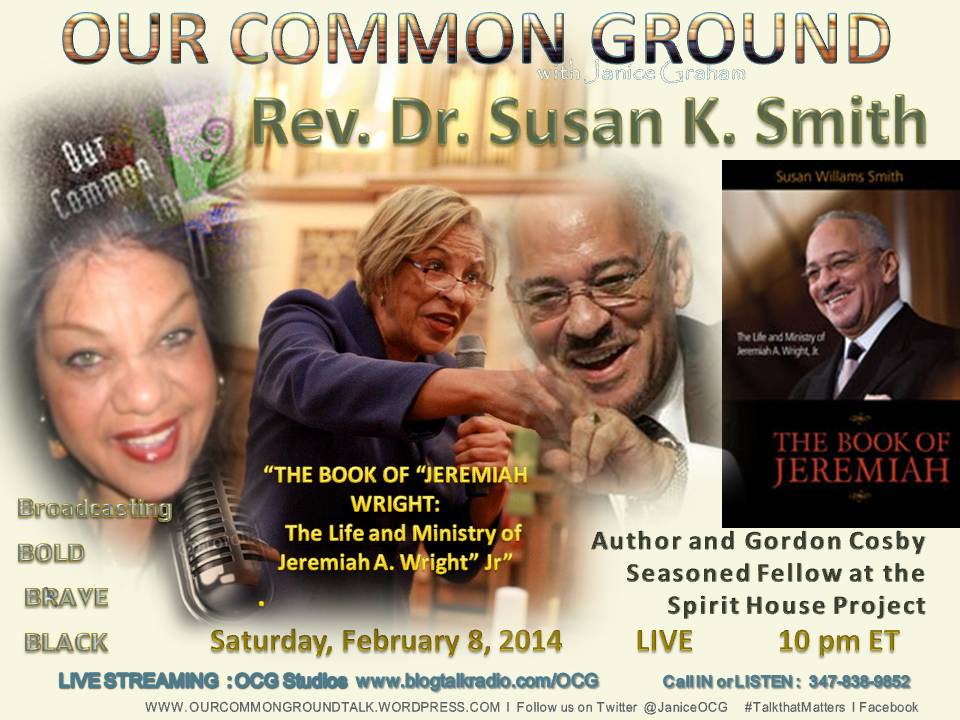
“Silence from the Desert” φ Susan K Williams Smith, The SpiritHouse Project

“Silence from the Desert”

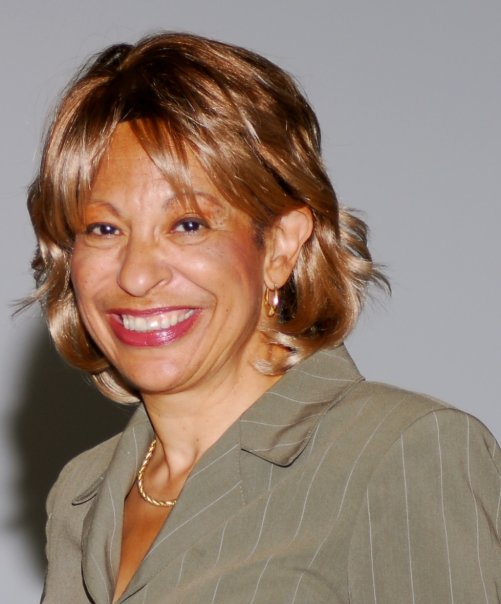
Susan SmithSusan K Williams Smith
Gordon G. Cosby Seasoned Voices Fellow, The SpiritHouse Project

The SpiritHouse Project, under the direction of Ruby Sales, has been investigating the deaths of black people at the hands of white police, vigilantes and security guards since 2007. The deaths have been shocking and reports of them have been scarce; Sales is determined to get the word out that young black people, male and female, are being brutalized with alarming frequency, with the murderers seldom being held accountable. A recent recurring phenomenon with these deaths is missing organs. The following story involves the case of a Black young man who, like Kendrick Johnson, (who was also black) was found murdered and organs missing. Sales is calling for a national movement to bring awareness to these murders and to stop them.

It has been six months – 74 days, to be precise – since Ryan Singleton’s body was found in a California desert, his organs missing, 74 days without having gotten a single bit of information about how he actually died.

Joggers found his body in a Death Valley desert near Baker, California, more than 70 days after he went missing. Though police say they searched for his body within a five-mile radius of a convenience store from which he disappeared, he was found a little over one mile from that same store. His body had no eyes, no heart, no liver, no lungs and no kidneys.
He disappeared in early July; his body was found September 21.  Iris Flowers, his mother, speaks slowly and deliberately. The pain of having lost her son in such a horrific way comes through as she speaks. To date, she knows little about what really happened to her son. “When I have called, I get nothing,” she says, her voice heavy. “I have not gotten an autopsy report. I don’t know how long he was out in the desert.” “I don’t even have a death certificate yet.”
Ryan, 24, was a handsome, young African American man who had gone to California chasing his dream of becoming a model and film producer. His career had begun in New York and had taken off. He had appeared in major magazines, had appeared on Fashion Television, and was featured in a film that was seen by delegates at the United Nations. He moved to California where he met and mingled with people who saw his talent and opened even more doors for him. His star was rising; he was in the first chapter of what promised to be a life most could only dream of.
He was a good kid, folks would say. Not perfect, but a “good kid.”
He hadn’t been in California long before he decided he wanted to take a vacation. He rented a car and, en route to his vacation spot, ended up in the desert. His car, according to reports had broken down. White police officers found him walking in the desert, presumably trying to get help. They stopped when they saw him, did a check to make sure he had no record – which he didn’t – and then took him to a nearby convenience store so that he could call for help. He made a phone call to a friend to come pick him up …and then, suddenly, he was no longer in the store. Nobody saw him leave; nobody saw anybody pick him up – but it was clear that Ryan was gone.
Twenty-four hours later, law enforcement officers in Atlanta visited Mrs. Flowers at her home to tell her that Ryan was missing, after having been notified by California authorities.
Authorities told Flowers that perhaps coyotes had taken Ryan’s organs – they sometimes do that, police told her – but Ryan’s body was not mutilated. “Were his remains strewn all over the desert, near where he was found?” she asked them when they gave her the coyote story. No, as a matter of fact that had not been the case. Neither were any of his limbs missing. If coyotes had taken his organs, Flowers mused, they had taken them with surgical precision, leaving the rest of his body relatively intact.
Though Ryan had gone missing in July, his body was not badly decomposed, certainly not to the degree a body left in the hot desert sun might have been expected to. Authorities told Flowers the same; “his body is remarkably intact.”
Pictures of Ryan showed his hands curled, as though he were scratching or writhing in pain. He had perfect teeth, but pictures showed his five lower teeth missing. His mouth was open, lips still pretty much intact, but his mouth was open as though he were screaming. There was hole in the back of his head, low, near where the head meets the neck.
Flowers has been trying to get information, but nobody will tell her anything because Ryan’s case is a “death investigation,” she has been told. Police still have Ryan’s cell phones and his back pack. Flowers has called not only police, but the rental car company from which Ryan had gotten his car. Nobody will tell her anything. Ryan had two cell phones, Flowers says. One, they found in the back seat of the rental car, the other on his remains. She has not been able to get either one of them. “I call his cell phone every now and then, just to hear his voice,” Flowers says. It goes straight to voice mail…Flowers is understandably exasperated, annoyed. “Surely by now, the forensic records should have come back; surely somebody has to know something.”
Flowers holds the pain in so that she can move, breathe, talk. She recalls the last time she heard her son’s voice. “He had called me the day, the morning (I later learned) he disappeared, asking me to wire him some emergency money. I did …and then later I called him to make sure he had gotten it. He never answered the phone. He never picked up the money.” Twenty-four hours later, she got the news that he was missing.
In the early days of her son’s disappearance, and even after his lifeless body was found, Flowers called California authorities regularly, in spite of never getting any answers. After he was found and she could not get information, she called the FBI. They advised her to get an attorney. She has not as yet gotten one; attorneys cost money and her resources are limited.
Flowers recalls going to look at Ryan’s body after it was flown from California to Georgia for a funeral.
“Yes, I saw his body,” she says softly, heavily, in response to being asked if she saw him. “I went in to make sure the remains were my son, Ryan Singleton. It looked like road kill; they said it looked like that due to the autopsy. There was only a certain amount of torso left…there was not recognizable as a young man.” Her voice trembling some, she continued. “I had to make sure it was my son. I couldn’t do like Kendrick Johnson’s parents did. They had an autopsy and then he was buried and then they had him exhumed. That’s when they found his organs were missing. I learned from them. I couldn’t have gone through that. Before they buried him, we knew he had no organs.”  Flowers said she also learned from a woman whose son had died in an equally horrible way years ago, when asked how she had endured seeing her son so mutilated and violated.  “There were stronger women who went before me,” she said. “I thought of Emmett Till’s mother. I thought of how horrible that was …to show her son mutilated by hate. When I saw my son, I thought that what I felt was what Mrs. Till felt. I didn’t feel it was racial…but I don’t know what it was that killed him. I was thinking of her – looking at her healthy, beautiful child – and she showed her son to the world, to let the world know. I just wanted to go in and see …see if there was anything I recognized as part of my child.”
Ryan was unarmed. He had no record. He was young and vibrant, with his whole life ahead of him.
That life snuffed out, Flowers now just wants to know what happened…and get justice.
The silence from the desert is unacceptable, she says. Her son was a person, her baby. She cries slightly as she looks at a videotape showing Ryan shortly before his death …saying he was on his way and that he would be known all over the world in five years. He is confident and filled with hope; he is smiling and his eyes dance with a freshness that only comes with youth. Nothing was going to stop him; mom was not to worry.“That was my son,” Flowers says. “I miss him so much.”

02-8-14 Susan Smith5

Diversity in the Workplace Help or Hinder Teamwork?


Excellence in Government
Diversity in the Workplace Help or Hinder Teamwork?

By Evan Apfelbaum

Andrey_Popov/Shutterstock.com

Companies promote diversity in the workplace as a moral imperative with “bottom line benefits.” But research on the value of diversity is mixed. Some studies have found diverse teams—meaning workgroups comprised of employees of different races, genders, and backgrounds—promote creativity, nurture critical thinking, and tend to make better, more thoughtful decisions because they consider a wider range of perspectives. Other studies indicate diverse teams fuel interpersonal conflicts, reduce cohesion, and slow the pace of learning.

The trouble with past research is it assumes only diverse settings are capable of changing how people behave, form impressions, and make decisions. The research has created a convention in which homogeneous groups are considered a “control condition.” Think, for instance, about how we talk about topics related to diversity—we ask whether diversity influences perception, decision-making, and performance. When we digest results, we focus on whether diversity helped or hurt, strengthened or weakened, increased or decreased a given outcome. On the other hand, we view the homogeneous condition as a baseline: a reference point from which we can understand how diversity has changed behavior or what type of response is “normal.”

Homogeneity, however, is not a baseline. My colleagues, Katherine Phillips at Columbia Business School and Jennifer Richeson at Northwestern University, and I recently sampled 240 research articles on group diversity. We found that while the vast majority of research pays no heed to the effects of homogeneity, it may play a profound—and at times negative—role in shaping group behavior. Studies show, for instance, that homogeneous groups tend to make oversimplified judgments that can result in over-confident, even objectively inaccurate, decisions.

Take, for instance, one study that involved giving case information—potential clues to solve a murder mystery—to individuals assigned to either a homogeneous or diverse group. In diverse groups, people’s confidence about their group’s performance corresponded with how well their group actually performed. That is, diverse groups that identified the correct murder suspect reported higher levels of confidence than diverse groups who did not. People in homogeneous groups, on the other hand, tended to report high levels of confidence irrespective of how their group performed. In other words: homogeneous groups were further, not closer, than diverse groups to an objective index of accuracy.

In a different study, participants were randomly assigned to all-white or racially diverse juries and asked to deliberate over the same trial. Results revealed that the all-white juries made more factually inaccurate statements and considered a narrower range of information when discussing a trial than did racially diverse juries.

Why may homogeneous groups be more prone to make less accurate decisions, but feel more confident about them?

One reason may be that homogeneity leads people to assume that other peoples’ behavior is more predictable than it actually is. People in homogeneous groups assume that because others look like them, they are like them in terms of having similar perspectives, knowledge, and values. This assumption of like-mindedness feels comfortable. We feel good when we think we’re around people like us. It happens in the school cafeteria, at cocktail parties, and also in hiring situations.

But that sense of comfort comes at a cost. It creates blind spots in our judgments and decision-making. People in homogeneous groups seem to underestimate the potential for seemingly similar others to have substantively different perspectives, which can lead them to make oversimplified, perhaps even objectively inaccurate, decisions. It’s as though homogeneous groups operate on cruise control. Without people who look different, there’s no “social prompt” to snap team members out of their comfort zone and remind people there may be a different way of looking at an issue. Everyone goes on blithely presuming that all others are all thinking the same thing.

It’s worth noting that the effects associated with homogeneity—lack of accuracy in processing information and an absence of objectivity in making decisions— hark back to one of the most widely-popularized phenomenon in the psychology of groups: groupthink. Groupthink scenarios traditionally are characterized as ones in which a group’s consensus-seeking tendencies detract from the quality or morality of their decisions. There is a distinct possibility that homogeneity plays an underappreciated role in producing some effects typically ascribed to groupthink.

My point isn’t that diversity has no effects on behavior. Of course it does. But homogeneity does, too. Much more work remains to be done, but it may be that the strongest business case to be made for diversity in the workplace has less to do with what diversity adds, and more to do with what homogeneity takes away.

Reprinted with permission from Quartz. The original story can be found here. 

Government Executive

5 Reasons Why The Black Community Is Still Enslaved To White People >>Urban Intellectuals

5 Reasons Why The Black Community Is Still Enslaved To White People

by  | Jan 17, 2014 | Opinions |

5 Reasons Why The Black Community Is Still Enslaved To White People


You might not want to hear this, but it is time for the black community to have a dose of cold reality. We are in a position today where we don’t control our own destiny and are effectively still slaves to white people. Hopefully, this article we can open the dialog and minds to get out of this situation before it is too late.

This opinion isn’t about bashing white people or telling you to hate them. It is about pointing out our behaviors and things we are allowing to continue to happen to us 150 years after the Emancipation Proclamation. We have lawyers, politicians, doctors, PhDs, business owners and so called intelligent people in the black community. We have many material things in our lives and “freedoms”, but in many ways are in a worse position than we were 100 years ago. Isn’t it time to recognize and admit it is time to do something different as a community?

slavery photo

With that said, let’s dive into the reasons we still haven’t gotten from under the thumb of our captors and still have a long uphill battle to fight. Despite some of us having the markings of success, we still have a long way to go as a people.

The White Educational System And View Of The World Dominates The Black Community

Because the black community doesn’t control their educational system, our children will forever see the world through the perspective of white eyes. This is what is meant when people say one has black skin, but white eyes. The individual looks like a member of the black community, but thinks like a member of the white community. Meaning, they see everything as sacred that comes from the white community and negates thoughts, sciences, businesses and everything else that comes from their own people.

During the indoctrination years, I mean formal education, the black community is being conditioned to love, honor and respect white history, people and where they come from on the planet. Blacks know everything about white people, but only take one month, February, to learn anything about the black community. And if you are awakened, then you know these are controlled lessons that only emphasis what you are learning the other 11 months of the year.

Black People Are Infatuated By White Culture & Europe

This is a by product of the reason above, the educational system. Why wouldn’t you love, honor and respect white or Western culture when you have been formally indoctrinated into the system? It only makes sense. It becomes what you are familiar with and identify with at the same time.

On the other hand, if you are all in on Western culture, then you must be ignoring your own culture, history and people. Sure, you don’t mean for this to be the outcome, but it is nevertheless unless you are blessed enough to have someone in your life to help the scales fall from your eyes.

However, most in the black community are not so fortunate. We end up living a life dreaming of visiting Europe to see and experience the history we endear growing up first hand. The black community is infatuate with white culture, people and Europe.

Nothing Is Validated In The Black Community Until It Is Approved By Whites

Building on the education and the infatuation the black community has with white people, you know nothing is given the stamp of approval until someone white gives it the thumbs up. It hurts my heart to say this in public, but it is true and you know it.

breaking the chainsValidation comes to businesses, athletes, students, children, our intelligence, medicine, inventions, political policies, and everything else the black community can dream up when someone from the white community says it is good. This is a hangover from slavery as discussed by Dr. Na’im Akbar in his epic book “Breaking the Chains of Psychological Slavery”. We need white validation.

Blacks Embrace White Jesus And Their Religion

I know I’m going to lose a few of you from the this point forward. However, I don’t care. This is very important. Dr. John Henrik Clarke talks about if you take a man’s identity out of his God, then he will always see himself as inferior because he will identify the other with the deity, blessed people and not himself. This is exactly what happen to the black community and we bought it hook line and sinker.

For hundreds of thousands of years, we have controlled our visions of God, the Universe and our spirituality. Post slavery, we do not control this image and continue to struggle from turning over this basic human right.

Blacks Spend All Their Money With Whites Continuing To Make Them Rich At The Expense Of Themselves

It makes me sick that we are economically foolish enough to spend our $1 trillion dollars in annual spending power almost exclusively with white businesses. We have no concept of how important it is to spread our money around our community a few times before allowing it to leave. In fact, we are the only community in the country that does this and because of our Mis-Education, Carter G. Woodson’s book reference. What is worst is we don’t even understand the error in this practice, nor care to learn.  At this rate, we will definitely forever be slaves to white people.

Obviously, the black community is no longer in physical chains, but to the awakened mind it is clear the psychological chains still exist. We turn over all power and assets back to the white community without resistance and need to make a serious change in our behavior and beliefs.

What Are Your Thoughts and What Reasons Are Missing From the List Above?