Paris, #BlackLivesMatter, the Cultural Violence, and the White Western State

Paris, #BlackLivesMatter, the Cultural Violence, and the White Western State

January 8, 2015

By

By: Malik Nashad Sharpe

Today, I mourn with French society, especially the families who have lost their loved ones to violence during yesterday’s attack at Charlie Hebdo. I also stand in solidarity with all of the Brown people in France, who, because of media fear-mongering, and Islamist-blame-gaming, will be further excluded from French society by State-condoned racism.

I’m not French, but one doesn’t need to be in order to see how deeply racism runs throughout French, and Western, societies. The ruthless murders of cartoonists– cultural producers who were questionably using their art to dispel (or perpetuate?) racism to an already discriminatory public in the name of free speech–and the counter-attacks against everyday Muslims, who would prefer this incident not be blamed on their entire, diverse, multi-faceted community, provides us with another opportunity to think through solutions to violence issued on behalf of the State and those retaliating to such violence in the form of extremism.
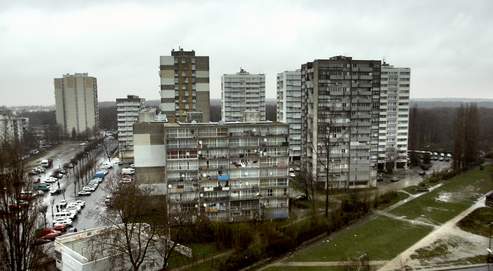
paris1France, like every Western country, ruthlessly excludes Brown/Black people by using discourses of exceptionalism to dispel claims of State-perpetuated racism in order to protect racist hatred under the guise of free speech. Take a look at the Parisian suburbs, Clichy-sous-Bois and Seine-Saint-Denis. Look back at France’s imperialist occupation of Algeria, or the French parliament, and one can easily tease out how obviously anti-Black/Brown French culture has been and become.

But France is not alone, anti-blackness runs deep throughout the West, most particularly among White people who have enslaved Brown/Blacks, have deprived us, murdered us, appropriated our cultures and claimed them as their own, lynched us, isolated us, and tortured us, in the name of the State.
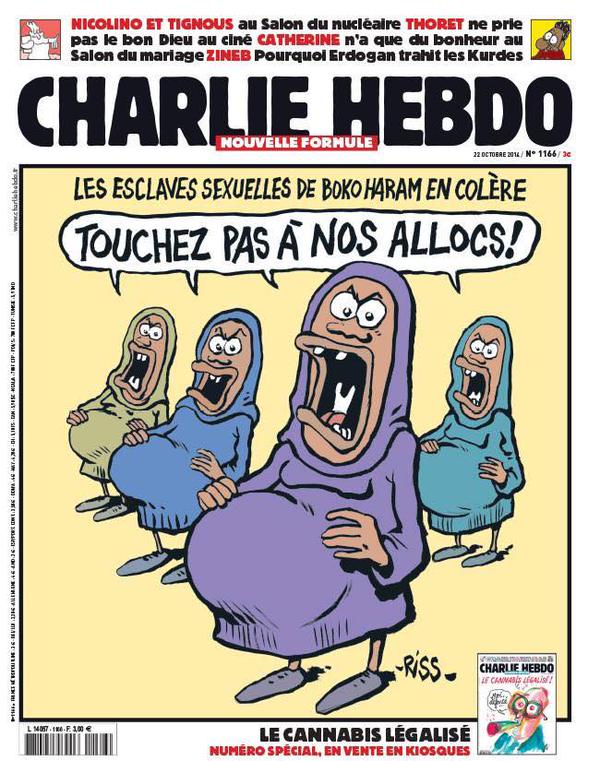
charllieI do not condone the killings of any sentient being, and, yet, the same people trending the popular, #JeSuisCharlie hashtag are the same people trending #KillAllMuslims. The same people who are throwing grenades at French mosques in counter-attacks are the same people who believed Charlie Hebdo wasn’t racist, but satirical. In fact, what we really need to question is why satirizing non-White cultures is seen as harmless, especially when Black and Brown people of these particular cultures have been murdered time-and-time again in the name of the State because of the maintenance of anti-Black, White racial supremacist ideologies.

However, what troubles me the most is the fact that the same activists who have been protesting police violence against people of color, especially here in the United States, are the same people who are shamelessly posting sympathies with Charlie Hebdo.
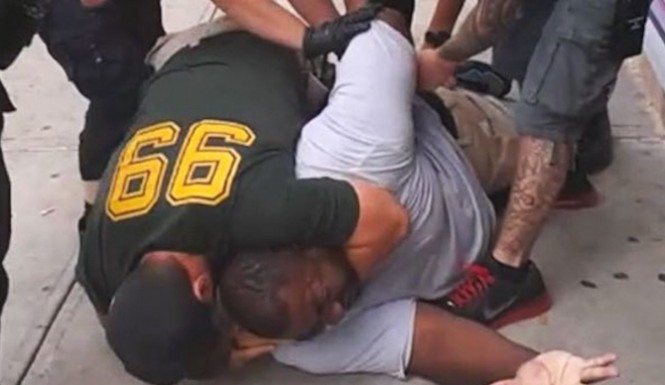
garnerLet me be frank. Islamophobia runs deeply within Western culture. The same activists who are screaming Eric Garner’s last words “I can’t breathe” throughout all of the world’s metropoles should be the same people taking a stand against the rampant Islamophobic now proliferating via media. State-sanctioned cultural violence against Brown Muslims in France, is connected to the State-sanctioned violence exacted upon Black bodies in the United States.

Let us not forget that when Michael Brown was murdered in the streets of St Louis, when Tamir Rice was murdered in front of a park in Cleveland, when Aiyana Jones was murdered while asleep in her bed in Detroit, that across the ocean, Bouna Traoré and Zyed Benna were murdered after being chased by Parisian police into an electrical substation where they were ultimately electrocuted to death.

Let us not forget that Western culture does not believe that the murders of Black/Brown people are worthy enough to be considered national tragedies.

Let us not forget that Charlie Hebdo cartooned racist caricatures of deprived Brown cultures in the name of free speech.

Let us not forget that no one became Christianphobic when White KKK members and other White racial supremacists burned crosses and murdered Black people throughout the United States in the name of Christianity.

Let us not forget the cowardice of Western media as they’ve attempted to focus on Black on Black crime or the recent, tragic, murders of NYPD officers by one Black man as a way of reminding Black and Brown people that we are capable of killing, too.

Media outlets are guilty of igniting the already fiery racial hatred that has been ablaze and guilty of forgetting to fully narrate the ways racial supremacy harms all of us. White people can bomb NAACP offices in Colorado or Mosques in France, and the United Kingdom, and not even get close to the same coverage as did the stories of the two police officers murdered in Brooklyn or that of the cartoonists murdered in Paris.

Let us not forget the pregnant Muslim woman who was attacked for wearing a Niqab in the Parisian suburb of Argenteuil. She not only suffered from anti-Islamic taunts by her attackers, but also had her veil ripped, hair cut off, and most depressingly of all, her soon-to-be born baby murdered via miscarriage.

Let us not forget the White couple who caricatured Eric Garner’s death on ABC Live but did not receive any backlash from Western media.

Let us not forget the Turkish Muslims in Germany fearing for their lives, as Neo-Nazi’s paraded through the streets of German cities, while being excluded from the folds of German society.

Let us not forget that Islamophobia is not just about religion, but more particularly about race, and that even though Charlie Hebdo caricatured France’s White right-wing sensibilities, White people are the only one’s who benefit from racism.

Let us not forget that racism kills, too.

_______________________
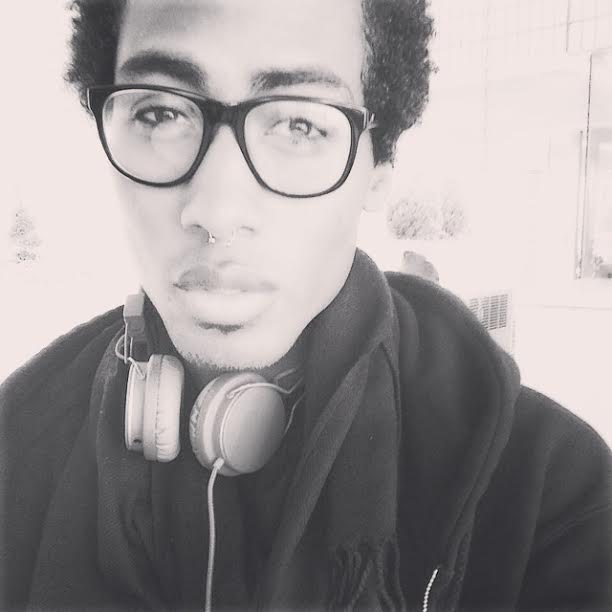
MalikMalik Nashad Sharpe is a queer experimental choreography, poet, writer, and radical thinker from New York, who  is now based in Chicagoland. His choreographic works have been showcased in London, Tokyo, and in Williamstown, MA, and his poetry has been published with New Bourgeois. He graduated from Williams College with a BA in Experimental Dance and Live Art, and also studied radical performance theory, choreography, and contemporary dance at the Trinity Laban Conservatoire for Music and Dance in London, UK. His artistic work can defined specifically as a form of politics, using the organization of time, space, bodies, and words to formulate radical commentary and resistance.


FOLLOW THE FEMINIST WIRE

SUBSCRIBE TO TFW VIA EMAIL

10 Rational Fears Many Black People Have Living Under White Supremacy – Atlanta Blackstar

For Black people in the U.S. and around the world, there are devastating wages to be paid for living in a world dominated by white supremacy.

For Black people in the U.S. and around the world, there are devastating wages to be paid for living in a world dominated by white supremacy.

via 10 Rational Fears Many Black People Have Living Under White Supremacy – Atlanta Blackstar.

The Police Aren’t Under Attack. Institutionalized Racism Is.

The Police Aren’t Under Attack. Institutionalized Racism Is..

By Kareem Abdul-Jabbar, TIME Magazine

24 December 14

The way to honor those who defend our liberties with their lives — as did my father and grandfather — is not to curtail liberty, but to exercise it fully in pursuit of a just and peaceful society


ccording to Ecclesiastes, “To every thing there is a season, and a time to every purpose.” For me, today, that means a time to seek justice and a time to mourn the dead.

And a time to shut the hell up.

The recent brutal murder of two Brooklyn police officers, Rafael Ramos and Wenjian Liu, is a national tragedy that should inspire nationwide mourning. Both my grandfather and father were police officers, so I appreciate what a difficult and dangerous profession law enforcement is. We need to value and celebrate the many officers dedicated to protecting the public and nourishing our justice system. It’s a job most of us don’t have the courage to do.

At the same time, however, we need to understand that their deaths are in no way related to the massive protests against systemic abuses of the justice system as symbolized by the recent deaths—also national tragedies—of Eric Garner, Akai Gurley, and Michael Brown. Ismaaiyl Brinsley, the suicidal killer, wasn’t an impassioned activist expressing political frustration, he was a troubled man who had shot his girlfriend earlier that same day. He even Instagrammed warnings of his violent intentions. None of this is the behavior of a sane man or rational activist. The protests are no more to blame for his actions than The Catcher in the Rye was for the murder of John Lennon or the movie Taxi Driver for the attempted assassination of Ronald Reagan. Crazy has its own twisted logic and it is in no way related to the rational cause-and-effect world the rest of us attempt to create.

Those who are trying to connect the murders of the officers with the thousands of articulate and peaceful protestors across America are being deliberately misleading in a cynical and selfish effort to turn public sentiment against the protestors. This is the same strategy used when trying to lump in the violence and looting with the legitimate protestors, who have disavowed that behavior. They hope to misdirect public attention and emotion in order to stop the protests and the progressive changes that have already resulted. Shaming and blaming is a lot easier than addressing legitimate claims.

Some police unions are especially heinous perpetrators. New York City Mayor Bill de Blasio’s previous public support of protestors has created friction with these unions. The Patrolman’s Benevolent Association responded with a petition asking that the mayor not attend the funerals of officers killed in the line of duty. Following the murders of Ramos and Liu, an account appearing to represent the Sergeants Benevolent Association tweeted: “The blood of 2 executed police officers is on the hands of Mayor de Blasio.” Former New York governor George Pataki tweeted: “Sickened by these barbaric acts, which sadly are a predictable outcome of divisive anti-cop rhetoric of #ericholder and #mayordeblasio. #NYPD.”

This phony and logically baffling indignation is similar to that expressed by the St. Louis County Police Association when it demanded an apology from the NFL when several Rams players entered the field with their hands held high in the iconic Michael Brown gesture of surrender. Or when LeBron James and W.R. Allen wore his “I Can’t Breathe” shirts echoing Eric Garner’s final plea before dying. Such outrage by police unions and politicians implies that there is no problem, which is the erroneous perception that the protestors are trying to change.

This shrill cry of “policism” (a form of reverse racism) by Pataki and the police unions is a hollow and false whine born of financial self-interest (unions) or party politics (Republican Pataki besmirching Democrat de Blasio) rather than social justice. These tragic murders now become a bargaining chip in whatever contract negotiations or political aspirations they have.

What prompted a mentally unstable man to shoot two officers? Protestors? The mayor? Or the unjust killings of unarmed black men? Probably none of them. He was a ticking bomb that anything might have set off. What’s most likely to prevent future incidents like this? Stopping the protests which had sparked real and positive changes through a national dialogue? Changes that can only increase faith in and respect for the police? No, because the killer was mentally unfit. Most likely protecting the police from future incidents will come from better mental health care to identify, treat, and monitor violent persons. Where are those impassioned tweets demanding that?

In a Dec. 21, 2014 article about the shooting, the Los Angeles Times referred to the New York City protests as “anti-police marches,” which is grossly inaccurate and illustrates the problem of perception the protestors are battling. The marches are meant to raise awareness of double standards, lack of adequate police candidate screening, and insufficient training that have resulted in unnecessary killings. Police are not under attack, institutionalized racism is. Trying to remove sexually abusive priests is not an attack on Catholicism, nor is removing ineffective teachers an attack on education. Bad apples, bad training, and bad officials who blindly protect them, are the enemy. And any institution worth saving should want to eliminate them, too.

“To every thing there is a season, and a time to every purpose.” This is the season and time when we should be resolved to continue seeking justice together and not let those with blind biases distract, diminish, or divide us. The way to honor those who defend our liberties with their lives—as did my father and grandfather—is not to curtail liberty, but to exercise it fully in pursuit of a just and peaceful society.

Michael Brown, Abner Louima, and the Anguish of Police Brutality

NOVEMBER 26, 2014

Enough Is Enough

BY 

Michael Brown, Abner Louima, and the Anguish of Police Brutality.

I have seen police brutality up close. Both in Haiti, where I was born during a ruthless dictatorship, and in New York, where I migrated to a working-class, predominantly African-American and Caribbean neighborhood in Brooklyn at the age of twelve. In the Haiti of the nineteen-seventies and early eighties, the violence was overtly political. Government detractors were dragged out of their homes, imprisoned, beaten, or killed. Sometimes, their bodies were left out in the streets, in the hot sun, for hours or days, to intimidate neighbors.

In New York, the violence seemed a bit more subtle, though no less pervasive. When I started riding New York City Transit buses between my family’s apartment and the high school I attended, three miles away, I noticed that a muffled radio message from an annoyed bus driver—about someone talking too loud, or not having the right fare—was all it took to make the police rush in, drag a young black man off the bus, and beat him into submission on the sidewalk. There were no cell-phone cameras back then to record such abuse, and most of us were too terrified to cry “Shame!” or demand a badge number.

Besides, many of us had fled our countries to escape this kind of military or police aggression, so we knew how deadly a confrontation with an armed and uniformed authoritarian figure could be. Still, every now and then a fellow traveller would summon his or her courage and, dodging the swaying baton, or screaming from a distance, would yell some variation of, “Stop it! This is a child! A Child!”

Of course, not all of the police’s victims were children. Abner Louima, a family friend, was thirty years old when he was mistaken for someone who’d punched a police officer outside a Brooklyn nightclub, on August 9, 1997. He was arrested, beaten with fists, as well as with police radios, flashlights, and night sticks, then was sexually assaulted with the wooden handle of a toilet plunger or a broom inside a precinct bathroom. After Abner, there was Amadou Diallo, a Guinean immigrant, who, on February 4, 1999, was hit by nineteen of the forty-one bullets aimed at him as he retrieved his wallet from his pocket. Then there was Patrick Dorismond, who died on March 16, 2000, while trying to convince undercover cops that he was not a drug dealer. Then there was Sean Bell, whose car was shot at fifty times on November 25, 2006, the day of his wedding.

These are only a few cases—a few that made the news. I have no doubt that there were many others, ones involving women, too, though few got much attention, except for that of the sixty-six-year-old Eleanor Bumpurs, who, thirteen years before Abner’s assault, was killed with a twelve-gauge police shot gun inside her own apartment.

We marched for all of them in the Louima/Diallo decade, seven thousand of us across the Brooklyn Bridge one time. We carried signs and chanted “No Justice, No Peace!” and “Whose streets? Our Streets!” even while fearing that this would never be true. The streets belonged to the people with the uniforms and the guns. The streets at that time also belonged to Mayor Rudolph Giuliani, who believed then, and still seems to believe now, that police brutality is unworthy of public scrutiny so long as black people keep “killing each other.” The streets were never ours to begin with, because on these same streets our sons and brothers, fathers and uncles were, and still are, prey.

My father, a Brooklyn cab driver, used to half joke that the only reason the police didn’t beat him up was because he was too skinny and too old, and not worth the effort. Every now and then, when he was randomly stopped by a police officer and deigned to ask why, he would be given, rather than a beating, a handful of unwarranted traffic citations that would wipe out a few weeks’ hard-earned wages. Today, one might generously refer to such acts as micro-aggressions. That is, until they turn major, until they turn deadly. Until a man who is believed to be selling loose cigarettes has the life strangled out of him in a police chokehold. Until yet another unarmed brown or black body finds itself in the familiar path of yet another police officer’s gun.

The other night, while watching the St. Louis County Prosecutor Robert McCulloch declare that there would be no indictment against Officer Darren Wilson for the killing of Michael Brown, I kept thinking of Abner Louima, whose assault took place on another August 9th, when Brown was just eighteen months old.

Abner and I have known each other for years. Yet I have always steered clear, in my conversations with him, of what happened all those years ago. Yesterday, though, I decided to call him, just to hear his thoughts about Michael Brown and Ferguson, Missouri. If anyone could understand all those broken hearts, all the rage, all the desperation, the yearning for justice that we are seeing in Ferguson and all over the country, I thought, he would.

Abner Louima, unlike Michael Brown, survived. He went on with his life, moved to South Florida, started a business, has done charity work. He has a daughter and two sons. One son eighteen years old, the same age Michael Brown was when he died. His other son is fifteen.

I asked him what he thought of the grand jury’s decision. The question seemed to wear on him. It was one, I could tell, that he was tired of answering. “Like everyone else, I’m very disappointed,” he said, his voice sinking with every word. “It’s not a good signal to send to a system that’s already not working.”

How does he feel each time he hears that yet another black man was killed or nearly killed by the police? “It touches me very deeply each time,” he said. “It forces me to ask myself why so little has changed in all these years since this happened to me. It reminds me again and again that our lives mean nothing.” His case, Abner reminded me, was the last one he could think of, in New York or elsewhere, in which the police officers who had assaulted or killed a black man actually went to jail. In his case, justice was served in part because of the public pressure, and because there were federal prosecutors involved, including the current nominee for Attorney General, Loretta Lynch.

What message does Louima have for Brown’s family, whose son died on what could have been the anniversary of his own death? “My heart aches so much for them,” he said. “I know how difficult this must be for them. Like them, I encourage peaceful protest. Too many lives are being lost, so we can’t just close our eyes and hope it goes away. We must keep raising our voices until we find justice for those who lost their lives, and until these things stop happening.” We both wonder: Will these things ever stop happening?

In 2007, on the tenth anniversary of his assault, Abner Louima wrote an opinion piece for the Daily News reflecting on what had happened to him. “It’s time we all said, “Enough is enough,” he wrote. He still believes that—now more than ever.

The Important Role of Armed Resistance in the Black Civil Rights Movement

CIVIL LIBERTIES  

The Important Role of Armed Resistance in the Black Civil Rights Movement

Even Martin Luther King Jr.’s Atlanta home was a discreet arsenal of weapons.

Photo Credit: Atomazul / Shutterstock.com

Yesterday was the 50th anniversary of  “Freedom Summer” and the murder by Mississippi Kluxers of three young civil rights volunteers, James Chaney, Andrew Goodman and “Mickey” Schwerner.  The triple killing was world news mainly because Goodman and Schwerner were white Jewish New Yorkers.   If it had been only the African American Chaney, nobody outside the “beloved community” of the Student Non Violent Coordinating Committee would have cared.  The deep south’s culture of violence against blacks was a given.
What’s not so given, even today, is the black community’s long tradition of armed resistance.  I’m riffing off Charles Cobb’s new book “This Nonviolent Stuff’ll Get You Killed: How Guns Made the Civil Rights Movement Possible.”  Cobb, a Brown University professor, is a former SNCC field worker, a bland way of saying he was under constant fire.   I’m also dipping into my own experience in the Freedom Summer south…but also north.
Ever since slaves were imported to Jamestown in 1619, armed self defense was an authentic part of the African American experience.  I don’t just mean well-known rebellions like Nat Turner’s, but ordinary day to day.  Almost every household I ever visited in the south had a hidden shotgun or pistol under the bed.  This contradicted MLK’s dominant peace-and-love message, his honestly-held outreach to whites, many of whom (like me) flocked to his Gandhian banner.  Less publicly known is that wherever “Martin” traveled he was bodyguarded by men with guns.  Indeed, his own Atlanta home was a  discreet arsenal of weapons.
Even less public was the role of armed black women who for decades had to endure sexual and physical assaults by white southern cops and other thugs who, given immunity from prosecution, felt they could rape at will.   Attending church services in Tuscaloosa, Selma or Montgomery, I was no longer surprised sitting next to a respectable black woman who opened her purse to fan herself revealing a modest little .22.  Cobb cites the well-known story of Mama Dolly Raines in southwest Georgia (where I stayed with SNCC) sitting by her window with her shotgun to protect the Rev. Charles Sherrod, a passionate believer in nonviolence, who was staying with her.
In Albany, Georgia, where I was longest, love and commitment were the hallmarks of community organizing.  The locals we were embedded in took us in like their own children.   We were family.   They would do anything to protect us from the constant threat of beatings and death.  Or as Mama Dolly, a midwife, told Sherrod, “Baby, I brought a lot of these white folks into this world, and I’ll take ‘em out of this world if I have to.”
It’s sometimes hard for civilized nawthenuhs to remember how American-cherrypie violence was in the south.  In Chattanooga, where I first went to school, streetcar conductors wore holstered pistols; city bus drivers all over the segregated south “packed”.   You shot a “nigger” who gave you lip without second thoughts or fear of arrest.  If you’re the local sheriff in rural Georgia and fancied a black man’s woman you erased him from the picture by beating him up and jailing him for assault.
Passive resistance began to change when WW2 veterans, trained in weapons, came home.  Suddenly bad whites were confronted by armed ex-soldiers in the Deacons for Defense or ex-Marine Robert Williams’ Black Armed Guard (with an NRA charter yet!) in Monroe, North Carolina, to defend against racist attacks.  Historically, there had always been the odd, defiant black man with a shotgun standing on his porch confronting KKK cross burners.   Now, here and there, wherever Rev. King went, or was afraid to go, was collective resistance.  In Birmingham when one of King’s bodyguards was asked how he protected his man, he replied, “With a nonviolent .38 police special.”
Up nawth the black mind set wasn’t all that different but with an entirely different circumstance.   When I held a seminar on Black Nationalism at Monteith College for half a dozen young street blacks each one of them proudly showed me his shiv or cheap pistol.  My sweet tempered Detroit host, Jim Boggs, the African American auto worker and Marxist activist, walked me to the corner bus stop on my last day but not before reaching behind his prized bust of Lenin on the mantelpiece and withdrawing his own .38 to escort me a city block.  In my old Chicago neighborhood my host, a postal worker, waved me up to his apartment by pointing a shotgun out of the window to signal to the gang kids downstairs, including his own son, he meant business.
The 10th District cops I rode with, both African American, were  armed: each hid a .45 under his clipboard, wore a hip holstered .38 and an ankle .25 caliber as backup to the backup plus two Mosberg 500 riot shotguns in the rack.  “And you know what,” said my police driver, “we’re still outgunned.”   His theory was that much of Chicago’s black-on-black violence was a form of culture shock.  “These southern boys come up north with their mamas looking for work.  Down in Alabama and Mississippi they had to toe the line or get lynched.  Yassuh noesuh shonuff suh.  All that peckerwood crap.  Take that train up to Chicago and the chains drop off.   They ain’t no more oppressed.  Run wild.  Cuss, shoot dope, murder each other or white folks.  They wouldn’t dare do that in Yazoo County.”
So in honoring Chaney, Schwerner and Goodman, martyrs to a beloved community of non violent resistance, I can’t help thinking how it might have turned out differently if on that lonely Mississippi road in 1964, they’d been tailed not by murderous morons but by the Deacons for Defense.

David Goodman: Time for a new ‘Freedom Summer’

David Goodman Photo: The Andrew Goodman Foundation

Fifty years ago, on June 21, 1964, my older brother, Andrew Goodman, was murdered near Philadelphia, Miss. He and his colleagues Michael Schwerner and James Chaney were ambushed by more than a dozen members of the Ku Klux Klan, including the county’s deputy sheriff. They were taken to an unmarked dirt road and shot, one by one.

Their bodies weren’t discovered for 44 days, a mystery and a tragedy that continues to elicit raw emotions even a half-century later.It happened on the first day of Freedom Summer, an effort by the black leadership to flood Mississippi with northern college students who would help register African-American voters.At the time, barely 7 percent of Mississippi’s black residents were registered to vote. In eight of the 13 mostly black counties in the state, not a single African American had ever voted.

A century after the Civil War, they remained disenfranchised — citizens without a voice. It was more than segregation; it was subjugation. Something had to be done.The 1964 Mississippi Freedom Summer Project was a bold initiative. Given the widespread hatred of “outside agitators,” it was an act of remarkable bravery by all who participated.As the late Maya Angelou wrote in the foreword to My Mantelpiece, the recently published posthumous memoir of my mother, Carolyn Goodman, “Those three young men represent 300,000 young men and women who dared, who had the courage to go to the lion’s den and try to scrub the lion’s teeth.

“When 20-year-old Andy asked my parents for permission to volunteer in Mississippi, their urge to protect their son was trumped by the understanding that he was a spiritual reflection of themselves and their willingness to take action. His death devastated my family, but the brazenness of the act also shocked the nation.

Sadly, it was largely because two of the three victims were white.In fact, as officials searched through the forests and swamps of Mississippi, they discovered many black lynching victims who simply had been ignored because their tragic fate had become commonplace. So the case, which inspired the movie Mississippi Burning, lit a fire for the cause. It is no coincidence that the Voting Rights Act of 1965 was passed the following year.Yet here we go again. Last year, the Supreme Court struck down a key provision of that landmark piece of legislation, and immediately a number of states moved to implement laws that would essentially reduce voter turnout among minority groups. Dubious claims of voter fraud are being used to once again disenfranchise a portion of the population.In 1964, black would-be voters were turned away by intimidation and poll tests. Now, voter ID requirements and limited voting hours will disproportionately turn away, or inconvenience, low-income and minority voters. It is a more sophisticated and insidious form of voter suppression.Something has to be done.

After Andy’s death, my mother devoted the rest of her life to ensuring that he did not die in vain. She formed The Andrew Goodman Foundation, celebrated youth activists, and worked tirelessly for voting rights and human rights she was even arrested during a protest at age 83.As the estimable Rep. John Lewis put it, “She got in trouble. … It was necessary trouble. And she inspired many of us to continue to get in trouble.”But 50 years after Freedom Summer, we once again need to cause some trouble. The tragedy of the “Mississippi Burning” murders became a travesty of justice when only a handful of the perpetrators were convicted on federal charges, none spending more than a half-dozen years in prison because the state wouldn’t pursue a murder prosecution.It wasn’t until 41 years later that the ringleader of the group was convicted of three counts of manslaughter. My 89-year-old mother testified at the trial, a trial that happened because a few determined folks, inside and outside of Mississippi, wouldn’t let it go.

So we cannot let this new movement — these cynical and sinister attempts to disenfranchise Americans — go. If it takes an act of “outside agitation,” so be it. If it requires courage, we can summon it. If it means replacing cynicism with optimism and apathy with action, we can accomplish it. After all, there is a tiny hamlet right next to Philadelphia, Miss.

It is a town called Hope.David Goodman is The Andrew Goodman Foundation president.

via David Goodman: Time for a new ‘Freedom Summer’.

From Prostitute to Professor: The 7 Lessons of Maya Angelou’s Messy Life φ Yolanda Young

From Prostitute to Professor: The 7 Lessons of Maya Angelou’s Messy Life

Yolanda Young

Yolanda Young Become a fan

Yolanda Young is the author of On Our Way To Beautiful founder of http://www.onbeingablacklawyer.com.

Posted: 06/12/2014
MAYA ANGELOU

The death of Dr. Maya Angelou provided us the opportunity to once again delight in her memoirs, which chronicle the eclectic, bohemian first half of her life. Yet, we know from her writings that such praise was often withheld as she pursued her dreams of being a dancer and poet while raising a young child as a single mother. How many times must she have been urged to settle down and give up her artistic and cultural pursuits, which time and time again left her broke and broken? While we now refer to Angelou as a renaissance woman, until she published I Know Why The Caged Bird Sings in her 40s, her life resembled what is referred to in ghetto parlance as a hot mess.

This messiness is what we all fear. It is why rather than pursue our dreams, we settle into the lives expected of us. Cubicles and cul-de-sacs become the things of our imagination. Only happiness and satisfaction studies suggest they are not enough. A GALLUP Poll last year found that only 30 percent of U.S. workers are passionate about their work. The majority (52 percent) are unhappy with their jobs and put little energy into their work while another 18 percent actually hate their jobs and actively work to undermine coworkers. We sacrifice our dreams only to find ourselves restless, bored and frustrated in midlife having realized what Angelou told us all along; “making a living is not the same thing as making a life.” Worse still, we recognize the irony in discovering after layoffs, financial setbacks and divorce that the “mess” is unavoidable.

These unmet expectations and realization that youthful aspirations have been abandoned are suspected as the cause of feelings of discouragement and depression among those in midlife. The British think tank NatCen Social Research found that studies show that people between 35 and 55 suffer a dip in well-being. A separate study that analyzed data from “nationally representative” surveys in Australia, Britain and Germany found that the bell curve in well-being dips to its lowest point around the ages of 40 to 42.

Even those who choose to pursue unconventional dreams don’t escape these feelings, especially if such pursuits have come at the expense of nearly everything else. I abandoned life as a lawyer in favor of one as a writer, activist and entrepreneur. Now having entered midlife without any of our culture’s success markers — husband, children, two-car garage — I have had to answer, both to myself and to others, the question of whether the path I’ve chosen was a wise one. Reflecting on Angelou’s has helped me find the answers.

1. Be uniquely you.

Angelou described herself in I Know Why the Caged Bird Sings as “a too-big Negro girl, with nappy black hair, broad feet and a space between her teeth that would hold a number-two pencil.” She knew such a girl would’ve perished trying to conform to mainstream conventions. “If you’re always trying to be normal, you will never know how amazing you can be.” Instead of fretting over not being a swan, Angelou reinvented herself as a rare bird. As many biographers have noted, she won’t be remembered for her poems or plays, but for her memoirs and for being Maya Angelou. The key to discerning one’s authenticity is quite simple: “Listen to yourself and in that quietude you might hear the voice of God.”

2. When it comes to failure, be courageous.

Angelou was a marvelous failure. Her most noteworthy stage performance, playing the seamstress in the two-woman play Mary Todd Lincoln, earned her a Tony nomination but closed on opening night. The rolling stone never stuck to one thing for long. She moved from coast to coast, continent to continent, sometimes making poor childcare decisions, one of which resulted in her son’s brief abduction. She didn’t have a stable home or steady job until she was in her 50s, an age at which many are preparing for retirement. She divorced several times but would would never confirm the exact number, “for fear of sounding frivolous.” Aware of all her failings, Angelou was brave enough to look at herself. “We have to confront ourselves. Do we like what we see in the mirror? And, according to our light, according to our understanding, according to our courage, we will have to say yea or nay — and rise!”

3. Know who your friends are.

One would be hard-pressed to identify a significant black figure Angelou didn’t know. She danced with Amiri Baraka. Billie Holiday visited her home and explained the meaning of Strange Fruit to her young son. While a calypso dancer she worked with Alvin Ailey. James Baldwin gave her the introductions that would lead to the publication of her first memoir. These were people she deeply cared for, but in anEssence interview, she had this to say of friendship.

There’s a marked difference between acquaintances and friends. Most people really don’t become friends. They become deep and serious acquaintances. But in a friendship you get to know the spirit of another person, and your values coincide. Friends may disagree, but not about serious matters. A friend will stand for you when you are no longer able… Years ago one of the slick White women’s magazines asked if they could photograph me with my closest friends for an issue they were doing on friends. The editor wanted me to bring Oprah. I have 30 years on Oprah. She calls me her friend, her mother, all that. I am very close to her in a motherly way. So I told [the magazine], ‘I have three dear friends — Dolly McPherson, Jessica ‘Decca’ Mitford and M.J. Hewitt — they are sisters to me.’

4. Believe you can do anything.

For Angelou, inexperience was never a reason not to take on an interesting job. Angelou’s only criterion was seemingly that a new occupation share little to no similarities with her previous one. At sixteen, she became San Francisco’s first African-American streetcar conductor and later passed herself off as an experienced Creole chef. She held jobs dancing in a nightclub, stripping paint from old cars, and singing Calypso. She knew nothing about being a journalist when she accepted a position as an editor for The Arab Observer,” an English-language magazine. She said of the experience,

I stayed at the Arab Observer for over a year and gradually my ignorance receded. I learned from Abdul Hassan how to write an opinionated article with such subtlety that the reader would think the opinion his own…I received a raise from Dr. Nagati, the respect of my fellow workers and a few compliments from strangers…

She made her television debut as Kunte Kinte’s grandmother in the acclaimed television adaptation of Alex Haley’s Roots. And in the one-time high school dropout who never attended college became the Reynolds professor of American studies at Wake Forest University in North Carolina.

5. Forgive others and yourself.

In addition to enduring the injustices that came along with being poor, black and female in the South, Angelou was also raped as a child and beaten as a young woman. In a May 9th interview at her home she told Armstrong Williams, “I’ve learned that forgiving is one of the greatest gifts that I can give myself…And as soon as I do I feel lighter, brighter and better.”

In Gather Together in My Name, Angelou shares one of her lowest periods when she served as a pimp for two lesbian prostitutes and sometimes worked as a prostitute herself. In one interview, she said of the experience.

If you happen to fall into that sort of experience, what you have to do is forgive yourself. If you’re in the very gutter, see where you are and admit it. As soon as you admit it, you can be like the prodigal son, the prodigal daughter. Get up and go home — wherever home is. Get up and go to a safe place, someplace where your spirit is not kicked and brutalized and your body not misused and abused. Get up. But you can’t get up unless you see where you are and admit it.

6. Persevere.

In A Song Flung Up to Heaven, Angelou tells of her midlife crisis which was accompanied by great sorrow. Returning to the States after the end of a romance in Africa, Angelou became a Civil Rights activist only to be witness to the Movement’s greatest tragedies. She was working with Malcolm X to establish his foundation when he was assassinated New York City. Three years later she was working as the northern coordinator for Dr. Martin Luther King Jr. when he was gunned down in Memphis on Angelou’s 40th birthday. For a time, Angelou withdrew from society unable to deal with the tragedy, but eventually she harnessed her grief and regrets to write her seminal work, I Know Why The Caged Bird Sings. From then on, she would rise at dawn and set out for the motel room where she would write. Her only companions were a Bible, a dictionary, a thesaurus, a stack of legal pads, and a bottle of sherry. Having written her way out of the worst time in her life, she credited it with her survival. “All my work is meant to say, ‘You may encounter many defeats, but you must not be defeated…Nothing will work unless you do.”

7. Change.

Angelou was a master of reinvention. She didn’t settle on a name until after her first marriage, claiming her childhood nickname and a twist on her first husband’s last name. For Angelou, change was essential. Perhaps more so when one decides nothing can be done at all. “If you don’t like something, change it. If you can’t change it, change your attitude.”


Yolanda Young Headshot

Follow @yolandayoungesq

Follow Yolanda Young on Twitter: www.twitter.com/yolandayoungesq


America’s Moral Debt To African Americans l Smithsonian.com

America’s Moral Debt To African Americans

SLAVERY
 As a historian, I know slavery has left a deep scar on America. The reasons are many. I have found wisdom in the words of Cornelius Holmes, a former slave, interviewed in 1939, a man who saw brutality and separation of families. Holmes shared the dreams and melodies before freedom and then witnessed the reality of freedom.

One reason for my current retrospection is the fine essay by Ta-Nehisi Coates in the June issue of the Atlantic arguing that reparations are deserved and long overdue. He has gathered an amazing array of facts about racism, economics, violence and the role of the U.S. government, implicit and explicit. With pinpoint clarity, Coates has focused a scholarly light that shines into all the dark corners of this shameful chapter in our history.

Read the whole story at Smithsonian.com

Print Article


OCG Reparations Page

Who are Black Americans? A Primer for Educators φ Ivory A. Toldson, Editor in Chief, The Journal of Negro Education

wegeonocideWho are Black Americans? A Primer for Educators

By: Ivory A. Toldson 

Persons of Black African ancestry live as citizens, foreign nationals, and indigenous populations on every continent as a result of immigration, colonialism and slave trading. Today, most Black people in the Americas are the progeny of victims of the transatlantic slave trade. From 1619 to 1863, millions of Africans were involuntarily relocated from various regions of West Africa to newly established European colonies in the Americas. Many different African ethnic groups, including the Congo, Yoruba, Wolof, and Ibo, were casualties of the transatlantic slave trade. The Black American population is the aggregate of these groups, consolidated into one race, bound by a common struggle against racial oppression and distinguished by cultural dualism.

Importantly, the historic legacy of Black people in the Western Hemisphere is not limited to slavery. The Olmec heads found along the Mexican Gulf Coast is evidence of African colonies in the Americas centuries before Columbus arrived in the Caribbean. Black people were also responsible for establishing the world’s first free Black republic, and only the second independent nation in the Western Hemisphere, with the Haitian Revolution. In the United States, almost 500,000 African Americans were free prior to the Civil War and were immensely instrumental in shaping U.S. policy throughout abolition and beyond. Post-Civil War, African Americans influenced U.S. arts, agriculture, foods, textile, language, and invented technological necessities such as the traffic light and elevators, and parts necessary to build the automobile and personal computer. All of these contributions were necessary for the U.S. to become a world power by the 20th Century.

Racism and oppression are forces that have shaped the experiences and development of Black people worldwide. Although European colonialists initially enslaved Black people because of their agricultural expertise and genetic resistance to diseases, they used racist propaganda to justify their inhumane practices. During periods of slavery and the “Scramble for Africa,” European institutions used pseudoscience and religion (e.g. the Hamitic myth) to dehumanize Black people. The vestiges of racism and oppression survived centuries after propaganda campaigns ended and influence all human interactions today.

Today, racism is perpetuated most profoundly through the educational system. Black students are taught to revere historians, such as Columbus, who nearly committed genocide against the native population of the Dominican Republic; and Woodrow Wilson who openly praised the Ku Klux Klan. Although many of these facts are not well known and purposefully disguised in history texts, children often leave traditional elementary and secondary education with the sense that aside from a few isolated figures (e.g. Martin Luther King and Harriet Tubman) Black people had a relatively small role in the development of modern nations.

Survey data often indicate that African Americans have the highest incidence and mortality of any given mental or physical disorder, are more deeply impacted by social ills, and generally have the lowest economic standing. While some of the data are accurately presented, rationales are usually baseless and findings typically lack a sociohistorical context. In addition, studies on African Americans unfairly draw social comparisons to the social groups that historically benefited from their oppression.

Historical distortions accompanying dismal statistics have resulted in many educators and counselors perpetually using a deficit model when working with Black students. The deficit model focuses on problems, without exploring sociohistorical factors or institutional procedures. Persons of Black African ancestry have a distinguished history, are immeasurably resilient, and have developed sophisticated coping mechanisms throughout centuries of oppression. Appreciating and celebrating a Black people’s legacy, contextualizing problems, and building on strengths instead of focusing on deficits are universally appreciated counseling strategies, which merit greater prudence when working with Black children.

IVORY TOLDSON  is the Deputy Director of  White House Initiative on Historically Black Colleges; Universities; Associate Professor at Howard University and Editor in Chief of The Journal of Negro Education

Why Do Millennials Not Understand Racism? φ Jamelle Bouie

Why Do Millennials Not Understand Racism?

They think if we ignore skin color, racism will somehow disappear.

140515_POL_BWMillenials
Millennials see racism as a matter of different treatment, justified by race, that you solve by removing race from the equation.
Photo illustration by Slate. Photos by Shutterstock.

When you hear MTV, you don’t think “research.” But, for the last few years, the music television channel has been building a public affairs campaign to address bias called “Look Different.” Aimed at millennials, it seeks to help them deal with prejudice and discrimination in their lives. And as part of the project, MTV has worked with pollsters to survey a nationally representative sample of people ages 14 to 24 to measure how young people are “experiencing, affected by, and responding to issues associated with bias.”  φ

Jamelle BouieJAMELLE BOUIE

Jamelle Bouie is a Slate staff writer covering politics, policy, and race.

Overall, MTV confirms the general view of millennials: Compared with previous generations, they’re more tolerant and diverse and profess a deeper commitment to equality and fairness. At the same time, however, they’re committed to an ideal of colorblindness that leaves them uncomfortable with race, opposed to measures to reduce racial inequality, and a bit confused about what racism is.

All of this is apparent in the findings. Ninety-one percent of respondents “believe in equality” and believe “everyone should be treated equally.” Likewise, 84 percent say their families taught them to treat everyone the same, no matter their race, and 89 percent believe everyone should be treated as equals. With that said, only 37 percent of respondents (30 percent of whites and 46 percent of minorities) say they were raised in families that talk about race.

For this reason, perhaps, a majority of millennials say that their generation is “post-racial.” Seventy-two percent believe their generation believes in equality more than older people, and 58 percent believe that as they get older, racism will become less of an issue. It’s almost certainly true that this view is influenced by the presence of President Obama. Sixty-two percent believe that having a black president shows that minorities have the same opportunities as whites, and 67 percent believe it proves that race is not a “barrier to accomplishments.”

It’s no surprise, then, that most millennials aspire to “colorblindness.” Sixty-eight percent say “focusing on race prevents society from becoming colorblind.” As such, millennials are hostile to race-based affirmative action: 88 percent believe racial preferences are unfair as a matter of course, and 70 percent believe they are unfair regardless of “historical inequalities.” Interestingly, the difference between whites and people of color is nonexistent on the first question and small (74 percent versus 65 percent) on the second. But this might look different if you disaggregated “people of color” by race. There’s a chance that black millennials are more friendly to affirmative action than their Latino or Asian peers.

For all of these aspirations, however, millennials have a hard time talking about race and discrimination. Although 73 percent believe that we should talk “more openly” about bias, only 20 percent say they’re comfortable doing so—despite the fact that a plurality of minorities say that their racial identities shape their views of the world.

What’s more, for all of their unity on tolerance and equality, white and minority millennials have divergent views on the status of whites and minorities in society. Forty-one percent of white millennials say that the government “pays too much attention to the problems of racial minority groups while 65 percent of minorities say that whites have more opportunities.” More jarring is the 48 percent of white millennials who say discrimination against whites is as big a problem as discrimination against racial minorities. With that in mind, it’s worth a quick look at a 2012 poll from the Public Religion Research Institute, where 58 percent of white millennials said that discrimination against whites was as big a problem as discrimination against minorities.

It’s hard to say which is the “true” number, but there’s no doubt that a substantial plurality of young white people believe their race is a disadvantage, which is ludicrous given the small number who say that they’ve felt excluded because of their race (10 percent) or say that they’ve been hurt by racial offenses (25 percent).

But while this reaction doesn’t seem to have a basis in reality, it makes perfect sense given what millennials writ large believe about racism. Let’s go back to the results on colorblindness and affirmative action. Seventy-three percent believe that “never considering race would improve society,” and 90 percent say that “everyone should be treated the same regardless of race.”

From these results, it’s clear that—like most Americans—millennials see racism as a matter of different treatment, justified by race, that you solve by removing race from the equation. If we ignore skin color in our decisions, then there can’t be racism.

The problem is that racism isn’t reducible to “different treatment.” Since if it is, measures to ameliorate racial inequality—like the Voting Rights Act—would be as “racist” as the policies that necessitated them. No, racism is better understood as white supremacy—anything that furthers a broad hierarchy of racist inequity, where whites possess the greatest share of power, respect, and resources, and blacks the least.

Millennials have grown up in a world where we talk about race without racism—or don’t talk about it at all—and where “skin color” is the explanation for racial inequality, as if ghettos are ghettos because they are black, and not because they were created. As such, their views on racism—where you fight bias by denying it matters to outcomes—are muddled and confused.

Which gets to the irony of this survey: A generation that hates racism but chooses colorblindness is a generation that, through its neglect, comes to perpetuate it.