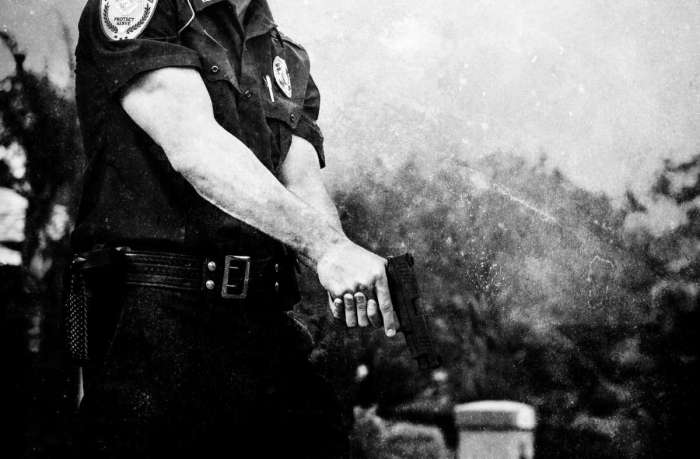
federal lawsuit alleging that the California city of Rancho Cordova “fostered a culture of violence” among local police was filed just weeks before videos showing a white Rancho Cordova police officer pummeling a Black teenager sparked national outrage on Monday. Local law enforcement officials are investigating the latest incident, which reportedly began when the officer stopped a 14-year-old boy for buying a cigar. The encounter escalated, and now-infamous videos circulating widely online show the officer pinning the boy to the ground and punching him several times.
For many, the videos are just the latest example of how people of color, particularly Black and Native people, must turn to social media to seek accountability for acts of racist police violence. Moreover, a lawsuit filed by two brothers arrested in March claims Rancho Cordova has “fostered a culture of violence” that allows its police officers to use excessive force against the public. Together the two cases raise important questions about race and police accountability in the diverse, working-class suburb of Sacramento — and around the country.
Last month, twin brothers Thomas and Carlos Williams filed separate lawsuits in a California federal court alleging that they were wrongfully arrested and violently beaten by three Rancho Cordova police officers on March 23. The two brothers were doing yard work outside Carlos Williams’s new home in Rancho Cordova when a white neighbor mistook them for burglars and called 911, according to the lawsuit filed on behalf of Thomas Williams. Without warning, the officers busted into the yard yelling expletives with their guns drawn.
The Williams brothers, who are Black, tried to tell the officers that they were residents, but the officers “did not care,” the lawsuit claims. Thomas Williams, an education professor who founded a school for children with disabilities, told local reporters that he was “kneed in the head and elbowed on the side of my face.” The officers later accused the brothers of resisting their orders, but the brothers say their hands were in the air. One officer held Thomas Williams in a chokehold for over a minute until he became unconscious, according to the complaint.
“I said, ‘Man he’s not going to make it.’ I saw the veins and the officer just squeezing him tight,” Carlos Williams told CBS Sacramento.
While Thomas Williams was collapsed on the ground in handcuffs, the officers searched the two brothers and found Carlos Williams’s driver’s license, which made it “plainly obvious to the arresting officers that Carlos was not burglarizing his own home,” the lawsuit claims. Still, the officers searched the home and property before arresting the two brothers and holding them in custody for 20 hours. Neither has been charged with a crime, and the lawsuit alleges the officers have since made numerous false statements to justify the excessive use of force.
Now, five weeks later, a controversy over police violence unfolding in Rancho Cordova has ignited social media across the country. On Monday, 14-year-old Elijah Tufono was stopped and aggressively detained by a Rancho Cordova police deputy identified as Officer Brian Fowell in local reports. On the evening news, Tufono said he had just bought a cigar off a stranger when a cop pulled up and asked him what was in his hand. Tufono said he handed the cigar over to the officer right away, but the officer continued to ask him questions. Frightened, Tufono tried to talk his way out of it and the situation escalated into a scuffle as Fowell tried to put him in handcuffs.
In the video, Fowell is seen wrestling Tufono on the ground and throwing punches into the boy’s abdomen. Tufono was arrested and cited before being released to his family. Videos of the arrest posted by friends and family quickly went viral, drawing condemnation from thousands of viewers as well as former Democratic presidential candidates Julian Castro and Kamala Harris.
While law enforcement officials in Rancho Cordova say they are investigating the use of force against Tufono, it remains unclear if the use of force against the Williams brothers is also being investigated. The Rancho Cordova Sheriff’s Department, which contracts with the city’s police department, did not respond to an email from Truthout. Unlike the arrest of Tufono, it appears that no clear video footage has emerged of the Williams brothers’ arrest, and the plaintiffs are not certain of the officers’ identities. A dashboard camera in one of the police cars was turned off shortly before the incident, and at least one officer repeatedly turned on and off a microphone attached to his body, according to the lawsuit.
The U.S. is using the pandemic as a pretext to further shut down asylum, while spreading the virus through deportations.
. . .
COVID-19 Weaponized to Shut Down Borders
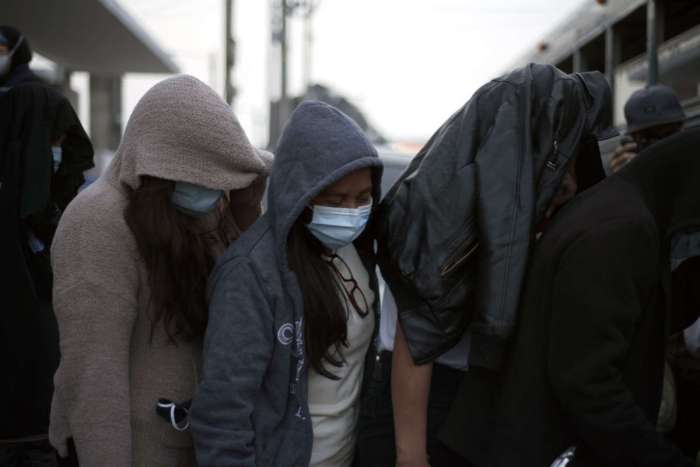
The Trump administration began pushing its agenda of shutting down asylum in the U.S. right out of the gate, and COVID-19 has now provided a new justification. Purportedly to protect public health, the government has essentially shut down asylum at the southern border with Mexico while the U.S. spreads the virus through deportations. Asylum deals with Central American nations are currently in limbo, but the administration could begin sending people to a third country, Honduras, at any time.
In 2019, the U.S. Department of Homeland Security signed a series of bilateral agreements with security officials in Guatemala, Honduras and El Salvador, including an asylum cooperative agreement (ACA) with each country. The agreements permit the U.S. to send asylum seekers of other nationalities to precisely those Central American countries that hundreds of thousands of citizens have been fleeing, and forcing them to seek asylum there instead or return home.
More than 900 Hondurans and Salvadorans were sent to Guatemala under the agreement between November 2019 and mid-March 2020, when implementation was suspended due to factors related to COVID-19, and the president of El Salvador said months prior that his country did not yet have any capacity to receive people under the third country deal. But implementation of the U.S.-Honduras asylum cooperative agreement could potentially begin at any time, following its publication on May 1 in the U.S. Federal Register.
“There are some reasons why the Trump administration might roll out some other ACAs like the Honduran ACA,” said Yael Schacher, senior U.S. advocate at Refugees International, a humanitarian and advocacy group based in Washington, D.C.
Together with Human Rights Watch, Refugees International just released a new report, “Deportation with a Layover,” that examines the U.S.-Guatemala asylum cooperative agreement. The May 19 report details rights violations and lack of protection at every step of the way, from U.S. Customs and Border Protection (CBP) custody to Guatemala. People are effectively compelled to abandon their asylum claims, according to the report, which notes only 20 of the 939 Hondurans and Salvadorans sent to Guatemala under the deal applied for asylum in Guatemala.
No insurance. 64 years old. Alone, along with all the other black people at the bottom of the pandemic.
By LeRhonda S. Manigault-Bryant
Dr. Manigault-Bryant is an associate professor of Africana studies at Williams College.
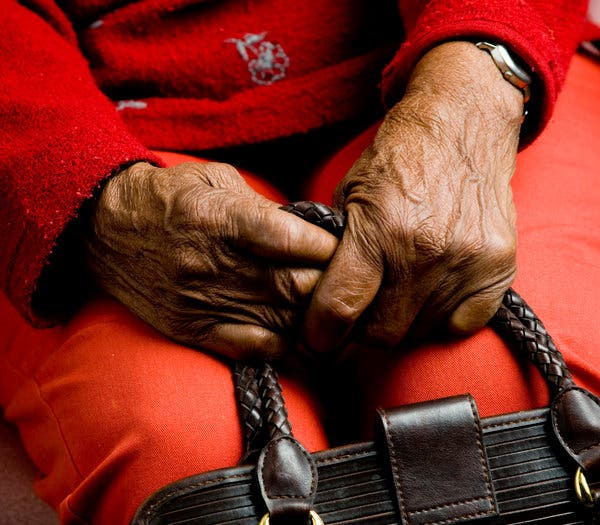
My mother is dying a painful death, and it has everything and nothing to do with Covid-19.
In a piece for The Atlantic detailing the ways in which the coronavirus seems to be hitting black people the hardest, Ibram X. Kendi wrote: “Sometimes racial data tell us something we don’t know. Other times we need racial data to confirm something we already seem to know.” My mother is a living example of what we already know about race, class and suffering.
She is not in an elder-care facility, nor a hospital. She has not been, and most likely will not be, tested for the virus or receive a diagnosis of having it.
Still, hers is the body of all the black people at the bottom of the pandemic. No insurance, though not for lack of trying. Medicaid applications denied for reasons we don’t understand. Inconsistent care at a local public clinic meant hard-to-come-by appointments and checkups only at moments deemed most critical. It wasn’t enough.
Now, she’s dying from end-stage liver disease and kidney failure, diagnosed too late to save her. This has nothing to do with Covid-19.
She is not even that old (64, and thus Medicare ineligible), but FaceTime tells no lies, and she is wasting away before us. What’s worse, even as I’m exactly four hours and three minutes away — geographically closer than I’ve been in over a decade — I can’t be near her, touch her, cook for her, kiss her or tell her all of the things that I don’t yet know I need to say. This has everything to do with Covid-19.
On the occasion she’s strong enough to answer the phone, holding the phone for FaceTime proves too much. Calls come too late, even as time is too short. The grandchildren who live close by cannot get close to her — the idea of transmitting anything to her, as she’s so obviously immune-compromised, is terrifying. The underlying conditions would amplify an already-certain death. This has everything to do with Covid-19.
My brother, who lives exactly six minutes and 24 seconds away from Mommy, risks seeing her because someone needs to make sure she’s still breathing. That check-in is thus essential. He scrubs himself clean after work with all manner of chemicals — he’s a waste management truck driver, an essential employee. This is an effort to protect her. He’s close to her. This is an effort to protect us. This has everything to do with Covid-19.
He tries to get her to eat something other than her single meal of applesauce and Vienna sausages. This has nothing to do with Covid-19.
It’s officially power-of-attorney and health-proxy time. Getting my mother to the lawyer — a four-minute drive — is a thing. My brother and I spend hours strategizing transportation. The errand feels like it takes an eternity. This has everything to do with Covid-19.
My mother is going to die soon, and my process isn’t pretty. I laugh and remember, rage and weep, and I lament time lost, never to be regained. When she has enough energy to speak, she rushes me off the phone, invoking busyness. She’s busy getting ready to die, and it doesn’t seem like it’s on her own terms. Is it ever? I want more time. This has nothing to do with Covid-19.
Like so many, countless others, my family and I are going to be left with the unsettling weight of her death. My mother is going to die soon, and it will most likely be alone. I am afraid. I am one of many grieving, forever-changed faces. No repast. No low-country songs sung graveside. No sending up our timber for her. We cannot grieve properly. Lots of regret. This has everything to do with Covid-19.
When the pandemic is over, we still won’t know how to deal with this. We’re not ready for this kind of grief. Death is so utter, so absolute, yet so much right now is uncertain. My mother is dying a painful death, and it has everything and nothing to do with Covid-19.
African-Americans are more likely to die from the disease than white Americans
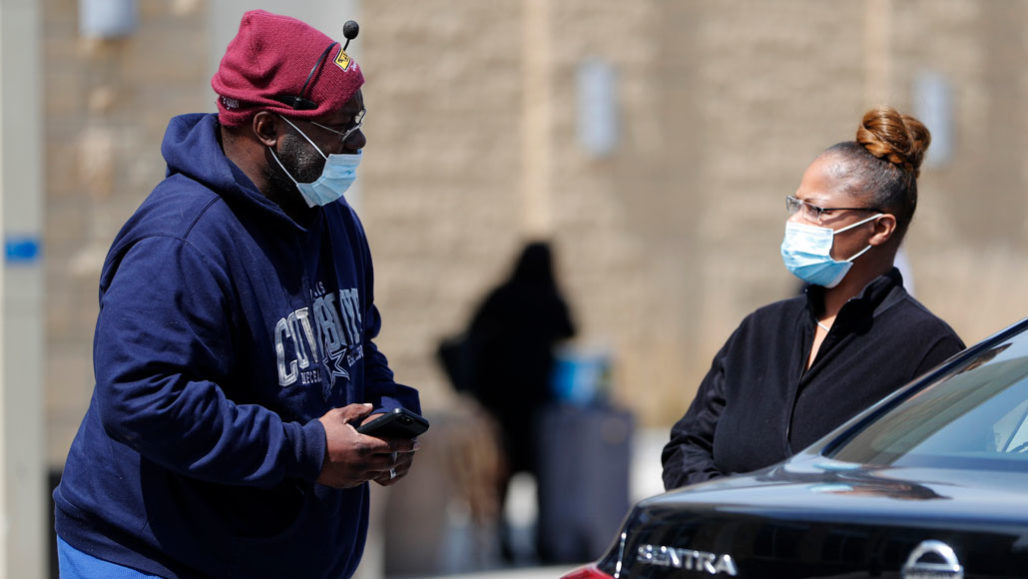
African-Americans have increased exposure to COVID-19, in part, because they disproportionately have jobs in the service sector. Here, a man is shown with his ride share driver at a train station in Joliet, Ill., on April 6.CHARLES REX ARBOGAST/AP PHOTO
COVID-19 was called the great equalizer. Nobody was immune; anybody could succumb. But the virus’ spread across the United States is exposing racial fault lines, with early data showing that African-Americans are more likely to die from the disease than white Americans.
The data are still piecemeal, with only some states and counties breaking down COVID-19 cases and outcomes by race. But even without nationwide data, the numbers are stark. Where race data are known — for only 3,300 of 13,000 COVID-19 deaths — African-Americans account for 42 percent of the deaths, the Associated Press reported April 9. Those data also suggest the disparity could be highest in the South. For instance, in both Louisiana and Mississippi, African-Americans account for over 65 percent of known COVID-19 deaths.
Other regions are seeing disparities as well. For instance, in Illinois, where the bulk of infections are in the Chicago area, 28 percent of the 16,422 confirmed cases as of April 9 were African-Americans, but African-Americans accounted for nearly 43 percent of the state’s 528 deaths.
Other data find similar trends. A study published online April 8 in the U.S. Centers for Disease Control and Prevention’s Morbidity and Mortality Weekly Report looked at hospitalizations for COVID-19 across 14 states from March 1 to 30. Race data, which were available for 580 of 1,482 patients, revealed that African-Americans accounted for 33 percent of the hospitalizations, but only 18 percent of the total population surveyed.
Here are three reasons why African-Americans may be especially vulnerable to the new coronavirus.
1. African-Americans are more likely to be exposed to COVID-19.
SARS-CoV-2, the coronavirus that causes COVID-19, is highly contagious, even before symptoms appear (SN: 3/13/20). So to curb the virus’ spread and limit person-to-person transmission, states have been issuing stay-at-home orders. But many individuals are considered part of the critical workforce by the U.S. Department of Homeland Security and must continue to work. That includes caregivers, cashiers, sanitation workers, farm workers and public transit employees, jobs often filled by African-Americans.
Driving solo to those jobs isn’t always an option. Among urban residents, about 34 percent of African-Americans use public transit regularly compared with 14 percent of white people, according to a 2016 report from the Pew Research Center, a nonpartisan think tank in Washington, D.C. Continued use of public transit during the pandemic may bring African-Americans into greater contact with infected people.
Additionally, a disproportionately high percentage of African-Americans may live in places that could increase their risk of exposure. Census data from January 2020 show that only 44 percent of African-Americans own their own home compared with almost 74 percent of white people. Consider a family living in a crowded inner-city apartment, says epidemiologist Martina Anto-Ocrah of the University of Rochester Medical Center in New York. “Can you possibly take an elevator alone? No.”
African-Americans’ risk of higher exposure to COVID-19 has historical roots — including legal segregation in schools and housing, discrimination in the labor market and redlining, the practice of denying home loans to those living in predominantly African-American neighborhoods. Those forces have contributed to a persistent racial wealth gap, with African-Americans continuing to struggle to move into neighborhoods with the sorts of socioeconomic opportunities that allow white families to better avoid exposure to COVID-19.
“All the ingredients are in place for there to be a sharp racial and class inequality to this [pandemic],” says Robert Sampson, a sociologist at Harvard University.
2. African-Americans have a higher incidence of underlying health conditions.
Researchers are still sorting out how neighborhood stressors contribute to poor health. But even if the causes aren’t always clear, research suggests that helping people move to better neighborhoods can improve health. For instance, a 2017 study in JAMA Internal Medicine showed that for African-American adults, moving out of racially segregated neighborhoods was linked to a drop in blood pressure (SN: 5/15/17).
3. African-Americans have less access to medical care and often distrust caregivers.
Inequities in access to health care, including inadequate health insurance, discrimination fears and distance from clinics and hospitals, make it harder for many African-Americans to access the sort of preventive care that keeps chronic diseases in check.
According to a December 2019 report from The Century Foundation, a nonpartisan think tank based in New York City and Washington, D.C., African-Americans are still more likely to be uninsured than white Americans. And African-Americans who are insured spend a greater fraction of their income on premiums and out-of-pocket costs, about 20 percent, than the average American, who spends about 11 percent.
African-Americans can also face hidden biases to care. For instance, an algorithm used to determine which patients should receive access to certain health care programs inadvertently prioritized white patients over African-American patients (SN: 10/24/19), researchers reported in October 2019 in Science. That disparity arose because the algorithm used health care spending as a proxy for need, but African-Americans often spend less on health care because they are less likely to go to a doctor. In part that may be because African-Americans have a long-standing distrust of the medical establishment due to events such as the Tuskegee experiment (SN: 3/1/75), in which hundreds of African-American men with syphilis were denied treatment for decades.
“These long-standing structural forms of discrimination that African-Americans have faced in the [United States] are manifesting in what we’re seeing with COVID right now,” says epidemiologist Kiarri Kershaw of the Northwestern University Feinberg School of Medicine in Chicago.
Even so, more can be done to identify communities that might be especially vulnerable to COVID-19 and improve their odds of coping with the pandemic, Sampson says. For example, “look at a map of incarceration, lead risk and violence in Chicago [and] you’ll basically see a map of COVID deaths,” he says. Those kinds of proxies could provide a road map to identifying at-risk communities and targeting resources to them, such as greater access to COVID-19 testing, distribution of masks and mobile clinics to provide care.
In the middle of the 20th century, organized labor kept capital from capturing a larger share of the wealth that American industries were creating. In recent decades, the absence of a strong union presence has allowed the 1 percent to funnel that wealth upward uncontested. We can’t fully address this situation until we link the struggle against racism to the struggle for the right of all workers to union representation.To build the power needed to secure labor-law reform and an overhaul of trade policies, we need to integrate the labor movement into a broader coalition that includes civil-rights activists, women’s-rights groups, and faith-based organizations.A strong constituency for such a change certainly exists, although it has not fully coalesced. Recent polling shows that about 87 percent of low-wage black workers approve of labor unions, a level of support almost 20 percent higher than among white workers. When women of color make up three-quarters of the workforce, unions win representational elections at a rate of 82 percent, compared with 35 percent in places where white men make up the majority.
Many seemingly unrelated groups have already begun working together to forge a broader movement to build black worker power. Last September in Raleigh, North Carolina, the Institute for Policy Studies hosted “Black Workers Matter: Organize the South,” a conference that brought together several national labor unions, the NAACP, the Moral Mondays movement, Black Lives Matter, and other civil-rights and religious activists.As the Rev. Dr. William J. Barber II, president of the North Carolina NAACP and founder of the Moral Mondays movement, has pointed out, linking civil rights and worker rights hardly counts as a new idea. Dr. Martin Luther King Jr. called on the labor movement to invest heavily in worker organizing in the South, and the rallying cry at the March on Washington was “jobs and freedom.” To make black economic equality a real possibility in the 21st century, we need to infuse that idea with fresh energy.
Martin Luther King Jr. saw something essential about our nation: Imperial expansion west over stolen Indian land shaped and deepened the American Revolution’s relationship to slavery.
Praise came fast, and then the backlash, especially against the claim that the nation’s true founding should be dated not to the 1776 American Revolution but to 1619, when the first group of 20 to 30 enslaved Africans arrived in North America and were sold to Jamestown settlers. The editors and authors of 1619 are working in the cockpit of Trumpism, with racism and inequality renascent, so their dark take on US history is understandable. But here’s Martin Luther King Jr. in 1963 writing near the top of the mountain. Liberalism was seemingly triumphant, on the cusp of passing historic civil rights legislation. If ever there was a moment to put forward an optimistic view of US history—of a country about to fulfill its “promissory note” of equality—this was it. Still, King feels compelled to point out the “broader dimensions of the evil” of US history, of its “myth” of equality:
Our nation was born in genocide, when it embraced the doctrine that the original American, the Indian, was an inferior race. Even before there were large numbers of Negroes on our shore, the scar of racial hatred had already disfigured colonial society. From the sixteenth century forward, blood flowed in battles over racial supremacy. We are perhaps the only nation which tried as a matter of national policy to wipe out its indigenous population.
Expectedly, much of the criticism of The 1619 Project comes from political conservatives. But a group of liberal historians reacted harshly as well, among them Princeton’s Sean Wilentz, who, along with four other esteemed scholars—James McPherson, Gordon Wood, Victoria Bynum, and James Oakes—sent a letter to the Times demanding a retraction of the claim, made by Hannah-Jones, that “one of the primary” causes of the American Revolution was that colonists “wanted to protect the institution of slavery.” Wood, Oakes, McPherson, and Bynum also gave extended, critical interviews about the project covering a wide range of topics: colonial history, the Civil War, Abraham Lincoln’s views on race, Thomas Jefferson’s late-in-life turn toward pro-Southern extremism, the relationship of ideas to politics and economics, and the links between capitalism and slavery. Wood and Oakes, especially, objected to Hannah-Jones’s argument that the American Revolution was fought to defend slavery, and Wilentz, in a comment to The Atlantic, took exception to her remark that African Americans fought for their rights “largely alone.”
Striking is what was not discussed, and that’s what King noted in 1963: indigenous subjugation. The historians mentioned above said not a word, either in their collective letter or in their extensive interviews, about the dispossession of native peoples, the destruction of their societies, and their deportation west.
The omission is odd. For whether their criticism was motivated by a desire to defend a Whiggish narrative of liberal progress (Wilentz’s position) or insist on a stronger focus on political economy (Oakes’s concern), indigenous subjugation is key to understanding the history here being debated. Imperial expansion west over stolen Indian land shaped the American Revolution’s relationship to slavery. Expansion west drove the dynamism of the United States economy. And expansion west ignited slavery’s vast and rapid postrevolutionary growth, and allowed for its endurance, long past its abolition in every other country in the Americas (save for Brazil and Cuba), accounting for its deep and lasting imprint on US political culture, economics, and institutions.
American revolutionaries might have argued over slavery, and what place unfree labor would have in a republic founded on the ideal of liberty. But there was one thing that nearly all agreed on: the right to move west. British Americans, before their break with London, chafed at what was called the “Proclamation Line.” Running along the crest of the Alleghenies, the demarcation was made by the British Crown after its 1763 victory in the Seven Years’ War against France, as an effort to sequester white settlers on the Atlantic Coast. With British subjects already moving through the mountain passes, the policy became a major source of resentment against colonial rule. Settlers—the “overflowing Scum of the Empire,” as a British governor described the drifters and squatters who rushed down the Mississippi Valley—wanted land, which brought them into deadly conflict with Native Americans. In 1763, for instance, the Scotch-Irish Paxton Boys rampaged through Pennsylvania, murdering over a dozen Conestoga, scalping their victims, mutilating their corpses, and breaking up their communities (Dwight D. Eisenhower’s great-great-great grandfather, Hans Eisenhauer, was a Pennsylvania Indian killer during this time).
Not just material interests drove settlers west. The United States was founded on the idea that the ability to move wasn’t just a natural right but a condition of all other natural rights, a guarantor of many different kinds of virtue. Franklin provided an early political economy: Unlike in Europe, “labour will never be cheap” as long as farmers can continue moving west. James Madison offered a political theory: “Extend the sphere,” he said, and you’ll dilute factionalism and mitigate economic conflict. And Jefferson, two years before his draft of the Declaration of Indepedence, presented a moral history: Our “Saxon ancestors,” Jefferson wrote, “left their native wilds and woods in the North of Europe” and “possessed themselves of the Island of Britain.” As they did so, no German prince presumed to claim “superiority” over them. By what law, then, did the Crown presume to stop colonists from settling “the wilds of America”?
The American Revolution answered: none at all. The new nation came into the world doubling its size. The treaty recognizing the independence of the original 13 colonies ceded to them the territory between the Alleghenies and the Mississippi. The United States then proceeded to move swiftly—as if weightless, as the Mexican diplomat and writer Octavio Paz put it—across the West.
What would have happened if the United States had stayed confined, either east of the Alleghenies or of the Mississippi? What if the new nation hadn’t used its full federal apparatus to cleanse its eastern lands of Native Americans? Counterfactuals are a mug’s game, which historians anyway like to play (even if many consider them an invalid form of historical reasoning). Economists, though, have no problem with asking “What if?” The Berkeley economist Bradford DeLong isolated some variables and built a model that suggested that a “little America…penned behind the Appalachians would probably have seen its living standards and productivity levels not growing at 1% per year from 1760 to 1860 but shrinking.” Wages, as a result, would have been lower than they actually were, which would have decreased European migration somewhat but not much, considering the direness of rural life in Europe.
The history of chattel slavery would have been different in “little America.” With large numbers of immigrants working for lower wages, in a more constricted economy, fights over the moral meaning of labor, free and slave, which the historians who criticize The 1619 Project make much of, might have come to a head earlier. Or maybe not. For without taken indigenous land to expand into (land that was used as collateral for loans to finance buying more slaves and building more plantation, which in turn contributed to the growth of the cotton, real estate, finance, and insurance industries), slavery probably wouldn’t have transformed into the even larger monstrosity that it did become. Many Northerners and Southerners, Gordon Wood says, sounding wistful, as if he wishes he were living in little America, “thought slavery was on its last legs and that it would naturally die away.” And maybe the racism forged in a rump slavery would itself be a rump, and wouldn’t have had the lasting impact that it did.
But “big America” is what we got, thanks to a “national policy to wipe out its indigenous population,” as King noted in 1963. The United States flew over the continent like a whirligig, with not one “removal” but hundreds of removals, not one Trail of Tears, but many, with massacre after massacre, until Native Americans were reduced. This expansion—the acquisition of Florida, the Louisiana Purchase, Jackson’s Indian removal, the incorporation into the union of Texas, founded as a slaver’s utopia, and Oregon, founded as a white supremacist arcadia, and the taking of a third of Mexico—delayed a political reckoning with slavery, even as it provided the conditions for the robust progression of slavery. By the 1850s, chattel slavery had, in big America, insinuated itself into national life, into politics, law, philosophy, medicine, the new science of mental health, culture, city planning, and of course economics, in ways that, as The 1619 Project argues, last till today. It was during the Jacksonian period of imperial expansion, Indian removal, and the fast growth of slavery that a minimalist interpretation of the Constitution’s regulatory and fiscal power, and a maximalist interpretation of its war power, took shape—an interpretation that to a large degree remains regnant.
Indian removal opened the floodgates, allowing, as one legal theorist would describe the Age of Jackson, “an irresistible tide of Caucasian democracy” to wash over the land. King Cotton extended its dominion through the South, creating great wealth, along with greater forms of racial domination over both enslaved and free blacks. At the same time, Native Americans were driven west, and the white settlers and planters who got their land experienced something equally unprecedented: an extraordinary degree of power and popular sovereignty. Never before in history could so many white men consider themselves so free. Jacksonian settlers moved across the frontier, continuing to win a greater liberty by putting down people of color, and then continuing to define their liberty in opposition to the people of color they put down.
The 1846 war on Mexico deepened the associations of white skin with supremacy, dark skin with subjugation, and expansion with freedom. The nation’s elites “placed their most restless and desperate citizens upon the throat of Mexico,” as the historian Paul Foos described the looting, civilian murder, and terror that US troops—comprised of state militia volunteers and Army regulars—inflicted on Mexicans. Mexico put up more of a fight than the US politicians who plumped for the war said it would. As fighting dragged on for nearly two years, US soldiers committed crimes on Mexicans so terrible that, as General Winfield Scott, commander of US forces, said, they made “heaven weep.” The war was fought in an extremely decentralized manner, with officers’ barely exercising control over their troops, who experienced the violence they committed on Mexicans and Native Americans—“the repetition of the most heinous offenses, murder, rapine, robbery, and rape,” as one US newspaper described them—as a form of liberty.
The United States won the war, and many veterans returned east, to New England’s manufacturing towns or to New York’s Bowery, their battle-hardened racism working its way into local politics and into organizations that were potentially egalitarian, such as labor associations, and the Free Soil movement. Others went west, into California and up into Oregon. Armed with federally supplied rifles, an ample stock of bullets, and the promise of bounty land, they understood Western settlement to be a sequel to the war they had just won, and the genocide that took place on the Pacific Coast its last, long battle. “A war of extermination,” the first US Anglo governor of California predicted in 1851, “will continue to be waged between the races, until the Indian race becomes extinguished.”
Others spread out into the Midwest, into Kansas and Missouri, carrying their blood-soaked entitlement with them. War with Mexico simultaneously delayed and worsened the sectional crisis. In this sense, then, imperial expansionism served as both valve and throttle, with each conflict simultaneously venting the hatreds produced by the last while creating the conditions for the next.
The scholars who criticized The 1619 Project rightly argue that the moral debates, economic conflicts, and complicated politics of the Civil War shouldn’t be easily dismissed. There’s heroism, exercised by people of all colors, to be appreciated, which today might help us climb out of our current abyss. But it’s also important to recognize the way in which imperial expansion, including the ongoing dispossession of Native Americans, allowed the United States to continue its great evasion, its ability to take social conflicts that seemed irresolvable in the here and now and imagine their resolution in the there and then: there beyond the line of settlement, and then when the United States wins the West or opens the China market.
It wasn’t just the localized power of Southern elites that ended radical Reconstruction, the closest this nation came to having an honest reckoning with the consequences of slavery. In the struggle between North and South over the direction of a postbellum nation, access to Western lands played a decisive part. As the historians Boyd Cothran and Ari Kelman write, Northerners and Southerners in the years after the Civil War found “rare common ground” on the need to acquire more ground. They agreed on nearly nothing, only that the “Army should pacify Western tribes.” White Southerners bitterly opposed Reconstruction, and especially the hated Freedmen’s Bureau, but they came together with Northerners “on the subject of Manifest Destiny.”
The overseas frontier—wars and military occupations in Cuba, the Dominican Republic, the Philippines, Nicaragua, and Haiti—acted as a prism, blurring together the color line that existed at home and abroad. Southerners, in each military occupation and prolonged counterinsurgency they fought, could replay the dissonance of the Confederacy again and again. They could fight in the name of the loftiest ideals—liberty, valor, self-sacrifice, camaraderie—while putting down people of color. The body count in the Caribbean and Pacific was high. Hundreds of thousands died through the 1930s, either directly at the hands of US soldiers or from disease, famine, and exposure. Letters from soldiers, first in the 1898 campaign and then later in Nicaragua, Haiti, and the Dominican Republic, are notably similar, lightheartedly narrating to family and friends how they would shoot “niggers,” take “nigger scalps,” lynch “niggers,” release “niggers” into the swamp to die, water-torture “niggers,” and use “niggers for target practice.”
As Southerners steadily took the lead in the US military campaigns outward, all the dread, resentment, and hate generated by that campaign “poured back within the frame of the South itself,” as the Southern writer W. J. Cash wrote in his 1941 classic, The Mind of the South, and blended together. Over there, foreign enemies could be called niggers, and over here, domestic enemies—labor, farmer, and civil rights organizers, both people of color and their white allies—could be called subversives and anti-American: Many of the white vigilantes who led the terror campaign against black communities, in places like Wilmington, North Carolina, in 1898; Elaine, Arkansas, in 1919 (where veterans, with help from the US Army, slaughtered 237 sharecroppers for trying to organize a union); or the 1921 Tulsa massacre, were veterans.
Rather than atonement and reckoning, the United States offered war and conquest as a way to forge national unity. In fact, war became America’s ideal form of atonement, a way to deal with the past by fleeing forward into the future, by recycling the traumas caused by the last war into new wars.
We are going to need a bigger project, of the kind that Martin Luther King Jr. laid out in 1963. By focusing on the horrors inflicted on Native Americans, by arguing for the unprecedented nature of removal, King was doing more than adding yet another oppressed group to history’s pantheon of victims. Rather, he was reaching for a holistic understanding of how racism is historically reproduced down the generations.
“We elevated” the war against Native Americans “into a noble crusade,” King said, founding our national identity on Indian killing. Imperial expansion became a way of life, one that reinforced deep-seated pathologies and provided mythic justification for a volatile, racialized individualism. Imperial expansion led to alienation, social isolation, free-floating aggression, and fantasies that life was an endless game of cowboys and Indians, played out in all the nation’s endless wars. King, who by this time considered himself a socialist, hoped to build a movement that would achieve the “mass application of equality to jobs, housing, education, and social mobility.” He was acutely aware of the structural barriers to that goal. But he was also attuned to the psychic barriers that blocked full social equality.
Hannah-Jones writes that African Americans mostly “fought back alone.” King said much the same thing when he described nonviolent civil rights activists who faced jeering mobs with an “agonizing loneliness.” King here wasn’t talking about a lack of white allies, or individual isolation. He was talking about the loneliness that comes from fighting for social justice in a nation that is deeply, militantly, antisocial. “There is,” he said, “an individualism that destroys the individual,” that denies the interdependency of existence.
Starting around the early 1960s, King began to use the idea of the social frontier to put forward a counter value structure, an alternative to an ideal of freedom forged in centuries of subjugating people of color. African Americans, he said, confronted a reality “as harsh and demanding as that of the pioneer on the untamed frontier.” That harshness forged character and weeded out frivolity; it sharpened “knowledge and discipline…courage and self- sacrifice.” For King, then, nonviolent resistance was more than a tactic. The ability to fight on the “social frontier,” to forge a path through the “wilderness of segregation” without losing oneself to justifiable anger, without giving in to rage or the despair of loneliness, he said, contained the embryo of an alternative society, a way to free the nation from its past, to overcome its cultish adherence to frontier violence and create a beloved, social community.
Then came Vietnam, and King confronted his own agonizing loneliness. First for staying guiltily silent, not wanting to break his productive, for a time, alliance with the Democratic Party. And then, after he spoke out, when he was abandoned by people he thought were his allies and friends.
King started to publicly criticize the war in 1966. His cri de coeur came on April 4, 1967, when he gave his “Beyond Vietnam” speech in Riverside Church in Manhattan, to an overflow crowd of thousands. There, King didn’t just condemn the US war in Southeast Asia. He condemned all of it: the country’s long history of expansion, its “giant triplets of racism, materialism, and militarism,” and a political culture where “profit motives and property rights are considered more important than people.”
King wasn’t just breaking with the Cold War liberal consensus, which conditioned support for civil rights at home on backing anti-communism abroad. Rather, his protest entailed the refutation of an older, more primal premise. The nation was founded on the idea that expansion was necessary to achieve and protect social progress. Over the centuries, that idea was realized, again and again, through war. Extending the vote to the white working class went in hand with Indian removal; the military defeat of the Confederacy by the Union Army didn’t just end slavery but also marked the beginning of the final pacification of the West, with the conquered frontier continuing as an important basis of Caucasian democracy. Millions of acres were distributed to veterans. By the time African Americans started entering the armed forces in significant numbers, with the war of 1898, there was no more frontier land to hand out. But military service remained one of the country’s most effective mechanisms of social mobility, for African Americans as well as for working-class people in general, with the G.I. Bill of Rights providing education, medical care, and homeownership to veterans. King’s dissent, therefore, signaled a schism in US politics worthy of his namesake.
To “go beyond Vietnam” didn’t just mean splitting from the New Deal coalition by demanding an exit from Southeast Asia. It meant breaking with the devil’s bargain that social progress could be achieved in exchange for support for imperial expansion. King well understood that while war made some progress possible, it also threatened progress, activating the backlashers, revanchists, and racists who run through US history. For all that war turns reform into a transactional arrangement (some suffragists, for instance, traded their support for Woodrow Wilson’s war in exchange for his support for their right to vote, as did some trade unionists for his support for labor rights), and for all that imperial expansion worked as a safety valve (helping to vent extremism outward), it also created the aggressive, security- and order-obsessed political culture that King gave his life fighting against.
King was punished for his dissent. Many of his allies, black and white, abandoned him. Others attacked him. The Washington Post essentially gave King notice that his services would no longer be needed. “He has diminished his usefulness,” its editors said. Meanwhile, the FBI stepped up its campaign of surveillance and harassment against King and his family. This campaign had been running since at least 1962, and not one of King’s white allies of considerable influence—not John Kennedy, not Robert Kennedy, not Lyndon Johnson—ever ordered the bureau to stand down. That’s what it means to “fight alone.”
A prophet outcast, King continued, during the last year of his life, to speak out against the war. He put forth, in a series of sermons and press conferences, a damning analysis. Imperial expansion abroad, he argued, quickened domestic polarization. The “flame throwers in Vietnam fan the flames in our cities,” he said; “the bombs in Vietnam explode at home.” Racists killing brown people abroad became more racist. Opponents of war at home became more militant. Imperial expansion had long served to vent domestic extremism outward. But at some point, the vent would stop working. “There is such a thing as being too late,” King said in his Riverside Church speech, warning that the United States, even if it did try to reverse course, might not be able to steer away from self-destruction. “Over the bleached bones and jumbled residues of numerous civilizations are written the pathetic words, ‘Too late.’” King was executed a year to the day after that speech.
Civil rights legend Ruby Sales (OUR COMMON GROUND Voice) learned to ask “Where does it hurt?” because it’s a question that drives to the heart of the matter — and a question we scarcely know how to ask in public life now. Sales says we must be as clear about what we love as about what we hate if we want to make change. And even as she unsettles some of what we think we know about the force of religion in civil rights history, she names a “spiritual crisis of white America” as a calling of today.
Ruby Nell Sales is a highly-trained, experienced, and deeply-committed social activist, scholar, administrator, manager, public theologian, and educator in the areas of Civil, Gender, and other Human Rights. She is an excellent public speaker, with a proven track record in conflict resolution and consensus building. Ms. Sales has preached around the country on race, class, gender, and reconciliation, and she has done ground-breaking work on community and nonviolence formation. Ms. Sales also serves as a national convener of the Every Church A Peace Church Movement.
Along with other SNCC workers, Sales joined young people from Fort Deposit, Alabama who organized a demonstration to protest the actions of the local White grocery-store owners who cheated their parents. The group was arrested and held in jail and then suddenly released. Jonathan Daniels, a White seminarian and freedom worker from Episcopal Divinity School in Cambridge, Massachusetts was assassinated as he pulled Sales out of the line of fire when they attempted to enter Cash Grocery Store to buy sodas for other freedom workers who were released from jail. Tom Coleman also shot and deeply wounded Father Richard Morrisroe, a priest from Chicago. Despite threats of violence, Sales was determined to attend the trial of Daniels’ murderer, Tom Coleman, and to testify on behalf of her slain colleague.
As a social activist, Sales has served on many committees to further the work of reconciliation, education, and awareness. She has served on the Steering Committee for International Women’s Day, Washington, D.C.; the James Porter Colloquium Committee, Howard University, Washington, D.C.; the Coordinating Committee, People’s Coalition, Washington, D.C.; the President’s Committee On Race, University of Maryland; and the Coalition on Violence Against Women, Amnesty International, Washington, D.C. She was a founding member of Sage Magazine: A Scholarly Journal on Black Women. Sales received a Certificate of Gratitude for her work on Eyes on the Prize. Additionally, she was featured in Broken Ground: A Film on Race Relations in the South, by Broken Ground Productions. From 1991-1994, Sales founded and directed the national nonprofit organization Women of All Colors, dedicated to improving the overall quality of life for women, their families, and the communities in which they live. Women of All Colors organized a week-long SisterSpeak that brought more than 80 Black women together to set a national agenda.
In 2000, Dan Rather spotlighted Sales on his “American Dream” Segment. In 1999, Selma, Alabama gave Sales the key to the city to honor her contributions there. In 2007, Sales moved to Columbus, Georgia, where she organized: a southern summit on racism; a national write-in campaign to save Albany State from being merged into a White college; a grassroots and media campaign to shed light on the death of seventeen year old, Billye Jo Johnson, who allegedly killed himself on a dark road in Lucedale, Mississippi when a deputy stopped him for speeding; Long Train Running Towards Justice, which celebrated the work of Black teachers during segregation and explored the ways that the Black school culture has been destroyed by White officials under the guise of desegregation; and a meeting with students at Savannah State to assist them in organizing and mobilizing a move by officials to merge Savannah State with a White college.
“Ruby Nell Sales is an African-American social justice activist. She attended local segregated schools and was also educated in the community during the 1960s era of the Civil Rights Movement. She has been described as a “legendary civil rights activist” by the PBS program “Religion and Ethics Weekly” Wikipedia
Excerpted from: Anjaleck Flowers, The Implied Promise of a Guaranteed Education in the United States and How the Failure to Deliver it Equitably Perpetuates Generational Poverty, 45 Mitchell Hamline Law Review 1 (2019) (284 Footnotes) (Full Document)
The United States is known as a country where anything is possible. Immigrants, foreigners, and citizens alike know what it means when someone says, “the American Dream”–that anything is achievable in the United States and that everyone has a chance to achieve their financial goals, regardless of their socioeconomic status. Abraham Lincoln, the sixteenth president of the United States and a former attorney, espoused this belief in his speech on March 6, 1860:
I don’t believe in a law to prevent a man from getting rich; it would do more harm than good. So while we do not propose any war upon capital, we do wish to allow the humblest man an equal chance to get rich with everybody else. When one starts poor, as most do in the race of life, free society is such that he knows he can better his condition; he knows that there is no fixed condition of labor, for his whole life. I am not ashamed to confess that twenty five [sic] years ago I was a hired laborer, mauling rails, at work on a flat-boat–just what might happen to any poor man’s son! I want every man to have the chance–and I believe a black man is entitled to it–in which he can better his condition–when he may look forward and hope to be a hired laborer this year and the next, work for himself afterward, and finally to hire men to work for him! That is the true system. Lincoln’s speech shows that the American dream should be a possibility for every person in the United States. Although this article focuses on impoverished individuals and the hardships in changing their predictable outcomes, one cannot discuss poverty without factoring in the element of race. Unfortunately, poverty and race often go hand in hand. This paper will also touch on how impoverished persons with disabilities– particularly those who are minorities–face challenges in breaking the chains of generational poverty under the United States’ current laws and unfunded educational system. These mostly invisible barriers impact impoverished students as early as preschool, in ways that affect these students’ pipelines to college opportunities and overall career earnings.
This article will show that although there is no constitutional right to education at the federal level, all states have mandated compulsory education for children. The Fourteenth Amendment and case law further support the notion that the United States has promised and expects states to educate children in an equitable manner. The United States Supreme Court came very close to declaring that education is a right in Brown v. Board of Education by stating that “[s]uch an opportunity, where the state has undertaken to provide it, is a right which must be made available to all on equal terms.” Unfortunately, United States laws and policy have not financially and explicitly supported mandates under the law. Opportunity and education gaps for impoverished students exist at astounding rates in comparison to their non-impoverished peers. Laws, policy, resources–and an inquiry into how U.S. society views the idea of providing a thorough, well-rounded, and equitable education for all–can deliver the necessary changes to reduce the gaps. These factors have the potential to create pathways for every person to realistically have an opportunity to change their financial trajectory in life, regardless of where that person’s financial journey at birth begins.
This article will also examine the history of compulsory education law and share data that reveals educational inequities relating to poverty and inadequate resources necessary to fulfill the educational obligations under the law. Finally, this article will share the research-based practical solutions shown to help reduce the implications of adverse financial outcomes of impoverished students–solutions that provide alternatives to continuing the status quo of the current U.S. education system.. .]
Closing the achievement and financial gaps ultimately helps students in poverty–including minority students and students with disabilities–to end generational poverty. Providing these students with resources to get a quality education will help them build strong financial futures. Supporting future generations of students helps strengthen the nation in its entirety. As stated in Brown v. Board of Education,“[i]n these days, it is doubtful that any child may reasonably be expected to succeed in life if he is denied the opportunity of an education.” This education must be one of quality, with standards of adequacy and minimum levels of achievement. Without education, the cycle of generational poverty simply repeats and perpetuates. Education must be the disrupter to interrupt and stop the pervasive cycle of financial disparity.
The income and achievement gaps are also signs of a bigger impact on quality of life. Sufficient and equitable education is a tool that can help everyone achieve a better quality of life. The U.S. education system may not be intentionally causing these disparities, but the U.S. education system must be intentional about bringing these disparities to an end.
Anjie Flowers currently works as the Deputy General Counsel for Minneapolis Public Schools.
Overdue reparations is the key to closing the racial wealth gap
Dr. William Darity‘s congressional testimony lays a path to fix historic inequity that produces unequal outcomes for blacks
Dr. Willliam “Sandy” Darity, Samuel DuBois Cook Center on Social Equity at Duke University.
(The following is testimony by William Darity Jr., on the proposed Commission to Study and Develop Reparations Proposals for African-Americans Act before the 116th Congress 2019–2020 on June 19, 2019)
By William Darity Jr.
The time has come for the United States, finally, to lay to rest the issue of what has been called, variously, the Slave Problem, the Colored Problem, the Negro Problem, the Black Problem, and the African-American Problem. The country can ill afford to remain stranded in the mire of injustice, perpetually refusing to resolve the fundamental, historic national dilemma facing all Americans. For too long, the nation has refused to take steps to solve an unethical predicament of its own making — the problem of the unequal status of black and white Americans.
A policy of reparations is a set of compensatory policies for grievous injustice. The three goals of a reparations plan should be 1. acknowledgement 2. redress and 3. closure.
1.Acknowledgement is the admission of responsibility for the atrocity (or atrocities) by the culpable party, incorporating an apology. The admission must also be accompanied by a guarantee to make restitution in as rapid a fashion as possible.
2.Redress is the provision of restitution, typically in the form of monetary compensation — as it has been in the cases of Germany’s reparations program on behalf of victims of the Holocaust and the United States’ reparations program on behalf of Japanese Americans unjustly incarcerated during World War II.
3.Closure means the agreement by the victimized community and the culpable party that the debt has been paid. The victims would make no further group-specific claims on the culpable party, unless new atrocities took place.
A plan for black reparations in the U.S. must fulfill specific principles, and those principles must inform, organically, the deliberations of the Commission to Study and Develop Reparations for African-Americans. In addition to the three central aims of a reparations program described above — acknowledgement, redress and closure — there are six principles that must be met: 1. With respect to black reparations, the U.S. government is the culpable party that must meet the obligation of awarding restitution to those eligible for reparations. 2. The government is culpable for not providing compensation over the course of 150 years since the end of the Civil War for enslaved blacks, their heirs and their descendants. 3. The government also is culpable for maintaining the legal and authority framework that sanctioned slavery, legal segregation and continues to permit ongoing racist practices. 4. Eligibility for reparations for African-Americans must apply specifically to those black Americans who are descendants of persons enslaved in the U.S. 5. Black reparations must be designed, at minimum, to eliminate the racial wealth gap. 6. Black reparations also must include a systematic plan to maintain historical memory of the conditions that motivated the inauguration of the program of restitution.
With respect to the claim for black reparations, the U.S. stands as the culpable party. The current text of HR40 makes note of “[t]he role which the federal and state governments of the U.S. supported the institution of slavery in constitutional and statutory provisions,” “the federal and state laws that discriminated against formerly enslaved Africans and their descendants who were deemed U.S. citizens from 1868 to the present,” and “other forms of discrimination in the public and private sectors against freed African slaves and their descendants who were deemed U.S. citizens from 1868 to the present, including redlining, educational funding discrepancies, and predatory financial practices.” Indeed, to the extent that federal laws and their enforcement take precedence over both state government and private- sector actions, the failure of the federal government to prohibit discriminatory actions by non-federal entities reinforces the national responsibility for making restitution.
Moreover, the federal government abandoned the opportunity to provide immediate compensation to those persons formerly enslaved upon emancipation. The freedmen had been promised allotments of at least 40 acres of land. There is some ambiguity whether this was intended to be 40 acres per family of four or per individual, but even if we take the more conservative condition — 40 acres per family — the allocation would have amounted to 40 million acres for the four million persons who were newly emancipated. This allocation never took place, and in the subsequent 150 years there has been no act of restitution for the formerly enslaved or their descendants. This is not because the descendants of slavery have been silent on this score. It is because their efforts to this point, actively, have been opposed and blocked. The commission to be established under HR40 represents an opportunity, finally, to develop a reparations program that will address the nation’s unmet obligations.
The case for black reparations must be anchored on three phases of grievous injustice inflicted upon enslaved blacks and their descendants. First is the atrocity of slavery itself.
The case for black reparations must be anchored on three phases of grievous injustice inflicted upon enslaved blacks and their descendants. First is the atrocity of slavery itself. Second are the atrocities exercised during the nearly century-long period of legal segregation in the U.S. (the “Jim Crow” era). Third are the legacy effects of slavery and Jim Crow, compounded by ongoing racism manifest in persistent health disparities, labor market discrimination, mass incarceration, police executions of unarmed blacks (de facto lynchings), black voter suppression, and the general deprivation of equal well-being with all Americans. Therefore, it is a misnomer to refer to “slavery reparations,” since black reparations must encompass the harms imposed throughout American history to the present moment — both slavery and post-slavery, both Jim Crow and post-Jim Crow — on black descendants of American slavery. It is precisely that unique community that should be the recipients of reparations: black American descendants of persons enslaved in the U.S.
Second are the atrocities exercised during the nearly century-long period of legal segregation in the U.S. (the “Jim Crow” era).
In a 2003 article written with Dania Frank Francis, and, more recently, in work written with Kirsten Mullen, we have proposed two criteria for eligibility for black reparations. First, an individual must demonstrate that they have at least one ancestor who was enslaved in the U.S. Second, an individual must demonstrate that for at least 10 years prior to the onset of the reparations program or the formation of the study commission, whichever comes first, they self-identified as black, Negro or African-American. The first criterion will require genealogical documentation — but absolutely no phenotype, ideology or DNA tests. The second criterion will require presentation of a suitable state or federal legal document that the person declared themselves to be black.
These criteria rule out blacks who are post-slavery immigrants to the U.S., whose own ancestors are likely to have been subjected to enslavement and colonialism elsewhere. Indeed, they may have substantial claims for reparations themselves, but not from the U.S. government. For example, Nigerians (and Nigerian-Americans) have, in my estimation, a claim for reparations against the United Kingdom; similarly, Haitians (and Haitian-Americans) have a comparable claim for reparations against France. However, legitimate claimants for black reparations from the U.S. government must be those Black Americans whose ancestors were enslaved here after having been forced immigrants, rather than voluntary immigrants. This is a unique segment of the nation’s black population; it is the segment that will be eligible for black reparations in America.
iStockphoto.
In our forthcoming book, From Here to Equality: Reparations for black Americans in the 20th Century, Kirsten Mullen and I have identified the immense racial wealth gap as the prime indicator of the cumulative effects of the full trajectory of harms thrust upon black Americans. Wealth, the difference between the value of what one owns and what one owes, must not be confused with income. Wealth is more important than income, at least, insofar as higher levels of wealth are protective against unanticipated losses in income due to unemployment or financial emergencies. Wealth is insurance against economic anxiety and economic disruption for individuals and families. Wealth expands opportunity and possibility for those with larger amounts.
Today, black Americans constitute approximately 13 to 14 percent of the nation’s population, yet possess less than 3 percent of the nation’s wealth. A core objective of the reparations program must be to move the black American share to at least 13 to 14 percent. Reparations designated specifically for black American descendants of slavery must be enacted and implemented to achieve that aim, moving black wealth, roughly, from less than $3 trillion to $13 to $14 trillion.
While closure is one of the imperatives of any reparations program, arriving at closure does not mean forgetting the record of atrocities. Thus, a key dimension of a black reparations program must be the development and application of a rigorous curriculum, fully integrated into public school instruction at all grade levels, telling the story of America’s racial history, in all of its complexity, accurately.
The foregoing six principles should be guidelines that structure the charge of the Commission to Study and Develop Reparations Proposals for African-Americans. In addition, there are several revisions to HR40 that I view as essential to yield the strongest legislation to launch the commission. The window that is relevant to the American black claim for reparations is 1776 to the present, not 1619 to the present, as the bill currently reads. Since the eventual claim for legislative redress must be made on the U.S. government, the beginning date must be associated with the founding of the republic, not the landing of enslaved persons at Jamestown. Furthermore, the array of atrocities that occurred between 1776 and the present are of sufficient magnitude that the case is not weakened by discounting the colonial period.
In its current form, the longevity of the commission is not specified in HR40. I recommend the commission completes its report, inclusive of a detailed prescription for legislation to enact a reparations program for black Americans, within 18 months of its impaneling. … President Johnson’s National Advisory Commission on Civil Disorders (known colloquially as the Kerner Commission) issued its report with recommendations a mere seven months after impaneling.
… it is a misnomer to refer to “slavery reparations,” since black reparations must encompass the harms imposed throughout American history to the present moment
I also recommend, like the Commission on Wartime Relocation and Internment of Civilians, the commission on reparations proposals commission should be appointed exclusively by the Congress. The commission appointees should be experts in American history, Constitutional law, economics (including stratification economics), political science and sociology. These appointees must have expert knowledge on the history of slavery and Jim Crow, employment discrimination, wealth inequality, health disparities, unequal educational opportunities, criminal justice and mass incarceration, media, political participation and exclusion, and housing inequities. The commission also should include appointees with detailed knowledge about the design and administration of prior reparations programs as guidelines for structuring a comprehensive reparations program for native black Americans.
In addition, the commissioners should not receive payment to minimize the prospect that personal aggrandizement will influence the proceedings. However, there should be a paid professional staff, and the commissioner appointees’ reasonable expenses should be met. In essence, they (nor any organization to which they belong) should not receive a salary, honorarium, or the equivalent for performing this critical national service.
There are also some sections of HR40 that merit revision for accuracy. For example, Section 2 (a) of the legislation notes that many more than four million persons were enslaved in the U.S. between 1619 and 1865, since not all persons enslaved over that interval still were living at the end of the Civil War. It is valid to say there were about four million persons emancipated when the Civil War ended, but they were not the total number of persons subjected to American slavery.
And Section 3.b. (2) indicts the U.S. government for blocking repatriation of formerly enslaved blacks to the African continent. Arguably, the exact opposite is true, particularly given the United States’ role in the creation of Liberia. Even Abraham Lincoln advocated black repatriation until the later years of the Civil War. Alleged obstacles to repatriation are not a justification for black reparations. The core of the claim for reparations is a declaration for the establishment of full citizenship rights and compensation for the sustained denial of liberty for black descendants of American slavery. Of course, it will be their prerogative if some black recipients of reparations choose to use their funds to migrate to their preferred country in Africa, or elsewhere.
Finally, in addition, the commission’s report must detail the long and cumulative trajectory of atrocities visited upon black American descendants of persons enslaved in the U.S. and their ancestors, and it must provide a well-designed comprehensive program for reparations that will address the following specifics: criteria for eligibility for reparations and assistance for potential claimants to establish their eligibility, criteria for establishing the size of the reparations fund, details on how the reparations fund will be disbursed (and toward what ends), details on how the reparations program will be administered and monitored, and benchmarks for gauging the long-term success of the program and administrative modification, if needed.
William Darity Jr. is the Samuel DuBois Cook Professor of Public Policy, African and African American Studies, and Economics and director of the Samuel DuBois Cook Center on Social Equity at Duke University.
Where do we go from here?
What would it take to bridge the black-white wealth gap?
A Q & A with Duke University economist William ‘Sandy’ Darity, who has some radical—yet doable—ideas
mlk50.com
Reparations well-intentioned, but insufficient for the debt owed
City of Memphis gives $50,000 each to the 14 living black sanitation workers from the 1968 strike
mlk50.com
The Loebs : Exploited black labor and inherited white wealth
Penny-pinching Loeb ancestors kept wages flat for 25 years as black laundresses did “miserable” work
Racism is this nation’s telltale heart beating ominously in the collective subconscious. From time to time we come to believe we have expiated and silenced it once and for all. But then it is back — changed, perhaps attenuated, but unmistakable.
Eleven years ago, we were congratulating ourselves on a historic milestone: the election of Barack Obama, the first African American U.S. president. Some dreamed — foolishly, it turned out — that we had finally entered a “post-racial” era. Instead, we find ourselves at a hyperracial moment of heightened friction, a time when six in 10 Americans believe race relations are “generally bad,” according to a Pew Research Center survey, and nearly two-thirds believe it is now more common for people to express racist views than when Obama left office.
More than half of us blame President Trump for making race relations worse, according to Pew. But Trump may be more of a symptom than a root cause. If he exacerbates and exploits jagged divisions for political gain, he is able to do so because those divisions were already there.
It is depressingly easy to quantify the stubborn disparities that linger from our centuries of racism. The median black family earns just 62 percent of what the median white family earns, according to the Census Bureau, and has little more than one-tenth the accumulated net worth — gaps that have barely narrowed since the 1970s. Latinos fare, on average, just slightly better.
Much harder to catalogue is how Americans feel on a personal level. Racism hurts. A growing body of research shows it negatively affects the mental and physical health of its victims. Like any burden, it wears the bearer down. Sometimes it makes you feel like lashing out. Sometimes it makes you feel as if you are drowning.
In what surely is not a coincidence, racism is rising along with diversity. The country’s 10 biggest cities and two biggest states are already majority-minority, meaning non-Hispanic whites no longer constitute more than half the population. The nation as a whole will reach that tipping point around 2045. Hispanics are now such a huge minority that one could argue the nation is already functionally bilingual. Perhaps the sense that demography equals destiny has something, or maybe everything, to do with the fact that about half of white Americans, according to a poll by the Public Religion Research Institute, believe discrimination against whites is as big a problem in the United States as discrimination against minorities.
This is how the war against racism goes: progress, setback, optimism, despair — a cycle that frustratingly repeats and yet somehow inches us forward. Racism may be worse than in the recent past, but the individual and collective punishment it metes out is a shadow of what black Americans suffered a half-century ago. We have no choice but to believe that the Rev. Martin Luther King Jr. was right when he said that the arc of the moral universe is long but bends toward justice. We have somehow taken a detour, however, and must find our way back to the true path.
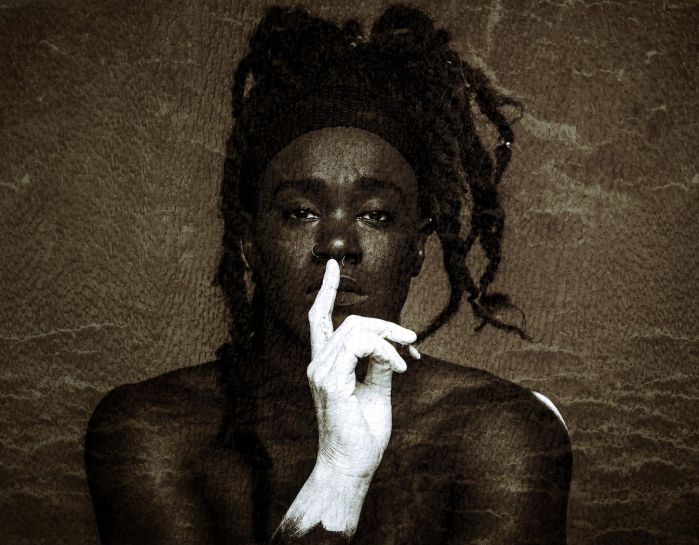
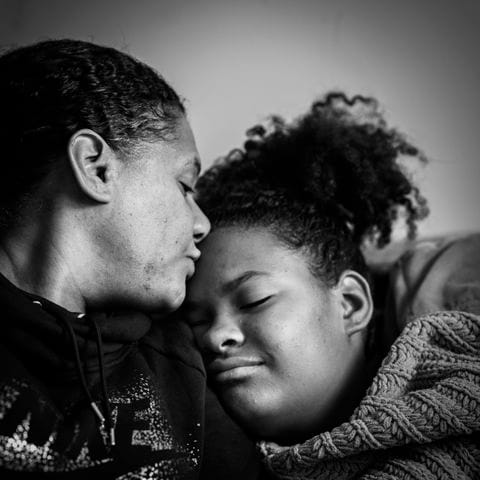
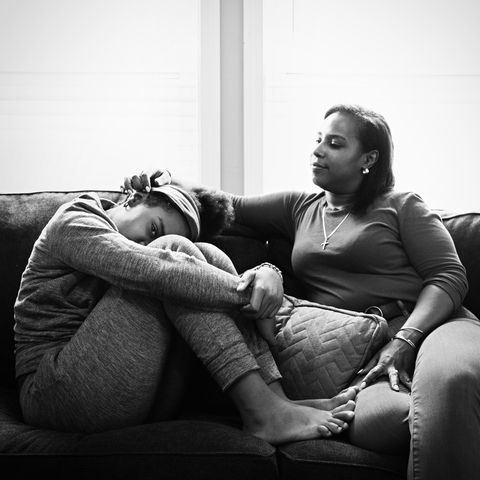
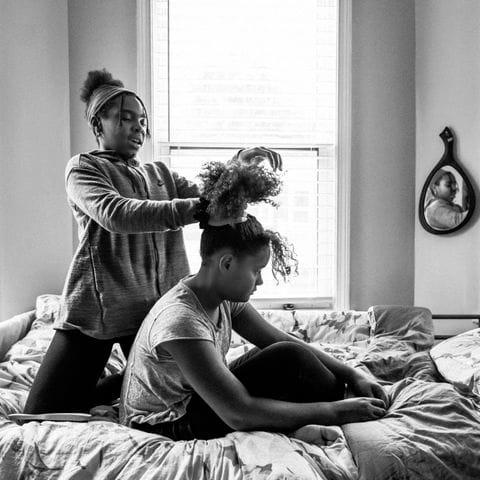
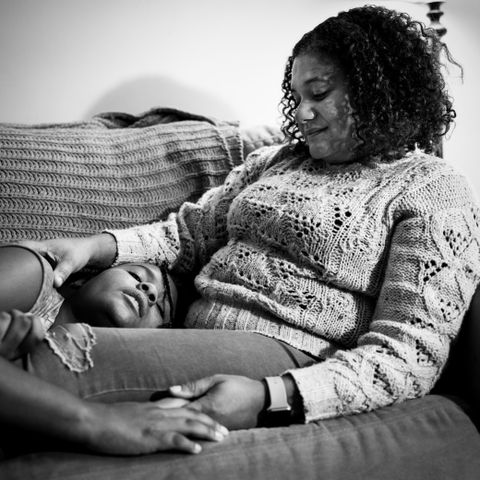
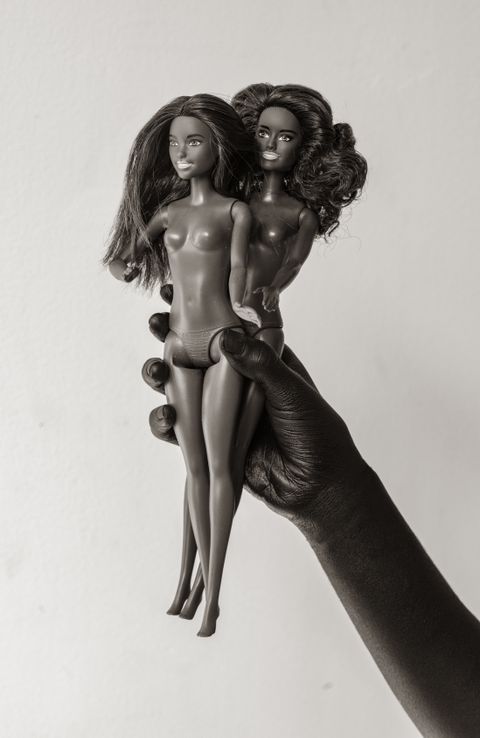
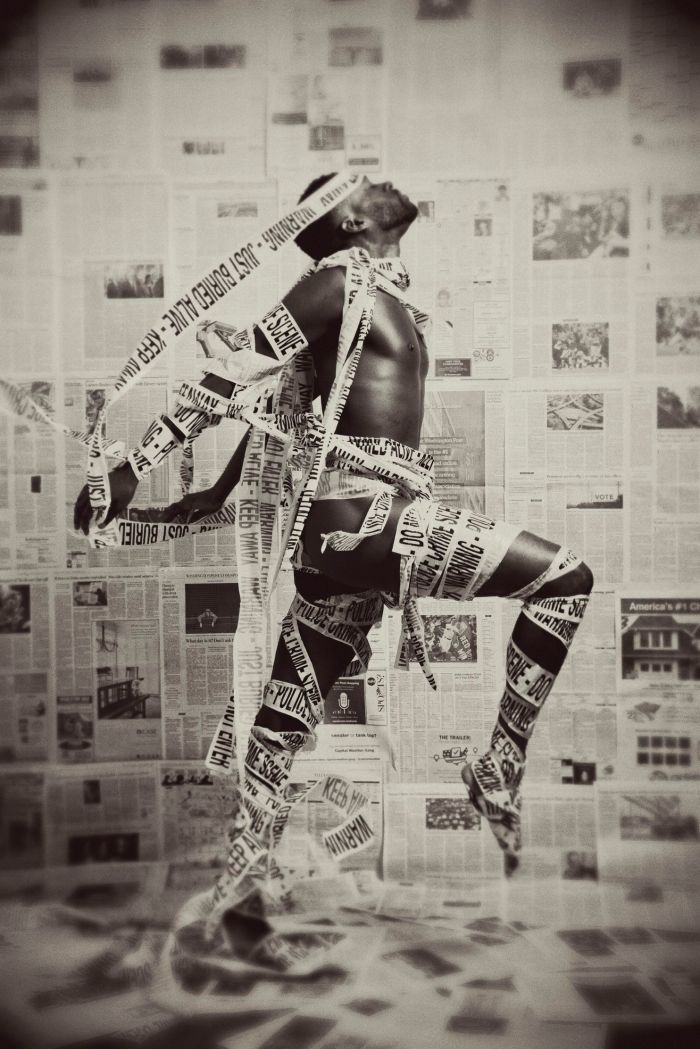
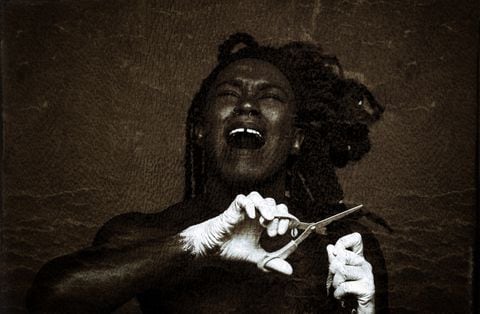
This issue is devoted to photography that documents this moment — not just our external struggle with racism, but the internal struggles as well. Some of the images are beautiful and unsettling. Some are jarring. If some make us uncomfortable, that is progress. An easy conversation about racism is not a real conversation at all.
Eugene Robinson is a Washington Post columnist focusing on politics and culture.

 A
A








 The United States is known as a country where anything is possible. Immigrants, foreigners, and citizens alike know what it means when someone says, “the American Dream”–that anything is achievable in the United States and that everyone has a chance to achieve their financial goals, regardless of their socioeconomic status. Abraham Lincoln, the sixteenth president of the United States and a former attorney, espoused this belief in his speech on March 6, 1860:




 OCG
OCG 