10 Black Scholars Who Debunked Eurocentric Propaganda

10 Black Scholars Who Debunked Eurocentric Propaganda

ATLANTA BLACKSTAR

Tuesday, October 8th, 2013
October 6, 2013 | Posted by 

Cheikh Anta Diop

Dr. Cheikh Anta Diop 
Senegalese-born Cheikh Anta Diop (1923 – 1986) received his doctorate degree from the University of Paris and was a brilliant historian, anthropologist, physicist and politician and one of the most prominent and proficient black scholars in the history of African civilization.

Contrary to the long-standing European myth of a Caucasian Egypt,  Diop’s studies into origins of the human race and precolonial African culture established that ancient Egypt was founded, populated, and ruled by black Africans; the Egyptian language and culture still exists in modern African languages (including his own Wolof language) ; and that black Egypt was responsible for the rise of civilization throughout Africa and the Mediterranean, including Greece and Rome.

Diop also pioneered techniques of scientific research – such as carbon dating as a means of dating artifacts and remains, and the melanin dosage test which he used to verify the melanin content of Egyptian mummies. Forensic investigators later adopted this technique to determine the “racial identity” of badly burned accident victims. Cheikh Anta Diop University in Dakar, Senegal, is named after him.

Source: cheikhantadiop.com
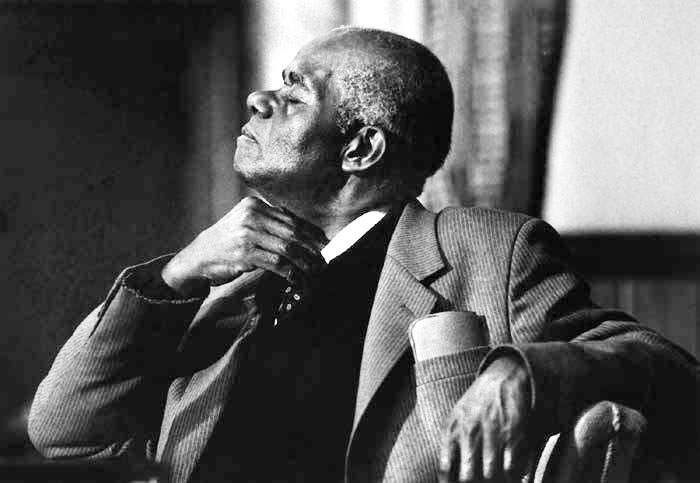
 

Dr. Henrik Clarke

Dr. John Henrik Clarke

Dr. John Henrik Clarke (1915 – 1998) was a Pan-Africanist writer, historian, professor, and a pioneer in the establishment of Africana studies in professional institutions in academia starting in the late 1960s. He was professor of African world history and in 1969, he became the founding chairman of the Department of Black and Puerto Rican Studies at Hunter College of the City University of New York. He also was the Carter G. Woodson Distinguished Visiting Professor of African History at Cornell University’s Africana Studies and Research Center.

He challenged the mostly white academic historians and attributed their reluctance to acknowledge the historical contributions of black people as part of the systematic and racist suppression and distortion of African history.

Clarke asserted: ”Nothing in Africa had any European influence before 332 B.C. If you have 10,000 years behind you before you even saw a European, then who gave you the idea that he moved from the ice-age, came all the way into Africa and built a great civilization and disappeared,when he had not built a shoe for himself or a house with a window?”

Source:  Africana.library.cornell.edu/africana/clarke/index.html
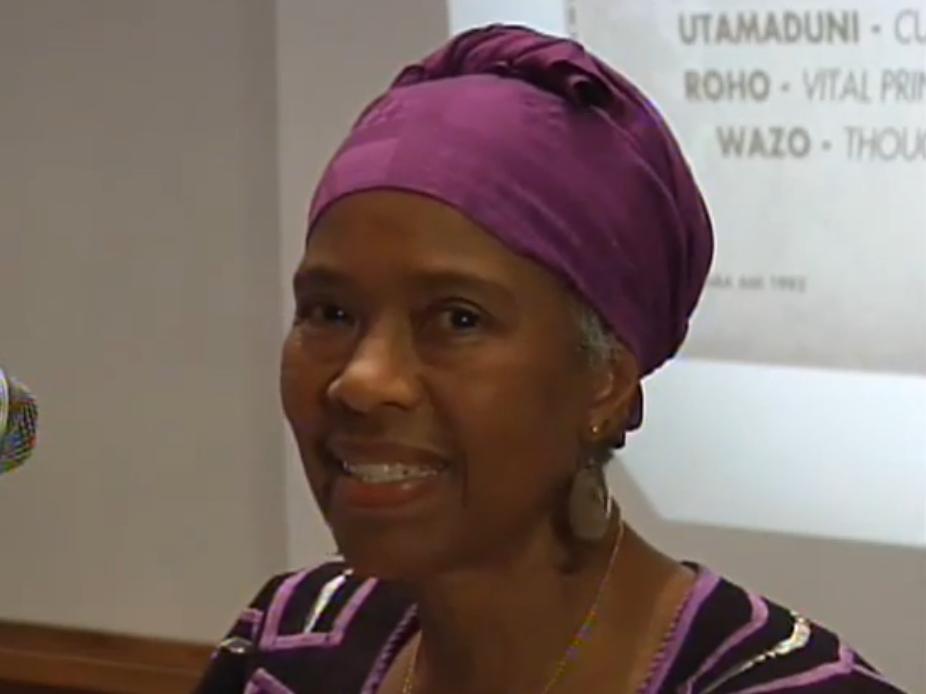


marimba ani

Dr. Marimba Ani

Dr. Marimba Ani is an anthropologist and African Studies scholar best known for her book “Yurugu,” a comprehensive critique of European thought and culture. She completed her Bachelor of Arts degree at the University of Chicago, and holds masters and doctorate degrees in anthropology from the Graduate Faculty of the New School University.

In her ground-breaking work, “Yurugu: An Afrikan-Centered Critique of European Cultural Thought and Behavior,” Ani uses an African perspective through the myths of the Dogon people and the language of Swahili to examine the impact of European cultural influence on black people and the world. She developed a framework that methodically debunked the belief that Western civilization was the best, most constructive  society ever built and instead she pointed out its inherent destructive tendencies.
Source: http://en.wikipedia.org/wiki/Marimba_Ani
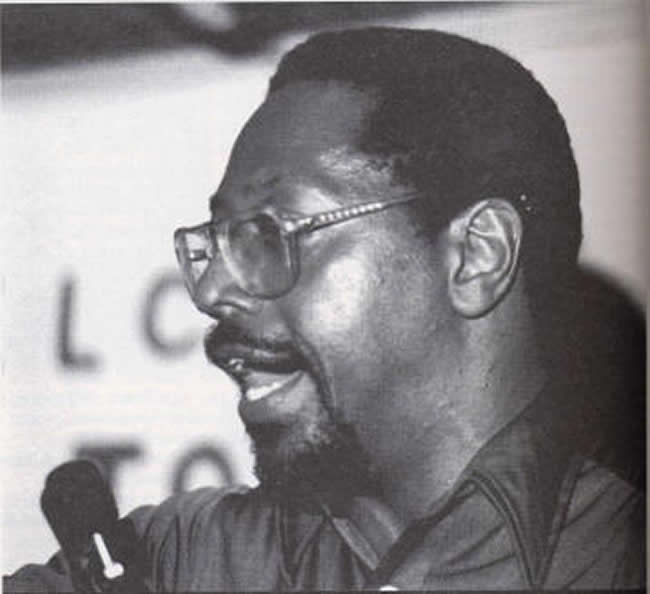
 

dr. amos wilson

Dr. Amos Wilson

Dr. Amos N. Wilson (1941 – 1995) was a social caseworker, psychological counselor, supervising probation officer and training administrator in the New York City Department of Juvenile Justice. He was also an assistant professor of psychology at the City University of New York.

In his book “Black-on-Black Violence: The Psychodynamic of Black Self-Annihilation in Service of White Domination,” Wilson, discredited the pervasive myth that blacks are inherently criminal.

Not only did he chronicle the vast history of violence that was pervasive in American culture, but he also  demonstrated how black-on-black violence and black male criminality in the United States was a politically and economically engineered process designed to maintain the subservience and relative powerlessness of black people and black communities worldwide.

However, Wilson contended that bringing an end to black-on-black violence and criminality is the sole responsibility of all black people. In his book he lays out practical and theoretical ways of eradicating it.
Source: Awis.scripterz.org
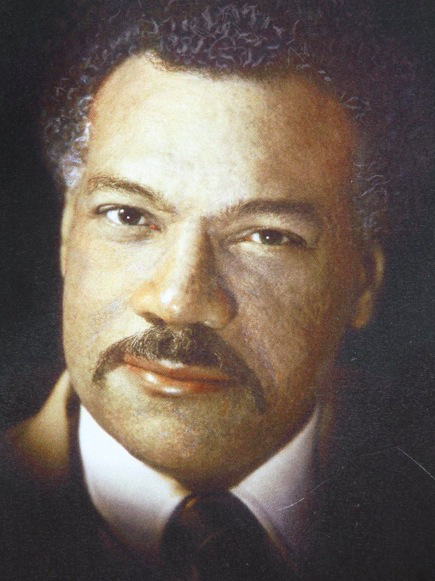


ivan van sertima

Ivan van Sertima

Dr. Ivan Gladstone Van Sertima (1935 – 2009) was a Guyanese-born associate professor of Africana Studies at Rutgers University in New Jersey. He was best known for his work “They Came before Columbus,” which provided a pyramid of evidence to support the idea that ancient Africans were master shipbuilders who sailed from Africa to the Americas thousands of years before Spanish explorer Christopher Columbus, and that the Africans traded with the indigenous people, leaving lasting influences on their cultures. In one example, Van Sertima presents evidence that Emperor Abubakari of Mali used these “almadias” or longboats to make a trip to the Americas during the 1300s.

Van Sertima methodically demonstrates that these blacks were not slaves, but traders and priests who were honored and venerated by the Native Americans who built statues – Olmec heads- in their honor. In the closing of the book, he declaimed the notion of “discovery” by Columbus.

In 1987, Van Sertima testified before a United States congressional committee to oppose recognition of the 500th anniversary of Christopher Columbus’ “discovery” of the Americas. He said, “You cannot really conceive of how insulting it is to Native Americans … to be told they were discovered.”

Source: raceandhistory.com/historicalviews/ancientamerica.htm
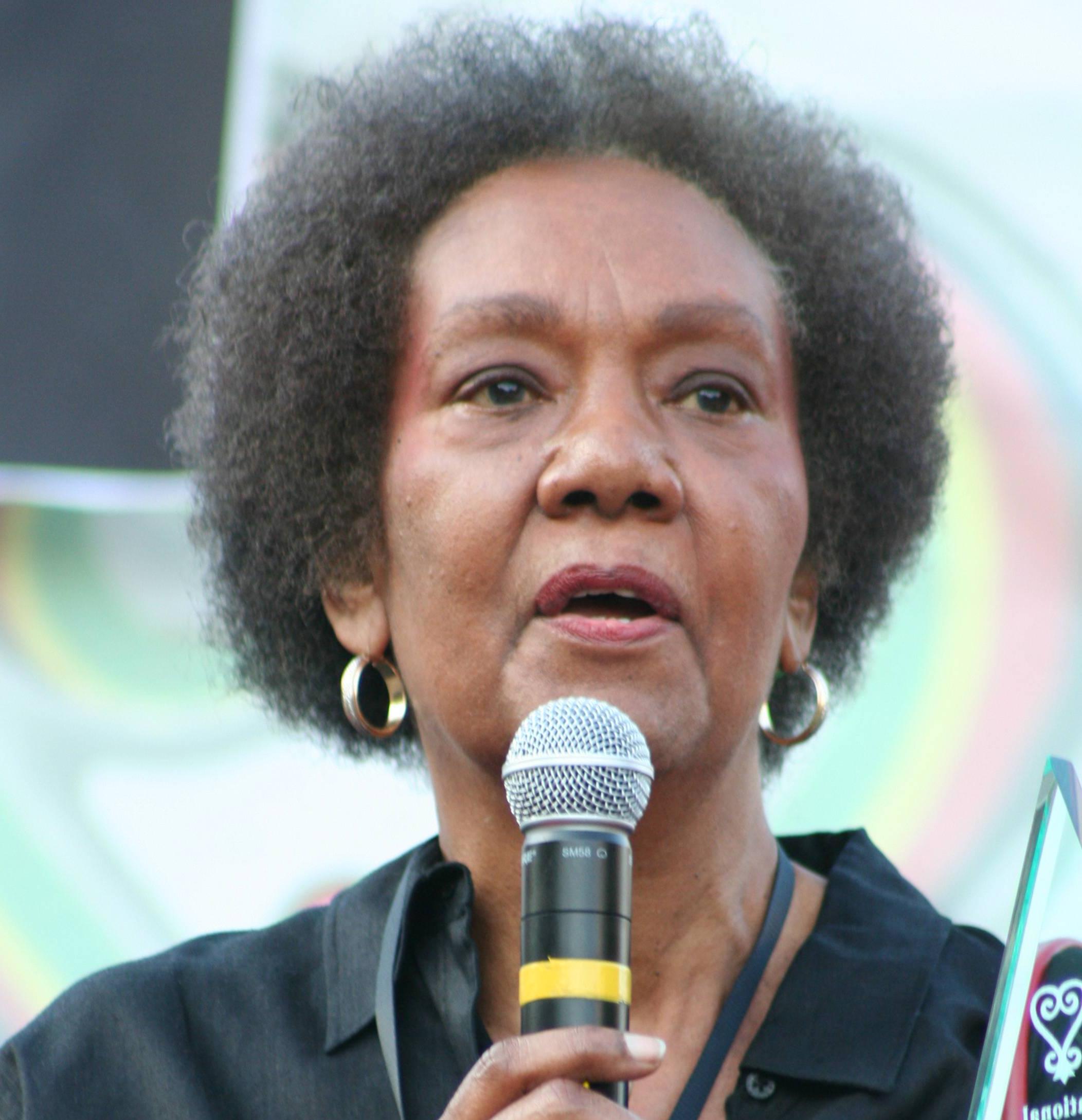
 

Frances Cress Welsing

Dr. Frances Cress Welsing

Dr. Frances Cress Welsing  is an African-American psychiatrist practicing in Washington, D.C. She is noted for authoring the “Cress Theory of Color Confrontation” and “The Isis Papers: The Keys to the Colors,” which explore and define the global system of white supremacy.

In “The Isis Papers,” Welsing contradicts the notion that white supremacy was rooted in an idea of genetic superiority. Instead, she presents a psychogenetic theory suggesting whites fear genetic annihilation because their genes are recessive to the majority of the world’s population, which consists of  people of color – the most threatening being black. Therefore they established white supremacy to prevent people of color from diluting their genes and subsequently rendering them extinct.

Source: en.wikipedia.org/wiki/Frances_Cress_Welsing
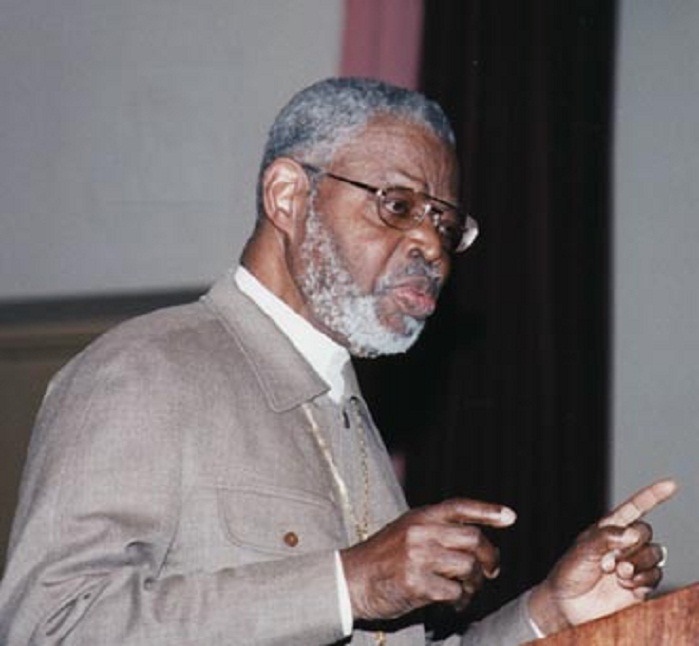
 

Dr. Yosef Ben-Jochannan

Dr. Yosef Ben-Jochannan

Dr. Yosef Alfredo Antonio Ben-Jochannan, also known as Dr. Ben, is an Ethiopian-Puerto Rican writer, historian and Egyptologist. Ben-Jochannan earned a Bachelor of Science degree in civil engineering at the University of Puerto Rico in 1938, and earned his master’s degree in architectural engineering from the University of Havana, Cuba in 1938. He received his doctoral degrees in cultural anthropology and Moorish history from the University of Havana and the University of Barcelona, Spain, respectively.

Ben-Jochannan is the author of 49 books, primarily on ancient Nile Valley civilizations and their impact on Western cultures. One of Dr. Ben’s most thought-provoking works, “African Origins of the Major ‘Western Religions’” (1970), highlights how the roots of Judaism, Christianity and Islam originated in black Africa. He also argues that the original Jews were from Ethiopia and were black Africans, while the European Jews later adopted the Jewish faith and its customs.

http://www.thehistorymakers.com/biography/yosef-ben-jochannan-41

http://www.raceandhistory.com/Historians/ben_jochannan.htm

http://en.wikipedia.org/wiki/Yosef_Ben-Jochannan
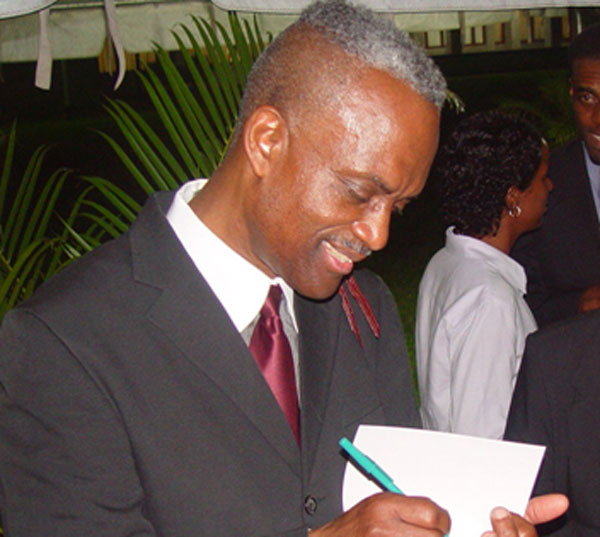
Dr Tony Martin

Dr. Anthony Martin

Dr. Anthony Martin (1942 – 2013) was a Trinidadian-born professor of Africana Studies at Wellesley College, Massachusetts. He was a lecturer and prolific author of scholarly articles about black history and was considered the world’s foremost authority on Jamaican black nationalist leader Marcus Garvey. Martin authored, compiled or edited 14 books, his earliest work being “Race First: The Ideological and Organizational Struggles of Marcus Garvey and the Universal Negro Improvement Association” (1976).

In his works on Garvey, Martin used his scholarship to counteract attempts by the mainstream to mischaracterize and deny Garvey’s true legacy as one of the greatest black leaders of all time.

When Martin detailed the role European Jews played in the transatlantic slave trade in his book, “The Secret Relationship Between Blacks and Jews,” the professor found himself the subject of a character assassination campaign, which is ongoing even after his death in January of this year.

http://en.wikipedia.org/wiki/Tony_Martin_%28professor%29
http://www.blackbluedog.com/2013/01/news/dr-tony-martin-noted-scholar-and-proponent-of-pan-africanism-passes-away/


chancellor williams destruction of black civilization

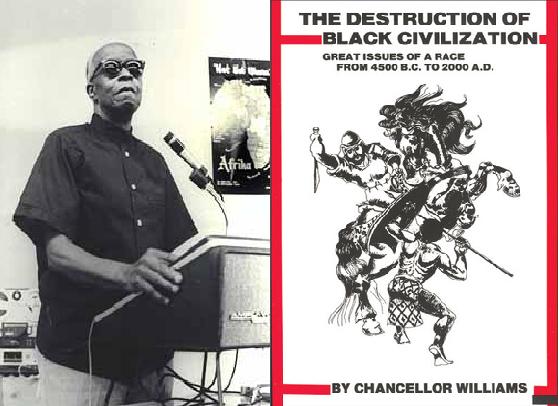
Dr. Chancellor Williams

Dr. Chancellor Williams (1893 – 1992) was an African-American sociologist, historian and writer. His best known work is “The Destruction of Black Civilization: Great Issues of a Race from 4500 B.C. to 2000 A.D.”, for which he was awarded honors by the Black Academy of Arts and Letters.

In “Destruction of Black Civilization,” Williams chronicles how high civilization began in black Africa, contrary to what mainstream  historians have espoused to  the world. He meticulously lays out the history of Africa in great detail and demonstrates that the continent’s  current underdevelopment came after  thousands of years of consistent onslaught by Eurasians, and not because Africans made no significant contributions to the world.

http://aalbc.com/authors/chancell.htm

http://en.wikipedia.org/wiki/Chancellor_Williams

http://www.goodreads.com/author/show/72450.Chancellor_Williams
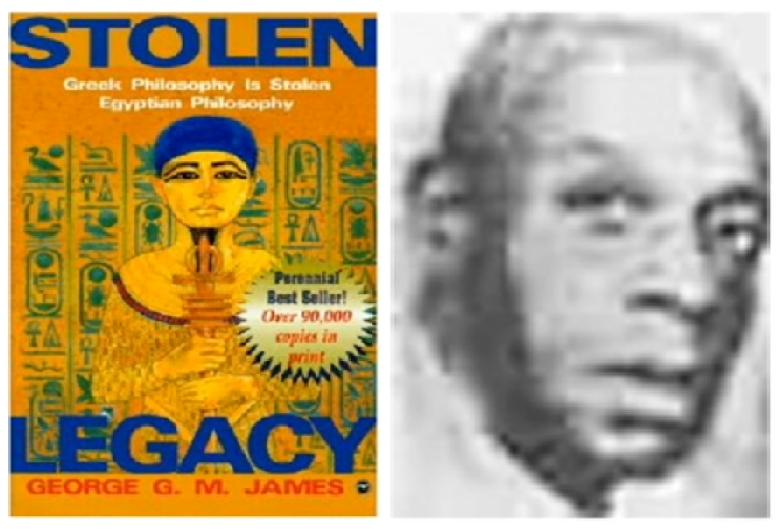
George G.M. James and Stolen Legacy Dr. George G.M. James

Dr. George Granville Monah James (unknown – 1954) was a well-regarded historian and author from Georgetown, Guyana. He’s best known for his 1954 book “Stolen Legacy,” in which he presented evidence that Greek philosophy originated in ancient Egypt.  He gained his doctorate degree at Columbia University in New York, became a professor of logic and Greek at Livingstone College in Salisbury, N. C., for two years,  and then taught at the University of Arkansas, Pine Bluff.

In “Stolen Legacy,” James painstakingly documents the African origins of Graco-Roman philosophical thought. He asserted that “Greek philosophy” was not created by the Greeks at all, instead it was borrowed without acknowledgement from the ancient Egyptians.

James even challenged the foundations of Judaism and Judeo-Christianity and argued that the statue of the Egyptian goddess Isis with her child Horus in her arms is the origin of the Virgin Mary and child.

He mysteriously died, shortly after publishing Stolen Legacy.

George G.M. James, Guyana’s Shining Star – A Tribute

http://en.wikipedia.org/wiki/George_James_%28writer%29

Pages: 1 2 3 4 5

Freedom Note: “Twice As Good” for what?

“Twice as Good”

If you are a Black person over the age of 55, being told that in order to be successful, over and over again that you have to be “twice as good” was a mantra that came from parents, church, school. You inherently understood this message.  It lived with you most of the time in study and other endeavors, as you entered a new world brought on my the civil rights movement. In many ways, the message translated into “twice as good and twice as right”. Overachievement and a lifetime of seeking perfection. Never letting up, always winning.  Always running as hard as you can to beat the odds and avoid failure.

The mantra popped up in a recent episode of the ABC series, “Scandal” in a scene with Olivia Pope, the main character who is a “political crisis fixer” and her Father, Rowan, a powerful Washington insider. In this scene, he reiterates what we were all told, you have to be “twice as good to get half of what they have”. We were told this, even when our parents had no idea of what the really had. They did know, however, how far they were willing to go to keep it for themselves and from us.

I watched it with great interest, seeing yet again the damage that we inflict on our children in our quest to prove that being Black deserves respect, and that we are worthy. In the quest to prepare our children, foster their survival, prepare them for the duality and inequities, and on-slaughter . . . just what are we to do as parents?

The “brown-eyes” parents in the Jane Elliott exercises have no idea the corner in which Black parents have to paint their children to meet the challenges of race discrimination and the realities of an endless battle against white privilege in order to win.

For many Blacks, the “twice as good” worked.  I wonder often at what price ?

Shutdown jeopardizes nutrition program for poor

FRIDAY, OCT 4, 2013 09:22 AM EDT

Shutdown jeopardizes nutrition program for poor


“What’s going to happen to my baby?” asked one mother, as she fed her son formula bought with a WIC voucher

BY 


Shutdown jeopardizes nutrition program for poor
(Credit: AP)

ALLENTOWN, Pa. (AP) — Jacob Quick is a fat and happy 4-month-old with a big and expensive appetite. Like millions of other poor women, Jacob’s mother relies on the federal Women, Infants and Children program to pay for infant formula — aid that is now jeopardized by the government shutdown.

Pennsylvania and other states say they can operate WIC at least through the end of October, easing fears among officials that it would run out of money within days. But advocates and others worry what will happen if the shutdown drags on beyond that.

“What’s going to happen to my baby?” asked Jacob’s mother, Cierra Schoeneberger, as she fed him a bottle of formula bought with her WIC voucher. “Am I going to have to feed him regular milk, or am I going to have to scrounge up the little bit of change I do have for formula or even baby food?”

WIC serves nearly 9 million mothers and young children, providing what advocates say is vital nutrition that poor families might otherwise be unable to afford.

Schoenberger, for example, said her son goes through about $40 worth of formula a week. “It’s like a car payment,” said the unemployed mother of three.

The Special Supplemental Nutrition Program for Women, Infants and Children — better known as WIC — supplies low-income women with checks or debit cards that can be used for infant formula and cereal, fruits and vegetables, dairy items and other healthy food. WIC also provides breast-feeding support and nutrition classes. Poor women with children under 5 are eligible.

Just before the shutdown, the U.S. Department of Agriculture had warned that states would run out of WIC cash after a “week or so.” Now the agency says WIC should be able to provide benefits through late October, with states using $100 million in federal contingency money released Wednesday and $280 million in unspent funds from the last budget year.

If the aid dries up, desperate moms will probably dilute their babies’ formula with water to make it last longer, or simply give them water or milk, said the Rev. Douglas A. Greenaway, head of the National WIC Association, an advocacy group. Pediatricians say children under 1 shouldn’t drink cow’s milk because they can develop iron deficiency anemia.

“These mothers have trust and confidence in this program, and that trust and confidence has been shaken by Congress,” Greenaway said. “This is just unconscionable.”


Danyelle Brents, 22, a single mother of three, receives about $200 a month in vouchers for food and formula for her two children and baby. She is being hit doubly hard by the shutdown: She is a contract worker for the Federal Aviation Administration who catalogs records for aircraft certification, and is furloughed. Now, with her baby going through 10 cans of formula a month, she might lose key help with her grocery bill.

“That’s a lot of money, $15 a can,” she said. “Now that I’m out of work, WIC is how I support my family. … I’m scared at this point to go buy anything extra.”

Groups that fight hunger say they are also concerned about the confusion that needy mothers may be feeling. Though most WIC offices are open, many mothers mistakenly assumed that benefits were cut off.

Advocates are also worried that there will be a cumulative effect as other, smaller government feeding programs run out of money.

Adding to the uncertainty: While USDA has said that food stamps are guaranteed to continue through October, it is unclear what will happen after that.

In Pennsylvania, whose $208 million WIC program supports 250,000 women and children, all local WIC offices remain open and benefits are being dispensed as usual. The state Health Department said it has $25.5 million on hand to continue operating the program through October. Ohio said it has enough money to last through the second week of November.

“Ohio WIC is open for business!” proclaimed the headline on a state website.

Utah’s WIC program, though, immediately closed its doors Tuesday in the wake of the government shutdown, meaning that families who hadn’t already received their October vouchers were out of luck and new applications couldn’t be processed. The state got $2.5 million in USDA funding on Thursday, and WIC offices throughout the state planned to reopen by noon Friday.

Charitable groups were already filling the void. A Facebook group called “The People’s WIC — Utah” was launched hours after WIC offices closed, matching up families in need with those able to donate formula and other food.

In Layton, about 25 miles north of Salt Lake City, a donation drive was planned for Saturday, with organizers asking for fresh fruits and vegetables, unopened baby formula and other necessities.

Food banks, meanwhile, are bracing for a surge in requests for help if WIC runs out of money.

Linda Zimmerman, executive director of Neighbors In Need, which runs 11 food banks in Massachusetts, said her organization already provides a lot of baby formula to its clients, most of whom get WIC aid as well.

“I think they’re truly nervous,” Zimmerman said. “We’re going to have to be doing a lot of work to make sure we can keep up with need for infant formula.”

In some places, grocery stores refused to honor WIC vouchers, assuming they wouldn’t get paid. Terry Bryce, director of Oklahoma’s WIC program, said WIC officials called and emailed grocers to assure them the program is still funded.

In New Jersey, Patricia Jones said she is worried about losing her WIC assistance.

“You’re affecting families that haven’t done anything to you,” said Jones, a 34-year-old mother of five. Because of the shutdown, she was turned away from the Social Security Administration office in Newark when she tried to get printouts of her children’s Social Security numbers to renew her welfare and WIC benefits.

___

Associated Press Writers Mary Clare Jalonick in Washington, Samantha Henry in Newark, N.J., Tim Talley in Oklahoma City, Bridget Murphy in Boston and Dan Sewell in Cincinnati contributed to this report.

Herman Wallace : Political Prisoner, now Ancestor

“Herman Wallace, whose four-decades in solitary confinement in Louisiana State Penitentiary at Angola made him among the most prominent symbols in the debate over race and prisons in Louisiana, has died. He was 71.”

Herman Wallace, member of the Angola Three, dies at 71

BY ANDREW VANACORE

From The Advocate

avanacore@theadvocate.com

October 04, 2013

Herman Wallace, whose four-decades in solitary confinement in Louisiana State Penitentiary at Angola made him among the most prominent symbols in the debate over race and prisons in Louisiana, has died. He was 71.

Nick Trenticosta, one member of a legal team that had finally earned Wallace a release from prison and a new trial just this week after decades of appeals, confirmed that Wallace succumbed to liver cancer at a friend’s home in Uptown New Orleans on Friday morning.

Since the 1970s, when Wallace was convicted of killing a guard while serving time for armed robbery, he has formed part of a trio known as the Angola Three, all of them former Black Panthers who maintained that they were wrongly convicted.

Albert Woodfox, who was given a life sentence along with Wallace in the stabbing death of a young guard named Brent Miller in 1972, remains incarcerated. Robert King, another Black Panther from New Orleans who was convicted of a separate murder inside Angola and also placed in solitary confinement, won his release in 2001 after 29 years.

Although a judge on Tuesday ordered Wallace’s release from Elayn Hunt Correctional Center, where he had been undergoing treatment for cancer, the fight to clear his name was not over. A West Feliciana Parish grand jury re-indicted Wallace on the original murder charge Thursday, and a younger brother of the slain guard said in an interview this week that Wallace never should have been released, even in such a grave condition.


‘Boys Have Deep Emotional Lives’

‘Boys Have Deep Emotional Lives’


How parents, teachers, and schools can better understand young men: a conversation with Rosalind Wiseman about her new book, Masterminds and Wingmen.
SEP 04 2013

The Atlantic

Jim Young/Reuters

Before Rosalind Wiseman’s 2002 book Queen Bees and Wannabes was published, her agent asked if she would talk to a woman named Tina Fey. Wiseman, a new mother, “had no idea who she was,” but after a short conversation agreed to sell Fey the film rights to her book, which dissected the complex social world of teenage girls. Two years later, Mean Girls hit theaters, an entertaining and spot-on illustration of the capacity of high school girls to inflict emotional pain on each other. With the success of the film, Wiseman became known as an expert on children, giving lectures to parents and educators on bullying, parenting, and ethical leadership around the world.

Her latest book, Masterminds and Wingmen: Helping Our Boys Cope with Schoolyard Power, Locker-Room Tests, Girlfriends, and the New Rules of Boy World tackles Boy World. With two sons of her own, Wiseman began to notice ways that adults would ignore or reinforce stereotypes about teenage boys’ social world. Her new book was written with the help of more than 200 teenage boys who vetted her information and contributed their own experiences. (The Guide: Managing Douchebags, Recruiting Wingmen, and Attracting Who You Want is her companion manual, written specifically for the boys). I spoke with Wiseman about the best way for parents and teachers to communicate with boys, what the biggest myths are about popular boys, and why all boys are so often misunderstood.


After the popularity of Mean Girls, a lot of attention has gone toward the dynamics of Girl World. Why is Boy World less understood?

We have a very hard time seeing the signs of how and when boys want to talk to us. We also have a hard time–even though we think we don’t–acknowledging that boys have deep emotional lives. We believe that because we can’t see it, it’s not there.

How do parents and teachers perpetuate the negative aspects of Boy World?

In so many different ways, we box boys in. We’re not aware of it. Boys say it’s good to have a female friend–if something bad happens with a girl, or if you break up with your girlfriend, it’s much easier to talk to a girl about it than even your closest male friends. I just talked to a high school boy about how important it is to have girls that are friends. He broke up with his girlfriend, was overwhelmed, and realized it was a terrible mistake. His heart was broken and he didn’t know what to do. He was a football player and wanted to talk to his closest friends, but he said that they just wanted to talk about hooking up. They didn’t talk about their relationship problems. So he made evening plans to go to dinner with a very close female friend. As he walked out the door, his mother barraged him with questions about it. She assumed he wanted to hook up with this other girl. She thought he didn’t care about his girlfriend, that he wants a hookup.

So his mom reinforced the stereotype about guys just going after sex.

Right. Even his own mother doesn’t realize that her son needs a strong relationship with a girl–and that he’s going out with this girl to bare his soul, to get relationship advice. We are allowing these stereotypes to shape the way we look at boys and their relationships with other people.

Fathers can also contribute to a macho culture.

The thing that really disturbs me is that there are so many wonderful dads, who want the best for their sons, who aren’t having conversations with their sons about healthy relationships or acknowledging that they will fall in love. Falling in love in high school is a huge adrenaline rush–it’s got intense highs and lows. Your heart can break, you can be betrayed. It’s horrible, and you don’t know what to do, or you wonder if you’ll ever have a girlfriend. These are things that all boys struggle with, but even really good dads don’t have conversations that acknowledge that experience.

And then there are a lot of other fathers whose relationship advice is limited to this type of scenario (told to me by the boys themselves):  A very attractive 18-year-old woman walks by and the dad nudges his son and says, “Go get that.”

Great young men want to have rich emotional lives, but everywhere they turn, people are forcing them to live the stereotype of being a sexist, not-caring, emotionally disengaged, superficial guy. It’s amazing because we turn around and get angry with them when they go over the line, without acknowledging what we do as adults that stifles and silences and shuts boys up from being emotionally engaged people.

What about schools? What role do they play in all this?

It’s such an enormous question. But enough to say that much of how our educational system is structured–from the way boys are taught academics, to the lack of training we give teachers to be ethical competent authority figures who not only know their subject matter but are engaging educators, to the way the minority of boys who do abuse power so often regularly get away or are disciplined in a way that only shows how powerless the adults are to truly hold them accountable, all too often schools are the place boys learn that the overall culture they will grow up in restricts their creativity and makes it as difficult as possible to come into their masculinity in healthy ways.

What are the rules that govern Boy World and how are they different from Girl World?

The similarity is that verbal power is held high in both groups. If you can put someone down really fast or defend yourself verbally, that’s a commodity, a real value. What boys do is they’re much ruder about it. They do it more directly.

You talk about how boys are often at a loss when they’re faced with highly verbal girls.

They pretend they don’t mind it. They learn from an early age that whatever is going on around them isn’t a problem. After years of convincing themselves that everything’s fine, it’s really difficult for them to recognize when things are not fine, when things are over the line. It goes right from young boys unable to say, “What’s happening is not fine” to boys at a party seeing a girl who’s drunk with four guys around her, and the boys conditioned to not acknowledge the potential danger that’s in front of them. They don’t see what they need to do to stop it until it’s too late. If we’re constantly dismissing or ridiculing their right to have emotional lives, why would they want to do it? At a certain point they shut down.

interviewed Donna Freitas for The Atlantic earlier this year, and she says that in campus hookup culture “our most at-risk population seems to be young men”–specifically because they aren’t encouraged to communicate their feelings about relationships.

I completely agree.

But while it’s important to have conversations with boys about their relationships, you think it’s a bit misguided for adults to sit boys down to talk about their feelings. So what’s the best way to get them to open up?

This is where people jump down my back, saying, “Oh, you want boys to sit in a circle and talk about their feelings?” Anybody who works with boys knows that’s a stupid way to spend your time. Crickets chirp, it’s horrible. Instead, it’s about role modeling healthy relationships with whoever you’re in intimate relationships with. We are so hypocritical in the way we live versus what we say to boys. We lack credibility. The most important thing is to have arguments well. To treat people with dignity when you’re angry with them. And not trying to control people when you’re angry. Boys are extremely sensitive to that. They know which people in their lives use power and dominance to control people when they’re angry. The best that you can hope for is that the boy experiences that and thinks, “I’m not going to be like that.” It’s like the anti-mentor.

You write about a hypothetical scenario where a mother is chauffeuring a group of boys who begin to tease each other. One of them refers to another guy as “retarded.” What’s your advice for parents in this situation?

Boys tease and use put-downs as an important part of their social glue. It’s not always negative–if you take it away, they have very few ways to interact with each other. So it’s about differentiating. It’s totally fine for boys to tease, to give each other crap, but it’s not okay for them to use particular words to get someone to shut up. “Gay,” “faggot,” and “pussy” are the shorthand ways to do this. It’s the way to marginalize someone. Even with advances in gay rights, it’s still the way they do it.

So this just happened: I was driving a group of 10-year-old boys who started using these words. I had to practice what I preach–I turned and said, “You are not going to use those words to put people down.” They got crazy uncomfortable, my son didn’t like it. I asked, “Are we good?” It took 15 seconds and we went back to listening to the radio.

Boys often hear these jokes and know they’re wrong but don’t know how to stand up to their friends.

It’s not a fight that they can fight. It’s too difficult for them. The power imbalance is so strong, so intense in that moment. The boy eventually needs to learn how to do that, but most adults can’t even do it. How many times have adults been to a party where someone says some racist or sexist joke and no one says anything? So to expect a 10-year-old to do it is a little much.

You write from the perspective of a mother and your book includes advice specific to mothers and fathers. What advice do you have for single-parent households?

There are a lot of different types of parents today. It’s a complex issue. I’ve seen parents who are married but the mother or father is so undermined by the spouse that it’s so much worse. To have a single parent who lays down the rules and expectations is way better than to have a parent who is undermined by the other parent. I’m not saying that being a single parent is easy. But we don’t credit how dysfunctional married relationships sometimes are.

What are the most critical challenges parents and teachers face now as opposed to 10 or 20 years ago?

It’s easy to be overwhelmed with the technology that boys are interacting with all the time. I totally understand that. But I think the conversations we should be having with boys are the same: Conflict is inevitable, you’re going to need to speak your truth when it’s really uncomfortable, you’re going to see somebody abuse power. Reacting to someone who grabs your tricycle when you’re five is different from when you’re at a party and have to speak out against your friend who’s about to rape a drunk girl–but those are the moments. Those are the moments when who you are as a man counts.

Can you debunk any myths about popular boys?

We have stereotypes that the highest social status boys are having the most sex. And that they’re having a particular kind of hookup–that they don’t have heartbreak and only have random hookups, that they use girls. And that’s not the case. Nor is it the case that lower social-status boys are sitting there hoping a girl hooks up with them. Adults make assumptions that, for example, the theater people are geeky, and they’re not getting it on. In my experience, that’s 100 percent not the case. Those people are very active, shall we say.

I brought this up with a male friend in his 30s, who completely disagreed. He still says the popular guys got all the girls.

No, they don’t. Ask him if the guy in high school who played his acoustic guitar got any hookups. Really, the theater and band people are spending all their time together. It’s a tight-knit group. Some of them will be good friends and some of them will hook up. The athletes, on the other hand, are spending much less time together. When the football team goes to an away game four hours away on the bus, that’s a single-sex activity. When the band goes, it’s co-ed.

As a mother of two boys, what have been your biggest surprises?

There’s something every day. Here’s one from this morning. My boys love to play hard-to-get with me. When I say “Come here and kiss me before you go to school!” my 10-year-old will run away to his bike, as fast as he can, laughing the whole time. For me, in that moment, I wonder: Why can’t I just have a kid who wants to kiss me goodbye? But I have to realize that from the boys’ perspective, that was the bonding. The bonding wasn’t the kiss; it was “I’m going to run away from Mommy.”

So we need to be more attuned to the ways they express themselves?

Exactly.

This conversation was edited for length and clarity.

HOPE REESE is a freelance writer and editor based in Louisville, Kentucky. Her website ishopereese.com.

Charter Schools Are a Colossal Mistake. Here’s Why

Diane Ravitch: Charter Schools Are a Colossal Mistake. Here’s Why


The campaign to “reform” schools by giving public money to private corporations is a distraction from our system’s real problems: poverty and racial segregation.

Photo Credit: michaeljung via shutterstock.com

October 2, 2013  |

Los Angeles has more charter schools than any other school district in the nation, and it’s a very bad idea.

Billionaires like privately managed schools. Parents are lured with glittering promises of getting their kids a sure ticket to college. Politicians want to appear to be champions of “school reform” with charters.

But charters will not end the poverty at the root of low academic performance or transform our nation’s schools into a high-performing system. The world’s top-performing systems – Finland and Korea, for example – do not have charter schools. They have strong public school programs with well-prepared, experienced teachers and administrators. Charters and that other faux reform, vouchers, transform schooling into a consumer good, in which choice is the highest value.

The original purpose of charters, when they first opened in 1990 (and when I was a charter proponent), was to collaborate with public schools, not to compete with them or undermine them. They were supposed to recruit the weakest students, the dropouts, and identify methods to help public schools do a better job with those who had lost interest in schooling. This should be their goal now as well.

Instead, the charter industry is aggressive and entrepreneurial. Charters want high test scores, so many purposely enroll minimal numbers of English-language learners and students with disabilities. Some push out students who threaten their test averages. Last year, the federal General Accountability Office issued a report chastising charters for avoiding students with disabilities, and the ACLU is suing charters in New Orleans for that reason.

Because they are loosely regulated, charter schools are often neither accountable nor transparent. In 2013, the founders of an L.A. charter with 1,200 students were convicted of misappropriating more than $200,000 in public funds. In Oakland, an audit at the highest-performing charter schools in the state found that $3.8 million may have been misused when the founder hired his other businesses to do work for his charters.

Charter schools are “public” when it is time to claim public funding, but they have claimed in federal court and before the National Labor Relations Board to be private corporations when their employees seek the protection of state labor laws.

In Los Altos, a group of wealthy people opened a boutique charter school for their own children. Parents are asked to donate $5,000 per child each year. Local public school parents consider the charter to be an elite private school, albeit one primarily funded with public dollars.

Of course there are honorable, well-run charter schools that provide an excellent education. This newspaper’s editorial board cites independent research that shows students in L.A. charters do better than they would in L.A. Unified schools. But many other studies show that charters in general are no more successful at the task of educating children than public schools if they enroll the same kinds of students.

As large as the gulf can be between charter cheerleading and charter reality, it doesn’t represent the greatest danger of these schools. They have become the leading edge of a long-cherished ideological crusade by the far right to turn education into a consumer choice rather than a civic obligation.

Abandoning public schools for a free-market system eviscerates our basic obligation to support them whether our own children are in public schools, private schools or religious schools, and even if we have no children at all.

The campaign to “reform” schools by turning public money over to private corporations is a great distraction from our system’s real problems: Academic performance is low where poverty and racial segregation are high. Sadly, the U.S. leads other advanced nations of the world in the proportion of children living in poverty. And income inequality in our nation is larger than at any point in the last century.

Island community of slave descendents fights property tax increase

See on Scoop.itOUR COMMON GROUND Informed Truth and Resistance

A community of slave decedents on Georgia’s Sapelo Island are in danger of dissolving with a property tax hike that could force them to move.

OUR COMMON GROUND Omnibus‘s insight:

County officials argue that property tax values have been kept artificially low in the past, and they are just trying to create a tax that reflects how much the land is worth. 

But residents say they aren’t getting the same government services to reflect that tax hike. The island hasn’t had a school since 1978 and residents must bring their own trash to the dump instead of having a collection service.

Read more: http://www.dailymail.co.uk/news/article-2439485/Georgias-Sapelo-Island-community-slave-descendents-fight-tax-increase-threatens-homes.html#ixzz2gfm4kjZV 

See on www.dailymail.co.uk

Meet the Prison Profiteers. They’re Worse than You Think.

See on Scoop.itOUR COMMON GROUND Informed Truth and Resistance

There’s a lot of money in mass incarceration.

OUR COMMON GROUND Omnibus‘s insight:

When will we admit that we have become an imperalist state with reigning corporation that rule ? This is just one point of the takeover.

See on www.aclu.org

Top 6 Countries That Grew Filthy Rich From Enslaving Black People – Atlanta Black Star

See on Scoop.itOUR COMMON GROUND Informed Truth and Resistance

The United States of America Slavery transformed America into an economic power. The exploitation of black people for free labor made the South the richest and most politically powerful region in the country.

OUR COMMON GROUND Omnibus‘s insight:

According to Harper’s magazine (November 2000), the United States stole an estimated $100 trillion for 222,505,049 hours of forced labor between 1619 and 1865, with a compounded interest of 6 percent.

See on atlantablackstar.com

Dem Rep: Shutdown Is ‘Breaking My Heart’

See on Scoop.itOUR COMMON GROUND Informed Truth and Resistance

Rep.Eleanor Holmes Norton (D-D.C.) gave an impassioned speech Tuesday on how the government shutdown putting her “in an impossible position.” “Don’t dare compare us to your appropriations,” Holmes Norton said, saying the situation is “breaking my …

OUR COMMON GROUND Omnibus‘s insight:

Breaking more hearts than hers, but thanks for the support.

See on www.huffingtonpost.com