America’s willful ignorance about Black lives – The Boston Globe

EDITORIAL

America’s willful ignorance about Black lives

This could be a watershed moment for the threats that Black Americans face, but only if political leaders and citizens refuse to accept anything less than real reform.
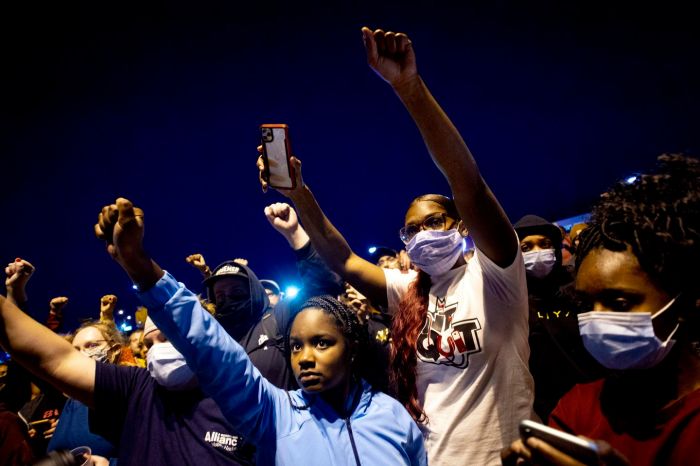
People march at a peaceful protest seeking justice for George Floyd in Flint Township, Michigan.
People march at a peaceful protest seeking justice for George Floyd in Flint Township, Michigan.JAKE MAY | MLIVE.COM/ASSOCIATED PRESS

“The reason that Black people are in the streets,” the acclaimed American writer James Baldwin said in 1968, “has to do with the lives they are forced to lead in this country. And they are forced to lead these lives by the indifference and the apathy and a certain kind of ignorance, a very willful ignorance, on the part of their co-citizens.” A half century later, Baldwin’s wrenching words reverberate in an America where thousands of protesters across dozens of cities have taken to the streets over the past three days despite a deadly pandemic. The country they are objecting to is one where a police officer kneels on the neck of a Black man until he dies, knowing it is all being caught on camera; the country where, after a Black jogger in a white neighborhood is shot to death in broad daylight, the killers go weeks without facing charges; the country where police officers can shoot a young Black woman eight times in her own apartment after entering unannounced with a warrant for someone who did not live there.

In this America, the president tweets out dog whistles to white supremacists and threatens protesters with violence. Never mind that the same president encouraged protests just a few weeks ago that culminated in the storming of the Michigan Capitol by armed white vigilantes.
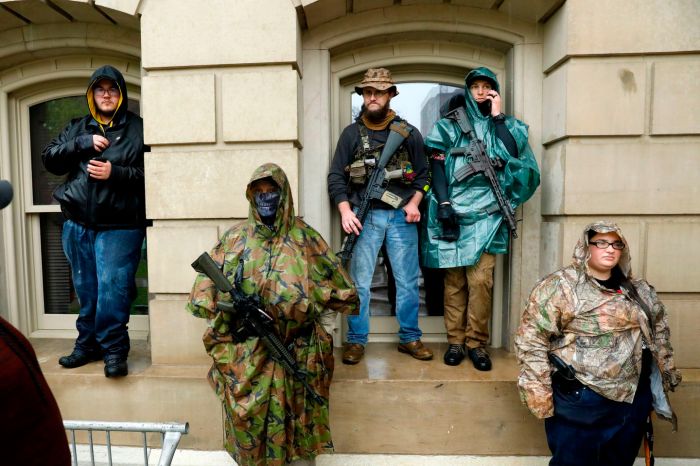
Armed demonstrators in Lansing, Michigan, protest the coronavirus pandemic stay-at-home orders on May 14.
Armed demonstrators in Lansing, Michigan, protest the coronavirus pandemic stay-at-home orders on May 14.JEFF KOWALSKY/AFP VIA GETTY IMAGES

“Everybody knows, no matter what they do not know, that they wouldn’t like to be a Black man in this country,” Baldwin said in 1968. The ills he spoke of remain; some have even worsened. Stark income and wealth gaps persist along racial lines, failing schools and paltry social services put a giant foot on the scale against Black youth, biased judges and juries disproportionately imprison Black men, and the severe health disparities suffered by Black Americans now include a higher death rate from COVID-19. But the most poignant picture of racial injustice in America is repainted in blood whenever a police officer, armed and sanctioned by the state and wearing the uniform of the law, kills a Black citizen with impunity. With the video of the death of George Floyd under the knee of white Minneapolis police Officer Derek Chauvin, Black Americans once again relive a brutal nightmare that dates back to the country’s founding. Their lives are deemed dispensable, even and sometimes especially by those whose job it is to enforce the law.

And on Tuesday, the day after the incident, it took civil unrest in the streets to spur his arrest and murder charges on Friday. The three officers who helped him during the arrest, who either held George Floyd down or stood by as he said he could not breathe and cried out for his mother, have not faced charges. The camera footage shows a group of officers who acted as if they knew they would not be punished.

It is a form of Baldwin’s “willful ignorance” that the country’s politicians, policy makers, prosecutors, and police departments have not done more to prevent and punish acts of violence against Black people on the part of police and it is a form of willful ignorance that more citizens are not outraged. Piecemeal reforms to diversify police forces, train officers to de-escalate conflict, and require body cameras have fallen abysmally short in protecting Black people from errant law enforcement officers. Derek Chauvin had nearly 20 complaints and two letters of reprimand filed against him and had opened fire on two people before he knelt on the neck of George Floyd. Across the country, there is still too little accountability for police, including here in Boston, where the city has stopped releasing stop-and-frisk data.

It is striking that chiefs of police around the nation quickly condemned the incident that led to George Floyd’s death in Minneapolis. But over the past few days, what has followed such political statements are violent confrontations between police and protesters and between police and journalists in many cities. Law enforcement officers have driven vehicles through crowds, tear-gassed protesters, and opened fire with rubber bullets on journalists. For the people on the streets who are exploiting the unrest and endangering others, arrests are justified. But numerous accounts point to acts of disproportionate police violence in response to peaceful protests.

That more and more Americans are refusing to accept the violence against Black Americans presents political leaders and law enforcement agencies around the nation with an imperative to act. State and federal lawmakers must use this moment to enact bolder policy reforms than those to date to reduce sentencing disparities, raise juvenile justice ages to keep young people out of the prison system, reform civil service laws that make it hard to hold cops accountable for wrongdoing, and strengthen civilian police-oversight boards. Police departments across the nation should press for the authority to remove officers who have any history of racial violence or aggression toward citizens; police chiefs should show that they have zero tolerance for such acts. They must send a loud and clear message that the era of sanctioned police violence against Black citizens is over.

With so many Americans moved by the death of Floyd and the callousness of Chauvin, this could be the country’s watershed moment for finally addressing police violence and racial injustice. But even after the fires stop burning, Americans of all races must be unwilling to accept the loss of Black lives.

Editorials represent the views of the Boston Globe Editorial Board. Follow us on Twitter at @GlobeOpinion.

Source: America’s willful ignorance about Black lives – The Boston Globe

Opinion | My Mother’s Death Will Have Everything and Nothing to Do With Covid-19 – The New York Times

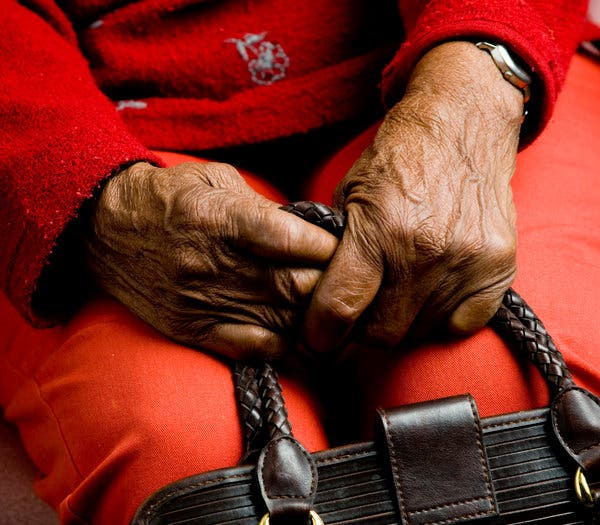
My Mother Is Busy Getting Ready to Die

No insurance. 64 years old. Alone, along with all the other black people at the bottom of the pandemic.

By 

Dr. Manigault-Bryant is an associate professor of Africana studies at Williams College.

My mother is dying a painful death, and it has everything and nothing to do with Covid-19.

In a piece for The Atlantic detailing the ways in which the coronavirus seems to be hitting black people the hardest, Ibram X. Kendi wrote: “Sometimes racial data tell us something we don’t know. Other times we need racial data to confirm something we already seem to know.” My mother is a living example of what we already know about race, class and suffering.

She is not in an elder-care facility, nor a hospital. She has not been, and most likely will not be, tested for the virus or receive a diagnosis of having it.

Still, hers is the body of all the black people at the bottom of the pandemic. No insurance, though not for lack of trying. Medicaid applications denied for reasons we don’t understand. Inconsistent care at a local public clinic meant hard-to-come-by appointments and checkups only at moments deemed most critical. It wasn’t enough.

Now, she’s dying from end-stage liver disease and kidney failure, diagnosed too late to save her. This has nothing to do with Covid-19.

She is not even that old (64, and thus Medicare ineligible), but FaceTime tells no lies, and she is wasting away before us. What’s worse, even as I’m exactly four hours and three minutes away — geographically closer than I’ve been in over a decade — I can’t be near her, touch her, cook for her, kiss her or tell her all of the things that I don’t yet know I need to say. This has everything to do with Covid-19.
On the occasion she’s strong enough to answer the phone, holding the phone for FaceTime proves too much. Calls come too late, even as time is too short. The grandchildren who live close by cannot get close to her — the idea of transmitting anything to her, as she’s so obviously immune-compromised, is terrifying. The underlying conditions would amplify an already-certain death. This has everything to do with Covid-19.

My brother, who lives exactly six minutes and 24 seconds away from Mommy, risks seeing her because someone needs to make sure she’s still breathing. That check-in is thus essential. He scrubs himself clean after work with all manner of chemicals — he’s a waste management truck driver, an essential employee. This is an effort to protect her. He’s close to her. This is an effort to protect us. This has everything to do with Covid-19.

He tries to get her to eat something other than her single meal of applesauce and Vienna sausages. This has nothing to do with Covid-19.

It’s officially power-of-attorney and health-proxy time. Getting my mother to the lawyer — a four-minute drive — is a thing. My brother and I spend hours strategizing transportation. The errand feels like it takes an eternity. This has everything to do with Covid-19.

Like so many, countless others, my family and I are going to be left with the unsettling weight of her death. My mother is going to die soon, and it will most likely be alone. I am afraid. I am one of many grieving, forever-changed faces. No repast. No low-country songs sung graveside. No sending up our timber for her. We cannot grieve properly. Lots of regret. This has everything to do with Covid-19.

When the pandemic is over, we still won’t know how to deal with this. We’re not ready for this kind of grief. Death is so utter, so absolute, yet so much right now is uncertain. My mother is dying a painful death, and it has everything and nothing to do with Covid-19.

LeRhonda S. Manigault-Bryant (@DoctorRMB) is associate professor of Africana studies at Williams College and the author of “Talking to the Dead: Religion, Music, and Lived Memory Among Gullah/Geechee Women.”


How Slavery Changed the DNA of African Americans – Pacific Standard

Our genetic make-up is the result of history. Historical events that influenced the patterns of migration and mating among our ancestors are reflected in our DNA — in our genetic relationships with each other and in our genetic risks for disease. This means that, to understand how genes affect our biology, geneticists often find it important to tease out how historical drivers of demographic change shaped present-day genetics.

Understanding the connection between history and DNA is especially important for African Americans, because slavery and discrimination caused profound and relatively rapid demographic change. A new study now offers a very broad look at African-American genetic history and shows how the DNA of present-day African Americans reflects their troubled history.

Slavery and its aftermath had a direct impact on two critical demographic factors that are especially important in genetics: migration and sex. The trans-Atlantic slave trade was a forced migration that carried nearly 400,000 Africans over to the colonies and, later, the United States. Once in North America, African slaves and their descendants mixed with whites of European ancestry, usually because enslaved black women were raped and exploited by white men. And, more recently, what’s known as the Great Migration dramatically re-shaped African-American demographics in the 20th century. Between 1915 and 1970, six million blacks left the South and settled in the Northern, Midwestern, and Western states, in hope of finding opportunities for a better life.

How this turbulent history shaped the genes of African Americans has been unclear because, until recently, most genetic studies have focused either on populations from different geographical regions around the world, or on Americans with European ancestry. Fortunately, African Americans are now being included in these studies on a larger scale, and several long-term studies have collected genetic data on thousands of African Americans, representing all areas of the country. In a recently published study, a team of researchers at McGill University in Montreal turned to this data to take a broad look at the genetic history of African Americans.

AFRICAN AMERICANS WITH A HIGHER FRACTION OF EUROPEAN ANCESTRY, WHO OFTEN HAVE LIGHTER SKIN, HAD BETTER SOCIAL OPPORTUNITIES AND WERE THUS IN A BETTER POSITION TO MIGRATE TO NORTHERN AND WESTERN STATES.

The researchers focused on nearly 4,000 African Americans who participated in two important studies, both sponsored by the National Institutes of Health. The Health and Retirement Study consists of older volunteers sampled from urban and rural areas across the U.S., while the Southern Community Cohort Study focuses on African Americans in the South, particularly areas that have a disproportionately high burden of disease. Together, these two studies are among the largest sources of genetic data on African Americans. Importantly, they represent a geographically broad sampling of the African-American population, which is critical for outlining the patterns of genetic history.

The researchers first looked at what fraction of African Americans’ genetic ancestry could be traced back to Africa. Not surprisingly, the data shows that, for most African Americans, the majority of their DNA comes from African ancestors. The results also show that essentially all African Americans have some European ancestry ancestry as well. The genetic mix of African and European DNA, however, follows a striking geographical trend: African Americans living in Southern states have more African DNA (83 percent) than those living in other areas of the country (80 percent). Conversely, African Americans outside the South have a larger fraction of European DNA. Even within the South, this trend holds: Blacks in Florida and South Carolina have more African DNA than those living in Kentucky and Virginia.

One explanation for this geographical bias could be that interracial marriages have been less frequent in Southern states. But this explanation appears to be wrong. The McGill researchers found that most of the European DNA among blacks today probably entered the African-American gene pool long before the Civil War, when the vast majority of blacks in the U.S. were slaves living in the South. The genetic patterns observed by the researchers suggest that, for at least a century before the Civil War, there was ongoing admixture between blacks and whites. After slavery ended, this interracial mixing dropped off steeply.

The implication of these findings won’t be surprising to anyone: Widespread sexual exploitation of slaves before the Civil War strongly influenced the genetic make-up of essentially all African Americans alive today.

But this poses a puzzle: If African Americans can trace most of their European ancestry to an era when America’s black population was overwhelmingly confined to the South, why is it that African Americans now living outside the South have more European DNA?

The researchers propose an interesting answer. They argue that the Great Migration of African Americans out of the South was genetically biased: African Americans with a higher fraction of European ancestry, who often have lighter skin, had better social opportunities and were thus in a better position to migrate to northern and Western states. Though it will take further evidence to show this definitively, the McGill researchers’ results imply that, even after the end of slavery, discrimination that varied with shades of skin color continued to influence the genetic history of African Americans.

Do these genetic findings matter to anyone other than historians and genealogists? The answers is yes — studies of genetic history like this one are important because they help explain why blacks and whites often have different genetic risk factors for the same diseases. African Americans are disproportionately affected by many common diseases, and while much of this is due to poverty and limited access to good health care, genetics plays a role as well. If African Americans are to fully benefit from modern health care, where diagnoses and treatments are increasingly tailored to a patient’s DNA, it is critical that we understand African Americans’ genetic history, and how it contributes to their health today. In other words, we need to understand not just the cultural and economic legacies of slavery and discrimination, but the genetic legacy as well.

Why African-Americans may be especially vulnerable to COVID-19

African-Americans are more likely to die from the disease than white Americans

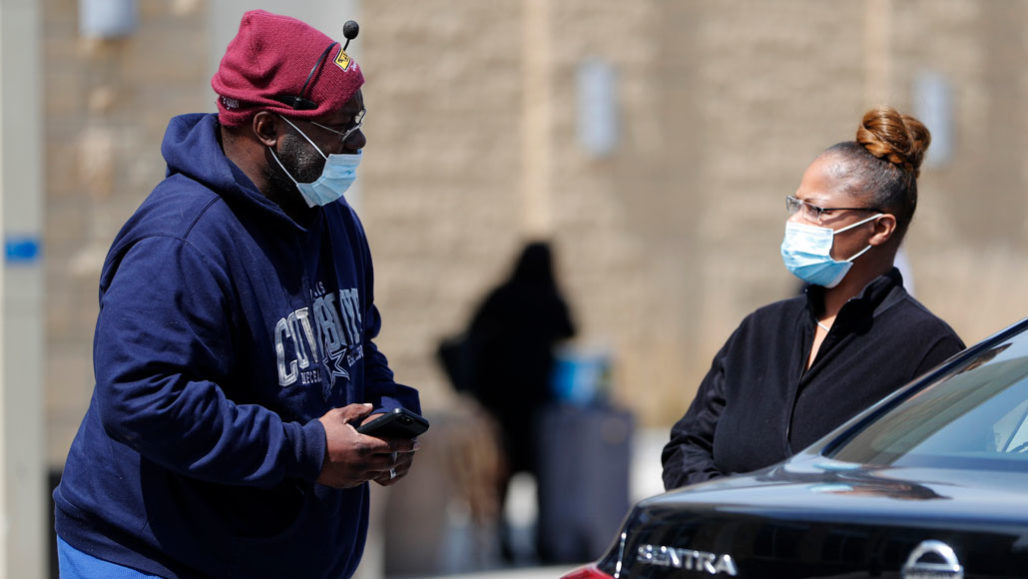
two people wearing masks
African-Americans have increased exposure to COVID-19, in part, because they disproportionately have jobs in the service sector. Here, a man is shown with his ride share driver at a train station in Joliet, Ill., on April 6.CHARLES REX ARBOGAST/AP PHOTO

COVID-19 was called the great equalizer. Nobody was immune; anybody could succumb. But the virus’ spread across the United States is exposing racial fault lines, with early data showing that African-Americans are more likely to die from the disease than white Americans.

The data are still piecemeal, with only some states and counties breaking down COVID-19 cases and outcomes by race. But even without nationwide data, the numbers are stark. Where race data are known — for only 3,300 of 13,000 COVID-19 deaths — African-Americans account for 42 percent of the deaths, the Associated Press reported April 9. Those data also suggest the disparity could be highest in the South. For instance, in both Louisiana and Mississippi, African-Americans account for over 65 percent of known COVID-19 deaths.

Other regions are seeing disparities as well. For instance, in Illinois, where the bulk of infections are in the Chicago area, 28 percent of the 16,422 confirmed cases as of April 9 were African-Americans, but African-Americans accounted for nearly 43 percent of the state’s 528 deaths.

Other data find similar trends. A study published online April 8 in the U.S. Centers for Disease Control and Prevention’s Morbidity and Mortality Weekly Report looked at hospitalizations for COVID-19 across 14 states from March 1 to 30. Race data, which were available for 580 of 1,482 patients, revealed that African-Americans accounted for 33 percent of the hospitalizations, but only 18 percent of the total population surveyed.

Here are three reasons why African-Americans may be especially vulnerable to the new coronavirus.

1. African-Americans are more likely to be exposed to COVID-19.

SARS-CoV-2, the coronavirus that causes COVID-19, is highly contagious, even before symptoms appear (SN: 3/13/20). So to curb the virus’ spread and limit person-to-person transmission, states have been issuing stay-at-home orders. But many individuals are considered part of the critical workforce by the U.S. Department of Homeland Security and must continue to work. That includes caregivers, cashiers, sanitation workers, farm workers and public transit employees, jobs often filled by African-Americans.

For instance, almost 30 percent of employed African-Americans work in the education and health services industry and 10 percent in retail, according to 2019 data from the U.S. Bureau of Labor Statistics. African-Americans are less likely than employed people in general to work in professional and business services — the sorts of jobs more amenable to telecommuting.

Additionally, a disproportionately high percentage of African-Americans may live in places that could increase their risk of exposure. Census data from January 2020 show that only 44 percent of African-Americans own their own home compared with almost 74 percent of white people. Consider a family living in a crowded inner-city apartment, says epidemiologist Martina Anto-Ocrah of the University of Rochester Medical Center in New York. “Can you possibly take an elevator alone? No.”

African-Americans’ risk of higher exposure to COVID-19 has historical roots — including legal segregation in schools and housing, discrimination in the labor market and redlining, the practice of denying home loans to those living in predominantly African-American neighborhoods. Those forces have contributed to a persistent racial wealth gap, with African-Americans continuing to struggle to move into neighborhoods with the sorts of socioeconomic opportunities that allow white families to better avoid exposure to COVID-19.

“All the ingredients are in place for there to be a sharp racial and class inequality to this [pandemic],” says Robert Sampson, a sociologist at Harvard University.

2. African-Americans have a higher incidence of underlying health conditions.

Among those at highest risk of getting severely ill with COVID-19 are patients with other serious health problems, such as hypertension, diabetes and heart disease (SN: 3/20/20). Over 40 percent of African-Americans have high blood pressure, among the highest rates in the world, according to the American Heart Association. By comparison, about a third of white Americans have high blood pressure. Similarly, African-Americans tend to have higher rates of diabetes.

Part of that heightened risk has to do with African-Americans’ disproportionate exposure to air pollution. Such pollution has been linked to chronic health problems, including asthma, obesity and cardiovascular disease (SN: 9/19/17). In an April 2019 study in the Proceedings of the National Academy of Sciences, Sampson and fellow Harvard sociologist Robert Manduca showed that poor African-American neighborhoods have higher levels of lead, air pollution and violence than poor white neighborhoods (SN: 4/12/19).


Researchers are still sorting out how neighborhood stressors contribute to poor health. But even if the causes aren’t always clear, research suggests that helping people move to better neighborhoods can improve health. For instance, a 2017 study in JAMA Internal Medicine showed that for African-American adults, moving out of racially segregated neighborhoods was linked to a drop in blood pressure (SN: 5/15/17).

3. African-Americans have less access to medical care and often distrust caregivers.

Inequities in access to health care, including inadequate health insurance, discrimination fears and distance from clinics and hospitals, make it harder for many African-Americans to access the sort of preventive care that keeps chronic diseases in check.

According to a December 2019 report from The Century Foundation, a nonpartisan think tank based in New York City and Washington, D.C., African-Americans are still more likely to be uninsured than white Americans. And African-Americans who are insured spend a greater fraction of their income on premiums and out-of-pocket costs, about 20 percent, than the average American, who spends about 11 percent.

Census data show that about 20 percent of African-Americans live in poverty compared with 10 percent of white Americans. As a result, African-Americans have been disproportionately hurt by some states’ decisions not to expand Medicaid as part of the Affordable Care Act. Expanded Medicaid has been linked to a reduced likelihood of deaths from cardiovascular disease (SN: 6/7/19) and a reduction in the racial health gap between white and black babies (SN: 4/23/19).

Lack of preventive care means that African-Americans are more likely than other racial groups in the United States to be hospitalized or rehospitalized for asthma, diabetes, heart failure and postsurgery complications, researchers reported in 2016 in the Annual Review of Public Health.

African-Americans can also face hidden biases to care. For instance, an algorithm used to determine which patients should receive access to certain health care programs inadvertently prioritized white patients over African-American patients (SN: 10/24/19), researchers reported in October 2019 in Science. That disparity arose because the algorithm used health care spending as a proxy for need, but African-Americans often spend less on health care because they are less likely to go to a doctor. In part that may be because African-Americans have a long-standing distrust of the medical establishment due to events such as the Tuskegee experiment (SN: 3/1/75), in which hundreds of African-American men with syphilis were denied treatment for decades.

“These long-standing structural forms of discrimination that African-Americans have faced in the [United States] are manifesting in what we’re seeing with COVID right now,” says epidemiologist Kiarri Kershaw of the Northwestern University Feinberg School of Medicine in Chicago.

Even so, more can be done to identify communities that might be especially vulnerable to COVID-19 and improve their odds of coping with the pandemic, Sampson says. For example, “look at a map of incarceration, lead risk and violence in Chicago [and] you’ll basically see a map of COVID deaths,” he says. Those kinds of proxies could provide a road map to identifying at-risk communities and targeting resources to them, such as greater access to COVID-19 testing, distribution of masks and mobile clinics to provide care.

How slavery became the building block of the American economy – Baptist &Lockhart -Vox

How slavery became America’s first big business

Historian and author Edward E. Baptist explains how slavery helped the US go from a “colonial economy to the second biggest industrial power in the world.”

The argument has often been used to diminish the scale of slavery, reducing it to a crime committed by a few Southern planters, one that did not touch the rest of the United States. Slavery, the argument goes, was an inefficient system, and the labor of the enslaved was considered less productive than that of a free worker being paid a wage. The use of enslaved labor has been presented as premodern, a practice that had no ties to the capitalism that allowed America to become — and remain — a leading global economy.

But as with so many stories about slavery, this is untrue. Slavery, particularly the cotton slavery that existed from the end of the 18th century to the beginning of the Civil War, was a thoroughly modern business, one that was continuously changing to maximize profits.

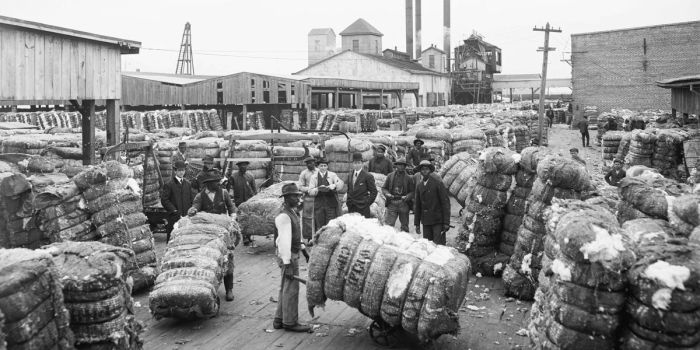
To grow the cotton that would clothe the world and fuel global industrialization, thousands of young enslaved men and women — the children of stolen ancestors legally treated as property — were transported from Maryland and Virginia hundreds of miles south, and forcibly retrained to become America’s most efficient laborers. As they were pushed into the expanding territories of Mississippi and Louisiana, sold and bid on at auctions, and resettled onto forced labor camps, they were given a task: to plant and pick thousands of pounds of cotton.

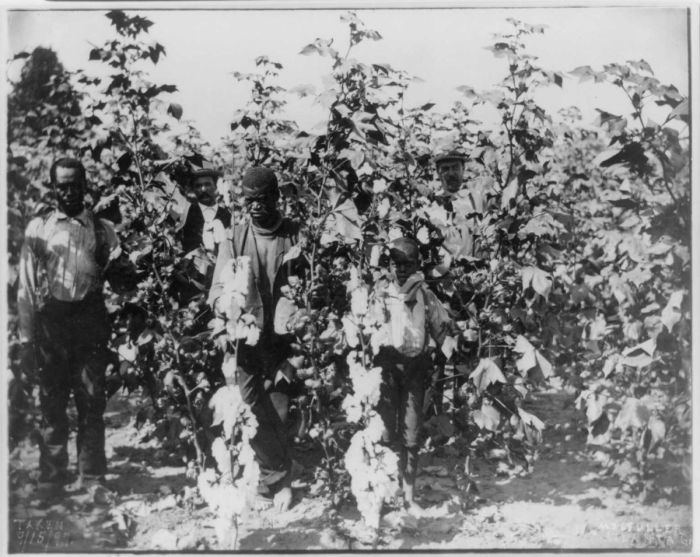
In this 1897 photo, African American men and boys are shown picking cotton on a plantation in Atlanta, Georgia.
 Library of Congress

The bodies of the enslaved served as America’s largest financial asset, and they were forced to maintain America’s most exported commodity. In 60 years, from 1801 to 1862, the amount of cotton picked daily by an enslaved person increased 400 percent. The profits from cotton propelled the US into a position as one of the leading economies in the world, and made the South its most prosperous region. The ownership of enslaved people increased wealth for Southern planters so much that by the dawn of the Civil War, the Mississippi River Valley had more millionaires per capita than any other region.

In recent years, a growing field of scholarship has outlined how America — through the country’s geographic growth after the American Revolution and enslavers’ desire for increased cotton production — created a complex system aimed at monetizing and maximizing the labor of the enslaved. In the cotton fields of the Deep South, this system rested on the continuous threat of violence and a meticulous use of record-keeping. The labor of each person was tracked daily, and those who did not meet their assigned picking goals were beaten. The best workers were beaten as well, the whip and other assaults coercing them into doing even more work in even less time.

As overseers and plantation owners managed a forced-labor system aimed at maximizing efficiency, they interacted with a network of bankers and accountants, and took out lines of credit and mortgages, all to manage America’s empire of cotton. An entire industry, America’s first big business, revolved around slavery.

“The slavery economy of the US South is deeply tied financially to the North, to Britain, to the point that we can say that people who were buying financial products in these other places were in effect owning slaves, and were extracting money from the labor of enslaved people,” says Edward E. Baptist, a historian at Cornell University and the author of The Half Has Never Been Told: Slavery and the Making of American Capitalism.

Baptist’s book came out in 2014, the same year that essays like the Ta-Nehisi Coates’s “The Case for Reparations” and protests like the Ferguson Uprising would call attention to injustices in wealth and policing that continue to affect black communities — injustices that Baptist and other academics see as being closely connected to the deprivations of slavery. As America observes 400 years since the 1619 arrival of enslaved Africans to the colony of Virginia, these deprivations are seeing increased attention — and so are the ways America’s economic empire, built on the backs of the enslaved, connects to the present.

I recently spoke with Baptist about how cotton slavery transformed the American economy, how torture, violence, and family separations were used to maximize profits, and how understanding the economic power of slavery impacts current discussions of reparations. A transcript of our conversation has been edited for length and clarity.


P.R. Lockhart

When you talk about the sort of myth-making that has been used to create specific narratives about slavery, one of the things you focus on most is the relationship between slavery and the American economy. What are some of the myths that get told when it comes to understanding how slavery is tied to American capitalism?

Edward E. Baptist

One of the myths is that slavery was not fuel for the growth of the American economy, that it actually the brakes put on US growth. There’s a story that claims slavery was less efficient, that wage labor and industrial production wasn’t significant for the massive transformation of the US economy that you see between the time of Independence and the time of the Civil War.

And yet that period is when you see the US go from being a colonial, primarily agricultural economy to being the second biggest industrial power in the world — and well on its way to becoming the largest industrial power in the world.

Another myth is that slavery, in and of itself as an economic system, was unchanging. We fetishize machine and machine production and see it as quintessentially modern — the kinds of improvements in production and efficiency that you see from hooking up a cotton spindle to a set of pulleys, which are in turn pulled by a water wheel or steam engine. That’s seen as more efficient than the old way of someone sitting there and doing it by hand.

But you can also get changes in efficiency if you change the pattern of production and you change the incentives of the labor and the labor process itself. And we still make these sorts of changes today in businesses — the kind of transformations that speed up work to a point where we say that it is modern and dynamic. And we see these types of changes in slavery as well, particularly during cotton slavery in the 19th-century US.

The difference, of course, is that this is not the work of wage workers or professional workers. It is the work of enslaved people. And the incentive is not “do this or you’ll get fired” or “you won’t get a raise.” The incentive is that if you don’t do this you’ll get whipped — or worse.

The third myth about this is that there was not a tight relationship between slavery in the South and what was happening in the North and other parts of the modern Western world in the 19th century. It was a very close relationship: Cotton was the No. 1 export from the US, which was largely an export-driven economy as it was modernizing and shifting into industrialization. And the slavery economy of the US South was deeply tied financially to the North, to Britain, to the point that we can say that people who were buying financial products in these other places were in effect owning slaves and were certainly extracting money from the labor of enslaved people.

So those are the three myths: that slavery did not cause in any significant way the development and transformation of the US economy, that slavery was not a modern or dynamic labor system, and that what was happening in the South was a separate thing from the rest of the US. . . .”


Read the full interview here: Source: How slavery became the building block of the American economy – Vox

Overdue reparations is the key to closing the racial wealth gap II Dr. William “Sandy”Darity

Overdue reparations is the key to closing the racial wealth gap

Dr. William Darity‘s congressional testimony lays a path to fix historic inequity that produces unequal outcomes for blacks

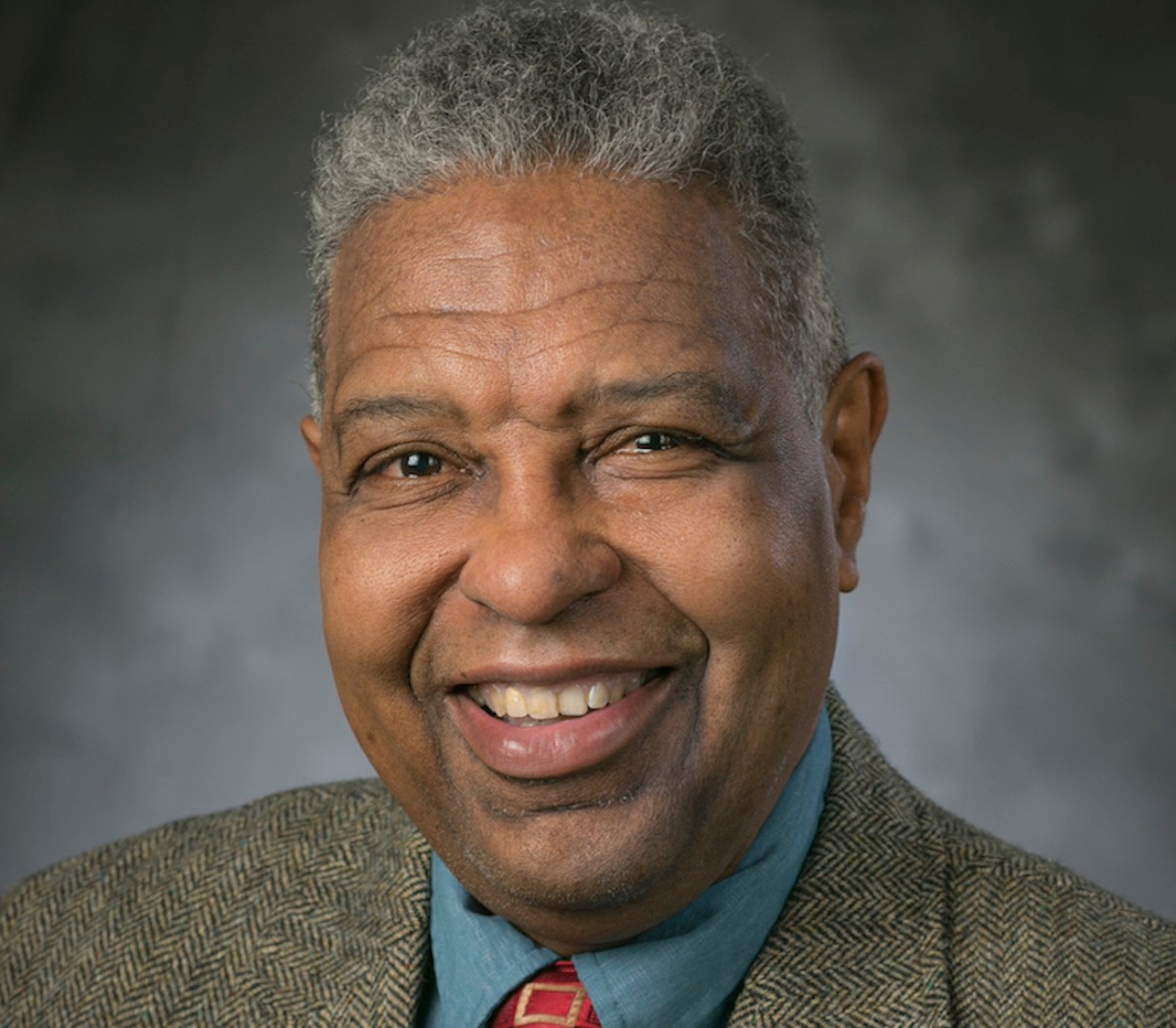
Dr. Willliam “Sandy” Darity, Samuel DuBois Cook Center on Social Equity at Duke University.

The case for black reparations must be anchored on three phases of grievous injustice inflicted upon enslaved blacks and their descendants. First is the atrocity of slavery itself.

The case for black reparations must be anchored on three phases of grievous injustice inflicted upon enslaved blacks and their descendants. First is the atrocity of slavery itself. Second are the atrocities exercised during the nearly century-long period of legal segregation in the U.S. (the “Jim Crow” era). Third are the legacy effects of slavery and Jim Crow, compounded by ongoing racism manifest in persistent health disparities, labor market discrimination, mass incarceration, police executions of unarmed blacks (de facto lynchings), black voter suppression, and the general deprivation of equal well-being with all Americans. Therefore, it is a misnomer to refer to “slavery reparations,” since black reparations must encompass the harms imposed throughout American history to the present moment — both slavery and post-slavery, both Jim Crow and post-Jim Crow — on black descendants of American slavery. It is precisely that unique community that should be the recipients of reparations: black American descendants of persons enslaved in the U.S.

Second are the atrocities exercised during the nearly century-long period of legal segregation in the U.S. (the “Jim Crow” era).

In a 2003 article written with Dania Frank Francis, and, more recently, in work written with Kirsten Mullen, we have proposed two criteria for eligibility for black reparations. First, an individual must demonstrate that they have at least one ancestor who was enslaved in the U.S. Second, an individual must demonstrate that for at least 10 years prior to the onset of the reparations program or the formation of the study commission, whichever comes first, they self-identified as black, Negro or African-American. The first criterion will require genealogical documentation — but absolutely no phenotype, ideology or DNA tests. The second criterion will require presentation of a suitable state or federal legal document that the person declared themselves to be black.

iStockphoto.

… it is a misnomer to refer to “slavery reparations,” since black reparations must encompass the harms imposed throughout American history to the present moment

I also recommend, like the Commission on Wartime Relocation and Internment of Civilians, the commission on reparations proposals commission should be appointed exclusively by the Congress. The commission appointees should be experts in American history, Constitutional law, economics (including stratification economics), political science and sociology. These appointees must have expert knowledge on the history of slavery and Jim Crow, employment discrimination, wealth inequality, health disparities, unequal educational opportunities, criminal justice and mass incarceration, media, political participation and exclusion, and housing inequities. The commission also should include appointees with detailed knowledge about the design and administration of prior reparations programs as guidelines for structuring a comprehensive reparations program for native black Americans.

Where do we go from here?

What would it take to bridge the black-white wealth gap?
A Q & A with Duke University economist William ‘Sandy’ Darity, who has some radical—yet doable—ideas
mlk50.com
Reparations well-intentioned, but insufficient for the debt owed
City of Memphis gives $50,000 each to the 14 living black sanitation workers from the 1968 strike
mlk50.com
The Loebs : Exploited black labor and inherited white wealth
Penny-pinching Loeb ancestors kept wages flat for 25 years as black laundresses did “miserable” work
mlk50.com

Source: Overdue reparations is the key to closing the racial wealth gap

The Mississippi Delta’s History of Black Land Theft – The Atlantic

The Great Land Robbery

The shameful story of how 1 million black families have been ripped from their farms

Zora J. MurffVANN R. NEWKIRK II


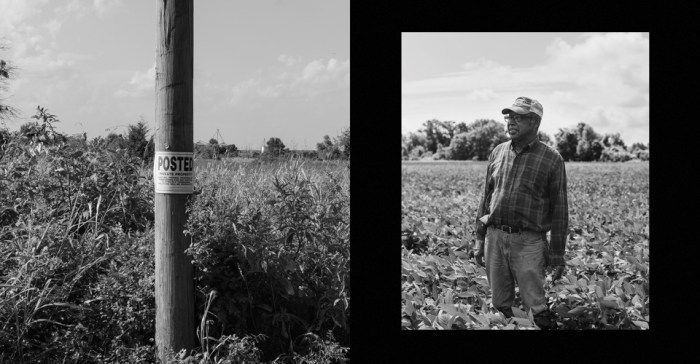
 A sign on a utility pole to deter hunters, near the old Scott-family homestead, Drew, Mississippi; Willena’s brother Isaac Daniel Scott Sr. amid soybeans in Mound Bayou.

I. Wiped Out

“You ever chop before?” Willena Scott-White was testing me. I sat with her in the cab of a Chevy Silverado pickup truck, swatting at the squadrons of giant, fluttering mosquitoes that had invaded the interior the last time she opened a window. I was spending the day with her family as they worked their fields just outside Ruleville, in Mississippi’s Leflore County. With her weathered brown hands, Scott-White gave me a pork sandwich wrapped in a grease-stained paper towel. I slapped my leg. Mosquitoes can bite through denim, it turns out.

Cotton sowed with planters must be chopped—thinned and weeded manually with hoes—to produce orderly rows of fluffy bolls. The work is backbreaking, and the people who do it maintain that no other job on Earth is quite as demanding. I had labored long hours over other crops, but had to admit to Scott-White, a 60-something grandmother who’d grown up chopping, that I’d never done it.

“Then you ain’t never worked,” she replied.
The fields alongside us as we drove were monotonous. With row crops, monotony is good. But as we toured 1,000 acres of land in Leflore and Bolivar Counties, straddling Route 61, Scott-White pointed out the demarcations between plots. A trio of steel silos here. A post there. A patch of scruffy wilderness in the distance. Each landmark was a reminder of the Scott legacy that she had fought to keep—or to regain—and she noted this with pride. Each one was also a reminder of an inheritance that had once been stolen.

Drive Route 61 through the Mississippi Delta and you’ll find much of the scenery exactly as it was 50 or 75 years ago. Imposing plantations and ramshackle shotgun houses still populate the countryside from Memphis to Vicksburg. Fields stretch to the horizon. The hands that dig into black Delta dirt belong to people like Willena Scott-White, African Americans who bear faces and names passed down from men and women who were owned here, who were kept here, and who chose to stay here, tending the same fields their forebears tended.

But some things have changed. Back in the day, snow-white bolls of King Cotton reigned. Now much of the land is green with soybeans. The farms and plantations are much larger—industrial operations with bioengineered plants, laser-guided tractors, and crop-dusting drones. Fewer and fewer farms are still owned by actual farmers. Investors in boardrooms throughout the country have bought hundreds of thousands of acres of premium Delta land. If you’re one of the millions of people who have a retirement account with the Teachers Insurance and Annuity Association, for instance, you might even own a little bit yourself.

TIAA is one of the largest pension firms in the United States. Together with its subsidiaries and associated funds, it has a portfolio of more than 80,000 acres in Mississippi alone, most of them in the Delta. If the fertile crescent of Arkansas is included, TIAA holds more than 130,000 acres in a strip of counties along the Mississippi River. And TIAA is not the only big corporate landlord in the region. Hancock Agricultural Investment Group manages more than 65,000 acres in what it calls the “Delta states.” The real-estate trust Farmland Partners has 30,000 acres in and around the Delta. AgriVest, a subsidiary of the Swiss bank UBS, owned 22,000 acres as of 2011. (AgriVest did not respond to a request for more recent information.)

Unlike their counterparts even two or three generations ago, black people living and working in the Delta today have been almost completely uprooted from the soil—as property owners, if not as laborers. In Washington County, Mississippi, where last February TIAA reportedly bought 50,000 acres for more than $200 million, black people make up 72 percent of the population but own only 11 percent of the farmland, in part or in full. In Tunica County, where TIAA has acquired plantations from some of the oldest farm-owning white families in the state, black people make up 77 percent of the population but own only 6 percent of the farmland. In Holmes County, the third-blackest county in the nation, black people make up about 80 percent of the population but own only 19 percent of the farmland. TIAA owns plantations there, too. In just a few years, a single company has accumulated a portfolio in the Delta almost equal to the remaining holdings of the African Americans who have lived on and shaped this land for centuries.

This is not a story about TIAA—at least not primarily. The company’s newfound dominance in the region is merely the topsoil covering a history of loss and legally sanctioned theft in which TIAA played no part. But TIAA’s position is instrumental in understanding both how the crimes of Jim Crow have been laundered by time and how the legacy of ill-gotten gains has become a structural part of American life. The land was wrested first from Native Americans, by force. It was then cleared, watered, and made productive for intensive agriculture by the labor of enslaved Africans, who after Emancipation would come to own a portion of it. Later, through a variety of means—sometimes legal, often coercive, in many cases legal and coercive, occasionally violent—farmland owned by black people came into the hands of white people. It was aggregated into larger holdings, then aggregated again, eventually attracting the interest of Wall Street.

Willena Scott-White’s son Joseph White cutting grass at the edge of a field on Scott-family land, Mound Bayou, Mississippi (Zora J. Murff)
Owners of small farms everywhere, black and white alike, have long been buffeted by larger economic forces. But what happened to black landowners in the South, and particularly in the Delta, is distinct, and was propelled not only by economic change but also by white racism and local white power. A war waged by deed of title has dispossessed 98 percent of black agricultural landowners in America. They have lost 12 million acres over the past century. But even that statement falsely consigns the losses to long-ago history. In fact, the losses mostly occurred within living memory, from the 1950s onward. Today, except for a handful of farmers like the Scotts who have been able to keep or get back some land, black people in this most productive corner of the Deep South own almost nothing of the bounty under their feet.

II. “Land Hunger”

land has always been the main battleground of racial conflict in Mississippi. During Reconstruction, fierce resistance from the planters who had dominated antebellum society effectively killed any promise of land or protection from the Freedmen’s Bureau, forcing masses of black laborers back into de facto bondage. But the sheer size of the black population—black people were a majority in Mississippi until the 1930s—meant that thousands were able to secure tenuous footholds as landowners between Emancipation and the Great Depression.

Driven by what W. E. B. Du Bois called “land hunger” among freedmen during Reconstruction, two generations of black workers squirreled away money and went after every available and affordable plot they could, no matter how marginal or hopeless. Some found sympathetic white landowners who would sell to them. Some squatted on unused land or acquired the few homesteads available to black people. Some followed visionary leaders to all-black utopian agrarian experiments, such as Mound Bayou, in Bolivar County.

It was never much, and it was never close to just, but by the early 20th century, black people had something to hold on to. In 1900, according to the historian James C. Cobb, black landowners in Tunica County outnumbered white ones three to one. According to the U.S. Department of Agriculture, there were 25,000 black farm operators in 1910, an increase of almost 20 percent from 1900. Black farmland in Mississippi totaled 2.2 million acres in 1910—some 14 percent of all black-owned agricultural land in the country, and the most of any state.

The foothold was never secure. From the beginning, even the most enterprising black landowners found themselves fighting a war of attrition, often fraught with legal obstacles that made passing title to future generations difficult. Bohlen Lucas, one of the few black Democratic politicians in the Delta during Reconstruction (most black politicians at the time were Republicans), was born enslaved and managed to buy a 200-acre farm from his former overseer. But, like many farmers, who often have to borrow against expected harvests to pay for equipment, supplies, and the rent or mortgage on their land, Lucas depended on credit extended by powerful lenders. In his case, credit depended specifically on white patronage, given in exchange for his help voting out the Reconstruction government—after which his patrons abandoned him. He was left with 20 acres.

In Humphreys County, Lewis Spearman avoided the pitfalls of white patronage by buying less valuable wooded tracts and grazing cattle there as he moved into cotton. But when cotton crashed in the 1880s, Spearman, over his head in debt, crashed with it.

Around the turn of the century, in Leflore County, a black farm organizer and proponent of self-sufficiency—referred to as a “notoriously bad Negro” in the local newspapers—led a black populist awakening, marching defiantly and by some accounts bringing boycotts against white merchants. White farmers responded with a posse that may have killed as many as 100 black farmers and sharecroppers along with women and children. The fate of the “bad Negro” in question, named Oliver Cromwell, is uncertain. Some sources say he escaped to Jackson, and into anonymity.

Like so many of his forebears, Ed Scott Sr., Willena Scott-White’s grandfather, acquired his land through not much more than force of will. As recorded in the thick binders of family history that Willena had brought along in the truck, and that we flipped through between stretches of work in the fields, his life had attained the gloss of folklore. He was born in 1886 in western Alabama, a generation removed from bondage. Spurred by that same land hunger, Scott took his young family to the Delta, seeking opportunities to farm his own property. He sharecropped and rented, and managed large farms for white planters, who valued his ability to run their sprawling estates. One of these men was Palmer H. Brooks, who owned a 7,000-acre plantation in Mississippi’s Leflore and Sunflower Counties. Brooks was uncommonly progressive, encouraging entrepreneurship among the black laborers on his plantation, building schools and churches for them, and providing loans. Scott was ready when Brooks decided to sell plots to black laborers, and he bought his first 100 acres.

Unlike Bohlen Lucas, Scott largely avoided politics. Unlike Lewis Spearman, he paid his debts and kept some close white allies—a necessity, since he usually rejected government assistance. And unlike Oliver Cromwell, he led his community under the rules already in place, appearing content with what he’d earned for his family in an environment of total segregation. He leveraged technical skills and a talent for management to impress sympathetic white people and disarm hostile ones. “Granddaddy always had nice vehicles,” Scott-White told me. They were a trapping of pride in a life of toil. As was true in most rural areas at the time, a new truck was not just a flashy sign of prosperity but also a sort of credit score. Wearing starched dress shirts served the same purpose, elevating Scott in certain respects—always within limits—even above some white farmers who drove into town in dirty overalls. The trucks got shinier as his holdings grew. By the time Scott died, in 1957, he had amassed more than 1,000 acres of farmland.

Scott-White guided me right up to the Quiver River, where the legend of her family began. It was a choked, green-brown gurgle of a thing, the kind of lazy waterway that one imagines to be brimming with fat, yawning catfish and snakes. “Mr. Brooks sold all of the land on the east side of this river to black folks,” Scott-White told me. She swept her arm to encompass the endless acres. “All of these were once owned by black families.”

Members of the extended Scott family. From the right: Isaac Daniel Scott Sr. and his wife, Lucy Chatman-Scott; Willena Scott-White; and Willena’s son Joseph White, with his daughter, Jade Marie White. (Zora J. Murff)

III. The Great Dispossession

that era of black ownershipin the Delta and throughout the country, was already fading by the time Scott died. As the historian Pete Daniel recounts, half a million black-owned farms across the country failed in the 25 years after 1950. Joe Brooks, the former president of the Emergency Land Fund, a group founded in 1972 to fight the problem of dispossession, has estimated that something on the order of 6 million acres was lost by black farmers from 1950 to 1969. That’s an average of 820 acres a day—an area the size of New York’s Central Park erased with each sunset. Black-owned cotton farms in the South almost completely disappeared, diminishing from 87,000 to just over 3,000 in the 1960s alone. According to the Census of Agriculture, the racial disparity in farm acreage increased in Mississippi from 1950 to 1964, when black farmers lost almost 800,000 acres of land. An analysis for The Atlantic by a research team that included Dania Francis, at the University of Massachusetts, and Darrick Hamilton, at Ohio State, translates this land loss into a financial loss—including both property and income—of $3.7 billion to $6.6 billion in today’s dollars.

This was a silent and devastating catastrophe, one created and maintained by federal policy. President Franklin D. Roosevelt’s New Deal life raft for agriculture helped start the trend in 1937 with the establishment of the Farm Security Administration, an agency within the Department of Agriculture. Although the FSA ostensibly existed to help the country’s small farmers, as happened with much of the rest of the New Deal, white administrators often ignored or targeted poor black people—denying them loans and giving sharecropping work to white people. After Roosevelt’s death, in 1945, conservatives in Congress replaced the FSA with the Farmers Home Administration, or FmHA. The FmHA quickly transformed the FSA’s programs for small farmers, establishing the sinews of the loan-and-subsidy structure that undergirds American agriculture today. In 1961, President John F. Kennedy’s administration created the Agricultural Stabilization and Conservation Service, or ASCS, a complementary program to the FmHA that also provided loans to farmers. The ASCS was a federal effort—also within the Department of Agriculture—but, crucially, the members of committees doling out money and credit were elected locally, during a time when black people were prohibited from voting.

Through these programs, and through massive crop and surplus purchasing, the USDA became the safety net, price-setter, chief investor, and sole regulator for most of the farm economy in places like the Delta. The department could offer better loan terms to risky farmers than banks and other lenders, and mostly outcompeted private credit. In his book Dispossession, Daniel calls the setup “agrigovernment.” Land-grant universities pumped out both farm operators and the USDA agents who connected those operators to federal money. Large plantations ballooned into even larger industrial crop factories as small farms collapsed. The mega-farms held sway over agricultural policy, resulting in more money, at better interest rates, for the plantations themselves. At every level of agrigovernment, the leaders were white.

Major audits and investigations of the USDA have found that illegal pressures levied through its loan programs created massive transfers of wealth from black to white farmers, especially in the period just after the 1950s. In 1965, the United States Commission on Civil Rights uncovered blatant and dramatic racial differences in the level of federal investment in farmers. The commission found that in a sample of counties across the South, the FmHA provided much larger loans for small and medium-size white-owned farms, relative to net worth, than it did for similarly sized black-owned farms—evidence that racial discrimination “has served to accelerate the displacement and impoverishment of the Negro farmer.”

In Sunflower County, a man named Ted Keenan told investigators that in 1956, local banks had denied him loans after a bad crop because of his position with the NAACP, where he openly advocated for voting rights. The FmHA had denied him loans as well. Keenan described how Eugene Fisackerly, the leader of the White Citizens’ Council in Sunflower County, together with representatives of Senator James Eastland, a notorious white supremacist who maintained a large plantation there, had intimidated him into renouncing his affiliation with the NAACP and agreeing not to vote. Only then did Eastland’s man call the local FmHA agent, prompting him to reconsider Keenan’s loan.

A landmark 2001 investigation by the Associated Press into extortion, exploitation, and theft directed against black farmers uncovered more than 100 cases like Keenan’s. In the 1950s and ’60s, Norman Weathersby, a Holmes County Chevrolet dealer who enjoyed a local monopoly on trucks and heavy farm equipment, required black farmers to put up land as collateral for loans on equipment. A close friend of his, William Strider, was the local FmHA agent. Black farmers in the area claimed that the two ran a racket: Strider would slow-walk them on FmHA loans, which meant they would then default on Weathersby’s loans and lose their land to him. Strider and Weathersby were reportedly free to run this racket because black farmers were shut out by local banks.

More: The Mississippi Delta’s History of Black Land Theft – The Atlantic

Embracing the Courageous Four:Radically Reconceiving and Reconstructing America

“Trump’s attacks on these four courageous, committed, knowledgeable and defiant congresswomen of color, not only reflect his commitment to views, policies and practices that are racist, anti-people of color; xenophobic, anti-immigrant and those different; sexist, anti-women; and opportunistic, ever self-promoting and peacocking.

These attacks also reflect his reactionary politics and conception of America. It is a politics of White supremacy; predatory capitalism at home and abroad; warmongering; privatization of public wealth and space; and peddling a personalized patriotism based on his astonishing ignorance, multiple insecurities and vulgar interests.We must constantly expose, criticize and condemn the monster side of America we call Trump and his supporters and enablers, but we must not over focus on him and under focus on the rising movement to actively resist him in Congress, as represented by the initiatives of the courageous four and also in our various communities across the country. To make this mistake would be like over focusing on a devast[at]ing fire and the havoc it is wreaking and under focusing on the response and responders needed to control and extinguish it.

Audacious and defiant, these four progressive congresswomen resist and reject Trump’s attempt to impose his deformed and dishonest reactionary conception of patriotism and politics. Indeed, they cannot morally and will not politically accept Trump’s packaged and constantly peddled racist patriotic politics of vicious and varied forms of oppression: apartheid walls here and abroad; corruption and coercion; the savaging of immigrants and the abuse and separation of children from their families; anti-labor and anti-union policies; preference for the rich at the expense and injury of the poor; racial and religious restrictions and preferences; denial of climate change; and his obsessive and infantile attempt to rival and erase everything considered an Obama achievement.

Source: Embracing the Courageous Four:Radically Reconceiving and Reconstructing America

A Brief History of US Concentration Camps | Black Agenda Report

“The Union Army re-captured freed slaves throughout the South and pressed them into hard labor in disease-ridden ‘contraband camps.’’

concentration camp (noun): a place in which large numbers of people, especially political prisoners or members of persecuted minorities, are deliberately imprisoned in a relatively small area with inadequate facilities, sometimes to provide forced labor or to await mass execution.– Oxford English Dictionary

Rep. Alexandria Ocasio-Cortez (D-NY) has ignited a firestorm of criticism, from both the left and the right as well as the mainstream media, for calling US immigrant detention centers “concentration camps.” To her credit, Ocasio-Cortez has refused to back down, citing academic experts and blasting the Trump administration for forcibly holding undocumented migrants “where they are brutalized with dehumanizing conditions and dying.” She also cited history. “The US ran concentration camps before, when we rounded up Japanese people during World War II,” she tweeted. “It is such a shameful history that we largely ignore it. These camps occur throughout history.” Indeed they do. What follows is an overview of US civilian concentration camps through the centuries. Prisoner-of-war camps, as horrific as they have been, have been excluded due to their legal status under the Geneva Conventions, and for brevity’s sake.”

Source: A Brief History of US Concentration Camps | Black Agenda Report

U.S. begins paying out reparations from France to Holocaust survivors and their heirs – The Washington Post

“Transportation U.S. begins paying out reparations from France to Holocaust survivors and their heirs Add to listBy Katherine Shaver September 15, 2016The State Department has paid or approved 90 claims for a total $11 million in reparations from France to former World War II prisoners who were carried to Nazi death camps in French trains — the first French reparations paid to Holocaust survivors living in the United States, officials said Thursday.

The payments apply to Holocaust survivors who were deported from France to concentration camps on stifling trains operated by the state-owned French railway, SNCF, or, if the survivors have died, to their spouses or heirs. It is the first French compensation to Holocaust survivors who settled in the United States as well as Israel, Canada and other countries that haven’t had a reparations agreement with France.It’s also the first World War II reparations program to include heirs considered to be “standing in the shoes” of people who died before receiving compensation for the atrocities they or their spouses endured, State Department officials said.

“In many ways, this is belated justice for the worst crimes in history,” said Stuart Eizenstat, the State Department’s special adviser for Holocaust issues. “But it also underscores a long relationship with France.”SNCF was paid to transport 76,000 Jews and other prisoners, usually with no food and only a bucket for a toilet, to Nazi camps. All but about 2,000 were killed.[Video: On a French train to Auschwitz, a daring leap for survival]While the French government has paid more than $6 billion in Holocaust reparations since 1948, including to deportees, those payments previously covered only French citizens and those of four countries that had bilateral agreements with France.More than 700 claims have been filed under a 2014 agreement between the United States and France in which the French government pledged a total $60 million for the deportations carried out by SNCF, officials said.

In exchange, the U.S. government agreed to ask courts to dismiss any U.S. lawsuits against SNCF or the French government.U.S. Jewish groups and aging Holocaust survivors have pushed for French reparations since at least 2000, both through class-action lawsuits and state and federal legislation. However, their cause gained political traction in 2010, when survivors began protesting SNCF and a company in which it holds a majority stake, Paris-based Keolis, as they pursued state and federal rail projects.

Survivors said SNCF and Keolis shouldn’t be awarded U.S. contracts supported by their tax dollars until they had been compensated.So far, Eizenstat said, 29 Holocaust deportees have received $204,000 each, while 11 spouses of those who died in Nazi concentration camps or before 1948 are receiving $51,000 each. Spouses of Holocaust victims who died in or after 1948 — the start of France’s own Holocaust reparations fund for French citizens — will receive $750 for each year that the survivor lived after 1948.

Source: U.S. begins paying out reparations from France to Holocaust survivors and their heirs – The Washington Post