The stabbing of Dr. King: New documentary delves into Izola Curry mystery l the Grio

The stabbing of Dr. King: New documentary delves into Izola Curry mystery

When Harlem Save A King — Intro from BACKTRACK films on Vimeo.

Dr. Martin Luther King Jr. is regarded as one of the most prominent faces of the Civil Rights Movement, hailed for his triumphs and sacrifices throughout the 1950s. And while his legacy has lived on today, many do not know that Dr. King was almost assassinated several years prior to his rise as the most iconic and celebrated Civil Rights leader.

In September 1958, Dr. King was an emerging activist who was hosting a book signing for his book, “Stride Toward Freedom: The Montgomery Story” at Blumstein Department Store in Harlem, New York.  While signing books, Dr. King was approached by a 42-year-old black woman, Izola Ware Curry, who asked if he was really Martin Luther King Jr. After responding yes, witnesses say Curry promptly took a letter opener out of her purse, closed her eyes and plunged it into Dr. King’s chest.

With the help of local police officers, first responders and the Harlem Hospital surgical team, Dr. King fortunately survived the stabbing, but doctors said because the opener grazed the surface of his aorta, if she had stabbed harder or if someone removed the object improperly, he probably would have drowned in his own blood.

“If I had sneezed, I wouldn’t have had a chance later that year, in August, to try to tell America about a dream that I had had. If I had sneezed, I wouldn’t have been down in Selma, Alabama to see the great movement there,” Dr. King famously said ten years after the incident in his last speech, ”I’ve Been to the Mountaintop.”

While local media reported Dr. King’s attempted assassination in the following weeks, the story did not become national news because he was not a prominent public figure at the time.

But mystery remains surrounding attacker Izola Curry. Who was she? What happened to her? And why did this woman attempt to kill one of the greatest civil rights leaders?

Two filmmakers claim that their upcoming documentary, When Harlem Saved A Kingwill answer all of these questions and also shed light into Curry’s life, who has remained, as of now, virtually unknown to the public.

“Everybody is fascinated with this story about Dr. Martin Luther King. Everything you hear about him is from history books, but this puts a different spin on Dr. Martin Luther King’s rise to fame and it’s absolutely true,” says executive producer Wayne Davis in an interview with theGrio.

While the mystery behind Curry is alluring to historians and the public alike, both the director, Al Cohen, and Davis, say their film will also pay homage to the “unsung heroes” from the Harlem community who helped save Dr. King’s life.

“Harlem was never given a badge of honor as it relates assisting in the Civil Rights Movement. This particular project that we’re doing helps bring that shade to the Harlem community. We can stand up tall and realize that we had a very major impact in the Civil Rights Movement,” said director Al Cohen in the interview.

The two Harlem natives have spent the past several years researching and tracking down firsthand sources and information to figure out what happened to Curry and community members who played a role in saving Dr. King.

“The objective of When Harlem Saved a King is to unravel mysteries, expose secrets and misconceptions; and answer unanswered questions. The pieces of this untold story will be woven into a compelling 60 minutes through the creative integration of eye-opening interviews [with firsthand witnesses],” according to the documentary’s website.

After the stabbing incident, Curry was taken into custody and was found to be incompetent to stand trial for assault charges. She was later diagnosed with paranoid schizophrenia and was committed to the Matteawan State Hospital for the criminally insane according to the Martin Luther King, Jr. Research and Education Institute.

Although the media portrayed Curry as a deranged woman with no real motive to kill Dr. King, both Cohen and Davis say that they have compelling evidence that Curry may have been part of a larger conspiracy to thwart the impending Civil Rights Movement.

“I think people will find an ironic twist about [the story]. Many said she was deranged woman, but it could possibly something bigger than that, a bigger conspiracy,” says Cohen. “It’s not just a crazy woman who got in an argument against [Dr. King] and just wanted to defend herself. It was more calculated than that.”

“For a deranged woman who acted solo, why was a lot of money in the south raised for her defense?” adds Davis. “That’s all I want to say. You will find out in the documentary what happened to her.”

Additionally, there are no records indicating Curry died at the mental institution and if she is still alive, she would be 96 years old today. Cohen and Davis say that the documentary will be groundbreaking because it will reveal what happened to Curry and if they were able to locate her.

“Nobody was ever able to get to [Izola Curry]. We have no information or any interviews or any leads about this woman, [except] the things we have found,” explains Cohen. “There is nobody out there that anybody has spoken to her outside of what we have found.”

The two filmmakers promoted their documentary throughout Black History Month to shed light onto a part of African-American history that has almost been forgotten. Just last week, the two hosted a screening of the trailer at Harlem Hospital.

“If Dr. King had died, would we be here talking with you today? We don’t know!” says Davis. “Maybe [the Civil Rights Movement] wouldn’t have progressed as soon as it did. Maybe it wouldn’t have progressed at all.”

The two filmmakers say that they are currently finishing the film’s production and they hope to premiere the documentary at the end of July.

Click here to watch the trailer.

Follow Brittany Tom on Twitter @brittanyrtom

Related Posts

Economic Mobility For African Americans May Be A Myth l Pew Report Finding

Economic Mobility For African Americans May Be A Myth, Pew Report Shows

The Huffington Post  |  By  Posted: 07/17/2012

Economic Mobility

The fine line between the American Dream and the African-American Dream is becoming more distinct, according to a recent report by the Pew Charitable Trusts, a nonprofit research organization.

The survey of economic mobility across generations compared the income and wealth of Americans with that of their parents at the same age, and it offered a promising outlook for most Americans — 84 percent to be exact — who were shown to have higher incomes than their parents, when adjusted for inflation.

African Americans, however, haven’t had the same success, with just 23 percent of blacks raised in the middle class surpassing their parents’ family wealth, compared to 56 percent of whites.

The study’s project manager, Erin Currier, said the results aren’t far off from what a simliar 2008 survey found. “With this newest update to the data, we can see that not much has changed with a few more years of data added in,” Currier told The Huffington Post. “Specifically, African Americans are much more likely than whites to be stuck at the bottom of the income ladder over a generation, and also at the bottom of the wealth ladder,” she said. They’re also more likely to fall from the middle.

Currier and her team analyzed income data over five years from the University of Michigan’s Panel Study of Income Dynamics (PSID), a nationally representative sample of more than 18,000 individuals living in 5,000 families in the United States. During the years they chose — 1967, ’68, ’69, ’70 and ’71 for the parents; 2000, ’02, ’04, ’06 and ’08 for their kids — both groups were at a common age (in their early to mid 40s) and at similar positions of marriage, income parity and post-secondary education, Currier said.

“It is the case that African-American families manage to get to the middle class and they have some sense of economic security, but their ability to pass that on to their kids is not as high as the white families,” she said.

And while this particular study didn’t delve into specific reasons for this gap, Currier pointed to previous research showing the impact neighborhood poverty has had on maintaining wealth disparities over time. “Two thirds of African-American children born between 1985 and 2000 are being raised in high poverty neighborhoods,” compared to just six percent of white children, Currier noted, proportions that haven’t shifted much over the last 30 years. “It isn’t the case that two thirds of African-American families are poor, but a lot of even middle-class African-American families are living in high poverty neighborhoods and research shows that, that environment in childhood increases a person’s chance of downward mobility by 52 percent,” she added.

A study published in May by the National Bureau of Economic Research may have hinted at one of the barriers to moving out of those poverty-stricken neighborhoods, revealing that black and Hispanic homebuyers pay as much as 3 percent more for their homes, regardless of their income, wealth or credit profiles.

Pew research has also examined the roles that marital status andincarceration have played in the black-white economic mobility gap in recent years. Meanwhile, others have looked at the roles of higher education and even differences by region. (Those with a college degree and those who live in the Northeast U.S. have a higher chance of moving up, researchers say.)

Since 2006, Currier and her team have set out to examine the health and status of the American Dream, which she says is more than a cliche, but rather a part of our national fabric based on the notion that your children can do better than you did.

“Our research shows a pretty mixed view of the degree to which that’s true,” she said. “On one hand, there has been significant economic growth over the last generation, [wealth that] has been broadly, equally shared. But at the same time, we see some lack of movement on the ladder as a whole.” So even though Gen Xers may have greater incomes than their parents did within a certain income bracket, they may not make enough to move to the next bracket up, Currier explained.

That finding contradicts what is said to be the crux of the American Dream, that all Americans have equality of opportunity regardless of their economic status at birth.

“A defining factor of the American dream is that a person’s family background or income has no bearing on where he or she ends up, but the study shows otherwise,” Currier said in an interview with the Poughkeepsie Journal.

“Child Sexual Abuse & Trauma in the African-American Community: The Shame, The Blame, & The Solutions” l Baltimore, MD


CHILD SEXUAL ABUSE & TRAUMA IN THE AFRICAN-AMERICAN COMMUNITY: The Shame, The Blame & The Solutions

A National Conference

March 22, 203
Hilton Baltimore 401 West Pratt Street – Baltimore, MD 21201

The Royal Circle Foundation announces the Baltimore screening of the award winning feature film, “WOLF” (Exodus Filmworks – 2012), by Director, Writer, and Filmmaker, Ya’ Ke Smith, which addresses child sexual abuse in the Black church. The film will premiere in Baltimore on Friday evening, March 22, 2013 as part of the events being held in conjunction with the first national conference on “Child Sexual Abuse & Trauma in the African-American Community: The Shame, The Blame, & The Solutions” convening at the downtown Baltimore Hilton Hotel(401 W. Pratt Street- Baltimore, MD 21201) from March 22 –23, 2013.
The film tells the story of an African-American family struggling with the discovery that their son has been sexually molested. As they struggle to deal with the betrayal of the clergyman, their son heads towards total mental collapse because of his love and admiration for his abuser as the pastor struggles with his own past demons. “WOLF”, is the fifth and first full length film directed and written by Ya’ Ke whose films have received worldwide acclaim being screened at over eighty (80) film festivals nationally and internationally including The Cannes International Film Festival, Pan-African Film & Arts Festival, The Sedicorto Film Festival Fori, to name a few, as well as having been shown on HBO and
Showcase.
Professor Ya’ Ke who teaches film at the University of Texas (Arlington) says, “Writing this film is the most difficult thing I’ve ever done…..I wanted to make sure that I approached it (child sexual molestation) with grace, not judgment. This film is not meant to criticize churches nor is it meant to dismiss Christianity as some faux religion where all people are preyed upon. My hope is that it will shed light on the vicious cycle of sexual abuse so that the victims can understand that they are not alone and can step out of the shadows of silence.”
Tickets for the film screening which includes a pre-screening reception and post screening discussion by the director, himself as well as registration for the entire two-day conference which will bring together the nation’s leading experts in the fields of psychiatry, psychology, nursing, social work, mental health, addictions and pastoral counseling as well as law and public policy officials to address this national public health epidemic and chart a course for meaningful solutions, can be viewed and ordered at the Foundation’s website located at the following web address: http://www.royal-circle.org/id6.html or by contacting the program chairperson by phone at: (410) 752-2943 or 410-637-5474 for more information.

“If you still believe in the power of film, watch WOLF”- Film Slate Magazine-

Tickets are very limited and early bird registration ends January 30, 2013. Corporate sponsorships, program advertisements as well as exhibit space for organizations, associations, and businesses are also available with application forms located on the Foundation’s web page listed above. Continuing education credits for professionals in health care and social services have been applied for and are currently pending.

The conference, “Child Sexual Abuse & Trauma in the African-American Community: The Shame, The Blame & The Solutions” being sponsored by the Royal Circle Foundation in  Association with the Black Psychiatrists of America, The Office of Minority & National Affairs (American Psychiatric Association) and The Black Mental Health Alliance
(Baltimore), will also feature an “Inspirations” Awards Dinner & Luxury Auction on Saturday evening, March 23, 2013 as a major 2013 fundraiser for the Foundation’s Youth Violence Prevention Program that targets “at-risk” youth by providing them with positive cultural and educational experiences as well as cross-cultural exchanges. Included among the luxury items to be auctioned are: an autographed baseball by President Obama, autographed boxing gloves of Muhammad Ali,autographed guitar from Carlos Santana, as well as autographed photographs, albums and sheet music by Michael Jackson and Whitney Houston. Program Chairperson, Dr. Patricia Newton says, “If you care about our children, you must attend this conference and film screening. And if you care about their future, please endorse the fundraising efforts associated with it by showing your support of the  Foundation’s Youth Violence Prevention Program and participate in the awards dinner as well as the auction. It’s time for the “Conspiracy of Silence” related to childhood trauma and sexual abuse in our community to end.” The Royal Circle Foundation is a non-profit charitable tax-exempt IRS designated 501 (c) 3 organization. Please consult your tax advisor for tax deduction and tax credit information

FOR IMMEDIATE RELEASE
Baltimore Conference & Screening of Child Sexual Abuse Film Baltimore, MD – January 2, 2013:

Contact: Patricia A. Newton, M.D., MPH, M. A.
Program Chairperson
Phone: 410-752-2943/ 410-637-5474
Email: trcfoundation@aol.com

blackfemaleculture's avatarBlack Female Culture

black-woman-stressed-at-computerFor the last few months I have noticed a rise in propaganda designed to convince BW of their undesirability. This propaganda comes in many forms: social “science” surveys/ studies are the most popular, followed by articles on why you should worry that every non-BM that approaches you is only interested in your vagina (you know, because no other group of women have one), followed by articles on why BW should give unemployed, uneducated, ex-cons “a chance”, and if you don’t you are a “gold digging bitch”, followed by articles and videos on why BW are so evil and/or unattractive. Do I even need to mention rap “music”?

You may laugh and ask, who cares? Who would believe this nonsense?

Based on what I’ve seen, heard and read on several blogs, many impressionable young BW are believing it. Some of the older ones too. From what I can tell, these women…

View original post 1,718 more words

The Day the Deltas Marched into History

WP Opinions

Opinions

The Day the Deltas Marched into History


By Mary Walton


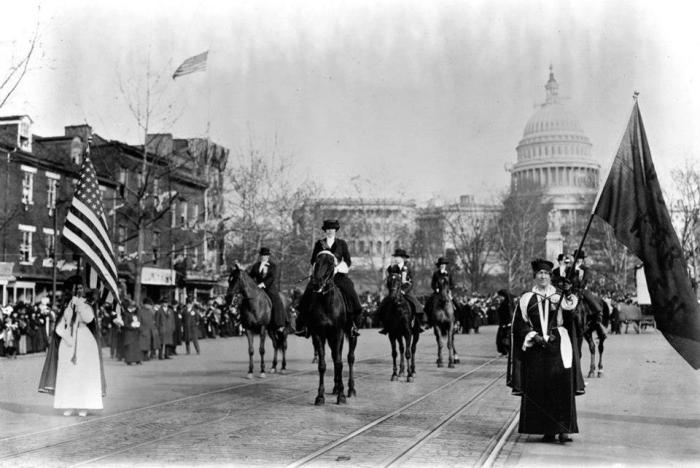
Lured by the promise of a parade unlike any Washington had seen, the first spectators began to arrive at 9 a.m. March 3, 1913, six hours early. By the time the trumpets sounded, some 250,000 people lined Pennsylvania Avenue.Leading the way from the Capitol to the Treasury Department was a horse-drawn float bearing a banner that read, “We demand an amendment to the constitution of the United States enfranchising the women of the country.” It would be followed by more floats, nine bands, four mounted brigades, three heralds with trumpets and somewhere between 5,000 and 8,000 women.

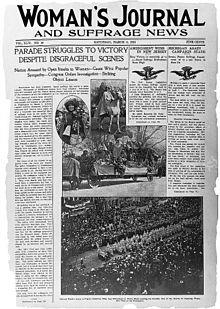
Organized in two months by Alice Paul, a driven, young Quaker, the capital’s first suffrage parade was timed to put pressure on Woodrow Wilson on the day before his inauguration.
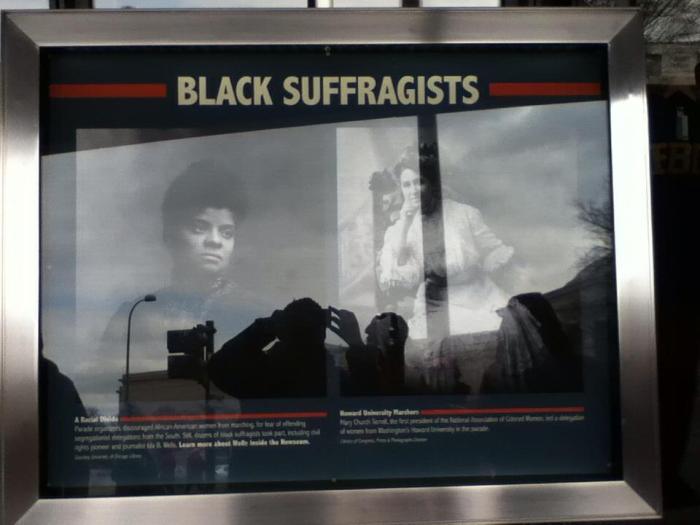
Everyone was welcome to participate, including men, with one exception. In a city that was Southern in both location and outlook, where the Christmas Eve rape of a government clerk by a black man had fanned racist sentiments, Paul, a white woman, was convinced that other white women would not march with black women. In response to several inquiries, she had quietly discouraged blacks from participating. She confided her fears to a sympathetic editor: “As far as I can see, we must have a white procession, or a Negro procession, or no procession at all.”Aware they were not wanted, fearful they might be attacked, 22 founding members of Delta Sigma Theta, a new Howard University sorority, joined the procession anyway. Among black activists, the prevailing view was that if white women needed the vote to secure their rights, black women needed it even more. One adviser was Mary Church Terrell, a founder of the NAACP and an activist for women’s rights. When the sorority was founded Jan. 13, she wrote its secret oath.Memories of parades fade like old photographs. But for those who were least welcome, the 1913 suffrage parade has become a touchstone. Says Ella McNair, the Deltas’ director of public relations, “Everybody who has been a member of this organization knows about the march. They could have had a social, they could have had a tea. But they did not choose that. They were committed to advocacy and social action.”

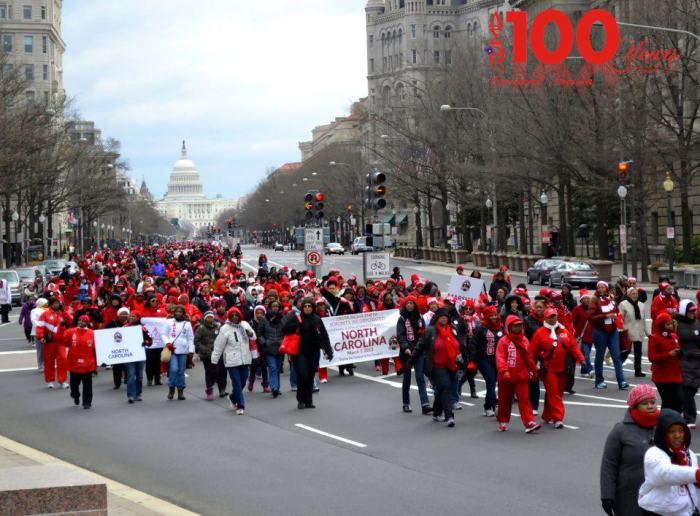
Marking their historic role a century ago, and also celebrating the centennial of their founding, thousands of Deltas plan to fill Pennsylvania Avenue today along with members of other women’s organizations.

If Paul had her druthers, there would have been no black marchers. But just days before the parade, she became more receptive to the possibility. What brought matters to a head was a letter from Nellie M. Quander, a schoolteacher and Howard graduate, who said that Howard women wanted to take part. Usually prompt to reply, Paul took a week to respond. She suggested Quander “call” at the headquarters of Paul’s parent organization, the National American Woman Suffrage Association. Records do not reflect a meeting.

Complaints of discrimination reached the association, which wired orders to permit black marchers. Paul had no choice. Representing the sorority in negotiations, Terrell agreed that the Deltas would march next to the New York delegation.

Meanwhile, panicky reports came from white suffragists in Chicago that Ida B. Wells-Barnett, the celebrated author of an anti-lynching campaign and an African American, planned to join the procession. When the Illinois unit mustered, leaders instructed Wells-Barnett to walk with an all-black group. Tears forming, Wells-Barnett refused to take part unless “I can march under the Illinois banner.” By all accounts she solved the issue herself, defiantly joining the unit in mid-parade.

At that point, few would have noticed. The parade was a shambles.

From the outset, authorities had been worried about the threat to security from male onlookers, particularly hard-drinking southern Democrats celebrating the election of a Virginia-born president. They suggested holding the event the day after the inauguration, perhaps on 16th Street, a safe distance from the Bowery. But Paul rallied supporters and went to the press. Open Pennsylvania Avenue to the women, urged the Washington Times, because that was where the men marched. Paul got her way.

The violence erupted minutes after the parade began. The crowd broke through steel cables and spilled into the street. Men, many of them drunk, spit at the marchers and grabbed their clothing, hurled insults and lighted cigarettes, snatched banners and tried to climb floats. Police did little to keep order. Observed one of Paul’s supporters, “I did not know men could be such fiends.” Galloping to the rescue, Army cavalry from Fort Myer cleared a path, and the parade continued on, albeit well behind schedule.

Paul was far from displeased. The parade, including the violence, was front-page news across America, drawing attention to suffragists and their cause. For its part, a fledgling sorority hatched just six weeks earlier could already claim a proud history.

Mary Walton is the author of “A Woman’s Crusade: Alice Paul and the Battle for the Ballot.”

delta3

suffrage2 suffrage3
deltas suffrage dst

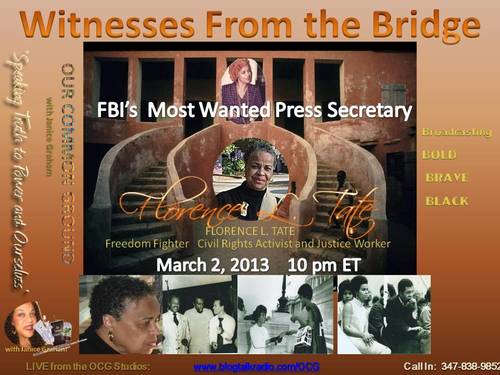
OUR COMMON GROUND with Janice Graham WITNESSES FROM THE BRIDGE l Florence L. Tate Civil Rights Activist, Journalist, and Press Secretary

OUR COMMON GROUND with Janice Graham

WITNESSES FROM THE BRIDGE

“They came to Change a Nation and Lift Up a People”

The Women of the Black Power Movement

OUR COMMON GROUND with Janice Graham

Each Saturday all through March 10 pm ET

Guest, Florence L. Tate
Civil Rights Activist, Journalist, and Press Secretary
She became the FBI’s Most Wanted Press Secretary
Opening the files of the Civil Rights and Black Power Movement and her life in our struggle.

ABOUT Florence L. Tate

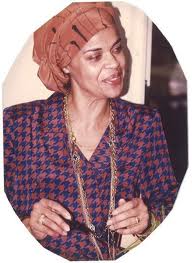
Florence Tate 2Florence L. Tate, Civil Rights Activist, Journalist, and Press Secretary

She recounts Life from Days in Jim Crow South to the1984 Jesse Jackson Presidential Bid in New Memoir.

Many would think becoming an octogenarian reserves one the right to rest on her laurels — but Florence L. Tate, 81, says, “There’s still work to be done.”

The former Civil Rights activist, Dayton Daily News reporter, and press secretary for the historic 1984 Jesse Jackson Presidential campaign has lived through seven decades of American epochs – and now she’s writing about her impressive experiences and achievements in a new memoir – tentatively titled, The FBI’s Most Wanted Press Secretary Opens Her Files on Civil Rights, the Black Power Movement, and Black Partisan Politics.

At a time when our country should be experiencing a sense of accomplishment at realizing the fruits of Dr. Martin Luther King, Jr.’s work — evidenced by the election of the first African American President –Tate feels instead that the racial unease and tension revealed by events like the current drama surrounding the George Zimmerman/Trayvon Martin case signify America still has a long way to go in race relations.

“The country has gone backwards from the time of Dr. Martin Luther King’s ‘I Have a Dream’ speech; we have regressed. There’s been an attempt to take things back to the pre-Civil Rights days,” says Tate.

In her memoir, Tate draws upon her extensive experience integrating major companies like Bell Telephone, and Globe Industries, working with seminal civil rights groups including SNCC (Student Nonviolent Coordinating Committee) and CORE (Congress for Racial Equality).

As the first African American female journalist at the Dayton Daily News, she also covered current events — including the Dayton riots that occurred during the “summer of ‘68” race riots that swept across the country.

The work that brought her into close confidence with key activist figures — such as Stokely Carmichael and H. Rap Brown — also eventually brought Tate, a middle class Dayton housewife and mother of three children, under the surveillance of the Federal Bureau of Investigation – evidenced by the giant file she received from the FBI when she petitioned for them decades after her civil rights and Pan Africanist work.

Tate wasn’t all that surprised by her voluminous FBI file. “We suspected we were under surveillance because, for example, we would pick up the phone, to try to use the phone, and there would be a silence there… we didn’t know, but we suspected… We suspected there would be people in the meetings, sometimes people who gave off vibes that they were not there to work with us… they were there to spy on us. And figures like Stokely Carmichael were always being followed by the FBI; they didn’t even try to hide it. They would sit outside in cars – for example, if he were at a meeting at my house, or wherever he was, they would be sitting outside my house. When I got my FBI file, then I knew exactly when they had been watching, spying…or infiltrating.”

Tate’s memoir chronicles her journey — from growing up under segregation in the South from the 30s through the mid-50s — to moving north in the late 50s…to finally become an influential figure in the small but dedicated civil rights movement ground work happening in Mid Western cities like Dayton.

tate3“The civil rights activists were working in parts of the country other than the south – where the ground work was well publicized. Little or no publicity was given to the work being done in Mid Western cities like Dayton, Ohio,” she shares.

Related experiences — as Communications Director of the National Urban Coalition, and National Information Coordinator for ’72 African Liberation Day Coordinating Committee — landed Tate the role of Press Secretary in Marion Barry’s first campaign in his successful bid for Mayor of Washington D.C. in 1978, and Press Secretary during his first two years in office. Later she would repeat that role for Jesse Jackson’s 1984 Presidential campaign — during which time she traveled with him to Damascus, Syria during his historic rescue mission to free downed U.S. Air Force pilot Lt. Robert Goodman.

Tate also writes of another major life-defining segment of her journey: her experiences with mental and physical health issues. These include battling breast cancer, suffering a major stroke after the birth of her third child.

Tate says she hopes her memoir will encourage young people – and especially young women – to understand and act on their power to impact the world around them. But like a true mother, grandmother – and now, great-grandmother — she admits her main reason for penning her memoir is for her children.

“My children and grandchildren have repeatedly asked me to write my biography — so they will know who I am…so they can know who they are.”

Octogenarian Florence L. Tate Recounts Life from Days in Jim Crow South to the1984 Jesse Jackson Presidential Bid in New Memoir Many would think becoming an octogenarian reserves one the right to rest on her laurels — but Florence L. Tate, 81, says, “There’s still work to be done.”

OUR COMMON GROUND with Janice Graham

“Speaking Truth to Power and Ourselves”

BROADCASTING BRAVE BOLD BLACK

Community Forum: http://www.ourcommonground-talk.ning.com/
Twitter: @JaniceOCG #TalkthatMatters
Web: http://www.wordpress.ourcommongroundtalk.com/

Witnesses On the Bridge l OUR COMMON GROUND l March 2, 2013 l Florence L. Tate

See on Scoop.itOUR COMMON GROUND Informed Truth and Resistance

This Week on OUR COMMON GROUND Witnesses On the Bridge Florence L. Florence Tate FBI Most Wanted SecretaryMarch 2, 2013 10pm ET LIVEWitnesses On the Bridge: Fl…

OUR COMMON GROUND Omnibus‘s insight:

This Week on OUR COMMON GROUND
"Witnesses On the Bridge"

Florence L. Florence Tate FBI Most Wanted Secretary
March 2, 2013 10pm ET LIVE

Witnesses On the Bridge: Florence L. Tate, Civil Rights Activist, Journalist, and Press Secretary

She recounts Life from Days in Jim Crow South to the1984 Jesse Jackson Presidential Bid in New Memoir

Many would think becoming an octogenarian reserves one the right to rest on her laurels — but Florence L. Tate, 81, says, “There’s still work to be done.”

The former Civil Rights activist, Dayton Daily News reporter, and press secretary for the historic 1984 Jesse Jackson Presidential campaign has lived through seven decades of American epochs – and now she’s writing about her impressive experiences and achievements in a new memoir – tentatively titled, The FBI’s Most Wanted Press Secretary Opens Her Files on Civil Rights, the Black Power Movement, and Black Partisan Politics.

See on ourcommonground-talk.ning.com

OUR COMMON GROUND with Janice Graham – “Transforming TRUTH to POWER ONE Broadcast at a Time”

See on Scoop.itOUR COMMON GROUND Informed Truth and Resistance

OUR COMMON GROUND with Janice Graham
URBAN PROGRESSIVE TALK RADIO

SPEAKING TRUTH TO POWER and OURSELVES
Talking Race in HOPE AND COURAGE.

OUR COMMON GROUND Omnibus‘s insight:

This season, we focus on poverty, hunger, homelessness, prison and prisoners and mental health in Black America. Advancing our VOICE and our WILL. Building solutions in the context of respect for our people’s HISTORY and HOPE. Constructing the path for new law, new public policy and reparations in an on-going dialogue transforming our thinking and our living.It’s what we do on OUR COMMON GROUND. Support us build the strength of our programming by letting your friends and comrades know about us too. Send a link of this site.

See on ourcommonground-talk.ning.com

BLACK AMERICA’S FLIGHT FROM REALITY l Rev. Dr. Earl Trent l KineticsLive

Denzel-Washington-in-Flight

BLACK AMERICA’S FLIGHT FROM REALITY

 By KineticsLive | NEWS & VIEWS

 By Rev. Dr. Earl Trent

This year Denzel Washington received his sixth Oscar nomination for his role as airline pilot Whip Whitaker in the movie Flight. He did not win the Oscar, but the nomination made him the most nominated black actor in film history.

The title of the movie has a double meaning. The major event of the movie is the ill-fated flight of a jet with 102 passengers on board. The plane has a gross mechanical failure, but pilot Whitaker is able to do what no other pilot is able to do rescue the plane from a dive and land it in a field with only six fatalities. This happens early on in the movie. The balance of the movie is the drama of Whitaker’s flight from the reality that he is an alcoholic. At first he is viewed as a heroic figure with simply a character flaw, but the more he flees from the truth of his reality the more pathetic he becomes.


It was probably not intended but Flight is an accurate and haunting metaphor for Black America. Black America is in full flight from facing the truth of our reality. On Tuesday February 26 the Washington Post on the third page of the A section reported that Institute of Assets and Social Policy at Brandeis University was about to release a report on the black – white wealth gap. The stunning nature of the report can be seen in the first few paragraphs.

The report, which researchers called the most detailed look ever at the roots of the racial wealth gap, is drawn from the life experiences of nearly 1,700 working Americans between 1984 and 2009. That quarter-century was an era of significant racial progress in the country. The black middle class expanded, black college graduation rates tripled, and black elected officials moved into a broad range of public offices, including the presidency.

Despite that progress, the wealth gap between whites and blacks nearly tripled among study participants, going from $85,000 per family in 1985 to $236,500 in 2009. Overall, the median net worth of whites in the study was $265,000 in 2009, compared with $28,500 for blacks. A broader survey done by federal officials has found even larger disparities, with blacks having a nickel of wealth for every dollar of wealth owned by the median white family.

In other words, when it comes to the concrete assessment of racial progress in economic terms, the only terms that really count; Black America is in dire straits. Worse than that, we are in full flight from facing this reality. The major black web services, The Root, The Grio, Black America Web, and Black Voices did not and to this date have not highlighted this as a major news story. Most did not and have not mentioned these findings at all. The Voting Rights act debate in the Supreme Court, the mysterious death of the first openly gay candidate for mayor in Mississippi, the ongoing struggle around the late James Brown estate, the first potential black bachelorette, the outrage of the white model portraying an African, Queen, the 14year jail sentence for a gospel singer due to his Ponzi scheme were deemed news items to be featured on the sites. To this day none of our high profile African Americans leaders, our civil rights leaders, our political leaders, commentators or clergy have highlighted or discussed the significance of this report and the searing truth of the dire economic circumstance of black America.

We have a long history of running from our economic reality. In 1987 Theodore Cross published The Black Power Imperative. He stated then that each and every item on the black agenda needs to be judged whether or not it adds to the economic empowerment of black people.
In 1994 Dr. Claud Anderson published his seminal work Black Labor, White Wealth documenting the strategies and goals whites have used to solidify power and privilege. He pushed past the symptoms of our problems such as teen pregnancy, drugs, decline in family values, violence, etc and clearly identifying the root of our problem as race and the unjust distribution of this nation’s wealth, power and resources. Whites control almost 100% of the power, wealth and resources and blacks practically nothing. This latest report bears out this truth. Dr. Anderson laid out some general strategies in Black Labor; White Wealth which implemented could empower black communities economically. There was some public discussion but not nearly enough for a reorientation of our general thinking.
In 2001 Dr. Anderson followed with Powernomics, a specific plan with specific strategies to lead us out of economic ruin. By this time however black America was enthralled with the myth that our black middle class was expanding and our prosperity was just around the corner.
In Nov 2007 before the melt down of the economy and the election of President Obama in 2008, The Brookings Institution released a report of its longitudinal data study of white and black family economic mobility from the late 1960′s to the early 2000′s Their conclusion:

White children are more likely to move up the ladder, while black children are more likely to fall down. Startlingly, almost half (45 percent) of black children whose parents were solidly middle class end up falling to the bottom of the income distribution, compared to only 16 percent of white children.

Achieving middle-income status does not appear to protect black children from future economic adversity the same way it protects white children.

Again this study was barely noticed by black leadership and black press.

July 26, 2011 the Pew Research Center released a report on income gap and the consequences of the recession. They found:

The recession wreaked havoc on the wealth of all Americans but whites lost the least amount as a percentage of their holdings. The median net worth of a white family now stands at 20 times that of a black family and 18 times that of a Hispanic family – roughly twice the gap that existed before the recession and the biggest gap since data began being collected in 1984.

July 12, 2012 The Washington Post reported:

The implosion of the sub-prime lending market has left a scar on the finances of black Americans – one that not only has wiped out a generation of economic progress but could leave them at a financial disadvantage for decades.

In late January of this year, fresh from the second inauguration of President Obama and his State of the Union speech scholars gathered for an African American Economic Summit at Howard University. Their conclusion was sobering but illustrated a willingness to wrestle with our reality.

As bleak as the economic picture is for black Americans, the immediate prospects for improving it are worse, many participants said. They agreed that chances are remote for the kind of aggressive, targeted action needed to combat those problems and close the economic disparities that have long separated blacks and whites.

However judging from the lack of response to the latest report from the Institute of Assets and Social Policy, like pilot Whip Whitaker in the movie Flight there has been a relapse and again we are in flight from reality.  This relapse is simply pathetic.

The Reverend Doctor Earl D. Trent Jr. currently serves as the Senior Pastor of the Florida Avenue Baptist Church. He is the author of A Challenge to the Black Church

NEW IASP STUDY OFFERS NEW UNDERSTANDING OF FACTORS DRIVING RACIAL WEALTH GAP l THE HELLER SCHOOL FOR SOCIAL POLICY AND MANAGEMENT


The Institute on Assets and Social Policy (IASP) develops strategies, processes, and policy alternatives that enable vulnerable populations to build resources and access opportunities to live securely and participate fully in all aspects of social and economic life.

NEW IASP STUDY OFFERS NEW UNDERSTANDING OF FACTORS DRIVING RACIAL WEALTH GAP 

The dramatic gap in household wealth that now exists along racial lines in the United States cannot be attributed to personal ambition and behavioral choices, but rather reflects policies and institutional practices that create different opportunities for whites and African-Americans, new research shows.

So powerful are these government policies and institutional practices that for typical families, a $1 increase in average income over the 25-year study period generates just $0.69 in additional wealth for an African-American household compared with $5.19 for a white household, in part because black households have  fewer opportunities to grow their savings beyond what’s needed for emergencies.

This groundbreaking study, The Roots of the Widening Racial Wealth Gap: Explaining the Black-White Economic Divide, statistically validates five “fundamental factors” that together largely explain why white households accumulate wealth so much faster over time than African-American households.

On February 27, 2013 there was a webinar hosted by the Insight Center’s Closing the Racial Wealth Gap InitiativePolicyLink, and Tom Shapiro, Director of the Institute on Assets and Social Policy at Brandeis University.  This webinar presented breakthrough research on what has been fueling our country’s growing racial wealth divide for the past 25 years.  Click here to listen to the playback.

As America continues to become more diverse, the nation’s ability to achieve sustained growth and prosperity hinges on how quickly we can erase lingering racial and class divides and fully apply everyone’s talents and creativity to building the next economy.

Featured Projects

IASP Partners with Compass Working Capital’s Financial Stability and Savings Program

Compass Working Capital, a small innovative CBO, was selected for funding by Strategic Grant Partners, Boston, MA, to implement an experimental asset-building approach to the HUD Family Self-Sufficiency (FSS) program for recipients of housing vouchers in Lynn, MA. IASP is developing and implementing the process and outcome evaluations and the preliminary cost/benefit analysis for this pilot FSS program. The multi-year evaluation focuses on how families use this opportunity to move toward economic stability, positive impacts sustained after program graduation, and the cost-effectiveness of taking the program to scale.

Senior Economic Security

Image of elderly woman

IASP examines the long-term economic stability and risk of senior citizens. The “Living Longer on Less” series, released in collaboration with Dēmos, includes:

Rising Economic Insecurity among Senior Single Women, October 2011 •  This most recent report in the series reveals that nearly half (47%) of all senior single women in America do not have adequate retirement resources to meet even their most basic needs for the remainder of their lives, and this number is rising.

The Crisis of Economic Insecurity for African-American and Latino Seniors, September 2011 •  This report reveals crisis levels of economic insecurity among current African-American and Latino seniors—52% of African-American and 56% of Latino seniors do not have adequate retirement resources to meet their basic needs throughout their expected life-spans. Driven by extremely low levels of asset wealth and high housing costs, most seniors of color are struggling financially during their elder years.

From Bad to Worse: Senior Economic Insecurity on the Rise, July 2011   The first in a series of four research briefs, this report shows a troublesome trend of increased economic insecurity among senior households in just four years (2004-2008). Economic insecurity among seniors increased by one-third during this period, from 27% to 36%.

Previous reports in the “Living Longer on Less” series include: