This national moment of grief and mourning can become a marker of public shame or a symbol of American renewal – Urbānitūs

This national moment of grief and mourning can become a marker of public shame or a symbol of American renewal

The public execution of George Floyd and the protests it sparked reflect the contemporary magnitude of racial injustice in America, and a tragic racial history in which Austin is implicated

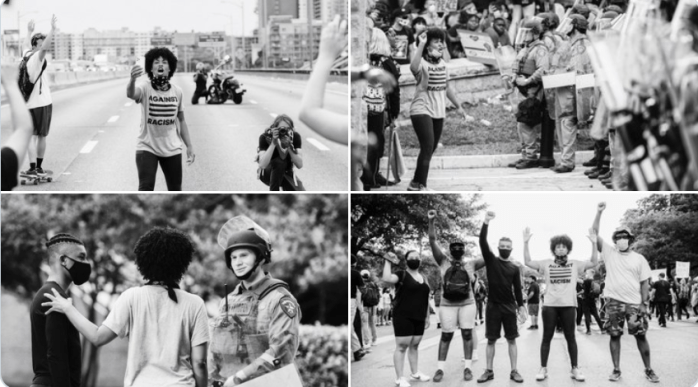
An unidentified Austin mother, “worried about her children,” leads a protest down Interstate-35 on Sunday, May 31. Photos courtesy of Charles Reagan @charles.reagan

Editor’s note: On Wednesday, June 3 at 1 p.m., the author will co-host Justice and Equity in a Time of National Racial Crisis: A Community Conversation. Sign up and join here.

American cities are in upheaval, awakened by the duel pandemics of COVID-19 and white supremacy, which has resulted in 40 million people out of work and the spectacle of George Floyd’s death at the hands of the Minneapolis police.

Dozens of American cities are experiencing a scale of protests, clashes between police and demonstrators, and National Guard deployments not seen since the “long hot summers” of racial discontent and crisis that characterized much of the 1960s. Sympathy protests in Berlin and London’s Trafalgar Square outside the U.S. Embassy have drawn thousands of demonstrators who not only insist that “Black Lives Matter!” but reflect widespread global resistance against racial injustice manifested in the criminal justice system.

We are witnessing a level of national civil unrest that recalls the aftermath of Dr. Martin Luther King Jr.’s assassination on April 4, 1968, when 125 cities exploded in protest and violence. From peaceful demonstrations to clashes between protesters and Secret Service agents outside the White House, a national racial crisis is unfurling before our very eyes.

The public execution of George Floyd, a 46-year-old Black man, by Minneapolis police last week has sparked national protests that have, in some instances, evolved into open political rebellion contoured by violent skirmishes between police and demonstrators and the destruction of property. Racial unrest gripping major American cities, against the backdrop of the global COVID-19 pandemic, reflects the contemporary magnitude of racial injustice.

A national tragedy should be turned into a generational opportunity

The inhumanity of Floyd’s death heaped further indignity on African American communities suffering disproportionately from the brutal effects of the COVID-19 pandemic. Black folk have been diagnosed with, and died from, COVID-19 at alarming rates. The killing of George Floyd represents a national tragedy that should be turned into a generational opportunity.

Black death at the hands of the police is not new. Black Lives Matter (BLM) protests erupted in 2014, turning a hashtag commemorating the mounting number of African Americans killed, assaulted, and brutalized by the police and displayed in social media, into a social movement that combined the non-violent civil disobedience of the civil rights era with Black Power’s structural critique of white supremacy and anti-Black racism.

BLM activists argued that America’s criminal justice system represents a gateway to panoramic systems of racial and economic oppression. The criminalization of poverty has long roots, but the past four decades have institutionalized systems of punishment that have deepened and exacerbated racial inequality. During the 1980s and 1990s, as violence, crime, and poverty raged against the backdrop of the crack cocaine explosion, both Democrats and Republicans competed with each other over how best to criminalize black inner city residents. Ronald Reagan’s tough on crime rhetoric and policies begat George H.W. Bush’s use of Willie Horton and Bill Clinton’s crime and welfare “reforms” that further criminalized black communities and made it virtually impossible to successfully re-enter society by blocking avenues to employment, education, and housing after release.

The eruption of the BLM movement during the second term of Barack Obama, America’s first black president, illustrates how deeply entrenched the issues related to George Floyd’s death are. Donald J. Trump’s open embrace of white supremacists—from Charlottesville, Virginia’s 2017 demonstrations that left one woman dead to anti-government militias that marched to the Michigan state house in defiance of shelter-in-place orders armed with semi-automatic weapons—has fanned the flames of racial intolerance, police violence against black communities, and racially inflammatory.

Austin is implicated in America’s tragic racial history

Austin is implicated in America’s tragic racial history, from the 1928 “Master Plan” that institutionalized racial segregation as citywide policy, to the decades-long efforts to fully integrate the University of Texas, to the gentrification of the historic East Side neighborhood at the cost of longstanding black residents, businesses, and communities. Racial integration in Austin has since proceeded in fits and starts, with segregated public schools and neighborhoods remaining the comfortable norm. Gentrification along the city’s East Side has largely displaced Austin’s historic black residents who find themselves compelled to depart neighborhoods just as they are flooded with the kind of investment that attracts white families, creates high achieving schools, increases home owner values, and thriving communities.

As if to acknowledge this history, activists blocked Interstate-35 on Saturday, the highway serving as a barrier between black and white Austin by design, locking Austin’s African American communities from access to white spaces, properties, and power.

The problems of racial segregation, poverty, and criminal justice that have scarred Minneapolis are national, impact Austin and other major cities around the country and, indeed, the world.

Austin, one of the nation’s fastest growing, wealthiest, and well positioned urban cities, has a unique opportunity to emerge as a national leader on the issue of racial justice.

The University of Texas at Austin, with the motto that “what happens here changes the world,” can be a major part of the city’s much needed transition from its current status as an enviable hub of technology, education, venture capital, and music into a national incubator of social justice, equity, inclusion, and full citizenship for all Austinites.
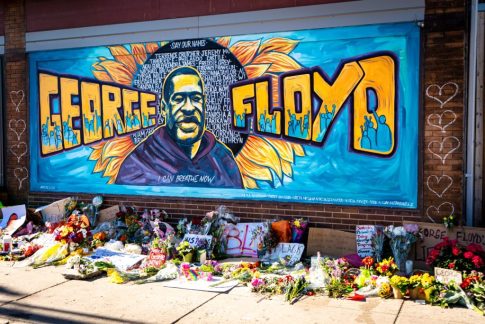
Photo by munshots on Unsplash

On this score the Center for the Study of Race and Democracy, a center devoted to research, study, and social policy impact at the intersection of civil rights, race, and democracy, will be sponsoring an event designed to build community, forge networks, and problem-solve around issues of racial injustice that reverberate from Minneapolis to Austin and beyond. Justice and Equity in a Time of National Racial Crisis: A Community Conversation will feature Mayor Steve Adler, Councilwoman Natasha Harper-Madison, Councilwoman Alison Alter and be moderated by myself and Jeremi Suri, my colleague at the LBJ School of Public Affairs.

The protests erupting around the nation attest to a dearth of national leadership on race matters and the very meaning of American democracy. In times of national crisis—from the Great Depression to the Second World War to Civil Rights and 9-11—we come to better understand ourselves as Americans.

The fact that George Floyd could outlive the COVID-19 pandemic only to run into the even deadlier virus of white supremacy is both a national tragedy and a generational opportunity.

An opportunity to confront deep-seated racial inequities plaguing Austin

All of us can and must do more. From civil rights and faith communities to education, political, and business leaders, we must seize the combined tragedies of a pandemic that has killed more than 100,000 Americans and the tragedy of another unjustified killing of a black person at the hands of our justice system as an opportunity to finally confront deep-seated racial inequities that plague this city as much as any other.

Austin can turn this national moment of grief and mourning into a marker of public shame or a symbol of American renewal, with the knowledge that our city led the way in recognizing that a full commitment to anti-racist public policy and racial justice would allow us to achieve the community and nation we dream about.

How does an anti-racist Austin look? We can start by acknowledging the stubborn persistence of racial segregation in our city’s public schools and neighborhoods, a fact that amplifies opportunity gaps in education, employment, and housing and helps to create a feedback loop of racial disparities in rates of poverty, treatment before the criminal justice system, access to electoral politics, small business loans, venture capital and so much more. We must identify and understand negative disparities as part of systemic racism rather than behavior deficiencies in black people. We must root out injustice and inequities based on race in our policies, forging a community where racial equity centers our public conversation about the larger political good. So many Austinites of good will recognize aspects of the problem, but are unsure of where to begin, what organization to join, what would be the best use of their resources.

The Center for the Study of Race and Democracy’s Justice and Equity event is the first step in what we hope will be a socially impactful, politically relevant, and politically transformative movement in Austin to not only redress past mistakes but to acknowledge, repair, and build a future Austin worthy of our citizens.

Source: This national moment of grief and mourning can become a marker of public shame or a symbol of American renewal – Urbānitūs 

Peniel E. Joseph is an American scholar, teacher, and leading public voice on race issues who holds a joint professorship appointment at the LBJ School of Public Affairs and the History Department in the College of Liberal Arts at The University of Texas at Austin.

The Multiple, Unfolding Crises for African-Americans in Minneapolis | The New Yorker

A Minneapolis police officer knelt on the neck of an African-American man named George Floyd for several minutes on Monday, as Floyd begged the officer to stop, said, “I can’t breathe,” and eventually lost consciousness. Floyd, who was forty-six, was pronounced dead at a hospital that evening. After video footage of Floyd’s asphyxiation, which was taken by bystanders, circulated online, the mayor of Minneapolis, Jacob Frey, announced on Tuesday that the four officers who had been at the scene had been fired. “This is the right call,” Frey said on Twitter. “Being Black in America should not be a death sentence.” The police had responded to a call that Floyd had used a forged check at a nearby deli and, in their first statement about the incident, noted only that he appeared to be “suffering medical distress.”

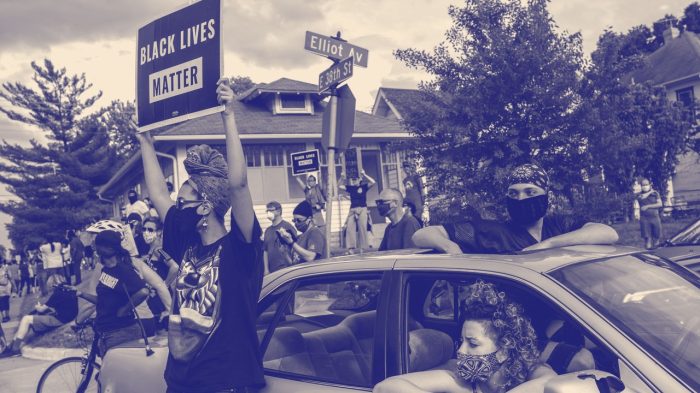
On Tuesday, the F.B.I. joined Minnesota’s criminal investigation of the incident, as Floyd’s family called for the four officers to be charged with murder. That afternoon, thousands of people gathered for protests in the streets of Minneapolis, which were followed that evening by clashes between riot police and protesters outside a precinct station. Protesters chanted “I can’t breathe,” which became a Black Lives Matter slogan after the death of Eric Garner, in New York, in 2014. The Minneapolis area has been the site of several contested police shootings and Black Lives Matter protests—most notably, after Philando Castile was pulled over and fatally shot by police in a suburb of Saint Paul, in 2016. The officer who killed Castile was fired from the police department but acquitted of manslaughter.

On Wednesday, I spoke by phone with Leslie Redmond, who, at twenty-eight, is an attorney and the president of the Minneapolis chapter of the N.A.A.C.P. During our conversation, which has been edited for length and clarity, we talked about racial inequities in Minneapolis, how activists are thinking about protests in the midst of a pandemic, and what steps she wants authorities to take regarding Floyd’s death.

What have the past couple days been like in the Minneapolis area?

It has been crazy. People on the ground are very upset and sad and disheartened, and rightfully so. I think about our young people, and how hard they are taking this. If people put it into perspective, for young people, they have grown up their entire lives watching black bodies murdered on social media, in real time, with no grief counsellors, with no therapy, with no one to help them make sense of it. And, to be honest, I don’t even know if we could make sense of it if we wanted to, because we are all just outraged and trying to figure it out.

What I have also seen, though, is black leaders coming together, and I am super thankful for Medaria Arradondo, who is the first African-American police chief we have ever had in Minneapolis. The way that he stepped up and brought us together during this time is just so honorable, and I know we wouldn’t be having the progress we are having if he wasn’t the police chief. And I think about five years ago—in the fall before Philando Castile, there was Jamar Clark, who was killed by police officers in Minneapolis. We had a completely different police chief, a woman named Janeé Harteau, and it was horrible. It was a completely different response. You didn’t see any action or accountability. [The Minneapolis Police Department conducted an internal investigation of Clark’s shooting and determined that the officers had not violated its use-of-force policy.] So for Chief Arradondo to do the right thing and fire all four of those officers, and for the mayor to support him, was a major step in the right direction. It doesn’t take away from the pain and hurt people are feeling on the ground, but it moves us in the right direction of getting some justice for Mr. Floyd.

What is your level of trust in the mayor on these issues?

I am thankful for Mayor Frey. I think he has been showing good leadership. But it is not just about what happens in this specific situation and this moment. It is about what follows it. Minnesota has some of the worst racial disparities in the nation. I tell people that even before covid-19 we were in a state of emergency, and then that put us into a state of emergency times two. And now imagine having to deal with a black man being murdered by the government, by police officers, during this global pandemic. And so the burden has just been added to African-American communities, but the resources and the support have not been added. There has been no big lump sum that was poured into the community for us to pour into ourselves. And so that’s what I mean about it not just being about this moment—it’s about the moment that will follow, and the resources and communication that will follow this moment.

There were some demonstrations last night, but how do you think about organizing and marching and protests when there is a pandemic going on?

Protests are essential, and they have always been a part of the strategy. They are a tactic. But we are protesting to build power, and that is what people have to understand. A lot of people don’t really understand what goes on before and after. Black leadership was in communication with Chief Arradondo and in physical meetings with Chief Arradondo since 10 a.m. that morning. The protests didn’t start until 5 p.m. And so there was a lot of work being done before and after.

At the protests, for people who were on the ground originally, there was a really good effort and intent to push people back. And not only did most of the people in the crowd have masks on, but there were community organizations passing out masks, as they were already doing because of covid-19. People asked why I didn’t have one on. Because of the tear gas, a lot of us had to remove our masks, but it wasn’t people blatantly trying to not social-distance and protect themselves.

Protesting feels generally like a much harder thing to do, with so many additional complications now.

It’s very complicated, and the reality of the situation is that we shouldn’t be in it. That is the biggest issue here. Had even one of these officers stepped up to say, “Hey, this man is in handcuffs already. He is down on the ground. He doesn’t need officers on his neck and back for over three minutes, with bystanders pleading, and telling you he is bleeding and that he can’t breathe.”

And, you know, Isaac, one of my biggest things is that this is not just a civil-rights issue—this is a human-rights issue, and the fact is that black people’s humanity is being denied constantly. And I worry about the humanity of individuals, and not just the police, because we know a lot of black people are dying at the hands of non-police officers. But specifically police officers—how can they turn off their humanity and kill black people in cold blood for what a lot of the time seems like nothing? It reminds you of much of the history of lynching in America. And now we are just being lynched without the ropes.

Source: The Multiple, Unfolding Crises for African-Americans in Minneapolis | The New Yorker

Research Shows Entire Black Communities Suffer Trauma After Police Shootings – Yes! Magazine

Police killings of unarmed African Americans have created a mental health crisis of enormous proportions.

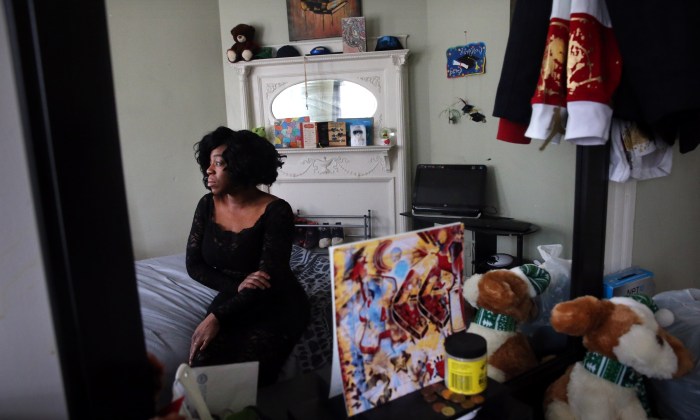
Following several nationally publicized police killings of unarmed Black Americans in the United States, Eva L., a fitness instructor who identifies as Black, started to experience what she describes as “immense paranoia.” She would often call in sick, because she feared risking an encounter with police upon leaving her house. She also started to second-guess her and her husband’s decision to have children. “Seeing Black bodies murdered and physical/emotional violence online and on the news” was a trauma she could no longer bear, Eva says. “I was terrified of bringing a child into the world we live in and experience as Black people. I thought not having kids was a truer sign of love than risk them being harmed by this world.”

Click here for more in this series.

A recent study sponsored by the University of Pennsylvania—released just before the anniversaries of the deaths of Eric Garner (2014), Michael Brown (2014), John Crawford (2014), and Philando Castile (2016)—found that there could be millions like Eva, for whom these killings have been a mental health trigger. Research included data from the Mapping Police Violence Project database for police killings between 2013 and 2016 and information from the Behavioral Risk Factor Surveillance System of over 103,000 Black Americans. The results indicate that police killings of unarmed Black Americans are having a population-level impact on the mental health of Black Americans.

According to researchers, the incidents may contribute to 1.7 additional poor mental health days per person every year, or 55 million more poor mental health days every year among Black Americans across the United States. That means the mental health burden for African Americans caused by police killings of unarmed Black victims is nearly as great as the mental health burden associated with diabetes. African Americans have some of the highest rates of the disease, which contributes annually to 75 million days of poor mental health among them.

African Americans make up 13 percent of the U.S. population but they accounted for 26 percent of people fatally shot by police in 2015 and 2016. While the death of a loved one can be tragic for the family and community of any police-shooting victim regardless of race, the study reveals that there is a deeper trauma for African Americans, related to the victim or not. Eva started seeing a therapist who diagnosed her as having generalized anxiety and post-traumatic stress disorder. It’s been two years now, and she admits that her progress toward healing has been slow, yet steady. Jacob Bor, co-author of the study and assistant professor at the Boston University School of Public Health, says the responses in his social circle to police killings of unarmed Black victims is what interested him in conducting this study. Bor noticed that White people were able to comprehend “the injustice on an intellectual level but did not experience the same level of trauma.”

The study findings confirmed Bor’s personal observations. The research team did not observe spillover mental health effects in White respondents from police killings. It should also be noted that among respondents of either race, there were no spillover effects for police killings of unarmed White people or killings of armed Black people. The research is essential in considering our own personal experiences, says Bor, adding that the findings speak to the overall “value of different people’s lives.” This society “has a long history of state-sanctioned violence” toward racially marginalized groups, he says. The mental health sector is only now researching the impact of police brutality, a concern that has affected African Americans for decades. “Clinicians can go through medical school without [gaining] any experience in treating the effects of racism,” Bor says. Studies like his, he adds, can help to create long overdue critical mainstream discussions about the effects of racism on mental health, such as, “How do we in public health, society, and among the clinical and mental health services support people when these incidents occur?” and “Can a profession dominated by White providers effectively treat the emotional struggles of ‘living while Black’ in this country?” According to Bor, these discussions are needed to implement change. “Among many White Americans, there is an empathy gap … and a failure to believe when people of color say ‘this hurts me,’” he says.

“Mental health is the ultimate intersectional concern.”

Adding to the deficiency of culturally competent therapists, poverty and other formidable socio-economic challenges—also stemming from structural racism—remain steadfast barriers to African Americans accessing mental health care, according to the American Psychological Association. New York City’s first lady, Chirlane McCray, has also become a passionate advocate for what she describes as a movement for “culturally competent mental health care.” “When you talk about people of color, who are obviously facing discrimination and legacy of racism and poverty in huge numbers, you are talking about something that is really tough to overcome,” McCray says. Inadequate care undermines benefits from policies and resources designed to mitigate the burdens of systemic oppression. “Mental illness along with substance abuse disorders are hardship multipliers,” she says. Struggling unsupported with “mental illness can make everything that much harder.” For example, holding on to affordable housing, staying enrolled in college, and even surviving encounters with law enforcement can be extremely more difficult for those suffering from mental illness or trauma, McCray says. In fact, the most recent annual numbers from the Washington Post’s database of fatal police-shooting victims indicate that “nearly 1 in 4 of those shot was described as experiencing some form of mental distress at the time of the encounter with police.” “Mental health is the ultimate intersectional concern,” McCray says. “It is reflected in all of our policies … education, housing, school, relationships.” In 2015, she and her spouse, Mayor Bill de Blasio, launched Thrive NYC, a $850 million mental health program that incorporates 54 initiatives. Among the program’s several core objectives is the aim to address the stigma around mental illness and increase access to treatment across the city. McCray believes that ThriveNYC’s community focused approach is one of several necessary steps toward reaching historically underserved groups. “Culturally competent care to me is all about trust,” McCray says. “It improves early identification, accessibility, and outcomes.” Also, she says, “People have to be seen.” From her advocacy experience she has observed that “people have to feel that they can turn to someone that they trust.” Connecting people with the appropriate resources, however, means surmounting many challenges. “There is great deal of work to be done to eliminate the stigma,” McCray says. There is also the matter of affordability and infrastructure. “We’ve never had a well-coordinated mental health system in our country—ever. People who have the money find ways to manage.” She says she wants to fight for everyone to get the resources they need to cope. Eva recognizes that her path to healing has taken a significant amount of work and support beyond the means of many African Americans. “Access to therapy is a privilege,” she says. “I know that most people can’t afford weekly sessions at $150-plus.” Yet, she adds, “[going through therapy] is the only reason why I’m OK planning for kids at 32.”


TASHA WILLIAMS writes about economics and technology.
CONNECT:  Twitter

Source: Research Shows Entire Black Communities Suffer Trauma After Police Shootings – Yes! Magazine

These Sheriffs Release Sick Inmates to Avoid Paying Their Hospital Bills — ProPublica

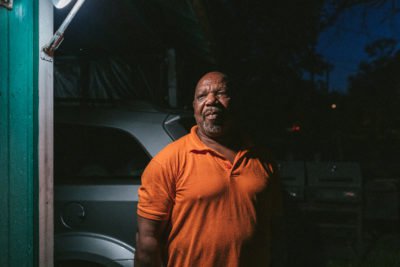
Michael Tidwell’s blood sugar reading was at least 15 times his normal level when sheriff’s deputies took him to the hospital. But before they loaded the inmate into the back of a car, deputies propped up his slumping body and handed him a pen so he could sign a release from the Washington County Jail.“I could barely stand up or keep my eyes open,” he recalled.Tidwell said that he didn’t know what he was signing at the time, and that he lost consciousness a short time later. The consequences of his signature only became clear in the weeks that followed the 2013 medical emergency.By signing the document, which freed him on bond from the small jail in south Alabama, Tidwell had in essence agreed that the Washington County Sheriff’s Office would not be responsible for his medical costs, which included the two days he spent in a diabetic coma in intensive care at Springhill Medical Center in Mobile.It’s unclear whether Tidwell, who was uninsured at the time and in poor health afterward, was billed for his care or if the medical providers wrote it off. Neither Tidwell’s attorneys nor the hospital was able to say, and Tidwell was unable to get answers when he and a reporter called the hospital’s billing department.

Michael Tidwell at Springhill Medical Center in Mobile, Alabama. (Courtesy of Michelle Alford)

What is clear is that the sheriff’s office avoided paying Tidwell’s hospital bills.

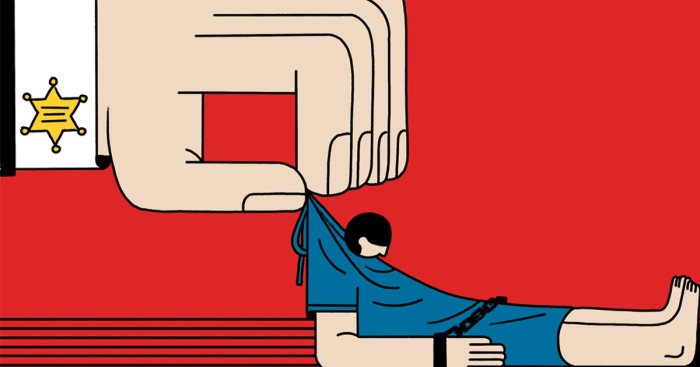
Tidwell had been on the receiving end of a practice referred to by many in law enforcement as a “medical bond.” Sheriffs across Alabama are increasingly deploying the tactic to avoid having to pay when inmates face medical emergencies or require expensive procedures — even ones that are necessary only because an inmate received inadequate care while incarcerated.What’s more, once they recover, some inmates are quickly rearrested and booked back into the jail from which they were released.Local jails across the country have long been faulted for providing substandard medical care. In Alabama, for instance, a mentally ill man died from flesh-eating bacteria 15 days after being booked into the Mobile County Metro Jail in 2000. And in 2013, a 19-year-old man died of gangrene less than a month after he was booked into the Madison County Jail. In both cases, officials denied wrongdoing and surviving relatives settled lawsuits alleging that poor jail health care contributed to their loved ones’ deaths.But the use of medical bonds isn’t about inferior care. It’s about who pays for care.

Source: These Sheriffs Release Sick Inmates to Avoid Paying Their Hospital Bills — ProPublica

The Ghosts of Elaine, Arkansas, 1919 | by Jerome Karabel | NYR Daily | The New York Review of Books

The Ghosts of Elaine, Arkansas, 1919

Jerome KarabelArkansas State Archives

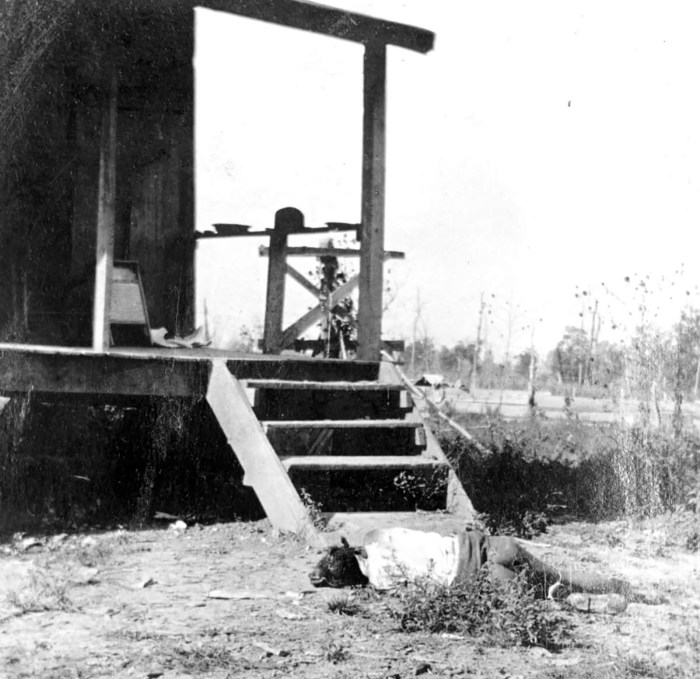
The body of Frances Hall, one of the few victims of the massacre who can be identified by name, thanks to the journalists Robert Whitaker and Ida B. Wells, near Elaine, Arkansas, October 1919

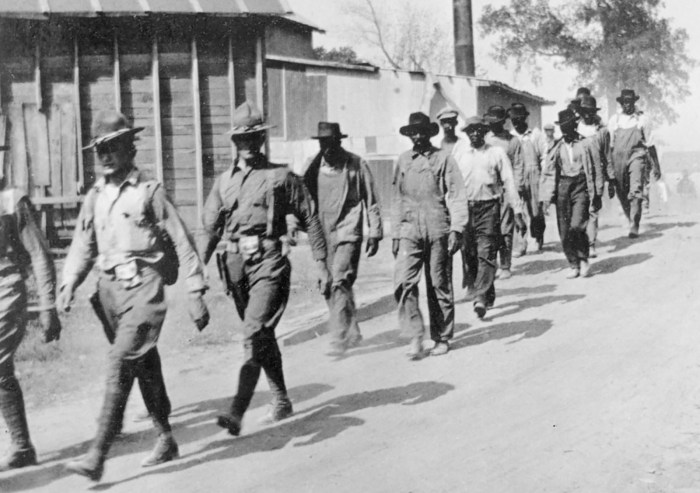
In America’s bloody history of racial violence, the little-known Elaine Massacre in Phillips County, Arkansas, which took place in October 1919, a century ago this week, may rank as the deadliest. The reasons why the event has remained shrouded and obscure, despite a shocking toll of bloodshed inflicted on the African-American inhabitants of Phillips County, speak to a legacy of white supremacy in the US and ruthless suppression of labor activism that disfigures American society to this day.Phillips County, located deep in the Arkansas Delta, was largely rural and three-quarters African-American; in the small town of Elaine, there were ten times as many black residents as white. The African Americans of Phillips County, like those throughout the South, were subjected to segregation and disenfranchisement, those twin pillars of white supremacy. But the black sharecroppers and tenant farmers there were also the victims of a particularly harsh form of repression known as “debt peonage.”

Under this system, they were loaned money or rented land by plantation owners; they were then forced to sell their crops to the owners at below-market rates and to purchase their food and other supplies from over-priced plantation stores, trapping them in a cycle of perpetual debt, with the owners keeping—and often doctoring—the accounts.In the spring of 1919, a group of Phillips County African-American sharecroppers and tenant farmers, many of them veterans who had recently returned from service overseas in World War I, decided to challenge this system by joining a union called the Progressive Farmers and Household Union of America (PFHUA), which had been founded the year before by army veteran Robert Lee Hill, a black tenant farmer in Winchester, Arkansas. The union’s goal was “to advance the interest of the Negro, morally and intellectually,” and its constitution ended with a proclamation: “WE BATTLE FOR THE RIGHTS OF OUR RACE; IN UNION IS STRENGTH.”

Source: The Ghosts of Elaine, Arkansas, 1919 | by Jerome Karabel | NYR Daily | The New York Review of Books

OUR COMMON GROUND Communications & Media

Racism harms black people most. It’s time to recognise ‘anti-blackness’ | Ahmed Olayinka Sule | Opinion | The Guardian

” . . . This is not only a British phenomenon. In the US, black people are more likely to be arrested for drugs offences even though they are not more likely to use or sell drugs, and as a result make up a disproportionate amount of the prison population. They also have a higher chance of getting shot by the police than white or Hispanic people. In today’s Brazil, black people are still treated as second-class citizens; while in India, students of African origin are persecuted. In South Africa, a majority black country, 72% of the country’s private farmland is owned by white people, who make up 9% of the population. During the apartheid era there was a clear racial hierarchy: whites at the top, Indians and “coloureds” in the middle, and black people at the bottom.

Historically, though slavery covered a range of civilisations, countries and races, for the black race its legacy lives on. From the 16th to the 19th century, around 12 million Africans were transported across the Atlantic Ocean to the Americas by European slave traders. Millions more were born into slavery and spent their whole lives enslaved. And after slavery ended in the US, African Americans were subjected to segregation laws, the denial of civil rights and lynching.

And between AD 650 and the 1800s, almost 10 million Africans were sold by Arab slave traders to Arabia and the Indian subcontinent. In fact the Arabic word abeed, which means “slave”, is still used to describe black people in countries from Algeria to Yemen.

In her book White Fragility, Robin DiAngelo notes that black people are the “ultimate racial other”. In the US, they are called “nigger”, in Brazil they are termed macaco; in South Africa, they are nicknamed kaffir; in India, bandar; in China hak gwai . . .”

Source: Racism harms black people most. It’s time to recognise ‘anti-blackness’ | Ahmed Olayinka Sule | Opinion | The Guardian

White Americans clueless about actually living with racism | Miami Herald


BY LEONARD PITTS JR.

Living in America is exhausting for African Americans, who face racism and indignity every day. But too many whites are more angry about hearing about racism that they are about racism itself.

“I’m simply tired, tired and tired of hearing about race,” he wrote last month in an email. He signed himself a “former racist” and in a postscript, wanted me to know that he used to have “a black friend” with whom he ate breakfast on workdays.

Take Ed as an example of the pushback that comes when you grapple with America’s original sin, as happens not infrequently in this space. Invariably, some people — almost always white people — will declare themselves well and truly fed up with the topic. “Tired, tired and tired,” to borrow Ed’s words.

And Lord, where to begin?

In a nation of mass incarceration, job and housing discrimination and resurgent white nationalism, Ed and people like him think the real issue is how race makes them feel? It is hard to even imagine the level of cognitive myopia that allows them to suggest that while missing the glaringly obvious. To wit: If race is so fatiguing for a white man to hear about, what do you figure it must be like for a black man to live?

“Tired?” Give me a break, Ed.

The latest from Leonard Pitts, Jr.: The Last Thing You Surrender

In a career that now spans 43 years, Leonard Pitts, Jr. has worked as a columnist, a college professor, a radio producer and a lecturer. But those are just the job titles. If you ask him what he does – what he is – he’ll tell you now what he would have told you then.

He is a writer.

Millions of people are glad he is. They read him every week in one of the most popular newspaper columns in the country. Many more have come to know him through a series of critically-acclaimed books, including his latest, a novel of race, faith and World War II called The Last Thing You Surrender.

Source: White Americans clueless about actually living with racism | Miami Herald

Existing While Black | HuffPost

What does it feel like when every move you make is policed?

“HuffPost asked black readers to share their stories of being subjected to racial profiling and discrimination. They described moments when someone called the police on them for no apparent reason aside from their race. They recalled scenarios of cops stopping and searching them because their skin color made them look “suspicious.” They also said how maddening it is to live with the constant anxiety of possibly having their presence — and innocence — questioned.”

Source: Existing While Black | HuffPost

Ava DuVernay’s new Netflix series sheds light on the horrors of wrongful incarceration

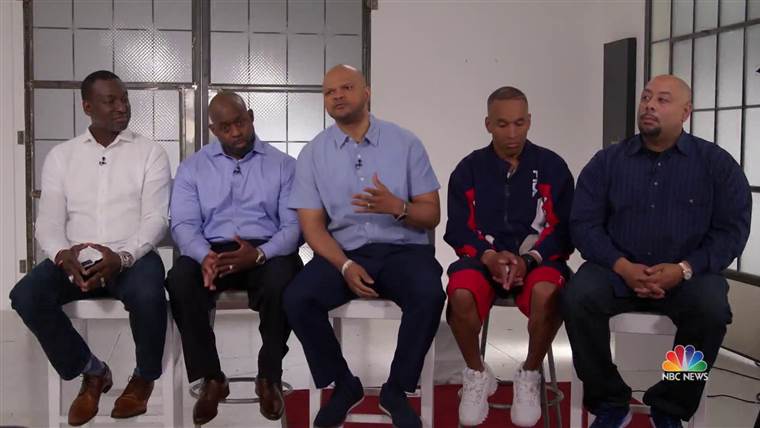
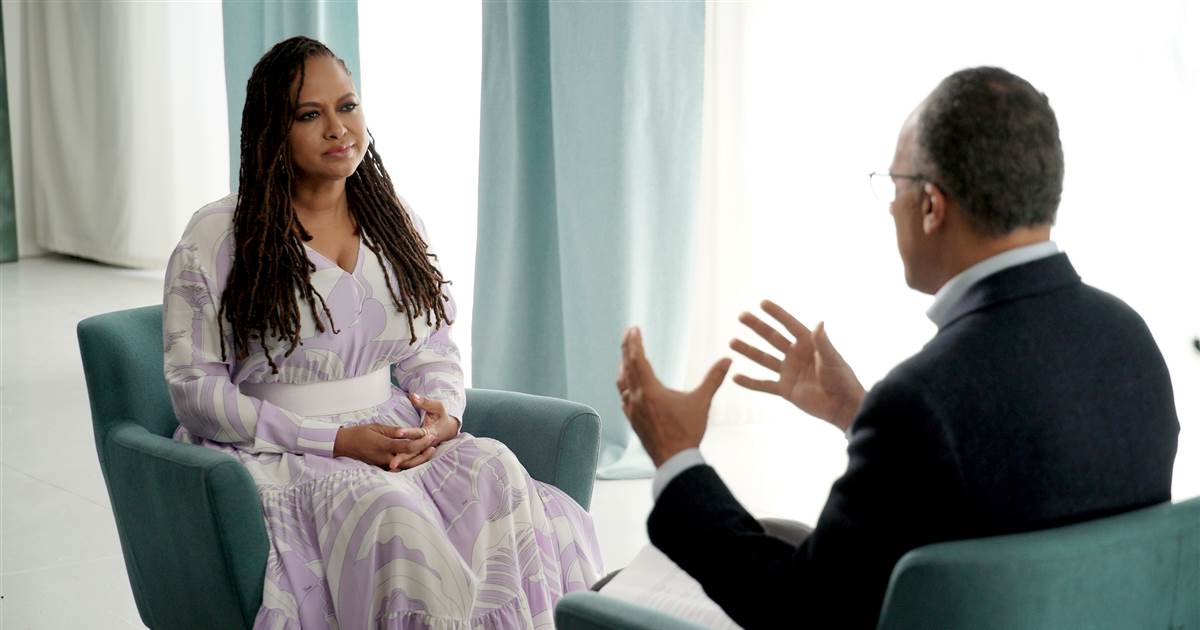
“The time that we lost, we can’t get that back,” Kevin Richardson told NBC’s Lester Holt in an interview along with the group. “We lost our youth, our youthful years.”Their stories are profiled in the upcoming Netflix series “When They See Us,” a four-episode drama which was directed and co-written by Ava DuVernay. The limited series chronicles the journeys of the five men over the course of 25 years through their trials to their release from prison.“I always go back to whose story am I telling and is this choice helping to tell their story, in the most dynamic way, the most truthful way, for them,”

DuVernay told Holt.DuVernay, known for directing social justice films like “Selma” and big budget movies like “A Wrinkle in Time,” felt it was critical to tell the story of how false confessions landed the five teenagers in prison for crimes they did not commit.

Source: Ava DuVernay’s new Netflix series sheds light on the horrors of wrongful incarceration

Africatown USA Trailer on Vimeo


A Slave Auction

“This amazing story tells the events of these men, women and children, who were kidnapped from their native land in West Africa, enslaved in Ouidah, a coastal town in the Kingdom of Dahomey, the current day coastal country of Benin, and brought to America on what is believed to be the last slave ship, the Clotilda. Through their resilience, they not only survived the horrific Middle Passage, but the American Civil War, the reconstruction of Alabama, and the Jim Crow period, but they also fought to preserve their African memories, culture, and community over the generations. “For out of the bowels of slave ships they rose, and their descendants are, in the powerful words of Langston Hughes: Still Here.”After the Emancipation Proclamation, the newly freed Africans tried, but failed to return to their beloved homeland Africa. The story describes the group reuniting from various plantations, alongside American-born, formerly enslaved men, women and children. The Africans bought land and founded their own settlement, which came to be known as Africatown.The Founders appointed tribal leaders and governed Africatown according to customary African laws, spoke their own regional language, kept their own customs, used African irrigation and gardening techniques, and built their own social structures. The people of Africatown formed their own self-sufficient world.Marine archaeologists and researchers from Search, Inc. have confirmed the location of the schooner Clotilda-the last known ship to bring enslaved Africans from Benin, West Africa into the Mobile Bay. The search team discovered the schooner in a remote area of Alabama’s Mobile River.”