We Have To Stop Valorizing Black Cops | Black Agenda Report

We Have To Stop Valorizing Black Cops

The purpose of policing––to jail and kill Black folks––remains the same regardless of the officers’ race.

“Allowing Black people into inherently racist systems does not make those systems better, safer, or more equitable.”

Policing in America is facing a PR crisis. Following the May 25th murder of George Floyd by Minneapolis police officer Derek Chauvin, the term “defund the police” has become a rallying cry for thousands across the country. Six months later, however, America has not defunded its police force––and in fact, has in some cases taken steps to give police departments even more money. Instead, police forces across America have taken an insidious approach: painting their departments in blackface.

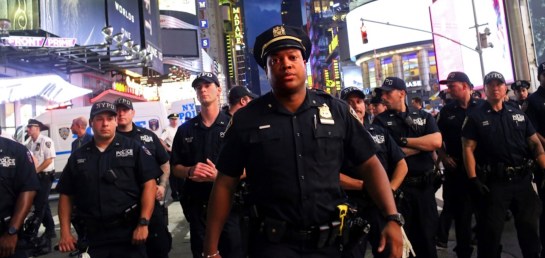
After the January 6th Trump riot at the Capitol building , Yoganda Pittman, a Black woman, was named the new Chief of Capitol Police. Her appointment followed the resignation of former Chief Steven Sund and the arrest and firing of several white police officers who were found to be in attendance at the MAGA riot. Pittman’s appointment appeased many liberals who falsely believe that allowing Black folks to infiltrate or run law enforcement agencies will lead to higher levels of safety for Black Americans. The termination of several officers  who took part in the riot has convinced many that we are one step closer to “reforming” the police by weeding out the racist, bad apples within the department.

“Pittman’s appointment appeased many liberals.”

This is a nice narrative, but a false one; in order to understand why, we must look at the history of policing in this country. Modern policing in America was originally created as a replacement for America’s slave patrol system wherein squadrons made up of white volunteers were empowered to use vigilante tactics to enforce laws related to slavery. These “enforcers” were in charge of locating and returning enslaved people who had escaped, crushing uprisings led by enslaved people, and punishing enslaved workers who were found or believed to have violated plantation rules. After slavery was legally abolished in 1865, America created its modern police force to do the exact thing under a different name: maintain the white supremacist hierarchy that is necessary under racial capitalism. The purpose of policing––to jail and kill Black folks––remains the same regardless of the officers’ race.

Liberal media has also contributed to the recent valorization of Black cops. In the days after the January 6th riot, many news outlets aggressively pushed a story about Eugene Goodman, a Black capitol police officer who led several rioters away from the Congress people’s hiding places while being chased by a white supremacist mob. Several news outlets published testimonials of Black police officers disclosing instances of racism within the department. A January 14th article in ProPublica  notes that over 250 Black cops have sued the department for racism since 2001: some Black cops have alleged that white officers used racial slurs or hung nooses in Black officer’s lockers, and one Black cop even claimed he heard a white officer say, “Obama monkey, go back to Africa.”

“Modern policing in America was originally created as a replacement for America’s slave patrol system.”

These white officers’ racism is unsurprising, and I am not denying any of these claims. But focusing on these singular, isolated moments of racism wherein white cops are painted as cruel and Black cops are the sympathetic victims grossly oversimplifies the narrative of structural racism that modern American policing was built upon. After hearing these slurs that they were allegedly so disgusted by, these Black cops still intentionally chose to put on their badge, don their guns, and work alongside these white police officers who insulted and demeaned them, laboring under a violent system with the sole purpose of harming and terrorizing Black and low-income communities. Similarly, while Goodman’s actions most likely saved many lives during the riot, we cannot allow one moment of decency to erase centuries of racist violence.

The great Zora Neale Hurston once said: “All my skinfolk ain’t kinfolk.” Her words ring ever true today, and these Black police officers are an excellent example of why. It’s tempting to believe that putting Black folks on the force will solve racial violence, but this is a liberal myth we must break free of. Allowing Black people into inherently racist systems does not make those systems better, safer, or more equitable: a quick look at many Black folks in power today, such as Barack Obama, Kamala Harris, Lori Lightfoot, and Keisha Lance Bottoms immediately prove this to be the case. Everyone supporting racial capitalism must be scrutinized and held accountable, regardless of their identity. We cannot on the one hand say that ‘all cops are bastards’ and then suddenly feel sympathy when those cops are not white. If we want to defund and abolish the police, we must resist the narrative that Black cops have anything to offer us.

Mary Retta is a writer, virgo, cartoon enthusiast — a queer Black writer for sites like Teen Vogue, The Nation, Bitch Media, and Vice.

This article previously appeared in HoodCommunist .

Source: We Have To Stop Valorizing Black Cops | Black Agenda Report

FHTE Reparationist Quick Guided (Volume 1 Issue 2)_.pdf – Google Drive

FHTE Reparationist Quick Guide
January 2021 – Volume 1 Issue 2

About Us
The FHTE (From Here to Equality) Reparationist Quick Guide Response was
initially established in October of 2020, as the ADOS Reparationist Quick Guide©, and is designed to be a civic engagement resource for anyone. It allows supporters to take an ownership share in our online social justice advocacy. Authorship is being encouraged from every sector and community of citizens concerned with the restorative justice of black American Descendants of Slavery (i.e., ADOS) and the closing of the black-white racial
wealth gap. The book From here to equality: Reparations for black Americans in the twentieth century (Darity & Mullen, 2020) will serve as our base source for the volumes’ invited authors. Each issue will contain four topics and five quick points from four featured authors who offer their responses to commonly held positions in opposition to reparations or frequently asked questions (FAQ) about African American reparations.

The inherited disadvantages of slavery and the inability to transfer wealth to ADOS descendants have been a significant contributor to the bottom class positionality of this ethnic group. This series is published to encourage study and dialogue. It is an instrument for personal empowerment. The guide creates a space for the civic engagement participation of Reparationist in national coalition-building, including petitioning for significant revision (or
replacement) of the bill H.R. 40 (S.1083) currently under consideration in the U.S. Congress.


Source: FHTE Reparationist Quick Guided (Volume 1 Issue 2)_.pdf – Google Drive

Whiteness Is the Greatest Racial Fraud | Boston Review

Whiteness Is the Greatest Racial Fraud

The Krugs and Dolezals dominate the headlines, but they are distractions from the fraud that imperils us all: believing oneself to be white.

LUVELL ANDERSON

Image: Boston Review

What is racial fraud and how is it possible? The answer would be clear enough, perhaps, if race were a biological reality. But the consensus seems to be that race is a social construction, a product of human ingenuity. So why can’t you choose to be any race you want?

Rachel Dolezal, the former president of the Spokane NAACP who identifies as Black despite being born to white parents, clearly believes we are free to choose our racial identity. Her case would seem to expose the limits of thinking of race as a social construction. If races are social rather than biological, some commentators on Dolezal suggest, we are free to make of them what we will; there are no rules. Yet responses to Dolezal tell a different tale. A 2015 Rasmussen survey of 1,000 likely U.S. voters found that 63 percent believed Dolezal was being deceitful in claiming to be Black: she was engaged in a kind of racial fraud.

The subtlest version of racial fraud—the fraud of whiteness itself—is the one we should be most concerned about, for it is by far the most destructive to our polity.

Is it incoherent to believe both that race is a social construct and that racial fraud is possible? In other words, does endorsing the notion of racial fraud require believing races are biological, after all? Literary scholar Walter Benn Michaels makes this sort of argument in his 1994 essay “The No-Drop Rule,” and versions of that idea endure. Michaels’s claim basically amounts to this: in order for a charge of racial fraud to have any normative power—that is, the kind of authority we generally grant to statements about what we should and should not do—it must rely on the claim that race is an essential, biological part of who we are.

But Michaels is wrong: normative significance does not ride on racial essences. In his 2008 essay “Race, Multiculturalism and Democracy,” philosopher Robert Gooding-Williams explains the error. Following Adrian Piper, Gooding-Williams claims that racial classification is the result of being subjected to a practice that counts one as a member of a particular race. Michaels wrongly assumed that for social constructionists, one’s racial identity is determined solely by visual features. But, at least in the United States, racial identification draws on both visual and cognitive criteria: facial characteristics, hair texture, skin color, ancestry. That is why, Gooding-Williams writes, “someone who would not be classified as black on the basis of visual criteria could still be black because Americans’ conventional (though not universal) adherence to the one-drop rule cognitively identifies her as black.” In saying that Dolezal committed racial fraud, you do not have to believe that race is biological. You simply have to think that the practice of racial classification cognitively identifies her as white. In other words, social construction can be ruled-governed without appealing to biological essence.

What does this tell us about debates over racial fraud today? While people like Dolezal, former George Washington University professor Jessica Krug, graduate student CV Vitolo-Haddad, and activist Satchuel Cole dominate the headlines, there are more subtle forms of this phenomenon to which we should pay attention. The most obvious versions are often easiest to denounce, perhaps because they are more easily detected or recognized. But I think the subtlest version—the fraud of whiteness itself—is the one we should be most concerned about, for it is by far the most destructive to our polity. To understand its stakes, we must see how it differs from two other, more familiar types of racial fraud.

section separator

Perhaps the most familiar type of racial fraud amounts to identity theft. A classic example occurs in the 1986 movie Soul Man, in which the character Mark Watson (played by C. Thomas Howell), a white Californian, poses as a Black man in order to get a scholarship from Harvard Law School. To pull it off, Watson takes tanning pills, perms his hair, learns a few cultural references, essentially donning blackface for the sake of personal gain. He attempts to defraud Harvard and others by misrepresenting himself, the white son of a wealthy psychiatrist, as a Black man.

Racial fraud as identity theft seems to be quite clearly what is happening in cases like that of Krug as well. Krug outed herself as a white woman last fall after having claimed various Black identities over the years. She deceived others by misrepresenting herself as something she isn’t, appropriating the identities of North Africans, African Americans, and finally Bronx-based Afro-Latinx. Krug’s posing took place all while building her career as a scholar working on the history of Africa and the African diaspora. Perhaps she believed doing so would boost her credibility as a scholar.

However, personal gain is only one basis for engaging in this kind of identity theft. Another basis is fetishization. Sometimes a person’s admiration for a group of people can result in a kind of conflation where that person no longer recognizes a distinction between themselves and the group. Arguably, this is what may have happened with Dolezal. Before her true parentage was revealed, part of her identification included claiming a Black man as her father, claiming her adopted Black brothers as her sons, wearing hairstyles typically associated with Black women, and tanning her skin to make it darker. Dolezal continues to identify as Black even after being exposed. This suggests a different motivation from that of the personal gain of things like money or social status.

It is the need to protect the ultimate fraud of whiteness that imperils not only the vulnerable other, but everyone.

Perhaps a clearer instance of fetishization is the case of German model Martina Big. Once a blonde-haired, white-skinned German woman, she has since transitioned into a brown-skinned, black-haired “Black” woman. On her website, she says she changed her ethnicity in 2017 to Black and has changed her legal name to Malaika Kubwa. She also notes that she very much likes her “new African look” and will complete the transformation by changing her facial features to “African” and enlarging her buttocks. Big—along with her husband, Michael Eurwen, who has also been injecting Melanotan to darken his skin—expressed plans to move to Kenya to “be with her ‘people’ and learn how to raise a family in the African way.”

Why should we be concerned with racial identity theft? Engaging in racial fraud for personal gain is wrong because it typically cheats members of marginalized groups out of resources intended to redress historic injustices. Racial fraud motivated by fetishization, however, is more complicated. Dolezal, for instance, was certainly wrong for the lies she told in presenting herself as Black. Big, on the other hand, does not appear to have engaged in such behavior. Her actions appear more pathological than diabolical. Big is also an extreme case. Less extreme cases may provoke more debate about what exactly is at issue. Perhaps the mildest form of these cases falls into a second type of fraud—a certain kind of appropriation.

In her book White Negroes (2019), Lauren Michele Jackson thinks through the stakes of cultural appropriation. She makes clear that the “act of cultural transport is not in itself an ethical dilemma. Appropriation can often be a means of social and political repair.” What matters, in her view, is the combination of cultural appropriation with power: white people profiting from the cultural productions of Black people, all the while denying credit to the originators—resulting in the erasure of Black contributions to society. And as Jackson notes, these kinds of appropriations exacerbate and prolong our society’s inequalities.


Instances of these kinds of erasure are quite widespread. In music, Elvis Presley is a vivid illustration; Jackson alerts us to instances of erasure in the culinary world, too. Hattie B’s Hot Chicken, a white-owned restaurant based in Nashville, has become the embodiment of this distinctively Nashville cuisine. But as it turns out, Black-owned restaurants—Prince’s Hot Chicken Shack and Bolton’s Spicy Chicken and Fish—are responsible for its creation and existence. When the mainstream culinary outlets got wind of it, Prince’s and Bolton’s were all but erased from the picture. What makes both of these cases instances of racial fraud is the consuming of the cultural productions of the group coupled with the erasure of that group’s contribution. Apportioning credit to the Elvises and Hattie B’s of the world rests on a fraud, a fraud perpetrated by the erasure of someone else.

section separator

Beyond these two types of racial fraud, however, there is a third type—less often discussed, but perhaps most consequential—that has to do with one’s relationship to one’s own history. By “history” I don’t mean exclusively, or even primarily, a person’s particular history, but more so corporate or social history: the kind of thing a person is a part of with others in virtue of being identified in a particular way. There are narratives that provide a unified sense of the various happenings to a group of people who evolve over time. But the sense of history I have in mind is slightly different. It is the notion of history found in James Baldwin’s essay “Unnameable Objects, Unspeakable Crimes” (1965):

History, as nearly no one seems to know, is not merely something to be read. And it does not refer merely, or even principally, to the past. On the contrary, the great force of history comes from the fact that we carry it within us, are unconsciously controlled by it in many ways, and history is literally present in all that we do. It could scarcely be otherwise, since it is to history that we owe our frames of reference, our identities, and our aspirations.

The presence of this history in our present, its impact on our frames of reference and identity, is crucial to the third type of racial fraud.

There are at least two versions of this type. The first is exemplified by the incident last year in New York City’s Central Park when Amy Cooper, a white woman, called the police on Christian Cooper, an African American man (no relation, despite the common last name), after he asked her to leash her dog. Amy became more and more irate in response to Christian’s insistence that she leash her dog. She became so upset that she called the police and claimed Christian threatened her, making sure to emphasize that he was “an African American man.” Amy signaled the urgency of the situation in her voice, sounding agitated and fearful.

What preexisting ideas and practices did Amy have available to her to make her think her indignation over being told to leash her dog was a violation worthy of police intervention and to lead her to emphasize the perpetrator was an “African American male”? It is the latter thing that is most revealing. Amy’s inclination to point out Christian’s African American maleness drew—consciously or not—on an understanding of the world as one in which African Americans stand in a particular kind of relationship to white people. Christian was out of line, out of place, in calling Amy’s attention to the park’s rules and insisting she follow them. Given the kind of person she is, as well as the kind of person he is, this was especially egregious.

The basis of white identity is a “lie of their history,” a lie used to justify dominating others.

This understanding of the world presumes a natural relationship of ruler to ruled, reminiscent of the one Aristotle describes in his Politics. To be sure, Amy Cooper and many others would likely deny believing anything like this, but her reflex to act this way hints at something present practically, almost like muscle memory. I think that Amy’s actions can possibly be linked to what Baldwin might say is her belief in being white. In “On Being ‘White’ and Other Lies” (1984), Baldwin details the fraud of those who “believe they are white.” In a powerful passage, Baldwin registers a catalog of the effects of white racial fraud:

Because they think they are white, they do not dare confront the ravage and the lie of their history. Because they think they are white, they cannot allow themselves to be tormented by the suspicion that all men are brothers. Because they think they are white, they are looking for, or bombing into existence, stable populations, cheerful natives and cheap labor. Because they think they are white, they believe, as even no child believes, in the dream of safety. Because they think they are white, however vociferous they may be and however multitudinous, they are as speechless as Lot’s wife—looking backward, changed into a pillar of salt.

Baldwin points out that the “price of the ticket” for Europeans immigrating to the North American continent was to become “white.” What this meant, in essence, was leaving behind their history as English or Spanish or German to forge something different. But this newly forged whiteness was so monstrous that it became necessary to misrepresent it as something else—something grander, superior, innocent.

This kind of racial fraud differs from the others in that those perpetrating it do not attempt to pass themselves off as a member of another race or attempt to pass off as their own the cultural traits or mannerisms of another group. Instead, perpetrators of this fraud commit to something so disturbing that it becomes necessary to hide it even from themselves. The basis of their identity is a “lie of their history,” a lie used to justify dominating others. A stark example of this phenomenon is arguably present in our current political context. The election of figures like Donald Trump reflects, at least in part, the desperation of some to hold onto whiteness. It is as Baldwin noted: “Just so does the white community, as a means of keeping itself white, elect, as they imagine, their political (!) representatives. No nation in the world, including England, is represented by so stunning a pantheon of the relentlessly mediocre.”

A second manifestation of this type of fraud is highlighted in Frantz Fanon’s Black Skins, White Masks (1952). Fanon considers the case of an Antillean who spends time in the French metropole getting educated and then returns to his homeland with a new outlook, one that has him looking down on his fellow Antilleans with disgust:

All colonized people—in other words, people in whom an inferiority complex has taken root, whose local cultural originality has been committed to the grave—position themselves in relation to the civilizing language: i.e., the metropolitan culture. The more the colonized has assimilated the cultural values of the metropolis, the more he will have escaped the bush. The more he rejects his blackness and the bush, the whiter he will become.

The fraud in this instance is in the colonized believing the deceptive history of the colonizer. The colonized Antillean who goes to France for a “civilized” education and believes the terrible lies told about him and his descendants has failed to confront his history honestly and has identified himself with a fraudulent identity. Once again, the basis of this racial identity is a lie, and to behave on the basis of that lie is to perpetrate a fraud.

section separator

The pervasiveness of the third type of racial fraud is a grave problem. Addressing it is much more difficult because it is less detectable, even by its perpetrators. It is not just dyed-in-the-wool racists, confident in their superior racial stock, who are racially fraudulent. The good white liberal is also guilty of this kind of fraud. That is, good white liberals also believe they are white. Amy Cooper’s political contributions to Barack Obama, Pete Buttigieg, and John Kerry suggest she identifies politically as a liberal.

While the Krugs, Dolezals, and Vitolo-Haddads attract all of the media attention, the focus on figuring out what motivates their behavior provides a neat scapegoat on which to load all of our anxieties, fears, misgivings, and disdain. Doing this allows us to avoid confronting turbulent histories that become repressed and, in turn, produce fraudulent identities that become the basis for destructive behavior.

Perhaps the fire James Baldwin foresaw in 1963 will be set by those who have had so much practice setting things ablaze.

Our present is full of such instances of destruction, as is our past. Rosewood, a small Black town in northern Florida, was burned out of existence in 1923 all in the service of protecting whiteness. As the story goes, a white woman, Fannie Taylor, was sexually assaulted, allegedly by a Black man. Sarah Carrier, a Black woman employed as a domestic worker by Taylor, remembered things differently. Carrier and her granddaughter were in the back of the house that day, preparing to wash clothes, when they saw a white man—an engineer who worked on the railroad and rumored paramour of Taylor—enter the house. Taylor and her lover apparently got into a heated argument that became physical. Carrier and her granddaughter both heard the altercation and saw him subsequently run from the house. Taylor then made her way into the street, screaming that she had been attacked by a Black man. What ensued was a rampage that resulted in the burning of the town and the lynching of several residents. (Estimates of how many were killed vary, with an official death toll of 8 but claims of up to 200.)

The massacre at Rosewood was made possible by the belief of so many that they were white. The need to protect “the purity of the white woman” from the advances of the ravenous Black man was a pretense used to lynch countless numbers of people. The belief in an identity boasting purity and superiority instigated murderous behavior that has created and sustained various inequalities in our land till this day. As we saw last week, when hundreds of white Trump supporters staged a violent insurrection at the U.S. Capitol, it is the need to protect this fraud at all costs—the ultimate fraud of whiteness—that imperils not only the vulnerable other, but everyone. What happens when reality comes crashing down and the fraudsters realize the scam cannot be maintained? In 1963 Baldwin spoke of the fire to come if America did not heed the warning of the oppressed and turn from its wicked ways. Perhaps the fire Baldwin foresaw will instead be set by those who have had so much practice setting things ablaze.

Source: Whiteness Is the Greatest Racial Fraud | Boston Review

Toni Morrison & American Racism. In the current PBS drama, ‘Line of Separation’ 

Toni Morrison & American Racism

|  Bumpy J | AfroSapiophile |

Jan, 2021 | Medium

Line of Separation

Image for post

PBS

Image for post

The Confederacy and the Nazis

Image for post

PBS

Image for post

Image for post

Image for post

A Racial Paradox

Central European University

Image for post

AfroSapiophile

Intelligent Black thought

Bumpy J

WRITTEN BY

Bumpy J

Numbers runner. Cigar smoker.
AfroSapiophile

AfroSapiophile

AfroSapiophile’s is a hub for critical thinking and analysis pertaining to civil rights, human rights, politics, systemic racism and sexism.

Source: Toni Morrison & American Racism. In the current PBS drama, ‘Line of… | by Bumpy J | AfroSapiophile | Jan, 2021 | Medium

A Moment or a Movement? The Blowback Will Tell | Black Agenda Report

A Moment or a Movement? The Blowback Will Tell

You cannot separate the racist police aggression in the streets of the US and the racist US aggression against Venezuela, Bolivia, Afghanistan, Zimbabwe, Yemen, Libya and Syria.

“Chauvin was sending a message to the community by holding his knee on Mr. Floyd’s neck in broad daylight.”

“George Floyd should not be among the deceased. He did not die of common health conditions. He died of a common American criminal justice malfunction.” Rev. Al Sharpton June 4, 2020

I understand Rev. Sharpton’s point, but to cast this lynching in the context of a “malfunction” is to lose site of the much broader historical context in which African’s in America and later African Americans have existed since 1619.  I am not inferring that it was Rev. Sharpton’s intent, but to cast this horror in the context of a “malfunction,” is to give America a pass.  We can no longer afford to do that.

The total disregard for George Floyd as a human being, coupled with a hatred for the Black Community that Officer Derek Chauvin took an oath to protect and serve, led to the lynching on May 25. Chauvin was sending a message to the community by holding his knee on Mr. Floyd’s neck in broad daylight. “Black people, know your place, understand your place and stay in your place.” Even the knowledge that he was being videotaped didn’t deter Chauvin. His inhumanity towards Mr. Floyd as his life was slowly choked out of his handcuffed body emanates from America’s historic inhumanity towards people of color since Tristan de Luna established the short-lived settlement at Pensacola Bay in 1559.

This hatred is woven into the very fabric of America.  It is in the founding documents of this country. It’s evident in Supreme Court decisions and the blowback from America’s dominant culture to any modicum of success achieved by African Americans (The Red Summer of 1919 or Tulsa 1921). A clear and indisputable pattern is obvious. Within this historic context, this atrocity captured on video, this act of domestic terrorism was America in action. The power of the State as carried out through Officer Chauvin was in full effect. This was no malfunction…it was business as usual.

“This act of domestic terrorism was America in action.”

Our ancestors were brought to these shores for only one purpose; free labor. Our task was to perform all the requisite dirty work to build an economy and empire for Europe.  The so-called “christians” who swore in the Mayflower Compact of 1620 that they undertook, “…for the Glory of God, and Advancement of the Christian Faith, and the Honour of our King and Country, a Voyage to plant the first Colony in the northern Parts of Virginia…” could not reconcile their inhumane treatment of their African captives with their “Christianity.” To absolve themselves of the dilemma posed by the true Christian ethic that God created man in his own image, the Europeans slowly dehumanized their captives and codified this in law and constitution.

Examine the Laws of Virginia:

  • Act XII 1662, “children got by Englishmen upon a Negro woman, is the child slave or free?”  The status of the child shall be determined by the status of the mother.
  • Act II 1667 addresses, “What happens to the status of a baptized slave?” Answer: “the conferring of baptism doth not alter the condition of person as to his bondage…”
  • Act I 1669, a master cannot be charged with murder for the “casual killing of slaves” since no one in their right mind would destroy their own property.

By 1669, the enslaved were no longer persons, they were no longer human; they were property.

The Constitution gave us the Three Fifths Compromise, the Fugitive Slave Provision (the constitutional validation for slave patrols, the early form of American policing) and allowed for the importation of enslaved Africans for twenty years, until January 1, 1808.  In 1857 the Supreme Court via Chief Justice Taney gave us the Dred Scott decision, validating the belief that all blacks — enslaved as well as free — were not and could never become citizens of the United States. The framers of the Constitution, he wrote, believed that blacks“had no rights which the white man was bound to respect…”  

These are a few examples of what is meant by structural or “institutional racism.”  Stripping our ancestors of their humanity, relegating them to the position of property or things and codifying it in the founding documents and court decisions of this country. This is not a malfunction; this is the machine operating as designed!

Yes, there has been legislation and court decisions that have amended and/or eliminated many of these laws from the books. The Brown decision, the 64’ Civil Rights Act, the 65’ Voting Rights Act and the Fair Housing Act were all great legal and legislative advancements. This progress has lulled us to sleep with a false sense of accomplishment and optimism. The reality remains that legislation alone does not do anything to disabuse those in power and those they represent of the controlling mindset of this country, of the notion that African Americans are less than human.

“This is the machine operating as designed.”

For example, banning the chokehold is a great idea, but that same banned chokehold is what killed Eric Garner.  Until we get to the real crux of the issue, the controlling and racist mindset of an entire criminal justice system that turns a blind eye to choking, shooting unarmed suspects and not holding officers accountable when they use excessively violent tactics, nothing substantive will change.  Jury verdicts validating police abuse and police departments staging sickouts to protest fellow officers being charged with crimes is evidence of the machine making corrections to protect itself.

Are the ongoing protests a moment or a movement?  The jury is still out.  The verdict will be determined by the blowback that comes from this moment and how those who are protesting and advocating for change respond to it. The response to judicial and legislative advancements is always substantive blowback.  The Supreme Court has dismantled the Voting Rights Act and conservative groups have escalated voter suppression tactics such as The Crosscheck Program. The Supreme Court has made it more difficult to prove discrimination under the Civil Rights Act.  The election of Donald Trump was blowback to the election of Barak Obama as was Sen. McConnell’s not allowing the nomination of Merrick Garland to go forward.

“The verdict will be determined by the blowback that comes from this moment.”

The American ethos of exceptionalism and the illusion of white supremacy are under attack. The battle is playing out right before our eyes on both the foreign and domestic fronts.  You cannot separate the racist aggression being carried out against people of color in the streets of the US by the State (aka the police) and the racist aggression being carried out by the US against Venezuela, Bolivia, Afghanistan, Zimbabwe, Yemen, Libya and Syria (just to name a few). Dr. King warned us about the three major evils: “poverty, global racial oppression and militarism”… King told us, “And we must face the hard fact that many Americans would like to have a nation which is a democracy for white Americans but simultaneously a dictatorship over black Americans.”

Too many white Americans are insecure and losing their footing in the shifting sands of the quest for ethnic equality in America.  How those of good conscience and morality respond to the violent blowback will determine if and how the country can move from this moment of unrest and uncertainty to a movement of peace and equality.  I am certain that we will never get there until Congress and others stop wading in the safety of the shallow waters of chokeholds and panels and begin to swim into the deep waters of the real issue… the racist ethos of America.

Dr. Wilmer J. Leon III is the Producer/ Host of the nationally broadcast call-in talk radio program “Inside the Issues with Leon,” on SiriusXM Satellite radio channel 126. Go to http://www.wilmerleon.com or email: wjl3us@yahoo.com. www.twitter.com/drwleon and Dr. Leon’s Prescription at Facebook.com © 2020 InfoWave Communications, LLC

Source: A Moment or a Movement? The Blowback Will Tell | Black Agenda Report

Why You Really Can’t Fight City Hall, At Least Over the Police – POLITICO

In the early morning hours of January 28, 2000, a Black police officer named Cornel Young Jr. —“Jai” to those who knew him—was off duty, dressed in plain clothes, and waiting on a steak sandwich from an all-night diner in a rough section of Providence, Rhode Island. A fight broke out at the front of the restaurant and quickly spilled outside. Someone brandished a gun. Young jumped into action, shouting “Police!” as he rushed through the diner and drew his weapon. Within seconds, he would be bleeding in the snow outside the restaurant, shot multiple times by two white, uniformed officers from his own department. Within hours, he would be dead.

Those are the basic facts, and the sadness of them transcends politics. If Black lives matter and blue lives matter, as they all most assuredly do, the killing of patrolman Cornel “Jai” Young was doubly tragic.

But the tragedy does not end there. As an attorney who has litigated civil rights cases, I can tell you that the tragedy of Jai Young’s story actually ends in a courtroom, some six years after his death, when the city of Providence slipped through a gaping chasm in federal civil rights law—one that has largely escaped scrutiny in the current national push for racial justice reform. It’s called the Monell Rule, and it’s why cities and police departments are rarely held accountable for the actions of police officers.

To learn more about her case, I recently reached out to Leisa Young, Jai’s mother, who fought the city of Providence in court for the better part of five years. She is an impressive woman: a bright, successful, former single mother who lifted herself out of poverty while raising an exceptional son. The pain of his death has hardened with time, the way scar tissue fills a wound that once might have been fatal. When she speaks of Jai now, Leisa’s voice does not crack, though she tends to change the subject.

The story she tells is awash in irony. Jai had entered the police force to change it, and he died, Leisa believes, because of the very problems he wanted to fix. Growing up, Jai had not been immune to the racial profiling so often experienced by young Black males. But his father—from whom Leisa had long since been divorced—was a police officer, and through him Jai developed an interest in community-based police reforms. By joining the force, Jai hoped to change what he saw as a militaristic approach to policing, especially in low-income neighborhoods like the one where he eventually died.

Leisa tells me that one of the cops who shot her son had been his classmate at the police academy and might have recognized him if he had only paused an instant before shooting: “Out of uniform, in that neighborhood, Jai was just another target.”

When asked about the city’s handling of her son’s case, Leisa responds with exasperation—the type of chronic emotional fatigue known only to those unfortunate souls who have spent years fighting a more powerful and highly motivated enemy. You can’t fight city hall, they say. Most people know the phrase; Leisa Young has lived it.

From the very beginning, the city circled the wagons. Just two days after Jai’s death, the mayor of Providence declared in the local press that race had not been a factor in the shooting. In a televised interview, a high-ranking officer predicted the two shooters would be exonerated by the department’s internal investigation, which was just barely underway. Meanwhile, Leisa says, city officials worked privately to convince her that Jai was somehow at fault in his own death because he had been pointing his firearm sideways, “like a thug.” Recalling the accusation now, Leisa dismisses it with a laugh that is somehow charming and bitter at the same time: “Where would he have learned that? In thug school?”

The 2003 verdict has never been overturned, and in the eyes of the law, the violation of Jai Young’s civil rights is an unassailable fact. That verdict almost certainly would have ended the case if Leisa had been suing a trucking company over a traffic accident, or a chemical company over a cancer-causing pesticide. But hers was a civil rights lawsuit against a city government, and though she still does not understand what it means or why, she would spend the next two years trying to overcome something called the Monell Rule.

I first learned about the Monell Rule in 2013, shortly after I accepted my first civil rights case. I had been practicing business law in Texas for 15 years when a friend asked for my help in a case involving threats and extortion by a small-time city government. It was not my area of the law, so I immersed myself in legal research, and it wasn’t long before I encountered this little-known legal rule that, despite its obscurity, plays a massive role in virtually every federal civil rights lawsuit against a city or county government. One case led to another, and I have been fighting the Monell Rule ever since.

To understand it, one must go back briefly to the end of the Civil War, when Congress passed the Civil Rights Act of 1871. The 13th, 14th and 15th Amendments had just been ratified, promising civil rights to emancipated slaves and other citizens. The 1871 law—also known as the Third Enforcement Act—was designed to provide a mechanism for enforcing these constitutional guarantees and it authorizes individual citizens to bring private lawsuits for civil rights violations committed by police and other persons cloaked in the authority of state or local governments. Today, among lawyers, this law is known simply as “Section 1983,” and it remains one of the most important civil rights statutes in the country.

In 1961, in a case called Monroe v. Pape, the U.S. Supreme Court ruled that city governments were exempt under Section 1983. The Monroe case involved horrific allegations of racial abuse at the hands of 13 Chicago police officers who had allegedly broken into a Black couple’s apartment and forced them to stand naked in front of their children as they beat the father with a flashlight, degraded him with racial slurs and ransacked the apartment. The Supreme Court ruled that the officers could be sued under Section 1983, but the city of Chicago could not.

Unsurprisingly, the Monroe decision was met with heavy criticism, and the Supreme Court eventually reversed itself—sort of. In Monell v. Department of Social Services of the City of New York, the high court ruled that cities are accountable under Section 1983, but only if the civil rights violation was caused by “official policy” of the city government. The court’s reasoning was based on a strained reading of the 1871 law, and has been often criticized ever since, but the rule established in Monell has nonetheless survived and evolved.

Today, “official policy” can be proven in multiple ways, but the gist is always the same: the civil rights violation must have been caused by a deliberate policy choice made at the highest levels of a city government, or by a pattern of institutional neglect so pervasive and consistent that it constitutes “deliberate indifference” by city policymakers. It is a very high bar, and clearing it often depends on facts and concepts that are inherently elusive.

The Monell Rule is unique to civil rights litigation and exists nowhere else in the legal world. If, for example, an Amazon delivery driver were to negligently cause a traffic accident while on the job, Amazon would ordinarily be liable for the victim’s injuries; there would be no need for the victim to prove that Jeff Bezos or Amazon’s board of directors had caused the accident through their corporate policies or their “deliberate indifference” to the rights of potential accident victims. In the civil rights context, however, that is essentially what the Monell Rule requires. In simplest terms, the Monell Rule is a barrier to government accountability. It puts legal distance between city governments and their employees, allowing cities to avoid responsibility for the on-the- job conduct of their own police officers.

As a practical matter, the Monell Rule blocks the only pathway by which civil rights victims can hold police departments accountable. Victims of police violence have three basic avenues to justice: criminal prosecution of the individual officers involved; a civil lawsuit against the same officers; or a civil lawsuit against the municipality that employs them. The first two avenues have their own unique challenges, such as the high burden of proof in criminal cases, or the qualified immunity standard that protects individual police officers from liability in civil suits. But the first two avenues—even where successful—punish only the individual officers. It is only the third avenue that has the potential to impact municipal police departments as a whole, and the Monell Rule blocks that avenue like a barricade.

Source: Why You Really Can’t Fight City Hall, At Least Over the Police – POLITICO

What Joe Biden should say about white supremacy – The Boston Globe

What Joe Biden should say about white supremacy – The Boston Globe

The results of the Nov. 3 election indicate that a small majority of Americans no longer want a white nationalist to run this country. This is a great relief, especially to the millions of people of color who have been the target of some of the worst racial attacks since the Jim Crow era. From profanity-laced diatribes about Black countries, the Muslim ban, and caging children, to the murderous vigilantes Trump has inspired in Pittsburgh, El Paso, and Kenosha his administration has been a spectacle of white supremacy. Voting Trump out of office, however, is only one step in confronting America’s ongoing racial crisis.

There are numerous calls for the nation to unify and heal its divisions, but how can that occur without confronting the racial chasm that has been the most consistent source of conflict since the country began?

The start of the Biden-Harris administration would be the ideal time to attempt something that has never been done before, which is to name, confront, and end white supremacy.

The following is a speech that President-elect Joe Biden could deliver during the first week of his presidency:

“I ultimately made the decision to run for president because of what occurred in Charlottesville in 2017 and how my predecessor characterized both those who oppose racism and those who promote it as ‘very fine people.’ Like many Americans, I was sickened by the divisive direction in which the country was headed. In the past year, with the horrific killing of George Floyd, many other incidents of racial violence, and the disproportionate impact of COVID-19 on communities of color, I have spoken out against systemic racism and pledged that my administration is committed to challenging it.

“In recent weeks, however, I have become aware that the situation of racial injustice that the nation faces is even more urgent and complex than I had previously believed. I now understand that what we face is not merely racial discrimination or even systemic racism, but institutionalized white supremacy.

“Although seldom acknowledged and purposefully hidden, systemic white supremacy has shaped America’s economy, politics, social relations, and culture from the very beginning. The nation’s origin story embodies it. This land was stolen from Indigenous people through genocide and removal, and its wealth was built by labor stolen from enslaved Africans. Those events have massive repercussions to this day, especially when we look at the high rates of poverty and unemployment in Indigenous, Black, and brown communities.

“I know that some folks may not like the term systemic white supremacy because they see it as an attack on white people. I wondered about that too, but I found out that it does not primarily refer to individual attitudes or behaviors, but to a powerful, entrenched system that consistently disadvantages people of color and privileges whites.

“When we talk about racism, we usually focus on race relations, how different kinds of people do or do not get along. Challenging individual bigotry is critical, but we have a much larger task. We need to look at the impact of systemic white supremacy on all aspects of American life.

“One of the clearest ways to grasp its impact is to examine statistics. On average a Black family headed by a person with an advanced degree has less wealth than a white family headed by a person with a high school diploma. The net worth of white families is nearly 10 times more than that of Black families. Black women’s maternal mortality rate is three times that of white women. Black and Latinx children are more than 2.5 times more likely to live in poverty than white children. Black men are 2.5 times more likely to be killed by police than white men.

“These are only a few examples of how discriminatory policies and practices make the words ‘land of opportunity’ sound hollow to far too many hard-working people of color. It is time to stop playing around the edges of this problem and to fix it.

“Here are some of the actions my administration will take in the first one hundred days:

▪ I will appoint a racial justice czar who will oversee all governmental actions to address systemic white supremacy. One of their duties will be to determine the feasibility of launching a comprehensive set of interventions on the scale of the Marshall Plan to eradicate white supremacy. My current proposals for advancing racial equity in the economy, criminal justice, and health care could become core components of this larger initiative.

▪ I will engage in open dialogue with leaders who call for defunding or abolishing the police to better understand their recommendations for transforming our criminal justice system.

▪ We will support the passage of a bill before Congress (H. R. 40), the “Commission to Study and Develop Reparation Proposals for African Americans Act.”

▪ We will explore initiating a Truth and Reconciliation process in consultation with countries such as Germany, South Africa, and Rwanda.

▪ We will aggressively investigate and prosecute white supremacist and white nationalist domestic terrorists who currently pose the most significant threats to the nation’s internal security.

▪ We will examine how our foreign policy and military interventions have promoted white supremacist and xenophobic agendas and will develop more just ways to interact with the global community.

“What I have outlined here are only the first steps to righting historic wrongs that have held back this nation for centuries. I will not be able to do any of this without your open-hearted participation and support. It will not be easy, but I believe that when we end racial injustice once and for all, we will become the vibrant, inclusive democracy that America was meant to be.”

This is the kind of speech that I would like Biden to give, but I do not expect that he will. It is possible that his extensive plans for increasing racial equity through economic opportunity could have an impact if fully implemented. I continue to hold onto a larger vision that challenges all of us to look at the reasons we have been stuck in this racial nightmare for more than 400 years and what we finally need to do to change it.

We can take comfort that during this perilous time we have grown tenacious grass-roots movements in opposition to violent policing, economic inequality, white supremacy, and more. As always, it is the people on the ground speaking out and doing the day-to-day work of organizing that will push America closer to freedom.

Barbara Smith is an author and independent scholar who has been active in movements for social, racial, and economic justice since the 1960s. She is coauthor of “Combahee River Collective Statement.” Follow her on Twitter @thebarbarasmith.

Source: What Joe Biden should say about white supremacy – The Boston Globe

Births of a Nation, Redux | Boston Review

Births of a Nation, Redux

Births of a Nation, Redux

Surveying Trumpland with Cedric Robinson

ROBIN D. G. KELLEY

Image: A poster for Birth of a Nation (1915)

November 5, 2020

I wrote the following essay, “Births of a Nation: Surveying Trumpland with Cedric Robinson,” in the wake of Trump’s 2016 victory, but it could have been written today—two days into a still unsettled presidential election; two days of witnessing frenzied, nail-biting, soul-searching Democrats wondering what happened to the blue wave and why 68 million people actually voted for Trump; two days of threats from the White House that they will fight in the courts and in the streets before giving up power. And today Cedric Robinson, pioneering scholar of what he called the “Black Radical Tradition,” would have celebrated his eightieth birthday.

Today Cedric Robinson would have celebrated his eightieth birthday. What Robinson identified as “the rewhitening of America” a century ago is what we’re seeing play out today.

The lessons I took from Cedric in the aftermath of Trump’s election still stand: our problem is not polling, or the failure of Democrats to mobilize the Black and Latinx vote (they came out, often at great risk to their health and safety), or a botched effort to reach working-class whites with a strong, colorblind class-based agenda. What Robinson identified as “the rewhitening of America” a century ago is what we’re seeing play out today.

But before reviving the tired race-versus-class debate, pay attention: Robinson was making an argument about racial regimes as expressions of class power and how racism undergirds class oppression. As I quoted Robinson before: “White patrimony deceived some of the majority of Americans, patriotism and nationalism others, but the more fugitive reality was the theft they themselves endured and the voracious expropriation of others they facilitated. The scrap which was their reward was the installation of Black inferiority into their shared national culture. It was a paltry dividend, but it still serves.” (The emphasis is mine.)

What we’ve seen is the consolidation of a racial regime based—as are all racial regimes—on “fictions” “masquerading as memory and the immutable.” Trump is saving white suburban women from Black rapists and drug dealers who want to take their Section 8 vouchers out to gated communities. He’s protecting our borders from “illegals” who have no claims whatsoever to this white man’s country. He’s shielding the nation from wicked critical race theorists and Howard Zinn with “patriotic education.” He responds to the assault on white supremacist mythologies by defending Confederate monuments. He dispatches federal military forces to crush antiracist protests and declares Kyle Rittenhouse a patriot for killing two unarmed Black Lives Matter protesters. And he dusts off the tried and true strategy of labeling all challengers to the regime “communists and socialists.” (When Biden brags “I beat the socialists!” and “I am the Democratic Party,” he plays right into the regime’s fictions—he is the neoliberal moderate taking back the country from rioters, fascists, and socialists.)

We keep telling ourselves that Trump was elected as a backlash to a Black president, but really he was elected as a backlash to a Black movement. President Obama presided during the killing of Mike Brown, Tamir Rice, Tanisha Anderson, Philando Castile, Alton Sterling, Freddie Gray, Sandra Bland—ad infinitum. It was the mass rebellion against the lawlessness of the state—in Ferguson, in Baltimore, in Chicago, in Dallas, in Baton Rouge, in New York, in Los Angeles, and elsewhere—that prompted Trumpian backlash.

We keep telling ourselves that Trump was elected as a backlash to a Black president, but really he was elected as a backlash to a Black movement. Fear and racism feed off of insecurity.

The massive vote for Trump and his fascist law-and-order rhetoric should also be seen as a backlash to a movement. Some of us believed Black Spring rebellion in the wake of the murders of George Floyd, Breonna Taylor, and Ahmad Arbery signaled a national reckoning around racial justice. But rather than reverse the rewhitening of America, our struggles catalyzed and concretized the racial regime’s explicit embrace of white power. Once again, an unstable ruling class drapes itself in white sheets, puts on its badge and brings out its guns. Fear and racism feed off of insecurity. And in the face of a global pandemic, joblessness, precarity, and an economy on the verge of collapse, this paltry dividend still serves.

If we’d paid attention, we wouldn’t have expected a Biden landslide or a blue wave ripping the Senate from Kentucky’s Mitch McConnell grip. It is not a coincidence that Louisville is on fire over the murder of Breonna Taylor and countless others who died at the hands of police in McConnell’s state. Kentucky has always been a battleground. California is too, and we’re not necessarily winning. Voters just defeated affirmative action, rent control, and the labor rights of gig workers. And despite some important victories, California delivered a lot of votes to Trump. We need to face the fact that our entire country, and the world, is a battleground. Trump and McConnell have succeeded in packing the Supreme Court with reactionaries. Trump’s backers still run the Senate. Gun-toting men and women in red hats stand outside vote-tabulating centers, threatening to do whatever is needed to secure a Trump victory. They yell “stop the count.”

Even with a Biden victory, the failure of the blue wave will be attributed in part to a certain kind of identity politics—Black and Latinx voter turnout less than what was expected—or to the militancy of antiracist protests, or to left-leaning candidates who scared off white moderates by pushing for single-payer healthcare and a Green New Deal. We should not see these as problems for legitimate Democrats. We’ve been witnessing authentic small-d democracy in action. In the streets we’ve seen a movement embrace Black, Brown, and Indigenous people, queer feminism, and a horizontal leadership model that emphasizes deliberative, participatory democracy.

We have an electoral college, battleground states, and voter suppression because the U.S. political order was built on anti-democracy.

This is the democracy Cedric Robinson insisted we embrace. He reminded us that the U.S. political order was built on anti-democracy, a theory of so-called enlightened governance that excludes the popular classes. This is why we have an electoral college, why we have battleground states, and why voter suppression was built into our country’s DNA. As I wrote three years ago, “today’s organized protests in the streets and other places of public assembly portend the rise of a police state in the United States. For the past five years, the insurgencies of the Movement for Black Lives and its dozens of allied organizations have warned the country that unless we end racist state-sanctioned violence and the mass caging of black and brown people, we are headed for a fascist state.”

We’re already here. And there is no guarantee that a Biden-Harris White House will succeed in completely reversing this trend. Nor should we expect presidents and their cabinets to do this work. That would put us back where we started—with tacit acceptance of the principles of anti-democracy.

Cedric’s words from exactly twenty years ago still haunt: “For the moment . . . an unelected government has seized illegal powers. That must be opposed with every democratic weapon in our arsenal.”

Happy Birthday, Dr. Robinson.


March 6, 2017


Cedric Robinson was fond of quoting his friend and colleague Otis Madison: “The purpose of racism is to control the behavior of white people, not Black people. For Blacks, guns and tanks are sufficient.” Robinson used the quote as an epigraph for a chapter in Forgeries of Memory and Meaning (2007), titled, “In the Year 1915: D. W. Griffith and the Rewhitening of America.” When people ask what I think Robinson would have said about the election of Donald Trump, I point to these texts as evidence that he had already given us a framework to make sense of this moment and its antecedents.

Robinson’s work—especially his lesser-known essays on democracy, identity, fascism, film, and racial regimes—has a great deal to teach us about Trumpism’s foundations, about democracy’s endemic crises, about the racial formation of the white working class, and about the significance of resistance in determining the future.

Source: Births of a Nation, Redux | Boston Review

What a Black Power Attorney Tells Us About How to Handle a Biden/Harris Presidency | by Nkechi Taifa | Nov, 2020 | Medium

But the question is always this, at least when we talk about Black movements — relevant to whom? For what purpose? Where is the strategy other than demanding to stay alive, and then going into electoral politics as a moderate to progressive Democrat?

Source: What a Black Power Attorney Tells Us About How to Handle a Biden/Harris Presidency | by Nkechi Taifa | Nov, 2020 | Medium

Letter from a Region in My Mind, by James Baldwin | The New Yorker

James Baldwin, New York, September 17, 1946.Photograph by Richard Avedon / © the Richard Avedon FoundationT

James Baldwin, New York, September 17, 1946.Photograph by Richard Avedon / © the Richard Avedon Foundation

Take up the White Man’s burden—
Ye dare not stoop to less—
Nor call too loud on Freedom
To cloak your weariness;
By all ye cry or whisper,
By all ye leave or do,
The silent, sullen peoples
Shall weigh your Gods and you.

—Kipling.

Down at the cross where my Saviour died,
Down where for cleansing from sin I cried,
There to my heart was the blood applied,
Singing glory to His name!

—Hymn.

Yet there was something deeper than these changes, and less definable, that frightened me. It was real in both the boys and the girls, but it was, somehow, more vivid in the boys. In the case of the girls, one watched them turning into matrons before they had become women. They began to manifest a curious and really rather terrifying single-mindedness. It is hard to say exactly how this was conveyed: something implacable in the set of the lips, something farseeing (seeing what?) in the eyes, some new and crushing determination in the walk, something peremptory in the voice. They did not tease us, the boys, any more; they reprimanded us sharply, saying, “You better be thinking about your soul!” For the girls also saw the evidence on the Avenue, knew what the price would be, for them, of one misstep, knew that they had to be protected and that we were the only protection there was. They understood that they must act as God’s decoys, saving the souls of the boys for Jesus and binding the bodies of the boys in marriage. For this was the beginning of our burning time, and “It is better,” said St. Paul—who elsewhere, with a most unusual and stunning exactness, described himself as a “wretched man”—“to marry than to burn.” And I began to feel in the boys a curious, wary, bewildered despair, as though they were now settling in for the long, hard winter of life. I did not know then what it was that I was reacting to; I put it to myself that they were letting themselves go. In the same way that the girls were destined to gain as much weight as their mothers, the boys, it was clear, would rise no higher than their fathers. School began to reveal itself, therefore, as a child’s game that one could not win, and boys dropped out of school and went to work. My father wanted me to do the same. I refused, even though I no longer had any illusions about what an education could do for me; I had already encountered too many college-graduate handymen. My friends were now “downtown,” busy, as they put it, “fighting the man.” They began to care less about the way they looked, the way they dressed, the things they did; presently, one found them in twos and threes and fours, in a hallway, sharing a jug of wine or a bottle of whiskey, talking, cursing, fighting, sometimes weeping: lost, and unable to say what it was that oppressed them, except that they knew it was “the man”—the white man. And there seemed to be no way whatever to remove this cloud that stood between them and the sun, between them and love and life and power, between them and whatever it was that they wanted. One did not have to be very bright to realize how little one could do to change one’s situation; one did not have to be abnormally sensitive to be worn down to a cutting edge by the incessant and gratuitous humiliation and danger one encountered every working day, all day long. The humiliation did not apply merely to working days, or workers; I was thirteen and was crossing Fifth Avenue on my way to the Forty-second Street library, and the cop in the middle of the street muttered as I passed him, “Why don’t you niggers stay uptown where you belong?” When I was ten, and didn’t look, certainly, any older, two policemen amused themselves with me by frisking me, making comic (and terrifying) speculations concerning my ancestry and probable sexual prowess, and, for good measure, leaving me flat on my back in one of Harlem’s empty lots. Just before and then during the Second World War, many of my friends fled into the service, all to be changed there, and rarely for the better, many to be ruined, and many to die. Others fled to other states and cities—that is, to other ghettos. Some went on wine or whiskey or the needle, and are still on it. And others, like me, fled into the church.

People more advantageously placed than we in Harlem were, and are, will no doubt find the psychology and the view of human nature sketched above dismal and shocking in the extreme. But the Negro’s experience of the white world cannot possibly create in him any respect for the standards by which the white world claims to live. His own condition is overwhelming proof that white people do not live by these standards. Negro servants have been smuggling odds and ends out of white homes for generations, and white people have been delighted to have them do it, because it has assuaged a dim guilt and testified to the intrinsic superiority of white people. Even the most doltish and servile Negro could scarcely fail to be impressed by the disparity between his situation and that of the people for whom he worked; Negroes who were neither doltish nor servile did not feel that they were doing anything wrong when they robbed white people. In spite of the Puritan-Yankee equation of virtue with well-being, Negroes had excellent reasons for doubting that money was made or kept by any very striking adherence to the Christian virtues; it certainly did not work that way for black Christians. In any case, white people, who had robbed black people of their liberty and who profited by this theft every hour that they lived, had no moral ground on which to stand. They had the judges, the juries, the shotguns, the law—in a word, power. But it was a criminal power, to be feared but not respected, and to be outwitted in any way whatever. And those virtues preached but not practiced by the white world were merely another means of holding Negroes in subjection.

It turned out, then, that summer, that the moral barriers that I had supposed to exist between me and the dangers of a criminal career were so tenuous as to be nearly nonexistent. I certainly could not discover any principled reason for not becoming a criminal, and it is not my poor, God-fearing parents who are to be indicted for the lack but this society. I was icily determined—more determined, really, than I then knew—never to make my peace with the ghetto but to die and go to Hell before I would let any white man spit on me, before I would accept my “place” in this republic. I did not intend to allow the white people of this country to tell me who I was, and limit me that way, and polish me off that way. And yet, of course, at the same time, I was being spat on and defined and described and limited, and could have been polished off with no effort whatever. Every Negro boy—in my situation during those years, at least—who reaches this point realizes, at once, profoundly, because he wants to live, that he stands in great peril and must find, with speed, a “thing,” a gimmick, to lift him out, to start him on his way. And it does not matter what the gimmick is. It was this last realization that terrified me and—since it revealed that the door opened on so many dangers—helped to hurl me into the church. And, by an unforeseeable paradox, it was my career in the church that turned out, precisely, to be my gimmick.

For when I tried to assess my capabilities, I realized that I had almost none. In order to achieve the life I wanted, I had been dealt, it seemed to me, the worst possible hand. I could not become a prizefighter—many of us tried but very few succeeded. I could not sing. I could not dance. I had been well conditioned by the world in which I grew up, so I did not yet dare take the idea of becoming a writer seriously. The only other possibility seemed to involve my becoming one of the sordid people on the Avenue, who were not really as sordid as I then imagined but who frightened me terribly, both because I did not want to live that life and because of what they made me feel. Everything inflamed me, and that was bad enough, but I myself had also become a source of fire and temptation. I had been far too well raised, alas, to suppose that any of the extremely explicit overtures made to me that summer, sometimes by boys and girls but also, more alarmingly, by older men and women, had anything to do with my attractiveness. On the contrary, since the Harlem idea of seduction is, to put it mildly, blunt, whatever these people saw in me merely confirmed my sense of my depravity.

It is certainly sad that the awakening of one’s senses should lead to such a merciless judgment of oneself—to say nothing of the time and anguish one spends in the effort to arrive at any other—but it is also inevitable that a literal attempt to mortify the flesh should be made among black people like those with whom I grew up. Negroes in this country—and Negroes do not, strictly or legally speaking, exist in any other—are taught really to despise themselves from the moment their eyes open on the world. This world is white and they are black. White people hold the power, which means that they are superior to blacks (intrinsically, that is: God decreed it so), and the world has innumerable ways of making this difference known and felt and feared. Long before the Negro child perceives this difference, and even longer before he understands it, he has begun to react to it, he has begun to be controlled by it. Every effort made by the child’s elders to prepare him for a fate from which they cannot protect him causes him secretly, in terror, to begin to await, without knowing that he is doing so, his mysterious and inexorable punishment. He must be “good” not only in order to please his parents and not only to avoid being punished by them; behind their authority stands another, nameless and impersonal, infinitely harder to please, and bottomlessly cruel. And this filters into the child’s consciousness through his parents’ tone of voice as he is being exhorted, punished, or loved; in the sudden, uncontrollable note of fear heard in his mother’s or his father’s voice when he has strayed beyond some particular boundary. He does not know what the boundary is, and he can get no explanation of it, which is frightening enough, but the fear he hears in the voices of his elders is more frightening still. The fear that I heard in my father’s voice, for example, when he realized that I really believed I could do anything a white boy could do, and had every intention of proving it, was not at all like the fear I heard when one of us was ill or had fallen down the stairs or strayed too far from the house. It was another fear, a fear that the child, in challenging the white world’s assumptions, was putting himself in the path of destruction. A child cannot, thank Heaven, know how vast and how merciless is the nature of power, with what unbelievable cruelty people treat each other. He reacts to the fear in his parents’ voices because his parents hold up the world for him and he has no protection without them. I defended myself, as I imagined, against the fear my father made me feel by remembering that he was very old-fashioned. Also, I prided myself on the fact that I already knew how to outwit him. To defend oneself against a fear is simply to insure that one will, one day, be conquered by it; fears must be faced. As for one’s wits, it is just not true that one can live by them—not, that is, if one wishes really to live. That summer, in any case, all the fears with which I had grown up, and which were now a part of me and controlled my vision of the world, rose up like a wall between the world and me, and drove me into the church.

The summer wore on, and things got worse. I became more guilty and more frightened, and kept all this bottled up inside me, and naturally, inescapably, one night, when this woman had finished preaching, everything came roaring, screaming, crying out, and I fell to the ground before the altar. It was the strangest sensation I have ever had in my life—up to that time, or since. I had not known that it was going to happen, or that it could happen. One moment I was on my feet, singing and clapping and, at the same time, working out in my head the plot of a play I was working on then; the next moment, with no transition, no sensation of falling, I was on my back, with the lights beating down into my face and all the vertical saints above me. I did not know what I was doing down so low, or how I had got there. And the anguish that filled me cannot be described. It moved in me like one of those floods that devastate counties, tearing everything down, tearing children from their parents and lovers from each other, and making everything an unrecognizable waste. All I really remember is the pain, the unspeakable pain; it was as though I were yelling up to Heaven and Heaven would not hear me. And if Heaven would not hear me, if love could not descend from Heaven—to wash me, to make me clean—then utter disaster was my portion. Yes, it does indeed mean something—something unspeakable—to be born, in a white country, an Anglo-Teutonic, antisexual country, black. You very soon, without knowing it, give up all hope of communion. Black people, mainly, look down or look up but do not look at each other, not at you, and white people, mainly, look away. And the universe is simply a sounding drum; there is no way, no way whatever, so it seemed then and has sometimes seemed since, to get through a life, to love your wife and children, or your friends, or your mother and father, or to be loved. The universe, which is not merely the stars and the moon and the planets, flowers, grass, and trees, but other people, has evolved no terms for your existence, has made no room for you, and if love will not swing wide the gates, no other power will or can. And if one despairs—as who has not?—of human love, God’s love alone is left. But God—and I felt this even then, so long ago, on that tremendous floor, unwillingly—is white. And if His love was so great, and if He loved all His children, why were we, the blacks, cast down so far? Why? In spite of all I said thereafter, I found no answer on the floor—not that answer, anyway—and I was on the floor all night. Over me, to bring me “through,” the saints sang and rejoiced and prayed. And in the morning, when they raised me, they told me that I was “save.”

Well, indeed I was, in a way, for I was utterly drained and exhausted, and released, for the first time, from all my guilty torment. I was aware then only of my relief. For many years, I could not ask myself why human relief had to be achieved in a fashion at once so pagan and so desperate—in a fashion at once so unspeakably old and so unutterably new. And by the time I was able to ask myself this question, I was also able to see that the principles governing the rites and customs of the churches in which I grew up did not differ from the principles governing the rites and customs of other churches, white. The principles were Blindness, Loneliness, and Terror, the first principle necessarily and actively cultivated in order to deny the two others. I would love to believe that the principles were Faith, Hope, and Charity, but this is clearly not so for most Christians, or for what we call the Christian world.

I was saved. But at the same time, out of a deep, adolescent cunning I do not pretend to understand, I realized immediately that I could not remain in the church merely as another worshipper. I would have to give myself something to do, in order not to be too bored and find myself among all the wretched unsaved of the Avenue. And I don’t doubt that I also intended to best my father on his own ground. Anyway, very shortly after I joined the church, I became a preacher—a Young Minister—and I remained in the pulpit for more than three years. My youth quickly made me a much bigger drawing card than my father. I pushed this advantage ruthlessly, for it was the most effective means I had found of breaking his hold over me. That was the most frightening time of my life, and quite the most dishonest, and the resulting hysteria lent great passion to my sermons—for a while. I relished the attention and the relative immunity from punishment that my new status gave me, and I relished, above all, the sudden right to privacy. It had to be recognized, after all, that I was still a schoolboy, with my schoolwork to do, and I was also expected to prepare at least one sermon a week. During what we may call my heyday, I preached much more often than that. This meant that there were hours and even whole days when I could not be interrupted—not even by my father. I had immobilized him. It took rather more time for me to realize that I had also immobilized myself, and had escaped from nothing whatever.

He failed his bargain. He was a much better Man than I took Him for. It happened, as things do, imperceptibly, in many ways at once. I date it—the slow crumbling of my faith, the pulverization of my fortress—from the time, about a year after I had begun to preach, when I began to read again. I justified this desire by the fact that I was still in school, and I began, fatally, with Dostoevski. By this time, I was in a high school that was predominantly Jewish. This meant that I was surrounded by people who were, by definition, beyond any hope of salvation, who laughed at the tracts and leaflets I brought to school, and who pointed out that the Gospels had been written long after the death of Christ. This might not have been so distressing if it had not forced me to read the tracts and leaflets myself, for they were indeed, unless one believed their message already, impossible to believe. I remember feeling dimly that there was a kind of blackmail in it. People, I felt, ought to love the Lord because they loved Him, and not because they were afraid of going to Hell. I was forced, reluctantly, to realize that the Bible itself had been written by men, and translated by men out of languages I could not read, and I was already, without quite admitting it to myself, terribly involved with the effort of putting words on paper. Of course, I had the rebuttal ready: These men had all been operating under divine inspiration. Had they? All of them? And I also knew by now, alas, far more about divine inspiration than I dared admit, for I knew how I worked myself up into my own visions, and how frequently—indeed, incessantly—the visions God granted to me differed from the visions He granted to my father. I did not understand the dreams I had at night, but I knew that they were not holy. For that matter, I knew that my waking hours were far from holy. I spent most of my time in a state of repentance for things I had vividly desired to do but had not done. The fact that I was dealing with Jews brought the whole question of color, which I had been desperately avoiding, into the terrified center of my mind. I realized that the Bible had been written by white men. I knew that, according to many Christians, I was a descendant of Ham, who had been cursed, and that I was therefore predestined to be a slave. This had nothing to do with anything I was, or contained, or could become; my fate had been sealed forever, from the beginning of time. And it seemed, indeed, when one looked out over Christendom, that this was what Christendom effectively believed. It was certainly the way it behaved. I remembered the Italian priests and bishops blessing Italian boys who were on their way to Ethiopia.

Again, the Jewish boys in high school were troubling because I could find no point of connection between them and the Jewish pawnbrokers and landlords and grocery-store owners in Harlem. I knew that these people were Jews—God knows I was told it often enough—but I thought of them only as white. Jews, as such, until I got to high school, were all incarcerated in the Old Testament, and their names were Abraham, Moses, Daniel, Ezekiel, and Job, and Shadrach, Meshach, and Abednego. It was bewildering to find them so many miles and centuries out of Egypt, and so far from the fiery furnace. My best friend in high school was a Jew. He came to our house once, and afterward my father asked, as he asked about everyone, “Is he a Christian?”—by which he meant “Is he saved?” I really do not know whether my answer came out of innocence or venom, but I said, coldly, “No. He’s Jewish.” My father slammed me across the face with his great palm, and in that moment everything flooded back—all the hatred and all the fear, and the depth of a merciless resolve to kill my father rather than allow my father to kill me—and I knew that all those sermons and tears and all that repentance and rejoicing had changed nothing. I wondered if I was expected to be glad that a friend of mine, or anyone, was to be tormented forever in Hell, and I also thought, suddenly, of the Jews in another Christian nation, Germany. They were not so far from the fiery furnace after all, and my best friend might have been one of them. I told my father, “He’s a better Christian than you are,” and walked out of the house. The battle between us was in the open, but that was all right; it was almost a relief. A more deadly struggle had begun.

Being in the pulpit was like being in the theatre; I was behind the scenes and knew how the illusion was worked. I knew the other ministers and knew the quality of their lives. And I don’t mean to suggest by this the “Elmer Gantry” sort of hypocrisy concerning sensuality; it was a deeper, deadlier, and more subtle hypocrisy than that, and a little honest sensuality, or a lot, would have been like water in an extremely bitter desert. I knew how to work on a congregation until the last dime was surrendered—it was not very hard to do—and I knew where the money for “the Lord’s work” went. I knew, though I did not wish to know it, that I had no respect for the people with whom I worked. I could not have said it then, but I also knew that if I continued I would soon have no respect for myself. And the fact that I was “the young Brother Baldwin” increased my value with those same pimps and racketeers who had helped to stampede me into the church in the first place. They still saw the little boy they intended to take over. They were waiting for me to come to my senses and realize that I was in a very lucrative business. They knew that I did not yet realize this, and also that I had not yet begun to suspect where my own needs, coming up (they were very patient), could drive me. They themselves did know the score, and they knew that the odds were in their favor. And, really, I knew it, too. I was even lonelier and more vulnerable than I had been before. And the blood of the Lamb had not cleansed me in any way whatever. I was just as black as I had been the day that I was born. Therefore, when I faced a congregation, it began to take all the strength I had not to stammer, not to curse, not to tell them to throw away their Bibles and get off their knees and go home and organize, for example, a rent strike. When I watched all the children, their copper, brown, and beige faces staring up at me as I taught Sunday school, I felt that I was committing a crime in talking about the gentle Jesus, in telling them to reconcile themselves to their misery on earth in order to gain the crown of eternal life. Were only Negroes to gain this crown? Was Heaven, then, to be merely another ghetto? Perhaps I might have been able to reconcile myself even to this if I had been able to believe that there was any loving-kindness to be found in the haven I represented. But I had been in the pulpit too long and I had seen too many monstrous things. I don’t refer merely to the glaring fact that the minister eventually acquires houses and Cadillacs while the faithful continue to scrub floors and drop their dimes and quarters and dollars into the plate. I really mean that there was no love in the church. It was a mask for hatred and self-hatred and despair. The transfiguring power of the Holy Ghost ended when the service ended, and salvation stopped at the church door. When we were told to love everybody, I had thought that that meant every body. But no. It applied only to those who believed as we did, and it did not apply to white people at all. I was told by a minister, for example, that I should never, on any public conveyance, under any circumstances, rise and give my seat to a white woman. White men never rose for Negro women. Well, that was true enough, in the main—I saw his point. But what was the point, the purpose, of my salvation if it did not permit me to behave with love toward others, no matter how they behaved toward me? What others did was their responsibility, for which they would answer when the judgment trumpet sounded. But what I did was my responsibility, and I would have to answer, too—unless, of course, there was also in Heaven a special dispensation for the benighted black, who was not to be judged in the same way as other human beings, or angels. It probably occurred to me around this time that the vision people hold of the world to come is but a reflection, with predictable wishful distortions, of the world in which they live. And this did not apply only to Negroes, who were no more “simple” or “spontaneous” or “Christian” than anybody else—who were merely more oppressed. In the same way that we, for white people, were the descendants of Ham, and were cursed forever, white people were, for us, the descendants of Cain. And the passion with which we loved the Lord was a measure of how deeply we feared and distrusted and, in the end, hated almost all strangers, always, and avoided and despised ourselves.