These Sheriffs Release Sick Inmates to Avoid Paying Their Hospital Bills — ProPublica

Michael Tidwell’s blood sugar reading was at least 15 times his normal level when sheriff’s deputies took him to the hospital. But before they loaded the inmate into the back of a car, deputies propped up his slumping body and handed him a pen so he could sign a release from the Washington County Jail.“I could barely stand up or keep my eyes open,” he recalled.Tidwell said that he didn’t know what he was signing at the time, and that he lost consciousness a short time later. The consequences of his signature only became clear in the weeks that followed the 2013 medical emergency.By signing the document, which freed him on bond from the small jail in south Alabama, Tidwell had in essence agreed that the Washington County Sheriff’s Office would not be responsible for his medical costs, which included the two days he spent in a diabetic coma in intensive care at Springhill Medical Center in Mobile.It’s unclear whether Tidwell, who was uninsured at the time and in poor health afterward, was billed for his care or if the medical providers wrote it off. Neither Tidwell’s attorneys nor the hospital was able to say, and Tidwell was unable to get answers when he and a reporter called the hospital’s billing department.

Michael Tidwell at Springhill Medical Center in Mobile, Alabama. (Courtesy of Michelle Alford)

What is clear is that the sheriff’s office avoided paying Tidwell’s hospital bills.

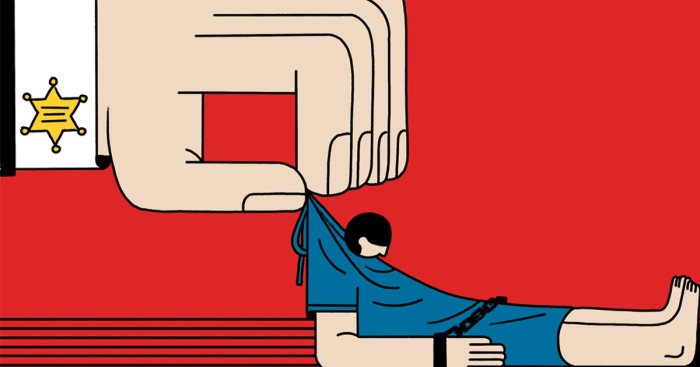
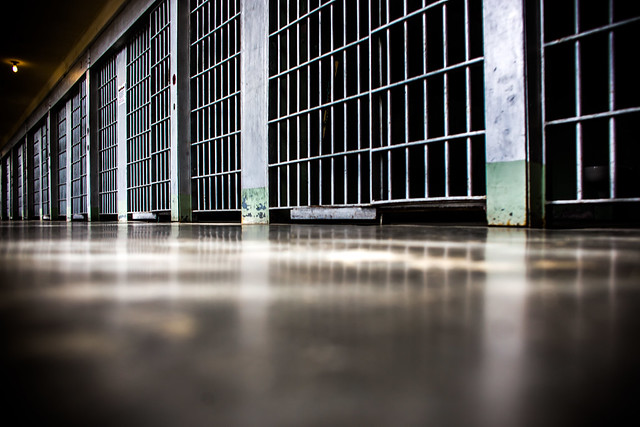
Tidwell had been on the receiving end of a practice referred to by many in law enforcement as a “medical bond.” Sheriffs across Alabama are increasingly deploying the tactic to avoid having to pay when inmates face medical emergencies or require expensive procedures — even ones that are necessary only because an inmate received inadequate care while incarcerated.What’s more, once they recover, some inmates are quickly rearrested and booked back into the jail from which they were released.Local jails across the country have long been faulted for providing substandard medical care. In Alabama, for instance, a mentally ill man died from flesh-eating bacteria 15 days after being booked into the Mobile County Metro Jail in 2000. And in 2013, a 19-year-old man died of gangrene less than a month after he was booked into the Madison County Jail. In both cases, officials denied wrongdoing and surviving relatives settled lawsuits alleging that poor jail health care contributed to their loved ones’ deaths.But the use of medical bonds isn’t about inferior care. It’s about who pays for care.

Source: These Sheriffs Release Sick Inmates to Avoid Paying Their Hospital Bills — ProPublica

“Thinking through the Silence” Dr. Tommy J. Curry

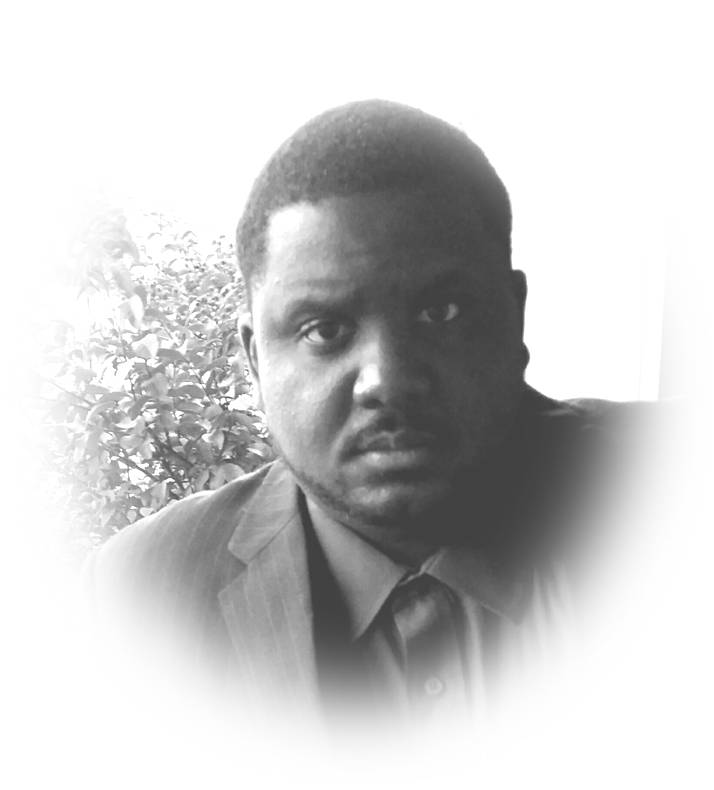
Dr. Tommy J. Curry

“The scholarship surrounding male rape in war and genocides is new and perplexing for many scholars. Whereas previous scholarship simply assumed that women were rape victims and men were the perpetrators, the discovery of male victims of rape has forced many researchers to rethink the politicized nature of older paradigms. Misra for example has argued that “most of the contemporary scholarship on sexual violence in armed conflicts is not only biased towards the female gender but is heavily influenced by a feminist monopolization of that space that has sought to describe such violence as binary in nature: it is only perpetrated again the female gender by male members of the society.” This binary division of violence renders male victims of sexual violence and rape conceptually invisible. Researchers and scholars are simply unable to interpret males, even men subjugated within genocide and war, as victims because the encountering of the male rape victim in real-life conflicts with the pre-determined view of men as perpetrators of rape in theory. Misra continues, “Thanks to this biased interpretation where the feminist concern is primarily to highlight the victimization of women by men, male sufferers have simply become ‘absent victims’ in such gender analyses of conflict dynamics. Therefore, it would not be incorrect to suggest that there is a conceptual and definitional confusion over gender-based violence.” Marysia Zalewki’s “Provocations in Debates about Sexual Violence against Men” takes a similar view of how male victims of rape and sexual violence are theorized. She writes:

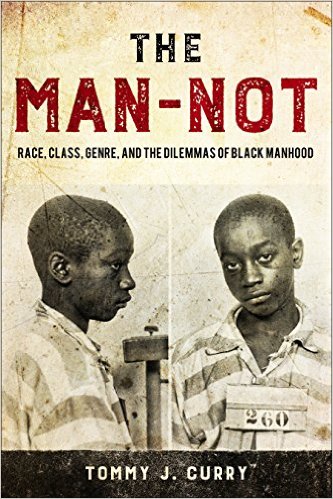
Tommy J. Curry’s provocative book The Man-Not is a justification for Black Male Studies. He posits that we should conceptualize the Black male as a victim, oppressed by his sex. The Man-Not, therefore,is a corrective of sorts, offering a concept of Black males that could challenge the existing accounts of Black men and boys desiring the power of white men who oppress them that has been proliferated throughout academic research across disciplines.
Curry argues that Black men struggle with death and suicide, as well as abuse and rape, and their genred existence deserves study and theorization. This book offers intellectual, historical, sociological, and psychological evidence that the analysis of patriarchy offered by mainstream feminism (including Black feminism) does not yet fully understand the role that homoeroticism, sexual violence, and vulnerability play in the deaths and lives of Black males. Curry challenges how we think of and perceive the conditions that actually affect all Black males.

it can be argued that the putative innocence of feminist scholarship, traditionally presented as an emancipatory justice project, works to conceptually conceal not only women’s proclivities to violence, including sexual violence, but also to conceal the ‘truth’ of male victimhood. The veracity of all of these claims might easily be challenged (or confirmed), yet there is surely something about the gendered focus on women and all her epistemological, ethical, ontological scaffolding that might go some way in explaining why there has been so little attention to sexual violence against men, at least until very recently.

Dr. Tommy J. Curry
Chair of Africana Philosophy & Black Male Studies @ University of Edinburgh. 2018 American Book Award. Editor of Black Male Studies Series on Temple Univ Press.

How we come to understand victimization, specifically what kind of violence creates victims, is of the utmost importance in our interpretation of Jewish male victims and their suffering. Jewish male rape cannot be truly understood if it is thought to be exceptional or a lesser form of violence endlessly compared to death. These young men and boys understood themselves—as males—being raped. Said differently, Jewish men are not simply analogous of female sexual experience. Scholars cannot hear the stories and accounts of Jewish males and imagine them to be females to understand how they could suffer rape. Inevitably one is drawn back to their socialized idea of a rape victim who is often a girl or woman. In doing so the researcher asks: “How do women or girls who are raped react?” This is not the proper question to ask in the listening to or reading of Jewish male survivor stories. Jewish men and boys suffered within their male body. They utilized their male bodies to attain food, clothes, and protection. These young accepted the violence of rape and the excruciating pain of anal penetration to escape death themselves or to help spare the lives of their friends.”

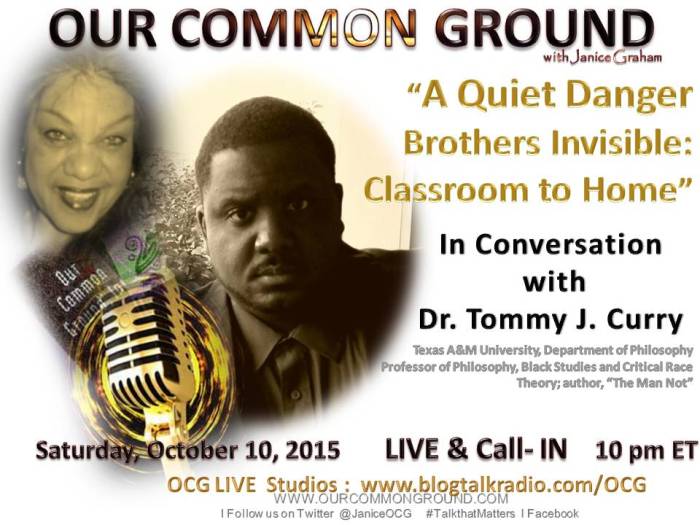
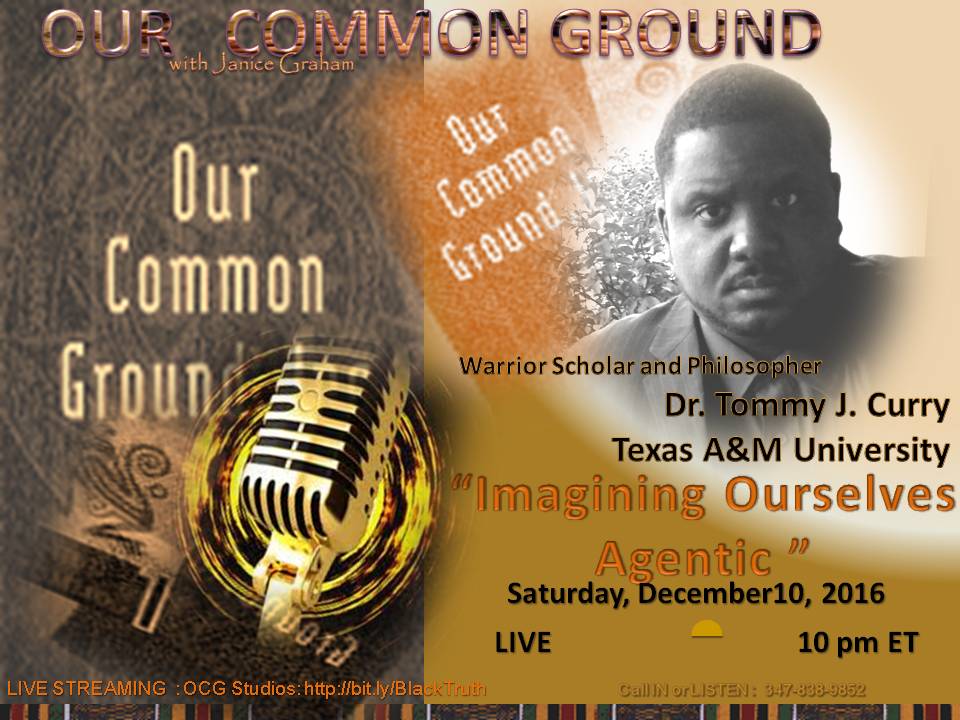
About Dr. Tommy J. Curry

This image has an empty alt attribute; its file name is 12-10-16-curry-agentic2.jpg
Dr. Curry has been an OUR COMMON GROUND Voice and OCG Incolocotur since 2013.

Tommy J. Curry is an Black-American author and professor of Philosophy. He currently holds a Personal Chair in Africana Philosophy and Black Male Studies at the University of Edinburgh. In 2018, he won an American Book Award for The Man-Not: Race, Class, Genre, and the Dilemmas of Black Manhood. He has been an OUR COMMON GROUND Voice and OCG Incolocotur since 2013.

He is arguably one of the nation’s most prolific philosophers of race, whose research focuses on the Black male experience— is leaving the United States to become the Chair of Africana Philosophy and Black Male Studies at the University of Edinburgh.

Curry, 39, who currently holds a full, tenured professorship in the Department of Philosophy at Texas A&M University  is an expert on Critical Race Theory, Africana Philosophy, Black Male Studies and Social Political Thought and was recognized by Diverse as a 2018 Emerging Scholar.

“The political climate in the United States has made the study of racism a dangerous option for Black scholars,” said Curry, in an interview with Diverse. “Identifying the violence of White supremacy has now become equated to anti-Whiteness. In Europe, there is an effort to understand the Black experience, particularly the Black male experience.”

In announcing Curry’s appointment, Dr. Holly Branigan, head of the School of Philosophy, Psychology and Language Sciences at the University of Edinburgh said that the hiring of Curry amounted to a real game changer for the institution founded in 1582.

Associate Professor at Texas A&M UniversityPast: Penn State and Southern Illinois University Carbondale

Studied Critical Race Theory at Southern Illinois University Carbondale Attended from 2005 to 2008

More about Dr. Curry and his current scholarship and research.

Tommy Curry on Facebook On Twitter:

A Brief History of US Concentration Camps | Black Agenda Report

“The Union Army re-captured freed slaves throughout the South and pressed them into hard labor in disease-ridden ‘contraband camps.’’

concentration camp (noun): a place in which large numbers of people, especially political prisoners or members of persecuted minorities, are deliberately imprisoned in a relatively small area with inadequate facilities, sometimes to provide forced labor or to await mass execution.– Oxford English Dictionary

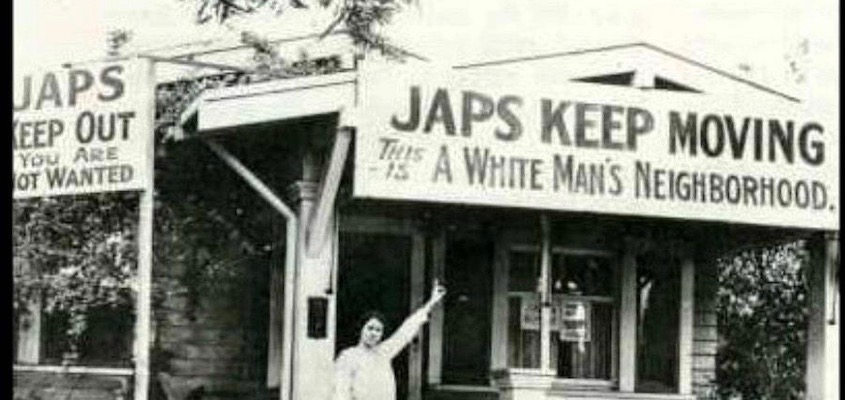
Rep. Alexandria Ocasio-Cortez (D-NY) has ignited a firestorm of criticism, from both the left and the right as well as the mainstream media, for calling US immigrant detention centers “concentration camps.” To her credit, Ocasio-Cortez has refused to back down, citing academic experts and blasting the Trump administration for forcibly holding undocumented migrants “where they are brutalized with dehumanizing conditions and dying.” She also cited history. “The US ran concentration camps before, when we rounded up Japanese people during World War II,” she tweeted. “It is such a shameful history that we largely ignore it. These camps occur throughout history.” Indeed they do. What follows is an overview of US civilian concentration camps through the centuries. Prisoner-of-war camps, as horrific as they have been, have been excluded due to their legal status under the Geneva Conventions, and for brevity’s sake.”

Source: A Brief History of US Concentration Camps | Black Agenda Report

The b[B]lack woman who launched the modern fight for reparations – The Washington Post

“Indeed, b[B]lack women have been at the center of the push for reparations for more than a century. Excluding them from the reparations debate blinds us to the multifaceted modern movement.”

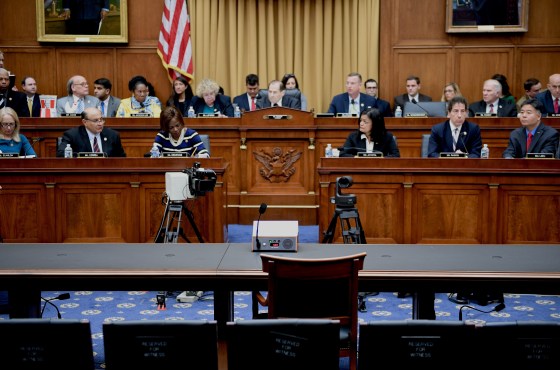
“The reparations hearings in the House of Representatives last week turned contentious as experts such as writer Ta-Nehisi Coates traded barbs with politicians, including Senate Majority Leader Mitch McConnell. The bill at the heart of the hearings, H.R. 40, first introduced by Rep. John Conyers Jr. in 1989, would create a commission to study and develop proposals for reparations for descendants of slaves.While Conyers should be lauded for his original efforts to introduce this legislation, this month’s hearings would not be possible without Audley “Queen Mother” Moore, the founder of the modern reparations movement. Indeed, b[B]lack women have been at the center of the push for reparations for more than a century. Excluding them from the reparations debate blinds us to the multifaceted modern movement. It also runs the risk of omitting some of the most generative and inventive reparations proposals developed to date.The debate over reparations is not new.

Since the Civil War, b[B]lack Americans have been imploring the federal government to rectify years of racial terror and prejudice. Some followed Callie House, an ex-slave turned reparations organizer who formed the National Ex-Slave Mutual Relief, Bounty and Pension Association to mobilize freed men and women to lobby Congress for pensions and land in the late 1800s. Others called on the federal government to make good on Special Field Order No. 15, a short-lived Civil War-era law that redistributed confiscated Confederate land to former slaves in 40-acre plots. By the turn of the century, the phrase “40 acres and a mule” became a catchall term for reparations claims.”

Source: The black woman who launched the modern fight for reparations – The Washington Post

Coming to Terms with Actually-Existing Black Life – New Politics

“The role of black public officials within the contexts of cities like Washington, D.C., Detroit, New Orleans, and elsewhere was anything but subordinate.  Subordinate to whom?  Moody misses the very powerful role that these black elites played, and continue to play in formal party politics and local economic growth regimes, in legitimating neoliberalization and, at times, insulating such forces from criticism even when they embark on policy decisions that will have negative social consequences for black constituencies.  More troubling, Moody diminishes the role that various black constituencies, neighborhood groups, landlords, business owners, clergy, educators, and activists, not simply political elites, played in shaping the carceral expansion.  The sense of different subject positions among blacks, which cannot be reduced simply to the “petty bourgeoisie” and the “long struggle for black freedom” as Moody does, is totally lost.  Moody refers to the demands of working-class blacks for more police protection and tougher crime policy, but in a manner that returns quickly to the victim narrative, disconnecting their conscious actions as citizens from their unintended consequence, mass incarceration. ”

Source: Coming to Terms with Actually-Existing Black Life – New Politics

The Liberal Betrayal of America’s Most Vulnerable

“It’s no secret that the U.S. incarcerates a shocking number of its own people, primarily the poor and people of color. With 2.3 million Americans currently being held in prisons, the country has the largest prison population in the world. But even as awareness of mass incarceration grows, two crucial questions remain at the heart of the debate on prison reform: Why does the U.S. imprison so many people, and how do we change our toxic approach?

These are the issues Tony Platt, author of “Beyond These Walls: Rethinking Crime and Punishment in the United States,” and Truthdig Editor in Chief Robert Scheer discuss in the latest installment of “Scheer Intelligence.”“When I started writing this book,” says Platt, a scholar at the University of California at Berkeley. “I was trying to answer the question: Why is it so difficult to make any kind of fundamental, decent, humane change in criminal justice institutions? Why are [our leaders] so resistant to this?”

Source: The Liberal Betrayal of America’s Most Vulnerable

We Have the Means to Fund Reparations. Where Is the Political Will?

. . . Between 1983 and 2016, the median net worth for Black Americans actually went down by 50 percent. Paired with a growing Latinx population that also lags far behind whites in household wealth, the U.S.’s overall median wealth trended downward over those decades, even as median white wealth increased.These trends go hand-in-hand with the rigging of the overall economy. Over the last 30 years, the wealthiest 20 percent of households have captured almost 97.4 percent of all increases in wealth, leaving only scraps for the rest.To repair these breaches — between Black and white, as well as between the rich and the rest — we must restore the wealth of communities that were literally used as a foundation of the nation’s wealth, while being prohibited from building their own.

As Ta-Nehisi Coates wrote in his groundbreaking case for reparations in The Atlantic, reparations are “the price we must pay to see ourselves squarely.”It won’t be an easy task. But it’s by no means insurmountable.”

Source: We Have the Means to Fund Reparations. Where Is the Political Will?

Word-Searchable Version of Mueller Report – Just Security

Every American concerned about this Administration and this country should read this Mueller Report which is evidence that there was conspiracy to obstruct justice that this President and those he commands.  This President is operating as though he is “above the law” and has organized the Department of Justice to ensure that he can do so successfully.

In addition, Donald Trump, acting in the role of mob boss is stacking the #SCOTUS and the federal judiciary to further protect his criminal activities in and out of office.

Trump is NOT exonerated…

“it also does not exonerate him.” Volume 2, Page 2.;

“it also does not exonerate him.” Volume 2, Page 8.;

“it also does not exonerate him.” Volume 2, Page 182.;

Congress is obligated to investigate the findings of this report. #ImpeachmentHearingsNow

Below is the Special Counsel Robert S. Mueller’s Report On The Investigation Into Russian Interference In The 2016 Presidential Election.Word-searchable PDF versions:Volume I – Criminal Conspiracy (PDF)Volume II – Obstruction (PDF)Word-searchable Sribd versions:Word-searchable Mueller Rep… by on Scribd

Source: Word-Searchable Version of Mueller Report – Just Security

Nat Turner’s slave rebellion ruins are disappearing in Virginia – The Washington Post

‘The haunted houses’: Legacy of Nat Turner’s slave rebellion lingers, but reminders are disappearing


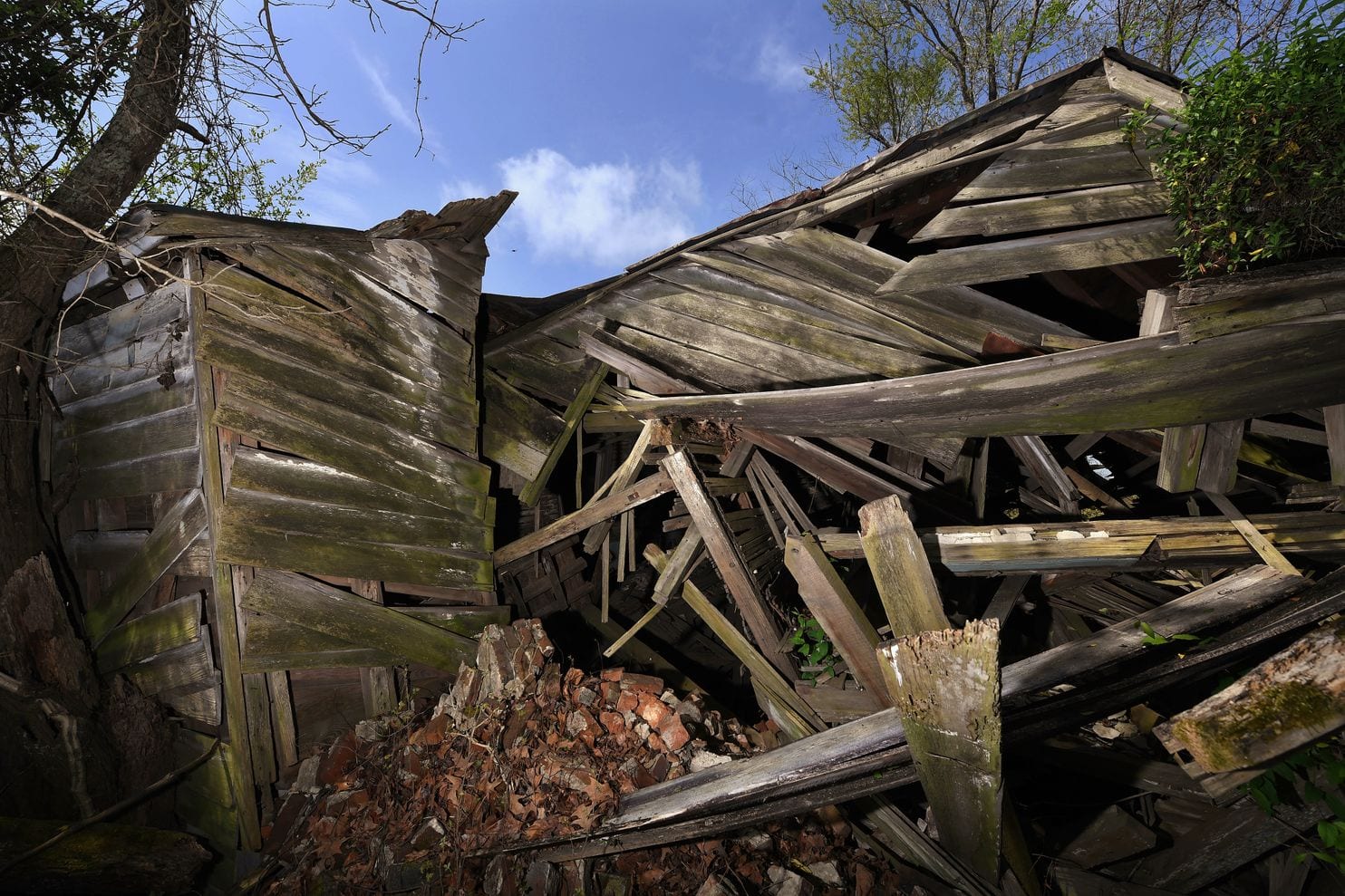
In 1831, during a slave rebellion led by Nat Turner, several people were killed at the site of the Whitehead house. Today, this is all that remains. (Matt McClain/The Washington Post)

April 30

 Kids grow up in rural Southampton County hearing that the mist creeping across the fields might be something unearthly. Old folks warn them not to sneak into abandoned houses, where rotting floors and walls are said to be stained with blood.

This is a haunted landscape.

Nearly 188 years ago, the self-styled preacher Nat Turner led fellow slaves from farm to farm in Southampton County, killing almost every white person they could find. Scores of blacks were murdered in reprisals throughout the South.

The legacy of the biggest slave revolt in U.S. history still hangs over the sandy soil and blackwater cypress swamps of this county along the North Carolina line, but the physical traces of the event are vanishing.

“A lot of the sites that tell the story have been destroyed,” said Cassandra Newby-Alexander, a historian at Norfolk State University. In Southampton and elsewhere, she said, neglect and denial have “tended to obliterate the presence of African Americans . . . as well as eliminating our history of slavery.”

History is Virginia’s biggest cash crop. It drives tourism, sets identity. Until recently, Virginia’s celebration of its grand past glossed over the stain of slavery that marks every statue, parchment and Flemish bond facade.

That’s changing: This year, the state commemorates the 400th anniversary of the first documented Africans being brought to the English colony. Thomas Jefferson’s Monticello presents detailed narratives of enslaved life. A museum that will include the perspective of the enslaved on the Civil War is opening in Richmond.

But around the state, tangible reminders of slave history remain unmarked. The landmarks are deteriorating, their significance preserved mainly in memories and stories. Petersburg’s 1854 Southside Depot, for instance, is one of the few pre-Civil War train stations in the South, where the enslaved were both workers and cargo. It sits empty.

Scholars are racing to identify slave cabins across Virginia before they disappear. In Richmond, leaders squabble over how to mark the site of the notorious Lumpkin’s Jail, a slaveholding facility, as well as the city’s slave market — one of the most active in the South — without disrupting the hip restaurant-and-condo scene growing up around it.
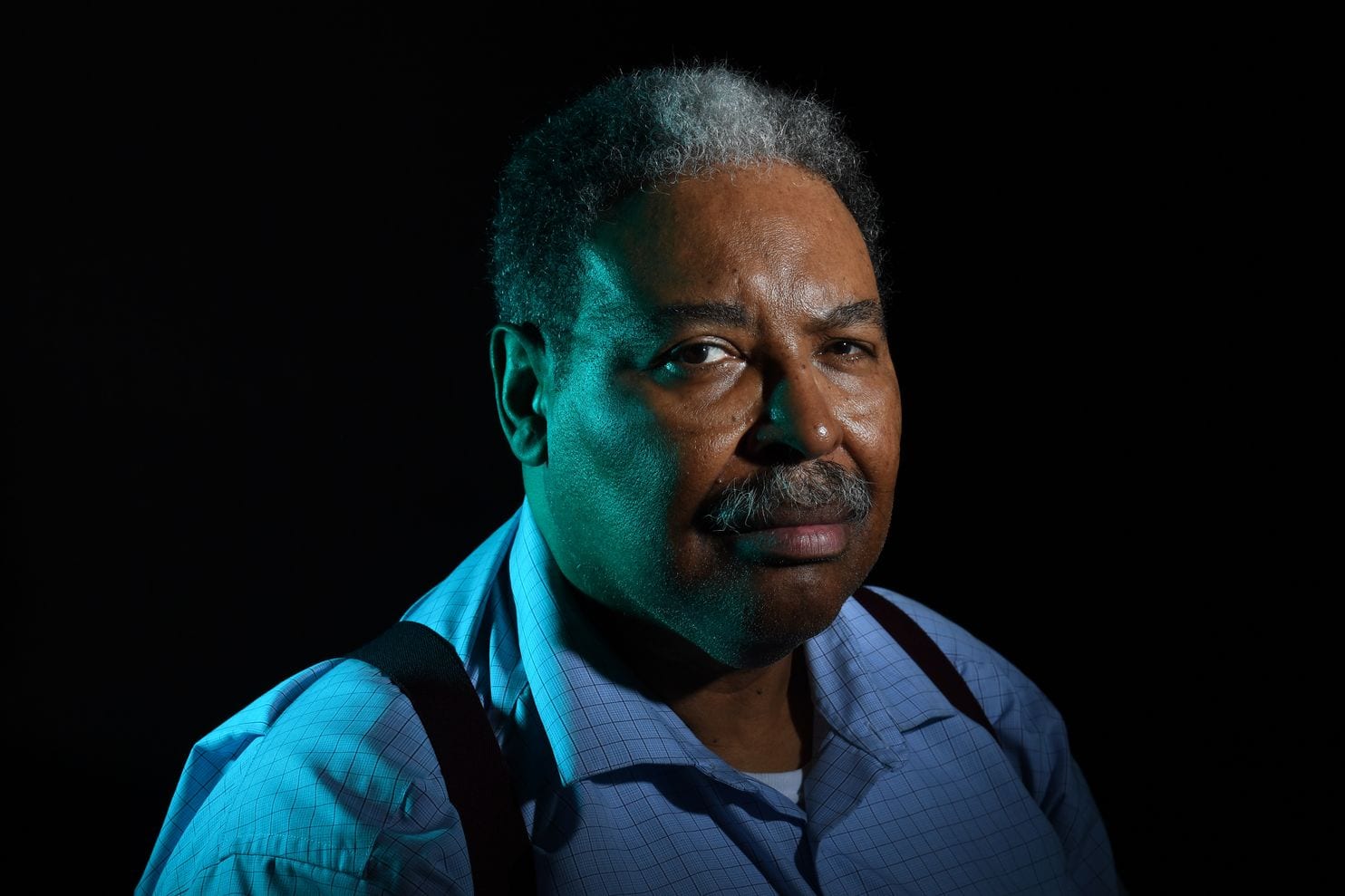

After years of research, Bruce Turner, 71, of Virginia Beach, believes Nat Turner was his great-great-great-grandfather. (Matt McClain/The Washington Post)

“What we choose to preserve is really a reflection of what we care about,” said Justin Reid, director of African American Programs for Virginia Humanities, who is helping coordinate a statewide effort to recognize slavery’s legacy. “When our cultural landscape is devoid of these sites, we’re sending the message that this history is less important, and the people connected to these sites are less important.”

Nowhere is the tension stronger than in Southampton County, where the history carries particular pain. Nat Turner is both a villain and a hero of American history. The split has long inflamed racial divides.

Born into slavery around 1800, Turner was literate, charismatic and deeply religious. He once baptized a white man, and some accounts describe how he spent 30 days wandering the county in search of his father before voluntarily resuming his life in bondage.

According to the confessions he allegedly made shortly before being executed, Turner saw visions from God urging him to seek vengeance on his white oppressors. A solar eclipse that passed over Southampton County in 1831 was the sign to act. On Aug. 21, he met with a half-dozen other enslaved people at a pond in the woods, where they plotted for several hours before striking out into the night, taking knives and farm implements to use as weapons.

Attacking farmhouses in the darkness and picking up supporters along the way, Turner and his rebels killed some 55 white men, women and children over the next two days. They were eventually scattered by militia infantry, and some were rounded up and killed or put on trial. Turner escaped and hid out for two months mostly in a crude “cave” — a hole dug under a pile of wood — before surrendering on Oct. 30, 1831.

He was tried and hanged Nov. 11, 1831, in the county seat of Jerusalem, known today as Courtland.

Until recently, the all-white county historical society was uncertain how to handle its macabre legacy. Within the past 10 years, though, as popular interest in Turner’s story has grown — including through the controversial 2016 film “Birth of a Nation” — attitudes have loosened.

Work is underway to establish slave-insurrection-history trails: a walking route in Courtland and a driving tour through the southwest corner of the county where the rebellion took place. Much of the information for both resides in the mind of one man.

“If you want to know anything about Nat Turner,” said Thaddeus Stephenson, 55, a black man who said he lives near one of Turner’s hideouts, “Rick Francis is the man.”

Seeing the past

Behind the wheel of a Chevy Suburban with 338,000 miles on the odometer, Francis pulls onto the shoulder at a featureless crossroads. Open farmland stretches in every direction.

This is Cross Keys. Francis begins to populate the scene. There was a wide, shallow building there, he says. A smaller structure across the street. In the summer of 1831, some 1,400 white people gathered here, pouring out of surrounding farms in fear of Turner and the armed rebels.

Militias converged from around the state and from North Carolina. When some members of Turner’s band were rounded up, they were held in a small cell in one of the buildings.

It’s all gone now, not even a mound or brick left to mark the spot. It exists only in Francis’s spirited retelling.

Francis, 63, who is white, is clerk of the county’s circuit court. Several of his ancestors were either victims of Turner’s insurrection or had narrow escapes. Over the course of an afternoon driving around the remote reaches of the county near the village of Boykins, Francis spins a tale of terror, violence and colorful characters — from Red Nelson, the enslaved man who helped save Francis’s pregnant great-great-grandmother, to Will Francis, perhaps the most fearsome killer in Turner’s band.
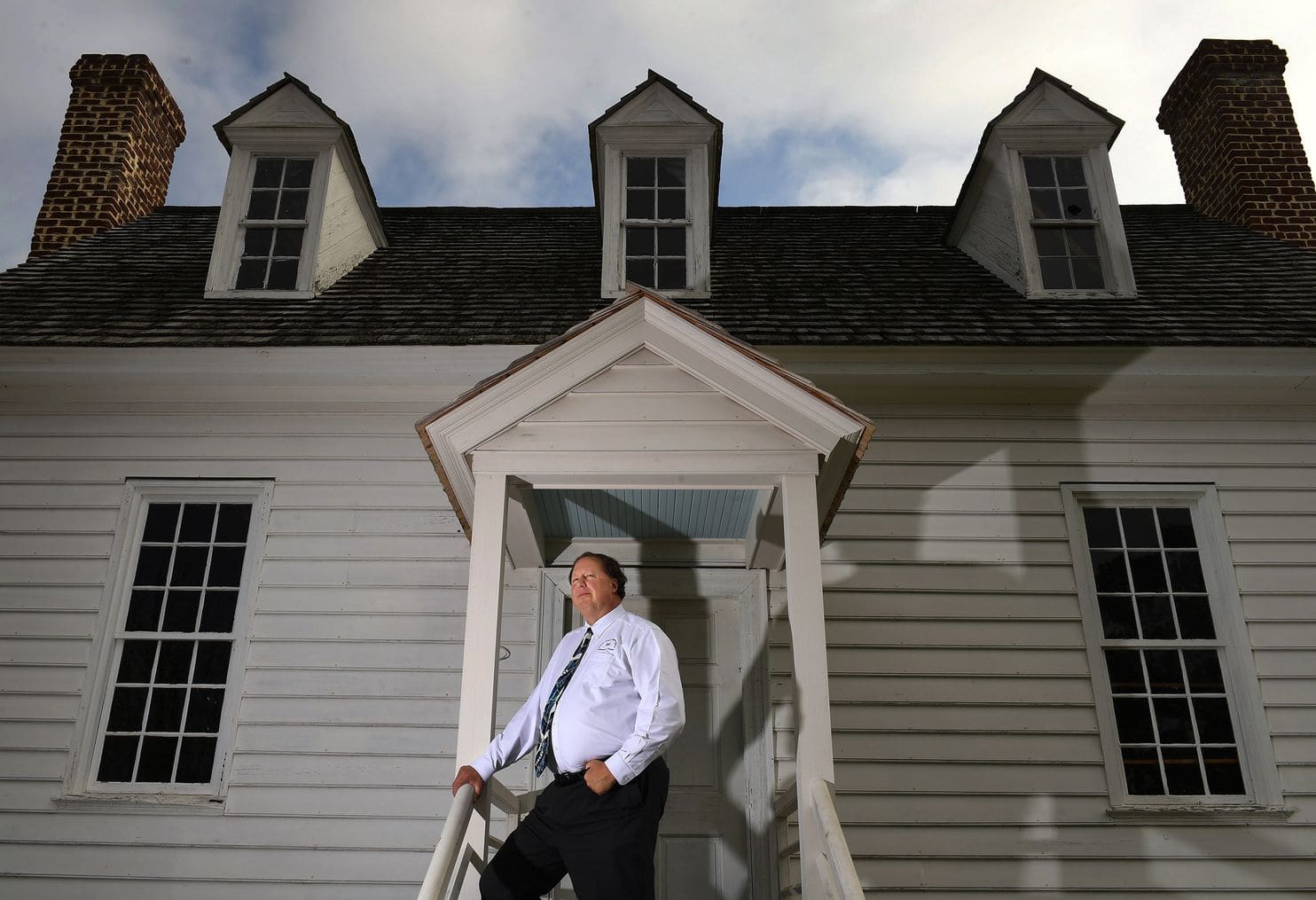

Rick Francis stands outside the Rebecca Vaughan House in Courtland, Va., where several people were killed in the slave rebellion. (Matt McClain/The Washington Post)

“He trimmed my family tree,” Rick Francis says of Will Francis, a man owned by one of his ancestors. “I mean, that guy was a killing machine.” But he gives him credit: Where Turner was a “religious fanatic,” he says, Will Francis “was motivated solely by freedom.”

As Francis drives along the old carriage paths, most of which are now paved, he sees things others do not.

Over there, where the dark grass meets the light, that’s where Joseph Travis and his wife were the first ones hacked to death in the insurrection. Where a rusted double-wide trailer stands was the site of Capt. John Barrow’s home. He warned his wife to flee, but she delayed to change her clothes, so he had to fight the rebels on the front porch. His wife escaped out the back; Barrow’s throat was cut.

Many of the homes were still standing as late as the 1970s, but time and weather have ravaged them. Local landowners cannot afford to rebuild so they just clear the rubble. The Richard Porter House is a dark hulk of warped wood, half of it collapsed, all of it shrouded in vines. Here, a young enslaved girl warned the family what was coming and they fled into the woods.

A few miles away, Francis swings off the road, switches on the four-wheel-drive and powers to a nondescript mound of brush. Only when he stops do a low row of bricks, a collapsed tin roof and jagged piles of gray boards become visible under the greenery: the remains of the house of Jacob Williams, who returned from measuring timber in the forest to find his slaves standing over the bodies of his wife and three children.

Nearby, the widow Rebecca Vaughan was allowed to pray before she was killed. Her house, the scene of the insurrection’s final killings, was relocated a few years ago to a spot in Courtland across from the county agriculture museum. It has been neatly restored by the county but remains empty.

The tree where Turner was hanged fell long ago. Francis puts the site in the yard of an old foursquare house on Bride Street in Courtland. A short distance away, around the corner on High Street, is the ditch where Turner’s torso was said to have been tossed after he was decapitated. Sure enough, Francis said, human remains have been found there. At some point, the county hopes to excavate. In the meantime, the spot is marked by tiny wire flags stuck in the weeds, the sort that might designate a property line or a cable route.

The county courthouse stopped flying the Confederate flag in 2015, but a Confederate monument stands on one side of the complex. Inside, in the county records room, Francis maintains a mini-museum to the slave insurrection, displaying old newspapers and artifacts.
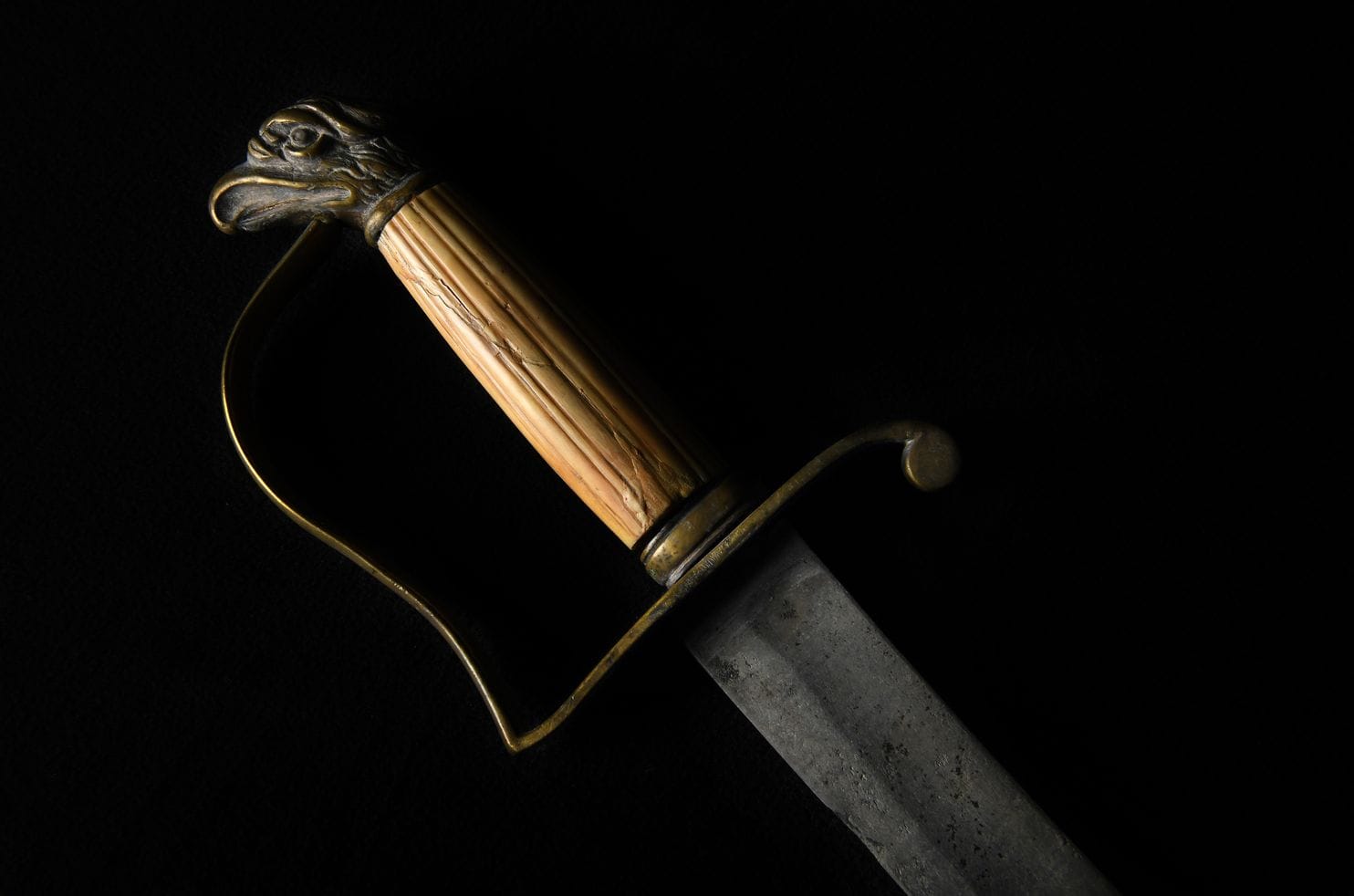

The sword believed to have been carried by Turner during the 1831 slave rebellion is kept in the county courthouse. The Southampton County Historical Society is planning a free walking tour around Courtland, Va., that highlights many historical spots in town, many related to Turner and the rebellion. (Matt McClain/The Washington Post)

The biggest prize is Turner’s sword, which is locked away in a courthouse storeroom in a padded rifle case. Francis tucks a pistol in his waistband when he goes to retrieve it. He opens the case and unfolds a white cloth. The curved blade is pitted, and though Turner complained that it was too dull to kill the woman he struck with it, the edge feels plenty sharp.

The Southampton County Historical Society has resisted putting the sword on display. Francis said its members worry people won’t take the tour if they can see the most memorable artifact up front. But maybe there is also a squeamishness about showing off such a fraught piece of history.

Francis believes the insurrection needs to be more widely recognized as an important turning point. It brought the Virginia legislature within a few votes of abolishing slavery, but ultimately, lawmakers tacked the other way, passing harsh crackdowns that prohibited blacks from preaching or learning to read.

Turner is a complicated figure even for African Americans who grew up in Southampton County. Bruce Turner, 71, said his older relatives spoke in hushed terms of a family connection to “the Nat mess.” After years of research, he believes Nat Turner was his great-great-great-grandfather. And by learning more about him, Bruce Turner has become proud of the association.

“I wasn’t sure what he did was right or wrong,” said Turner, a retired computer engineer who lives in Virginia Beach. “Today I admire and honor Nat. I think what he did was correct.”

It’s important to view the insurrection through the historical lens of fighting for freedom, Turner said. The houses, the landscape of Southampton County, evoke that for him now that he knows the full story.

“The houses that were down there . . . we used to call those the haunted houses,” Turner said. “And we were told something terrible had happened there.”

In his childhood, the hanging tree still stood, and the Vaughn house was abandoned in the woods.

“I was always told, oh, you don’t want to go in there, there’s blood spattered up on the walls, and stuff like that. I went in there. I only saw some spots. But it could’ve been mold,” he said.

Stephenson, who lives near one of Nat Turner’s hideouts, heard the same tales about the old houses. “The bricks from the chimney — sometimes when it rains, blood is supposed to seep back out of them,” he said. “That’s some folklore.”

But when you preserve those vanishing sites, you keep the history from fading into myth, Turner said.

“Why preserve Mount Vernon? Or preserve Monticello? They’re part of the history,” he said. “Just because something bad may have happened at a place, or something that was distasteful, doesn’t mean that it shouldn’t be kept.”

Source: Nat Turner’s slave rebellion ruins are disappearing in Virginia – The Washington Post

How the South Won the Civil War | The New Yorker

“. . . As Stevens pointed out, the reasoning that says that no states seceded because the Constitution won’t allow it would also say that no man can ever commit murder because the law forbids it. “Black Codes” were put in place in most Southern states that, through various means, some overt and some insidious (anti-vagrancy statutes were a particular favorite), limited the rights of blacks to work and to relocate. The legislative reconquest was backed by violence: the Ku Klux Klan, formed as a terrorist organization by ex-Confederate officers, began murdering and maiming assertive black citizens. In 1877, after a mere dozen years in which black suffrage and racial equality were at least grudgingly accepted national principles, the federal government pulled its last troops from the South and, in what could be called the Great Betrayal, an order of racial subjugation was restored. . .”

Source: How the South Won the Civil War | The New Yorker