Overdue reparations is the key to closing the racial wealth gap II Dr. William “Sandy”Darity

Overdue reparations is the key to closing the racial wealth gap

Dr. William Darity‘s congressional testimony lays a path to fix historic inequity that produces unequal outcomes for blacks
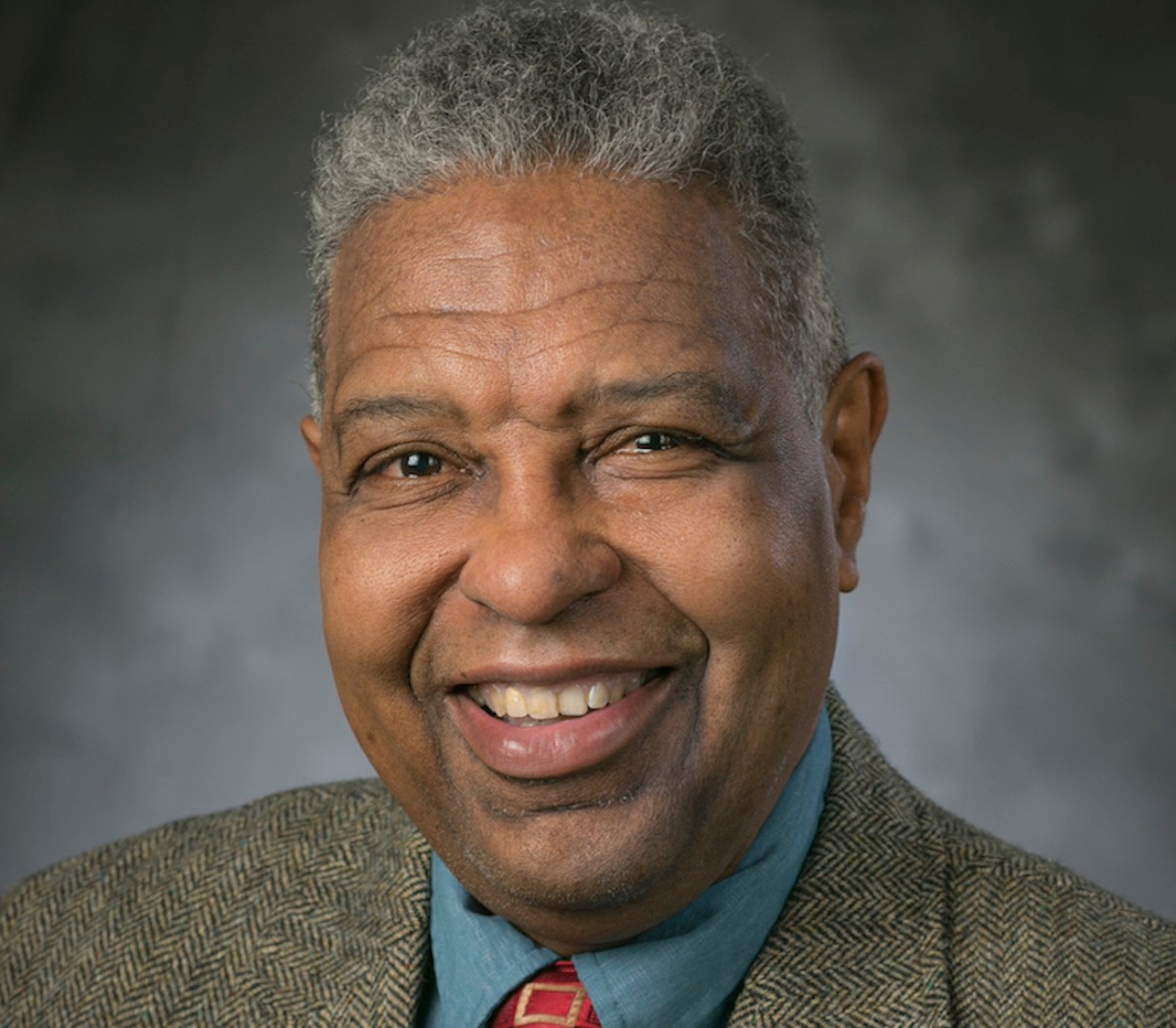
Dr. Willliam “Sandy” Darity, Samuel DuBois Cook Center on Social Equity at Duke University.

The case for black reparations must be anchored on three phases of grievous injustice inflicted upon enslaved blacks and their descendants. First is the atrocity of slavery itself.

The case for black reparations must be anchored on three phases of grievous injustice inflicted upon enslaved blacks and their descendants. First is the atrocity of slavery itself. Second are the atrocities exercised during the nearly century-long period of legal segregation in the U.S. (the “Jim Crow” era). Third are the legacy effects of slavery and Jim Crow, compounded by ongoing racism manifest in persistent health disparities, labor market discrimination, mass incarceration, police executions of unarmed blacks (de facto lynchings), black voter suppression, and the general deprivation of equal well-being with all Americans. Therefore, it is a misnomer to refer to “slavery reparations,” since black reparations must encompass the harms imposed throughout American history to the present moment — both slavery and post-slavery, both Jim Crow and post-Jim Crow — on black descendants of American slavery. It is precisely that unique community that should be the recipients of reparations: black American descendants of persons enslaved in the U.S.

Second are the atrocities exercised during the nearly century-long period of legal segregation in the U.S. (the “Jim Crow” era).

In a 2003 article written with Dania Frank Francis, and, more recently, in work written with Kirsten Mullen, we have proposed two criteria for eligibility for black reparations. First, an individual must demonstrate that they have at least one ancestor who was enslaved in the U.S. Second, an individual must demonstrate that for at least 10 years prior to the onset of the reparations program or the formation of the study commission, whichever comes first, they self-identified as black, Negro or African-American. The first criterion will require genealogical documentation — but absolutely no phenotype, ideology or DNA tests. The second criterion will require presentation of a suitable state or federal legal document that the person declared themselves to be black.

iStockphoto.

… it is a misnomer to refer to “slavery reparations,” since black reparations must encompass the harms imposed throughout American history to the present moment

I also recommend, like the Commission on Wartime Relocation and Internment of Civilians, the commission on reparations proposals commission should be appointed exclusively by the Congress. The commission appointees should be experts in American history, Constitutional law, economics (including stratification economics), political science and sociology. These appointees must have expert knowledge on the history of slavery and Jim Crow, employment discrimination, wealth inequality, health disparities, unequal educational opportunities, criminal justice and mass incarceration, media, political participation and exclusion, and housing inequities. The commission also should include appointees with detailed knowledge about the design and administration of prior reparations programs as guidelines for structuring a comprehensive reparations program for native black Americans.

Where do we go from here?

What would it take to bridge the black-white wealth gap?
A Q & A with Duke University economist William ‘Sandy’ Darity, who has some radical—yet doable—ideas
mlk50.com
Reparations well-intentioned, but insufficient for the debt owed
City of Memphis gives $50,000 each to the 14 living black sanitation workers from the 1968 strike
mlk50.com
The Loebs : Exploited black labor and inherited white wealth
Penny-pinching Loeb ancestors kept wages flat for 25 years as black laundresses did “miserable” work
mlk50.com

Source: Overdue reparations is the key to closing the racial wealth gap

Wealthy Democrats Are in Denial About Inequality – The Atlantic

The Democratic Party’s establishment is in denial about the ways in which concentrated riches are warping society and contributing to the disunity it seeks to heal.

” . . . Just as the 2008 recession ushered in the election of the first black president, a subsequent white backlash, and a rebirth of left-wing populism led by figures such as Warren and Sanders, the economic hardships of the late 1870s inspired both worker activism and racist retrenchment. In times of economic hardship, it was not a difficult matter to discredit Reconstruction as an attempt to raise ignorant black laborers above white men who were entrepreneurial, responsible, and refined. Nor was it difficult to justify government intervention on behalf of Big Business while condemning such intervention on behalf of workers. The rich, after all, had earned it, or they wouldn’t be rich.

Foner documents how former antislavery figures such as Horace White of the Chicago Tribune “condemned agrarian and labor organizations for initiating ‘a communistic war upon vested rights and property,’ and insisted that universal suffrage had ‘cheapened the ballot’ by throwing political power into the hands of those influenced by the ‘harangues of demagogues.’” Antislavery publications such as The Nation “linked the Northern poor and Southern freedmen as members of a dangerous new ‘proletariat’ as different ‘from the population by which the Republic was founded, as if they belonged to a foreign nation.’” With Reconstruction ended, capital took advantage of the stability of its aftermath to expand convict leasing, a new regime of forced labor that white southerners would impose to replace slavery and keep the region’s black labor force captive and subordinate. Big industries—lumber, railroads, mining, and others—would take eager advantage of this system of neo-slavery to boost their profit margins.

The end of Reconstruction coincided with the Republican retreat from civil rights. But that retreat was precipitated by deep-seated fears over workers in the North and South seeking labor reform, income redistribution, and regulation of industry. “The South sensed the willingness of Big Business, threatened by liberal revolt, labor upheaval and state interference, to make new alliance with organized Southern capital if assured that the tariff, banks and national debt, and above all, the new freedom of corporations, would not be subjected to mass attack,” wrote W. E. B. Du Bois in Black Reconstruction in America. “Such a double bargain was more than agreeable to Southern leaders.” Racism not only threatens democracy and prosperity; it accrues tremendous benefits for those already leading lives of plenty.

America’s political parties are now as polarized as they were at the end of Reconstruction. And just as at the end of Reconstruction, a multiracial party whose ranks include both frustrated workers and wealthy capitalists finds itself at a crossroads, with no certain options for healing the nation’s divides or its own. As ever, America’s gilded class regards the possibility of higher taxes and redistribution as a greater threat than a resurgent racist authoritarianism that imperils America’s still-young experiment in multiracial democracy. The latter, after all, does not jeopardize its profits.

Into this divide steps Patrick, a man who went from poverty on Chicago’s South Side to the heights of both business and politics, practically an avatar of the old free-labor ideal that animated the 19th-century Republican Party, an ideal whose blindness to how concentrations of wealth warp politics and society leaves it ill-equipped to deal with the threats to democracy and prosperity America currently faces. The paradox for Democrats is that the candidates who understand this appear less likely to prevail in the general election, and those who have yet to grasp it may be better positioned to unseat the president.
In Polarized America, Nolan McCarty, Keith Poole, and Howard Rosenthal argue that economic inequality and polarization reinforce each other. Economic suffering and ideology foment anger toward minorities, who are blamed for that economic suffering. The very wealthy exploit those divisions to sustain their streams of income, which in turn makes it less likely that redistributive legislation addressing that economic suffering can be passed . . .”

Source: Wealthy Democrats Are in Denial About Inequality – The Atlantic

Jim Crow South’s lynching of blacks and Christianity: The terror inflicted by whites was considered a religious ritual.

The cliché is that Americans have a short memory, but since Saturday, a number of us have been arguing over medieval religious wars and whether they have any lessons for today’s violence in the Middle East.

For those still unaware, this debate comes after President Obama’s comments at the annual National Prayer Breakfast, where—after condemning Islamic radical group ISIS as a “death cult”—he offered a moderating thought. “Lest we get on our high horse and think this is unique to some other place, remember that during the Crusades and the Inquisition, people committed terrible deeds in the name of Christ. In our home country, slavery and Jim Crow all too often was justified in the name of Christ … So this is not unique to one group or one religion. There is a tendency in us, a sinful tendency that can pervert and distort our faith.”

It’s a straightforward point—“no faith has a particular monopoly on religious arrogance”—that’s become a partisan flashpoint, as conservatives harangue the president for “equating” crusading Christians to Islamic radicals, accuse him of anti-Christian beliefs, and wonder why he would mention a centuries-old conflict, even if it has some analogies to the present day.

What we have missed in the argument over the Crusades, however, is Obama’s mention of slavery and Jim Crow. At the Atlantic, Ta-Nehisi Coates puts his focus on religious justifications for American bondage, and it’s worth doing the same for its post-bellum successor. And since we’re thinking in terms of religious violence, our eyes should turn toward the most brutal spectacle of Jim Crow’s reign, the lynching.

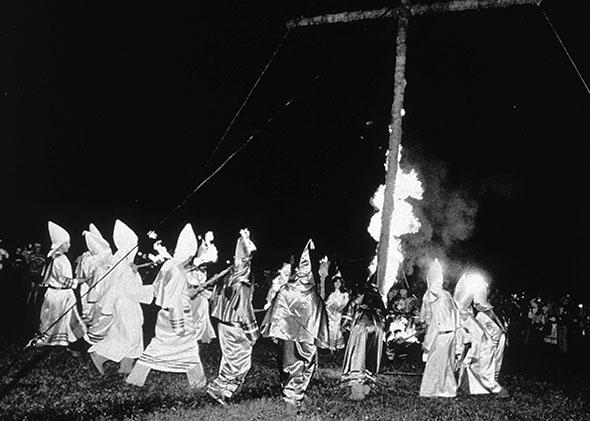
For most of the century between the two Reconstructions, the bulk of the white South condoned and sanctioned terrorist violence against black Americans. In a new report, the Alabama-based Equal Justice Initiative documents nearly 4,000 lynchings of black people in 12 Southern states—Alabama, Arkansas, Florida, Georgia, Kentucky, Louisiana, Mississippi, North Carolina, South Carolina, Tennessee, Texas, and Virginia—between 1877 and 1950, which the group notes is “at least 700 more lynchings in these states than previously reported.”

For his victims, “Judge Lynch”—journalist Ida B. Wells’ name for the lynch mob—was capricious, merciless, and barbaric. C.J. Miller, falsely accused of killing two teenaged white sisters in western Kentucky, was “dragged through the streets to a crude platform of old barrel staves and other kindling,” writes historian Philip Dray in At the Hands of Persons Unknown: The Lynching of Black America. His assailants hanged him from a telephone pole, and while “the first fall broke his neck … the body was repeatedly raised and lowered while the crowd peppered it with small-arms fire.” For two hours his corpse hung above the street, during which he was photographed and mutilated by onlookers. Finally, he was cut down and burned.

More savage was the lynching of Mary Turner and her unborn child, killed for protesting her husband’s murder. “[B]efore a crowd that included women and children,” writes Dray, “Mary was stripped, hung upside down by the ankles, soaked with gasoline, and roasted to death. In the midst of this torment, a white man opened her swollen belly with a hunting knife and her infant fell to the ground, gave a cry, and was stomped to death.”

These lynchings weren’t just vigilante punishments or, as the Equal Justice Initiative notes, “celebratory acts of racial control and domination.” They were rituals. And specifically, they were rituals of Southern evangelicalism and its then-dogma of purity, literalism, and white supremacy. “Christianity was the primary lens through which most southerners conceptualized and made sense of suffering and death of any sort,” writes historian Amy Louise Wood in Lynching and Spectacle: Witnessing Racial Violence in America, 1890–1940. “It would be inconceivable that they could inflict pain and torment on the bodies of black men without imagining that violence as a religious act, laden with Christian symbolism and significance.”

The God of the white South demanded purity—embodied by the white woman. White southerners would build the barrier with segregation. But when it was breached, lynching was the way they would mend the fence and affirm their freedom from the moral contamination, represented by blacks and black men in particular. (Although, not limited to them. Leo Frank, lynched in 1915, was Jewish.) The perceived breach was frequently sexual, defined by the myth of the black rapist, a “demon” and “beast” who set out to defile the Christian purity of white womanhood. In his narrative of the lynching of Henry Smith—killed for the alleged rape and murder of 3-year-old Myrtle Vance—writer P.L. James recounted how the energy of an entire city and country was turned toward the apprehension of the demon who had devastated a home and polluted an innocent life.”

James wasn’t alone. Many other defenders of lynching understood their acts as a Christian duty, consecrated as God’s will against racial transgression. “After Smith’s lynching,” Wood notes, “another defender wrote, ‘It was nothing but the vengeance of an outraged God, meted out to him, through the instrumentality of the people that caused the cremation.’ ” As UNC–Chapel Hill Professor Emeritus Donald G. Mathews writes in the Journal of Southern Religion, “Religion permeated communal lynching because the act occurred within the context of a sacred order designed to sustain holiness.” The “sacred order” was white supremacy and the “holiness” was white virtue.

I should emphasize that blacks of the era understood lynching as rooted in the Christian practice of white southerners. “It is exceedingly doubtful if lynching could possibly exist under any other religion than Christianity,” wrote NAACP leader Walter White in 1929, “No person who is familiar with the Bible-beating, acrobatic, fanatical preachers of hell-fire in the South, and who has seen the orgies of emotion created by them, can doubt for a moment that dangerous passions are released which contribute to emotional instability and play a part in lynching.” And while some church leaders condemned the practice as contrary to the Gospel of Christ—“Religion and lynching; Christianity and crushing, burning and blessing, savagery and national sanity cannot go together in this country,” declared one 1904 editorial—the overwhelming consent of the white South confirmed White’s view.

The only Southern Christianity united in its opposition to lynching was that of black Americans, who tried to recontextualize the onslaught as a kind of crucifixion and its victims as martyrs, flipping the script and making blacks the true inheritors of Christian salvation and redemption. It’s that last point which should highlight how none of this was intrinsic to Christianity: It was a question of power, and of the need of the powerful to sanctify their actions.

Still, we can’t deny that lynching—in all of its grotesque brutality—was an act of religious significance justified by the Christianity of the day. It was also political: an act of terror and social control, and the province of private citizens, public officials, and powerful lawmakers. Sen. Ben Tillman of South Carolina defended lynching on the floor of the U.S. Senate, and President Woodrow Wilson applauded a film that celebrated Judge Lynch and his disciples.

Which is all to say that President Obama was right. The vastly different environments of pre–civil rights America and the modern-day Middle East belies the substantive similarities between the fairly recent religious violence of our white supremacist forebears and that of our contemporary enemies. And the present divide between moderate Muslims and their fanatical opponents has an analogue in our past divide between northern Christianity and its southern counterpart.

This isn’t relativism as much as it’s a clear-eyed view of our common vulnerability, of the truth that the seeds of violence and autocracy can sprout anywhere, and of the fact that our present position on the moral high ground isn’t evidence of some intrinsic superiority.

Source: Jim Crow South’s lynching of blacks and Christianity: The terror inflicted by whites was considered a religious ritual.

What Michelle Obama Gets Wrong About Racism

Succeeding While Black

Michelle Obama’s new book reduces racial inequality to a matter of psychological impairment that can be overcome through grit and grin. This is a dangerous proposition.

KEEANGA-YAMAHTTA TAYLOR

Becoming

Michelle Obama
Michelle Obama’s popularity is a remarkable political feat. Her ascent into the public spotlight, after all, began as a receptacle of rightwing misogynoir. From the suggestions that she was ill-tempered to the hideous portrayals of her as male or some kind of primatial hybrid, Obama endured scrutiny unprecedented in the history of the role of first lady. This was hardly surprising given that the pageantry and pomp of the office had become synonymous with white and wealthy “ladies.” Her opponents were quick to cast Obama—the dark skinned, Chicago native—as decidedly un-ladylike, characterizing her instead as an anti-American political militant.

Becoming is an exquisite lesson in creating political ideology—one that I find troubling.

Sensitive to these portrayals, Obama acquiesced when her staff asked her to soften her gestures and play down her political contributions to Barack’s first campaign run. In her new book, Becoming, Obama describes how campaign aids encouraged her to “play to my strengths and to remember the things I most enjoyed talking about, which was my love for my husband and kids, my connection with working mothers, and my proud Chicago roots.” Together, the Obamas became disciplined in responding to the racist attacks, in part due the desire not to confirm the stereotypes. As Obama has famously said, “when they go low, we go high.”

The strategy worked. A recent Gallup poll listed Obama as the most “admired” woman in the United States. Becoming sold a breathtaking 1.4 million copies in its first week, and its success is partly due to the perception that this is Obama’s response to the years of silence—her chance to finally break free from adherence to the public rituals of U.S. power. And, indeed, Obama’s book is her story in her own words—authentic and refreshingly un-ladylike. She endears herself to a broad audience as she freely recalls smoking marijuana with a boyfriend in her car, having pre-marital sex, living at home well into her thirties even after she was married, having troubles conceiving both of her children, yelling in arguments with Barack, and feeling bitter as she was expected to carry most of the burdens of her household after marriage. Free of the pretense often effused by those with wealth and power, Obama comes off as ordinary and relatable.

In Becoming, Obama describes the value of telling one’s story this way: “Even when it’s not pretty or perfect. Even when it’s more real than you want it to be. Your story is what you have, what you will always have. It is something to own.” For Obama, a person’s story is an affirmation of their space in the world, the right to be and belong. “In sharing my story,” she says, “I hope to help create space for other stories and other voices, to widen the pathway for who belongs and why. . . . Let’s invite one another in. Maybe then we can begin to fear less, to make fewer wrong assumptions, to let go of biases and stereotypes that unnecessarily divide us.” The root of discrimination, Obama implies, including the ugly discrimination she faced as first lady, is misunderstanding. Sharing personal narratives, then, offers a way for people to fully see each other and to overcome our differences.

This message has resonated widely, but especially with black women, for whom Becoming has been a source of pride and celebration. Black women have paid hundreds, sometimes thousands, of dollars to crowd into stadiums on her book tour, which speaks not only to the celebrity of Obama, but the depths of disrespect and invisibility that black women in the United States experience. Indeed, black women in this country are so debased and ignored that it often feels as if the success and public adoration of Obama can lift and make visible all black women—a process Obama herself encourages.

Her story is a celebration of personal fulfillment—the kind of self-involved, “live your truth”-inspired homilies that middle-class and rich women tell each other.

Yet despite all the optimism and goodwill that Obama embraces and inspires, I find Becoming troubling. Sticking to her strategy for success, Obama reassures her reader repeatedly that she is not a “political” person. Instead Obama describes herself as a “child of the mainstream” who “never stopped reading People magazine or let go of my love for a good sitcom. . . . And to this day nothing pleases me more than the tidy triumph delivered by a home-makeover show.” But as someone who has been around politics since she was a child (her father was a precinct captain in the Democratic Party) and is now, domestically and internationally, one of the most well-known ambassadors of the United States, this denial is not modesty, it is misleading. Indeed, far from being apolitical, Obama is politically sophisticated, and any reader of her book should treat her that way.

Becoming, after all, is an exquisite lesson in creating ideology. As a political insider with broad pop culture appeal, Obama wields enormous influence in shaping discourse and opinion on critical issues concerning race, gender, public policy, and how we define progress in general. Lauren Mims, a former assistant director for the White House project “Educational Excellence for African Americans,” has even undertaken an initiative to create a curriculum for Becoming that she says will “disrupt the traditional practice of talking about black girls in pejorative ways and center them and their unique experiences to study how we can support them.”

Obama, then, is not just telling stories; she is shaping our understanding of the world we live in, which is why it is so critical that we, as a public, interrogate her ideology. When we do, we might see that her story is not in search of the collective experience but is a celebration of personal fulfillment—the kind of self-involved, “live your truth”-inspired homilies that middle-class and rich women tell each other. Becoming normalizes power and the status quo while sending the message that the rest of us only need to find our place in the existing social hierarchy to be happy. This is unfortunate because personal narratives—including Obama’s—do have power. When stitched together and told honestly, they can create a map of shared experience that raises the possibility of collective action as a way to transform the individual circumstance. This is certainly true of poor and working-class black women whose personal stories expose the racism, sexism, and general inequality of U.S. society. These stories relentlessly pierce the treacherous idea that the United States is free, democratic, and just, and they prove the axiom of black feminism that the personal is political.

section separator

Born in 1964, Obama has no recollection of the political strife—including multiple uprisings in response to police violence and the assassination of Martin Luther King, Jr.—that unfolded in Chicago neighborhoods during her childhood. Instead, her memories revolve around her family’s cramped apartment on the Southside of Chicago, and her narration of her working-class family’s history perfectly captures the systematic way that African Americans were excluded from the vast bounty created in the United States in the aftermath of World War II. Indeed, as a child, Obama was palpably aware that her circumstances were vastly different from those of the adults around her. While their potential was truncated by rampant racial discrimination, Obama was able to attend a promising new magnet high school called Whitney Young. She then goes on to Princeton University and eventually Harvard Law School, and by the mid-1980s, Obama was earning a six-figure salary at one of the most highly regarded law firms in downtown Chicago. By any measure, she and her equally successful brother, Craig Robinson, overcame circumstances that many of their peers inevitably succumbed to.

Obama’s book reflects the diminished view of public programs and the power of the state as a vehicle to create meaningful opportunities for African Americans.

Racism does exist for Obama, but these two realities—the history of structural segregation that she and her brother emerged from and their subsequent black success—shape her perception of racism as less an institutional phenomenon and more an unfortunate residue from the past. This does not negate its realness, but she sees its manifestation largely as a “deep weariness . . . a cynicism bred from a thousand small disappointments over time.” She had seen it in both her grandfathers, “spawned by every goal they’d abandoned and every compromise they’d had to make.” It was why the neighbor had stopped mowing the lawn or even keeping track of where her kids went after school. And “it lived in every piece of trash tossed carelessly in the grass at our local park and every ounce of malt liquor drained before dark. It lived in every last thing we deemed unfixable, including ourselves.”

One of Obama’s best friends growing up was Santita Jackson, one of the Reverend Jesse Jackson’s daughters. In Becoming, Obama points to Reverend Jackson’s talking points in his 1984 presidential run as an inspiring message of racial uplift. She writes enthusiastically about how Jackson

toured the country, mesmerizing crowds with thundering calls for black people to shake off the undermining ghetto stereotypes and claim their long-denied political power. He preached a message of relentless, let’s-do-this self-empowerment. . . . He had school kids pledge to turn off the TV and devote two hours to their homework each night. He made parents promise to stay involved. He pushed against the feelings of failure that permeated so many African American communities, urging people to quit with the self-pity and take charge of their own destiny. “Nobody, but nobody,” he’d yell, “is too poor to turn off the TV two hours a night.”

Conversely, Obama saw how other “extraordinary and accomplished people”—including black women such as herself—had managed the skepticism they were surrounded by:

All of them had doubters. Some continue to have roaring, stadium-sized collections of critics and naysayers who will shout I told you so at every little misstep or mistake. The noise doesn’t go away, but the most successful people I know have figured out how to live with it, to lean on the people who believe in them, and to push onward with their goals. . . . I’d never been someone who dwelled on the more demoralizing parts of being African American. I’d been raised to think positively. I’d absorbed my family’s love and parents’ commitment to seeing us succeed. . . . My purpose had always been to see past my neighborhood—to look ahead and overcome. And I had.

In Obama’s telling, then, racism is not the defining feature of black life, and her profound success is a testament to the ways that striving and self-motivation are the difference between those who succeed and those who do not.

The absence of materiality in Obama’s understanding of racism in contemporary life underlies her sharp rebuke of Reverend Jeremiah Wright in Becoming. Known for his fiery sermons condemning the racism, militarism, sexism, and oppression in U.S. society, Reverend Wright became a thorn in the side of the Obamas during the 2008 campaign when it was “discovered” that the Obamas were members of his church. The mainstream media delved into his sermons and described some of Wright’s incisive comments as “hate speech,” which worked to fuel the presumed radicalism or militancy of the Obamas. The most widely circulated of these sermons showed Wright at his incendiary best:

The government gives them the drugs, builds bigger prisons, passes a three-strike law and then wants us to sing “God Bless America.” No, no, no, not God Bless America. God damn America—that’s in the Bible—for killing innocent people. God damn America, for treating our citizens as less than human. God damn America, as long as she tries to act like she is God, and she is supreme. The United States government has failed the vast majority of her citizens of African descent.

In Becoming, Obama dismisses Wright’s experiences and viewpoints as him “careening through callous and inappropriate fits of rage and resentment at white America, as if white people were to blame for every woe.” She accuses him of viewing “race through a lens of cranky mistrust.” Wright and older African Americans, she says, became “cranky” because of legal strictures of segregation that gave rise to a “narrow mindedness” in matters regarding race. Obama goes on to conflate the bitterness of older African Americans with the racism of older white people, such as Barack Obama’s white grandmother who felt afraid of black men on the streets. That fear, she writes, “was a reminder of how our country’s distortions about race could be two-sided—that the suspicion and stereotyping ran both ways.”

It is a diplomatic reading—but ultimately a clumsy effort to reach across the profound racial division in the United States. Consider the political ramifications of such a reading. By treating them as two sides of the same coin, Obama is equating African American anger—which is rooted in material deprivation and human subjugation—with white fear, which is rooted in racial stereotypes. These two worldviews are not the product of the same generational experiences and reducing them to such forecloses the possibility that African Americans could ever find real redress to the inequality produced by centuries of slavery and legal discrimination.

Becoming normalizes power and the status quo while sending the message that the rest of us only need to find our place in the existing social hierarchy to be happy.

Moreover, Obama’s reading reinforces the perception that African Americans’ persistent demands against racism are not much more than “crankiness” or complaining. When combined with Obama’s own emphasis on striving as a way to overcome racial discrimination, this narrative reduces racial inequality to one of psychological impairment that can be overcome through sheer determination and a positive attitude. She fails to see how it was bitter struggle against real institutions that created the new world she was able to thrive in. Indeed, Whitney Young high school was built on an empty lot that had seen multiple uprisings over the course of the 1960s. Those uprisings eventually caused the political establishment to acquiesce and take concrete steps to create a black middle class. Elected officials invested in schools such as Whitney Young while also exerting enormous pressure on the private sector to end the racial enclosure of segregation that had slowly suffocated Obama’s parent’s social mobility. The crucible of the 1960s widely expanded access to homeownership, college education, white collar professions, and formal entry into electoral politics for African Americans.

Obama and a thin layer of others were beneficiaries of these transformations in the U.S. political economy. The short-lived reforms created by the anti-poverty programs of the 1960s lowered the rate of black poverty by expanding the federal bureaucracy and creating new job opportunities for black workers. But as the momentum from the political insurgency of the 1960s waned, political support for these programs evaporated. And as more time passed from the high point of the movement, the hardship experienced by most African Americans grew deeper. In 1964, the year Obama was born, black unemployment was 9.6 percent; by 1975, it had crept up to 15 percent; and while Obama was at Princeton University, in 1983, black unemployment inched up even further to a bewildering 20 percent—the highest ever recorded. Nevertheless, the successes of the few were held up as evidence that it was not the system that was broken; instead, black people simply weren’t taking advantage of all that the United States had to offer.

To make sense of the persistent low wages, housing instability, higher rates of poverty, and deepening social crisis that marred black communities, the political focus shifted violently to personal responsibility or a lack thereof. In doing so, the infrastructure of publicly funded institutions—including public housing and other forms of social welfare—that had been slowly chipping away at inequality and poverty were dismissed as unnecessary and financially gutted. The picture of success for some African Americans—whether they were lawyers or young elected officials—and continued hardship for others created a distorted picture of black America. Like a fun house mirror, it enlarged features such as personal persistence and responsibility while pushing others, such as the role of institutional racial discrimination, further to the margins.

The crises in this country cannot be resolved one person at a time, and recipes for self-fulfillment cannot create the social forces necessary to transform neighborhoods.

Obama’s book reflects this diminished view of public programs and the power of the state as a vehicle to create meaningful opportunities for African Americans. With the public sector out of view, her conception of social progression is freighted with “public-private partnership” ventures and mentorship steered by “gifted” individuals. Social change is thus based on the goodwill and interests of well-endowed funders and well-meaning individuals while inequality is essentially accepted as something to navigate rather than dismantle.

section separator

If this reading seems unfair, consider Obama’s 2013 visit to the Chicago high school, William R. Harper, and her recollection of it in Becoming. As an institution, Harper stands at the intersection of racism, poverty, and violence. In 2012, twenty-one of its students were injured and eight killed from persistent gun violence. Obama chose to visit Harper in 2013 as she became increasingly focused on gun violence in Chicago. Just weeks before, a fifteen-year-old black girl who had just performed at Barack Obama’s second inaugural parade was shot and killed in a Southside neighborhood approximately one mile from the Obama family home.

On the day of her visit, Obama met with twenty-two students who had all been psychologically scarred by their constant exposure to gun violence. They relayed with frightening detail walking down the middle of the street to avoid stray gunfire and their routines of clearly identifying escape routes in case they needed to run. In the course of the meeting, one of the Harper students remarked to Obama, “It’s nice that you are here and all . . . but what are you actually going to do about all of this?”

In her telling, Obama did not have much to say to them: “Honestly, I know you’re dealing with a lot here, but no one’s going to save you anytime soon. Most people in Washington aren’t even trying. A lot of them don’t even know you exist.” It was an honest statement—one we are expected to read as refreshingly honest and “real”—but one that betrayed the logical conclusions of seeing racism as a manifestation of psychology, bad intentions, or simple ignorance. When unmoored from the institutions of power and class domination, racism becomes impossible to address, combat, and dismantle.

In Becoming, Obama also recalls that Englewood (the neighborhood Harper is in) had been considered a “tough” area when she was growing up, but seeing the shuttered windows and dilapidated structures in 2013 showed how much more ingrained its problems had become. She blames white flight: “I thought back to my own childhood and my own neighborhood, and how the word ‘ghetto’ got thrown around like a threat. The mere suggestion of it . . . caused stable, middle-class families to bail preemptively for the suburbs, worried their property values would drop. ‘Ghetto’ signaled that a place was both black and hopeless.”

When unmoored from the institutions of power and class domination, racism becomes impossible to address, combat, and dismantle.

But while white flight was certainly part of Englewood’s history of decline, white people abandoned Englewood more than a half century ago. Englewood’s problems of today are both historical and contemporary. The neighborhood has continued to suffer because successive city administrations have starved it and other poor and working-class black communities of desperately needed resources, opting instead to redirect those funds to whiter and wealthier sections of the city. In 2012, just months before Obama’s visit to Englewood, Rahm Emanuel, mayor of Chicago and Barack Obama’s former chief of staff, shuttered fifty-two public schools in Chicago—the largest simultaneous school closure in U.S. history. Meanwhile, Chicago has dedicated 40 percent of its budget towards policing.

Almost half of black Chicagoans, men and women, between the ages of twenty and twenty-four are both unemployed and out of school. It is an economic situation that produces crime while arrests and imprisonment reinforce the tight circuit of oppression and brutality. There are estimates that 29 percent of black women in Chicago’s Southside suffer from untreated PTSD. These are material manifestations of racism, but Obama’s telling treats them as sad but ultimately disconnected events that are the simple product of partisan politics, pessimism, bullying, even hate—nothing quite tangible enough to put one’s hands on and dismantle.

Obama, who avoids any analysis of the systemic or systematic feature of racial inequality, offered the children at Harper this lesson: “progress is slow . . . they couldn’t afford to simply sit and wait for change to come. Many Americans didn’t want their taxes raised, and Congress couldn’t even pass a budget, let alone rise above petty partisan bickering, so there weren’t going to be billion-dollar investments in education or magical turnarounds for their community.” In the end, she told them to “use school.”

There are estimates that 29 percent of black women in Chicago’s Southside suffer from untreated PTSD. These are material manifestations of racism.

While the first lady of the United States does not hold a legislative position and thus is not able to secure funding for a school in need, Obama’s normalizing gaze at inequality, almost accepting it as a fact of nature, reinforces the status quo for her largely black audience—and that is a dangerous proposition. Obama shows the extent to which she has given up on the idea that demands can be made of the state. These children don’t have the luxury to “simply wait” for change, so their only option is to turn to their underfunded, lightly resourced school and work hard amid stray gunfire to get themselves out.

This lesson—that personal striving is an important remedy to racial inequality—is given a sunny, optimistic sheen when Obama tells us that local “business owners” later donated funds so that those same twenty-two Harper kids could visit the White House, meet Barack Obama, and visit Howard University. Obama tells us that her hope was for the Harper students to see themselves as college students and use that as motivation to change their lives. As she triumphantly declares at the chapter’s end, “I was there to push back against the old and damning narrative about being a black urban kid in America, the one that foretold failure and hastened its arrival.”

section separator

It is important to distinguish Obama’s retreat to personal striving as not just the same old “respectability politics”—the belief that if African Americans just presented themselves as competent and upstanding citizens then they would be seen as entitled to the benefits of U.S. society. Even within the distorted framework of respectability politics, there was still an understanding of the materiality of racism, and there was a notion of collective endeavor—a “linked fate” among black Americans. In place of these politics, Obama concocts a kind of hybrid of middle-class feminism—with its focus on self-actualization, empowerment, and personal fulfillment—with wisps of J. D. Vance–style bootstrap uplift, which centers on hard work, education, and personal responsibility. By eschewing all “policy solutions,” she sends a profoundly dangerous political message: that individuals alone can change their circumstance.

The point is not to impose onto or require a more radical viewpoint from Obama when she does not have one, but rather to expose her ultimately conservative message.

Indeed, in Becoming, she details her endeavors to bring poor and working-class children into the White House so that she could personally encourage them. There are multiple examples of Obama using the power of her office to pluck up black and brown students here and there to, in her words, say, “You belong. You matter. I think very highly of you.” This is, without question, meaningful and valuable to the hundreds of young people who encountered Obama in person. Indeed, even the symbolic power of seeing a black president and first lady evokes the optimism that the Obamas often preach as antiseptic to the chaos of poverty. But, in reality, it also trivializes the enormity of the structural crisis and deprivation in communities such as Englewood. The crises in this country cannot be resolved one person at a time, and recipes for self-fulfillment cannot create the social forces necessary to transform neighborhoods.

In the period of struggle that bequeathed Obama the possibility of her improbable rise to the White House, Ella Baker, a radical black feminist and organizer within the civil rights movement, encouraged ordinary people to connect the dots of their oppression to a broader, unjust social order. Making these connections demonstrated the potential for an alliance of similarly aggrieved citizens and residents who don’t benefit from our social order but suffer from its disorder. As she said in 1969:

In order for us as poor and oppressed people to become a part of a society that is meaningful, the system under which we now exist has to be radically changed. This means that we are going to have to learn to think in radical terms. I use the term radical in its original meaning—getting down to and understanding the root cause. It means facing a system that does not lend itself to your needs and devising means by which you change that system.

The point is not to impose onto or require a more radical viewpoint from Obama when she does not have one, but rather to expose her ultimately conservative message. Obama served as an inspiring role model—her personal story is extraordinary by any measure. But it is crucial for both her and us to acknowledge that it was made possible by the confluence of institutional changes and her own talents. For the children of Harper High and their parents who live with PTSD and other scars of urban and suburban life in the twenty-first century, we must reaffirm our commitment to the same kinds of institutional interventions—and beyond—that made her ascent possible.

Another world is possible, but it can only be built through a collective struggle that Obama no longer sees as necessary.

Source: What Michelle Obama Gets Wrong About Racism

How Men Distort the Race Debate | The New Republic

Patriarchy functions in much the same way, particularly with respect to how the many life-destroying dynamics of anti-Black racism are erased and redubbed into a baby-simple saga of negligent Black mothers and absent Black fathers. Whether the inequality at issue is the police killing of Black people, the mass incarceration of Black communities, anti-Black violence, disparities in health and wealth, crumbling schools, abandoned cities, or diminishing political power, the patriarchal neuralyzer manages to make it all vanish in a blinding flash. Neuralization isn’t new.

In fact, a telltale sign of its impact is just how enthusiastically stunned and disoriented witnesses lapse into incoherent analysis. In Jay-Z’s case, his viewers became mired in a vastly oversimplified bit of pop psychology when the hip-hop legend conjured up an explanation for Black death at the hands of police that had been recycled from generations of earlier commentators who rest the blame on Black gender disrepair: “You’re like, ‘I hate my dad. Don’t nobody tell me what to do. I’m the man of the house.’

And then you hit the streets and run into a police officer and first thing he says, ‘Put your hands up, freeze, shut up,’ and you’re like, ‘Fuck you!’”Meanwhile, during September’s Democratic presidential debate in Houston, the party’s front-runner, Joe Biden, was asked to address earlier views in which he angrily rejected any responsibility for addressing slavery.

Given the opportunity to talk concretely about the contemporary legacies of slavery, Biden produced his own neuralyzed script. Regurgitating a tangled fur ball of tropes from policy debates past, Biden delivered an impressionistic, stereotyped word-picture of Black family life that only made notional sense because of the exhausting familiarity of the narrative.

Source: How Men Distort the Race Debate | The New Republic

Kimberlé Williams Crenshaw is the founder and executive director of the African American Policy Forum.  @sandylocks

Elijah Cummings’ Death Leaves a Void – Rolling Stone

Elijah Cummings Was Not Done

The House Oversight chairman died too soon at 68, while working on his deathbed to ensure this country measured up to his standards

Rep. Elijah Cummings, D-Md., speaks during a luncheon at the National Press Club in WashingtonCummings, Washington, USA – 07 Aug 2019Patrick Semansky/AP/ShutterstockEven with the deaths of our elders today and the 400th anniversary of chattel slavery, we are often reminded that this terrible American past is within the reach of our oral, recorded history. Elijah Cummings, who died Thursday at 68, was the grandson of sharecroppers, the black tenant farmers who rented land from white owners after the Civil War. Cummings once recounted to 60 Minutes that, when he was sworn into Congress in 1996 following a special election in Maryland’s 7th District, his father teared up. A typical, uplifting American story would be a son talking about his dad’s pride at such a moment, and there was that. But Cummings’ father, Ron, also asked him a series of questions. Isn’t this the place where they used to call us slaves? “Yes, sir.”Isn’t this the place where they used to call us three-fifths of a man? “Yes, sir.”

Isn’t this the place where they used to call us chattel? “Yes, sir.”Then Ron told his son Elijah, according to the story: Now I see what I could have been had I had an opportunity. Forget the Horatio Alger narratives; that is a story of generational ascendance that actually sounds relatable to me as someone who has grown up black in America.Sixty-eight should be too early for anyone to die in the era of modern medicine, but it somehow didn’t feel premature for Cummings. It wouldn’t feel premature for me, either. Racism kills us black men and women faster, that much has been documented.

Cummings had seen the consequences of racism in the mirror every day since he was 11, bearing a scar from an attack by a white mob when he and a group of black boys integrated the public (and ostensibly desegregated) pool in South Baltimore. Perhaps a shorter life was simply an American reality to which he had consigned himself. Or, he had just read the science.

When speculation rumbled about whether he would run for the Senate in 2015, Cummings spoke openly about his own life expectancy.“When you reach 64 years old and you look at the life expectancy of an African-American man, which is 71.8 years, I ask myself, if I don’t say it now, when am I going to say it?” Cummings said, referring at the time to combative rants and snips at Republicans whom he perceived to be wasting the public’s time and money with nonsense like the Benghazi hearings.

He continued to speak up for what he considered was just, not just when president did wrong but also when it involved the police. The bullhorn seemed to never leave his hand and his voice never seemed to die out in the wake of Freddie Gray’s death at the hands of Baltimore cops in 2015. His willingness to speak up not just in defense of America but of us black Americans is why the passing of Cummings was a puncturing wound for anyone hoping for this nation to be true to what it promises on paper to all of its people. Worse, Cummings’ death leaves a void.

Only a few members of his own party have been as willing to speak as frankly as Cummings, or take as immediate action against the grift and madness that Republicans pass off as governance. “We are better than this!” was one of his frequent exhortations, and I am not sure that we were.It is tempting, and lazy, to encapsulate the Cummings legacy within the last few years. Pointing to his deft handling of his Republican “friend” Mark Meadows’ racist call-out of Rashida Tlaib in February or his grace in dealing with President Trump’s petulant insults about his beloved Baltimore even as he used his House Oversight powers to help begin perhaps the most significant impeachment inquiry yet launched into an American head of state. But there was more to the man and his patriotism than his pursuit of a corrupt president.Cummings was, as his widow, Maryland Democratic Party chairwoman Maya Rockeymoore Cummings, put it in her statement, working “until his last breath.”

In a memo just last week, as he was ailing, Cummings stated he planned to subpoena both acting USCIS Director Ken Cuccinelli and acting ICE Director Matthew Albence to testify on October 17, the day he would later pass away. (Both men agreed to testify, voluntarily, but the hearing has been postponed until the 24th.) Cummings also signed two subpoenas driven to him in Baltimore hours before his death, both dealing with the Trump administration’s coldhearted policy change to temporarily end the ability for severely ill immigrants to seek care in the United States. One of the young immigrant patients who had testified to a House Oversight subcommittee about this draconian Trump measure, a Honduran teenager named Jonathan Sanchez, told the assembled lawmakers, simply, “I don’t want to die.”

Cummings knew all too well that this is a country that kills people with its racism, and saw this president trying to do it. He went to his deathbed trying to change that America. His untimely death left that work undone, but that task is ours now.

Source: Elijah Cummings’ Death Leaves at Void – Rolling Stone

What Elijah Cummings Meant to Baltimore | The New Yorker I Jelani Cobb

U. S. Representative Elijah Cummings  1951- 2019

” . . . One other thing: democracy. Cummings, in his speeches, particularly those he gave in the past few years, insistently invoked it, and not in the inert way that elected officials tend to. He spoke of democracy as something vital and fragile and valuable, an inheritance that had to be safeguarded for future generations. When he spoke of HR-1, the exhaustive election-protection bill that the Democrats introduced in January, as their first piece of legislation of this Congress, he mentioned his ninety-two-year-old mother, who had died a year earlier. She was a former sharecropper, who implored him, “Do not let them take our votes away from us.” He viewed his chairmanship of the House Oversight and Reform Committee as part of the battle to protect voting rights. His death unleashes a flurry of speculation about whom the Democrats will choose to next lead the committee—Representative Carolyn Maloney, of New York, will serve as the acting chair—and how that person will oversee its portion of the impeachment inquiry. Those matters will be resolved at a future date. What remains clear is the void that Cummings’s absence leaves in his district and his country. This would have been the case at nearly any point in his quarter century in Congress. But it’s even more acute in this one. In a fiery bit of oratory delivered at the introduction of HR-1, he pledged to “fight to the death” in defense of voting and, thereby, democracy. It was a promise that he made good on.”

Source: What Elijah Cummings Meant to Baltimore | The New Yorker   

Rep. Cummings was a Baltimore native and attended Howard University, where he obtained a Bachelor’s Degree in Political Science and served as student government president.

“Congressman Cummings has dedicated his life of service to uplifting and empowering the people he is sworn to represent,” his official biography says.

“He began his career of public service in the Maryland House of Delegates, where he served for 14 years and became the first African American in Maryland history to be named Speaker Pro Tem,” it says. “Since 1996, Congressman Cummings has proudly represented Maryland’s 7th Congressional District in the U.S. House of Representatives.” At the time of his death, he served as the Chair of the US House Oversight Committee.

He died on Oct.17,2019.

Jelani Cobb is a staff writer at The New Yorker and the author of “The Substance of Hope: Barack Obama and the Paradox of Progress.”

Freedom Rider: Botham Jean, Joshua Brown and Antonio Williams | Black Agenda Report

“Black lives don’t matter in New York, Dallas or anywhere else.”

“The psychological damage done to black people reverberates. So much so that a family would not stand in righteous and uncompromised indignation against the person who killed their loved one. Black elected officials are silent cowards and neither speak nor act on behalf of their people. The rest of us must be watchful and prevent ourselves from falling under the spell of insanity and treachery. Let us begin by remembering Botham Jean, Joshua Brown and Antonio Williams. No one will if we do not. Black lives don’t matter in New York, Dallas or anywhere else.”

.._..  .._..  .._..  .._..  .._..  .._..  .._..  .._..

Margaret Kimberley’s Freedom Rider column appears weekly in BAR, and is widely reprinted elsewhere. She maintains a frequently updated blog as well at http://freedomrider.blogspot.com . Ms. Kimberley lives in New York City, and can be reached via e-Mail at Margaret.Kimberley(at)BlackAgendaReport.com.

Source: Freedom Rider: Botham Jean, Joshua Brown and Antonio Williams | Black Agenda Report

Brandt Jean’s hug of Amber Guyger spurs praise, derision, b[Black, white | LEONARD PITTS JR. II Miami Herald

Forgiveness isn’t the problem. One-way forgiveness is. Who forgives black people?

Opinion BY LEONARD PITTS JR. OCTOBER 08, 2019

Brandt Jean hugs Amber Guyger, the former Dallas police officer who shot and killed his brother, at her sentencing hearing. APHere’s the thing about forgiveness.It’s not just something you extend to someone else. It’s also a gift you give yourself, permission to lay down the heavy burden of grudges and rage. And if you’re a Christian, it’s an obligation — albeit a hard one — of faith.One can believe all that, yet still be deeply conflicted by last week’s act of forgiveness in a Dallas courtroom: Brandt Jean, who is black, embraced and absolved Amber Guyger, the white former police officer who had just been sentenced to 10 years for killing his brother, Botham. Guyger had entered Botham’s apartment mistakenly believing it was hers.While some people considered these acts of grace, others, many of them African American, were furious.

Actress Yvette Nicole Brown retweeted a meme that said: “If somebody ever kills me, don’t you dare hug them. … Throw a chair, in my honor.” To which Brown added: “… and then dig me up and throw ME!” Others were angered that Guyger got “only” 10 years.The view from this pew is that none of us has the right to tell Brandt Jean how to grieve his brother or process the hell he’s living through.

As to Guyger’s sentence: It actually seems fair for a crime that was ultimately a tragic mistake, albeit one exacerbated by poor judgment.What makes it seem unfair is that we’ve too often seen black defendants receive far harsher sentences for far lesser crimes. Like Marissa Alexander who, in 2012, fired a warning shot as her reputedly abusive husband advanced on her. She got 20 years for shooting a ceiling.But if these issues are relatively clear cut, the larger one — forgiveness — is anything but. Especially since it sometimes seems that black people — not coincidentally the most religiously faithful group in America, according to a 2014 Pew survey — are forgiving to a fault.A white supremacist massacres nine people in their church. Family members forgive him. A white cop shoots a fleeing black man in the back. The victim’s mother forgives him.

In 1963, white terrorists killed Sarah Collins Rudolph’s sister Addie Mae Collins and three other girls in a bombing at 16th Street Baptist Church in Birmingham. Rudolph forgave them. And so it goes.Forgiveness, you understand, is not the problem. But one-way forgiveness is. Because who forgives black people? Forget forgiveness for wrongdoing. How about forgiveness for simply existing and trying to live unmolested lives? This is what Botham Jean was doing — eating ice cream in his own home — when he was killed by a white woman who blundered upon that prosaic scene and perceived a threat.In dying that way, Jean indicted cherished American myths about equality and unalienable rights. America — much of white America, at least — hates when you do that. One is reminded of what Hilde Walter, a Jewish journalist, was quoted as saying in 1968: “It seems the Germans will never forgive us Auschwitz.” Similarly, it sometimes seems much of white America will never forgive us slavery. Or Jim Crow.

Source: Brandt Jean’s hug of Amber Guyger spurs praise, derision, black, white | Miami Herald   

LEONARD PITTS JR. II Miami Herald  II @LeonardPittsJr1

Author, The Last Thing You Surrender

Theater of Forgiveness ll Hafizah Geter

As a child, though I could never quite name the offenses of white people, I could sense the wounds they had left all over the Black people who surrounded me. The wounds were in the lilt of Black women’s voices, in the stiffened swagger of our men; it was there in the sometimes ragged ways my boy cousins would be disciplined. And I knew this work of forgiving had somehow left bruises on my aunts so deep it made their skin shine. In church, we prayed and forgave white people like our prayers were the only thing between them, heaven, and damnation.It’s left me wondering: Does forgiveness take advantage of my people?***

Being Black in America means having a historical relationship to forgiveness. If the law of Audre Lorde holds true and “the master’s tools will never dismantle the master’s house,” Christian forgiveness was never designed to tackle white supremacy, only pardon it. Christianity emerged from our slave masters. We were forbidden to read, but could pray. In the face of this new, white god, our ancestors looked for solace and hope. Slaves were entitled to nothing, not even their anger. Performing forgiveness became a crucial aspect of slaves’ lives. They held forgiveness in their mouths as both salve and armor. But if Christianity is the master’s tool, then surely white supremacy is its house and the Christian ideal of forgiveness will never be able to address, dismantle, or truly forgive white supremacy. So what happens when the performance of Black forgiveness gets repeated through several generations until it becomes ritualized and transformed into tradition?How, in the 21st century, do we escape the theatre of forgiveness?

If the law of Audre Lorde holds true and ‘the master’s tools will never dismantle the master’s house,’

Christian forgiveness was never designed to tackle white supremacy, only pardon it.I am trying to trace the trickle-down effect of suppressing Black rage through forgiveness in my family. How my enslaved ancestors must have chewed on their rage like cud until it was unrecognizable enough to be called forgiveness. How that rage tumbled through our bloodstream, generation after generation. How it made our men mean and our women the only thing America would possibly let them get away with breaking. How our women raised other people’s children by themselves, and arrived home too tired or too shattered to save their daughters from the grown men they themselves loved. How rage has sent us imploding.

How rage grips my father’s people, turning our men into tripwires until both our traumas and our resilience are passed down from generation to generation. Over and over, I see how white supremacy and altered expectations of justice have forever molded the Black American side of my family.***In 1990, I was standing in Aunt Sarah’s basement, her linoleum floor corners peeling beneath the damp, dim light, her basement a ghostly type of cold. Being in Aunt Sarah’s basement often felt like being in a bunker. It always smelled wet like old snow resisting thaw, the ceiling low enough to give a tall man a backache. Thin layers of dust glimmered beneath the Morse code of flickering fluorescent lights, gripping the wood lacquer of the entertainment console.Aunt Sarah’s basement was filled with board games and decks of cards that neighborhood children would often come by to play with. Monopoly? Too vast in its pieces. The tiny colored discs of Connect Four? Too loud in their dropping clinks. Being 6, I trusted myself enough to accurately consider risk, weigh all options. It was simple, though. These games were not for me. Aunt Sarah and I both knew it. The contract between Aunt Sarah and me consisted of only two agreements: I would remain silent and invisible in her house.I knew the danger of the wrong game.I don’t know how cruelty finds us, but cruelty I incited in my Aunt. It seemed that every little thing I did set her off. I the flint, she the firecracker. If I spoke, her eyes would beat me like a switch pulled from a backyard tree. If Aunt Sarah wanted to teach me anything in this world, it would be my place.Easter breaks, when we were released from our Catholic school uniforms into the ether of our lives for two weeks, my parents would load my sister and me in the car and drive to Dayton to drop us off at my Aunt Sarah and Uncle Rodge’s.

On those trips, I’d sit in the back, the synthetic velvet curtains of our Dodge Caravan windows splayed open as I considered escape routes, what it would take to disappear, anxiously rubbing my fingers against the curtain’s grain.Throughout our childhood, these drives from Akron to Dayton were a regular occurrence. My father’s mother and both his sisters lived there. Strife and the years my grandmother spent trying to get her children out of Alabama had banded the four of them together like cement. During my father’s and aunts’ youths, the extended family and community around them had been filled with men who found relief in the bruises they left on women, who . . .

Source: Theater of Forgiveness  

Hafizah Geter | Longreads | November 2018