Roaming Charges: America, Unchecked and Unbalanced

Roaming Charges: America, Unchecked and Unbalanced


+ Someone should put together a volume of Trump’s lectures on natural resources. It will rival John Wesley Powell. This week’s  lesson was delivered in West Virginia is on how coal is more vital to US national security than oil & gas because you bomb pipelines but coal is “indestructible.” Read closely, there will be a quiz.

+ Jacques Derrida could’ve written an entire book trying to deconstruct these two sentences, plus fragment. Trump: “We also love the European Union. I was there many many years ago. Meaning my parents were born in the European Union.”

+ According to the Wall Street Journal, Silvio Berlusconi’s brand of populism is finally beginning to fade.  I looking back on those bizarre years, I find that I much prefer the Bunga-Bunga of Berlusconi’s proto-fascist Italy to the Womp-Womp of Trump’s proto-fascist America.

+ The kids at Mighty Writers’ El Futuro branch, an after-school writing academy in South Philly, had a great idea: collect Spanish language children’s books and deliver them to the kids locked up in  immigration detention centers. They got a grant to buy 700 books, most of them for the Berks Detention Center 75 miles north of Philly. The Mighty Writers packed the books in boxes and were prepared to deliver them, when ICE rang up to reject the offer. No explanation given. This is cruelty as policy.

MORE

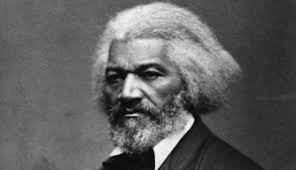
Frederick Douglass and Donald Trump: Faint hope endures this Fourth of July

The former slave imagined a better America than this. Too many white people want to go backward: But there’s hope

  OUR COMMON GROUND Voice, CHAUNCEY DEVEGA
JULY 4, 2018 10:00AM (UTC)

Douglass

Frederick Douglass knew that America has a white democracy problem. That rot was never corrected. The result? Donald Trump and his human deplorables. Racism is destroying American democracy. But then again racism is the real foundation of this country.

Every year, on America’s birthday, I read Frederick Douglass’s essay “What to the Slave Is the Fourth of July?”

I was first introduced to Frederick Douglass while in elementary school. My sixth grade teacher, a stern but kind black woman, knew that I, the only black boy in her class, would benefit greatly from his wisdom and example. She was right.

The book “Narrative of the Life of Frederick Douglass, an American Slave” was wondrous.

It was the amazing adventure of a man who fights to free his people by first liberating his mind and then his body from the evils of white-on-black slavery.

Douglass tricks gullible white children to teach him how to read . . . ”

Read More

ABOUT CHAUNCEY DEVEGA

Chauncey DeVega is a politics staff writer for Salon. His essays can also be found at Chaunceydevega.com. He also hosts a weekly podcast, The Chauncey DeVega Show. Chauncey can be followed on Twitter and Facebook.
MORE FROM CHAUNCEY DEVEGA • FOLLOW CHAUNCEYDEVEGA • LIKE CHAUNCEY DEVEGA

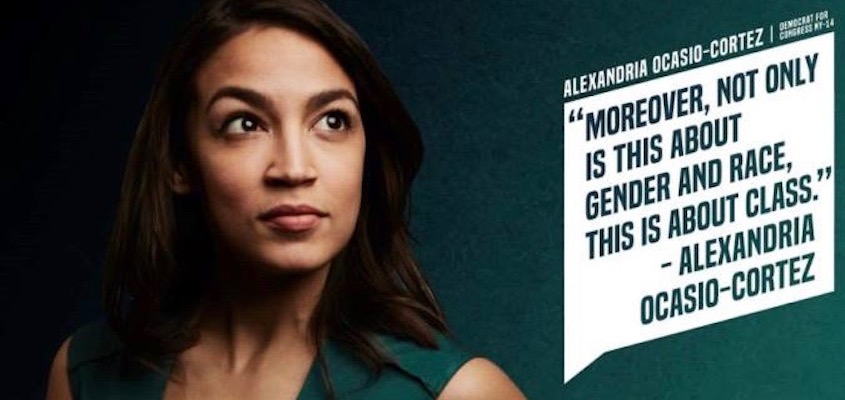
Freedom Rider: Ocasio-Cortez and the Left

Freedom Rider: Ocasio-Cortez and the Left

Margaret Kimberley, BAR editor and senior columnist

“Ocasio-Cortez deserves credit for beating a corrupt but powerful system.”

Freedom Rider: Ocasio-Cortez and the Left

Alexandria Ocasio-Cortez is a living Rorschach test for leftists. Her primary win over incumbent Joseph Crowley in a New York City congressional district is impressive on many levels. But the reaction to her victory demonstrates the sad state of affairs of left wing politics in this country.

The contradictory responses from people who are otherwise in agreement is the result of defeat after defeat and the lack of consensus on how to change the paradigm. The Democrats are the putative party of progressives but over the years they have morphed into a center right formation that differs all too little from the far right Republicans.

Regardless of motive Crowley was, as the saying goes, “phoning it in.” He had a lackluster debate performance and then didn’t show up for another. Instead he sent a former City Council Member to represent him. That level of disrespect was punished when voters went to the polls. It is true that turnout was low but such is the always the case in primary races. A win is a win and Ocasio-Cortez deserves credit for beating a corrupt but powerful system.

“The Democratic Party gas lighting which blames Jill Stein or Bernie Sanders or Vladimir Putin has been all too successful.”

Now the Democrats can’t even muster a “lesser evilism” argument after having lost state houses, Congress and, finally, the presidency. Left wing disdain for them is well deserved but there is still no agreed upon mechanism for ending their rule. In addition, the fear of being labeled a spoiler is still quite strong. The unbridled racism of the Donald Trump administration doesn’t make the debate any easier. The Democratic Party gas lighting which blames Jill Stein or Bernie Sanders or Vladimir Putin has been all too successful. The protection racket for failure has worked quite well.

Ocasio-Cortez is in the unenviable position of being dismissed by some leftists because she is a Democrat at all or lionized by others when she ought to be called to account. The Democratic Party bosses have already dismissed the significance of her win over a man who had a 10:1 fund raising advantage. That in itself is reason to give her credit. A large war chest is used not just to defeat but to scare off challengers before they can even mount a campaign. It isn’t surprising that Democratic Party leadership seek to minimize her achievement. If others follow in her footsteps the house of cards may begin to wobble.

“Ocasio-Cortez’s Peace Economy platform disappeared from her campaign website.”

Even Latino political leadership didn’t back her. Crowley’s debate stand-in was Latina and even Bronx borough president Ruben Diaz, Jr. lamented Crowley’s loss. “It’s unfortunate he had a primary,” said Diaz. “We need him in Washington D.C. Washington is about consistency and seniority.” It seems that black people aren’t the only group with a misleadership class.

But Ocasio-Cortez can’t be let off the hook either. Astute observers noticed that her Peace Economy platform disappeared from her campaign website. She blamed a volunteer-run web team and promised to “look into it.” A few days later the statement reemerged but doubters such as this columnist believe that it would never have reappeared if she hadn’t been questioned about its absence.

Ocasio-Cortez is expected to be all things to a desperate group of people. She both benefits from her connection to Bernie Sanders and is tainted by his sheep dogging for the Democrats. Yet she is rightly held up as a hopeful sign by people eager to see even a small chance of progressive politics taking hold. Alexandria Ocasio-Cortez is actually not the only issue for debate. The discredited Democratic Party and the inability of leftists to mount a successful attack against it should also be a focal point of discussion.

“Even Ocasio-Cortez falls prey to using liberal gibberish about America being a ‘force for good.’”

The Democrats have purged any semblance of progressive politics from their ranks. Democratic party attacks and Republican chicanery were used to end Cynthia McKinney’s congressional career. When Ohio lost a congressional seat after the last census it was no surprise that Dennis Kucinich ended up with the short straw. There isn’t one Democratic member of congress who consistently advances an anti-war platform. Even Ocasio-Cortez falls prey to using liberal gibberish about America being a “force for good” and demanding congressional approval for wars that should never be waged at all. But if she wins her general election in November she will be the lone member who says anything at all about the issues of war and peace.

Yet it is proper, indeed it is necessary, to call her to account when she follows Bernie Sanders and others in repeating unproven assertions that the Russian government helped Trump to victory. She can’t be held up as a progressive icon if she sounds like the imperialist democrats eager to deflect blame for their failures.

“There isn’t one Democratic member of congress who consistently advances an anti-war platform.”

In the final analysis progressives should keep Ocasio-Cortez under scrutiny lest she fall prey to big money and the pull of a partywhich wants to stamp out any and all divergence from their losing but powerful apparatus. The Democrats are openly backing former intelligence operatives and ex-military candidates to win in November. Ocasio-Cortez should be supported if only to fight against the Democrats and their ever more rightward moves.

The fight isn’t hers alone. The difficult discussions, debates and struggles must be waged by everyone. If not the leftist perpetual beat down will go on without resolution. We will be left with endless and useless argument rather than finding a way to make successful progressive politics a reality.

Margaret Kimberley’s Freedom Rider column appears weekly in BAR, and is widely reprinted elsewhere. She maintains a frequently updated blog as well at http://freedomrider.blogspot.com . Ms. Kimberley lives in New York City, and can be reached via e-Mail at Margaret.Kimberley(at)BlackAgendaReport.com.

black agenda report

Here’s the Corrupt Financial Web That Links the Trump and Kennedy Families

Behind every great fortune there exists a crime.

Balzac knew that behind every great fortune there is a crime. But if he were contemplating the retirement of Supreme Court Justice Anthony Kennedy, the great French novelist might have put it another way: Behind every great crime is another crime.

As a way of looking at a presidency that is enamored of every possible felony — self-dealing, conflicts of interest, emoluments, collusion with foreign governments and domestic corporations — crime-breeds-crime is a reasonable way to look at any Trump-related event.

But the resignation of a Supreme Court justice?

Because Trump cares so much about money, that’s been suggested. And there’s smoke: the links between Trump, Kennedy and Kennedy’s son Justin. In years past we’d call that the League of White Men, taking care of their own, behind the scenes, The Way It Is. Today we tend to call it something else: collusion.

Here’s why. On the surface, Kennedy’s resignation looked textbook: He’ll leave effective July 31, at the end of the Supreme Court term, as is traditional. But he announced it on June 27. Hand-delivering his letter to the Oval Office was no surprise to the White House, which had a list of candidates ready to roll out. Trump says he’ll announce his nominee on July 9.

Why the rush?

More

Did the Founding Fathers Lead the American Revolution for the Pursuit of Liberty — Or Personal Greed?

Did the Founding Fathers Lead the American Revolution for the Pursuit of Liberty — Or Personal Greed?

Two political scientists are that the founding of the United States was less idealistic than we were led to believe.

In their book The Spoils of War, Bueno de Mesquita and Smith expand on their theory of political action as deriving largely from the personal ambitions of rulers and politicians in power. They apply this theory to the American presidents, and they begin their case with no lesser figure than President George Washington.

Washington, they argue, had deep financial interests in land. One estimate ranks him as the 59th richest man in all of American history, and he died with 60,000 acres to his name across Virginia, Pennsylvania, New York, Kentucky, Maryland, and West Virginia, the authors write.

More:

https://www.alternet.org/news-amp-politics/did-founding-fathers-lead-american-revolution-pursuit-liberty-or-personal-greed

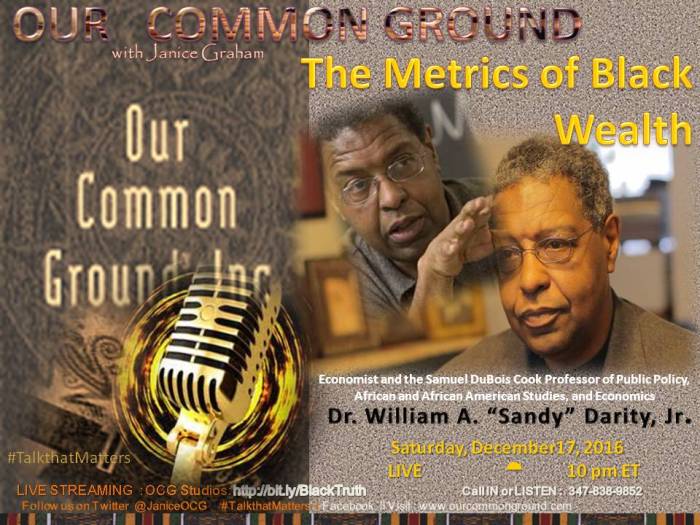
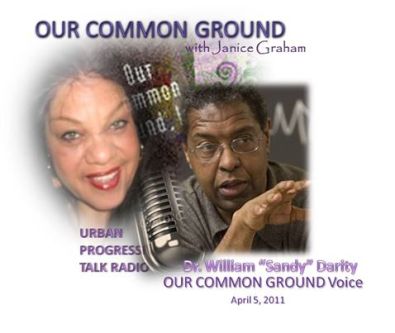
“The Metrics of Black Wealth” Guest: Dr. William A. (“Sandy”) Darity, Jr., Ph.D.

OUR COMMON GROUND with Janice Graham
“The Metrics of Black Wealth”
Guest: Dr. William A. (“Sandy”) Darity, Jr., Ph.D.
December 17, 2016 :: LIVE :: 10 pm EST
12-17-16-darity
Listen LIVE and join the Chat: http://bit.ly/OCGDarity
Call In and LISTEN LINE: (347) 838-9852

WE can’t save, educate or job income ourselves out of the economic and financial history from which our poverty springs.

Structural and historical inequality has left Blacks with fewer assets than whites. Blacks in the top 10 percent have an average wealth of only $350,000 to the $1,200,000 of whites at the same income level. Across income groups, whites average $8 of wealth for every $1 owned by Blacks and Latinos.We need to devise wholly new approaches to wealth distribution that at once honor private property and family rights, while also putting to better use collective national assets. We need inheritance law reform and new taxes on larger estates that can enable reinvestment in emerging new talent.
What are the metrics which dictate, demonstrate and evidence our collective poverty ?

15542327_10153849825176653_3418001700385479270_nabout Dr. Darity

  • Samuel DuBois Cook Professor of Public Policy
  • Professor in the Sanford School of Public Policy
  • Professor of African and African American Studies
  • Professor of Economics
  • Affiliate of the Duke Initiative for Science & Society
  • Affiliate of the Center for Child and Family Policy

    AREAS OF EXPERTISE

  • Educational Policy
  • Educational Inequality
  • Segregation in Education
  • InequalityStratification
  • Economics
  • Student Achievement
  • Race
  • Racial Discrimination
  • Racial Identity
  • Wealth-United StatesIncome
  • InequalityEDUCATION
    Ph.D., Massachusetts Institute of Technology (1978)
    B.A., Brown University (1974)

    He is the Samuel DuBois Cook Professor of Public Policy, African and African American Studies, and Economics and the director of the Duke Consortium on Social Equity at Duke University. He has served as chair of the Department of African and African American Studies and was the founding director of the Research Network on Racial and Ethnic Inequality at Duke.

    In collaboration with Dr. Darrick Hamilton of the New School for Social Science Research, Dr. Darity formulated proposed an “interesting possible solution to address wealth disparities,” according to this Huffington Post blog. “Baby bonds” would mature in federally managed investment accounts until the beneficiary reached 18. Youth could have up to $60,000 to jumpstart their lifelong financial stability and help decrease wealth disparity in the U.S.

    The The National Asset Scorecard and Communities of Color (NASCC) project is conducted by Duke University’s Research Network on Racial and Ethnic Inequality. The researchers are led by William Darity, Jr, at Duke University and Darrick Hamilton at The New School. The NASCC research team – with expertise in survey design, analysis of group differences in asset accumulation and debt burden, and general patterns of ethnic/racial group inequality, – was assembled to conduct the investigation and analyze the data generated from the study. The study is intrinsically multidisciplinary; members of the team represent the following fields: statistics, economics, sociology, political science, ethnic studies,and urban planning. NASCC published its landmark report, ” Umbrellas Don’t Make it Rain: Why Studying and Working Hard Isn’t Enough for Black Americans ” of which Dr. Darity is a co-author.

    HOW DO WE BEGIN TO FIGHT THE POWER ?

    More about this episode of OUR COMMON GROUND


BROADCASTING BOLD BRAVE & BLACK

Join us on FACEBOOK : https://www.facebook.com/OCGTALKRADIO/

OCG on the Web: https://ourcommongroundtalk.wordpress.com/
Community Forum: http://www.ourcommonground-talk.ning.com/
Follow us on Twitter: @JaniceOCG #TalkthatMatters

Black Nationalism and Liberation | Boston Review


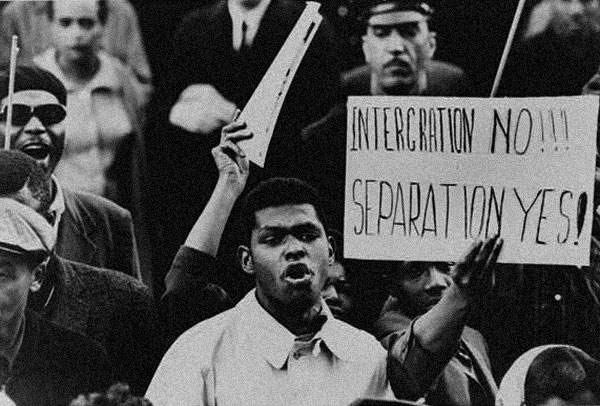
Nation of Islam counter-demonstration at NAACP rally in Harlem, 1961 / Photograph: NAACP collection, Library of Congress

In a world where Donald Trump’s presidential nomination speech has been endorsed by a former leader of the Ku Klux Klan—yet Black Lives Matter activists are accused of reverse racism for asking to not be murdered by police—what constitutes hate speech has become increasingly convoluted. In the aftermath of police killings in Dallas and Baton Rouge, gunmen Micah Johnson and Gavin Long were immediately linked by media outlets to black nationalist groups such as the Nation of Islam (NOI), New Black Panther Party, Black Riders Liberation Party, and Washitaw Nation, despite their professions to have been acting alone. Not only did these depictions draw misleading lines to organizations that do not prescribe such acts of violence, they also overshadowed both mens’ backgrounds in cultures of military violence (Johnson joined the Army Reserves immediately after high school and Long was a former Marine sergeant).

In a desperate attempt to drive home a link to black nationalism and direct attention away from these other troubling vectors, some news outlets began referring to Johnson as “Micah X” (NOI members use “X” to replace their “slave names”). In fact his middle name was simply Xavier. Even progressive groups, such as the Southern Poverty Law Center, play a legitimating role by identifying black nationalist groups as “black separatist hate groups,” leaving little room for meaningful distinctions between white supremacy and black nationalism. While groups such as the Nation of Islam have historically advocated for the separation of black communities, to assert that this position is simply the obverse of white supremacy—that is, black supremacy—overlooks the nuance of black nationalism. More importantly, it fails to account for the dramatically different relationships to power that black nationalist and white supremacist groups possess. White nationalism reinscribes and exalts the privileges of whiteness. Black nationalists council separation as an anti-racist practice and a method of empowerment in the absence of alternative avenues of power. To many black nationalists, this is the difference between life and death: the black community must either do for itself or perish.

The conflation of black and white nationalism is not new. In 1963 the New York Herald Tribune satirized what it perceived as the ironic similarities between white supremacists and black nationalists in a story entitled “Integrated Segregation.” Things “seem a trifle confused on the racial front these days. The segregationists are getting integrated and the integrationists are getting segregated,” the Tribune remarked. The article imagined a scene in which staunch segregationist George Wallace was explaining why racial segregation benefitted black Americans when “a Black Muslim popped up from behind, tapped him on the back and agreed with him.” Soon, the article predicted, the Congress for Racial Equality would “start picketing the N.A.A.C.P., while the Black Muslims set up an all-Negro chapter of the Ku Klux Klan.”

To many black nationalists, separation from whites is the difference between life and death: the black community must either do for itself or perish.

Understanding black nationalism as simply the mirror image of white supremacy, rather than an anti-racist practice, has deep roots in American political discourse. And in our current moment of colorblind “post-racialism,” when race-specific remedies such as affirmative action or reparations are derided as reverse racism—and even modest demands from Black Lives Matter for criminal justice reform are decried as anti-white—black nationalism has been once again mischaracterized using a host of long-stale tropes. We would be better served, not by simply dismissing black nationalism as the underbelly of white supremacy, but by understanding it as a tradition that is both liberative and anti-racist; one that does not mirror white supremacy, but repudiates it.

section separator

W. D. Fard, the founder of the Nation of Islam, arrived in Detroit in 1930 and told black Detroiters that they “were not Americans but Asiatics.” This was part of a holistic alternative creation story that rejected the racist underpinnings of white American nationalism. Many of Fard’s followers were former followers of Marcus Garvey, left without an organization after the decline of his Universal Negro Improvement Association (UNIA) in the late 1920s due to financial mismanagement and government infiltration. Garvey and the UNIA epitomized the goals of black nationalism, launching the most ambitious and successful Pan-Africanist vision in history. At its height, the UNIA had over 700 branches in 38 states, and its newspaper, Negro World, circulated throughout the African diaspora. Millions of black people were moved by Garvey’s message of racial pride embodied through the UNIA motto “One God! One Aim! One Destiny!” The NOI borrowed many of its black nationalist tenets from the UNIA, combining them with religious symbols, practices, and theologies drawn from the plethora of new northern, black, urban religious and racial-pride movements spawned by the Great Migration. This blending spoke to the diverse backgrounds of many early NOI members: in 1951 nineteen out of twenty-eight Muslims interviewed reported having previously been members in other movements such as black Masonry, the Israelite Movement, God’s Government on the Earth (dedicated to Liberian emigration), the Peace Movement of Ethiopia, Repatriation Movement to Liberia, and the Black Jews.

As historian Robin D. G. Kelley notes, many of these movements were influenced by a Black Zionist tradition that drew upon the narrative of the book of Exodus to imagine liberation and deliverance for black people around the world. These freedom dreams not only provided what he calls a “narrative of slavery, emancipation, and renewal,” but also a “language to critique America’s racist state since the biblical Israel represented a new beginning.” Beyond providing a framework for denouncing American racism, black nationalists addressed the racist power structures that governed their communities by creating jobs, businesses, schools, and places of worship. Racial separation was not simply about black communities’ physical relationship to white people; it was about changing the structures of power that governed those relationships through self-determination, community control, and new relationships to self and one another.

By 1959 the Nation of Islam was a burgeoning movement well known within urban black communities in the North but still largely unknown to white America. That summer, as Malcolm X traveled to Africa as a guest of Egypt’s president, Gamal Abdel Nasser, Mike Wallace (later of 60 Minutes fame) and black journalist Louis Lomax presented the NOI to white audiences for the first time. In their sensationalist documentary, The Hate That Hate Produced, NOI was compared to the American Nazi Party and the Ku Klux Klan. Members of the Nation were referred to as “black racists” and “black supremacists.” Its cautionary message to a largely white audience was that white racism would inevitably produce its black variant. As Malcolm X later recalled in his Autobiography, the show was meant to shock viewers, like when “Orson Welles frightened America with a radio program describing . . . an invasion by ‘men from Mars.’”

The Hate That Hate Produced was critical in launching the Nation of Islam into the public eye. But it also offered white viewers a language for understanding black nationalism that both intensified and allayed their fears. While racism was a plague that undermined American democracy, it was not a distinctly white characteristic. As Charlie Keil, a young white civil rights organizer at Yale during the early 1960s explained to me recently: “The Hate that Hate Produced allowed [whites] to sort of categorize the Muslims—the Nation of Islam—and treat them a certain way. . . . [It was] some way of saying that this was not an autonomous self-starting movement, but a reaction, an overreaction to a history of oppression.”

Throughout the 1960s black nationalists were castigated as “supremacists” who promoted the very racism and racial segregation that liberals were fighting against. This was stoked by white nationalists who saw calls for black racial separation as consistent with their belief in the benefits of racial segregation. As George Lincoln Rockwell, head of the American Nazi Party, told Alex Haley in a 1966 interview: “Malcolm X said the same thing I’m saying.”

Rockwell was not the only one confused about the difference between racial segregationand racial separation. In a highly-publicized Los Angeles trial in 1962 after police killed an unarmed member of the Los Angeles NOI mosque, the Los Angeles Times reported the “unusual problem in seating of spectators . . . when women members of the sect refused to accept seats alongside white persons.” The court eventually overturned this seating arrangement, and the press described this as “desegregation.” Los Angeles NAACP president Christopher Taylor joined the chorus of the aggrieved by arguing that he would be against any type of segregation, regardless of who initiated it. This decontextualized, colorblind insistence that any race demanding separation was calling for racial segregation was central to mischaracterizations of black nationalism during this period.

Malcolm X set about clarifying the Nation of Islam’s advocacy for racial separatism through dozens of debates with prominent civil rights figures on college campuses across the country in the early 1960s. He debated James Farmer at Cornell, Bayard Rustin at Howard, Louis Lomax at Yale, and the NAACP’s Walter Carrington at Harvard. Almost every debate was themed around the question: “Integration or Separation?” As Malcolm explained at Wesleyan University: “We are just as much against segregation as the most staunch integrationist.” But he added that black people did not “want to be free any more; they want integration. . . . They have confused their method with their objective.” In other words, black nationalists were not opposed to racial integration as an outcome of freedom struggles, or even as an organizing strategy, but they saw it as deeply flawed as the movement’s principal objective. More importantly, they pointed out the racist presumption of integration, which took for granted that white society and its values were more desirable. As Malcolm once sardonically asked, Who is the white man to be equal to?

More than simply critiquing integration, the Nation of Islam emphasized the importance of community control, an idea that flourished in upcoming years with the emergence of the Black Power movement. As Malcolm explained: “segregation means to regulate or control. . . . A segregated community is that forced upon inferiors by superiors. A separate community is done voluntarily by two equals.” Recognizing the pervasiveness of racial segregation, nationalists sought control over the businesses, healthcare, education, housing, and policing in their communities. Indeed, the Kerner Commission’s grim 1968 assessment that the nation was “moving toward two societies, one black, one white—separate and unequal” was something understood within black communities for decades. Amidst this backdrop, nationalists called for greater autonomy. The distinction between segregation and separation was not a semantic pivot. It was a deeper analysis of power, and an assertion of self-determination.

Over sixty years since the Supreme Court struck down the constitutionality of “separate but equal” in Brown v. Board, it would seem that calls for racial separatism are a relic of the past. But that might be too hopeful. A 2014 UCLA study revealed higher levels of school segregation in many regions than in 1968, the year the Supreme Court decreed a more proactive approach to desegregation. Schools with less than 1 percent white students are now being referred to as “apartheid schools.” And while the South is no longer governed by Jim Crow laws, cities outside the South such as Chicago and Baltimore continue to be described by demographers as “hypersegregated.”

The denial of race is a fixture of racism. Black nationalists have often exposed the “colorblind,” coded racism of liberals.

Black critiques of school integration during the 1950s and 1960s were often decried. In the words of scholar Andrew Delbanco, novelist and anthropologist Zora Neale Hurston “consigned herself to oblivion” when she responded to the Brown v. Board decision by saying that she could “see no tragedy in being too dark to be invited to a white school affair.” After James Meredith enrolled as the first black student in the University of Mississippi’s history, Malcolm X told a courtroom that anytime a man “needs [an] escort of 15,000 troops to go to a college where he will be among people whose viciousness toward him is so deadly that he needs the Army there to protect him . . . that Negro is foolish if he thinks that he is going to get an education.” Education, not integration, should be the goal, both Hurston and Malcolm agreed. As Malcolm explained, “token integration” was pointless as long as there were “a couple million Negroes in Mississippi who haven’t been allowed to go to the Kindergarten in a decent school.”

Meanwhile, integration today is often illustrated through the exceptional accomplishments of a handful of black elites, most notably President Barack Obama, rather than evidenced by a substantial redistribution of wealth or educational and housing opportunities. As Keeanga-Yamahtta Taylor demonstrates, the role of “black faces in high places” is often to obscure the common conditions facing many African Americans. Instead, black elected officials serve as interlocutors speaking to—and on behalf of—black communities. Taylor writes poignantly of the 2015 Baltimore uprising after the death of Freddie Gray: “When a Black mayor, governing a largely Black city, aids in the mobilization of a military unit led by a Black woman to suppress a Black rebellion, we are in a new period of the Black freedom struggle.” But this new period has unfortunately produced all-too-familiar outcomes for poor and working-class black people.

section separator

The long history of black nationalist leaders having official meetings with white supremacist leaders is another narrative often mobilized as proof of the essential symmetry of the two movements. In 1922 Marcus Garvey met with the Imperial Wizard of the Klan, Edward Clarke, earning him swift denunciation by the NAACP. In 1961 Malcolm X and other NOI officials secretly met with the KKK in Atlanta to negotiate a non-aggression pact surrounding the NOI’s purchase of southern farmland. The following year American Nazi leader George Lincoln Rockwell even appeared as an invited guest at the NOI’s Saviour’s Day convention in Chicago. When police in Monroe, Louisiana, illegally targeted and raided the city’s mosque with tear gas, rifles, and riot sticks, the Nation of Islam secured an interracial defense team: local black attorney James Sharpe, Jr., and Imperial Wizard of the National Knights of the Klan, James Venable. As Venable explained when taking the case, “I hate to say it but a colored man doesn’t have a chance in a courtroom in the South.”

The decision by black nationalists to meet or coordinate with white supremacists was often driven by a combination of pragmatism and a deep cynicism about the authenticity of liberals. In the case of the UNIA, Garvey negotiated an agreement with Clarke to sell stock in black businesses such as newspapers, factories, and his Black Star shipping line, which ambitiously hoped to link a global black economy in Africa, the Caribbean, and the Americas before failing due to poor business management. And although Malcolm X would later denounce the Nation of Islam’s détente with the Klan, the organization’s motivation for doing so was plainly and only to secure the right to farm in the South without danger of violent reprisal. And in the case against eight members of the NOI in Monroe, Venable successfully won an appeal for several of those convicted.

Black nationalists were also not uncritical of the white supremacists with whom they interacted, a fact often downplayed or forgotten. After his meeting with the Klan, Garvey told a crowd: “Mr. Clark [sic] did not tell me anything new; he told me what I discovered seven years ago. He told me the thing that caused me to have organized the Universal Negro Improvement Association four and a half years ago.” When Rockwell, wearing full Nazi regalia, donated twenty dollars to a collection plate at Saviour’s Day, there was a smattering of reluctant applause. Malcolm X belittled him by adding: “You got the biggest hand you ever got.” Equally, black nationalists used white supremacists to draw attention to the hypocrisy of liberals. Following his 1922 meeting, Garvey claimed that Klan members were “better friends to my race, for telling us who they are, and what they mean.” Malcolm used a similar device in his folk metaphor of the liberal “fox” and the conservative “wolf.” When comparing John F. Kennedy to George Wallace, Malcolm said: “Neither one loves you. The only difference is that the fox will eat you with a smile instead of a scowl.” He even penned a 1964 editorial entitled “Why I Am for Goldwater” in which he drew upon the same fox/wolf metaphor and cynically suggested that with Goldwater, “black people at least know what they are dealing with.”

Critics on the left who see these as misguided political strategies have marginalized black nationalists by painting them as racial conservatives, and thereby emptied black nationalists’ critiques of their incisiveness. For example, Paul Gilroy accuses Garvey of “black fascism” and C. L. R. James even compared him to Hitler. Others have taken Malcolm’s cynical support for Goldwater at face value, rather than understanding his rhetorical move to draw parallels between openly racist politicians and ostensibly liberal ones whose policies nonetheless gut the black community.

Black nationalist groups such as the UNIA and the NOI have rightly been critiqued for their deep patriarchy, homophobia, and tendency to reproduce the other trappings of empire. As historian Michelle Ann Stephens notes of Garvey, his “vision of the sovereign state figured in the black male sovereign; the desire for home at a more affective level figured in the woman of color.” Likewise, anti-Semitic comments by Nation of Islam leaders such as Louis Farrakhan have certainly buttressed comparisons between white and black nationalists. Most recently, Farrakhan stoked this fire by praising Donald Trump’s refusal to take money from Jewish donors.

But although charismatic leaders are often the voices we hear most prominently, for many rank-and-file members of the Nation of Islam and other black nationalist groups, the lived experience of racial pride, religious rebirth, and doing for oneself is a redemptive, affirming, and even lifesaving practice. Many members joined the NOI after feeling alienated in integrated, more middle-class organizations such as the NAACP. As Lindsey X told an interviewer, what the NAACP “wanted never seemed real to me. I think Negroes should create jobs for themselves rather than going begging for them.” Malcolm X’s autobiography is only the best-known narrative of religious and political redemption. In a long-running feature in the NOI’s newspaper, Muhammad Speaks, entitled “What Islam Has Done For Me,” members offered their conversion narratives and testified to the transformative practice of Islam. Robert 24X of Paterson, New Jersey, contributed: “I was a young drug addict who had spent too much time in the hells of Harlem’s East Side . . . [before] everything came into focus for me. . . . I stopped smoking, using profanity, and eating improper foods. And I’ve passed my biggest acid test—no more needles in the arm.”

Instead of positioning black nationalism as a reactionary, conservative ideology that simply apes the violence and hate of white supremacy, we might learn from its lessons today. If asked about the xenophobia and dangerous comments of conservative firebrand Donald Trump in our current election, Malcolm X might well have pivoted us back to Hillary Clinton’s questionable record on race, one which Black Lives Matter activists have pointed out includes racist dog whistles such as her comments about “super-predators” lacking empathy, her steadfast support for the devastating 1994 Crime Bill, and campaign money taken from private prison corporations. And beyond the hollow political discourse of election cycles, we must avoid the pitfalls of incessant claims of post-racialism that insist that to see race is to participate in racism. As we have witnessed with the familiar “All Lives Matter” rejoinder to “Black Lives Matter,” we are living in a time when people’s humanity is so denigrated that the mere valuation of life is taken by some whites to be a zero-sum game. The denial of race is a central fixture in the perpetuation of racism, and black nationalists have routinely called attention to the importance of racial pride while exposing the coded racism of liberals. Rather than draw facile lines between black nationalism and white supremacy, we are better served by understanding black nationalism as an anti-racist political tradition seeking to envision black American freedom and citizenship in a nation that has rarely devoted much effort toward either end.

Source: Black Nationalism and Liberation | Boston Review

Respectability politics are making black Americans sick — Quartz

Pull up your pants. Straighten your hair. Stop using the n-word.

blackamericans1
Black Americans have long been told that there is a “right” way to act in order to secure racial equality and individual promotion in the United States. Often, these recommendations are made by other black Americans attempting to mute certain cultural aesthetics in order to make white Americans feel comfortable in their presence. I recently attended a lecture where a middle-aged black American man explained that he yearned for the days when black men “had grace.” He posted a picture of black men circa 1940 in Tuskegee, Alabama, standing in a cotton field wearing pressed white shirts and suspenders.
As journalist Aurin Squire explains, black respectability presumes that “systematic oppression can be overcome if we’re clean, mild, moderate, and economically successful.” Yet in a time when black men are nine times more likely to be shot and killed by the police and people still protest those who point out police brutality, policing the appearance of black Americans is, at best, beside the point.
But the issue isn’t just that respectability is irrelevant. New evidence suggests that the beliefs that inform respectability politics are bad for black Americans’ health.

According to the Journal of Behavioral Medicine, attributing success to personal characteristics instead of biased structural systems may negatively impact black Americans’ health. Nao Hagiwara and her colleagues at Virginia Commonwealth University explored whether the “just world” belief—the belief that the world is a just place where people get what they deserve—would influence the relationship between perceived discrimination and health consequences for 130 black adults.
The psychologists found that participants who both strongly believed that the world was a just place and reported experiencing high levels of discrimination were more likely than other blacks to suffer from chronic illnesses and increased blood pressure. Why? Because respectability politics tells black Americans that what is happening to them in this country is our fault. In other words, we’re to blame for the 9.5% unemployment rate among black Americans, the police who fatally shoot unarmed black men, and the teachers who expect less academic success from black students. If we just pulled our pants up a little higher and turned our music down, the systematic discrimination that informs nearly every sector of American life would disappear. If the world is just, then the injustice we experience in it is on us.
This thought is literally making people sick.
Health care and mental health practitioners should work to educate themselves on the current status of racial issues in the United States. And they should encourage their black patients to reframe how they look at their experiences. An understanding of individual accountability must be supplemented with a more contextual assessment of negative events. This reframing could alleviate the stress that’s associated with the belief that our behavior determines all of our experiences–even in a deeply racist and unjust society.
By seriously considering the social systems and racist encounters experienced by black Americans, health practitioners may help their patients better assess their experiences and select tailored methods for health improvement. Those charged with caring for black lives should be among the first acknowledge that they matter.
You can follow Veronica Womack on Twitter at @vwomackphd. This piece was originally published in New America’s digital magazine, The New America Weekly. We welcome your comments at ideas@qz.com.

Source: Respectability politics are making black Americans sick — Quartz

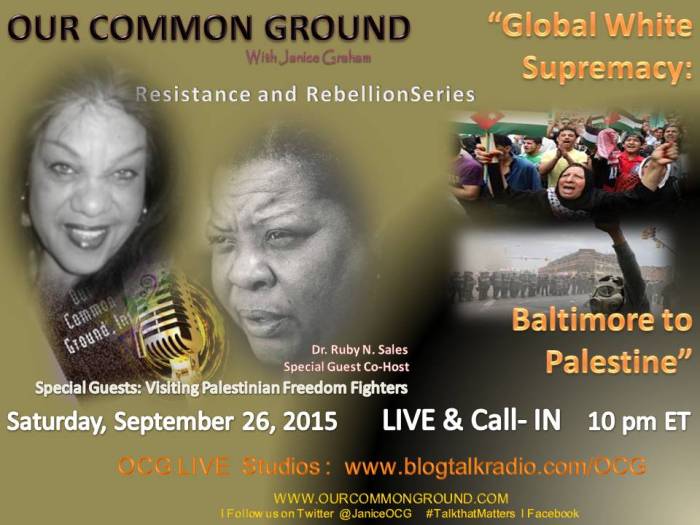
OUR COMMON GROUND This Week :: “Global White Supremacy: Baltimore to Palestine” :: LIVE

“Global White Supremacy: Baltimore to Palestine”

09-26-15 Wintess Sales

RESISTANCE and REBELLION Series

OUR COMMON GROUND with Janice Graham

Saturday, September 26, 2015            LIVE                    10 pm EDT

Our Guest Tonight:  Shardi Vardi

Dr. Ruby N. Sales, Co-Moderating
LISTEN LIVE and Join the OPEN Chat: http://bit.ly/1LS3Pfj
Call In – Listen Line: 347-838-9852

RESISTANCE and REBELLION Series

We continue our series of discussions of REBELLION AND RESISTANCE required to fight American racism and white supremacy.

Tonight on OUR COMMON GROUND, we discuss white supremacy as a system of power which is a fundamental undergird and foundation of economic, political and cultural imperialism. Part of our discussion will focus on examining the parallels of the struggle to dismantle that system with the struggles of other victims of white supremacy across the globe. Joining us will be representatives of a visiting Palestinian activist group here in the US to make its case before the UN Commission on Human Rights. We are grateful to have Dr. Ruby Sales, a featured commentator on OCG to join us and to lead this discussion, taking your calls and comments.


Sahar VardiABOUT OUR GUEST, Shardi Yardi

“The bloody cycle in which I live…is a vicious circle that is sustained by the choice of both sides to engage in violence. I refuse to take part in this choice.”

Sahar Vardi is a Jerusalem based activist. She publicly refused her military service and was imprisoned in 2008. Since then she has been active with Israeli anti-militarist groups such as New Profile and today works as the Israel Program Coordinator for the American Friends Service Committee based in Jerusalem. The focus of her work is on countering militarism in Israeli society, including challenging the Israeli military-industry complex. Sahar is also part of Boycott from Within (a group of Israelis supporting the Palestinian call for boycott) and has been active with direct action groups such as Taayush and Anarchists Against the Wall. Today much of her activism is in Jerusalem in Palestinian lead struggles against house demolitions, child arrests and discrimination of East Jerusalem.

‪#‎BlackLivesMatter: From Baltimore to Jerusalem
http://www.afsc.org/fr…/blacklivesmatter-baltimore-jerusalem

THE GLOBAL NATURE of WHITE SUPREMACY

White supremacy is a historically based, institutionally perpetuated system of exploitation and oppression of continents, nations and peoples of color by white peoples and nations of the European continent; for the purpose of maintaining and defending a system of wealth, power and privilege.

White supremacy operates through racial oppression against people of color: slavery, genocide, anti-immigration, driving while Black, etc. White supremacy maintains real power for the ruling class who control the major institutions of society.  Racism is white supremacy; white supremacy is racism. There is no other form of “functional” racism in the known universe. Therefore it is illogical purporting victims of white supremacy (racism) worldwide are capable of practicing white supremacy simultaneously. It doesn’t compute.

“Racism | White Supremacy – One or more white persons using deceit, direct violence, and/or the threat of violence to promote falsehood, non-justice, and/or incorrectness against non-white people on the basis of “color” in order to “satisfy” white people, in one or more areas of activity including economics, education, entertainment, labor, law, politics, religion, sex and/or war.”

“Everything that a Racist (White Supremacist) says, and everything that he or she does is intended to help establish, maintain, expand, and/or refine the practice of Racism (White Supremacy).”   – Neely Fuller Jr. The United Independent Compensatory Code/System/Concept a textbook/workbook for thought, speech and/or action for victims of racism (white supremacy)

The local and global power system structured and maintained by persons who classify themselves as white, whether consciously or subconsciously determined; this system consists of patterns of perception, logic, symbol formation, thought, speech, action and emotional response, as conducted simultaneously in all areas of people activity (economics, education, entertainment, labor, law, politics, religion, sex and war). The ultimate purpose of the system is to prevent white genetic annihilation on Earth – a planet in which the overwhelming majority of people are classified as non-white (black, brown, red and yellow) by white-skinned people. All of the non-white people are genetically dominant (in terms of skin coloration) compared to the genetically recessive white-skinned people.”    – Dr. Frances Cress Welsing, “The Isis Papers”

“To think of White supremacy in terms of American dynamics alone eschews the fact that much of the racism, the legacy of slavery in sheer size actually occurred outside of the United States (i.e. Brazil). Much of the colonialism globally impacts America (in terms of capitalism and trade) yet didn’t occur here. The idea that White supremacy evaporates when White people are not present or when some Whites are oppressed for other facets of identity beyond their race is simply untrue.”
“Racism Isn’t Only American. White Supremacy Isn’t Only Western.” Gradient Lair, http://www.gradientlair.com/post/63803685383/racism-and-white-supremacy-are-global

Listen & Call In Line: 347-838-9852
Saturday, September 26, 2015 10 pm ET
Join us Here: http://bit.ly/1LS3Pfj

            BROADCASTING   BOLD BRAVE & BLACK

Web     Facebook     Community Forum   Pinterest    Visit our Tumblr Page

Twitter: @JaniceOCG #TalkthatMatters

“Speaking Truth to Power and OURselves”

email: OCGinfo@ourcommonground.com

Call In – Listen Line: 347-838-9852


Prosecutors as the Most Powerful Actor in the Criminal Justice System φ Race, Racism and the Law


The racial disparities in our criminal justice system are extraordinary and well-documented. In 1995, nearly one in three African American men between the ages of twenty and twenty-nine were under the supervision of the criminal justice system–either in jail, prison, on probation, or on parole. Today, one in every ten black Angela J Davismales in his thirties is in prison or jail on any given day. Over 60% of all prisoners in 2010 were Black or Latino. The disparities exist at every step of the criminal process, from arrest through sentencing.

Much has been written about why the American criminal justice system is so fraught with racial disparity. Some point to discriminatory *823 decision-making by criminal justice officials at each step of the process while others suggest that disproportionate offending is the cause. In fact, there are many complex reasons for this unfortunate phenomenon. Criminal justice officials–including police officers, prosecutors, judges, and corrections officials–make discretionary decisions that often have a racial impact. In addition, the socioeconomic causes of crime disproportionately affect people of color. The impact of the War on Drugs cannot be overstated, and there are undoubtedly many other factors that have contributed to the startling statistics and overwhelming evidence of racial disparity. Not surprisingly, as the causes of the racial disparities in our criminal justice system stem from many sources, so must the solutions.
* * *

Prosecutors are the most powerful officials in the criminal justice system. They make the decisions that control the system, and they exercise almost boundless discretion in making those decisions.  Many argue that police officers are the most important officials in their role as the gatekeepers who bring individuals into the system. There is no doubt that police officers exercise broad discretion in deciding whether to stop and/or arrest individuals for criminal behavior. However, police officers only have the power to bring individuals to the courthouse door. It is the prosecutors whose decisions keep them there and firmly entrench them in the system–decisions that have life-changing consequences.

The most important prosecutorial decisions are the charging and plea bargaining decisions. Prosecutors control and almost predetermine the outcome of criminal cases through these two critical decisions. They decide whether to charge an individual with a crime and what the charge or charges should be, and they enjoy vast discretion in making this decision. Even if a prosecutor believes she can prove a defendant’s guilt beyond a reasonable doubt, she is not required to charge that individual. If she does decide to charge, she often has discretion to charge either a misdemeanor or felony. For example, if an individual is arrested with a large quantity of cocaine, the police officer might recommend that the person be charged with Possession with Intent to Distribute Cocaine–a felony that carries a mandatory minimum sentence. The prosecutor has a number of choices. She may decide to charge the person with the felony, but she also has the discretion to charge him with simple possession–a misdemeanor that may result in a probationary sentence with fewer collateral consequences. The prosecutor may also choose not to charge the person at *833 all. The charging decision is totally within the discretion of the prosecutor.

Prosecutors enjoy the same discretion in the plea-bargaining process. They are not required to offer the defendant a plea to a lesser offense, but if they do, they decide what that offer will be. Certainly a defendant may agree to plead guilty to a lesser offense if the prosecutor dismisses all other offenses, but the decision is up to the prosecutor. And with the existence of so many offenses that carry mandatory minimum sentences, the plea bargaining power has become even more important. Since going to trial always carries the risk of conviction, the only way a defendant can be assured that he will not be convicted of an offense carrying a mandatory minimum sentence is to plead guilty to a lesser offense. Ninety-five percent of all criminal cases are resolved by way of a plea. Prosecutors’ control of the charging and plea-bargaining decisions almost permits them to predetermine the outcome of most criminal cases.

Charging and plea-bargaining decisions have a tremendous impact on racial disparities in the criminal justice system. If a prosecutor charges an African American with a crime but chooses not to charge his similarly situated white counterpart, or chooses to charge the white counterpart with a less serious offense, she will create an unwarranted disparity. But the problem is a complex one. A prosecutor is rarely presented with two cases–one white defendant, one black–with exactly the same circumstances (same prior record, same facts, etc.) where she consciously chooses to treat the black defendant more harshly. She may unconsciously empathize with a white defendant and give him preferable treatment, or she may offer a white defendant better treatment for legitimate reasons that produce a racial impact.

Consider the case of a white defendant who is arrested for selling cocaine in his dorm room. The arresting officer recommends that he *834 be charged with distribution of cocaine–a felony offense with a five year mandatory minimum sentence. The defendant’s parents hire an attorney who tells the prosecutor that the defendant is suffering from a debilitating drug addiction and was selling drugs only to support his own addiction. The attorney indicates that the defendant has been accepted to a six-month program at a residential drug treatment facility. He also informs the prosecutor that the defendant is an honor student who planned to apply to law school, that he has never been arrested in his life, and that a felony conviction would ruin his career and his life. A prosecutor might legitimately offer such a defendant a plea to a misdemeanor offense, or even dismiss the case all together. One could see how a prosecutor might empathize with such a defendant, subconsciously seeing himself and perhaps remembering his own “youthful indiscretions.”

That same prosecutor might handle the case of a similarly situated black defendant quite differently. Consider the black defendant arrested for selling cocaine on the street corner in his neighborhood. The arresting office recommends the same charge–distribution of cocaine. This defendant is poor and represented by an overworked public defender. The public defender discovers that his client is addicted to cocaine and was selling the drug only to support his habit. The family cannot afford to pay for residential treatment and there are no free programs available. The defendant does not have a prior criminal record but is a high school dropout with no employment prospects. The public defender asks the prosecutor to consider dismissing the case, and the prosecutor declines.

The prosecutor’s decisions in these cases would produce a racial disparity, but were her decisions unfair or unjustified? Shouldn’t a prosecutor pursue an outcome that results in an alternative to incarceration, thereby saving scarce government resources, especially if she does not believe that the defendant poses a danger to the community? Is it the prosecutor’s fault that the black defendant could not afford to pay for a drug program and was neither employed nor in school? Yet the black defendant did not appear to be any more deserving of a prison term than the white defendant. The prosecutor may have had an unconscious bias towards the white defendant and against the black defendant, but how could that be proven? And even if it were true, would it matter, considering all the other factors?

If prosecutors charge African American and Latino defendants with crimes while neglecting to charge their similarly situated white counterparts, they may be engaging in race-based selective prosecution. *835 Race-based selective prosecution violates the Constitution, but proving it is difficult. As with racial profiling, the victim of selective prosecution must prove that the prosecutor intended to discriminate against him because of his race. The Court practically closed the door on all claims of race-based selective prosecution when it decided United States v. Armstrong. In Armstrong, the Court held that in order to get discovery to prove selective prosecution, the defendant must show that similarly situated whites could have been charged, but were not –an impossible showing for almost anyone.

The Supreme Court has consistently required proof of intentional discrimination in criminal cases, and the amount and type of proof necessary have made successful challenges extremely difficult, if not impossible. In McCleskey v. Kemp, Mr. McCleskey presented a sophisticated study of how the death penalty was implemented in the state of Georgia. The study, conducted by Professors David Baldus, Charles Pulaski, and George Woodworth (known as “the Baldus Study”) produced startling racial disparities in the implementation of the death penalty and concluded that black defendants who kill whites were more likely to receive a death sentence. The Court accepted the validity of the study and its findings, but nonetheless declined to reverse Mr. McCleskey’s death sentence. Because the study did not prove that the prosecutors in Mr. McCleskey’s case intended to discriminate against him because of his race, the Court rejected his claim.

The difficulty of proving intentional discrimination does not pose the most difficult challenge, since intentional discrimination is rarely the cause of racial disparity in today’s criminal justice system. Most racial disparities are caused and/or exacerbated by prosecutors’ race-neutral decisions which may be influenced by unconscious racism. *836 These race neutral decisions, even though unintentional, may have a racial impact.

Whether or not prosecutors intentionally or unconsciously discriminate against defendants of color in the charging and plea-bargaining processes, their decisions–even the race-neutral ones–may cause or exacerbate racial disparities. Their tremendous power and discretion is often exercised in ways that produce unintended and undesirable consequences. However, that same power and discretion can be used to remedy the problem. The next section will examine one possible solution.

* * *

Racial disparity in the criminal justice system is a complex problem with many disparate causes. Its elimination will require change within and outside of the criminal justice system. The socio-economic causes of crime may never be totally eliminated. However, individuals in the criminal justice system can have an impact on the problem. Prosecutors are particularly suited to help eliminate racial disparities because of their power and discretion.

Prosecutors must not only be willing to replicate the Prosecution and Racial Justice Program, they must be willing to change their practices and policies in ways that will have a real impact. Sometimes these changes will involve abandoning traditional methods of decision-making to achieve fairness. For example, even though considering *851 a defendant’s prior record as a factor in the decision to charge is appropriate, if the existence of prior records is the main reason why otherwise similarly situated black defendants are being charged while whites are not, prosecutors should consider abandoning that factor. Public safety must remain the priority, but there are many defendants arrested for nonviolent offenses with criminal records of nonviolent offenses. Even if prosecutors focused on nonviolent offenses alone and abandoned or reduced reliance on traditional charging considerations in those cases, they could make a difference.

The Prosecution and Racial Justice Program is not a panacea, but it is one remedy that can make a difference. However, it can only work with the participation of chief prosecutors who are willing to make racial justice a priority. The prosecutors who have worked with PRJ have demonstrated that commitment. They took a chance that produced positive results in their offices and serve as examples for other prosecutors who seek to fulfill their duty to assure a fair and effective criminal justice system.


Angela J. Davis is a Professor of Law at American University Washington College of Law and the former director of the Public Defender Service for the District of Columbia.

Support Race, Racism And The Law