CHILD SEXUAL ABUSE & TRAUMA IN THE AFRICAN-AMERICAN COMMUNITY l BALT March 22-23, 2013


ROYAL CIRCLE FOUNDATION

PRESENTS IN ASSOCIATION WITH

BLACK PSYCHIATRISTS OF AMERICA, THE OFFICE OF MINORITY AND NATIONAL AFFAIRS

(AMERICAN PSYCHIATRIC ASSSOCIATION)

&

THE BALTIMORE BLACK MENTAL HEALTH ALLIANCE

 A National Conference

CHILD SEXUAL ABUSE & TRAUMA

IN THE AFRICAN-AMERICAN COMMUNITY

(The Shame, The Blame & The Solutions)

MARCH 22-23, 2013

Hilton Baltimore

401 West Pratt Street – Baltimore, MD 21201

(Limited Number of Hotel Rooms Still Available Thru 02/20/13)

For Discounted Hotel Rooms  

 Call:  1-800-HILTONS

GROUP: Royal Circle Foundation Child Abuse Conference

**********

Conference “Early Bird” Registration Now Open!

CALL FOR PAPERS ANNOUNCEMENT, ADVERTISING & EXHIBITORS APPLICATIONS AVAILABLE

(Clink Links Below For Details)

******** 

March 22, 2013 

FRIDAY EVENING RECEPTION & SPECIAL MOVIE SCREENING

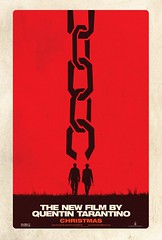
“WOLF”

wolf.jpg

A Family Struggles with Child Sex Abuse in the Black Church

FOLLOWING THE MOVIE SCREENING WILL BE A DISCUSSION WITH DIRECTOR & FILMMAKER

Prof. Ya’Ke Smith

yake.jpg
PROFESSOR YA’KE SMITH

PRESS RELEASE

CHILD SEXUAL ABUSE & TRAUMA CONFERENCE ANNOUNCEMENT

REGISTER FOR THIS CONFERENCE HERE

SPONSORSHIP OPPORTUNITIES

PROGRAM ADVERTISEMENT BOOKING FORM

CONFERENCE EXHIBITORS/VENDORS AGREEMENT

***** 

SAVE THE DATE

August 20 – 22, 2013

The Royal Circle Foundation

Presents

AN INTERNATIONAL CONFERENCE

THE HEALTH & MENTAL HEALTH EFFECTS OF HUMAN TRAFFICKING


6_1782_Carpet-weaver14.jpg
Phoro Courtseyof: US Department of State

CHILD SEXUAL ABUSE & TRAUMA IN THE AFRICAN-AMERICAN COMMUNITY

See on Scoop.itOUR COMMON GROUND News Board •● ☥●• The Third Eye Parenthesis

ROYAL CIRCLE FOUNDATION

PRESENTS IN ASSOCIATION WITH

BLACK PSYCHIATRISTS OF AMERICA, THE OFFICE OF MINORITY AND NATIONAL AFFAIRS

(AMERICAN PSYCHIATRIC ASSSOCIATION)

&

THE BALTIMORE BLACK MENTAL HEALTH ALLIANCE

A National Conference

CHILD SEXUAL ABUSE & TRAUMA

IN THE AFRICAN-AMERICAN COMMUNITY

(The Shame, The Blame & The Solutions)

MARCH 22-23, 2013

Hilton Baltimore

OUR COMMON GROUND Omnibus‘s insight:

For students, activists, scholars, parents, teachers and victims.

The Shame, The Blame & The Solutions

See on www.royal-circle.org

A New Years Pledge for the Conscious Black Community

mindwork

A New Years Pledge for the Conscious Black Community

Over the years many of us have made countless new year’s resolutions that we sometimes kept for a few months, a few days and in some cases a matter of minutes. We can surely agree that many of us have 
fell short on keeping most individual resolutions but also have fallen far short on our collective new year’s initiatives that otherwise may have had a positive impact on our community and therefore our people had we been able to exhibit more discipline.
Well, one thing about life here on the physical plane….as long as we are alive…we have another chance to try again.
__________________________________________________________
So as a member of the conscious community we would like to ask all of our brothers and sisters, young and old, who have the strength, the heart and the conviction…
 
To join us in making a pledge, that this time we will keep……That we must keep… in order for ourselves, our children as well as the many generations to come to survive in this ongoing battle we find ourselves in….OUR SURVIVAL!
__________________________________________________________
THE PLEDGE
 
January 1st 2013
I (We) make a pledge, to ourselves and to our people, that from this day, January 1st 2013 forward, I (We) will engage in dialog, conversation and planning….. whether it be in Church, the Masjid, in organizations, family gatherings or community functions….regarding what I (We) can do to promote, organize and initiate Self Determination for ourselves and for our people.
_______________________________________________________________
 
Let us further our pledge to:
Teach and developing our youth first and foremost, “Ourselves”
Organize and open progressive, “Afrikan Centered” educational centers for our youth.
Organize and establish an Afrikan centered Educational master model for Black Communities that can be duplicated where and when necessary across the country.
Organize, develop and support black businesses to provide our basic necessities that we now purchase from everyone else.
Organize and establish buy Black educational programs throughout our Black communities.
Organize and establish an Afrikan centered Economic master model for Black Communities that can be duplicated where and when necessary across the country.
Identify, groom, fund and then hold accountable Black political representation for our communities and people.
Organize and establish an Afrikan centered Political master model for Black Communities that can be duplicated where and when necessary across the country.
End the violence and exploitation of Black women (Queens)
Organize motherhood and fatherhood development classes for our people in Black communities.
Organize Eldership development classes for our Elders in Black communities.
Establish Afrikan centered Community Security teams for our community that can be duplicated across the country.
Establish Afrikan centered Rites of Passage models for young black men and women that can be duplicated across the country.
Develop and maintain credible and reasonable organic and natural food sources that we control for our communities.
Organize to elevate the fight for the freedom of all political prisoners being presently held throughout u.s. prisons.
Organize to up root the present and growing system of the Prison Industrial Complex.
Organize our youth our community and our people to re-connect with our brothers and sisters and the struggles in Afrika our Motherland. Our struggle and ultimate liberation is a global one…..we must not let them fool us or our children into thinking otherwise.
Teach and develop our youth first and foremost, “Ourselves” No one else can or will do it like the best of us.
Does this sound like too much to do??
NOT FOR THE ORIGINAL PEOPLE OF THE EARTH!
________________________________________________________________
 
To our leaders
Those of us who find ourselves in the various positions of leadership, be it in our families, in education, in the political realm and those who lead community organizations must now teach self determination. We should not rest or lose focus or continue to be side tracked from the ultimate mission at hand. That is the very same mission that we can see very clearly taking place in all other progressive communities across the country.
Organizing Self,
Educating Self,
Establishing Businesses for Self,
Patronizing Self, Building for Self
and Protecting Self!
This must now again become the rally cry of all credible leadership who truly is operating in our behalf.
_________________________________________________________
 
A People at the Crossroads.
To the right towards self reliance, dignity and self determination. To the left, our continued dependence on politicians, the corporate structure, schools who mis-educate our children and every other group providing employment, businesses and services to our people …..
In the latter direction lies the destruction of those who would once be the greatest peoples on earth……
 
We now have another opportunity
We must make a choice……
What will we do??
_________________________________________________
 
No time to waste…
 
Push the card towards the leadership in your group, requesting that policies and practices of your group move in the direction of OUR self determination as a people. If it is found that the present leadership of your group or organization does not or will not move in this direction, the direction that is most feasible for the survival of our communities and the future of our people, then you and the constituency of your group should move to replace that leadership with a progressive leadership that believes in promoting self determination. If that is not deemed possible then you and all self respecting, progressive members should leave that group or organization for a more suitable one and or start your own progressive, liberation oriented group.
Our lives and the lives of the future generations rely on our next move.
 
May we all have a safe, healthy, productive and most of all revolutionary new year..
In Peace and in Struggle
 

The Brothers of STEP Inc. http://www.steptothefuture.org/index.html Step Inc:

Remembering Jayne Cortez, Jazz Poet

Jayne Cortez, Jazz Poet, Dies at 78

David Corio

Jayne Cortez performing in New York in 1994. Her work was known for its power and outrage.

By           Published: January 3, 2013
Jayne Cortez, a poet and performance artist whose work was known for its visceral power, its political outrage and above all its sheer, propulsive musicality, died on Dec. 28 in Manhattan. She was 78.
Her death, at Beth Israel Medical Center, was from heart failure, her son, the jazz drummer Denardo Coleman, said.

One of the central figures of the Black Arts Movement — the cultural branch of the black power movement that flourished in the 1960s and ’70s — Ms. Cortez remained active for decades afterward, publishing a dozen volumes of poetry and releasing almost as many recordings, on which her verse was seamlessly combined with avant-garde music.

She performed on prominent stages around the world, including, in New York, theSchomburg Center for Research in Black Culture, the Museum of Modern Art and Carnegie Hall.

Ms. Cortez’s work was beyond category by virtue of embodying so many categories simultaneously: written verse, African and African-American oral tradition, the discourse of political protest, and jazz and blues. Meant for the ear even more than for the eye, her words combine a hurtling immediacy with an incantatory orality.

Starting in the 1960s, Ms. Cortez began performing her work to musical accompaniment. For the past three decades she toured and recorded with her own band, the Firespitters, whose members include her son, from her first marriage, to the saxophonist and composer Ornette Coleman.

As performed, Ms. Cortez’s poems were not so much set to music as they were a part of the music. They were chanted more than recited, employing carefully calibrated repetitions, shifts in tempo and modulations of vocal tone.

It was as if her verse, which often took on large, painful subjects like racism and misogyny, had become an instrument itself — an instrument, Ms. Cortez felt strongly, to be wielded in the service of social change.

In one of her best-known works, “If the Drum Is a Woman,” for instance, she indicts violence against women. (The title invokes Duke Ellington’s 1956 composition “A Drum Is a Woman”):

why are you pounding your drum into an insane babble

why are you pistol-whipping your drum at dawn

why are you shooting through the head of your drum

and making a drum tragedy of drums

if the drum is a woman

don’t abuse your drum don’t abuse your drum

don’t abuse your drum

Sallie Jayne Richardson, always called Jayne, was born on the Army base at Fort Huachuca, Ariz., on May 10, 1934. (The year of her birth is often misreported as 1936.) Her father was a career soldier who would serve in both world wars; her mother was a secretary.

Reared in Los Angeles, young Jayne Richardson reveled in the jazz and Latin recordings that her parents collected. She studied art, music and drama in high school and later attended Compton Community College. She took the surname Cortez, the maiden name of her maternal grandmother, early in her artistic career.

In the summers of 1963 and 1964, Ms. Cortez worked with the Student Nonviolent Coordinating Committee, registering black voters in Mississippi. It was this work as much as anything, she later said, that caused her to regard art and political action as an indivisible whole.

She gave her first public poetry readings with the Watts Repertory Theater Company, a Los Angeles ensemble she founded in 1964. Ms. Cortez, who had homes in Manhattan and Dakar, Senegal, was also a founder of the Organization of Women Writers of Africa, established in 1991.

Ms. Cortez’s marriage to Mr. Coleman ended in divorce in 1964, after 10 years. Besides her son, she is survived by her second husband, Melvin Edwards, a prominent sculptor whom she married in 1975; a sister, Shawn Smith; three stepdaughters, Ana, Margit and Allma Edwards; and a grandson.

Her volumes of poetry, many illustrated by Mr. Edwards, include “Festivals and Funerals” (1971), “Coagulations” (1984) and “Jazz Fan Looks Back” (2002); her albums include “Everywhere Drums” (1990) and “Taking the Blues Back Home” (1996).

Ms. Cortez, who taught at universities throughout the United States, including Rutgers, was among the artists featured — others include Amiri Baraka, Charles Bukowski, John Cage and Allen Ginsberg — in Ron Mann’s esteemed 1982 documentary film, “Poetry in Motion.”

Despite her work’s eclecticism, Ms. Cortez was comfortable invoking a single genre to describe it, precisely because that genre was itself so encompassing.

“Jazz isn’t just one type of music, it’s an umbrella that covers the history of black people from African drumming to field hollers and the blues,” she told The Weekly Journal, a black newspaper in Britain, in 1997. “In the sense that I also try to reflect the fullness of the black experience, I’m very much a jazz poet.”

A version of this article appeared in print on January 4, 2013, on page A15 of the New York edition with the headline: Jayne Cortez, Jazz Poet, Dies at 78.

 NYT for full version

Django Unchained l Commentary by Professor Karen Johnson, Coordinator of African American Studies, Univ. of Utah

Django Unchained: Historical Inaccuracies and Racial Tropes Abound

Django Unchained

Django Unchained (Photo credit: Pink Cow Photography)

by Prof. Karen Johnson

Django Unchained, the latest film by Quentin Tarantino (QT), tells the story about a rescued enslaved person named Django (Jaime Foxx) who teams up with his rescuer, a German-immigrant bounty hunter, named Dr. King Schultz (Christoph Waltz), in efforts to capture criminal fugitives ‘dead or alive’ as a way of acquiring monetary awards. Django and Schultz ultimately devise a scheme to liberate Django’s enslaved wife, Broomhilde (Kerry Washington) from the brutal slave-owner Calvin Candie, played by Leonardo DiCaprio. The film takes place in the South, from the 1858 to 1859 timeframe.

Although Django Unchained is supposedly a depiction of slavery, it isnot a historical period piece. Instead, this film is more truly a Spaghetti Western genre, in every sense of the word; even the title, Django, is the same name of a 1960s Spaghetti Western film, made by Italian filmmaker Sergio Corbucci. Tarantino’s Djangoreflects the typical QT derisively mocking, sardonic storyline motif, wherein which the aestheticization of violence is reverberated throughout the entire film; and is carried out by the main character, Django, and the other significant supporting characters of Schultz, and Candie. In true QT stylistic fashion, Django represents the antihero—a neo-noir personality type, who is a tormented and conflicted individual, due to the brutal horrors of slavery and to the separation of the love of his life, Broomhilde.  Django is willing to engage in any liberatory means necessary, albeit nihilistic acts of violence, to rescue Broomhilde from Calvin Candie’s plantation. For me, the only redeeming aspect of the film is Django’s unbridled love for Broomhilder and his desire to travel to the bowels of the earth, if you will, in efforts to free her from the holocaust of enslavement. That type of commitment to black love is rare on Hollywood screens. It is a powerful story plot, indeed!

Still, this is a White-American masculinist-authored fantasy about an “exceptional” bad-ass freed man, who is supposedly “different” from other enslaved men or women. Tarantino’s re-imagined Django stands out and alone from the other enslaved in that he is bold, fearless, and has some level of agency, albeit he is still subordinately tied to Schultz. The viewing audience is not given an understanding as to why Django is “exceptional” and the other well-dressed enslaved men and women are docile, idiots, fearful, happy, and have internalized their bondage.

In addition, the enslaved women in the film are characterized as weak, passive, obedient, damsel-in-distress and complicit in their own sexual exploitation. Such myths and depictions run counter to the numerous slave narratives that reveal Black women who were resilient survivors who actively embarked on obliterating slavery. I argue that the erroneous and controlling stereotypical images of Black women as the happy servant or the willingly whore serve to set Black women aside from her humanity and justify and rationalize, to the viewing audience, her bondage.

Tarantino rightfully took artistic liberties to create his film but unfortunately presented a piece that is historically inaccurate and one that drew on racial tropes as a filmic formula. I argue that his film tapped into a particular set of Post Emancipation retrogressionist racial beliefs about the U.S. enslaved person. It appears that he rarely relied on the historiography of U.S. slavery, slave narratives, Civil War widows’ pension testimonies nor other empirical support for his discursive structure or character depictions. If he had tapped into these sources, he would have learned that the enslaved engaged in all sorts of acts of resistance in efforts to undermine slavery. The Nat Turners, Gabriel Prossers, Harriet Tubmans were abundant and they worked in concert with each other, rarely alone, to fight for their people’s liberation. In fact, history reveals that slaverydid not work because of the ongoing various forms of resistance to it. In addition, the time frame in which the film takes place (1858-1859) is a pivotal period in the controversy over slavery in the U.S. and the free and enslaved Black was at the “heart of it all,” in their struggle to put a death knell to this monstrous system, one and two years before the bloodiest battle in American history, the Civil War.

Although Tarantino attempted to break the mold with this film and present a raw and in-your-face visual imagery of the vile abomination of slavery, he interjects lots of satirical humor as a way to diffuse the brutality and degradation of slavery, in attempts to make it more palatable and acceptable. The loud and boisterous laughter my niece and I were surrounded by in the predominately white theater in which we saw the movie was perturbing! Nothing is humorous about human bondage and degradation. At the end of the film, I overheard audience members making comments such as, “that was a funny movie” or “that was entertaining.” With these types of comments, what does that say about the (mis)re-presentations about history in films regarding U.S. slavery? Whose and what representational images are worth depicting accurately in film? Why do we, in this country, continue to tolerate the distorted history about the holocaust of enslavement in film, pop culture, and even in the K-12 school textbooks? At what point will this nation seriously come to grips with its ugly past? Such distortions that Tarantino presented inDjango Unchained do not diminish or challenge the Eurocentric hegemonic regime of truths that invalidate or de-legitimatize Black folks legacy of liberatory struggle in this nation! Taken as a whole, Tarantino’s Django Unchained fails on so many levels! It is not a classic historical film about slavery, but one white man’s imaginary gory and violent video game!

Karen A. Johnson is an Associate Professor of Education & Ethnic Studies at the University of Utah

Professor Karen Johnson is Coordinator of African American Studies, a division in the Ethnic Studies Dept; Associate Professor of Ethnic Studies; Associate Professor of Education in the College of Education at University of Utah. She earned her PhD at UCLA · Los Angeles, California  email:  johnsonkarenann@facebook.com

From:

Polite On Society

An award winning blog of political analysis and social commentary

HOME


Activist. Angela Davis, “Bury the Ratchet” campaign interview

During an interview with television personality Jacque Reid last week, civil rights activist Angela Davis (pictured) announced a new campaign, “Bury the Ratchet,” aimed at improving the depictions of Black women in mainstream media.SEE ALSO: George Washington’s Runaway Slave, Harry

The “Bury the Ratchet” campaign specifically targets Black women who live in Atlanta, Ga., because of reality shows such as “The Real Housewives of Atlanta.” According to Davis, when people encounter African-American women from Atlanta, “the first image that comes to mind is mean, gold-digging women. It has become completely evident that there has been a brand of women from Atlanta that are adverse to what most of these women are like.

Which is why Davis is starting this campaign, “The goal is to get the spotlight off the ratchetness and on the successful women in Atlanta.”

Consequently, Davis will launch a symposium at Spelman College in March 2013, where she will engage other African-American leaders in analyzing how reality television is harming Black culture. Bury the Ratchet will then pool its resources into creating a public service announcement showing how young Black women feel about their depictions in the media.

But can this really help change what women think of these reality programs without removing them from the air? Davis seems confident it can.

“We want to change the mind of young women who absorb these images,” she said. “The first thing we are doing is giving them a voice.”

http://newsone.com/2100749/angela-davis-bury-the-ratchet/

Jada Pinkett-Smith: “The War on Men Through the Degradation of Woman”

Jada Pinkett-Smith: “The War on Men Through the Degradation of Woman” – “How is man to recognize his full self, his full power through the eye’s of an incomplet

e woman? The woman who has been stripped of Goddess recognition and diminished to a big ass and full breast for physical comfort only. The woman who has been silenced so she may forget her spiritual essence because her words stir too much thought outside of the pleasure space. The woman who has been diminished to covering all that rots inside of her with weaves and red bottom shoes.I am sure the men, who restructured our societies from cultures that honored woman, had no idea of the outcome. They had no idea that eventually, even men would render themselves empty and longing for meaning, depth and connection.There is a deep sadness when I witness a man that can’t recognize the emptiness he feels when he objectifies himself as a bank and truly believes he can buy love with things and status. It is painful to witness the betrayal when a woman takes him up on that offer.

He doesn’t recognize that the [creation] of a half woman has contributed to his repressed anger and frustration of feeling he is not enough. He then may love no woman or keep many half women as his prize.

He doesn’t recognize that it’s his submersion in the imbalanced warrior culture, where violence is the means of getting respect and power, as the reason he can break the face of the woman who bore him 4 four children.

When woman is lost, so is man. The truth is, woman is the window to a man’s heart and a man’s heart is the gateway to his soul.

Power and control will NEVER out weigh love.

May we all find our way.

~ Jada Pinkett-Smith, Sinuous Magazine (http://www.sinuousmag.com/)

REVISIT: The Soul On Ice Effect – Why The Lives Of Black Women And Children Have No Value

SATURDAY, MARCH 8, 2008

The Soul On Ice Effect – Why The Lives Of Black Women And Children Have No Value

Former Black Panther Eldridge Cleaver published the world famous manifestoSoul On Ice in 1968, many consider this work a classic political text. I do not. While I acknowledge the power in Cleaver’s words, the text is also infamous for Cleaver’s admission of being a rapist. Cleaver attempts to justify his rapes of white women as a strike back at the white man and a way to recover his black manhood, as he states about his rapes [“an insurrectionary act. It delighted me that I was defying and trampling upon the white man’s law … defiling his women.”]

As frightening and problematic as that explanation is, Cleaver admits to “practicing on black girls in the ghetto” first. Cleaver never served a day in prison for his assaults on black women, in fact he would become a celebrated black leader during the Black Power movement, a voice of the people, black people. I have always been troubled by this glaring double standard image of Cleaver and the Black Power movement. Forty years later, black women as rape victims, murder victims are considered even less valuable than they were in 1968. We are expendable. And it is not just because white people have devalued the lives of black women, we have, the black community. We make excuses for black men who hurt and kill, for black men who hurt and kill their own people.

On my blog, I have covered the gang-rape at Dunbar Village in West Palm Beach, the slaying of an entire deputy sheriff’s family by her own son in Atlanta, the murder of Nailah Franklin in Chicago, the senseless murders of black women and children on Hovey Street in Indianapolis and on Lester Street in Memphis. All these cases have received more detailed attention on black-owned blogs than on the mainstream media. Our so-called black leadership, the Al Sharptons, the Jesse Jacksons, the Tavis Smileys, the Cornell Wests, including black presidential candidate Barack Obama have been woefully silent and hopelessly inadequate at making any of these cases have any sense of importance in terms of getting a resolution or some sense of justice. The overall black community has been outraged and saddened at these cases, but not enough to last more than a few days, no lasting impression. Once the bodies get buried, our collective interest wanes. We just seem to wait for the next case.

All these cases represent one black woman gang-raped, her black son beaten and terrorized, six black women and six black children murdered. I do not discount the value of the 2 black men that were murdered as well, but a running total of 12 to 2 in less than a year is shocking. When one considers that the suspects in all these cases are black men, one must feel a deep sense of unsettling despair about these cases. Where is the collective black outrage? Black folks mobilized and marched with passion for the quite frankly, extremely unworthy Jena 6 group, but have been virtually dead silent about the black women and children that have been battered, raped, and murdered, then discarded like paper cups when the picnic is finished.

Recently, the two high profile murders of a Auburn University student, Lauren Burk and a UNC Chapel Hill student, Eve Carson received the lion’s share of media attention as is the habit when young and privileged white women are murdered, I was reminded again of the scant attention that black women regardless of age, social or economic background that are missing or murdered ever receive. When confronted with the fact that the alleged murderers of these women are black men, I was reminded of Eldridge Cleaver. I wondered if these same black men that murdered white women so callously and senselessly, what were they doing in the black communities where they came from? How many of their own people had they victimized before they moved on to harming people that would attract the attention to mobilize the police to stop them? How much “practice” had they had in our community before they moved on to white communities?

White people will make no excuses in these cases. They will accept nothing less than the highest level of prosecution under the law. Not just because the murderer was black, they demand the same when the murderer is white, they will demand justice because one of their own has been senselessly murdered, for no good reason at all. Where are the Megan’s Law and the Polly Klass’ laws for black children? Jerry Lee Lewis career was destroyed when he married his 13 year old cousin, but black folks celebrate R. Kelly for his sexual relationships with underage girls. Why does this man still have a career? Do you actually think white people would have waited this long for such a clear case of pornography, underage sex and statutory rape to be prosecuted if R. Kelly was white or his victim was?

Black people should be outraged that black murderers are allowed to “practice” in our neighborhoods first, before they move on. Black people should be outraged that convicted murderer Jessie Dotson was released from prison, only to commit multiple murders of his own family members just two months after his release.

Yet, we won’t be, we will make excuses. We will talk about what these black men didn’t have and how they didn’t get what they needed. We will blame white people, we will blame the prison system, the educational system, we will blame television, music, and movies, we will even blame the victims themselves, but we will most certainly refuse to hold the murderers 100% accountable. We will refuse to call for justice and demand that these predators be locked up and the key to their freedom forever destroyed. And that makes absolutely no sense at all.

It doesn’t matter if black men feel trapped by their personal circumstances and the only people available to hurt and destroy are black women and children, you don’t have the right to murder people. It doesn’t matter how dire your life, no matter how much you are struggling, you have no right to murder people. It doesn’t matter if you suffered racism or any kind of discrimination, you have no right to murder people. No matter how hungry you get, no matter how desperate you get, you have no right to take someone’s life. That is what is supposed to separate us, human beings from wild animals.

We really need to stop wondering why black women and children that go missing or turn up murdered get scant attention in the white-owned mainstream media, we, us, black people have made it a standard practice in our own communities. The black community repeatedly fails to openly and honestly discuss and confront domestic violence, rape, incest, or sexual abuse in our own communities, but we expect white people to care about black victims of these types of crimes when we do not.

The black community continuously asks and expects black women to hold black families together in the most trying and difficult circumstances without the assistance of the majority of black men and then have the nerve to ask black women to be the most forgiving and understanding victims in the universe when the perpetrators are black men. We are always expected to blindly support black men no matter what they do to us, no matter how they fail us, and never ask any questions, but do black women receive the same kind of unconditional support and protection? I think not, the Soul On Ice Effect has become standard practice in the black community.

Posted by Dr. Tracey Salisbury at 3:40 PM 
Read Here:  http://auntjemimasrevenge.blogspot.com/2008/03/soul-on-ice-effect-why-lives-of-black.html

Remember Their Names: In Memory of Kasandra, Cherica & Others

Remember Their Names: In Memory of Kasandra, Cherica & Others

3DEC

I am sure that by now many of you know the name Jovan Belcher.  If you didn’t know his name (as I didn’t) before this weekend, you know it now.  He is the Kansas City Chiefs player who shot and killed his girlfriend before taking his own life on Saturday.  Headlines and news stories have focused on the tragedy from the lens of the perpetrator (including speculation of potential brain trauma, his involvement, as an undergraduate, in a Male Athletes Against Violence initiative, and his standing as an allstar athlete), in some ways dismissing or overshadowing the lens of the victim, who in headlines is simply referred to as “(his) girlfriend.”

kasandra

Her name is Kasandra Michelle Perkins.  She was 22 years old, a new mother, and an aspiring teacher.  Her picture shows off a beautiful smile and her friends describe her as selfless, kind, and generous.  She was excited about being a mother to her newborn, Zoey, and was optimistic about her future.  But her future was cut short, her life was taken away, and I think you should know her name.

This tragic story pushes to the forefront an important issue in terms of domestic violence and murder.  When the murderer is famous, attractive, rich, or charming people don’t want to believe that they are guilty.  I don’t pretend to know Jovan Belcher’s heart, motives, or mind set when he fired numerous gunshots into the body of his baby’s mother, and then turned the gun on himself.  I don’t know why his only option, in that moment, felt like a desperate one.  I don’t know what caused him to murder Kasandra, but what I do know is that it was not Kasandra’s fault.  I know that staying out until 1 o’clock in the morning at a concert was not an invitation to die.  I know that it doesn’t matter what she wore that night, or what she may have said, or whether or not she may have been intoxicated, or rolled her eyes at him, or called him out of his name, or talked to another guy in passing, she didn’t deserve to die.  I know Kasandra didn’t start it, or run off at the mouth, or otherwise instigate her murder.  I don’t know what happened in her relationship, or in that room that night/morning, but I do know that there is nothing Kasandra could have said, done, or imagined that would justify what happened to her.

It is ridiculous that I have to write a disclaimer of responsibility, anticipating an assumption of accountablity for the victim, a young woman who had not even began to live her life, a new mother who will not get to see her child’s first Christmas…but there are (or will be) people who, in Jovan Belcher’s defense, will ask aloud (or wonder silently) what she did to set him off.  They will say she had no business going out with a three-month old at home.  They will wonder what she did to make him so mad that he would jeopardize everything he had worked so hard for.  They will speculate about her cheating, or lying, or disrespecting him.  They will assume that somehow she is at least partially to blame for her own demise.  But I posit that there is nothing that she did do, didn’t do, or could have done to justify her tragic, violent and untimely death.

Don’t get me wrong, I don’t doubt that Jovan Belcher was a good man, a good athlete, a good friend, a good father, or a generous son, but his desperate act in a moment of rage or confusion made him a murderer, and his pre-death accolades and post-death reputation should not be protected at the expense of the person he killed.  Many articles are focusing on how shocked people are that this happened because he was such a good man, and did not have violent tendencies…but imaging that makes him a martyr is problematic because it makes it seem like Kasandra Perkins must have provoked him.  The insinuation, even mildly, that the victim of a violent act is somehow responsible for what happens to them is reprehensible…but unfortunately not uncommon when the victim is black, brown, nonheterosexual, working-class, non-cissexual, disable bodied, or a woman. (NOTE:  A recent example of this “blame the dead victim” mentality was shown when George Zimmerman’s defense requested access to Trayvon Martin’s social media records, as if a facebook status, re-tweet, or candid photograph of a 17-year-old black boy would somehow prove his culpability in his own killing).


Read the full article:  http://crunkfeministcollective.wordpress.com/2012/12/03/remember-their-names-in-memory-of-kasandra-cherica-others/

When the Scholar Becomes the Jezebel

When the Scholar Becomes the Jezebel

Some scholars feel that in academia on a college campus, the problems of the outside, “real” world don’t exist, but that’s not always the case. For Tamura A. Lomax, a post-graduate student who wrote a gutsy critique of a senior male colleague’s work, she learned this the hard way. Instead of praise, she writes on the Feminist Wire, she was shunned and demeaned.

I was punished. I wrote a critical book review essay that spoke my truth as I saw it, regardless. I knew it would cause tension. However, I never imagined fire. To my mind, I was jumping into a game of intellectual hopscotch, just as I’d seen my male colleagues do many times before. Naively, I thought it was my turn. However, I learned quickly that the game of intellectual criticism is not only gendered, but also has psychological, emotional and reputational (and thus, representational) risks—if you are a black woman.

I was a newly minted black feminist scholar of religion … who critiqued the work of a tenured black male scholar.  Among all other sorts of criticisms re: staying in my lane, people asked, “Are they f—ing?”  Really?!??  I pledged Delta Sigma Theta Sorority, Inc. at Sigma Chapter at Clark Atlanta University in 1995.  I know full well how to let things that people say about or to me, “roll off my back,” and have been known to withstand the harshest of criticisms without even flinching.  However, the idea that my work as a black feminist scholar of religion and black cultural critic was somehow underpinned by some sort of fantastic and unscrupulous sexual liaison between the author and I sent me into a year long, deep depression and almost two years of silence.

I had spent years researching linguistic and representational deployments of the Jezebel trope in scholarship, religion, and popular culture.  I never imagined that I too would be reconfigured and cast with the veil of Jezebel.  How the hell did that happen?!?  I’m a scholar—an academic M.C. (so I thought).

via When the Scholar Becomes the Jezebel.