In a time of racial reckoning, a new film looks at a very personal attempt to address racial injustices in this country.
“Ashes to Ashes” are the final words in typical African American funeral services. Many of those who were murdered by the Klan to maintain the reign of white supremacy never received their “Ashes to Ashes”.
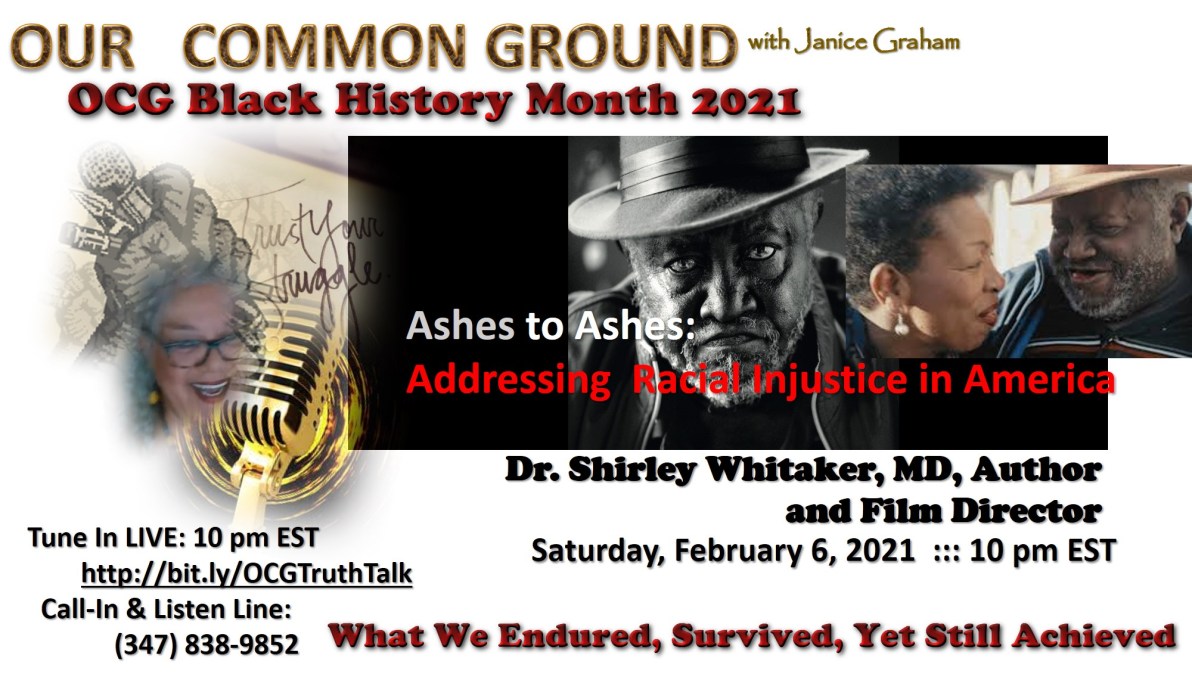
Ashes to Ashes, the film, is an endearing portrait of Winfred Rembert, an avid Star Wars fan and master leather-work artist who survived an attempted lynching in 1967. This moving short documentary showcases the incredible friendship he has forged with Dr. Shirley Jackson Whitaker, as she creates and establishes an interactive art exhibit to memorialize the more than 4,000 African Americans who were lynched during the Jim Crow era. Taking all of her experiences from her love of medicine, art and people, Dr. Shirley J. Whitaker, MD, created the Ashes to Ashes program that will provide for a real memorial (funeral) service for the over 2 million lost during the Middle Passages.
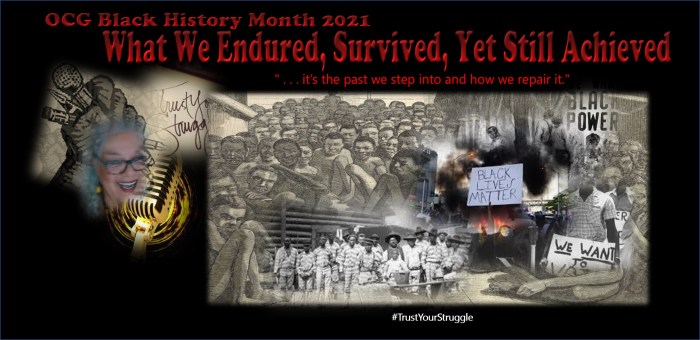
FROM 1882-1968, 4,743 LYNCHINGS OCCURRED IN THE UNITED STATES. OF THESE PEOPLE THAT WERE LYNCHED 3,446 WERE BLACK (72%). THE MAJORITY OCCURING IN THE SOUTH (79%). This too is Black History.
The goal of the project by Dr. Shirley Jackson Whitaker is to acknowledge and mourn the African Americans who were racially terrorized during the Jim Crow era after the Civil War and until this very day. Some endured lynching and other forms of brutalization and therefore, they never received a proper burial. The ceremony was a celebration of thousands of African Americans. As we must. #BlackHistoryMonth2021
Dr. Whitaker will join us this week. Mr. Rembert is unable to join us tonight. We will host him soon.
Dr. Whitaker is the seventh child of Eddie and Charlie Mae Jackson from Waycross, Georgia. Dr. Whitaker attended Clark Atlanta University completing a BS degree with honors in Biology. She attended Yale University School of Medicine-Department of Public Health and obtained her medical degree form Emory University School of Medicine, the only female African American in her class. A kidney specialist by trade, an artist trained under Leonard Baskin, and a healer by passion, her Ashes to Ashes project was developed to provide hope for a better American future, one in which races of varying color and heritage can understand the importance of each other’s American history, empathize with each other’s sacrifices and tragedies, realize the legacy of impacts from suffered injustices and accept that healing is a process as much a cure, and recognize and lay to rest the 4,000 victims of vigilante justice perpetrated against a predominantly black population for simply desiring the most basic of American rights of obtaining an education, ownership of land, fair competition in commerce, the uniquely American right of voting for our governing institutions and for an equal stake in the American experience. She is currently working on the second phase of A2A: The Noose: Tread of Hate and Resilience. This will center on American history through the lens of lynching and will include an International Speak My Name Day to speak the names of the lynched.
Mr. Rembert grew up in rural Georgia, in a farm laborer’s house and later in the small town of Cuthbert. Raised by his great-aunt, Rembert worked with her in the cotton fields during much of his childhood, and received little formal education. As a teenager he got involved in the 1960s Civil Rights Movement. Jailed for fleeing for his life in a stolen car, nearly lynched and then cut down to serve as an example to others, Rembert was sentenced to 27 years in the Georgia Penal System. Despite the cruel prison circumstances, Rembert learned to read and write and managed to meet and write letters to his would-be wife Patsy as well as to congressmen, with the hope of gaining early release. He also learned the craft of hand-tooling leather from a fellow-prisoner. After seven years, most of which was spent on chain gangs, Rembert was released from prison, but it wasn’t until 1997, at the age of 51, that he began to work more seriously with leather as his artistic medium, creating tooled and dyed canvases that tell the stories of his life. His paintings have been exhibited at galleries across the country—including the Yale University Art Gallery, the Adelson Galleries New York, and the Hudson River Museum—and have been profiled in The New York Times and elsewhere. Rembert is the recipient of a 2017 USA Fellowship, and in 2015 was an honoree of Bryan Stevenson’s Equal Justice Initiative. Rembert’s full-color memoir, Chasing Me to My Grave: An Artist’s Memoir of the Jim Crow South, is forthcoming from Bloomsbury in 2021.
“I’ll Be Listening for You”
Janice
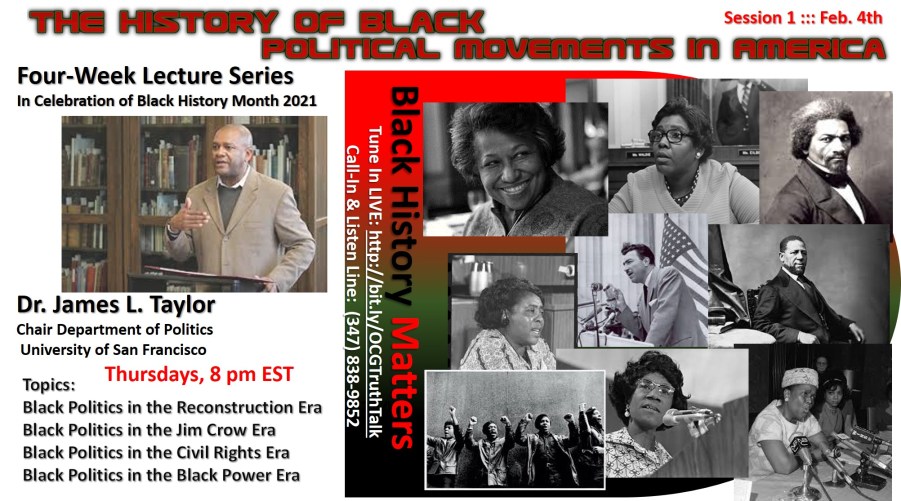
Join us for the OUR COMMON GROUND BHM Special
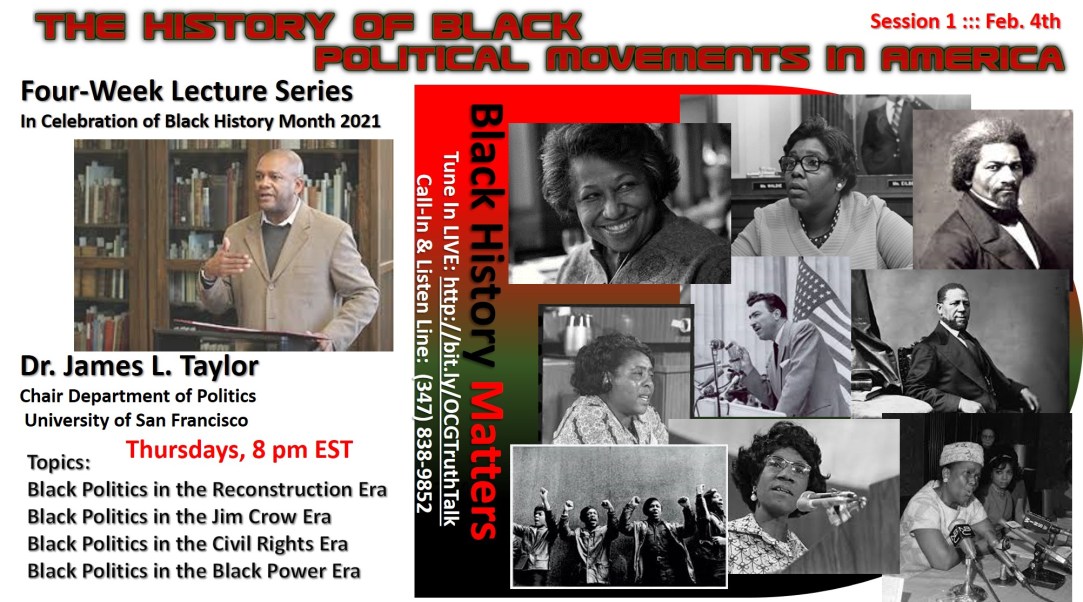
“A History of Black Political Movements in America”
The Post-ReConstruction, Civil Rights, Black Power, and “unnamed” Black struggle movements grew out of each other and have steadily gained momentum through 2020. Some were not a formal movement, however, these movements marked a turning point in the meaning of Black struggle in the United States and also in how Black people saw themselves, generation to generation. All of the many Black movements are hailed as significant struggles of Blacks to achieve full equality. They were complex events that took place at a time when society and culture were being transformed throughout the United States, and their legacy reflects that complexity. But what of the interplay and relationship of all Black legacy political movements that occurred since Emancipation? They were all building blocks, learning opportunities, and a continuum of victories for our people. What we do know is that the descendants of American chattel slavery have waged the most successful and effective protests in American, indeed, world history. Our greatest achievements include teaching America the real meaning of justice, freedom, and resistance.
We need to know and understand the networks that compose the many Black struggles and movement that brought us to our current political struggles. It is how we measure our worth and etch out our future
This course of study will review the history of the many Black struggle movements and events that brought us to the election of Barack Obama resistance that brings us to the white supremacy insurrection and riots on January 6, 2021. What we see happening in America, the growth of white supremacy and confederacy politics become clear through the understanding of our journey toward freedom. This lecture series will provide knowledge of where we have been, Black achievement in how Black people have transformed America.
Series Schedule Thursdays, 8-10 pm EST
February 4, 2021
Session 1: Overview of significant Black political movements and events.
Black Politics and the Reconstruction Era
Black Politics of the Jim Crow Era
Black Politics creating the Civil Rights Era
Black Political development during the Black Power Era
Reading Recommendations
Timeline References
February 11, 2021
Session 2: Review of Syllabus Examine why certain sources are most helpful to us to understand the continuum and projection of history forming new generations of struggle. How history informs strategic directions of each of the major movements.
February 18, 2021
Session 3: Black political diversities and ideologies. Examining class, economics, religion, spirituality, art, gender, sexuality, and how they have factored in Black movement history.
February 25, 2021
Session 4: Practical Strategies for 21st Century Black and Peoples’ movements.
About Dr. James L. Taylor
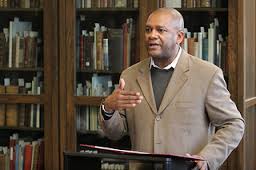
Professor James Lance Taylor is the Chair of the Department of Politics at the University of San Francisco and is from Glen Cove, Long Island. He is the author of the book “Black Nationalism in the United States: From Malcolm X to Barack Obama”, which earned 2012 “Outstanding Academic Title” – Choice: Current Reviews for Academic Libraries. (Ranked top 2 percent of 25,000 books submitted and top 8 percent of 7,300 actually accepted for review by the American Library Association). Rated “Best of the Best.” The hardback version sold out in the U.S. and the paperback version was published in 2014.
He is a former President of the National Conference of Black Political Scientists (NCOBPS), an important organization of African American, African, and Afro Caribbean political scientists in the United States, 2009-2011. Taylor also served as Coordinator of the African American Studies Program for 2015-2017 at the University of San Francisco. He served as the Chair for the “Committee on the Status of Blacks” in Political Science for the American Political Science Association (APSA), 2016-2017.
“You ever been here?” Yterenickia Bell asks me as we wait for the door to the Cascade Skating Rink to be unlocked. “It’s historic,” she says, ushering me out of the December rain and into the fluorescent-lit roller-skating spot in west Atlanta’s Adamsville neighborhood. “People have been gathering here for years.”
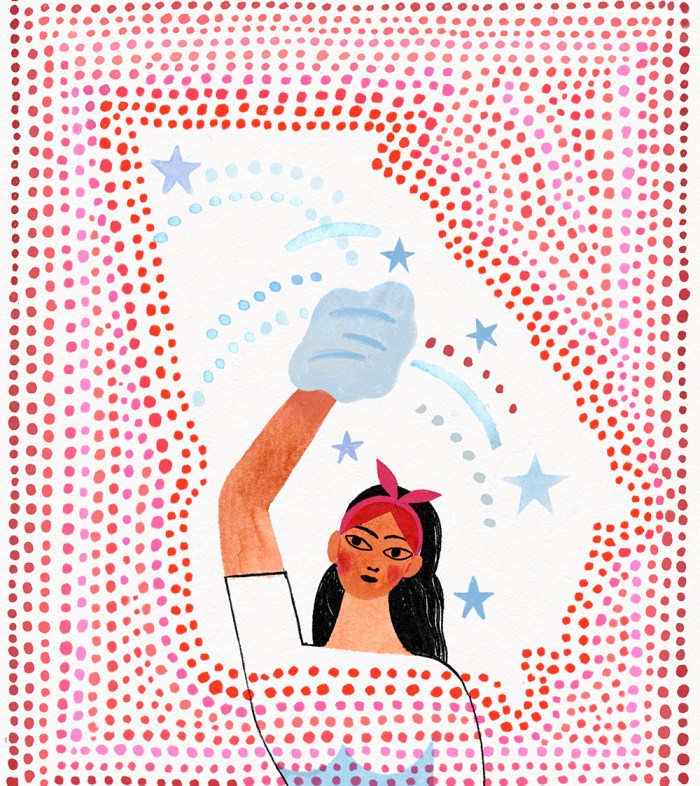
The rink is awaiting the night crowd. Video games sit silent in a corner. The snack bar is dark except for a flashing neon sign. But it’s not empty: a handful of people in orange shirts and masks are chatting at the other end of the rink before braving the rain to get out the vote for Senate candidate Raphael Warnock. Bell is the GOTV director for Care in Action, an advocacy group whose members are mostly nannies, housecleaners, and home health workers. “We operate out of here because we have everyday folks that are workers that may have lost their jobs due to COVID, and a saturation of them live in this area,” she says. “It’s the community helping the community.”
I’d come to Georgia to see Democrats’ ground game ahead of the Senate runoff, and in particular, to understand the role that this group of domestic workers, most of whom are women of color, has had in turning the state purple. Right now the rink is the center of the action. From here, Bell has been organizing 250 door-knockers a day to get the word out about the race and voting logistics. “It takes people who are committed to this work, who know what’s at stake,” she says. “They have to get up every morning at eight o’clock to be here by nine for training and then go out to their specific turf and knock on people’s doors.” In the two months leading up to the runoff, Care in Action reached out to 5.85 million voters, either by phone, by mail, or in person, including more than 1 million door knocks. “Georgia is about to save our whole democracy, so we’re all in,” Bell says.
Those efforts paid off. Just after Georgians elected a Democrat for president for the first time in 30 years, they went on to pick Warnock, a Black preacher, and Jon Ossoff, a Jewish millennial, to represent them in the Senate, clinching Democrats’ narrow control of the chamber. In majority-Black precincts, early numbers indicated that the turnout in the January runoff would surpass that of November 2020 and reach a level not seen since Barack Obama’s 2012 reelection. Republican turnout was also strong, but not enough to turn back a second blue wave in so many months.
Though Care in Action is not affiliated with Stacey Abrams, who has been widely credited with turning Georgia blue, its work is a direct extension of Democrats’ decade-long effort to reshape the state by organizing voters of color. “What it takes to win in Georgia is a multiracial coalition,” says Rep. Nikema Williams, who served as Care in Action’s deputy director in 2018 and now holds the US House seat formerly held by Rep. John Lewis. And just as that coalition did not come together overnight, it also drew upon generations of organizing by Black domestic workers. “I do believe that investment in long-term, community-based organizing and power building does pay off,” says Ai-jen Poo, Care in Action’s senior adviser and the founder of the National Domestic Workers Alliance. “Throughout our history, Black domestic workers have organized and have really asserted their dignity through organizing.”
Atlanta is the birthplace of that movement. The first recorded domestic workers’ strike was in 1881, when Black women in Atlanta left their posts to demand better wages. Dorothy Lee Bolden helped create the National Domestic Workers Union of America (a precursor to NDWA) in the city in 1968. It was less a formal union than an education and advocacy effort, which Bolden led for nearly three decades. She built an infrastructure that took the union directly to the people it represented, using public buses to hold informal meetings and recruit domestic workers during their daily commute. There were two requirements to join the union: Members had to be domestic workers, and they had to vote.
Bolden started her career as a domestic worker when she was 9, washing diapers for the family who employed her mother as a housekeeper. As an adult, she cleaned houses and looked after children during the day, and spent her nights watching Dr. Martin Luther King’s speeches on television while she sewed for her daughters. She marched with King when he came to Atlanta and she organized a boycott of city schools in 1964 to protest disparities in education quality between Black and white children, and she applied the lessons from her activism to the NDWU. “A domestic worker is a counselor, a doctor, a nurse; she cares about the family she works for as she cares about her own,” she said in 1983. Even so, she noted, domestic workers “have never been recognized as part of the labor force.” She was determined to change that, and in doing so she built a lasting community among domestic workers where there once had been disempowered people working in isolation.
The NDWU eventually spread to 10 more states, won workers’ compensation and Social Security benefits, and helped raise the minimum wage in Atlanta by 33 percent. Bolden also had an influential voice that affected national policy; her expertise was sought by presidents Nixon, Ford, and Carter.
The movement fizzled a bit in the ’80s as union power declined but it was revived a decade ago when Poo began organizing home care workers to push for greater labor protections. After notching win after win, she realized that the women she’d helped bring together were an untapped voting bloc. In 2018, she launched Care in Action to get out the vote for women candidates who stand by policies that domestic workers could benefit from. That same year, Abrams ran for governor of Georgia while pushing an unabashedly progressive agenda that included expanding Medicaid, raising the minimum wage, and ensuring quality public education. Abrams received Care in Action’s first endorsement, and the group mobilized 300 domestic workers to canvass for her.
People who worked on that campaign recall there was a beautiful synergy in domestic workers rallying for the possibility of Abrams becoming Georgia’s first Black governor. “We were very intentional about running a program that reached out to people that have been overlooked in the political process for way too long,” Williams recalls. “Our unique skill set was having our membership actually do the canvassing. It really changed the game for us and the way we were able to expand the electorate.”
Though Abrams lost her bid, thanks in no small part to the voter suppression tactics of her opponent, then–Secretary of State Brian Kemp, Poo and others felt they had bottled lightning. Indeed, in terms of people pounding the pavement, Care in Action was the largest independently funded grassroots effort in Georgia during the 2018 election cycle. Since then, it has expanded into Virginia, North Carolina, South Carolina, Nevada, Arizona, and Michigan. It started small, focusing on a few state candidates and the presidential election, with an eye toward expanding its operations in Georgia.
Despite the challenges presented by a pandemic that forced a rethink of its campaign outreach and infrastructure, Care in Action was able to carry the energy from 2018 through two more hard-fought races in 2020. “I think that [Abrams’ loss] was the momentum that we needed, that propelled us to be ready and to be able to launch for the Senate runoff as well as engage in a general,” Bell says. “We were able to essentially flip our state blue.”
The stakes are clear to Melanie Jackson, a domestic worker in the Atlanta area who tells me that canvassing with Care in Action made her feel like she was making a difference in a state whose elections have deep repercussions for the rest of the country. She recalls a recent conversation she’d had with a Black man in his 30s who told her he wasn’t planning to vote—he just didn’t feel like there was any point. She says she stared at him, incredulous. “You’re gonna miss the first opportunity to send a Black man from Georgia to the United States Senate?” she asked him.
He responded, “Sister, just because you said that, I’m going to go vote for the guy.”
“We locked eyes,” she told me. “I know that he went and followed through on that, and he probably thought about me as he was pressing those buttons. No doubt in my mind.”
The Black Power movement grew out of the CIVIL RIGHTS MOVEMENT that had steadily gained momentum through the 1950s and 1960s. It was not a formal movement, however, the Black Power movement marked a turning point in Black-white relations in the United States and also in how Black people saw themselves. Both movements were hailed as significant struggles of Blacks to achieve full equality. They were complex events that took place at a time when society and culture were being transformed throughout the United States, and its legacy reflects that complexity. But what of the legacy political movements that occurred right after the Emancipation of slavery? We need to know and understand the networks that compose the many Black struggles and movement that brought us to our current political struggles.
This course of study will review the history of the many Black struggle movements and events that brought us to the election of Barack Obama resistance that brings us to the white supremacy insurrection and riots on January 6, 2021. We hope that you will join us.
Series SCHEDULE
February 4, 2021
Session 1: Overview of significant historical Black political movements and events.
Black Politics and the Reconstruction Era
Black Politics of the Jim Crow Era
Black Politics creating the Civil Rights Era
Black Political development during the Black Power Era
Reading Recommendations
Timeline References
February 11, 2021
Session 2: Review of Syllabus Examine why certain sources are most helpful to us to understand the continuum and projection of history forming new generations of struggle. How history informs strategic directions of each of the major movements.
February 18, 2021
Session 3: Black political diversities and ideologies. Examining class, economics, religion, spirituality, art, gender, sexuality, and how they have factored in Black movement history.
February 25, 2021
Session 4: Practical Strategies for 21st Century Black and Peoples’ movements.
About Dr. James L. Taylor, Ph.D.
Chair, Department of Politics, former President of the National Conference of Black Political Scientists (NCOBPS), an important organization of African American, African, and Afro Caribbean political scientist community in the United States, 2009-2011.
Professor James Lance Taylor is from Glen Cove, Long Island. He is the author of the book “Black Nationalism in the United States: From Malcolm X to Barack Obama”, which earned 2012 “Outstanding Academic Title” – Choice: Current Reviews for Academic Libraries. (Ranked top 2 percent of 25,000 books submitted and top 8 percent of 7,300 actually accepted for review by the American Library Association). Rated “Best of the Best.” The hardback version sold out in the U.S. and the paperback version was published in 2014.
He is a former President of the National Conference of Black Political Scientists (NCOBPS), an important organization of African American, African, and Afro Caribbean political scientists in the United States, 2009-2011. Taylor also served as Chair of the Department of Politics at the University of San Francisco from 2012-2015, and Faculty Coordinator of the African American Studies Program for 2015-2017. He served as the Chair for the “Committee on the Status of Blacks” in Political Science for the American Political Science Association (APSA), 2016-2017.
Professor Taylor is currently writing and researching a book with the working title, Peoples Temple, Jim Jones, and California Black Politics. He expects the book to be completed with a 2018-2019 publication range. The book is a study of the Peoples Temple movement and African American political history in the state of California.
His teaching and research scholarly interests are in religion and politics in the United States, race and ethnic politics, African American political history, social movements, political ideology, law and public policy, Black political leadership, and the U.S. Presidency. He lives with his family in Oakland, California.
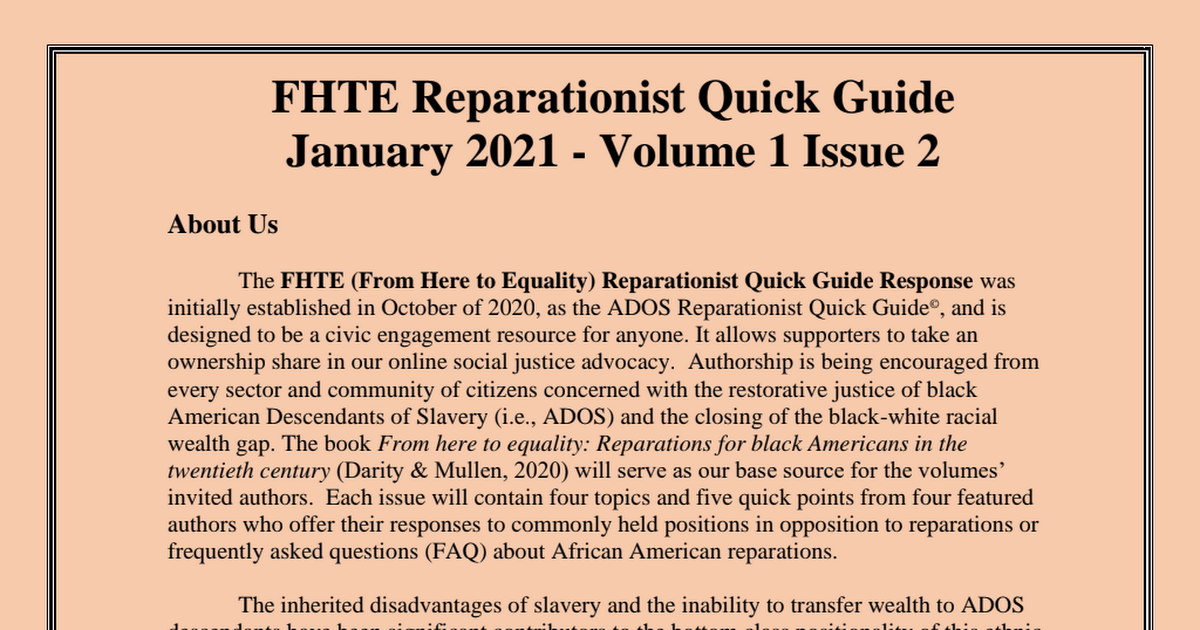
The inherited disadvantages of slavery and the inability to transfer wealth to ADOS descendants have been a significant contributor to the bottom class positionality of this ethnic group. This series is published to encourage study and dialogue. It is an instrument for personal empowerment. The guide creates a space for the civic engagement participation of Reparationist in national coalition-building, including petitioning for significant revision (or
replacement) of the bill H.R. 40 (S.1083) currently under consideration in the U.S. Congress.
Slave auction block, Green Hill Plantation, Campbell County, Virginia, Historic American Buildings Survey – Public Domain
Many Americans watched as Joe Biden marked his Inauguration Day celebration with a brief presentation before the statue of Abraham Lincoln, invoking the Civil War as an historical moment when the nation triumphed over deep division.
When recalling Lincoln, many New Yorkers may remember the famous speech he gave at Cooper Institute (aka Cooper Union) in February 1860 calling to limit the extension – but not the end – of slavery. It was a critical campaign speech that helped him secure the Republican Party nomination for President. In November, he was elected, and, in December, South Carolina was the first state to secede from the Union.
Unfortunately, few American – and likely very few New Yorkers – will recall that Lincoln’s speech was strongly attacked by city business leaders and the Democratic Party, many assailing him with the racist slogan, “Black Republican.” More important, Lincoln’s election sparked a strong movement in the city, led by Mayor Fernando Wood, to join the South and secede from the Union.
This is one of the many important historical stories retold in an informative new book by Jonathan Daniel Wells, The Kidnapping Club: Wall Street, Slavery and Resistance on the Eve of the Civil War (Bold Type Books). Slavery was formally abolished in New York State in 1827, but the slave trade lived on in the city until the Civil War. Wells argues that the slave trade persisted in New York City in the decades before the Civil War because it was the capital of the Southern slave economy.
The city’s business community of major banks, insurance companies and shipping industry financed and facilitated the cotton trade. Many of the leaders of this community played a decisive role in city social life and politics, including control over the powerful Democratic Party. Together, they backed the authority of the Constitution’s “Fugitive Slave Clause” – and later Fugitive Slave Acts (1793 and 1850) — guaranteeing slavery. Equally critical, city police, leading lawyers and judges (state and federal), with the support of the growing Irish immigrant community, colluded with organized slave “kidnappers.”
The slave trade functioned in two complementary ways. First, northern free Blacks — including young children — as well as self-emancipated former slaves who fled to New York from the slave states lived in fear of being kidnapped by organize slave catchers (often city police officers) and transported south into slavery. Second, “slaver” ships regularly stopped in New York harbor with numerous African slaves hidden on board as cargo to be sold as part of a lucrative, if illegal, business.
In pre-Civil War New York, the police were underpaid and made money through accepting bribes as well as by securing lucrative rewards from seizing and sending alleged “fugitive” Black people to the South or a fee for the sale of a captured free Black person into slavery. Because the courts were run by the Democrats, graft and corruption were accepted judicial procedures. Any Black person could be seized — walking on the street, working on the docks, at home in the middle of the night and even kids on their way to school – and accused of being an allegedly run-away slave. Most judges were notorious racists who thought little of Black people and were eager to go along with police charges.
The city’s powerful pro-slavery movement based its support for Southern slavery and slave kidnapping on the Constitution’s “Fugitive Slave Clause” (i.e., Article 4, Section 2, Clause 3). It stipulated that “no person held to service or labor” would be released from bondage in the event they escaped to a free state, thus requiring northern free cities like New York to return the self-emancipated to their southern enslavers.
In 1793, Congress passed the Fugitive Slave Act that added more enforcement teeth to the original Clause, explicitly stating that owners of enslaved people and their “agents” had the right to search for escapees within the borders of free states. Henry Clay promoted what was known as the “Compromise of 1850” that strengthened the Fugitive Slave Act to forestall growing talk of Southern secession. The revised act compelled citizens to assist in the capture of runaways and denied escaped people the right to a jury trial, among other actions. The new act was met by fierce resistance in many anti-slavery states, including upstate New York. The new act was adopted as the Underground Railroad reached its peak as many self-emancipated former slaves fled to Canada to escape U.S. jurisdiction.
The author grounds much of his narrative around the life of David Ruggles, a courageous Black abolitionists and journalist. He was born in Connecticut in 1810 when the spirit of the Revolution still glowed. At age 16, he moved to New York and became an abolitionist activist. He was a prolific contributor to newspapers, including his own paper Mirror of Liberty, published numerous pamphlets and contributed to abolitionist papers like The Liberator. He named “The New York Kidnapping Club” and published a list those he believed participated in kidnappings. Going further, he boarded ships in the harbor in search of Black captives or for signs of participants in the illegal slave trade. He also hosted the wedding of Frederick Douglass and Anna Murray at his New York home after they fled Maryland.
Ruggles helped forge the Underground Railroad, thus assisting self-liberated fugitives to safety in the north or to freedom in Canada. He was joined by a small but activist antislavery community that included Horace Dresser, Arthur Tappan, Charles B. Ray and Elizabeth Jennings. He ran a bookstore and was physically attacked, his store burned; he was hounded by the police and even briefly jailed. Sadly, by his 30s, he was nearly blind and moved to Massachusetts.
In 1837, Ruggles helped found the New York Committee of Vigilance, a biracial organization opposed to the kidnapping of innocent Black residents as well as self-liberated former slaves. The abolitionists were a small but activities community that regularly protested when a Black person was kidnapped and petitioned for jury trials in the cases of those arrested as fugitives. Not unlike today’s supporters of Black Lives Matter, Black and white activists in pre-Civil War New York claimed that law enforcement was mostly little more than legalized racism.
The Kidnapping Club reminds readers that New York was a pro-slavery city even as the nation was engulfed in the Civil War. Wells recounts how the city’s leadership joined with the growing movement in the South to promote secession. While the South seceded and New York (white) citizen voted against Lincoln’s election, the city remained part of the Union.
However, built-up anti-abolitionist sentiments exploded in the 1865 Draft Riot that saw Union soldier from the recent Battle of Gettysburg march on the city to suppress the uprising in which the Negro Orphan Asylum burned, numerous churches destroyed and about 100 people died, many of them Blacks.
Without acknowledging the racial conditions of New York during pre-Civil War era, especially the horrors inflicted by the “kidnapping club” and the role of the police and judiciary, one cannot fully understand – nor can society truly address – the complaints raised by the Black Lives Matter movement today. Racial oppression and suffering leave a deep and enduring scar that only true social change can remedy.
David Rosen is the author of Sex, Sin & Subversion: The Transformation of 1950s New York’s Forbidden into America’s New Normal (Skyhorse, 2015). He can be reached at drosennyc@verizon.net; check out www.DavidRosenWrites.com.
After the Civil War, the United States searched for ways to redefine itself. But by the 1880’s, the hopes of Reconstruction had dimmed. Across the United States there was instead a push to formalize and legalize discrimination against African-Americans. The effort to marginalize the first generation of free black Americans infiltrated nearly every aspect of daily life, including the cost of insurance.
Initially, African-Americans could purchase life insurance policies on equal footing with whites. That all changed in 1881. In March of that year Prudential, one of the country’s largest insurers, announced that policies held by black adults would be worth one-third less than the same plans held by whites. Their weekly premiums would remain the same. Benefits for black children didn’t change, but weekly premiums for their policies would rise by five cents.
Prudential defended the decision by pointing out that the black mortality rate was higher than the white mortality rate. Therefore, they explained, claims paid out for black policyholders were a disproportionate amount of all payouts. Most of the major life insurance companies followed suit, making it nearly impossible for African-Americans to gain coverage. Across the industry, companies blocked agents from soliciting African-American customers and denied commission for any policies issued to blacks.
The public largely accepted the statistical explanation for unequal coverage. The insurer’s job was to calculate risk. Race was merely another variable like occupation or geographic location. As one trade publication put it in 1891: “Life insurance companies are not negro-maniacs, they are business institutions…there is no sentiment and there are no politics in it.”
Companies considered race-based risk the same for all African-Americans, whether they were strong or sickly, educated or uneducated, from the country or the city. The “science” behind the risk formula is credited to Prudential statistician Frederick L. Hoffman, whose efforts to prove the genetic inferiority of the black race were used to justify the company’s discriminatory policies.
You may unsubscribe at any time by clicking on the provided link on any marketing message.
Hoffman had plenty of bad science to work with. Most of the available data on African-American health statistics came from Civil War-era studies of black and white soldiers. Hospital administrator J.F. Miller and other researchers consistently claimed to have proof of the inherent weakness of the black race, reporting that the internal organs, including the lungs and brain, weighed less in blacks than in whites, making them more susceptible to diseases like pneumonia, tuberculosis, and syphilis. Since most white physicians held the common belief that enslaved blacks had been relatively healthy, this proved that the constitution of the black race was incompatible with freedom:
These laws affect him in the air he breathes, the food he eats, the clothes he wears and every circumstance surrounding his habitation. In the wholesale violation of these laws after the war…was laid the foundation of the degeneration of the physical and mental constitution of the negro.
Black Americans were more likely to live in poverty and often lacked access to medical care, among many other hardships. Still, little credence was given to the theory that environmental factors were the reason for the higher black mortality rate. Hoffman’s work received widespread coverage in respected journals, including that of the American Statistical Association, a professional society where Hoffman later served as president.
Hoffman predicted that African-Americans would eventually die off like the Native Americans before them. He surmised that they wouldn’t be able to survive in “civilized” society, outside the bonds of slavery. The theory didn’t gain any traction, but Hoffman’s broader work on the racialist science behind black mortality rates did have lasting effects. Discriminatory policies based on race were standard in the insurance industry well into the twentieth century. In a 1940 survey, over forty percent of companies did not accept black policyholders.
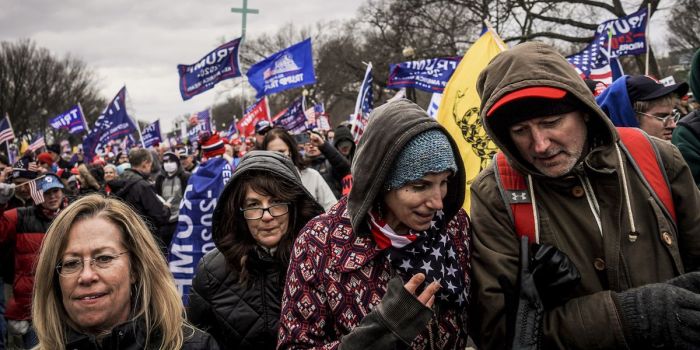
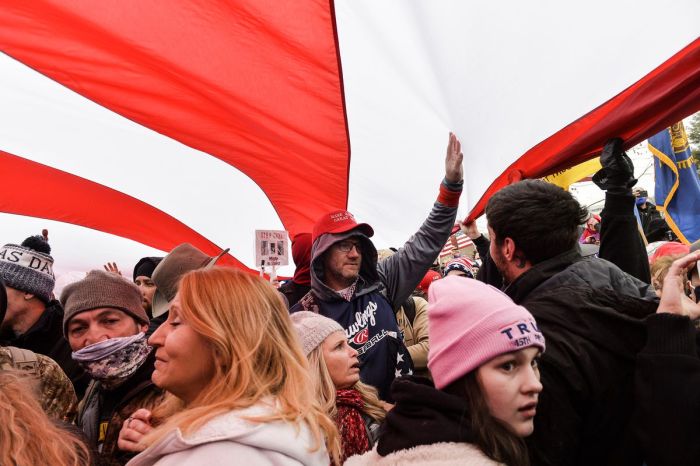
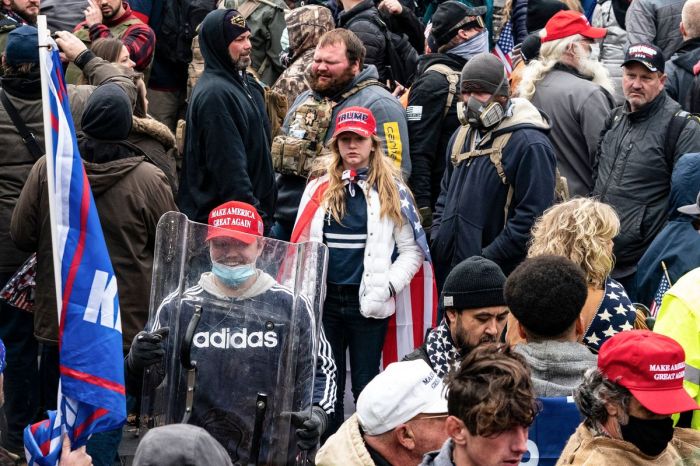
It’s tempting to think of the storming of the US Capitol on Wednesday as toxic masculinity run amok: a mob of mostly white men, carrying guns and wearing animal skins, trying to overthrow democracy on behalf of a president who once bragged about his ability to grab women “by the pussy.”
It’s even more tempting to embrace this narrative when, in a bizarre statement, that president’s campaign press secretary describes him as “the most masculine person, I think, to ever hold the White House.”
But focusing too much on masculinity obscures a crucial truth: Many women were either present at the riot or cheering on the insurrectionists from back home. There was Ashli Babbitt, the 35-year-old Air Force veteran and apparent devotee of QAnon ideology who was killed during the riot. There was the woman photographed with “zip-tie guy” Eric Munchel, now believed to be his mother. There was Martha Chansley, the mother of the widely photographed “QAnon shaman” who wore a horned hat and carried a spear to Congress. She wasn’t present at the riot but later defended her son in an interview, calling him “a great patriot, a veteran, a person who loves this country.”
And, of course, there were the women lawmakers who boosted conspiracy theories and false claims about the election being stolen, including Georgia Rep. Marjorie Taylor Greene, a QAnon adherent who railed against Democrats and Black Lives Matter protesters in a speech on the House floor this week while wearing a mask reading “censored.” Colorado Rep. Lauren Boebert, meanwhile, described January 6 as “1776” before the riot began, live-tweeted from the House during the attack (including a mention that House Speaker Nancy Pelosi had been removed from the chambers), and this week, refused to allow police to search her bag after it set off metal detectors outside Congress. During her campaign, Boebert promised to bring her gun with her to the House.
Many women were either present at the riot or cheering on the insurrectionists from back home. Joseph Prezioso/AFP via Getty ImagesIf we ignore the importance of women in the Capitol riot, we can’t understand white supremacy in America. Alex Edelman/AFP via Getty Images
White women have been part of white supremacy in America since the very beginning, experts point out, dating back to their role in slavery. “They were at the table when the system was designed,” Stephanie Jones-Rogers, a history professor at UC Berkeley and author of the book They Were Her Property: White Women as Slave Owners in the American South, told Vox. “They were co-architects of the system.”
That remained true after the Civil War, through the birth and evolution of the Ku Klux Klan, and during the civil rights movement when white women were some of the most vocal opponents of school integration. And it remains true today, when women hold a key role in spreading QAnon ideology and sustaining white nationalist groups and movements. “Like other parts of our economy and society, these movements would collapse without their labor,” Seyward Darby, author of Sisters in Hate: American Women on the Front Lines of White Nationalism, told Vox.
And if we ignore the importance of women in the Capitol riot and the groups that backed and enabled it, we can’t understand white supremacy in America — let alone dismantle it. Trying to fight racism in America without looking at white women, Jones-Rogers said, is like “addressing only the right side of the body when the left side is still sick.”
White women have been part of white supremacy from the beginning
White women’s investment in white supremacy is older than the United States itself and goes back to their role in the economy of slavery. Though white women have been seen by some historians as passive bystanders to the brutalities of slavery, they were in fact active participants, as Jones-Rogers explains in They Were Her Property. Before the Civil War, white women had little economic or political power, with one big exception: They could buy and sell enslaved people. And they did so, using enslaved people as a way of building up wealth that would not simply be transferred to a husband in marriage.
Slavery gave white women “freedom, autonomy, and agency that they could not exercise in their lives without it, so they deeply invested in it,” Jones-Rogers said.
And after the Civil War, white women didn’t simply give up on white supremacy. Instead, as Jones-Rogers puts it, they doubled down.
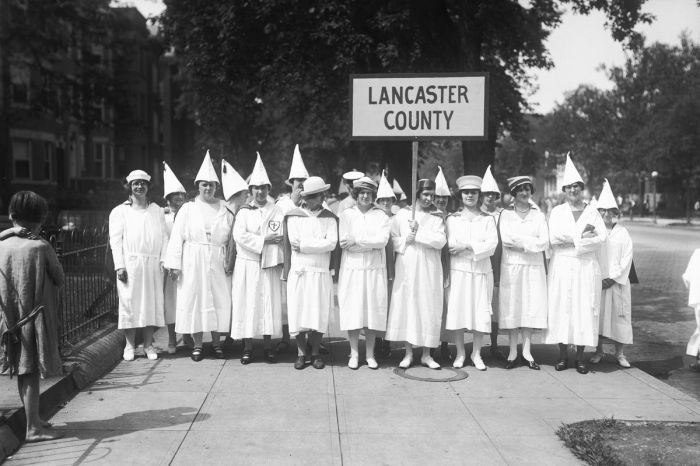
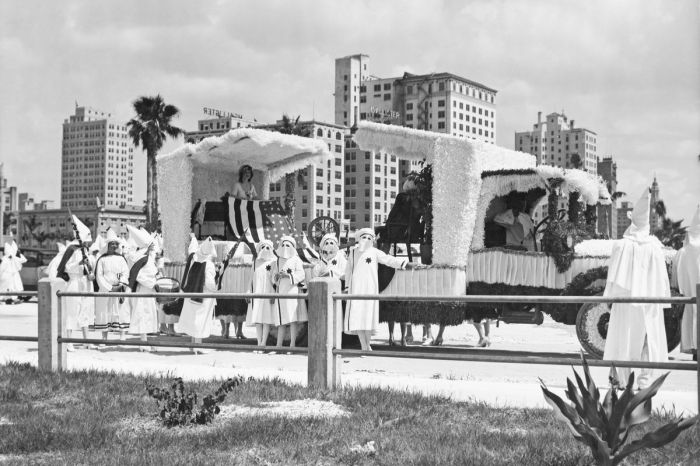
For many, that meant becoming active participants in the KKK, which at one point had 1.5 million female members. Some women took leadership roles, like Elizabeth Tyler, who helped revive the Klan in the late 1910s and became its “most important propagandist,” according to Darby.
Women became especially important in the Klan once they gained the right to vote. After that, white men began to see their wives, daughters, sisters, and other women in their lives “as potential allies in the effort to politicize white supremacy,” Jones-Rogers said. “They began to see them as a voting bloc.”
Women members of the Ku Klux Klan from Lancaster County, Pennsylvania, arrive in Washington, DC, for a KKK parade, circa 1920. Bettmann Archive via Getty ImagesA group of Ku Klux Klan women next to a parade float in Miami, circa 1940. Frederic Lewis/Archive Photos/Getty Images
And it wasn’t just because of organizations like the Klan that white women invested in institutional racism. They also played a core role in lynching by making false allegations of sexual harassment or assault, which wereused as a pretext to murder Black men. And they were key players in the fight against the integration of schools, with white women using their role as mothers to legitimize their victimization of Black children, Jones-Rogers said.
Indeed, throughout the 20th century, though white women could no longer profit from slavery, they were still deriving real benefits from white supremacy — namely, a sense of social and political power in a world still dominated by white men. “Through lynching, your words have the power of life and death over an African-descended man,” Jones-Rogers explained. “Your vote can secure a place in the state, in the government, for white supremacy.”
In essence, through white supremacy, white women came to “understand themselves as individuals who wield a certain kind of power that men have to respect,” Jones-Rogers said.
Understanding white women’s role is key to fighting racism today
And that dynamic has continued into the 21st century. The landscape of white supremacy has changed, with the Klan no longer a major player (though it still exists). Today, white nationalism is less about specific groups and more about “an ideology that people subscribe to from the comfort of their own desks,” Darby said.
Because of that, it’s hard to measure exactly how many women are involved in white nationalism. It’s easier to measure attitudes. Overall, about 20 percent of white Americans of all genders “feel a sense of discontent” over the status of white people in society, Darby writes in Sisters in Hate, drawing on the work of political scientist Ashley Jardina. And white women are actually more likely than white men to hold “exclusionary views about what it means to be American, preferring boundaries around the nation’s identity that maintain it in their image.”
And while they may not always be in front at rallies or riots, women remain important “recruiters and propagandists” for white nationalism, Darby said. Erica Alduino, for example, had a key role in organizing the infamous “Unite the Right” rally in Charlottesville, Virginia, in 2017. She was the one directing traffic on messaging apps and answering mundane but important questions like whether there would be shuttle buses to the rally. She didn’t speak at the event, “but that’s not the point,” Darby said. “Whether women are seen or not seen, they are such important actors in this space.”
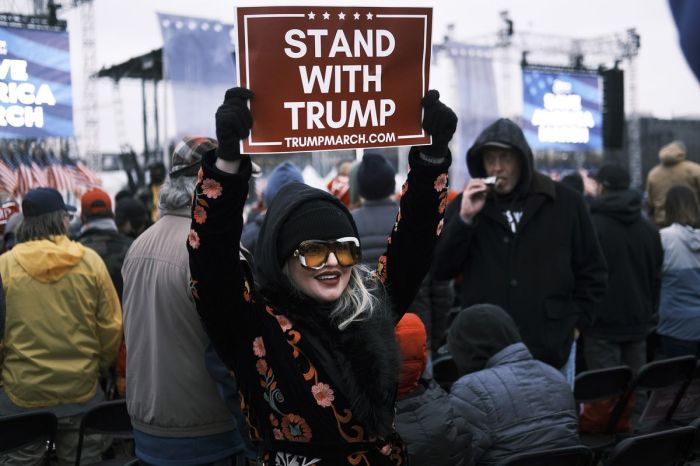
Women have also been central to organizing pro-Trump events that spread the false claim that the election was stolen. The group Women for America First organized a “Stop the Steal” rally of thousands in November and also received a permit for a rally at the Capitol on January 6, according to the Washington Post.
Meanwhile, women have taken an even more visible role with the rise of QAnon. An ideology that began with conspiracy theories about Trump battling a “cabal” of liberals involved in child sex trafficking, QAnon has grown to include a wider array of theories and misinformation. Last year, QAnon adherents began amplifying the hashtag #SaveTheChildren, which became a vehicle for false claims about the prevalence of child sex trafficking as well as a gateway for more extreme QAnon ideas. And many of the people posting with #SaveTheChildren — including celebrities and prominent influencers — were women.
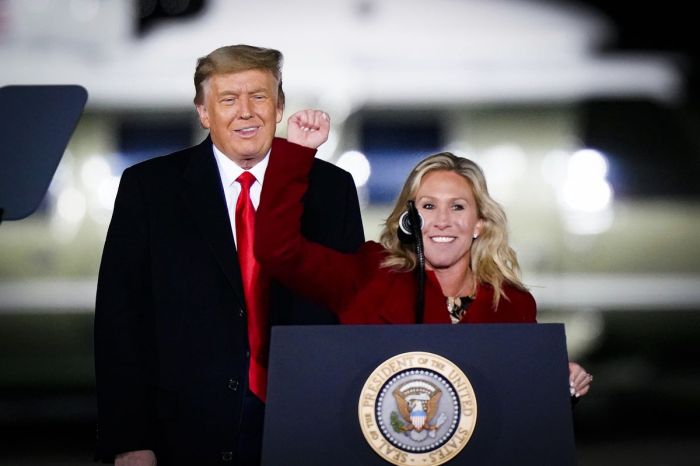
Rep. Marjorie Taylor Greene (R-GA) campaigns for Sens. Kelly Loeffler and David Perdue alongside President Trump on January 4. Brynn Anderson/AP
In general, QAnon has been a way to co-opt messages long targeted at women — messages about the importance of natural living or even healthy food, for example — and turn them into an indoctrination in white nationalism and xenophobia. QAnon plays into “this idea that you can cleanse yourself and your life and your family’s life of pollutants,” Darby said. Messages about avoiding genetically modified foods, for example, can slide into messages about keeping non-white children out of schools.
In the last few months, QAnon has played a key role in boosting conspiracy theories about Covid-19 restrictions and masking, and backing attempts to overturn the election. And some of the most visible proponents of QAnon have been women. Greene, for example, has been called the first QAnon member of Congress and has tweeted support for the idea of the “deep state,” a core QAnon tenet.
Meanwhile, Ashli Babbitt, the woman who was killed by police at the Capitol riot, had been posting QAnon-related content on social media for nearly a year prior to the insurrection, according to the Guardian. The day before the riot, she tweeted a defiant message full of QAnon slogans: “Nothing will stop us….they can try and try and try but the storm is here and it is descending upon DC in less than 24 hours….dark to light!”
Trump supporters arrive for the “Stop the Steal” rally on January 6. Spencer Platt/Getty ImagesWomen have been central to organizing pro-Trump events that spread the false claim that the election was stolen. Spencer Platt/Getty Images
Despite the participation of Babbitt and others, there’s been a tendency to view the riot as largely male-dominated — and, indeed, to erase the presence of women in white supremacy throughout history. “There has been a tendency, from the colonial period to the present, to frame and to position white women as perpetual victims, in spite of the evidence to the contrary,” Jones-Rogers said.
But ignoring the fact that women have long been perpetrators of white supremacy — up to and including violence — will hamper any effort to truly fight it. “When we discount these women and the often violent and brutal roles that these women play,” Jones-Rogers said, “we neglect and we negate the impact that their activities have on their victims.”
If, by contrast, we as a society can reckon with the way that white women have been not just beneficiaries but designers of the system of white supremacy, she said, we will be better able “to dismantle the system and to address the ways in which the system has really pervaded all of our lives.”
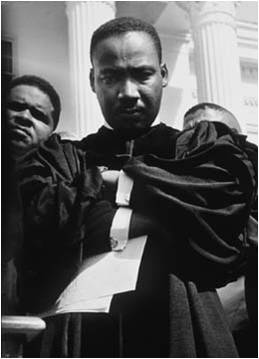
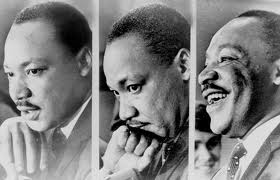
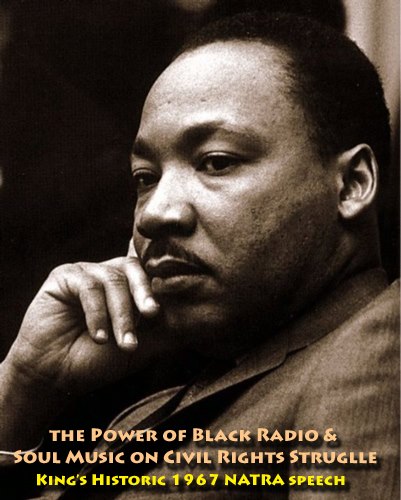
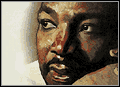
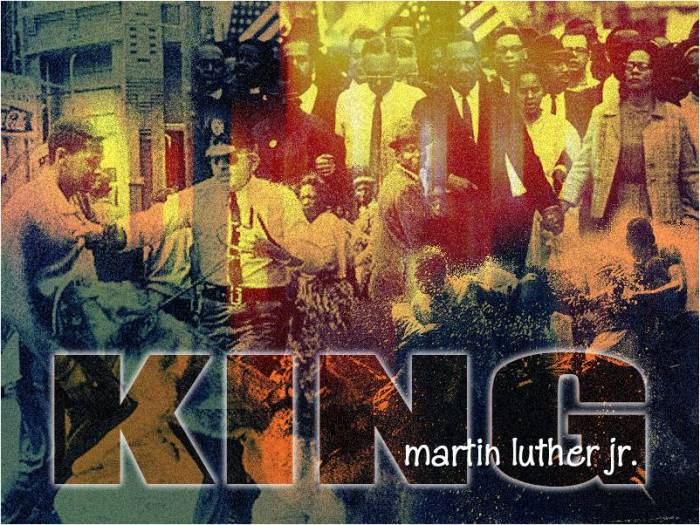
Honoring the Spirit and Legacy of Rev. Dr. Martin Luther King, Jr.
Live like this King
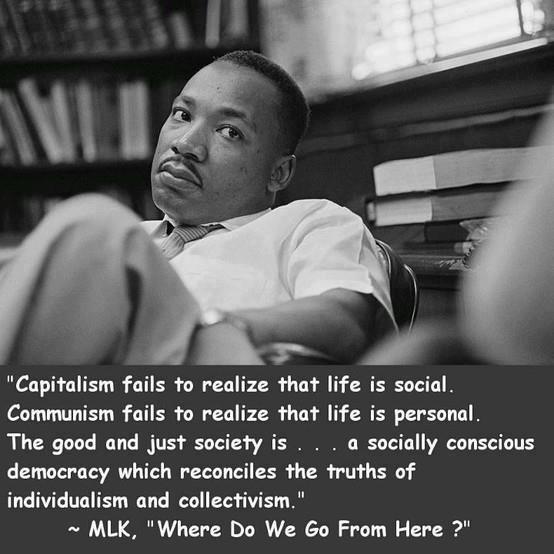
“Capitalism forgets that life is social. And the kingdom of brotherhood is found neither in the thesis of communism nor the antithesis of capitalism, but in a higher synthesis. The time has come for us to civilize ourselves by the total, direct and immediate abolition of poverty
– Dr. Martin Luther King Jr.
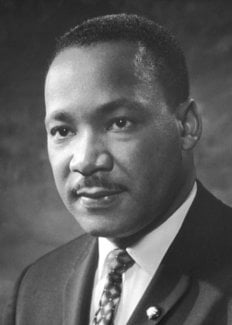
Rev. Dr. Martin Luther King Jr.
Biographical
Martin Luther King, Jr., (January 15, 1929-April 4, 1968) was born Michael Luther King, Jr., but later had his name changed to Martin. His grandfather began the family’s long tenure as pastors of the Ebenezer Baptist Church in Atlanta, serving from 1914 to 1931; his father has served from then until the present, and from 1960 until his death Martin Luther acted as co-pastor. Martin Luther attended segregated public schools in Georgia, graduating from high school at the age of fifteen; he received the B. A. degree in 1948 from Morehouse College, a distinguished Negro institution of Atlanta from which both his father and grandfather had graduated. After three years of theological study at Crozer Theological Seminary in Pennsylvania where he was elected president of a predominantly white senior class, he was awarded the B.D. in 1951. With a fellowship won at Crozer, he enrolled in graduate studies at Boston University, completing his residence for the doctorate in 1953 and receiving the degree in 1955. In Boston he met and married Coretta Scott, a young woman of uncommon intellectual and artistic attainments. Two sons and two daughters were born into the family.
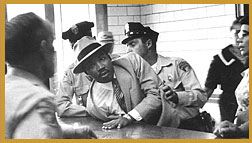
In 1954, Martin Luther King became pastor of the Dexter Avenue Baptist Church in Montgomery, Alabama. Always a strong worker for civil rights for members of his race, King was, by this time, a member of the executive committee of the National Association for the Advancement of Colored People, the leading organization of its kind in the nation. He was ready, then, early in December, 1955, to accept the leadership of the first great Negro nonviolent demonstration of contemporary times in the United States, the bus boycott described by Gunnar Jahn in his presentation speech in honor of the laureate. The boycott lasted 382 days. On December 21, 1956, after the Supreme Court of the United States had declared unconstitutional the laws requiring segregation on buses, Negroes and whites rode the buses as equals. During these days of boycott, King was arrested, his home was bombed, he was subjected to personal abuse, but at the same time he emerged as a Negro leader of the first rank.
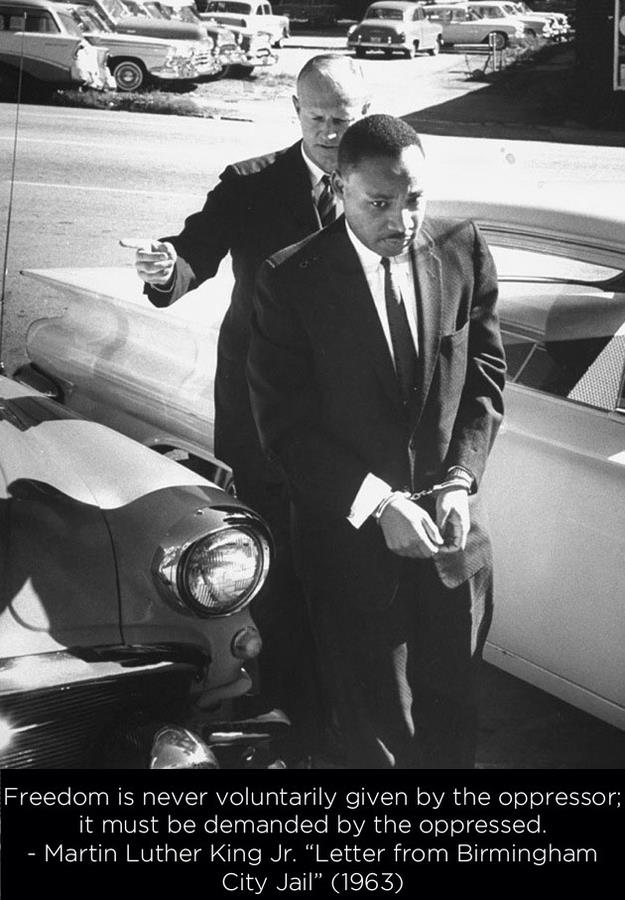
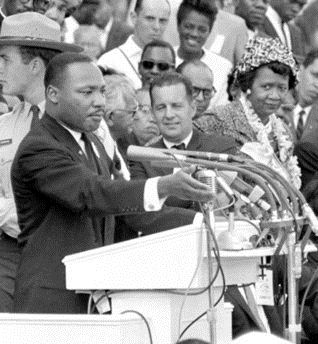
In 1957 he was elected president of the Southern Christian Leadership Conference, an organization formed to provide new leadership for the now burgeoning civil rights movement. The ideals for this organization he took from Christianity; its operational techniques from Gandhi. In the eleven-year period between 1957 and 1968, King traveled over six million miles and spoke over twenty-five hundred times, appearing wherever there was injustice, protest, and action; and meanwhile he wrote five books as well as numerous articles. In these years, he led a massive protest in Birmingham, Alabama, that caught the attention of the entire world, providing what he called a coalition of conscience. and inspiring his “Letter from a Birmingham Jail”, a manifesto of the Negro revolution; he planned the drives in Alabama for the registration of Negroes as voters; he directed the peaceful march on Washington, D.C., of 250,000 people to whom he delivered his address, “l Have a Dream”, he conferred with President John F. Kennedy and campaigned for President Lyndon B. Johnson; he was arrested upwards of twenty times and assaulted at least four times; he was awarded five honorary degrees; was named Man of the Year by Time magazine in 1963; and became not only the symbolic leader of American blacks but also a world figure.
At the age of thirty-five, Martin Luther King, Jr., was the youngest man to have received the Nobel Peace Prize. When notified of his selection, he announced that he would turn over the prize money of $54,123 to the furtherance of the civil rights movement.
On the evening of April 4, 1968, while standing on the balcony of his motel room in Memphis, Tennessee, where he was to lead a protest march in sympathy with striking garbage workers of that city, he was assassinated.
Selected bibliography
Adams, Russell, Great Negroes Past and Present, pp. 106-107. Chicago, Afro-Am Publishing Co., 1963.
Bennett, Lerone, Jr., What Manner of Man: A Biography of Martin Luther King, Jr. Chicago, Johnson, 1964.
I Have a Dream: The Story of Martin Luther King in Text and Pictures. New York, Time Life Books, 1968.
King, Martin Luther, Jr., The Measure of a Man. Philadelphia. The Christian Education Press, 1959. Two devotional addresses.
King, Martin Luther, Jr., Strength to Love. New York, Harper & Row, 1963. Sixteen sermons and one essay entitled “Pilgrimage to Nonviolence.”
King, Martin Luther, Jr., Stride toward Freedom: The Montgomery Story. New York, Harper, 1958.
King, Martin Luther, Jr., The Trumpet of Conscience. New York, Harper & Row, 1968.
King, Martin Luther, Jr., Where Do We Go from Here: Chaos or Community? New York, Harper & Row, 1967.
King, Martin Luther, Jr., Why We Can’t Wait. New York, Harper & Row, 1963.
“Man of the Year”, Time, 83 (January 3, 1964) 13-16; 25-27.
“Martin Luther King, Jr.”, in Current Biography Yearbook 1965, ed. by Charles Moritz, pp. 220-223. New York, H.W. Wilson.
Reddick, Lawrence D., Crusader without Violence: A Biography of Martin Luther King, Jr. New York, Harper, 1959.From Nobel Lectures, Peace 1951-1970, Editor Frederick W. Haberman, Elsevier Publishing Company, Amsterdam, 1972
This autobiography/biography was written at the time of the award and first published in the book series Les Prix Nobel. It was later edited and republished in Nobel Lectures. To cite this document, always state the source as shown above.

 Dr. Whitaker is the seventh child of Eddie and Charlie Mae Jackson from Waycross, Georgia. Dr. Whitaker attended Clark Atlanta University completing a BS degree with honors in Biology. She attended Yale University School of Medicine-Department of Public Health and obtained her medical degree form Emory University School of Medicine, the only female African American in her class. A kidney specialist by trade, an artist trained under Leonard Baskin, and a healer by passion, her Ashes to Ashes project was developed to provide hope for a better American future, one in which races of varying color and heritage can understand the importance of each other’s American history, empathize with each other’s sacrifices and tragedies, realize the legacy of impacts from suffered injustices and accept that healing is a process as much a cure, and recognize and lay to rest the 4,000 victims of vigilante justice perpetrated against a predominantly black population for simply desiring the most basic of American rights of obtaining an education, ownership of land, fair competition in commerce, the uniquely American right of voting for our governing institutions and for an equal stake in the American experience. She is currently working on the second phase of A2A: The Noose: Tread of Hate and Resilience. This will center on American history through the lens of lynching and will include an International Speak My Name Day to speak the names of the lynched.
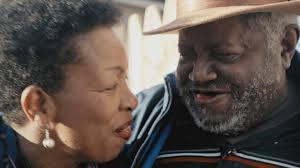 Mr. Rembert grew up in rural Georgia, in a farm laborer’s house and later in the small town of Cuthbert. Raised by his great-aunt, Rembert worked with her in the cotton fields during much of his childhood, and received little formal education. As a teenager he got involved in the 1960s Civil Rights Movement. Jailed for fleeing for his life in a stolen car, nearly lynched and then cut down to serve as an example to others, Rembert was sentenced to 27 years in the Georgia Penal System. Despite the cruel prison circumstances, Rembert learned to read and write and managed to meet and write letters to his would-be wife Patsy as well as to congressmen, with the hope of gaining early release. He also learned the craft of hand-tooling leather from a fellow-prisoner. After seven years, most of which was spent on chain gangs, Rembert was released from prison, but it wasn’t until 1997, at the age of 51, that he began to work more seriously with leather as his artistic medium, creating tooled and dyed canvases that tell the stories of his life. His paintings have been exhibited at galleries across the country—including the Yale University Art Gallery, the Adelson Galleries New York, and the Hudson River Museum—and have been profiled in The New York Times and elsewhere. Rembert is the recipient of a 2017 USA Fellowship, and in 2015 was an honoree of Bryan Stevenson’s Equal Justice Initiative. Rembert’s full-color memoir, Chasing Me to My Grave: An Artist’s Memoir of the Jim Crow South, is forthcoming from Bloomsbury in 2021.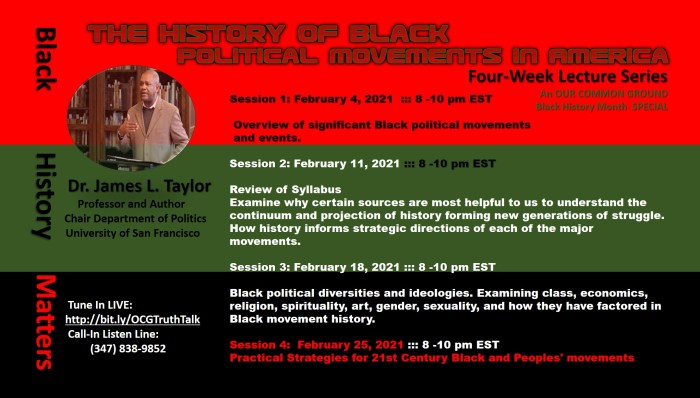

 Professor James Lance Taylor is the Chair of the Department of Politics at the University of San Francisco and is from Glen Cove, Long Island. He is the author of the book “Black Nationalism in the United States: From Malcolm X to Barack Obama”, which earned 2012 “Outstanding Academic Title” – Choice: Current Reviews for Academic Libraries. (Ranked top 2 percent of 25,000 books submitted and top 8 percent of 7,300 actually accepted for review by the American Library Association). Rated “Best of the Best.” The hardback version sold out in the U.S. and the paperback version was published in 2014.








 Last ye


 OCG
OCG 