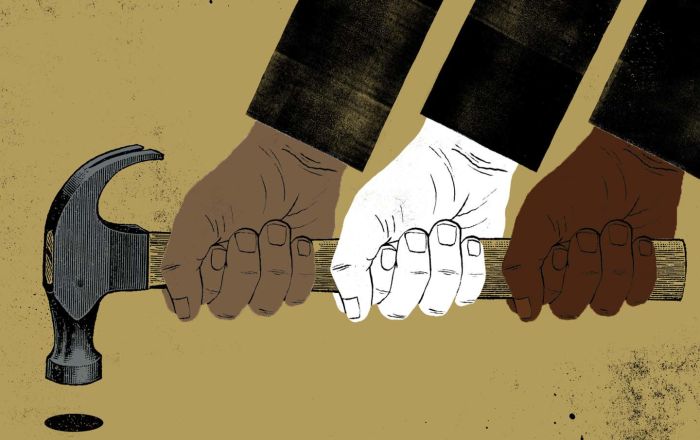
In the middle of the 20th century, organized labor kept capital from capturing a larger share of the wealth that American industries were creating. In recent decades, the absence of a strong union presence has allowed the 1 percent to funnel that wealth upward uncontested. We can’t fully address this situation until we link the struggle against racism to the struggle for the right of all workers to union representation.To build the power needed to secure labor-law reform and an overhaul of trade policies, we need to integrate the labor movement into a broader coalition that includes civil-rights activists, women’s-rights groups, and faith-based organizations.A strong constituency for such a change certainly exists, although it has not fully coalesced. Recent polling shows that about 87 percent of low-wage black workers approve of labor unions, a level of support almost 20 percent higher than among white workers. When women of color make up three-quarters of the workforce, unions win representational elections at a rate of 82 percent, compared with 35 percent in places where white men make up the majority.
Many seemingly unrelated groups have already begun working together to forge a broader movement to build black worker power. Last September in Raleigh, North Carolina, the Institute for Policy Studies hosted “Black Workers Matter: Organize the South,” a conference that brought together several national labor unions, the NAACP, the Moral Mondays movement, Black Lives Matter, and other civil-rights and religious activists.As the Rev. Dr. William J. Barber II, president of the North Carolina NAACP and founder of the Moral Mondays movement, has pointed out, linking civil rights and worker rights hardly counts as a new idea. Dr. Martin Luther King Jr. called on the labor movement to invest heavily in worker organizing in the South, and the rallying cry at the March on Washington was “jobs and freedom.” To make black economic equality a real possibility in the 21st century, we need to infuse that idea with fresh energy.
ProPublica is a nonprofit newsroom that investigates abuses of power. Sign up to receive our biggest stories as soon as they’re published.
HARTFORD, Conn. — On a sweltering Saturday afternoon last June, Crystal Carter took a deep breath as she walked toward the red “for rent” sign.
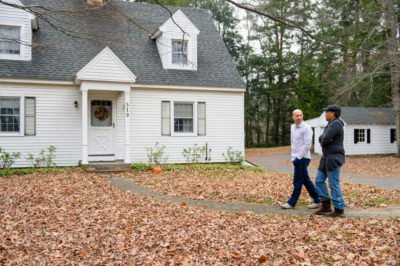
Shaded by tall oak trees, the three-story duplex looked cozy. The first floor siding was painted yellow, with white railings leading to the front door. The windows appeared new, the lawn freshly cut.
Although the property was in Barry Square, on the edge of a struggling area in southern Hartford, the family outside buoyed Carter’s spirits. Four children giggled in a recliner in the front yard, singing along to the radio while their father packed a moving truck. Across the street were Trinity College’s dignified brick pillars, the entry to the elite school’s 100-acre campus.
Carter tried to tamp down her excitement, but this looked like the kind of place the 48-year-old single mother so desperately wanted for her five kids: no mouse traps, no chipped paint trying to camouflage mold.
He put down a crate and offered her a tour of the first-floor, four-bedroom unit. Inside, she marveled at the modern kitchen, finished hardwood floors and large closets.
“This is a lot of space. When are you putting this on the market?” she asked.
“It’s ready, if you want to do the application,” he told her. Rent was $1,500 a month.
Carter paused.
“I’ll be paying with a Section 8 voucher,” she said.
“Yeah,” the man shot back. “I don’t do Section 8.”
Officially called Housing Choice Vouchers, Section 8 rent subsidies were supposed to help low-income people find decent housing outside poor communities. But, for the better part of a year, Carter had found the opposite. This was easily the 50th place she had toured since her landlord sold her last apartment and evicted her. Nearly all of them were in poor areas. They had holes in the wall, uncovered electrical outlets, even roaches and mice. When she hit upon something clean, she learned not to ask too many questions. She complimented the landlord, talked about her children and emphasized that she didn’t smoke. None of it seemed to matter, though, once she uttered two words: Section 8.
Now, as Carter showed herself out of the first-floor rental, she felt panic welling within. “There really are no doors open for people that have a voucher,” she said afterward. “It makes you feel ashamed to even have one.” Typically, vouchers come with a time limit to find housing, and Carter had already won three extensions. She wasn’t sure she’d get another.
She had just 40 days left to find a place to live.
As the federal government retreated from building new public housing in the 1970s, it envisioned Section 8 vouchers as a more efficient way of subsidizing housing for the poor in the private market. They now constitute the largest rental assistance program in the country, providing almost $23 billion in aid each year to 2.2 million households. Local housing authorities administer the program with an annual budget from Washington and are given wide latitude on how many vouchers they hand out and how much each is worth. The bulk of the vouchers are reserved for families who make 30% or less of an area’s median income. That is $30,300 or less for a family of four in Hartford.
For years, researchers and policymakers have lamented the program’s failure to achieve one of its key goals: giving families a chance at living in safer communities with better schools. Low-income people across the country struggle to use their vouchers outside of high-poverty neighborhoods.
In Connecticut, the problem is especially acute. An analysis of federal voucher data by The Connecticut Mirror and ProPublica found that 55% of the state’s nearly 35,000 voucher holders live in neighborhoods with concentrated poverty. That’s higher than the national average of 49% and the rates in 43 other states.
The segregation results, at least in part, from exclusionary zoning requirements that local officials have long used to block or limit affordable housing in prosperous areas. As the Mirror and ProPublica reported in November, state authorities have done little to challenge those practices, instead steering taxpayer money to build more subsidized developments in struggling communities.
Dozens of voucher holders in Connecticut say this concentration has left them with few housing options. Local housing authorities often provide a blue booklet of Section 8-friendly properties, but many of the ones listed are complexes that have a reputation for being rundown and are in struggling communities or have long waitlists. Many recipients call it the “Black Book” because “you are going to the dark side, for real. The apartments in that black book are nasty and disgusting,” said Janieka Lewis, a Hartford resident whose home is infested with mice.
Josh Serrano also lives in one of the state’s poorest neighborhoods. After landing a voucher in 2018, he tried to find a place in the middle-class town of West Hartford, where his son lives part time with his mother. He also looked in nearby Manchester and Simsbury. At each stop, the rent was higher than his voucher’s value or the landlord wouldn’t take a voucher.
“There is an invisible wall surrounding Hartford for those of us who are poor and particularly have black or brown skin like myself,” he said. “No community wanted me and my son.”
Nearly 80% of the state’s voucher holders are black or Hispanic and half have children. Their average income is $17,200 a year and the average amount they pay in rent out of pocket is $413 a month.
The federal government has taken a mostly hands-off approach to ensuring the Section 8 program is working as it was originally intended. The U.S. Department of Housing and Urban Development typically leaves it up to each housing authority to determine how much a voucher is worth, which essentially determines the type of neighborhood a voucher holder can afford. And when HUD assesses the work of housing authorities — to decide whether to increase federal oversight — only a tiny fraction is based on whether local officials are “expanding housing opportunities … outside areas of poverty or minority concentration.” (And even at that, nearly all housing authorities receive full credit.)
Moreover, federal law does not make it illegal for a landlord to turn down a prospective tenant if they plan to pay with a voucher, so HUD does not investigate complaints of landlords who won’t accept Section 8 vouchers.
Connecticut goes further. It is one of 14 states where it’s illegal to deny someone housing because they plan to use a Section 8 voucher. And the state allocated more than $820,000 in the last fiscal year to help pay for 10 investigators to look into complaints of all types of housing discrimination and provide legal assistance. “There has been an effort to try to change” housing segregation, said Seila Mosquera-Bruno, the commissioner of the Connecticut Department of Housing.
But those efforts have done little to prevent landlords from continuing to reject voucher holders. The groups charged with investigating housing complaints say they lack the resources to be proactive and believe they are only seeing a fraction of what’s really going on.
“Housing providers keep coming up with ways to rent to who they want to rent and find ways around housing discrimination laws,” said Erin Kemple, executive director of the Connecticut Fair Housing Center, which investigates complaints. “There is a lot more discrimination going on than what we are investigating.”
In 2018, fewer than 75 complaints were made that accused the landlord or owner of refusing to accept a voucher or some other legal source of income, such as Social Security. The Connecticut Fair Housing Center said that figure isn’t low because discrimination is scarce but rather because prospective tenants are fearful that complaining could hurt them and know that it will do nothing to help them with their immediate needs; investigations can take longer than the time they have to find a house with their vouchers.
“In order to make it a real priority and address the real effects of discrimination in society, the government should dedicate more resources to ferreting it out,” said Greg Kirschner, the group’s legal director.
A Hartford native, Carter reluctantly moved back to her hometown in 2011 to escape an abusive relationship. She had delayed relocating, she said, because she worried she’d be taking her children from a quiet neighborhood in Florida to a “war zone” in Connecticut.
“They not from the streets. Their heart is trying to be goofy-cool,” she said of her three sons, now 10, 17 and 18, and two daughters, ages 13 and 14. “They don’t have that fight in them. I do.” (Worried about her children’s privacy, Carter asked that they not be named in this story.)
My mother purchased her home on the south side of Chicago for $55,000 in 1986, the equivalent of $123,000 today.When she died without a will, court fees and fines left our family with just $40,500 — a loss of over $80,000 on the purchase price of her house.I realized that, because of our history, many African Americans haven’t learned how to transfer wealth generationally by making an estate plan.So, after my mother’s death, my husband and I drafted an estate plan, which we review annually around my mother’s birthday.
My mother purchased her home on the south side of Chicago for $55,000 in 1986, the equivalent of $123,000 today.
When she died without a will, court fees and fines left our family with just $40,500 — a loss of over $80,000 on the purchase price of her house.
I realized that, because of our history, many African Americans haven’t learned how to transfer wealth generationally by making an estate plan.
So, after my mother’s death, my husband and I drafted an estate plan, which we review annually around my mother’s birthday.
Overdue reparations is the key to closing the racial wealth gap
Dr. William Darity‘s congressional testimony lays a path to fix historic inequity that produces unequal outcomes for blacks
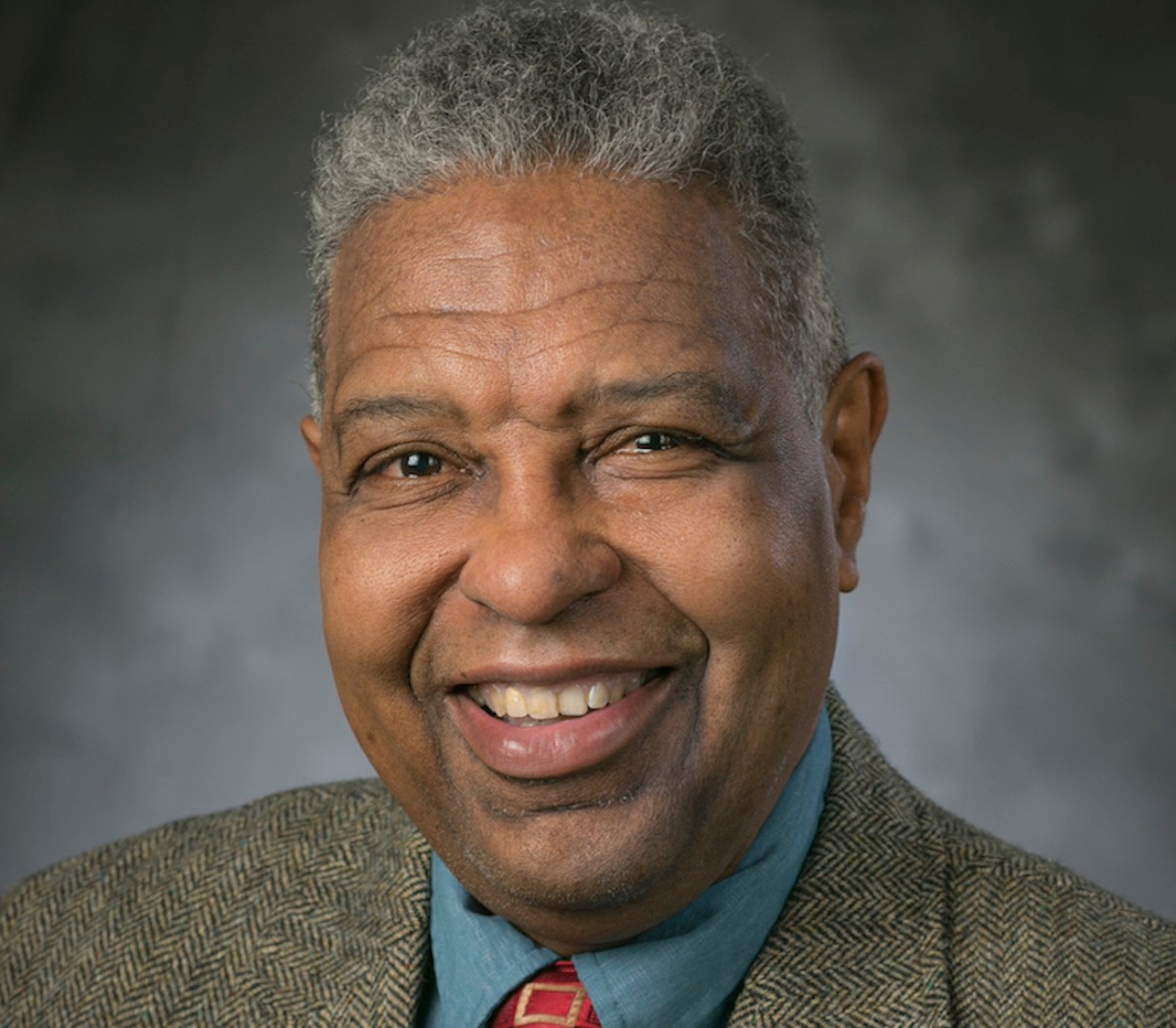
Dr. Willliam “Sandy” Darity, Samuel DuBois Cook Center on Social Equity at Duke University.
(The following is testimony by William Darity Jr., on the proposed Commission to Study and Develop Reparations Proposals for African-Americans Act before the 116th Congress 2019–2020 on June 19, 2019)
By William Darity Jr.
The time has come for the United States, finally, to lay to rest the issue of what has been called, variously, the Slave Problem, the Colored Problem, the Negro Problem, the Black Problem, and the African-American Problem. The country can ill afford to remain stranded in the mire of injustice, perpetually refusing to resolve the fundamental, historic national dilemma facing all Americans. For too long, the nation has refused to take steps to solve an unethical predicament of its own making — the problem of the unequal status of black and white Americans.
A policy of reparations is a set of compensatory policies for grievous injustice. The three goals of a reparations plan should be 1. acknowledgement 2. redress and 3. closure.
1.Acknowledgement is the admission of responsibility for the atrocity (or atrocities) by the culpable party, incorporating an apology. The admission must also be accompanied by a guarantee to make restitution in as rapid a fashion as possible.
2.Redress is the provision of restitution, typically in the form of monetary compensation — as it has been in the cases of Germany’s reparations program on behalf of victims of the Holocaust and the United States’ reparations program on behalf of Japanese Americans unjustly incarcerated during World War II.
3.Closure means the agreement by the victimized community and the culpable party that the debt has been paid. The victims would make no further group-specific claims on the culpable party, unless new atrocities took place.
A plan for black reparations in the U.S. must fulfill specific principles, and those principles must inform, organically, the deliberations of the Commission to Study and Develop Reparations for African-Americans. In addition to the three central aims of a reparations program described above — acknowledgement, redress and closure — there are six principles that must be met: 1. With respect to black reparations, the U.S. government is the culpable party that must meet the obligation of awarding restitution to those eligible for reparations. 2. The government is culpable for not providing compensation over the course of 150 years since the end of the Civil War for enslaved blacks, their heirs and their descendants. 3. The government also is culpable for maintaining the legal and authority framework that sanctioned slavery, legal segregation and continues to permit ongoing racist practices. 4. Eligibility for reparations for African-Americans must apply specifically to those black Americans who are descendants of persons enslaved in the U.S. 5. Black reparations must be designed, at minimum, to eliminate the racial wealth gap. 6. Black reparations also must include a systematic plan to maintain historical memory of the conditions that motivated the inauguration of the program of restitution.
With respect to the claim for black reparations, the U.S. stands as the culpable party. The current text of HR40 makes note of “[t]he role which the federal and state governments of the U.S. supported the institution of slavery in constitutional and statutory provisions,” “the federal and state laws that discriminated against formerly enslaved Africans and their descendants who were deemed U.S. citizens from 1868 to the present,” and “other forms of discrimination in the public and private sectors against freed African slaves and their descendants who were deemed U.S. citizens from 1868 to the present, including redlining, educational funding discrepancies, and predatory financial practices.” Indeed, to the extent that federal laws and their enforcement take precedence over both state government and private- sector actions, the failure of the federal government to prohibit discriminatory actions by non-federal entities reinforces the national responsibility for making restitution.
Moreover, the federal government abandoned the opportunity to provide immediate compensation to those persons formerly enslaved upon emancipation. The freedmen had been promised allotments of at least 40 acres of land. There is some ambiguity whether this was intended to be 40 acres per family of four or per individual, but even if we take the more conservative condition — 40 acres per family — the allocation would have amounted to 40 million acres for the four million persons who were newly emancipated. This allocation never took place, and in the subsequent 150 years there has been no act of restitution for the formerly enslaved or their descendants. This is not because the descendants of slavery have been silent on this score. It is because their efforts to this point, actively, have been opposed and blocked. The commission to be established under HR40 represents an opportunity, finally, to develop a reparations program that will address the nation’s unmet obligations.
The case for black reparations must be anchored on three phases of grievous injustice inflicted upon enslaved blacks and their descendants. First is the atrocity of slavery itself.
The case for black reparations must be anchored on three phases of grievous injustice inflicted upon enslaved blacks and their descendants. First is the atrocity of slavery itself. Second are the atrocities exercised during the nearly century-long period of legal segregation in the U.S. (the “Jim Crow” era). Third are the legacy effects of slavery and Jim Crow, compounded by ongoing racism manifest in persistent health disparities, labor market discrimination, mass incarceration, police executions of unarmed blacks (de facto lynchings), black voter suppression, and the general deprivation of equal well-being with all Americans. Therefore, it is a misnomer to refer to “slavery reparations,” since black reparations must encompass the harms imposed throughout American history to the present moment — both slavery and post-slavery, both Jim Crow and post-Jim Crow — on black descendants of American slavery. It is precisely that unique community that should be the recipients of reparations: black American descendants of persons enslaved in the U.S.
Second are the atrocities exercised during the nearly century-long period of legal segregation in the U.S. (the “Jim Crow” era).
In a 2003 article written with Dania Frank Francis, and, more recently, in work written with Kirsten Mullen, we have proposed two criteria for eligibility for black reparations. First, an individual must demonstrate that they have at least one ancestor who was enslaved in the U.S. Second, an individual must demonstrate that for at least 10 years prior to the onset of the reparations program or the formation of the study commission, whichever comes first, they self-identified as black, Negro or African-American. The first criterion will require genealogical documentation — but absolutely no phenotype, ideology or DNA tests. The second criterion will require presentation of a suitable state or federal legal document that the person declared themselves to be black.
These criteria rule out blacks who are post-slavery immigrants to the U.S., whose own ancestors are likely to have been subjected to enslavement and colonialism elsewhere. Indeed, they may have substantial claims for reparations themselves, but not from the U.S. government. For example, Nigerians (and Nigerian-Americans) have, in my estimation, a claim for reparations against the United Kingdom; similarly, Haitians (and Haitian-Americans) have a comparable claim for reparations against France. However, legitimate claimants for black reparations from the U.S. government must be those Black Americans whose ancestors were enslaved here after having been forced immigrants, rather than voluntary immigrants. This is a unique segment of the nation’s black population; it is the segment that will be eligible for black reparations in America.
iStockphoto.
In our forthcoming book, From Here to Equality: Reparations for black Americans in the 20th Century, Kirsten Mullen and I have identified the immense racial wealth gap as the prime indicator of the cumulative effects of the full trajectory of harms thrust upon black Americans. Wealth, the difference between the value of what one owns and what one owes, must not be confused with income. Wealth is more important than income, at least, insofar as higher levels of wealth are protective against unanticipated losses in income due to unemployment or financial emergencies. Wealth is insurance against economic anxiety and economic disruption for individuals and families. Wealth expands opportunity and possibility for those with larger amounts.
Today, black Americans constitute approximately 13 to 14 percent of the nation’s population, yet possess less than 3 percent of the nation’s wealth. A core objective of the reparations program must be to move the black American share to at least 13 to 14 percent. Reparations designated specifically for black American descendants of slavery must be enacted and implemented to achieve that aim, moving black wealth, roughly, from less than $3 trillion to $13 to $14 trillion.
While closure is one of the imperatives of any reparations program, arriving at closure does not mean forgetting the record of atrocities. Thus, a key dimension of a black reparations program must be the development and application of a rigorous curriculum, fully integrated into public school instruction at all grade levels, telling the story of America’s racial history, in all of its complexity, accurately.
The foregoing six principles should be guidelines that structure the charge of the Commission to Study and Develop Reparations Proposals for African-Americans. In addition, there are several revisions to HR40 that I view as essential to yield the strongest legislation to launch the commission. The window that is relevant to the American black claim for reparations is 1776 to the present, not 1619 to the present, as the bill currently reads. Since the eventual claim for legislative redress must be made on the U.S. government, the beginning date must be associated with the founding of the republic, not the landing of enslaved persons at Jamestown. Furthermore, the array of atrocities that occurred between 1776 and the present are of sufficient magnitude that the case is not weakened by discounting the colonial period.
In its current form, the longevity of the commission is not specified in HR40. I recommend the commission completes its report, inclusive of a detailed prescription for legislation to enact a reparations program for black Americans, within 18 months of its impaneling. … President Johnson’s National Advisory Commission on Civil Disorders (known colloquially as the Kerner Commission) issued its report with recommendations a mere seven months after impaneling.
… it is a misnomer to refer to “slavery reparations,” since black reparations must encompass the harms imposed throughout American history to the present moment
I also recommend, like the Commission on Wartime Relocation and Internment of Civilians, the commission on reparations proposals commission should be appointed exclusively by the Congress. The commission appointees should be experts in American history, Constitutional law, economics (including stratification economics), political science and sociology. These appointees must have expert knowledge on the history of slavery and Jim Crow, employment discrimination, wealth inequality, health disparities, unequal educational opportunities, criminal justice and mass incarceration, media, political participation and exclusion, and housing inequities. The commission also should include appointees with detailed knowledge about the design and administration of prior reparations programs as guidelines for structuring a comprehensive reparations program for native black Americans.
In addition, the commissioners should not receive payment to minimize the prospect that personal aggrandizement will influence the proceedings. However, there should be a paid professional staff, and the commissioner appointees’ reasonable expenses should be met. In essence, they (nor any organization to which they belong) should not receive a salary, honorarium, or the equivalent for performing this critical national service.
There are also some sections of HR40 that merit revision for accuracy. For example, Section 2 (a) of the legislation notes that many more than four million persons were enslaved in the U.S. between 1619 and 1865, since not all persons enslaved over that interval still were living at the end of the Civil War. It is valid to say there were about four million persons emancipated when the Civil War ended, but they were not the total number of persons subjected to American slavery.
And Section 3.b. (2) indicts the U.S. government for blocking repatriation of formerly enslaved blacks to the African continent. Arguably, the exact opposite is true, particularly given the United States’ role in the creation of Liberia. Even Abraham Lincoln advocated black repatriation until the later years of the Civil War. Alleged obstacles to repatriation are not a justification for black reparations. The core of the claim for reparations is a declaration for the establishment of full citizenship rights and compensation for the sustained denial of liberty for black descendants of American slavery. Of course, it will be their prerogative if some black recipients of reparations choose to use their funds to migrate to their preferred country in Africa, or elsewhere.
Finally, in addition, the commission’s report must detail the long and cumulative trajectory of atrocities visited upon black American descendants of persons enslaved in the U.S. and their ancestors, and it must provide a well-designed comprehensive program for reparations that will address the following specifics: criteria for eligibility for reparations and assistance for potential claimants to establish their eligibility, criteria for establishing the size of the reparations fund, details on how the reparations fund will be disbursed (and toward what ends), details on how the reparations program will be administered and monitored, and benchmarks for gauging the long-term success of the program and administrative modification, if needed.
William Darity Jr. is the Samuel DuBois Cook Professor of Public Policy, African and African American Studies, and Economics and director of the Samuel DuBois Cook Center on Social Equity at Duke University.
Where do we go from here?
What would it take to bridge the black-white wealth gap?
A Q & A with Duke University economist William ‘Sandy’ Darity, who has some radical—yet doable—ideas
mlk50.com
Reparations well-intentioned, but insufficient for the debt owed
City of Memphis gives $50,000 each to the 14 living black sanitation workers from the 1968 strike
mlk50.com
The Loebs : Exploited black labor and inherited white wealth
Penny-pinching Loeb ancestors kept wages flat for 25 years as black laundresses did “miserable” work
The cliché is that Americans have a short memory, but since Saturday, a number of us have been arguing over medieval religious wars and whether they have any lessons for today’s violence in the Middle East.
For those still unaware, this debate comes after President Obama’s comments at the annual National Prayer Breakfast, where—after condemning Islamic radical group ISIS as a “death cult”—he offered a moderating thought. “Lest we get on our high horse and think this is unique to some other place, remember that during the Crusades and the Inquisition, people committed terrible deeds in the name of Christ. In our home country, slavery and Jim Crow all too often was justified in the name of Christ … So this is not unique to one group or one religion. There is a tendency in us, a sinful tendency that can pervert and distort our faith.”
It’s a straightforward point—“no faith has a particular monopoly on religious arrogance”—that’s become a partisan flashpoint, as conservatives harangue the president for “equating” crusading Christians to Islamic radicals, accuse him of anti-Christian beliefs, and wonder why he would mention a centuries-old conflict, even if it has some analogies to the present day.
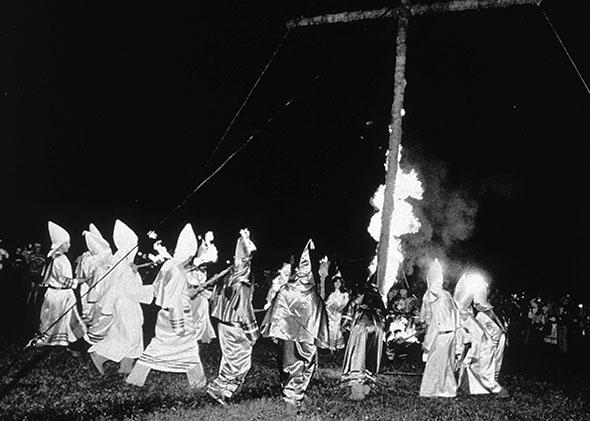
What we have missed in the argument over the Crusades, however, is Obama’s mention of slavery and Jim Crow. At the Atlantic, Ta-Nehisi Coates puts his focus on religious justifications for American bondage, and it’s worth doing the same for its post-bellum successor. And since we’re thinking in terms of religious violence, our eyes should turn toward the most brutal spectacle of Jim Crow’s reign, the lynching.
For most of the century between the two Reconstructions, the bulk of the white South condoned and sanctioned terrorist violence against black Americans. In a new report, the Alabama-based Equal Justice Initiative documents nearly 4,000 lynchings of black people in 12 Southern states—Alabama, Arkansas, Florida, Georgia, Kentucky, Louisiana, Mississippi, North Carolina, South Carolina, Tennessee, Texas, and Virginia—between 1877 and 1950, which the group notes is “at least 700 more lynchings in these states than previously reported.”
For his victims, “Judge Lynch”—journalist Ida B. Wells’ name for the lynch mob—was capricious, merciless, and barbaric. C.J. Miller, falsely accused of killing two teenaged white sisters in western Kentucky, was “dragged through the streets to a crude platform of old barrel staves and other kindling,” writes historian Philip Dray in At the Hands of Persons Unknown: The Lynching of Black America. His assailants hanged him from a telephone pole, and while “the first fall broke his neck … the body was repeatedly raised and lowered while the crowd peppered it with small-arms fire.” For two hours his corpse hung above the street, during which he was photographed and mutilated by onlookers. Finally, he was cut down and burned.
More savage was the lynching of Mary Turner and her unborn child, killed for protesting her husband’s murder. “[B]efore a crowd that included women and children,” writes Dray, “Mary was stripped, hung upside down by the ankles, soaked with gasoline, and roasted to death. In the midst of this torment, a white man opened her swollen belly with a hunting knife and her infant fell to the ground, gave a cry, and was stomped to death.”
These lynchings weren’t just vigilante punishments or, as the Equal Justice Initiative notes, “celebratory acts of racial control and domination.” They were rituals. And specifically, they were rituals of Southern evangelicalism and its then-dogma of purity, literalism, and white supremacy. “Christianity was the primary lens through which most southerners conceptualized and made sense of suffering and death of any sort,” writes historian Amy Louise Wood in Lynching and Spectacle: Witnessing Racial Violence in America, 1890–1940. “It would be inconceivable that they could inflict pain and torment on the bodies of black men without imagining that violence as a religious act, laden with Christian symbolism and significance.”
The God of the white South demanded purity—embodied by the white woman. White southerners would build the barrier with segregation. But when it was breached, lynching was the way they would mend the fence and affirm their freedom from the moral contamination, represented by blacks and black men in particular. (Although, not limited to them. Leo Frank, lynched in 1915, was Jewish.) The perceived breach was frequently sexual, defined by the myth of the black rapist, a “demon” and “beast” who set out to defile the Christian purity of white womanhood. In his narrative of the lynching of Henry Smith—killed for the alleged rape and murder of 3-year-old Myrtle Vance—writer P.L. James recounted how the energy of an entire city and country was turned toward the apprehension of the demon who had devastated a home and polluted an innocent life.”
James wasn’t alone. Many other defenders of lynching understood their acts as a Christian duty, consecrated as God’s will against racial transgression. “After Smith’s lynching,” Wood notes, “another defender wrote, ‘It was nothing but the vengeance of an outraged God, meted out to him, through the instrumentality of the people that caused the cremation.’ ” As UNC–Chapel Hill Professor Emeritus Donald G. Mathews writes in the Journal of Southern Religion, “Religion permeated communal lynching because the act occurred within the context of a sacred order designed to sustain holiness.” The “sacred order” was white supremacy and the “holiness” was white virtue.
I should emphasize that blacks of the era understood lynching as rooted in the Christian practice of white southerners. “It is exceedingly doubtful if lynching could possibly exist under any other religion than Christianity,” wrote NAACP leader Walter White in 1929, “No person who is familiar with the Bible-beating, acrobatic, fanatical preachers of hell-fire in the South, and who has seen the orgies of emotion created by them, can doubt for a moment that dangerous passions are released which contribute to emotional instability and play a part in lynching.” And while some church leaders condemned the practice as contrary to the Gospel of Christ—“Religion and lynching; Christianity and crushing, burning and blessing, savagery and national sanity cannot go together in this country,” declared one 1904 editorial—the overwhelming consent of the white South confirmed White’s view.
The only Southern Christianity united in its opposition to lynching was that of black Americans, who tried to recontextualize the onslaught as a kind of crucifixion and its victims as martyrs, flipping the script and making blacks the true inheritors of Christian salvation and redemption. It’s that last point which should highlight how none of this was intrinsic to Christianity: It was a question of power, and of the need of the powerful to sanctify their actions.
Still, we can’t deny that lynching—in all of its grotesque brutality—was an act of religious significance justified by the Christianity of the day. It was also political: an act of terror and social control, and the province of private citizens, public officials, and powerful lawmakers. Sen. Ben Tillman of South Carolina defended lynching on the floor of the U.S. Senate, and President Woodrow Wilson applauded a film that celebrated Judge Lynch and his disciples.
Which is all to say that President Obama was right. The vastly different environments of pre–civil rights America and the modern-day Middle East belies the substantive similarities between the fairly recent religious violence of our white supremacist forebears and that of our contemporary enemies. And the present divide between moderate Muslims and their fanatical opponents has an analogue in our past divide between northern Christianity and its southern counterpart.
This isn’t relativism as much as it’s a clear-eyed view of our common vulnerability, of the truth that the seeds of violence and autocracy can sprout anywhere, and of the fact that our present position on the moral high ground isn’t evidence of some intrinsic superiority.
Organizations are not race neutral. Scholars, managers, journalists, and many others routinely recognize “black capitalism,” “black banks,” and “ethnic restaurants,” yet we think of banks that are run by and serve whites simply as “banks” and white corporations simply as “businesses.”
This way of thinking reinforces the fallacy that only people of color have race, and obscures the broad, everyday dynamics of white racial power within organizations. Hiring for elusive notions of “fit,” locating operations in largely white communities, mandating dress and grooming rules rooted in European beauty standards, and expecting non-white employees to code-switch can all subtly disadvantage non-white employees. By leaving white organizations racially unmarked, it becomes difficult to explain why several decades of antidiscrimination and diversity policies ostensibly aimed at equalizing opportunity have done little to alter the overall distribution of organizational power and resources. Such organizational policies, while sometimes helpful in increasing minority representation, fail to address the racial hierarchies historically built into American organizations. Rather than asking how to bring diversity into the workplace, a better question is why so much power and organizational authority remain in white hands.
I argue that the idea of the race-neutral organization has done a great disservice to our understanding of race relations in the workplace, allowing scholars and practitioners to see racial exclusion as unfortunate aberrations or slight deviations from otherwise color-blind ideals. In reality (and even though we typically do not say this out loud), many mainstream American organizations have profited from and reinforced white dominance. Many still do. Understanding this context is vital to seeing organizations for what they really are: not meritocracies, but long-standing social structures built and managed to prioritize whiteness. Only then can leaders begin thinking differently about race — not as a temporary problem to solve or a box to check, but as a fundamental part of what it means to be a company in America. Only then can they have a better understanding of why their diversity efforts do so little to attract, retain, and promote people of color — and what they need to do to change that.
JUST HOW WHITE ARE ORGANIZATIONS?
The simplest way to think about organizational whiteness is through statistics. For example, black representation at the top of organizational hierarchies, as measured through CEOs in Fortune 500 companies, has decreased from six CEOs in 2012 to three today. Steady declines in minority representation at the helm of these businesses since their peak in the early and mid-2000s have led some scholars to claim that the “heyday” of dedicated diversity efforts has ended. University presidents remain mostly white (and male) despite rapidly diversifying student demographics, and academic hierarchies remain deeply stratified by race, with black men and women, respectively, making up just 2% of full-time professors above the rank of assistant. Black gains among public-sector employees — the economic sector responsible for much of the growth of the black middle class following the reforms of the civil rights era — have begun to disappear since the adoption of private-sector policies that have increased managerial discretion and loosened worker protections. A recent meta-analysis of field experiments — the gold standard for detecting discrimination, because other potentially explanatory factors are accounted for — shows that high levels of hiring discrimination against black men have remained relatively constant since the late 1980s, and discrimination against Latinos has decreased little. And despite some progress diversifying within individual firms, between-firm segregation has increased over the past 40 years and Fortune 500 boards remain 83.9% white.
The Big Idea
But our thinking must go beyond the numbers; it’s the reasons why these numbers persist that matter. Even though discrimination has been officially outlawed and most organizations would never say they’re racist, exclusion is visible in many organizational processes. These range from “race-neutral” grooming codes that coincidentally target black hairstyles to the white normativity built into seemingly nonracial organizational expectations. For example, many elite jobs use nebulous notions of “fit” or collegiality and end up hiring new employees with similar backgrounds to the existing white workforce. That’s because this seemingly race-neutral selection criteria can make whiteness a kind of unstated credential, particularly in light of historical processes of segregation and discrimination that have helped create racially homogenous workplaces. Discrimination is also built into the routine ways organizations do business. White corporations may undermine antidiscrimination law as courts see the presence of diversity policy as a good-faith effort (regardless of that policy’s effectiveness). Predominantly white corporations like Airbnb may fuel gentrification by reducing access to affordable housing, and white banks may syphon resources from black communities through discriminatory mortgage lending that redistributes black wealth to white banks.
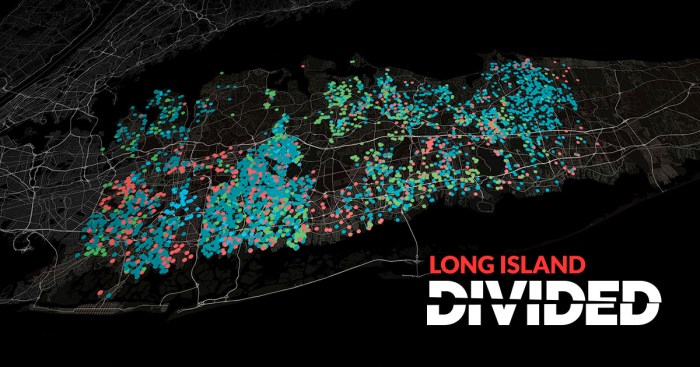
We sent white, black, Hispanic and Asian testers undercover to see if they would be treated equally by LI real estate agents. Many were not.
In one of the most concentrated investigations of discrimination by real estate agents in the half century since enactment of America’s landmark fair housing law, Newsday found evidence of widespread separate and unequal treatment of minority potential homebuyers and minority communities on Long Island.
The three-year probe strongly indicates that house hunting in one of the nation’s most segregated suburbs poses substantial risks of discrimination, with black buyers chancing disadvantages almost half the time they enlist brokers.
Additionally, the investigation reveals that Long Island’s dominant residential brokering firms help solidify racial separations. They frequently directed white customers toward areas with the highest white representations and minority buyers to more integrated neighborhoods.
They also avoided business in communities with overwhelmingly minority populations.
The findings are the product of a paired-testing effort comparable on a local scale to once-a-decade testing performed by the federal government in measuring the extent of racial discrimination in housing nationwide.
Regularly endorsed by federal and state courts, paired testing is recognized as the sole viable method for detecting violations of fair housing laws by agents.
Two undercover testers – for example, one black and one white – separately solicit an agent’s assistance in buying houses. They present similar financial profiles and request identical terms for houses in the same areas. The agent’s actions are then reviewed for evidence that the agent provided disparate service.
Newsday conducted 86 matching tests in areas stretching from the New York City line to the Hamptons and from Long Island Sound to the South Shore. Thirty-nine of the tests paired black and white testers, 31 matched Hispanic and white testers and 16 linked Asian and white testers.
Newsday confirmed that agents had houses to sell when meeting with testers based on analyses provided by Zillow, the online home search site. Zillow draws an inventory of available homes daily from the Multiple Listing Service of Long Island, the computerized system used by agents to select possible houses for buyers. MLSLI said that it does not maintain its own database of past daily inventories, as Zillow does, and so could not provide the same type of tallies. As permitted by law, all tests were recorded on hidden cameras to ensure accuracy in describing interactions between agents and customers.
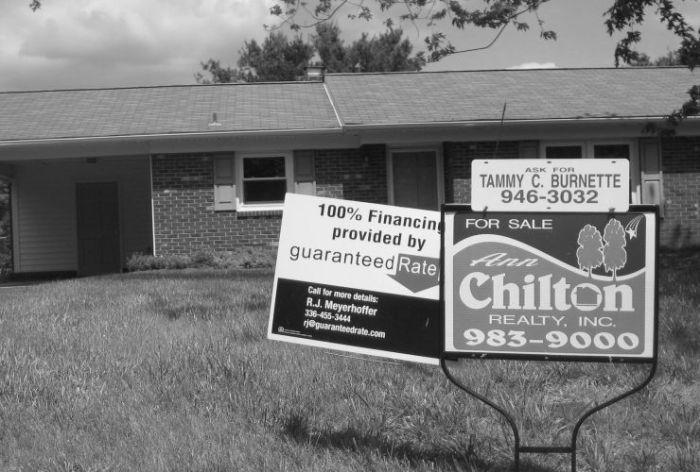
In January 1973, George Romney, Nixon’s enigmatic Secretary of Housing and Urban Development, administered an open-ended moratorium on its 1968 initiatives to open up single-family homeownership to low-income borrowers by providing government-backed mortgages. The experiment to make homeownership accessible to everyone ended abruptly with massive foreclosures and abandoned houses, but the questions ignited by these policies persisted. Some analysts insisted that the failure of HUD’s homeownership programs was proof positive that poor people were ill equipped for the responsibilities of homeownership. African Americans experience homeownership in ways that rarely produce the financial benefits typically enjoyed by middle-class white Americans.And they insisted that it more specifically implicated low-income African Americans as “incapable” homeowners. Others pointed to HUD’s obvious mismanagement of these programs as the real culprit in their demise, and, importantly, how the programs gave an industry already known for its racial bias new opportunities to exploit low-income African-Americans. But the lessons from HUD’s experiment were muddled by other economic sensibilities, including the commitment to private property and the centrality of homeownership to the American economy.
Today, homeownership, even for low-income and poor people, is reflexively advised as a way to emerge from poverty, develop assets, and build wealth more generally. The historic levels of wealth inequality that continue to distinguish African Americans from whites are powerful reminders of how the exclusion of Blacks from this asset has generationally impaired Black families in comparison with their white peers. Owning a home as a way to build wealth is touted as an advantage over public or government-sponsored housing. It grounds the assumption that it is better to own than rent. And the greatest assumption of all is that homeownership is the superior way to live in the United States. This, of course, is tied to another indelible truth that homeownership is a central cog in the U.S. economy. Its pivotal role as an economic barometer and motor means that there are endless attempts to make it more accessible to ever-wider groups of people. While these are certainly statements of fact, they should not be confused as statements on the advisability of suturing economic well-being to a privately owned asset in a society where the value of that asset will be weighed by the race or ethnicity of whoever possesses it.
The assumption that a mere reversal of exclusion to inclusion would upend decades of institutional discrimination underestimated the investments in the economy organized around race and property. The concept of race and especially racial inferiority helped to establish the “economic floor” in the housing market. One’s proximity to African Americans individually, as well as to their communities, helped to determine the value of one’s property. This revealed another reality. Markets, as in the means by which the exchange of commodities is facilitated, do not exist in vacuums, nor do abstract notions of “supply and demand” dictate their function. Markets are conceived and constituted by desire, imagination, and social aspirations, among other malleable factors. This does not mean that markets are not real, but that they are not shaped by need alone. They are shaped by political, social, economic, and in the case of housing, racial concerns. And in the United States, these market conditions were shaped and stoked by economic actors that stood to gain by curtailing access to one portion of the market while then flooding another with credit, capital, and indiscriminate access to distressed and substandard homes.
HUD’s crisis in its homeownership programs in the 1970s reveal deeper and more systemic problems with the pursuit of homeownership as a way to improve the quality of one’s life. It is undeniable that homeownership in the United States has been “one of the important ways in which Americans have traditionally acquired financial capital” and that the “tax advantages, the accumulation of equity, and the increased value of real estate property enable homeowners to build economic assets. . . . These assets can be used to educate one’s children, to take advantage of business opportunities, to meet financial emergencies, and to provide for retirement.” Investment in homeownership, and its role in the process of the personal accumulation of capital, has been fundamental to the good life in the United States.
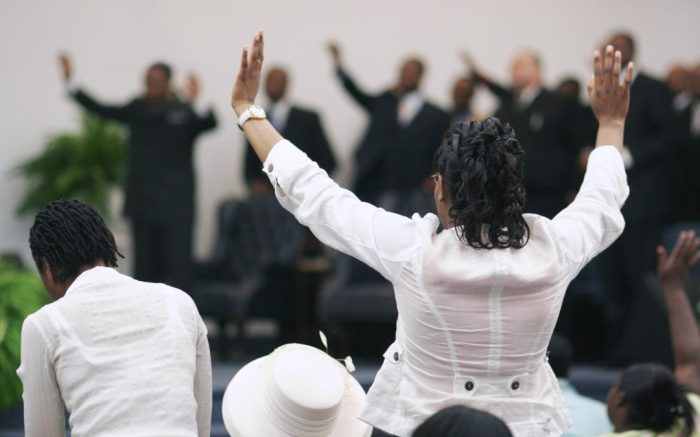
Does the black church still have a major impact on economic, political, and social progressions of African Americans today?
“Professor Eddie Glaude Jr. wrote a piece a few years ago, asserting “the Black Church, as we’ve known it or imagined it, is dead.”
Some claim that the black church isn’t doing enough to assist with the economic, social, and political progress of the black community.
The Michigan Chronicle recently took a look at research reporting that well over $420 billion had been donated to the black church as of 2013—a figure which averages out to at least $12 billion–$13 billion per year.
(Image: iStock.com/pixelheadphoto)
WHERE DID THE MONEY GO?
The question then turned into the whereabouts of the money donated and whether it had been spent to help progress the economic, social, and political stances of African Americans?
Leadership Network releases reports every year on the current trends in megachurches and other data on churches in general. They find that the largest 7% of churches contain nearly 50% of all churchgoers. Furthermore, they find that nearly 100% of church revenue comes in the form of donations and nearly 60% of said church revenue goes to staffing-related costs. Based on this data, it could be argued that the monies donated to churches in general, which includes the black church, are being used mainly to compensate the individuals who are directing, performing, and managing the church organization, rather than being spent to feed the poor as Proverbs 22:9 says.
SHOULD THE DONATIONS BE RE-DIRECTED DIRECTLY INTO BLACK COMMUNITIES?
Various bloggers and commentators have suggested that the $12 billion to $13 billion per year going to black church donations could have been reinvested to buy hundreds of thousands of dollars in black homes; send over 1 million black students to college, and feed literally every black homeless person for a number of years. This amount of reinvestment would also assist “Buying Black Expert” Maggie Anderson with her efforts to redirect black dollars into more productive measures in the black community; to assist with creating more black jobs.
SHOULD PORTIONS OF THE DONATIONS BE RE-DIRECTED DIRECTLY TO THE GOVERNMENT?
In addition, based on the Leadership Network data along with similar data, it has been argued throughout the years that churches should no longer benefit from 501(c)3 tax exemption status, as taxing the church revenues would bring nearly $20 billion or more into the federal government every year.
Image: iStock.com/br-photo
ABSENCE DURING POLITICAL PROGRESSIONS
Others, including sympathizers of the Black Lives Matter (BLM) movement, also believe that the black church is not aiding “enough” in efforts for political and social progression. On the heels of major media cases of unarmed black men being killed by police, many in the BLM Movement believe that the black church’s presence hasn’t been displayed enough to help combat in the fight against police brutality. This is in comparison to the role of the black church during the civil rights movement, where its voice was heard loud and clear in the fight for progression, along with its temple used for networking and strategy sessions within the African American community.
All of these discussions and reports continue a debate revolving around the present-day impact of the black church and if the black church still truly matters in terms of the economic, social, and political advancement of African Americans?
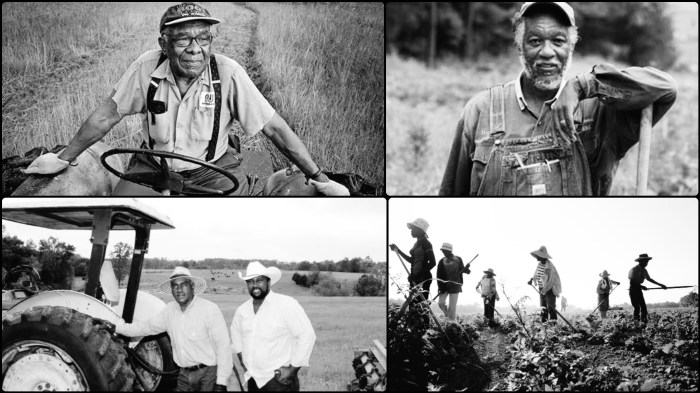
It is a shock to many that about 1 million Black landowners in the South of America have lost 12 million acres of farmland in the last 100 years. Even as we write this, we are shocked beyond reactions as to how a system can frustrate a people over the span of a century, without any plan to let go.
The loss of farmland of Black landowners started around the 1950s and has lasted to date. According to reports from The Atlantic, the black families which have lost their farms were victims of a war that is waged by the “deed of title” system which is said to be promoted by white racism/supremacy and local white power.
In our bid to dig into history to find the causes for Black poverty, economic and social decline, we find that Black people in America have suffered social injustice so much that it will take hard work (unity and power) for Black communities to rival white communities and businesses which are fed with finances of white privilege in America.
Our findings show that 98% of black farm owners in America have been dispossessed of their land. This is a direct indication of the systemic prejudice, and racial injustice perpetrated against the people of African descent in America.
History holds it that the vegetative and arable farmlands in the South of America, especially those along the Mississippi River, was forcefully taken from Native Americans, by the first Europeans who came to America. These Europeans would later venture into the enslavement of Africans for the cultivation of those lands. The Africans would later become owners of some of those lands after the abolishment of slavery and their emancipation.
A report by the U.S Department of Agriculture says that from the year 1900 till 1910, that there were 25,000 black farm operators. This figure increased by 20% in the space of those ten years. The report from ‘The Atlantic’ which we draw our information from, states clearly that the research was carried out on black farmland in the Mississippi area. The lands in question were found to be 2.2 million acres as of 1910. This number was about 14% of the total lands owned by Black people in America.
How Black People Lost Their Lands – The Plots And Twits
What was later realized about how Black people lost their lands was that it was somewhat a well thought out plan, and it was well executed over a long span of years. Some others would say that it was a collection of racist events that drove the wheel of white supremacy in one direction. Through legal, violent, and coercive means, the farmlands which were legally owned by people of African descent in America were transferred to white people. They started the land grab and transfer by aggregating them into large holdings, then aggregated them again, before attracting the profit-seeking eyes of ‘Wall Street.‘
The operation started with New Deal agencies in 19937. These agencies were federal agencies with white administrators, who were exceptionally targeting Black people. They denied Black landowners’ loans, and in turn channeling the sharecropping jobs to white people majorly. These agencies were systematically made to be in charge of the prices, investors, and regulation of the agricultural economy in America. This led to the failure of small farms and gave way for the rise of huge industrial mega-farms, which were formerly large plantations. The mega-farms and their new owners were then given the power to dictate and influence the policies of the agricultural sector.
The Black landowners suffered numerous illegal pressures through USDA loan programs. The USDA loan was originally designed to give rural people in America, an opportunity to take loan with zero down payment. It also offers low-interest-rate on the down payments.
Instead of these loans to be given proportionately to Black and white farmers, it was not. More white people got loans thereby frustrating the Black landowners and caused an enormous wealth transfer just after the 1950s. In a space of 19 years, black farmers had lost about 6 million acres of land by 1969. The effects were catastrophic on Black wealth. This saw a failure of half a million Black-owned farms across America. The cotton farms that were owned by Black farmers were almost non-existent at that point.
‘The Atlantic’ puts the loss of black farmers in Mississippi, to be around 800,000 acres, amounting to $3.7 billion (in today’s dollars), between 1950 and 1964.







 Organizations are not race neutral. Scholars, managers, journalists, and many others routinely recognize “black capitalism,” “black banks,” and “ethnic restaurants,” yet we think of banks that are run by and serve whites simply as “banks” and white corporations simply as “businesses.”





 OCG
OCG 