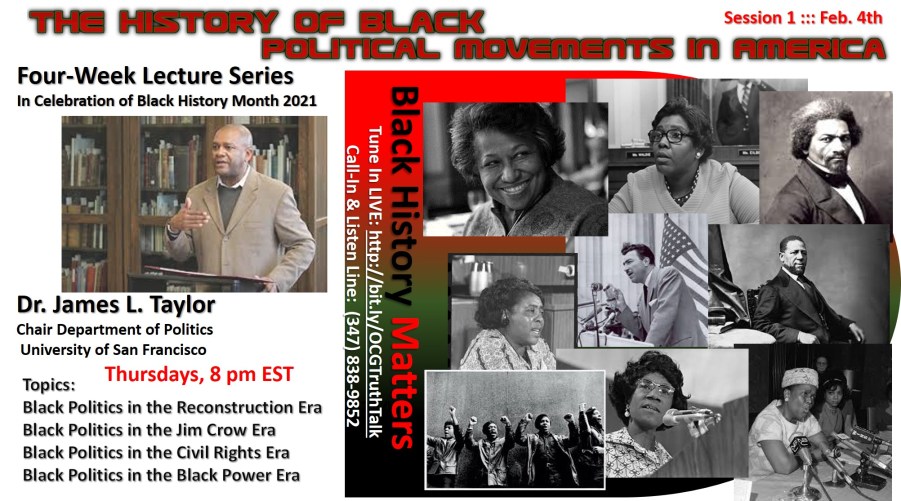
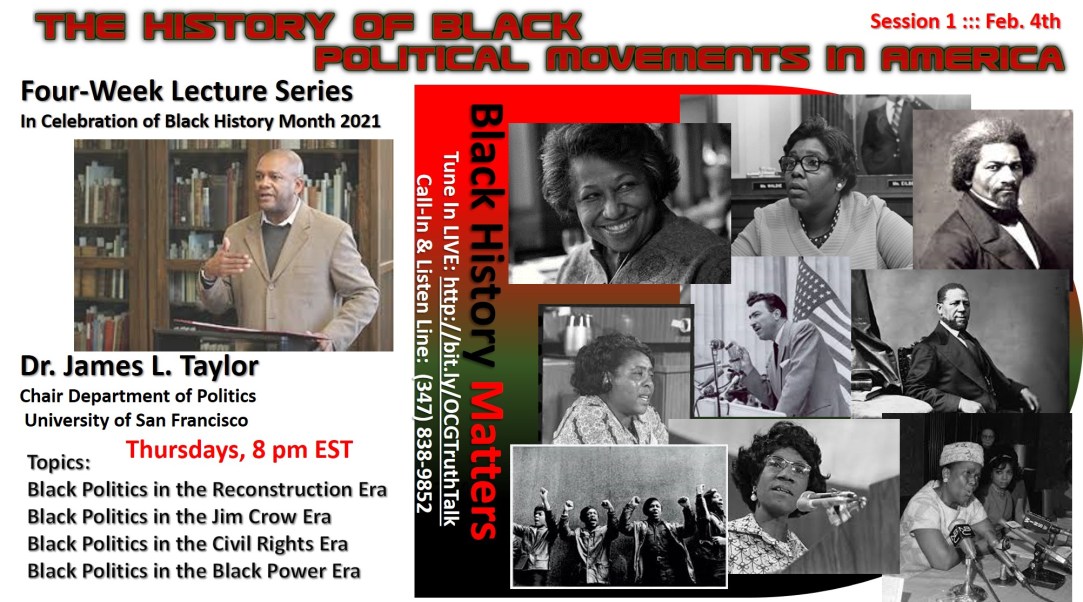
The Post-ReConstruction, Civil Rights, Black Power, and “unnamed” Black struggle movements grew out of each other and have steadily gained momentum through 2020. Some were not a formal movement, however, these movements marked a turning point in the meaning of Black struggle in the United States and also in how Black people saw themselves, generation to generation. All of the many Black movements are hailed as significant struggles of Blacks to achieve full equality. They were complex events that took place at a time when society and culture were being transformed throughout the United States, and their legacy reflects that complexity. But what of the interplay and relationship of all Black legacy political movements that occurred since Emancipation? They were all building blocks, learning opportunities, and a continuum of victories for our people. What we do know is that the descendants of American chattel slavery have waged the most successful and effective protests in American, indeed, world history. Our greatest achievements include teaching America the real meaning of justice, freedom, and resistance.
We need to know and understand the networks that compose the many Black struggles and movement that brought us to our current political struggles. It is how we measure our worth and etch out our future
This course of study will review the history of the many Black struggle movements and events that brought us to the election of Barack Obama resistance that brings us to the white supremacy insurrection and riots on January 6, 2021. What we see happening in America, the growth of white supremacy and confederacy politics become clear through the understanding of our journey toward freedom. This lecture series will provide knowledge of where we have been, Black achievement in how Black people have transformed America.
Series Schedule Thursdays, 8-10 pm EST
February 4, 2021
Session 1: Overview of significant Black political movements and events.
Black Politics and the Reconstruction Era
Black Politics of the Jim Crow Era
Black Politics creating the Civil Rights Era
Black Political development during the Black Power Era
Reading Recommendations
Timeline References
February 11, 2021
Session 2: Review of Syllabus Examine why certain sources are most helpful to us to understand the continuum and projection of history forming new generations of struggle. How history informs strategic directions of each of the major movements.
February 18, 2021
Session 3: Black political diversities and ideologies. Examining class, economics, religion, spirituality, art, gender, sexuality, and how they have factored in Black movement history.
February 25, 2021
Session 4: Practical Strategies for 21st Century Black and Peoples’ movements.
About Dr. James L. Taylor
Professor James Lance Taylor is the Chair of the Department of Politics at the University of San Francisco and is from Glen Cove, Long Island. He is the author of the book “Black Nationalism in the United States: From Malcolm X to Barack Obama”, which earned 2012 “Outstanding Academic Title” – Choice: Current Reviews for Academic Libraries. (Ranked top 2 percent of 25,000 books submitted and top 8 percent of 7,300 actually accepted for review by the American Library Association). Rated “Best of the Best.” The hardback version sold out in the U.S. and the paperback version was published in 2014.
He is a former President of the National Conference of Black Political Scientists (NCOBPS), an important organization of African American, African, and Afro Caribbean political scientists in the United States, 2009-2011. Taylor also served as Coordinator of the African American Studies Program for 2015-2017 at the University of San Francisco. He served as the Chair for the “Committee on the Status of Blacks” in Political Science for the American Political Science Association (APSA), 2016-2017.
The Black Power movement grew out of the CIVIL RIGHTS MOVEMENT that had steadily gained momentum through the 1950s and 1960s. It was not a formal movement, however, the Black Power movement marked a turning point in Black-white relations in the United States and also in how Black people saw themselves. Both movements were hailed as significant struggles of Blacks to achieve full equality. They were complex events that took place at a time when society and culture were being transformed throughout the United States, and its legacy reflects that complexity. But what of the legacy political movements that occurred right after the Emancipation of slavery? We need to know and understand the networks that compose the many Black struggles and movement that brought us to our current political struggles.
This course of study will review the history of the many Black struggle movements and events that brought us to the election of Barack Obama resistance that brings us to the white supremacy insurrection and riots on January 6, 2021. We hope that you will join us.
Series SCHEDULE
February 4, 2021
Session 1: Overview of significant historical Black political movements and events.
Black Politics and the Reconstruction Era
Black Politics of the Jim Crow Era
Black Politics creating the Civil Rights Era
Black Political development during the Black Power Era
Reading Recommendations
Timeline References
February 11, 2021
Session 2: Review of Syllabus Examine why certain sources are most helpful to us to understand the continuum and projection of history forming new generations of struggle. How history informs strategic directions of each of the major movements.
February 18, 2021
Session 3: Black political diversities and ideologies. Examining class, economics, religion, spirituality, art, gender, sexuality, and how they have factored in Black movement history.
February 25, 2021
Session 4: Practical Strategies for 21st Century Black and Peoples’ movements.
About Dr. James L. Taylor, Ph.D.
Chair, Department of Politics, former President of the National Conference of Black Political Scientists (NCOBPS), an important organization of African American, African, and Afro Caribbean political scientist community in the United States, 2009-2011.
Professor James Lance Taylor is from Glen Cove, Long Island. He is the author of the book “Black Nationalism in the United States: From Malcolm X to Barack Obama”, which earned 2012 “Outstanding Academic Title” – Choice: Current Reviews for Academic Libraries. (Ranked top 2 percent of 25,000 books submitted and top 8 percent of 7,300 actually accepted for review by the American Library Association). Rated “Best of the Best.” The hardback version sold out in the U.S. and the paperback version was published in 2014.
He is a former President of the National Conference of Black Political Scientists (NCOBPS), an important organization of African American, African, and Afro Caribbean political scientists in the United States, 2009-2011. Taylor also served as Chair of the Department of Politics at the University of San Francisco from 2012-2015, and Faculty Coordinator of the African American Studies Program for 2015-2017. He served as the Chair for the “Committee on the Status of Blacks” in Political Science for the American Political Science Association (APSA), 2016-2017.
Professor Taylor is currently writing and researching a book with the working title, Peoples Temple, Jim Jones, and California Black Politics. He expects the book to be completed with a 2018-2019 publication range. The book is a study of the Peoples Temple movement and African American political history in the state of California.
His teaching and research scholarly interests are in religion and politics in the United States, race and ethnic politics, African American political history, social movements, political ideology, law and public policy, Black political leadership, and the U.S. Presidency. He lives with his family in Oakland, California.
Black Lives Matter signs have popped up nearly everywhere. In June this slogan, or judiciously crafted approximations of it, began flooding my email inbox in the form of company statements that fell into a gray area between corporate responsibility, virtue signaling, and free advertising. During a 4th of July road trip to Vermont after I turned onto the wrong highway and found myself lost in New Hampshire, I saw the slogan painted in massive letters on the front of an aging barn. I thought then that a barn in a white, rural area took the prize for the most unexpected placement of a rallying cry for the fight against anti-Black racism, police brutality, and the lack of funding for social services. But the strangest place I have yet encountered the political mantra is the home page of a lavish Southern plantation house museum.
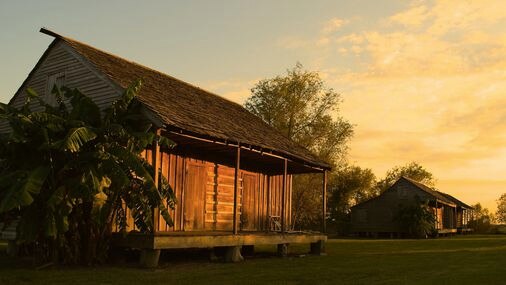
Berkeley Plantation, a National Historic Landmark that bills itself as “Virginia’s Most Historic Plantation,” is situated along the James River in Virginia, a colony and then state that enchained thousands of African Americans to produce lucrative tobacco crops before feeding, in the early 19th century, a massive forced migration of nearly one million Black people into the formerly Indigenous cotton lands of the Old Southwest. Berkeley Plantation’s home page features the romanticized lexicon and imagery that tourists anticipate and scholars of plantation tourism have long catalogued and criticized: genteel white owners, ornate architecture, splendid gardens, fine antiques, and decorous housewares. At Berkeley, the wealthy former residents who are extolled include Virginia Governor Benjamin Harrison and two of his descendants who became president, William Henry Harrison and Benjamin Harrison. The idealized domestic setting is enlivened, the home page text promises, by “enthusiastic guides in period costume.” Visitors here, the website suggests, will step into an Old South fantasy that obscures how slavery in its myriad grotesque realities shaped the site economically, socially, politically, and culturally. But in this moment of public foment, the Berkeley Plantation website now fronts a bold banner across the top of the screen proclaiming: “Berkeley Plantation believes that Black Lives Matter.”
I was stunned to see this claim appearing above photographs of grounds once maintained by enslaved people and formal parlors with slaveholder portraits hanging on walls. It struck me as the most supreme irony, and even as a cruel joke, that an estate built on the chewed-up and spat-out lives of Black people was now purporting to cherish Black existence. Given that we live in a time when not saying something of this sort exposes businesses and cultural institutions to the scrutiny of public opinion, this plantation was disingenuous at best and opportunistic at worst, I thought.
Then I clicked on the banner and discovered a direct statement indicating the harm done to Black and Native people on those grounds. The statement opens with an affirmation, “We believe that Black Americans, Indigenous People and their descendants deserve justice,” and continues with an admission of responsibility as well as an aspirational action plan. “We recognize that enslaved people were present at Berkeley plantation,” the statement reads. “We are working with researchers and historians to uncover all aspects of this site’s past and there is much work and responsibility ahead to make this site a place for healing and awareness.” I was persuaded that Berkeley Plantation’s current operators care about this past and its legacy.
Nevertheless, they are stewarding a racist landmark among an entire class of public memorials — plantation homes and landscapes — with a grandeur and impact equal to or greater than the Confederate statues currently being toppled or secreted away in our summer of national reckoning with anti-democratic symbols. As Patricia J. Williams stated in a September 2019 piece in The Nation on plantation weddings: These iconic homes and landscapes are “monuments to slavery.” The relevant question is not whether any site staff believes in their hearts that Black life is valuable — but rather, what caretakers of plantation sites and visitors to these historic places will do differently as a result of this belief.
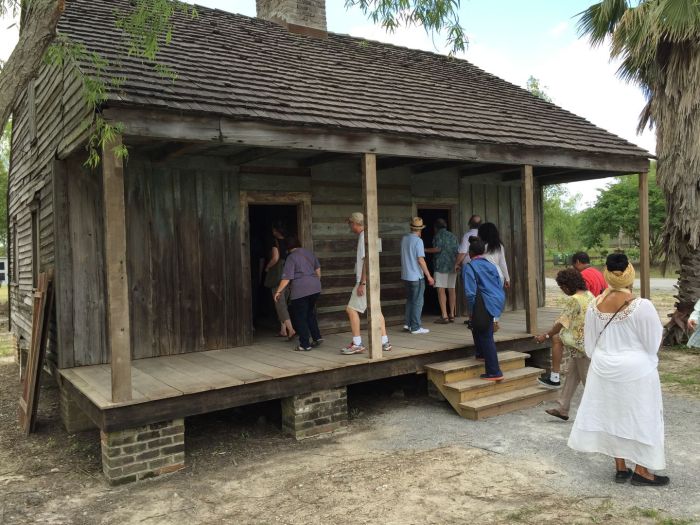
Visitors took a close look at a slave cabin at Whitney Plantation.DOUG WARREN FOR THE BOSTON GLOBE
NUMEROUS STUDIES OF plantation tourism, such as Jennifer Eichstedt and Stephen Small’s classic 2002 sociological study, “Representations of Slavery,” have found that plantation sites (especially those that are privately owned) tend toward Eurocentric portrayals of the past that participate in a process of “symbolic annihilation” in which Black presence is ignored or marginalized. Geographers E. Arnold Modlin, Derek Alderman, and Glenn Gentry argued in the journal Tourist Studies that even when plantation museums incorporate African Americans into tour narratives, they often do so in a distant manner that reduces Black experience to a cold recitation of population numbers, ages, and work tasks, rather than elevating Black residents to the level of white owners through stories that induce empathetic responses in visitors. The National Science Foundation has funded a team of geographers and historians headed by David Butler to conduct the most systematic study to date of a famous cluster of cotton estates known as the River Road Plantations spanning the Mississippi-Louisiana border. The team members are finding, as detailed in the Journal of Heritage Tourism, that even at sites that have made an effort to interpret enslaved people’s presence, features of the built environment, such as the location and size of the front-facing “big house” in comparison to “slave quarters” in the rear of a property, emphasize elite white experiences to the detriment of others.
Tourists who enter these landscapes often carry romanticized notions of the Old South that find affirmation in the spatial arrangement of the plantation that aggrandizes white mastery. I have found in my own research on ghost tourism in South Carolina, Louisiana, and Georgia, recounted in my book “Tales from the Haunted South,” that a handful of privately run plantation sites and walking tours market Black suffering in the form of horrific tales of sexual abuse and murder trivialized as ghost stories. It is heartbreaking and noteworthy, as well, that plantations can be heritage sites for white supremacists. Dylann Roof, who killed nine people participating in Bible study at Charleston’s Mother Emanuel AME Church in 2015, visited South Carolina plantation sites in the months leading up to his racially motivated attack.
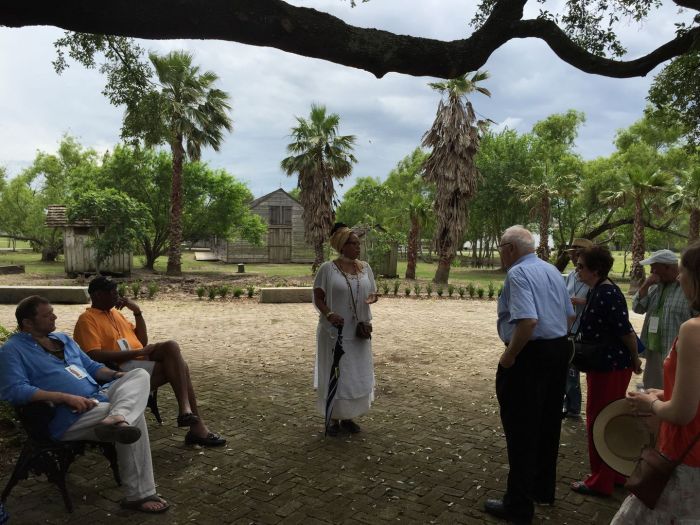
Whitney Plantation tour guide Mikhala Iversen answered questions from visitors.DOUG WARREN FOR THE BOSTON GLOBE
Plantation tourism has changed slowly but substantially over the last decade, particularly with the 2014 opening of the innovative, privately owned Whitney Plantation in Louisiana that consciously centers African and African American experiences and with the 2015 opening of the McLeod Plantation in South Carolina, which is operated by Charleston County and interprets Black experiences before and after the Civil War. These sites are models for how the plantation museum experience has been reimagined, and yet, they have remained in the minority of Southern estate museums. The gradual shift at Whitney and McLeod has provoked resistance from white visitors who have expressed resentment at tours that address racial subjugation. Most plantation sites dependent on tourism dollars and public funding have tended not to risk the discomfort of their majority white visitors by highlighting Black experience and the trauma of slavery. In this fraught context, the Berkeley Plantation statement that openly engages contemporary racial politics seems rather courageous.
As public debate continues about commemorations to the Confederacy in the built environment, we should ask what is to be done with the hundreds of monuments to a pre-Civil War culture of racialized power that proliferate across the Southern landscape — and indeed, the Northern terrain — in the form of the plantation and country estate. How do we turn these homages to slavery into stages for meaningful dialogue? Not, I would suggest, by pretending they do not exist or taking aim with the wrecking ball.
The latter approach seems to have been adopted this July in South Carolina on the former Oaks Plantation of 18th-century ricing patriarch Arthur Middleton, where, according to The Post and Courier, a late 19th-century plantation revival home built on the original grounds was recently demolished by the corporate owner under the cover of night. Instead, we should push ourselves as visitors and stewards of these sites to reinvent them as spaces of facilitated conversation at the nexus of multiple social histories, as places of homecoming and meaning-making for descendants of the enslaved, and as sites where managers and tour guides of color have equal employment and advancement opportunities as well as shared authority to research and incorporate fresh interpretations. This vision might include any number of concrete actions. Among them could be a reversal of how visitors enter and experience physical places. Rather than entering a mansion first, tourists might be welcomed into the comparatively humble quarters to learn about the unfree population who built the wealth of others but also sustained their own lives and families.
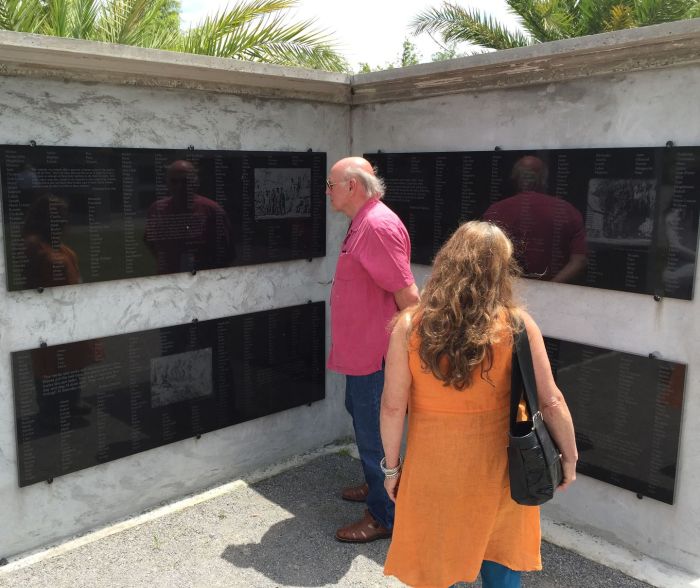
Jim Smith and Paula Barry of Conway, Mass., examined names of Louisiana slaves recorded on the 18 monument walls in the Allées Gwendolyn Midlo Hall at Whitney Plantation.DOUG WARREN FOR THE BOSTON GLOBE
Visitors might be invited to walk fields and survey outbuildings where many enslaved people spent the bulk of their time, to traverse any remaining wooded areas where enslaved people secretly met to practice their faith or temporarily escape corporal punishment, to tarry in work yards and kitchens where unfree workers practiced the range of skills necessary for supplying the white household. This approach would reveal not only the human strivings of Black and Indigenous people, but also the intricate, intimate, and violent relations that entwined the worlds of enslaved and enslaver.
With greater attention to plantation grounds, tour guides might even bring visitors into active, productive engagement. Volunteers could tend reproduction gardens of the type some enslaved people kept and, as the historian Peter Wood has often urged, “plant gourds!” The fruits of such gardens might be donated for the benefit of local community food security, connecting physical sites and histories of slavery (including the scourge of hunger that was often part of that trauma) to present-day social issues. Sites might attract diverse visitors with planned conversations, book clubs, poetry readings, and overnight stays — along the lines of Joseph McGill’s Slave Dwelling Project — that openly link past histories with current racial, economic, and political challenges. While such approaches may disabuse tourists of romantic notions about life in the United States prior to the formal end of racial slavery, they yield other and deeper satisfactions: earnest historical investigation, hands-on learning, social connection, and civic contribution. This dramatic summer of mass protest may represent an unprecedented opening for plantation sites to find receptive audiences for this tough work of collaborative reinvention, and indeed, some are already doing so.
FOR EXAMPLE, PUBLIC visits to the Royall House and Slave Quarters, an 18th century estate in Medford, Mass. (home to Governor John Winthrop as well as Isaac Royall, whose fortune built on slave labor and commercial trade helped to establish Harvard Law School), begin in the quarters. Board Co-President Penny Outlaw continually interweaves the activities of Blacks with those of white residents even as the tour moves into and through the main house. Recently, the house museum hosted a poetry reading with Malcolm Tariq, prize-winning author of “Heed the Hollow,” and featured an Instagram Live event with activist and performer Alok Vaid-Menon. Kyera Singleton, the first African American woman to lead the site as executive director, planned these virtual events. Singleton told me about her museum’s special charge in these times: “I cannot stress enough that the Royall House and Slave Quarters is a museum that seeks not only to get the history of slavery right, but also to function as a site of memory. It is a place that memorializes the lives of enslaved people. We do that quite simply by centering their lives, their experiences with violence, and their resistance. I believe one of our strengths is the ability to help people reckon with our current political moment by being honest about slavery and the legacies of enslavement today.”
The Broadway actor Robert Hartwell also had reinvention in mind when he purchased an antebellum house in Great Barrington, Mass., originally built for the Russell family that owned a local cotton manufacture. Hartwell said on Instagram: “I wish I could’ve told my ancestors when they were breaking their backs in 1820 to build this house that 200 years later a free gay Black man was going to own it and fill it with love and find a way to say their name.” Given that Massachusetts began taking steps to abolish slavery in the 1780s in response to Revolutionary-era ideals and legal suits brought by enslaved people, Hartwell’s home was probably not built by unfree workers. Nevertheless, New England mills routinely procured cotton grown and harvested by enslaved people in the South. Northern entrepreneurs shipped textiles woven from that cotton across the Atlantic Ocean to European markets and back down South to cheaply clothe the very people whose stolen labor had produced the lucrative raw material. Hartwell’s personal association of his house with that entangled history reminds us just how close the cultural memory of slavery is for many African Americans.
Black Lives Matter protests, however imperfect, have ignited widespread recognition that symbols we have long accepted as features of local landscapes wear down our potential to weave a new national fabric even as they archive physical evidence of our troubled racial history. Retiring, reimagining, and repurposing misplaced symbols that glorify racial oppression have the potential to open psychic and civic space for the descendants of enslaved people to finally call this nation home.
Tiya Miles is a professor of history at Harvard and the author of five books. Her latest, “All That She Carried: The Journey of Ashley’s Sack, A Black Family Keepsake,” is forthcoming from Random House in 2021.
A FEW YEARS ago, an acquaintance and I found ourselves debating the value of art in a capitalist society—a suitably light topic for a summer evening. My companion believed strongly that art must explicitly denounce the world’s injustices, and if it did not, it was reinforcing exploitative systems. I, ever the aesthete, found this stance reasonably sound from a moral perspective but incredibly dubious otherwise.
Then, as now, I consider art’s greatest function to be its capacity for expanding our conceptions of reality, not simply acting as moralistic propaganda. After all, the foundational thing you learn in art history is that the first artists were mystics, healers, and spiritual interlocutors—not politicians.
We started making art, it seems, to cross the border between our world and one beyond. Prehistoric wall paintings of cows and lumpy carvings of fertility goddesses serve as the earliest indications of our species’ artistic inclinations, blurring the lines between religious ritual and art object. Even as the world crumbles around us, I am convinced we must hold onto art’s spiritual properties rather than succumbing to the allure of work that only addresses our current systems.
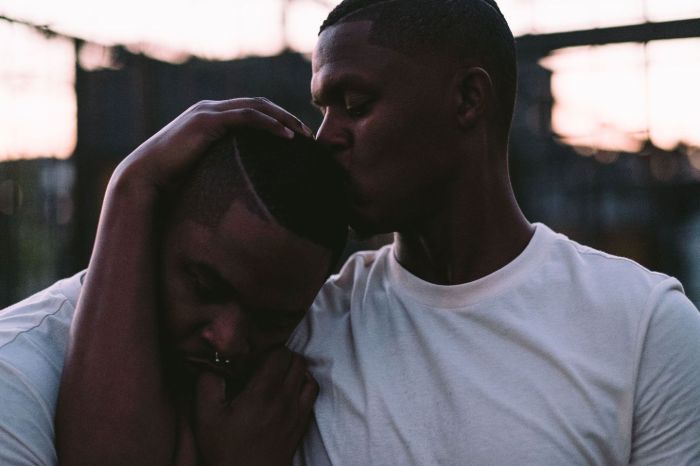
As a Black man, if I claim to love other Black men as I do, I must share in more than anger with my brothers. So when a mentee called me recently, and midway through the conversation began to weep, I gave him room as best I could.
The heaving was a deep bass, both physical and spiritual. He laid his burdens down. He felt, as I have sometimes felt about myself, that his role as familial glue was not holding and he was failing. He could not stitch back what he had let fall apart. He, like me, like so many Black men, has made an incredible and dynamic life for himself. Yet things seem to not be improving in the way and with the speed we want. Freedom feels like an illusion.
All my mentee needed was a good cry and a space to practice a new courage. All I needed was to realize that holding open a quiet space was enough. The silence was not heavy or forlorn, but full of who we were in that moment. That is the kind of support Black men deserve from each other.
It’s hard to find data to say how many Black men suffer stress and depression, because the canon of research on Black mental health is severely lacking. From experience, I know there is a steep cost to being vulnerable enough to admit how hurt cuts bone deep, and that you neither have the answers, nor know how to ask for help. So you bury yourself away. And you keep living with a grief that is quiet to many, but loud to those just like you. The data suggest that this is dangerous, especially for younger people. Suicide was the second leading cause of death among Black Americans ages 15 to 24, according to a 2017 analysis by the US Department of Health and Human Services. Meanwhile, research shows anxiety and depression among Black people has only increased since the killing of George Floyd.
So it was powerful when Dallas Cowboys quarterback Dak Prescott spoke out after his eldest brother died by suicide in April. Prescott and his other brother, Tad, talked with ESPN’s Graham Bensinger about what happened with their sibling and about their own experiences with depression and anxiety. To see an NFL leader, a Black quarterback, speak unflinchingly about needing help? It felt like a triumph. Or at least opening a door to the reality. We speak of depression and anxiety as things we conquer, instead of things we have to manage.
I’ve been in conversations with Black male friends where we both know one of us is lying about how he’s doing, because the pain in our voices can’t be masked by the pride we try to auto-tune into our tone. I sometimes feel like we’re playing emotional Call of Duty. We’re together, exploring and achieving in our world, hitting our checkpoints, our milestones. But we don’t talk about anything else. That doesn’t matter in the game — when your character dies, you respawn at the last checkpoint, and go right back to war. Wounds don’t carry over.
But life is not a game. We do not always get the chances we want to respawn from our defeats, and we still carry psychic wounds. We end up waging wars inside ourselves, which we justify because of the things we secure while doing whatever we think we must. Most of us don’t heal, though, because in a Black man’s world, we can’t show compassion or admit our defeats hurt us — it is too often viewed as weakness.
To speak of pain is to acknowledge it, which is the kind of admission we are too often told is not for us. Few lies have been more successfully translated across cultures than the one that tells men we are only allowed specific types of expression.
What I wish, for myself and the other Black men I hold close, is that we would find each other when our shoulders slump, and hold open space for each other long enough to admit that our ability to bear pain is not the way we prove ourselves. We are born worthy. There is much that would harm us, but we can’t continue to conflate ignoring our ailments with strength. Until we admit this to ourselves we subvert our own freedom at a cost we can never afford, and everyone we claim to love will pay for it.
For generations, a norm for Black people has been to treat depression and anxiety as something to shake off. This is for reasons both historical and cultural; when both science and society conspire to craft a narrative of your being anything but human, the consequences echo across families and communities. We tell ourselves we’ll deal with it after we get through it, often because that’s all we’ve seen; to grin and bear it feels like the right thing to do. But not all things are meant to be suffered through.
This was never supposed to be our normal. A new normal will be to feel fully and not be overrun by our emotions. What will we become if we stop carrying emotions that aren’t good for us? Perhaps a culture in which we feel we can be soft and open, warm and strong, because we created it for ourselves.
__________
Jonathan Jackson is an entrepreneur and writer currently living in New Hampshire. Send comments to magazine@globe.com.
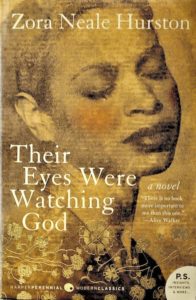
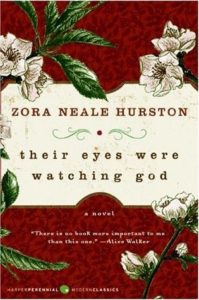
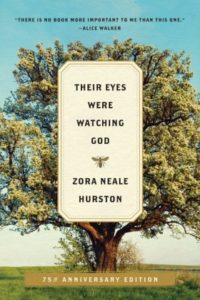
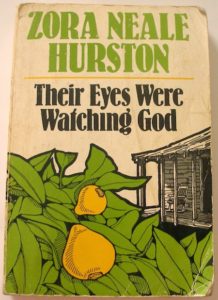
It is so easy to be hopeful in the daytime when you can see the things you wish on. But it was night, it stayed night. Night was striding across nothingness with the whole round world in his hands . . . They sat in company with the others in other shanties, their eyes straining against cruel walls and their souls asking if He meant to measure their puny might against His. They seemed to be staring at the dark, but their eyes were watching God.
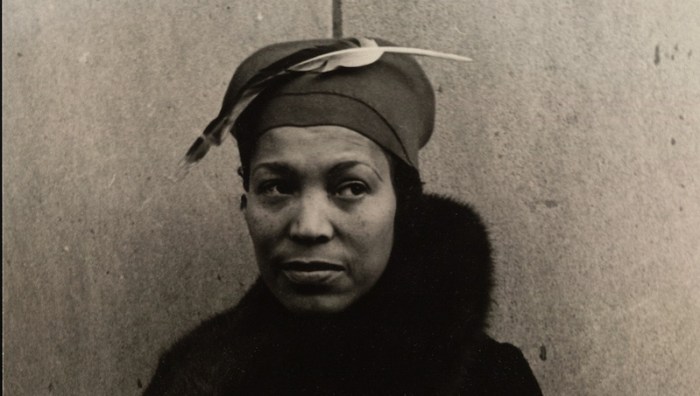
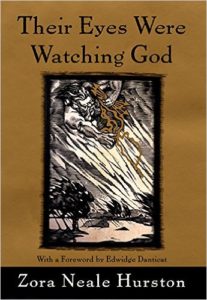
Now considered one of the greatest novels of the 20th century, Zora Neale Hurston’s Their Eyes Were Watching God had to travel a rocky road to immortality. Initial reviews ranged from positive to condescending to downright hostile, as many in the African American literary community bristled at Hurston’s rejection of the Harlem Renaissance and W.E.B. Du Bois’ Uplift agenda. A decades-long wilderness period in which both the novel and its author fell into obscurity ended with the establishment of several Black Studies programs in universities across America in the 1970s and 1980s. This, coupled with a growing black feminist movement, spearheaded by activist writers like Audre Lorde and Alice Walker, helped create a space in which Hurston’s work could be rediscovered. Walker’s 1975 essay, ‘Looking for Zora,’ in which she chronicled her search for Hurston’s unmarked grave, was a particularly significant part of this effort.
83 years on from its publication, we take look back at some of the original reviews of Their Eyes Were Watching God.
*
“Whether or not there was ever a town in Florida inhabited and governed entirely by Negroes, you will have no difficulty believing in the Negro community which Zora Neale Hurston has either reconstructed or imagined in this novel. The town of Eatonville is as real in these pages as Jacksonville is in the pages of Rand McNally; and the lives of its people are rich, racy, and authentic. The few white characters in the book appear momentarily and incidentally. The title carries a suggestion of The Green Pastures, but it is to this extent misleading; no religious element dominates this story of human relationships … The only weak spots in the novel are technical; it begins awkwardly with a confusing and unnecessary preview of the end; and the dramatic action, as in the story of the hurricane, is sometimes hurriedly and clumsily handled. Otherwise the narration is exactly right, because most of it is in dialogue, and the dialogue gives us a constant sense of character in action. No one has ever reported the speech of Negroes with a more accurate ear for its raciness, its rich invention, and its music.”
“Miss Hurston seems to have no desire whatever to move in the direction of serious fiction … Miss Hurston can write, but her prose is cloaked in that facile sensuality that has dogged Negro expression since the days of Phillis Wheatley. Her dialogue manages to catch the psychological movements of the Negro folk-mind in their pure simplicity, but that’s as far as it goes. Miss Hurston voluntarily continues in her novel the tradition which was forced upon the Negro in the theatre, that is, the minstrel technique that makes the ‘white folks’ laugh. Her characters eat and laugh and cry and work and kill; they swing like a pendulum eternally in that safe and narrow orbit in which America likes to see the Negro live: between laughter and tears … The sensory sweep of her novel carries no theme, no message, no thought. In the main, her novel is not addressed to the Negro, but to a white audience whose chauvinistic tastes she knows how to satisfy. She exploits that phase of Negro life which is ‘quaint,’ the phase which evokes a piteous smile on the lips of the ‘superior’ race.”
“This is Zora Hurston’s third novel, again about her own people–and it is beautiful. It is about Negroes, and a good deal of it is written in dialect, but really it is about everyone, or least everyone who isn’t so civilized that he has lost the capacity for glory … The story of Janie’s life down on the muck of Florida Glades, bean picking, hunting and the men shooting dice in the evening and how the hurricane came up and drove the animals and the Indians and finally the black people and the white people before it, and how Tea Cake, in Janie’s eyes the ‘son of Evening Son,’ and incidentally the best crap shooter in the place, made Janie sing and glitter all over at last, is a little epic all by itself. Indeed, from first to last this is a well nigh perfect story–a little sententious at the start, but the rest is simple and beautiful and shining with humor. In case there are readers who have a chronic laziness about dialect, it should be added that the dialect here is very easy to follow, and the images it carries are irresistible.”
“It isn’t that this novel is bad, but that it deserves to be better. In execution it is too complex and wordily pretty, even dull—yet its conception of these simple Florida Negroes is unaffected and really beautiful … Through these chapters there has been some very shrewd picturing of Negro life in its naturally creative and unself-conscious grace … If this isn’t as grand as it should he, the breakdown comes in the conflict between the true vision and its overliterary expression. Crises of feeling are rushed over too quickly for them to catch hold, and then presently we are in a tangle of lush exposition and overblown symbols; action is described and characters are talked about, and everything is more heard than seen. The speech is founded in observation and sometimes wonderfully so, a gold mine of traditional sayings…But although the spoken word is remembered, it is not passed on. Dialect is really sloppy, in fact…And so all this conflict between the real life we want to read about and the superwordy, flabby lyric discipline we are so sick of leaves a good story where it never should have been potentially: in the gray category of neuter gender, declension indefinite.”
“And now, Zora Neale Hurston and her magical title: Their Eyes Were Watching God. Janie’s story should not be re-told; it must be read. But as always thus far with this talented writer, setting and surprising flashes of contemporary folk lore are the main point. Her gift for poetic phrase, for rare dialect, and folk humor keep her flashing on the surface of her community and her characters and from diving down deep either to the inner psychology of characterization or to sharp analysis of the social background. It is folklore fiction at its best, which we gratefully accept as an overdue replacement for so much faulty local color fiction about Negroes. But when will the Negro novelist of maturity, who knows how to tell a story convincingly — which is Miss Hurston’s cradle gift, come to grips with motive fiction and social document fiction? Progressive southern fiction has already banished the legend of these entertaining pseudo-primitives whom the reading public still loves to laugh with, weap over and envy. Having gotten rid of condescension, let us now get over oversimplication!”
No insurance. 64 years old. Alone, along with all the other black people at the bottom of the pandemic.
By LeRhonda S. Manigault-Bryant
Dr. Manigault-Bryant is an associate professor of Africana studies at Williams College.
My mother is dying a painful death, and it has everything and nothing to do with Covid-19.
In a piece for The Atlantic detailing the ways in which the coronavirus seems to be hitting black people the hardest, Ibram X. Kendi wrote: “Sometimes racial data tell us something we don’t know. Other times we need racial data to confirm something we already seem to know.” My mother is a living example of what we already know about race, class and suffering.
She is not in an elder-care facility, nor a hospital. She has not been, and most likely will not be, tested for the virus or receive a diagnosis of having it.
Still, hers is the body of all the black people at the bottom of the pandemic. No insurance, though not for lack of trying. Medicaid applications denied for reasons we don’t understand. Inconsistent care at a local public clinic meant hard-to-come-by appointments and checkups only at moments deemed most critical. It wasn’t enough.
Now, she’s dying from end-stage liver disease and kidney failure, diagnosed too late to save her. This has nothing to do with Covid-19.
She is not even that old (64, and thus Medicare ineligible), but FaceTime tells no lies, and she is wasting away before us. What’s worse, even as I’m exactly four hours and three minutes away — geographically closer than I’ve been in over a decade — I can’t be near her, touch her, cook for her, kiss her or tell her all of the things that I don’t yet know I need to say. This has everything to do with Covid-19.
On the occasion she’s strong enough to answer the phone, holding the phone for FaceTime proves too much. Calls come too late, even as time is too short. The grandchildren who live close by cannot get close to her — the idea of transmitting anything to her, as she’s so obviously immune-compromised, is terrifying. The underlying conditions would amplify an already-certain death. This has everything to do with Covid-19.
My brother, who lives exactly six minutes and 24 seconds away from Mommy, risks seeing her because someone needs to make sure she’s still breathing. That check-in is thus essential. He scrubs himself clean after work with all manner of chemicals — he’s a waste management truck driver, an essential employee. This is an effort to protect her. He’s close to her. This is an effort to protect us. This has everything to do with Covid-19.
He tries to get her to eat something other than her single meal of applesauce and Vienna sausages. This has nothing to do with Covid-19.
It’s officially power-of-attorney and health-proxy time. Getting my mother to the lawyer — a four-minute drive — is a thing. My brother and I spend hours strategizing transportation. The errand feels like it takes an eternity. This has everything to do with Covid-19.
My mother is going to die soon, and my process isn’t pretty. I laugh and remember, rage and weep, and I lament time lost, never to be regained. When she has enough energy to speak, she rushes me off the phone, invoking busyness. She’s busy getting ready to die, and it doesn’t seem like it’s on her own terms. Is it ever? I want more time. This has nothing to do with Covid-19.
Like so many, countless others, my family and I are going to be left with the unsettling weight of her death. My mother is going to die soon, and it will most likely be alone. I am afraid. I am one of many grieving, forever-changed faces. No repast. No low-country songs sung graveside. No sending up our timber for her. We cannot grieve properly. Lots of regret. This has everything to do with Covid-19.
When the pandemic is over, we still won’t know how to deal with this. We’re not ready for this kind of grief. Death is so utter, so absolute, yet so much right now is uncertain. My mother is dying a painful death, and it has everything and nothing to do with Covid-19.
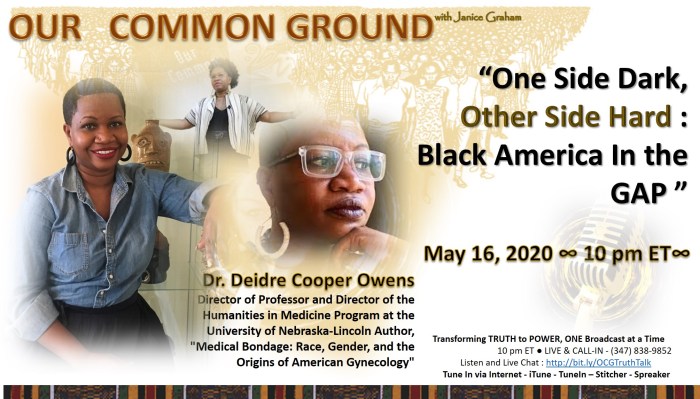
Deirdre Cooper Owens is the Linda and Charles Wilson Professor in the History of Medicine and Director of the Humanities in Medicine program at the University of Nebraska-Lincoln. She is an Organization of American Historians’ (OAH) Distinguished Lecturer and has won a number of prestigious honors that range from the University of Virginia’s Carter G. Woodson Postdoctoral Fellowship in the Woodson Institute for African-American and African Studies to serving as an American Congress of Obstetrics and Gynecology Fellow in Washington, D.C.
Cooper Owens earned her Ph.D. from UCLA in History and wrote an award-winning dissertation while there. A popular public speaker, she has published articles, essays, book chapters, and think pieces on a number of issues that concern African American experiences. Recently, Cooper Owens finished working with Teaching Tolerance and the Southern Poverty Law Center on a podcast series about how to teach U.S. slavery and Time Magazine listed her as an “acclaimed expert” on U.S. history in its annual “The 25 Moments From American History That Matter Right Now.”
Her first book, Medical Bondage: Race, Gender and the Origins of American Gynecology (UGA Press, 2017) won the 2018 Darlene Clark Hine Book Award from the OAH as the best book written in African American women’s and gender history.
Professor Cooper Owens is also the Director of the Program in African American History at the Library Company of Philadelphia, the country’s oldest cultural institution founded by Benjamin Franklin in 1731. She is working on a second book project that examines mental illness during the era of United States slavery and is writing a popular biography of Harriet Tubman that examines her through the lens of disability.
We will be talking with her about Black America in the pandemic, historical underbelly of health history and its impact on us today. How we find comfort, how we face our fears and our deaths.
This is a special episode that was the result of an impromptu study group which focused on Robin DG Kelley’s interview entitled “Solidarity Is Not A Market Exchange.” Kelley shares reflections on Thelonious Monk, jazz, appropriation, empathy vs. solidarity, Afro-Pessimism and Black Feminism, vanguardism, mutual aid, sociality, and responds to the “What time is it on the clock of the world” amid a global pandemic.
Civil rights legend Ruby Sales (OUR COMMON GROUND Voice) learned to ask “Where does it hurt?” because it’s a question that drives to the heart of the matter — and a question we scarcely know how to ask in public life now. Sales says we must be as clear about what we love as about what we hate if we want to make change. And even as she unsettles some of what we think we know about the force of religion in civil rights history, she names a “spiritual crisis of white America” as a calling of today.
Ruby Nell Sales is a highly-trained, experienced, and deeply-committed social activist, scholar, administrator, manager, public theologian, and educator in the areas of Civil, Gender, and other Human Rights. She is an excellent public speaker, with a proven track record in conflict resolution and consensus building. Ms. Sales has preached around the country on race, class, gender, and reconciliation, and she has done ground-breaking work on community and nonviolence formation. Ms. Sales also serves as a national convener of the Every Church A Peace Church Movement.
Along with other SNCC workers, Sales joined young people from Fort Deposit, Alabama who organized a demonstration to protest the actions of the local White grocery-store owners who cheated their parents. The group was arrested and held in jail and then suddenly released. Jonathan Daniels, a White seminarian and freedom worker from Episcopal Divinity School in Cambridge, Massachusetts was assassinated as he pulled Sales out of the line of fire when they attempted to enter Cash Grocery Store to buy sodas for other freedom workers who were released from jail. Tom Coleman also shot and deeply wounded Father Richard Morrisroe, a priest from Chicago. Despite threats of violence, Sales was determined to attend the trial of Daniels’ murderer, Tom Coleman, and to testify on behalf of her slain colleague.
As a social activist, Sales has served on many committees to further the work of reconciliation, education, and awareness. She has served on the Steering Committee for International Women’s Day, Washington, D.C.; the James Porter Colloquium Committee, Howard University, Washington, D.C.; the Coordinating Committee, People’s Coalition, Washington, D.C.; the President’s Committee On Race, University of Maryland; and the Coalition on Violence Against Women, Amnesty International, Washington, D.C. She was a founding member of Sage Magazine: A Scholarly Journal on Black Women. Sales received a Certificate of Gratitude for her work on Eyes on the Prize. Additionally, she was featured in Broken Ground: A Film on Race Relations in the South, by Broken Ground Productions. From 1991-1994, Sales founded and directed the national nonprofit organization Women of All Colors, dedicated to improving the overall quality of life for women, their families, and the communities in which they live. Women of All Colors organized a week-long SisterSpeak that brought more than 80 Black women together to set a national agenda.
In 2000, Dan Rather spotlighted Sales on his “American Dream” Segment. In 1999, Selma, Alabama gave Sales the key to the city to honor her contributions there. In 2007, Sales moved to Columbus, Georgia, where she organized: a southern summit on racism; a national write-in campaign to save Albany State from being merged into a White college; a grassroots and media campaign to shed light on the death of seventeen year old, Billye Jo Johnson, who allegedly killed himself on a dark road in Lucedale, Mississippi when a deputy stopped him for speeding; Long Train Running Towards Justice, which celebrated the work of Black teachers during segregation and explored the ways that the Black school culture has been destroyed by White officials under the guise of desegregation; and a meeting with students at Savannah State to assist them in organizing and mobilizing a move by officials to merge Savannah State with a White college.
“Ruby Nell Sales is an African-American social justice activist. She attended local segregated schools and was also educated in the community during the 1960s era of the Civil Rights Movement. She has been described as a “legendary civil rights activist” by the PBS program “Religion and Ethics Weekly” Wikipedia

 Professor James Lance Taylor is the Chair of the Department of Politics at the University of San Francisco and is from Glen Cove, Long Island. He is the author of the book “Black Nationalism in the United States: From Malcolm X to Barack Obama”, which earned 2012 “Outstanding Academic Title” – Choice: Current Reviews for Academic Libraries. (Ranked top 2 percent of 25,000 books submitted and top 8 percent of 7,300 actually accepted for review by the American Library Association). Rated “Best of the Best.” The hardback version sold out in the U.S. and the paperback version was published in 2014.











 OCG
OCG 