Keep Muhammed Ali’s Legacy Away from Beyonce and Kanye West
Submitted by Danny Haiphong on Tue, 06/14/2016 – 19:12
by Danny Haiphong
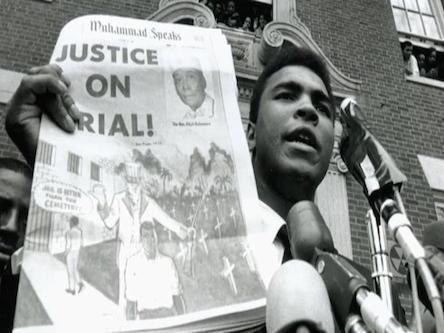
Airheaded commentators compare Beyonce’s media products and Kanye West’s off-hand quips to Muhammad Ali’s heroic political struggle and genuine sacrifice in the Sixties. That’s nonsense. “Beyonce can dress up in Black Panther dress and subsequently fail to use her platform to educate others about the Black Panther Party precisely because she is selling a product, not building a movement. The same goes for Kanye West and all corporate artists.”
Keep Muhammed Ali’s Legacy Away from Beyonce and Kanye West
by Danny Haiphong
“The article reduces the state repression of Ali received as a mere byproduct of his ‘political stance’ and proceeds to compare the treatment Ali received to the criticisms of Beyonce and Kanye West.”
A recent article in Medium took to task those who mourned the death of Muhammad Ali.
“Conservative America,” according to the author, tells figures like Beyonce and Kanye West to be quiet while it celebrates the life of the late world boxing champion and activist. Self-proclaimed “hipsters” and “culture critics,” however, often take the luxury of ignoring concrete analysis for the allure of identity political liberalism. What the author makes no mention of are the concrete differences between Muhammad Ali and celebrities of the Kanye West variety. To analyze these differences would force the author to examine the motion of history and political struggle beyond the liberal lens.
Identity political liberalism can be defined in the piece as such. Since Muhammad Ali is celebrated for his opposition to war and racism, one would be hypocritical to criticize Kanye West and Beyonce for their particular forms of opposition. The author clarifies this position, stating:
“Kanye West had the courage to call out The President of United States for ignoring the people of New Orleans. Beyonce had the courage to embrace a movement that has been criticized by the police and mainstream America. If you can’t stomach their political statements there is no way you can say you are a fan of Ali because no ‘entertainer’ of color has been more in your face about condemning America’s racist political crimes than Muhammad Ali.”
This argument commits a logical fallacy of significant consequence. The author equates Beyonce and West’s achievements on the political stage to Ali’s actions in the 1960s. This conclusion derives from a purely subjective position. While it is true that Kanye West and Beyonce have made political statements in the past, no analysis of the particular character of these statements is given. Such an examination reveals exactly what propels cultural figures into political action and what contradictions ultimately limit the usefulness of their political action.
“The author equates Beyonce and West’s achievements on the political stage to Ali’s actions in the 1960s.”
In the 1960s, a revolutionary upsurge emerged from the heroic Black freedom movement and the connections it made to the anti-imperialist struggle around the world. The brutality and exploitation inherent in white supremacy and segregation influenced organizational formations, like the Nation of Islam (NOI), to call for more radical alternatives to the non-violent resistance that characterized the Civil Rights Movement. Ali was influenced by the teachings of Malcolm X, who at that time was being trained to lead the NOI. The US war in Vietnam was nearly a decade old by the time Cassius Clay changed his name to Muhammad Ali. Malcolm X and the NOI took a firm stance against the war in Vietnam. Eventually Malcolm X would take opposition to war a step further by arguing that Black Americans had more in common with the people of Vietnam than the US government.
It was the development of international solidarity in the Black liberation movement that compelled Muhammad Ali to make his famous declaration against the Vietnam War and travel to Cuba and Palestine. Revolutionaries such as Paul Robeson, Shirley Graham Du Bois, and WEB Du Bois in the first half of the 20th century paved a path for insurgent Black revolutionaries in the second to position the struggle for emancipation in the US alongside the global fight for self-determination and socialism. It was argued by organizations such as the Black Panther Party that Black liberation could not be achieved without a socialist arrangement of society on a worldwide scale. Muhammad Ali’s political life must be placed in this context. The article reduces the state repression of Ali received as a mere byproduct of his “political stance” and proceeds to compare the treatment Ali received to the criticisms of Beyonce and Kanye West. Yet what isn’t said in the article is how state repression of an entire movement helped produce the corporate artists that the author compares to Ali.
“Corporate subsidiaries such as Warner Music Group control the music and careers of signed artists and enforce the ideological regime of imperialism through the sale of their processed music.”
The US counterinsurgency war against the Black liberation movement was geared toward the complete and utter destruction of revolutionary possibilities in the US. This war included the creation of an entire intelligence program to undermine, at times with deadly results, theefforts of Black revolutionaries. It also included reforms in the fabric of US society. Starting in the late 1970s, the ruling class opened seats in local, state, and federal political office to a select few Black Americans. Increased access to political office for the Black elite, and helped isolate radical and revolutionary forces calling for social transformation. It is here that the Black misleadership class emerged. The creeping crisis of imperialism made the influence of this class all the more necessary as mass incarceration, surveillance, and unemployment would come to characterize Black life in the US from the 1980s onward.
Over the last three and a half decades, the world capitalist system has undergone a process of decay that has necessitated the monopolization of all sectors of US society. An increasingly disposable and criminalized Black labor force coincided with the consolidation of the corporate media. The consolidation of the corporate media included the monopolization of the music industry that created Kanye West and Beyonce. Today, six corporations own 90 percent of the media and the same is true about the record industry as a sub-sector. Corporate subsidiaries such as Warner Music Group control the music and careers of signed artists and enforce the ideological regime of imperialism through the sale of their processed music.
“Using Ali to defend Beyonce or Kanye West gives undue attention to those who don’t deserve it.”
This is why, despite all the praise she has received, Beyonce’s music is void of political content, and why she invests millions in sweatshop production. Corporate control over the music industry also explains why Kanye West has become such a twisted and maligned figure in public eye. Ultimately, Black labor is only useful when it degrades, dehumanizes, or sanitizes Black struggle and Black people. Beyonce can dress up in Black Panther dress and subsequently fail to use her platform to educate others about the Black Panther Party precisely because she is selling a product, not building a movement. The same goes for Kanye West and all corporate artists.
Mohammed Ali’s legacy must be kept away from the corporate gaze of the media. The ruling class has desperately sought to suppress the ideas of anti-imperialism and Black liberation ever since the movement that brought Ali’s politics to life was brutally repressed isolated. If these politics are going to be revived and applied in the 21st century, it certainly won’t be any of the corporate music industry’s “artists” that lead the way forward. Using Ali to defend Beyonce or Kanye West is not only fruitless, but also potentially dangerous. It gives undue attention to those who don’t deserve it. Instead of hiding behind “conservative America” in liberal fashion as identity political liberalism often does, the focus for a true movement for social transformation must be on uniting revolutionary ideology and practice among the exploited and oppressed. Only the grave diggers of the world capitalist system can force the celebrities of today to either help build a new world or be swept away with the old.
Danny Haiphong is an Asian activist and political analyst in the Boston area. He can be reached at wakeupriseup1990@gmail.com
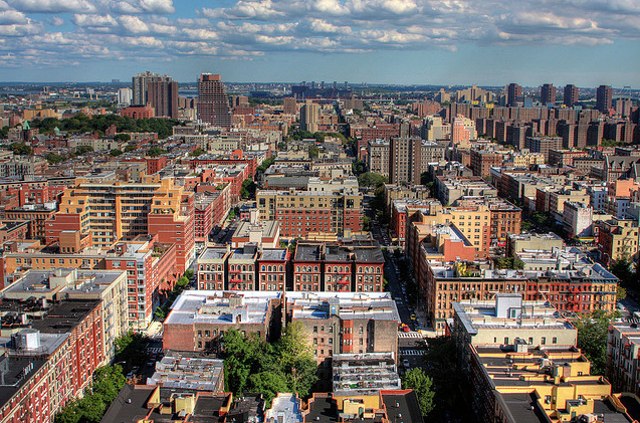
Some of these concepts are familiar. An early-1990s federal preservation program called the Low-Income Housing Preservation and Resident Homeownership Act (LIHPRHA) provided federal funding to nonprofit organizations and tenant groups to purchase their buildings, before Congress defunded it in 1998. In Washington DC, building owners are required to give their tenants the right of first refusal.
But while advocates, academics and attorneys were pleasantly surprised to see a pitch for anti-gentrification policy at the federal level, several worried that the cost of the GMZ program would be staggering—especially for a federal government so historically stingy when it comes to affordable housing.
“With LIHPRHA they had to layer all kinds of subsidies to make it actually affordable,” John Krinsky, a professor of political science at City College, told us. “It was more feasible in situations where there wasn’t yet rampant gentrification, because those properties aren’t as valuable yet.”
“It’s hard to see how the Republican Congress is going to pass any of these,” added Legal Aid Society housing attorney Judith Goldiner. “Truthfully, it’s just so hard to get them to do anything.” She suggested that if the federal government were willing to make a huge investment in affordable housing, the money might be better spent on fully funding Section 8, coupled with stronger rent laws at the state level and the right to an attorney in housing court.
She also questioned Espaillat’s relocation tax proposal. “Once people are displaced it’s really hard to find them,” she said. “And they’re probably going to be paying more somewhere else. That’s not the goal.”
Governmental loans, like the HUD-funded mortgages Espaillat is suggesting, tend to have expiration dates. What might happen to cooperative tenants if and when these federal subsidies run dry?
“When you have these HUD-backed loans, the object is how do you keep them from [expiring] after a certain amount of time,” Krinsky said, suggesting that Espaillat consider the Community Land Trust (CLT) model—which can protect a building from any future for-profit sale—as an additional protection. (Espaillat says he’s open to the concept.)
But even with the protections of a CLT, some advocates in Espaillat’s Harlem are skeptical of the sustainability of the proposed coops.
Maria Lizardo, director of the Northern Manhattan Improvement Corporation (NMIC), has supported numerous low-income coops in Harlem. “It only works when you are able to provide the tenants with a lot of assistance,” she said. “Everything from the workshops about what to expect… to doing the monthly overview of the budget and maintenance increases.”
“These ideas are great, but not without ongoing support,” added NMIC legal services head Rodrigo Sanchez. “It’s something that needs to be seen as an ongoing 10, 20, 30-year plan. Whether I think the government will commit to the dollars and cents is another question.”
NOI.org Live Webcasts: [Watch Archives] June 12, 2016: The Life and Times of Muhammad Ali by The Honorable Minister Louis Farrakhan * Check Trouble status updates. * Donate to support NOI.org Services * Join The Nation of Islam
Feminism’s struggle with intersectionality brought me to this place: a place where I’m supposed to rally around a cause and a figurehead that ignores my daily struggles. A cause that views me as an afterthought and a political chess piece, and I’m only used every four years and then stored away. A place where white women are able to beam with pride at seeing themselves represented in Hillary and then have the audacity to chastise me for not being on board. The same people who claim to understand white privilege and decry male privilege suddenly forget all that when they want me to get lock step behind them in “uniting the party”.
Question: When is “the party” going to unite behind me?
Also, I’ve got a newsflash for you, a bit of a surprise, as it were. The surprise is that a lot of disenchanted, disillusioned, still disenfranchised black voters found out over the past 7 years. Having someone who looks like you in the Oval Office does NOTHING for changing the state of your circumstances. Not one thing.
No, I never had any fairy-tale beliefs that having President Obama in office would magically fix all that was wrong with race relations in America; no one person could have done that. But many of you did harbor such fantasies and you became and remain disappointed. You were disappointed because the status quo requires that you play by their rules; their field, their ball, and their referees. So while you cheer, jumping up and down braless, tears streaming down your face, breathing a sigh of relief, while thinking that your grandmother’s and mother’s feminist dreams have been realized, you have already forgotten about me.
You have ignored the fact that Hillary is playing by their rules, on their field, using their balls, and their referees. She had to become them to join them and that isn’t going to change a damned thing for us in the long run.
My feminism says that there are too many intelligent, capable, accomplished women out there for me to be wowed at Clinton’s “breaking the glass ceiling”. That ceiling has been chipped at for centuries, just because you hear some glass breaking doesn’t mean that the hole made will be big enough for all of us to climb through.
You can not tell me that you truly understand that just because we have Barack Obama, Colin Powell, Oprah Winfrey and Serena Williams that racism isn’t over and then turn around and cheer “We did it, ladies!! We’ve dismantled the glass ceiling!!” just because of whatever Hillary has accomplished. Seriously?
The only things of note any Clinton supporter was ever able to bring to me when I asked “Why should I vote for Hillary?” are DESTROYED in this video. She is no friend of Black America and no champion of children (as she is so fond of bringing up her work with theChildren’s Defense Fund, check out Edelman’s statement in the video.)
Do NOT deign to instruct me on how I have to unify the party with my vote when the strongest point your candidate has is, “We can not allow Donald Trump anywhere near the White House!” This lesser of two evils political strategy that we have been operating under for far too long has us circling the drain in a constant downward spiral, as we fall further and further behind other first world countries.
No appeal to my womanhood, no appeal to my blackness will make me not know what I now know.
ve gotten a range of reactions to my “open letter” to Ta-Nehisi Coates. Some people find the piece extremely compelling, while others are horrified and accuse me of putting “class over race” or worse, “Marxplaining.”
Perhaps the unkindest criticisms are from people who charge me with not seeing race, or not really appreciating the power of racism in American society. If we must play that game, I can show you around the South Louisiana parish where I grew up, which was still in violation of a 1969 federal school desegregation order when I left the state to attend graduate school in the early nineties.
But let’s move beyond character assassinations. Such dismissive language does little to debunk my argument and basically just rehearses the same anti-Marxist posturing that I’ve become accustomed to in academia, where any insistence on examining the internal class dynamics of black social and political life is labeled “economic reductionist.” Ironically, in most cases, the most vocal opponents of class analysis of black life seem painfully aware of their own class position and yet are unwilling to address its political implications in any reflexive and critical manner.
I don’t expect people to agree with what I have to say, but we should focus on our interpretive and political differences if we have any interest in moving forward in the struggle for justice and equality.
This being said, I appreciated Brian Jones’s willingness to take up my arguments in a serious way, and I agree with aspects of his recent response. As fellow educators, public workers, unionists, and socialists, I am confident that Jones and I have enough common ground to engage in a constructive way. In the spirit of comradely criticism and solidarity, I want to take up two points where he addresses my argument directly.
An Elite Demand?
Jones’s interpretation of my point about reparations being an elite-driven discourse is a misreading, and assumes that my use of the term black elite refers only to the uber-rich like Kenneth Chenault and Oprah Winfrey. Jones writes:
There is a small but growing class of black elites who will never support reparations — or any politics of genuine wealth redistribution — because it is not in their material interest to do so.
That’s why Johnson is wrong to characterize the call for reparations as emanating from the black elite. This group is too well integrated into American capitalism for that to be the case. Walmart, for example, is also a corporate sponsor of the Congressional Black Caucus. The largest employer of black people, in other words, also pays off the black politicians — so don’t expect the CBC to jump into the fight for higher wages and wealth redistribution any time soon.
Jones and I agree on the basic fact that there are different material interests animating black political life, but this passage does not reflect the specific and contradictory ways such interests have been articulated by different black elites, and as a result, fails to provide a helpful class analysis of black political life.
Jones’s claim that elites do not support reparations is simply not reflected in the past few decades of sporadic debate and attempts to operationalize the reparations demand. For example, Michigan congressman John Conyers, a founding member of the CBC, has been one of the foremost sponsors of legislation on reparations, and for much of its history, the CBC has consistently voted in support of more progressive labor rights and redistributive public policy than most of their congressional colleagues.
Randall Robinson, the founder of the foreign policy lobby TransAfrica, and the late Ronald W. Walters, longtime professor at Howard University and campaign manager for Jesse Jackson during his 1984 and 1988 bids for the Democratic presidential nomination,bothadvanced the reparations demand in their speeches and writings during the nineties. And in the early aughts, Harvard law professor Charles Ogletree championed one of the most practical approaches to the reparations demand: a flurry of lawsuits against Aetna, Fleet Boston, New York Life, and other corporations whose origins rested in profiting from the slave trade.
Organizations like N’COBRA (National Coalition of Blacks for Reparations in America) have sought to build a national campaign around reparations. And the Black Youth Project 100 has embraced the reparations demand as part of its “Agenda to Build Black Futures.” Others have used the language of repair to demand rerouting of public funds from police departments toward reinvestment in urban youth, education, and neighborhood revitalization.
Activists have employed the language of reparative justice in the John Burge torture settlements, which awarded compensation to citizens whose civil rights were violated by the Chicago Police Department, and also in the legal cases that sought restitution for victims of theforced sterilization program in North Carolina.
These cases are not the same as the demand for slavery reparations, but rather, like the settlements paid out to the Japanese internment camp and Holocaust survivors after the Second World War, these cases sought renumeration for a defined legal category of victim. Reparations for slavery, in contrast, is based on a more complex scenario of repair for intergenerational offense, a matter that in all likelihood cannot be rectified through the same legal strategy.
The reparations demand has also flourished elsewhere — within the academy, in black nationalist circles, and now apparently among some socialists. But it is only tangentially connected to the expressed interests and felt needs of actual black publics. Neither Jones nor Coates demonstrate convincingly that there is a reservoir of black popular support for reparations, or alternatively, that building such support among blacks and the larger American public is on the horizon.
Some of my colleagues have tried to convince me otherwise, citing various public opinion polls to illustrate black support for reparations. But opinion polls are a shaky source of evidence due to issues of sampling and, equally important, the difference between public opinion and political interests.
In many national polls, blacks are drastically undersampled; for example, in a recent YouGov poll taken around the time of Coates’s 2014 Atlanticessay, only 119 blacks were sampled, making the results of that survey completely useless for drawing conclusions about the sentiments of the national black population.
But even a larger, random sample of black citizens — which might provide data for a more sound generalization — only captures momentary, abstract preferences, and those preferences do not map neatly onto actual political interests, which are formed and negotiated within complex, changing social relations.
In other words, some black citizens may support reparations as an ideal, but in the everyday fight to protect and advance their lived interests, other issues like policing, rising housing costs, livable wage employment, and quality education may rightly take precedence over reparations, and form the core of their political commitments.
Over the past few decades, I’ve lived in the Deep South, the Midwest, and the Eastern Seaboard, in rural areas, mid-sized cities and America’s largest conurbations. Reparations is rarely if ever a central concern of the scores of working and middle-class people, black or otherwise, I’ve encountered in community meetings, labor union halls, neighborhood events, campaign headquarters, schools, and churches.
Coming to terms with the distance between this abstract moral claim and the actual felt needs of black people is not “class reductionist,” nor a failure to appreciate the historical relationship between race and class. It is simply the only responsible left politics worth pursuing.
A Political Dead Letter
Second, and more importantly, Jones’s reparations argument collapses under the weight of its own logic. He notes that while all workers are exploited, “Black people have been robbed specifically and continuously in this country.”
We can all agree that at various historical junctures, the majority of blacks have been a hyper-exploited and submerged part of the working class. Yet, as Jones notes, not all blacks would support reparations nor should all blacks be recipients of redress if it were ever achieved. Also, he suggests that capitalists should pay out reparations, not all whites.
But after parsing out who deserves redress and who doesn’t, and who should pay up, we end up right back where we started — redressing the inequality that exists between classes, a multiracial investor class on one side, and a multiracial laboring class on the other.
We can’t go back in time and address slavery, dispossession, and debt peonage as they were unfolding. By default we are stuck with addressing oppression in our midst, which is descendant from this longer history but actively determined by contemporary processes — foremost being the production and realization of surplus value in our world.
“As Marx argued,” Jones writes, “all profit is theft — if workers were paid the full value of their labor, there would be no profit. Reparations therefore must be targeted at the class of people who benefit from this theft.”
But if class struggle is the fundamental conflict, why then is there a need for the rhetoric of reparative justice? In asking this question I am not “counterpos[ing] the call for reparations to the fight for social-democratic redistributive policies,” as Jones has claimed.
I am merely pointing out that the reparations demand exists largely in the realm of the political imaginary, and that in the concrete world of struggle, social democracy and socialism have a demonstrated history of improving the lives of black and other working-class people around the world, e.g. the democratic right to organize in the workplace, the Scandinavian social-democratic model, the public works programs of the American New Deal, infrastructural development in Nkrumah’s Ghana, Viennese social housing, Cuba’s health care, education and civil defense systems, Chilean nationalization under Salvador Allende, and so forth.
Conversely, the reparations demand has been restricted to narrowly defined legal cases, sloganeering, or the lecture circuit. Without an actionable set of proposals to organize around and a popular constituency to advance them, the reparations demand is not a real political demand, but a form of moralism that evokes past injury to address contemporary inequality.
Moreover, it isn’t clear from any of these recent pro-reparations arguments how that political project would address racism more effectively than other historically proven approaches, e.g. effective enforcement of anti-discrimination law, targeted recruitment of blacks and other minorities in the workforce and higher education admissions, and enhanced support for institutions like historically black colleges and universities that have long served as a means of black social mobility.
In the end, Jones (and Coates) settle on the claim that at a bare minimum, another round of the reparations debate will at least have some important, and positive, pedagogical and consciousness-raising effects. According to Jones:
The bottom line is, the very concept of reparations for people of African descent is dangerous to the American ruling class. . . . Grappling with the real legacy of white supremacy would explode the lies America tells about itself (from “meritocracy” myths to “culture of poverty” arguments). And, equally important, a serious debate over reparations would raise dangerous questions about where wealth comes from and about who is owed what in this country.
Jones is right to argue that the Left should continue its war of position against racism and underclass mythology and lay bare the historical and contemporary processes of dispossession and exploitation. But how is this debate over historical injustice more dangerous to the ruling class than the actual power of a broad, multiracial alliance with the capacity to contest the demands that capital makes on living labor and the planet in our own times?
I appreciate the moral power of the reparations claim, but time and again, the demand has proven to be a political dead letter, incapable of ever addressing institutional power in any effective way.
I suspect that, at least for some socialists, reparations offers a means of demonstrating antiracist commitment. But it’s important to recognize that the claim is not grounded in the expressed concerns and immediate needs of black people. Nor is the reparations claim the only means of confronting racism or the most effective way to build broad, popular support for a socialist political vision.
The fundamental basis of political alliance, after all, is not shared identity nor even a shared perspective on historic injustice, but rather, common interest.
Life is short, and time is precious. We need to decide which fights we want to prioritize and be honest about which ones we can win. We should strive for a critical view of history and its role in shaping our own conditions. But our political task is to change this world, and the first necessary step is to find common cause — not in past grievances, but in shared predicament.
“Life is not what one lived, but what one remembers and how one remembers it in order to recount it.”
~Gabriel Garcia Marquez~
“Next to God we are indebted to women, first for life itself, and then for making it worth living.”
~Mary Macleod Bethune~
I remember that third Monday in October of 1995 in a way that still dances in my consciousness with a vibrancy and verve that remain palpable twenty-one years later. Everything about that day was imbued with purposeful vitality. The crisp early morning chill with its pretense of winter, the smell of morning-dewed pavement, the prattle and clank of cars playing a losing game of pothole slalom, the sight of trees and earth flamboyantly wearing their autumnal ensembles of browns, reds, yellows, oranges.
Inside my spacious one-bedroom Columbia Heights basement apartment, which as far as I was concerned only coincidentally served as the foundation for the luxuriously renovated row house above it, there was a ritualized vibration to the morning as the six other men — who had come from East St Louis, Chicago, Oakland, Pacoima, East Palo Alto and the Bronx — and I readied ourselves for our meeting with history. There are things you don’t understand about significant historical moments until after you meet them.
Like, for example, historical moments have a distinctive texture, sound, and smell, all of which pull you back to that moment whenever you are placed in contact with them. I recall the scent and sensibility of the Kush incense burning that morning, its aromatic smoke languorously raising itself up from the glowing amber orb like an ancestor coming to bear witness, as if to say — And, still I rise — the undulating ribbons of fragrant tinted air dancing to Marley’s irrepressible Redemption Song playing in the background just a notch under too loudly.
In 1995, Columbia Heights, a neighborhood in Northwest DC I called home was comprised largely of African (Black) and Latinx (Brown) folks. Which is to say, involuntary and voluntary immigrants trying in various ways to solve America’s racial and ethnic algebra, while dealing with poverty’s geometry of limited space and poor angles to create better opportunities, and who had little choice but to let poorly paying jobs work them for a living. There was just a smattering of white folks whose alabaster aspirations hung on the ledge of whispers that a Green Line Metro stop was soon to come and with it “new development.”
(Three things you can count on: Death, Taxes, and that when mediocre white folks — and their Black and Brown lackeys — in powerful political positions start talking development, whether in Africa, Latin America or in America’s urban centers, Black, Brown and poor folks generally are ‘bout to get did with no vaseline. Let’s call this the Ice Cube Rule aka the Heller Non-Lubrication Despoilment Development Clause or the HNDDC.)
In other words, my ‘hood was much like the neighborhoods the other brothers had come from; the kind of place that was paradoxically safe and unsafe, and where clarity about life critical caveats determined which experience was mostly true for you. It was the kind of place where irony, paradox, pathos, absurdity and resilience were the bridges for how most of us got over and got by. A brother in a suit coming home from work at might get robbed, while a tie-wearing white Mormon biking through the hood, kicking Joseph Smith style pretzel logic about a heaven that didn’t originally welcome Black folks, was as safe as Donald Trump at a Klan Rally.
For affluent and well connected whites doing their version of a drive-by, Columbia Heights served largely as an underground pharmacy as they passed through to quickly refill their prescriptions with the local street corner pharmacists, en route to their work on K Street and Capital Hill to further cement crippling inequities in wealth and opportunity into policy, the very policies ensuring there would always be street corner suppliers for their synthetic anesthetization, the very same suppliers that they lobbied to have incarcerated.
Columbia Heights was also where you could get some of the best Chinese food, pupusas, arepas and Peruvian chicken this side of a health code violation. A place where the discerning consumer could secure incense, oils, hats, faux Gucci wallets and purses, each with a different variation of the spelling of Gucci, books, a “previously owned” metro card with $3.45 on it for the bargain price of “whatever you feel is fair, patna” or an unlocked phone that may or may not have belonged to the dude a block down now furiously checking his jacket — all from the same person. Not surprisingly, it was the kind of neighborhood where after dark, pizza shops asked for your zip code before taking your delivery order. Capital may be global but in 1995 a lot of it didn’t cross east of Rock Creek Park after dark.
It was here in this Northwest DC nook where opportunity remained in a perpetual hunger strike sandwiched between the indifferent material affluence of the “Gold Coast” at one end of 16th Street and the disinterested political flatulence of the White House at the other that I learned a condiment, Mumbo Sauce, could also be a philosophy. No lesser authority than Wikipedia has gone on record as saying of Mumbo Sauce: “Its origin and ingredients are subject to great dispute.” Translation: the active ingredient in Mumbo Sauce is Nunya — None ya damn business.
If you weren’t native to the Chocolate City there were two concepts you had to grasp, without which you were forever to remain an interloper:Go Go and Mumbo Sauce. If your understanding is that Go Go is just music or that Mumbo sauce is just a condiment found in Chinese food joints of questionable cleanliness which also happen to sell French fries and chicken wings “fried hard” and offered with fortune cookies with messages written in Ebonics — Confusedcious say “Check yourself before you wreck yourself” — then you’re not ready — for an explanation, for the condiment, for the music, or to get your life.
Although advance scout teams of urban colonizers had already been dispatched to survey the area, in 1995, Columbia Heights had not yet become a haven for usual tribal whiteness perpetually in search for a heart of darkness experience and as an investment opportunity. These urban colonizers were, however, like the eventual Green Line Metro Stop, on their way. From the first clashes with the indigenous peoples with the “settlers,” gentrification was, is and has always been a type state sanctioned organized violence — a conquest with zoning codes. Gentrification is the developers’ version of a hydrogen bomb: destroy the inhabitants; leave the buildings standing. Early euphemisms like eminent domain and urban renewal were employed to sanitize the crime scene and conceal the evidence of the blunt force trauma inflicted upon poor communities, which happened most often were Black and Brown folks. Robert Moses, the patron saint of organized urban chaos, would be so proud.
The six other Black men in my apartment that morning having come from places like Columbia Heights — some of us from places much worse, and trust, there were much worse places in DC too — were intimately familiar with jagged contours of the structured economic and spatial violence that comes with living in neighborhoods with opportunities so necrotic they virtually solidified poverty as a genetic inheritance.
On this particularly beautiful Monday morning in my Columbia Heights abode with its generous pavement level view, in response in part to the incarcerating life possibilities for so many of our people face, we were animated by something profound in its giving beauty: a personalized redemptive dedication, which by now had been forged into a unified sense of purpose that seemed to be present in our every movement. Being the only one who lived in DC — having recently relocated there from Oakland that August — my apartment became base camp by default. (Initially, I hadn’t planned on attending the event; even then I had wearied of the notion of symbolic protest in a nation indifferent to substantive suffering.)
It is amazing what one remembers and how one remembers it. The various ways the constellation of memories shift and reposition themselves in the firmament of our consciousness over time. It seems as though small details about big moments retain such vividness, while really important things get hazier with time. I still hear the clinking and rattling of cereal bowls and spoons that morning but can’t recall the name of one of the three elders in our group. Can still see the collective side-eyeing of one brother, who shall remain nameless, for eating cereal like he was channeling dude from the Eddie Murphy movie, Life: “You gon eat dat cornbread?” Yet I don’t recall what I wore on that day.
I still chuckle when I reflect on the minor dust up that morning around who “drank the last of the damn juice and left the empty carton in the fridge?” Can still smell the fragranced collusion between steam, starch and freshly ironed shirts, which eventually overtook the incense and had my tilt smelling like a dry cleaners in the middle of a summer street festival. Still shake my head at the way brothers clamored for who had next on the ironing board, each of us trying to ensure that our style game was crisp. Still feel the echoes of the raucous laughter as an “old head” tried to convince us new jacks of the non wrinkle genius of polyester and the ingenuity of rolling ones clothes as a opposed to folding them (The latter point proved useful; the genius of polyester? Well…everything needn’t to go to the future, for example, misogynists, dinosaurs and double knit slacks).
Having watched the morning news, the eldest of the elders (he was seventy) suggested that we walk to the event rather than take the U Street Metro in order to avoid having to deal with the crowds. As we arose from my apartment the sun softened morning greeted us like the iridescent smile of a new love. Walking along 16th Street we synergized with some brothers from Howard University — HU! — who were similarly focused and forward leaning.
What began as seven Black men strolling with fierce determination had gradually swelled to an unofficial delegation of synchronized uneven legged strolls, shoulder dips and head bops — an embassy of blackness be-bopping and hip-hopping along 16th Street. One nation under the groove, strolling towards an appointment with history. Well, half a nation: there were only men.
We arrived.
And there we were: A gathering of men over a million strong: bold, bodacious and beautifully Black — a rainbow of resolute and defiant blackness against the backdrop of a cerulean sky, engaged in an ancient ritual of call and response with our better selves, compelled by an experiential double helix of individual impetus and shared destiny in a city that could still be called, without the slightest hint of irony, Chocolate.
This Monday was going to be a special. You could feel it. There was an emotional electromagnetic charge in the air. As you stepped onto the Mall the radiating waves of energy hit you, it felt as if you were walking into an air-conditioned department store after having trudged through heavy humidity. The vibrant sense of personhood, collective regard and shared purpose were unmistakable. So too was the extended self-love. The awareness of oneself as an extended being was invigorating.
The specialness of the day was confirmed for me early on, in a most ironic way. I was jaw jackin’ with the fellas and not paying attention, when I bumped into another brother, accidentally knocking his freshly, once bitten, hot link to the ground. He and I both slowly looked down at the hot link as if it were a fallen comrade mortally wounded in battle and then our eyes slowly rose to meet. There was an audible gasp that seemed to come from everywhere, at once. And then, there was silence. Absolute. Silence. Everyone standing around understood, clearly, that this was the kind of mistake that could get someone body bagged with the quickness — such is the capricious calculus of mattering when it comes to the sanctity of Black lives.
I thought: “Shit! I’m ‘bout to go down in infamy as the brother who ruined the Million Man March by causing a riot — over a hotlink! Imma be the Crispus Attucks of Hotlinks War of 1995.”
I apologized. Immediately. Profusely: Yo, did I mention I knocked a hotlink out of a Black man’s hand after he had taken only one bite? You know that first bite, where you stare at your food like you’re having a conversation with it: “I can’t believe you taste this mothaf%&kin good.” Civil Wars have been started over less. I remember the stillness. The rhythmic anxiety, the tension had a static cling feel to it. I awaited his reaction. I thought for a brief second if it came to it, I might have to throw hands. I looked at him and just kept it real, with myself, and God: Me throwing hands with this dude would be like spitting into a category five hurricane. No one will remember the spit but everyone will be a witness to the carnage afterwards.
He smiled. Then he chuckled, and said: “It’s all good homie. Shit happens.” I offered to buy him another link. He politely declined my offer, telling me: “Man, I aint ‘sposed to be eatin dis shit no way; my blood pressure be higher than a muhfucka.” (It’s important to note here by way of digression: if a brother says “motherfucker” you know he’s from those places where folks use cloth napkins and “do lunch” but if he says “muhfucka” you probably wanna check and see if someone in your crew, hell anyone in your crew, is strapped).
He added that since his wife wasn’t around he thought he and his son would sneak in a link — or two — and that, in a way, by knocking the hotlink out of his hand, the Million Man March was already saving his life. Everyone laughed — I laughed hardest because, well, ol boy was about six foot-three, 300, easy, and let’s just say I’m not — in a battle between an elephant and an ant the term battle is a misnomer. We hugged, and then he said to me: “I love you, Black man.” I returned the sentiment. Relieved. We all gave each other the universal Black man grip: the handshake, followed by the pull-in hug and the pound on the back. It was like that everywhere we ventured on the Mall that day, moving amongst what had to be on that day one of largest standing armies in the world. Just love.
As far as the speeches go, I don’t remember much about them. No oratorical gems or timeless aphorisms offering renewed understanding stand out. The cavalcade of speakers seemed earnest, but pressed. Trying to move the crowd while wearing a moment too big for you can be tough. History is so much harder to make when you’re trying so hard to make history. To be fair, you get a million Black men to DC to assemble around growth and development, there isn’t much more one can say that is going to have more of an impact than the visual essay inscribed by the sight of a million brothers.
Minister Farrakhan, one of most gifted orators of my generation and the only person in the country who had the platform, the courage, the vision and the credibility to call for this type of event, gave a speech that was too long and too galactic; seemingly more invested in the rhetorical stratosphere than the appreciating the gravitational pull of the moment. Keepin’ it real, at times the speech had the feel of Ozwald Bates struggling with the math portion of the SAT.
I recall thinking then that his speech required the Minister’s usual eloquence of vision, which is typically much more down to earth, which is where most of us brothers stood firmly. Patriarchy tends to require a lot of helium, and without women to create the kind of balance that tethers us to the real, we sometimes just float upwards until we run out of hot air and come crashing back to earth. Nature abhors vacuums but patriarchy apparently loves them.
The energy of love and togetherness on that day had the quality and sensation of the “warmth of other suns” Richard Wright had hoped for. Everywhere we moved among the million or so Black men, each of us perhaps hoping to win our most important battle–the one between who we were and the better selves we hoped would emerge victorious. Looking back now some twenty-one years later, some of us won on that day: did the work once we got home; others of us found our strides, eventually; others of us are still waging the battle, and still others of us succumbed to the comfort of our lower selves. (Take a fish out of polluted tank for a day or two and then put it back in the same polluted tank, the only thing likely to change is the fish’s level of disappointment and ennui.)
For our coterie of seven (the youngest among us a precocious nineteen year old from Oakland — a mentee of mine who used the word hella as a verb, noun, adjective and a diss with stunning precision — and the eldest of the elders, an ebullient but serious septuagenarian from Chicago, Ullysses “Duke” Jenkins — a mentor of mine — who has since become an ancestor), the most important part of that day occurred after we bounced from the gathering of a Million Black Men in search of some grub.
We were making our way back home from Adams Morgan after dinner at Caribbean restaurant whose name is as forgettable as was the cuisine I had that evening, when we noticed a bouquet of four beautiful sisters about fifty yards away walking down 16th Street towards us.
We saw them.
The sisters saw us.
Then they hesitated.
The four sisters seemed uncertain. As if they were trying to decide whether to stay on the same side of the street as us or cross the street to the other side. Perhaps their hesitancy derived from a shared algorithm created from all too familiar, all too real and all too unpleasant experiences with brothers playing out their own feeble versions of stop and frisk, taking liberties with Black women’s bodies and space. I can only guess. I do know there was a heavy silence among us, freighted with a kind of anxiety usually reserved for encounters with Five-Oh, it was accompanied by an unspoken acknowledgment that we needed these sisters to believe in us enough not to cross the street — on this of all days. (In some African societies during the male rites of passage, while it is the men who guide young boys through the rituals of manhood, it is the women who provide the final seal of approval of manhood before the boys are officially recognized as men.)
As the sisters approached, we parted like the Red Sea to let them pass. As they moved through us you could feel our heaviness, our anxiety, bourn of the damp weight of unfulfilled hope. We greeted them as they moved through us:
“How you Sistas doin’?”
“We fine. How you brothas doin’?” They sang.
“We cool,” we replied.
With that they passed through us giving us inspiration disguised as fresh air. You could literally hear us collectively breathe easy. And then, something generous happened: the sisters turned around and in unison said: “We love ya’ll. And we real proud!” And just like that our personal earths shifted on their axes. It got really quiet. I think I saw tears undulating down the side of one of the one elders’ face. I’m not sure because I looked away and then down. I don’t remember shedding a tear but I do remember having a saline problem with my eyes. What I remember clearly though is the feeling of deep gratitude and pride, of feeling substantial, meaningful.
We had spent a day amongst a Million brothers, yet it was these four sisters, who we didn’t know and hadn’t bothered to ask their names, who had in their own way given us what we needed most — their seal of approval. The general mantra was atonement these Black women had put me — and I believe the other brothers as well — in contact with a deeper understanding of our purpose.
The walk the rest of the way was comprised of footsteps on pavement echoing a quiet knowing: We — Black women and us — belonged to each other, not as an act of possession, but as an act of the willful acceptance of extended self-love anchored in shared tumultuous and triumphant social history, one rooted in earth and ancestry, watered in blood and love, the scarred bark of existence telling of the hurt, betrayals and emotional scar tissue, the tree rings still speaking of an ancient love still trying to find a way to continue grow in intemperate racial climates.
On occasion when I have had the opportunity to talk with other brothers who were there on that day what seems to have been lost in the remembrances of the Million Man March is just how much of that day was made possible because of Black women. Every aspect that made the gathering of a million Black men possible involved Black women at its radiating core. I saw sisters at the airport handing out care packages, others whom cheered us on as we made our way onto planes, trains, and buses, still others whom attended the March themselves. I heard numerous stories from other Black men about how a mother, or sister or an aunt, a girlfriend or a wife provided support of various kinds, paving the way for them to attend.
It is a truism not reflected often enough in our actions: that Black (African) life, love and the possibility of liberation all rotate on the axis of Black womynhood, its essence and its varied expressions. And yet time after time, with a kind of depraved indifference that can only be called suicidal, too many of us brothers have asked Black Women in variety of ways to subordinate their best selves, their images and their interests (which, paradoxically, are our best selves, best image and best interests too) to an illusory Black unity that pushes them to the margins — a sort of trickle down theory of social justice — that is neither rooted in our collective best interests or in the fullest appreciation of our collective humanity.
Separating Blame from Responsibility
To be clear: We are in an awful mess, situated in the world as result of cataclysmic set of circumstances, created and sustained by tribal whiteness and its cancerous system of white misanthropy (white supremacy is such a poor way to describe a system so heavily invested in simultaneously trumping up a variant of ethnic mediocrity as supreme and the destruction of life in all its myriad forms, all in the name of a dubious god called Profit). This is not a debate; this is American history.
A large part of our lives are squeezed into the contours of its spastic violence. From structural racism to institutional racism to micro-aggressions to systematized and structural racial animus, white misanthropy informs and disfigures the contours and context of both the behavioral and structural dimensions of our existence — it poisons the waters of our social ecology, literally and figuratively. Somebody say Flint, Michigan?
To acknowledge this is to identify the system’s ongoing culpability for our oppression. The question of our liberation, however, is more complex. It involves a kind of fission, splitting of the atom of oppression: separating blame from responsibility. Which produces some volatile and inconvenient truths around questions of our complicity with these systems of oppression and our responsibility for armoring and fortifying ourselves against these systems. Handling the fissile material of blame and responsibility is difficult and requires great care. On one hand, if mishandled in form of regressive respectability politics it can blow up in your face. One the other hand, if you get the fission right you can create enough atomic energy to power a people to liberation. Freedom is what you are given; liberation is what you take.
As we witness the re-intensification of the racial animus of Tribal Whiteness, it’s critical that we get the clarity around the questions surrounding the assignment of blame and responsibility. In other words, what has/is being done to us, currently and historically (culpability and blame) and what can we do about it (responsibility). In that regard, very few of the contemporary conversations have focused on what African (Black) people owe one another and I fear that we will miss, yet again, another opportunity to acknowledge the essentiality of placing African (American) women’s struggles at the core of our reinvigorated struggles for liberation.
Until we grasp that street harassment and police profiling, that dying while black at the hands of law enforcement and dying while Black and woman at the hands of Black men are both different expressions of a singular essence — a corrosive toxic oppressive dynamic — we will continue to run on a treadmill of misery wondering why we aren’t making any progress.
It takes a particular kind of patriarchal pretzel logic to assign value to Black women based on how they are dressed and then as Black men decry being profiled by white society because of how we are dressed. The latter employs a racist pretzel logic; the former a sexist pretzel logic. Discrimination and oppression are metastasizing cancers — they spread. Thinking that discrimination and oppression on the basis of gender will not impact our lives in other ways is like thinking cancer of the liver wont effect kidneys because they are different organs, forgetting that are housed in the same body.
Despite the depictions of us in the media and poorly sourced anecdotes about black men as enemies of Black women and predators, there are a lot of Black men who show up as fathers, sons, brothers, uncles, friends, and mates in ways that are meaningful and felt. There is both celebration and contradiction in the ways we understand Black manhood. Not enough of us Black (African) men recognize that the greatest threat to the cancerous system of white misanthropy is Black Love; that good character is the product of soul conversations between our spirits, our people, our soil and our destinies; that sane, secure and centered partnering is revolutionary; that committed and consistent fatherhood is a kind of divinity; and that respect for Black women and creating safe spaces for our children will fertilize revolutions for thousands of years after we have passed on.
It is these concern that brought me back to that historic day in October 1995. More specifically to thoughts about what we, Black men, owe Black women — and what we owe ourselves.
The Debt: What we our Black Women and Ourselves
In that spirit, at a bare minimum, we, Black (African) men, are indebted to African women for continuing to keep the worn and frayed fabric of the African (American) community sewn together with the threads of love and ancestral memory; for the many loving sacrifices they have made and continue to make for us; for the myriad times our grandmothers, mothers, aunts, sisters, cousins, nieces, daughters, mothers, homegirls, wives and women-friends weaved their magic in our heads producing both braids and brains; clothed us and covered our backs; visited us in jails, hospitals, basketball courts and, sadly, morgues; for singing a healing and harmonizing song called forgiveness; for summoning the courage and the audacity to try and raise us up as men; for deftly demonstrating the courage to love us without knowing if that love would be valued, acknowledged, or reciprocated.
Black women should be able to move through our communities with impunity; should be free to swim in the ocean of feminine agency and power; to enjoy relationships that are centered, whole and healthy; to be heard on their terms; to be emancipated from the plantations of physical, emotional and sexual abuse; to be released from the prison-house of men’s definitions of who they are, who they should be, how they should dress, how they should act; to be seen as the personification of divine possibility rather than as objects of Black men who have not only lost their imaginations but their divine minds and ancestral memory. The truth of the matter is we need African women like plants need photosynthesis: for life.
Well over a million of us issued promissory notes to ourselves, to Black women, to our children, to our communities — to our collective future. We can do better. Let us remake a new world and let us start by remaking ourselves. Hor em Aket (The Great Sphinx) speaks to us across the ages reminding us that when we do the soul work to subvert our lower natures, our divine nature rises. We win this war because eventually Black Love will prevail and when it does white misanthropy will be about as strong as tissue submerged in an ocean.
Brothers, we signed a promissory note on October 16, 1995. Interest is accruing. Payment is due.
“When I dare to be powerful, to use my strength in service of my vision, then it becomes less and less important whether I am afraid” — Audre Lorde
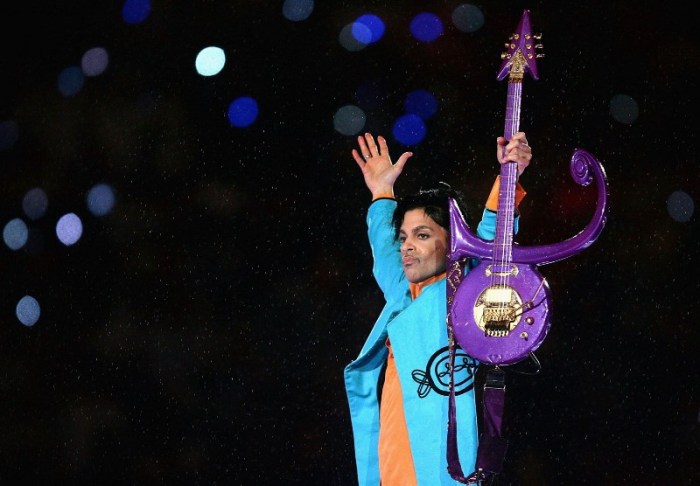
My consciousness is not arranged in such a way that I view any good person’s life as inherently more valuable than any other good person’s life. We all have value. We are all inherently valuable. The unjust arrangement of this world is premised on the notion that some humans are more human than others and therefore inherently more valuable. As I observe the posts, statuses, remembrances, reflections, tributes and energy devoted to ensuring Prince’s safe passage to the next realm. I am reminded that while no one life has more inherent value than another, a single life can be profoundly meaningful in its impact and influence. That is to say, one life can be so robust with meaning that it elevates the inherent value not of themselves but of humanity.
We are society very accustomed to biting on the style of an icon and leaving all the substance on the bone. Prince the man, the artist, the visionary, the philanthropist, the quiet activist are inextricably powerful in their meaningfulness because they all emanated from genius anchored in primordial excellence, a sense purpose and passion, ancient wisdom and an understanding that surpassed the colonization of knowing, all fused with a fierce sense of self determination, which like Harriet Tubman, was informed with a get free or die trying spiritness. You can’t get free, if you are too afraid to even acknowledge you are in bondage. Prince was/is clear.
Behind the iconic purple rain was an Oya like tornadic force powered by a prodigious work ethic, mastery of craft, a sense of excellence and a will to be good rather than to simply look good — that he was able to do both is part of his virtuosity too. In an age in which we aspire to be seen without having done anything worth looking at, in which one aspires to be stylistically robust but substantively bereft, in an era where we seem to have forgotten that subtly, allusion and refinement are demonstrations of genius in control of itself, its will and intent, fully aware of its prodigious fertility, conscious of what it is trying to birth. Prince stands as a reminder, a road map, a flashlight on a darkened path that being true to oneself, pursuing your purpose, your destiny may not make you famous, may not make you rich but it damn sure make you profoundly powerful.
What Prince possessed was not the manic individualism that is so characteristic of the ethos of American society but rather an ancient African ethos which speaks to a kind of expressive individualism rooted in a sociology of personhood, that asks us to improvise — speak our own special truth — within a shared cultural mosaic in such a way as to transcend and transform — improve — it without changing its fundamental essence. In many ways, Prince’s life was jazz personified, which is to say Black life set to a funky syncopated rhythm.
Few artist in my lifetime — ok, none — simultaneously embodied the times and presaged them the way Prince did. From the gender flexibility to the provocative dress to the saturation of sex to the empowering of sexuality as an element of spirituality to the narcissism to defining oneself on ones terms to understanding the sign of the times to the necessity of owning ones labor and ones worth. Prince stood firmly within a Black (African) tradition of artist as activist and philanthropist, in this regard Prince was/is closer to Harry Belafonte than Jimi Hendrix.
Nature abhors a vacuum and so too does print and television media, there is air and space to fill, so there will lots of hot air filling space from a media, fascinated by Black life but inured to the point of indifference about Black suffering, mostly about Prince’s art and it/his impact and likely be very little about the man — the Black man — the activist and the philanthropist. This is unfortunate because here there is much to be gleaned from Prince’s life, his work as well as his approach to life, to love, to liberation, and much to teach us about how to convert a life that was inherently valuable just because into a life that was so meaningful that it imbued humanity with additional value.
The image for which Prince became best known for is a stylized Ankh. The ankh is symbol that derives from KMT (the ancient African Nile Valley civilization best known as Egypt). The symbol represents that creative synthesis of complementary parts in fertile harmony; it represented the life giving power of masculine and feminine energy invested in creating eternal possibility, in generating life eternally. The eminent African psychologist Wade Nobles has noted that much of what is useful in African (American) culture is either overlooked or misunderstood due to our inability to understand the role and function of symbolism in African (American) culture. Even when he wasn’t using his name Prince was always speaking truth to power.
The prescient African novelist Ayi Kwei Armah rightly notes in his memoir, The Eloquence of the Scribes that: “ …Connections is a constant motif in all autonomous African culture, it comes from an ethos that says death cannot be the end; that beyond death remain connection, between those here and now, those who were once here but are now elsewhere, and those who, though not yet here, are destined to come some day….Bodies may connect visibly in the here and now; souls are connectors across the present with past and future time.”
Put another way, energy is neither created nor destroyed it merely changes forms. A profoundly meaningful Black man, a comrade in the struggle for a just, egalitarian and verdant world has departed: Next Woman, Next Man up. As Ella Baker, the Civil Rights activist said: “The struggle is eternal. The tribe increases. Somebody else carries on.” They always do — Will it be you?
Maa Kheru Prince, you did your work on the earthly realm; we look forward what your genius in collaboration with the other ancestors will provide us in the ancestral realm and in ours.
Dearly beloved
We are gathered here today
2 get through this thing called life…
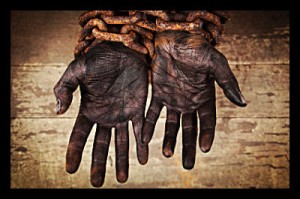
ThyBlackMan.com) Slave to the job. Told what you will earn, what to wear, when to eat, when to arrive, when to leave and what to do. Slave to the church, not to God. Told what to think, what to believe, how to worship, what God said and what you should do to advance man’s plans and agendas. Slave to the government, counting on them to take care of you, rescue you and do what is right to help you. Have we learned nothing from the water in Flint and the broken levies in New Orleans? Slaves wait on others to do for them the very things they should be doing for themselves.
This article is written to liberate your mind, to build your independence and to reaffirm how capable you are – even though you may not know it. It is easier to let people think and make decisions for you – but not better. It is easier to receive free stuff from government entitlement programs until you wake up and realize there is a catch and nothing in life is free. The catch is the surrender of your independence and that is a heavy price to pay because you may never get it back.
We should be creating independent thinkers, not reproducing slaves. Back in the days of official slavery, when people talked like this, one of two things happened. Either they were shunned and exposed to the master by the very slaves they were trying to help. Or those with a mindset that rejected mental and physical slavery were looked to as leaders. But all the while they should have been looked to as examples that waking up, rising up and stepping up to be free was very possible.
Today African American slaves think the same way they thought back then. Waiting o someone to define our worth, help us, save us and rescue us. You don’t think so? Look at the videos of people crying tears of joy when Obama became President. I heard so many people make statements like “he is one of us” or “now somebody will finally help us”. But guess what, though President Obama did accomplish many things, he was not the help that African Americans thought he would be. Do you know why? Because he was never supposed to be. The power to change your life has always been in your hands, not in the hands of any President, pastor, activist leader or corporation. You just have to wake up and realize that is true.
If you have never seen the movie The Last Dragon, you should watch it. Bruce Leroy is seeking answers and looking for the master of his destiny. In a fight against another martial artist feared by many, Bruce Leroy is being beaten badly by Shonuff. Just before Bruce Leroy is drowned, Shonuff asks him “who is the master“. Bruce Leroy finally wakes up and says “I Am“. The leader he has sought was always within and realization of that as a fact elevates him to the level he needed to reach. So I ask you, when you look in the mirror, who and what do you see? You don’t have to change anyone’s life but yours and then watch everything else change around and for you. But if you wait on others to do it for you, your purpose and potential will never be fulfilled.
In order to rise to the next level, you must do it mentally before you can ever make it manifest externally. The Monks of Tibet know this. The Apache Indians knew this. The top tribes of Nigeria like thee Igbo know this. The Pharaohs and Kings of Egypt knew this. Those who rule over you and others know this. Creflo Dollar knows this. Donald Trump knows this. Hillary Clinton knows this. I know this. But what do you know?
It’s time to stop allowing yourself to be a slave. it’s time to stop thinking and acting like one. It’s time to put away mediocrity and reset both your goals and your expectations of yourself. It’s time to change your life instead of waiting on someone else to “change your world” Ironically President Obama said we all would have to participate, but most of you only heard “Obama will save us” because that is what you wanted or needed to hear. But now it’s time to wake up.
Maybe it’s comfortable being a slave, but it’s not beneficial. I would even go out on a limb and say most African Americans are democrats because they expect and count on the Democrat party to take care of them. Others are Democrats because they inherited the political party of their slave masters, particularly in the south. Who doesn’t like free stuff? But again, there is a catch. So I can tell them where to stick their “free” stuff and the catches that come with it.
It amazes me how the African American slaves of today will fight to stay slaves and under someone else’s control. Slaves don’t want to think because they would rather have someone else do it for them. Slaves then murmur and complain all the way back to the barn but never break free of the chains that bind them. Are you a slave or do you know someone who is one? Why stay a slave? Abraham Lincoln abolished slavery on paper only and then slavery went completely covert, hitech, judicial, political and corporate. The music industry promotes it with behavior and lyrics that degrade our people and saggin pants confirm it.
I guess I could say a slave is not as bad as a zombie. But I would rather say DO NOT BE A SLAVE ANYMORE. If you let anyone else but you determine your destiny, you are under their power and control – and that is a form of slavery. The Catholic church has billions of slaves. The Nation of Islam has thousands of slaves who dress, speak, think and do as they say, when they say. Even the famed Christian religion (a counterfeit for the real thing) is ruled by man and T.D. Jakes, Creflo Dollar and Kenneth Copeland have millions of slaves. I find it humorous that millions of women who followed a biblical doctrine that says they are free would not know they are free until Bishop Jakes wrote a book or spoke in a conference. That is slavery. Are you offended? Well at least you are awake and that is a start.
Thanks to our local, state and federal government, the only thing you actually own is your thoughts, the liberty of your mind and your destiny. Don’t trust anyone else with these things. They are too important. Have we made progress? Yes, of course. Have we made enough progress beginning with the liberation of our minds? Not nearly enough. People often talk about “back in the days of slavery“, but I submit to you that those days were just yesterday, today and unfortunately tomorrow. Wake up!
Pull up your pants. Straighten your hair. Stop using the n-word.
Black Americans have long been told that there is a “right” way to act in order to secure racial equality and individual promotion in the United States. Often, these recommendations are made by other black Americans attempting to mute certain cultural aesthetics in order to make white Americans feel comfortable in their presence. I recently attended a lecture where a middle-aged black American man explained that he yearned for the days when black men “had grace.” He posted a picture of black men circa 1940 in Tuskegee, Alabama, standing in a cotton field wearing pressed white shirts and suspenders.
As journalist Aurin Squire explains, black respectability presumes that “systematic oppression can be overcome if we’re clean, mild, moderate, and economically successful.” Yet in a time when black men are nine times more likely to be shot and killed by the police and people still protest those who point out police brutality, policing the appearance of black Americans is, at best, beside the point.
But the issue isn’t just that respectability is irrelevant. New evidence suggests that the beliefs that inform respectability politics are bad for black Americans’ health.
According to the Journal of Behavioral Medicine, attributing success to personal characteristics instead of biased structural systems may negatively impact black Americans’ health. Nao Hagiwara and her colleagues at Virginia Commonwealth University explored whether the “just world” belief—the belief that the world is a just place where people get what they deserve—would influence the relationship between perceived discrimination and health consequences for 130 black adults.
The psychologists found that participants who both strongly believed that the world was a just place and reported experiencing high levels of discrimination were more likely than other blacks to suffer from chronic illnesses and increased blood pressure. Why? Because respectability politics tells black Americans that what is happening to them in this country is our fault. In other words, we’re to blame for the 9.5% unemployment rate among black Americans, the police who fatally shoot unarmed black men, and the teachers who expect less academic success from black students. If we just pulled our pants up a little higher and turned our music down, the systematic discrimination that informs nearly every sector of American life would disappear. If the world is just, then the injustice we experience in it is on us.
This thought is literally making people sick.
Health care and mental health practitioners should work to educate themselves on the current status of racial issues in the United States. And they should encourage their black patients to reframe how they look at their experiences. An understanding of individual accountability must be supplemented with a more contextual assessment of negative events. This reframing could alleviate the stress that’s associated with the belief that our behavior determines all of our experiences–even in a deeply racist and unjust society.
By seriously considering the social systems and racist encounters experienced by black Americans, health practitioners may help their patients better assess their experiences and select tailored methods for health improvement. Those charged with caring for black lives should be among the first acknowledge that they matter.
You can follow Veronica Womack on Twitter at @vwomackphd. This piece was originally published in New America’s digital magazine, The New America Weekly. We welcome your comments at ideas@qz.com.











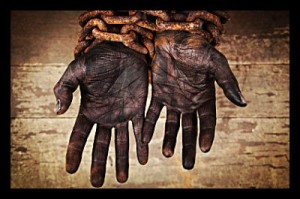 realize there is a catch and nothing in life is free. The catch is the surrender of your independence and that is a heavy price to pay because you may never get it back.


 OCG
OCG 