How Slavery Inspired Modern Business Management | Boston Review


The parallels between present-day business management practices and slavery have been persistently neglected in mainstream discussions about the history of U.S. enterprise.

The most striking parallel between slavery and scientific management can be found in the “task idea,” which Taylor described as “the most prominent single element in modern scientific management.” The task system is closely identified with Henry Laurence Gantt, who is well known today for the Gantt chart, a scheduling tool, which still bears his name. During the heyday of scientific management, Gantt developed a “task and bonus system,” which paired a flat task and a time wage with bonuses for overwork. Workers would be paid a base wage plus an additional piece rate for production above a certain minimum. By combining an achievable (rather than a maximal) task with bonuses, workers would enjoy the security of a minimum payment but also be encouraged to strive beyond it.

Economic growth can accompany choice, but it can also build on violence and injustice.

Yet while they introduced some novel details, neither Gantt nor Taylor created the task system. It has a much longer history and was one of the principal methods of organizing labor under slavery. Under the task system, an enslaved person would be assigned a set “task” or quota that he or she was expected to complete by the end of the day; this was in contrast to the gang system, where enslaved people labored under constant supervision for a set period of time. In some cases, slavers who used the task system even gave monetary bonuses for achievement above set targets. They “dangled the carrot” in a way that resembles not just Gantt’s methods but those of the gig economy today. Indeed, except for the base payment and the critically important ability for workers to quit, Gantt’s new system was in nearly every respect the same as the system used by some slaveholders, a fact that Gantt made no attempt to hide. Rather, he acknowledged that the word “task” was “disliked by many men” because of its connection to slavery, and he regarded this negative connotation as its “principal disadvantage.”

This is less surprising considering Gantt’s roots in the South. Born on the eve of the Civil War to a slaveholder in Maryland, Gantt’s father, Virgil Gantt, owned more than sixty men, women, and children. As Gantt wrote, “The term ‘task master’ is an old one in our language; it symbolizes the time, now happily passing away, when men were compelled to work, not for their own interests, but for those of some one else.” Gantt’s goal was not to abolish this old system but to adapt it to modern needs. As he explained, “The general policy of the past has been to drive, but the era of force must give way to that of knowledge, and the policy of the future will be to teach and to lead, to the advantage of all concerned.”

In a sense, scientific management replicated slavery’s extractive techniques while jettisoning the institution itself. Gantt’s rhetoric was not necessarily of distance but of progress; he purportedly liked to say that “scientific management marked a great step forward from slave labor.” James Mapes Dodge, a Philadelphia manufacturer and early supporter of Taylor, explained in 1913 that “we cannot tell who first liberated the germ idea of Scientific Management, as it was born to the world in the first cry of anguish that escaped the lips of the lashed slave.” Dodge’s reference was metaphorical, to a vague and distant past where slavery prevailed, not to the slave South. But he understood that “the present generation” had inherited “from the past the relationship of master and slave” and saw it as the job of scientific management to move beyond it.

Source: How Slavery Inspired Modern Business Management | Boston Review

Donald Trump Is All Alone in the White House – The Atlantic

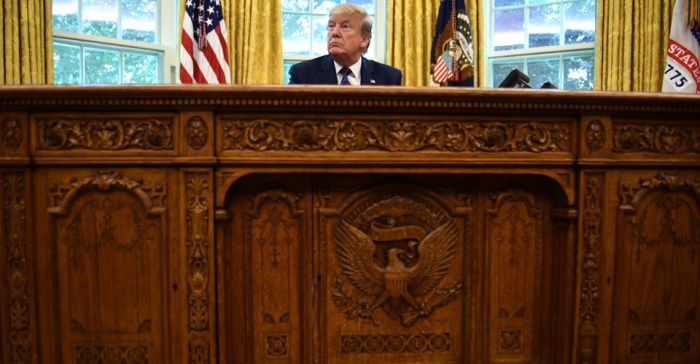
“You’ve got to get him out of the White House!” they said to their colleague, a person close to the White House told me. Don’t announce it or make a big deal of it. Just go.It didn’t work. A homebody by nature, Trump said no.

The fate of a presidency can hinge on just such interventions from staff. Any president can lose sight of what he needs to weather a crisis or stay mentally and physically fit for the most demanding job imaginable; that’s when he needs a staff attentive to his larger interests.

Past presidents relied on aides to ease pressures and tell them hard truths—all of which help deter poor decisions. Trump doesn’t seem to have any of that, and as the stressors of impeachment grow, so does the prospect of more erratic behavior and self-sabotage.

A person close to Trump told me that the president feels isolated and has complained that he has no one in whom he can confide. “These heavy issues are weighing on him. He has nobody around him. There’s nobody,” this person said.Trump at one point had adults in the room: confidants and pedigreed generals and accomplished corporate executives. Their numbers have dwindled as his term winds on and he depends more on his own judgment. The dinner getaway was a valiant, if futile, idea hatched by staffers who wanted to introduce more normalcy into his life. But the senior aide who pitched it is gone, as is much of Trump’s original team.

Surrounding Trump instead is a mismatched set of advisers whose focus seems to be their own survival and ambition in a West Wing that has resembled a fast-spinning turnstile. They’ve seen that standing up to Trump is often a path to getting fired. All of which points to a predicament of Trump’s own making: He’s lost or chased away many of the advisers best suited to help him at the perilous moment he most needs their guidance.

Source: Donald Trump Is All Alone in the White House – The Atlantic

Breaking Barriers: Why Black-Owned Beauty Supply Stores Are Important And On The Rise

As the tides change, more African-Americans—both nationally and abroad—are getting into the haircare and beauty supply store industry, while also making sure that they are doing business with other Black beauty entrepreneurs in the process.“Koreans used to control the market, now they are selling the stores back to us because their kids do not want to take on the store,” says Sam Ennon, President and CEO of The Black Owned Beauty Supply Association . Over the past 15 years, the organization has helped open 450 Black-owned beauty supply stores across the country.

“The second and third generation (of Korean Americans) went to college and go into other professions,” Ennon added. “We’re very pleased with the future of the Black haircare industry where it’s going because more entrepreneurs, more young people are getting into the business,” Ennon shared recently with CNBC.  This new trend presents a unique, yet profitable, opportunity for the Black community and combats the continuous racial profiling many of us have experienced or witnessed shopping in most Asian-owned stores. Just this month, two black women were physically attacked by a store owner.

Despite being such a highly-visible staple in our community, there are still several unknowns within, and about, the industry. To answer some of the outstanding questions about breaking into the business, we reached out to several store owners who shared some of the gems they’ve learned on their entrepreneurial journeys in hopes of helping out the next generation of black beauty store bosses.  Keep reading below to hear what they had to say.

Source: Breaking Barriers: Why Black-Owned Beauty Supply Stores Are Important And On The Rise

The Autobiography Of Miss Jane Pittman author, Ernest J. Gaines, Dies at 86 : NPR

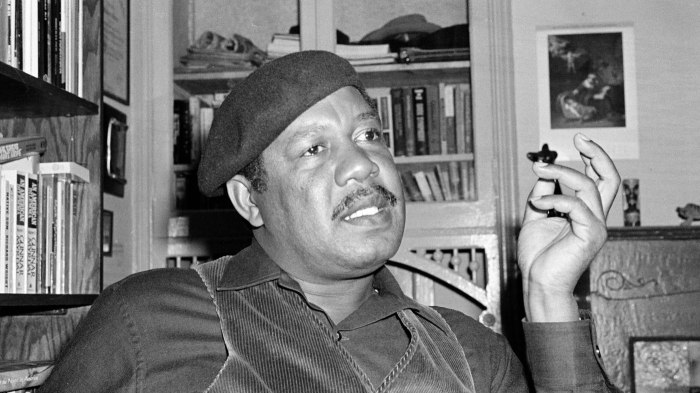
The son of sharecroppers, Gaines was born on a plantation in Pointe Coupee Parish, near Baton Rouge. He attended school for little more than five months out of the year. But that was more education than his family before him had received. He would say later in life that his ear for the stories of his elders was developed as he wrote letters for adults who couldn’t read or write.In the late 1940’s, at the age of 15, his family moved to the northern California city of Vallejo, about 30 miles north of San Francisco.

He told interviewer Lawrence Bridges that in California he could do something that had been forbidden in the South: visit a library. Gaines later attended San Francisco State University.

His early writing earned him a Wallace Stegner fellowship at Stanford University.Gaines returned to Louisiana in 1963, inspired by James Meredith’s bid to enroll in the then-all-white University of Mississippi. He took it as a sign that the South was changing and that he could be a part of that change.”As I’ve said many times before, the two greatest moves I’ve made was on the day I left Louisiana in ’48, and on the day I came back to Louisiana in ’63,” he would later tell an interviewer.

Source: The Autobiography Of Miss Jane Pittman author, Ernest J. Gaines, Dies at 86 : NPR

The Other Toni Morrison | Boston Review

Morrison though was also savvy enough to understand that this would not be enough to motivate Random House to publish her list. Aware that Random House was diversifying authors and readership and that a successful book is also a profitable one (or vice versa), in meetings Morrison pitched book sales over political ideology: “I was not going to . . . disrupt anything. . . . the books were going to make [Random House] a lot of money!”All the while that she was at Random House, Morrison was not only honing her own craft as a novelist, but also as an essayist and critic.

While her fiction unquestionably has transformed the terrain of how we understand black subjectivity—through her unparalleled storytelling about the trials, terrors, and triumphs of black women—her nonfiction (in addition to her editing) also contributed significantly to black freedom struggles.In 1971 Morrison contributed an op-ed to the New York Times called “What the Black Woman Thinks About Women’s Lib” that would presage not only her artistic commitment to the unique status of black women, but also her lifelong engagement with both the promise and shortcomings of feminism:What do black women feel about Women’s Lib? Distrust. It is white, therefore suspect. In spite of the fact that liberating movements in the black world have been catalysts for white feminism, too many movements and organizations have made deliberate overtures to enroll blacks and have ended up by rolling them.

Source: The Other Toni Morrison | Boston Review

GOP stunt is a serious breach (opinion) – CNN


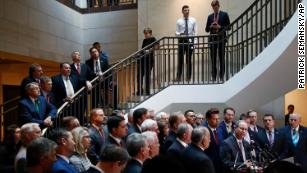
For them, this stunt was just another attempt to distract from the continuing stream of witnesses testifying to the President’s shameless attempts to extort from Ukraine an investigation into his most-feared rival. However, when they entered the secure room, phones out, recording the scene, these GOP members showed a rash disregard for the security protocols designed to keep America’s secrets safe.

” . . . Further, the members of Congress themselves are highly prized intelligence targets for foreign adversaries. They often meet with officials from other governments, travel internationally and communicate with the most senior executive branch officials, including the president. Many of these members also do not come to their jobs with a background in cybersecurity, and are often confused by technology, so their security practices may not be strong. Compromising the smart phone that sits in the pocket of a member of Congress could yield insights into political strategies, foreign policy or even salacious information that could be used to manipulate or coerce that individual.Foreign adversaries, like Russian President Vladimir Putin, are also particularly interested in the House’s investigation into President Donald Trump’s alleged attempt to extort an investigation from Ukraine by withholding military aid needed to repel a Russian invasion into their territory. Foreign adversaries surely want to know how House Republicans are reacting to the evidence presented by witnesses, assessing what those witnesses say about how Trump conducts business and what his pressure points are. Taking an easily compromised device into the room to hear the depositions is to cross a perilous line.”

Source: GOP stunt is a serious breach (opinion) – CNN

As New York Prosecutors Close In, Trump Flees to Florida | DCReport.org

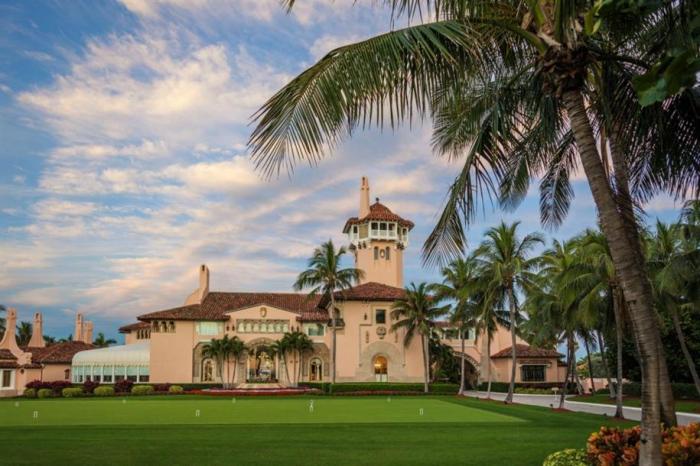
“Making Florida his residence will not save Trump from any tax civil lawsuits, criminal charges or from paying past taxes he owes in New York. So long as Trump has substantial income from New York he will have to file a non-resident state tax form. He likely will also have to file in Connecticut, New Jersey, Illinois and California, among other states where he has businesses.That’s what makes his Oct. 31 tweets so intriguing. Making Florida his primary residence will have minor effects on lowering whatever taxes Trump may owe, so why bring it up?”

Source: As New York Prosecutors Close In, Trump Flees to Florida | DCReport.org