Why So Many Organizations Stay White

WHY SO MANY ORGANIZATIONS STAY WHITE

Organizations are not race neutral. Scholars, managers, journalists, and many others routinely recognize “black capitalism,” “black banks,” and “ethnic restaurants,” yet we think of banks that are run by and serve whites simply as “banks” and white corporations simply as “businesses.”
This way of thinking reinforces the fallacy that only people of color have race, and obscures the broad, everyday dynamics of white racial power within organizations. Hiring for elusive notions of “fit,” locating operations in largely white communities, mandating dress and grooming rules rooted in European beauty standards, and expecting non-white employees to code-switch can all subtly disadvantage non-white employees. By leaving white organizations racially unmarked, it becomes difficult to explain why several decades of antidiscrimination and diversity policies ostensibly aimed at equalizing opportunity have done little to alter the overall distribution of organizational power and resources. Such organizational policies, while sometimes helpful in increasing minority representation, fail to address the racial hierarchies historically built into American organizations. Rather than asking how to bring diversity into the workplace, a better question is why so much power and organizational authority remain in white hands.

I argue that the idea of the race-neutral organization has done a great disservice to our understanding of race relations in the workplace, allowing scholars and practitioners to see racial exclusion as unfortunate aberrations or slight deviations from otherwise color-blind ideals. In reality (and even though we typically do not say this out loud), many mainstream American organizations have profited from and reinforced white dominance. Many still do. Understanding this context is vital to seeing organizations for what they really are: not meritocracies, but long-standing social structures built and managed to prioritize whiteness. Only then can leaders begin thinking differently about race — not as a temporary problem to solve or a box to check, but as a fundamental part of what it means to be a company in America. Only then can they have a better understanding of why their diversity efforts do so little to attract, retain, and promote people of color — and what they need to do to change that.

JUST HOW WHITE ARE ORGANIZATIONS?

The simplest way to think about organizational whiteness is through statistics. For example, black representation at the top of organizational hierarchies, as measured through CEOs in Fortune 500 companies, has decreased from six CEOs in 2012 to three today. Steady declines in minority representation at the helm of these businesses since their peak in the early and mid-2000s have led some scholars to claim that the “heyday” of dedicated diversity efforts has ended. University presidents remain mostly white (and male) despite rapidly diversifying student demographics, and academic hierarchies remain deeply stratified by race, with black men and women, respectively, making up just 2% of full-time professors above the rank of assistant. Black gains among public-sector employees — the economic sector responsible for much of the growth of the black middle class following the reforms of the civil rights era — have begun to disappear since the adoption of private-sector policies that have increased managerial discretion and loosened worker protections. A recent meta-analysis of field experiments — the gold standard for detecting discrimination, because other potentially explanatory factors are accounted for — shows that high levels of hiring discrimination against black men have remained relatively constant since the late 1980s, and discrimination against Latinos has decreased little. And despite some progress diversifying within individual firms, between-firm segregation has increased over the past 40 years and Fortune 500 boards remain 83.9% white.

Full Article and Source: Why So Many Organizations Stay White  

HBR

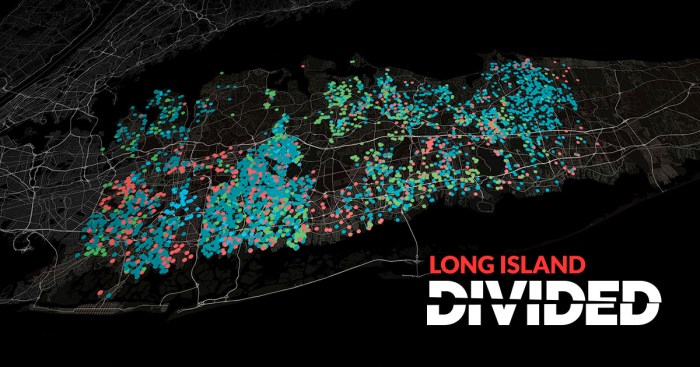
Undercover investigation reveals evidence of unequal treatment by Long Island real estate agents II Newsday Discrimination Testing

We sent white, black, Hispanic and Asian testers undercover to see if they would be treated equally by LI real estate agents. Many were not.

In one of the most concentrated investigations of discrimination by real estate agents in the half century since enactment of America’s landmark fair housing law, Newsday found evidence of widespread separate and unequal treatment of minority potential homebuyers and minority communities on Long Island.

The three-year probe strongly indicates that house hunting in one of the nation’s most segregated suburbs poses substantial risks of discrimination, with black buyers chancing disadvantages almost half the time they enlist brokers.

Additionally, the investigation reveals that Long Island’s dominant residential brokering firms help solidify racial separations. They frequently directed white customers toward areas with the highest white representations and minority buyers to more integrated neighborhoods.

They also avoided business in communities with overwhelmingly minority populations.

From the editor

The findings are the product of a paired-testing effort comparable on a local scale to once-a-decade testing performed by the federal government in measuring the extent of racial discrimination in housing nationwide.

Regularly endorsed by federal and state courts, paired testing is recognized as the sole viable method for detecting violations of fair housing laws by agents.

Two undercover testers – for example, one black and one white – separately solicit an agent’s assistance in buying houses. They present similar financial profiles and request identical terms for houses in the same areas. The agent’s actions are then reviewed for evidence that the agent provided disparate service.

Newsday conducted 86 matching tests in areas stretching from the New York City line to the Hamptons and from Long Island Sound to the South Shore. Thirty-nine of the tests paired black and white testers, 31 matched Hispanic and white testers and 16 linked Asian and white testers.

Newsday confirmed that agents had houses to sell when meeting with testers based on analyses provided by Zillow, the online home search site. Zillow draws an inventory of available homes daily from the Multiple Listing Service of Long Island, the computerized system used by agents to select possible houses for buyers. MLSLI said that it does not maintain its own database of past daily inventories, as Zillow does, and so could not provide the same type of tallies. As permitted by law, all tests were recorded on hidden cameras to ensure accuracy in describing interactions between agents and customers.

Source: Undercover investigation reveals evidence of unequal treatment by Long Island real estate agents

Against Black Homeownership | Boston Review II KEEANGA-YAMAHTTA TAYLOR

RACE

Against Black Homeownership

The real estate market is so structured by race that black families will never come out ahead.

KEEANGA-YAMAHTTA TAYLOR

Image: Flickr

In January 1973, George Romney, Nixon’s enigmatic Secretary of Housing and Urban Development, administered an open-ended moratorium on its 1968 initiatives to open up single-family homeownership to low-income borrowers by providing government-backed mortgages. The experiment to make homeownership accessible to everyone ended abruptly with massive foreclosures and abandoned houses, but the questions ignited by these policies persisted. Some analysts insisted that the failure of HUD’s homeownership programs was proof positive that poor people were ill equipped for the responsibilities of homeownership. African Americans experience homeownership in ways that rarely produce the financial benefits typically enjoyed by middle-class white Americans.And they insisted that it more specifically implicated low-income African Americans as “incapable” homeowners. Others pointed to HUD’s obvious mismanagement of these programs as the real culprit in their demise, and, importantly, how the programs gave an industry already known for its racial bias new opportunities to exploit low-income African-Americans. But the lessons from HUD’s experiment were muddled by other economic sensibilities, including the commitment to private property and the centrality of homeownership to the American economy.

Today, homeownership, even for low-income and poor people, is reflexively advised as a way to emerge from poverty, develop assets, and build wealth more generally. The historic levels of wealth inequality that continue to distinguish African Americans from whites are powerful reminders of how the exclusion of Blacks from this asset has generationally impaired Black families in comparison with their white peers. Owning a home as a way to build wealth is touted as an advantage over public or government-sponsored housing. It grounds the assumption that it is better to own than rent. And the greatest assumption of all is that homeownership is the superior way to live in the United States. This, of course, is tied to another indelible truth that homeownership is a central cog in the U.S. economy. Its pivotal role as an economic barometer and motor means that there are endless attempts to make it more accessible to ever-wider groups of people. While these are certainly statements of fact, they should not be confused as statements on the advisability of suturing economic well-being to a privately owned asset in a society where the value of that asset will be weighed by the race or ethnicity of whoever possesses it.

The assumption that a mere reversal of exclusion to inclusion would upend decades of institutional discrimination underestimated the investments in the economy organized around race and property. The concept of race and especially racial inferiority helped to establish the “economic floor” in the housing market. One’s proximity to African Americans individually, as well as to their communities, helped to determine the value of one’s property. This revealed another reality. Markets, as in the means by which the exchange of commodities is facilitated, do not exist in vacuums, nor do abstract notions of “supply and demand” dictate their function. Markets are conceived and constituted by desire, imagination, and social aspirations, among other malleable factors. This does not mean that markets are not real, but that they are not shaped by need alone. They are shaped by political, social, economic, and in the case of housing, racial concerns. And in the United States, these market conditions were shaped and stoked by economic actors that stood to gain by curtailing access to one portion of the market while then flooding another with credit, capital, and indiscriminate access to distressed and substandard homes.

HUD’s crisis in its homeownership programs in the 1970s reveal deeper and more systemic problems with the pursuit of homeownership as a way to improve the quality of one’s life. It is undeniable that homeownership in the United States has been “one of the important ways in which Americans have traditionally acquired financial capital” and that the “tax advantages, the accumulation of equity, and the increased value of real estate property enable homeowners to build economic assets. . . . These assets can be used to educate one’s children, to take advantage of business opportunities, to meet financial emergencies, and to provide for retirement.” Investment in homeownership, and its role in the process of the personal accumulation of capital, has been fundamental to the good life in the United States.

Full Article and Source: Against Black Homeownership | Boston Review

Pick Up the Pieces: Excursions in Seventies Music, Corbett

Unless you lived through the 1970s, it seems impossible to understand it at all. Drug delirium, groovy fashion, religious cults, mega corporations, glitzy glam, hard rock, global unrest—from our 2018 perspective, the seventies are often remembered as a bizarre blur of bohemianism and disco. With Pick Up the Pieces, John Corbett transports us back in time to this thrillingly tumultuous era through a playful exploration of its music. Song by song, album by album, he draws our imaginations back into one of the wildest decades in history.

Source: Pick Up the Pieces: Excursions in Seventies Music, Corbett

What Michelle Obama Gets Wrong About Racism

Succeeding While Black

Michelle Obama’s new book reduces racial inequality to a matter of psychological impairment that can be overcome through grit and grin. This is a dangerous proposition.

KEEANGA-YAMAHTTA TAYLOR

Becoming

Michelle Obama
Michelle Obama’s popularity is a remarkable political feat. Her ascent into the public spotlight, after all, began as a receptacle of rightwing misogynoir. From the suggestions that she was ill-tempered to the hideous portrayals of her as male or some kind of primatial hybrid, Obama endured scrutiny unprecedented in the history of the role of first lady. This was hardly surprising given that the pageantry and pomp of the office had become synonymous with white and wealthy “ladies.” Her opponents were quick to cast Obama—the dark skinned, Chicago native—as decidedly un-ladylike, characterizing her instead as an anti-American political militant.

Becoming is an exquisite lesson in creating political ideology—one that I find troubling.

Sensitive to these portrayals, Obama acquiesced when her staff asked her to soften her gestures and play down her political contributions to Barack’s first campaign run. In her new book, Becoming, Obama describes how campaign aids encouraged her to “play to my strengths and to remember the things I most enjoyed talking about, which was my love for my husband and kids, my connection with working mothers, and my proud Chicago roots.” Together, the Obamas became disciplined in responding to the racist attacks, in part due the desire not to confirm the stereotypes. As Obama has famously said, “when they go low, we go high.”

The strategy worked. A recent Gallup poll listed Obama as the most “admired” woman in the United States. Becoming sold a breathtaking 1.4 million copies in its first week, and its success is partly due to the perception that this is Obama’s response to the years of silence—her chance to finally break free from adherence to the public rituals of U.S. power. And, indeed, Obama’s book is her story in her own words—authentic and refreshingly un-ladylike. She endears herself to a broad audience as she freely recalls smoking marijuana with a boyfriend in her car, having pre-marital sex, living at home well into her thirties even after she was married, having troubles conceiving both of her children, yelling in arguments with Barack, and feeling bitter as she was expected to carry most of the burdens of her household after marriage. Free of the pretense often effused by those with wealth and power, Obama comes off as ordinary and relatable.

In Becoming, Obama describes the value of telling one’s story this way: “Even when it’s not pretty or perfect. Even when it’s more real than you want it to be. Your story is what you have, what you will always have. It is something to own.” For Obama, a person’s story is an affirmation of their space in the world, the right to be and belong. “In sharing my story,” she says, “I hope to help create space for other stories and other voices, to widen the pathway for who belongs and why. . . . Let’s invite one another in. Maybe then we can begin to fear less, to make fewer wrong assumptions, to let go of biases and stereotypes that unnecessarily divide us.” The root of discrimination, Obama implies, including the ugly discrimination she faced as first lady, is misunderstanding. Sharing personal narratives, then, offers a way for people to fully see each other and to overcome our differences.

This message has resonated widely, but especially with black women, for whom Becoming has been a source of pride and celebration. Black women have paid hundreds, sometimes thousands, of dollars to crowd into stadiums on her book tour, which speaks not only to the celebrity of Obama, but the depths of disrespect and invisibility that black women in the United States experience. Indeed, black women in this country are so debased and ignored that it often feels as if the success and public adoration of Obama can lift and make visible all black women—a process Obama herself encourages.

Her story is a celebration of personal fulfillment—the kind of self-involved, “live your truth”-inspired homilies that middle-class and rich women tell each other.

Yet despite all the optimism and goodwill that Obama embraces and inspires, I find Becoming troubling. Sticking to her strategy for success, Obama reassures her reader repeatedly that she is not a “political” person. Instead Obama describes herself as a “child of the mainstream” who “never stopped reading People magazine or let go of my love for a good sitcom. . . . And to this day nothing pleases me more than the tidy triumph delivered by a home-makeover show.” But as someone who has been around politics since she was a child (her father was a precinct captain in the Democratic Party) and is now, domestically and internationally, one of the most well-known ambassadors of the United States, this denial is not modesty, it is misleading. Indeed, far from being apolitical, Obama is politically sophisticated, and any reader of her book should treat her that way.

Becoming, after all, is an exquisite lesson in creating ideology. As a political insider with broad pop culture appeal, Obama wields enormous influence in shaping discourse and opinion on critical issues concerning race, gender, public policy, and how we define progress in general. Lauren Mims, a former assistant director for the White House project “Educational Excellence for African Americans,” has even undertaken an initiative to create a curriculum for Becoming that she says will “disrupt the traditional practice of talking about black girls in pejorative ways and center them and their unique experiences to study how we can support them.”

Obama, then, is not just telling stories; she is shaping our understanding of the world we live in, which is why it is so critical that we, as a public, interrogate her ideology. When we do, we might see that her story is not in search of the collective experience but is a celebration of personal fulfillment—the kind of self-involved, “live your truth”-inspired homilies that middle-class and rich women tell each other. Becoming normalizes power and the status quo while sending the message that the rest of us only need to find our place in the existing social hierarchy to be happy. This is unfortunate because personal narratives—including Obama’s—do have power. When stitched together and told honestly, they can create a map of shared experience that raises the possibility of collective action as a way to transform the individual circumstance. This is certainly true of poor and working-class black women whose personal stories expose the racism, sexism, and general inequality of U.S. society. These stories relentlessly pierce the treacherous idea that the United States is free, democratic, and just, and they prove the axiom of black feminism that the personal is political.

section separator

Born in 1964, Obama has no recollection of the political strife—including multiple uprisings in response to police violence and the assassination of Martin Luther King, Jr.—that unfolded in Chicago neighborhoods during her childhood. Instead, her memories revolve around her family’s cramped apartment on the Southside of Chicago, and her narration of her working-class family’s history perfectly captures the systematic way that African Americans were excluded from the vast bounty created in the United States in the aftermath of World War II. Indeed, as a child, Obama was palpably aware that her circumstances were vastly different from those of the adults around her. While their potential was truncated by rampant racial discrimination, Obama was able to attend a promising new magnet high school called Whitney Young. She then goes on to Princeton University and eventually Harvard Law School, and by the mid-1980s, Obama was earning a six-figure salary at one of the most highly regarded law firms in downtown Chicago. By any measure, she and her equally successful brother, Craig Robinson, overcame circumstances that many of their peers inevitably succumbed to.

Obama’s book reflects the diminished view of public programs and the power of the state as a vehicle to create meaningful opportunities for African Americans.

Racism does exist for Obama, but these two realities—the history of structural segregation that she and her brother emerged from and their subsequent black success—shape her perception of racism as less an institutional phenomenon and more an unfortunate residue from the past. This does not negate its realness, but she sees its manifestation largely as a “deep weariness . . . a cynicism bred from a thousand small disappointments over time.” She had seen it in both her grandfathers, “spawned by every goal they’d abandoned and every compromise they’d had to make.” It was why the neighbor had stopped mowing the lawn or even keeping track of where her kids went after school. And “it lived in every piece of trash tossed carelessly in the grass at our local park and every ounce of malt liquor drained before dark. It lived in every last thing we deemed unfixable, including ourselves.”

One of Obama’s best friends growing up was Santita Jackson, one of the Reverend Jesse Jackson’s daughters. In Becoming, Obama points to Reverend Jackson’s talking points in his 1984 presidential run as an inspiring message of racial uplift. She writes enthusiastically about how Jackson

toured the country, mesmerizing crowds with thundering calls for black people to shake off the undermining ghetto stereotypes and claim their long-denied political power. He preached a message of relentless, let’s-do-this self-empowerment. . . . He had school kids pledge to turn off the TV and devote two hours to their homework each night. He made parents promise to stay involved. He pushed against the feelings of failure that permeated so many African American communities, urging people to quit with the self-pity and take charge of their own destiny. “Nobody, but nobody,” he’d yell, “is too poor to turn off the TV two hours a night.”

Conversely, Obama saw how other “extraordinary and accomplished people”—including black women such as herself—had managed the skepticism they were surrounded by:

All of them had doubters. Some continue to have roaring, stadium-sized collections of critics and naysayers who will shout I told you so at every little misstep or mistake. The noise doesn’t go away, but the most successful people I know have figured out how to live with it, to lean on the people who believe in them, and to push onward with their goals. . . . I’d never been someone who dwelled on the more demoralizing parts of being African American. I’d been raised to think positively. I’d absorbed my family’s love and parents’ commitment to seeing us succeed. . . . My purpose had always been to see past my neighborhood—to look ahead and overcome. And I had.

In Obama’s telling, then, racism is not the defining feature of black life, and her profound success is a testament to the ways that striving and self-motivation are the difference between those who succeed and those who do not.

The absence of materiality in Obama’s understanding of racism in contemporary life underlies her sharp rebuke of Reverend Jeremiah Wright in Becoming. Known for his fiery sermons condemning the racism, militarism, sexism, and oppression in U.S. society, Reverend Wright became a thorn in the side of the Obamas during the 2008 campaign when it was “discovered” that the Obamas were members of his church. The mainstream media delved into his sermons and described some of Wright’s incisive comments as “hate speech,” which worked to fuel the presumed radicalism or militancy of the Obamas. The most widely circulated of these sermons showed Wright at his incendiary best:

The government gives them the drugs, builds bigger prisons, passes a three-strike law and then wants us to sing “God Bless America.” No, no, no, not God Bless America. God damn America—that’s in the Bible—for killing innocent people. God damn America, for treating our citizens as less than human. God damn America, as long as she tries to act like she is God, and she is supreme. The United States government has failed the vast majority of her citizens of African descent.

In Becoming, Obama dismisses Wright’s experiences and viewpoints as him “careening through callous and inappropriate fits of rage and resentment at white America, as if white people were to blame for every woe.” She accuses him of viewing “race through a lens of cranky mistrust.” Wright and older African Americans, she says, became “cranky” because of legal strictures of segregation that gave rise to a “narrow mindedness” in matters regarding race. Obama goes on to conflate the bitterness of older African Americans with the racism of older white people, such as Barack Obama’s white grandmother who felt afraid of black men on the streets. That fear, she writes, “was a reminder of how our country’s distortions about race could be two-sided—that the suspicion and stereotyping ran both ways.”

It is a diplomatic reading—but ultimately a clumsy effort to reach across the profound racial division in the United States. Consider the political ramifications of such a reading. By treating them as two sides of the same coin, Obama is equating African American anger—which is rooted in material deprivation and human subjugation—with white fear, which is rooted in racial stereotypes. These two worldviews are not the product of the same generational experiences and reducing them to such forecloses the possibility that African Americans could ever find real redress to the inequality produced by centuries of slavery and legal discrimination.

Becoming normalizes power and the status quo while sending the message that the rest of us only need to find our place in the existing social hierarchy to be happy.

Moreover, Obama’s reading reinforces the perception that African Americans’ persistent demands against racism are not much more than “crankiness” or complaining. When combined with Obama’s own emphasis on striving as a way to overcome racial discrimination, this narrative reduces racial inequality to one of psychological impairment that can be overcome through sheer determination and a positive attitude. She fails to see how it was bitter struggle against real institutions that created the new world she was able to thrive in. Indeed, Whitney Young high school was built on an empty lot that had seen multiple uprisings over the course of the 1960s. Those uprisings eventually caused the political establishment to acquiesce and take concrete steps to create a black middle class. Elected officials invested in schools such as Whitney Young while also exerting enormous pressure on the private sector to end the racial enclosure of segregation that had slowly suffocated Obama’s parent’s social mobility. The crucible of the 1960s widely expanded access to homeownership, college education, white collar professions, and formal entry into electoral politics for African Americans.

Obama and a thin layer of others were beneficiaries of these transformations in the U.S. political economy. The short-lived reforms created by the anti-poverty programs of the 1960s lowered the rate of black poverty by expanding the federal bureaucracy and creating new job opportunities for black workers. But as the momentum from the political insurgency of the 1960s waned, political support for these programs evaporated. And as more time passed from the high point of the movement, the hardship experienced by most African Americans grew deeper. In 1964, the year Obama was born, black unemployment was 9.6 percent; by 1975, it had crept up to 15 percent; and while Obama was at Princeton University, in 1983, black unemployment inched up even further to a bewildering 20 percent—the highest ever recorded. Nevertheless, the successes of the few were held up as evidence that it was not the system that was broken; instead, black people simply weren’t taking advantage of all that the United States had to offer.

To make sense of the persistent low wages, housing instability, higher rates of poverty, and deepening social crisis that marred black communities, the political focus shifted violently to personal responsibility or a lack thereof. In doing so, the infrastructure of publicly funded institutions—including public housing and other forms of social welfare—that had been slowly chipping away at inequality and poverty were dismissed as unnecessary and financially gutted. The picture of success for some African Americans—whether they were lawyers or young elected officials—and continued hardship for others created a distorted picture of black America. Like a fun house mirror, it enlarged features such as personal persistence and responsibility while pushing others, such as the role of institutional racial discrimination, further to the margins.

The crises in this country cannot be resolved one person at a time, and recipes for self-fulfillment cannot create the social forces necessary to transform neighborhoods.

Obama’s book reflects this diminished view of public programs and the power of the state as a vehicle to create meaningful opportunities for African Americans. With the public sector out of view, her conception of social progression is freighted with “public-private partnership” ventures and mentorship steered by “gifted” individuals. Social change is thus based on the goodwill and interests of well-endowed funders and well-meaning individuals while inequality is essentially accepted as something to navigate rather than dismantle.

section separator

If this reading seems unfair, consider Obama’s 2013 visit to the Chicago high school, William R. Harper, and her recollection of it in Becoming. As an institution, Harper stands at the intersection of racism, poverty, and violence. In 2012, twenty-one of its students were injured and eight killed from persistent gun violence. Obama chose to visit Harper in 2013 as she became increasingly focused on gun violence in Chicago. Just weeks before, a fifteen-year-old black girl who had just performed at Barack Obama’s second inaugural parade was shot and killed in a Southside neighborhood approximately one mile from the Obama family home.

On the day of her visit, Obama met with twenty-two students who had all been psychologically scarred by their constant exposure to gun violence. They relayed with frightening detail walking down the middle of the street to avoid stray gunfire and their routines of clearly identifying escape routes in case they needed to run. In the course of the meeting, one of the Harper students remarked to Obama, “It’s nice that you are here and all . . . but what are you actually going to do about all of this?”

In her telling, Obama did not have much to say to them: “Honestly, I know you’re dealing with a lot here, but no one’s going to save you anytime soon. Most people in Washington aren’t even trying. A lot of them don’t even know you exist.” It was an honest statement—one we are expected to read as refreshingly honest and “real”—but one that betrayed the logical conclusions of seeing racism as a manifestation of psychology, bad intentions, or simple ignorance. When unmoored from the institutions of power and class domination, racism becomes impossible to address, combat, and dismantle.

In Becoming, Obama also recalls that Englewood (the neighborhood Harper is in) had been considered a “tough” area when she was growing up, but seeing the shuttered windows and dilapidated structures in 2013 showed how much more ingrained its problems had become. She blames white flight: “I thought back to my own childhood and my own neighborhood, and how the word ‘ghetto’ got thrown around like a threat. The mere suggestion of it . . . caused stable, middle-class families to bail preemptively for the suburbs, worried their property values would drop. ‘Ghetto’ signaled that a place was both black and hopeless.”

When unmoored from the institutions of power and class domination, racism becomes impossible to address, combat, and dismantle.

But while white flight was certainly part of Englewood’s history of decline, white people abandoned Englewood more than a half century ago. Englewood’s problems of today are both historical and contemporary. The neighborhood has continued to suffer because successive city administrations have starved it and other poor and working-class black communities of desperately needed resources, opting instead to redirect those funds to whiter and wealthier sections of the city. In 2012, just months before Obama’s visit to Englewood, Rahm Emanuel, mayor of Chicago and Barack Obama’s former chief of staff, shuttered fifty-two public schools in Chicago—the largest simultaneous school closure in U.S. history. Meanwhile, Chicago has dedicated 40 percent of its budget towards policing.

Almost half of black Chicagoans, men and women, between the ages of twenty and twenty-four are both unemployed and out of school. It is an economic situation that produces crime while arrests and imprisonment reinforce the tight circuit of oppression and brutality. There are estimates that 29 percent of black women in Chicago’s Southside suffer from untreated PTSD. These are material manifestations of racism, but Obama’s telling treats them as sad but ultimately disconnected events that are the simple product of partisan politics, pessimism, bullying, even hate—nothing quite tangible enough to put one’s hands on and dismantle.

Obama, who avoids any analysis of the systemic or systematic feature of racial inequality, offered the children at Harper this lesson: “progress is slow . . . they couldn’t afford to simply sit and wait for change to come. Many Americans didn’t want their taxes raised, and Congress couldn’t even pass a budget, let alone rise above petty partisan bickering, so there weren’t going to be billion-dollar investments in education or magical turnarounds for their community.” In the end, she told them to “use school.”

There are estimates that 29 percent of black women in Chicago’s Southside suffer from untreated PTSD. These are material manifestations of racism.

While the first lady of the United States does not hold a legislative position and thus is not able to secure funding for a school in need, Obama’s normalizing gaze at inequality, almost accepting it as a fact of nature, reinforces the status quo for her largely black audience—and that is a dangerous proposition. Obama shows the extent to which she has given up on the idea that demands can be made of the state. These children don’t have the luxury to “simply wait” for change, so their only option is to turn to their underfunded, lightly resourced school and work hard amid stray gunfire to get themselves out.

This lesson—that personal striving is an important remedy to racial inequality—is given a sunny, optimistic sheen when Obama tells us that local “business owners” later donated funds so that those same twenty-two Harper kids could visit the White House, meet Barack Obama, and visit Howard University. Obama tells us that her hope was for the Harper students to see themselves as college students and use that as motivation to change their lives. As she triumphantly declares at the chapter’s end, “I was there to push back against the old and damning narrative about being a black urban kid in America, the one that foretold failure and hastened its arrival.”

section separator

It is important to distinguish Obama’s retreat to personal striving as not just the same old “respectability politics”—the belief that if African Americans just presented themselves as competent and upstanding citizens then they would be seen as entitled to the benefits of U.S. society. Even within the distorted framework of respectability politics, there was still an understanding of the materiality of racism, and there was a notion of collective endeavor—a “linked fate” among black Americans. In place of these politics, Obama concocts a kind of hybrid of middle-class feminism—with its focus on self-actualization, empowerment, and personal fulfillment—with wisps of J. D. Vance–style bootstrap uplift, which centers on hard work, education, and personal responsibility. By eschewing all “policy solutions,” she sends a profoundly dangerous political message: that individuals alone can change their circumstance.

The point is not to impose onto or require a more radical viewpoint from Obama when she does not have one, but rather to expose her ultimately conservative message.

Indeed, in Becoming, she details her endeavors to bring poor and working-class children into the White House so that she could personally encourage them. There are multiple examples of Obama using the power of her office to pluck up black and brown students here and there to, in her words, say, “You belong. You matter. I think very highly of you.” This is, without question, meaningful and valuable to the hundreds of young people who encountered Obama in person. Indeed, even the symbolic power of seeing a black president and first lady evokes the optimism that the Obamas often preach as antiseptic to the chaos of poverty. But, in reality, it also trivializes the enormity of the structural crisis and deprivation in communities such as Englewood. The crises in this country cannot be resolved one person at a time, and recipes for self-fulfillment cannot create the social forces necessary to transform neighborhoods.

In the period of struggle that bequeathed Obama the possibility of her improbable rise to the White House, Ella Baker, a radical black feminist and organizer within the civil rights movement, encouraged ordinary people to connect the dots of their oppression to a broader, unjust social order. Making these connections demonstrated the potential for an alliance of similarly aggrieved citizens and residents who don’t benefit from our social order but suffer from its disorder. As she said in 1969:

In order for us as poor and oppressed people to become a part of a society that is meaningful, the system under which we now exist has to be radically changed. This means that we are going to have to learn to think in radical terms. I use the term radical in its original meaning—getting down to and understanding the root cause. It means facing a system that does not lend itself to your needs and devising means by which you change that system.

The point is not to impose onto or require a more radical viewpoint from Obama when she does not have one, but rather to expose her ultimately conservative message. Obama served as an inspiring role model—her personal story is extraordinary by any measure. But it is crucial for both her and us to acknowledge that it was made possible by the confluence of institutional changes and her own talents. For the children of Harper High and their parents who live with PTSD and other scars of urban and suburban life in the twenty-first century, we must reaffirm our commitment to the same kinds of institutional interventions—and beyond—that made her ascent possible.

Another world is possible, but it can only be built through a collective struggle that Obama no longer sees as necessary.

Source: What Michelle Obama Gets Wrong About Racism

What is the Black Church’s Role in Advancing African American Wealth? – Black Enterprise

Does the black church still have a major impact on economic, political, and social progressions of African Americans today?

“Professor Eddie Glaude Jr. wrote a piece a few years ago, asserting “the Black Church, as we’ve known it or imagined it, is dead.”

Some claim that the black church isn’t doing enough to assist with the economic, social, and political progress of the black community.

The Michigan Chronicle recently took a look at research reporting that well over $420 billion had been donated to the black church as of 2013—a figure which averages out to at least $12 billion–$13 billion per year.

simple tips

(Image: iStock.com/pixelheadphoto)


WHERE DID THE MONEY GO?

The question then turned into the whereabouts of the money donated and whether it had been spent to help progress the economic, social, and political stances of African Americans?

Leadership Network releases reports every year on the current trends in megachurches and other data on churches in general. They find that the largest 7% of churches contain nearly 50% of all churchgoers. Furthermore, they find that nearly 100% of church revenue comes in the form of donations and nearly 60% of said church revenue goes to staffing-related costs. Based on this data, it could be argued that the monies donated to churches in general, which includes the black church, are being used mainly to compensate the individuals who are directing, performing, and managing the church organization, rather than being spent to feed the poor as Proverbs 22:9 says.

SHOULD THE DONATIONS BE RE-DIRECTED DIRECTLY INTO BLACK COMMUNITIES?

Various bloggers and commentators have suggested that the $12 billion to $13 billion per year going to black church donations could have been reinvested to buy hundreds of thousands of dollars in black homes; send over 1 million black students to college, and feed literally every black homeless person for a number of years. This amount of reinvestment would also assist “Buying Black Expert” Maggie Anderson with her efforts to redirect black dollars into more productive measures in the black community; to assist with creating more black jobs.

SHOULD PORTIONS OF THE DONATIONS BE RE-DIRECTED DIRECTLY TO THE GOVERNMENT?

In addition, based on the Leadership Network data along with similar data, it has been argued throughout the years that churches should no longer benefit from 501(c)3 tax exemption status, as taxing the church revenues would bring nearly $20 billion or more into the federal government every year.

race matters

Image: iStock.com/br-photo

ABSENCE DURING POLITICAL PROGRESSIONS

Others, including sympathizers of the Black Lives Matter (BLM) movement, also believe that the black church is not aiding “enough” in efforts for political and social progression. On the heels of major media cases of unarmed black men being killed by police, many in the BLM Movement believe that the black church’s presence hasn’t been displayed enough to help combat in the fight against police brutality. This is in comparison to the role of the black church during the civil rights movement, where its voice was heard loud and clear in the fight for progression, along with its temple used for networking and strategy sessions within the African American community.

All of these discussions and reports continue a debate revolving around the present-day impact of the black church and if the black church still truly matters in terms of the economic, social, and political advancement of African Americans?

Source: What is the Black Church’s Role in Advancing African American Wealth? – Black Enterprise

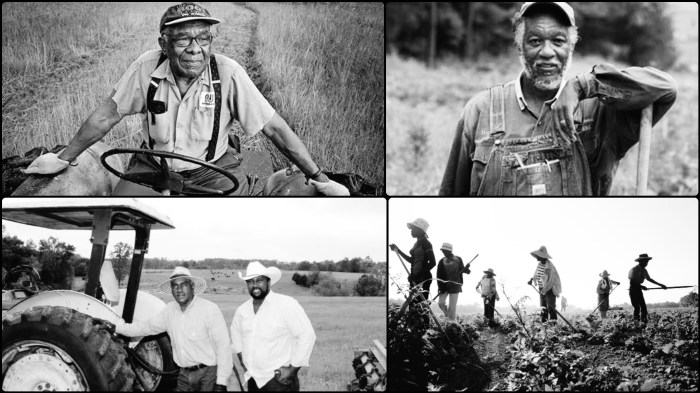
How One Million Black Families Lost 12 Million Acres Of Farm Land In America [Report]

It is a shock to many that about 1 million Black landowners in the South of America have lost 12 million acres of farmland in the last 100 years. Even as we write this, we are shocked beyond reactions as to how a system can frustrate a people over the span of a century, without any plan to let go.

The loss of farmland of Black landowners started around the 1950s and has lasted to date. According to reports from The Atlantic, the black families which have lost their farms were victims of a war that is waged by the “deed of title” system which is said to be promoted by white racism/supremacy and local white power.

In our bid to dig into history to find the causes for Black poverty, economic and social decline, we find that Black people in America have suffered social injustice so much that it will take hard work (unity and power) for Black communities to rival white communities and businesses which are fed with finances of white privilege in America.

Our findings show that 98% of black farm owners in America have been dispossessed of their land. This is a direct indication of the systemic prejudice, and racial injustice perpetrated against the people of African descent in America.

History holds it that the vegetative and arable farmlands in the South of America, especially those along the Mississippi River, was forcefully taken from Native Americans, by the first Europeans who came to America. These Europeans would later venture into the enslavement of Africans for the cultivation of those lands. The Africans would later become owners of some of those lands after the abolishment of slavery and their emancipation.

A report by the U.S Department of Agriculture says that from the year 1900 till 1910, that there were 25,000 black farm operators. This figure increased by 20% in the space of those ten years. The report from ‘The Atlantic’ which we draw our information from, states clearly that the research was carried out on black farmland in the Mississippi area. The lands in question were found to be 2.2 million acres as of 1910. This number was about 14% of the total lands owned by Black people in America.

How Black People Lost Their Lands – The Plots And Twits

What was later realized about how Black people lost their lands was that it was somewhat a well thought out plan, and it was well executed over a long span of years. Some others would say that it was a collection of racist events that drove the wheel of white supremacy in one direction. Through legal, violent, and coercive means, the farmlands which were legally owned by people of African descent in America were transferred to white people. They started the land grab and transfer by aggregating them into large holdings, then aggregated them again, before attracting the profit-seeking eyes of ‘Wall Street.

The operation started with New Deal agencies in 19937. These agencies were federal agencies with white administrators, who were exceptionally targeting Black people. They denied Black landowners’ loans, and in turn channeling the sharecropping jobs to white people majorly. These agencies were systematically made to be in charge of the prices, investors, and regulation of the agricultural economy in America. This led to the failure of small farms and gave way for the rise of huge industrial mega-farms, which were formerly large plantations. The mega-farms and their new owners were then given the power to dictate and influence the policies of the agricultural sector.


The Black landowners suffered numerous illegal pressures through USDA loan programs. The USDA loan was originally designed to give rural people in America, an opportunity to take loan with zero down payment. It also offers low-interest-rate on the down payments.

Instead of these loans to be given proportionately to Black and white farmers, it was not. More white people got loans thereby frustrating the Black landowners and caused an enormous wealth transfer just after the 1950s. In a space of 19 years, black farmers had lost about 6 million acres of land by 1969. The effects were catastrophic on Black wealth. This saw a failure of half a million Black-owned farms across America. The cotton farms that were owned by Black farmers were almost non-existent at that point.

‘The Atlantic’ puts the loss of black farmers in Mississippi, to be around 800,000 acres, amounting to $3.7 billion (in today’s dollars), between 1950 and 1964.

The Legal Push To Grab Black Lands

Read the full article below.

Source: How One Million Black Families Lost 12 Million Acres Of Farm Land In America [Report]

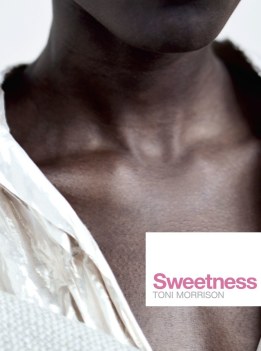
Sweetness | The New Yorker – KOLUMN Magazine

SweetnessBy

It’s not my fault. So you can’t blame me. I didn’t do it and have no idea how it happened. It didn’t take more than an hour after they pulled her out from between my legs for me to realize something was wrong. Really wrong. She was so black she scared me. Midnight black, Sudanese black. I’m light-skinned, with good hair, what we call high yellow, and so is Lula Ann’s father. Ain’t nobody in my family anywhere near that color. Tar is the closest I can think of, yet her hair don’t go with the skin. It’s different—straight but curly, like the hair on those naked tribes in Australia. You might think she’s a throwback, but a throwback to what? You should’ve seen my grandmother; she passed for white, married a white man, and never said another word to any one of her children. Any letter she got from my mother or my aunts she sent right back, unopened. Finally they got the message of no message and let her be. Almost all mulatto types and quadroons did that back in the day—if they had the right kind of hair, that is. Can you imagine how many white folks have Negro blood hiding in their veins? Guess. Twenty per cent, I heard. My own mother, Lula Mae, could have passed easy, but she chose not to. She told me the price she paid for that decision. When she and my father went to the courthouse to get married, there were two Bibles, and they had to put their hands on the one reserved for Negroes. The other one was for white people’s hands. The Bible! Can you beat it? My mother was a housekeeper for a rich white couple. They ate every meal she cooked and insisted she scrub their backs while they sat in the tub, and God knows what other intimate things they made her do, but no touching of the same Bible.

Some of you probably think it’s a bad thing to group ourselves according to skin color—the lighter the better—in social clubs, neighborhoods, churches, sororities, even colored schools. But how else can we hold on to a little dignity? How else can we avoid being spit on in a drugstore, elbowed at the bus stop, having to walk in the gutter to let whites have the whole sidewalk, being charged a nickel at the grocer’s for a paper bag that’s free to white shoppers? Let alone all the name-calling. I heard about all of that and much, much more. But because of my mother’s skin color she wasn’t stopped from trying on hats or using the ladies’ room in the department stores. And my father could try on shoes in the front part of the shoe store, not in a back room. Neither one of them would let themselves drink from a “Colored Only” fountain, even if they were dying of thirst.

I hate to say it, but from the very beginning in the maternity ward the baby, Lula Ann, embarrassed me. Her birth skin was pale like all babies’, even African ones, but it changed fast. I thought I was going crazy when she turned blue-black right before my eyes. I know I went crazy for a minute, because—just for a few seconds—I held a blanket over her face and pressed. But I couldn’t do that, no matter how much I wished she hadn’t been born with that terrible color. I even thought of giving her away to an orphanage someplace. But I was scared to be one of those mothers who leave their babies on church steps. Recently, I heard about a couple in Germany, white as snow, who had a dark-skinned baby nobody could explain. Twins, I believe—one white, one colored. But I don’t know if it’s true. All I know is that, for me, nursing her was like having a pickaninny sucking my teat. I went to bottle-feeding soon as I got home.

My husband, Louis, is a porter, and when he got back off the rails he looked at me like I really was crazy and looked at the baby like she was from the planet Jupiter. He wasn’t a cussing man, so when he said, “God damn! What the hell is this?” I knew we were in trouble. That was what did it—what caused the fights between me and him. It broke our marriage to pieces. We had three good years together, but when she was born he blamed me and treated Lula Ann like she was a stranger—more than that, an enemy. He never touched her.

I never did convince him that I ain’t never, ever fooled around with another man. He was dead sure I was lying. We argued and argued till I told him her blackness had to be from his own family—not mine. That was when it got worse, so bad he just up and left and I had to look for another, cheaper place to live. I did the best I could. I knew enough not to take her with me when I applied to landlords, so I left her with a teen-age cousin to babysit. I didn’t take her outside much, anyway, because, when I pushed her in the baby carriage, people would lean down and peek in to say something nice and then give a start or jump back before frowning. That hurt. I could have been the babysitter if our skin colors were reversed. It was hard enough just being a colored woman—even a high-yellow one—trying to rent in a decent part of the city. Back in the nineties, when Lula Ann was born, the law was against discriminating in who you could rent to, but not many landlords paid attention to it. They made up reasons to keep you out. But I got lucky with Mr. Leigh, though I know he upped the rent seven dollars from what he’d advertised, and he had a fit if you were a minute late with the money.

I told her to call me “Sweetness” instead of “Mother” or “Mama.” It was safer. Her being that black and having what I think are too thick lips and calling me “Mama” would’ve confused people. Besides, she has funny-colored eyes, crow black with a blue tint—something witchy about them, too.

So it was just us two for a long while, and I don’t have to tell you how hard it is being an abandoned wife. I guess Louis felt a little bit bad after leaving us like that, because a few months later on he found out where I’d moved to and started sending me money once a month, though I never asked him to and didn’t go to court to get it. His fifty-dollar money orders and my night job at the hospital got me and Lula Ann off welfare. Which was a good thing. I wish they would stop calling it welfare and go back to the word they used when my mother was a girl. Then it was called “relief.” Sounds much better, like it’s just a short-term breather while you get yourself together. Besides, those welfare clerks are mean as spit. When finally I got work and didn’t need them anymore, I was making more money than they ever did. I guess meanness filled out their skimpy paychecks, which was why they treated us like beggars. Especially when they looked at Lula Ann and then back at me—like I was trying to cheat or something. Things got better but I still had to be careful. Very careful in how I raised her. I had to be strict, very strict. Lula Ann needed to learn how to behave, how to keep her head down and not to make trouble. I don’t care how many times she changes her name. Her color is a cross she will always carry. But it’s not my fault. It’s not my fault. It’s not.

Oh, yeah, I feel bad sometimes about how I treated Lula Ann when she was little. But you have to understand: I had to protect her. She didn’t know the world. With that skin, there was no point in being tough or sassy, even when you were right. Not in a world where you could be sent to a juvenile lockup for talking back or fighting in school, a world where you’d be the last one hired and the first one fired. She didn’t know any of that or how her black skin would scare white people or make them laugh and try to trick her. I once saw a girl nowhere near as dark as Lula Ann who couldn’t have been more than ten years old tripped by one of a group of white boys and when she tried to scramble up another one put his foot on her behind and knocked her flat again. Those boys held their stomachs and bent over with laughter. Long after she got away, they were still giggling, so proud of themselves. If I hadn’t been watching through the bus window I would have helped her, pulled her away from that white trash. See, if I hadn’t trained Lula Ann properly she wouldn’t have known to always cross the street and avoid white boys. But the lessons I taught her paid off, and in the end she made me proud as a peacock.

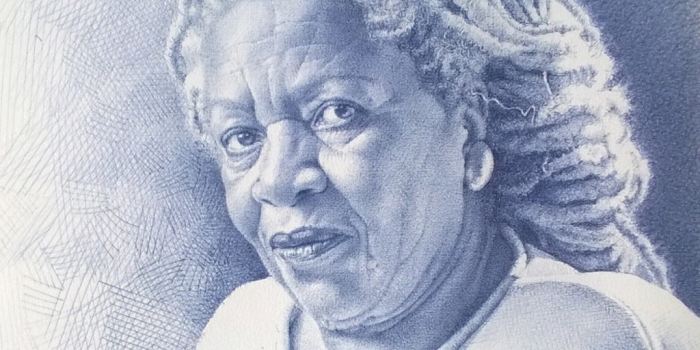
Toni Morrison

Chloe Anthony Wofford Morrison (born Chloe Ardelia Wofford; February 18, 1931 – August 5, 2019), known as Toni Morrison, was an American novelist, essayist, book editor, and college professor. Her first novel, The Bluest Eye, was published in 1970. The critically acclaimed Song of Solomon (1977) brought her national attention and won the National Book Critics Circle Award. In 1988, Morrison won the Pulitzer Prize for Beloved (1987); she gained worldwide recognition when she was awarded the Nobel Prize in Literature in 1993.

Born and raised in Lorain, Ohio, Morrison graduated from Howard University in 1953 and went to graduate school at Cornell University. She later taught English at Howard University and also married and had two children before divorcing in 1964. In the late 1960s, she became the first black female editor in fiction at Random House in New York City. In the 1970s and 1980s, she developed her own reputation as an author, and her perhaps most celebrated work, Beloved, was made into a 1998 film.

In 1996, the National Endowment for the Humanities selected her for the Jefferson Lecture, the U.S. federal government’s highest honor for achievement in the humanities. Also that year, she was honored with the National Book Foundation’s Medal of Distinguished Contribution to American Letters. On May 29, 2012, President Barack Obama presented Morrison with the Presidential Medal of Freedom. In 2016, she received the PEN/Saul Bellow Award for Achievement in American Fiction.
Source: Sweetness | The New Yorker – KOLUMN Magazine

Sexual Violence Against Enslaved Men – AAIHS Review

In Rethinking RufusSexual Violations of Enslaved Men, historian Thomas Foster examines how the conditions of slavery gave rise to sexual violence against enslaved men in the Americas during the eighteenth and nineteenth centuries. Drawing from historical studies of sexual violence against enslaved women, Foster uses a range of sources including early American newspapers, enslavers’ journals, court records, visual art, and abolitionist literature to illuminate how various forms of sexual violence, including physical assault and coerced reproduction, affected enslaved men and their communities. Rethinking Rufus also centers the experience of enslaved men by using testimonies, autobiographies, and interviews to shed light on how they responded to and navigated sexual violence in order to maintain autonomy and independence in their intimate livesRethinking Rufus analyzes the “history of the peculiar conditions that enslavement established, nurtured, and expanded that enabled those in power to dominate many enslaved men through sexual violence” (10). In this way, Foster’s study interrogates broader systems of power and domination that led to the sexual abuse of enslaved men.

Rethinking Rufus makes an important intervention into the historiography of slavery in the Americas. Foster uses feminist theories of sexual assault to examine how corporeal punishments functioned as displays of power that constituted sexual violence against enslaved men. Foster builds upon historians such as Daina Ramey BerryDeborah Gray White, and Jennifer Morgan, who have used gender as an analytic to more fully understand how enslaved women experienced and challenged sexual abuse under enslavement. Foster’s combination of historical methods and feminist theories of sexual assault inform one of Rethinking Rufus’s main arguments, that enslaved men could not consent to sexual activity given their legal status as property and vulnerable position in the social order of slavery.

Through five chapters, Foster examines the multiple forms of sexual violence against enslaved men from a variety of perspectives. The book’s title, Rethinking Rufus, is in reference to the story of Rufus, an enslaved man who was forced to bear children with an enslaved woman named Rose in Texas during the mid-nineteenth century. Foster uses Rose’s interview published by the Works Progress Administration (WPA), where she negatively recounts her sexual experiences with Rufus and describes him as a “bully,” as an example of how sexual violence affected both enslaved men and women. Foster notes that while Rose’s interview documents the trauma of coerced reproduction, a form of sexual violence in which enslavers forced enslaved men and women to bear children in order increase the population of enslaved people, sources that highlight the sufferings of coerced reproduction from the perspective of Rufus are nonexistent. Foster theorizes the absence of a counternarrative by Rufus and many other enslaved men as another type of sexual violation that stemmed from a broader cultural failure to consider men as victims of sexual violence. The repeated absence of narratives from enslaved men that document their experiences with sexual violence propels Foster’s deeper exploration into the conditions of slavery that gave rise to the sexual abuse and exploitation of enslaved men.

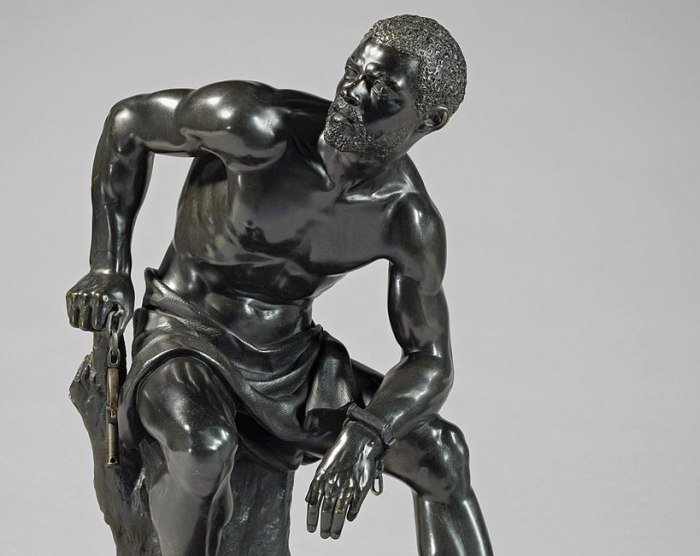
Foster begins Rethinking Rufus by examining how enslaved men’s bodies were depicted in Western art and sculptures that were widespread in the visual culture of slavery. Foster argues that enslaved men’s bodies were “symbols of enslaved manhood and sites of violation” that were objectified through a number of cultural forms including art and literature (12). The objectification of enslaved men depicted in paintings often resembled everyday acts of terror including the public inspection of Black men’s genitals, whippings and lashings, and bodily exposure due to lack of adequate clothing. Visual depictions of enslaved men that emphasized their genitalia and sexual prowess gave way to the prevailing myths of Black hypersexuality and the Black male rapist, an archetype that ensured the extralegal protection of white women from Black men who purportedly lacked control over their sexual urges. Foster also argues that while visual depictions of enslaved men’s bodies often highlighted their athleticism, strength, and muscularity, this same imagery eroticized enslaved men’s bodies in ways that fueled the physical abuses and sexual exploitation of enslaved men. Foster notes that these stereotypes found in eighteenth-century visual art contributed to the eventual punishment and national disenfranchisement of Black men.

Rethinking Rufus also sheds light on how enslaved men viewed marriage and family as potential avenues for maintaining independence and autonomy. Foster notes that while the possibility of establishing a household and assuming the role as guardian of the family was severely limited for enslaved men, love affairs and the ability to choose one’s own partner served as a key component for developing models of manhood. Using court records and eighteenth-century newspapers, Foster documents how enslaved men understood the importance of choosing their own partners despite the likely possibility of separation and loss. Because enslaved men and women were frequently sold to different plantations across various regions, enslaved men and women who married and attempted to establish families remained vulnerable to the interference of enslavers through sales and punishments. Foster notes that they often negotiated independence by adhering to the will of masters and mistresses in order to be granted partial autonomy in their intimate lives. Foster’s analysis provides a glimpse into how enslaved men navigated the power dynamics of enslavement in hopes of maintaining autonomy while minimizing the possibility of sexual violence as a punishment.

The latter part of Rethinking Rufus examines the role of reproduction in slavery’s sexual economy, and how sexual violations of enslaved men affected interpersonal relationships between enslaved men and women. To this end, Foster argues that coerced reproduction was a type of sexual assault against Black men in addition to Black women. Using interviews and testimonies from formerly enslaved men, Foster highlights how those who were valued for their reproductive capabilities were often singled out from their communities, relocated to different regions, and forced to couple with multiple women. Men who were forced to procreate were also excused from preforming certain types of labor that enslavers feared could negatively affect their reproductive capabilities. Foster also considers how forms of sexual violence against enslaved men were enacted by both white women and men. Foster’s use of WPA interviews and slave narratives that center the perspectives of Black men illuminates how the separation of enslaved men from their communities for the purpose of reproduction often severed intracommunal relationships that resulted in psychological pain and generational trauma.

In sum, Rethinking Rufus illuminates new dimensions of how sexual violence operated during slavery by incorporating the perspectives of Black menRethinking Rufus sheds light on how sexual assault, exploitation, objectification, and coerced reproduction affected enslaved men and their communities. Foster’s gendered analysis of sexual violence opens up new avenues for further research on the interrelatedness between masculinity, reproduction, and slave labor. Rethinking Rufus is a great contribution to the fields of Early American History, Gender Studies, and African American Studies. Rethinking Rufus should be of interest to a wide range of scholars of African American history, the history of American slavery, and the history of sexuality.

Source: Sexual Violence Against Enslaved Men – AAIHS

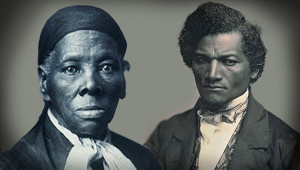
Letter from Frederick Douglass to Harriet Tubman, 1868 : Harriet Tubman

Harriet Tubman Historical Society

Letter from Frederick Douglass to Harriet Tubman, 1868

Source: Scenes in the Life of Harriet Tubman by Sarah Hopkins Bradford. Rochester, August 29, 1868

Dear Harriet: I am glad to know that the story of your eventful life has been written by a kind lady, and that the same is soon to be published. You ask for what you do not need when you call upon me for a word of commendation. I need such words from you far more than you can need them from me, especially where your superior labors and devotion to the cause of the lately enslaved of our land are known as I know them. The difference between us is very marked. Most that I have done and suffered in the service of our cause has been in public, and I have received much encouragement at every step of the way.

You, on the other hand, have labored in a private way. I have wrought in the day – you in the night. I have had the applause of the crowd and the satisfaction that comes of being approved by the multitude, while the most that you have done has been witnessed by a few trembling, scarred, and foot-sore bondmen and women, whom you have led out of the house of bondage, and whose heartfelt, “God bless you,” has been your only reward. The midnight sky and the silent stars have been the witnesses of your devotion to freedom and of your heroism.

Excepting John Brown – of sacred memory – I know of no one who has willingly encountered more perils and hardships to serve our enslaved people than you have. Much that you have done would seem improbable to those who do not know you as I know you. It is to me a great pleasure and a great privilege to bear testimony for your character and your works, and to say to those to whom you may come, that I regard you in every way truthful and trustworthy.Your friend,Frederick Douglass

Source: Letter from Frederick Douglass to Harriet Tubman, 1868 : Harriet Tubman