“BURNING IT DOWN: BUILDING ANEW” with Kim Brown, Host, BURN IT DOWN LIVE

This Week at OUR COMMON GROUND
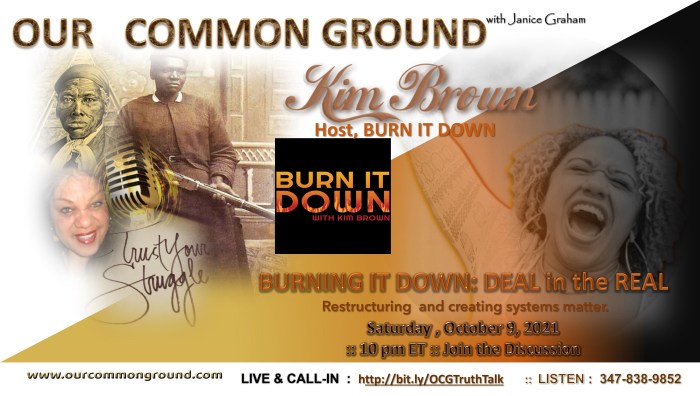
Our Guest:  Kim Brown, Host, Burn It Down with Kim Brown

Saturday, October 9, 2021 ∞ 10 pm ET

Tune In Here: http://bit.ly/OCGTruthTalk

Listen Line: 347-838-9852 

Can Janice Have A Word ?

Systemically oppressed survivors face tremendous, overwhelming barriers to seeking advocacy and justice. The challenges, and the history of institutional oppression of our people is often time met with lies, propaganda and obfuscation. There are historical underpinnings include events that took place in the past which impact how an individual or community perceives events or reacts to issues in the present. Additionally, the government, elected officials and mainstream organizations are not designed for or by systemically oppressed peoples and are often complicit or architects. Thus, it is critical that people who advocate on our behalf, analyze for us, comment or any other form of representation understand the historical trauma and its impact on Black people as a systemically oppressed people. We are told and offered illusionary idea of what will fix it. To some of these systemic and institutional impediments, traps and weapons, there is no fix. They must simply be “burned down”.

We  use history as a lens to provide a holistic approach and knowledge to claim our own liberation. Sometime, those who are unable to access relevant information may have blind spots, in places that are critical. We use others to “fill us in”. Unfortunately, all opinion is not critical analysis. All talk is not critical examination or analysis. Cultural, economic and political  relevant response requires a deep understanding of our story and how different every context is, paying close attention to where we are in our struggle and the multiplicity of our experiences and reality . We need people who are able to break through the BS and see clearly what is before us at every turn. Know the rules, the playlist and the players.  People brave enough, smart enough and capable enough to show us the traps and tell us the truth. I have tried to be one of those. As I prepare to end my broadcast presence, I am on the hunt to recommend to the thousands of listeners who have depended on me over the last 34 years.  Kim Brown is one of those people. We are grateful to have her share our microphone.

Restructuring  and creating systems matter.“BURNING IT DOWN: BUILDING ANEW”

  “Burn it Down with Kim Brown” is a twice weekly live broadcast and Kim Brown calls out systemic issues within our society and envisioning a new world. She talks about how to restructure and create systems that are inclusive of everyone. She keeps it real, and actively destroys myths that the media and politicians love that we believe, like American Exceptionalism.

Burn It Down with Kim Brown is the place where you can set oppression ablaze. A Black woman led independent media that DGAF about taking on the establishment.

She makes a microphone rumble.

-Janice Graham

“Burn it Down with Kim Brown” is a twice weekly live broadcast and Kim Brown calls out systemic issues within our society and envisioning a new world. She talks about how to restructure and create systems that are inclusive of everyone. She keeps it real, and actively destroys myths that the media and politicians love that we believe, like American Exceptionalism.

Burn It Down with Kim Brown is the place where you can set oppression ablaze. A Black woman led independent media that DGAF about taking on the establishment.

BURNING IT DOWN with Kim Brown

Facebook https://fb.me/BIDWKB Follow us on Twitter @BurnItDownKB Check out our Insta @BIDWKB ALL

Burn it Down content remains FREE and available on a YouTube channel, listener support is the only thing that can keeps BID going!!

Support BID on Patreon at: https://www.patreon.com/BIDWKB

The AFRO-American Newspapers invests to digitize 129 years of archives – Local Media Association + Local Media Foundation

The AFRO-American Newspapers has a daunting task ahead: Creating a searchable and publicly-accessible database to house an estimated 3 million photos, thousands of letters, business records, original audio recordings, advertisements and even reporters’ notebooks. And then there are the newspapers themselves — 129 years of them. “The collection is really remarkable. It’s probably one of […]

Source: The AFRO-American Newspapers invests to digitize 129 years of archives – Local Media Association + Local Media Foundation

The Conservatives Dreading—And Preparing for—Civil War – The Atlantic

A faction of the right believes America has been riven into two countries. The Claremont Institute is building the intellectual architecture for whatever comes next.

. . . As Donald Trump rose to power, the Claremont universe—which sponsors fellowships and publications, including the Claremont Review of Books and The American Mind—rose with him, publishing essays that seemed to capture why the president appealed to so many Americans and attempting to map a political philosophy onto his presidency. Williams and his cohort are on a mission to tear down and remake the right; they believe that America has been riven into two fundamentally different countries, not least because of the rise of secularism. “The Founders were pretty unanimous, with Washington leading the way, that the Constitution is really only fit for a Christian people,” Williams told me. It’s possible that violence lies ahead. “I worry about such a conflict,” Williams told me. “The Civil War was terrible. It should be the thing we try to avoid almost at all costs.”

That almost is worth noticing. “The ideal endgame would be to effect a realignment of our politics and take control of all three branches of government for a generation or two,” Williams said. Trump has left office, at least for now, but those he inspired are determined to recapture power in American politics. My conversation with Williams has been condensed and lightly edited for clarity.

Source: The Conservatives Dreading—And Preparing for—Civil War – The Atlantic

“We’re not going to be able to hold that base”: Park Police overwhelmed hours before Capitol breach on Jan 6th

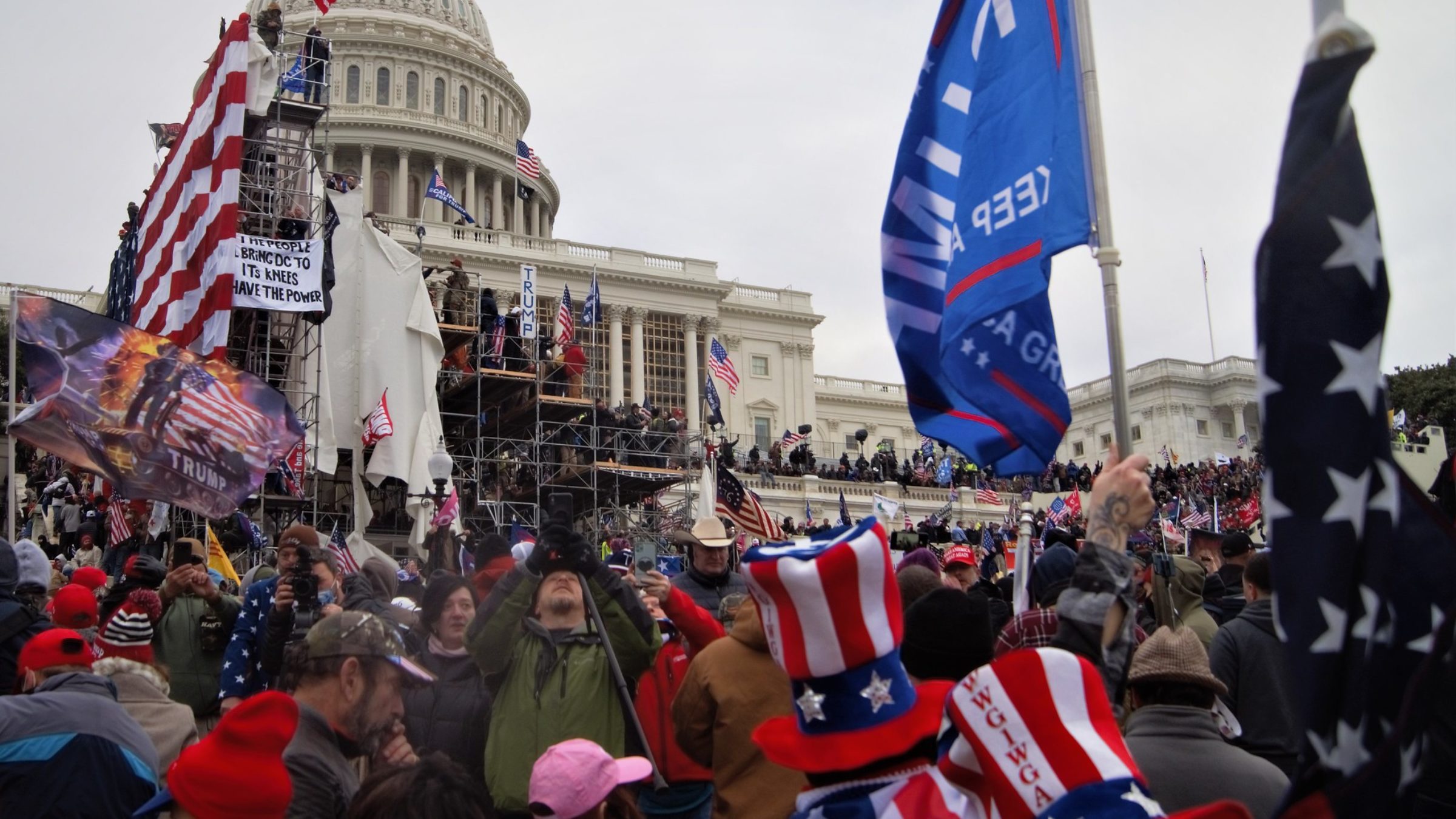
“The Capitol has been breached. Protestors have entered the building.”

Less than an hour later, the day had turned into a horror movie.

“Capitol Police is reporting a possible IED, First St., south of the Capitol by the Republicans club, uh, it’s been photographed, it’s currently being investigated this is breaking right now…it’s being described as a black pipe with wires protruding from it.”

MORE

Texas GOP sees Haitian migrant border crisis as a political opportunity – Vox

” . . . The situation in Del Rio — where more than 12,000 migrants are camping in increasingly squalid conditions without adequate access to water, food, and sanitation — is growing dire from a humanitarian perspective. Most of these migrants are from Haiti and plan to seek asylum in the US, as is their right under federal and international law. In just the last few months, Haiti has suffered from a political crisis stemming from President Jovenel Moïse’s July assassination, resultant gang violence, and the two-punch of a 7.2-magnitude earthquake and a tropical storm that left about 2,200 dead and many thousands more injured or missing. Those conditions appear to have driven more Haitians to make the treacherous journey to the US border: Federal immigration authorities have encountered more than 30,000 Haitians this fiscal year, nearly six times the number encountered over the previous fiscal year.But Abbott has sought to twist that humanitarian crisis into a security crisis designed to appeal to Republican voters in his state, who have long identified immigration and border security as top priorities in public opinion polling. He told the Texas Tribune that he was trying to “stop these [migrant] caravans from overrunning our state” and described US Customs and Border Protection agents as “overwhelmed by the chaos.” That’s in line with his recent rhetoric trying to demonize migrants arriving on the southern border as lawbreakers and carriers of disease. . . ”

Source: Texas GOP sees Haitian migrant border crisis as a political opportunity – Vox

Why does TikTok hate this affordable housing development? – Vox

The new multifamily buildings in your neighborhood actually slow displacement.

” . . . That discussion of gentrification is instead frequently diverted to what the buildings look like is a massive coup on behalf of existing property owners. Those current owners often want to maintain aesthetic control, sometimes as a means of blocking new homes from being built (experts have found that historic preservation is often weaponized to prevent new, more affordable housing options).

It is fine to dislike the way a home looks; not all art is for everyone. But the convergence of aesthetic preferences and physical displacement under the same “gentrification” banner only serves to maintain the current system of housing development, one that has made housing prohibitively expensive for many Americans and displaced people under countless different architectural styles.

The problem with this conflation became clear when I looked into the building depicted in the aforementioned Camden TikTok video. Branch Village isn’t a “gentrification building.” It’s actually an affordable housing project funded in part by low-income housing tax credits. According to the Courier-Post, the project’s second phase included the construction of 75 townhomes, all of which “will be considered affordable, accessible to those making less than 80 percent of the area’s median income.” Per an affordable housing database, the development now has 245 units.

Despite the primary concern of gentrification usually being the displacement of low-income residents, the top two comments on the Camden video, which collectively received 76,000 “likes,” were stylistic complaints: “why is it ALWAYS h&r block green, and “they really had to pick the worst colors didn’t they?”

This is common in gentrification discourse. People want to use a word that evokes visuals of marginalized communities being displaced, either through evictions, rising prices, or even violent displacement. But, after prodding, the actual concern is artistic. The rhetorical sleight of hand is not always intentional. For many, the concepts of “new, modern buildings” and “displacement” have simply become inextricable. But the confusion around how the word gentrification is being used has real policy consequences: If people believe that new buildings work against housing affordability, they will oppose the very policies necessary to solve the nation’s housing affordability crisis . . .”


Source: Why does TikTok hate this affordable housing development? – Vox


This Week ::: OUR COMMON GROUND

This Week ::: OUR COMMON GROUND

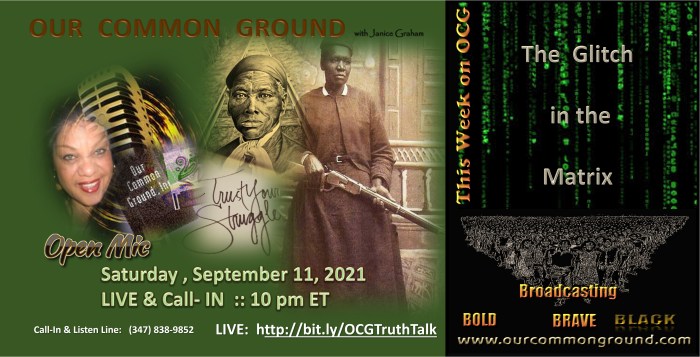
“The Glitch in the Matrix”

This Week on OUR COMMON GROUND

“The Glitch in the Matrix”

OPEN MIC

Saturday,September 11, 2021 ::: 10 pm ET

Tune In: http://bit.ly/OCGTruthTalk

Call-In & Listen Line: (347) 838-9852

In the arc of American history, Donald Trump’s election as the president of the United States is no shock. The functional preamble remains that all white men are created superior and those who subscribe to it are periodically compelled to stick it in the face of Black folks — and now brown and Muslim folks, too — even if it comes at considerable cost to the nation and world standing.

It did not matter that under Obama the unemployment rate fell to 4.9 percent from the 10 percent he inherited from Bush. Under Obama’s Affordable Care Act insured millions more Americans than under Bush. It did not matter that many of Obama’s policies put money in the pockets of the working class, such as dramatically raising the federal salary threshold to collect overtime pay, or the Lilly Ledbetter Act for fair pay based on gender. Despite that he was so much like all Presidents before him. He was like them. The same kind of occupant of the WH, as Bush, Clinton, Kennedy. But, ultimately, they would elect an obnoxious, underachieving, corny, egomaniac conman to ensure that an Obama would never again usher shadows into their sacred places.

Since none of that mattered, all of Trump’s rhetoric about everything in America being a “disaster” was a smokescreen for the consolidation of crude white power. The majority of white Americans, a century and a half after the end of slavery, still spectacularly preferred economic uncertainty in exchange for returning Black people to their place and now sending brown immigrants and Muslims “back home.”

Early in the Trump candidacy an opinion columnist wrote in The Boston Globe that his “hateful nonsense, meant for white people who still think the country is theirs, is a death rattle for the most crude forms of white privilege.” I was hoping that his election would be as a death rattle for the snake, not for those whom the snake struck. Finally, and most disturbing of all, there was the 74 million Americans who voted for Trump last November, despite his record of governing incompetence – crystallized by the COVID-19 debacle – and toxic, divide-and-conquer political, to say nothing that he literally ran a global criminal enterprise out of the White House and throughout the government.

In the “The Matrix”, the film describes a future in which reality perceived by humans is actually the Matrix, a simulated reality created by sentient Machines in order to pacify and subdue the human population while their bodies’ heat and electrical activity are used as an energy source. In Matrix parlance, red pills are those who are aware of the Matrix construct while blue pills are not. An often used admonishment to Black people to be realistic, clear about the political nuances of our citizenship.

The Matrix represents a system of control that operates completely in the mind. As a complex, machine-driven program, it appropriates any personal, political, or ideological leanings and renders them wholly false. It allows illusions but no action. The problem with the matrix that most people of control and power depend upon has a glitch. That is that Black people don’t believe in things, as Stevie Wonder reminded us in his awesome song, “Superstition, ” When you believe in things you don’t understand, then you suffer. . . “ The matrix which encapsulates America is built on the superstition of American exceptionalism- a superstition of massive import.  Black people have taught this country the potential value and power of its own rhetoric around democracy. We have also taught them the lessons of its hypocrisy and fragility. Uncovering, exposing, and revealing. Demonstrating time after time that “we” are not who “we” say that we are. So many Americans are beginning to understand more and moving beyond the energy field of the matrix. The glitch in the matrix ?  Black people. We discuss it at OUR COMMON GROUND tonight.

“I’ll Be Listening for You”
Janice

Accelerationism: the idea inspiring white supremacist killers around the world – Vox

Accelerationism is the obscure idea that’s inspiring white supremacist killers around the world.

Accelerationists reject any effort to seize political power through the ballot box, dismissing the alt-right’s attempts to engage in mass politics as pointless. If one votes, one should vote for the most extreme candidate, left or right, to intensify points of political and social conflict within Western societies. Their preferred tactic for heightening these contradictions, however, is not voting, but violence — attacking racial minorities and Jews as a way of bringing us closer to a race war, and using firearms to spark divisive fights over gun control. The ultimate goal is to collapse the government itself; they hope for a white-dominated future after that.

Accelerationism has bizarre roots in academia. But as strange as the racist movement’s intellectual history may be, experts believe it has played a significant and under-appreciated role in the current wave of extremist violence.

“It’s not an ideology that exists in a theoretical sense,” says Joanna Mendelson, a senior investigative researcher at the Anti-Defamation League. “It’s an ideology that has actually manifested in real-world violence.”

Source: Accelerationism: the idea inspiring white supremacist killers around the world – Vox

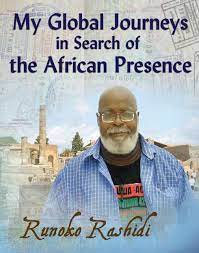
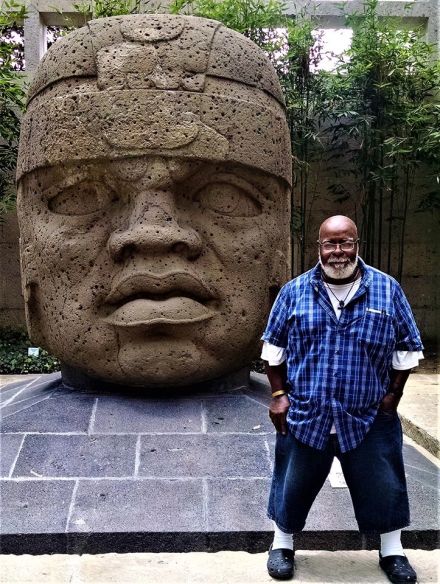
‘Doing What He Loved Most’: Acclaimed Historian, Lecturer, and Pan-Africanist Runoko Rashidi Has Passed Away In Egypt :: ATL Black Star

‘Doing What He Loved Most’: Acclaimed Historian, Lecturer, and Pan-Africanist Runoko Rashidi Has Passed Away In Egypt

Posted byBy Niara Savage | August 5, 2021 

Historian and anthropologist Runoko Rashidi passed away on Aug. 2 at the age of 66 while on his annual trip to Egypt, his family announced in a statement on his website.

“He was on tour in Kmt, doing what he loved most. He will be greatly missed. Please allow his family the time and privacy needed during this difficult moment.” the statement said.

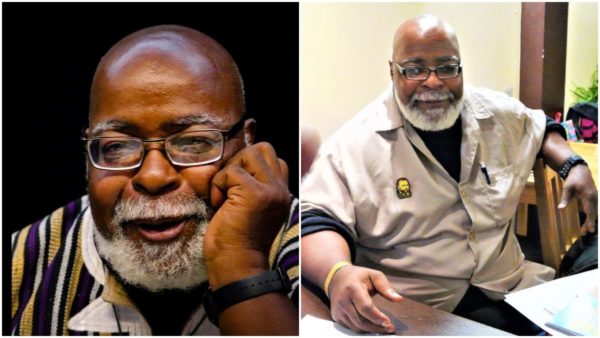
Historian and anthropologist Runoko Rashidi passed away on Aug. 2 at the age of 66 while on his annual trip to Egypt. (Photos: Runoko Rashidi/ Facebook)

Rashidi’s Pan-Africanist studies focused on Africans outside of the African continent before and after enslavement. Born in 1954, Rashidi was specifically interested in the African presence in Asia. The well-traveled researcher had visited 124 countries, authored 22 books, and was awarded an honorary doctorate degree by the Amen-Ra Theological Seminary in Los Angeles in 2005.

His recent works include “My Global Journeys in Search of the African Presence,” “Assata-Garvey and Me: A Global African Journey for Children” and “The Black Image in Antiquity.”

Rashidi spoke at major forums and conferences across the globe and had focused his research on the African presence in the museums of the world prior to his death. His lifetime goals included uplifting African people through history and the promotion of “knowledge of self.”

“History is a light that illuminates the past, and a key that unlocks the door to the future,” Rashidi sad about the discipline of history.

Image

Rashidi was set to speak at the first Pan African Heritage World Conference, a three-day hybrid and virtual event scheduled to run from Aug. 5-7 at the Association of African Universities in Accra, Ghana.

Rashidi has delivered speeches in 67 countries and was named to the Curatorial and Academic boards of the Pan-African Heritage Museum in 2020.

Rashidi explored the history of African people’s presence around the globe. In a 2014 account for Atlanta Black Star, he recalled meeting Guyanese scholar Ivan Van Sertima, who authored the book “They Came Before Columbus” that explored the presence of Africans in ancient America.

“I was honored to be in his presence,” Rashidi wrote about meeting Sertima in 1980. Upon learning about Sertima’s death in 2009, Rashidi explained, “You know, with Ivan’s transition (I could not write the “d” word), it seems almost like I have lost my bridge to those early years and those scholars who mentored and influenced me at that pivotal stage in my life.”

Rashidi also wrote about the African presence in the Roman world, and about Africans’ involvement in the slave trade.

Rashidi’s cause of death has not been made public. A statement on his website said updates will continue to be provided.

*****************************************************

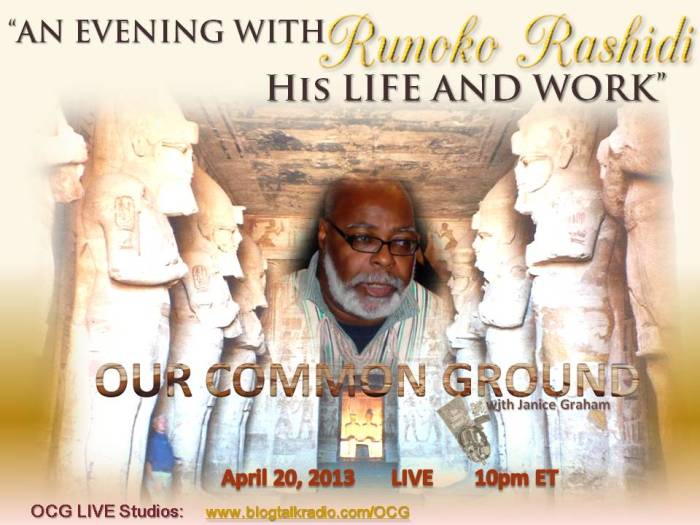
::: Remembering Dr. Ronoko Rashidi ::: Saturday, August 7, 2021 ::: 10 pm ET

Tune In: http://bit.ly/OCGTruthTalkCall-In & Listen Line: (347) 838-9852

Glen Ford and the Need for Black Radical Analysis :: Pascal Robert 

Glen Ford and the Need for Black Radical AnalysisPascal Robert 

Pascal Robert a regular contributor to the online publication Black Agenda Report and is the current co-host of the THIS IS REVOLUTION PODCAST. He is an OUR COMMON GROUND Voice and INterLOCUTOR

04 Aug 2021


 Glen Ford and the Need for Black Radical Analysis
Glen Ford

Glen Ford and the Need for Black Radical Analysis

Black radical analysis was the foundation of Ford’s work

Since the assassination of Martin Luther King, Jr., the fifty-year counter-revolution against the transformative politics that had reached their apex in the 1960s brought forth a constriction of the American political imagination. When Richard Nixon took control of the executive branch, he used appeals to Black capitalism to tamper support for radicalism among the emerging Black middle class. Thus, just as the hammer of Jim Crow segregation was lifted, the class schisms that would shape Black political life became sharpened. In the post-civil rights era, the Black working class and poor, whose labor as sharecroppers and domestic workers during Jim Crow became obsolete, were forced to confront a new set of social and economic maladies: deindustrialization, urban blight, mass incarceration, and heroine epidemics. Yet at the same time, the nascent Black middle class who benefitted from minority set aside programs, affirmative action, and foundation funded racial uplift programs emerged as the gatekeepers of Black politics. The consequence of Black politics becoming a predominately middle-class politics of elite management meant that the clarion call of the Black radicals, who from the earliest days of the American Republic fought against political lethargy, complacency, and collaboration with forces of Black oppression, was largely lost. Glen Ford, founding editor of Black Agenda Report, was one of the few exceptions to that rule.

Glen Ford was born in 1949 to two parents who had met as radicals in the post WWII era. Thus, he was exposed at an early age to people that did not simply fold under the weight of the status quo. Glen’s father was a storied Black media personality in Georgia, while his mother was a dedicated activist in all aspects of Black politics in New Jersey. Following their separation, Glen spent time with both parents mastering the respective skills of each. Indeed, Glen Ford soon became a noted radio and television personality in his own right, joining the Black Panther Party in the 1960s and subsequently living his life as an activist journalist.

The details of Glen Ford’s life are easily ascertained, but even accessing the facts of his many accomplishments distracts one from understanding what made Glen Ford so important to American society. Glen Ford was a journalist and thinker who was rooted in the tradition of Black radical analysis. Black radical analysis is the ability to look at the overall social and political reality of Black people. It is premised on understanding the forces of racial and economic antagonism that hinder that constituency’s emancipation. However, this is coupled with keen awareness of internal mechanisms, forces, structures, and individuals within the Black constituency which collaborate with the social, political, and economic establishment resulting in further subjugation of the larger masses of Black people. Such a realization may seem simple for many to fathom. Yet, the over-arching social consensus views Black people as a singular underclass without internal conflict or class stratification. Therefore, those who dare expose how internal social and ideological schisms among Black people facilitate ruling class subterfuge are not merely anomalous, but clearly exceptional. Some may ask, “What is particularly Black about this form of analysis?” I would respond that awareness of the social mechanisms within the Black constituency requires not only proximity to the constituency, but the capacity to have such analysis taken seriously by larger Black society without breeding the suspicion of it being created by racial antagonists. Does anyone believe that Black America would take kindly to the exposure of the limitations of the Black political class if they were mostly leveled by voices outside that community? Anyone who assumes as much does not realize how much ire and push back those who engage in Black radical analysis receive from those within the “community” who are blinded by the charade of racial kinship politics into believing most Black political actors work under unitary Black interest.

Glen Ford, starting at Black Commentator and eventually through Black Agenda Report, created a lexicon and analysis of the Black political class, the civil rights establishment, the Foundation/Philanthropy world, and the left flank of capital. He introduced a whole generation of online readers unfamiliar with such strident critiques to a deeper understanding of the type of neoliberal Black politics that became more common in the Obama age, while even Black activists and academics incorporated such analysis into their work. Before the regular publications of Glen Ford, Bruce Dixon, and Margaret Kimberly one could only find such Black radical analysis in the books of a certain cadre of Black intellectuals and Black political scholars. Otherwise, one had to have personal access to the few Black radicals who kept such analysis alive during the fifty-year counter-revolution. What Glen Ford was able to do was take such trenchant analysis and popularize it. In doing so, consumers of online news media would begin to understand what was meant by terminology such as the “Black political class”, more notoriously, the “Black mis-leadership class.” At the same time, he was able to communicate the reality of the more cannibalistic neoliberal shift in American capitalism that took place during the post-civil rights era fifty-year counter-revolution. In short, he helped readers understand the disorienting waves of hyper privatization, de-unionization, gentrification, and public-school evisceration while such processes inflicted incalculable pain upon the laboring classes in general, and Black and Brown communities in particular.   

In the area of foreign policy, Glen Ford and Black Agenda Report stood alone among online publications in keeping the spirit of Black internationalism and Pan-Africanism that was once a common fixture of Black thought alive. A nuanced analysis of almost every political and economic crisis that affected the global Black diaspora was a regular part of Glen Ford and Black Agenda Report’s weekly repertoire. Furthermore, challenging the exploits of American Empire in the Muslim word, Global South, and even Europe, was also well within the purview of Glen Ford and the Black Agenda Report crew. This level of global and domestic coverage made Glen Ford one of the most important journalists in an age when Black politics was sadly embracing the neoliberal turn in both economics and policy.

However, without a doubt the most important contribution of Glen Ford and Black Agenda Report was to strike a massive journalistic blow against the curated Black consensus that supported the trojan horse, Robert Rubin hatched presidency of Barack Obama. My personal affiliation with Black Agenda Report developed from watching Glen Ford eloquently explain how the Wall Street Manchurian Candidate Barack Obama represented a threat to Black politics and Black people unseen in the modern history of the republic. Ford and his coterie were viciously attacked for exposing what only became obvious after almost fifty percent of Black wealth evaporated under the stewardship of the Obama presidency without recourse.

Therefore, not only did Glen Ford provide a critical service to Black America as a journalist, but he also provided a massive service to the burgeoning new left that developed in the wake of Occupy Wall Street and the Bernie Sander presidential campaign by having a journalistic record that challenged both the neoliberal Wall Street pawn Obama, and the whole corporate bought and paid for Democratic party establishment. The importance of Glen Ford to contemporary American journalism and political commentary cannot be overstated. In the wake of his passing, I can only consider myself fortunate to have personally experienced his wisdom and political education through regular phone conversations when I submitted articles. This, combined with the close friendship I developed with Bruce Dixon, made the work of Glen Ford and Black Agenda Report not only politically significant, but personally crucial to my development over more than ten years as a writer and political commentator.  It is largely because of Glen Ford, Bruce Dixon, Margaret Kimberley and Black Agenda Report that I have the foundation needed to engage in my own media project with Jason Myles on our show “THIS IS REVOLUTION PODCAST.”   It actually gives me a sense of honor to think that in some way, the work of Glen Ford and Bruce Dixon, who have both transitioned, can live on in the political commentary I bring forth in my work. In this way I feel personally enriched by both these men who dedicated their lives to the betterment of humanity. I salute their memories and hope to only improve upon the standard they have set. They embodied some of the best of what America has to offer in terms of political commentary and thought. Let us all recognize the importance of Black radical analysis in light of their passing.

Pascal Robert is an essayist and political commentator whose work covers Black politics, global affairs, and Haitian politics. His work has appeared in the Washington Spectator, Black Commentator, Alternet, AllHipHop.com, and The Huffington Post. He is a regular contributor to the online publication Black Agenda Report and is the current co-host of the THIS IS REVOLUTION PODCAST, which is live streamed via Youtube and relevant social media on Tuesdays and Thursdays at 9pm eastern standard time and Saturday’s at Noon. Pascal Robert is a graduate of Hofstra University and Boston University School of Law.