Gabrielle Douglas: ‘Woman of the Year’ l The Final Call

Gabrielle Douglas: ‘Woman of the Year’

BY DR. RIDGELY ABDUL MU’MIN MUHAMMAD -GUEST COLUMNIST

FINAL CALL on-line| LAST UPDATED: DEC 10, 2012 


gabrielle_douglas_essence2012.jpg

Gold medalist Gabrielle Douglas appears on the December 2012 cover of Essence magazine crowned as “Woman of the Year.” The more we learn of her struggles, the more we must appreciate her as a strong Black woman as well as a great athlete. Now we must ask the question, “How many other great young Black people are out there that we will never know, because they were not as mentally and spiritually prepared as Gabrielle?” They may have great potential but they never made it through the agonizing reality of being Black in a world dominated by “White Supremacy.”


The Honorable Minister Louis Farrakhan writes in A Torchlight for America: “There seems to be a practice of identifying young, brilliant black children, particularlyBlack boys, and casting in their minds suggestions that stagnate their development and kill their upward movement.” Gabrielle Douglas gave an interview after the Olympics to Vanity Fair magazine. In this interview she stated that she felt isolated and was made the butt of “racist jokes” while training in Virginia before moving to Iowa to be coached by her mentor Liang Chow. She felt bullied by the other White girls in the program to the point that she was afraid to show off more of her skill. Gabrielle had been training as a gymnast since she was six years old. Starting in 2004, when she was eight, Gabrielle mostly trained at Excalibur Gymnastics in Virginia Beach, a well-regarded program that has produced 10 members of the U.S. national team since 1995. Her mother soon began working nights so she could home-school Gabrielle, in large part because a gymnast’s daily training regimen makes going to regular school impossible.

Through all of the physical and emotional stress of such intensive training, Gabrielle still blossomed until 2009. Gabrielle said that some of her fellow White gymnasts had made fun of her appearance but when an Excalibur staff member suggested to her that she might want to get a “nose job,” that was a severe blow to her self-esteem. But Gabrielle did not quit. She became determined to train at Chow’s gym, in West Des Moines, Iowa. “I’ve got to get a coach I can believe in, and who believes in me,” she told her mother. Gabrielle said that her mother told her to “suck it up,” to which Gabrielle asked, “If this was happening to you, how well would you suck it up?” Her mother was then moved to make it possible for Gabrielle to move to Iowa to train under Chow.

What would have happened to Gabrielle if she were not so persistent and her mother were not so caring? Do you remember the story of Malcolm X when he was in the eighth grade and the white teacher told him that he should forget about becoming a lawyer and instead think about learning carpentry? Malcolm eventually dropped out of school to pursue a life of crime. In a previous article “Exposing the Aim and Purpose of America’s Educational System,” we shared the statistic that 1 out of every 6 Black children was suspended from high school in the 2009-2010 school year compared to 1 out of 20 for white children. There is a direct relationship between being suspended and eventually dropping out of school and eventually ending up in jail.

Why should Gabrielle have to “suck up” a deliberate psychological blow to her head? Why does society have to suffer the consequences of having to deal with a destroyed ego? What if these incidents are not isolated, but a planned method of control? Is there, as Minister Farrakhan stated, “a system in place to keep a plantation running, for the benefit of the rich and powerful?” Minister Farrakhan also describes the purpose of “true education”: to cultivate “the person—mind, body, and spirit—by bringing us closer to fulfilling our purpose for being, which is to reflect Allah (God).” If her mother had not pulled Gabrielle out of the public school system and home schooled her, and then sent her away to be trained by an Asian coach, would we now be enjoying the athletic feats and captivating smile and personality of Gabrielle Douglas?

Minister Farrakhan has walked the streets of Chicago with the Fruit of Islam (FOI) trying to repair the broken souls of our young Black men who have formed “gangs” to express their manhood in a culture that has failed to acknowledge their humanity. Their frustrations are turned on each other while the dominant society is training professional killers to gun them down when the order is given. What if this form of psychological destruction, followed by physical annihilation, is not an anomaly but the American way? Jeff Schmidt in his book Disciplined Minds makes the point that this type of psychological warfare is not waged solely against Blacks, as manifested in their almost 50 percent high-school dropout rate; rather, it is a planned method of selection that moves all the way up to the Ph.D level and cuts across all racial lines. The selection process is based not on academic skills or even race, but on a willingness to give over the core of one’s being to serve “the status quo,” the rich and powerful. The aspiring professional, no matter what the field, must demonstrate a willingness to be a “professional” slave without making waves.

Dr. Schmidt, who holds a Ph.D in physics, demonstrates how the “ideology of the status quo is built into the curriculum.” The curriculum establishes the goals, values, priorities and attitude of its students to ensure future employers that the graduate is willing and able to set aside his or her values and do whatever is necessary to “get ahead.” If he changes employers, the graduate is flexible enough to change values to fit in to the new workplace at the drop of a hat. Sounds like a well-adjusted prostitute to me.

The streets of America are red with the blood of our young Black boys and girls who could have been another Gabrielle Douglas. Our prisons are full of untapped talent that just did not know that they were victims of a well-thought-out scheme. We must teach our young Black boys and girls that, as Minister Farrakhan says, “We are at war!” and that each person or institution that they may meet could have a “land mine” ready to detonate in their minds to destroy their self-esteem and their future. We must institutionalize some form of survival training to protect the minds of our children.

(Dr. Ridgely A. Mu’min Muhammad, Ph.D is an Agricultural Economist, and member of the Nation of Islam Research Group. Visit them online at www.noirg.org, join the conversation on FaceBook.com/NOIResearch and Twitter @ NOIResearch)

Roe v. Wade at 40: What Keeps Black Women from Going Public with Our Stories? l Ebony Magazine

Roe v. Wade at 40:
What Keeps Black Women from Going Public with Our Stories?

AS WE MARK THE ANNIVERSARY OF THE HISTORIC SUPREME COURT DECISION, DANI MCCLAIN WONDERS WHEN BLACK WOMEN WILL HAVE THE FREEDOM TO SPEAK OUT ABOUT ABORTION

ByDANI MCCLAIN
January 22nd marks 40 years since the Supreme Court affirmed a woman’s right to a safe, legal abortion. Reports from nationwide rallies celebrating the landmark decsion will inevitably include photos of women wearing “I had an abortion” t-shirts and holding signs with slogans that tie their personal to the political.

And if 2013 is anything like years past, very few of those women will be Black.

Of course we, like other women, decide not to carry our unplanned pregnancies to term. In fact, we tend to do so at higher rates because of barriers to quality birth control and accurate information about our bodies. But when we do choose abortion, few of us go on to share our experiences in online and offline spaces. We don’t purchase t-shirts or offer testimonies that open us up to having to defend our decisions.

This week, the DC-based reproductive health organization Advocates for Youth will release a book that builds on its “1 in 3” campaign. The name references the fact that one in three U.S. women will have an abortion in her lifetime. Out of the 31 moving, intimate videos posted online, four appear to feature Black women. Why so few, given our rates of choosing these procedures? As Steph Herold, an advocate who tracks abortion storytelling, has noted, middle class, young, White women are more likely to offer up their stories and have them published.

Black women have been targeted in recent anti-choice attacks,including a billboard that read “The Most Dangerous Place for an African American is in the Womb” and others like it that popped up in AtlantaNew YorkOakland and elsewhere beginning in 2010. Anti-choice advocates use images of Black women and girls to sell their agenda. Why the cultural gap when it comes to telling our own stories?

One reason, says Mia Herndon, is that it’s not clear how this gets us closer to securing the healthcare we need. Herndon is a reproductive justice leader and former executive director of Third Wave Foundation.

“We need leadership in terms of connecting the dots,” Herdon told me. “How does me telling my story actually change the conversation rather than get me more judgment?”

Many of us just don’t believe in putting our personal business in the street. And some of us fear blowback from family members or religious communities if word gets out. But Black women face the added burden of having our stories colored by media depictions that tell the world we’re oversexed, poor decision-makers or both.

…SOME OF US FEAR BLOWBACK FROM FAMILY MEMBERS OR RELIGIOUS COMMUNITIES IF WORD GETS OUT. BUT BLACK WOMEN FACE THE ADDED BURDEN OF HAVING OUR STORIES COLORED BY MEDIA DEPICTIONS THAT TELL THE WORLD WE’RE OVERSEXED, POOR DECISION-MAKERS OR BOTH.

 “Because images of Black women are so compromised, the idea of coming out and saying ‘I had an abortion’ and feeling like you can still hold your head high and be fine, that’s just not our experience,” Herndon said. “We don’t have that many experiences of being treated well publicly.”

When 28-year-old Brittany Mostiller got an abortion in 2008, talking about it with her family was hard enough. She never expected she’d be telling her story in high schools or in the Chicago neighborhoods where she now passes out condoms and information on laws related to reproductive health.

But the organization that helped pay for her procedure, Chicago Abortion Fund (CAF), invited her to join a group of women who meet regularly for peer support and to organize in their communities. Last year, CAF raised $60,000 to help 184 low-income women access second trimester abortions. Four out of five women who receive funds from CAF are of color, said its executive director, Gaylon Alcaraz.

The process of getting these women engaged takes time. After checking in to see what help they need post-abortion – from sexual health information to housing and employment referrals – the organization supports the women in building trust and friendships. That’s the necessary foundation to storytelling.

“I think that women of color want to tell their stories,” Alcaraz said. “There’s no platform. And let you be poor, or let you be fat, or let you be gay. The media is not friendly to that.”

To get around the gatekeepers, CAF creates its own media, including a monthly local TV show called “The A Word.” Mostiller, who is mother to four girls and attends college full-time, has been on the show. At the start, the host introduces herself by saying, “My name is ________, and I’ve had an abortion.”

It was difficult to speak those words on camera early on, Mostiller said. But that’s changed.

“It’s my story. It’s mine to tell,” she told me. “And it’s someone else’s truth also.”

Dani McClain is a Nation Institute fellow, reporting on reproductive health and sexuality.

RELATED TAGS

Read more at EBONY http://www.ebony.com/news-views/roe-v-wade-at-40-994#ixzz2IihH6xCP
Follow us: @EbonyMag on Twitter | EbonyMag on Facebook

CHILD SEXUAL ABUSE & TRAUMA IN THE AFRICAN-AMERICAN COMMUNITY

See on Scoop.itOUR COMMON GROUND News Board •● ☥●• The Third Eye Parenthesis

ROYAL CIRCLE FOUNDATION

PRESENTS IN ASSOCIATION WITH

BLACK PSYCHIATRISTS OF AMERICA, THE OFFICE OF MINORITY AND NATIONAL AFFAIRS

(AMERICAN PSYCHIATRIC ASSSOCIATION)

&

THE BALTIMORE BLACK MENTAL HEALTH ALLIANCE

A National Conference

CHILD SEXUAL ABUSE & TRAUMA

IN THE AFRICAN-AMERICAN COMMUNITY

(The Shame, The Blame & The Solutions)

MARCH 22-23, 2013

Hilton Baltimore

OUR COMMON GROUND Omnibus‘s insight:

For students, activists, scholars, parents, teachers and victims.

The Shame, The Blame & The Solutions

See on www.royal-circle.org

The Violence Against Women Act’s Long Road To Oblivion

TPMDC

The Violence Against Women Act’s Long Road To Oblivion

The Violence Against Women Act’s Long Road To Oblivion

SAHIL KAPUR JANUARY 3, 2013, 3:55 PM 9604 

The Violence Against Women Act first became law in 1994 and has since been routinely reauthorized without controversy. By providing resources for law enforcement to combat spousal abuse, it has protected countless women from domestic violence.

But the 2012 re-authorization, like many initiatives of the just-concluded Congress, fell prey to House Republican resistance — in this case, to expanding the Act to cover more women. In the end, House GOP leaders refused bring to a vote a bill that passed the Senate with a bipartisan supermajority.

“The House Republican leadership’s failure to take up and pass the Senate’s bipartisan and inclusive VAWA bill is inexcusable,” Sen. Patty Murray (D-WA), a Democratic leadership member, told TPM. “This is a bill that passed with 68 votes in the Senate and that extends the bill’s protections to 30 million more women. But this seems to be how House Republican leadership operates. No matter how broad the bipartisan support, no matter who gets hurt in the process, the politics of the right wing of their party always comes first.”

A Republican source familiar with failed last-minute negotiations to save the measure between Vice President Joe Biden and House Majority Leader Eric Cantor (R-VA) disputed that view. The source blamed Senate Democrats for making a resolution impossible by “constantly shifting the goalposts” and adopting a “my way or the highway approach.”

The battle began last spring in the Senate. Democrats introduced a re-authorization — written with input from law enforcement and anti-domestic-violence advocates — with expanded provisions to protect victims even if they’re gay, illegal immigrants or Native Americans living in tribal jurisdictions. Republicans balked, demanding those additions be stripped out and introducing a competing version that omitted them.

But Senate Democrats peeled off enough Republicans for the new provisions. In April, they passed the expanded version by a whopping 68-31 vote, winning over 8 Republicans.

The legislation then moved to the House, where Republican leaders faced pressure to act, but had no intention of supporting the added provisions. So they introduced a scaled-back version that omitted them and made it harder for illegal-immigrant victims of domestic violence to obtain legal status under a special category called the U Visa.

Republican leaders deployed their female members to make the case for it, notably Rep. Cathy McMorris Rodgers (WA), a leadership member, and Rep. Sandy Adams (FL), herself a victim of domestic violence. Over the objections of some advocates for abused victims, but with thesupport of a so-called men’s rights group, House GOP leaders passed their version on a partisan vote, despite a White House veto threat.

And that’s when the legislation stalled, never to recover.

Speaker John Boehner (R-OH) invited the Senate to go to conference to resolve the differences. He also argued that the Senate bill was unconstitutional because it would raise new revenue with visa fees (bills with revenues are supposed to originate in the House, though leaders can dodge that problem if they want to). Republicans also said provisions involving tribal jurisdiction were constitutionally impermissible.

Democrats demanded that the GOP take up the Senate version, comparing its strong bipartisan support with the lack of cross-party appeal for the scaled-back re-authorization, and citing President Obama’s veto threat. Boehner stonewalled. The stalemate deepened.

A bipartisan letter authored by Sens. Patrick Leahy (D-VT), the lead author of VAWA, and Lisa Murkowski (R-AK), a co-sponsor, urging Boehner to accept the Senate bill had no impact. Months later, a large House coalition including 10 Republican members pushed him to accept a Senate-like version — again, to no avail.

In December, there was a glimmer of hope for the measure when Biden, the chief architect of the original VAWA, entered negotiations with Cantor to see if they could resolve the disputes. But that, too, went nowhere.

A top Senate Democratic aide said Cantor refused to budge on the LGBT, undocumented immigrant and especially tribal jurisdiction provisions. A GOP source familiar with the negotiations countered that the vice president showed “good faith” but Senate Democrats kept throwing up “roadblock after roadblock” and showed no interest in compromising.

“The vice president showed good faith, but for Senate Democrats it was ‘my way or the highway,’” the GOP source said, pointing to a letter from an anti-domestic-violence group applauding Cantor’s efforts to find a solution. “Democrats made clear they were more interested in protecting a political issue than protecting women from domestic violence.”

The 112th Congress ended Thursday, and the Violence Against Women Act perished with it. The new Congress now has to start all over. A spokesperson said Leahy was disappointed by the failure of VAWA re-authorization and looks forward to soon reintroducing an “inclusive, bipartisan bill covering vulnerable victims.”

SAHIL KAPUR 

Sahil Kapur is a congressional reporter for TPM. He previously covered politics and public policy for numerous publications including The Guardian and The Huffington Post. He can be reached at sahil [at] talkingpointsmemo.com.

The Personal Is Political: That’s the Challenge: Roe v. Wade and a Black Nationalist Womanist Writer

The Personal Is Political: That’s the Challenge: Roe v. Wade and a Black Nationalist Womanist Writer

Graphic by Imp Kerr

The editors asked for my views on a court decision handed down before I was born. What follows are reflections on Roe v. Wade by a black nationalist, womanist-leaning, hip-hop-generation writer with an unshakable belief in every woman’s right to control her reproductive life but an uneasy relationship with American history, politics, and the struggle attached to obtaining and maintaining that right.

In its June 1992 ruling on Planned Parenthood of Southeastern Pennsylvania v. Casey, the U.S. Supreme Court upheld the central tenet of Roe v. Wade—that states can’t criminalize most abortions. At the same time, this lesser-known but arguably as important decision gave state lawmakers across the country more wiggle room to restrict abortion access on a piecemeal basis.

Because of my age and proximity, the state-based, anti-choice backlash symbolized by Caseyresonates much more than the sweeping feminist victory of Roe v. Wade.

I was a sixteen-year-old living in West Philadelphia during the Casey period. The defining reproductive health issues of my day were teen pregnancy and a new, deadly, sexually transmitted disease called AIDS. For my generation, The Pill was a given and Roe was an abstraction, the subject of an oversimplified historical narrative.

In fact, if it hadn’t been for my afterschool job teaching mostly black and Puerto Rican girls how to protect themselves from unplanned pregnancy and sexually transmitted diseases, I wouldn’t have participated in post-Roe activism at all.

Peer education was a fitting gig for me, an idealistic twelfth grader weaned on the sex-positive children’s book Where Did I Come From?, steeped in my mother’s black feminism, and motivated by my household’s black nationalist values of self-determination and community concern. True, I was a virgin for most of my tenure, but what I lacked in sexual experience I made up for in stats and demonstrations with props including a rubber penis model, cervical cap, Today sponge and female condoms the circumference of soup cans.

Under the mentorship of a groovy young white organizer named Jacqueline Ambrosini, I even joined an ad hoc, Planned Parenthood–affiliated sexuality education advocacy group called Teenvoices. While our primary goal was to push Philadelphia public schools to implement the comprehensive sex education curriculum the district had designed, we also discussed the Supreme Court hearing of Planned Parenthood v. Casey. We Teenvoicers learned the pro-choice argument against the state’s 1982 Abortion Control Act, which required a twenty-four-hour waiting period, parental consent for most minors, and spousal notification prior to the procedure. These regulations, we learned, placed an undue burden on girls and women seeking to exercise their constitutionally protected right to undergo a safe, legal abortion. To humanize the lofty and wonky concept of undue burden, we discussed what it might mean for wives in abusive marriages, incest victims under age eighteen, working women for whom two trips to an abortion provider would jeopardize their employment, and rural women without reliable public transportation.

Even without the crash course in my state’s obstructive abortion policy, I was unapologetically pro-choice. Common sense told me that abortion fell squarely in the category of “doing what you had to do.” If you weren’t the person carrying the fertilized egg, and if you weren’t emotionally, socially, financially and legally required to raise or pay child support for the resulting baby, best practice was to mind your own damned business.

In fact, under the rubric of “the personal is political,” I’m going to tell you—with her permission—that my mother had an abortion. She and my father couldn’t support a third little Solomon, so they made the choice. My mom mentions her abortion with the same pragmatism she’s used to discuss her intra-uterine device and tubal ligation. “I’m just not ashamed of it,” she has said, without prompting, on more than one occasion. “I believe in a woman’s right to choose, and I think all women deserve equal access to this choice.”

Based on my inherited pragmatism and the outspokenness I displayed at Teenvoices meetings, Jacqui asked me to speak out against parental consent at a pre-Casey press conference.

I said no.

I was not press-shy. I had already co-written a Philadelphia Daily News op-ed about the failure of sexuality education in city public schools, been quoted in the Philadelphia Inquirer about school violence and the devaluation of black life, and provoked television news coverage thanks to an anti-racism speakout my friends and I orchestrated at our school.

But I drew the line at publicly aligning myself with “the abortion issue,” Roe v. Wade, and the institutional white feminists popularly associated with the ruling. Doing so seemed like socio-political suicide in my highly segregated, decidedly African American slice of Philadelphia community life. I just couldn’t see myself standing up on the local news in my six-inch Yoruba headwrap spitting soundbites about teen abortion access, then returning to the Christian faithful in my high school gospel choir and the “conscious,” quasi-Muslim, Afrocentric, and decidedly un-feminist Caribbean boys I dated.

I drew the line at publicly aligning myself with “the abortion issue,” Roe v. Wade, and the institutional white feminists popularly associated with the ruling. Doing so seemed like socio-political suicide in my highly segregated, decidedly African American slice of Philadelphia community life.

Then there were certain “political” adults in my orbit for whom “Mississippi appendectomies,” coercive welfare policies, and the specter of black genocide were very real. I didn’t want them lecturing me about the white supremacist, anti-immigrant eugenics movement of the early twentieth century; about the forcible, secret sterilization of poor black women, including Mississippi Freedom Democratic Party leader Fannie Lou Hamer; or the forty-year-long “Tuskegee Experiment of Untreated Syphilis in the Negro Male,” a government-sponsored study that allowed hundreds of poor, black Alabama men infected with syphilis to believe that they were receiving medical care for “bad blood” when they were in, fact, being used as guinea pigs.

In her landmark essay “Demarginalizing the Intersection of Race and Sex,” critical race theorist Kimberlé Crenshaw describes “gender subordination” among black women as “ambivalence among Black women about the degree of political and social capital that ought to be expended toward challenging gender barriers, particularly when the challenges might conflict with the antiracism agenda.” Based on what I knew of it, mainstream feminism didn’t provide much of an incentive for me to expend my own limited capital.

From the outside looking in, early 1990s feminism had little to do with policies that impacted all women regardless of race, class, or location. As a high school student, I saw feminism as a movement dedicated to the advancement of individuals who just happened to be white, thin, able-bodied, and heterosexual. The questions posed by lipstick-feminist, white-women-centered magazines I flipped through were broad, behavioral, and marketable: “Can women have it all?” they’d ask. “Can you be strong and sexy at the same time?”

Even the Second Wave structural question of women working outside of the home seemed irrelevant, because the women in my family and community didn’t have a choice. Every single African American woman I knew worked a paying job, as did her mother and grandmother. In my grandmothers’ cases, they cleaned—floors at schools, floors at the electric company, and the floors of white women’s homes.

Given my uneasiness about mainstream feminism, I just didn’t have the capacity to take on a potentially controversial issue like abortion.


To convey how the dual influences of my mother’s womanism and our household’s black nationalism empowered me to advocate sexuality education but silenced me on Roe v. Wade, I need to give you more details about how I was raised. 

I lack the poetic acuity of childhood memoirist June Jordan or the structural analysis of a Haki Madhubuti, so it’s hard for me to pinpoint how individual tenets of either system shaped my worldview at sixteen or even now. I can only say that my fiercely loving mom and baba made a calculated effort to place ideas of black affirmation, activism, nation-building, cultural genius, and gender equality at the center of our everyday lives. They did so despite the wicked, wicked early 1980s backlash against black liberation politics and the enduring pan-movement silence about sexism.

Along with my grandmother, Mamie Nichols, a longtime South Philadelphia anti-gentrification activist, my parents modeled the necessity of organizing. Baba was an active member of a Philadelphia group called the Kwanzaa Cooperative. Mom was on the board of the Philadelphia Black Women’s Health Project and a founding member of Sisters Remember Malcolm, a group that honored and made contemporary the legacy of Malcolm X.

For my sister and me, this meant frequent trips to community programs where domestic revolution, South African apartheid, police brutality, the radical group MOVE, political prisoners, news media racism, and the devilish ways of Mayor Frank Rizzo were popular topics. This meant periodic visits by a non-criminal auntie who was nevertheless wanted in several states. It also meant being traumatized at age seven by an image of Emmett Till’s lynched and bloated corpse; mourning the murder of Malcolm X at age eight; and finding out the depressing facts of Reconstruction to counter the Hollywood version of black emancipation with at ten.

I learned the broad strokes of black feminism through my mother’s pronouncements and my baba’s cooperation. I remember her using Alice Walker’s “womanist” nomenclature to sum up her feminism rooted in black liberation struggles. I also recall her screaming at us about equal division of household labor and running down “full of shit, trifling brothers” who demanded the benefits of patriarchy without doing “manly” things like working a damn job. Pink wasn’t a sartorial option. Kwanzaa gifts for two little doll-loving girls included a Radio Shack math and science kit so we’d be ready to run a post-revolution world.

Now, all of this political thinking, activity—programming—was a blessing. But two ironies complicated my childhood and adolescence. First of all, “non-conscious” black people outnumbered us, and I lived in mortal fear of intra-racial ridicule of my nappy hair, Swahili name, homemade African-print dresses, and observance of Kwanzaa.

Second was that my parents, fed up with multiple school strikes, geographic exclusion from the city’s top magnet school, and a series of administrators playing loose and fast with young black minds, sent my sister and me to a predominantly white, rich, all-girl prep school in the suburbs. The plan was for us to acquire the skills we’d need to administer the revolution. For me, that meant a vicious triple consciousness. From third to eighth grade, I was, in turn, a nappy-headed new Afrikan unfamiliar with the rituals of bourgeois Afro-America; a proper-to-white-talking black girl afraid of betraying my parents; and a dark-skinned, working-class black girl navigating a world of extreme whiteness. After dealing with my own issues of racial and cultural identity, I just didn’t have the energy to take on gender.


In June 1992, a deflated, Nepal-bound Jacqui told us that for all intents and purposes, “we” had lost Planned Parenthood of Southeastern Pennsylvania v. Casey. The high court upheld parental consent for minors and the twenty-four-hour waiting period for adolescents and grown women. 

Technically speaking, the court used the “undue burden” standard for evaluating each chunk of the law. A provision was deemed an undue burden if, by design or in effect, it created major obstacles for a woman trying to get an abortion before the fetus reached “viability.” Spousal notification was the sole “undue burden.”

Although I wasn’t sophisticated enough to see it at the time—and email, blogs, online progressive media, Facebook, Twitter, Pinterest, and other forms of instant communication weren’t there for organizers to instantly ring the alarm—Planned Parenthood v. Casey provided legal and official reinforcement for an anti-abortion movement that appeared to be on the fringes of sanity.

From the early 1990s to the 2010 Tea Party takeover of the Republican Party, grassroots fanaticism served as the dominant image of the anti-abortion movement. If you weren’t in the trenches or paying close attention, it was easy to perceive radical anti-choice folks as a motley crew of clinic bombers and street-harassers; bait-and-switch crisis pregnancy counselors; demented fetus-doll-waving street preachers; and middle aged, white American terrorists, such as Scott Roeder, who in January 2009 walked into a Wichita, Kansas, church and shot late-term abortion doctor George Tiller to death.

At the risk of sounding overdramatic, I’m going to tell you that I regret my lack of involvement in the fight for reproductive rights. Maybe I would have made a different choice if I had known about Florynce “Flo” Kennedy, a civil rights and black liberation movement attorney and co-founder of the National Organization for Women. Perhaps my ambivalence would have dissipated if I’d learned about Reproductive Justice, a women-of-color-led, grassroots movement that decentralizes abortion and focuses on “the right to have children, not have children, and to parent the children we have in safe and healthy environments,” as the pioneering SisterSong Women of Color Reproductive Justice Coalition defines it. After all, the Reproductive Justice framework was born at a 1994 caucus of black women. Among other results, that framework helped Asian Communities for Reproductive Justice organize Vietnamese nail salon workers to protest toxic workplace chemicals. It led to the formation of Trust Black Women, a collective that gave laypeople and sympathetic legislators the language they needed to deconstruct racist billboards that equate black women’s reproductive health choices with black genocide. If I had known that radical women of color were fighting for reproductive rights and health care outside of traditional, white feminist pathways, I think I would have been all in.


While considering the fortieth anniversary of Roe v. Wade, I’ve been thinking about Angela Davis’s 1988 essay “Sick and Tired of Being Sick and Tired.” In it, she wrote, “Politics do not stand in polar opposition to our lives. Whether we desire it or not, they permeate our existence, insinuating themselves into the most private spaces of our lives.” 

Given that about 40 percent of American pregnancies are unintended, that black and Latina women undergo abortions at a higher rate than white women, and that financial instability is the foremost reason women give for ending a pregnancy, I think it’s high time for more women of color to get loud about reproductive health rights and for traditional gatekeepers to listen. As my mother recently said, we’re at war. There’s simply no room for ambivalence,  queasiness, or fear.


Akiba Solomon is a freelance writer and editor. She writes about the intersection of gender and race for Colorlines.com.

Read Dissent HERE

America’s Rape Problem: We Refuse to Admit That There Is One

America’s Rape Problem: We Refuse to Admit That There Is One

Jessica Valenti on January 4, 2013 – 11:58 AM ET

The same week that a leaked video out of Steubenville, Ohio showed high school boys joking and laughing about an unconscious teenager in the next room who had just been raped—“They raped her quicker than Mike Tyson!”—House Republicans let the Violence Against Women Act (VAWA) expire. They opposed an expanded version of the legislation that had increased protections for the LGBT community, immigrants and Native American women.

This week we’ve also seen mass protests in India after a woman was brutally gang raped and died from her injuries. American media covering the Indian protests have repeatedly referenced the sexist culture, reporting how misogyny runs rampant in India. The majority of mainstream coverage of what happened in Steubenville (click here for a primer), however, has made no such connection. In fact, the frequent refrain in discussions of Steubenville in comment threads is that these boys are “sociopaths,” shameful anomalies. We’d rather think of them as monsters than hold ourselves accountable as a nation and tell the truth—these rapists are our sons.

Like this article? Support this journalism with a $5 donation now.

It’s not just the parents of the accused rapists or the boys who made jokes who are complicit—it’s not just Steubenville, a town criticized for putting their prized high school football team above the law and justice for a young woman. Steubenville happens every day in the United States, and we’re all responsible.

We live in a country where politicians call rape a “gift from God” and suggest that women regularly lie about being raped. Where a group of young men in high school think so little of sexual assault that they thought it was fine—hilarious, even—to post pictures online of a passed out rape victim, and to live-tweet the rape, joking about the victim being urinated on. We live in a country where media as revered as The New York Times finds it necessary todescribe an 11-year-old gang rape victim as “wearing makeup and fashions more appropriate to a woman in her 20s.” Where a woman can be fired because her boss finds her “irresistable” and a woman’s rape case falls flat because she isn’t married.

It’s time to acknowledge that the rape epidemic in the United States is not just about the crimes themselves, but our own cultural and political willful ignorance. Rape is as American as apple pie—until we own that, nothing will change.

Undocumented women are some of the most vulnerable to sexual violence. Read how the GOP has left these victims with even fewer options. And don’t miss anything from Jessica Valenti, by signing up for The Nation’sweekly Feminist Roundup.

http://www.thenation.com/blog/172024/americas-rape-problem-we-refuse-admit-there-one#


The Unspeakable Truth About Rape in India l NYT OpEd

OP-ED CONTRIBUTOR

The Unspeakable Truth About Rape in India

By SONIA FALEIRO

Published: January 1, 2013

I LIVED for 24 years in New Delhi, a city where sexual harassment is as regular as mealtime. Every day, somewhere in the city, it crosses the line into rape.

Joanna Neborsky

As a teenager, I learned to protect myself. I never stood alone if I could help it, and I walked quickly, crossing my arms over my chest, refusing to make eye contact or smile. I cleaved through crowds shoulder-first, and avoided leaving the house after dark except in a private car. At an age when young women elsewhere were experimenting with daring new looks, I wore clothes that were two sizes too large. I still cannot dress attractively without feeling that I am endangering myself.

Things didn’t change when I became an adult. Pepper spray wasn’t available, and my friends, all of them middle- or upper-middle-class like me, carried safety pins or other makeshift weapons to and from their universities and jobs. One carried a knife, and insisted I do the same. I refused; some days I was so full of anger I would have used it — or, worse, had it used on me.

The steady thrum of whistles, catcalls, hisses, sexual innuendos and open threats continued. Packs of men dawdled on the street, and singing Hindi film songs, rich with double entendres, was how they communicated. To make their demands clear, they would thrust their pelvises at female passers-by.

If only it was just public spaces that were unsafe. In my office at a prominent newsmagazine, at the doctor’s office, even at a house party — I couldn’t escape the intimidation.

On Dec. 16, as the world now knows, a 23-year-old woman and a male friend were returning home after watching the movie “Life of Pi” at a mall in southwest Delhi. After they boarded what seemed to be a passenger bus, the six men inside gang-raped and tortured the woman so brutally that her intestines were destroyed. The bus service had been a ruse. The attackers also severely beat up the woman’s friend and threw them from the vehicle, leaving her to die.

The young woman didn’t oblige. She had started that evening watching a film about a survivor, and must have been determined to survive herself. Then she produced another miracle. In Delhi, a city habituated to the debasement of women, tens of thousands of people took to the streets and faced down police officers, tear gas and water cannons to express their outrage. It was the most vocal protest against sexual assault and rape in India to date, and it set off nationwide demonstrations.

To protect her privacy the victim’s name was not released publicly. But while she remains nameless, she did not remain faceless. To see her face, women had only to look in the mirror. The full measure of their vulnerability was finally understood.

Read the Full Opinion/Ed 

Related

Domestic Abuse Survivor Goldie Taylor on Giving Up Her Gun and the Unseen Plague of National Violence

Domestic Abuse Survivor Goldie Taylor on Giving Up Her Gun and the Unseen Plague of National Violence

Friday, 21 December 2012 10:48

OUR COMMON GROUND Voice, Goldie Taylor

By Juan Gonzalez and Amy Goodman, Democracy Now! | Interview and Video

Truthout combats corporatization by bringing you trustworthy news: click here to join the effort.

After losing both her father and her brother to gun violence in St. Louis and later being victimized by domestic violence, Goldie Taylor purchased a gun for her own protection. On Monday, three days after the Newtown massacre, Taylor wrote: “After my father and brother were murdered, owning a gun made me feel secure. Now it’s time to give it up.” As President Obama vows new action on gun control, Taylor joins us to discuss her own case and the gun violence from Newtown, Connecticut, to the streets of Chicago, where nearly 500 people have been murdered this year, mostly by guns. Taylor, an MSNBC contributor and managing editor of “The Goldie Taylor Project,” calls on the corporate media to do a better job reporting all gun-related killings, regardless of race, economic class and gender.

TRANSCRIPT:

JUAN GONZÁLEZ: Funerals continue in Newtown, Connecticut, after Friday’s shooting rampage that left 20 students and six staff members dead at the Sandy Hook Elementary School. Four more children were laid to rest Wednesday, as well as the principal of the school, Dawn Hochsprung, and teacher Victoria Soto. Soto died while shielding her students from gunfire. She was remembered by a friend after her memorial service.

CONNIE DELOTTINVILLE: She was one of the most beautiful people, like the really super popular person, but she was friendly with everyone, like she did not have a mean bone in her body, always smiling and laughing, and you could hear her down the hallway. She was a great person. So, this is just such a tragic loss. And we were going to have our 10-year high school reunion next year, and I was really looking forward to seeing her and seeing everyone again. And quite the damper on things.

JUAN GONZÁLEZ: Meanwhile, President Obama announced Wednesday he would appoint a new White House-led effort, chaired by Vice President Joe Biden, to reform gun control policies, which he would outline in his annual State of the Union address next month.

PRESIDENT BARACK OBAMA: The fact that we can’t prevent every act of violence doesn’t mean we can’t steadily reduce the violence and prevent the very worst violence. That’s why I’ve asked the vice president to lead an effort that includes members of my cabinet and outside organizations to come up with a set of concrete proposals no later than January, proposals that I then intend to push without delay. This is not some Washington commission. This is not something where folks are going to be studying the issue for six months and publishing a report that gets read and then pushed aside. This is a team that has a very specific task: to pull together real reforms right now.

via Domestic Abuse Survivor Goldie Taylor on Giving Up Her Gun and the Unseen Plague of National Violence.

Black Feminist Intellectual: A Conversation with Professor Imani Perry l Darnell L. Moore l The Feminist Wire

Black Feminist Intellectual: A Conversation with Professor Imani Perry

December 20, 2012

By 

DM: At present, you hold a primary appointment as a Professor within the Center for African American Studies and a secondary appointment in Law and Public Affairs at Princeton University. You hold a Ph.D. (Harvard University) and J.D. (Harvard Law), and your interdisciplinary research focuses on race and African American culture. You describe yourself as a Black feminist who was born in the South and who presently lives in a major northeast city. Can you give our readers the short version of your amazing journey?

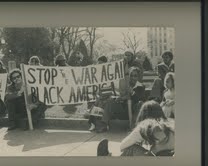
Imani as a little girl with her parents at a protest in Birmingham. The sign reads “Stop the War Against Black America.”

IP: It’s hard to make this short: I was born in Birmingham, Alabama into a large Black Catholic family nine years after the 16th street Baptist church bombing. I am the child of intellectuals and activists; the freedom movement was a constant theme in my coming of age. I moved North to Cambridge, Massachusetts at age 5 (after a brief time in Milwaukee where I attended a “freedom” pre-school that was built in response to a boycott of segregation in city schools.) In Cambridge, my mother began doctoral work again (she had been one of four Black women at Yale in the Theology and Philosophy program before I was born). I was educated at a progressive Quaker school and lived in a counter-culture, multi-racial environment. In the summers, I returned home to Alabama or visited my father in Chicago. My father lived in a gay community and was very active in social justice work around prisons and Central America. I attended camp at Jane Addams Hull House and the New City YMCA, which was a few blocks away from The Cabrini Green housing projects back then. Many of my fellow campers lived in Cabrini. Needless to say, I experienced a wide cross section of American life. I also had access to excellent schools, and my parents are both active scholars and people who have devoted their lives to trying to make a meaningful contribution to the world. It is unsurprising that I became an academic; although, until I was 19, I thought I was going to be a math professor. I attended Yale as an undergraduate student in the era when 3rd wave feminism was born there; the queer community was thriving and our expressions of Blackness were expansive. And I went into a Ph.D. program at Harvard in the “dream team” era in African American studies. I began Harvard Law School when Lani Guinier first joined the faculty. I was educated, and educated well, in an exciting time.

When I graduated, my first job was as a law professor at Rutgers Camden School of Law. I worked there for 7 years, earned tenure in my 5th year and was double promoted to full professor early. At Rutgers, I taught doctrinal courses like contracts and constitutional law but also taught critical race theory and a good deal of critical race feminism. After teaching a course in African American studies at Columbia and loving it, I decided I really wanted to teach in an interdisciplinary program. I’m now in my 4th year at Princeton, where I serve on the faculty in African American studies. I’m affiliated with other departments: Law and Public Affairs, Gender and Sexuality Studies, American Studies. And I also teach courses cross-listed with the Woodrow Wilson School and the Politics Department. What’s wonderful about that is that I meet students from across the University, and they work together to learn from the texts we read that come from a range of disciplines.

DM: You recently offered a compelling critique via social media in which you noted: “Black feminism used to be inherently radical, critical of classism, sexism, racism, heterosexism, and structures of domination, exploitation and imperialism everywhere. But now we have our own versions of NOW feminism, derivative 2nd wave feminism, and tone-deaf elitist middle class feminism.” Can you say more about these contemporary Black feminisms that you’ve named and why it might be important to remember the political and intellectual frameworks out of which Black feminisms emerged?

IP: Neoliberalism has infected every area of thought, even those we think of as inherently progressive. Feminism that is about “choice” (read consumption) rather than an analysis of power, and comes through the mechanisms, and reflects the priorities, of large corporations has very limited potential to actually say much of anything about the deep structure of inequality. I think it is important to remember early Black feminisms because those women had a deep analysis of inequality, one that began with, but extended far beyond their existences as Black women to address all forms of oppression at home and abroad. Those feminists did not celebrate the powerful, but rather advocated for the least of these. And their intellectual work was never simply about the fact of someone being born in a Brown skinned xx body, but rather about the interpretive power of beginning one’s thought from the experience of being Black and a girl or woman. I am worried when I read the title “Black feminism” applied to championing women like Susan Rice. I think a traditional and sophisticated Black feminist analysis does understand that she was targeted as a function of her race and gender; and yet, it also takes a critical posture towards her ideology which lies contrary to global principles of justice. Black feminist thought is not simply an interest group advocating for powerful Black women, it is about seeing the world with a vision of liberation. At least it should be.

DM: If a shift has taken place, do you think it is possible to conceive Black feminisms that reach back–to recuperate and bring into the present—a tradition of intersectional analyses and radical praxis–and push forward–to rethink and extend analyses and political work in areas under-theorized and not yet explored?

IM: I am currently writing about gender, and I am absolutely trying to do that. I think many other scholars are as well: Sara Ahmed and Sharon Holland immediately come to mind. Moreover, a lot of the women of the generation before me (I’m 40 years old) are still thinking and writing, such as Patricia Hill Collins and Bonnie Thornton Dill. The issue is: how do we get young feminists to turn to the books and to the grassroots, as much as they turn to celebrity feminists and the non-profit industrial complex, for their intellectual and political development? There is nothing more macho than corporate power and empire, feminists ought to be immediately skeptical of both even as we have to engage with them if we live in the United States. I’m worried that not enough self-proclaimed feminists have that skepticism. Black queer studies is probably the most robust area right now, in that it is a field that remains explicitly political and deeply analytical, yet connected to the lives of ordinary people: I’m thinking of scholars like E. Patrick Johnson or Rinaldo Walcott, here. All that to say, I think exposing students to sophisticated ideas and modes of analysis will provide them with the tools to push us further. Young people will be at the vanguard of a revitalized intellectual movement for gender justice.

DM: How do these questions figure into your present and/or future intellectual/political projects?

IP: As I said, I’m writing a book about gender. It is heavily theoretical, rooted in philosophy, jurisprudence and the literature of Black women of the renaissance of the 70s-90s. I’m pushing in a different direction than intersectionality. If we read the Combahee River Collective Statement, we see something that isn’t so specific or sited at the crossroads, but expansive and frankly both Marxist and infused with the sensibilities of liberation movements across the globe. I’m pushing in the direction they, and others, set forth.

DM: And speaking of your work, you’ve mentioned that your recent book, More Beautiful and More Terrible: The Embrace and Transcendence of Racial Inequality in the United States, “called [you], rather than one [you] looked for.” How so?

IP: I think part of being an intellectual is both being an active and constant reader of books and articles and also reading one’s environment. So when I say the book called me, I mean that I didn’t plan to write it but, rather, it took shape through my reading and thinking and living. The same thing with my current book projects. In academia, we are often told to have a fixed research agenda from the beginning of one’s career. I have never subscribed to that approach. I write consistently, but I write where my passion lies, and that is an ever-changing and growing thing. Living as an intellectual is prayerful. You immerse yourself in ideas; you live and love the life of the mind; and at opportune times you find insight thrust upon you. It is a blessing.

DM: Lastly, who would you name as your Black feminist sheroes, those whose lives and work invigorate your own? And why?

IP: This is an extremely hard question. There are so many, so this is just a handful of them: all women I’ve known. Certainly, the women in my family, helmed by my late grandmother Neida Mae Garner Perry, are all models of organic feminism. The sense of personal power that I learned from them has enabled every aspiration. And, as a girl, I met Ella Baker several times. She was elderly by then, and I took her to the park. Knowing who she was, I learned early on that a woman who developed a politic around ways of thinking that are traditionally conceived of as female–collaboration, participation, inclusion, process, humility–could initiate an organization that would change the world. That had a huge impact on me. Mary Helen Washington’s landmark and beautiful, Black Eyed Susans, was the first Black feminist anthology I ever read–I read it when I was in middle school–and she went to my church so doing this kind of work was “real” for me. When I was a young scholar, she praised me for maintaining a class analysis in my scholarship. That attention meant the world to me. Beverly Smith, one of the authors of the Combahee River Collective Statement, and other women of that community were often in my living room for gatherings when I was young, and the conversations they had influenced me. Kate Rushin encouraged me to read Black feminist writers specifically when I was a teenager. I listened. I also began to read her poetry as an adult. It is so human and so Black and so womanly.

In college, I interned at South End Press and, as a result, spent a significant amount of time with bell hooks. Her way of both naming injustice and the thought that produces it, but also remaining hopeful, was inspiring. And she did away with any thought that feminism had to be staid. And then, in my senior year of college, I read Patricia Hill Collins Black Feminist Thought, and I remember calling my mom and saying “THIS is what I want to do when I grow up!” It turns out she knew Pat from Black Catholic activist days. Years later, I got to know Pat myself, and I continue to be amazed by the complex maps she creates of how gender and race and class operate. Lani Guinier inspired me to go to law school and inspires me still with her ability to be critical of the site of her own privilege as a scholar who is at a very powerful institution. I try very hard to replicate that critical posture. My play-sister, Farah Jasmine Griffin, models what it means to prioritize Black women as creative and intellectual subjects, to challenge their place in dominant epistemologies, and open up new epistemological frameworks that center Black women writers and musicians. She teaches us how much we matter. And, Toni Morrison is everything. She announces to the world that the very best, the most profound, the most beautiful and the deepest cutting words emerge from the embodied lives of Black women. What better license to write could there be?

__________________________________

Professor Perry is an interdisciplinary scholar who studies race and African American culture using the tools provided by various disciplines including: law, literary and cultural studies, music, and the social sciences. She has published numerous articles in the areas of law, cultural studies, and African American studies, many of which are available for download at: imaniperry.typepad.com. She also wrote the notes and introduction to the Barnes and Nobles Classics edition of the Narrative of Sojourner Truth. She is the author of Prophets of the Hood: Politics and Poetics in Hip Hop (Duke University Press, 2004) and More Beautiful and More Terrible: The Embrace and Transcendence of Racial Inequality in the United States (New York University Press, 2011). Professor Perry teaches interdisciplinary courses that train students to use multiple methodologies to investigate African American experience and culture.


The Feminist Wire

Activist. Angela Davis, “Bury the Ratchet” campaign interview

During an interview with television personality Jacque Reid last week, civil rights activist Angela Davis (pictured) announced a new campaign, “Bury the Ratchet,” aimed at improving the depictions of Black women in mainstream media.SEE ALSO: George Washington’s Runaway Slave, Harry

The “Bury the Ratchet” campaign specifically targets Black women who live in Atlanta, Ga., because of reality shows such as “The Real Housewives of Atlanta.” According to Davis, when people encounter African-American women from Atlanta, “the first image that comes to mind is mean, gold-digging women. It has become completely evident that there has been a brand of women from Atlanta that are adverse to what most of these women are like.

Which is why Davis is starting this campaign, “The goal is to get the spotlight off the ratchetness and on the successful women in Atlanta.”

Consequently, Davis will launch a symposium at Spelman College in March 2013, where she will engage other African-American leaders in analyzing how reality television is harming Black culture. Bury the Ratchet will then pool its resources into creating a public service announcement showing how young Black women feel about their depictions in the media.

But can this really help change what women think of these reality programs without removing them from the air? Davis seems confident it can.

“We want to change the mind of young women who absorb these images,” she said. “The first thing we are doing is giving them a voice.”

http://newsone.com/2100749/angela-davis-bury-the-ratchet/