‘Police are Heroes’: The Cultural Mythologies that Enable Police Brutality Against Black and Brown Americans φ Chauncey Devega

‘Police are Heroes’: The Cultural Mythologies that Enable Police Brutality Against Black and Brown Americans φ

The deaths of NYPD officers Rafael Ramos and Wenjian Liu, gunned down by a mentally unstable man who later committed suicide, have been accompanied by public rituals of mourning. Unfortunately, many public figures are also villifying those who demand accountabilty for police brutality.
In a sign of how debased American cultural values have become (especially on the Right), a plea for human dignity, civil rights and an end to police brutality against people of color can be twisted and warped into some type of provocation to violence against the police. The millions of Americans who want police to act in a professional and responsible manner by not abusing those they are ostensibly “sworn to protect” are not endorsing premeditated violence against police. Rather, those Americans of conscience who are standing up against police brutality believe that the dignity and safety of all people are paramount virtues.
While it may be a challenging truth for some, as I wrote here, the lives of Rafael Ramos and Wenjian Liu are no more valuable or sacred than the lives of Eric Garner, Tamir Rice, Michael Brown, John Crawford, or any other human being. Human rights are universal. The lives of police are no more valuable or special than those of any other citizen. Failing to embrace this fact leads to a type of creeping fascism or authoritarianism by legitimizing police thuggery and abuse of the public.
While the public rituals that accompany the loss of a police officer are by definition designed to hide and obfuscate complex realities through the use of powerful symbols and rhetoric, the basic truth remains that police as a social institution and group are not victims. Rather, in the United States the police are a protected class of people. They are the day-to-day face of the State—and its power to visit violence upon the American people. Police are enforcers of the law; in many ways they are positioned above and outside it.
The examples of this Orwellian abuse of power are many.

The Supreme Court recently ruled in Hein v. North Carolina that even when a police officer stops a person without proper cause such an act is not a violation of the Constitution’s protections against unreasonable search and seizure.
And in those rare instances when police are faced with indictments by the courts for their illegal, hostile and heinous acts against the American people they are rarely, if ever, indicted.
Police departments also do not report the actual numbers of people they kill in the United States each year. Victims of police violence are “disappeared” by a bureaucratic trick where “justified” killings by police officers are thrown down the memory hole.
The criminal justice system monitors itself. There can be no true accountability. This is not an accident or aberration of the system. No, it is the carceral and punishing State working exactly as designed and intended by American elites.
The United States was founded as a white (and male) supremacist society. Centuries later, the country remains organized around the maintenance and protection of white privilege. These hierarchies of race deem that the ability and power of the police to violate the basic human and Constitutional rights of a given person of color in the United States are outsized and exaggerated.
Here, police abuse against non-whites (and the poor, more generally) within the context of a racist criminal justice system (what Michelle Alexander has called the New Jim Crow) is the norm, a quotidian reality that hides behind cold statistics that detail how black teens are 21 times more likely to be killed by the police than their white peers, or how a black person’s life is taken at least once every 28 hours by a law enforcement officer.
The panoply of ways black and brown people have been killed by the police, and the explanations offered for their deaths, could form the basis of an absurdist or dark satire. Black people have been killed by cops for sleeping in cars, because wallets, key chains and cell phones look like guns when held by African Americans; for holding toys, committing the Jim Crow-era crime of “bumptious walking,” playing in the park, dressing up like a favorite anime character, or selling loose cigarettes outside a corner bodega.
Except for pathological white racists, and those other white folks who share such sentiments and feelings even while they mask their bigotry with the claim that they don’t “see” race, there is no humor to be found in this necropolis of black people, many of them unarmed, who have been killed by the police in this bloody 2014 or in the decades and centuries that preceded it.
Because the police are a protected class, an artifice of myths has been erected around them, myths that take the form of unstated assumptions that are circulated throughout American culture and are rarely questioned or critically interrogated. This cultural and rhetorical shield takes many forms; it is a narrative and type of conventional wisdom that Americans learn in childhood, is recited by politicians and religious leaders, and endlessly reinforced by the mass media.
Police violence is justified and explained away by the following tropes.
Police work is a dangerous job. While being a police officer may involve some level of risk, it is largely mitigated by training and equipment. On the macro level, in the United Statespolice work is not included in the top 10 most dangerous professions. Sanitation workers, truck drivers, forestry workers, and professional fisherman are far more likely to be killed or injured on the job than police.
While the mass media and police unions are invested in projecting an image of police work as highly dangerous, thrilling, and adrenaline-filled, the number-one cause of death for police officers are vehicular accidents.
Police have a difficult job that involves making split-second decisions. As research on implicit bias, racism and police use of force has demonstrated, cops are much more likely to make “split-second decisions” to kill black men. Yet, somehow the perils and fears that loom over police and their decision-making processes are suspended and lessened when they interact with white people.
Cliven Bundy and his armed group of marauders did not face a “split-second” decision by the police to shoot them. White men walking around neighborhoods with guns displayed in plain sight are not preemptively killed by the police. White men who have actually shot at firefighters and police are somehow miraculously taken into custody unharmed and alive. White teenagers who bring arsenals of guns and knives to their high schools are arrested and given bail.
Police selectively make split-second decisions about who to shoot and kill in America. Blackness is a trigger for violence; whiteness and white skin privilege are signals to deescalate.
Police are heroes. Heroism involves a selfless act by a person who is not trained for such duty, or who cannot be reasonably expected to act in such a manner. Police have chosen their profession. They are trained and equipped for the task. Police officers are also well compensated both on the job and in retirement. They also benefit and receive support from a huge and powerful social apparatus that is designed to protect them from the consequences of their actions.
A given police officer may have a moment of bravery or courage. By themselves, neither of those deeds rises to the level of heroism.
The police who killed Eric Garner, Tamir Rice, Michael Brown, and who participate in a system that harasses and targets people of color for unjust punishment and harassment are most certainly not heroes in the best and most authentic sense of the word.
Instead of holding police (and others who are empowered by the state to kill) to a higher standard, America’s civil religion deifies police and simultaneously lowers their bar of accountability to one far below that of the average person—in all, what is a perverse paradox.
The blind worship of the police exists in the same flat and empty right-wing political imagination as litmus tests for patriotism that consist of questioning if a given politician wears an American flag pen on his lapel.
Such rituals socialize the American people into the twin habits of banal and unreflective thinking which legitimizes a narrowing of the public discourse. Basic questions about justice are made verboten; they are not to be mentioned or discussed in polite company.
Rafael Ramos and Wenjian Liu are dead. Eric Garner, and many other unarmed black and brown people are also dead—killed by the police under highly questionable circumstances. Demands that police treat all Americans with respect, and in accordance with their human rights, is not a zero sum game.
Police lives matter because they are human beings. The lives of the victims of police brutality and violence matter because they too are human beings. This simple calculus makes for a safer and more just society for all people.
devega2WHO IS CHAUNCEY DEVEGA?

I am the editor and founder of We Are Respectable Negroes, as well as the host of the podcast known as “The Chauncey DeVega Show”.

I am also a race man in progress, Black pragmatist, ghetto nerd, cultural critic and essayist. I have been a guest on the BBC, Ring of Fire Radio, Ed Schultz, Make it Plain, Joshua Holland’s Alternet Radio Hour, the Thom Hartmann radio show, the Burt Cohen show, and Our Common Ground.  My writing has been featured by Salon, Alternet, The New York Daily News, and the Daily Kos.  My work has also been referenced by MSNBC, as well as online magazines and publications such as The Atlantic, Slate, The Week, The New Republic, Buzzfeed, The Daily Beast, The Washington Times, The Nation, and The Chronicle of Higher Education.

Judge me by my enemies. Fox News, Rush Limbaugh, Sean Hannity, Juan Williams, Herman Cain, Alex Jones, World Net Daily, Twitchy, the Free Republic, NewsBusters, the Media Research Council, Project 21, and Weasel Zippers have made it known that they do not like me very much

2014, The Meaning of July Fourth for the African American l Dr. Wilmer Leon

2014, The Meaning of July Fourth for the African American

 July 3, 2014

Dr. Wilmer J. Leon, III

LTCWashington-hi-fireworks_1“I say it with a sad sense of the disparity between us. I am not included within the pale of this glorious anniversary! Your high independence only reveals the immeasurable distance between us. The blessings in which you, this day, rejoice, are not enjoyed in common.-The rich inheritance of justice, liberty, prosperity and independence, bequeathed by your fathers, is shared by you, not by me. The sunlight that brought light and healing to you, has brought stripes and death to me. This Fourth July is yours, not mine. You may rejoice, I must mourn.” Frederick Douglas – The Meaning of July Fourth for the Negro – 1852

As America celebrates July Fourth, as the grills smoke, the salads are tossed, pools filled, and fireworks displayed take a moment to reflect.  Reflect upon how far we have come as a nation and yet how far we have to go.

I implore African Americans to read the entire text of Frederick Douglas’ famous speech, The Meaning of July Fourth for the Negro.  Are we as a people able to enjoy the blessings, the justice, and the liberty that are celebrated on this day?

We have become all too familiar with the data.  According to Bread for the World, one in four African-Americans lives below the federal poverty line and more than a third (35.7 percent) of all African-American children live in poverty.  The Bureau of Labor Statistics reports that for 2013, the underemployment rate for African-American workers was 13.4 percent compared 6.7 percent for white workers. That does not account for those who have lost faith in the process and dropped out of the system.  The Pew Research Center reports that the Median Net Worth of Households for Whites is $113,149 and for African Americans is $5,677.  The NAACP reports that African Americans now constitute nearly 1 million of the total 2.3 million of the incarcerated population. African Americans are incarcerated at nearly six times the rate of Whites.

These are just a few examples of the frightening realities with which we are faced.

Douglas asked, “What, to the American slave, is your 4th of July? I answer; a day that reveals to him, more than all other days in the year, the gross injustice and cruelty to which he is the constant victim.”  Yes, slavery ended in 1865 but that two hundred- fifty years of slavery was followed by ninety years of Jim Crow; sixty years of separate but equal and thirty-five years of racist housing policy.

Yes, legislative and judicial progress have been made.   The Civil Rights Act of 1866 provided for the equality of citizens of the United States in the enjoyment of “civil rights and immunities.”  That Act was undermined by the Tilden/Hayes compromise of 1877. We have recently celebrated the 60th anniversary of the Brown v. Board of Education decision and the 50th anniversary of the 1964 Civil Rights Act and will soon celebrate the passage of the 1965 Voting Rights Act.   One problem is that too many have confused the legislative successes with the ultimate victory, changing the racist core and premise upon which this country was founded as memorialized in the U.S. Constitution.

I take this moment to focus on the past because as Douglas said, “We have to do with the past only as we can make it useful to the present and to the future.”

Douglas continued, “At a time like this, scorching irony, not convincing argument, is needed. O! had I the ability, and could reach the nation’s ear, I would, to-day, pour out a fiery stream of biting ridicule, blasting reproach, withering sarcasm, and stern rebuke. For it is not light that is needed, but fire; it is not the gentle shower, but thunder. We need the storm, the whirlwind, and the earthquake. The feeling of the nation must be quickened; the conscience of the nation must be roused; the propriety of the nation must be startled; the hypocrisy of the nation must be exposed; and its crimes against God and man must be proclaimed and denounced.”

As we enjoy the Fourth, eating ribs and hot dogs, we must ask ourselves, are we as a people able to enjoy the blessings, the justice, and the liberty that are celebrated on this day?  If not, what must we do to bring about substantive and permanent change?

Our plight, our success, and our future have always been in our hands.  Dr. King once said, “…nobody else can do this for us; ?no document can do this for us?; no lincolnian emancipation proclamation can do this for us;?no kennesonian or johnsonian civil rights bill can do this for us; ?if the negro is to be free, he must move down into the inner resources of his own soul and sign with a pen and ink of self-asserted manhood his own emancipation proclamation.”

Here is one, just one very simple yet challenging thing to consider.

The former President and CEO of the NAACP, Ben Jealous has just released a report entitled, “True South: Unleashing Democracy in the Black Belt 50 Years After Freedom Summer.” According to the report, “The first and most important lesson is that massive voter registration can overcome massive voter suppression. Our analysis shows that registering just 30 percent of eligible unregistered black voters or other voters of color could shift the political calculus in a number of Black Belt states, helping blacks elect candidates who share their concerns or alternatively, forcing all candidates to pay attention to the community’s concerns. Registering 60 percent or 90 percent would change the political calculus in an even greater number of states.”

I opened with Douglas and I will close with Douglas, “…Allow me to say, in conclusion, notwithstanding the dark picture I have this day presented, of the state of the nation, I do not despair of this country. There are forces in operation which must inevitably work the downfall of slavery. “The arm of the Lord is not shortened,” and the doom of slavery is certain. I, therefore, leave off where I began, with hope.”

Dr. Wilmer Leon is the Producer/ Host of the Sirius/XM Satellite radio channel 110 program “Inside the Issues with Wilmer Leon He is an OUR COMMON GROUND Voice.

 Go to www.wilmerleon.com or email:wjl3us@yahoo.comwww.twitter.com/drwleon and Dr. Leon’s Prescription at Facebook.com  © 2014 InfoWave Communications, LLC

– See more at: http://blackpoliticsontheweb.com/2014/07/03/2014-the-meaning-of-july-fourth-for-the-african-american/#sthash.b9W4uagX.dpuf


wilmer promo

Marissa Alexander Facing 60 Years in Prison for Firing a Warning Shot in Self Defense | The Nation

Marissa Alexander Now Faces 60 Years in Prison for Firing a Warning Shot in Self Defense | The Nation.

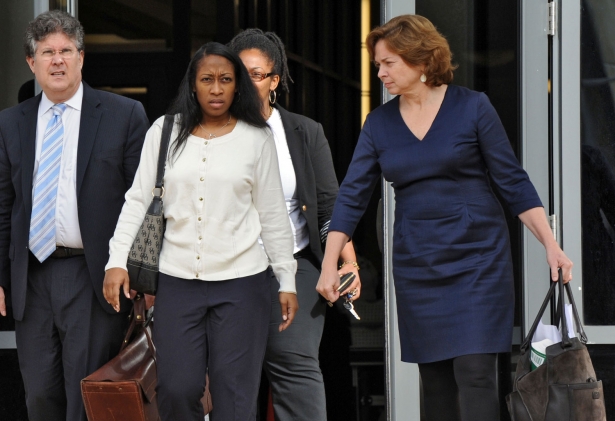
Florida State Attorney Angela Corey will seek to triple Marissa Alexander’s original prison sentence from twenty to sixty years, effectively a life sentence for the 33-year-old woman, when her case is retried this July, The Florida Times-Union reports.

Alexander was convicted on three charges of aggravated assault in 2012 for firing warning shots in the direction of Rico Gray, her estranged husband, and his two children. No one was hurt. Alexander’s attorneys argued that she had the right to self-defense after Gray physically assaulted and threatned to kill her the day of the shooting. In a deposition, Gray confessed to a history of abusing women, including Alexander.

In September of 2013 a District Appeals court threw out the conviction on grounds that Circuit Judge James Daniel erroneously placed the burden on Alexander to prove she acted in self-defense, when she only had to meet a “reasonable doubt concerning self-defense.”

Judge Daniel originally slapped Alexander with three twenty-year prison sentences, but ordered that they be served concurrently. If Alexander is convicted a second time in July, State Attorney Angela Corey will seek consecutive sentences, adding up to sixty years in prison.

Florida’s 10-20-Life law imposes a mandatory minimum of twenty years in prison for anyone who fires a gun while committing a felony. Angela Corey’s prosecution team says it is following a court ruling that multiple convictions for related charges under 10-20-Life should carry consecutive sentences.

The advocacy group Free Marissa Now released a statement calling Corey’s move a “stunning abuse of power.” Members of the group say Corey is pressing for a longer sentence to thwart attention from accusations of prosecutorial misconduct, as well as recent failures in high-profile trials. Corey failed to secure murder convictions for George Zimmerman and Michael Dunn, two men who fatally shot black teenagers.

“Remember that when Marissa Alexander fired her warning shot to save her own life, she caused no injuries. Now she’s facing the very real possibility of spending the rest of her life in prison for that act of self-defense,” said advocate Sumayya Fire in the statement. “That should send a chill down the back of every person in this country who believes that women who are attacked have the right to defend themselves.”

Dr. Tommy J. Curry φ Concepts of Racism and Black Men φ PBS Conference October 26, 2013 Tommy Curry


curryvoices


Dr. William “Sandy” Darity on Ta-Nehisi Coates’ “The Case for Reparations” φ from Demos


darityvoicestrans

Dr. William Darity, a professor at Duke University and Stanford University has studied reparations in black America for over twenty years is interviewed for this piece.  Dr. Darity is an OUR COMMON GROUND Voice.

His new book along with co-author Kristen Mullen, From Here to Equality is  coming out this Fall and directly addresses how Coates’ prose can become a Congressional reality.

Reniqua Allen of Demos talked with him, as an advocate for reparations to discuss Ta-Nehisi Coates’, “The Case for Reparations“, an article published on May 21, 2014 in The Atlantic


An Expert Responds to Ta-Nehisi Coates on Reparations

No matter how any conversations we have about America’s past, there’s always some sort of obligatory outrage whenever America’s dark history is synthesized, criticized and laid out before mainstream audiences without any filters. For some of us, the stories of America’s past are nothing new, but for others that history 101 failed (or maybe black history 101?), articles like Ta-Nehisi’s must-read cover story The Case for Reparations is a total eye opener. Coates eloquent essay into America’s past makes the important connection of how the wealth, privilege and white supremacy of the past connect directly to wealth and privilege today. Coates doesn’t directly call for a monetary sum or specific governmental policy to enact reparations, but rather wants to start a national conversation on the topic and it seems, at the very least recognition of the ills that America has wrought far far beyond slavery.

Reparations—by which I mean the full acceptance of our collective biography and its consequences—is the price we must pay to see ourselves squarely. The recovering alcoholic may well have to live with his illness for the rest of his life. But at least he is not living a drunken lie. Reparations beckons us to reject the intoxication of hubris and see America as it is—the work of fallible humans.

Won’t reparations divide us? Not any more than we are already divided. The wealth gap merely puts a number on something we feel but cannot say—that American prosperity was ill-gotten and selective in its distribution. What is needed is an airing of family secrets, a settling with old ghosts. What is needed is a healing of the American psyche and the banishment of white guilt.

What I’m talking about is more than recompense for past injustices—more than a handout, a payoff, hush money, or a reluctant bribe. What I’m talking about is a national reckoning that would lead to spiritual renewal. Reparations would mean the end of scarfing hot dogs on the Fourth of July while denying the facts of our heritage. Reparations would mean the end of yelling “patriotism” while waving a Confederate flag. Reparations would mean a revolution of the American consciousness, a reconciling of our self-image as the great democratizer with the facts of our history.

Coates piece, as he hoped, is sparking a debate about whether African Americans are entitled to reparations and how we can turn his idea into a reality. William Darity, a professor at Duke University has studied reparations in black America for over twenty years (If you’re looking for a primer on the subject check his previous work here). His new book along with co-author Kristen Mullen, From Here to Equality, coming out this fall directly addresses how Coates’ prose can become a Congressional reality. I spoke with the professor, who is an advocate for reparations a day after Coates’ article was published.

What was your initial reaction to Coates’ essay? 

I think it’s terrific that Ta-Nehisi was able to use his platform as a prominent journalist to bring the conversation back to this issue because we have ignored it or silenced it for so many years. The last time there was any significant attention drawn to this issue was the beginning of the 2000s, prior to 9-1-1 when there was this set of advertisements that were circulating in colleges attacking reparations. I think this is the first time we got a significant wave of attention that’s being drawn back to reparations. That’s crucial. The other thing I like about the article is its emphasis on the injustices that are associated with the period after slavery, from what I like to call “the deconstruction of Reconstruction” to the Jim Crow period to ongoing discrimination.

Why has the idea of reparations been so anathema to the American public? 

That’s a great question particularly since people are not particularly opposed to reparations for injustices that have been perpetrated against other folks aside from black Americans. We ultimately did have a reparations program for the Japanese Americans that were incarcerated during World War II. We could argue over whether or not the amounts of the compensation were adequate, but there was at least a piece of legislation that was passed and signed by the President at the time.

It is interesting that the question of compensation for African Americans tends to draw so much more heat than the compensation for other groups. We can even think about this on an international scale and other instances of injustices. The only answer that I can come up with is that it’s deeply routed in the American psyche about black inferiority and that in some sense blacks must be responsible for their own problems.

There have been a lot of positive responses to this piece. Does that mean we’re ready to have this conversation that Coates wants? 

We’re just recovering from the effects of deluding ourselves into thinking this society has become post-racial as the consequence of a black president. In some respects I think that that has contributed to maintaining a veil over the issues surrounding racial injustice and racial depravation.  Now we finally have the political security to talk about these issues, despite the fact that we have a black president, and so maybe partly there’s relatively propitious timing for the article. We’re coming to the end of the Obama presidency. Now is the time to look beyond the Obama era and try to address what needs to be done.

What are the next steps? 

I would hope that as Ta-Nehisi proposes in his article that Conyers or a Conyers type of bill for the formation of a congressional commission to explore the history of racial injustice in the United States [would be created]. I would think that would be the critical next step. The prelude to Japanese reparations was the formation of a commission that studied the history of the unjust incarceration that took place in World War II.

Who is the one to make this a legitimate conversation? Who is the onus on? Is it the civil rights community? Journalists? Congress? Public intellectuals? 

I’m not sure I can answer that. There’s part of me that says all of the above. I’m not sure that any particular group has a monopoly or any obligation to make this a legitimate topic of conversation. But, I think that it is important that people don’t dismiss this as fantasy or as something absurd.

Kirsten Mullen and I are doing a book From Here to Equality it’s about reparations case for black Americans. One of the things we hope to do in the book is to describe in a reasonably detailed way, ways in which you might execute a reparations program and this includes making some judgment about what the magnitude of payments should be, or the magnitude of the total bill, it need not all take the form of payments per say.

Without giving away all the solutions in your new book, can you tell me what you think the path is to reparations? 

I’ve said in my own work that I thought that the legislative path is the correct one. The judicial path hasn’t been particularly fruitful thus far. Even if the judicial path results in a system that supports reparations, a court system has no way of implementing it, so you have to go the legislative route ultimately. The positive thing about the legislative route is it would require a sufficient change in public sentiment, so that there would be adequate support for reparations and people who make the charge that reparations would injure race relations would be wrong, because you wouldn’t have reparations unless there was a sufficient amount of support for it from the white community.

Is there any evidence that there is support for this? 

The absence of support may be lack of information and lack of understanding of how race plays out in our society. Having a congressional commission, that may open up a clear conversation about these issues that might have a very positive effect on peoples attitudes in the rightness of doing this. I think to the extent that Ta-Nehisi Coates’ article reawakens, let me call it “wise conversations,” then that’s the greatest accomplishment that this article could affect.

Do you think that support for reparations will be different in the black community than the American public at large? 

Yes on average, but I’m also aware that there’s a significant portion of the black community that rejects reparations, including the President. It’s about 70 percent of African Americans that are in favor, about 30 percent are opposed.

There seemed to be some tension in academic circles that Coates’ article didn’t address or uncover anything new. Why?

As academics we place a tremendous premium on who was first to say something and we expect others to indicate who said something earlier. So, I think there may be some frustration on the part of some folks who have done a lot of work on the subject that there’s no mention of their ideas or work in Coates’ article. To be frank, there’s no mention of my work, but I’m so pleased he’s rejuvenated this conversation that I don’t want to invest a lot of time in sour grapes.

Final thoughts? 

The article is heavily invested in the experience of Mr. Ross and the North Lawndale community of Chicago. I think that it’s vital to provide a story that people can join with rather than a series of statistics, but I think Mr. Ross’ experience is so deeply rooted in the experiences of thousands of black Americans that you would need to multiply his story many times over to get a full sense of the scope of the injustices.

Thanks to Demos for seeking expert review of this most controversial piece and critical issue.

Special thanks to Dr. Darity for his persistence and scholastic excellence on the issue.

You might be interested in these additional articles regarding Reparations

William A. (“Sandy”) Darity Jr. is Arts & Sciences Professor of Public Policy Studies and Economics, Chair of African and African American Studies and director of 087411_darity_william042the Research Network on Racial and Ethnic Inequality at Duke University. He earned the Ph.D. in economics from the Massachusetts Institute of Technology in 1978. He chairs the prestigious National Association of Economist. 


He is the Samuel DuBois Cook Professor of Public Policy, African and African American Studies, and Economics at Stanford University, and served as chair of the Department of African and African American Studies and is the founding director of the Research Network on Racial and Ethnic Inequality at Duke. He served as co-director of the Institute of African American Research, director of the Moore Undergraduate Research Apprenticeship Program, director of the Undergraduate Honors Program in economics, and director of Graduate Studies at the University of North Carolina.

Darity’s research focuses on inequality by race, class and ethnicity, stratification economics, schooling and the racial achievement gap, North-South theories of trade and development, skin shade and labor market outcomes, the economics of reparations, the Atlantic slave trade and the Industrial Revolution, the history of economics, and the social psychological effects of exposure to unemployment.

Previously he served as director of the Institute of African American Research, director of the Moore Undergraduate Research Apprenticeship Program, director of the Undergraduate Honors Program in economics, and director of Graduate Studies at the University of North Carolina at Chapel Hill.


Darity’s research focuses on stratification economics, inequality by race, class and ethnicity, schooling and the racial achievement gap, North-South theories of trade and development, skin shade and labor market outcomes, the economics of reparations, the Atlantic slave trade and the Industrial Revolution, doctrinal history and the social psychological effects of unemployment exposure.


More on Reparations and the Coates article

More Coates

More Coates

Other Related Articles

Other Related Articles

Other Related Articles

Other Reparations Articles

Related


Talking about white Privilege is not Profound, its just for profit. φ Dr. Tommy J. Curry

curryvoicesTalking about white Privilege is not Profound, its just for profit.

By: Dr. Tommy J. Curry

There is a growing economy for discussions about white privilege in this country that are employing Black and brown intellectuals and whites who profess anti-racism, to be the missionaries that save white souls. white privilege, or the idea that white individuals are born with unearned benefits and advantages, over others has been making its way through out the public media as well as the classroom. On the face of it, this seems like a radical conversation. Black, brown and some white people calling out white liberals and conservatives for their racism, and starting “real” conversations about race that air on MsNBC,CNN and even the Huffington Post. But conversations about white privilege are not really conversations about race, and certainly not about racism—its a business—WHERE BLACKS MARKET THEMSELVES AS RACIAL THERAPISTS.

See the first discussions of white privilege like W.E.B. DuBois’s Black Reconstruction (1935) or George Lipsitz’s The Possessive Investment in whiteness, or even Cheryl Harris’s “whiteness as property,” came from the radical Black intellectual tradition (race-crits, Black nationalists, Pan-Africanists) that did not believe that whites would simply donate their power and act against their global racial interests to be good people IN THE EYES OF BLACKS, people they owned and still imprison. DuBois, and Lipsitz understood there is an antipathy and power in being against Blacks. Like George Jackson said, regarding the ILLUSION many Black academics have in romanticizing their ability to solve racism, “the white race, the economic elites of America, are not going to let themselves be educated out of existence. But today, you sound radical, progressive and insightful by MARKETING YOURSELF as a therapist for whites, and know nothing about the actual conditions, structures, and ills that concretely affect the lives of Blacks. You can even talk about white privilege and not even know the names of the Black thinkers, the literature, the context, or the history the term comes from, and get acclaim for only citing white celebrities like Peggy McIntosh or Tim Wise.

It’s not genius to say in an oppressive society there are benefits being in the superior class instead of the inferior class. That’s true in any hierarchy, being on the top is better than being on the bottom, but the speaker of white privilege gets to pretend that America is not oppressive, they love America, they just want whites to surrender their privilege so we can be equal. See the revolutionary doesn’t have white friends: the government killed MLK, Assata is called a terrorist, Derrick Bell is erased from a field he started, because they spoke about the actual racial and economic tyranny of corporations, governments, the military and the white public, but the for profit revolutionary wants to be commodified by whites…that Black friend that feels like they cured the racist white, while that same white person gets to point to these very relationships as proof they are healed and show to other whites they are the “white ally.”

Conversations about white privilege are simply moral appeals to the conscience of whites who have shown themselves to be committed to racism and social inequity IN THE IDLE HOPE THAT THEY change their mind. The implication of talking about privilege suffers from a childlike naiveity, it suggests that simply exposing racism and the privilege of whiteness to the white mind motivates whites to no longer act in their own self interest. See like the liberal utopia born out of integration, there is an unjustifiable assumption that telling whites about their social position means they are willing to surrender their power to appease a pop culture account of oppression. Think about the dishonesty of this approach. Black people, oppressed people, know there is a fundamental difference between being oppressed/Black and not oppressed, a citizen, white. We call for “national conversations on race,” where these public intellectuals get credit for starting conversations that amount to little more than allowing white America the opportunity to deny the actual realities Black America suffer from. And regardless of the outcome they come out LOOKING LIKE PROPHETS. This issue is white supremacy, and anti-Black death…trying discussing that…and see if your oppressor recognizes you then.

I remember at a recent APA I sat next to a feminist of color trying to get her white male student who couldn’t get a job in the white figures he studied and wrote a book on, and never studied race, racism, or Black philosophy, a job. This professor felt comfortable telling him if you start talking about white privilege, where she claimed the field was going, he could land a race job easily. Think about this. So all the Black, Brown, and Indigenous scholars who study the raw histories of oppression and resistance lose out because they don’t want to give white liberals and conservatives a guilt trip. This is a powerful example of how as an academic discussion white privilege distracts the oppressed, and empowers the oppressor class to be employed in discussing systems they have no real interest in dismantling.

Dr. Tommy J. Curry, The Nationist

9-14-13 Curry4


Freedom Note from OUR COMMON GROUND φ Chronicling OUR History φ “Witness On the Bridge”, Dr. Joyce A. Ladner

Freedom Note from OUR COMMON GROUND

Elder voices

I am within the year to become an Elder. While it surprises and mystifies me, it does not the rest of the world. This is what becomes of so many privileged experiences and soul shattering moments. To become from all that I have seen, done and been. To recall the wisdom and embrace of men and women, big and tall. I might be very surprised, but I am very prepared. I thank the many people who have mentored me, nurtured and nourished me on this journey. They have been diligent in guiding me on the path of this story, inspiring me to measure the successes and use the failures. My legacy is not about the fancy education or powerful jobs, but recalling the lines etched into the hands of those who guided me and bringing their spirits into a new form that is worthy. Capturing the spirit of our people’s hopes and aspirations. This is why it has been so important to me to capture their voices, and in doing so I retain our wisdom, our truths and our history born of both our suffering and our victory for all times.

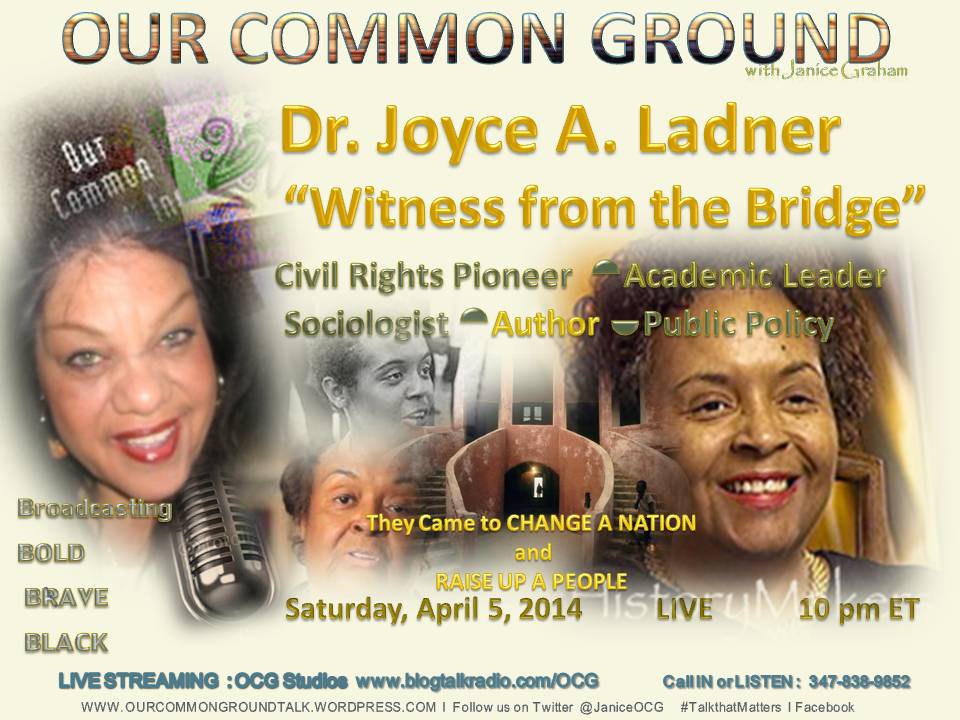
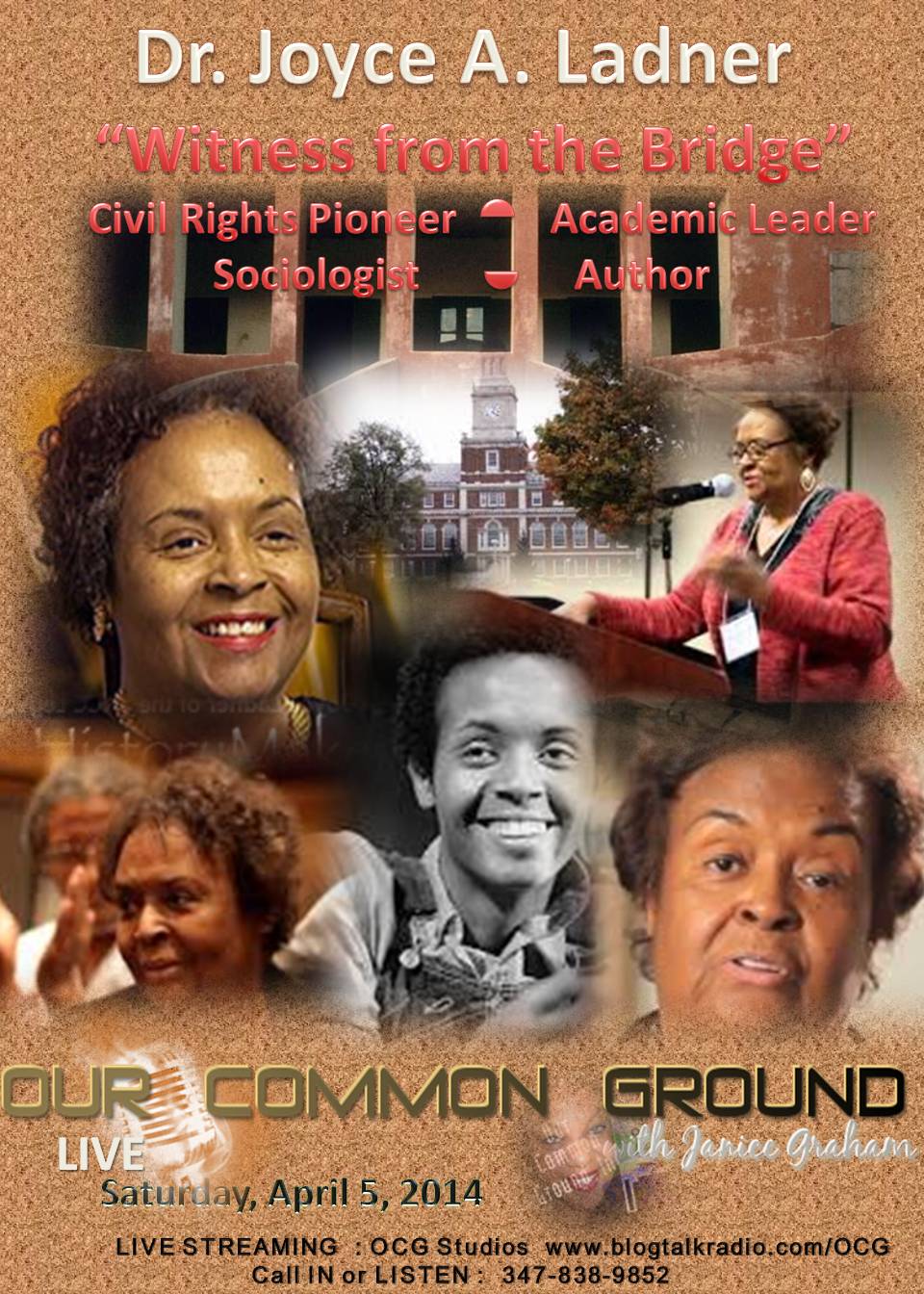
We hope you will join us tonight as we honor another “Witness From the Bridge”, Dr, Joyce A. Ladner as we enter our life and courage onto OUR COMMON GROUND.

LIVE   10 pm ET      April 5, 2015


03-29 Ladner4


OUR COMMON GROUND
Witness From the Bridge
Dr. Joyce A. Ladner
Sociologist – Academic and Education Leader
Civil Rights Pioneer Activist

April 5, 2014 LIVE 10 pm ET
LISTEN LIVE and Join the OPEN Chat: http://www.blogtalkradio.com/OCG
Call In – Listen Line: 347-838-9852

Sociologist Joyce Ladner was born in Battles, Mississippi, on October 12, 1943. She attended Tougaloo College in Tougaloo, Mississippi, where she earned her B.A. in sociology in 1964 and went on to Washington University in St. Louis, Missouri, to earn a Ph.D. in 1968.

At school, she also became involved in the civil rights movement. After earning her Ph.D., Ladner went on to teach at colleges in Illinois; Washington, D.C.; Connecticut; and Tanzania.

03-29 Ladner3In 1970 she conducted postdoctoral work as a research associate at the University of Dar es Salaam in Tanzania. In Tanzania she completed research on “The Roles of Tanzanian Women in Community Development.” Active within the SNCC organization as field secretary, Ladner was a witness to the racial conflict, violence, and the institutionalization of segregation. She has written numerous reports on children’s issues and has often been consulted for her expertise. Her work spans the roles of sociology professor, university president, presidential appointee, and a national public policy analyst. A prolific scholar, she has committed her life to improving the areas of diversity, multicultural education, higher education, urban issues, public policy, family and gender challenges, and child welfare.

Ladner published her first book in 1971, Tomorrow’s Tomorrow: The Black Woman, a study of poor black adolescent girls from St. Louis. In 1973, Ladner joined the faculty of Hunter College at the City University of New York.

Leaving Hunter College for Howard University in Washington, D.C., Ladner served as vice president for academic affairs from 1990 to 1994 and as interim president of Howard University from 1994 to 1995. When she became interim president of Howard in 1994, she was the first woman to hold the position at the university. She retired to Florida in 2003.

In 1995, President Bill Clinton appointed her to the District of Columbia Financial Control Board, where she oversees the finances and budgetary restructuring of the public school system.

She is also a former senior fellow in the Governmental Studies Program at the Brookings Institution, a Washington, D.C. think tank and research organization. She has spoken nationwide about the importance of improving education for public school students. She has appeared on nationally syndicated radio and television programs as well.

She has received many honors and awards, including distinguished alumna and Hall of Famer of Tougaloo College, distinguished alumna of Washington University, Most Inspiring Teacher Award in 1986 and the Outstanding Achievement Award in 1991 from the Howard University School of Social Work. In 1996. Dr. Ladner was named Washingtonian of the Year by Washingtonian magazine

Ladner is active in a number of civic and professional organizations. She is a member of the Council on Foreign Relations, The American Sociological Association, the Washington Urban League, the Washington Women’s Forum and the Coalition of 100 Black Women. In 1997, she was named Washingtonian of the Year by Washingtonian for her work in education.

Dr. Joyce A. Ladner, author of The Death of White Sociology: Essays on Race and Culture, published by Black Classic Press, has written numerous books on education, urban issues, public policy and transracial adoption.

She has been an activist, author and civil servant. She is a Mississippi native who earned her bachelor.s in sociology in 1964 from Tougaloo College. She earned a doctorate in sociology in 1968 from Washington University in St. Louis, Missouri.

She and her sister, Dorie, organized and went to jail for their roles in demonstrations on behalf of the Student Nonviolent Coordinating Committee for which Joyce Ladner served as field secretary.

Her career has included work at various universities and institutions: Southern Illinois University, assistant professor and curriculum specialist, 1968-69; affiliated with Wesleyan University, 1969-70; University of Dar es Salaam, Dar es Salaam, Tanzania, research associate, 1970-71; Hunter College of the City University of New York, sociology faculty, 1976-81; Howard University, professor of sociology, 1981-98, vice president of academic affairs, 1990-94, interim president, 1994-95; Brookings Institution, senior fellow, government studies, 1977.

When she became interim president of Howard in 1994, she was the first woman to hold the position at the university. She retired to Florida in 2003.

She has received many honors and awards, including distinguished alumna and Hall of Famer of Tougaloo College, distinguished alumna of Washington University, Most Inspiring Teacher Award in 1986 and the Outstanding Achievement Award in 1991 from the Howard University School of Social Work. In 1996. Dr. Ladner was named Washingtonian of the Year by Washingtonian magazine.

Dr. Joyce A. Ladner, is the author of The Death of White Sociology: Essays on Race and Culture, published by Black Classic Press and Launching Our Black Children for Success: A Guide for Parents of Kids from Three to Eighteen by Joyce A. Ladner and Theresa Foy DiGeronimo. She has written numerous books on education, urban issues, public policy and transracial adoption. Her other books include, authored or edited, Tomorrow’s Tomorrow: The Black Woman, The Ties That Bind: Timeless Values For African American Families, Mixed Families: Adopting Across Racial Boundaries and The New Urban Leaders. And,these must reads:


Ladner, Joyce. Tomorrow’s Tomorrow: The Black Woman. Garden City, New York: Doubleday, 1971.
—. Mixed Families: Adopting Across Racial Boundaries. Garden City, New York: Doubleday, 1977.
—. The New Urban Leaders. Washington, D.C.: Brookings Institution Press, 2001.

BROADCASTING BOLD BRAVE BLACK

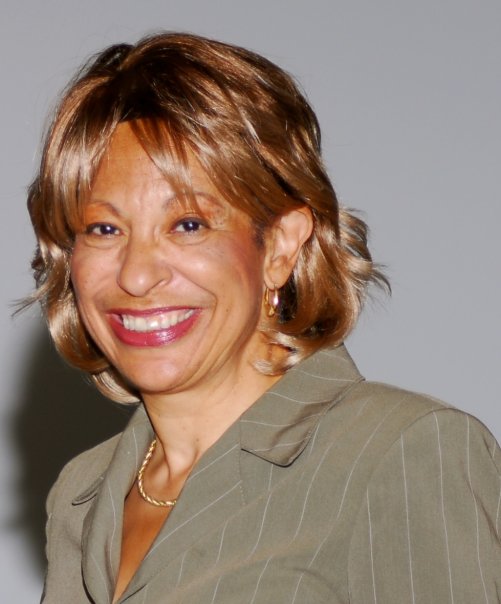
OUR COMMON GROUND with Janice Graham

“Speaking Truth to Power and Ourselves”

email: OCGinfo@ourcommonground.com

LISTEN LIVE and Join the OPEN Chat: http://www.blogtalkradio.com/OCG
Call In – Listen Line: 347-838-9852

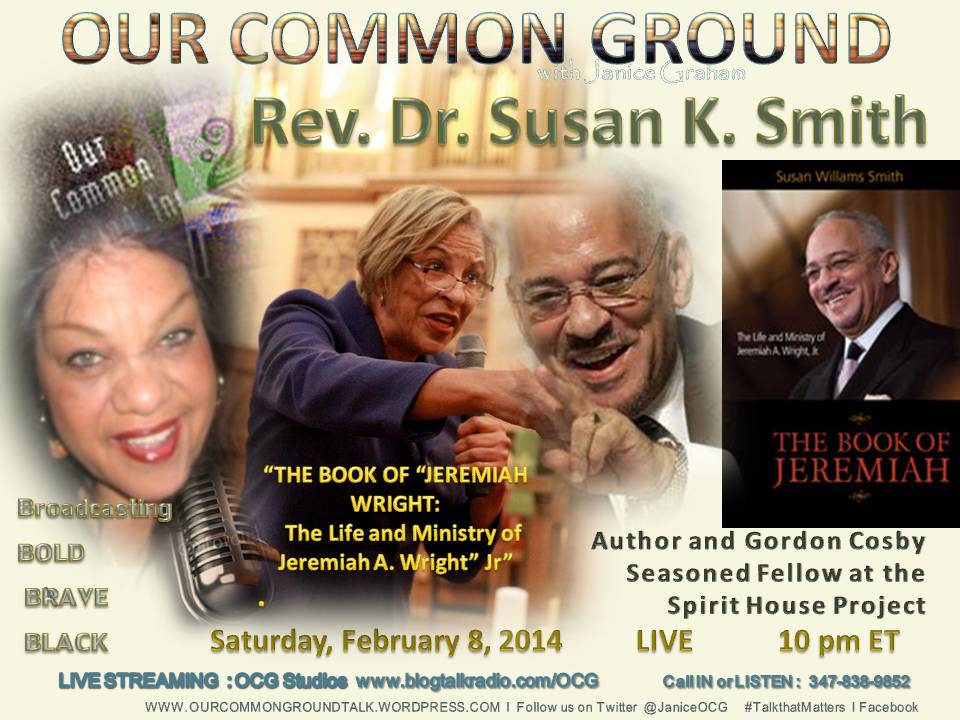
“Silence from the Desert” φ Susan K Williams Smith, The SpiritHouse Project

“Silence from the Desert”

Susan SmithSusan K Williams Smith
Gordon G. Cosby Seasoned Voices Fellow, The SpiritHouse Project

The SpiritHouse Project, under the direction of Ruby Sales, has been investigating the deaths of black people at the hands of white police, vigilantes and security guards since 2007. The deaths have been shocking and reports of them have been scarce; Sales is determined to get the word out that young black people, male and female, are being brutalized with alarming frequency, with the murderers seldom being held accountable. A recent recurring phenomenon with these deaths is missing organs. The following story involves the case of a Black young man who, like Kendrick Johnson, (who was also black) was found murdered and organs missing. Sales is calling for a national movement to bring awareness to these murders and to stop them.

It has been six months – 74 days, to be precise – since Ryan Singleton’s body was found in a California desert, his organs missing, 74 days without having gotten a single bit of information about how he actually died.

Joggers found his body in a Death Valley desert near Baker, California, more than 70 days after he went missing. Though police say they searched for his body within a five-mile radius of a convenience store from which he disappeared, he was found a little over one mile from that same store. His body had no eyes, no heart, no liver, no lungs and no kidneys.
He disappeared in early July; his body was found September 21.  Iris Flowers, his mother, speaks slowly and deliberately. The pain of having lost her son in such a horrific way comes through as she speaks. To date, she knows little about what really happened to her son. “When I have called, I get nothing,” she says, her voice heavy. “I have not gotten an autopsy report. I don’t know how long he was out in the desert.” “I don’t even have a death certificate yet.”
Ryan, 24, was a handsome, young African American man who had gone to California chasing his dream of becoming a model and film producer. His career had begun in New York and had taken off. He had appeared in major magazines, had appeared on Fashion Television, and was featured in a film that was seen by delegates at the United Nations. He moved to California where he met and mingled with people who saw his talent and opened even more doors for him. His star was rising; he was in the first chapter of what promised to be a life most could only dream of.
He was a good kid, folks would say. Not perfect, but a “good kid.”
He hadn’t been in California long before he decided he wanted to take a vacation. He rented a car and, en route to his vacation spot, ended up in the desert. His car, according to reports had broken down. White police officers found him walking in the desert, presumably trying to get help. They stopped when they saw him, did a check to make sure he had no record – which he didn’t – and then took him to a nearby convenience store so that he could call for help. He made a phone call to a friend to come pick him up …and then, suddenly, he was no longer in the store. Nobody saw him leave; nobody saw anybody pick him up – but it was clear that Ryan was gone.
Twenty-four hours later, law enforcement officers in Atlanta visited Mrs. Flowers at her home to tell her that Ryan was missing, after having been notified by California authorities.
Authorities told Flowers that perhaps coyotes had taken Ryan’s organs – they sometimes do that, police told her – but Ryan’s body was not mutilated. “Were his remains strewn all over the desert, near where he was found?” she asked them when they gave her the coyote story. No, as a matter of fact that had not been the case. Neither were any of his limbs missing. If coyotes had taken his organs, Flowers mused, they had taken them with surgical precision, leaving the rest of his body relatively intact.
Though Ryan had gone missing in July, his body was not badly decomposed, certainly not to the degree a body left in the hot desert sun might have been expected to. Authorities told Flowers the same; “his body is remarkably intact.”
Pictures of Ryan showed his hands curled, as though he were scratching or writhing in pain. He had perfect teeth, but pictures showed his five lower teeth missing. His mouth was open, lips still pretty much intact, but his mouth was open as though he were screaming. There was hole in the back of his head, low, near where the head meets the neck.
Flowers has been trying to get information, but nobody will tell her anything because Ryan’s case is a “death investigation,” she has been told. Police still have Ryan’s cell phones and his back pack. Flowers has called not only police, but the rental car company from which Ryan had gotten his car. Nobody will tell her anything. Ryan had two cell phones, Flowers says. One, they found in the back seat of the rental car, the other on his remains. She has not been able to get either one of them. “I call his cell phone every now and then, just to hear his voice,” Flowers says. It goes straight to voice mail…Flowers is understandably exasperated, annoyed. “Surely by now, the forensic records should have come back; surely somebody has to know something.”
Flowers holds the pain in so that she can move, breathe, talk. She recalls the last time she heard her son’s voice. “He had called me the day, the morning (I later learned) he disappeared, asking me to wire him some emergency money. I did …and then later I called him to make sure he had gotten it. He never answered the phone. He never picked up the money.” Twenty-four hours later, she got the news that he was missing.
In the early days of her son’s disappearance, and even after his lifeless body was found, Flowers called California authorities regularly, in spite of never getting any answers. After he was found and she could not get information, she called the FBI. They advised her to get an attorney. She has not as yet gotten one; attorneys cost money and her resources are limited.
Flowers recalls going to look at Ryan’s body after it was flown from California to Georgia for a funeral.
“Yes, I saw his body,” she says softly, heavily, in response to being asked if she saw him. “I went in to make sure the remains were my son, Ryan Singleton. It looked like road kill; they said it looked like that due to the autopsy. There was only a certain amount of torso left…there was not recognizable as a young man.” Her voice trembling some, she continued. “I had to make sure it was my son. I couldn’t do like Kendrick Johnson’s parents did. They had an autopsy and then he was buried and then they had him exhumed. That’s when they found his organs were missing. I learned from them. I couldn’t have gone through that. Before they buried him, we knew he had no organs.”  Flowers said she also learned from a woman whose son had died in an equally horrible way years ago, when asked how she had endured seeing her son so mutilated and violated.  “There were stronger women who went before me,” she said. “I thought of Emmett Till’s mother. I thought of how horrible that was …to show her son mutilated by hate. When I saw my son, I thought that what I felt was what Mrs. Till felt. I didn’t feel it was racial…but I don’t know what it was that killed him. I was thinking of her – looking at her healthy, beautiful child – and she showed her son to the world, to let the world know. I just wanted to go in and see …see if there was anything I recognized as part of my child.”
Ryan was unarmed. He had no record. He was young and vibrant, with his whole life ahead of him.
That life snuffed out, Flowers now just wants to know what happened…and get justice.
The silence from the desert is unacceptable, she says. Her son was a person, her baby. She cries slightly as she looks at a videotape showing Ryan shortly before his death …saying he was on his way and that he would be known all over the world in five years. He is confident and filled with hope; he is smiling and his eyes dance with a freshness that only comes with youth. Nothing was going to stop him; mom was not to worry.“That was my son,” Flowers says. “I miss him so much.”

02-8-14 Susan Smith5

Chokwe Lumumba: A Revolutionary to the End | The Nation

Chokwe Lumumba at a news conference in Jackson, Missisippi (AP Photo/Rogelio V. Solis)

Chokwe Lumumba’s dilemma was simple: how to be a revolutionary in a decidedly non-revolutionary Mississippi.

It was a mission that seemed bound to alienate and polarize, even long before he became mayor of Jackson, home to a state capitol building flying a defiant Confederate battle flag and a city hall built by slave labor.

But when I went to Jackson to profile the newly elected Lumumba last year and in my conversations with Mississippians throughout this year, I was shocked at how hard it was to find someone who didn’t like him. Economic populists like Rickey Cole, chairman of the state Democratic Party, and his staff were keen to show solidarity with Jackson’s new administration. They talked about Lumumba’s honor and integrity, whatever their political differences. After his death, Cole called the mayor “a man by the people, of the people, and for the people.”

Even business leaders in the city like Ben Allen, president of Downtown Jackson Partners, expressed surprise during Lumumba’s administration about how clear, open and efficient his first few months in office had been. Hampered by a lack of city revenue and hostility at the state-level, Lumumba had just passed a one-cent local sales tax to fund Jackson’s infrastructure. The taps ran brown and many roads were in disrepair when I visited the city, and the Environmental Protection Agency had threatened action if waste systems weren’t upgraded. There was nothing especially radical about the tax, except for the fact that Lumumba took his case to the people, explaining the situation and winning consent for the measure in a referendum.

It gave a new resonance to the “sewer socialist” tradition that administered public office for generations in Milwaukee and elsewhere in the last century. But there were signs that if the mayor and his Malcolm X Grassroots Movement stayed in power, the deepening of their revolution would attract something of a counter-revolution in response.

Lumumba was born in Detroit as Edwin Finley Taliaferro. He saw racism growing up—from all-white restaurants in Dearborn that wouldn’t serve his family to housing and job discrimination in the inner city. It was enough to instill a level of social consciousness in the young man, consciousness that would only grow as he absorbed the era’s images: Emmett Till’s battered teenaged corpse, street battles and sit-ins and, most formatively, the assassination of Martin Luther King Jr.

Like so many other black youth, he was radicalized. Adopting his “free name” after a Central African ethnic group and slain Congolese revolutionary Patrice Lumumba, Chokwe, put ambitions of becoming a lawyer on hold to join the fight. He was attracted to the Republic of New Afrika (RNA) movement, which had roots in Detroit but relocated to Jackson. They wanted a new nation in the African-American majority counties of the southeast.

In 1971, Lumumba joined them in Jackson—where, like other cities in Mississippi, blacks had little political representation and nostalgia for Jim Crow was still strong. That same year, in August, local police and FBI agents raided the RNA compound. In the ensuing gun battle, during which Lumumba was not present, a police officer was killed and another, along with a federal agent, was wounded. Eleven New Afrika members were arrested. In the aftermath, Lumumba moved back to Detroit, finishing law school at Wayne State University in 1975 before finding his way back to Jackson later that decade.

But Lumumba’s was not a tale of a radical coming to terms with society as it exists, like so many of those from the New Left. His legal career was radical and often controversial. He took on a host of high-profile cases, including that of Fulani Sunni Ali, rapper Tupac Shakur and former Black Panther Party members Geronimo Pratt and Assata Shakur.

He never renounced the goal of black self-determination or apologized for his activism during his Republic of New Afrika years. Lumumba told me as recently as last week that only his tactics had changed in light of the new political avenues now open to black militants in the South.

“At that time, in the seventies, we were locked out of government,” he said, “We were actually victims of government violence, so we protected ourselves against that repression.”

Today, the situation is different. From Tunica, in northwest Mississippi, to Wilkerson County in the southwest, there are eighteen predominantly black counties in the state that have for the last few decades finally been able break the domination of white officeholders. Lumumba saw this as only the start of the deep transformation that the region needed.

“One of the routes to that self-determination,” he told me in the same interview, “is to use the governmental slots in order to accumulate the political power that we can, and then to demand more, and to build more.” But he was quick to portray his movement as an inclusive, socialist one. “This is not a ‘hate whitey’ movement. This is not some kind of a reactionary nationalist movement,” he added.

Lumumba and the activists that rallied around his campaigns hoped to establish two planks of political power: one based on “people’s assemblies” and another on a “solidarity economy,” built on a network of worker-owned cooperatives. The assemblies were, for the moment, purely advisory. They started in Ward 2, while he was a councilman, but spread after his election as mayor.

Mississippi has more in common with a developing country than New England in the length of its democratic tradition. Yet Lumumba wanted to foster a democratic culture that was not just representative, but participatory. Having people voice their grievances in town halls and have a say in the distribution of public resources was part of that commitment. But he had loftier ambitions beyond that: he wanted the new organs of people’s power, absolute and direct democracy, to replace existing structures over time.

He didn’t even think that his government could be equated with “people’s power.” “That’s still a struggle to be achieved, that’s a goal to be reached. That’s not where we are now,” Lumumba cautioned.

The solidarity economy schemes were just as ambitious. While keenly aware and open about the limits of political and economic experimentation on the local level, and seeing his new administration’s efforts as being transitional, Lumumba wanted to use city contracts and economic leverage to foster worker ownership. Evoking the Ujamaa concept of former Tanzanian President Julius Nyerere, they hoped to transform a full 10 percent of Jackson’s economy into cooperatives by the end of his first term alone. The administration has been planning for months to debate and explore their options with activists and outside experts at a “Jackson Rising: New Economies Conference” in May.

It was less about spearheading a revolution from above than creating the climate of radical thought and experimentation that could take on dynamics of its own. In the meantime, even Jackson’s moderates were won over by clean and efficient government and Lumumba’s easy charm and humor.

That support would have been needed. Activists within the Malcolm X Grassroots Movement worried that if they went too far too fast, the state legislature could limit self-governance in Jackson, maybe placing the city under trusteeship. What’s more, both sides knew that the honeymoon period with downtown developers couldn’t last either. Real economic and political transformation requires taking power away from those not keen on relinquishing it.

I spoke to Lumumba with the usual skepticism several days before he died. How does a revolutionary manage a historically racist police force? How does a grassroots movement that wins office maintain its independence and autonomy? What’s so radical about a sales tax, anyway? How much can actually be done at the local level? Is the movement in Jackson too dependent on the force of his own personality? He laughed and said that like a good radical intellectual I had a knack for identifying contradictions.

Like a good radical leader, Lumumba had a knack for resolving them.

Read Next: John Nichols on the legacy of Chokwe Lumumba


via Chokwe Lumumba: A Revolutionary to the End | The Nation.

UDC Forum: Dr. Raymond A. Winbush – Video

UDC Forum: Dr. Raymond A. Winbush – YouTube.

Hello and welcome to another edition of UDC Forum, a program series about the learning, teaching and research here at the University of the District of Columbia. I’m Dr. Sandra Jowers-Barber, assistant professor of history at the University of the District of Columbia and your host. Dr. Raymond A. Winbush is the Director of the Institute for Urban Research at Morgan State University. He received his undergraduate degree in psychology from Oakwood College in Alabama and received a fellowship to attend the University of Chicago, where he earned both his master’s degree and Ph.D. in psychology. He has taught at Oakwood College, Alabama A&M, Vanderbilt University, and Fisk University.

src=”http://www.youtube.com/v/V4BAQRaVtg4&list=UUO0TLew_eanCz5XjAG78RdA&feature=c4-overview” type=”application/x-shockwave-flash” wmode=”transparent” width=”425″ height=”350″>